Portugal’s southern region splits into two distinct personalities. The sheltered south coast of the Algarve delivers postcard-perfect limestone caves and calm turquoise water, while the wild west coast serves up dark cliffs, consistent surf, and Atlantic winds that either thrill or frustrate. This guide breaks down the logistics, climate realities, and experience trade-offs so you can pick your coast — or better yet, experience both.
Is there actually a difference between the Algarve and Costa Vicentina?
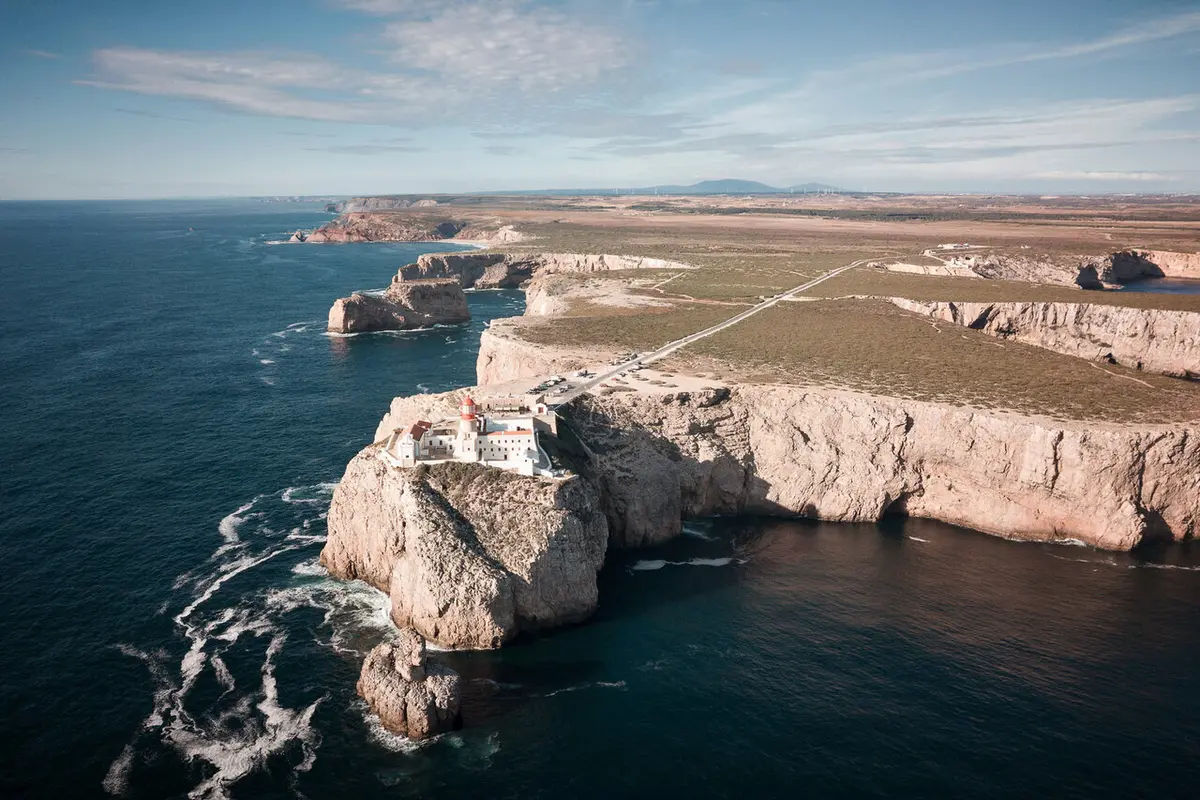
The Algarve and Costa Vicentina are not two separate regions — the west coast is part of the Algarve. Costa Vicentina runs from Sagres north to Odeceixe, while “the Algarve” in tourist shorthand means the southern shore from Lagos to Faro. The geology shifts completely between the two, giving each coast its own climate, scenery, and character.
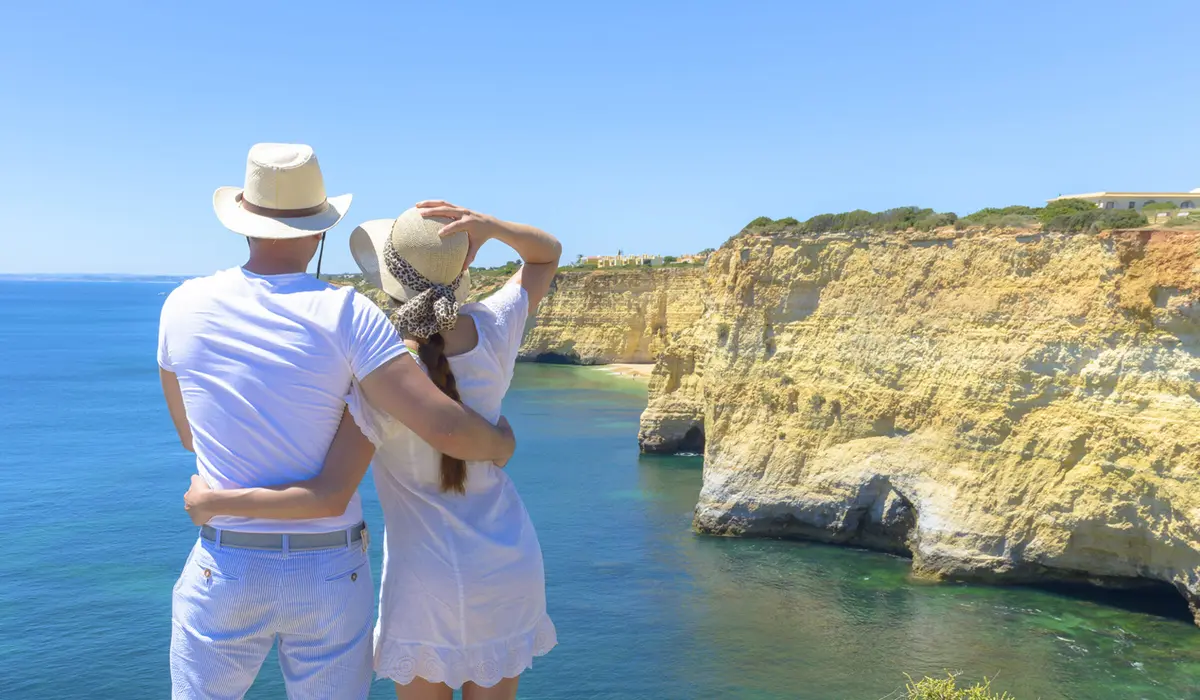
The south coast is golden limestone — soft, eroded, and honeycombed with sea caves. The west coast is dark schist and greywacke rock — hard, jagged, and resistant to erosion. One faces the sheltered climate of the Gulf of Cadiz. The other takes direct hits from the North Atlantic. Same region on the map, completely different experience on the ground.
How do you get around between the two coasts?
The A22 motorway (Via do Infante) now runs toll-free across the entire Algarve, which changes the math on how you plan your trip. The cost barrier between coasts has vanished, making a hub-and-spoke strategy from Lagos or Portimão genuinely practical — and cheaper than splitting your accommodation between both sides.
Drive times you need to know:
- Lagos to Arrifana (west coast): 35 minutes
- Faro Airport to Aljezur: 70 minutes
- Portimão to Sagres: 40 minutes
Pro Tip: Book accommodation in Lagos or Portimão and day-trip to both coasts. The free highway makes this significantly cheaper than committing to one side and regretting it when the wind picks up.
Do you need a car for the Costa Vicentina?
You need a car for the west coast. Public transport exists (Vamus Bus 79), but it runs infrequently and will not get you to trailheads or remote beaches. Uber and Bolt service is practically nonexistent outside Lagos.
The south coast has better infrastructure — trains run along the Linha do Algarve from Lagos to Faro, and rideshares saturate the resort towns. But you will still miss the best spots without wheels.
Car rental in Portugal runs roughly $15-30/day during shoulder season and $25-55/day in summer for a compact car. Book at least a week in advance — walk-in rates at Faro Airport can double what you would pay pre-booking online.
Why does the west coast feel 10 degrees cooler?
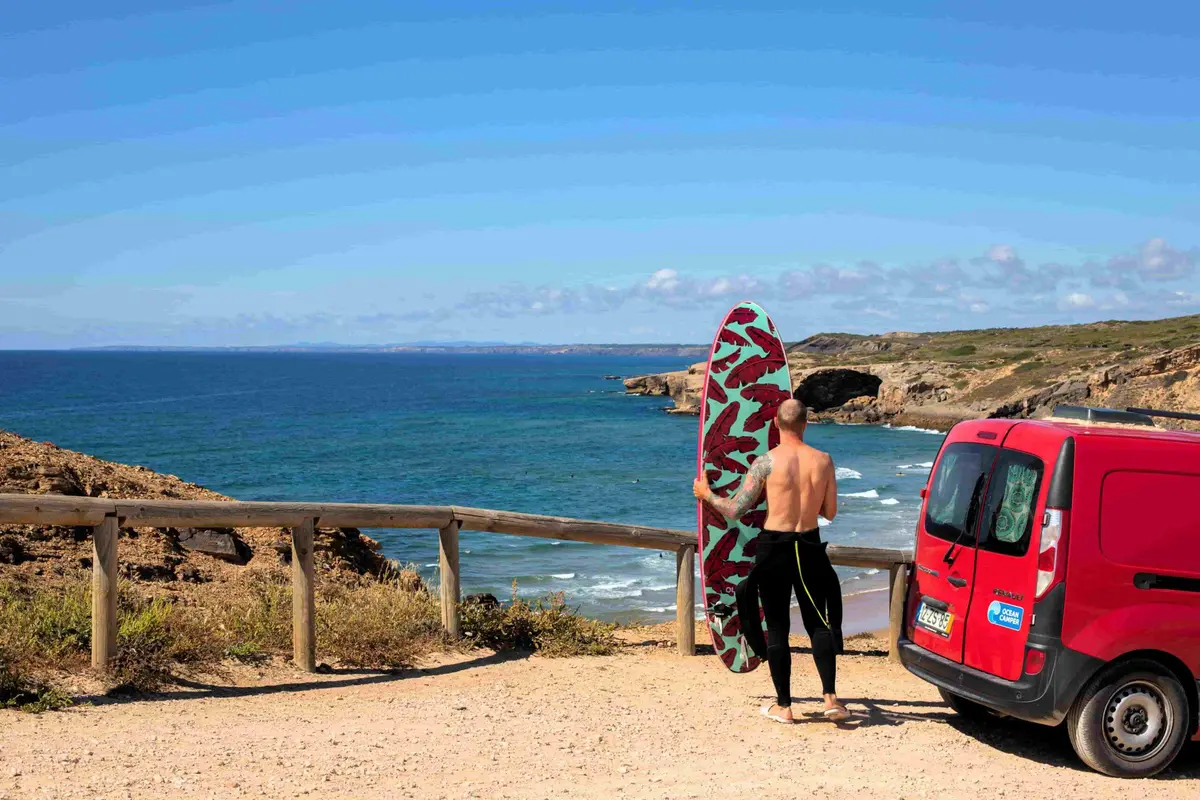
The “Nortada” wind defines the Costa Vicentina experience and protects the south coast simultaneously. Hot air rising over inland Spain creates a thermal low-pressure system, pulling cool Atlantic air down the coast every afternoon from late spring through early fall — a seasonal pattern that directly affects the best time to visit Portugal for coast-based itineraries. The Serra de Monchique mountain range blocks this wind from reaching the south coast entirely, creating a sheltered microclimate that makes the two coastlines feel far more than 35 minutes apart.
When does the wind actually blow?
The timing is predictable enough to build your entire day around:
- Morning (7am–1pm): The west coast is often calm, sometimes glassy. Perfect for surfing clean waves or enjoying empty beaches.
- Afternoon (2pm–7pm): Wind speeds hit 15-20 mph (25-35 km/h). Beach umbrellas become projectiles. The sand strips the top layer of your skin by 3pm.
- South coast: Gentle breezes all day, rarely exceeding 10 mph (15 km/h).
Pro Tip: Plan west coast beach time before lunch. Save the afternoon for hiking — when the wind actually cools you down — or retreat to south coast coves and let the Nortada ruin someone else’s afternoon.
How do temperatures compare between coasts?
Do not let the shared latitude fool you — these coasts run genuinely different climates.
Summer highs:
- South coast: 82-90°F (28-32°C)
- West coast: 72-79°F (22-26°C)
Water temperature:
- South coast: 66-72°F (19-22°C)
- West coast: 59-63°F (15-17°C)
The west coast ocean requires mental preparation or a wetsuit for prolonged swimming. The south coast water is swimmable but never tropical — count on refreshing, not warm.
What are the beach experiences like on each coast?
The south coast: limestone caves with strict new rules
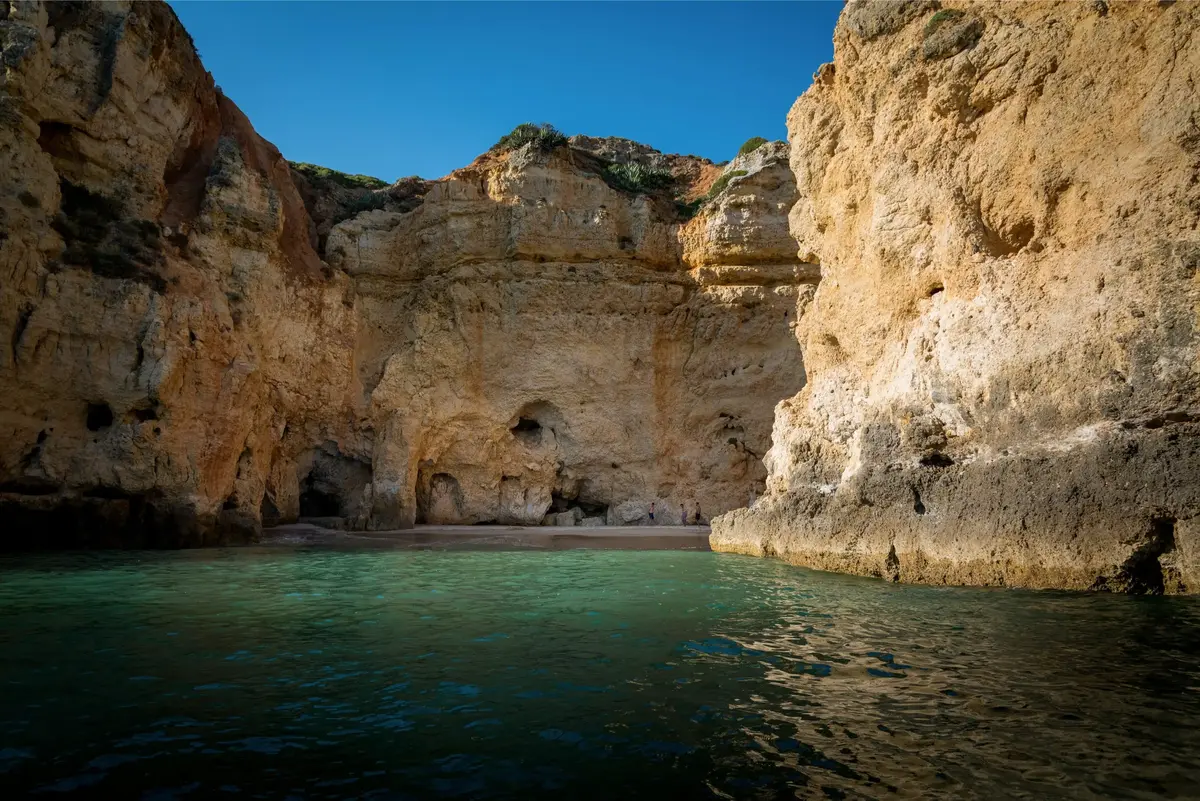
The south coast’s karst limestone creates the region’s signature look — golden cliffs riddled with arches, tunnels, and the famous Benagil Cave. But visiting Benagil has changed fundamentally. Swimming into the cave is prohibited, landing on the internal beach is banned for everyone, and independent kayak or SUP entry is illegal. Enforcement is active.
Legal access now requires:
- Guided boat tours from Portimão or Armação de Pêra ($30-45/person)
- Guided kayak tours with licensed operators (one guide per six kayaks, $40-60)
Fines for violating the regulations run from €300 to €216,000 ($330 to $238,000) for operators, and individual visitors face fines of up to €2,500 ($2,750). The cave is still worth seeing — just expect to see it from the water only, with no footprints in that famous sand.
Pro Tip: Skip Benagil’s crowds and book a kayak tour of Ponta da Piedade in Lagos instead. You will navigate through rock formations locals call “The Elephant” and “The Titanic” with far fewer tourists and no ranger watching the clock.
The Seven Hanging Valleys Trail between Marinha and Vale de Centeanes becomes a conga line in summer. Every viewpoint has 15 people waiting their turn at the cliff edge. Arrive before 9am or after 5pm.
- Location: Praia da Marinha to Praia de Benagil
- Cost: Free to hike; parking $2-4
- Best for: Photographers, families wanting calm water
- Time needed: 2-3 hours
The west coast: dark cliffs and Atlantic power
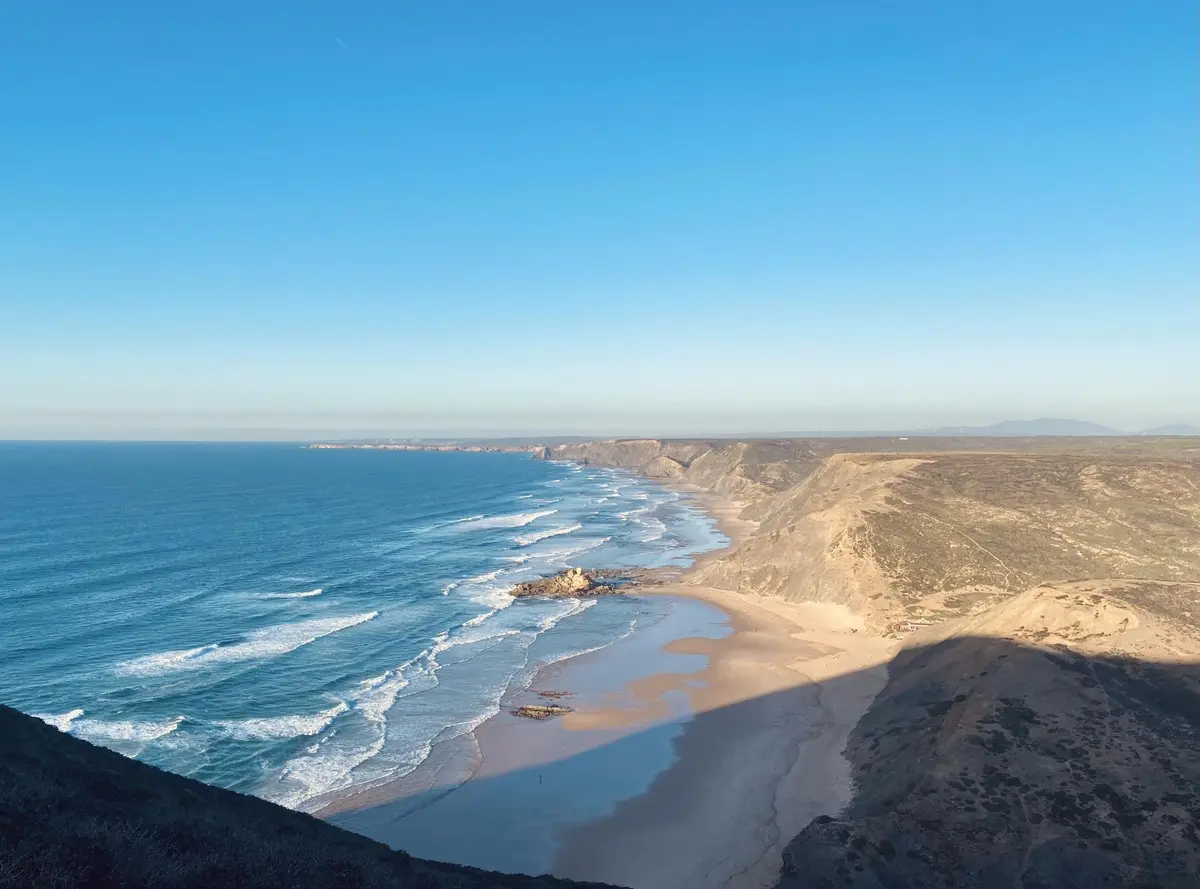
Dark schist cliffs plunge into churning ocean. These stand out among Portugal’s beaches for being wild in the most literal sense — no beach bars, often no lifeguards, and waves that demand respect. Even strong swimmers find the west coast challenging. Rip currents are common, and the cold water (59-63°F / 15-17°C) saps energy faster than it looks.
Family-friendly exceptions do exist. Praia da Amoreira has a river lagoon where warm freshwater meets the ocean. Kids can wade in the shallows while parents watch the surf break offshore. Praia de Odeceixe offers similar river-meets-ocean geography and a calmer entry into the water.
The defining feature here is scale: sand dunes up to 65 feet (20 meters) high at Praia da Bordeira shift with the wind, creating a Sahara-meets-Atlantic landscape unlike anything on the south coast.
- Location: Aljezur to Sagres coastline
- Cost: Free; limited paid parking ($2-3)
- Best for: Surfers, hikers, photographers seeking moody conditions
- Time needed: Half to full day
What activities does each coast do best?
Surfing: west coast consistency vs south coast warmth
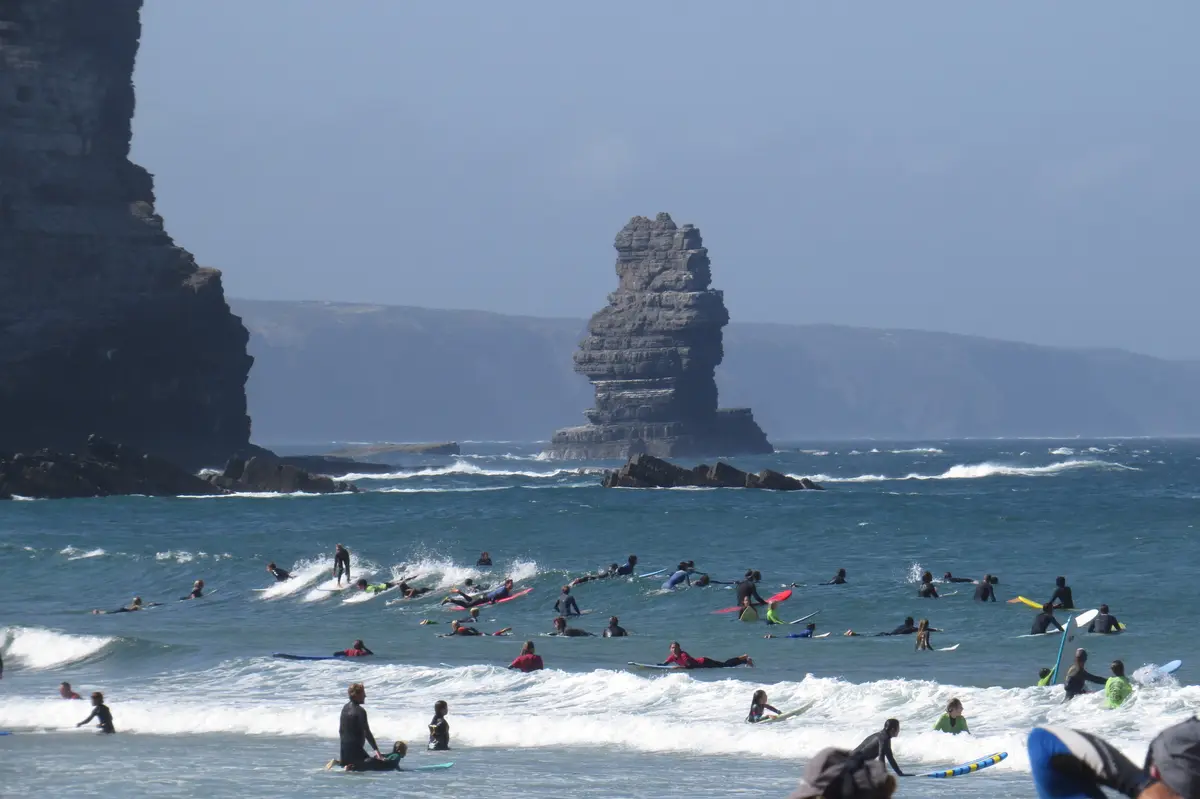
For surfing in Portugal, the west coast delivers year-round Atlantic swells. The south coast has scattered surf spots that only work with specific swell directions, which makes it unreliable for anything more than a lesson in gentle conditions.
Beginner-friendly spots:
- Praia da Arrifana (west): Sand bottom, partial cliff protection from north wind, surf schools clustered at the beach access ($55/2-hour lesson).
- Praia da Luz (south): Gentler waves, warmer water, but inconsistent swell.
Intermediate to advanced:
- Praia do Amado (west): Exposed beach break, hosts national competitions, powerful waves.
- Praia do Tonel (Sagres): Heavy beach break near the cliffs, shallow sandbar creates barrels.
Cost breakdown:
- Single lesson: $50-60
- 5-day surf camp: $220-280 (includes equipment)
- Board rental: $15-20/day
Pro Tip: Book morning lessons on the west coast before the wind picks up. Afternoon sessions fight chop the entire time, and students spend more energy paddling against it than catching waves.
Hiking: solo trail vs summer conga line
Seven Hanging Valleys Trail (south coast): This 3.7-mile (6 km) route connects Praia da Marinha to Praia de Vale de Centeanes, passing above the limestone formations. The path is well-maintained, mostly flat, and suitable for sneakers. The problem is summer traffic — it turns into a photo queue where every viewpoint has a line.
- Location: Carvoeiro to Benagil area
- Cost: Free
- Best for: Casual walkers, first-time visitors wanting the signature limestone shot
- Time needed: 2-3 hours
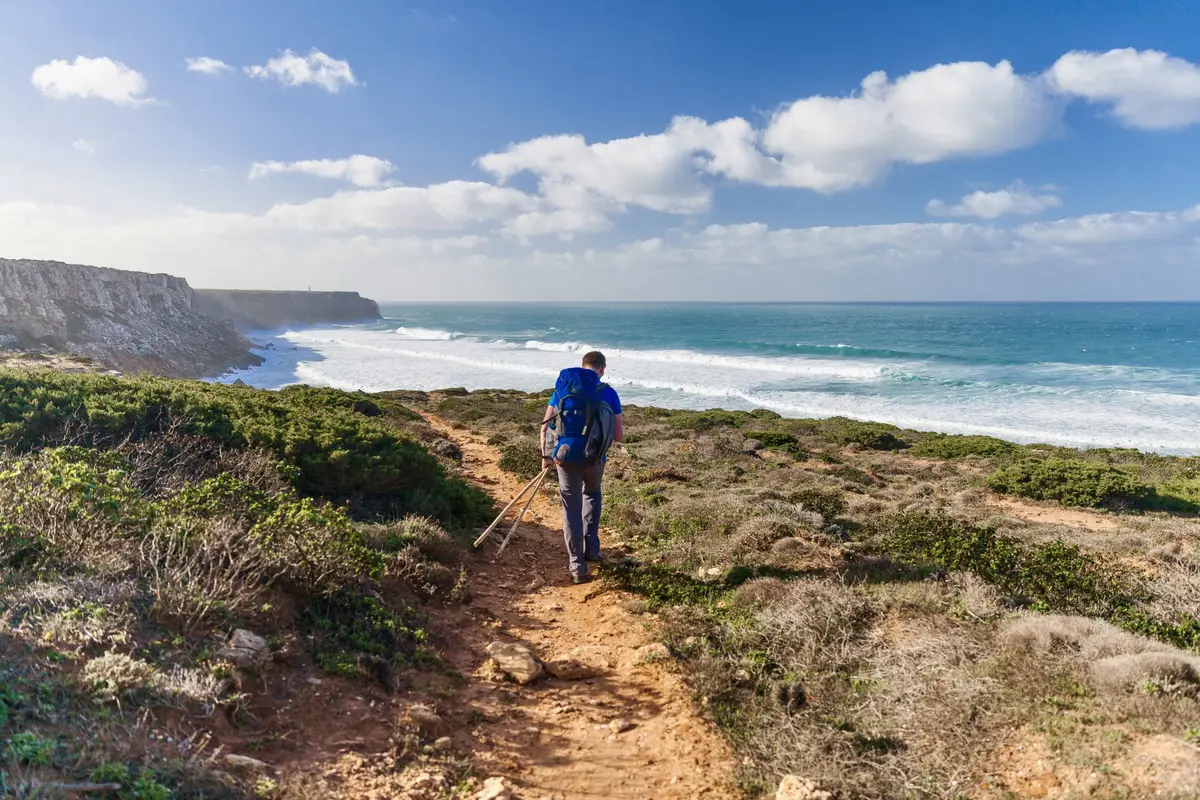
Fishermen’s Trail — Rota Vicentina (west coast): The real deal for hikers. This coastal route runs 75 miles (120 km) from Porto Covo to Cabo de São Vicente, but you can tackle it in sections.
What makes it hard: deep, soft sand that fills your boots, exposed clifftops with vertigo-inducing drop-offs, no shade, and wind that can knock you sideways on the open ridgelines.
What makes it worth it: complete solitude, white storks nesting on sea stacks, the smell of cistus heating in the afternoon sun, and beaches accessible only to those willing to scramble down a loose-rock path with their hands.
The best single-day section: Odeceixe to Zambujeira do Mar — 12.4 miles (20 km). Challenging but spectacular.
Pro Tip: Carry at least 3 liters (about 100 fl oz) of water per person. The trail has zero water sources or services for miles. I hit the Carrapateira section at 2pm once with half a liter left between two people — the wind was up and the only shade was what we cast ourselves.
- Location: Aljezur to Sagres coastline
- Cost: Free
- Best for: Experienced hikers, solo travelers, anyone who hates crowds
- Time needed: 3-9 hours depending on section
Where should you eat on each coast?
South coast: resort dining and working fishing villages
The south coast caters to mass tourism with every cuisine imaginable. Quality ranges from excellent at Portuguese-run family spots to mediocre tourist traps with laminated menus and a 30% markup on everything that faces the sea.
Worth your time: fresh seafood at any restaurant in Ferragudo (a working fishing village, not a resort town), and grilled sardines from beach shacks at Praia da Salema — $12-15 for a full plate, eaten at a plastic table with the boat that caught them visible from where you sit.
West coast: percebes and cataplana
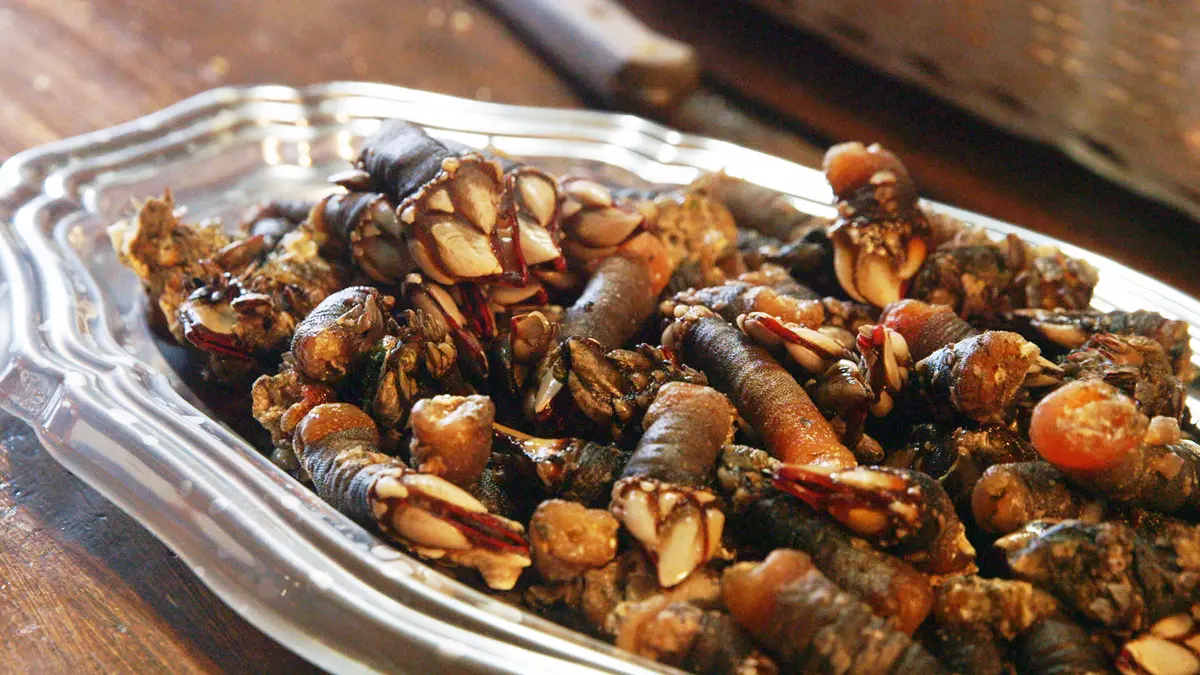
The west coast’s signature ingredient is percebes (goose barnacles) — one of the more extreme entries in Portuguese food culture, bizarre crustaceans that grow on wave-battered rocks and taste like the ocean concentrated into a single bite.
Why they are expensive ($45-90/kg): percebeiros harvest them by jumping onto rocks in the impact zone at low tide, grabbing them during the seconds between waves. It is widely considered the world’s most dangerous seafood harvest, and the price reflects that.
Where to try them:
- Cervejaria O Mar in Aljezur: locals’ choice, no-frills
- O Telheiro in Sagres: request the window table facing Praia da Mareta for sunset
The west coast also excels at cataplana — a copper clam-shell pot combining seafood, chorizo, and tomato broth, slow-cooked until the clams open and the broth thickens. Order it for two people minimum; a single portion looks and feels wrong.
Pro Tip: The Festival do Percebe happens in Vila do Bispo each October, with cooking competitions and tastings built around the barnacle harvest.
Where should you stay for the best access to both coasts?
South coast hub: Lagos or Portimão
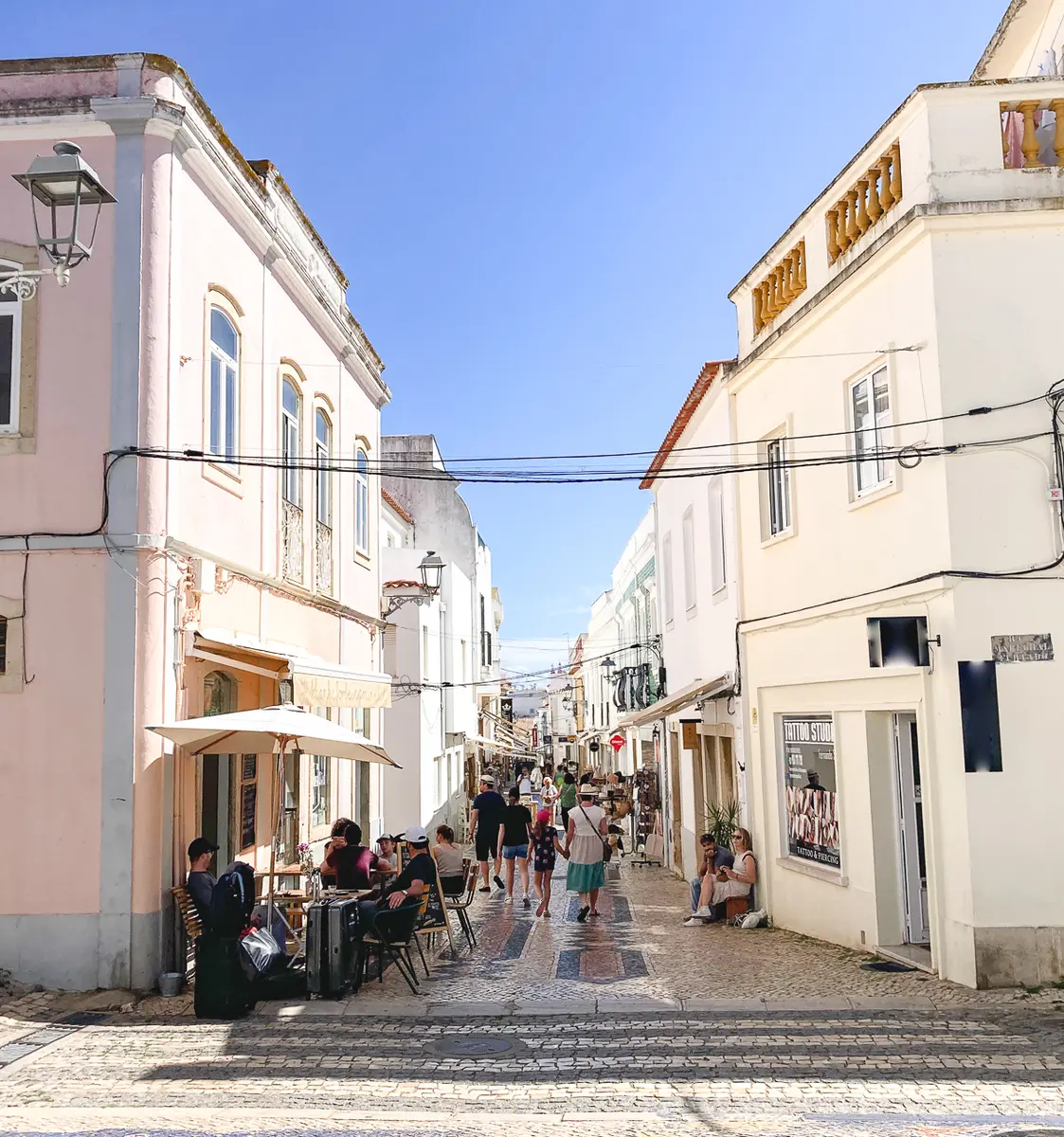
Lagos combines history (fortress walls, slave market museum), nightlife (bars clustered in the old town), and beach access. It is the Goldilocks base — big enough for services, small enough to escape the mega-resort feel of Albufeira, and central enough to reach either coast by mid-morning.
Portimão offers better value and more central positioning. It is less charming but more authentic — a working city that happens to have tourists, not a tourist city built entirely around them.
West coast experience: Aljezur or Aldeia da Pedralva
Aljezur is the west coast’s service hub — supermarkets, ATMs, surf shops, and restaurants. The town sits inland in a river valley, not on the coast itself, making it practical but not scenic as a base.
Unique option: Aldeia da Pedralva — a restored abandoned village near Vila do Bispo turned into dispersed accommodation. Individual cottages retain original stone architecture, the restaurant is genuinely good, and cell signal is weak enough that guests arrive with chargers and leave without having checked the news. That is either a dealbreaker or the entire point.
- Location: Vila do Bispo area
- Cost: from $90/night per cottage
- Best for: Digital detox seekers, couples wanting seclusion
- Time needed: 2+ nights minimum
The hybrid strategy: stay central, chase the wind
Book accommodation in Sagres, Lagos, or Portimão and drive to optimize daily conditions; the where to stay in the Algarve guide covers every price tier across both coasts. This is the play most guides skip because it requires a rental car, but it maximizes both coasts’ strengths while dodging their weaknesses.
Morning routine:
- Check wind forecast (Windy.com or Windguru)
- If winds are light: Head to west coast beaches before 1pm
- If winds are already strong: South coast all day
Afternoon plan:
- West coast getting blown out? Retreat to sheltered south coast coves
- Calm day? Stay west and watch the sunset over the Atlantic from the cliffs
Not all west coast beaches suffer equally from the Nortada. Cliff geometry creates protected pockets worth knowing:
Partial shelter from north wind:
- Praia da Arrifana: the southern corner near the cliffs stays calmer
- Monte Clérigo: the beach curves, offering natural wind breaks depending on exact direction
Fully exposed (avoid on windy afternoons):
- Praia da Bordeira
- Praia do Amado (great for surfing, miserable for sunbathing)
- Praia de Cordoama
South coast beaches are naturally sheltered by the Serra de Monchique, making them the default plan B on windy afternoons.
If you kitesurf, the Nortada is not a problem — it is the reason you came. Praia do Martinhal near Sagres sits where the two coasts converge. The north wind funnels through, creating flat water with consistent 15-25 mph (25-40 km/h) winds. Praia da Bordeira offers side-shore wind and massive space for launching. Kite schools charge $70-90 for introductory lessons and $350-450 for multi-day courses.
What is the best time to visit the Algarve?
The answer shifts completely depending on which coast you prioritize and what you plan to do there.
Summer (June–August): The south coast is crowded but has its warmest water (68-72°F / 20-22°C). The west coast has strong afternoon winds, cool temperatures, and the most consistent surf conditions of the year.
Shoulder seasons (April–May, September–October): The best overall compromise — fewer crowds, milder winds, and water still swimmable with a wetsuit. September brings storks nesting on sea stacks along the Fishermen’s Trail, and the percebes festival in Vila do Bispo usually falls in October.
Winter (November–March): The south coast stays mild (60-65°F / 15-18°C) with some rain and many restaurants closed. The west coast turns to storm watching — massive Atlantic swells hit the dark cliffs with enough force to feel the ground vibrate under your feet.
Avoid the west coast beaches if you are wind-sensitive: mid-July through August is when the Nortada reaches its peak intensity and can make an afternoon on Praia da Bordeira feel like standing in front of an industrial fan pointed at a sand dune.
Before you book
TL;DR: The Algarve vs Costa Vicentina debate is a false choice. Both coasts excel at different things, and the toll-free A22 puts them 35 minutes apart. The real mistake is picking one side and stubbornly staying there when the wind or crowds ruin your day.
Choose the south coast exclusively if you have young children who need warm, calm water, you do not have a car and rely on public transport, or you want resort infrastructure and nightlife within walking distance.
Choose the west coast exclusively if you surf or kitesurf, you are hiking the full Fishermen’s Trail, or you want the kind of quiet that comes from genuinely spotty cell signal and zero beach bars.
Choose the hybrid approach if you have a rental car, want maximum flexibility, and value experiencing both Portugal’s polished tourism side and its raw Atlantic edge — the approach the Portugal travel guide recommends for first-time visitors building a southern base. Wake up, check the wind, and chase the conditions that match your mood.
What is your biggest concern about the two coasts — the wind, the crowds, or getting a car sorted?