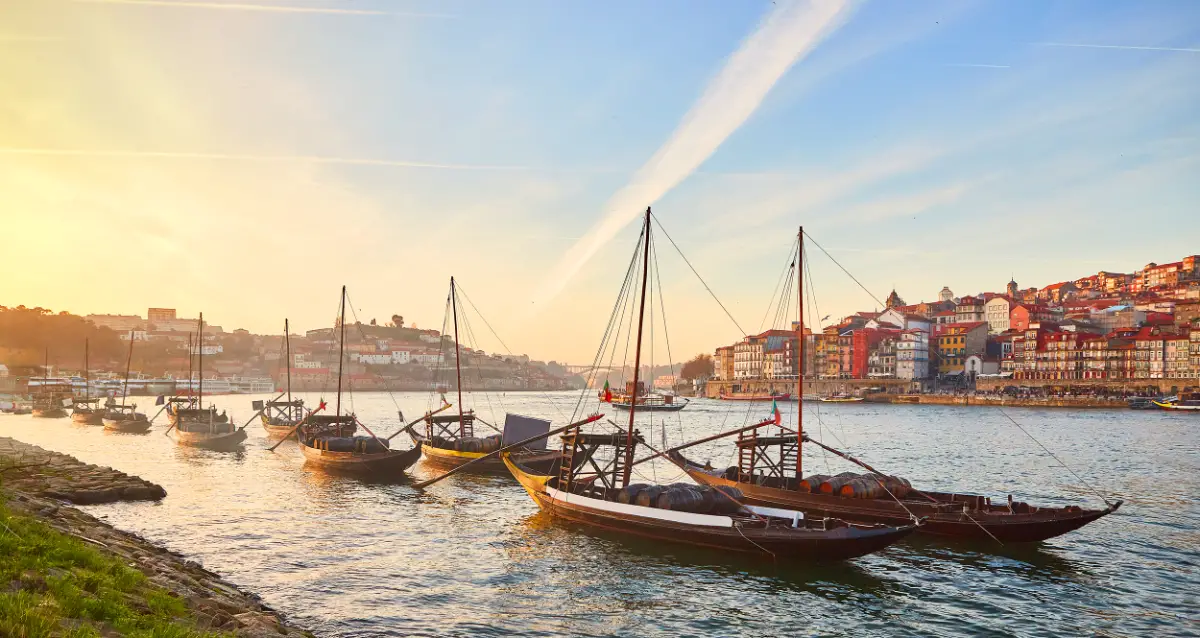
Port wine cellars in Gaia run into the dozens, and every lodge claims to be essential. Most aren’t. This guide covers which three are worth your time, why the cellars sit across the river from Porto, and the transport strategy that keeps your knees intact on those brutal limestone hills.
Why Are the Port Wine Cellars in Gaia, Not Porto?
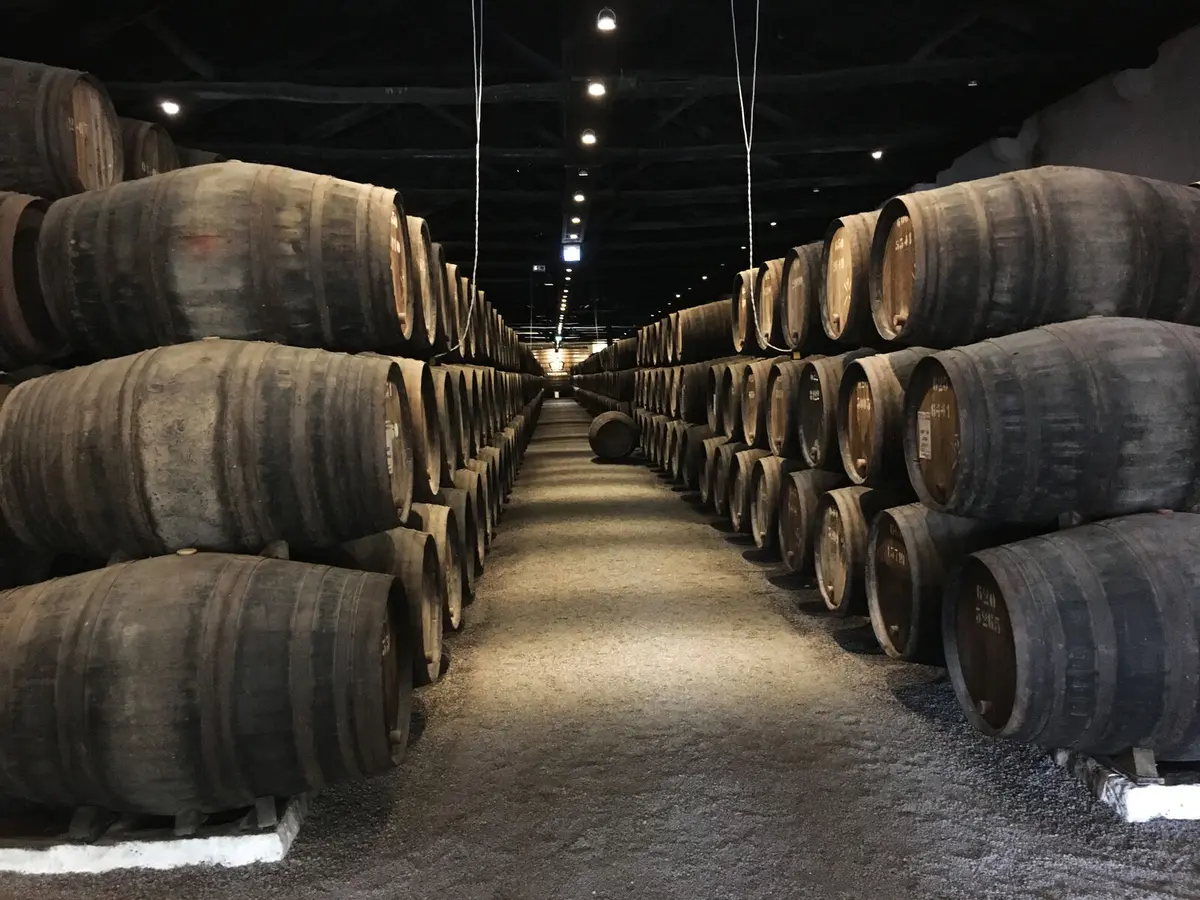
The port wine cellars are in Vila Nova de Gaia — across the Douro River — because of geology, not tradition. Porto faces south, absorbing intense Portuguese sun. Gaia faces north, where Atlantic breezes create a year-round microclimate of 55°F to 60°F (13°C to 15°C). High humidity slows water evaporation from casks; cooler temperatures keep the “Angels’ Share” — the volume lost to evaporation — from becoming economically devastating.
For three centuries, these conditions have enabled the slow aging of fortified wines that have made the cellars of Gaia essential to any Portugal travel guide covering the country’s food and drink culture. High humidity reduces water evaporation from casks. The stable temperature is critical: fluctuations would cause wine to expand and contract, forcing air through the cork and oxidizing the wine prematurely.
Pro Tip: That musty sweetness when you enter a lodge isn’t dampness. It is centuries of evaporated sugars and alcohol permeating the wood and stone — what winemakers call the Angels’ Share escaping through the walls.
Where Are the Port Wine Cellars Located in Gaia?
Gaia is not a flat riverbank. It is a steep amphitheater divided into three zones, and which zone a cellar sits in determines how hard you work to reach it — and how many casual tourists bother.
The Riverfront (Cais de Gaia) runs along the flat stretch of water. Sandeman, Cálem, and Burmester sit here. Accessible but crowded. The Mid-Slope climbs moderately uphill, housing Ferreira and Ramos Pinto — a better atmosphere with a manageable walk. The High Lodges perch on the limestone escarpment at the top. Taylor’s, Graham’s, and Cockburn’s live here. The effort required to reach them is significant, but that effort filters out most of the day-trippers.
How to Navigate Gaia Without Sweating Through Your Shirt
The biggest mistake travelers make is underestimating Gaia’s verticality. Graham’s looks close on a map. In reality, it is a punishing 30-minute uphill hike on cobblestones that ruins the experience before it starts. Treat transportation as a strategic asset, not an afterthought.
The Cable Car Strategy
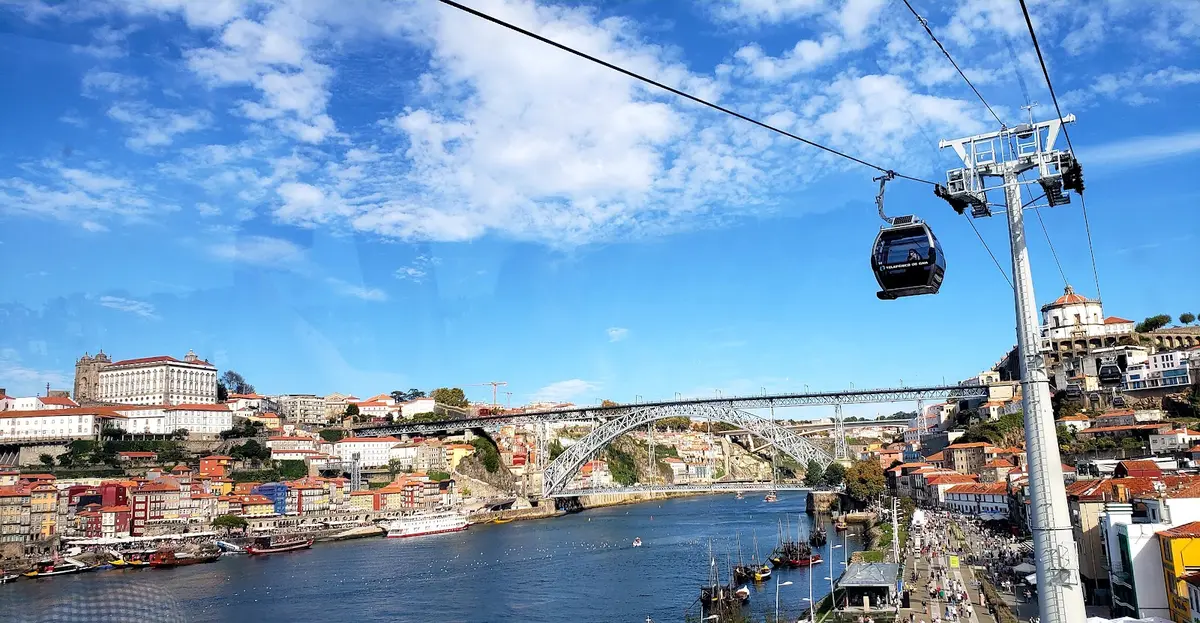
The Teleférico de Gaia connects the High Lodges to the Riverfront. It is not a tourist novelty — it is vital infrastructure.
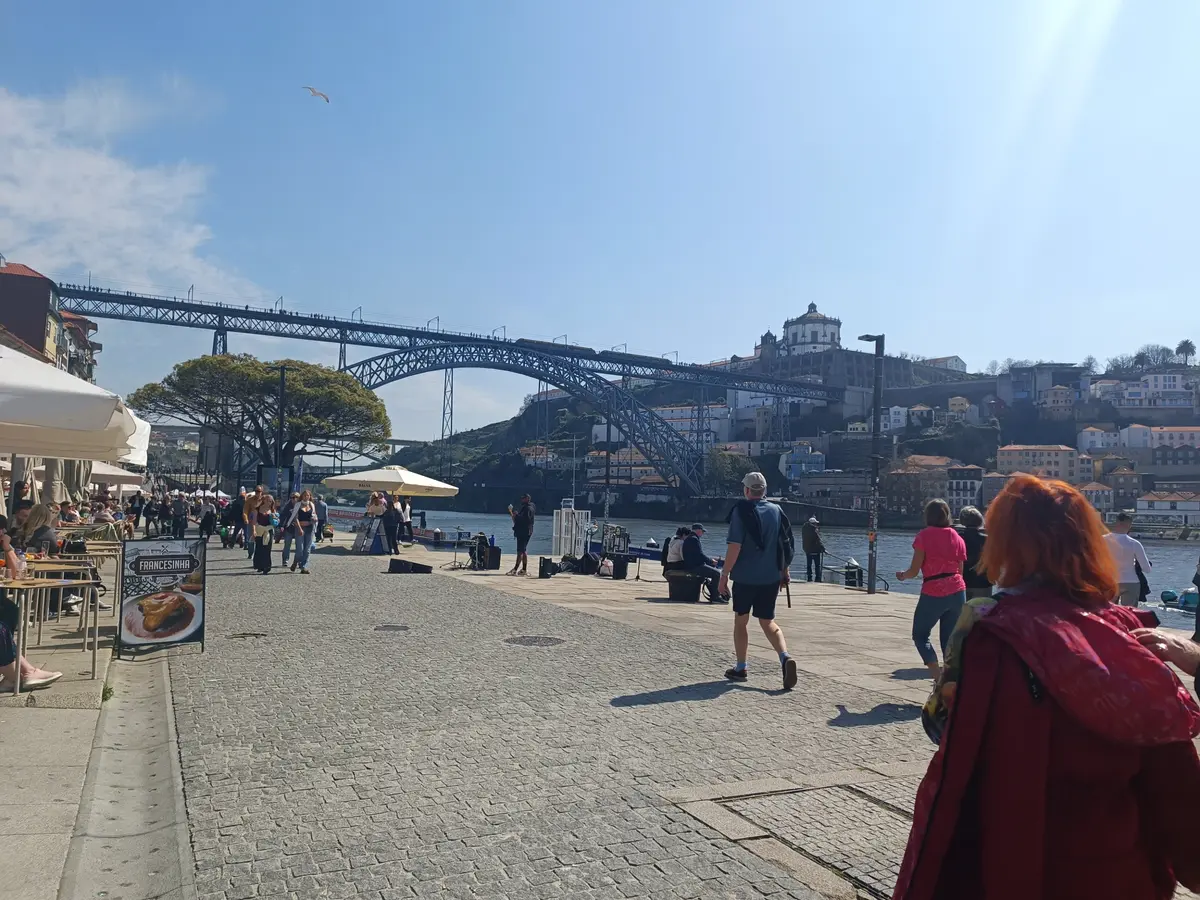
The route runs from Jardim do Morro (upper station, near the top deck of Dom Luís I Bridge) down to Cais de Gaia (the riverfront). The correct strategy: cross the upper deck of Dom Luís I Bridge from Porto (flat walking), visit the High Lodges first, then ride the cable car down to the riverfront for afternoon tastings.
- One-way ticket: $7.50 (€7) adult / $3.75 (€3.50) child (ages 5-12)
- Round trip: $11 (€10) adult / $5.40 (€5) child
- Saves you: a 20-minute knee-destroying descent or a sweaty 25-minute ascent
The Water Taxi Shortcut
Staying in Porto’s Ribeira district and want to visit Sandeman or Ferreira? Don’t walk to the bridge. The Douro River Taxi — small yellow boats — runs between the banks in about 3 minutes, depositing you exactly where tastings begin. It cuts a 20-minute walk to nothing.
- Cost: around $4 per single ride
- Frequency: roughly every 15 minutes
Transport Comparison
| Method | Cost | Best Use | Physical Effort |
|---|---|---|---|
| River Taxi | ~$4 | Crossing from Porto’s Ribeira to Gaia Market | Minimal |
| Cable Car (one-way) | $7.50 | Descending from High Lodges | None |
| Uber/Bolt | $4-6 | Reaching Graham’s or Cockburn’s isolated hills | None |
| Walking (upper bridge deck) | Free | Reaching High Lodges from Porto side | High if uphill |
The High Lodges: Taylor’s, Graham’s, and Cockburn’s
Cellars at the top of the escarpment filter out casual foot traffic through raw inaccessibility. The result is smaller tour groups and a more focused atmosphere.
1. Taylor’s Port
The self-guided model at Taylor Fladgate (founded 1692) sets it apart from every competitor. Unlike other lodges that herd you through on a fixed schedule, Taylor’s hands you an audio device and lets you set the pace. The tour winds through warehouses holding vats exceeding 26,000 gallons (100,000 liters). The audio guide — available in 13 languages — lets you linger on cooperage tools or skip ahead entirely. On my last visit, two people were on their second loop through the barrel rooms. No one rushed them.
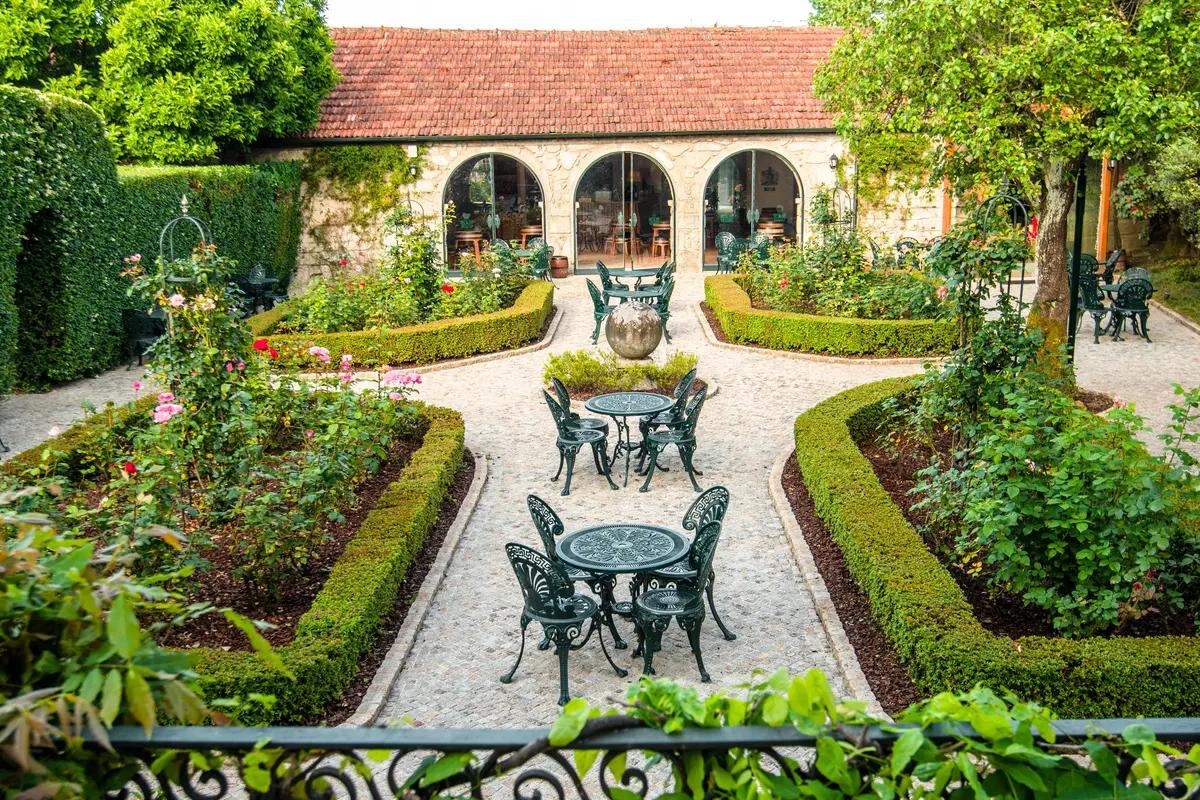
The peacock garden behind the austere granite walls is the other reason to come here. Most tastings trap you in dark, wood-paneled rooms. Taylor’s lets you carry your Chip Dry (their signature dry white port) into sunlight, sit among rose bushes, and watch peacocks work the terrace. The tasting now includes three wines: Chip Dry, Late Bottled Vintage, and a 10-Year-Old Tawny — a genuine progression from light and crisp to rich and oxidative.
- Location: Rua do Choupelo 250, Vila Nova de Gaia
- Cost: from $27 (€25) for the audio tour with three wines included
- Best for: independent travelers who hate rigid tour schedules, photographers, solo visitors
- Time needed: 1.5-2 hours (longer if you linger in the garden)
2. Graham’s Lodge
Located on a standalone hill west of the main cluster, Graham’s commands a panoramic view back toward the bridge and old Porto. This is the fine dining equivalent of port wine lodges — better suited to people who want education over volume. Reserve weeks ahead for the Vintage Room; the main tasting room tends to fill up faster than the website suggests.
The setup at Graham’s is genuinely different. Every visit includes a guided tour led by someone trained at the Douro estates, not a seasonal hire reading from a script. The tours run in English, Portuguese, French, and Spanish, and the guides field technical questions without checking notes. The tasting room — a bright, glass-fronted space with the bridge framing the view — is the kind of room wine writers use on Instagram without disclosing the location.
The Vintage Room takes it further. Most standard lodges pour Ruby or 10-Year Tawny. The Vintage Room opens actual Vintage Port — wines from specific declared years, not blended styles. The experience is rare because Vintage Port oxidizes within 48 hours of opening, so most lodges refuse to uncork bottles for walk-in visitors.
The Vinum bypass: can’t get a Vintage Room reservation? Book lunch at Vinum, the attached restaurant. You still access the lodge’s wines and the view without requiring a tour slot. The glass-enclosed atrium section has the best dining view in Northern Portugal — a straight-line sight line to Dom Luís I Bridge with the Ribeira waterfront below.
- Location: Rua Rei Ramiro 514, Vila Nova de Gaia (take a taxi — streets leading here are narrow, steep, and lack sidewalks in places)
- Cost: Main Tasting Room from $32 (€30); Vintage Room from $65 (€60) up to $146 (€135) for the most exclusive options
- Best for: wine enthusiasts seeking rare vintages, couples combining dining and tasting, anyone who books ahead
- Time needed: 2 hours minimum; add 90 minutes if dining at Vinum
3. Cockburn’s
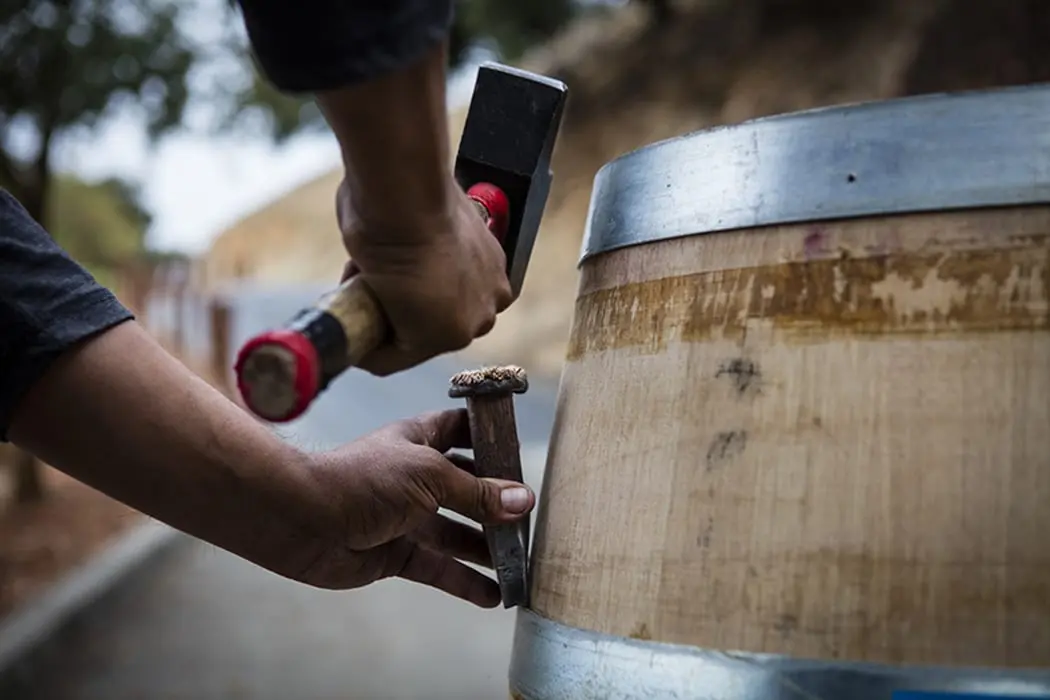
Cockburn’s (pronounced “Co-burns”) holds the largest wooden Port cellar in the historic quarter. The focus is craft — specifically cooperage. Most lodges ship barrels off-site for repair. Cockburn’s maintains in-house master coopers, one of the last operations of its kind in the port trade. Visit on a weekday during working hours (coopers work Monday to Friday, 9 a.m. to 4:30 p.m.) and you can stand on a viewing gallery watching them hammer iron hoops onto oak staves using techniques unchanged for centuries. The sound is industrial — hammer on metal, the smell of toasted wood — which adds a visceral layer that no static museum can replicate.
The tasting style is more relaxed than Graham’s: picnic-style on the patio, typically paired with quality cheeses and breads, with the option to upgrade to the exclusive John Smithes Room for a premium tasting of Vintage and aged Tawny ports.
- Location: Rua 31 de Janeiro 568, Vila Nova de Gaia
- Cost: from $28 (€26) for the Classic Tasting (three wines); up to $81 (€75) for the Vintage experience
- Best for: craft enthusiasts, anyone curious about cooperage, weekday travelers who want fewer crowds
- Time needed: 1.5 hours
The Riverfront Lodges: Sandeman, Burmester, and Cálem
Lodges along Cais de Gaia are the most accessible. That accessibility brings volume — and you need to separate the genuine articles from the tourist operations.
1. Sandeman
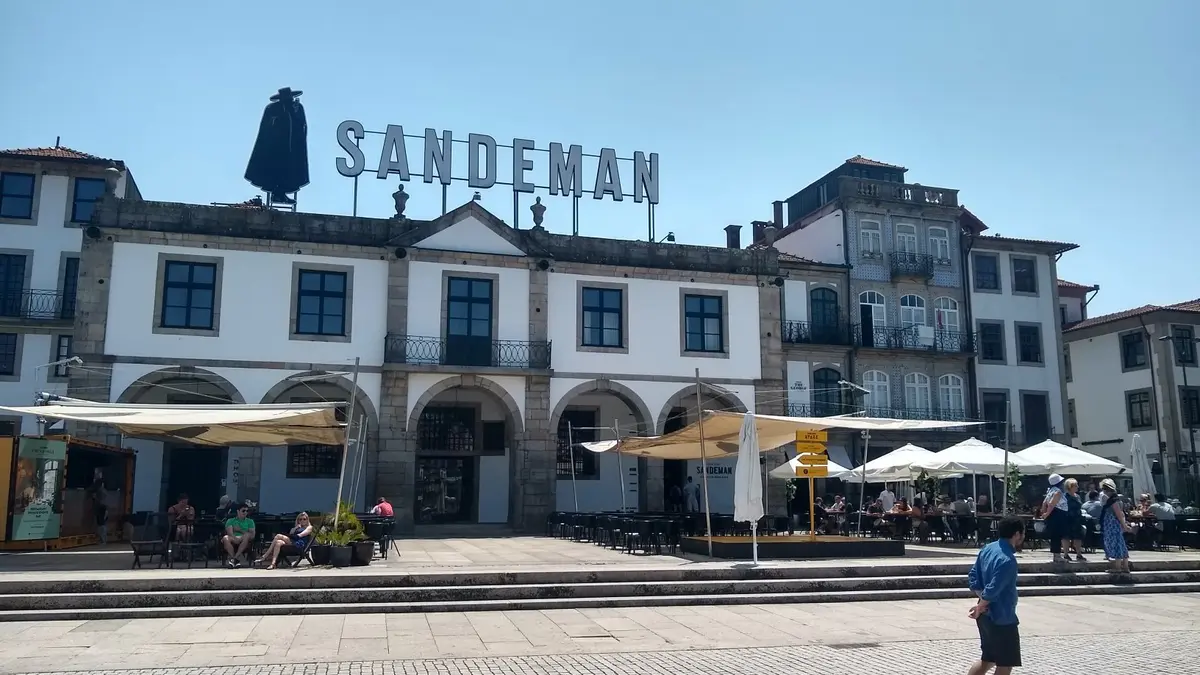
Sandeman is inescapable. The silhouette of “The Don” — the mysterious figure in a Spanish hat and Portuguese student cape — ranks among the world’s first global logos, registered in 1928. The tour is theatrical: guides often dress in the Don’s cape and hat, and the whole operation runs like a well-rehearsed play. It is good for first-time port tasters who want a clear, entertaining introduction. Wine enthusiasts accustomed to more rigorous lodge experiences will find the approach leans toward entertainment.
- Location: Largo Miguel Bombarda 3, Vila Nova de Gaia
- Cost: $24 (€22) for the basic visit with three wines (white, ruby, tawny); $32 (€30) with chocolate pairing
- Best for: first-time port tasters, families, visitors prioritizing an engaging introduction over depth
- Time needed: 1 hour
2. Burmester
Located at the foot of Dom Luís I Bridge — literally steps from where you land if you cross the lower deck — Burmester is the most strategically located cellar in Gaia. Despite the busy position, the interior surprises with atmospheric dark granite walls and low ceilings that feel more like a wine merchant’s vault than a tourist venue. It is an excellent choice if you only have 90 minutes in Gaia and want something with genuine character rather than corporate polish. The basic guided tour includes two wines; upgrade to the Premium or Exclusive tastings for three wines with chocolate pairing.
- Location: Largo Dom Luís I, Vila Nova de Gaia (right at the foot of the lower bridge deck)
- Cost: from $22 (€20) for the basic guided tour; $24 (€22) Premium; $27 (€25) Exclusive with aged wines
- Best for: time-pressed visitors, people crossing from Porto on the lower bridge deck, value seekers
- Time needed: 45 minutes to 1 hour
3. Cálem
Cálem moves the most visitors of any cellar in Gaia. Their tour uses 3D projection mapping on barrels and interactive olfactory stations — a multimedia approach that works better than it sounds for people who learn visually. Groups run up to 45 people, which is the trade-off. The Fado combination is the real draw: for $27 (€25), you get the tour, two wines, and a 45-minute Fado performance. Purists will note the Fado is staged for tourism, but the logistics are genuinely efficient — you experience two pillars of Portuguese culture in a single evening without coordinating separate bookings.
- Location: Av. Diogo Leite 344, Vila Nova de Gaia
- Cost: $22 (€20) standard visit with two wines; $27 (€25) for the Tour + Fado evening
- Best for: visitors wanting cultural combination, evening entertainment seekers, large groups, families with older children
- Time needed: 1.5 hours (Tour + Fado)
The Portuguese-Founded Houses: Ferreira, Ramos Pinto, and Poças
British names dominate the export market — Graham’s, Taylor’s, Cockburn’s, Sandeman. The Portuguese-founded houses offer a different narrative, one focused on Douro terroir and a long connection to the land rather than Anglo-Saxon trading partnerships.
1. Caves Ferreira
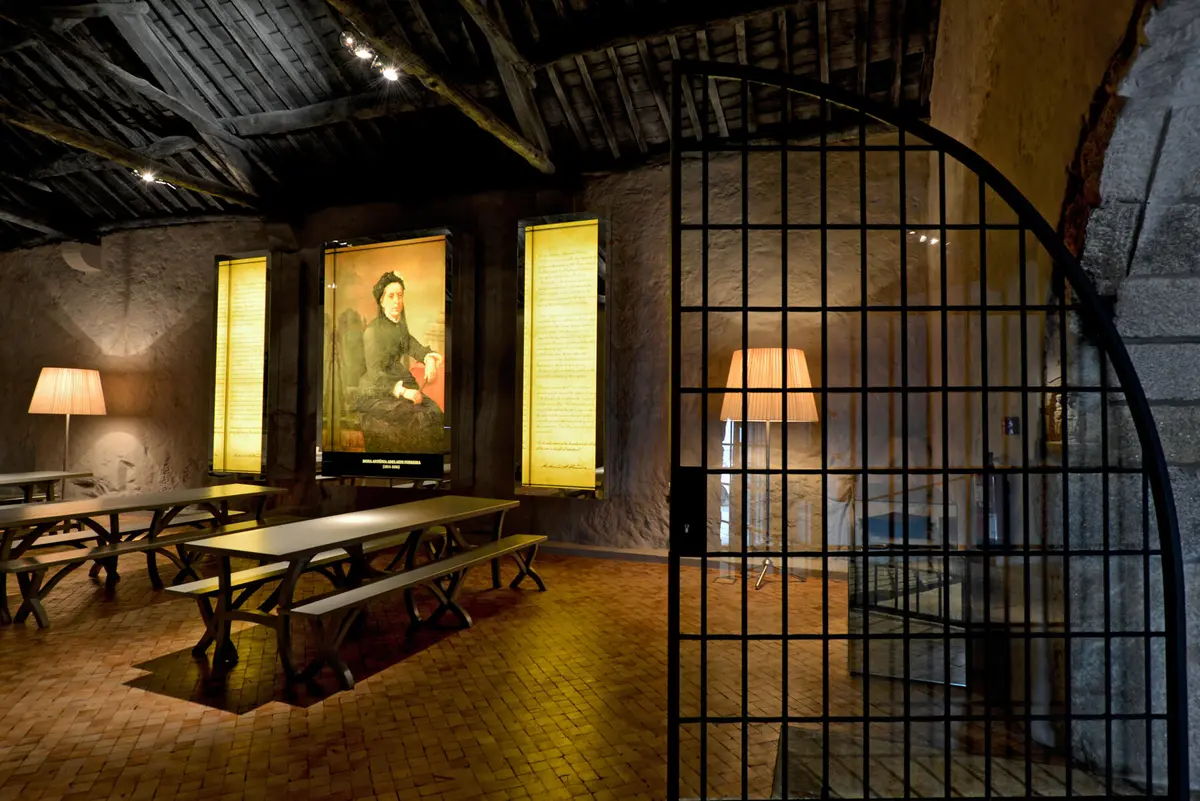
Founded in 1751, Ferreira remained in Portuguese hands throughout the height of British market dominance — a point the tour makes emphatically. The centerpiece is Dona Antónia Adelaide Ferreira, a 19th-century widow who rebuilt the Douro wine trade after the phylloxera crisis, financed roads, and improved conditions for vineyard workers. She is, depending on who you ask, the most important person in the history of Port wine.
The Azulejo Room is the visual differentiator. Most lodge tasting rooms follow a Gentlemen’s Club aesthetic — dark wood, leather, low light. Ferreira’s tasting room is a bright, high-ceilinged hall covered in spectacular yellow and blue Portuguese tiles (azulejos). It is the most photogenic tasting room in Gaia. The wines tend toward elegance and less residual sugar than many British-style ports — a meaningful difference if your palate runs dry.
- Location: Av. Ramos Pinto 70, Vila Nova de Gaia
- Cost: from $24 (€22) for the guided visit and tasting; premium experiences up to $173 (€160)
- Best for: cultural travelers, photographers, visitors who prefer drier, more elegant wine styles
- Time needed: 1-1.5 hours
2. Ramos Pinto
Ramos Pinto’s fame rests not just on wine but on marketing history. In the late 19th and early 20th centuries, the house commissioned provocative, eroticized Art Nouveau posters to sell port to Brazil and Europe — images that were considered scandalous at the time and are now collected worldwide. The tour walks through the preserved offices of founder Adriano Ramos Pinto: original typewriters, account ledgers, poster art still hanging where it was pinned a century ago. It feels more like a private archive than a commercial operation.
Pro Tip: Ramos Pinto can be particular about bookings. Their Museum Area is the highlight, but walk-ins are not always accommodated. Check availability online before building it into your day.
- Location: Av. Ramos Pinto 400, Vila Nova de Gaia
- Cost: from $22 (€20) for guided visit and tasting
- Best for: art and design enthusiasts, history travelers, advance planners who book online
- Time needed: 1-1.5 hours
3. Poças
Poças (pronounced “Poh-sass”) is smaller, 100% Portuguese family-owned, and sits slightly off the main riverfront track. Because it processes fewer visitors per day, tours feel genuinely personal — often led by long-term staff who know the Douro vineyards well and will answer technical questions without rushing. Skip Cálem for Poças if you have any serious interest in how different Douro sub-regions affect flavor. The price is lower than most lodges, and the atmosphere is closer to visiting a working producer than attending a ticketed attraction.
- Location: Rua Visconde das Devesas 186, Vila Nova de Gaia
- Cost: from $24 (€22)
- Best for: serious wine students, visitors wanting an intimate experience, anyone who has questions
- Time needed: 45 minutes to 1 hour
Is WOW Worth Adding to Your Cellar Itinerary?
WOW (World of Wine) is a 55,000-square-meter cultural district owned by the Fladgate Partnership that opened in former warehouse buildings adjacent to Taylor’s and the Yeatman Hotel. It is a genuinely different category from the traditional lodges — part museum complex, part Portuguese food and drink destination. Whether it belongs on your itinerary depends on what you want from the day.
The Pink Palace
A museum dedicated entirely to rosé wine, the Pink Palace is controversial among Port traditionalists but consistently rated highly by general visitors. The format includes tastings of five rosé varieties — including Croft Pink Port — alongside photo-friendly installations: a pink ball pit, a pink Cadillac, oversized art throughout. The visit is self-guided and takes about an hour.
This is not for learning about Douro terroir. It is for groups, for people with children, for anyone who has reached peak cellar fatigue after four hours in dark granite rooms. As a palate-cleanser and energy reset, it functions well.
- Location: WOW Cultural District, Rua do Choupelo 39, Vila Nova de Gaia
- Cost: $22 (€20) including five tastings
- Best for: social groups, visitors with children, wine fatigue sufferers, Instagram-motivated travelers
- Time needed: 1 hour
The Wine Experience
Unlike brand-specific lodges, The Wine Experience is a general wine museum covering soil types, grape varieties, global wine regions, and Port wine production. The displays are interactive and high-tech. It is the best option if you want foundational education before tasting — a calibration exercise that makes subsequent lodge visits considerably more meaningful. It also includes wine tastings and typically 3+ pours as part of the experience.
- Location: WOW Cultural District, Rua do Choupelo 39, Vila Nova de Gaia
- Cost: $22 (€20) including tastings
- Best for: complete beginners, educational groups, anyone who wants context before stepping into a cellar
- Time needed: 1.5-2 hours
What’s Actually Happening Inside Those Barrels?
Port wine ages in conditions of controlled temperature and high humidity inside oak casks — the foundation of a Portuguese wine tradition that runs deeper than any single lodge visit can reveal. The north-facing cellars in Gaia maintain a constant 55°F to 60°F (13°C to 16°C) year-round. Two processes define what you smell and taste: the Angels’ Share (evaporation that concentrates flavor over decades) and the thermal stability that prevents premature oxidation.
The Angels’ Share and What You Smell
When you enter a cellar like Cockburn’s, you are hit with a heavy, sweet scent. This is the Angels’ Share — alcohol and water evaporating through porous oak. In Gaia’s humidity, alcohol evaporates more slowly than water. The wine in the barrel actually increases in strength over time, concentrating sugars and flavors. This is why a 40-Year Tawny is so viscous and intense compared to a Ruby. They start from the same raw material; the barrel and time do the rest.
Pro Tip: Skip heavy perfume or cologne on tasting days. The ambient cellar scent is part of understanding what’s in the glass. Artificial fragrances will mask the dried fruit and spice notes in aged Tawny that you’re paying to experience.
The Temperature Drop
Visitors in July or August — the busiest months for Portugal travel — arrive dressed for 86°F (30°C) heat outside. Inside thick granite lodge walls, the temperature drops immediately to a constant 55°F to 60°F (13°C to 16°C). Bring a light layer — a scarf or cardigan. The rapid drop can induce shivering that distracts from the tasting and makes you drink faster to warm up, which is not the strategy.
The Port Tongs Ritual
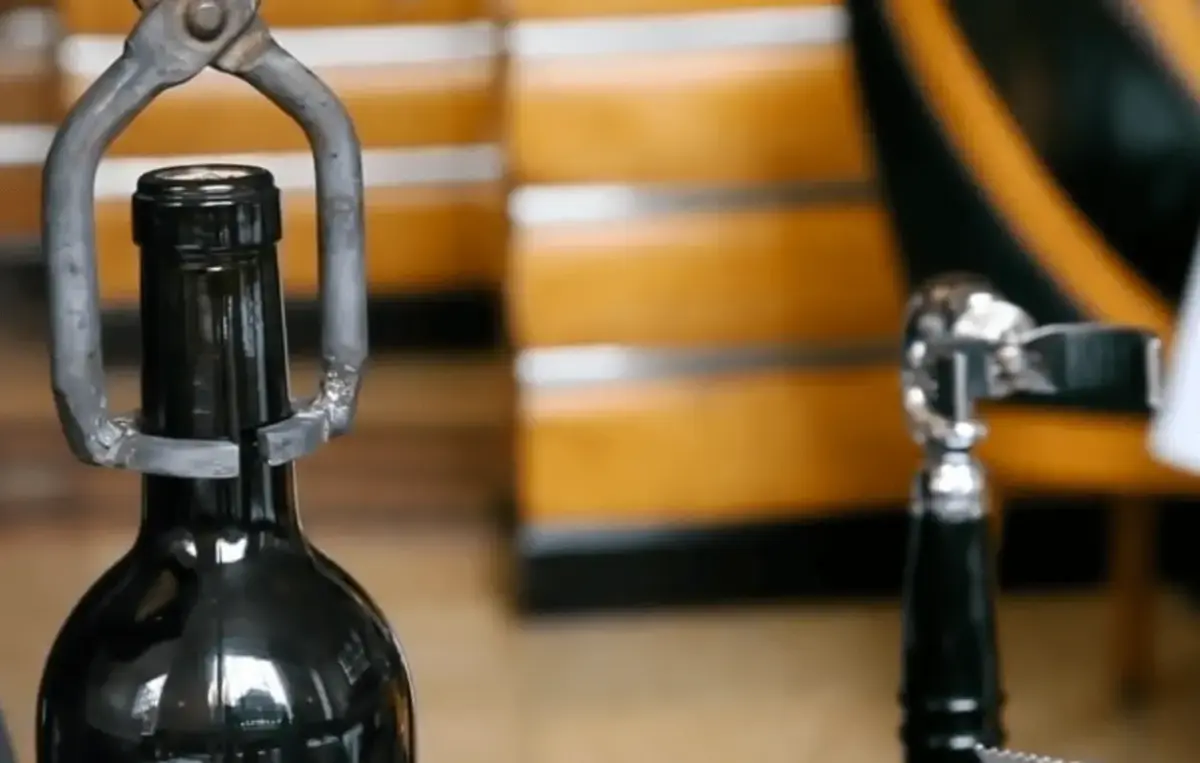
If you order a very old Vintage Port — say, a wine from 1970 or earlier — at Graham’s or Taylor’s, you may witness the Port Tongs ceremony (tenaz in Portuguese).
The problem: over 40+ years, natural cork degrades and becomes crumbly. A corkscrew would pulverize it, dropping debris into the wine.
The solution: the sommelier heats iron tongs until red-hot, clamps them around the bottle neck for about a minute, then applies a cold damp cloth. The thermal shock causes the glass to snap cleanly, removing neck and cork together without disturbing the sediment below. It is the most dramatic opening ritual in wine service and absolutely worth ordering an old Vintage just to see it performed.
The IVDP Tasting Room: Where Serious Port Drinkers Actually Go
The real contrarian pick is not in Gaia at all. It is back across the river in Porto, at Rua de Ferreira Borges.
The IVDP (Instituto dos Vinhos do Douro e do Porto) is the government certification body for all port wine. They operate a Sala de Provas (Tasting Room) open to the public but almost never mentioned by tour guides.
There is no sales pressure because they are not selling bottles — they are a government institute. Their tasting menu is encyclopedic: you can place a 40-Year Tawny from a tiny, obscure producer next to a Vintage from a major house and compare them side by side, which is impossible at brand-specific lodges. The atmosphere is quiet, library-like, and sophisticated. Prices are at-cost or with minimal markup. I have never waited more than five minutes for a seat.
Skip one riverfront lodge and spend the difference here. You will understand more in 45 minutes than in two hours at a multimedia production.
The Golden Loop Itinerary
A route that works well as the centrepiece of 2 days in Porto, balancing logistics, history, and sensory experience without destroying your schedule or your legs:
- 9:30 a.m. — Cross the upper deck of Dom Luís I Bridge on foot. Flat walking, good view of both cities.
- 10:00 a.m. — Taylor’s (High Lodge). Take the audio tour at your own pace. End with a glass of Chip Dry in the peacock garden.
- 12:00 p.m. — Take the cable car down to the riverfront. $7.50, four minutes, saves your knees.
- 12:30 p.m. — Lunch near the market, or cross via water taxi to Ribeira for a quick bite.
- 2:30 p.m. — Cockburn’s (Mid-Slope). Watch the coopers repairing barrels if it’s a weekday before 4:30 p.m.
- 5:00 p.m. — Take a taxi or Uber up to Graham’s. Do not walk.
- 5:30 p.m. — Vintage Room tasting at Graham’s. Taste a wine older than most people you know.
- 7:30 p.m. — Sunset dinner at Vinum (Graham’s), watching lights come up on the bridge you crossed that morning.
The Bottom Line
Port is fortified wine, typically 19% to 20% ABV. The pours at lodges are generous, and three cellars in one day means serious alcohol consumption. Hydration is not optional — it is the difference between a coherent evening and an early bedtime.
TL;DR: Start at Taylor’s for the audio freedom and the garden. Go to Graham’s for the most rigorous guided experience and the Vintage Room access that no other lodge matches. Hit Cockburn’s on a weekday for the cooperage. Skip the riverfront if you’re short on time — the IVDP Tasting Room across the river in Porto offers better wine education and zero sales pressure for a fraction of the cost.
Which experience are you choosing: the peacock gardens at Taylor’s, the Vintage Room at Graham’s, or the live cooperage at Cockburn’s?