
Lisbon’s tuk tuk tours exist for one reason: the city’s gradient. With hills reaching 15%, most visitors run out of legs before they run out of sightseeing. This guide covers real pricing, legal access restrictions, and the scams that target tourists waiting to board — so you spend less time confused and more time at the right viewpoints.
How do Lisbon’s tuk tuk restrictions change your tour?
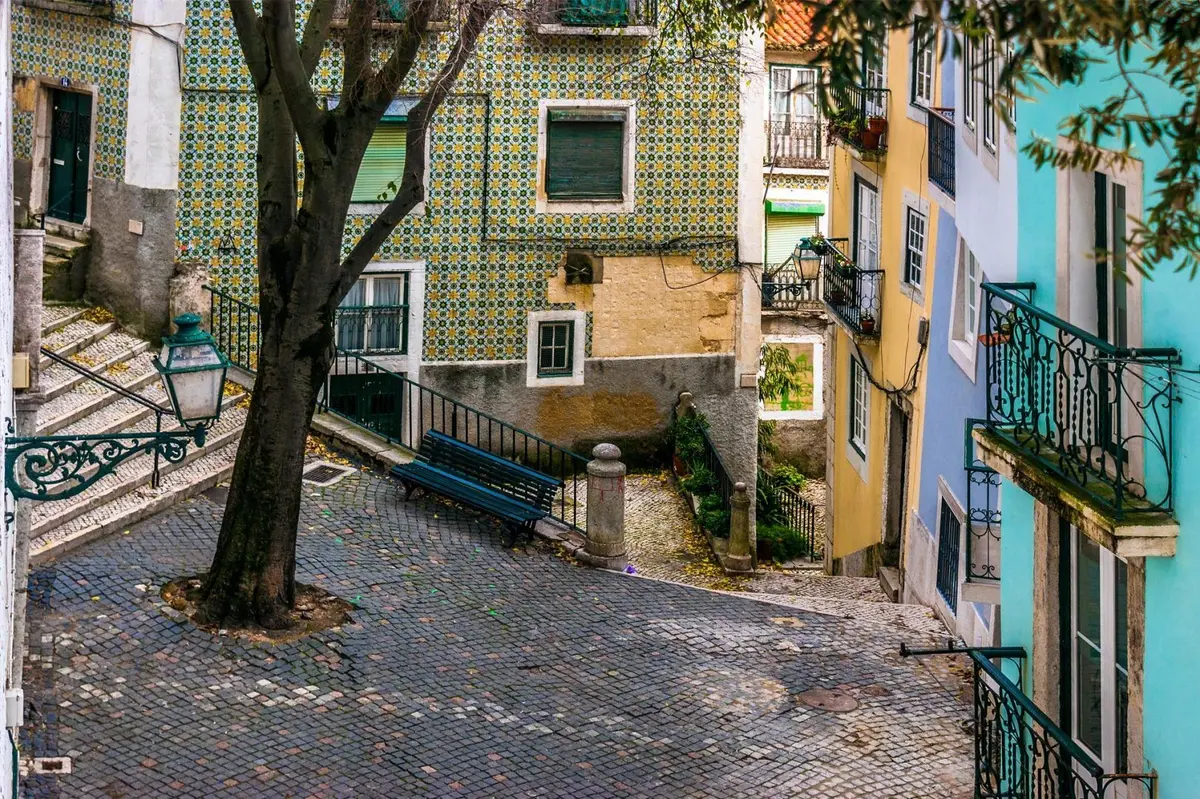
Lisbon enforces strict limits on tourist vehicles in the historic center. Exactly 337 streets across the old-town parishes are off-limits to tuk tuks, including deep interior sections of Alfama, Bairro Alto, and Castelo. The result is a “hub and spoke” operation: tuk tuks drive to legal viewpoints (miradouros) where you disembark, explore on foot, and rejoin the vehicle. Expect a 5-10 minute walk into the narrow alleyways from any drop-off point.
What this means in practice: do not expect door-to-door service if your hotel sits inside the restricted medieval quarters — a detail worth factoring in when you’re deciding where to stay in Lisbon. Your driver will drop you at designated perimeter points — typically the major miradouros — before the lanes narrow beyond legal limits. The industry adapted to this by building tours around the viewpoint circuit rather than the interior alleys.
Pro Tip: If you have mobility issues, confirm your exact pickup and drop-off points before booking. The “we’ll pick you up anywhere” promise is legally impossible in many historic zones.
How much does a Lisbon tuk tuk tour cost?
Tuk tuk tours use a per-vehicle pricing model, not per-person rates. At two to four passengers per vehicle, the math shifts dramatically in favor of groups — a useful frame for anyone mapping out their Portugal travel costs before arrival. A 2-hour tour at $130-$160 per vehicle works out to $33-$40 per person for four people — less than most city walking tours. Solo travelers pay the full vehicle rate regardless of group size.
| Tour Length | Total Cost (USD) | Cost Per Person (4 people) |
|---|---|---|
| 1 hour (Express) | $75-$95 | $19-$24 |
| 2 hours (Standard) | $130-$160 | $33-$40 |
| 3 hours (Extended) | $195-$235 | $49-$59 |
| 4+ hours (Full day) | $270+ | $68+ |
The 2-hour standard tour is the sweet spot. It covers the major hills with enough photo stops without the fatigue of longer rides.
Pro Tip: Traveling with another couple or family? Split a 4-person tuk tuk and you end up paying less per head than a hop-on-hop-off bus ticket ($20-$30 per person).
How do you spot a licensed tuk tuk in Lisbon?
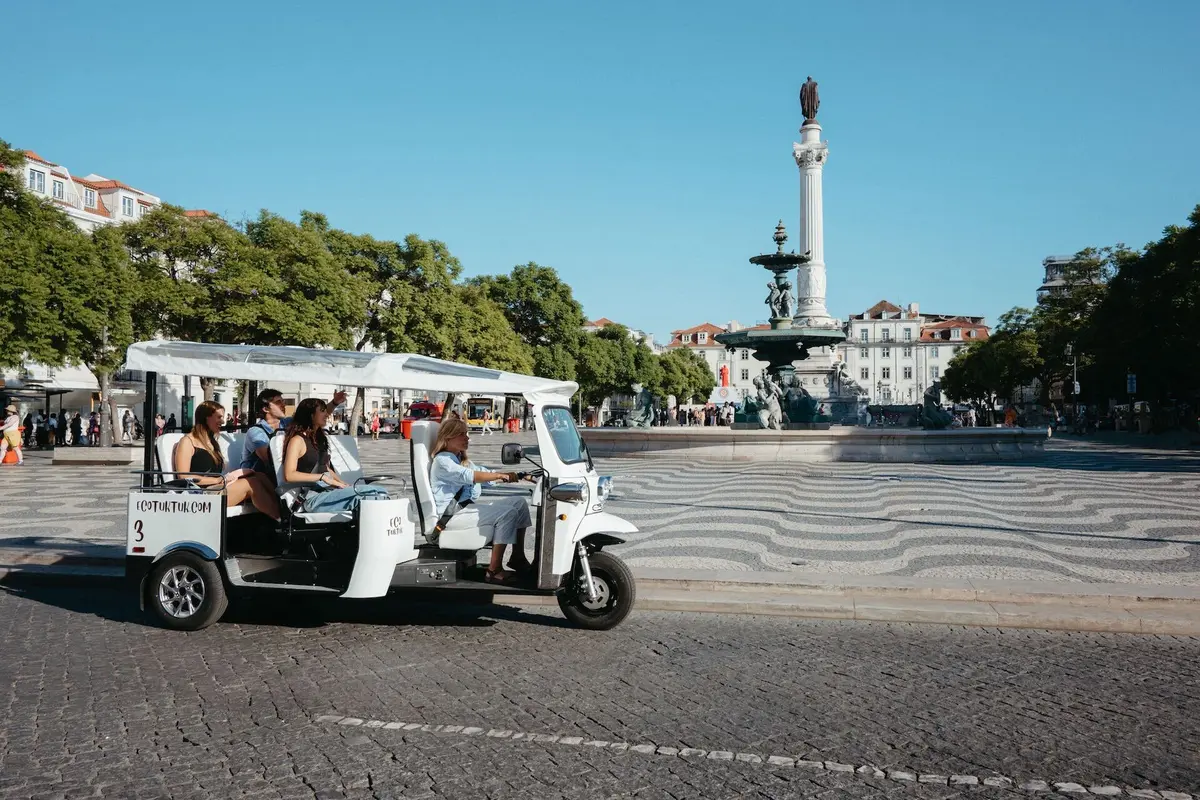
Every legal tuk tuk must display an RNAAT registration number — Registo Nacional dos Agentes de Animação Turística. Look for a small placard or sticker showing “RNAAT” followed by a registration number (example: RNAAT 1234). It is typically displayed on the vehicle’s side panel or dashboard. No visible registration? Walk away.
This is not bureaucratic trivia. The RNAAT number proves the operator carries liability and accident insurance. Ride in an unlicensed “pirate” tuk tuk and you are personally liable if an accident occurs on those slippery cobblestones.
The 100% electric fleet requirement is now standard across the city center. These silent motors let you actually hear your guide’s commentary instead of fighting against a sputtering engine — a real difference on a two-hour route.

Which Lisbon tuk tuk route is right for you?
The three main route categories serve different priorities: panoramic viewpoints over the old town, the monument district of Belém 6 miles west, and a nighttime boulevard circuit. Choose based on whether you want hills, history, or atmosphere — then match your group size and budget to the right vehicle count.
1. The Seven Hills Loop (Old Town Perimeter)
This classic route tackles Lisbon’s eastern hills through a circuit of viewpoints. Since deep Alfama streets are restricted, the tour maximizes panoramic overlooks over the old town and the Tagus.
Starting from Praça do Comércio or Martim Moniz, you climb past Lisbon Cathedral (Sé) toward the viewpoint network. The real moment comes at Miradouro de Santa Luzia and Portas do Sol — your gateway to the Alfama vista without entering the banned interior lanes. The ascent continues to Miradouro da Graça and Senhora do Monte, the city’s highest accessible point. From up there, orange rooftops cascade toward the Tagus River like frozen waves, and on clear mornings you can see across to the southern bank. The descent loops past the National Pantheon and São Vicente Monastery.
- Location: Alfama and Graça districts, starting from Praça do Comércio or Martim Moniz
- Cost: $130-$160 for 2-hour standard tour (per vehicle)
- Best for: First-time visitors and anyone planning 3 days in Lisbon who want classic viewpoint-to-viewpoint coverage
- Time needed: 2 hours
You’ll love the effortless hill climbing and the unobstructed photography angles from the open vehicle. Watch out for limited time on foot in the actual alleys — this is primarily a viewpoint tour now, not the back-alley experience some guides describe.
Pro Tip: If visiting on Tuesday or Saturday, ask your operator about detours around the Feira da Ladra flea market, which blocks certain approach streets on those mornings.

2. The Belém Run (The Flat Expedition)
While hills dominate the tuk tuk narrative, the 6-mile (10 km) journey to Belém solves a different problem: distance and crowd avoidance. Walking to Belém from downtown is impractical. Tram 15 runs packed and is a reliable spot for pickpockets. The tuk tuk offers a breezy 25-30 minute riverfront drive along Avenida da Índia with a cooling breeze off the water the entire way.
The route passes the swooping modern architecture of the MAAT museum, then the massive Padrão dos Descobrimentos monument celebrating Portugal’s Age of Discovery. The finale is Torre de Belém, the fortress that appears on every Lisbon postcard. Most drivers know the locals-only queue approach at Pastéis de Belém bakery and will wait while you grab the famous custard tarts.
- Location: Western waterfront, 6 miles (10 km) from city center
- Cost: $130-$160 for round-trip tour (per vehicle)
- Best for: Families with kids and monument enthusiasts
- Time needed: 2-3 hours with stops
You’ll love skipping the tram crush and arriving without the usual sweaty uphill walk from the riverfront. Watch out for summer heat — bring sunscreen, as this entire route runs exposed along the river with almost no shade.

3. The Night Lights Tour
After dark, the route shifts from narrow old-town lanes to the lit boulevards of Avenida da Liberdade and the grand squares of Baixa and Chiado. The medieval alleys are dark and less visually interesting at night, while the main avenues glow with theatrical lighting. December visitors get the added bonus of the city’s decorations — Christmas in Lisbon transforms the main avenues end to end with lights.
- Location: Downtown boulevards and main squares (Baixa, Chiado, Avenida da Liberdade)
- Cost: $95-$130 for 1.5-hour evening tour (per vehicle)
- Best for: Photography enthusiasts and couples
- Time needed: 1.5 hours
You’ll love the cooler temperatures and the city’s lighting at its most dramatic. Watch out for fewer stops — this route is more drive-through than the hill tours, with limited on-foot exploration.
Tuk tuk vs. Tram 28: which actually wins?
Tram 28 is Lisbon’s most photographed public transport. Between 10 a.m. and 5 p.m., it is also a miserable experience. The queue alone runs 45-90 minutes at peak hours, and once aboard, you stand in sardine-can conditions while pickpockets work the crowd at Portas do Sol. The tuk tuk wins on every practical metric except price — but that gap narrows fast with a group of four.
| Feature | Tram 28 | Electric Tuk Tuk |
|---|---|---|
| Wait time | 45-90 minutes in queue | Scheduled pickup, zero wait |
| Crowd density | Sardine-can conditions | Private vehicle for your group |
| Views | Often blocked by standing passengers | 360-degree open-air visibility |
| Pickpocket risk | High — notorious hotspot | Minimal — private and monitored |
| Comfort | Standing, jerking stops, heat | Cushioned seats, smooth electric ride |
| Cost | $3.50 per person | $33-$40 per person (split 4 ways) |
Tram 28 rewards the nostalgic traveler willing to board before 9 a.m. to beat the crowds. The tuk tuk serves the pragmatic visitor who values time, safety, and guaranteed views over the “authentic” price of public transit. On my last visit, the tuk tuk queue at Praça do Comércio moved in under five minutes while the tram queue stretched around the corner.

Tuk tuk vs. Uber: when does each make sense?
An Uber in Lisbon costs $5-$10. A tuk tuk costs $130 for two hours. So why choose the expensive option?
The first factor is visibility. Uber operates closed sedans where you cannot see building tops or the hill layout. Tuk tuks are open-air vehicles where you experience the architecture rather than just pass through it. The second factor is narration. Your Uber driver navigates traffic. Your tuk tuk driver narrates history. You are paying for commentary and curated stops, not just movement.
Use Uber for utility — airport to hotel, hotel to restaurant. Use tuk tuks for the hills and viewpoints where the journey is the experience.
Is it worth walking instead of taking a tuk tuk?
Lisbon’s gradients reach 10-15% inclines, and the calçada portuguesa — the traditional cobblestone pavement — is polished smooth and treacherous when wet. For most visitors, the legs give out well before the sightseeing does.
The hybrid strategy works best: use the tuk tuk to ascend and traverse the hills, then walk down (if knees allow). You preserve the uphill energy while still getting intimate alley exploration on the descent. This approach pairs naturally with the hub-and-spoke restriction model. The tuk tuk delivers you to high viewpoints; you explore downward into the restricted zones on foot at your own pace.
What scams target tuk tuk tourists in Lisbon?
Most Lisbon scams concentrate around the same places tourists wait to board tuk tuks: Praça do Comércio, major viewpoints, and narrow entry points to Alfama. A broader look at safety in Portugal is useful context, but knowing the three setups below is enough to handle most situations.
The “Bay Leaf” Drug Hustle
Well-dressed men around Praça do Comércio approach tourists and whisper offers for hashish or cocaine. They are selling crushed bay leaves, flour, or vitamins — not drugs. It is a con, and engaging in any way wastes time at minimum.
Defense protocol: zero engagement, no eye contact, keep walking. These hustlers concentrate near tuk tuk pickup points precisely because stationary tourists are easier to approach.
The “Fake Petition” Pickpocket
Groups of young people — often claiming to be deaf or mute charity workers — ask tourists to sign clipboards. While you hold the board and your attention is on the page, an accomplice unzips bags or picks pockets. They target stationary tourists at viewpoints like Portas do Sol and at vehicle boarding points.
Defense protocol: refuse to sign anything on the street, keep hands on bags or in pockets.
The “Time Shave” Short Tour
A dishonest driver quotes a 2-hour price ($130) but drives quickly, skips stops, and returns you in 75 minutes claiming “we saw everything.” This happens almost exclusively with unlicensed street-hail operators who have no contractual obligation.
Defense protocol: set the clock explicitly before moving. Say, “We’re starting at 2:00 PM, finishing at 4:00 PM — correct?” Then name a specific stop: “This includes 15 minutes at Senhora do Monte?” Platform-booked tours have contractual durations and documented accountability.
Should you book a tuk tuk on the street or online?
Street hailing offers two potential advantages: bargaining room (especially in low season) and immediate availability. Everything else tilts toward platform booking.
Street-hail operators at Praça do Comércio typically open at $160 for 2 hours. Experienced negotiators can push this to $110-$130, but not lower due to fixed electric charging costs and licensing fees. Cash-only demands are common, there is no accountability trail if something goes wrong, and spotting an unlicensed vehicle in the moment is harder than it sounds.
Platform booking delivers fixed transparent prices, verified RNAAT compliance, guaranteed electric vehicles, credit card payment security, and documented recourse if the driver no-shows or cuts the tour short.
Pro Tip: Book through a platform for your first Lisbon tuk tuk experience. Once you know what a legitimate operator looks and operates like, street hailing on a return visit is a reasonable option if the RNAAT number checks out.

Do Lisbon tuk tuk tours run in rain and winter?
Lisbon’s tuk tuks operate year-round. Operators snap on transparent rain covers within minutes of a shower, and most vehicles carry fleece blankets for the riverfront runs. The cover keeps passengers dry while maintaining full visibility of the route.
Winter months — November through February — carry practical advantages most guides skip, and anyone planning a winter in Portugal trip should factor these in. Fewer tourists mean shorter waits at every viewpoint, lower street-hail prices (off-season negotiating is real here), and temperatures cool enough to make the open-air ride comfortable rather than draining. Dramatic cloud formations over the Tagus also produce better photography light than the flat midday glare of August.
Pro Tip: Book morning tours in winter. Lisbon’s hills catch low-angle sunlight before noon, and afternoon showers are common enough to make morning the safer scheduling call.
What to know about tuk tuk safety before you board
Lisbon’s cobblestones generate a bumpy ride locals call the “shake, rattle and roll” effect — it is genuine and constant on the hilly sections. Legitimate drivers refuse to move until all seatbelts are fastened. Police fine drivers for unsecured passengers, so any driver skipping the seatbelt check is a meaningful red flag about everything else.
Children under 12 years old or under 4.4 feet (1.35 m) tall require child retention systems. Request booster seats when booking because street-hail operators will not have them ready. Most licensed platform operators carry approved child safety seats; confirm availability at booking, not at the vehicle. Visitors with specific mobility needs should also consult our accessible travel in Lisbon guide, which covers which operators offer vehicle modifications and assistance.

The bottom line
A Lisbon tuk tuk tour is not a tourist trap when executed correctly. It is tactical urban mobility that defeats the hills, bypasses Tram 28 queues, and runs on silent electric motors while a local narrates the city’s layers from 711 AD to the 1755 earthquake to last decade’s restaurant boom — one of the most satisfying entries in any Portugal travel guide itinerary.
TL;DR: Book through a reputable platform for RNAAT compliance and fixed pricing. Understand that the 337-street restriction means viewpoint tours, not back-alley crawls. Do the per-person math on a group vehicle — that $130 becomes $33 each for four people.
Which route fits your Lisbon priorities: the Seven Hills viewpoints, the monument-heavy Belém run, or the lit night boulevards?