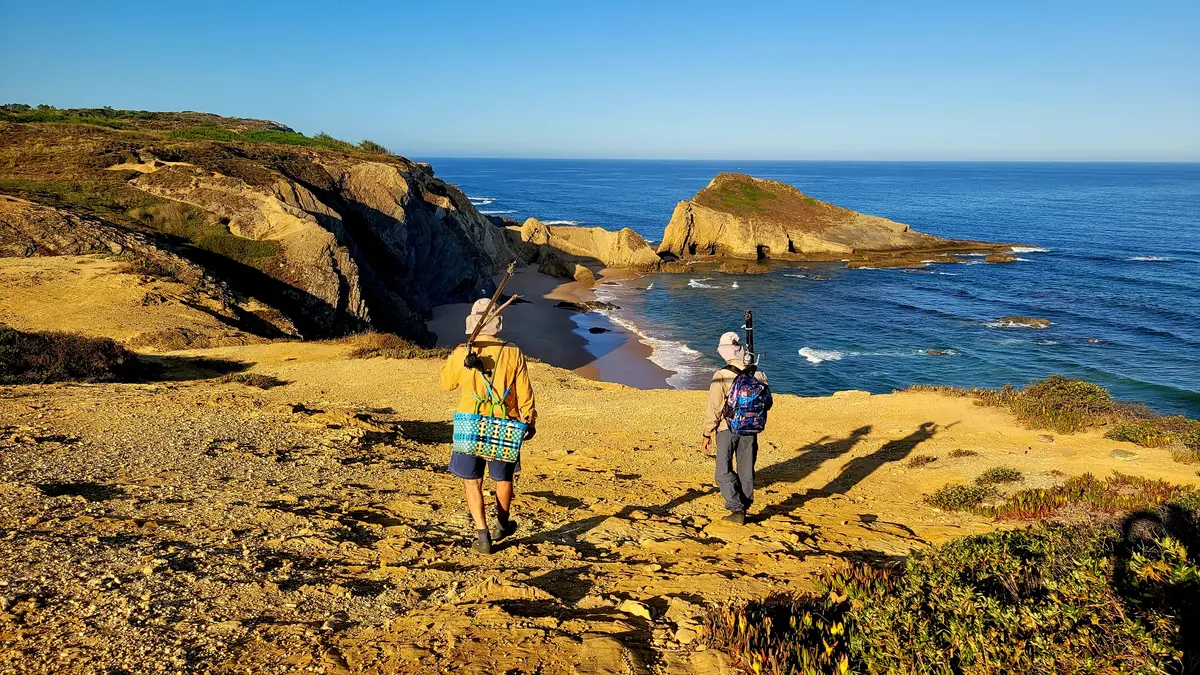
Forget the Camino. Portugal’s Fishermen’s Trail runs 140 miles (226 km) of raw Atlantic coastline, whitewashed fishing villages, and some of the best seafood in Europe — without the pilgrimage crowds. This guide covers everything you need to tackle one of the best hikes in Portugal — the Rota Vicentina’s coastal route — from sand-walking strategy to where storks nest directly on sea cliffs.
What is the Fishermen’s Trail?
The Fishermen’s Trail (Trilho dos Pescadores) is the coastal route within Portugal’s Rota Vicentina network, tracing the edge of the Southwest Alentejo and Vicentine Coast Natural Park. It runs from Porto Covo in the Alentejo south to Lagos in the Algarve, following paths carved by local fishermen over centuries as they accessed remote clifftop fishing spots along the coast.
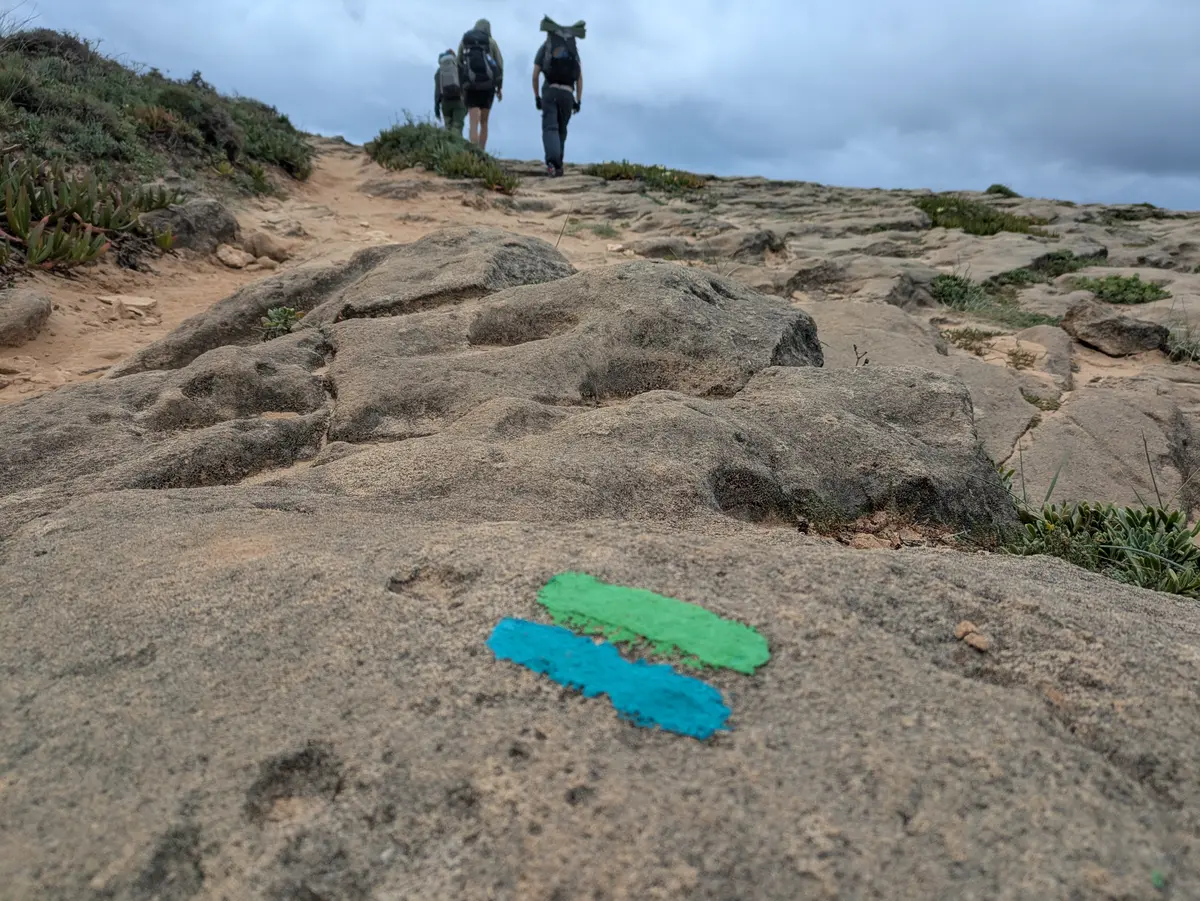
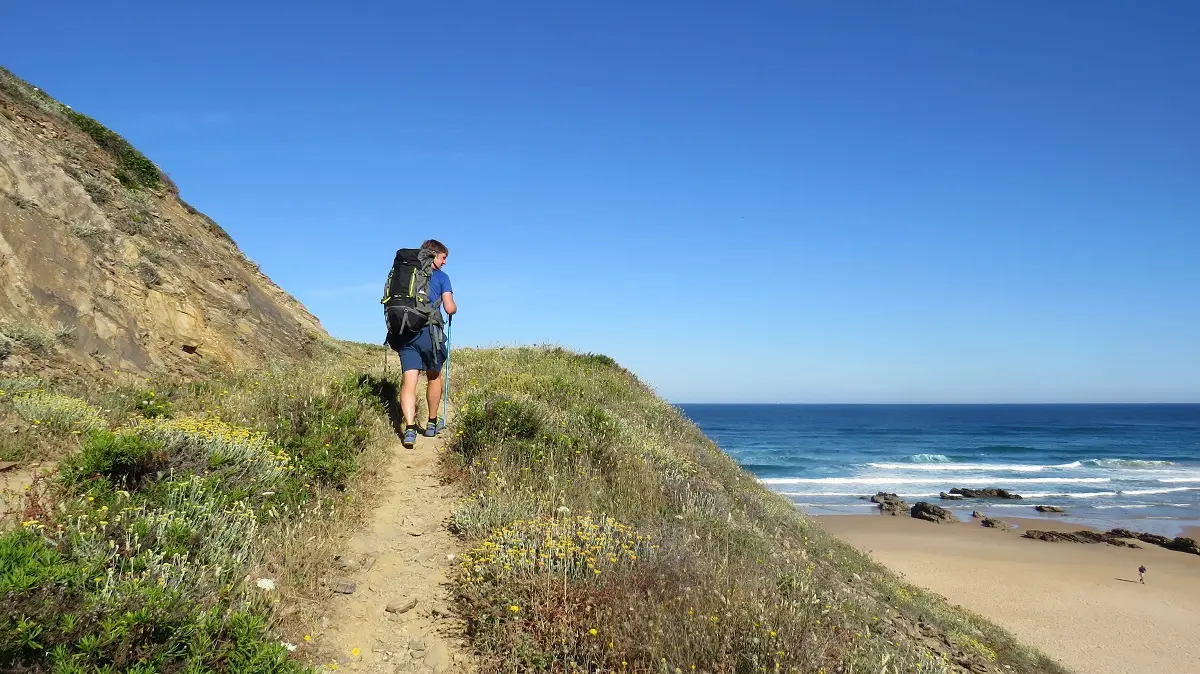
You are walking a working landscape turned hiking trail. Expect to share the path with wetsuit-clad locals hauling gear to the ocean. The trail is marked with blue and green horizontal stripes painted on rocks and wooden posts. An “X” means wrong way.
Pro Tip: Download GPX tracks via AllTrails or Hiiker before you go. The waymarking is excellent, but digital backup helps when navigating the sprawling layouts of trail towns.
Why does sand change everything on this trail?
Most hiking guides undersell this: 60-70% of the northern sections involve walking on deep, soft sand. This is not a beach stroll — it demands 2.1 to 2.7 times more energy than hard surfaces, targeting muscle groups that typical mountain hikers never train. Those who prefer the gentler side of Portugal’s Atlantic beaches will find plenty of options elsewhere — but this stretch is built for endurance, not leisure.
Your calves and Achilles tendons work overtime stabilizing each step in loose terrain. Hikers who routinely cover 20-mile (32 km) mountain days often struggle here because sand recruits entirely different muscle groups. The Porto Covo to Vila Nova de Milfontes stage is the notorious benchmark — 12.5 miles (20 km) of near-unrelenting soft dunes with zero shade. The effort level feels closer to 18 miles (30 km).
Wear trail runners, not boots. Heavy boots trap heat, fill with sand, and fight against your foot’s natural flex in soft terrain. Lightweight, breathable trail runners from the current Hoka Speedgoat or Altra Lone Peak line perform significantly better here than any hiking boot.
Pro Tip: Sand gaiters are non-negotiable. These lightweight lycra wraps prevent sand from entering your shoes and causing blisters. Without them, you stop every mile to dump sand — and your feet pay for it by mid-afternoon.
When should you hike the Fishermen’s Trail?
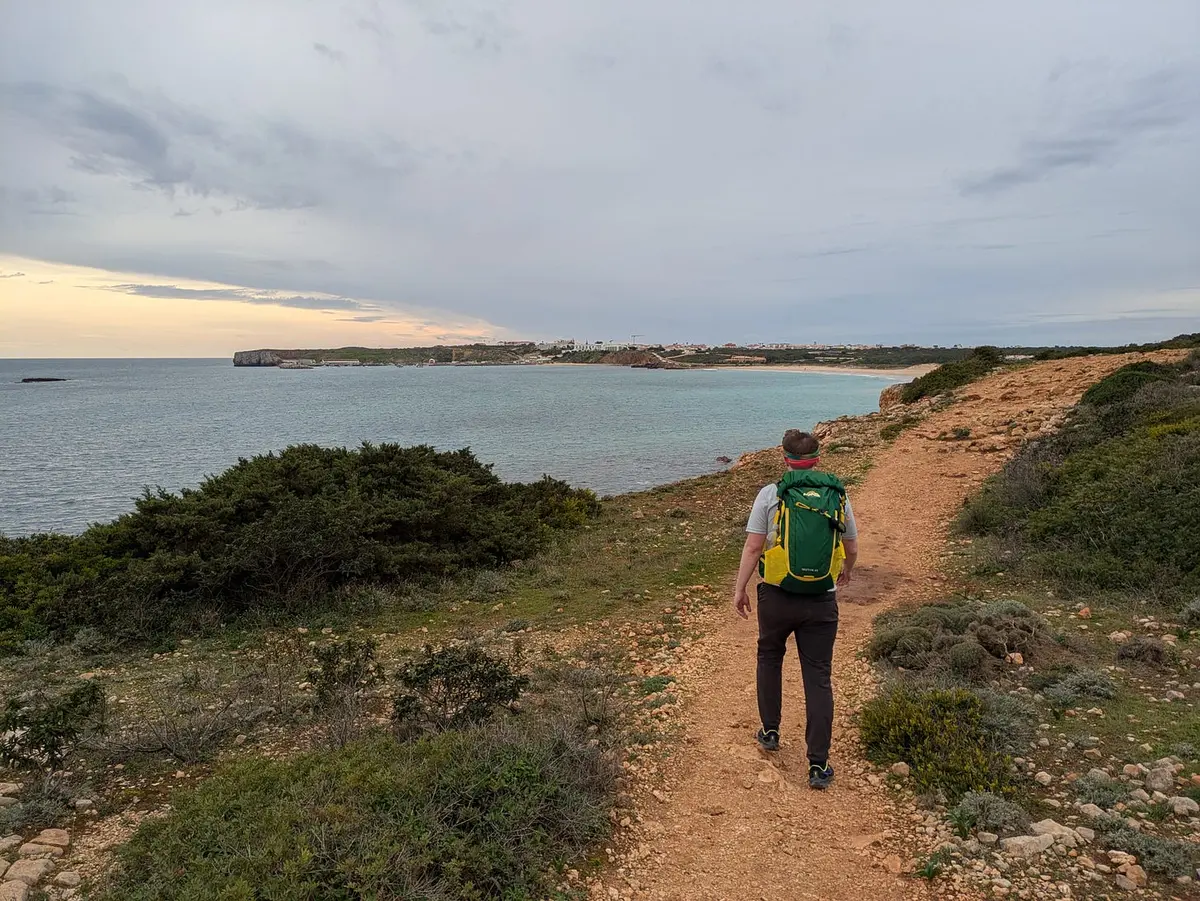
Spring (March-May) and autumn (September-November) are the right windows — consistent with the best time to visit Portugal for most of the country. Summer heat makes the exposed clifftops brutal — 5+ miles of shadeless dune walking in 90°F (32°C) is a different experience than the same stretch in 68°F (20°C). Winter brings frequent rain and Atlantic winds strong enough to make cliff walking genuinely hazardous.
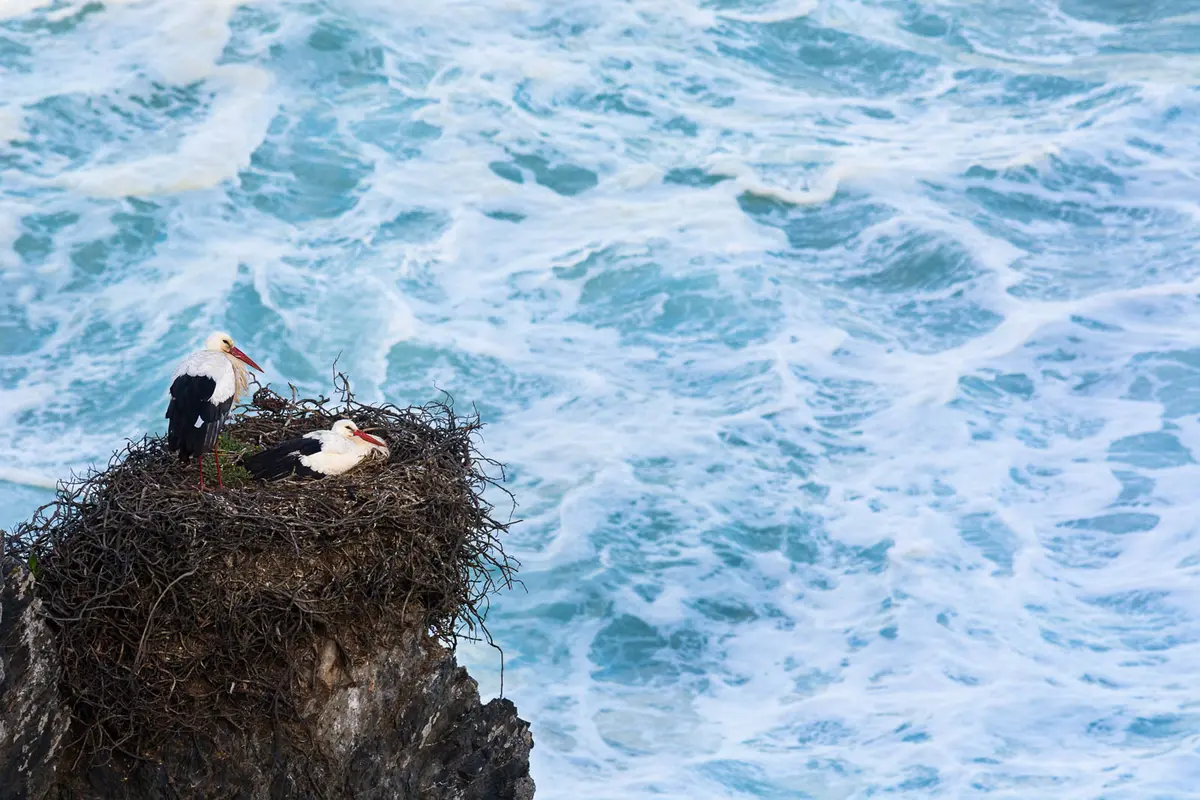
Spring delivers wildflower bloom and nesting storks. The coastal heath fills with rockrose, releasing a resinous, amber-like scent across the trail. White storks build nests on sea cliffs here — the only place in the world where this species does so. Autumn brings warm ocean swimming and stable weather. The Atlantic reaches its warmest temperatures, crowds thin significantly, and accommodation is easier to secure.
- Spring temperatures: 59-75°F (15-24°C)
- Autumn temperatures: 64-79°F (18-26°C)
Pro Tip: Hike north to south — Porto Covo to Lagos. The prevailing northwesterly Nortada winds blow at your back rather than blasting sand into your face for six to eight hours daily.
The classic Alentejo stages: Porto Covo to Odeceixe
The northern section is where the trail’s wildest character lives. Four stages of remote southern Portugal coastline, minimal infrastructure, and the deep-sand terrain that defines the Fishermen’s Trail experience. Most hikers who do only part of the route choose this section — and leave satisfied.
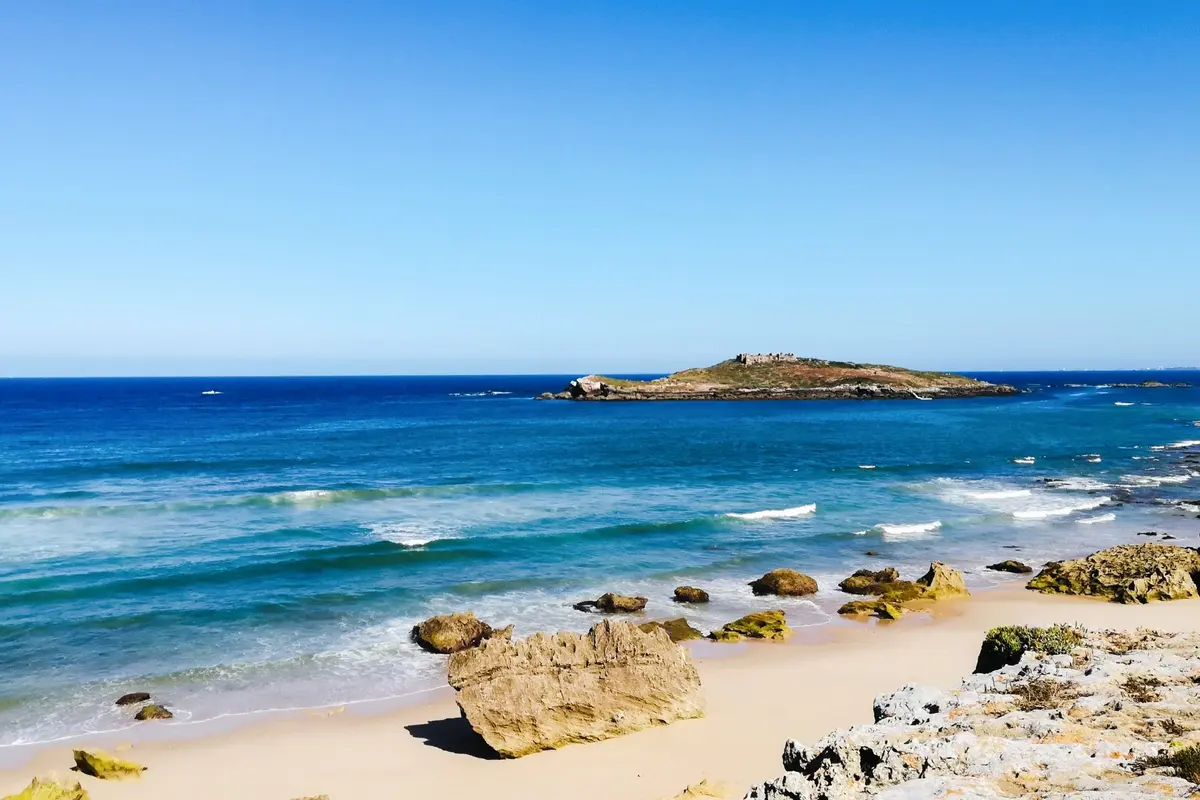
1. Porto Covo to Vila Nova de Milfontes — the sand gauntlet
This stage separates casual hikers from committed ones. You leave Porto Covo’s charming grid-pattern streets and immediately hit deep dune systems that continue almost without interruption to the Mira River estuary.
Ilha do Pessegueiro (Peach Tree Island) dominates the horizon as you trudge south — an offshore island with a ruined 16th-century fort, with the corresponding Fort of Nossa Senhora da Queimada watching from the mainland cliffs. UV exposure is absolute out here: sun reflects off sand and ocean simultaneously. Bring 2 liters (68 oz) of water minimum and apply sunscreen before you leave the trailhead.
- Distance: 12.5 miles (20 km)
- Difficulty: High
- Location: Alentejo coast, southwest Portugal
- Elevation gain: Under 500 ft (150 m)
- Best for: Conditioned hikers who have trained on soft surfaces
- Time needed: 6-8 hours
2. Vila Nova de Milfontes to Almograve — shade and geology
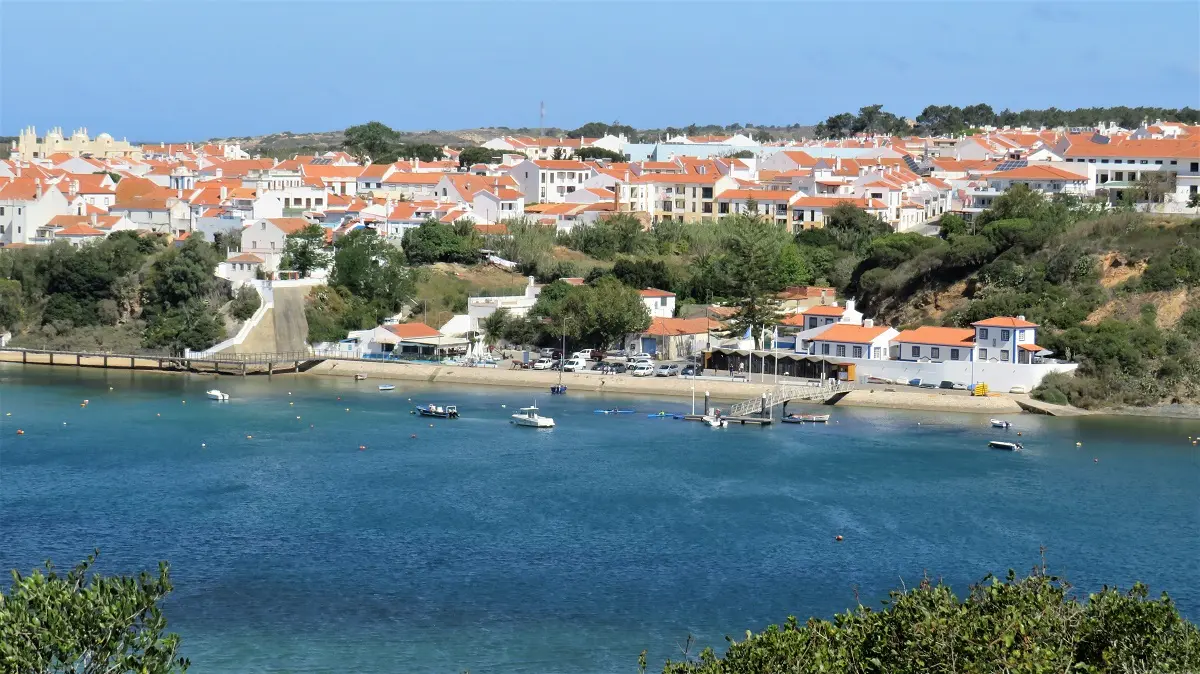
The day starts with a river crossing decision. The Mira River ferry (Taxi Boat Maresia) charges €5 ($6) one-way per adult and delivers you directly to the trail’s south bank. The alternative is a tedious road bridge detour that adds miles and misses the best morning view of the São Clemente fortress from the water. Book the crossing in advance, especially in spring — the boatman runs a tight schedule with multiple groups.
After crossing, the geology shifts to reddish hues as you wind through acacia forests — rare shade on this route. Furnas Beach offers mid-hike swimming in protected coves. The final approach to Almograve returns to high cliffs with views over coastline no road reaches.
- Distance: 9.3 miles (15 km)
- Difficulty: Moderate
- Location: Between Vila Nova de Milfontes and Almograve
- Elevation gain: Moderate rolling agricultural plateaus
- Best for: Hikers seeking terrain variety and shade breaks
- Time needed: 4-5 hours
3. Almograve to Zambujeira do Mar — stork country
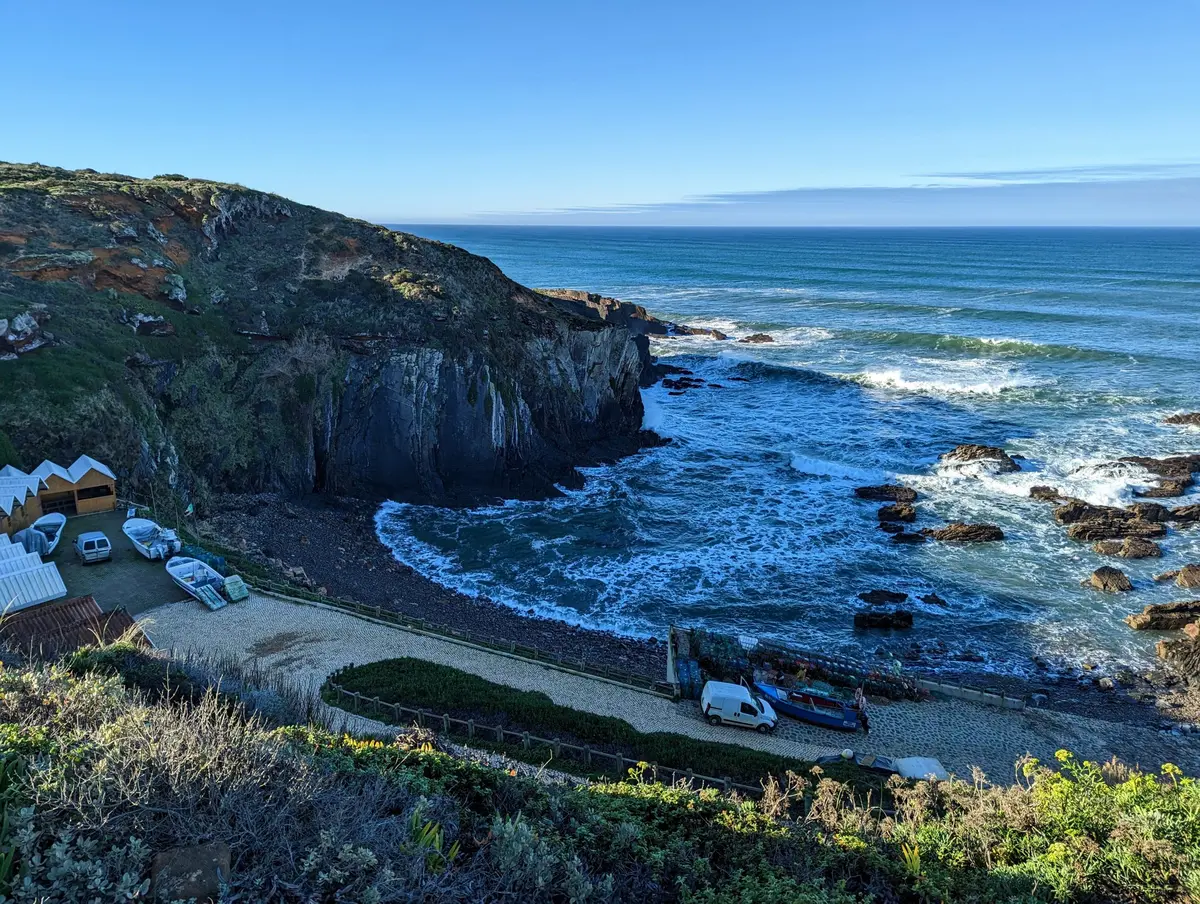
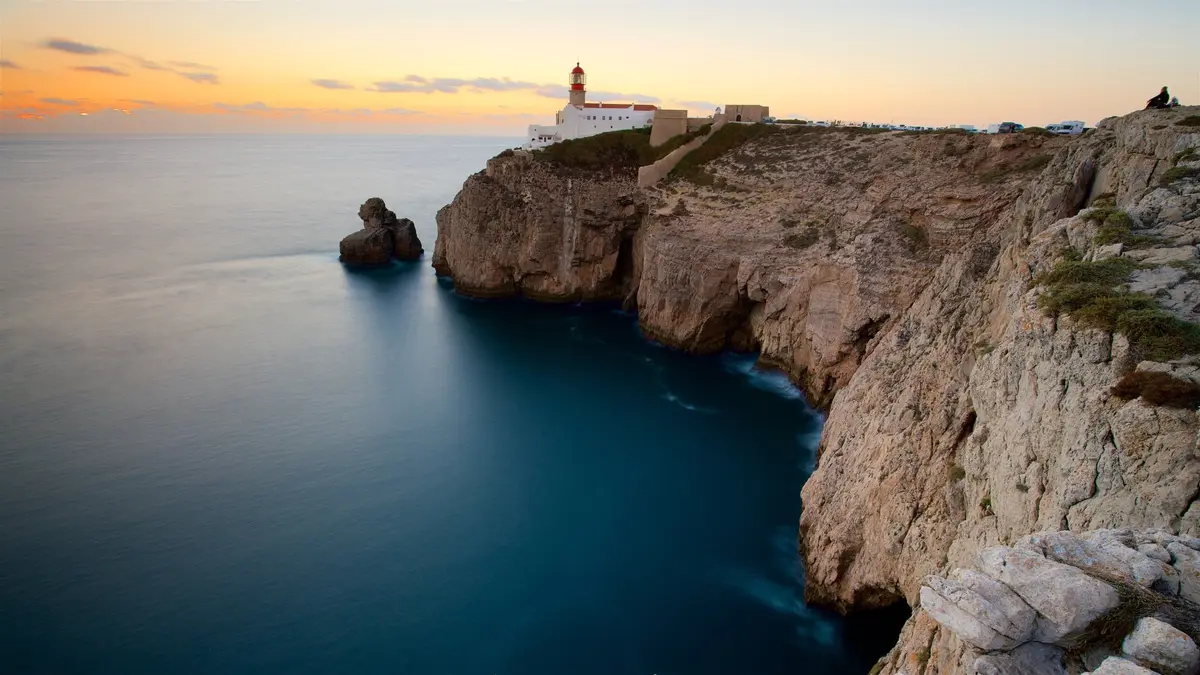
This section passes Cabo Sardão Lighthouse, built with an unusual quirk — the entry door faces the ocean instead of inland. The vertical cliffs serve as eye-level galleries for white stork nests. You are looking directly across at birds perched on ledges 330 feet (100 m) above the Atlantic, not through binoculars from below.
The path stays well back from unstable sedimentary edges, but the exposure is real. Zambujeira do Mar perches on high cliffs at the end. The whitewashed Chapel of Nossa Senhora do Mar overlooks a wide bay where locals fish from precarious ledges below.
- Distance: 13.7 miles (22 km)
- Difficulty: Moderate to High
- Location: Northern Alentejo coast
- Elevation gain: 1,640 ft (500 m) cumulative
- Best for: Strong hikers comfortable with sustained cliff exposure
- Time needed: 6-8 hours
4. Zambujeira do Mar to Odeceixe — waterfalls and a border crossing
Praia da Amália is the highlight — a beach where waterfalls cascade directly onto the sand. The path turns lush with bamboo tunnels and stream crossings, a stark contrast to the exposed dunes of earlier stages.
The stage ends with views of Praia de Odeceixe from Ponta em Branco (White Tip) cliffs. This horseshoe bay, where the Seixe River meets the ocean, marks the border between Alentejo and Algarve — one of the most satisfying geographic punctuation marks in Portuguese hiking.
Check tide tables before you start. At low tide, you wade across the river mouth at the finish — refreshing after miles of sand. At high tide, a 2.5-mile (4 km) inland detour to the road bridge adds time and ruins your legs’ relationship with you.
- Distance: 11.2 miles (18 km)
- Difficulty: Moderate
- Location: Alentejo-Algarve border
- Elevation gain: Moderate rolling hills
- Best for: Photographers and anyone who needs a waterfall payoff
- Time needed: 5-6 hours
The Algarve extension: Aljezur to Sagres
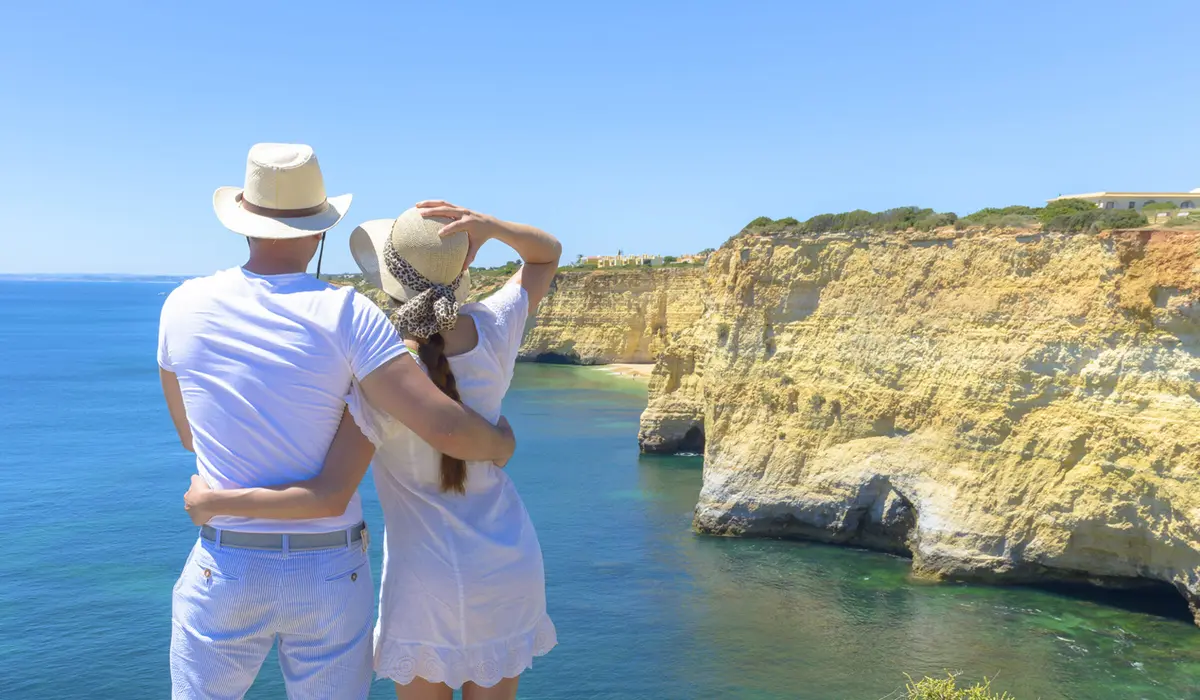
The Algarve stages trade the raw remoteness of the Alentejo for increasingly dramatic geology — warm orange limestone cliffs instead of grey schist, turquoise water instead of grey-green Atlantic. The trail also becomes more developed, with surf towns and beach resorts more visible as you approach Lagos.
Skip the Sagres extension if your time is limited. Once you pass Arrifana, the trail increasingly connects resort towns rather than wild coastline. The Alentejo ends at Odeceixe — for most hikers, that is where the real trail ends too. The final stages toward Lagos feel more like connecting dots between beach bars than actual wild hiking.
5. Aljezur to Arrifana — moonscape and needle rock
The trail returns to the coast at Monte Clérigo, then climbs to exposed plateaus leading to Arrifana — a surf village and one of the standout spots for surfing in Portugal, perched above a crescent bay with long-period Atlantic swells. The Pedra da Agulha (Needle Rock) rises from the ocean like a natural monument. Wind-sculpted vegetation becomes sparse from this point; the Atlantic’s full force shapes everything you see.
- Distance: 10.6 miles (17 km)
- Difficulty: Moderate
- Location: Western Algarve coast
- Elevation gain: 1,150 ft (350 m)
- Best for: Surfers and raw ocean enthusiasts
- Time needed: 5-6 hours
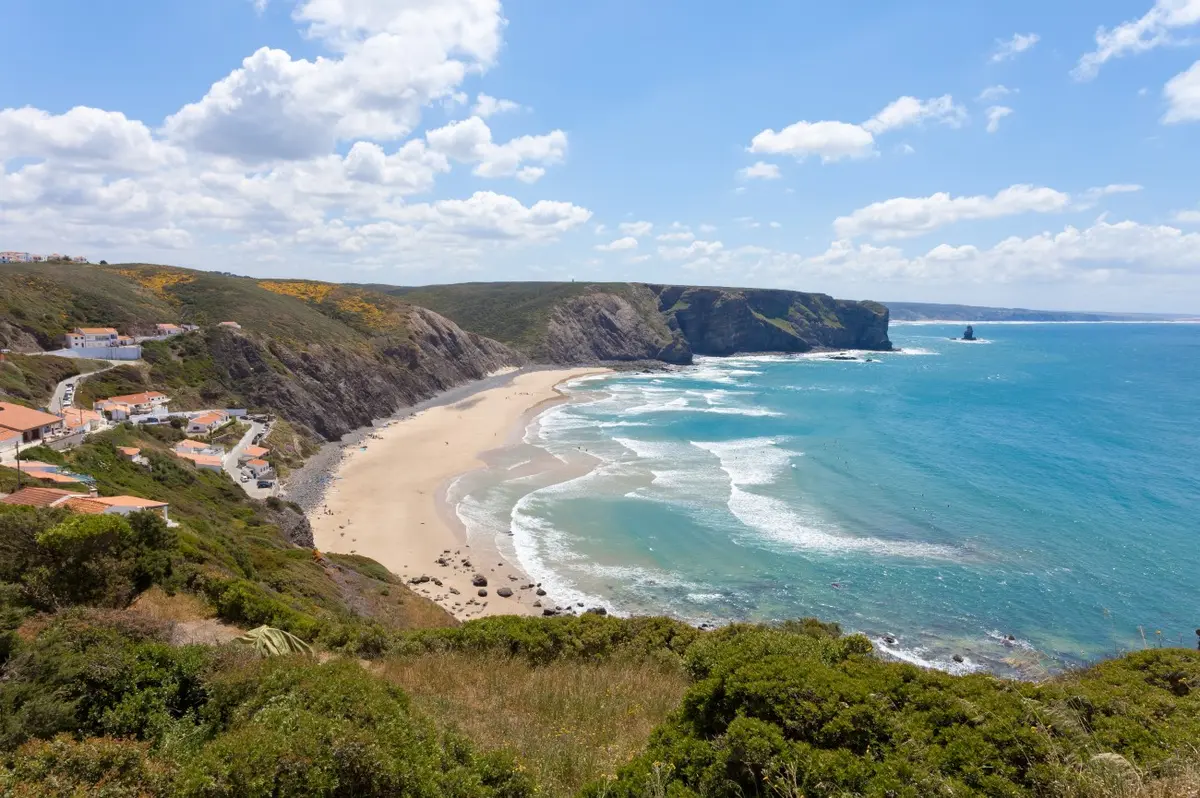
6. Vila do Bispo to Sagres — the end of the world
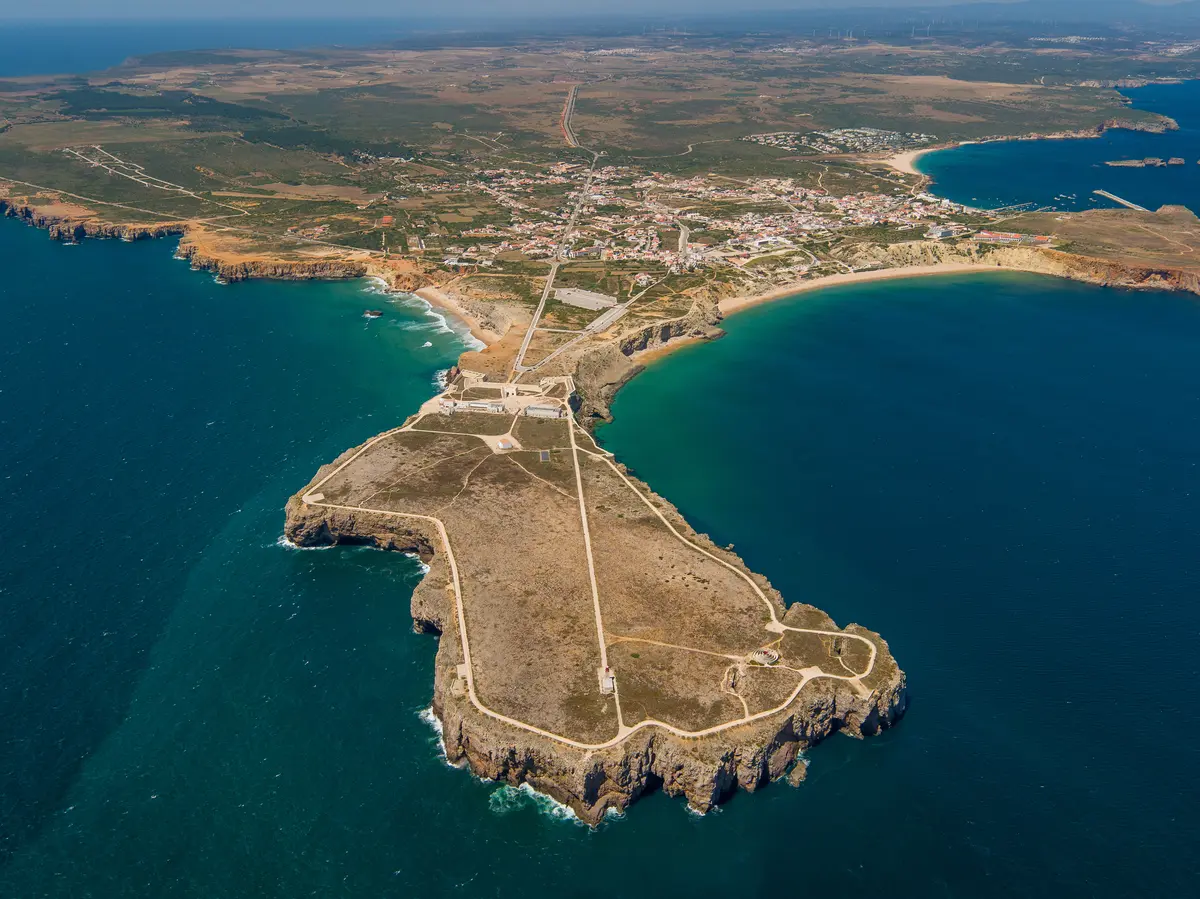
The psychological weight of walking toward Cabo de São Vicente builds with each mile. The lighthouse stands on 246-foot (75 m) vertical cliffs where the wind often howls so hard that conversation becomes difficult. Sagres feels less like a resort and more like an Atlantic frontier outpost. The Fortaleza de Sagres and Prince Henry the Navigator’s historical presence give the town a weight that most beach towns on this coast lack entirely.
- Distance: 12.5 miles (20 km)
- Difficulty: Moderate
- Location: Southwestern tip of mainland Europe
- Elevation gain: Rolling coastal plateaus
- Best for: History enthusiasts and anyone who wants a geographic full stop
- Time needed: 5-7 hours
Where should you stay on the Fishermen’s Trail?
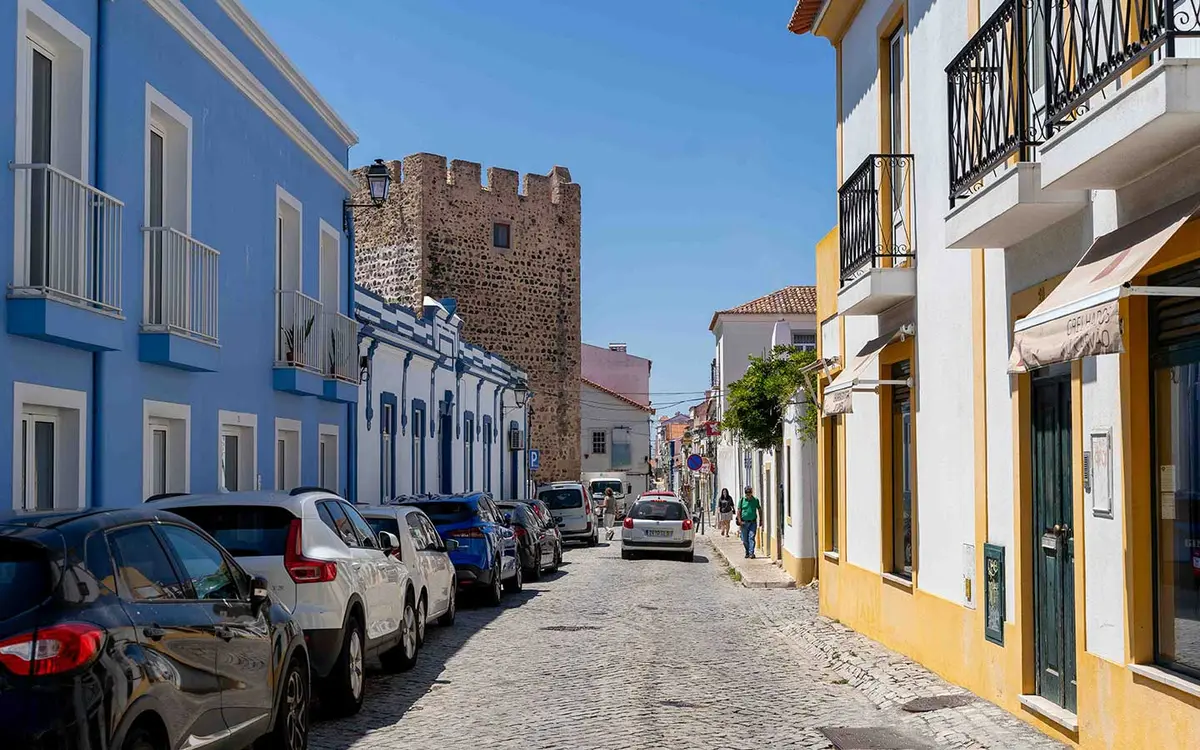
Accommodation along the trail runs from family guesthouses in village centers to converted houses with kitchenettes. Trail towns are small, options are genuinely limited, and the good ones fill months ahead during spring and autumn. Book as soon as you have dates. For a broader overview of accommodation styles across the country, the Portugal travel guide covers everything from pousadas to boutique city hotels.
Porto Covo: Hotel O Lugar
This family-run hotel sits just off the main square in a restored Pombaline building. Rooms are simple but spotless, with tile floors that stay cool even in summer. The owners provide trail information and arrange luggage transfers through local services. Breakfast includes fresh bread from the village bakery and coffee strong enough to wake your legs up.
The location is ideal for pre-hike dinners in the village center. One honest note: walls are thin and rooms facing the street catch noise until late. Request a courtyard-facing room when booking.
- Location: Praça Marquês de Pombal area, Porto Covo
- Cost: $70-100/night (€65-90)
- Best for: Budget-conscious hikers wanting authentic village atmosphere
- Time needed: 1 night minimum before Stage 1
Vila Nova de Milfontes: Casa no Rio
Positioned on the Mira River estuary with direct views of the São Clemente fortress, this boutique guesthouse has the best river-view terrace on the entire trail. Exposed stone walls, modern bathrooms, and owners who hiked the route themselves — they stock a small library of regional trail guides and know exactly which conditions to expect on each stage.
The drawback is distance: a 10-minute walk from where Stage 1 deposits you. After 12.5 miles through sand, that distance gets noticed.
- Location: Mira River waterfront, Vila Nova de Milfontes
- Cost: $110-150/night (€100-140)
- Best for: Couples seeking comfort after the sand gauntlet stage
- Time needed: 1-2 nights (natural rest day point on the route)
Zambujeira do Mar: Sunset Beach House
This converted village house offers apartment-style accommodations with kitchenettes — a genuine relief for hikers tired of restaurant meals every night. The rooftop terrace delivers sunset views over the bay. The owner maintains detailed trail condition notes and keeps running recommendations on local wine.
There are only four units. Repeat hikers know this, and they book early.
- Location: Upper village, 5-minute walk to cliff viewpoint
- Cost: $85-120/night (€75-110)
- Best for: Self-catering hikers and small groups
- Time needed: 1-2 nights
What should you eat along the Fishermen’s Trail?
The coast from Porto Covo to Lagos is one of the most productive fishing stretches in Portugal, and Portuguese food here is as honest as the landscape — the restaurants in trail towns serve the same fishermen who harvest the cliffs you just walked. Prices and portions reflect a working-coast economy, not a tourist one.
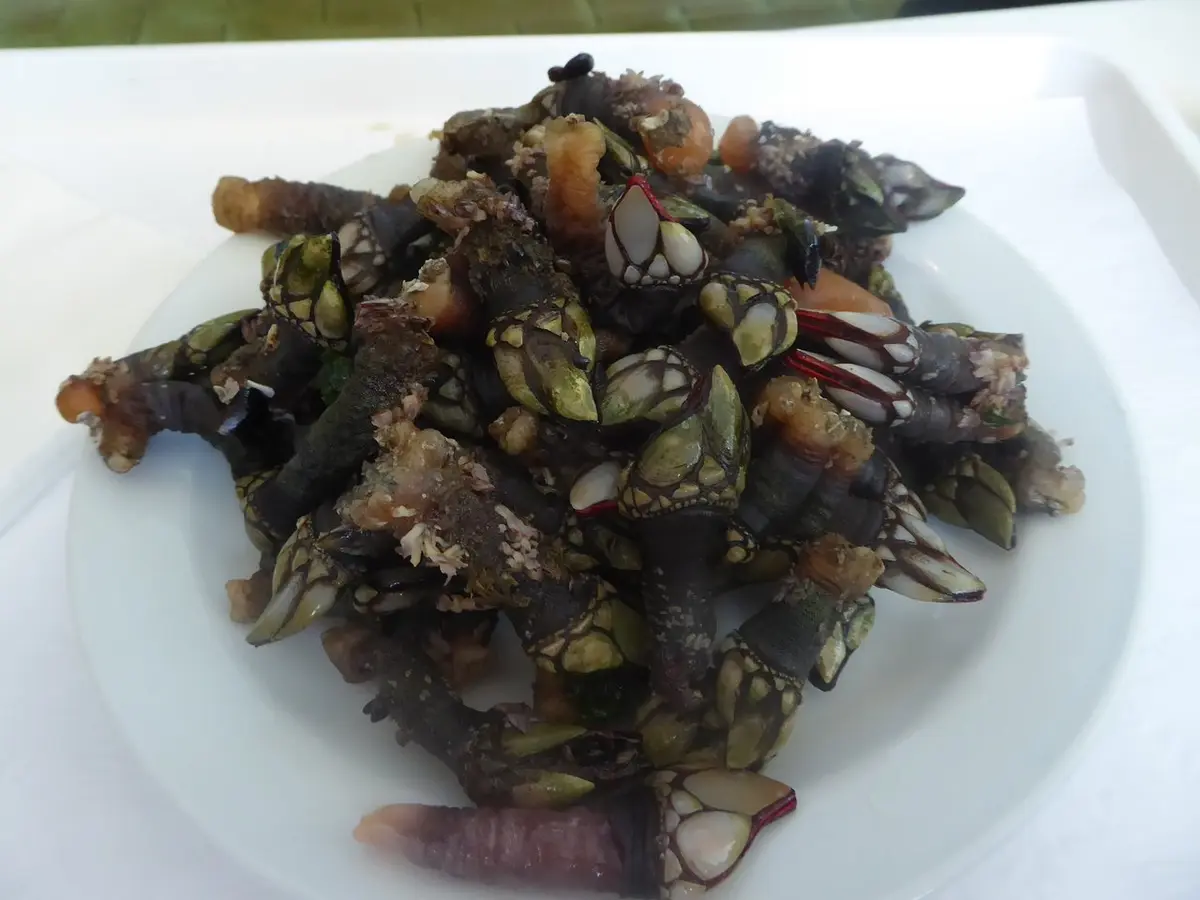
Percebes (Goose Barnacles)
These prehistoric-looking crustaceans taste like concentrated ocean in solid form. Harvested at genuine physical risk from the same cliff faces you hiked past, they arrive steamed with just lemon. The price reflects the danger of the harvest — harvesters work the surge zones below the cliffs you walked above.
Order them in Vila do Bispo, where local fishermen bring them in daily and the village wears the barnacle capital designation honestly.
- Location: Any restaurant in Vila do Bispo
- Cost: $18-25 per serving (€15-20)
- Best for: Adventurous eaters with some room in the budget
- Time needed: 30-45 minutes
Açorda Alentejana
This rustic bread soup embodies the Alentejo’s resourceful peasant heritage. Garlic, coriander, olive oil, and poached eggs transform stale bread into something that works surprisingly well for depleted trail muscles. Tasca do Celso in Vila Nova de Milfontes serves the version most hikers remember — owner Celso sources bread from a specific bakery and will not adjust the garlic-to-coriander ratio for anyone.
Order it as a main, not a starter. The portions are large enough to fuel tomorrow’s stage.
- Location: Tasca do Celso, Vila Nova de Milfontes
- Cost: $12-15 (€10-12)
- Best for: Budget-conscious hikers needing serious calories
- Time needed: 30-40 minutes
Choco Frito (Fried Cuttlefish)
Cuttlefish strips, breaded and fried, served with lemon and fries. Light enough to not slow you down after lunch, heavy enough to fuel an afternoon’s hiking. Restaurant O Pescador in Porto Covo fries them to order — crispy outside, tender inside, with none of the rubberiness that marks reheated seafood from the tourist-facing places.
- Location: Restaurant O Pescador, Porto Covo
- Cost: $14-18 with sides (€12-15)
- Best for: Midday refueling before afternoon stages
- Time needed: 30-40 minutes
What gear do you actually need?
The kit list here differs meaningfully from a mountain hiking setup. The enemy is not cold or altitude — it is sand, UV exposure, and carrying excess weight through terrain that amplifies every pound on your back. For a complete Portugal packing list covering broader travel essentials beyond trail gear, the full guide is worth checking before you depart.
- Footwear: Non-waterproof trail runners (current generation Hoka Speedgoat or Altra Lone Peak). Boots are a liability — heavy, heat-trapping, sand-collecting.
- Sand gaiters: Dirty Girl or Altra lycra gaiters. This $15 investment prevents blisters and the constant shoe-dumping stops that kill afternoon mileage.
- Socks: Merino wool (Darn Tough, Danish Endurance). Wool manages moisture and friction better than synthetics in sand conditions.
- Sun protection: Wide-brimmed hat, UPF-rated shirt, SPF 50+ sunscreen. The UV index stays high even on overcast days because of reflection off sand and water combined.
- Water capacity: Minimum 2 liters (68 oz). Several stages have 9+ mile (15 km) stretches without refill points.
- Windbreaker: Lightweight shell for exposed cliff sections. The Atlantic breeze cuts through fleece layers in minutes when you stop moving.
- Daypack: 20-30L maximum if using luggage transfer services. You only need water, snacks, and a layer.
Pro Tip: Pack merino wool base layers even for spring and autumn hiking. Ocean wind can drop the perceived temperature 10-15°F (5-8°C) in minutes when clouds roll in off the Atlantic.
How do luggage transfers work on the Rota Vicentina?
Slackpacking services collect your main bag from your accommodation by 9:00 AM and deliver it to your next destination by 4:30 PM. This changes the trip entirely. Hiking 12+ miles (20 km) through deep sand with only a daypack is manageable. Doing it with a 35-lb (16 kg) full pack is a different experience — and not a better one.
Vicentina Transfers charges €15 (~$17) per stage. Book four or more transfers and the rate includes two bags per transfer. On my last visit, I arrived at my guesthouse in Almograve at 3:30 PM to find my bag on the porch with a handwritten note from the driver listing which section of the trail ahead had a temporary detour due to cliff erosion. That kind of local knowledge is worth more than the transfer fee. Book through your accommodation or directly at vicentinatransfers.pt.
The service runs from February to November, between Santiago do Cacém and Lagos, in both directions.
- Cost: €15 (~$17) per transfer
- Pickup: 9:00 AM from your accommodation
- Delivery: By 4:30 PM to your next stop
- Max weight: 44 lbs (20 kg) per bag
How long does the Fishermen’s Trail take?
The full route — Porto Covo to Lagos — takes 12-13 days at a moderate pace, averaging 11-14 miles (18-22 km) per day. The Classic Alentejo section (Porto Covo to Odeceixe) takes 4-5 days and captures the trail’s wildest character. Many hikers complete only this section and leave satisfied that they did the essential part.
The Algarve extension grows more developed and resort-oriented as you approach Lagos. The geology shifts from grey schist to warm yellow-orange limestone — visually striking, but a different experience from the northern coast, as explored in depth in the Algarve vs Costa Vicentina guide.
Pro Tip: If your time is limited, prioritize the Alentejo stages. The northern coast delivers the raw Atlantic experience that defines this trail.
Is the Fishermen’s Trail difficult?
The Fishermen’s Trail is not technically difficult, but it is physically demanding in ways that regularly surprise unprepared hikers. Elevation gain is minimal — rarely exceeding 500 feet (150 m) per stage — but sand walking and cliff exposure create their own distinct challenges.
Sand requires 2-3 times more energy than hard surfaces. Cardiovascular fitness alone will not prepare you. Train on beaches or do weighted hikes on soft terrain in the months before your trip.
Vertigo is a real concern on several stages. The trail runs within yards of 330-foot (100 m) sheer drops. The path is wide and well-marked, but the visual exposure is constant across multiple hours of hiking. Severe vertigo sufferers should consider the inland Historic Way as an alternative for the most exposed sections.
Navigation is straightforward — the waymarking is among the best of any long-distance trail in Europe. The bigger risks are dehydration and underestimating the sand’s cumulative energy drain over a full stage.
How do you get to and from the trail?
Getting to Porto Covo from Lisbon and back from Lagos is well-served by public transport, making a one-way hike logistically clean.
- Start point: Porto Covo (recommended) or São Torpes (official northern terminus)
- End point: Lagos
- Bus to Porto Covo: Rede Expressos runs Lisbon (Sete Rios terminal) to Porto Covo in approximately 2h 10m on direct services. Check schedules and book tickets at rede-expressos.pt.
- Train from Lagos: For the return journey, train travel in Portugal connects Lagos to Lisbon via Tunes in approximately 4 hours. Check schedules at cp.pt.
- Mobile signal: Generally strong along the coast, with dead zones in deep ravines. Download offline maps before departing each morning.
The bottom line
TL;DR: The Fishermen’s Trail delivers 140 miles of Atlantic coastline, stork-nested cliffs, and genuine solitude — without the Camino’s crowd management problem. The Alentejo stages (Porto Covo to Odeceixe) are the core experience. Do those if nothing else. Go in spring or autumn, hire luggage transfers from the start, and spend at least one afternoon in a cliff-top village doing absolutely nothing.
The sand will test you. The cliff exposure will stop you mid-stride. The storks nesting at eye level will make you forget your legs hurt.
What’s the longest stretch of soft sand you’ve walked in a single day — and did it finish you off?