Choosing the best places to visit in Portugal is harder than it looks — the country packs six distinct regions into a space roughly the size of Indiana. Get it right and you have one of Europe’s most rewarding trips; get it wrong and you spend a week in tourist queues wondering why everyone raves about this place. This guide cuts through that. For a complete planning foundation — visas, transport, when to go — our Portugal travel guide is the starting point.
| Region | Best For | Vibe | Key Experiences |
|---|---|---|---|
| Lisbon | History, culture, food, nightlife | Hilly, layered, late-night | Tram 28, fado, Belém |
| Porto & Douro Valley | Port wine, river views, architecture | Gritty, river-focused, wine-soaked | Port tasting, Dom Luís I Bridge, river cruise |
| The Algarve | Beaches, coastal hikes, cliffs | Sunny, cliff-heavy, resort-dense | Benagil Cave, Seven Hanging Valleys Trail |
| Sintra | Palaces, forested hills, day trips | Forested, palace-heavy, crowded | Pena Palace, Quinta da Regaleira |
| Madeira | Levada hikes, subtropical nature | Trail-covered, green, rain-likely | Levada walks, Pico do Arieiro |
| The Azores | Volcanoes, whale watching, raw coastline | Volcanic, remote, wind-battered | Sete Cidades, geothermal springs |
What does Lisbon actually look like on the ground?
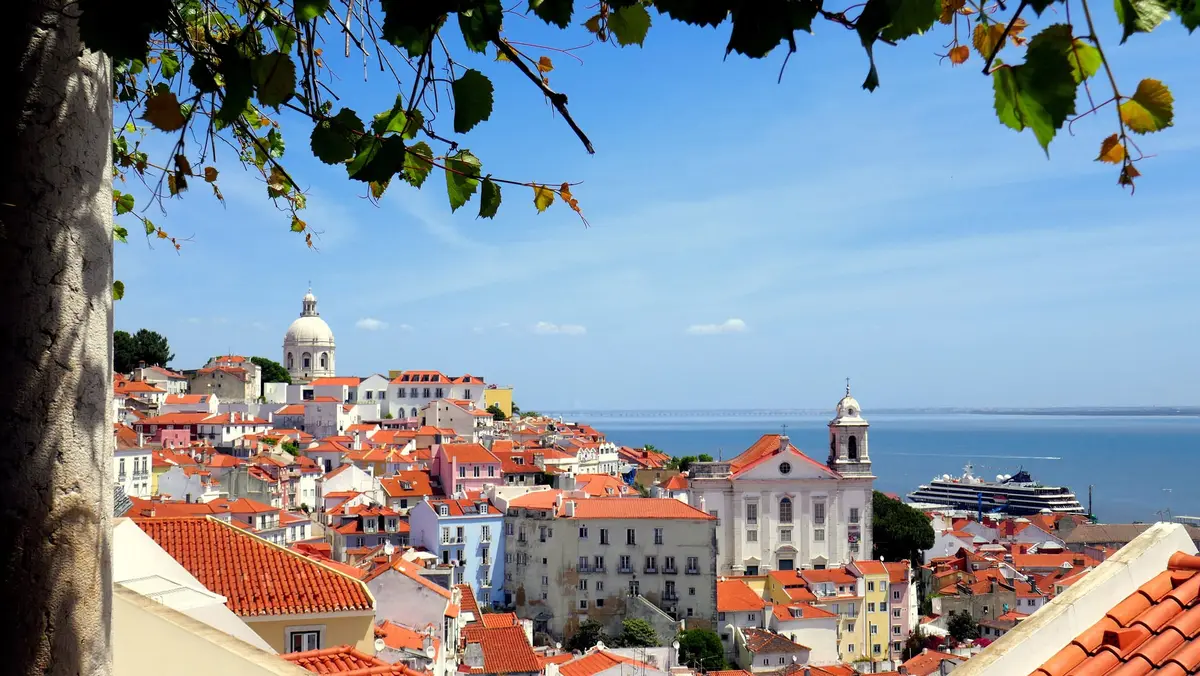
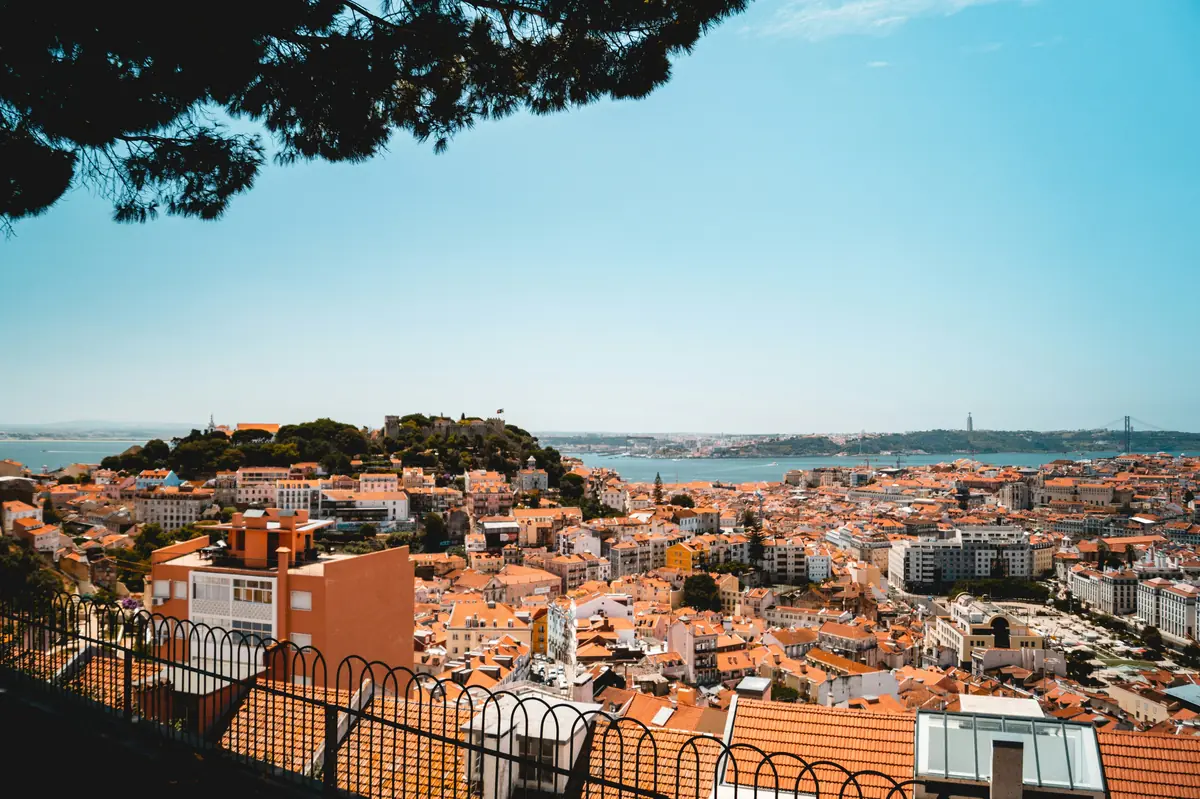
Lisbon rewards patience. The city operates on hills, cobblestones, and late hours — dinner before 7:30 PM means eating alone, and the most reliable sights need advance tickets or an early start. Get that right and you have a city where a single afternoon in Alfama can feel more textured than three days in most European capitals.
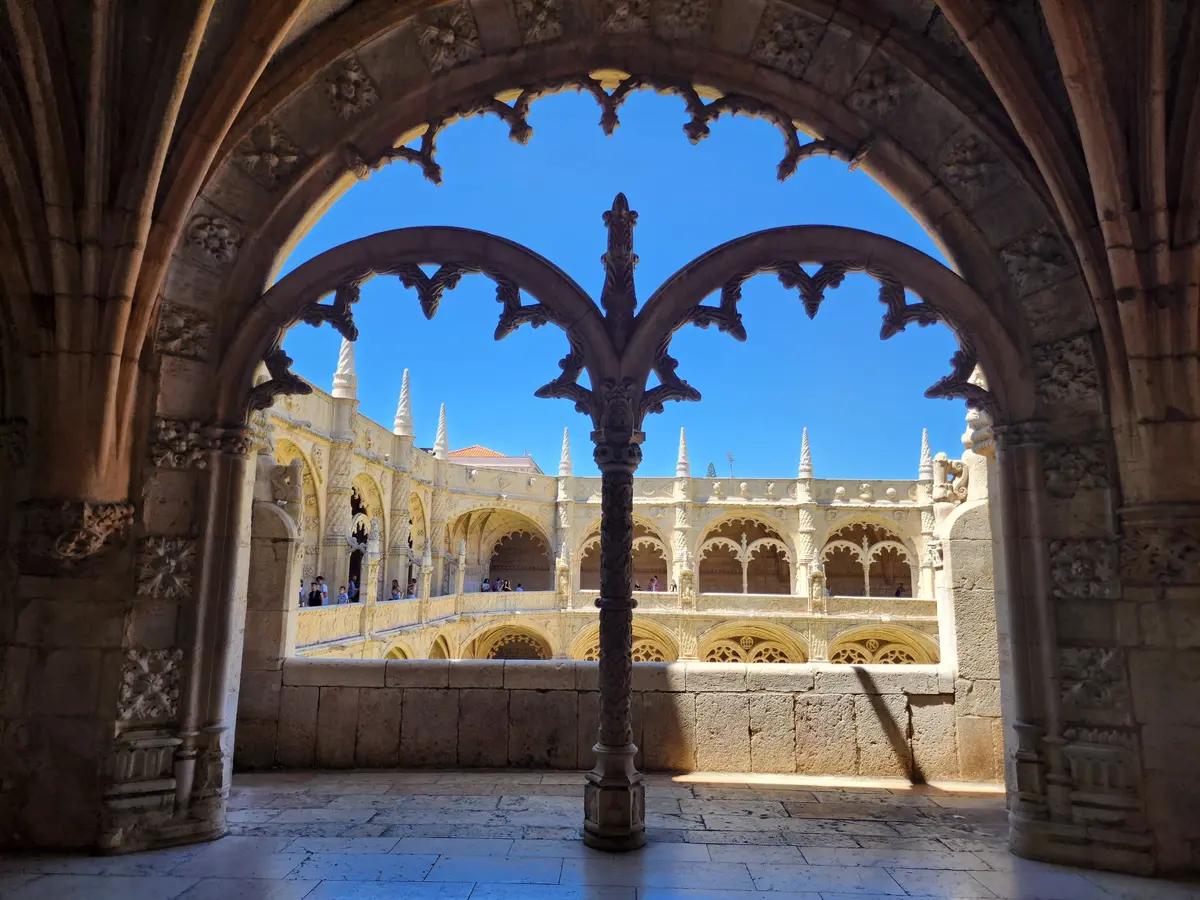
Jerónimos Monastery — a 16th-century cloister that earns the line
The church at Jerónimos is free and always open, which means most visitors walk right in without realizing the cloister — the actual architectural centerpiece — requires a paid ticket through a separate entrance on the left side of the building. The cloisters are two stories of carved stone sea creatures, ropes, and armillary spheres: the visual record of an empire that briefly controlled the spice trade. The central courtyard is large enough that even on a busy day you can find a corner that feels quiet.
The tombs of Vasco da Gama and the poet Luís de Camões sit inside the church, which is lit from natural light and significantly less crowded than the cloister queue. Visit the church first, then cross to the paid entrance.
Pro Tip: Even with pre-purchased tickets, tour groups get priority boarding at the cloister entrance. On my last visit, the line for ticket holders moved in about 20 minutes before noon on a Tuesday — the tour buses tend to arrive later. Weekday mornings before 11 AM are your best window. The Lisbon Card covers entry entirely, so if you’re spending more than two days in the city, run the math before buying individual tickets.
- Location: Praça do Império, Belém — take Tram 15E from Praça do Comércio or the Cascais train line to Belém station
- Cost: ~€18 per adult for cloisters and museum; church entry free; covered by Lisboa Card
- Hours: 10 AM–5:30 PM (Oct–Apr), 10 AM–6:30 PM (May–Sep); closed Mondays and major holidays
- Best for: History and architecture travelers; families with older kids
- Time needed: 1.5–2 hours for cloister plus church; add 30 minutes if you walk to Pastéis de Belém, 200 meters down the street for the original custard tarts
Alfama and São Jorge Castle — the case for going slow
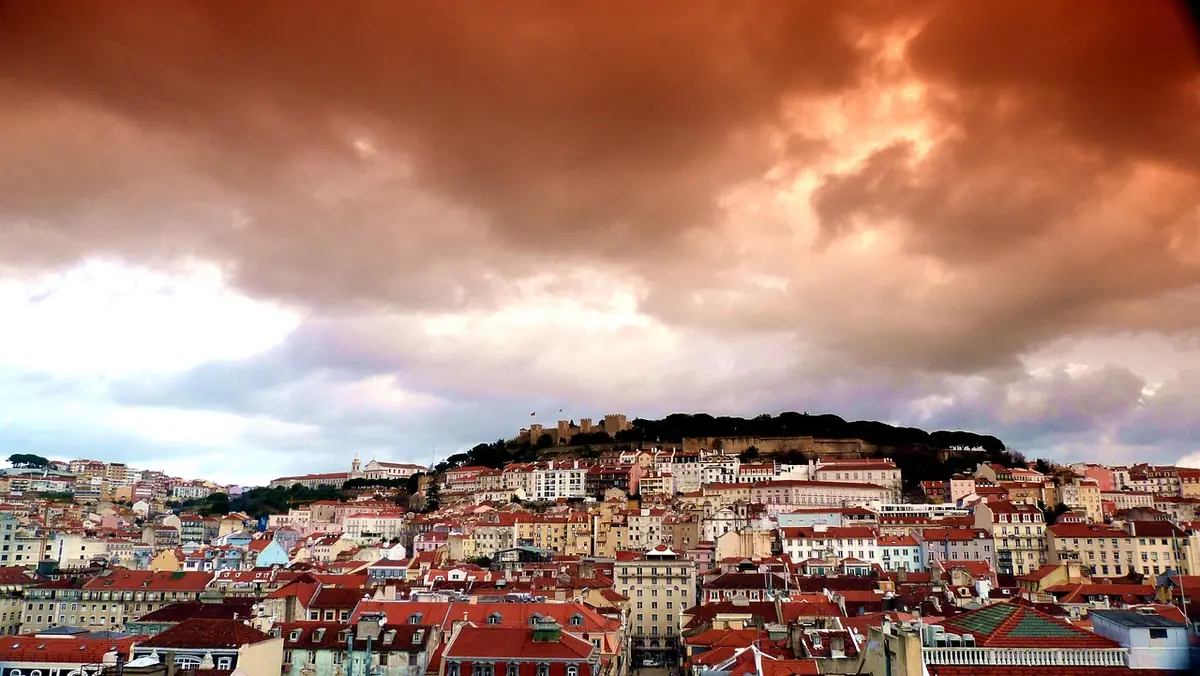
Alfama works best when you give it time to get lost. The grid breaks down completely between Rua dos Bacalhoeiros and the castle, and the streets that look like dead ends on Google Maps often open onto tiled staircases or viewpoints over the Tagus. The smell changes as you climb — fresh laundry, charcoal from a grill, the faint salt of the river.
São Jorge Castle gives you the highest unobstructed view of the city from inside the walls. The grounds include peacocks that ignore tourists entirely and walk through the ruins with the confidence of animals that have been here longer than the gift shop. The view east toward the bridge and west toward Belém is clearest in the late afternoon before the haze settles.
For fado in Lisbon, skip the tourist dinner-show venues near the main squares and walk until you find a place with a handwritten fish special on a chalkboard and no English menu in the window. Smaller restaurants in Alfama run their fado informally, no cover charge, starting around 9 PM. That is the version worth staying up for.
- Location: Alfama district; São Jorge Castle sits at the top, reachable by Tram 28 or on foot from Baixa (about 20 minutes uphill)
- Cost: São Jorge Castle ~€15 adults; Alfama streets free
- Best for: First-time visitors; anyone who wants to hear fado without a set price
- Time needed: Half a day minimum for Alfama; castle alone takes 1–1.5 hours
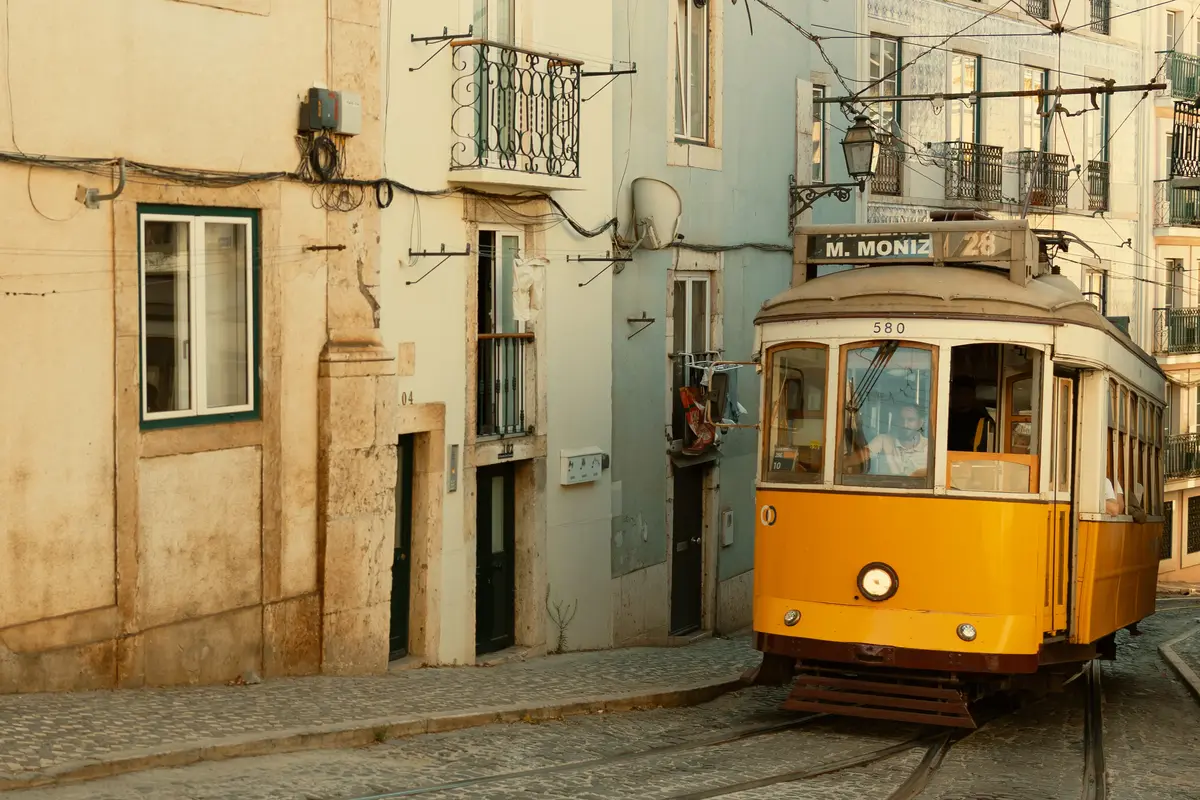
Tram 28 — useful, but your phone and wallet are at risk
Tram 28 is a working public tram, not a tourist trolley, and it runs a route that climbs through Alfama and drops down through Chiado — genuinely useful if your legs are done for the day. The problem is that everyone knows it, which makes the crowded boarding points at Martim Moniz and Praça Luís de Camões high-risk for pickpockets.
Thieves typically work in pairs during the jostling at doors. The tactic is consistent: one person creates contact while a second lifts. The US State Department flags this specifically for Lisbon public transport.
Pro Tip: If you want to ride Tram 28 for the experience, go before 9 AM when the route is mostly commuters. Keep your phone in a zipped front pocket and your wallet in a money belt, not a back pocket. Alternatively, walk the Alfama section downhill — it covers the same territory with better views and zero pickpocket risk.
Is Porto worth its own trip, or just a day from Lisbon?
Porto deserves its own two nights — minimum. The city is gritty in a way Lisbon is not, with azulejo tile panels peeling off the sides of buildings and the smell of the Douro changing depending on which bank you stand on. Rushing it as a day trip from Lisbon is the most common mistake first-time visitors to Portugal make.
The Ribeira district and Dom Luís I Bridge
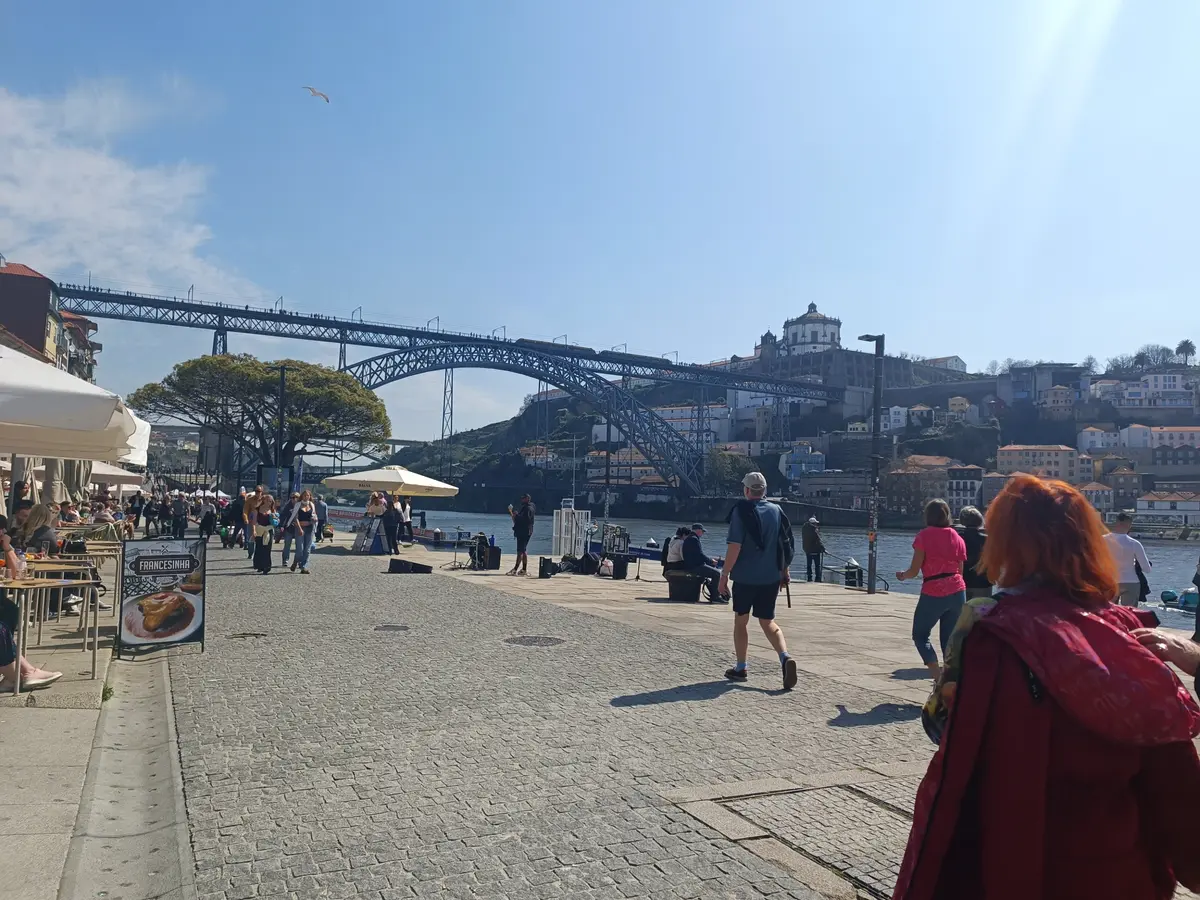
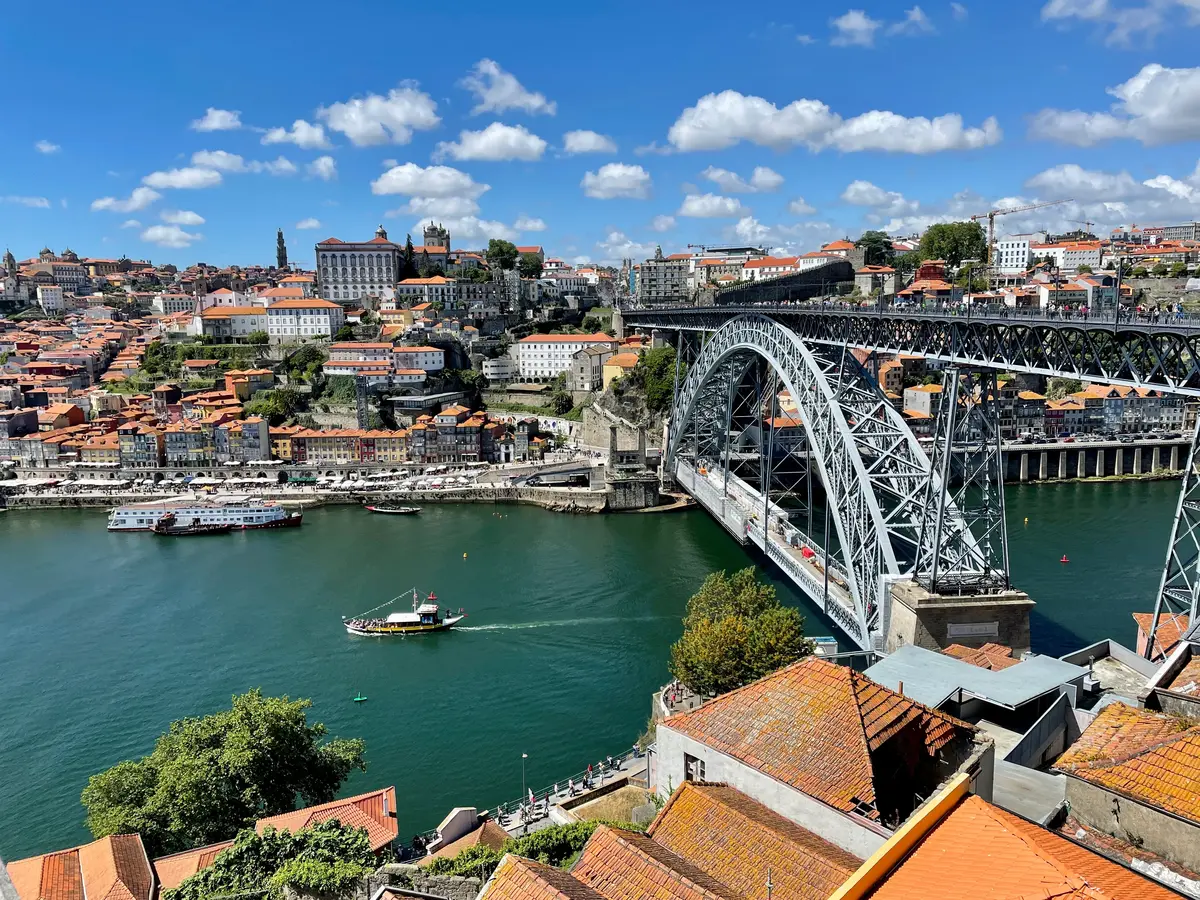
The Ribeira waterfront is Porto’s most photographed stretch, and for good reason: the narrow houses lean toward the water in mismatched colors, and the Dom Luís I Bridge frames the far bank in iron. The upper deck of the bridge carries the Metro and offers sweeping views over both banks — it also gets significantly windier than the lower deck, which connects the Ribeira directly to the Gaia waterfront.
Pro Tip: For the classic elevated shot of the bridge and waterfront, walk up to the Monastery of Serra do Pilar on the Gaia side. The terrace puts you level with the upper bridge deck and the Porto skyline fills the frame. Go at sunset, not midday — the light difference is not subtle.
- Location: Ribeira district, central Porto; Gaia waterfront is a 10-minute walk across the lower bridge deck
- Cost: Free to walk; upper bridge deck uses the Metro (standard fare)
- Best for: Everyone; this is the essential Porto experience
- Time needed: 2–3 hours to walk both banks properly
Port wine tasting in Vila Nova de Gaia
The port wine cellars are on the Gaia side of the river, not in Porto proper — a detail that catches visitors off guard when they cross the bridge and realize the GPS is taking them further than expected. Taylor’s, Sandeman, and Graham’s all run structured tours that end with generous pours of both Tawny (nutty, aged in small barrels) and Ruby (fruitier, younger, brighter red). Tours run roughly 45–60 minutes and are approachable for complete beginners — they explain the wine before they pour it.
White port and tonic — cold, slightly sweet, served over ice on a terrace facing the water — is the drink to order if you want to understand why locals consider it an aperitif, not an afterthought.
- Location: Vila Nova de Gaia waterfront, directly across Dom Luís I Bridge from Porto’s Ribeira
- Cost: Cellar tours typically $12–22 per person depending on the producer and number of wines included
- Best for: Wine travelers; anyone who wants to understand port beyond just drinking it
- Time needed: 1–1.5 hours per cellar
Livraria Lello — the bookstore that requires a game plan
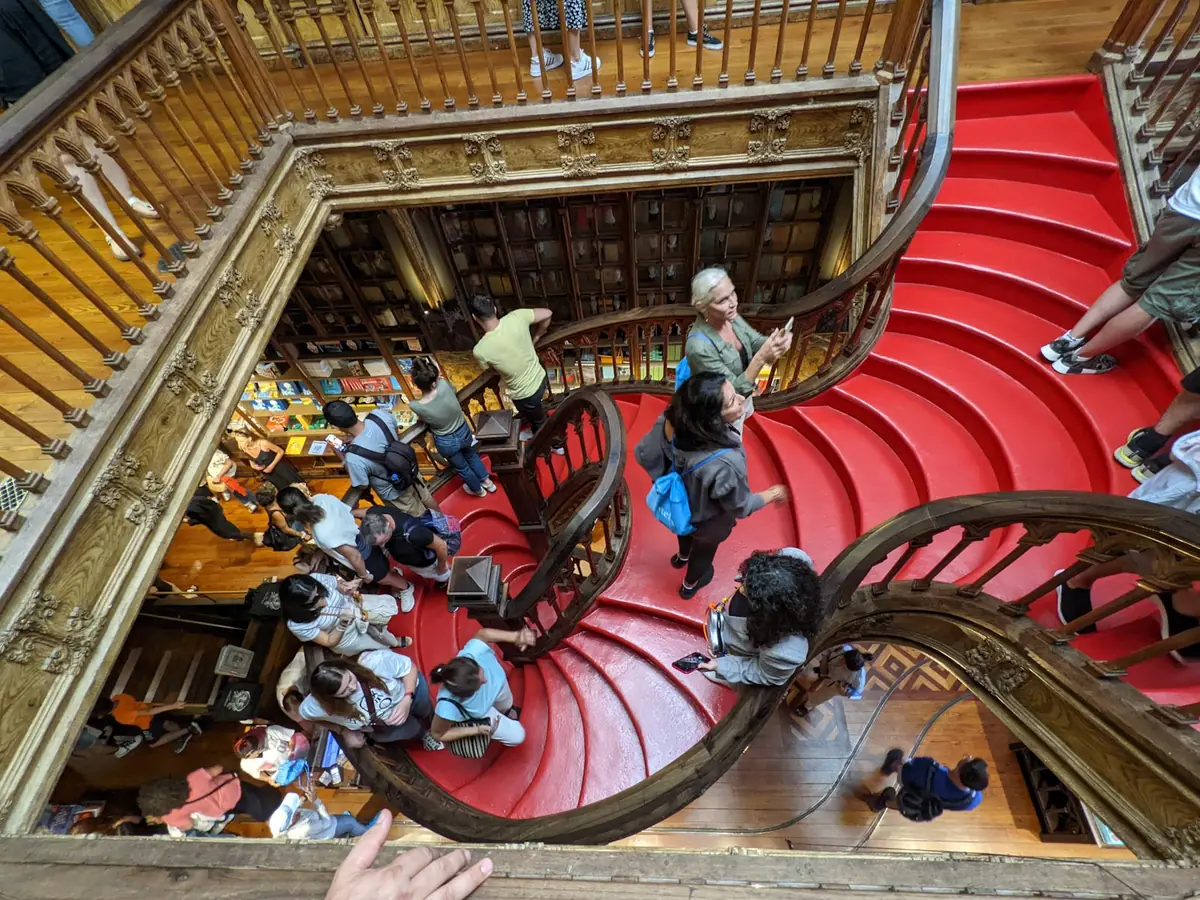
The red curved staircase and the stained-glass ceiling are the reasons everyone lines up, and they do deliver — the building is an Art Nouveau-Gothic interior that looks genuinely different from anything else in Porto. The crowds are the complication. Entry requires a timed ticket (the Silver ticket costs €10, redeemable against any book purchase), and the slots sell out in advance during peak season.
The J.K. Rowling-Hogwarts connection is a marketing story, not a confirmed fact — Rowling has denied that Lello specifically inspired Harry Potter, even though she did live in Porto. The store is worth visiting because the building is worth visiting, not because of a disputed literary myth.
- Location: Rua das Carmelitas 144, central Porto
- Cost: Silver ticket €10, redeemable on books in-store
- Hours: Daily 9 AM–7 PM; closed January 1, Easter Sunday, May 1, June 24, December 25
- Best for: Architecture lovers and book collectors; less rewarding for casual visitors during peak hours
- Time needed: 30–45 minutes; arrive at your booked time slot or you lose entry
Pro Tip: Book the first slot of the day. By 11 AM, the staircase is blocked three people deep for photographs. At 9 AM, you have 15 minutes where the light through the ceiling is clean and the frame is clear.
Douro Valley day trip — take the train, not the tour bus
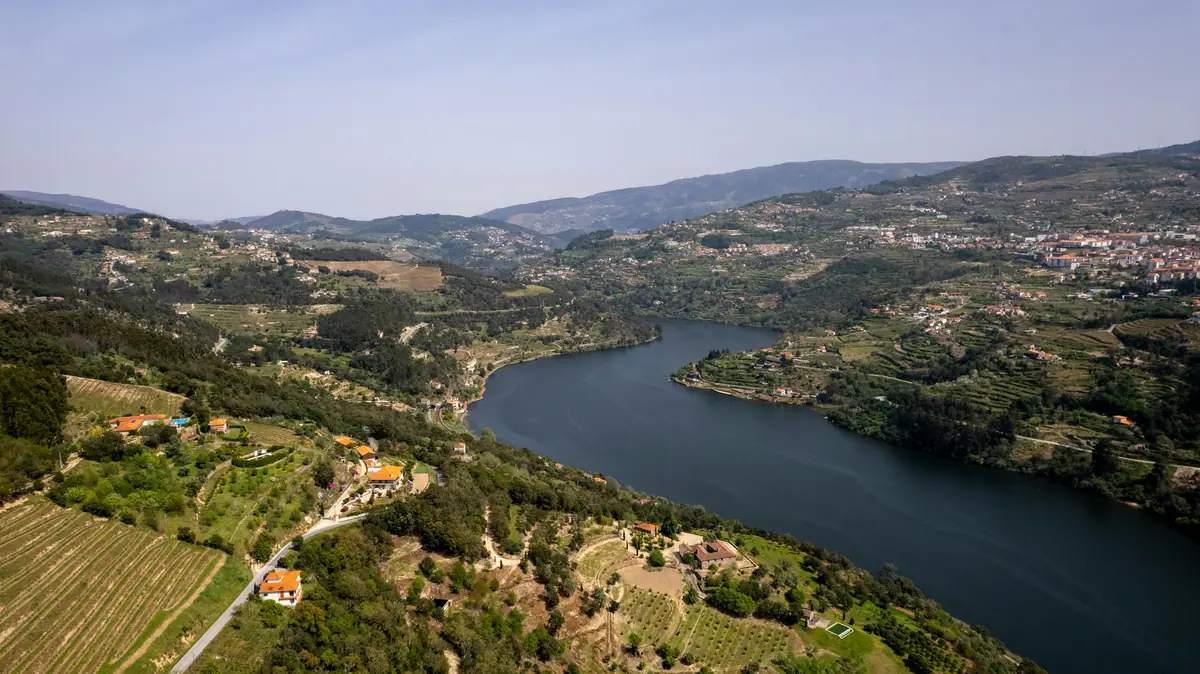
The UNESCO-listed Douro Valley is what happens when centuries of terraced farming climb the walls of a river gorge — the scale of it takes a moment to register from the train window. The Douro line runs east from Porto’s São Bento station along the riverbank for roughly two hours to Pinhão, passing through the heart of the wine country. Taking the train is the best way to make the Porto to Douro Valley trip — it costs a fraction of a guided tour and gives you window seats that the bus cannot match.
From Pinhão, a local quinta tasting takes about an hour and a half. The wines at smaller producers along this stretch are often better value than the large branded cellars in Gaia.
- Location: Departs from Porto São Bento station; Pinhão is the classic stop, about 2 hours east
- Cost: Train round-trip from Porto under $25; quinta tastings $15–30 depending on the producer
- Best for: Wine travelers and landscape photography; manageable solo
- Time needed: Full day from Porto
How do you spend a day in Sintra without the logistics breaking you?
The Sintra day-trip strategy is simple and almost nobody follows it: take the early train from Lisbon’s Rossio station, go directly to Pena Palace the moment it opens at 9 AM, then work your way downhill through the Castle of the Moors and into the historic center. Every visitor who does it in reverse — starting in the town center and trying to get uphill by bus at 11 AM — spends the first half of the day standing in vehicle queues.
Do not drive into Sintra’s historic center. The streets are not designed for it, parking fills before 9 AM, and you will add 45 minutes of frustration to a day that is already logistically complicated.
Pena Palace — the timed-entry details most guides skip
The ticket system here is stricter than it looks — book your Pena Palace tickets online before you arrive. Full palace access (park and palace interiors) costs €20 per adult; park-only access costs €10 but excludes the state rooms. The interior tickets are sold in 30-minute entry windows — if you miss your time slot, you do not get in and you do not get a refund. The walk from the park entrance to the palace entrance takes about 30 minutes on foot uphill, so factor that into your arrival calculation.
The palace itself is a 19th-century Romanticist building with turrets, battlements, and painted facades in red and yellow — it looks deliberately theatrical because it was designed that way by King Ferdinand II. The Cruz Alta viewpoint inside the grounds is a 10-minute walk from the palace and gives the clearest elevated view without fighting the entrance crowd.
Pro Tip: Afternoon slots after 3:30 PM are consistently less crowded than midday, and the light on the painted facades is better. Book online well in advance during summer — peak morning slots sell out days ahead.
- Location: Estrada da Pena, Sintra; access via Scotturb Bus 434 from Sintra train station (about 20 min), or a 2.5-mile uphill walk
- Cost: €20 adults (palace + park); €10 park only; children under 5 free
- Best for: First-time Sintra visitors; architecture and royal history travelers
- Time needed: 3–4 hours for palace and park; 2 hours minimum for palace only

Castle of the Moors — the better option on a crowded day
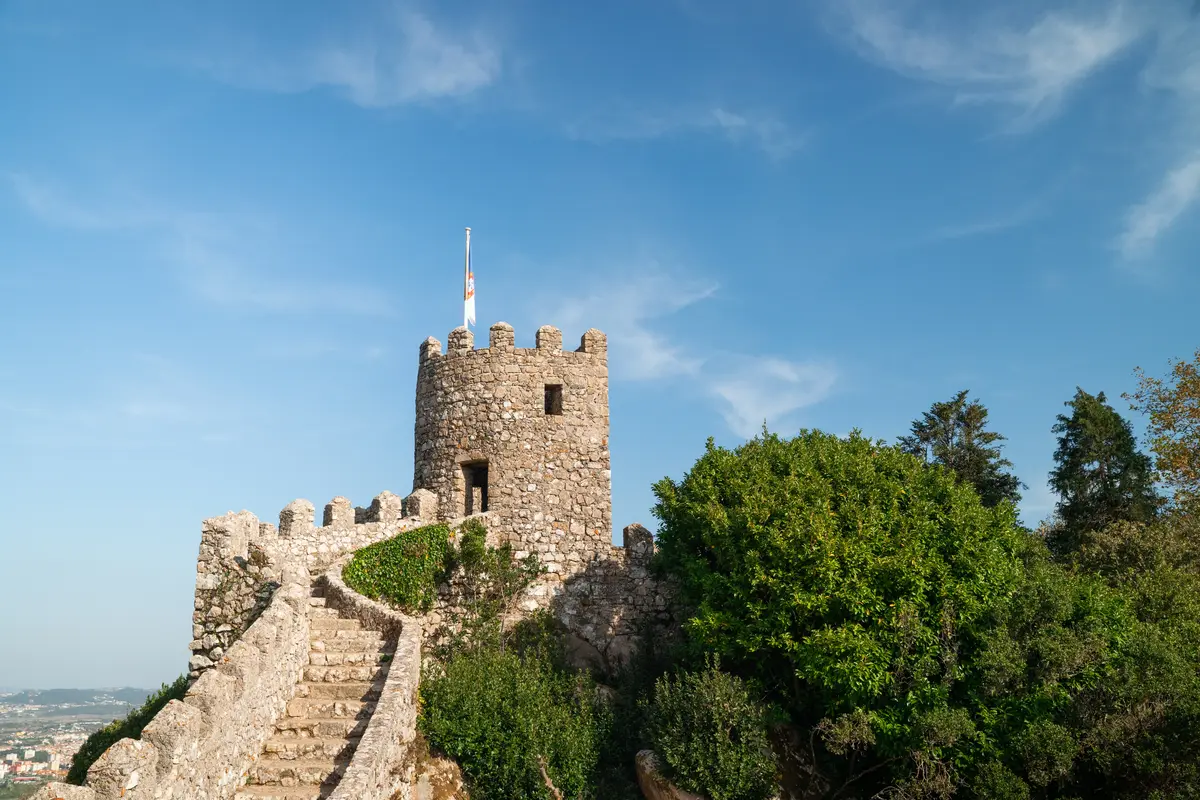
The 8th-century Moorish fortification sits a short walk below Pena Palace and draws a fraction of the crowds. The walls run across a rocky ridge above the forest canopy, and the views from the battlements cover Sintra, the Atlantic coastline about 20 miles (32 km) west, and Pena Palace on the hill above. There are no interior rooms to queue for — you walk the walls and the ramparts at your own pace.
On a day when Pena Palace looks like a line management problem, the Castle of the Moors gives you the same elevated views and a far less compressed experience.
- Location: Short downhill walk from Pena Palace; bus 434 from Sintra train station also stops here
- Cost: ~€8 adults
- Best for: Hikers; travelers who want the panoramic view without the palace interior queues
- Time needed: 1–1.5 hours
Quinta da Regaleira — the estate most visitors underestimate
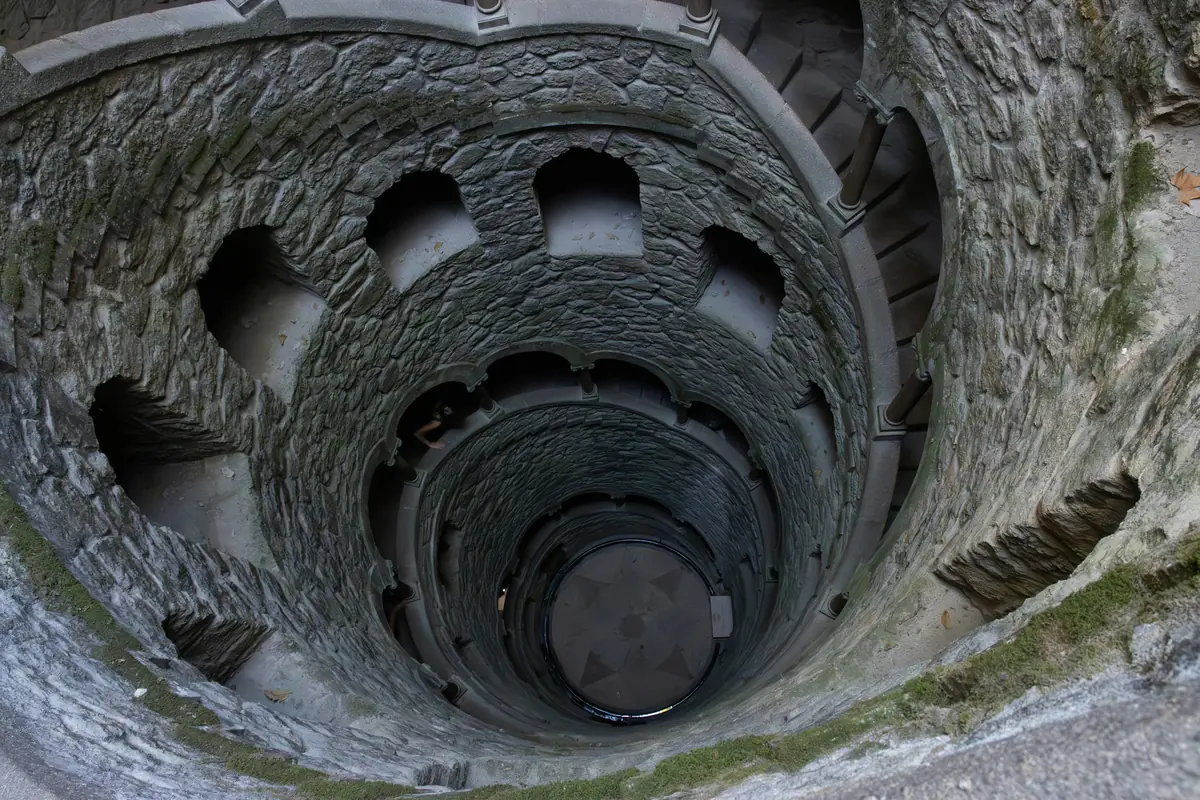
The Initiation Well is the specific draw: a 9-story spiral staircase that descends underground into a stone tunnel system, lit by natural light at the top and complete darkness at the bottom. The tunnels connect to grottos, water features, and hidden garden terraces across the estate. It is not dramatic in a theme-park way — it is strange and quiet and takes about 20 minutes to walk through properly.
The estate is privately owned and ticketed separately from the Parques de Sintra sites. It sits in the historic town center, walkable from the train station.
- Location: Rua Barbosa du Bocage 5, Sintra historic center — 10-minute walk from the train station
- Cost: ~€12 adults
- Best for: Anyone who finds the crowded palace experience exhausting; a good last stop of the day
- Time needed: 1.5–2 hours
Before you leave the center, stop at Casa Piriquita for travesseiros (flaky puff pastry filled with almond cream) and queijadas (small cheese tarts). Both are Sintra-specific — you will not find this version anywhere else in Portugal.
What is the Algarve actually like beyond the cliff photos?
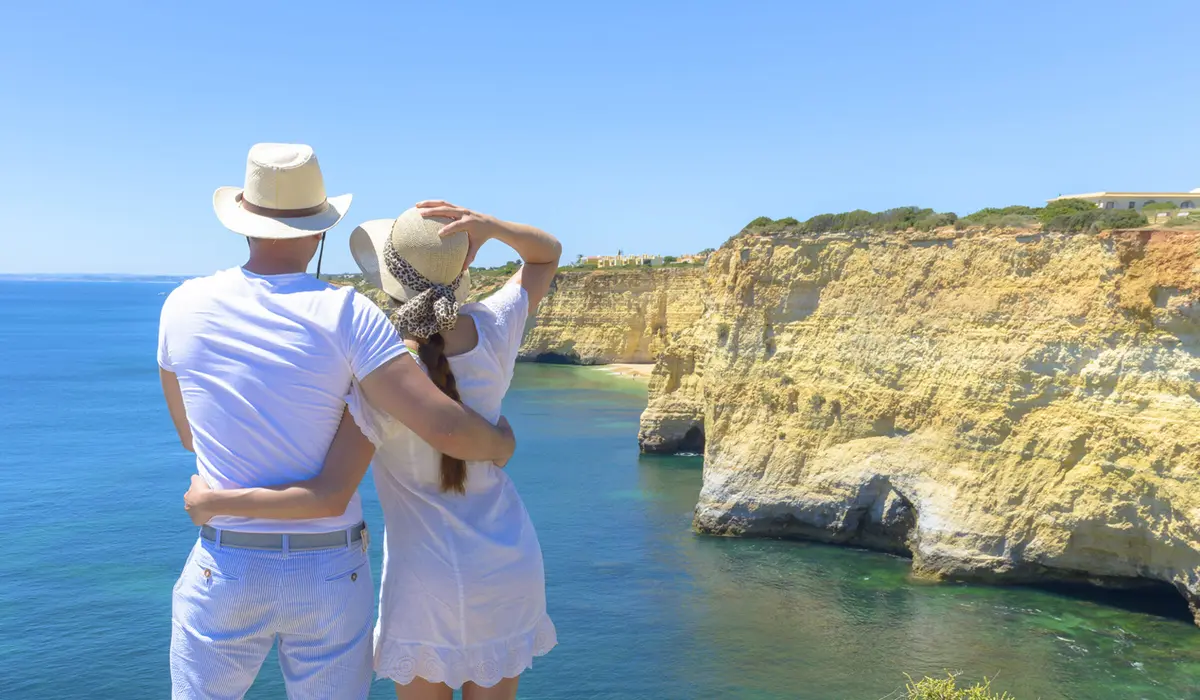
The Algarve coast is genuinely beautiful and genuinely developed — both things are true at the same time. The western section around Lagos and Sagres is rockier and less built up than the central resort strip between Albufeira and Vilamoura. July and August turn the western beaches into crowds; May, June, September, and October give you the same cliffs with a fraction of the competition.
Rent a car. The public bus network covers the main towns but not the hidden beaches, and the flexibility to turn off a main road onto a dirt track to an empty cove is the difference between a good Algarve trip and a great one.
How to visit Benagil Cave now that the rules have changed
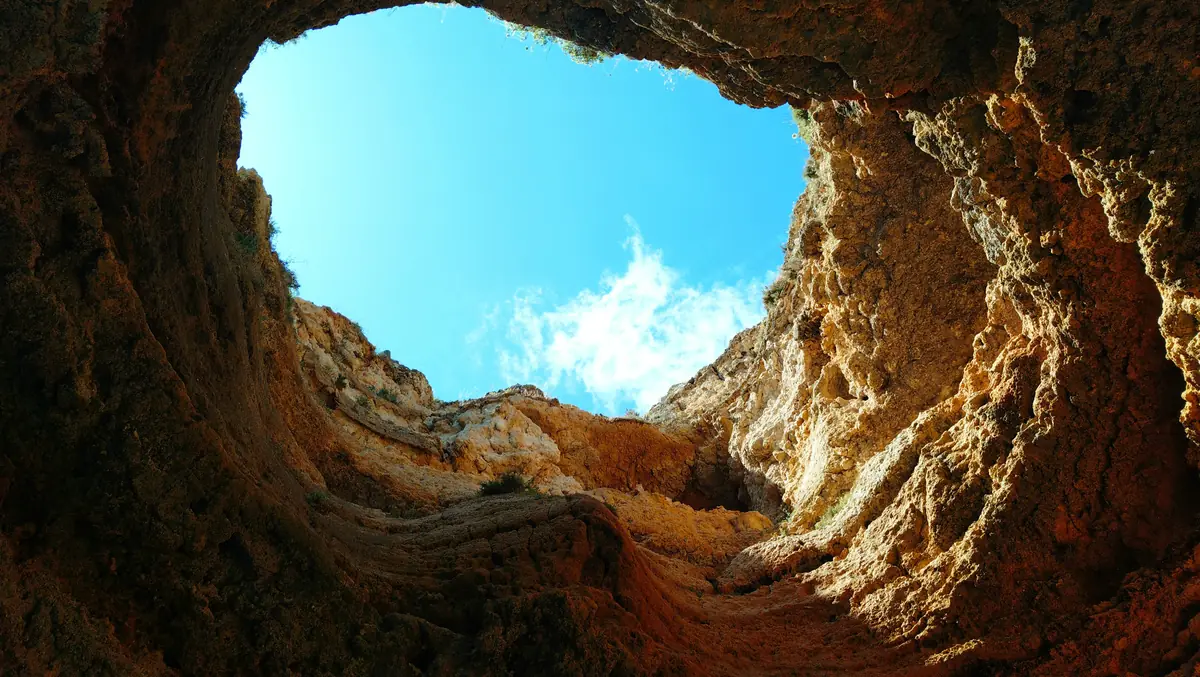
The approach that used to work for Benagil Cave — renting a kayak from Benagil Beach and paddling in independently — is no longer legal. Regulations introduced in August 2024 prohibit independent kayak and SUP rentals into the cave area, swimming inside the cave, and landing on the sand beach inside. The fines for violators run from €300 to €216,000 for operators, with individual penalties under review.
What still works: licensed boat tours departing from Benagil, Carvoeiro, Portimão, and Albufeira. These bring you inside the cave for a view of the skylight from the water. Guided kayak and SUP tours with licensed operators are also legal — you paddle inside the cave with a guide, but you cannot step onto the sand.
The alternative that gets overlooked: the cliff walk above the cave. From the coastal path, you can look directly down through the skylight opening into the cave below. It is a different view from the inside-looking-up photograph, but it is free, takes 10 minutes from the parking area, and has no booking requirement.
Pro Tip: Book any boat or kayak tour for first departure — typically 8–9 AM. By 11 AM in summer, the cave entrance has multiple vessels waiting their turn. Morning light through the skylight is also significantly better for photography.
- Location: Benagil village, midway between Carvoeiro and Armação de Pêra; follow the N125 and turn south at Lagoa
- Cost: Guided boat tours typically $25–45 per person depending on departure point and duration; guided kayak tours $30–55
- Best for: Active travelers; photography-focused visitors
- Time needed: 2–3 hours including travel to/from departure point
Ponta da Piedade near Lagos
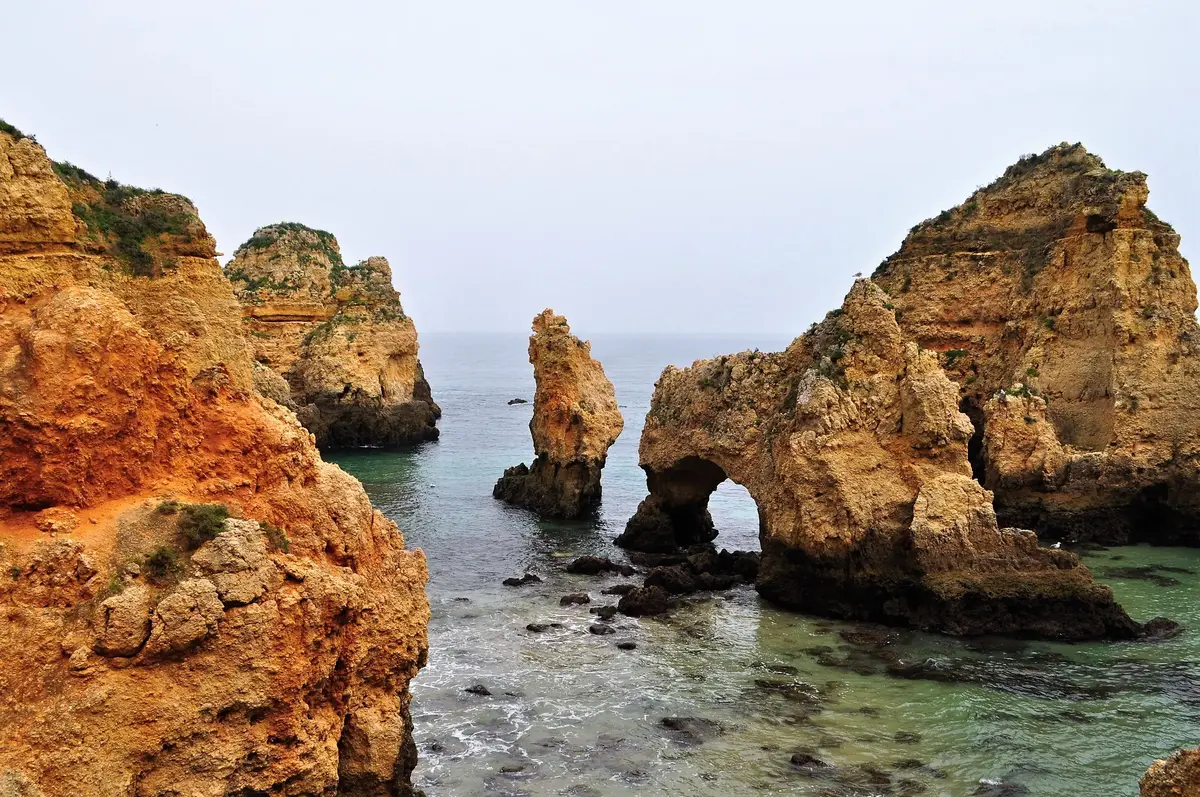
Three miles (5 km) south of Lagos, the coastline breaks into a system of sea stacks, arched rock formations, and small beaches carved into 200-foot (60 m) golden cliffs. The wooden boardwalk from the upper parking area gives you the overview; stairs lead down to the water level. Small boat tours depart from Lagos marina and thread through the rock formations at water level, which reverses the perspective entirely.
- Location: Ponta da Piedade, 3 miles (5 km) south of Lagos; driveable, 15 minutes from Lagos center
- Cost: Free on foot; Lagos marina boat tours typically $20–30 per person
- Best for: Anyone staying in the western Algarve; best in low to mid season
- Time needed: 1–2 hours on foot; 1.5 hours for a boat tour
Seven Hanging Valleys Trail — the hike that earns its reputation
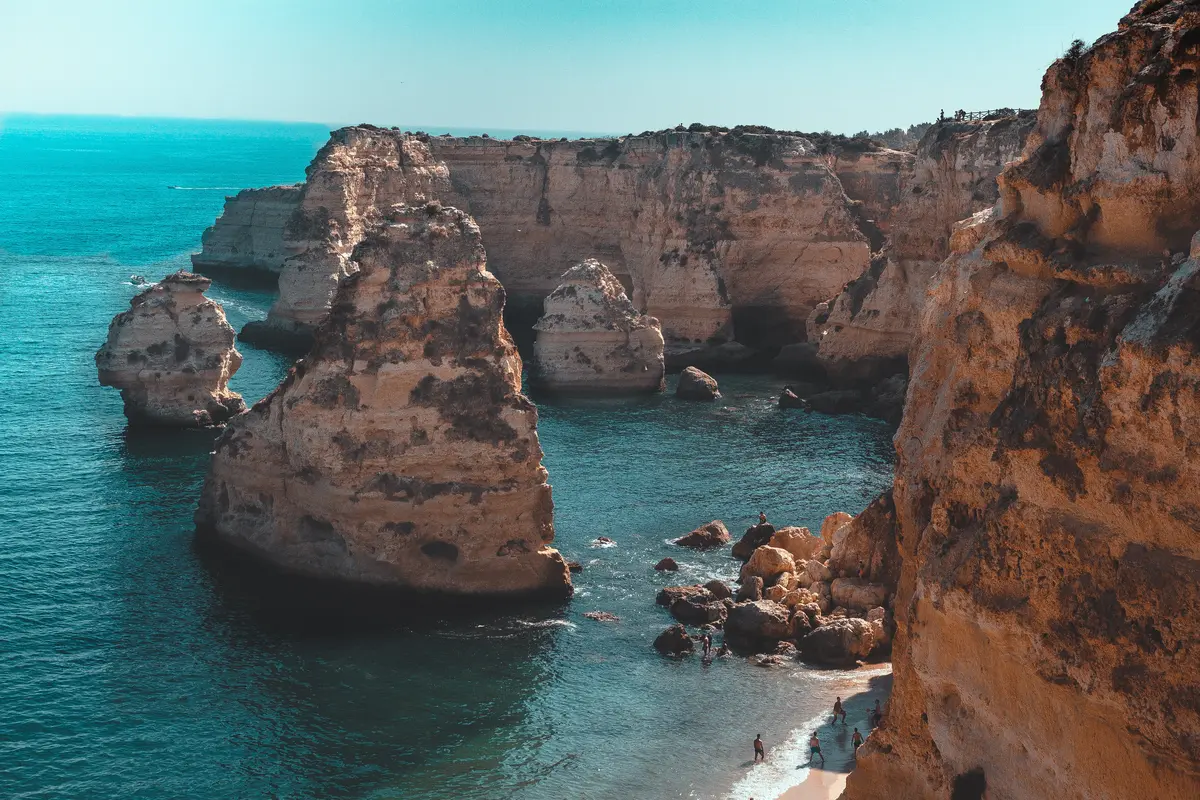
The trail runs 3.5 miles (5.7 km) from Praia da Marinha east to Vale de Centeanes, tracing the cliff edge above some of the most complex coastal geology on the Algarve. The path passes above rock arches, sea caves visible from above, and Praia da Marinha — a beach accessed by a steep staircase that earns its reputation for turquoise water. The cliff-top view of the Benagil skylight from above falls along this route.
The path is well-marked and mostly flat, with some uneven rock sections near the cliff edge. Bring water — there is no shade on this stretch.
- Location: Trailhead at Praia da Marinha, near Lagoa; the trail ends near Vale de Centeanes
- Cost: Free
- Best for: Hikers; anyone who wants to see Benagil Cave from above without booking a tour
- Time needed: 2–3 hours one way
Which Algarve town should you use as a base?
Lagos is the strongest all-around base for the western Algarve: walkable old town, a beach (Praia do Camilo) within 15 minutes on foot, and a marina for boat tours. It runs lively at night without becoming purely a nightlife destination.
Tavira, in the eastern Algarve, suits travelers who want a quieter pace — a Roman bridge, a grid of whitewashed streets, and barrier island beaches accessible by ferry. It sits 45 miles (72 km) east of Faro airport.
Ferragudo and Carvoeiro both work for the central section of the coast, with better access to Benagil and Ponta da Piedade, and a fraction of the resort density of Albufeira.
Are Madeira and the Azores worth the extra flight?
Both are Portuguese territory and both require a separate flight from the mainland — roughly 90 minutes to Madeira, 2 hours to São Miguel in the Azores. They do not overlap in what they offer: Madeira is a hiking destination with a subtropical climate and a city (Funchal) worth two days on its own. The Azores are a volcanic archipelago where the main appeal is raw geology, whale watching, and a pace that feels genuinely disconnected from European tourism.
If you have a week in Portugal and have never been to either island, Madeira is the easier sell for most travelers. The Azores reward people who specifically want outdoor adventure and are comfortable with variable weather.
Madeira — levada hikes and what else to do in Funchal
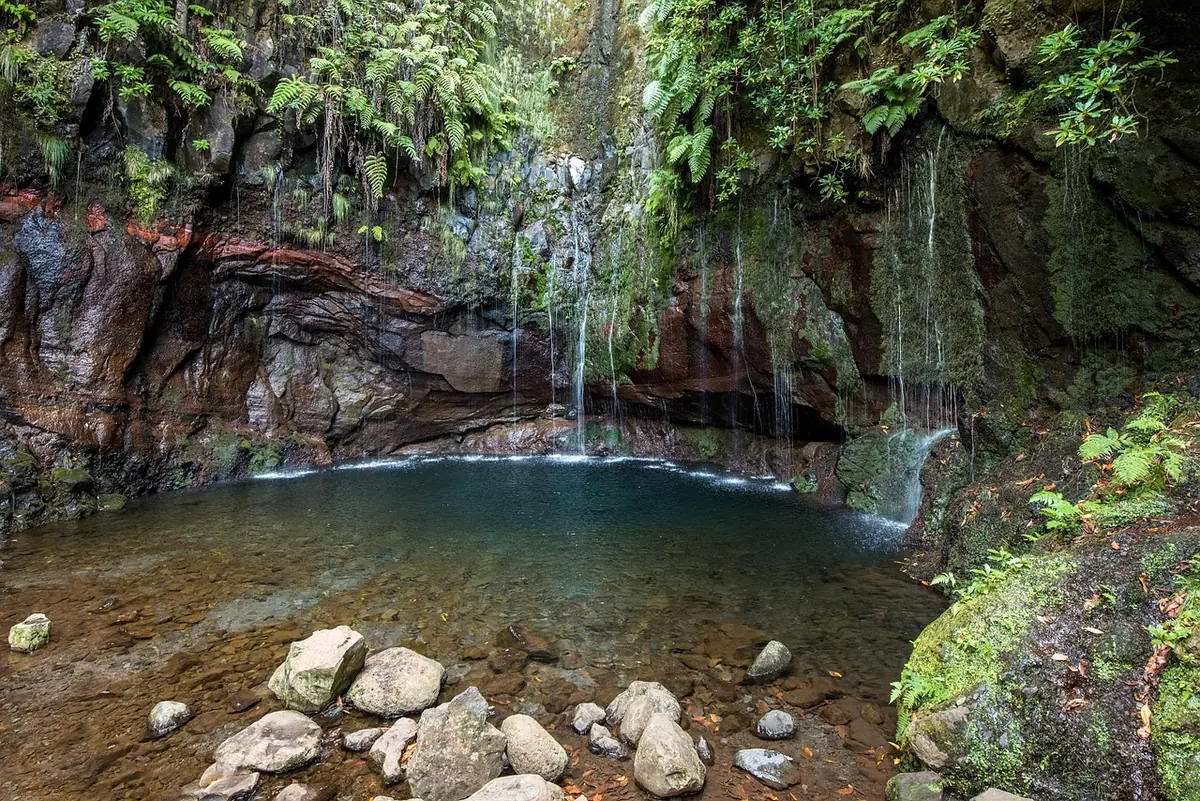
The levadas are centuries-old irrigation channels cut into the hillsides — they created a trail network that covers the island and ranges from flat, accessible paths alongside the water channel to exposed mountain routes above the cloud line. The 25 Fontes and Risco Levada (PR6) is the most reliable introduction: a 5.6-mile (9 km) round trip through laurel forest to a waterfall with minimal elevation gain. Caldeirão Verde requires a headlamp for four tunnel sections but finishes at a 295-foot (90 m) waterfall in a moss-covered basin.
The Pico do Arieiro to Pico Ruivo traverse — a 7.5-mile (12 km) point-to-point at elevations above 5,000 feet (1,500 m) — crosses above the cloud layer when conditions are right. The path is exposed and requires good footwear. Sunrise from the eastern peak means departing Funchal before 5 AM.
In Funchal, the Mercado dos Lavradores (the covered market) is worth an hour for the tropical fruit section alone — custard apples, passion fruit, and Madeira banana, which is smaller and sweeter than the supermarket variety. The cable car to Monte village takes 15 minutes and deposits you at the top of the hill where the wicker toboggan run descends back toward Funchal.
- Location: Madeira island; fly from Lisbon (90 min) or directly from major US hubs via Lisbon connection
- Best for: Active travelers; hikers; anyone who wants subtropical nature without the tropics price
- Time needed: 5 days minimum to hike seriously; 3 days for Funchal and one levada
Azores — what to prioritize on São Miguel
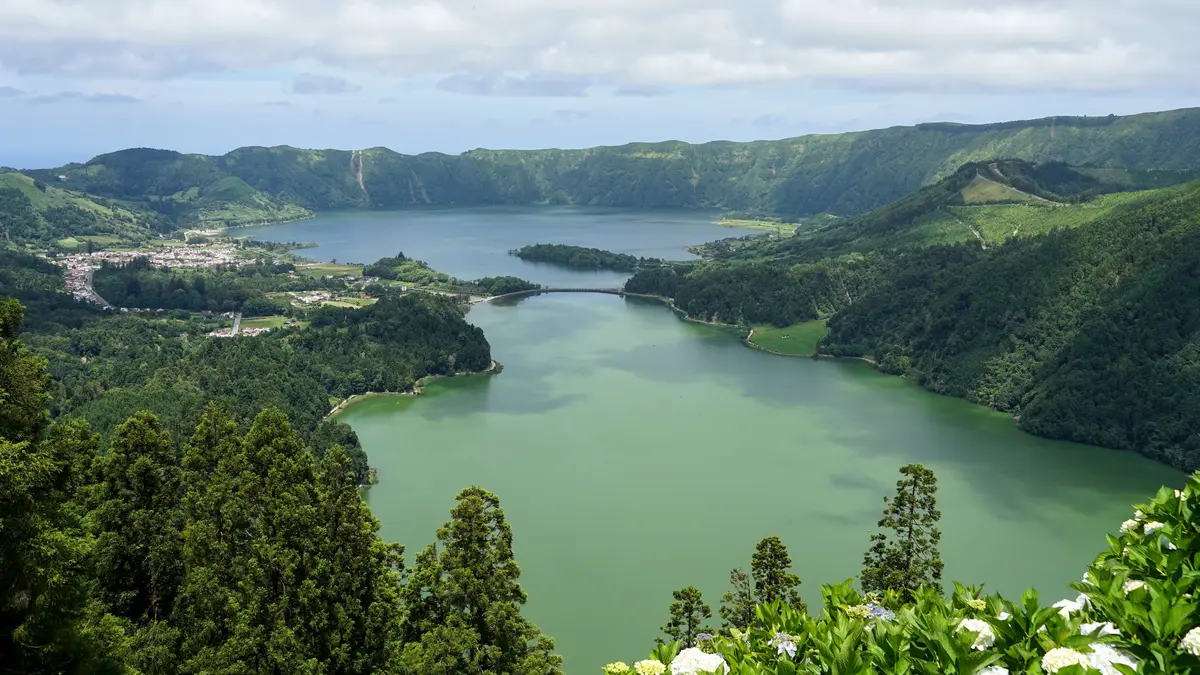
São Miguel is the starting point for most first-time visitors because it has the most infrastructure, the most dramatic landscapes, and a direct ferry connection to other islands if you want to extend. Sete Cidades — two crater lakes, one blue-green and one darker olive, separated by a narrow land bridge inside a 300-foot (90 m) deep caldera — is the defining image of the Azores, best seen from the Vista do Rei viewpoint on the caldera rim.
Furnas Valley, on the eastern side of São Miguel, has active geothermal vents and hot springs at Terra Nostra Park (thermal pool admission required). The Cozido das Furnas is a meat and vegetable stew cooked underground using volcanic heat for six or more hours — it is served at restaurants around the park and tastes different from anything you will find on the mainland.
Whale watching on the Azores runs from April through August with the highest probability of blue and sperm whale sightings. Operators depart from Pico island and from Faial, but São Miguel also has departure points for dolphin-focused tours year-round.
- Location: São Miguel island; fly from Lisbon (2 hours) or directly from Boston and New York seasonally
- Best for: Nature travelers; whale watching; anyone who wants to see volcanic geology up close
- Time needed: 4–5 days to cover São Miguel properly; add 2–3 days per additional island
What do US visitors need to know before arriving in Portugal?
US visitors need specific preparation in four areas: safety habits for tourist zones, navigating the rental car system, using the right ATMs, and adjusting to meal timing. None of these are complicated, but missing any one of them causes real friction.
Is Portugal safe for US tourists?
Portugal has low rates of violent crime by European standards — how safe Portugal is in practice depends on the areas visited and how you manage your valuables. The risk that catches most visitors off guard is opportunistic theft in crowded tourist areas — Alfama, Tram 28, the areas around Jerónimos and Belém Tower, and Faro airport arrivals hall have all been flagged in travel advisories.
- Valuables: Passport, backup credit cards, and extra cash stay in the hotel safe.
- Bags: Crossbody bags with a zipper at chest height, not swinging loose at hip level.
- Rental cars: Nothing visible through a car window, even in a locked vehicle in a “safe” parking area.
- Scams: Unsolicited offers for drugs or “tours” in downtown Lisbon — decline without engaging.
Getting around — train, bus, or rental car
The train network between Lisbon, Porto, and the Algarve (Faro) is reliable and cheap. A Lisbon–Porto intercity ticket costs under $30 and the ride takes under 3 hours on the Alfa Pendular service. Trains to Sintra and Cascais run every 20 minutes from central Lisbon stations.
A rental car becomes necessary the moment you want to explore the Douro Valley beyond the train line, drive the western Algarve between beaches, or reach Alentejo’s cork forest towns.
- Transmissions: Manual transmissions dominate the rental fleet. Automatic vehicles are available but cost 30–50% more and require advance booking.
- Tolls: Request a Via Verde transponder (electronic toll system) from the rental company. Without it, you cannot use the main highways legally as a foreign-plated vehicle.
- License: A valid US driver’s license is sufficient for tourist stays. An International Driving Permit is optional and rarely required in practice.
- Historic centers: Do not attempt to drive into Sintra’s center, Óbidos, or the oldest parts of Évora. Park on the perimeter and walk.
Money, ATMs, and tipping
Use Multibanco ATMs — the network operated by Portuguese banks. Avoid the standalone Euronet machines found near major tourist sites; their exchange rates and fees are significantly worse.
Tipping in restaurants runs 5–10% in cash, left on the table. It is appreciated but not structurally built into the service model the way it is in the US — servers are paid differently here. In cafes, rounding up to the nearest euro is sufficient. Taxis and rideshare: round up or add a small cash tip if the driver helped with luggage.
The daily rhythms that catch Americans off guard
Restaurants in Portugal open for dinner at 7 PM at the earliest, and most locals do not eat until 8:30 or 9 PM. If you show up at 6 PM, you will find the kitchen not yet running. Lunch, however, runs from noon to 2:30 PM and is often the better-value meal.
The calçada portuguesa — the black and white limestone cobblestone pavement covering Lisbon’s sidewalks and hills — is slippery when wet and hard on the feet even when dry. Comfortable, grippy-soled shoes are not optional.
A few words of Portuguese — obrigado/obrigada (thank you), por favor (please), bom dia (good morning) — land differently than the same words in tourist English. English is widely spoken in the cities, but the greeting in the local language sets a different starting point for every interaction.
The bottom line
TL;DR: The best places to visit in Portugal divide into two trips or one long one. First-timers should anchor in Lisbon (3 nights), add Porto (2 nights), do Sintra as a day trip, and spend the remaining time in the Algarve. The Atlantic islands — Madeira and the Azores — are a separate decision that rewards travelers who specifically want outdoor adventure over urban sightseeing. Plan tickets for Jerónimos, Pena Palace, and Livraria Lello before you arrive, not after.
What draws you to Portugal — the cities, the hiking, or the coast? Leave a question below and I’ll point you toward the itinerary that fits.