Portugal’s hotels are the trip inside the trip. After months working through the country — Lisbon’s backstreet guesthouses, Douro Valley vineyard estates, and the Algarve‘s clifftop resorts — this guide to the best Portugal hotels cuts through the noise. You get the real standouts by category, with prices and honest trade-offs most travel sites skip.
What sets Portugal hotels apart from the rest of Europe?
Portugal sits in a category of its own for accommodation value. Where comparable stays in France or Italy can feel like you’re paying for a name, here you get medieval castle walls, working vineyard views, and Michelin-starred restaurants at prices that still undercut Western European averages. The country’s Pousada network alone — historic properties converted from convents, fortresses, and palaces — has no real equivalent elsewhere on the continent.
The trade-off is inconsistency. A five-star rating here doesn’t guarantee the same experience as five stars in London. Room sizes vary wildly in historic properties (thick stone walls and small windows are authentic, not a design choice), and service quality drops sharply outside Lisbon and Porto. Book direct, read recent reviews, and know what you’re actually paying for.
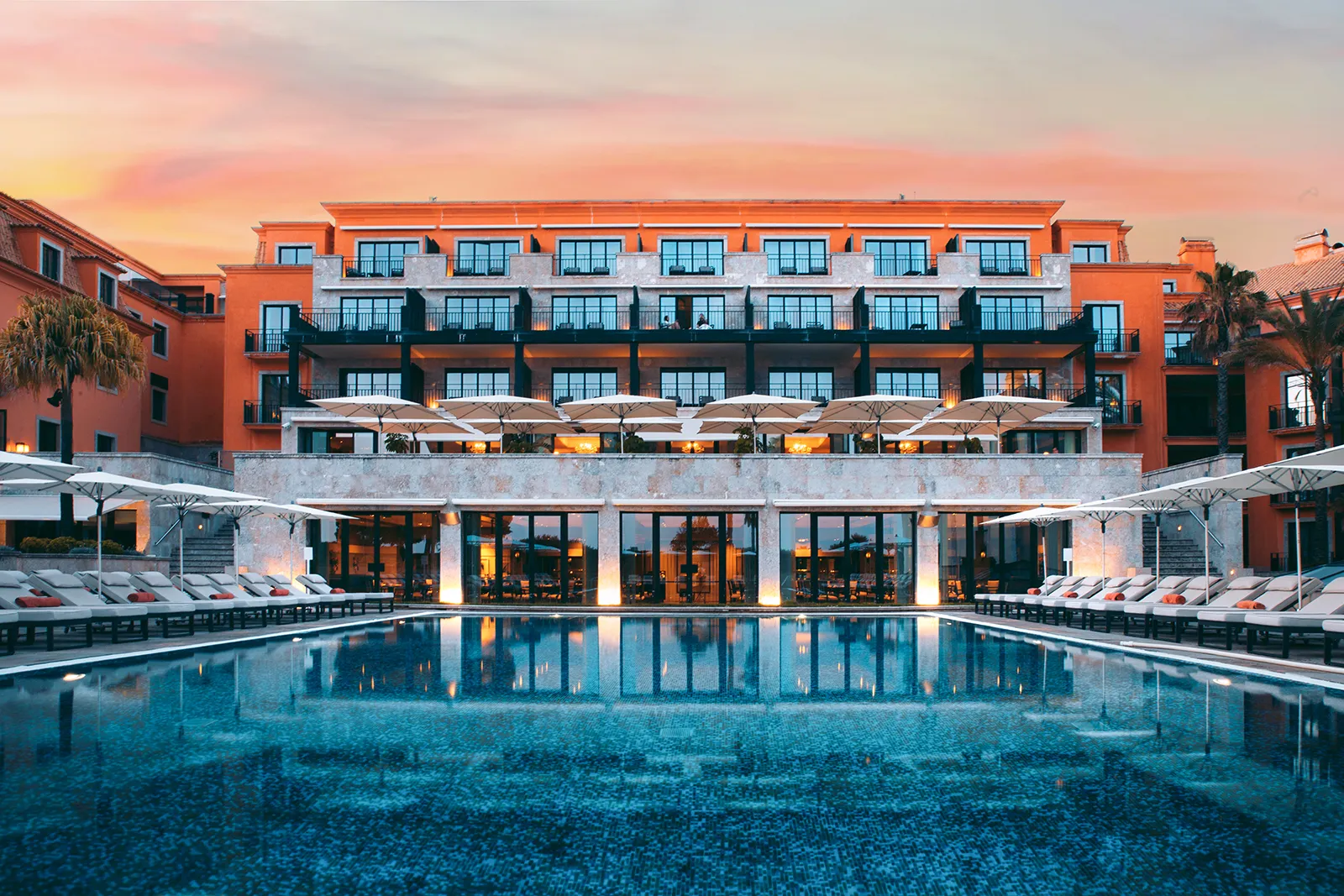
Where should you stay in Lisbon?
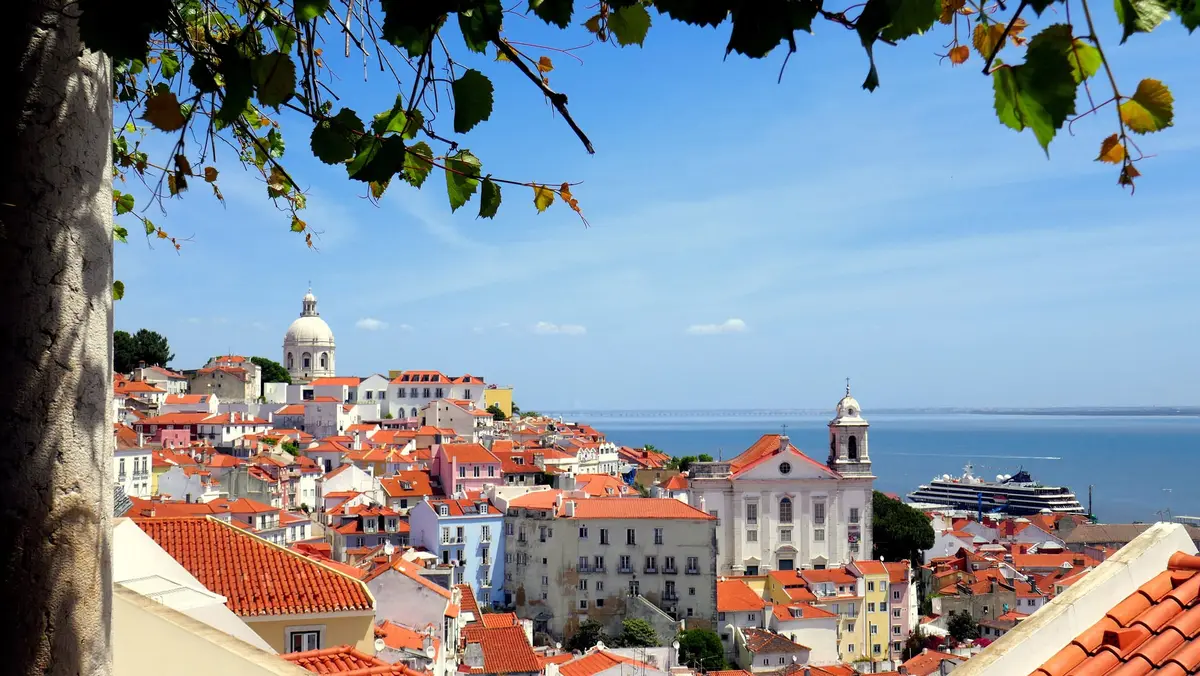
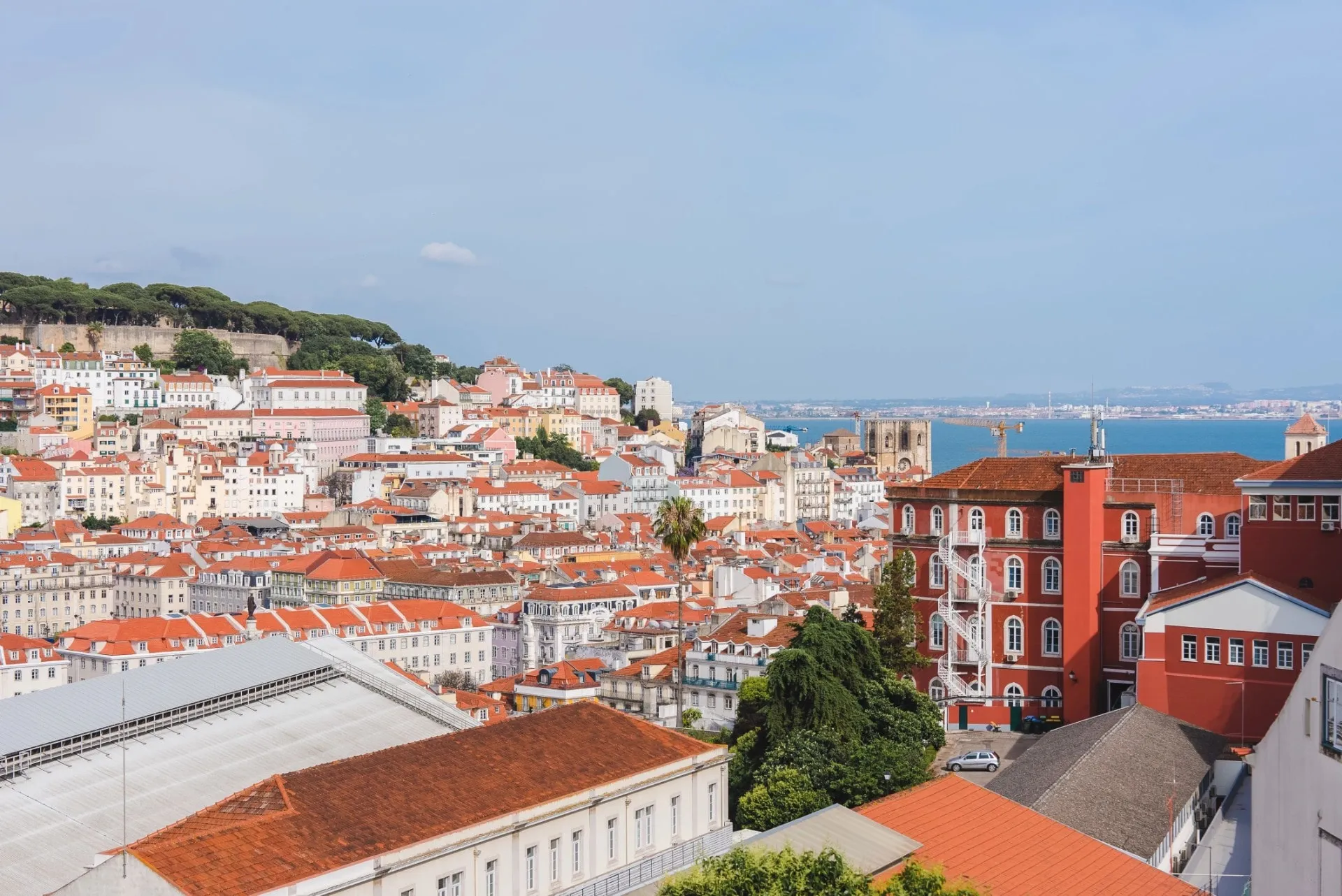
Lisbon’s neighborhoods define your trip more than the hotel itself — the Lisbon travel guide covers each district in detail, but here’s what matters most for choosing accommodation. The city spreads across seven steep hills, and your location determines how much energy you spend getting anywhere. Each district has a completely different personality — picking wrong costs you hours of uphill walking and overpriced rideshares.
Alfama sits on the oldest hill in the city. Narrow cobbled streets dead-end without warning, Fado leaks through restaurant doors after 9 p.m., and the miradouros offer straight-line views across the Tagus. It’s the most atmospheric neighborhood in Lisbon, and also the most physically demanding — those hills aren’t flat on the way back.
Baixa and Chiado form the flat commercial core, easy to navigate on foot and close to most major sights. Chiado pulls ahead for restaurants and independent shops; Baixa works better if you’re somewhere in between everything. First-time visitors tend to get the most out of a base here.
Bairro Alto is quiet until around 10 p.m., then loud until 3 a.m. or later. Boutique hotels here attract night-owl travelers who want to walk downstairs to the bars. Bring earplugs regardless of which room you’re assigned — the neighborhood noise carries.
Príncipe Real has the most livable feel: high ceilings, antique markets, the city’s best natural wine bars, and fewer tourists than Alfama by a significant margin. Couples and repeat visitors tend to gravitate here.
Memmo Alfama
The rooftop terrace at Memmo Alfama is the reason to book. From the pool, you see seven hills of terracotta rooftops dropping toward the Tagus, with the São Jorge Castle visible to the left. On a clear morning the light on the river is unlike anything else in the city.
Standard rooms are genuinely small — the kind of compact that’s typical for renovated historic properties in Alfama — but well-designed enough that you don’t feel squeezed. The staff know the neighborhood in real depth, and the recommendations they give (the wine shop two blocks down, the Fado house that doesn’t mark up drinks) are the kind that don’t appear on any list.
Pro Tip: Request a room on the upper floors. The noise from the street drops off significantly above the third floor, and the views improve with every meter of elevation.
- Location: Travessa das Merceeiras 27, Alfama, Lisbon
- Cost: From $180/night
- Best for: Couples, solo travelers, Lisbon repeaters
- Time needed: 2–3 nights minimum
Pousada de Lisboa
This former government ministry building on Praça do Comércio puts you at the center of Baixa with a level of architectural grandeur that’s hard to find in a standard hotel. The public spaces — vaulted ceilings, original stone floors, a library that looks unchanged from 1900 — are worth exploring even if you’re not a guest.
The location on Praça do Comércio means the square’s wind tunnel effect hits you every time you step outside. It’s a minor friction point, but worth knowing before you pack. Otherwise, the professionalism of the service is consistent in a way that smaller boutique properties sometimes aren’t.
- Location: Praça do Comércio 31-34, Baixa, Lisbon
- Cost: From $250/night
- Best for: Business travelers, architecture enthusiasts, first-time Lisbon visitors
- Time needed: 2–4 nights
Martinhal Lisbon Chiado
If you’re traveling with children under 12 and want to stay in Lisbon’s most walkable neighborhood, Martinhal solves a problem most city hotels don’t acknowledge. The apartment-style suites have actual living space — not just a pull-out sofa — and the on-site kids’ club is a legitimate amenity, not a corner with a few toys.
An on-site kids’ club in central Chiado is genuinely rare. The tradeoff is that the property skews heavily toward families, so the atmosphere is noisy during school holidays and the bar doesn’t have the quiet you’d want for a late-evening drink.
- Location: Rua das Flores 44, Chiado, Lisbon
- Cost: From $220/night
- Best for: Families with children under 12
- Time needed: 3–5 nights
What are the best hotels in Porto and the Douro Valley?
The Porto travel guide covers the full city in depth, but for accommodation purposes, Porto and its surroundings offer two distinct stays: the grand wine hotel experience in Vila Nova de Gaia across the river, and the authentic vineyard estates an hour upstream in the Douro Valley. Both justify the trip north; they’re not interchangeable.
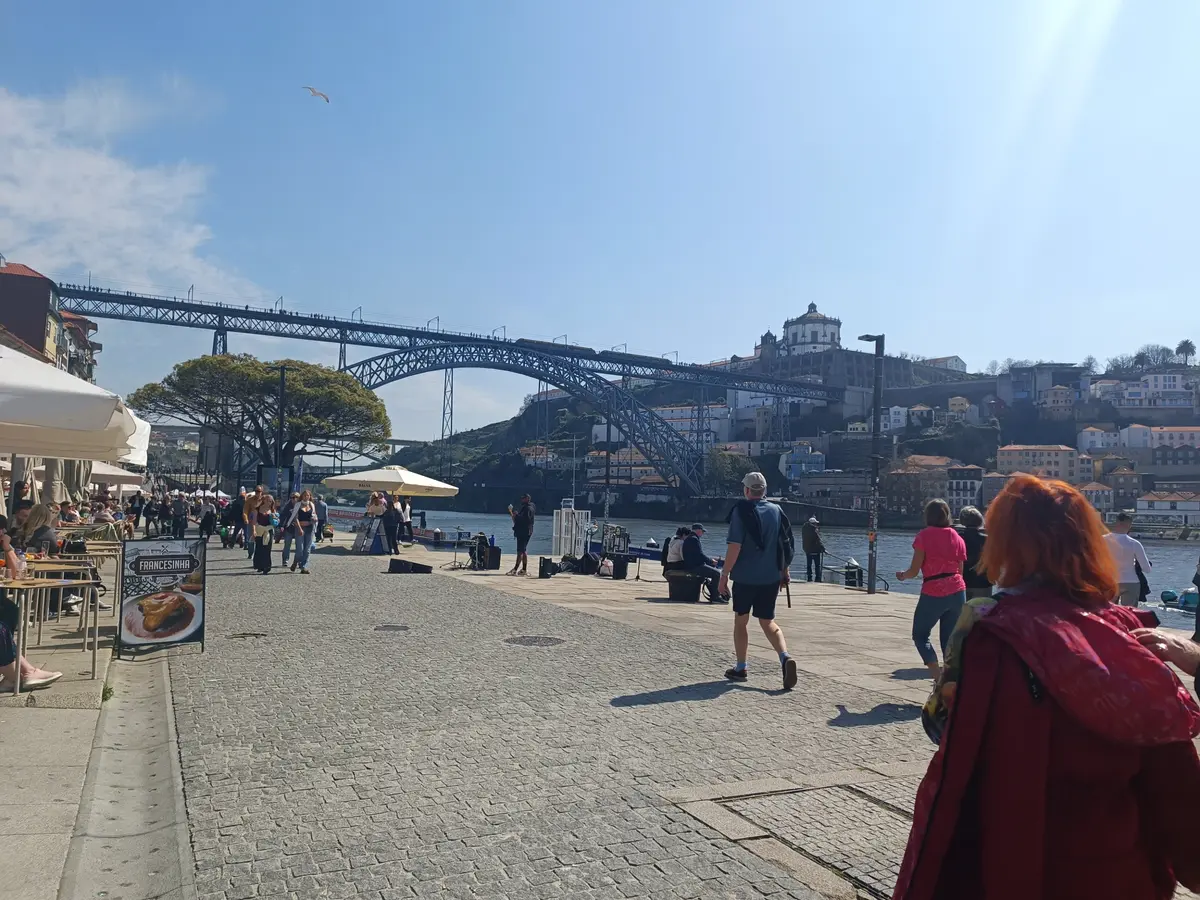
Porto’s old city is compact enough to walk in an afternoon, but the hills between Ribeira and the main train station are steeper than they look on a map. Base yourself in Ribeira or Gaia for river access; expect to take the cable car or a taxi more than you planned.
The Yeatman
The Yeatman sits on the Gaia hillside with a view of Porto’s waterfront that every room balcony faces directly. The distance from the city center — a 20-minute walk or a short cable car ride — is either a selling point or an inconvenience depending on what you’re after. For most guests, the quiet on the Gaia side makes it worth the separation.
The gastronomic restaurant holds two Michelin stars, one of only eight two-star restaurants in all of Portugal. The tasting menu runs €260 per person. The swimming pool, shaped like a wine decanter — a fitting symbol of the Portugal wine culture embedded in every corner of Gaia — is the kind of detail that sounds gimmicky until you’re actually in it looking at the Dom Luís I Bridge.
Pro Tip: Book the gastronomic restaurant for your first night so jet lag works in your favor — seatings start at 6:30 p.m. and the kitchen is meticulous enough that early service gets the same attention as the last.
- Location: Rua do Choupelo 250, Vila Nova de Gaia
- Cost: From $380/night
- Best for: Wine enthusiasts, couples, milestone celebrations
- Time needed: 2–3 nights
The Rebello Hotel & Spa
The Rebello Hotel occupies a converted stone factory building in Vila Nova de Gaia, steps from the historic wine cellars on the waterfront. The suites are large enough to function as actual apartments — separate living areas, well-equipped kitchens in some configurations — which makes this one of the few luxury options in the region that works for families or longer stays without feeling cramped.
The design is contemporary inside genuinely old industrial bones: exposed stone, high ceilings, and none of the forced rustic aesthetic that plagues many conversions. The spa is well-regarded, though the Port Wine Cellars directly across the street will compete for your afternoon.
- Location: Cais de Gaia, Vila Nova de Gaia
- Cost: From $280/night
- Best for: Families, couples, stays of 4+ nights
- Time needed: 2–4 nights
Six Senses Douro Valley
The Six Senses sits in a restored 19th-century manor above the Douro River, about 90 minutes east of Porto on narrow roads that are more demanding than Google Maps suggests. That distance is the entire point: the property works as a destination, not a base for day trips.
The spa anchors the stay. Beyond the standard facilities, the Alchemy Bar lets you build your own body scrub from raw ingredients — sea salt, local honey, essential oils — which is either delightful or something you’ll skip depending on your personality. Tile painting workshops and river boat excursions fill out the activity calendar for guests who want structure. The organic garden supplies a meaningful portion of the kitchen’s produce, and you can taste the difference in the vegetables at dinner.
Three to four nights is the honest minimum to justify the drive and decompress into the pace of the Douro Valley.
- Location: Quinta de Vale Abraão, Samodães, Lamego
- Cost: From $650/night
- Best for: Wellness seekers, honeymooners, couples marking major occasions
- Time needed: 3–4 nights minimum
Quinta do Vallado Wine Hotel
Quinta do Vallado is one of the more architecturally striking stays in the Douro: the new wing uses local schist stone in a pattern that catches the afternoon light differently from every angle, while the original manor house has the worn warmth of a building that’s been producing wine for over 300 years.
The pool sits at the edge of the vines with a direct view down the valley. Private tastings with the winemaker are available — book these before you arrive, they fill up fast in harvest season (September–October). This is a working quinta, which means the grounds are active in ways that feel authentic rather than staged.
- Location: Rua do Fontelo, Vilarinho dos Freires
- Cost: From $220/night
- Best for: Wine lovers, couples, architecture enthusiasts
- Time needed: 2–3 nights
How do you choose where to stay in the Algarve?
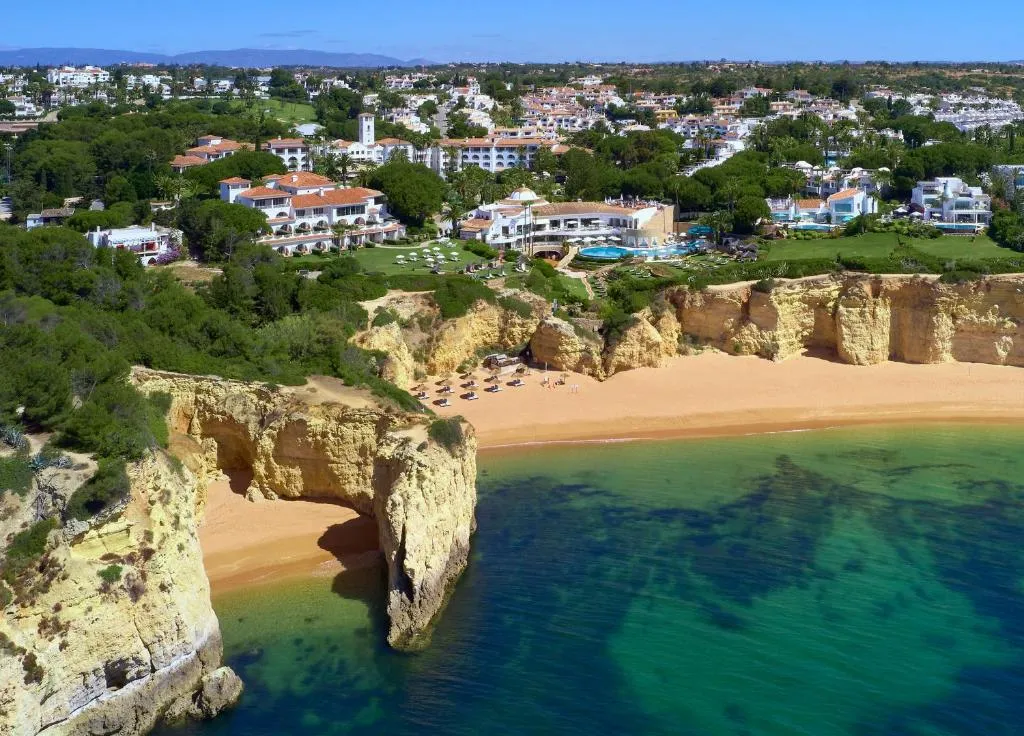
The Algarve divides sharply between high-density resort zones and quieter coastal towns. The choice of base changes your experience more than the hotel itself does. Lagos and Carvoeiro offer more character and better access to the rock formations the region is known for; Albufeira and Vilamoura deliver convenience, nightlife, and beaches with consistent infrastructure.
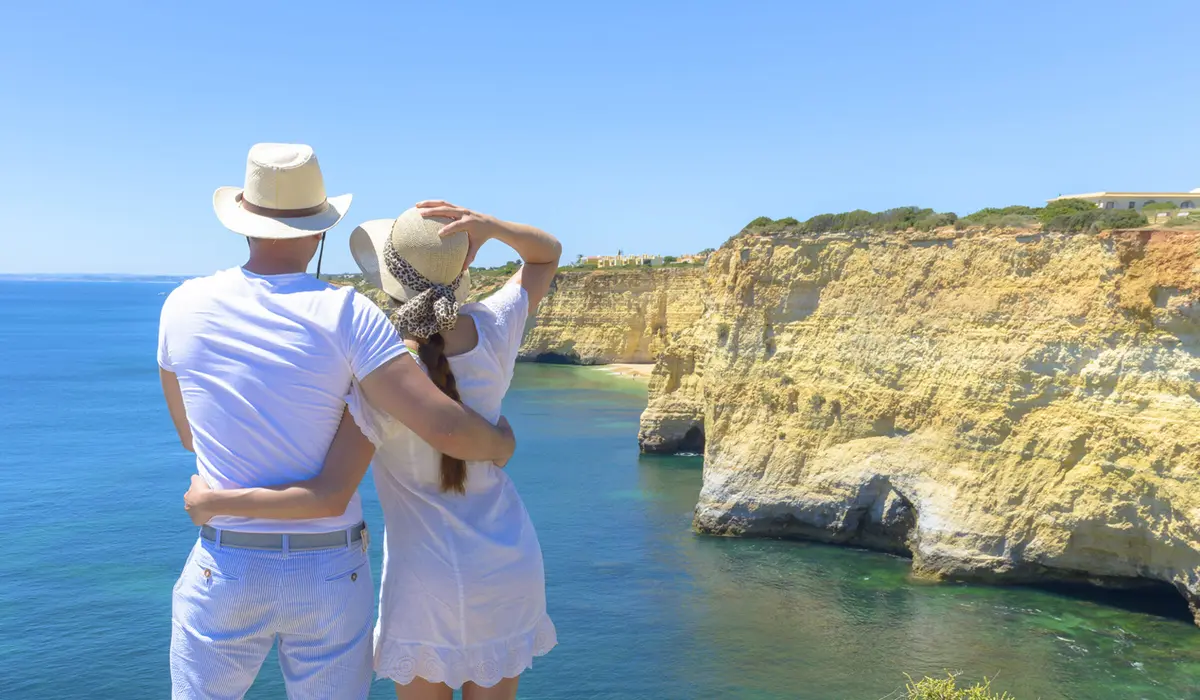
Lagos draws visitors with its historic old town and the Ponta da Piedade rock formations — sea arches and grottoes accessible by kayak from the beach below. The town itself has held more of its Portuguese character than most Algarve resorts, and the walking between the old walls and the waterfront takes under 10 minutes.
Albufeira is the liveliest resort town in the region: wide beaches, organized watersports, and a nightlife strip that runs late. It’s not where you go for quiet — it’s where you go when convenience and entertainment are the priority.
Vilamoura is purpose-built luxury: a marina lined with yachts, championship golf courses, and large hotels that operate with resort-level efficiency. The beach at Quarteira, a 10-minute drive away, is longer and less crowded than the strip directly at the marina.
Carvoeiro sits inside a small cove that makes it feel sheltered in a way the larger towns don’t. The access point for the Seven Hanging Valleys trail is a 20-minute drive east, and the cliffs here give you the most dramatic coastal scenery in the western Algarve without the crowds that concentrate in Lagos.
Sagres occupies the southwestern tip of Europe. The wind is constant and strong enough to make the beach genuinely cold between October and April, which keeps the crowds down year-round. Surfers use it as a base for the Atlantic breaks north of town.
Pine Cliffs, a Luxury Collection Resort
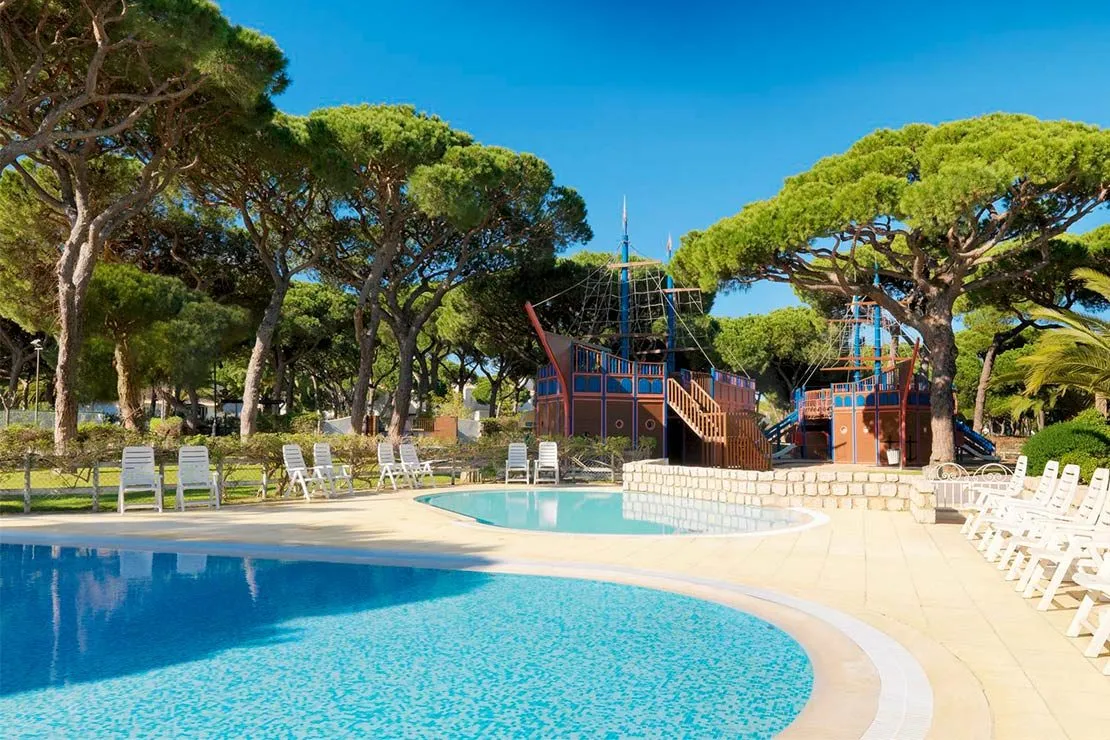
Pine Cliffs covers 72 hectares (178 acres) above Praia da Falésia, and the scale is the point. This is a resort in the full sense — golf course, tennis academy, multiple pools, the Porto Pirata children’s village with two full-size pirate ships, and a cliffside elevator that drops you directly to one of the best beaches in the Algarve.
The children’s infrastructure is the reason families return year after year. Parents get actual downtime because the kids’ programming runs in parallel from morning to evening. The trade-off is that the property trends heavily toward British holidaymakers in peak season, and the vibe in July and August can feel less like southern Portugal and more like a very warm UK holiday. American families who prioritize smooth logistics over local color find it works extremely well.
- Location: Praia da Falésia, Albufeira
- Cost: From $350/night
- Best for: Families with children, multi-generational groups
- Time needed: 4–7 nights
Tivoli Carvoeiro
The Tivoli’s main asset is its position: on a cliff directly above the Atlantic, with the trailhead for the Seven Hanging Valleys hiking route accessible without a car. The views from the pool terrace are across open water with nothing between you and the horizon.
This is a solid four-star property where the location delivers the five-star moment. Rooms are comfortable without being exceptional, and the service is reliable rather than memorable. For guests who plan to spend most of their time on the coastal trails, the beach, or in Carvoeiro village, the room becomes less relevant — and the free on-site parking is a meaningful benefit if you’re renting a car to explore the coast.
Pro Tip: The Seven Hanging Valleys trail runs east toward Armação de Pêra. Start at 8 a.m. before the tour groups arrive — by 10 a.m. the main viewpoints are crowded. The trail is 6 miles (9.7 km) one-way; arrange transport back unless you want to retrace.
- Location: Alto do Paraíso, Carvoeiro
- Cost: From $180/night
- Best for: Active travelers, couples, hikers
- Time needed: 3–5 nights
Bela Vista Hotel & Spa
Bela Vista is the Algarve’s original hotel — the building dates from 1918 — and the property has held onto a personality that most of the region has long since traded for square footage. The 38 rooms are inside three separate houses, each with different design sensibilities; rooms in the main house have the original high ceilings and ornate tilework, while the Garden House rooms open onto private terraces.
The Vista restaurant holds one Michelin star and faces the Atlantic from the cliff edge. Chef João Oliveira builds his menus from locally caught fish and Algarve producers, with detailed ceramic maps on each table showing exactly where the ingredients come from. This is adult-focused territory — the hotel does not accommodate children — and the experience is more intimate restaurant-with-rooms than full resort.
Note that Bela Vista closes for the season from early November through late February each year. If you’re planning a winter or shoulder-season trip, verify dates before booking.
- Location: Av. Tomás Cabreira, Praia da Rocha, Portimão
- Cost: From $280/night
- Best for: Couples, food-focused travelers, adults only
- Time needed: 2–4 nights
What are Pousadas and Quintas — and which suits you?
These two property types are Portugal’s most distinctive accommodation categories and the ones most commonly misunderstood by first-time visitors. They’re not interchangeable: one puts you inside a piece of national heritage in a town center, the other drops you into the agricultural landscape far from everything.
Pousadas: sleeping in a castle or convent
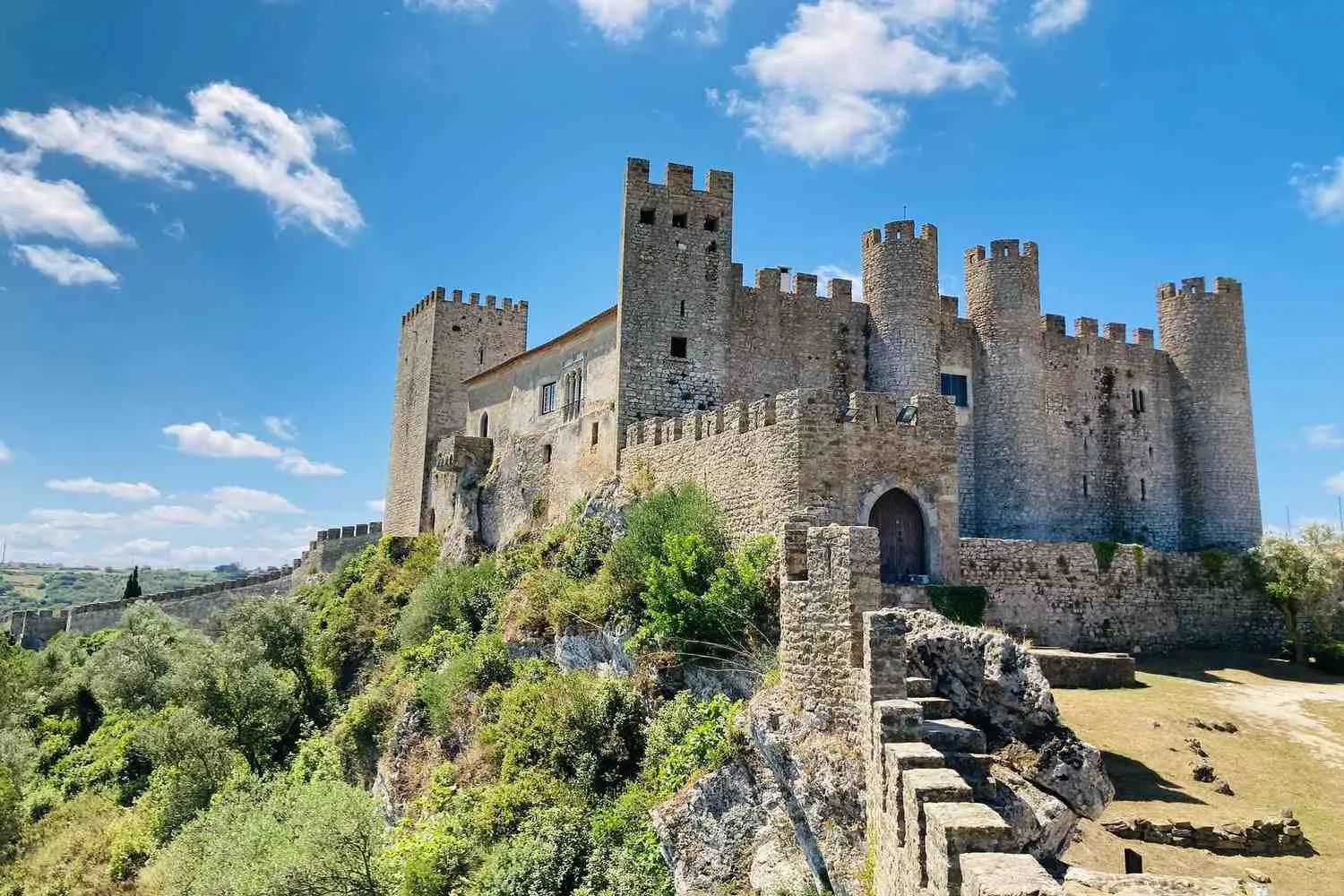
The Pousada concept began in the 1940s with a specific mandate: create hotels that were authentically Portuguese and looked nothing like standard hotels. The Pestana Group now manages more than 30 properties across the country — former monasteries, convents, fortresses, and palaces adapted for modern stays while preserving the architectural substance.
Staying in a Pousada means eating dinner in a medieval cloister and sleeping in a room where the walls are a meter thick. The Pousada Castelo de Alcácer do Sal, built inside a Moorish fortress above the Sado River in Alentejo, gives you castle towers and river views in a town where almost no other tourists end up. That’s the appeal: historic immersion in places that genuine travel guides rarely cover.
Quality is consistent across the network, but the physical nature of the buildings means trade-offs: low doorways, stone floors that stay cold, and room layouts that follow the original structure rather than hotel logic.
Quintas: waking up inside a vineyard
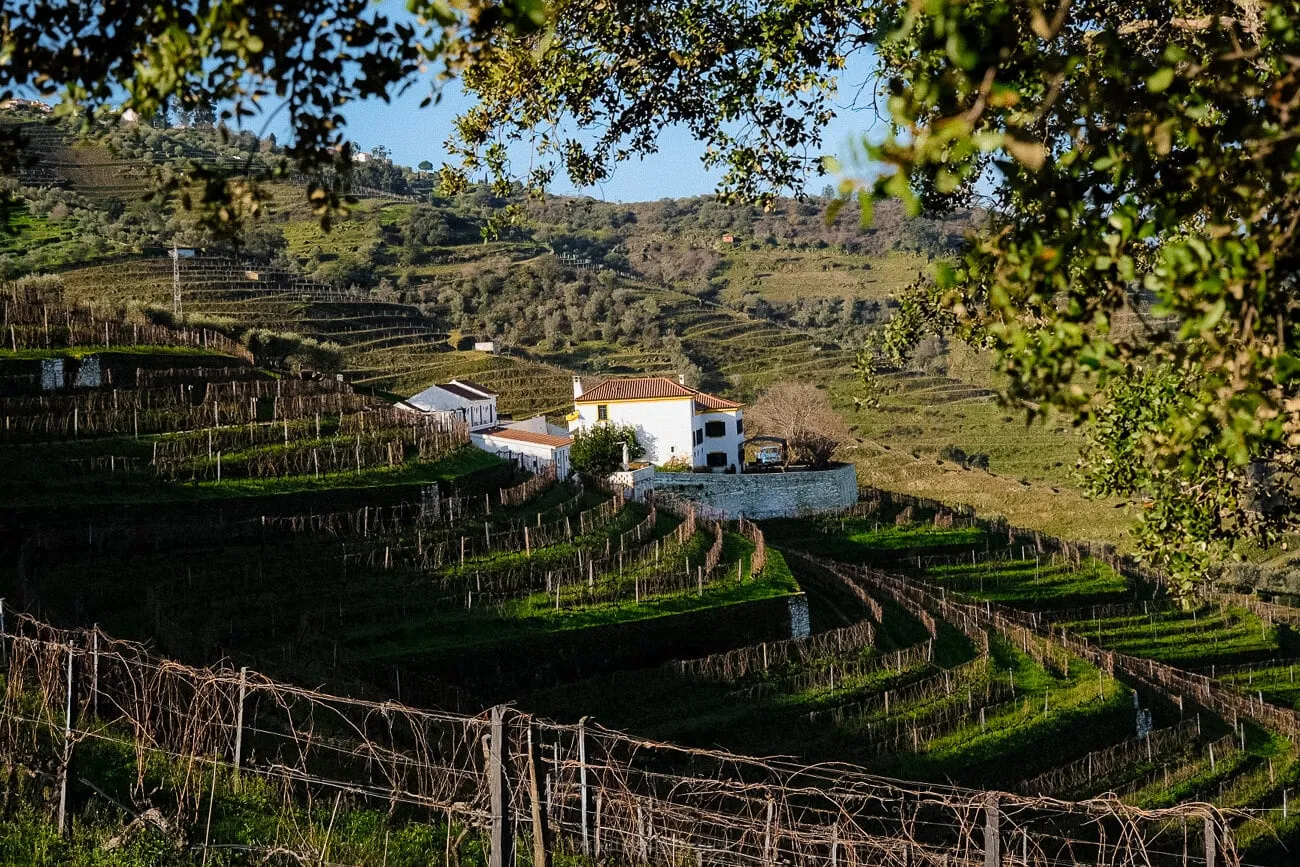
Quinta refers to a rural country estate with agricultural land — in the Douro Valley, that almost always means a working wine estate set within one of the country’s defining Portugal wine regions. The name comes from the Latin for “fifth,” originally the share of produce paid as rent.
The experience centers on the land. You have breakfast looking over terraced vines, walk the estate before lunch, and do a private tasting in the cellar before dinner. Quinta da Pacheca takes this the furthest with wine barrel suites — round rooms inside actual barrels set between the vine rows — which is either the most atmospheric thing you can do in the Douro or deeply uncomfortable depending on your feelings about small curved spaces.
Family-run quintas offer more personalized service than the larger properties, but also more variability. Ask specifically about what’s included — some offer daily tastings as standard, others charge separately for every activity.
Pousadas suit travelers who want architectural history and a central town location. Quintas are for those who want rural immersion, wine culture, and the kind of quiet that requires no city nearby.
Which Portugal hotels are best for families?
Portugal handles family travel better than most European destinations — something the Portugal travel guide covers in full — and the hotels below go beyond tolerance and offer actual infrastructure. The culture is genuinely welcoming to children, dinner runs late, and kids are expected to be present at restaurants that would have age restrictions elsewhere.
Pine Cliffs in the Algarve is the clearest all-in choice: the Porto Pirata children’s village is a legitimate destination within the resort, running programming across age groups from toddlers through teenagers. The beach access via the cliffside elevator removes the logistics problem that ruins beach days at cliff-top properties. Parents who want to hand off the kids and sit by a pool for six hours uninterrupted will find this works.
Martinhal Sagres Beach Resort was designed around family needs from the ground up. The kitchen offers dedicated baby food menus alongside full restaurant service. Kids’ clubs run by age group, the beach is directly accessible, and the overall design creates a sense of space that prevents the trapped-in-a-room feeling that compact hotel rooms cause on long trips. The Algarve location means good weather from May through October.
The Rebello in Porto proves that city breaks with children don’t require choosing between comfort and practicality. The large suites feel like apartments rather than hotel rooms, the kids’ club gives parents windows of genuine freedom, and Porto’s compact old city is walkable enough that a family with older children can cover the main sights without anyone needing to be carried.
São Lourenço do Barrocal in Alentejo is the outlier on this list — a luxury farm estate where the family experience is spacious and slow rather than organized and activity-driven. Two and three-bedroom cottages give families actual room to spread out. Horse riding across the 19th-century estate grounds, a dedicated children’s pool, and the quiet of a region that receives a fraction of the tourists that Lisbon and the Algarve do make this the right choice for parents who want their children to experience something other than a resort.
Where do couples and design travelers stay in Portugal?
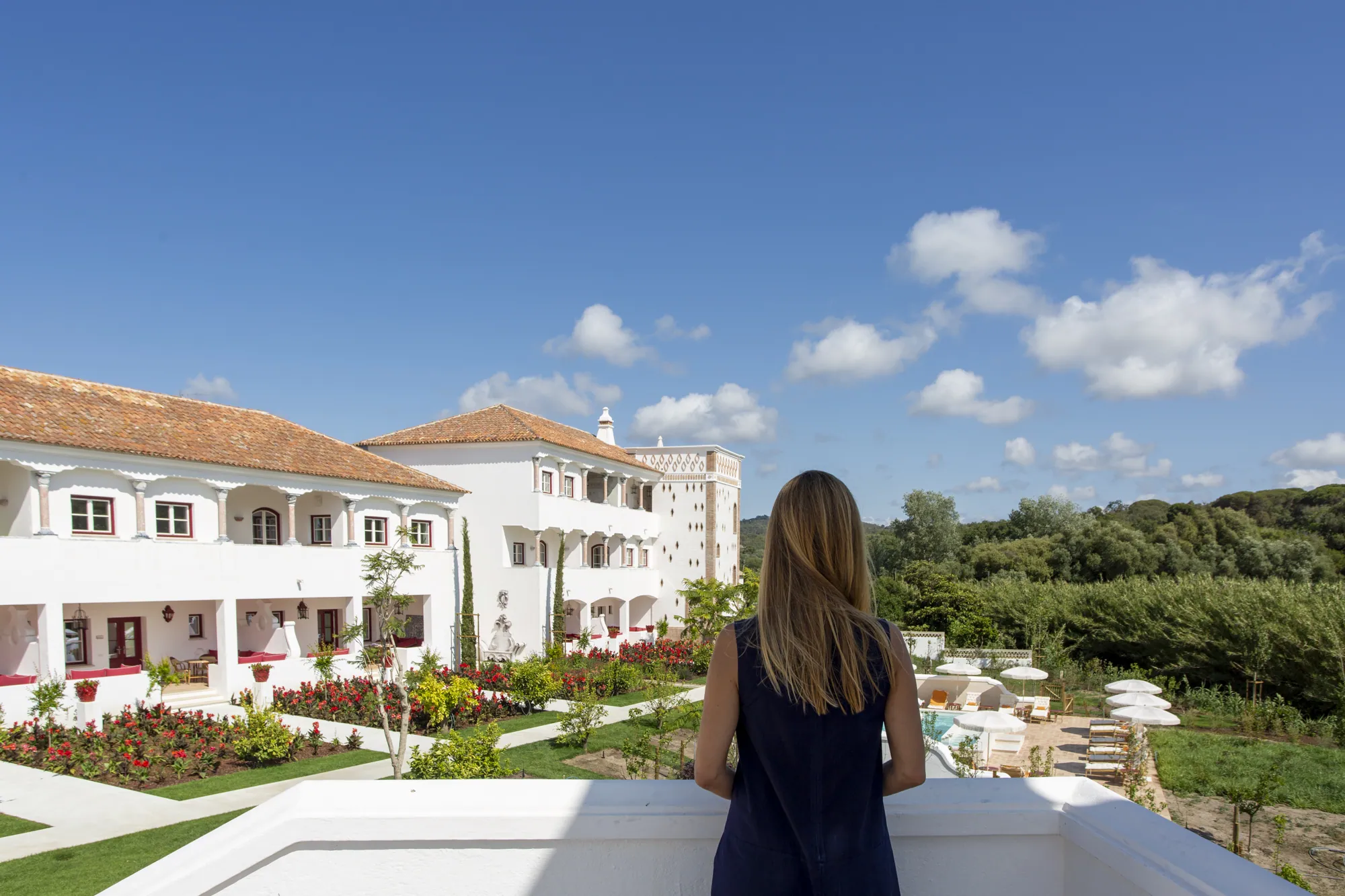
Portugal’s boutique hotel scene rewards research. The best properties are inside restored historic buildings where the renovation preserved the architectural bones rather than erasing them.
In Lisbon, Memmo Príncipe Real delivers a contemporary design sensibility with pool and city views in the most pleasant neighborhood in the city. Palácio Ludovice Wine Hotel takes a different approach: a converted 18th-century palace with 61 individually designed rooms, where the suites in the original building have ceilings high enough to accommodate a second-floor gallery. Both consistently appear on lists of the best boutique hotels in Lisbon for good reason.
In Porto, Torel 1884 occupies a restored palace with rooms sized on a scale that modern hotels rarely attempt — double-height ceilings, oversized windows, furniture that fits the proportions. At the smaller end, M Maison Particulière is a 16th-century townhouse with ten suites, some with private butlers and original artwork from the owners’ personal collection. These properties suit travelers for whom the room itself is part of the itinerary, not just a place to sleep.
How should you book a Portugal hotel — and when?
The booking approach matters more here than in countries where hotel pricing is more standardized. Portugal’s best independent properties — Pousadas, quintas, and boutique hotels — offer meaningfully better rates and room assignments when you book directly.
Should you book direct or through a platform?
Booking direct lets the hotel avoid platform commissions, which they typically pass back as better rates, room upgrades, or small perks (airport pickup, a welcome drink, a late check-out). For Pousadas and quintas especially, a direct phone call or email often unlocks things the booking platform can’t. The platform approach makes sense for last-minute bookings on major international chains where the rate is the rate regardless of channel.
When should you book?
Peak season runs May through September, when prices are highest and availability at good properties disappears early. For Douro Valley wine hotels during harvest season (September–October), book 7–9 months out — these dates sell out faster than the summer peak. Shoulder season in April and October gives you good weather with significantly less competition for rooms; 4–6 months of lead time is generally enough. Low season from November through March offers the most flexibility and the sharpest discounts, with the exception of Christmas week and Easter, which both spike.
What does a Portugal hotel actually cost?
Budget hotels start around $75–$100 per night for a double room. Mid-range properties run $110–$140. Luxury starts at $150–$200 and goes well above that for the top Douro Valley estates and the Algarve’s major resorts — a full breakdown across accommodation, food, and transport is in the Portugal travel cost guide.
Tourist taxes are charged separately and catch many visitors off guard. Lisbon charges €4 per person per night for stays up to seven consecutive nights — children under 13 are exempt. Porto charges €3 per person per night with the same seven-night cap. In the Algarve, rates vary by municipality: Albufeira charges €2 per person per night during the high season (April–October) and €1 outside of it, capped at seven nights. Not every municipality in Portugal charges a tourist tax — confirm with your accommodation before arrival.
What should you know about local etiquette?
Tipping in Portugal is more relaxed than US standards suggest, but housekeeping staff work harder than the rate implies. A practical approach: €1–2 per night for housekeeping, left daily rather than at check-out, and €1–2 per bag for porters. Concierge tips of €10–15 are appropriate for hotel-level assistance that goes beyond handing you a map.
Standard check-in is 3 p.m. and check-out is noon. Most hotels will store luggage for arrivals and departures outside those windows without charging extra — ask at check-in rather than at checkout when the desk is busier.
The standard Portuguese hotel breakfast is bread, toast, ham, mild cheese, and butter, with milky coffee (the galão, similar to a latte) and occasional Pastéis de Nata straight from the oven. The pastry quality varies by hotel, but when they’re good, they’re the best reason to be in the dining room before 9 a.m.
Before you book
TL;DR: The best Portugal hotels earn their price by being genuinely different from what you’d find anywhere else in Europe. A Pousada in a Moorish fortress, a vineyard estate in the Douro, and a clifftop resort above the Atlantic are three entirely different trips — and Portugal does all three at a lower price point than comparable stays in France or Italy. Match the property type to what you actually want from the trip, book direct where possible, and factor in the tourist tax before you finalize a budget.
Where are you planning to base yourself — Lisbon, the Douro Valley, or the Algarve — and what’s the one thing you refuse to compromise on?