Albania is statistically one of Europe’s safest destinations for tourists — so why does the question keep coming up? Outdated 1990s stereotypes have outlasted the data. This guide gives you the specific risk profile on roads, water, scams, and medical care before you book.
How safe is Albania for tourists?
Albania is a statistically safe destination for tourists. The intentional homicide rate sits at 1.387 per 100,000 residents — lower than the United States and Turkey. Violent crime targeting foreigners is nearly non-existent. The primary risks are infrastructural, not criminal: aggressive local driving, unpotable tap water, and sidewalks that function as obstacle courses.
| Risk Category | Level | Notes |
|---|---|---|
| Violent Crime | Very Low | Homicide rate 1.387 per 100,000 |
| Pickpocketing | Low | Crowded furgons are the main exposure point |
| Scam Risk | Moderate | Taxis and fake guides near UNESCO sites |
| Driving Hazards | High | Unmarked switchbacks, livestock on roads after dark |
| Tap Water | High | Avoid entirely; 5-liter bottles cost about $1.20 |
| Wheelchair Accessibility | Very Low | Infrastructure largely excludes mobility aids |
The distinction between urban personal safety and rural road safety is the most important framework to carry into this trip — and into the rest of your complete Albania trip planning. One is largely a non-issue. The other deserves serious preparation.
Pro Tip: Budget travelers average about 1,300 Lek ($16 USD) per day; mid-range travelers spend closer to 3,100 Lek ($37 USD). Factor that gap into your risk-versus-cost calculations when deciding between public transit and car rental.
Why locals protect tourists: understanding Besa
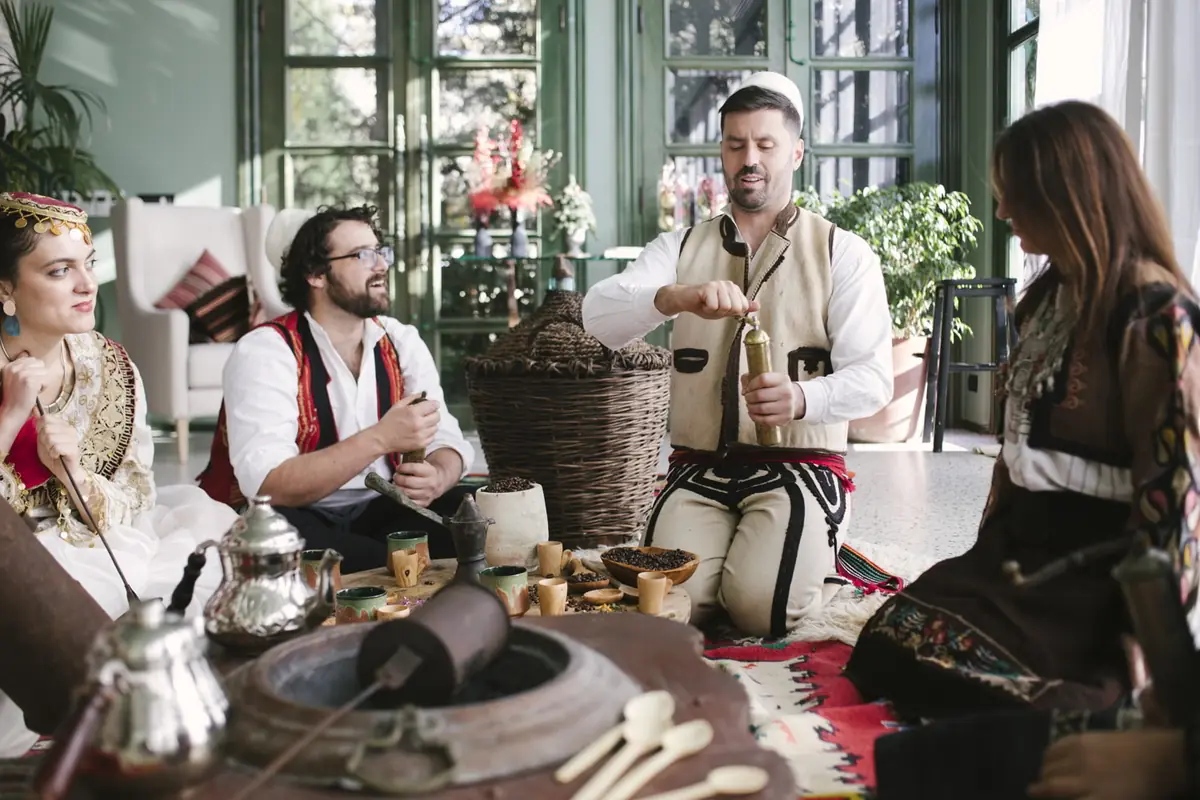
The foundation of personal safety in Albania has less to do with policing and more to do with a centuries-old cultural code called Besa. This social contract — translating roughly as “to keep a promise” — dictates that guests are sacred responsibilities. Locals are culturally bound to protect and assist foreign visitors, not exploit them.
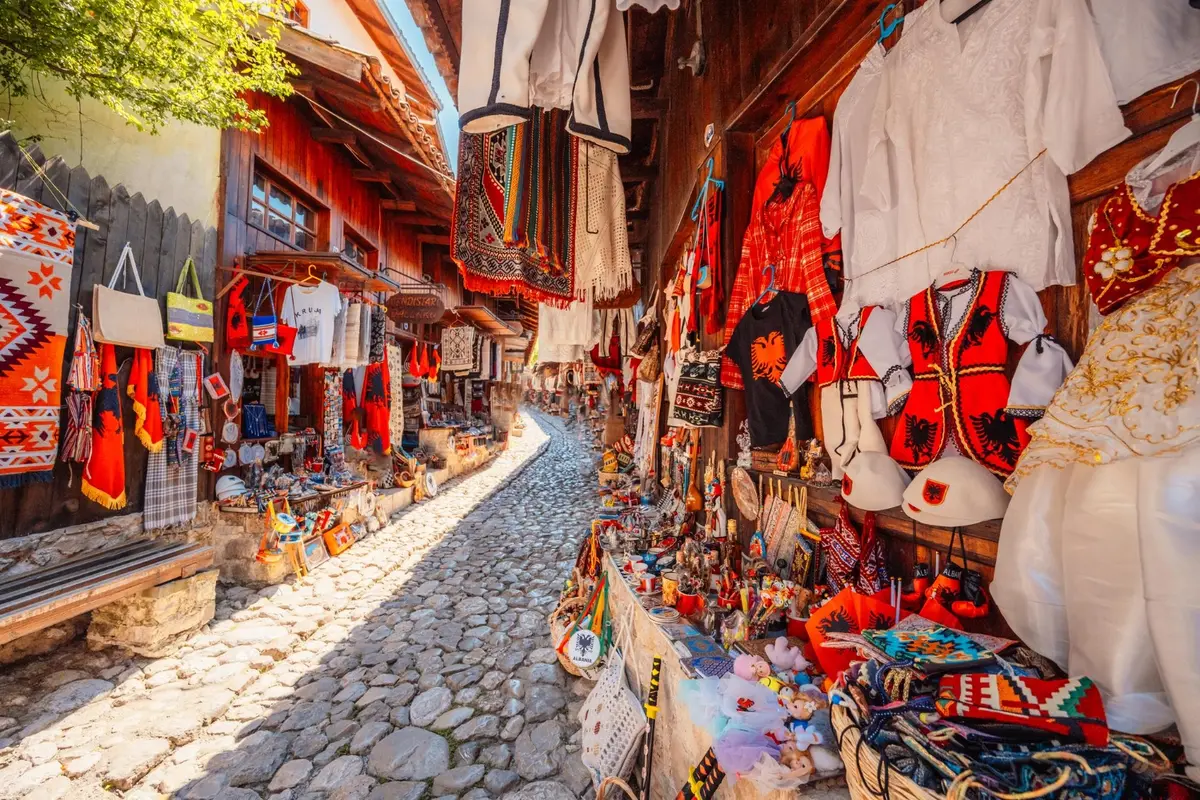
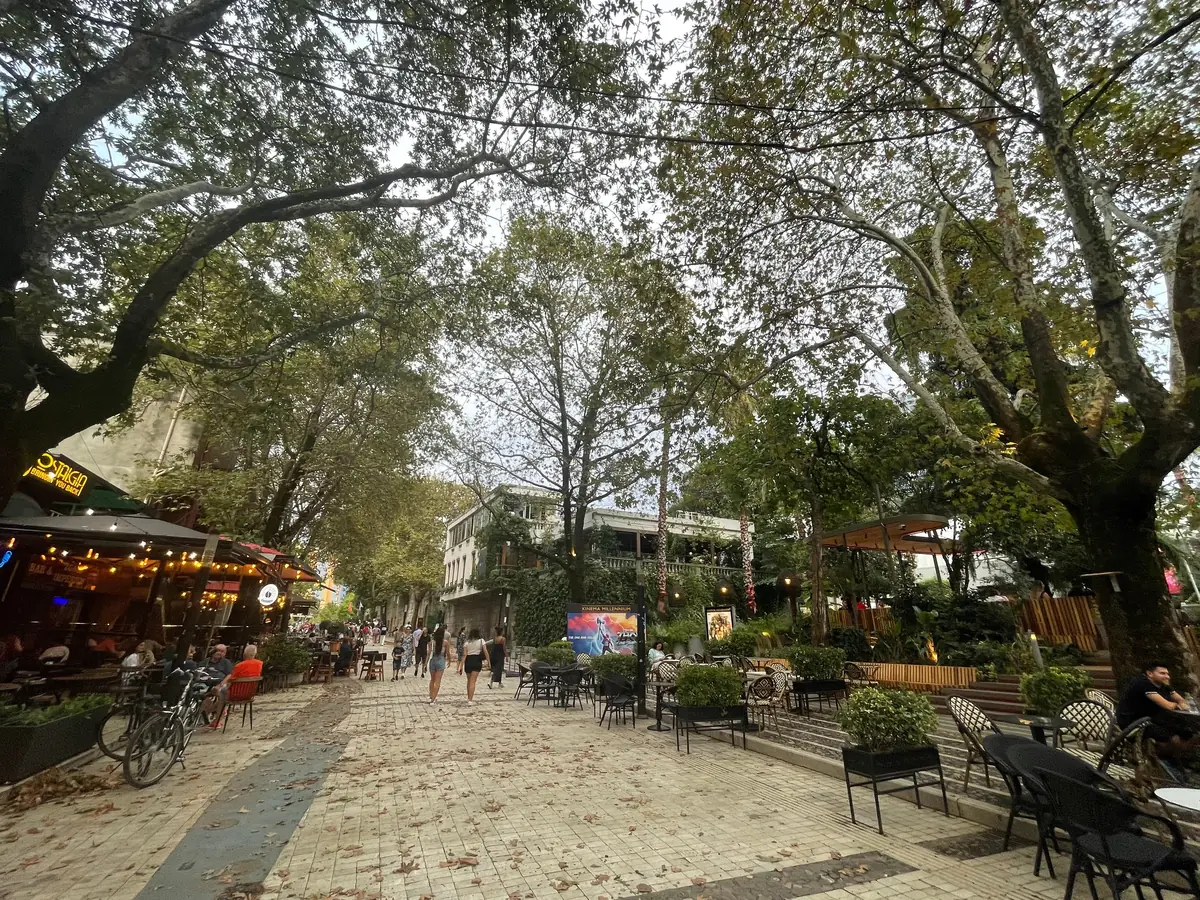
This isn’t a marketing abstraction. It shows up in the small rituals of daily life: a shop owner who abandons the storefront entirely to physically walk you to your destination. A table of strangers who intercept the waiter to pay for your espresso before you can reach for your wallet. The “bill basket” scuffle at Albanian cafes — where competing locals physically block each other from letting a foreign guest pay — is one of the more disarming cultural experiences you’ll encounter anywhere in Europe, and a quick lesson in how tipping and paying work here.
On the subject of organized crime: domestic criminal networks have zero interest in harassing tourists. Their operations are concentrated largely in Western Europe, and actively threatening international visitors on domestic soil would jeopardize the tourism economy that generates legitimate local revenue. These are entirely separate worlds, and conflating them is the core mistake most travelers make before they arrive.
What does the US State Department Level 2 advisory actually mean?
The US State Department keeps Albania at Level 2 (“exercise increased caution”), and that rating is driven by crime — not war. A separate US Embassy security alert flags potential threats from groups linked to Iran that could target U.S.-linked interests and crowded venues. Both are precautions, not active street-level threats to tourists going about daily life.
The Level 2 rating itself is anchored in crime: limited police reach in remote regions and violence tied to organized-crime networks that has no bearing on visitors. The Iran-related language is what alarms American travelers, but it comes from a separate Embassy security message warning that groups associated with Iran may target hotels, shopping malls, restaurants, and clubs. It reflects an intelligence precaution, not a present danger to tourists moving through their day.
- Status: NATO member state
- Nearest active conflict zone: 500+ miles (800+ km) from Albanian territory
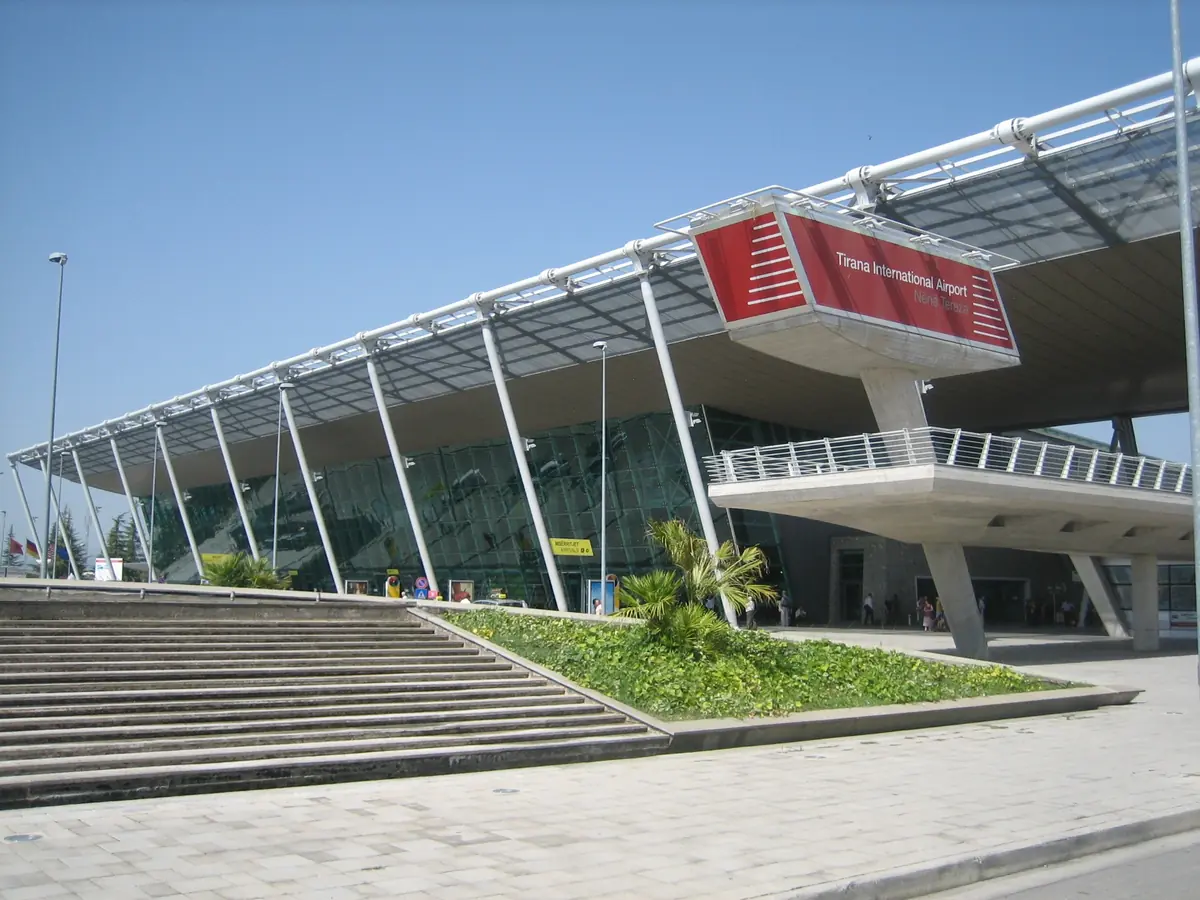
- Mother Teresa International Airport: Fully operational, no flight restrictions
- Flight connectivity: Direct routes to most major European hubs with connections under two hours, including convenient flights to Albania from the USA via those hubs
- US Embassy Tirana: Fully operational; register travel at travel.state.gov before departure
What you will notice in the capital is a visible but unobtrusive private security presence at major international hotels and high-profile venues. It registers; it doesn’t threaten. Read the US Embassy’s security alerts in full before travel, but treat them as one data input — not a veto.
Pro Tip: Register your trip with the Smart Traveler Enrollment Program (STEP) through the US Embassy Tirana before departure. It takes five minutes and ensures you receive direct security alerts and evacuation coordination if the threat profile escalates.
Is Albania safe for solo female travelers?
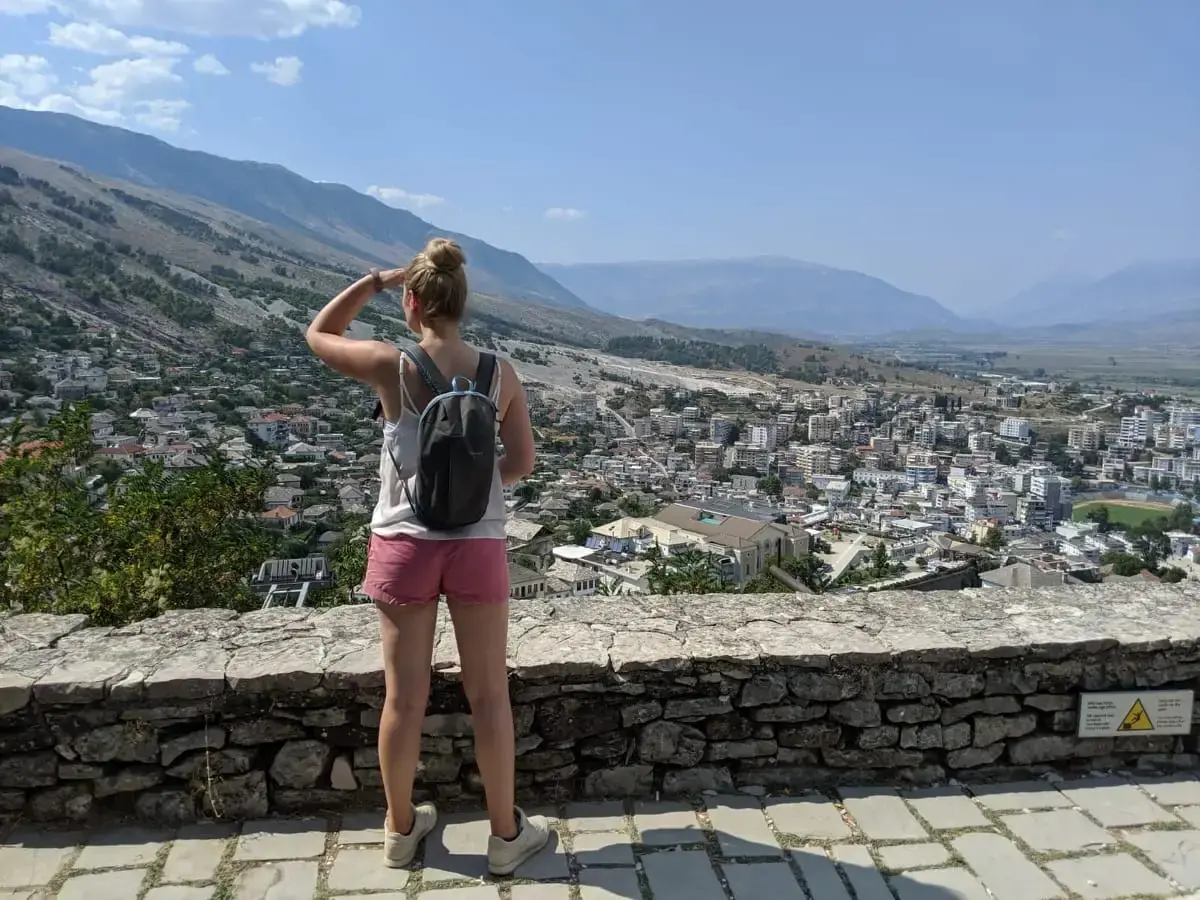
Solo female travelers consistently rate Albania as highly secure. While women may encounter occasional stares or low-level catcalling from older generations — particularly outside the capital — physical harassment or targeted threats in major cities and tourist zones are exceptionally rare. City centers remain well-populated and safe well into the night.
The cultural dynamic actually works in a solo female traveler’s favor, as our deeper guide to solo female travel in Albania lays out. Besa means locals feel a heightened sense of responsibility toward unaccompanied women, not reduced inhibition. On my last visit, a solo American woman I spoke with in Saranda described asking a local shop owner for directions and being personally escorted three blocks to her destination while the shop sat unattended behind them.
A few practical calibrations:
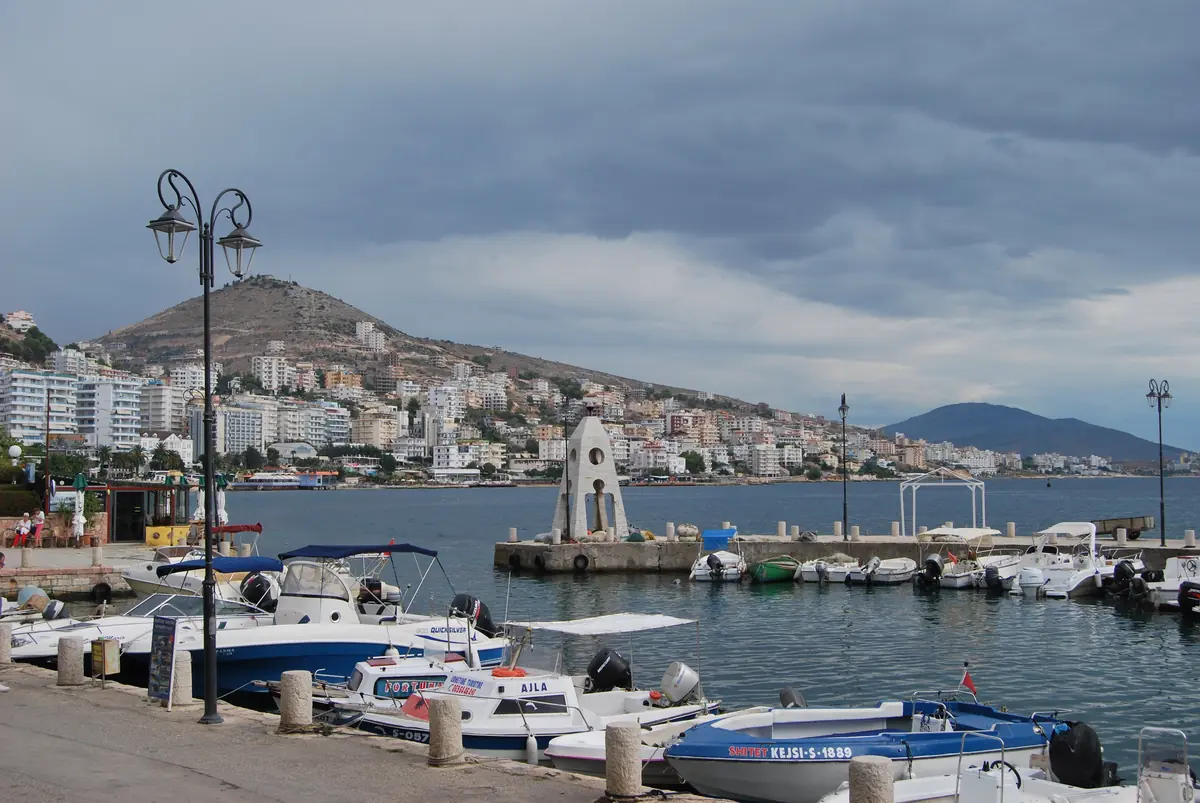
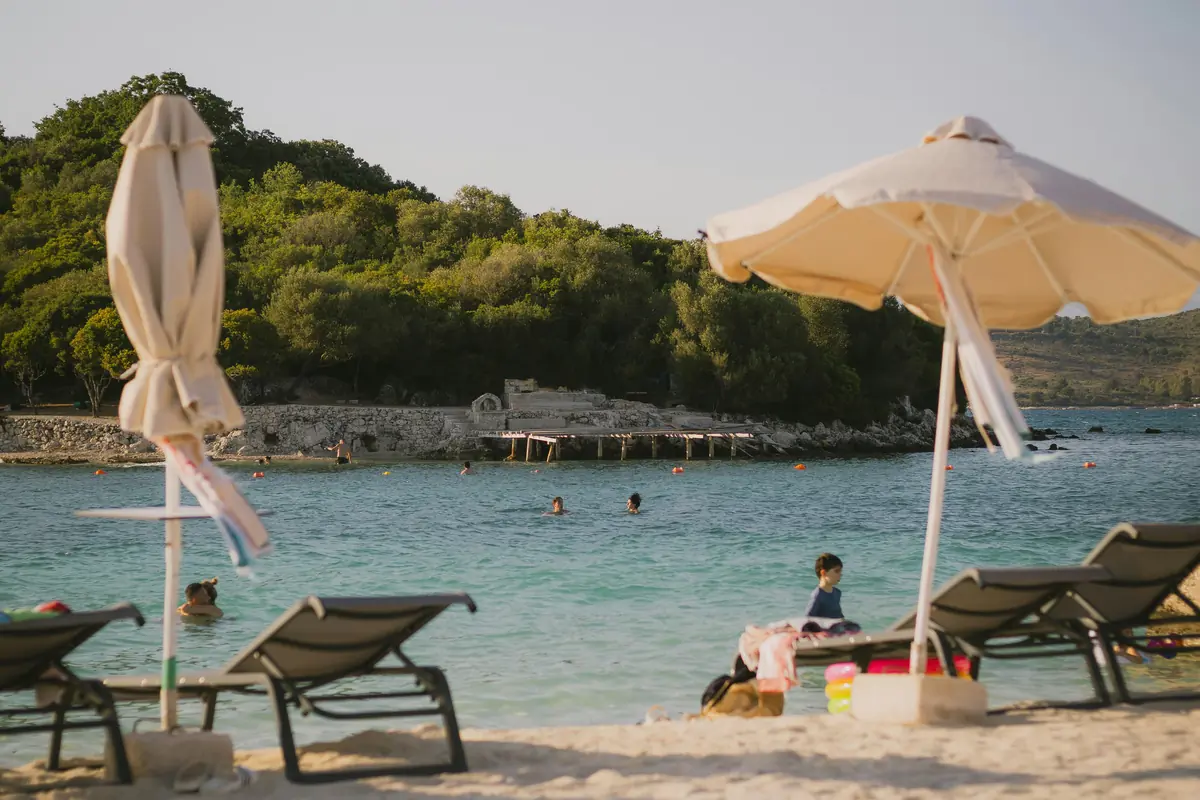
- Coastal areas (Saranda, Ksamil, Dhermi): Dress codes are entirely relaxed. Bikinis on the beach are normal and unremarkable.
- Rural mountain villages and active mosques: Covered shoulders and knees are a respectful practical choice, not a legal requirement.
- Nighttime in cities: Stick to populated boulevards. Albanians socialize outdoors late — you will rarely find yourself alone even at midnight in a tourist-heavy area.
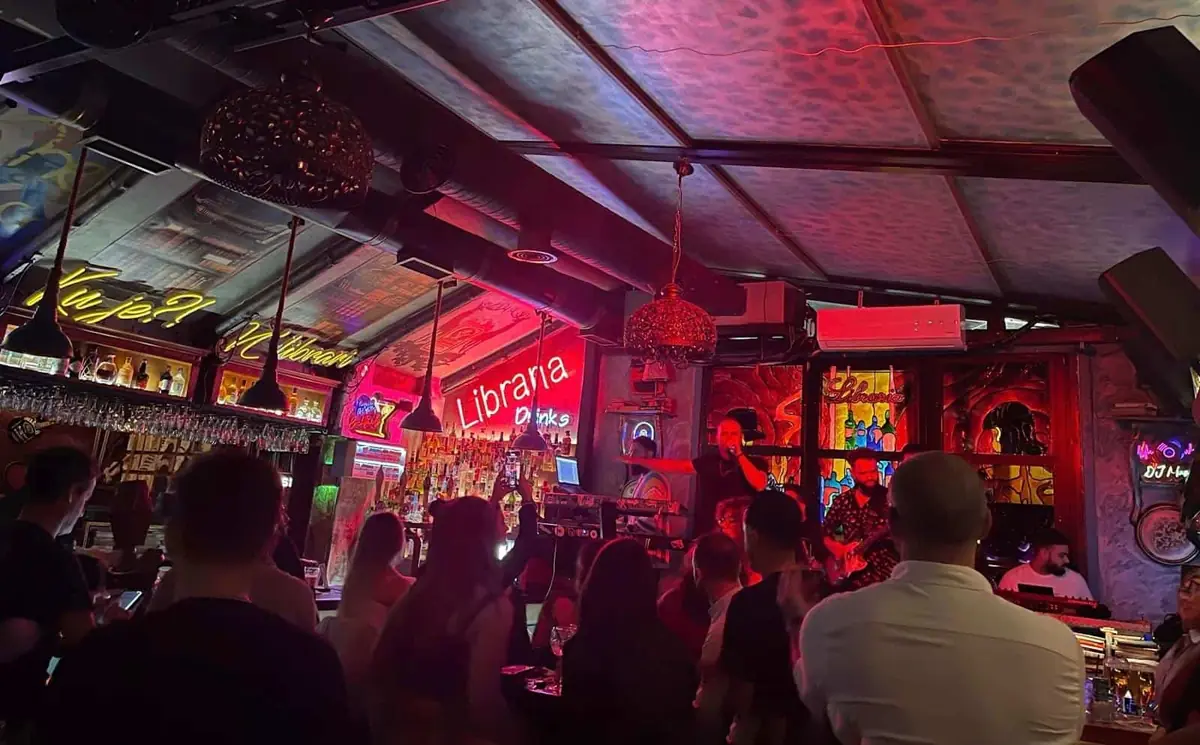
- Nightlife: The capital’s bar scene runs late and draws a young, social crowd. Standard drink-awareness applies as it would in any European city.
The experience most consistently reported by solo female tourists is not harassment — it’s an overwhelming, occasionally claustrophobic hospitality that takes some adjustment.
What’s the safest way to get around Albania?
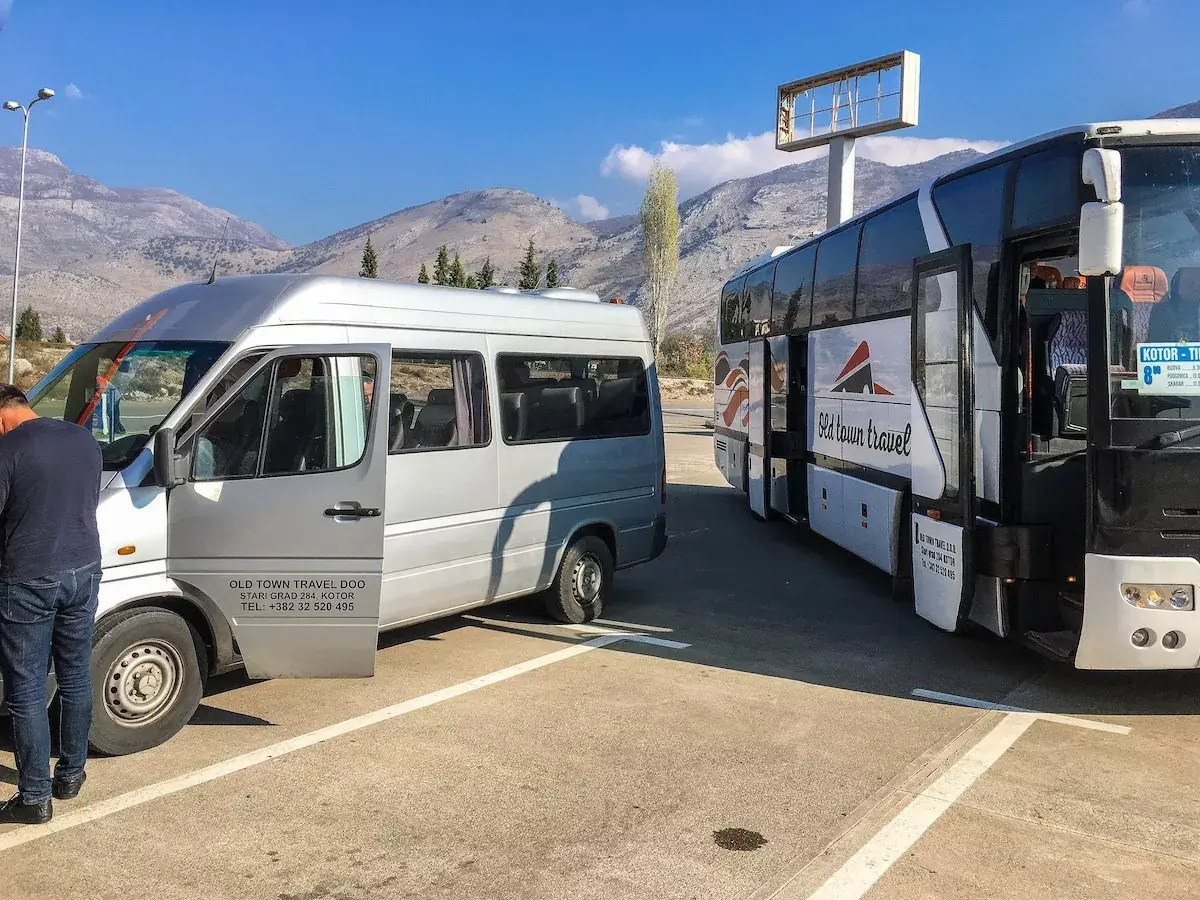
The furgon network — a system of privately owned minibuses connecting cities and towns across the country — is the safest, most economical method of intercity bus travel for tourists. It is also the most authentically Albanian transit experience available.
Timetables are informal. The furgon departs when it’s full, not at a posted time. You find the right vehicle by scanning windshields for handwritten cardboard placards listing the destination. The driver shouts the destination name out the window to gather passengers. It looks chaotic, functions reliably, and costs a fraction of any alternative.
Cost and time breakdown for the Tirana to Saranda route (174 miles / 280 km):
| Option | Cost (USD) | Journey Time | Stress Level |
|---|---|---|---|
| Furgon / Intercity Bus | ~$16 | 5-6 hours | Low |
| Rental Car (excl. fuel) | $30-60+ | 4.5 hours | High |
| Private Taxi | ~$230 | 4.5 hours | Low |
Additional transport data:
- City bus fare within Tirana: 40 Lek (~$0.50 USD)
- Intercity furgon from Tirana to Saranda: 1,300 Lek (~$16 USD)
- Private taxi on the same route (unmetered, inflated): up to 19,000 Lek (~$230 USD)
For taxis within cities, confirm the meter is running before the car moves. If the driver won’t turn it on, get out. Another driver will immediately offer the correct rate — this is not a negotiating tactic, it’s the standard protocol.
Pro Tip: Crowded furgons heading to popular coastal towns are the one situation where active bag vigilance is required. Keep your day bag in front of you or on your lap — not in the overhead rack — for the duration of the journey.
Is it safe to drive in Albania as a tourist?
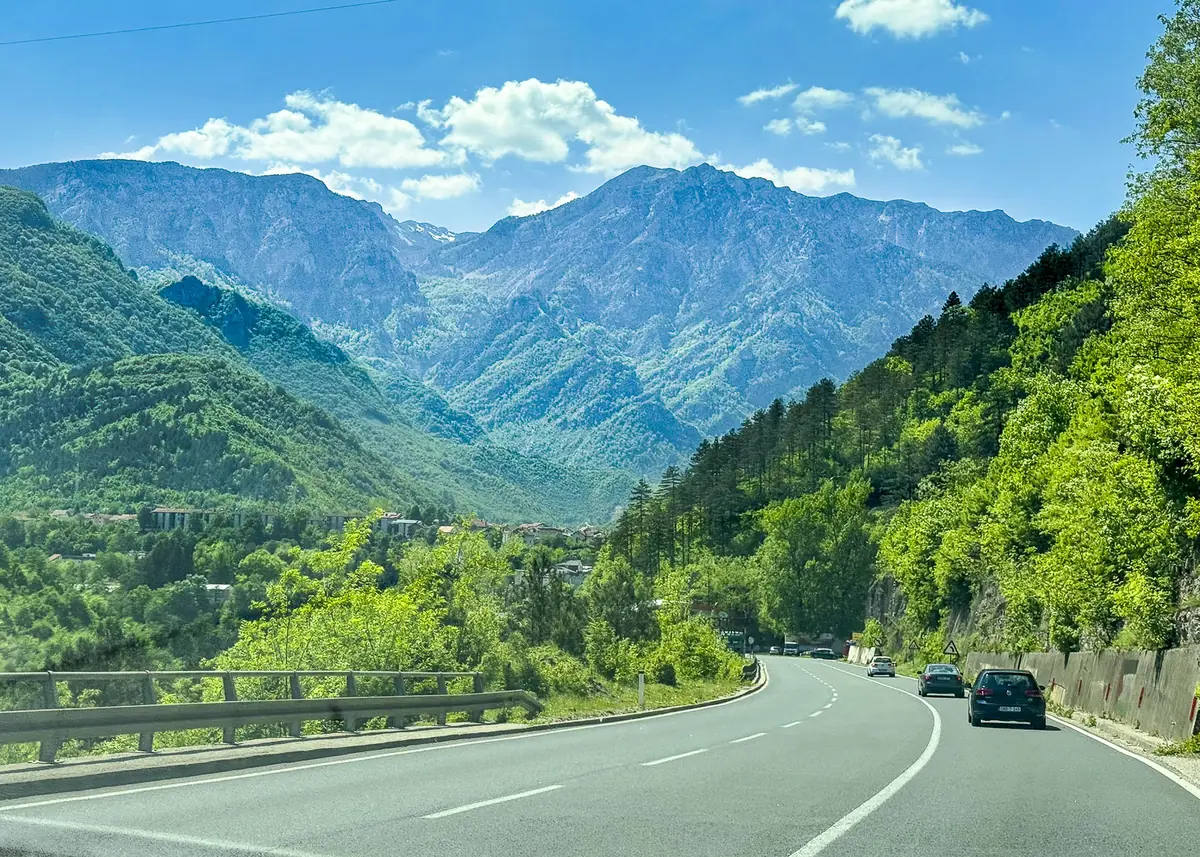
Renting a car in Albania exposes tourists to the highest statistical risk in the country. Road collision deaths rank among the highest in Europe. Local driving culture involves aggressive overtaking, vehicles using the opposing lane to take blind mountain corners, and livestock appearing without warning on rural roads after dark.
The Llogara Pass — the mountain road connecting Vlora to the Albanian Riviera — is visually exceptional and statistically unforgiving if you’re not an experienced defensive driver. The road narrows to effectively one carriageway in sections, with no guardrails on the cliff side. A vehicle initiating a blind overtake on a single-lane switchback, forcing you to brake against a rock face, is not a freak occurrence here. It happens on routine driving days.
If you still choose to drive, here is what you need to know:
- Blood alcohol limit: 0.01% — effectively zero tolerance
- Daily car rental base rate: 2,500-5,000 Lek ($30-$60 USD), excluding fuel
- Fuel cost: approximately 200 Lek per liter (~$2.40 USD per liter)
- Night driving: avoid entirely — unlit vehicles, unmarked potholes, and livestock on the road are all documented hazards
- Rural road conditions: poorly maintained, with frequent unmarked construction zones
- Urban roundabouts: yield conventions are treated as loose suggestions by local drivers
The honest calculation: the furgon reaches Saranda in 5-6 hours for $16. The rental car gets you there in 4.5 hours for $60 plus fuel plus stress. When it comes to driving in Albania, the math rarely favors the car.
Can you drink the tap water in Albania?
No. Tap water should not be consumed anywhere in Albania, and the reason goes deeper than a standard travel advisory. This is a systemic infrastructure problem, not a simple water quality issue.
Municipal water supply averages only 17.44 hours per day, according to Water Regulatory Authority (WRA) data. When the mains cut off, buildings refill via rooftop storage tanks. These tanks are largely unmonitored, thermally unstable during summer — when coastal temperatures exceed 90°F (32°C) — and prime environments for bacterial growth. By the time water reaches the tap, it has passed through an unknown duration in an unregulated holding system.
Practical protocols:
- Large 5-liter water bottles: 100 Lek (~$1.20 USD) at any neighborhood market or minimarket
- Brushing teeth with tap water: generally tolerated by most travelers; swallowing should still be avoided
- Ice in restaurants and tourist bars: almost universally produced using filtered or commercial ice machines — cold drinks are safe
- Food hygiene: standards in tourist-area restaurants and the capital are generally acceptable; standard food-safety judgment applies
The upside: pharmacists throughout the country function almost as accessible primary care providers. Over-the-counter access to quality European medications for gastrointestinal ailments is fast, straightforward, and costs a fraction of what you’d pay at home — no prescription required for most standard treatments.
Pro Tip: Buy a 5-liter jug on arrival and refill a reusable bottle throughout the day. At about $1.20 per jug, the cost is negligible and removes tap water as a variable entirely.
What happens if you get sick or injured in Albania?
Public healthcare facilities suffer from chronic underfunding and equipment shortages, but the capital has high-quality private hospitals that operate to Western standards. Go private immediately in any non-trivial situation — do not present to a public facility as a tourist if you can avoid it.
The two facilities every tourist should know by name:
- Hygeia Hospital Tirana: Built on a 60 million euro (about $65 million USD) investment, it handles complex trauma, cardiac events, and pediatric emergencies, with English-speaking specialists on staff.
- American Hospital Tirana: Part of the country’s largest private healthcare group — which now also owns Hygeia — with English-speaking staff and strong outpatient services.
Emergency contact numbers to save before you land:
- 112: General emergency (police, fire, coordination)
- 127: Medical emergency and ambulance dispatch
What to expect financially: a private specialist consultation typically costs under $50 USD out-of-pocket. The clinic provides a physical stamped receipt. Submit it to your travel insurer on return. This makes comprehensive travel insurance — providers like True Traveller explicitly cover medical evacuation from Albania — effectively mandatory, not optional.
Outside the capital, pharmacies in every town and city fill the gap for minor ailments. Describe the symptom, walk out with the appropriate European-standard medication. The pharmacist-as-first-line-of-care system here is efficient and inexpensive.
What are the most common tourist scams in Albania?
Albanian scams are rudimentary and opportunistic. There are no sophisticated pickpocket rings operating at the level seen in Paris or Barcelona, no organized card-skimming gangs working tourist circuits. What exists is individual, low-tech opportunism that is straightforward to counter once you know the mechanics.
The three you actually need to know:
- The unmetered taxi: Airport arrivals — your Tirana airport transfer in particular — and intercity taxi stands sometimes feature drivers who refuse to run the meter and quote an inflated flat rate — up to 19,000 Lek ($230 USD) for routes that should cost a fraction of that. Confirm the meter is on before the door closes. If the driver refuses, walk to the next car.
- Fake historical guides: Individuals presenting themselves as licensed guides outside major UNESCO sites — Butrint, Berat, Gjirokaster — are often unqualified and disappear once paid. Book guides only through your accommodation or a certified tourism office inside the site.
- The unofficial parking attendant: Near popular beaches and busy tourist sites, individuals approach vehicles and demand cash to “watch” the car in what is actually a free public lot. These attendants have no authority. Pay nothing. If they become aggressive, drive to a different spot.
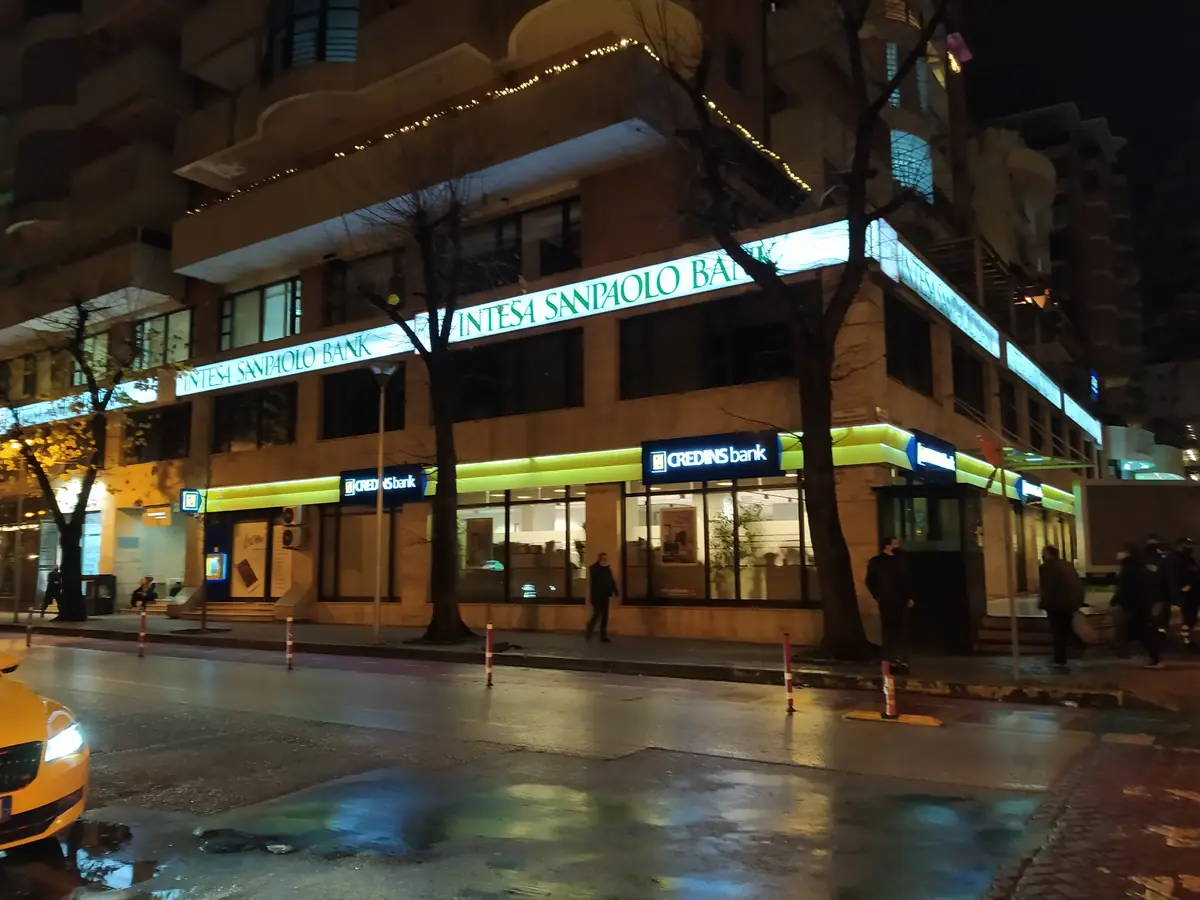
ATM protocol: Use machines attached to established bank branches. Credins Bank and OTP Bank machines are the most reliable options for foreign cards, with lower skimming risk and more reasonable transaction fees than standalone ATM units in minimarkets or bars.
Restaurant bills: Scan the itemized total before paying. An occasional extra item appears on the receipt — pointing it out calmly resolves it immediately. Honest billing errors outnumber deliberate fraud by a wide margin.
Is Albania accessible for travelers with mobility impairments?
This section requires an honest answer that most travel guides refuse to give: Albania is poorly suited for wheelchair users and travelers who depend on mobility aids, and that situation is unlikely to improve substantially in the short term.
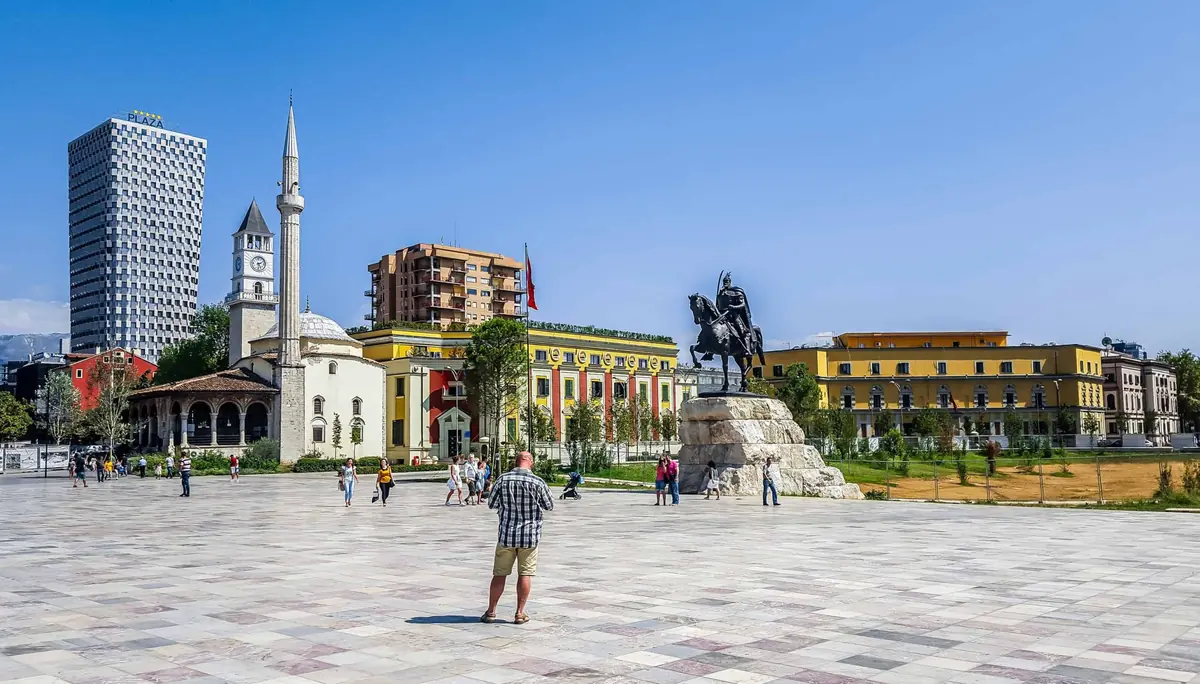
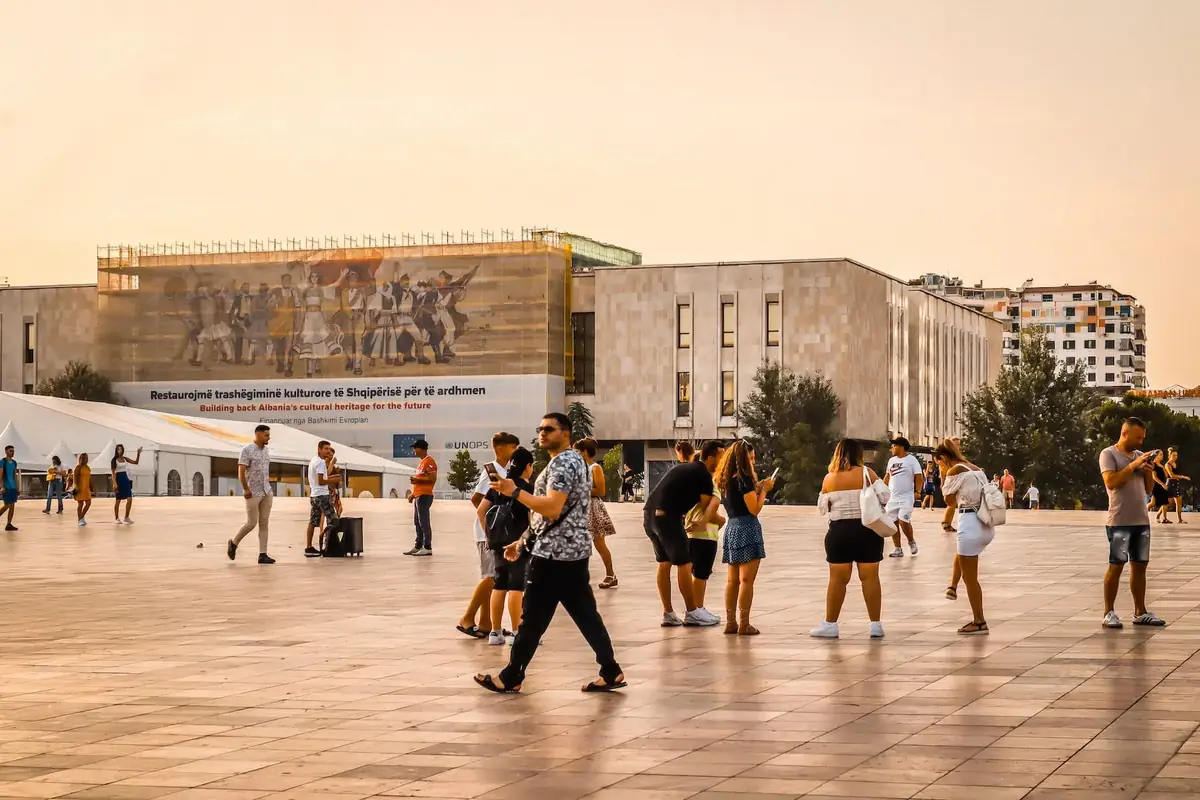
Skanderbeg Square and the Tirana Market represent rare exceptions — flat, paved, and relatively navigable. Travel three streets outward toward neighborhoods like Don Bosco and the infrastructure changes sharply: missing paving bricks, abrupt 6-inch drops at curb cuts that don’t meet the curb, concrete bollards placed without logical spacing, and trees planted directly in the center of sidewalks. The practical result is that pedestrians with mobility impairments are regularly forced off the pavement entirely and into active, chaotic traffic lanes.
- Furgon network: No wheelchair boarding equipment on any vehicle in the fleet
- Public city buses: No wheelchair accommodation
- Taxis and rideshares: Standard sedans; folding wheelchairs can be loaded into a trunk with advance coordination
- Restaurants: Ground-floor seating is common; upper floors typically require stairs
- Hotels: A small number of international chain properties offer accessible rooms — confirm the specific room configuration directly with the property before booking
- Albanian Riviera beaches: Sand access is entirely unassisted at virtually every location
The flat promenades of Saranda and parts of the coastal strip offer more navigable terrain than Tirana’s inland streets. If accessibility is a firm requirement, the coastal towns present the most realistic option — with the expectation that significant gaps between what’s possible and what’s comfortable will exist throughout.
Is Albania a good destination for families with young children?
From a social standpoint, Albania may be the most child-welcoming culture in Europe. Children are treated as guests of honor in restaurants and cafes — waitstaff will abandon their entire section to interact with a toddler. Older locals will approach your child without hesitation, speak to them directly, and affectionately touch their cheek or head in greeting. For Western parents accustomed to strangers maintaining distance, this requires an adjustment in expectations rather than alarm. It is pure warmth, not intrusion.
The logistical reality of traveling to Albania with kids requires specific preparation before you land:
- Car seats: Verify Isofix anchor points when booking any rental car. Many older fleet vehicles do not have them installed. Bringing your own child seat is the safest approach — do not rely on rental companies to supply compliant equipment.
- Changing facilities: Public changing stations are nearly non-existent outside airports and high-end hotels. Pack a portable changing mat.
- Sleeping arrangements: Many Airbnb rentals and smaller hotels do not provide cribs or travel cots. Bring a lightweight travel cot if your child requires one.
- Breastfeeding in public: Accepted without comment throughout the country.
- Highchairs: Available in tourist-facing restaurants in major towns; less consistent at neighborhood eateries.
- Pediatric medical care: Hygeia Hospital Tirana has pediatric emergency services. Outside the capital, a qualified pediatric specialist may require a transfer — factor this into your insurance coverage.
Summer heat on the Albanian Riviera regularly exceeds 90°F (32°C) from midday onward. Keeping children hydrated with bottled water — the 5-liter jugs at 100 Lek (~$1.20 USD) each are the practical solution — is non-negotiable during beach days.
Is Albania safe for LGBTQ+ travelers?
Same-sex relationships are entirely legal in Albania, and the country maintains broad anti-discrimination laws that include sexual orientation and gender identity. The legal framework is more progressive than several neighboring Balkan countries. Social reality requires a separate, more nuanced assessment.
Outside the capital, Albania remains deeply traditional. Public displays of affection between same-sex couples in rural areas, small towns, and conservative neighborhoods will attract unwanted attention — not necessarily aggression, but consistent enough staring and commentary to register as uncomfortable. The consensus from LGBTQ+ travelers is to apply a pragmatic, low-profile approach outside Tirana, not because of active hostility, but because local social norms have not yet caught up with the legal protections on paper.
In Tirana, the picture is meaningfully different. The Blloku district — once an exclusive Communist-era enclave, now the capital’s primary nightlife zone — hosts a growing number of queer-friendly venues. The most well-known is Tunel. A practical warning: entry to many Tirana nightlife venues is gated by an informal reservation requirement, meaning a local contact often determines whether tourists get through the door. Walk-up entry as an out-of-town visitor is frequently declined, regardless of sexual orientation.
Practical approach by area:
- Tirana city center, Blloku district: Generally more accepting; discreet public affection is unlikely to draw significant reaction
- Coastal tourist zones (Saranda, Dhermi, Ksamil): International crowd dilutes traditional social expectations; relaxed atmosphere
- Rural areas and mountain villages: Apply conservative public behavior as a practical matter throughout
- Local resources: LGBTQ+ organizations operate in Tirana and can provide current guidance on specific venues and events
The bottom line on Albania safety
Albania is genuinely safe for tourists in the ways that matter most. A homicide rate of 1.387 per 100,000 puts it in safer statistical territory than most Western European capitals and well below the United States. The hospitality embedded in the Besa code isn’t a tourism slogan — it operates in ways you’ll feel within the first 24 hours of arrival.
The risks that deserve your attention are not the ones that populate the anxious Google searches. They’re infrastructural: roads that punish overconfident drivers, a water system that requires you to buy bottled, hospitals that you’ll want travel insurance to access properly, and urban infrastructure that excludes travelers with mobility impairments in ways most guides won’t acknowledge.
Address those four specific realities before you land, and Albania takes care of the rest.
TL;DR: Albania delivers exceptional personal security from violent crime, backed by a cultural code that actively protects foreign visitors. Focus your preparation on defensive transportation decisions, bottled water as a daily habit, comprehensive travel insurance, and realistic expectations about infrastructure quality. Travelers who arrive knowing those four things almost universally leave wanting more time.
What’s giving you the most hesitation about the trip — the roads, the logistics, or something the guides haven’t addressed yet? Drop it in the comments.