Most visitors to the Paiva Walkways park at the wrong trailhead and spend hours negotiating taxi rides home while sweaty and exhausted. This 5.4-mile (8.7 km) cliffside trail through the Arouca UNESCO Global Geopark demands precise planning — particularly around the linear trail problem that catches first-timers every summer weekend. This guide solves the logistics.
What are the Paiva Walkways?
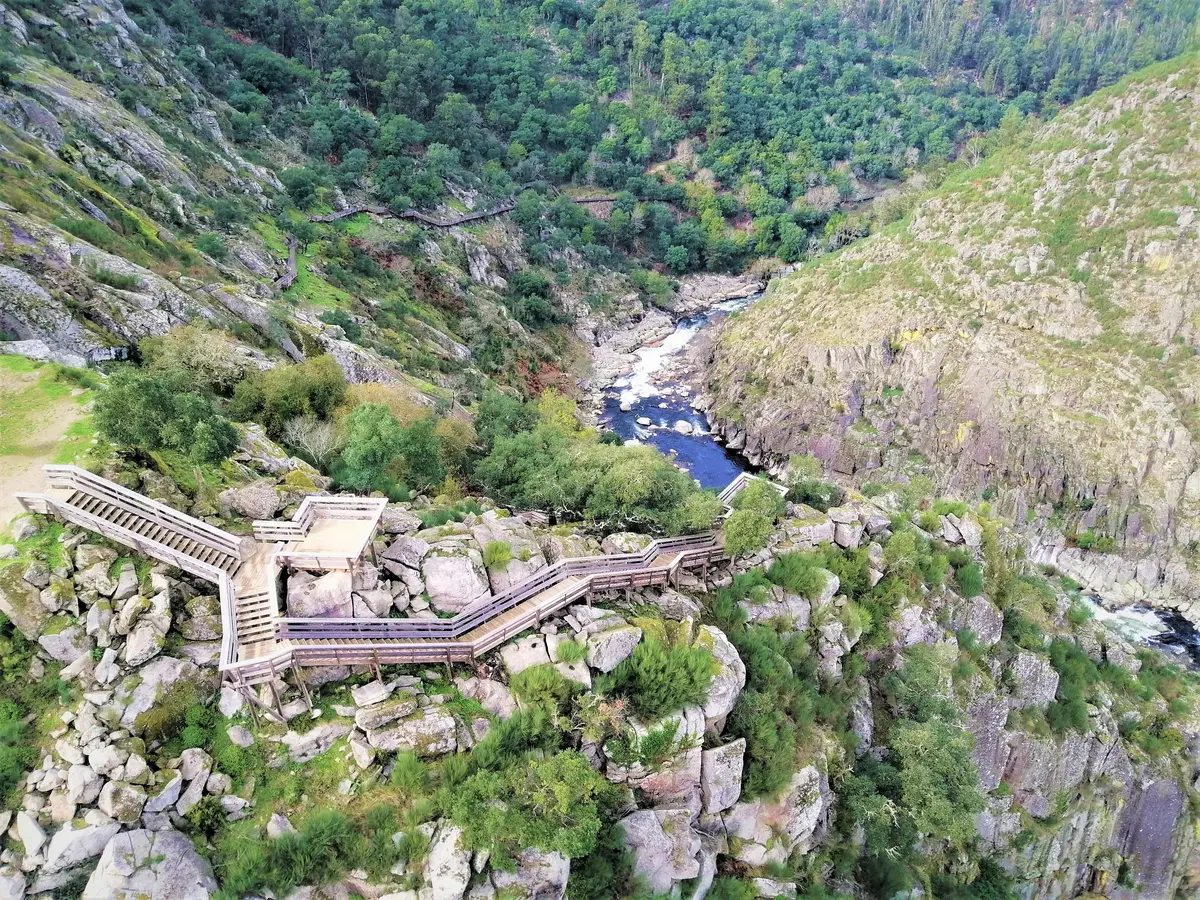
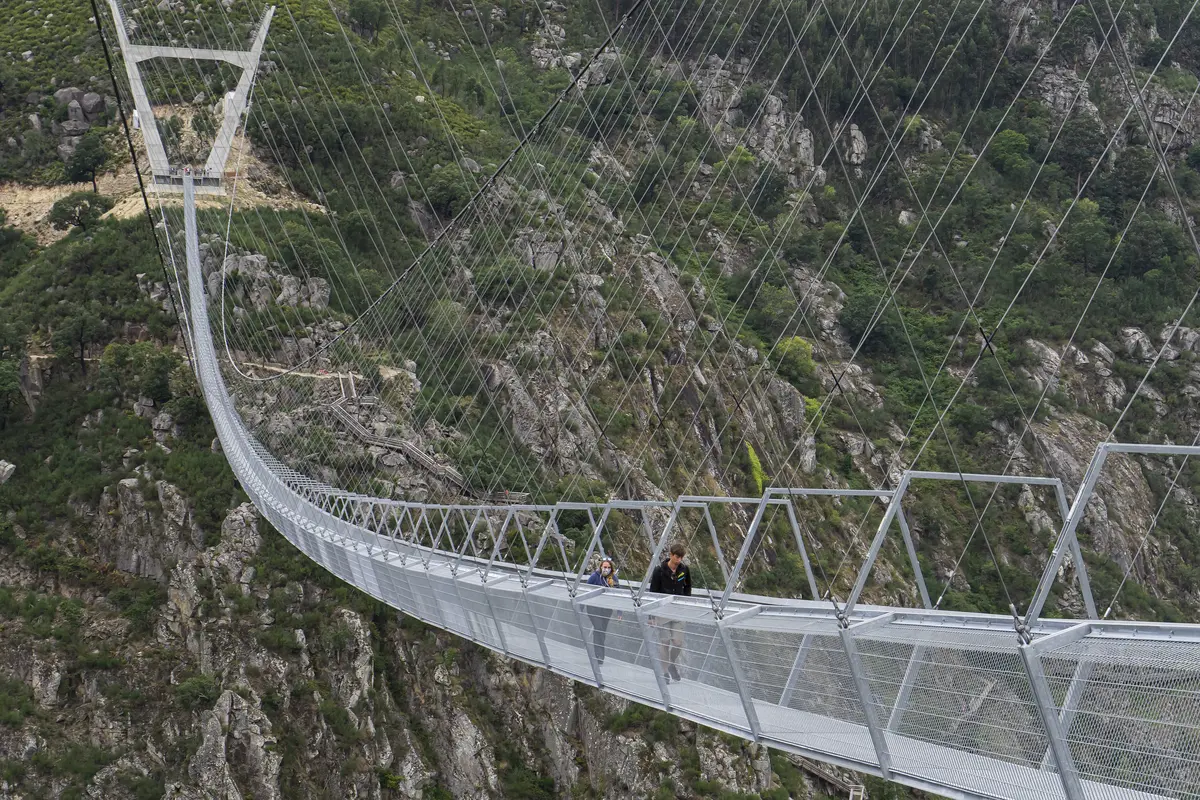
The Paiva Walkways (Passadiços do Paiva) are wooden boardwalks built along the granite cliffs of the Paiva River gorge in Northern Portugal, connecting Areinho upstream to Espiunca downstream in a linear route that runs all downhill when started correctly. The trail sits 37 miles (60 km) southeast of Porto. The 516 Arouca Bridge — a 1,693-foot (516 m) suspension span hanging 574 feet (175 m) above the gorge — shares the Areinho end of the trail, which is why the starting trailhead matters more here than on almost any other hike in Portugal.
Why do most first-timers get stranded on the Paiva Walkways?
The trail is linear, not a loop. Most visitors park at Areinho, hike the full 5.4 miles (8.7 km) to Espiunca, and then realize their car is at the other end. Taxis at Espiunca are scarce, prices rise when demand peaks, and waits on summer weekends routinely hit two hours. The fix is counterintuitive: park at the finish line.
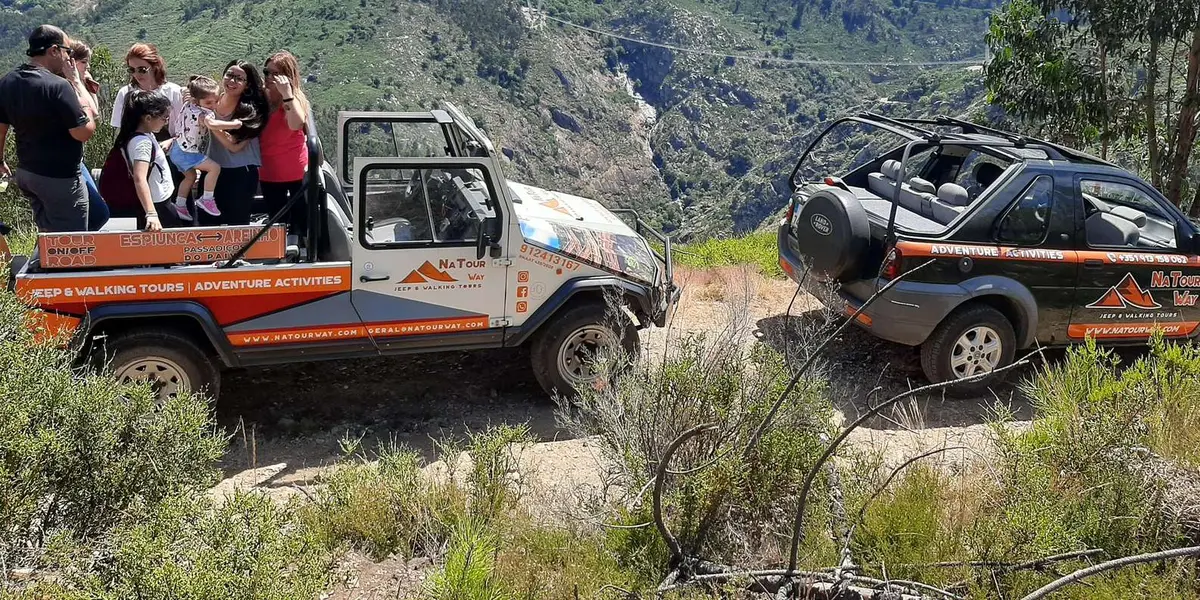
The solution requires planning before you leave Porto. Park at Espiunca (the downstream end), take a €16-20 (~$18-22) jeep or taxi transfer to Areinho or the bridge entrance, then hike downhill back to your waiting car. You will avoid the stairs, beat the heat, and skip the post-hike taxi scramble. I’ve watched groups arrive at the Espiunca parking lot with no plan and spend 30 minutes negotiating with jeep drivers over the return price — don’t be that group.
Pro Tip: Download offline maps before leaving the highway. GPS signals fail deep in the valley, and the final 9 miles (15 km) involve narrow mountain roads with blind curves.
How do you get to the Paiva Walkways?
Getting to the Paiva Walkways requires a car or an organized tour — public transit from Porto doesn’t reach the trailheads reliably. The drive takes 60-80 minutes via the A32 highway. Tours from Porto run €65-90 (~$70-100) per person and solve the linear trail problem by shuttling you between endpoints, making them a legitimate alternative to renting a car in Portugal.
Driving from Porto (recommended)
Take highway A32 to exit “Carregosa/Pindelo,” then follow N224 to Arouca. Budget 60-80 minutes for the drive. The final stretch requires confidence with manual transmission hill starts and tight maneuvering on single-lane roads.
Organized tours (easiest option)
Tours cost €65-90 (~$70-100) per person and solve the linear trail problem by dropping you at one end and collecting you at the other. They include tickets, transport, and lunch. Private taxis from Porto run €75-95 (~$80-100) each way, so tours are often the better value for groups of one or two.
Public transit (not recommended)
Buses from Porto require transfers and align with school schedules, not tourist needs. You will likely waste hours and risk missing your bridge time slot.
Which trailhead should you start from?
Start from Areinho (upstream). Walking downstream from Areinho to Espiunca means a gradual descent over 5.4 miles (8.7 km), with the hardest obstacle — 500+ wooden stairs carved into the granite cliffs — tackled first while your legs are fresh. Starting from Espiunca means climbing those same stairs after five miles of walking in heat. There is no good reason to go that direction.
Areinho trailhead (upstream/high elevation)
- Location: 40°57’9.68″N, 8°10’33.05″W
This is where you start the hike. The elevation advantage means you descend gradually over 5.4 miles (8.7 km) instead of climbing. The trade-off is limited, chaotic parking in summer and minimal facilities beyond a small bar. The first section hits you with 500+ wooden stairs climbing the granite cliffs, making this one of the most demanding hiking trails in Portugal — tackle the obstacle fresh, not exhausted.
Espiunca trailhead (downstream/low elevation)
- Location: 40°59’34.67″N, 8°12’41.19″W
This is where you park your car. The lot is large, with a river beach, toilets, and a taxi stand. A bar serves sandwiches and beer. Finishing here means immediate access to cold drinks and your vehicle. Starting from Espiunca and hiking uphill is masochistic: you face those stairs after five miles of walking in afternoon heat.
What is the optimal Paiva Walkways itinerary?
The “jeep shuffle” strategy keeps your car at the finish line while you start fresh at the top. Park at Espiunca, hire a transfer to Areinho or the bridge entrance, and hike the 5.4 miles downhill back to your waiting car — a logistics model that works for any linear route on a Portugal road trip itinerary. The transfer costs €16-20 (~$18-22) per vehicle — split among passengers — and eliminates both the uphill climb and the post-hike taxi scramble.
This strategy ensures your car is waiting for you at the end of the hike:
- 9:00 AM: Park at Espiunca. Leave your vehicle at the lower lot.
- 9:15 AM: Walk to the taxi/jeep stand. Hire a transfer to Alvarenga Bridge entrance (if crossing the bridge) or Areinho Beach (if only hiking the walkways). Cost is €16-20 (~$18-22) per vehicle, split among passengers.
- 10:00 AM: Cross the 516 Arouca Bridge or start hiking from Areinho.
- 10:00 AM – 2:00 PM: Hike the boardwalks downstream. The route is all downhill or flat.
- 2:00 PM: Arrive at Espiunca. Your car is waiting. Drive straight to lunch without negotiating taxi prices while sweaty.
Pro Tip: The transfer drivers congregate near the Espiunca parking lot. They are unofficial but reliable. Agree on the price before getting in.
How do you book Paiva Walkways tickets?
Book walkways-only access at passadicosdopaiva.pt or the bridge-and-walkways combo at 516arouca.pt. Booking in advance is mandatory — no tickets are sold at either entrance. The daily limit of 2,500 visitors for the walkways fills quickly on summer weekends. At €2-12 (~$2.20-13) for entry, the walkways and bridge represent strong value within any Portugal travel budget. For the bridge, reserve at least two weeks ahead and target a morning time slot to protect the rest of your day.
Access requires advance tickets. The system prevents overcrowding but punishes spontaneity.
Paiva Walkways only ticket
- Cost: €2 (~$2.20) online; slightly higher if purchased in person at the Arouca Interactive Tourism Store in town
- Includes: Boardwalk access valid for the full day (no timed entry slot)
- Capacity: 2,500 per day (sells out on summer weekends)
516 Arouca Bridge combo ticket
- Cost: €12 (~$13) per adult, with discounts for children and seniors; children under 6 are not permitted on the bridge
- Includes: Bridge crossing and walkways access for the same day
- Book on: 516arouca.pt
- Critical detail: Bridge tickets are time-slotted. You must arrive 15 minutes before your slot. Miss the 15-minute window and you are denied entry, though the walkways portion of your ticket remains valid.
Pro Tip: Always book the bridge for the start of your day. Hiking 5.4 miles to catch a 4:00 PM bridge slot is risky — a twisted ankle or slow pace and you miss the main attraction.
516 Arouca Bridge
The 516 Arouca Bridge is not just a river crossing. It is a psychological event that earns a full day of logistics planning on its own.
What does crossing the bridge feel like?
The deck is a metallic grid. You see the river 574 feet (175 m) below through the gaps between your feet. There is no solid ground to anchor your gaze. The bridge moves because it is designed to sway. The oscillation is slow and rhythmic, not jerky, but your body needs a moment to adjust. Staff recommend keeping eyes on the far tower, not the river, to manage vertigo. The wind creates a low hum through the tension cables, and the metal grid clanks underfoot. Combined with the visual void below, the sensory input can overwhelm first-timers — the bridge prohibits children under 6 for exactly this reason, worth noting if you’re traveling Portugal with kids.
The two bridge entrances
Pórtico Alvarenga is a flat 20-minute walk from parking — the easy entry. Pórtico Areinho requires climbing the 500-step staircase from the river. That is the hard entry.
Smart travelers cross from Alvarenga to Areinho, then descend the stairs to start the hike. This avoids the climb entirely.
- Location: Alvarenga, Arouca
- Cost: €12 (~$13), included with bridge combo ticket
- Best for: Adrenaline seekers, photographers, anyone who wants the “money shot”
- Time needed: 30-45 minutes to cross one way
Pro Tip: The bridge surface is exposed to wind and sun. Bring a hat but secure it — the wind can rip it off mid-span. Sunglasses need a retention strap.
What is the Paiva Walkways hike actually like?
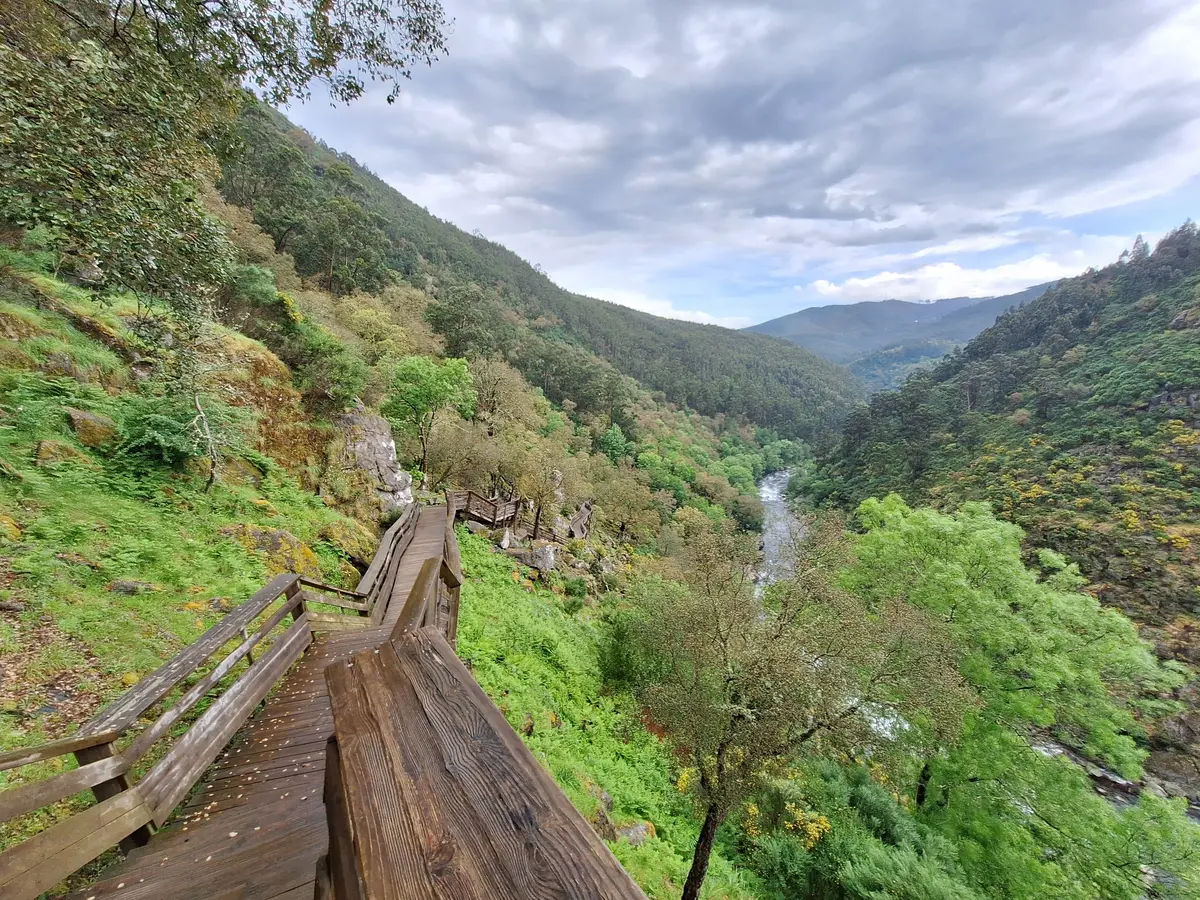
The 5.4-mile (8.7 km) trail breaks into three distinct segments with very different terrain and difficulty. The opening section is the hardest — hundreds of stairs in full sun — followed by a shaded forest stretch at river level, then a flat, quiet finish along the water. Walked at a relaxed pace with photo stops, the route takes two and a half to three hours downstream.
Segment 1: The gorge (miles 0-1.9)
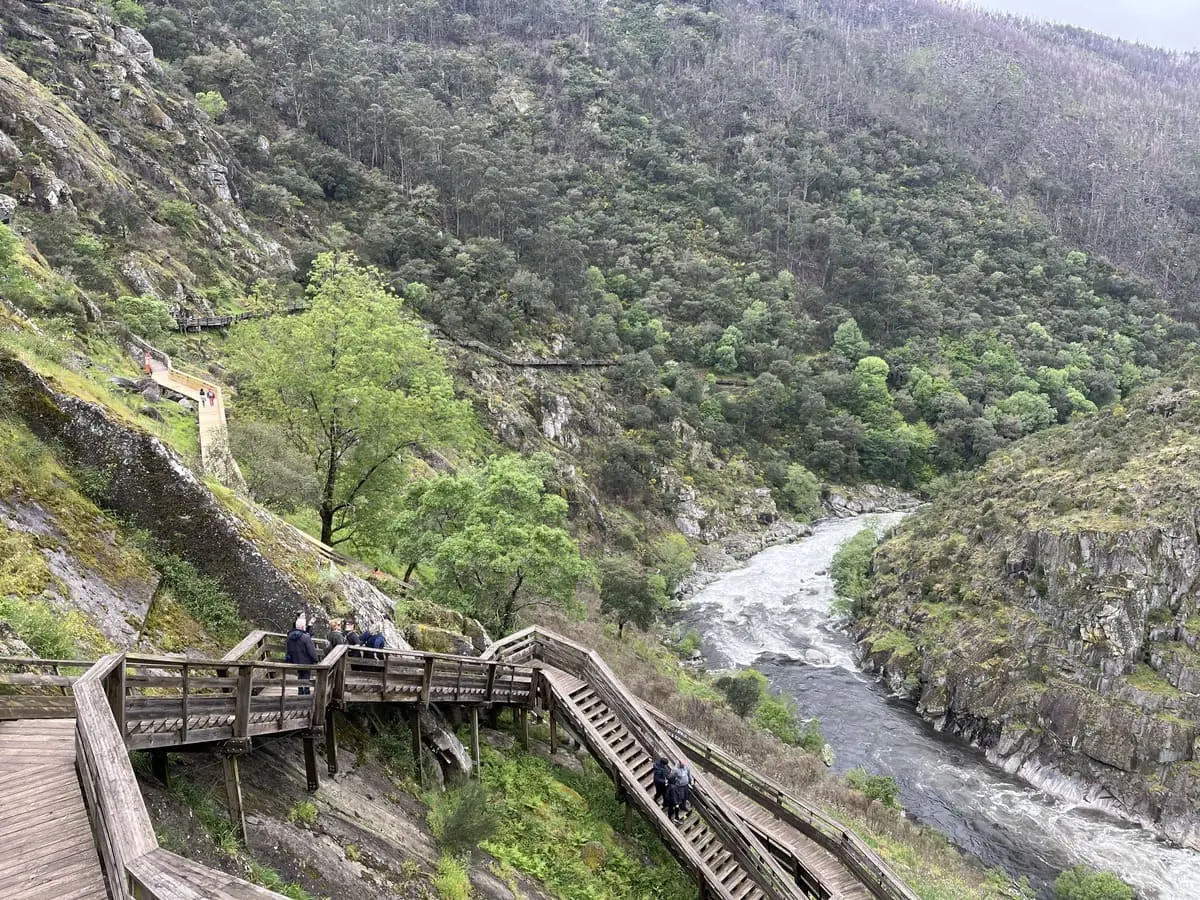
This is the crucible. Starting from Areinho Beach, the boardwalk immediately transforms into a vertical staircase carved into granite. You will climb hundreds of steps with full sun exposure and zero shade. The payoff is the Aguieiras Waterfall tumbling down the opposite canyon wall. On windy days, you can feel the mist. The sound of the river fades as you ascend, replaced by labored breathing and wind. The wooden stairs have anti-slip wire mesh, but morning dew can make them slick. Trail runners with lugged soles (Vibram or Continental rubber) grip better than canvas sneakers.
Segment 2: The oasis at Vau (miles 1.9-2.5)
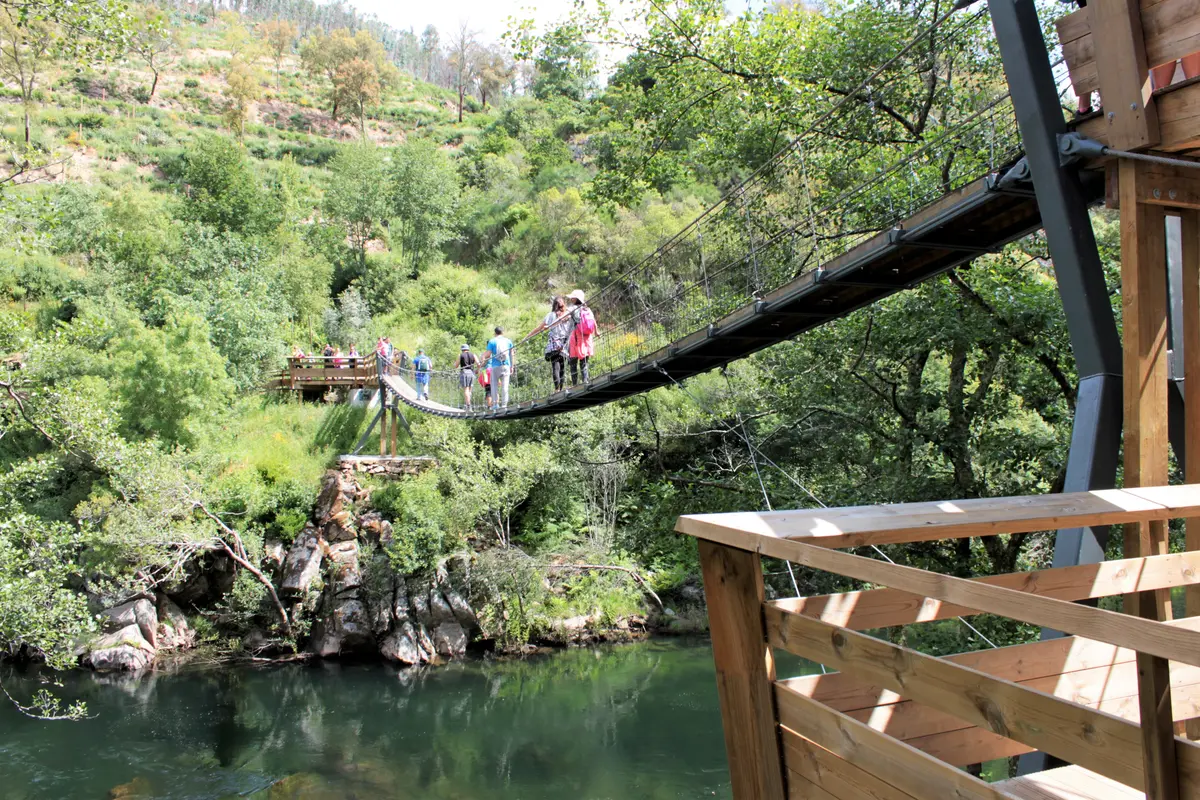
The trail plunges back to river level. The vegetation shifts from scrub and rock to lush riparian forest. Air temperature drops noticeably in the shade of willows and alders. Vau is the halfway house — it has an older suspension bridge (lower and less dramatic than the 516), a river beach, and the only proper bar on the entire trail. Stock up on water here because it is your last chance. Road access exists at Vau, making it the only intermediate extraction point if someone gets injured.
- Location: Vau, Arouca (km 4 marker)
- Cost: Free access, covered by your walkways ticket
- Best for: Water refills, rest breaks, emergency exits
- Time needed: 15-30 minutes for most hikers
Pro Tip: The kiosk sells ice cream, coffee, and sandwiches. Prices are reasonable given the monopoly. Cash preferred.
Segment 3: The river run (miles 2.5-5.4)
The final stretch flattens out. The boardwalks hover just above the water, occasionally giving way to packed dirt trails through the forest. The river widens and slows. This is the quietest section, recalling the meditative pace of Portugal’s most celebrated coastal walk in feel if not in landscape. Look for dragonflies and damselflies over the calmer water. Early morning hikers sometimes spot European otters fishing near the banks, though foot traffic has pushed wildlife activity to dawn and dusk. The Gola do Salto rapid appears suddenly as the riverbed drops and whitewater roars. A viewing platform lets you appreciate the hydraulic force without getting wet. The trail ends at Espiunca, marked by a concrete road bridge and the river beach bar.
When is the best time to hike Paiva Walkways?
May, September, and October offer the best conditions — temperatures between 60-75°F (16-24°C), lighter crowds, and lower wildfire risk. Summer works if you start before 8:00 AM and carry at least 1.5 liters of water per person. Winter brings periodic trail closure from flooding; check status at passadicosdopaiva.pt before making the drive from Porto — and if you’re timing a broader trip, the best time to visit Portugal guide covers shoulder season logic for every region.
Best months: May, September, and October
These shoulder seasons deliver moderate temperatures (60-75°F / 16-24°C), fewer crowds, and lower fire risk. The river runs clearer after winter rains, and the gorge is genuinely pleasant before the summer heat sets in.
Summer (June-August): Beautiful but brutal
Temperatures in the gorge exceed 104°F (40°C). The granite cliffs reflect heat, creating an oven effect. Heat exhaustion causes most emergency rescues on this trail. If hiking in summer, start at 8:00 AM. Carry 1.5 liters of water per person minimum. Avoid the 12:00-3:00 PM window entirely if traveling with children or elderly companions.
Winter: Risky and often closed
Heavy rains make the wooden boardwalks dangerously slick. The trail closes periodically due to flooding. Check passadicosdopaiva.pt for current status before driving from Porto.
Pro Tip: The gorge is deep and oriented southeast-northwest. The sun drops behind the cliffs long before actual sunset. Golden hour photography is brief — shoot mid-morning (9:00-11:00 AM) for the best light on the river.
Where should you eat after the Paiva Walkways?
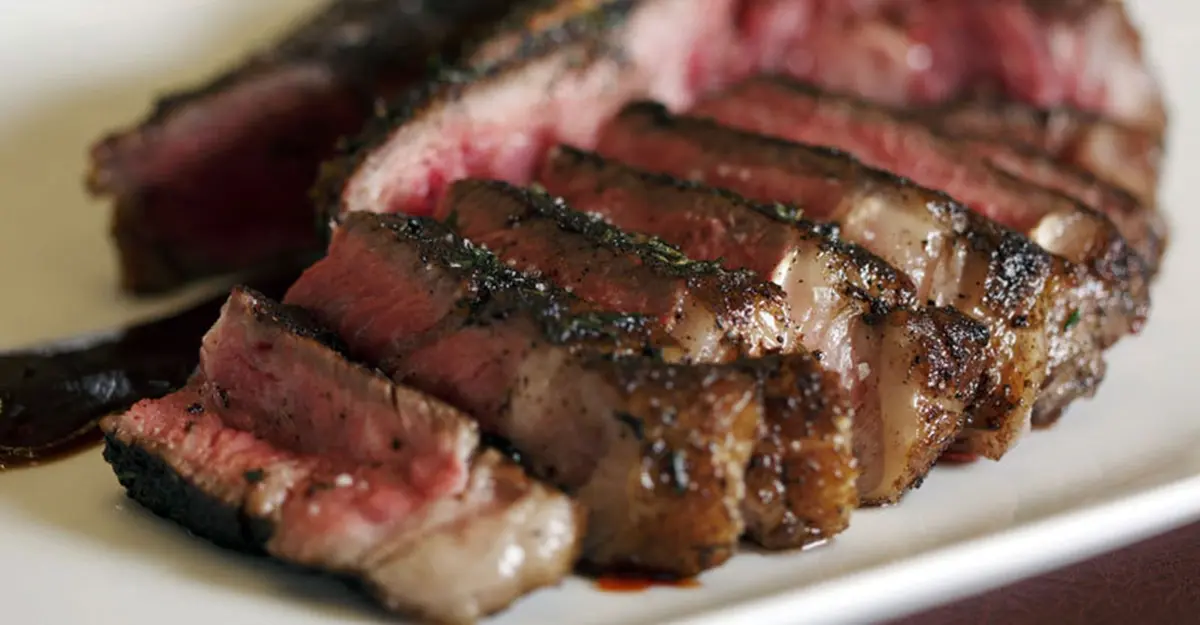
Alvarenga is the logical endpoint for post-hike lunch, and the only dish worth ordering is Posta Arouquesa — a Protected Designation of Origin veal steak grilled over charcoal, native to cattle that roam these granite slopes. It is the regional ritual after the trail, and Casa dos Bifes Silva is the institution for it. Portions run massive; one steak feeds two moderate appetites.
The dish: Posta Arouquesa
A thick veal steak grilled over charcoal and seasoned only with coarse salt. Traditionally served with migas (breadcrumbs with beans and cabbage) or roasted potatoes. The intramuscular fat creates a tenderness that justifies the hype. This is not supermarket veal — the cattle graze at elevation on these same slopes, making Posta Arouquesa one of the finest regional dishes you’ll eat in Northern Portugal.
Casa dos Bifes Silva
This is the institution. On weekends, hikers in technical gear pack the dining room for the post-hike steak ritual. The portions are massive — one steak easily feeds two moderate appetites.
- Location: Alvarenga, Arouca
- Cost: €15-25 (~$16-28) per person
- Best for: Carnivores, cultural immersion, rewarding yourself after 5.4 miles
Pro Tip: Make a reservation for weekend lunches or expect waits exceeding an hour. The restaurant doesn’t take phone reservations from foreign numbers, so book through your hotel or tour operator.
How dangerous is the Paiva Walkways trail?
The Paiva Walkways are not technically dangerous but carry real risk for unprepared visitors. Heat exhaustion causes most summer emergencies. Wet wooden boardwalks turn slick at dawn. Emergency extraction from the midpoint requires a stretcher carry by fire crews — road access exists only at Vau, mile 2.5. Treat this as a serious hike, not a tourist walk.
Heat exhaustion is the primary danger
The gorge creates a microwave effect in summer. Early starts are non-negotiable. Broad-brimmed hats are essential, not optional.
The slip factor
Morning dew makes wooden boardwalks ice-slick. Treated wood loses traction when wet. Canvas sneakers (Converse, Vans) are dangerous on the stairs. Trail runners with aggressive tread are the minimum requirement.
Emergency extraction reality
SOS phones are located every 1.2 miles (2 km). But there is no easy way out. A twisted ankle at mile 3.7 means a stretcher carry by fire crews for miles. Road access exists only at Vau (mile 2.5). This reality should inform decisions about bringing visitors with limited mobility.
The bottom line
TL;DR: Park at Espiunca, take a €16-20 (~$18-22) transfer to Areinho or the bridge entrance, hike the 5.4 miles downhill to your waiting car. Book your bridge slot for the morning. Carry more water than you think you need. Finish with a charcoal-grilled steak in Alvarenga. The Paiva Walkways reward exactly one approach: preparation.
Have you done the Paiva Walkways? What strategy did you use to handle the linear trail problem — and would you do the bridge first again?