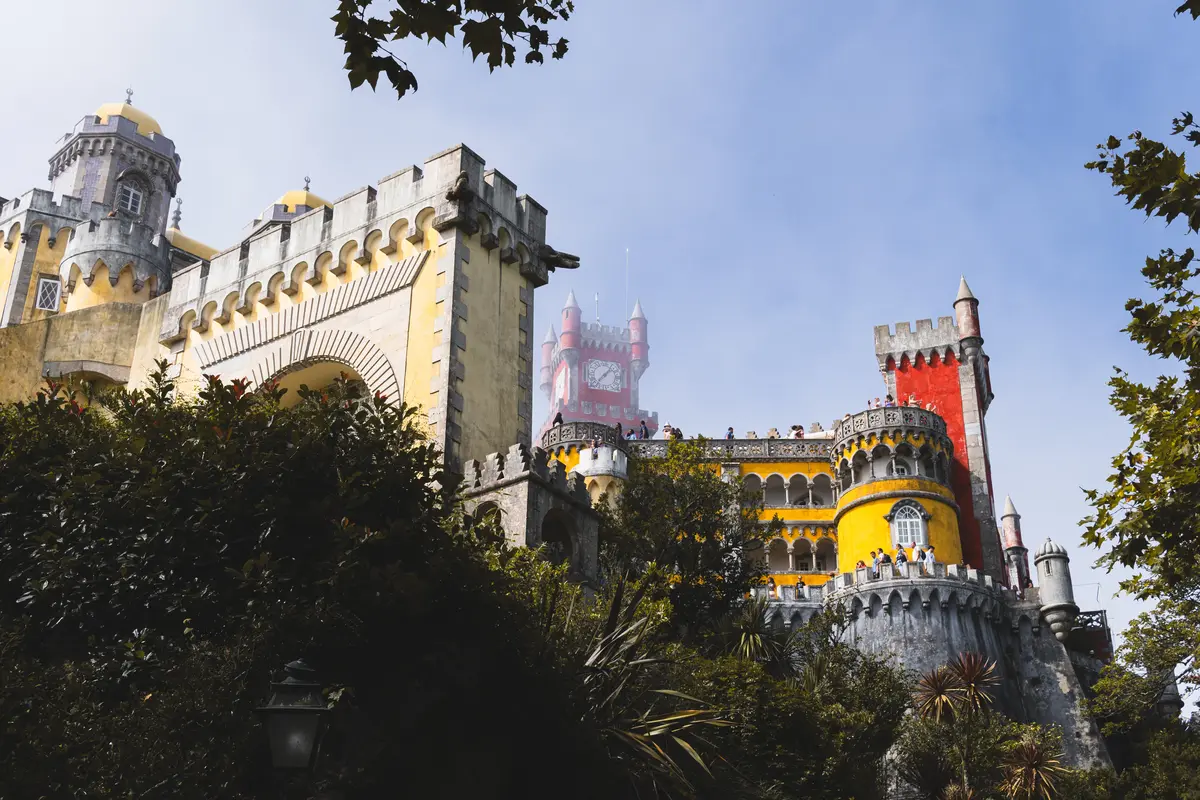
Traveling Portugal with kids rewards the prepared and punishes the improvised. Save the SNS 24 triage number before you land, know which Lisbon neighborhoods will defeat your stroller before you book, and understand the car seat situation on arrival day. For the full destination overview, start with our Portugal travel guide — this article focuses specifically on the medical system, transport reality, and neighborhood tactics that turn a stressful family trip into a memorable one.
How do health emergencies work in Portugal?
Portugal’s national health triage line, SNS 24 (808 24 24 24), is staffed by English-speaking nurses around the clock. Call before heading to any public emergency room — a triage referral code can move your family ahead of a queue that otherwise runs four to six hours. For life-threatening emergencies, dial 112 directly and skip the triage call entirely.
SNS 24 — the triage shortcut that skips the ER queue
Before you board the plane, save 808 24 24 24 in your phone. That is SNS 24, Portugal’s national health triage line, staffed by nurses who speak English. If your child develops a fever or stomach bug, calling SNS 24 first gets you a referral code that can move you ahead of the general emergency room queue. Without it, you are looking at a potential four to six-hour wait in a public ER. The service will assess symptoms, recommend immediate care if needed, or direct you to a pharmacy for over-the-counter solutions.
| Service | Number / App | Use Case |
|---|---|---|
| National Emergency | 112 | Life-threatening (accidents, severe trauma) |
| SNS 24 | 808 24 24 24 | Triage, fever, stomach bugs (call before ER) |
| Poison Center | 800 250 250 | Ingestion of toxic substances |
| Mobi Doctor | App / Web | Video consults for prescriptions |
Telemedicine for non-urgent situations
For non-emergency situations — ear infections, rashes, suspect sunburn — download Mobi Doctor or Air Doctor before leaving home. These telemedicine apps let you video chat with an English-speaking doctor who can email a prescription directly to a local pharmacy (look for the green cross sign). It is faster than an ER visit and costs about €30-50 ($32-54) per consult.
The advantage is peace of mind and time saved. The limitation is that telemedicine cannot substitute for true emergency care, which is when you dial 112.

How do you get around Portugal with young kids?
Portugal’s public transport is affordable but not built with strollers in mind. Lisbon’s metro is efficient for covering distance, but working lifts are inconsistent and rush-hour transfers can turn a ten-minute trip into a logistics puzzle. The Navegante Occasional card loaded with Zapping credit is the practical default for most families — €1.66 ($1.80) per metro trip versus €1.90 for a single ticket, and it works across metro, buses, trams, and suburban trains.
Lisbon metro — useful, but plan for the gaps
Lisbon’s metro is clean and efficient, but step-free access is more of a suggestion than a guarantee. Elevators break down, and older stations like Alameda — a key transfer point from the airport line — involve long underground walks that will test your patience with a double stroller.
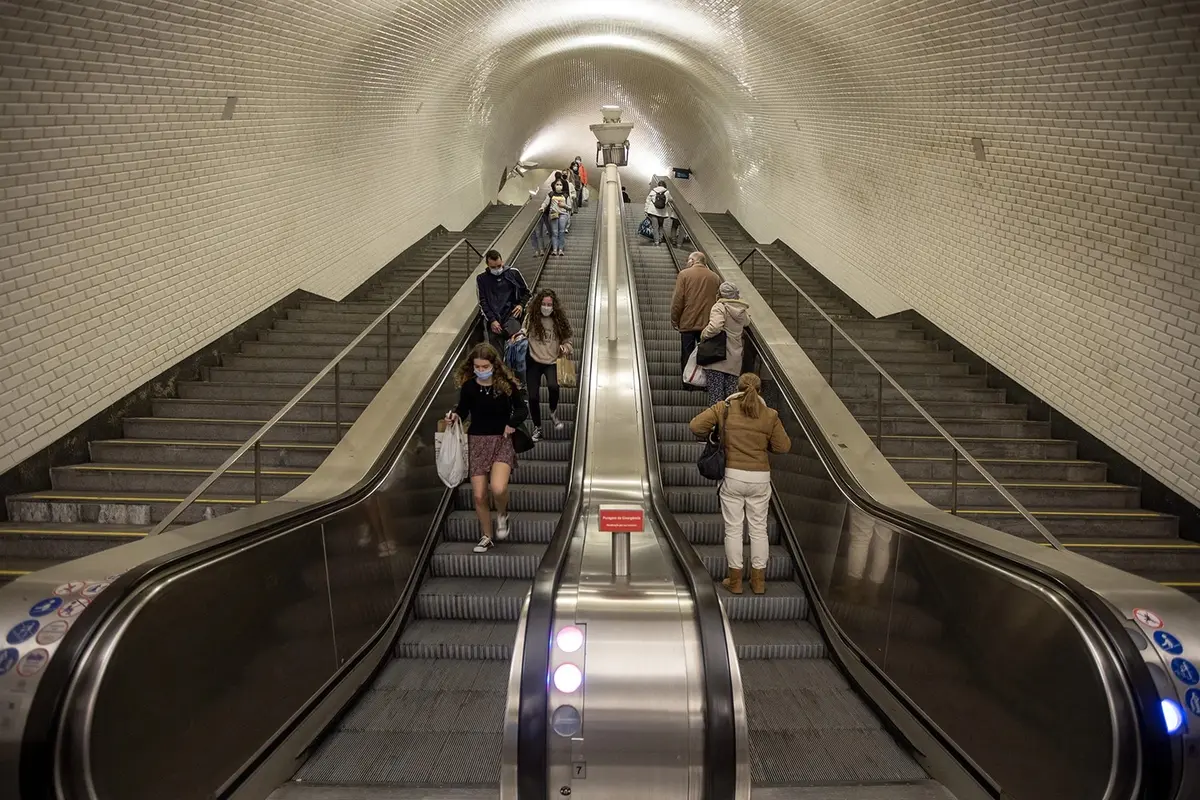
Here is the insider route: Baixa-Chiado station functions as a vertical elevator system. Enter at the lower Baixa level, take the series of four escalators up, and exit in Chiado. You have just bypassed a brutal 15-minute uphill climb with no lift required.
The Red Line from the airport is fully accessible, but if you are traveling with heavy luggage and tired kids, an Uber in Lisbon or Bolt for roughly €12-20 ($13-22) for a family of four is often worth it compared to the total metro cost.
Pro Tip: The Red Line airport platform is step-free, but you need one Navegante card per person. Buy them at the airport station before the barriers — the machines have English menus, accept contactless cards, and are faster than any ticket office queue.
Car seats, taxis, and airport transfers
Portuguese law exempts taxis from requiring child car seats for urban rides, meaning it is technically legal to hold a toddler on your lap in a cab. Legal is not the same as safe, and this is where you make a deliberate decision. Standard Uber or Bolt rides do not guarantee a car seat, and some drivers cancel when they spot young children.
For airport transfers, a dedicated service like TaxiBambino includes mandatory car seats and charges a fixed rate. If you plan to rely on taxis throughout the trip, a lightweight travel vest like the RideSafer or a portable booster like the Mifold works for kids over 3. For families with infants, this is not optional — bring a portable seat or pre-book dedicated transfers before you arrive.
Zapping credit vs. the Lisboa Card
The Lisbon Card promises unlimited transport and free museum entry, but the math only works if your children actually want to visit monasteries. For most families, the smarter move is the Navegante Occasional card loaded with Zapping credit. At €1.66 per trip, it covers metro, buses, trams, and the trains to Sintra and Cascais.
The detail that is not advertised: one card per person, and you cannot mix ticket types on a single card. If you accidentally load both a day pass and Zapping credit, the card locks at the turnstile. Buy one card per family member at any metro station (€0.50 each), load €10-15 ($11-16) of Zapping credit, and you are set for a few days.
Pro Tip: Load more than you think you need. Topping up a card mid-trip requires finding a metro station machine. Starting with €15 on each card covers most short trips in Lisbon without a second stop.
CP train family discount for day trips
If you are planning day trips to Sintra or intercity travel to Porto, understanding train travel in Portugal is worthwhile — the CP (Comboios de Portugal) Family & Friends ticket offers a 50% discount for groups of three to nine people traveling together on weekends and public holidays. A standard Lisbon-to-Sintra round trip runs about €4.80-4.90 ($5.20-5.30) per adult. With the family discount, you cut that in half for everyone in your group. Purchase it at the ticket counter — not the machines — by showing your group.
The limitation: it applies only on weekends and public holidays, so weekday travel does not qualify. If your schedule is flexible, plan bigger excursions for Saturdays and Sundays.
Which Lisbon neighborhoods actually work for families?
The right Lisbon neighborhood depends on your children’s ages, and deciding where to stay in Lisbon before you book tours is a decision that shapes the entire trip — the wrong base adds 30 minutes of difficult terrain to every outing. Alfama is the most atmospheric but genuinely hostile to strollers. Parque das Nações is the opposite — flat, modern, and logistically easy. Belém offers the best combination of cultural weight and stroller-friendly promenades. Baixa is central but vertical, with a specific trick for navigating the elevation change.
Alfama — great atmosphere, near-zero stroller access
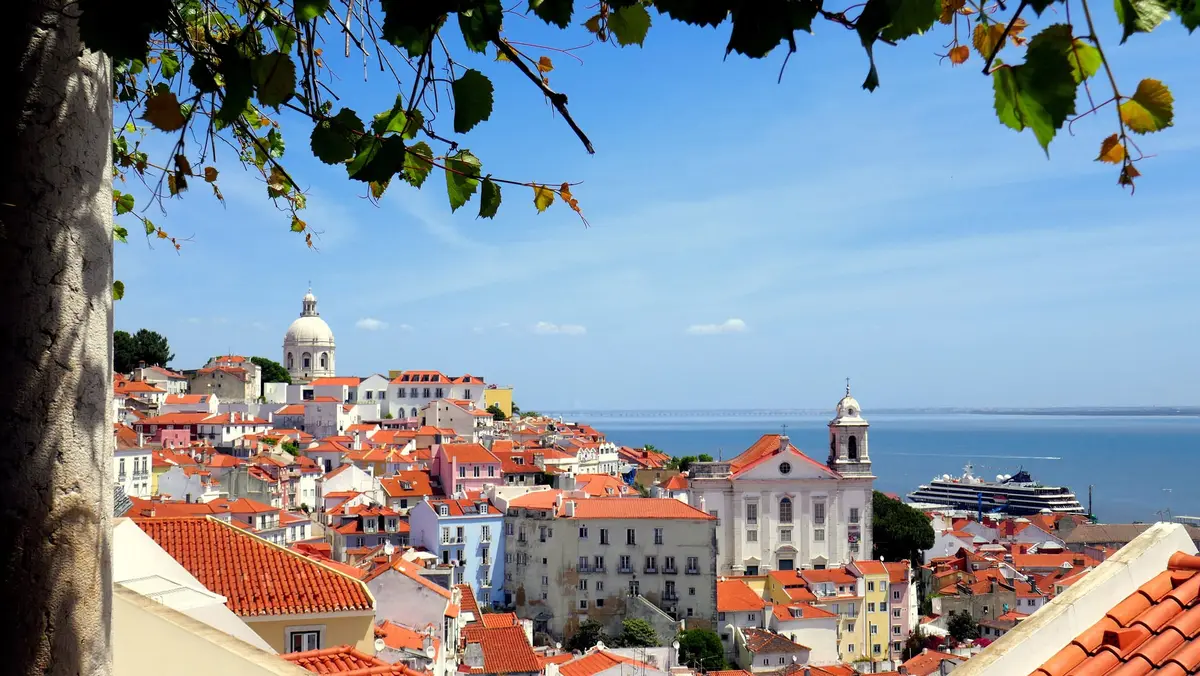
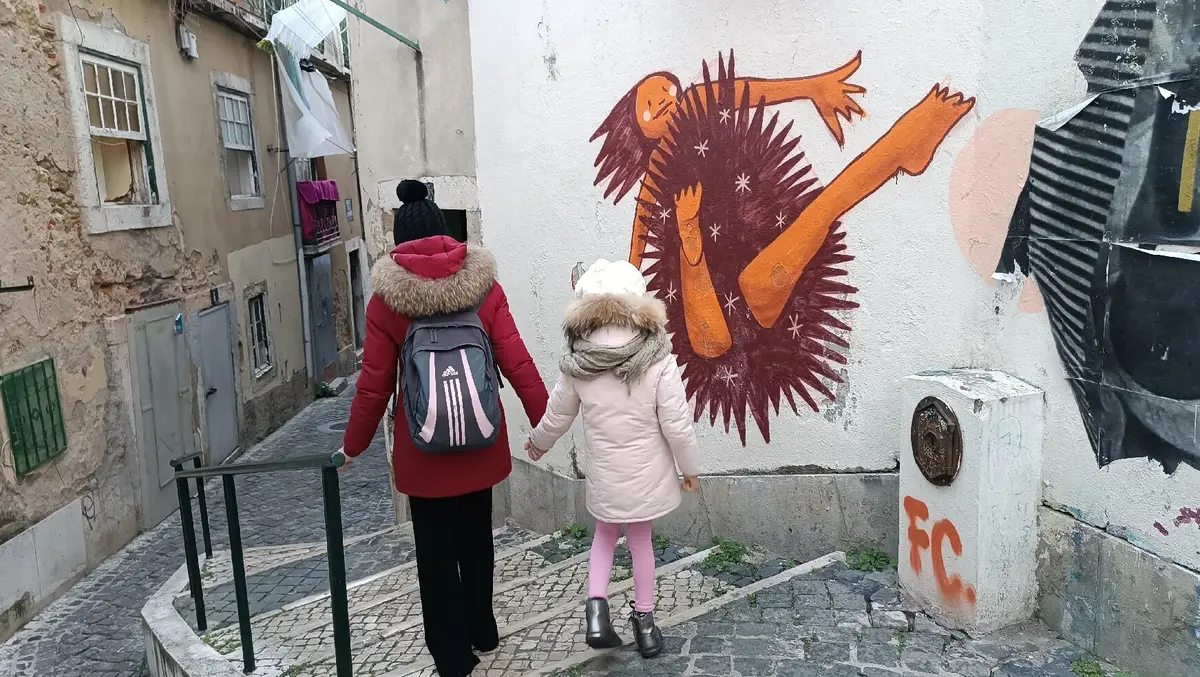
Alfama is Lisbon’s oldest district, a labyrinth of narrow alleys, steep staircases, and cobblestone streets. Strollers are nearly useless here. The calçada portuguesa (traditional limestone pavement) is uneven, the hills are relentless, and many streets are actually staircases with no ramp alternative.
If you are visiting with babies or toddlers, bring a carrier instead. The proximity to the Castle of São Jorge is the main payoff, and from the battlements you can see most of Lisbon laid out below. Worth the effort for older kids. Tuk-tuk tours in Lisbon are useful for reaching the upper streets and castle if the climb proves too much, though they are not suitable for infants without a secured seat.
If you have booked accommodation here, confirm there is a working elevator in the building before you arrive. Fourth-floor walk-ups are common, and hauling luggage and a car seat up narrow stairs at midnight after a flight is not the start you want.
Parque das Nações — the flat, stress-free option
Built for the 1998 World Expo, Parque das Nações is the anti-Alfama. Flat, paved, spacious, and home to two major kid magnets: the Oceanário de Lisboa (one of Europe’s largest aquariums) and the Pavilhão do Conhecimento (science museum).
The Oceanário has massive tanks holding sharks, rays, and a jellyfish exhibit that genuinely holds kids’ attention — but it can feel passive for high-energy children after the first 30 minutes.
The Pavilhão do Conhecimento is where active kids thrive. The Unfinished House section lets children play construction worker with foam blocks, and the High-Wire Bike exhibit teaches physics through full-body participation. A tinkering studio lets kids build simple machines from scratch.
- Location: Parque das Nações district, eastern Lisbon (Oriente metro station, Red Line)
- Cost: Oceanário €25 adults / €15 children (3-12); Pavilhão do Conhecimento from €9 adults / €7 children
- Best for: All ages, especially toddlers through age 12
- Time needed: 3-4 hours for both attractions
The downside is that the neighborhood feels more like a contemporary urban park than Portugal. For families needing a decompression day away from historic sightseeing, this is your safety net.

Belém — best ratio of culture to stroller space
Belém sits along the Tagus River with significant cultural sites — Jerónimos Monastery, Belém Tower — and wide, flat promenades perfect for strollers. The riverfront path is paved and spacious, ideal for letting kids run ahead while you follow with a coffee from the riverside kiosks.
Pastéis de Belém, the original custard tart bakery, is here. The lines look worse than they are — they move fast, and you are usually inside within 15 minutes. The tarts are served warm, and the pastry should crack audibly when you bite into it. If it is soggy, it is not fresh.
Belém is heavy on monuments and light on playgrounds, and younger kids may get restless after two hours of sightseeing. A picnic in the gardens near the monastery breaks up the afternoon well.
- Location: Belém district, western Lisbon (tram 15E from Praça do Comércio, or suburban train from Cais do Sodré)
- Best for: Families with children old enough to walk 1-2 miles; stroller-friendly on the riverside path
- Time needed: Half day

Baixa and Chiado — central but vertical
Baixa is Lisbon’s downtown grid — flat, organized, home to Rossio Square and the Santa Justa Elevator. Chiado, perched above Baixa, is the artsy neighborhood with bookstores, theaters, and cafés. The challenge is the 45-meter (148-foot) vertical climb between them.
On foot with a stroller, use the Baixa-Chiado metro station escalator series to go up — you bypass the hill entirely. The Santa Justa Elevator costs €6 ($6.50) round trip and always has a queue in peak season, but the ride takes under two minutes and the neo-Gothic ironwork is worth seeing once.
The Time Out Market Lisbon in nearby Cais do Sodré is a food hall with dozens of vendors under one roof. Everyone orders what they want, which eliminates the usual restaurant standoff with picky eaters.
- Location: Downtown Lisbon (Baixa-Chiado metro station, Blue and Green lines)
- Best for: Families with flexible walking ability; older kids and adults
- Time needed: 2-3 hours for a walk-through with a market meal
What do you do in Lisbon on a rainy day?
Atlantic weather is unpredictable, and a rainy day in Lisbon without a plan becomes a scramble. The Pavilhão do Conhecimento in Parque das Nações is the primary choice — three to four hours of hands-on entertainment for ages 3 and up. KidZania Lisboa in the Dolce Vita Tejo shopping center is the backup for families who have already been to Parque das Nações.
KidZania is best for ages 4-14 and runs kids through role-playing adult jobs — pilot, doctor, firefighter — in a miniature city. It is a branded international concept rather than uniquely Portuguese, but it burns three to four hours in a climate-controlled space.
- Location: Dolce Vita Tejo shopping center, Amadora (metro Alfornelos, Blue Line)
- Best for: Ages 4-14
- Time needed: 3-4 hours
For something more local, the Museu da Marioneta (Puppet Museum) in Santos is quirky and rarely crowded, with occasional live performances that do not require Portuguese language comprehension to enjoy.
Where should families eat in Lisbon without a meltdown?
Most Lisbon restaurants do not open for dinner until 7:00 PM or 7:30 PM — a direct conflict with toddler bedtimes and a cause of more family travel stress than any train queue. Kiosk culture solves this, and the solution is also the most pleasant way to eat in the city.
Parks like Jardim da Estrela and Jardim do Príncipe Real have kiosks serving full meals, beer, and coffee with outdoor seating directly beside fenced playgrounds. You eat while your kids play within eyesight, no one is stressed about noise or spills, and the food is genuinely good. For a sit-down restaurant with an integrated play element, Doca de Santo in Alcântara has an outdoor playground visible from the tables, and ZeroZero in Príncipe Real opens directly onto the park.
Pro Tip: Both Doca de Santo and ZeroZero fill up quickly on weekends. Reserve earlier in the day or you will be eating from a kiosk anyway — which is not a bad outcome, but probably not what you planned.
Is Sintra worth it with kids?
Yes, with the right approach. Sintra‘s palaces, Moorish castle, and dense forests are genuinely impressive for children and adults alike. The mistake most families make is queuing for the 434 bus from the train station, which can take 30-45 minutes just to board. There is a faster route up the mountain that costs almost the same and saves the morning.
The Uber-to-the-top strategy for Sintra
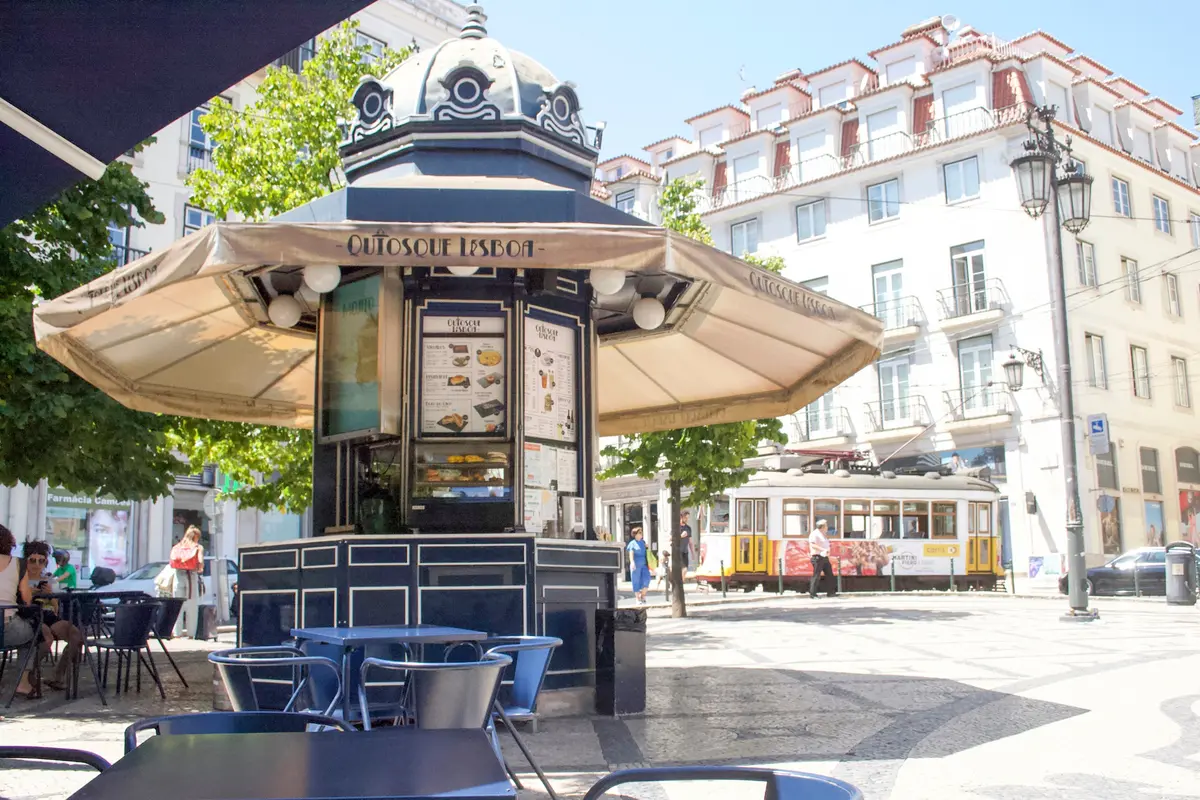
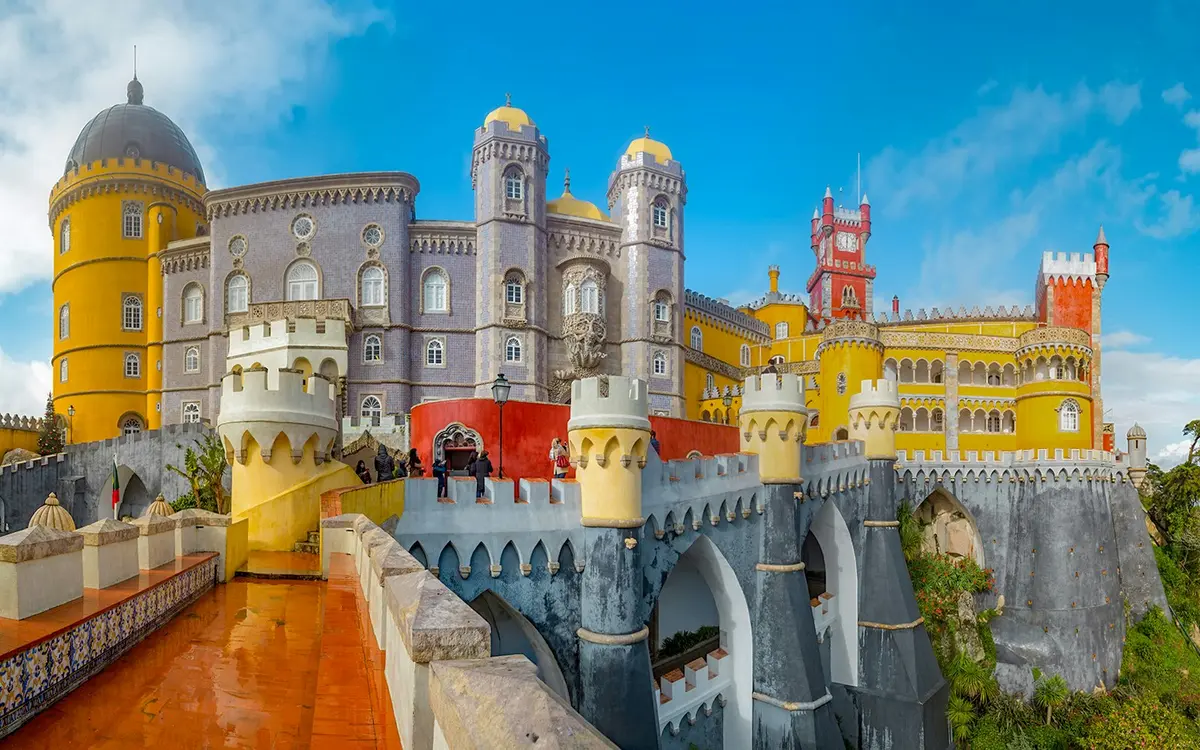
Book an Uber or Bolt directly from the Sintra train station to the Pena Palace entrance. For a family of four, it costs roughly €6-10 ($6.50-11), comparable to bus fares but without the queue. Arrive at Pena Palace when it opens — the palace interiors open at 9:30 AM, and the first 30 minutes are the calmest of the day before the tour buses arrive.
The palace corridors are narrow and strollers are not practical inside. The surrounding park, however, is vast and fully explorable. After Pena, walk downhill to the Moorish Castle (Castelo dos Mouros). The ramparts are thrilling for older kids — you are walking along ancient stone walls with forest views in every direction. Plan the visit as a downhill route: Pena first, then the castle, then the town. Attempting the reverse uphill with tired children is the main mistake families make in Sintra.
Pro Tip: On my last visit, the Pena Palace ticket machines had a 20-minute queue even at opening. Buy Pena Palace tickets in advance through the palace’s official portal — pre-purchase also lets you reserve an entry window, which eliminates the machine queue entirely.
Quinta da Regaleira — for kids who can hike
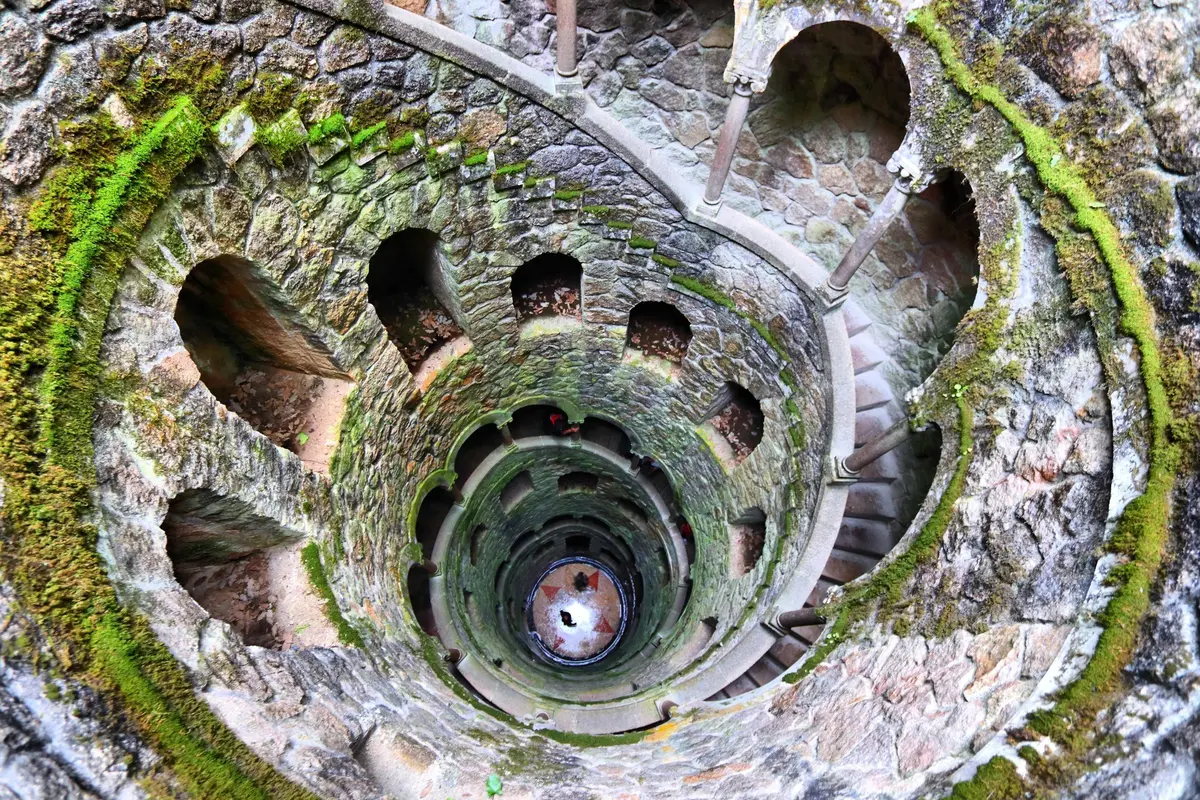
If your children are over 6 or 7 and enjoy exploration, Quinta da Regaleira is worth the detour. The estate’s highlight is the Initiation Well, a spiral stone staircase descending into the earth. It is dark and damp — bring a flashlight or use your phone. The grounds are laced with tunnels, grottos, and hidden paths that function like a self-guided treasure hunt.
This is not stroller-friendly. You need mobile, steady children. White sneakers will be destroyed — the ground is muddy when wet, and it rains in Sintra far more often than the promotional photos suggest.
- Location: Quinta da Regaleira, Rua Barbosa du Bocage 5, Sintra
- Cost: €20 adults / €15 youth (ages 6-17); children under 6 free
- Best for: Kids aged 6 and older who can walk 1-2 miles on uneven terrain
- Time needed: 2-3 hours
Algarve with kids: resort or independent villa?
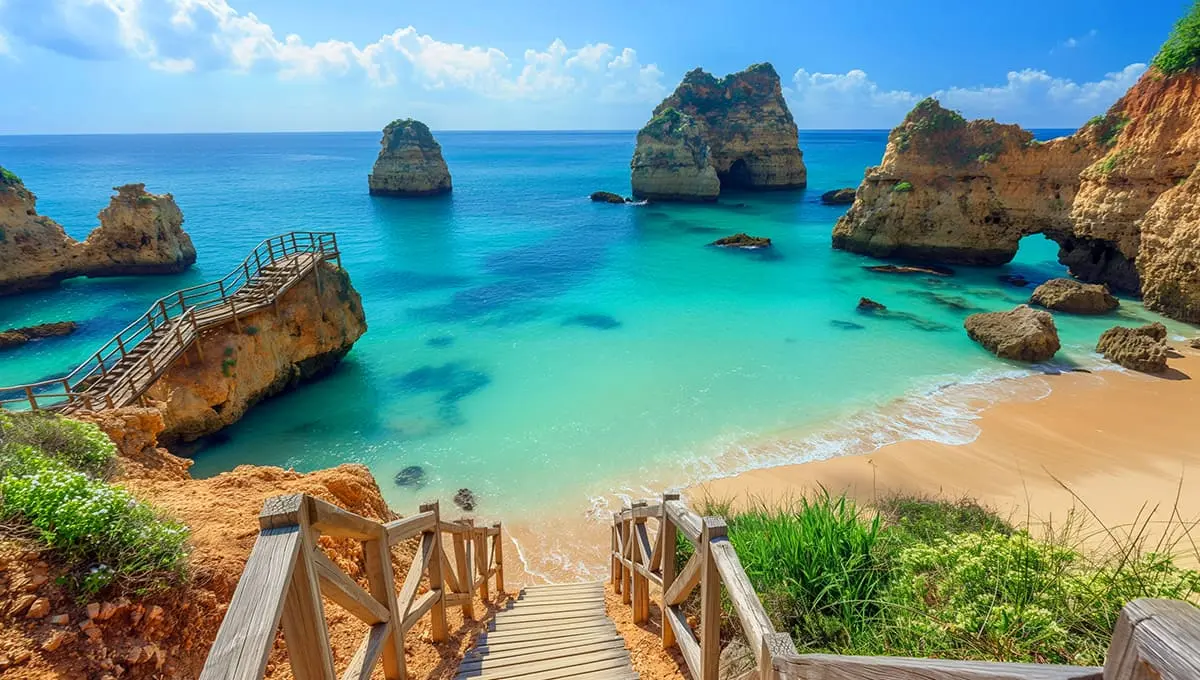
The Algarve‘s southern coast is Portugal’s family beach headquarters, and the choice comes down to two models: all-inclusive family resorts that eliminate friction at a premium, or independent villa rentals that give space and kitchen access but require your own safety assessment. The right answer depends almost entirely on the ages of your children.
Martinhal — the full-service option for families with infants
The Martinhal brand (locations in Sagres and Quinta do Lago) is the most consistently cited name in family travel circles for Portugal, and the reputation is earned. They provide baby amenities that most hotels skip entirely: bottle warmers, sterilizers, stair gates, furniture with rounded corners, and pureed food menus. For parents of infants, this infrastructure dramatically reduces the mental load of traveling.
The kids’ clubs are segmented by age, giving parents actual downtime. Staff speak English across all departments.
- Best for: Families with infants and toddlers who want a fully baby-proofed base
- Tradeoff: Rates run significantly higher than independent villas — you are paying to eliminate friction, which is worth it for some families and unnecessary for others
Independent villas — freedom with caveats
Booking through Airbnb or VRBO gives space and kitchen access, but the pool fencing situation requires specific due diligence. Portugal does not universally require pool fences by building code, and many villas have unfenced pools on tile patios — a serious drowning risk for toddlers. Popular bases like Lagos and Albufeira offer a wide range of villa options, but filter specifically for “pool fence” before booking, or ask the host directly and get written confirmation. A verbal assurance is not sufficient.
- Best for: Families with older kids, or those prioritizing budget and meal flexibility
- Tradeoff: You are responsible for all safety assessments and meal preparation
Porto with kids: what’s actually worth the trip?
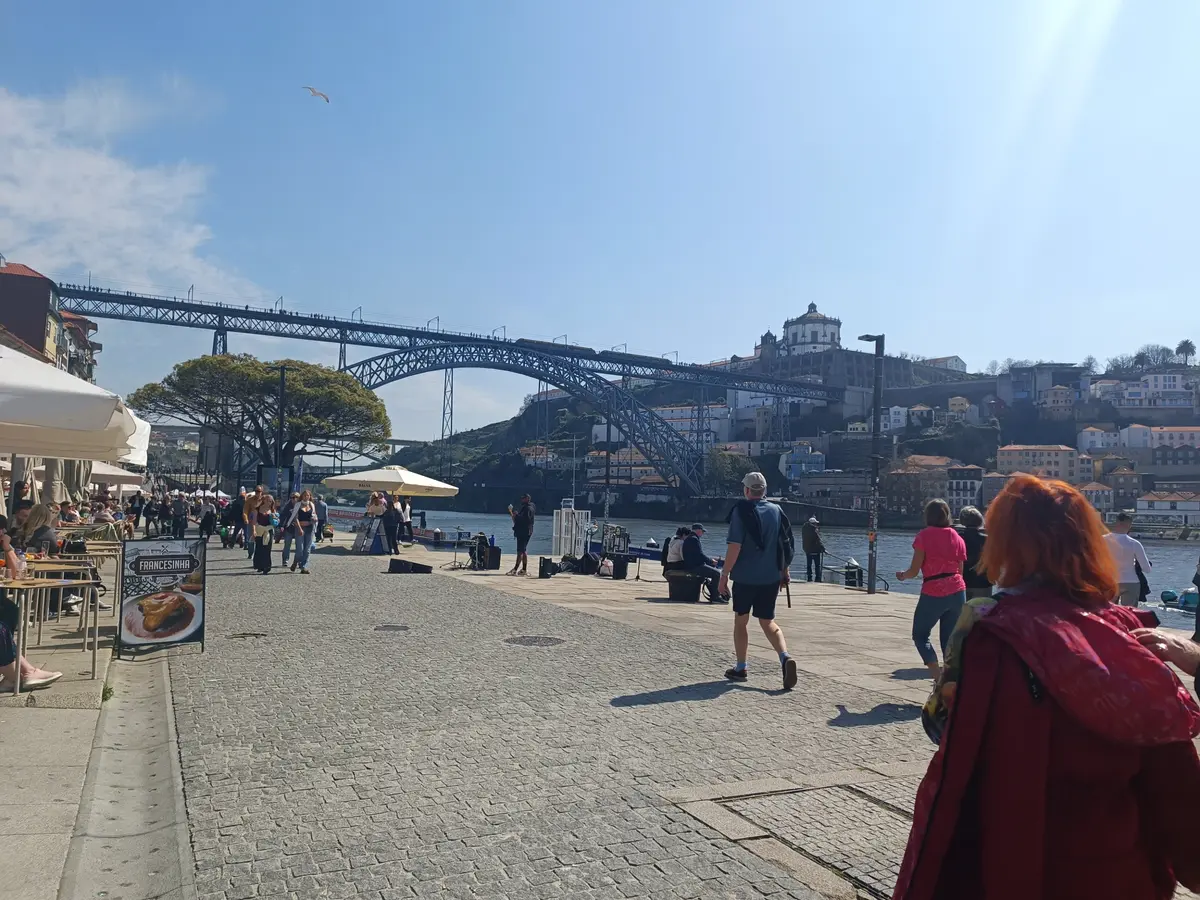
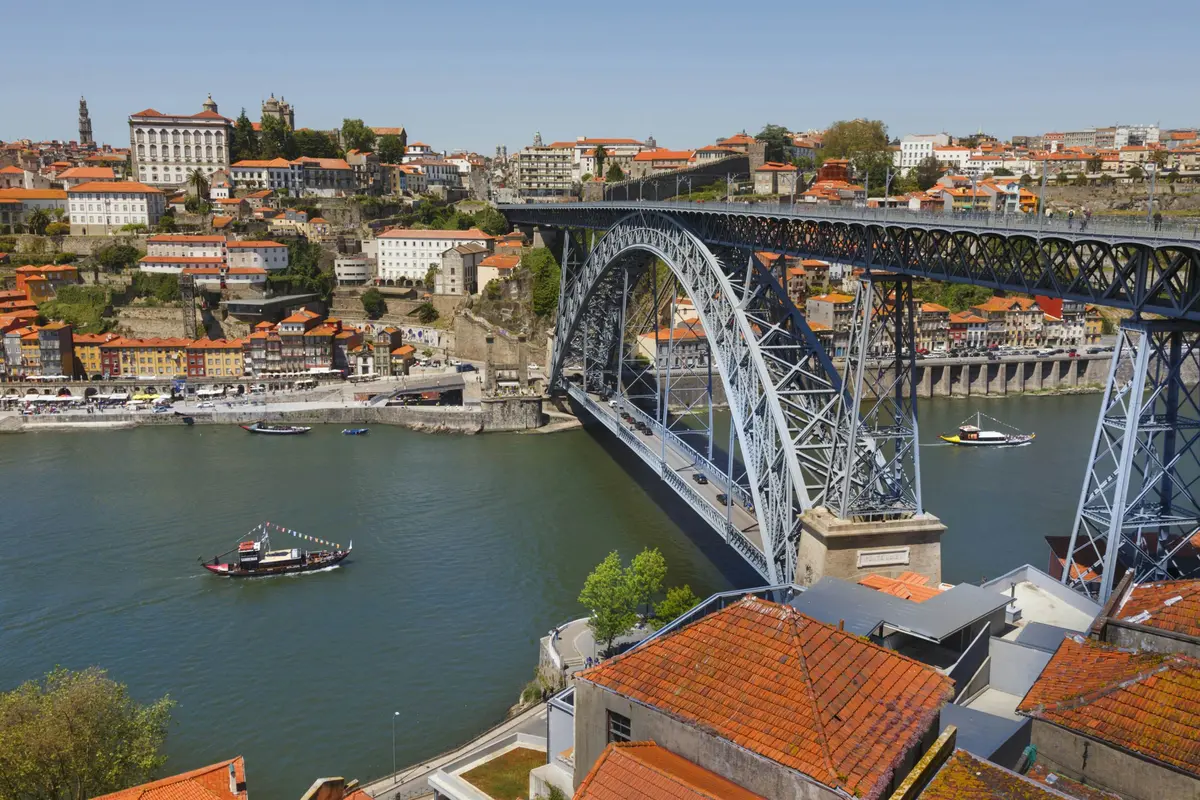
Porto is steeper, grittier, and more compact than Lisbon. The Ribeira district along the Douro River is the visual centerpiece, but it involves vertical staircases that make strollers impractical. Use a carrier for bridge crossings, especially the upper deck of the Dom Luís I Bridge where the wind can be surprisingly strong and the drop to the lower deck is visible through the grating. Two attractions earn the trip for families: World of Discoveries for ages 4 and up, and the Gaia Cable Car for everyone.
World of Discoveries — interactive history that works
World of Discoveries is part museum, part theme park. It walks you through Portugal’s Age of Exploration with interactive sets where visitors board a small boat that travels through recreated environments — rainforests, Asian markets, Brazilian jungles. It is kitschy and obviously designed for tourists, but it is extremely effective for engaging kids in history without dry text panels or exhibit cases behind glass.
- Location: Rua de Miragaia 106, Porto
- Cost: €18 adults / €12 children
- Best for: Kids aged 4-12
- Time needed: 1.5-2 hours
Gaia Cable Car — scenic but brief
After exploring the port wine lodges in Vila Nova de Gaia (which skew adult), take the Gaia Cable Car down to the riverfront instead of walking the steep descent. The ride covers 562 meters (1,844 feet) in about five minutes with aerial views over the Douro River and Porto’s red rooftops. It saves your legs and is the most entertainment a child will get in five minutes for €3.50.
- Location: Lower station at Cais de Gaia riverfront; upper station at Jardim do Morro, adjacent to the Dom Luís I Bridge upper deck
- Cost: €7 ($7.60) one-way per adult; €3.50 ($3.80) one-way per child (ages 5-12); €10 ($10.80) return per adult; €5 ($5.40) return per child
- Best for: All ages; especially useful for families who have already crossed the upper bridge deck on foot
- Time needed: 10 minutes including boarding
What’s different for teenagers vs. toddlers in Portugal?
The two age groups need nearly opposite experiences. Teenagers want autonomy, visual culture, and physical activity that holds up on its own merits. Toddlers need decompression zones, enclosed spaces, and predictable rhythms. Planning an itinerary that serves both simultaneously is the core challenge of Portugal family travel with mixed-age children.
Teens: surf, street art, and independence
LX Factory in Alcântara is Lisbon’s industrial-cool hub, with street art, vintage shops like Flamingos Vintage Kilo, and Ler Devagar, one of the most photographed bookstores in Europe. The market runs on weekends and is livelier than anything in the historic center for a teenager who has just spent two days looking at monasteries.
For active teens, Ericeira is the only World Surfing Reserve in Europe, and our Portugal surfing guide covers surf schools including Surf Riders & Co and conditions for young riders. In Estoril, the Parque das Gerações skate park draws serious skaters and is free.
The limitation is that these activities require transport outside the city center and some genuine trust in your teenager’s judgment about moving independently.
Toddlers: the parks that actually work
Jardim da Estrela and Jardim do Príncipe Real are the two parks that deliver consistently for young children in Lisbon. Both feature enclosed, shaded playgrounds next to kiosks where you can sit with a coffee while maintaining direct line-of-sight to the play equipment. These parks run busy with local families, which keeps them social and safe.
They are not unique attractions. They are utilitarian decompression spaces, which is exactly what toddlers need between museum visits and long transit days.
How do you cut costs on a Portugal family trip?
Portugal is one of the more affordable destinations in Western Europe, but restaurants, entrance fees, and transport add up quickly when you are paying for four or five people. Our Portugal travel cost breakdown shows what to expect at different budget levels — two specific habits make the biggest difference without sacrificing quality.
Museum-free Sundays — and why to skip them
Some museums and monuments offer free or reduced entry on Sunday mornings. Even when the deal extends to tourists, the resulting crowds make it a poor trade. The Jerónimos Monastery sees two-hour entry lines on free Sundays versus 20 minutes on a Tuesday morning. Paying the entry fee on a weekday morning is a better investment of your time than standing in a queue with children who have already been awake for three hours.
Supermarket strategy for picky eaters
Pingo Doce and Continente are the two chains to know across Portugal. Both are easy to find in Lisbon, Porto, and the Algarve, and both offer rotisserie chicken, fresh bread, fruit, and snacks at a fraction of restaurant prices. Stock up for park picnics and beach days. For families with picky eaters, having recognizable food on hand removes the negotiation from every meal — and kiosk lunches in parks remain the best middle ground between cooking and full restaurant dining.

What safety hazards should Portugal families know about?
Two hazards catch families off guard in Portugal: the limestone pavement that becomes a skating rink in light rain, and Sintra’s microclimate that can drop 15°F below Lisbon’s temperature on the same afternoon. Both are entirely manageable once you know they exist. A grip-soled shoe requirement and one extra layer per person solve both problems before they become emergencies.
The calçada: a genuine slip hazard
The calçada portuguesa — Portugal’s hand-laid limestone pavement — becomes dangerously slippery in light rain. Even a brief shower is enough that a normal walking pace requires active attention. Locals walk slowly and carefully on wet calçada, and you will see people slide regularly. Everyone in the family needs grip-soled trainers or hiking sandals; leather soles are genuinely hazardous on this surface. For an overview of broader hazards beyond the pavement, our safety in Portugal guide covers petty crime, street awareness, and what families specifically need to know before arrival.
There is no avoiding it. The entire historic center of every Portuguese city is paved this way.
Sintra’s microclimate — always bring layers
Even when Lisbon is sitting at 86°F (30°C), Sintra can be 10-15°F cooler due to its elevation and coastal mist. The Moorish Castle is often wrapped in fog at 9 AM even on days that clear to sunshine by afternoon. Pack hoodies and light jackets for every Sintra day trip, regardless of what the Lisbon forecast says.
The bottom line on Portugal with kids
TL;DR: Portugal with kids works once you have the health triage numbers saved, the car seat situation sorted, and the right Lisbon neighborhoods identified for your children’s ages. The SNS 24 system genuinely reduces emergency room stress, the Navegante Zapping card covers most transport at €1.66 per trip, and Sintra rewards families who arrive early and ride an Uber directly to the palace entrance. The castles, coastlines, and custard tarts are the payoff — the smooth execution comes from doing the logistics homework before you land.
Have you been to Portugal with kids, or are you in the planning stages? What part of the trip are you most uncertain about?