Three days in Lisbon gives you enough time for the castle, Belém’s monuments, and a day trip to Sintra — if your logistics are solid. This guide covers the transport system, the exact routes through each neighborhood, and the specific calls that separate a smooth visit from a frustrating one.
How do you use Lisbon public transport without wasting money?
The Navegante Occasional card (€0.50) works across every mode of transport in Lisbon — metro, trams, buses, trains to Sintra, and ferries. Load it with Zapping credit to cut the Tram 28 fare from €3.30 onboard down to €1.72. A 24-hour pass costs €7.25 (€11.40 including Sintra trains) and beats Zapping if you’re making four or more rides in a single day. For a 3 days in Lisbon itinerary, the card pays for itself before you leave the airport.
Loading your Navegante card the right way
Buy the card at any metro machine the moment you land. Load it with “Zapping” credit — €10 or €20 — rather than individual tickets. Zapping deducts the discounted rate per journey and works across all operators, so you won’t waste time queueing at machines every time you need to board.
Do the math before committing to a 24-hour pass. If you’re making three or fewer rides in a day, Zapping is cheaper. Four or more, the pass wins. The downside of Zapping: there’s no refund on unused credit, and if you let the balance run out mid-journey, you’ll be stuck at a validator with a line forming behind you.

How do you get from Lisbon airport to your hotel?
Getting from Lisbon airport to the city center is straightforward, but your choice of transport matters. The airport sits 4.3 miles (7 km) from downtown, and your options break into three realistic choices. Uber or Bolt typically costs $9–17 and drops you at your exact address. For most travelers staying in the historic districts, this is the right call.
Download both apps before you land — Bolt usually runs 10–20% cheaper than Uber. The metro’s Red Line connects to the city center for around €1.72 with a Navegante Zapping card, but you’ll transfer lines and haul luggage uphill if your hotel is anywhere in Alfama or Chiado. Pay the extra €10 for a rideshare if you have heavy bags. Save your legs for the hills you’ll climb on foot over the next 3 days in Lisbon.
Official taxis are beige or black-and-green. They’re reliable but pricier, and they charge extra for luggage.
Pro Tip: Surge pricing hits during morning and evening rush hours. If your flight lands between 7–9 AM or 6–8 PM, factor in 15–20 minutes of extra wait time and a higher fare. Check both apps before confirming a ride.
What should you know before walking around Lisbon?
Lisbon is one of Europe’s safest capitals — though it pays to read up on Portugal safety before you arrive — and three specific situations catch visitors off guard: fake drug dealers in Baixa selling pressed herbs, pickpockets on Tram 28, and “couvert” appetizers at restaurant tables that are not free. Touching those bread and butter plates adds €2–5 to your bill. None of these are serious risks, just predictable ones.
In Baixa and around Rossio Square, men will approach you whispering offers for hashish or cocaine. They are not dealers — they are selling pressed bay leaves or flour. Ignore them completely and keep walking. Engaging, even to refuse, extends the interaction.
Tram 28 is the city’s most active pickpocket corridor. If you ride it, wear your backpack on your front and keep your phone in a front pocket. Better yet, take the 12E or 24E — vintage trams that cover much of the same ground with a fraction of the tourist density.
Day 1 — The Historic Core: Castelo, Alfama, and Baixa
Castelo de São Jorge — arrive before the tour buses
Start at Castelo de São Jorge right at opening time (9:00 AM). This Moorish fortress sits at Lisbon’s highest point and gives you the geographic layout of the entire city from the ramparts — you can see exactly how Alfama, Mouraria, and Baixa flow down toward the Tagus River. Buy your ticket online before you go; the physical queue wraps around the entrance by 10 AM and takes 45 minutes to clear.
Don’t rush straight to the walls for photos. The castle gardens are home to resident peacocks that roost in the stone towers, appearing without warning against the terracotta roofline below. The castle interior is spare compared to most Portugal castles, but the ramparts reward a slow walk — you’ll understand why Lisbon is called the City of Seven Hills once you’re standing up here looking at all seven of them.
- Location: Rua de Santa Cruz do Castelo, Alfama
- Cost: €17 adults; book online at castelo.pt to avoid the queue
- Best for: First-morning orientation, panoramic views, anyone who needs the city to make geographic sense
- Time needed: 1.5–2 hours
The miradouro circuit above Alfama
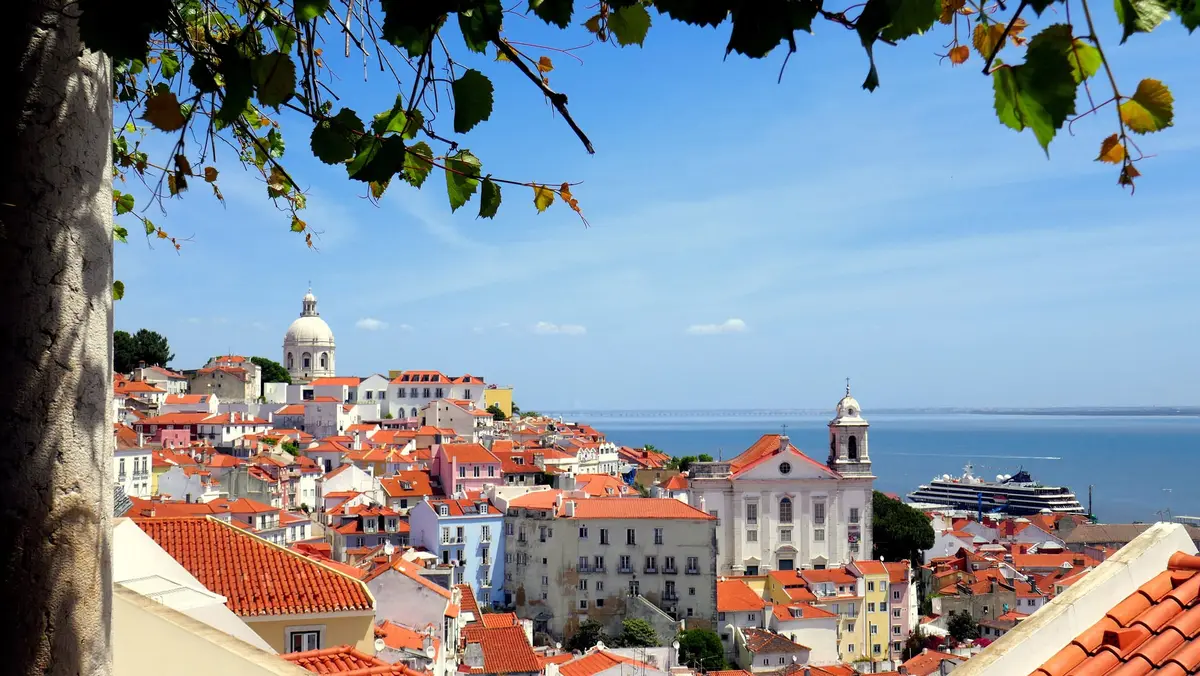
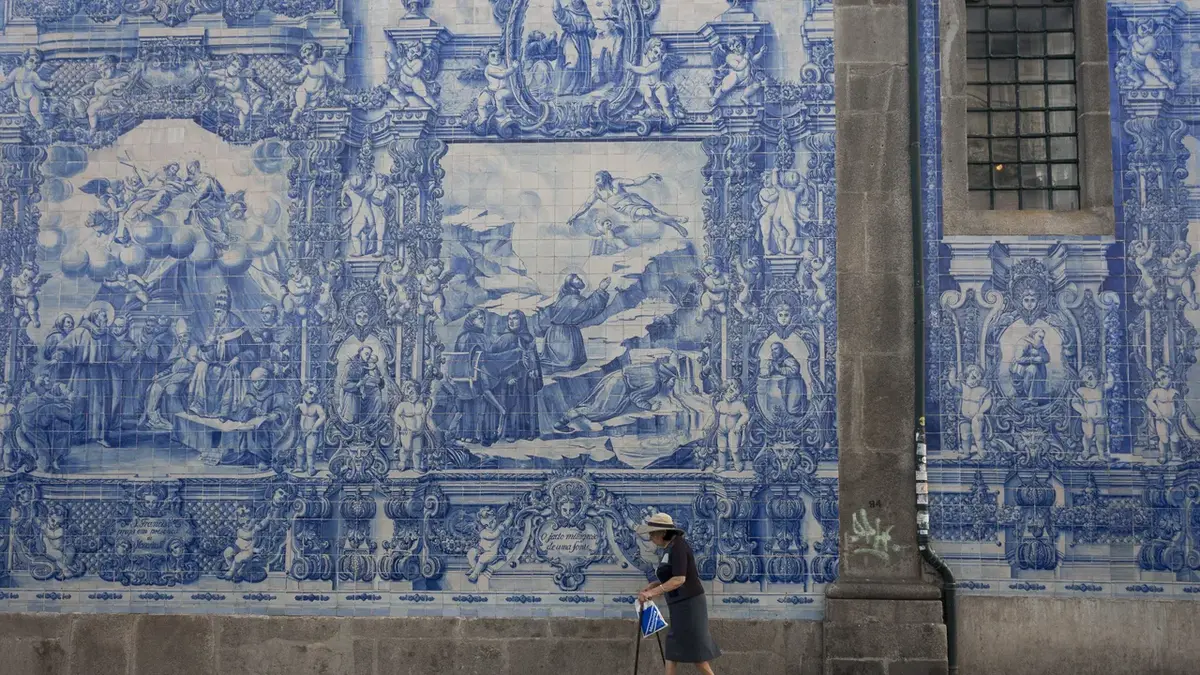
Walk downhill about 10 minutes from the castle to hit two essential viewpoints. Miradouro das Portas do Sol gives you the wide-angle cityscape: rooftops of Alfama stepping down to the Tagus, with the far bank of the Alentejo visible on clear days. Step around to Miradouro de Santa Luzia for the intimate version — a pergola-shaded terrace where blue-and-white azulejo tile panels depict the 1147 conquest of Lisbon in precise period detail.
The two miradouros sit two minutes apart but serve completely different photography purposes. Portas do Sol is your establishing shot. Santa Luzia gives you tile compositions with bougainvillea in the foreground. On my last visit, both were quiet before 9:30 AM and filled with tour groups by 10:15 — arrive early or wait until late afternoon.
- Location: Largo das Portas do Sol, Alfama
- Cost: Free
- Best for: Photography, anyone who wants to understand Alfama’s layout before descending into it
- Time needed: 20–30 minutes for both

Lunch in Alfama — Zé dos Cornos
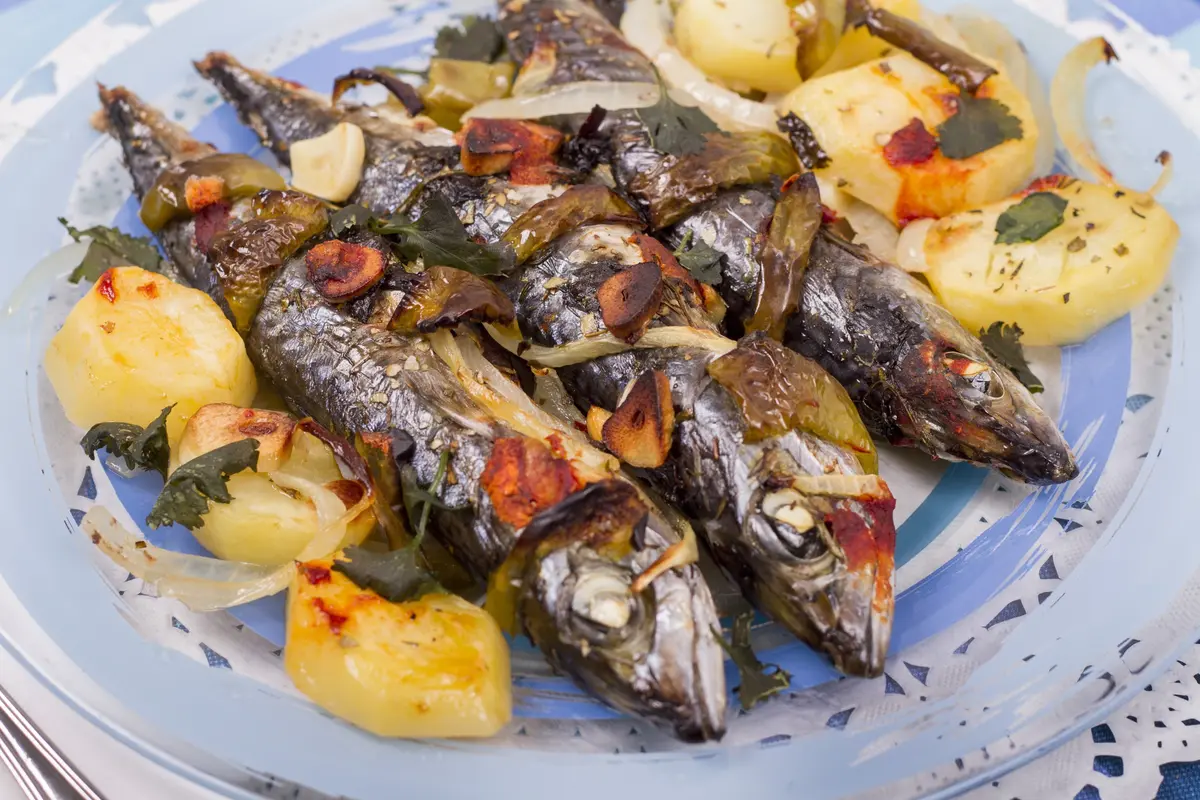
Descend the stairs from Santa Luzia straight into Alfama’s labyrinth. This district survived the 1755 earthquake, so the streets here are genuinely medieval. In summer, the air carries grilled sardines and laundry soap from the clothes drying between buildings overhead. In winter, it’s wood smoke and fried dough from the pastry shops on Rua dos Remedios.
Skip any restaurant with a laminated photo menu. Head to Zé dos Cornos on Beco dos Surradores. Paper tablecloths, communal wooden tables, overlapping conversations at every surface — it’s a proper tasca. Order the entrecosto (pork ribs) or bacalhau — two fixtures of traditional Portuguese food that this kitchen handles without compromise. A “dose” feeds two adults without effort; a “meia dose” is the half portion for one hungry person. Service can be brisk to the point of brusque, and you may share your table with strangers. That’s the experience.
- Location: Beco dos Surradores, Alfama
- Cost: €12–15 per person for lunch
- Best for: Solo travelers, couples who want to eat where locals actually eat
- Time needed: 45–60 minutes
Skip the Santa Justa Lift queue — the free workaround
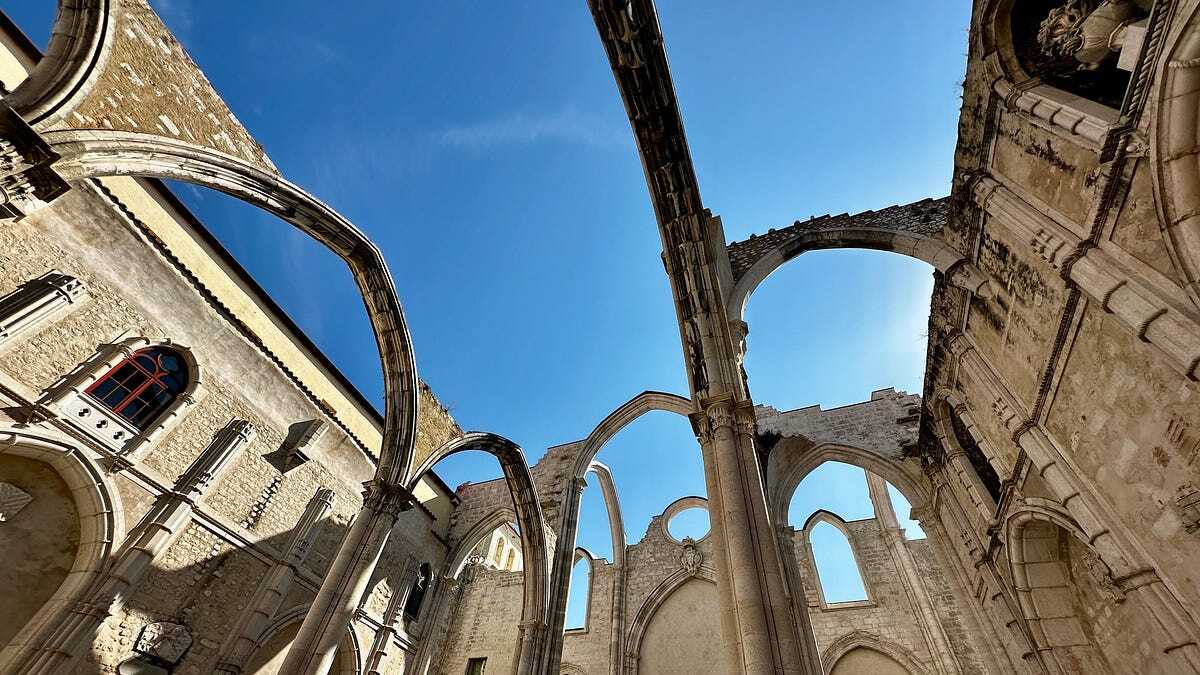
The Santa Justa Lift, the neo-Gothic iron tower connecting Baixa to Largo do Carmo, is currently out of service for maintenance. The paid ride isn’t available, but the real trick still works regardless: walk to Largo do Carmo behind the lift, find the Carmo Convent, and look for the small gate to the right of the ruins. A walkway leads directly to the upper-level viewing platform over Baixa — the same sweep of rooftops and river you’d see from the lift, with no queue and no fare.
The viewpoint delivers a straight-line panorama down Rua do Ouro all the way to the Cais das Colunas columns on the riverfront. The walkway entrance is not well-marked — most visitors walk straight past the low archway to the right of the convent entrance. That’s exactly why the route is worth knowing.
Pro Tip: Combine this stop with a walk through the Carmo Convent itself. The roofless Gothic nave — left open to the sky as a permanent memorial to the 1755 earthquake — is one of the quietest spaces in Lisbon. Entry runs around €7 and the crowds are a fraction of what you’d find at the lift queue outside.
Walk down to the riverfront and into Baixa — the flat downtown grid rebuilt with military precision after the earthquake. Praça do Comércio opens toward the Tagus through the Cais das Colunas, two columns standing in the water where you can feel the breeze coming off the river.
Evening fado at Tasca do Chico
Skip the “Fado & Dinner” packages sold by street promoters in Chiado. Those shows are staged for tourists and priced accordingly. For authentic fado in Lisbon, head to Tasca do Chico in Bairro Alto — “fado vadio” performed by visitors when the mood takes them. You pay only for food and drinks. When a singer stands up, the lights dim and every conversation in the room stops cold.
The room holds about 30 people. It fills on Friday and Saturday nights and the seating is tight enough that you share elbow room with your neighbors. Respect the silence when someone performs — talking during fado here is a serious breach of etiquette that draws hard stares from every local in the room. Arrive by 9 PM for the best seats.
- Location: Rua do Diário de Notícias 39, Bairro Alto
- Cost: Food and drinks only; no cover charge
- Best for: Couples, solo travelers, anyone who wants fado without the tourist markup
- Time needed: 2–3 hours
Day 2 — Belém’s Maritime Monuments and Modern Lisbon
Jerónimos Monastery — the free church strategy
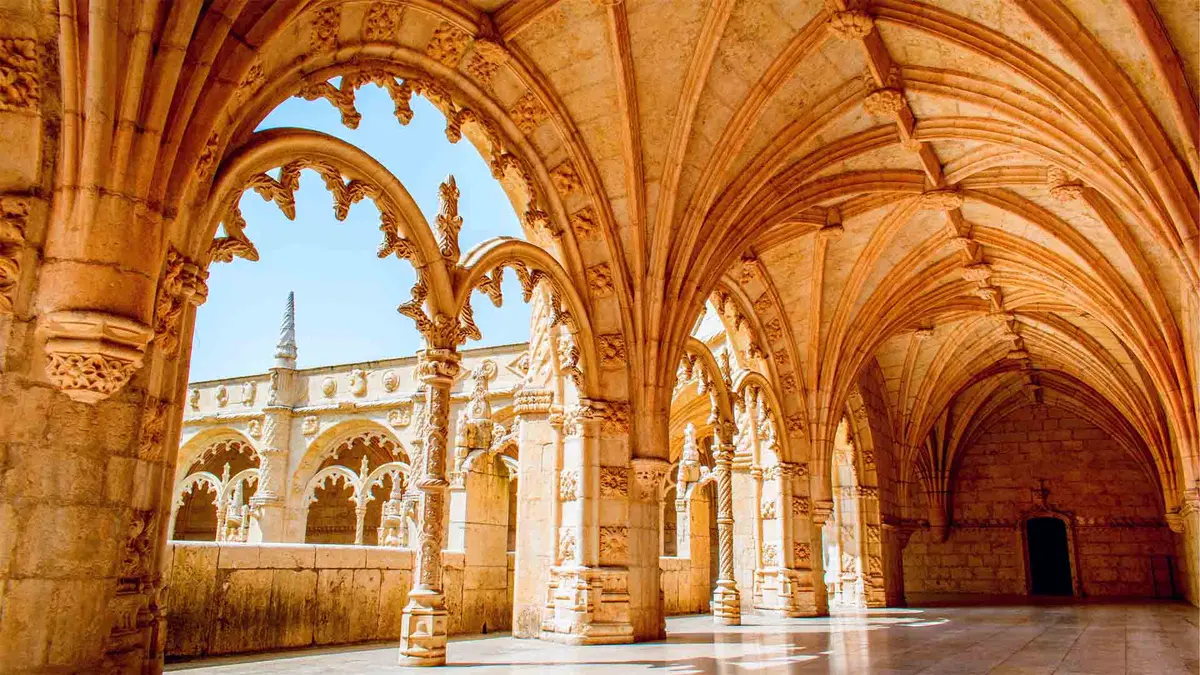
Take the 15E tram or the train from Cais do Sodré to Belém. The train is faster and less crowded. Your first stop is Jerónimos Monastery — a UNESCO World Heritage Site where the limestone carvings look like rope, coral, and sea creatures frozen mid-motion. Manueline architecture at its most elaborate.
The queue is serious. Even with a Lisboa Card, you wait in a specific line. Arrive at 9:30 AM sharp, or return after 4:00 PM when the coach tours have cleared out. Here is the strategy worth knowing: entry to the main church — where Vasco da Gama’s tomb sits in a carved stone sarcophagus — is completely free. You only pay to see the cloisters. If budget is a concern, the church delivers the majority of the architectural experience for nothing.
- Location: Praça do Império, Belém
- Cost: Church entry free; full admission (cloisters included) ~€15 adults — book online and note that Sundays until 2 PM entry is free for all
- Best for: Architecture, Portuguese maritime history, first-time visitors to Belém
- Time needed: 45 minutes (church only) or 2 hours (full visit with cloisters)
Which pastel de nata is worth the argument?
You are standing near the birthplace of the pastel de nata. Pastéis de Belém is the original — a few minutes’ walk from the monastery — and its table service line inside is usually far shorter than the takeaway queue outside. Sit down, eat them warm with cinnamon and powdered sugar, and you’ve saved 20–30 minutes of standing. Some locals insist Manteigaria — with locations in Chiado and Time Out Market — makes a better tart: crispier pastry, less sweet filling.
Try both during your 3 days in Lisbon and form your own opinion. The disagreement is genuine and the research is delicious.

Belém Tower — admire from outside
Belém Tower was designed to be seen from the river. That’s still the best way to experience it. The interior is cramped and damp, the spiral staircase is narrow and single-file, and the queue on a busy afternoon runs over an hour. The exterior — Manueline stonework rising from the water’s edge, rope-carved balconies, corner watchtowers reflecting in the Tagus — delivers everything from the riverside park.
Take your photos from the path along the water and move on. You won’t feel like you missed anything.
- Location: Av. Brasília, Belém
- Cost: Free to view from outside; interior entry ~€8 adults
- Best for: Exterior photography, families with children who won’t survive the interior queue
- Time needed: 20 minutes at the riverside
LX Factory and Ler Devagar bookstore
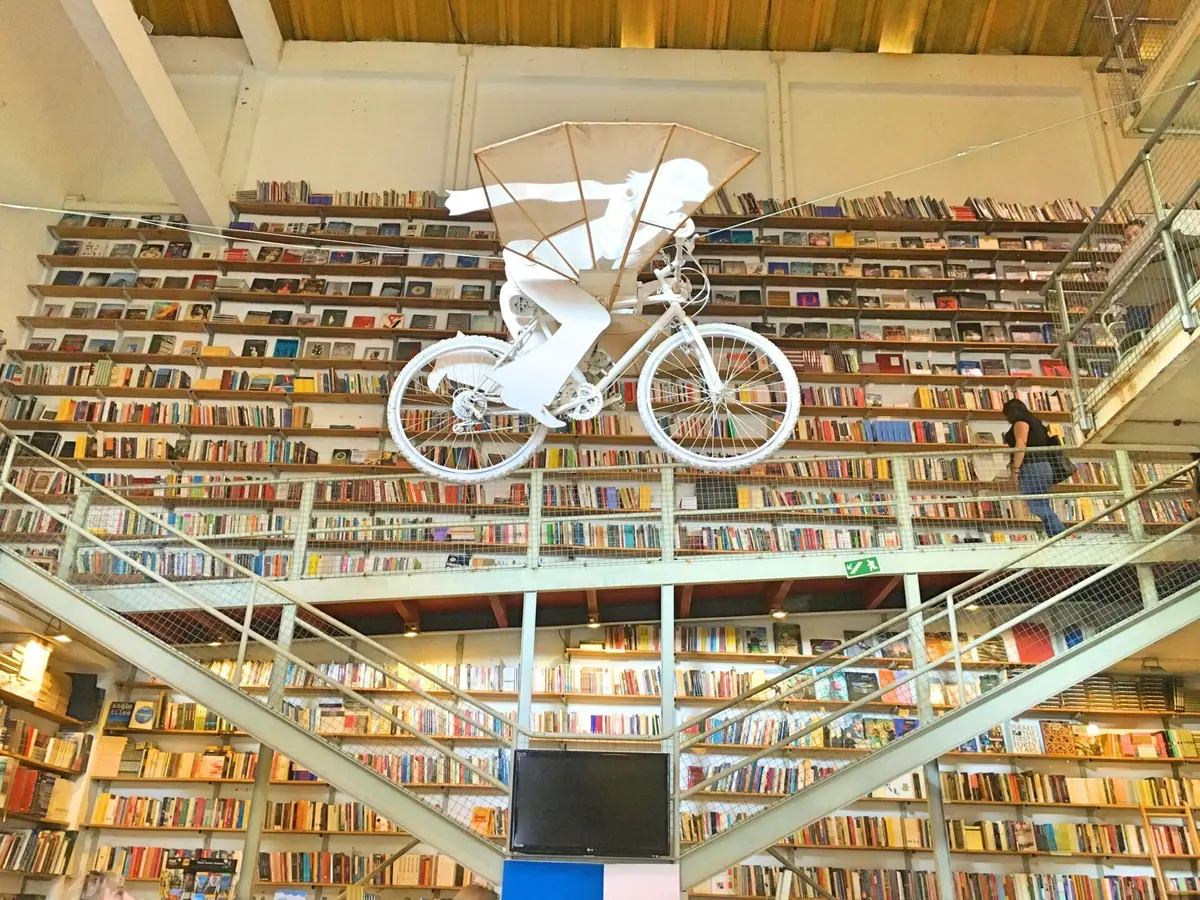
Take a tram or rideshare toward the city and stop at Alcântara-Mar. LX Factory is a former textile industrial complex now housing design studios, independent shops, and restaurants across a series of low warehouse buildings. The highlight is Ler Devagar bookstore — a converted printing hall where a bicycle sculpture hangs suspended from the rafters and shelves climb 20 feet to the ceiling. There is no polite way to spend less than 30 minutes here.
Grab a coffee or a craft beer outside and watch the crowd. The contrast with imperial Belém, 20 minutes behind you, is sharp — this is where Lisbon’s creative workers spend their afternoons.
- Location: R. Rodrigues de Faria 103, Alcântara
- Cost: Free to enter; food and drinks extra
- Best for: Design, browsing, anyone who needs a break from monuments
- Time needed: 1–1.5 hours
MAAT and the river roof walk
Walk along the riverfront to the Museum of Art, Architecture, and Technology. Even if you have no interest in the exhibitions inside, the building is the reason to come. You can walk across the gently curved roof for a direct line-of-sight view of the Tagus and the 25 de Abril Bridge — it shares its cable-suspension profile and deep red-orange color with San Francisco’s Golden Gate Bridge. From the roof, the resemblance is close enough to be disorienting. The roof walk is free.
- Location: Av. Brasília, Belém (adjacent to the CCB)
- Cost: Roof walk free; exhibitions from €5
- Best for: Architecture, the bridge view, a quiet end to a Belém afternoon
- Time needed: 30–45 minutes
Day 3 — Sintra: How to Beat the Timed Entry System
Sintra is the most rewarding day trip from Lisbon in a 3-day itinerary, but it punishes spontaneity hard. Book Pena Palace tickets before you land — the palace enforces strict 30-minute entry windows for the interior. If your ticket says 10:30 AM, you must be at the palace door — not the park gate — at 10:30 AM. The walk from the park gate to the palace door is 30 minutes uphill, or 15 minutes by shuttle bus (€4.50 return, bookable when you buy your ticket). Plan to arrive at the main gate at least one hour before your ticketed time. Missing your slot means you are turned away with no refund.
The park-only strategy at Pena Palace
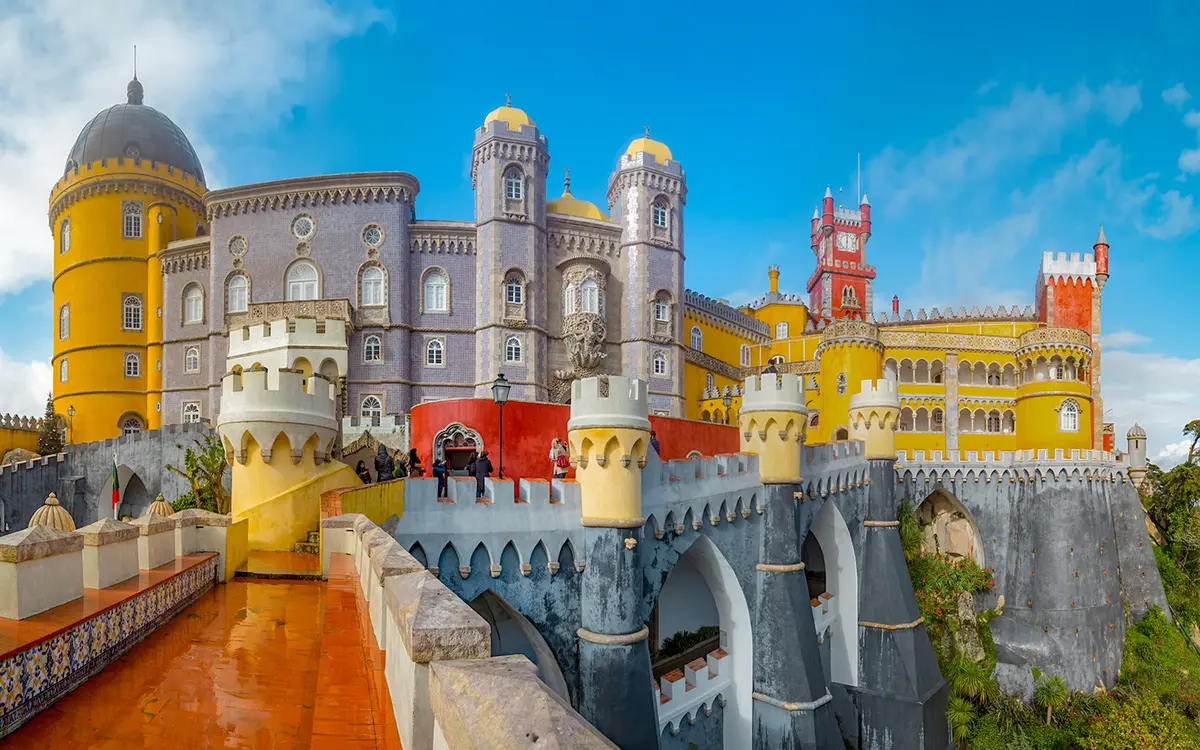
A full Palace + Park ticket runs around €20 while a park-only ticket is around €8. Here is what the park ticket actually includes: the Park of Pena, the Chalet of the Countess of Edla, the palace terraces, and the Arches Yard. The photograph of the yellow and red towers that appears on every Sintra travel post? Park ticket covers that shot entirely. The interior of the palace is a slow shuffle through crowded royal bedrooms — some people genuinely enjoy it, but the exterior delivers more visual payoff per euro.
- Location: Estrada da Pena, Sintra
- Cost: Park only ~€8 adults; Palace + Park ~€20 adults (book online well in advance at parquesdesintra.pt)
- Best for: Visitors prioritizing architecture and exterior views over interior rooms
- Time needed: 2 hours with park-only ticket; 3–4 hours with full ticket
Why start at Quinta da Regaleira instead of Pena Palace?
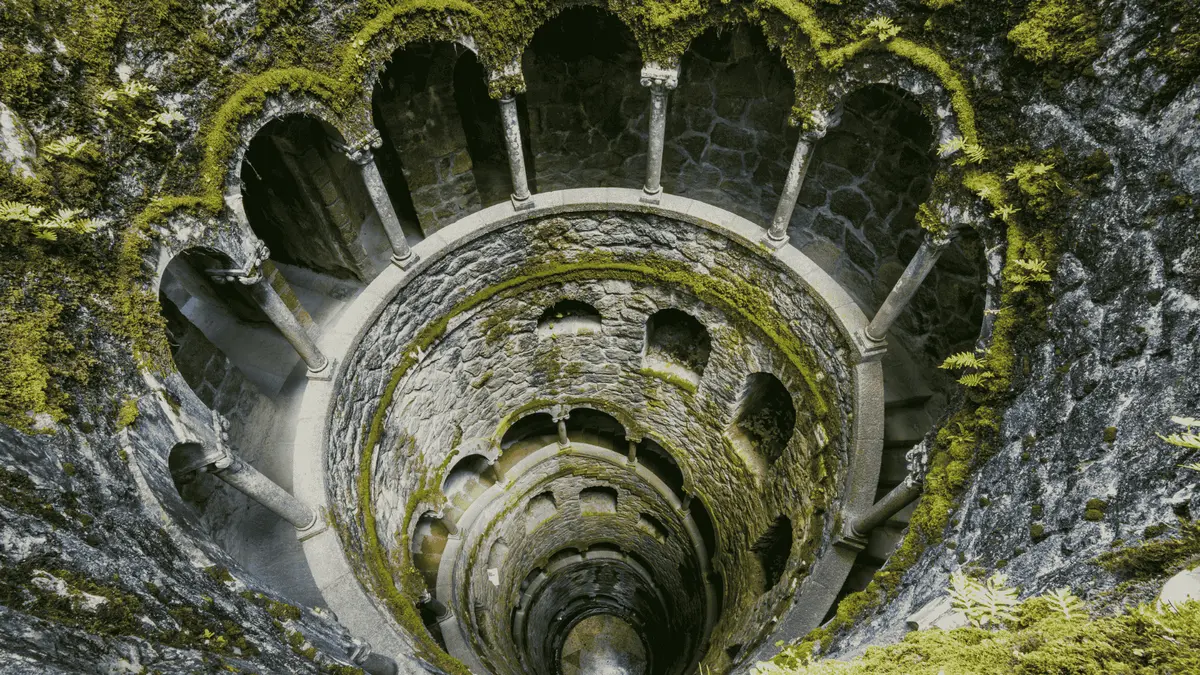
Most visitors take the 434 bus straight to Pena Palace first thing. Starting at Quinta da Regaleira at 9:30 AM instead transforms the whole day. This private estate contains the Initiation Well — an inverted stone tower that descends underground through a spiral staircase lined with carved moss-covered rock. Before 10 AM you can descend it without queuing behind 50 other visitors, which turns the experience from a shuffle into something close to solitary.
Eat lunch in Sintra‘s historic center — Tascantiga does excellent petiscos at fair prices — then take the 434 bus or an Uber up to Pena Palace for a 3:30 PM slot, when the morning coaches have left and the crowds inside have thinned. The downside: afternoon light is harsh on the palace exterior in summer, and you’ll need to time your train back to Lisbon carefully.
Pro Tip: The Lisbon to Sintra train runs from Rossio station roughly every 20 minutes and takes 40 minutes. Buy your return ticket at the machine in Sintra station before you leave for the palaces — the machines occasionally go out of stock on busy days, and you do not want to be stranded with a sunset approaching.
- Location: R. Barbosa du Bocage 5, Sintra (Quinta da Regaleira)
- Cost: ~€10 adults at Quinta da Regaleira
- Best for: Anyone who wants the Initiation Well without the mid-morning crowd
- Time needed: 1.5 hours at Quinta da Regaleira; full day combining both sites
What do you do in Lisbon when it rains?
Swap outdoor viewpoints for three reliably good indoor alternatives: the Oceanário de Lisboa (one of Europe’s best aquariums), the Gulbenkian Museum (a private collection ranging from Egyptian artifacts to Art Nouveau jewelry), and the Museu Nacional do Azulejo — five centuries of azulejos in a converted convent. All three are worth visiting even without rain as a forcing function.
Atlantic storms hit Lisbon regularly, especially during Portugal’s winter months, and the limestone cobblestones become genuinely dangerous when wet. Leather soles or smooth sneaker bottoms will slip without warning on a wet hill in Alfama or on the streets around Castelo. This is not a precaution — it’s a practical constraint.
The Oceanário de Lisboa in Parque das Nações centers around a floor-to-ceiling column of water with sharks, rays, and ocean sunfish moving slowly at eye level. It is one of the few aquariums where the tank itself is the architecture. The Gulbenkian Museum has a genuine garden attached that connects the two buildings — it’s the kind of place you go for an hour and stay for three. The Museu Nacional do Azulejo sits off the main tourist route in a convent in the eastern part of the city, which means it rarely feels crowded even during peak summer.
Pro Tip: Pack shoes with rubber traction — Vibram soles or purpose-built walking shoes. Lisbon’s wet cobblestones are not metaphorically slippery. They are a genuine fall risk.
What most guides don’t tell you
Tap water in Lisbon is safe and tastes good — bring a reusable bottle and stop paying €2 for single-use plastic at café tables. For coffee, order “um bica” or “um café” for an espresso, or a “galão” if you want something milkier. On tipping in Portugal: it’s not mandatory as it is in the US; rounding up the bill or leaving €1–2 for good service is the local standard.
Download Citymapper for public transport navigation, Bolt and Uber for rideshares, and TheFork if you want to book restaurants ahead of time — essential for Friday and Saturday nights at anywhere worth eating.
The bottom line on 3 days in Lisbon
TL;DR: Get a Navegante card at the airport machine, book Pena Palace tickets before you land, eat lunch at a tasca with no laminated menu, and reach the Baixa viewpoint via Largo do Carmo — no lift queue, no fare. Three days in Lisbon covers the castle, Belém, and Sintra — with enough loose time in Alfama to find the streets that aren’t on any map.
Have you tried the reverse Sintra itinerary starting at Quinta da Regaleira, or do you go straight to Pena Palace first? Drop your approach in the comments.