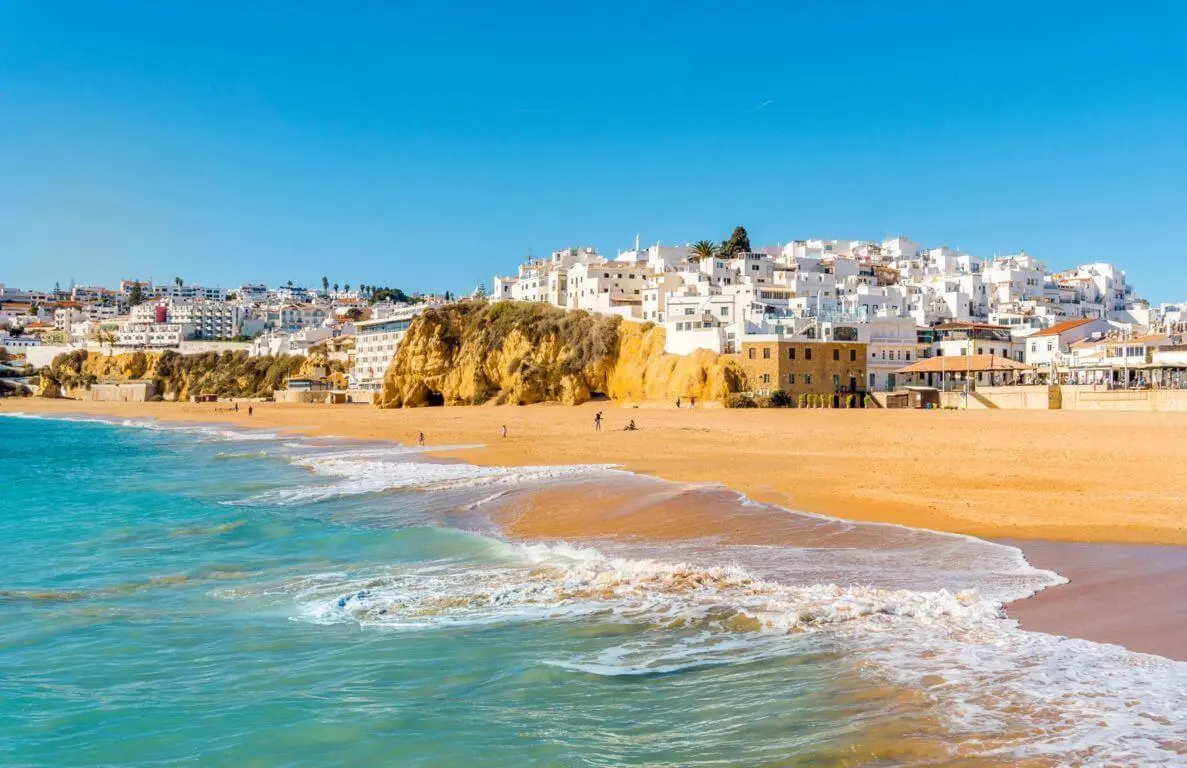
Albufeira Portugal splits every travel review down the middle because it’s two different destinations sharing one postcode. Get your neighborhood choice right and you’ll have one of the best holidays the Algarve has to offer. Get it wrong and you’ll spend a week in the wrong version of the town.
How different are Old Town and The Strip in Albufeira?
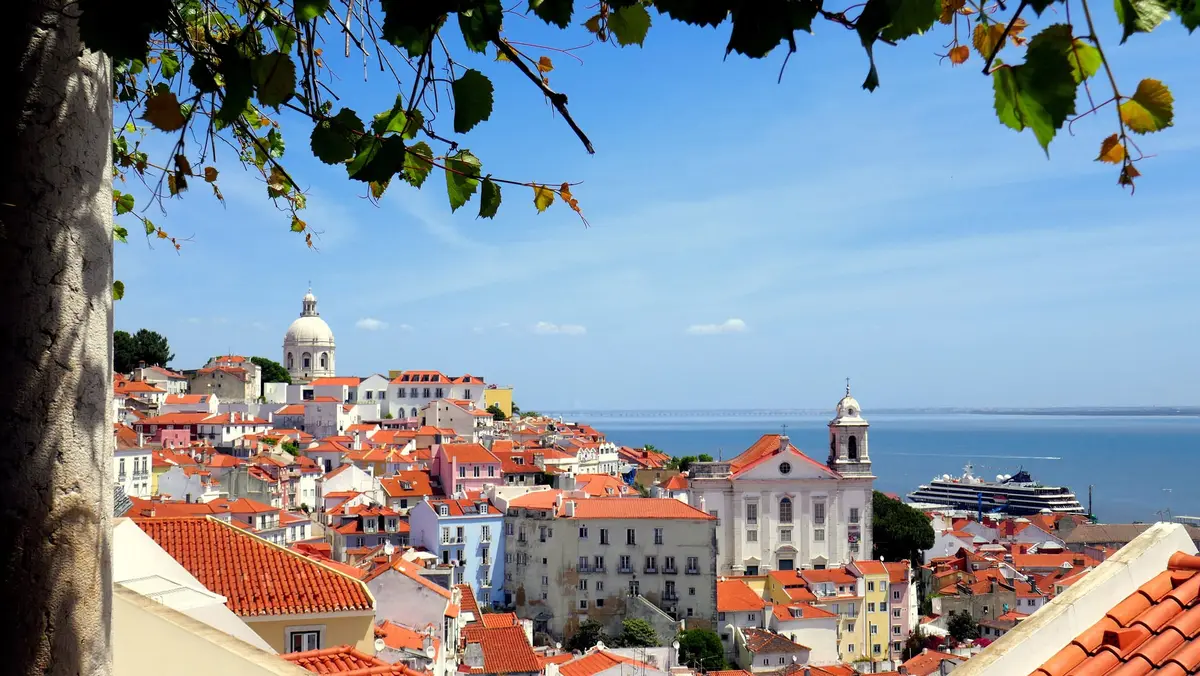
Albufeira’s two halves are separated by about 3 miles (5 km) and feel nothing like each other. The whitewashed cobblestone Old Town preserves its Moorish street layout — narrow, curved, warm enough on the tiles by noon to feel through your shoes. Montechoro’s Strip — Avenida Sá Carneiro — runs neon signs and back-to-back clubs until dawn. Where you sleep decides which town you get.
Old Town (Centro Histórico)
Old Town costs more and earns it. The streets smell of grilled fish and fresh bread in the morning, the tiles on the church steps are warm enough to feel through your shoes by noon, and it’s the only part of Albufeira where you could briefly forget you’re in a resort town. This is the right base for families, couples, and anyone who came for the Algarve rather than the party scene.
The Strip (Montechoro)
Montechoro delivers exactly what it promises — a dense run of bars, clubs, and promoters handing out drink wristbands at midnight. It doesn’t pretend to be anything else. If that’s your goal, the value-for-money accommodation here is hard to beat. Noise levels in mid-range rooms near Avenida Sá Carneiro don’t drop until 5 AM in peak season, and the crowd skews heavily under-30.
Pro Tip: Do not book accommodation based on Google Maps distance alone. The 3-mile gap between Old Town and The Strip isn’t obvious at scale — but waking up to bass drops from a nearby club after a long overnight flight is a difficult way to start a holiday. Read the actual reviews for noise before you confirm.

How do you get from Faro Airport to Albufeira?
Faro Airport sits 22 miles (36 km) east of Albufeira, and the transfer is your first logistical call. You have three realistic options — bus, rideshare, or pre-booked transfer — each with a different cost-versus-convenience trade-off depending on group size and arrival time.
The Aerobus (Vamus Route 56)
Vamus Algarve operates Route 56 as a direct airport express to Albufeira, running seven departures per day in summer (May to October) and just two per day in winter (November through April). Seats cannot be reserved in advance — it operates on a turn-up-and-go basis. If the bus reaches capacity, you wait for the next departure. Buy your ticket at the machine in arrivals or pay the driver in cash; the Vamus app also allows pre-payment and may offer a small discount.
One thing most guides miss: the bus drops you at Albufeira’s main bus terminal, about 1 mile (1.6 km) north of Old Town. Budget an additional €5-7 for an Uber or taxi to your hotel.
- Cost: €8/person
- Duration: ~45 minutes to bus terminal (then add transfer)
- Best for: Solo travelers or couples in peak season who want the cheapest option
- Downside: Infrequent schedule, no seat reservations, extra transfer needed on arrival
Uber and Bolt
Both apps work at Faro Airport and show you the fare before you confirm. Door to door, no terminal connection required.
- Cost: €25-30, higher during surge pricing on peak-season evenings
- Duration: ~35-40 minutes, direct to accommodation
- Best for: Pairs or small groups who want speed without the taxi queue
- Downside: Wait times stretch during busy arrivals; surge pricing applies on Friday and Saturday evenings
Private Transfer
Pre-booking a private transfer is the clearest option for families and groups of three or more. Your driver is at arrivals regardless of delays.
- Cost: €42-44 for a sedan (up to 4 passengers), booked in advance
- Duration: ~35-40 minutes, door to door
- Best for: Families, groups of 3+, late arrivals
- Downside: More expensive per head for solo travelers than the bus
Pro Tip: Three people splitting a €44 private transfer pay under €15 each — less than the bus fare, with door-to-door service included. The math shifts quickly once you’re traveling as a group.
Which neighborhood should you stay in?
Your base in Albufeira shapes everything — the walk to the beach, the noise level at 2 AM, and what you pay per night. Old Town delivers walkable access to the best restaurants and beaches at a premium. The Strip is cheaper and louder. The eastern suburbs are the compromise most guides skip entirely.
Old Town
The right choice for families, couples, and anyone prioritizing atmosphere over budget. Most of the better restaurants are within a 10-minute walk, and the beach escalators down to Praia dos Pescadores are about the same distance on foot. You’ll pay 20-30% more than equivalent Algarve accommodation in other areas.
Montechoro and The Strip
The right base if nightlife is the primary reason for the trip. The proximity to clubs and bars makes sense until 3 AM, at which point you’ll wish it wasn’t quite so close.
São João de Albufeira and Olhos de Água
The overlooked option. Both areas run quieter, cost less, and sit within easy reach of some of the better beaches east of town. Olhos de Água in particular has good restaurants and a pace that feels closer to local Portuguese life than resort infrastructure.
- Cost: 15-30% below comparable Old Town rates
- Best for: Families wanting beach access without Old Town prices, longer stays
- Trade-off: Local buses stop running by 9 PM — you’ll need a car or Uber for evenings out
Which beaches in Albufeira are actually worth your time?
Albufeira’s 25 Blue Flag beaches — some of the best on Portugal’s southern coast — are not created equal. Praia dos Arrifes is the safest for children under ten. Praia de São Rafael has the most dramatic scenery. Praia do Ninho de Andorinha requires real effort and rewards it with actual solitude. Knowing which fits your style saves you a morning you can’t get back.
1. Praia dos Pescadores (Fisherman’s Beach)
The main central beach below Old Town, reached via a pedestrian tunnel and escalator off Rua 5 de Outubro. It has evolved from a working fishing port into a full-scale resort beach, and a floating water park now dominates a significant stretch of the sand from June onward. The New Year’s Eve fireworks from this beach are among the best on the Algarve coast.
- Location: Below Old Town, via pedestrian tunnel on Rua 5 de Outubro
- Cost: Sunbeds €15-20 ($16-22)/pair
- Best for: Convenience, New Year’s Eve
- Time needed: 2-3 hours
- Downside: Packed by 10 AM in summer; water park changes the atmosphere significantly
2. Praia dos Arrifes
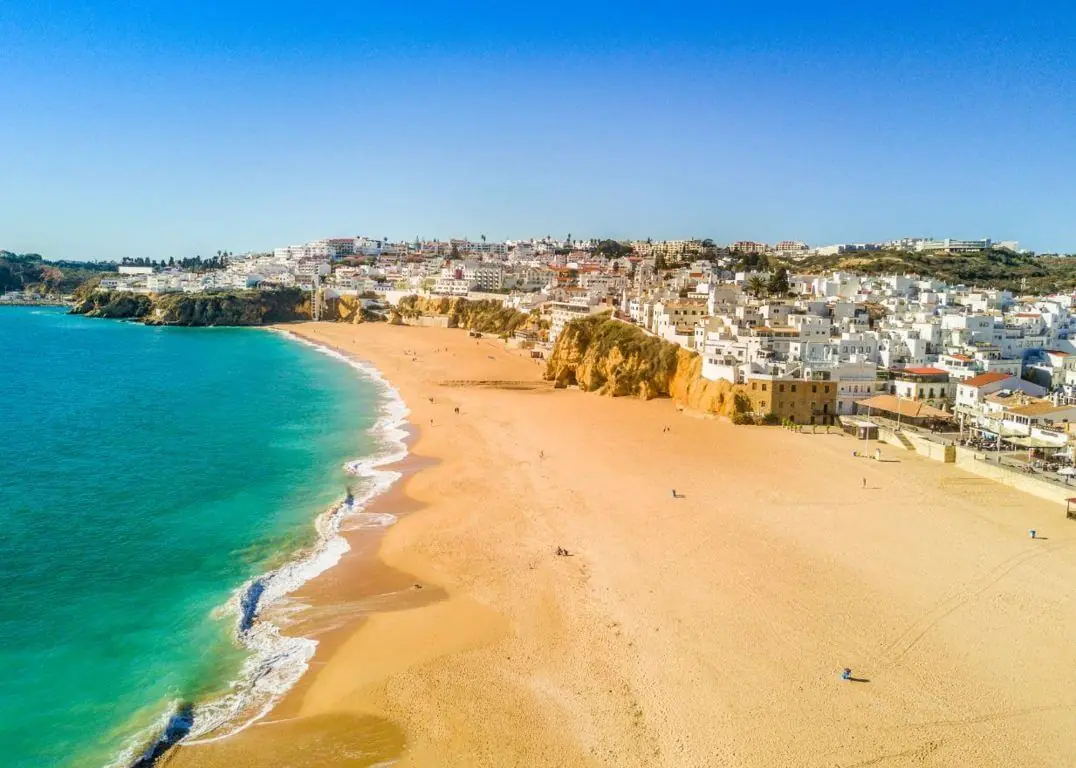
My top pick for anyone traveling with kids — particularly families with children under ten. Three massive rock formations (Três Penecos) create a natural barrier that takes the force out of Atlantic swells, making the water calmer than most Algarve beaches of comparable size.
The catch is space: there are around ten sets of sunbeds here. Arrive before 9:30 AM in summer or plan to sit on the sand.
- Location: East of Old Town, signposted off the N526
- Cost: Sunbeds ~€15 ($16)/pair; seafood restaurant on site
- Best for: Families with young children, safe swimming
- Time needed: Half day
- Downside: Small beach fills early; limited sunbed capacity
Pro Tip: The restaurant behind the beach opens early and serves before the tour groups arrive. Order at 12:30 PM rather than 1:30 PM — same view, half the wait.
3. Praia de São Rafael
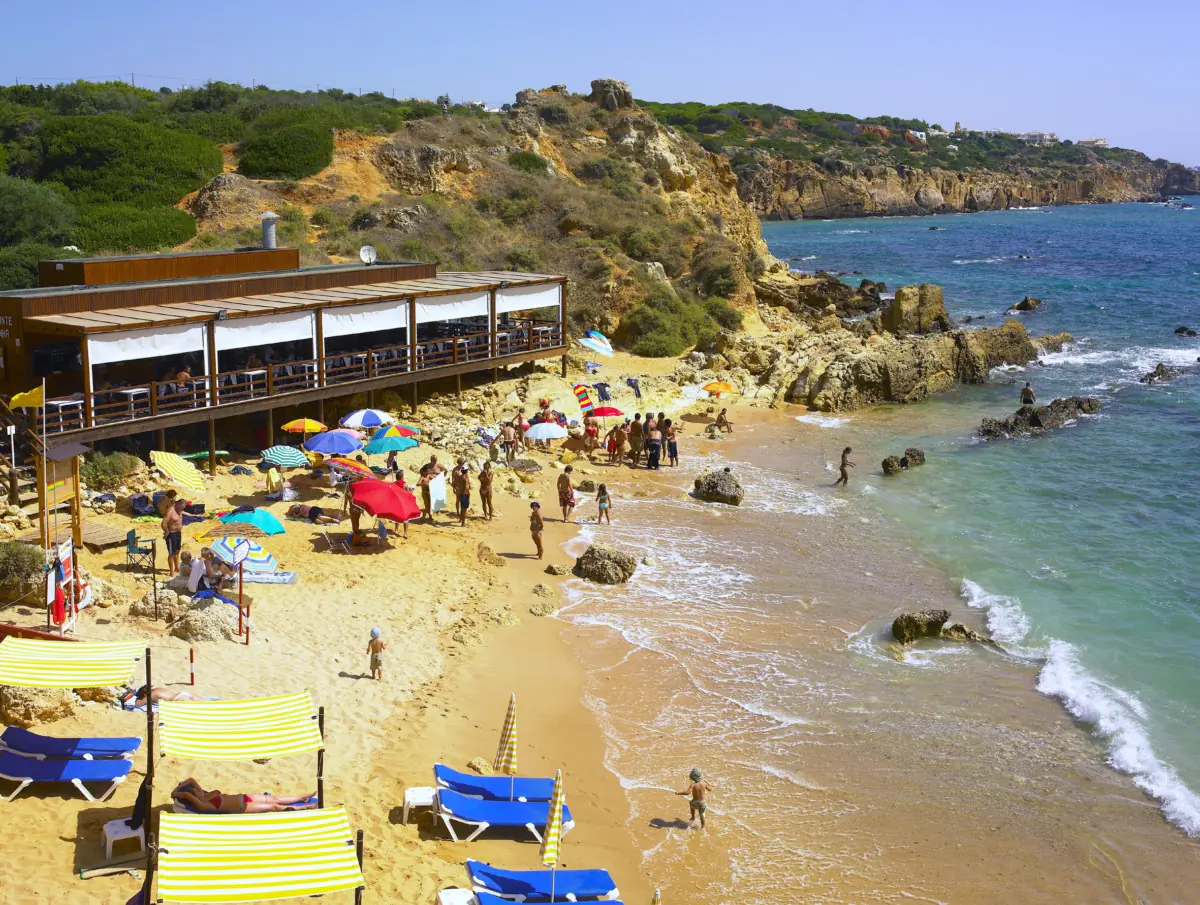
Limestone sea stacks rise out of clear water in formations that look exactly like the photos, which is both the appeal and the problem. This is a genuine snorkeling site and the most popular departure point for kayak tours heading west toward the Benagil Cave.
- Location: 4 miles (6.5 km) west of Old Town
- Best for: Snorkeling, photography, kayak tours
- Time needed: 2-4 hours
- Downside: Beach bar prices run high; the spot draws considerable foot traffic throughout summer
4. Praia do Ninho de Andorinha
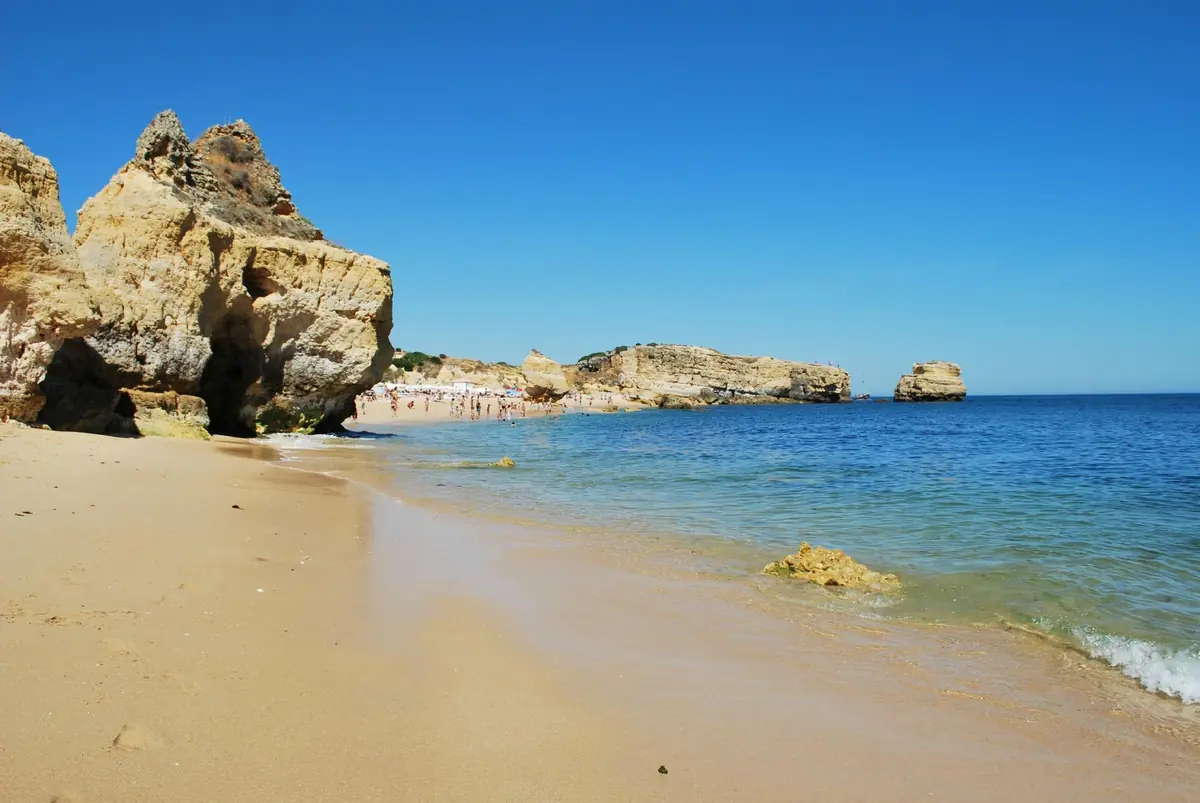
This one requires either a kayak from São Rafael or finding an unmarked cliff path that isn’t on most tourist maps. There are no signs, no facilities, and no lifeguard. There is also nobody else here before noon.
- Location: West of São Rafael; accessible by kayak/paddleboard or unmarked cliff path
- Best for: Couples, anyone willing to work for genuine seclusion
- Time needed: Half day
- Downside: No toilets, no shade structures, no food. Check tide times before you commit to the path.
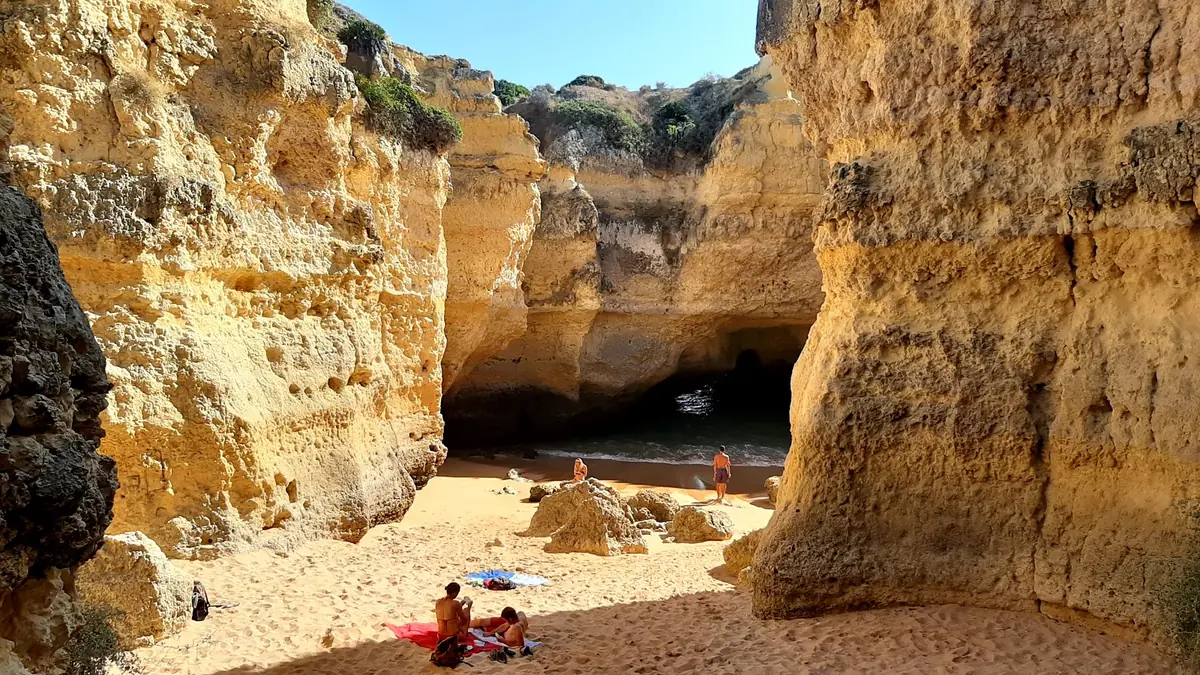
5. Praia da Falésia
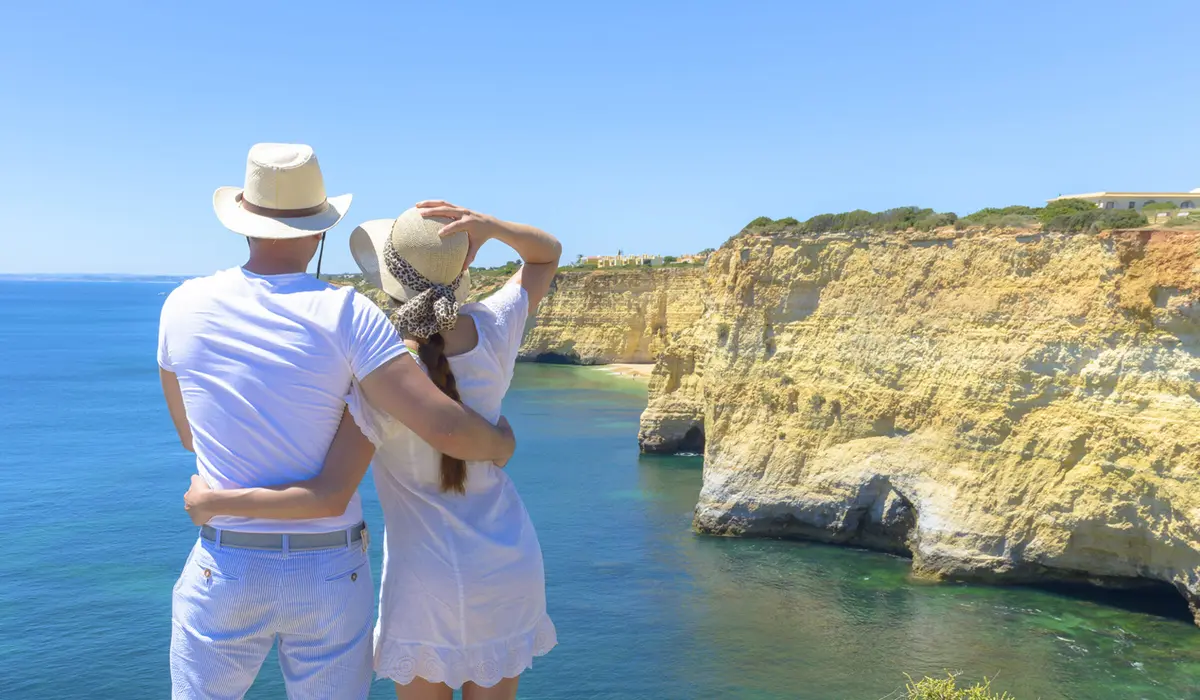
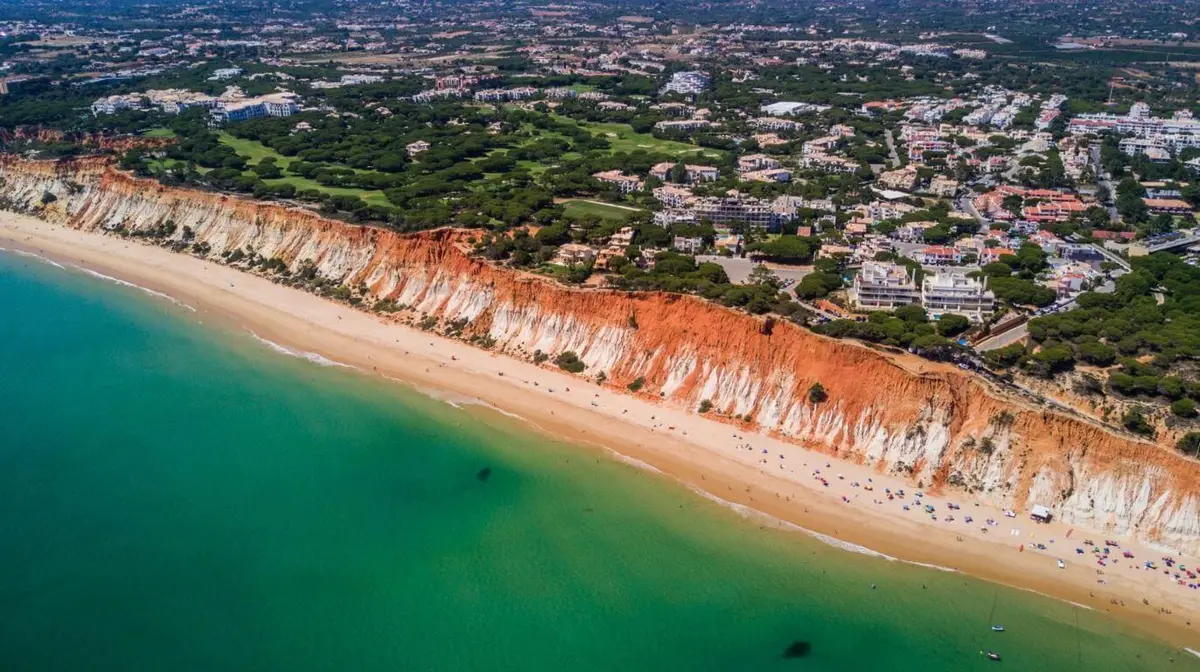
Red-ochre cliffs stretch for nearly 4 miles (6 km) along this beach, running east from Olhos de Água. At sunset the cliff face turns the color of cooling embers. The length alone means you can always find uncrowded sand, which is not something you can say about most Algarve beaches in July.
- Location: East of Albufeira, starting near Olhos de Água
- Best for: Long walks, sunset, anyone prioritizing space over facilities
- Time needed: 2-4 hours
- Downside: The path down from clifftop parking is steep and longer than it looks on a map
Is the Benagil Cave worth the hype?
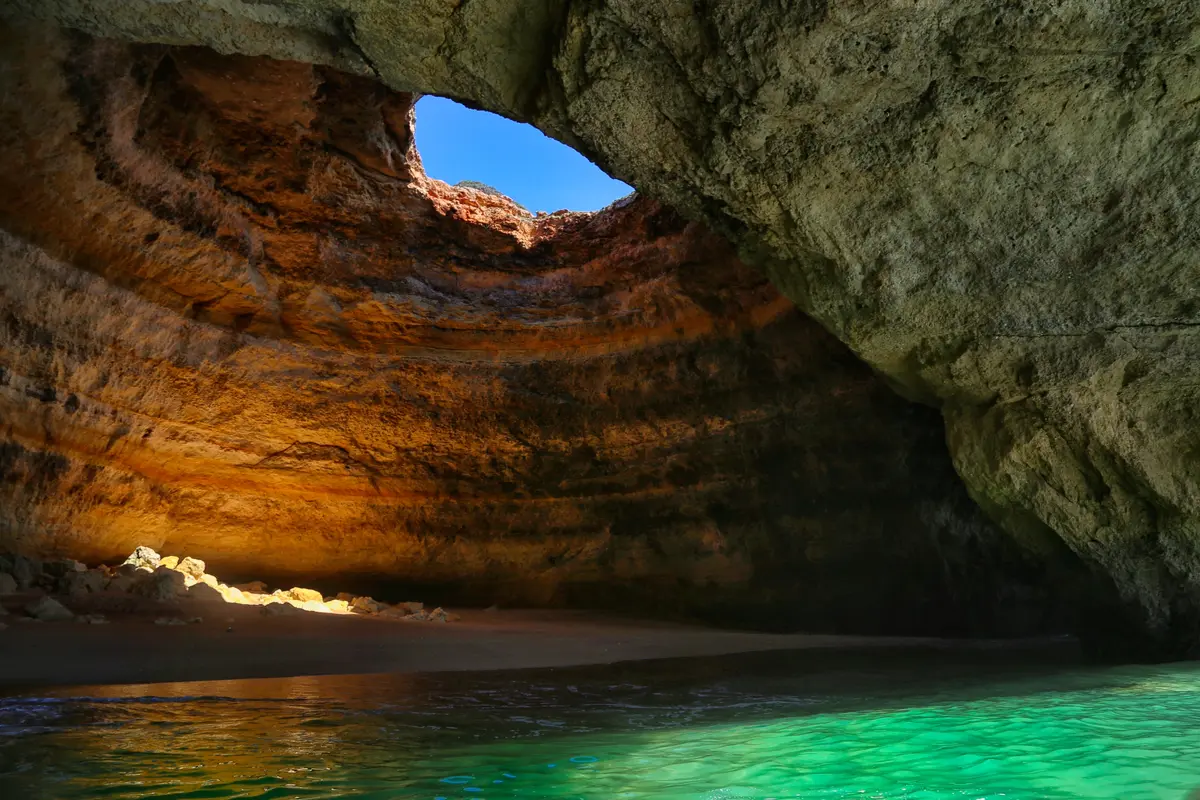
Yes — but only if you time it right. The cave’s oculus ceiling channels morning light onto golden sand in a way that earns every photograph. The problem is that large tour boats can enter the cave but cannot land inside. To actually stand on that sand, you need to arrive by kayak or paddleboard.
- Best time: 7:00-9:00 AM for relative quiet; late afternoon as tour boats clear out
- Access: Kayak or paddleboard (tours depart from Praia de São Rafael and nearby beaches)
- Winter note: Rough Atlantic swells cancel kayak tours regularly from November through March
- Midday: A traffic jam of boats that makes the experience feel like a crowded car park with a nice ceiling
Pro Tip: The cave opens northwest. Morning light enters most dramatically from around 9 AM. A paddleboard arrival at 8:00 AM often gives you 20-30 minutes alone before the first tour boats make their run.
Where should you eat in Albufeira?
The gap between good and bad restaurants in Albufeira is wider than in most Portuguese towns. Any place on the main tourist squares with a laminated photo menu and a host pulling you in by the arm is charging resort prices for unremarkable food. The better spots are one or two streets back, or require a short drive out of town.
O Lusitano
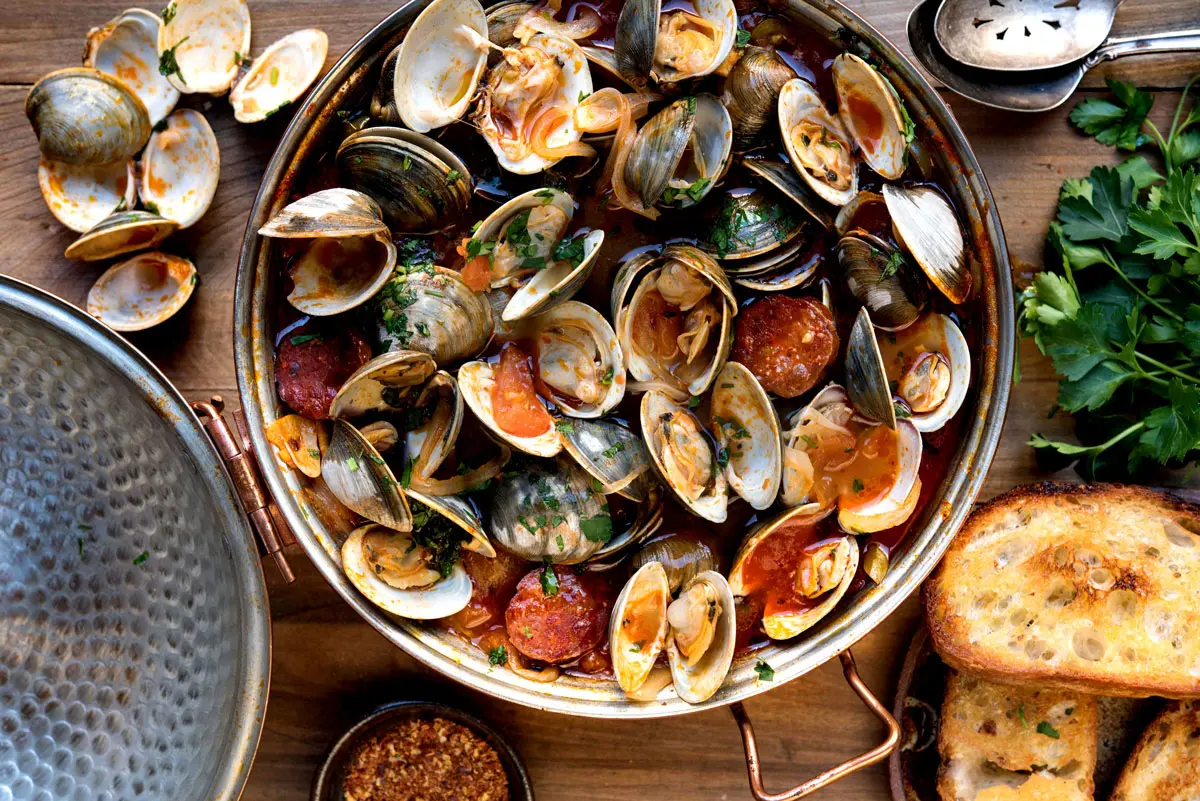
A family-run kitchen away from the Old Town tourist center, where Pedro and Carlos work the floor and the kitchen specializes in cataplana — the copper vessel used to steam shellfish and fish over low heat. This is traditional Portuguese cooking, not a simplified resort version of it.
- Location: Outside Old Town center; needs Uber or car
- Cost: Mains €14-20 ($15-22)
- Best for: Couples, food-focused travelers
- Must order: Monkfish Cataplana; Pork Loin with Chestnuts
- Time needed: 90 minutes
Taberna Vicentina
One street back from the main Old Town square, this tapas spot draws local regulars because it hasn’t been discovered by the tour circuit. Cash-only catches tourists off guard, so come prepared.
- Location: Old Town, one block from main square
- Cost: €10-16 ($11-17) per person for tapas
- Best for: Solo travelers, couples, budget-conscious visitors
- Must order: Octopus Salad, Pear Port Dessert
- Time needed: 60-90 minutes
- Heads up: Often cash only
Guia piri-piri: Ramires vs. Teodósio
Authentic Algarvian Frango Piri-Piri requires a drive a few kilometers inland to the village of Guia. Two restaurants split the loyalties of Portuguese diners.
Restaurante Ramires claims to be the origin of the recipe. The historical significance is real, the quality is consistent, and some regulars say it’s been coasting on that reputation for years.
- Location: Village of Guia, ~5 miles (8 km) north of Albufeira Old Town
- Cost: Mains €12-18 ($13-20)
- Best for: Food-focused travelers, historical context
- Time needed: 60-90 minutes
Restaurante Teodósio wins the “King of Piri-Piri” vote from most local diners. The chicken comes off the grill juicier, and the charcoal smoke is more pronounced — but the dining room seats hundreds and the atmosphere is loud and utilitarian.
- Location: Village of Guia, adjacent to Ramires on the main street
- Cost: Mains €12-18 ($13-20)
- Best for: Groups, anyone prioritizing flavor over history
- Time needed: 60-90 minutes
One thing both restaurants get right: unlike the saucy, BBQ-style imitations served internationally, authentic Portuguese food tradition demands the spice be grilled into the bird. If you arrive expecting thick heat on the side, that’s a different dish from a different country.
Frank’s in Olhos de Água
Modern European cooking with a fresh seafood focus, east of Old Town in the quieter Olhos de Água area. The kitchen handles families with picky younger eaters better than most restaurants in the area.
- Location: Olhos de Água, 4 miles (6 km) east of Old Town
- Cost: Mains €16-26 ($17-28)
- Best for: Families, travelers staying in the eastern municipality
- Time needed: 60-90 minutes
- Downside: Prices run higher than traditional Portuguese restaurants
What are the code of conduct rules every visitor must know?
Albufeira’s Code of Conduct is actively enforced throughout the municipality, with fines ranging from €150 to €1,800 depending on the offense. The rules cover swimwear outside beach zones, street drinking, public urination, sexual acts in public, and rough sleeping. Fines can be issued on the spot, and the UK Foreign Office has issued a formal travel alert about the regulations.
Here is the full breakdown:
- Swimwear outside beach or pool zones: €300-€1,500 ($325-$1,625). Walking to a café in a bikini or going shirtless on the main shopping street is illegal.
- Street drinking, public urination, or defecation: €300-€1,500 ($325-$1,625). Alcohol must be consumed on licensed terraces or inside bars — not on the street with a bottle from the corner shop.
- Sexual acts, simulations, or full public nudity: €500-€1,800 ($540-$1,950).
- Wild camping, sleeping rough, or spitting in public: €150-€750 ($160-$810).
The regulations target the behaviors that had been damaging Albufeira’s appeal for families and older travelers. The enforcement is real — five violations were issued in the first weekend alone. If you’re on a stag or hen trip, read this section twice.
What do US drivers need to know about the Algarve?
Renting a car in Portugal unlocks every beach, restaurant, and village beyond Albufeira’s resort core. Most fleets run manual transmissions — automatics cost more and need to be booked months ahead. Roundabouts replace most traffic lights in the Algarve, and the A22 motorway running the length of the coast is now toll-free. Know these before you pick up your keys.
Manual transmissions are standard across most fleets in Portugal. Automatic cars exist but cost significantly more and need to be booked months ahead, particularly in summer. If you need one, book it before you book your flights.
Parking in Old Town is genuinely difficult. The streets are narrow, spaces are tight by US standards, and enforcement is consistent. Park in a designated lot on the edge of town and walk in — the walk is rarely more than 10 minutes.
Roundabouts replace most traffic lights in the Algarve — one of several conventions that make driving in Portugal feel genuinely different for US visitors. Use the inside lane when taking the second or third exit, then signal and move to the outside lane just before your exit. The “Worm Roundabout” near the main commercial strip in Albufeira is locally famous for confusing first-time visitors — it has earned the name.
The A22 Via do Infante, the motorway running the length of the Algarve coast, is now toll-free — a significant change that simplifies day trips across the region. If you plan to drive north toward Lisbon on the A2, tolls still apply. Rental cars in Portugal are legally required to carry a Via Verde transponder, which is activated automatically when you pick up the car. Rental companies charge approximately €1.50-2.21 per day for the device plus any tolls you accumulate on roads outside the Algarve.
What does a trip to Albufeira actually cost?
Daily costs in Albufeira range from €60 ($65) at the budget end — hostels, supermarket meals — to €250+ ($270+) for resort hotels and private charters. Most mid-range visitors running on local restaurants, Uber for evenings, and 3-star accommodation should budget €120-180 ($130-195) per day. The single variable that shifts the number most is accommodation location.
Specific prices worth knowing before you arrive:
- Sunbeds: €15-20 ($16-22) at most beaches; up to €25 ($27) at premium spots
- Restaurant mains: €12-18 ($13-20) at local spots; higher at seafood restaurants
- Beer: €2-4 ($2.20-4.40) at bars
- Couvert charge: €2-5 ($2.20-5.50) per person — this is the bread, olives, and butter placed on your table automatically. It is not free. Most visitors don’t realize it’s charged until the bill arrives — decline it politely when the server puts it on the table.
The bottom line
Albufeira Portugal earns its popularity — the beaches are clean and varied, the seafood is fresh and affordable, the climate is reliable, and you can build almost any type of holiday here. The mistake most first-time visitors make is treating it as one town instead of two. Pick Old Town for atmosphere and walkability, understand the beaches before you show up, eat one street back from the main square, and respect the Code of Conduct rules that are actively enforced throughout the municipality.
TL;DR: Base yourself in Old Town for atmosphere, or Olhos de Água if you want quiet and value. Praia dos Arrifes for young children, Praia da Falésia for space, Praia do Ninho de Andorinha if you want to actually be alone. Eat at Taberna Vicentina or drive to Guia for real piri-piri. Carry euros for cash-only restaurants and cover up when you leave the beach.
Which version of Albufeira suits your travel style — the Old Town or The Strip?