Renting a car in Portugal unlocks the country most visitors never see — the schist villages of the Centro, the cliff-backed beaches east of Lagos, the N-222 river drive through the Douro Valley. Public transport won’t get you there. But the rental counter is also where Portugal trips quietly go wrong, if you walk in unprepared.
Which rental company should you actually trust in Portugal?
The company you choose matters more than the car model. Budget operators regularly use aggressive damage claims, fake insurance invalidations, and micro-scratch charges for pre-existing rim and undercarriage damage missed during pickup. The €5/day rates you see online are bait — their real revenue comes from the backend.
For a reliably clean experience, the broker Zest Car Rental earns consistent high marks from American travelers. They include excess reimbursement insurance as standard and advocate on your behalf during disputes with local suppliers. Local agencies operating out of Lisbon, Porto, and Faro airports — particularly those listed through Zest’s network — tend to offer transparent fuel policies and honest inspections without the hard sell at the counter. Hertz, Avis, and Budget remain solid options if fleet consistency matters more to you than price, though you’ll typically pay 20–35% more than equivalent local suppliers.
Pro Tip: When picking up from any off-terminal lot (common with smaller local agencies), add 30 minutes to your pickup estimate. The shuttle ride plus paperwork at a quieter desk is actually faster overall, but the clock starts the moment you land, not when you reach the car.
Do you really need an automatic — and what will it cost you?
The vast majority of Portugal’s rental fleet is manual transmission. If you only drive automatic, you are looking at a serious supply problem, a meaningful price premium, and a real risk of showing up at the counter to find nothing available.
Automatics typically cost 40–60% more per day than equivalent manuals. During peak season in Portugal — roughly late June through August — they sell out weeks in advance across all major pickup locations. Showing up at the counter with a manual booking and hoping to upgrade at the last minute usually works, but the on-the-spot surcharge will be painful.
How far in advance should you book an automatic?
Book at least three months before your trip for a June through August arrival. For shoulder season travel in May, September, or October, six weeks is usually sufficient. The upgrade trick agents pull at the counter — offering you a premium automatic at an inflated daily rate when your manual shows as “unavailable” — is best avoided by simply not having a manual reservation to begin with.
Pro Tip: If you’re a confident manual driver, renting manual in Portugal is genuinely fine once you leave the cities. The roads themselves aren’t the issue. The issue is parking on a 15-degree incline in Sintra with a line of cars behind you. Practice hill starts before you leave home.
What size car makes sense for Portugal’s roads?
A compact or economy car — a VW Golf, Renault Clio, or similar — is the right call for almost every Portugal road trip itinerary. Medieval village streets in the Douro Valley, Alfama in Lisbon, and the old town in Lagos were not designed with modern vehicles in mind. The parking garages in Porto and Lagos run narrow enough that a wide vehicle means a near-certain door ding or rim scrape.
Avoid the smallest Mini class cars if your route involves motorway driving with a full load of luggage. The 1.0-liter engines in the smallest category struggle noticeably on sustained highway inclines, and fuel economy drops sharply when the engine is working hard.
SUVs and larger vehicles make sense for one specific use case: unpaved tracks to remote beaches or rural quintas where clearance genuinely matters. For everything else, they add cost and parking headaches with no practical upside.

One-way rentals and cross-border trips: where the money disappears
Dropping a car in a different Portuguese city is usually inexpensive — often free on rentals of five days or more on popular routes like Lisbon to Porto or Porto to Faro. Always confirm the one-way fee at booking, not at pickup.
Taking the car into Spain
Crossing into Spain for a day visit is permitted by most major agencies and typically costs a modest cross-border insurance supplement of €20–80, depending on the provider. Always confirm this in writing at booking.
Dropping the car in Spain is a completely different situation. Repatriation fees for a Lisbon pickup with a Spanish drop-off commonly reach €500–1,000 or more depending on the destination — a Lisbon to Barcelona drop has been quoted at €1,000 by multiple major agencies. If you’re planning a Spain and Portugal itinerary, the smarter strategy is to drive to the Portuguese border, drop your rental at the closest Portuguese location, cross into Spain by taxi or bus (the border towns of Elvas, Vilar Formoso, and Valença all have straightforward crossings), and pick up a separate Spanish rental on the other side.
What documents do US drivers need at the rental counter?
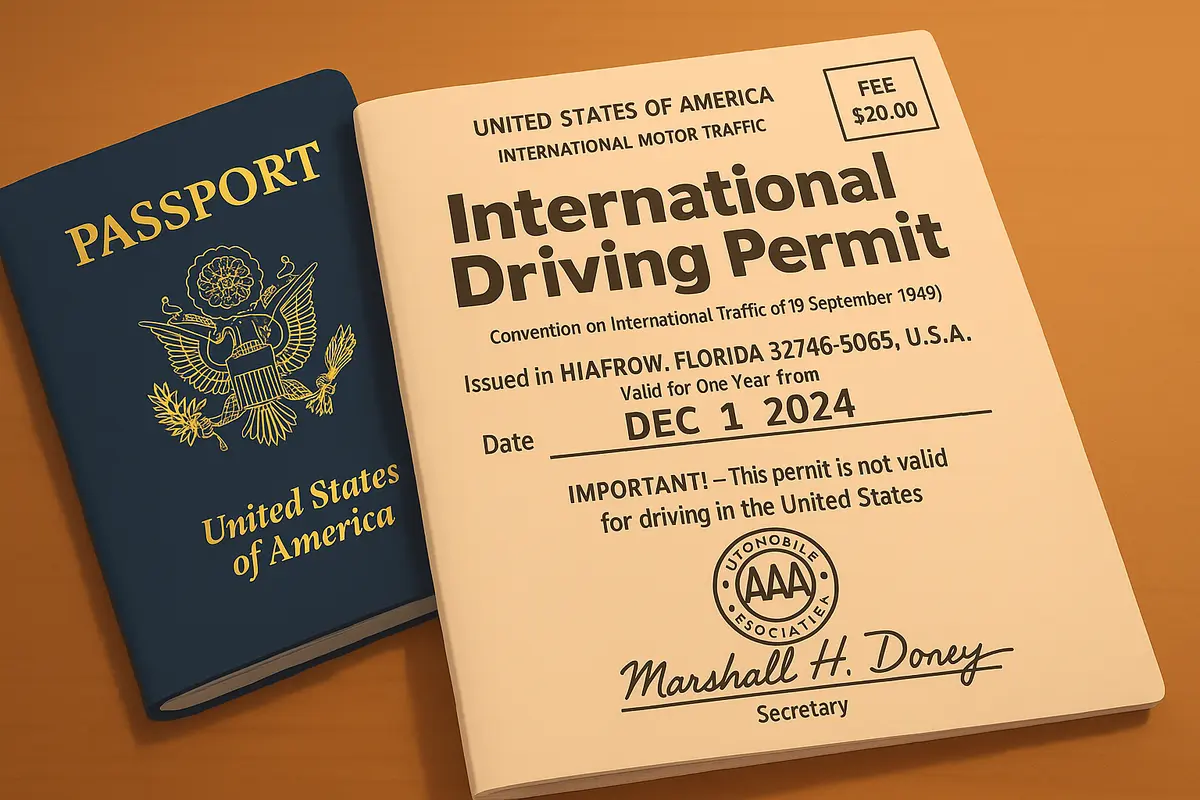
US citizens can drive in Portugal legally with just their state-issued driver’s license for stays up to 185 days, per the US Embassy in Lisbon — though it’s worth confirming the current entry requirements for Portugal before departure if anything about your itinerary has changed. An International Driving Permit (IDP) is not legally required in Portugal — but it remains worth carrying.
Rural police officers may not read English, and an IDP serves as a standardized translation of your license. Some smaller local agencies also request one before releasing the vehicle. If your trip includes crossing into Spain, an IDP is required by Spanish law.
An IDP costs around $30 and takes about 20 minutes to process in person at a AAA office. Get one before you leave home.
Beyond your license, bring:
- Passport: required for ID verification at pickup
- Credit card in the primary driver’s name: required for the deposit hold
- Physical copy of your credit card’s rental coverage letter: agents frequently demand printed proof before releasing the keys — a screenshot on your phone is often refused
Age requirements and young driver surcharges
- Minimum age: 21 at most agencies
- Ages 21–24: expect a young driver surcharge of €10–25/day depending on agency and vehicle class
- Debit cards: technically accepted by some agencies but typically trigger a requirement to purchase maximum insurance coverage to waive the deposit hold — stick to a credit card
How does insurance actually work — and when to decline the counter upsell?
All rentals in Portugal automatically include third-party liability coverage by law. The upsell fight is always about the Collision Damage Waiver (CDW), which covers damage to the rental vehicle itself.
Using your US credit card coverage
Premium US credit cards — Chase Sapphire Reserve, Amex Platinum, and others — often provide primary rental car insurance internationally. To use it, you must explicitly decline the agency’s CDW at the counter when asked. If you accept any part of the agency’s CDW, your credit card coverage is typically voided.
Before you decline, call your card issuer and confirm the coverage applies to Portugal specifically, then print a physical letter of coverage dated within two to three weeks of pickup. Agents at the counter will ask for it. A verbal confirmation from your card’s customer service line is not enough.
On my last visit, the deposit hold placed on my card after declining the CDW was €1,200 — which is standard for most agencies. That hold clears within five to seven business days after return, assuming no damage.
If your card doesn’t offer primary coverage
Dedicated travel insurance with rental car protection is a cleaner alternative to paying the agency’s daily CDW rate, which runs €15–25/day at most Portuguese counters. Book it before you arrive — you cannot add third-party coverage retroactively at the counter.
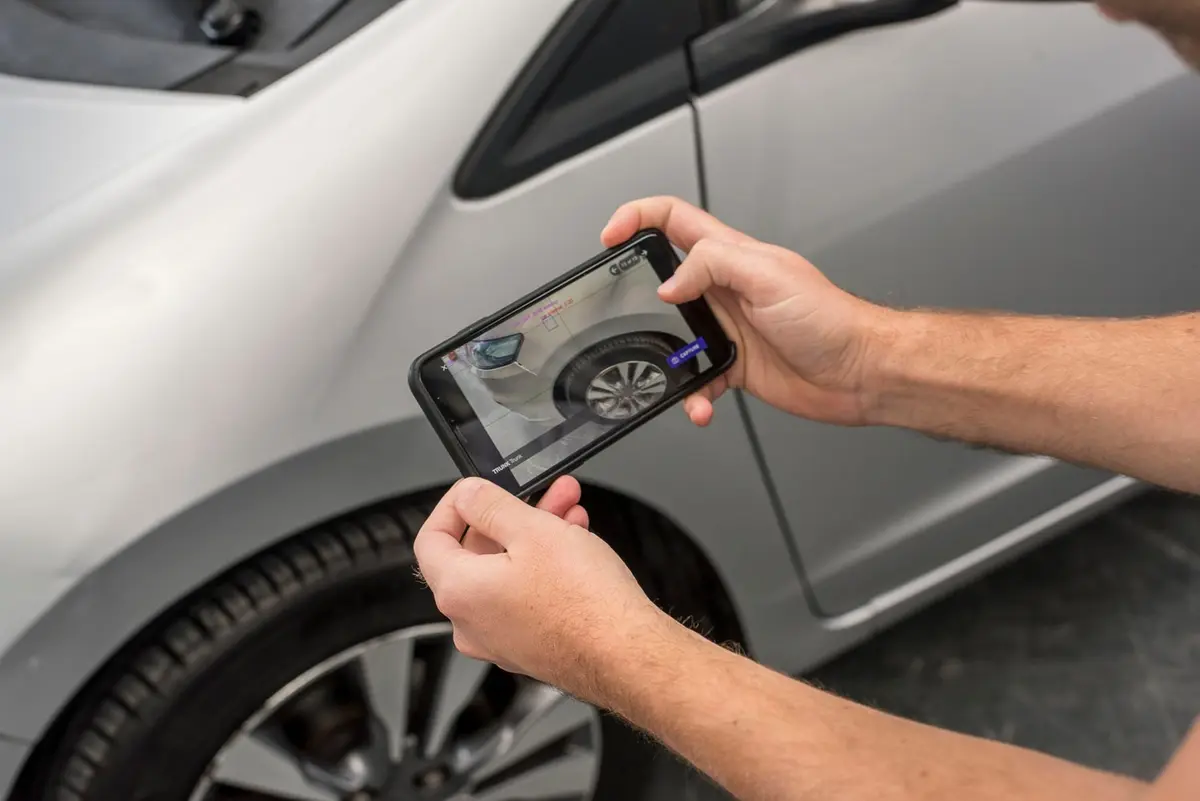
Pro Tip: The micro-scratch dispute is where most rentals go sideways. Before you drive away, shoot a slow, continuous walk-around video in daylight with the agent present. Email it to yourself immediately so it timestamps. On return, do the same and ask the agent to sign the check-in sheet before you leave the lot.
Which highways are now toll-free, and which ones still charge?
Portugal removed tolls from several major highways, effective January 1, 2025. The full list of toll-free routes:
- A4: Transmontana section and Túnel do Marão
- A13 and A13-1: Pinhal Interior
- A22: the full Algarve motorway from the Spanish border to Lagos (Via do Infante)
- A23: Beira Interior
- A24: Interior Norte
- A25: Beiras Litoral and Alta
- A28: North Coast, specifically between Esposende and Antas, and between Neiva and Darque
The routes that still charge tolls:
- A1: the main Lisbon–Porto corridor
- A2: Lisbon south toward the Algarve
- A6: Lisbon toward the Spanish border
- 25 de Abril Bridge and Vasco da Gama Bridge in Lisbon: both still charge crossing fees
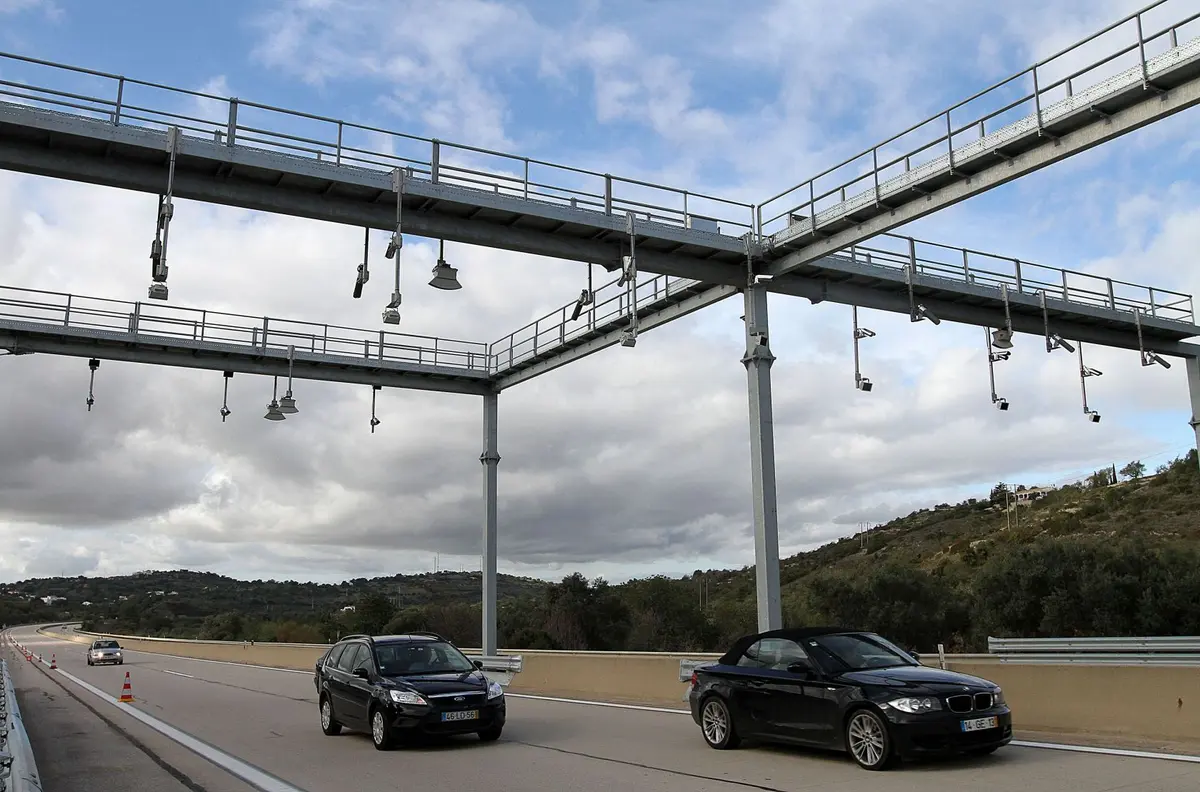
How does the Via Verde toll system work in rental cars?
Via Verde is Portugal’s electronic toll payment system. All rental cars in Portugal are now legally required to be equipped with a Via Verde transponder — it is not an optional add-on you request at the counter, it comes with every rental. When you pass through a toll gantry, the device registers the charge automatically.
At the end of your rental, the agency bills your credit card for the actual toll amounts you accumulated, plus a daily service fee of approximately €1.85–2.21 per day, capped at roughly €18–22 for the full rental. If you drive no toll roads whatsoever, the service fee is typically refunded.
The daily fee appears on the booking confirmation as a line item with many agencies, though it is sometimes listed in the fine print rather than the headline rate. Factor it into your Portugal travel budget alongside accommodation and activities.
Pro Tip: The Via Verde transponder in your rental car does not work in Spain. If you cross the border and plan to use Spanish toll roads, you’ll pay manually at the booth by card or cash — Spain still has traditional payment lanes on most toll roads.
What are the driving rules that catch Americans off guard?
Speed and lane discipline
Highway lane discipline in Portugal is strictly enforced. The left lane is for passing only — move back to the right once your pass is complete. Camping in the left lane draws aggressive tailgating from locals and can result in a fine. Passing on the right is illegal.
Speed limits by road type:
- Urban roads: 31 mph (50 km/h)
- Secondary roads: 56 mph (90 km/h)
- Motorways: 75 mph (120 km/h)
Alcohol limits
The legal blood alcohol limit is 0.05% (0.5 g/l) — meaningfully lower than the US limit of 0.08%. That’s roughly the equivalent of one standard drink for an average adult male, and less for most women. Zero alcohol before driving is the only safe policy in an unfamiliar country.
Fuel pump basics
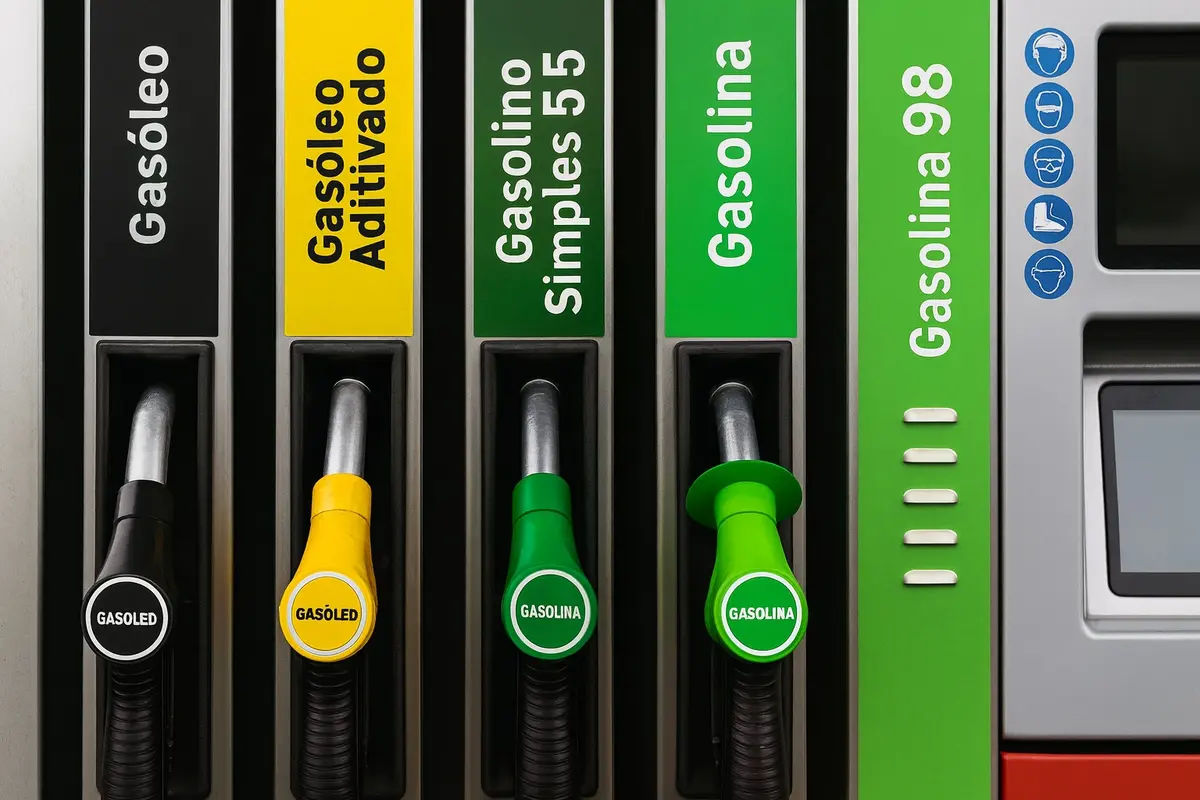
- Green handle: Gasolina (unleaded petrol)
- Black handle: Gasóleo (diesel)
Misfueling your car is not covered by any insurance policy. When in doubt, check the rental contract — it specifies the fuel type in the first section. Many automated pumps at rural stations require a credit card with a PIN; carry a small amount of euros or plan your fill-ups at staffed stations if your American card lacks PIN capability. For a more complete overview of driving in Portugal — including speed camera locations, urban parking rules, and what to do at a police stop — the full guide goes deeper on each of these topics.
How to return your car without losing your deposit
The return phase is where most rental disputes happen. Three things protect your deposit:
First, return with a full tank and keep the last gas station receipt. Stations within 2 miles (3 km) of the airport typically add a slight premium, but they’re your safest option for timing. Do not attempt to refuel at the airport itself — those pumps charge a significant markup.
Second, vacuum the interior before returning. Sand from Portugal’s beaches triggers cleaning fees at multiple agencies, charged at €50–100 per incident.
Third, shoot a walk-around video in the drop-off lane and make sure the agency representative signs the check-in sheet before you leave the lot. The sheet’s signature is your documentation that damage was or wasn’t recorded at return. Without it, disputes become very difficult to win.
The bottom line
Renting a car in Portugal rewards preparation and punishes impulse decisions made at the counter. Book your automatic early, skip the low-cost operators that seem too cheap to be real, and carry printed insurance documentation. With the toll-free routes now cutting travel costs across the Algarve and interior, a self-drive itinerary in Portugal is genuinely cheaper to execute than it was a few years ago. Before you start planning your route, the Portugal travel guide is the right place to orient yourself — covering regions, suggested driving routes, and what to know before you land.
TL;DR: Book an automatic at least three months out for summer travel. Use a broker like Zest to avoid the damage-claim operators. All rental cars include Via Verde — budget €1.85/day for the service fee on top of your toll costs. A US state license is sufficient; IDP is optional in Portugal but required if you cross into Spain.
What’s the first destination you’re planning to drive to — the Douro Valley, the Algarve, or somewhere off the usual routes? Leave it in the comments.