Getting from Lisbon to the Algarve looks simple until you are standing at a rental counter being charged for a transponder you didn’t know was mandatory, or watching the coastal route add three hours to a journey you thought would take two. This guide covers every transport option on the Lisbon to Algarve corridor — toll rules, seat selection tricks, hidden restaurants and winter road warnings — so you arrive knowing exactly what it cost and why.
What do you need to know before driving from Lisbon to the Algarve?
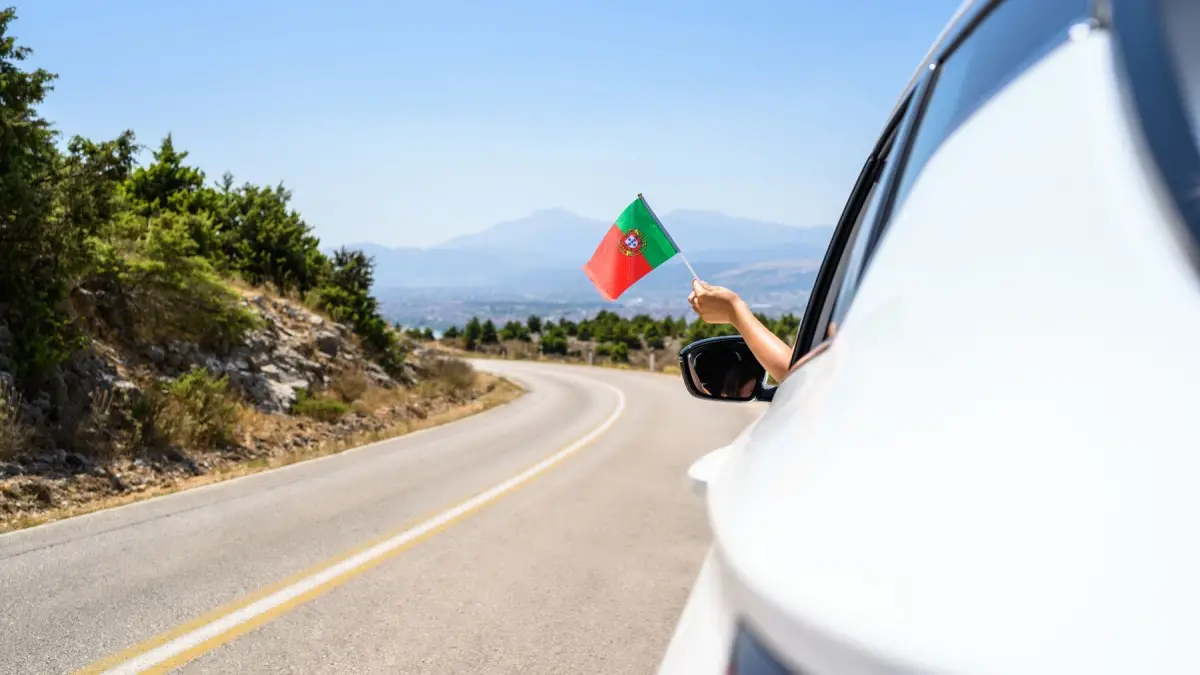
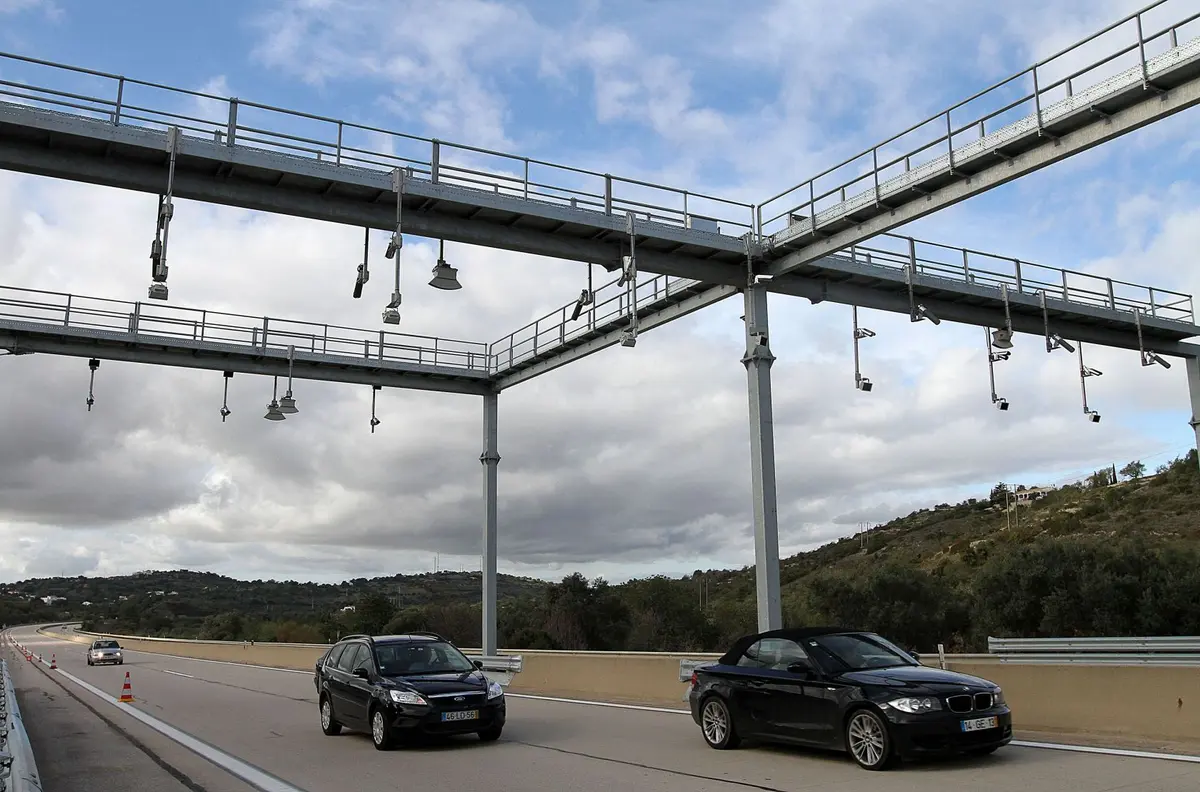
Portuguese tolls catch more visitors off-guard than anything else on this route. Every rental car is legally required to carry a Via Verde transponder. The fee is capped at €2.21 per day (maximum €22.14 per rental), and the A2 expressway one-way toll runs €23.80 (~$26). For most travelers, the toll system is the single most important thing to understand before turning a key.
For foreign-registered vehicles crossing from Spain, the process differs significantly from rental cars — and driving in Portugal without understanding these rules can cost you. Stop at a “Welcome Point” near the border to register your license plate through the EasyToll system, or purchase a pre-paid Tollcard. Skipping this step carries fines from €21.53 to €107.66 ($23 to $116) plus administrative costs from the rental agency or border authority.
The A22 motorway running along the Algarve coast from Lagos to Faro became toll-free in January 2025. If your destination sits anywhere in the eastern Algarve, that changes your total cost picture compared to what many older guides still state.
The round-trip A2 toll runs roughly €48 ($52) before fuel. For a solo traveler, that number looks different against a FlixBus fare of €6. For two or more people sharing a car, the math shifts the other direction.
Is the train from Lisbon to the Algarve worth taking?
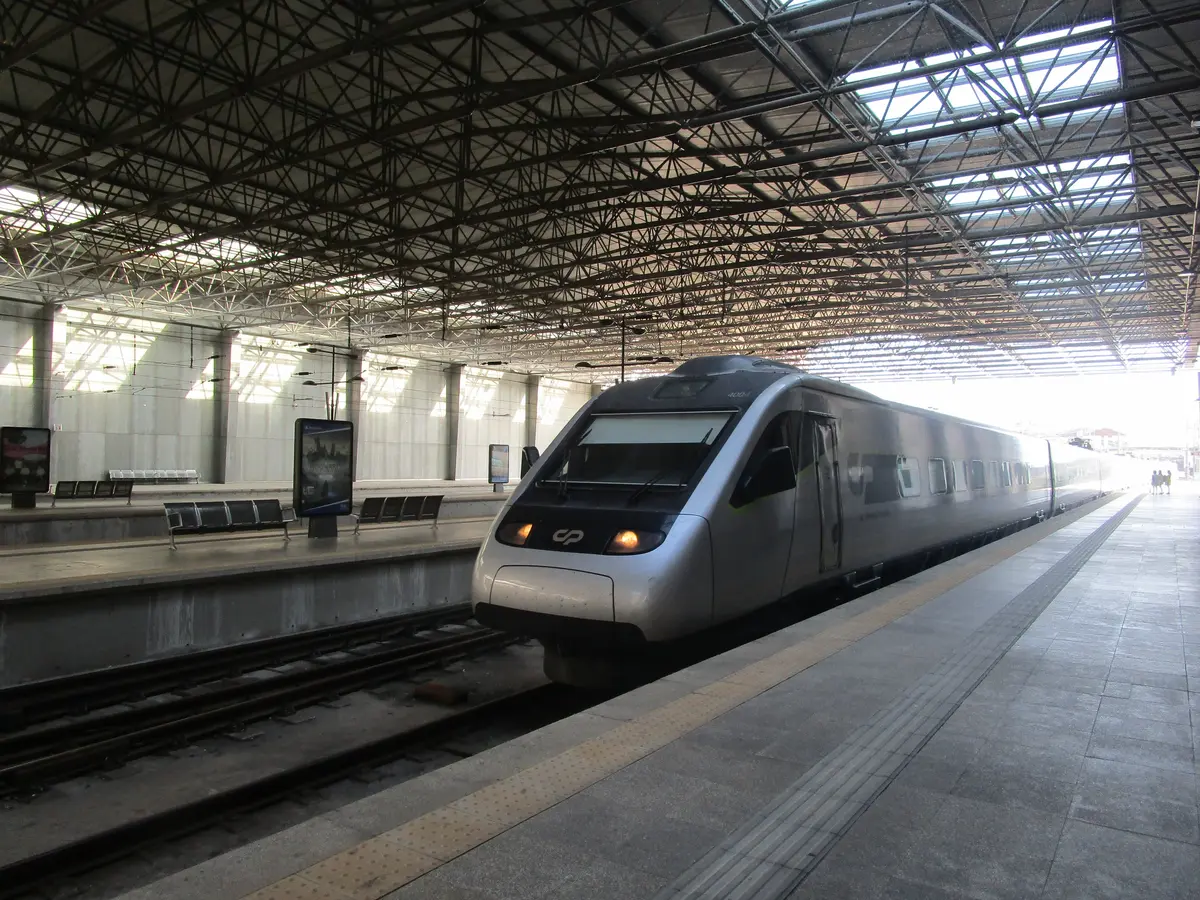
For most travelers, yes — train travel in Portugal offers the most stress-free way to make this journey. The Alfa Pendular completes the run in three hours, city center to city center, with no parking fees or toll calculations. The Intercidades takes 30 to 40 minutes longer at a slightly lower price. The right choice depends on your arrival window and whether smaller towns along the way matter to you.
Alfa Pendular — the fast option
Comboios de Portugal runs the Alfa Pendular as a tilting high-speed service reaching up to 137 mph (220 km/h) on certain sections of other routes, though the line to Faro runs at more moderate speeds. The full run from Lisbon Oriente to Faro takes approximately three hours. It is a six-car electric train with free Wi-Fi across all carriages, a bar and cafeteria in carriage 3, reclining seats with power outlets at every seat, and restrooms in every carriage including one adapted for wheelchair users.
Stops on the Lisbon to Faro route: Entrecampos, Pinhal Novo, Tunes, Albufeira-Ferreiras, Loulé, Faro.
- Cost: from €29 (~$31), up to €60 ($65) for first class
- Journey time: approximately 3 hours
- Best for: travelers without heavy luggage making a fixed-time trip south
- Booking tip: advance fares offer discounts up to 65% — cheapest fares typically release 60 to 90 days ahead
Intercidades — slower, more stops
The Intercidades uses locomotive-hauled rolling stock that is older than the Alfa Pendular but remains comfortable in both first and second class. The ride is rougher on curves, and not all carriages carry power outlets. The trade-off is coverage: it calls at smaller stations the premium service skips.
- Cost: marginally cheaper than the Alfa Pendular; second-class fares from around €24 (~$26)
- Journey time: approximately 3.5 to 4 hours
- Best for: travelers heading to smaller Algarve towns not on the Alfa Pendular route
Pro Tip: On departure from Lisbon, sit on the right-hand side facing the direction of travel. The train crosses the 25 de Abril suspension bridge and from that side you get a view straight down to Belém Tower and the Monument to the Discoveries from roughly 230 feet (70 m) above the Tagus. Once into the Alentejo plains, the left side avoids afternoon sun glare and gives better views of the cork forest interior. One catch: you cannot guarantee a forward-facing seat at booking. Alfa Pendular cars split half their seats forward, half backward. On the CP seat map, the “Green Bar” marks the back of the seat — use that to decode the layout before you choose your carriage.
Should you drive the A2 highway or take the coastal N120 route?
The two road options feel almost nothing alike and suit different types of trips. The A2 delivers you efficiently. The N120 is a road trip where the driving itself is the activity, not the inconvenience to get through.
The A2 expressway — the efficient option
The A2 covers 185 miles (298 km) from Lisbon to the Algarve in roughly two and a half hours. The landscape is flat agricultural land for most of the run — useful, not memorable. The Colibri service stations at Alcácer do Sal and Aljustrel are worth a stop: real food, clean restrooms, outdoor space for children. These are not the grim fuel-and-coffee stops of most European motorways.
- Toll cost: €23.80 (~$26) one way on the A2
- Drive time: approximately 2.5 hours
- Best for: travelers with fixed arrival times or young children who need predictability
- Note on the A22: once you reach the Algarve, the A22 coastal motorway between Lagos and Faro is toll-free
The N120 coastal route — the slow road worth taking
The N120 adds two to three hours. Every one of those hours earns its keep.
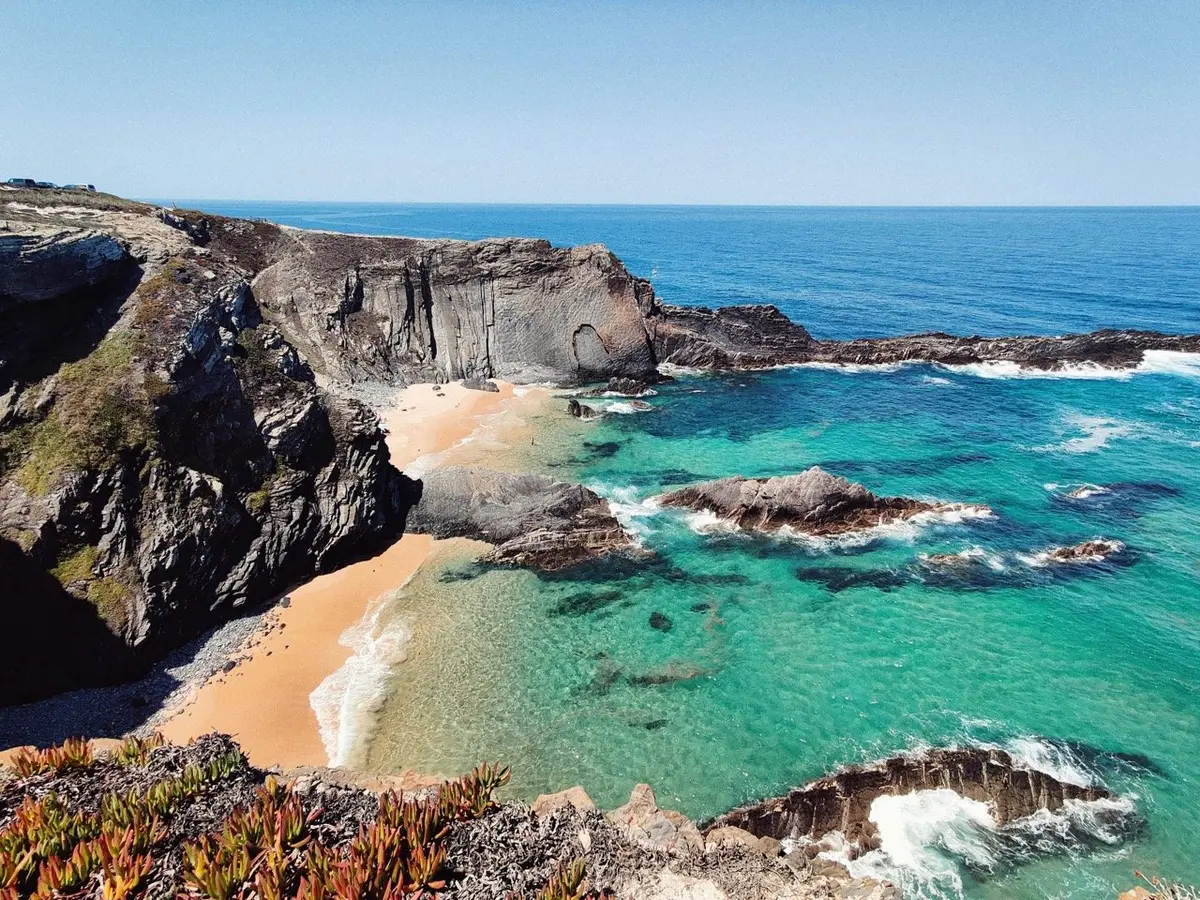
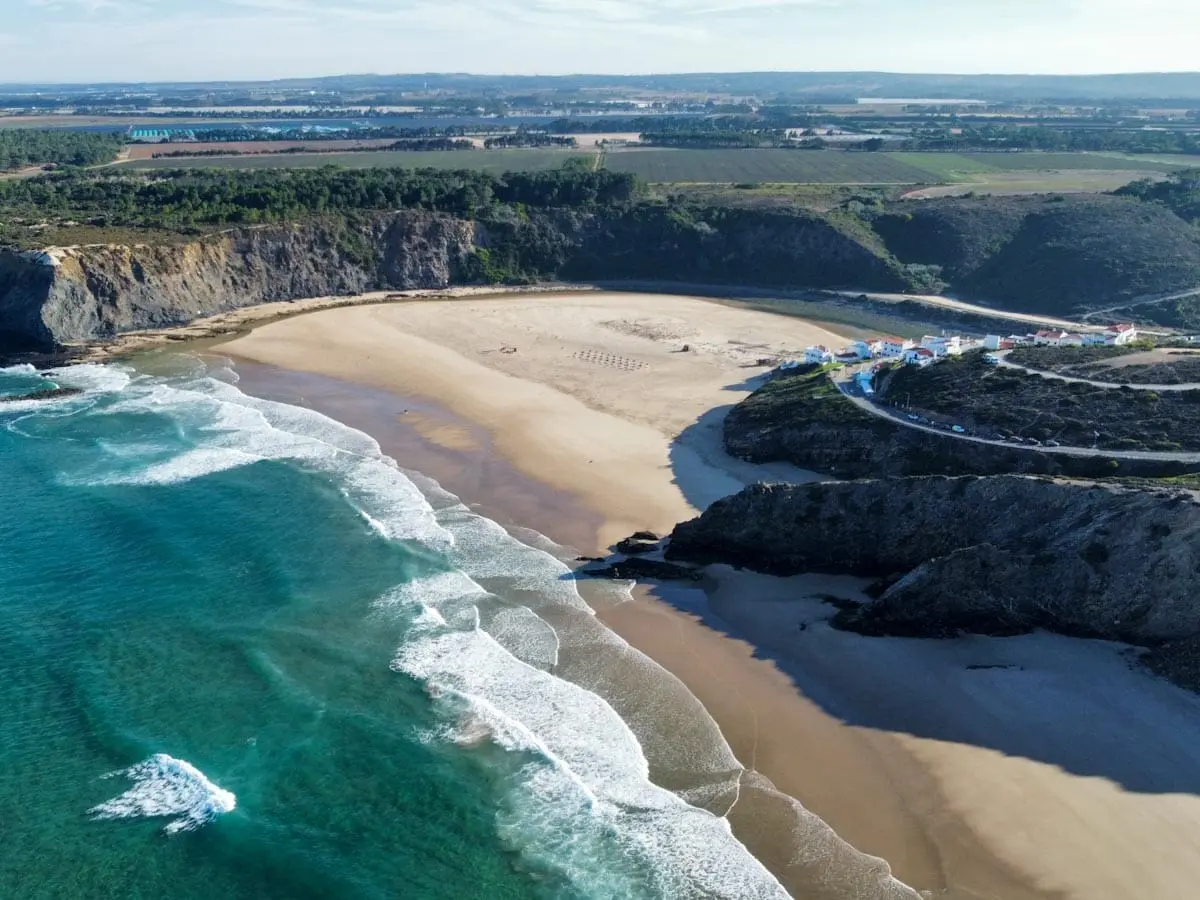
Vila Nova de Milfontes sits at the mouth of the Mira River and is the natural midpoint. It has none of the overdevelopment that defines the eastern Algarve and anchors the Fishermen’s Trail hiking network running the length of the Costa Vicentina. Praia do Malhão, north of Milfontes, requires a short detour on a gravel track — which is precisely why the dunes and boardwalks there stay empty. Zambujeira do Mar runs quiet and atmospheric outside festival season, with cliffs that drop sharply into the Atlantic. Odeceixe, the border town between the Alentejo and the Algarve, has a horseshoe beach where you can swim in fresh water and salt water within meters of each other.
In mid-March, opening the car window near Grândola fills the cabin with the heavy, sweet smell of burning olive pulp — a seasonal agricultural ritual that signals, more clearly than any road sign, that you have left the capital behind.
- Drive time: approximately 4.5 to 5.5 hours from Lisbon to Lagos
- Best for: travelers with flexibility who want the driving to be part of the experience
- Winter warning: the N120 between Alcácer do Sal and Lagos can partially close after heavy rainfall; the area near Aljezur around kilometer marker 128+600 has a history of storm-related closures — check Infraestruturas de Portugal road alerts before bypassing the A2 in winter
Is the bus from Lisbon to the Algarve a real option?
For solo travelers who book ahead, yes. The bus is genuinely competitive rather than just cheap. Two operators dominate the route with meaningfully different products.
Rede Expressos
The long-established national operator covers the widest network, including small Algarve villages that trains miss entirely. The fleet is large and reliable. Its “RFLEX” loyalty scheme offers discounts up to 60% for frequent users. Pricing is consistent — you won’t find flash sales, but you also won’t get stung by last-minute spikes.
- Location: Lisbon Sete Rios and Oriente bus terminals
- Cost: from around €12 ($13); RFLEX discounts for frequent travelers
- Journey time: approximately 3.5 to 4 hours to major Algarve hubs
- Best for: travelers heading to smaller Algarve towns not served by the main rail corridor
FlixBus
FlixBus runs a newer fleet with better legroom and working power outlets at every seat. Dynamic pricing means advance fares can drop to €6 to €10 ($6.50 to $11), but last-minute tickets can match or exceed train fares. Routes concentrate on major hubs: Lagos, Portimão, Albufeira, Faro.
- Location: Lisbon Oriente bus terminal
- Cost: €6 to €10 ($6.50 to $11) booked well in advance; higher last-minute
- Journey time: approximately 3.5 to 4 hours
- Best for: budget-flexible travelers who book at least two weeks ahead
Pro Tip: Both bus operators rely on cellular networks that drop in the Alentejo interior. If a video call during transit is non-negotiable, the Alfa Pendular’s external signal boosters deliver more consistent connectivity than either bus option.
Where should you eat on the drive south?
The three stops below are worth planning around rather than stumbling into by accident. The Alentejo sits at the heart of Portuguese food culture, and the road from Lisbon cuts straight through the middle of it.
Canal Caveira
A reliable institution on the A2 corridor, Canal Caveira has fed generations of Portuguese families on the drive south. The Cozido à Portuguesa — a slow-cooked stew of root vegetables, cured meats and bone-in pork — is the order. You will understand why Portuguese drivers treat this as a mandatory stop rather than an option. Quality can be inconsistent on busy weekend lunchtimes when the kitchen is stretched; aim for a Tuesday or Wednesday midweek stop.
- Location: accessible from the Grândola/Canal Caveira exit on the A2
- Cost: mid-range, €15 to €20 ($16 to $22) per person
- Best for: A2 drivers who want a proper meal without leaving the motorway corridor
- Time needed: 45 to 60 minutes
Taberna Típica Quarta-Feira (Évora)
An inland detour to Évora adds 45 minutes each way but delivers one of the most singular restaurant experiences in Portugal. There is no menu. Chef João Dias serves whatever he cooked that day — a procession of dishes running through sheep’s cheese with pumpkin jam, slow-braised pork belly, migas and seasonal game — for a fixed price around €50 ($54) per person. The room holds about 36 people. His father opened it in 1991; João joined the kitchen in 2017.
Reservations are essential and typically require two weeks’ advance notice. The wait list is genuine.
- Location: Rua do Inverno 16–18, Évora historic center
- Cost: fixed price around €50 ($54) per person, wine not included
- Best for: food-first travelers willing to plan the drive around a detour
- Time needed: 2.5 hours minimum — this is not a stop, it is the reason you took the inland route
Arte e Sal (Sines)
The standout stop on the coastal route, Arte e Sal sits at Praia de Morgavel near São Torpes with dunes on three sides. Fish arrives each morning from the Sines market. White sea bream, sea bass and gilt-head bream go from market to grill to table. The daily menu changes based on what came in — four or five chalk-board recommendations, never a printed card. Sand blows across the outdoor tables while waves break 100 feet (30 m) away.
- Location: Praia de Morgavel, S. Torpes, Sines — approximately 2 km south of São Torpes beach
- Cost: mid-range; fair pricing for fresh grilled fish
- Best for: coastal N120 drivers; anyone who prioritizes fresh seafood
- Time needed: 1.5 to 2 hours
Pro Tip: Order Migas Alentejanas at any sit-down restaurant in the Alentejo — a bread-based side made with garlic, olive oil, and asparagus or coriander. If the menu lists Porco Preto cuts as Secretos or Plumas, order them: heavily marbled pieces from the native black pig that grill in under four minutes and are among the most distinctive cuts in traditional Portuguese food. For a deeper look at what to eat across the country, the guide to traditional Portuguese food covers the full regional picture.

Can you travel from Lisbon to the Algarve in winter?
Yes, and for the right traveler it is a better season than summer. Temperatures hold between 59°F and 68°F (15°C to 20°C), major sites run at a fraction of summer capacity, and the almond blossoms in January and February turn the inland hills white and pink in a way that no beach day can match.
What can close on the N120 in winter?
The transit corridor requires more planning during this season than in peak months. Atlantic storm systems — locally called the “Martinho” depression — can disrupt the N120 national road between November and March. The section near Aljezur is most vulnerable: heavy rainfall combined with soil instability from summer wildfires has caused total closures near kilometer marker 128+600. Check Infraestruturas de Portugal road alerts before committing to the coastal route instead of the A2.
What winter actually offers on this corridor
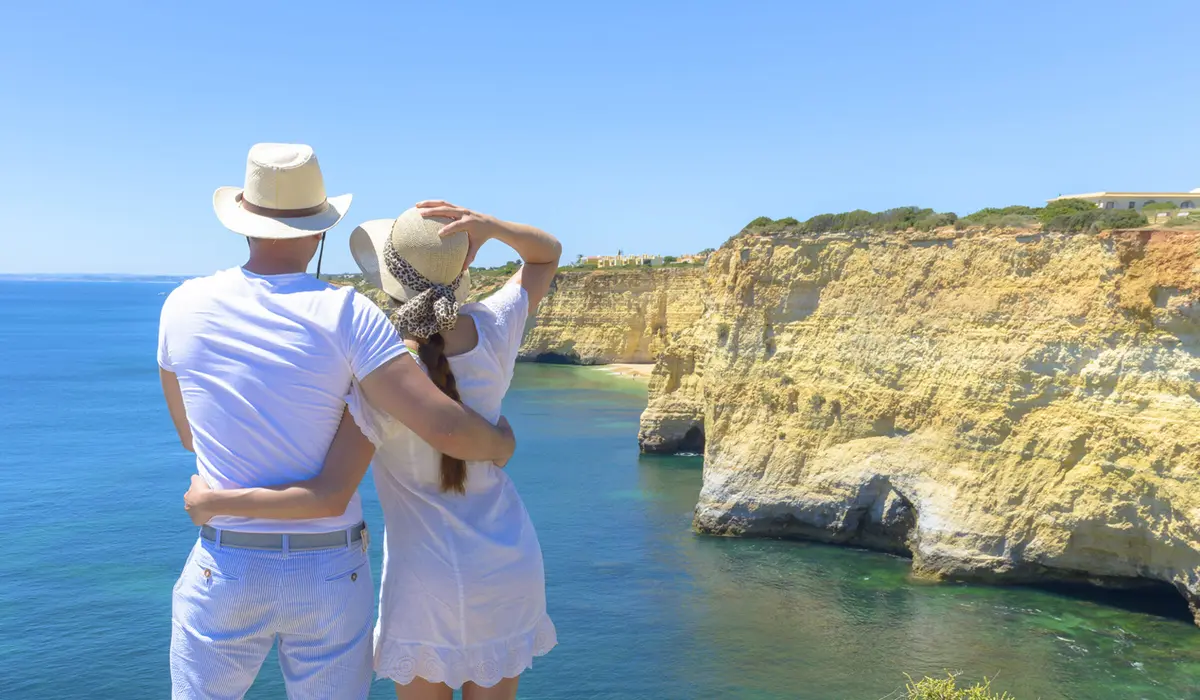
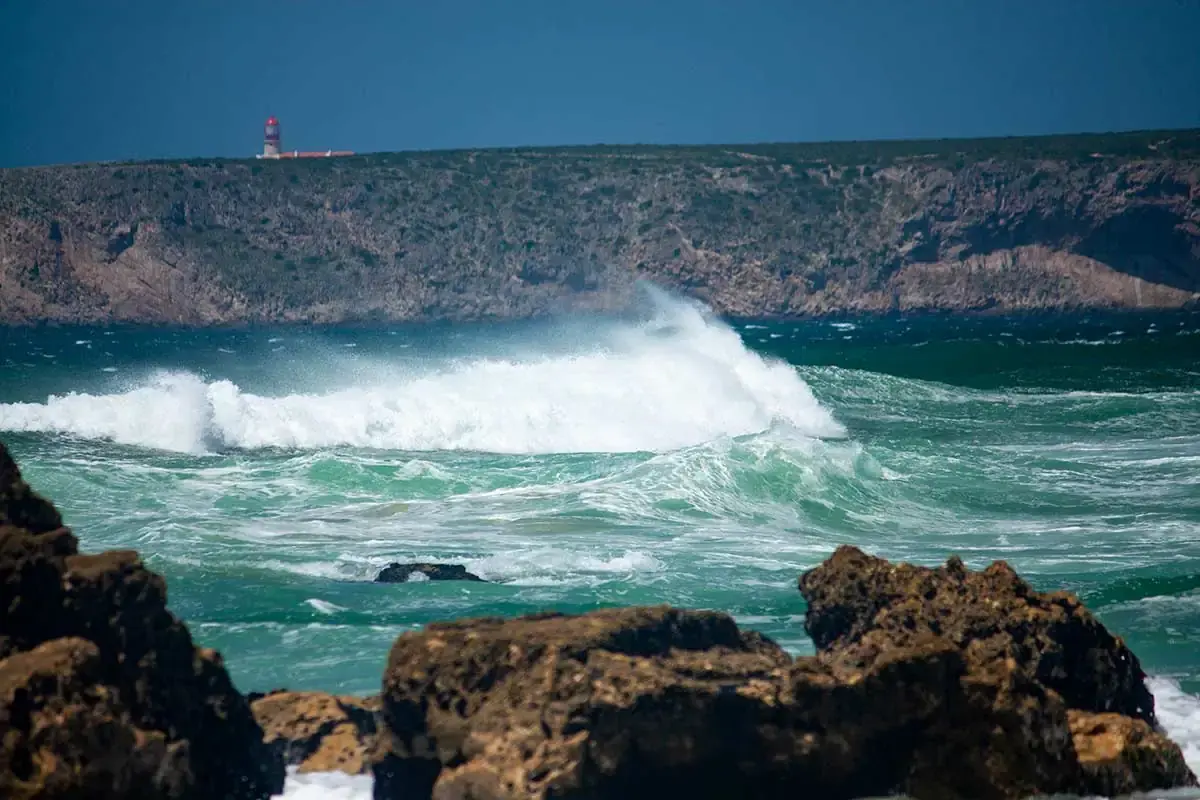
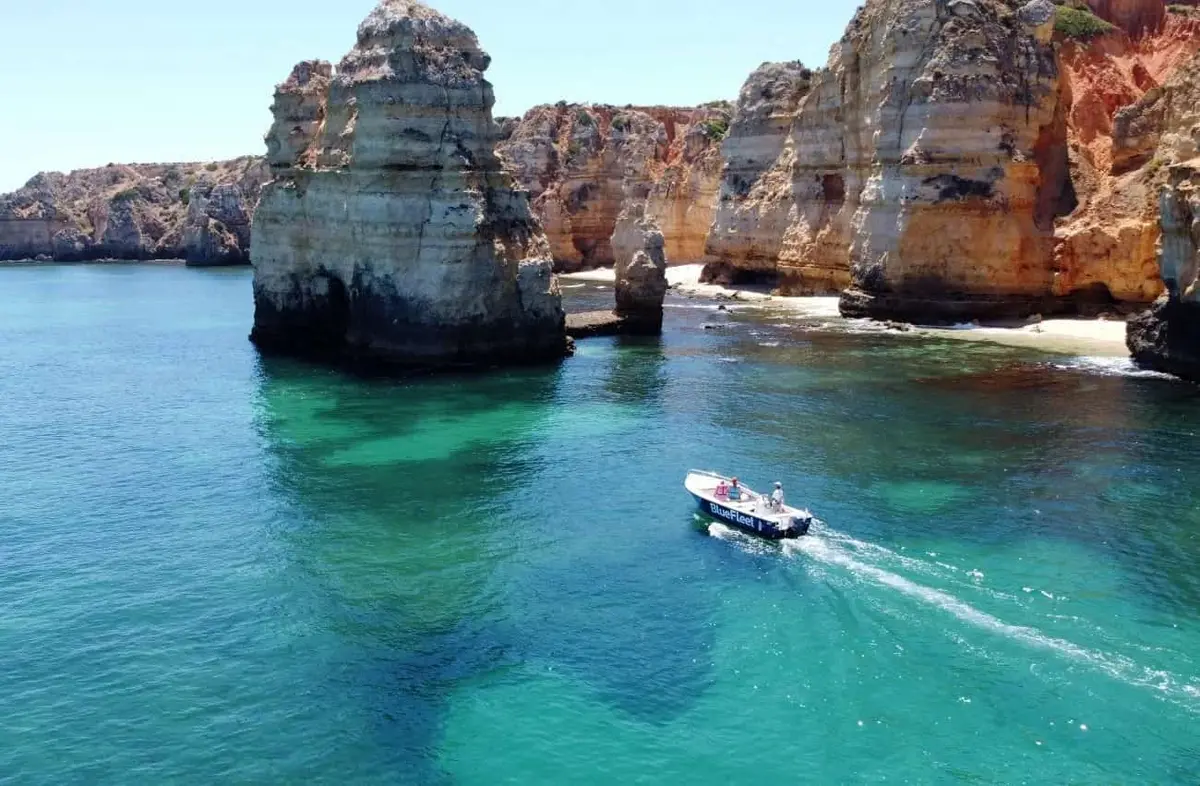
The surf around Sagres and Costa Vicentina peaks in winter with Atlantic swells that make summer waves look minor. The famous Benagil Cave is accessible on calm days with near-zero crowds. If beach swimming is the primary goal, May or September delivers warmer water without the summer congestion. A broader guide to winter in Portugal covers national conditions in more detail.
How do you get from the station or highway exit to your hotel?
Getting to the Algarve is the easy part. Getting to your actual hotel from Faro station or a motorway exit requires a plan you shouldn’t be improvising on the spot.
If you arrive by train to Lagos or the western Algarve, the Tunes transfer junction catches travelers off-guard. It is a small station with stairs and an underpass between platforms. The connecting regional diesel service to Lagos runs older rolling stock on a slower schedule than the express you just left. With heavy luggage, leave yourself extra time for the platform change.
Rideshare is meaningfully cheaper than taxis across the coastal Algarve. Bolt and Uber operate widely in Faro, Albufeira and Lagos.
- Bolt from Faro station to the beach area: €5 to €7 ($5 to $8)
- Same trip by traditional taxi: €10 to €15 ($11 to $16)
If you took the train south but need a car for day trips, rent a car in Portugal from a regional agency in the Algarve rather than from Lisbon. You avoid the €23.80 A2 toll, skip navigating Lisbon city traffic, and typically pay better rates at agencies near Faro Airport. Once transport is sorted, the next decision is accommodation — and the options for where to stay in Algarve range from cliff-top boutique hotels to quiet village rentals well inland from the coast.
The bottom line
TL;DR: Take the Alfa Pendular if time is fixed and three hours of comfort beats the stress of tolls and parking. Drive the A2 if you have children or a hard arrival deadline. Drive the N120 if the journey itself is the point. Take FlixBus only if you book well ahead. For every option, the Alentejo corridor between Lisbon and the Algarve is worth slowing down for — the food alone justifies a detour.
Have you done this route? Drop your version in the comments — particularly if you have cracked the N120 without a single wrong turn.