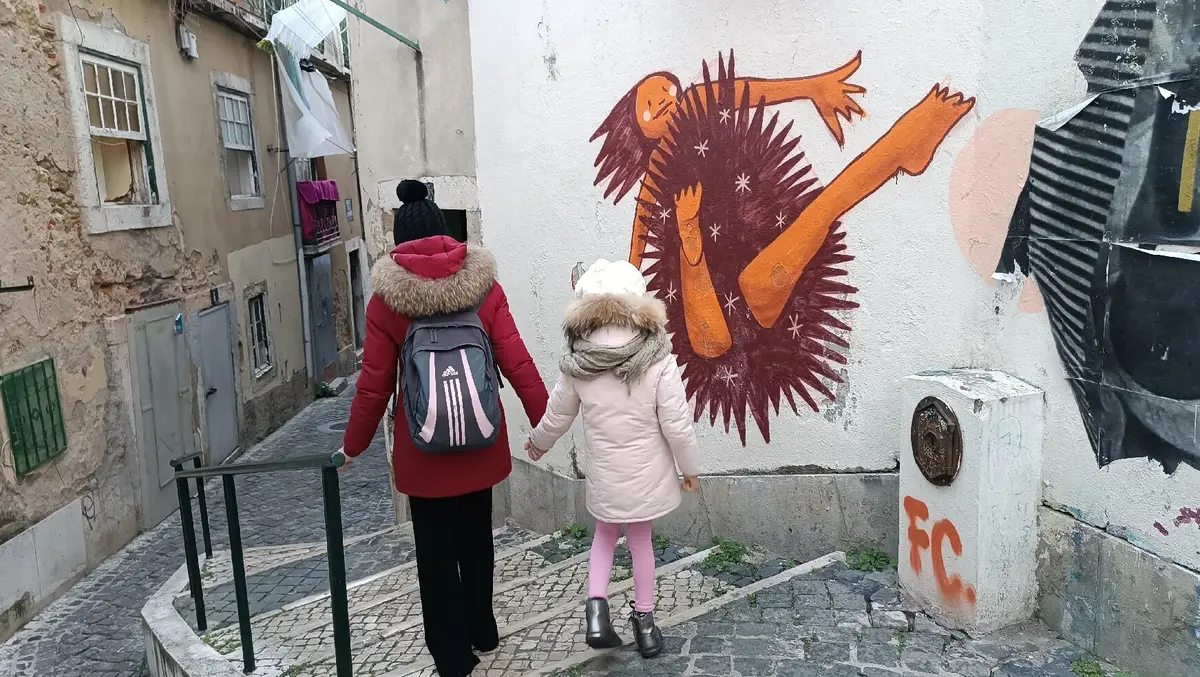
Winter in Portugal is a study in contrasts — brilliant sunshine in the Algarve while Porto drowns in rain, affordable prices paired with logistical quirks, and empty beaches alongside some of Europe’s most extreme natural conditions. Planning a winter in Portugal without understanding the indoor cold paradox, the rail disruptions, and the micro-seasons that make or break timing is how travelers end up freezing in a charming Lisbon apartment wondering where it all went wrong. The Portugal travel guide covers the full country picture; this one gives you the real story on winter.
Why does a Portuguese apartment feel colder than the thermometer says?
Portuguese homes were engineered to survive scorching summers, not to retain heat in winter. Over a third of the housing stock lacks proper insulation — single-brick walls, no cavity fill, tile floors that leach cold from the ground up. Add Atlantic humidity sitting consistently above 80% in winter and you have a specific kind of cold that is harder to shake than the numbers suggest.
Humid air pulls heat from your body faster than dry air. That is why 55°F (13°C) with high coastal humidity can feel more punishing than 41°F (5°C) in a dry inland climate. Stone and concrete walls have high thermal mass: they absorb cold overnight and radiate it back into the room throughout the day. The acceptable indoor temperature for a Portuguese household runs around 59–61°F (15–16°C). Most North American visitors expect 70°F (21°C). That gap is your primary planning challenge.
Pro Tip: Run a dehumidifier while you are out exploring — removing moisture from the air in your rental makes the space feel 3–4 degrees warmer when you return, at zero extra heating cost.
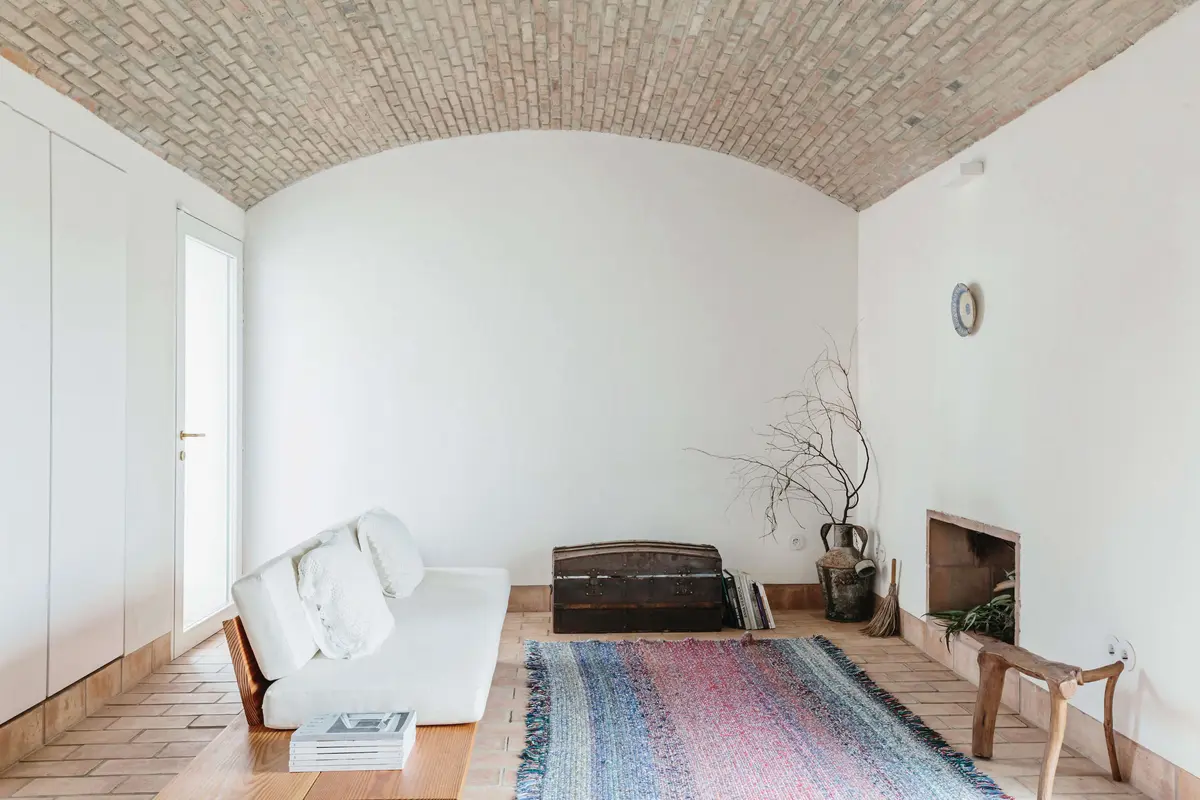
What does “heating” actually mean in a Portuguese rental listing?
Not all heating is equal, and listings use language that can cost you a week of shivering. Before booking, ask the host two specific questions: Is the heating system fixed to the walls or portable? And is a dehumidifier available for the bedroom? These two questions will tell you almost everything you need to know.
Here is what the common terms actually mean:
- Aquecimento Central (central heating): the gold standard. Hydronic radiators or a gas boiler system that actually warms the full space. Ask if it is fixed to walls or portable.
- Ar Condicionado (air conditioning): wall-mounted split units that heat and cool. Effective but can struggle with high ceilings or open-plan layouts.
- Aquecedor (heater): almost always a portable oil radiator or a small electric fan heater. Usually inadequate for a full apartment.
- Lareira (fireplace): sounds appealing, often drafty and labor-intensive unless you commit to feeding it constantly.
How should you dress for a winter trip to Portugal?
Your indoor wardrobe matters as much as your outdoor gear — a distinction that most Portugal packing lists underweight for winter arrivals. Wool socks are essential — tile floors stay cold regardless of the air temperature, and most rentals have them throughout. Thermal leggings, a fleece mid-layer, and even a light beanie for sleeping are not excessive if you are staying in a historic city apartment.
For outdoor use, you need a proper waterproof shell, not just water-resistant. Rain in northern Portugal comes at you sideways on Atlantic wind. A soft-shell or a light packable jacket will not cut it in Porto in January.
Footwear deserves specific attention because of the calçada portuguesa — Portugal’s decorative limestone cobblestone. When dry, it looks like something from an architecture magazine. When wet, it becomes close to frictionless. On Lisbon’s steep hills, locals visibly shuffle and slow down on these stones in the rain. You should too.
Shoes with soft gum-rubber soles are the minimum standard. Purpose-built hiking compounds — Vibram, Contagrip — are better. Merrell Moab or Salomon trail shoes work well. Leather soles are genuinely dangerous. Heels are also a safety issue beyond aesthetics: the gap width between stones can trap a narrow heel and pitch you forward.
Pro Tip: Skip the stylish sneakers entirely for northern Portugal in winter. The polished stones near the Sé Cathedral in Porto get a visible film of moisture even without rain, from morning mist alone — a pair of grippy trail shoes will save your trip.
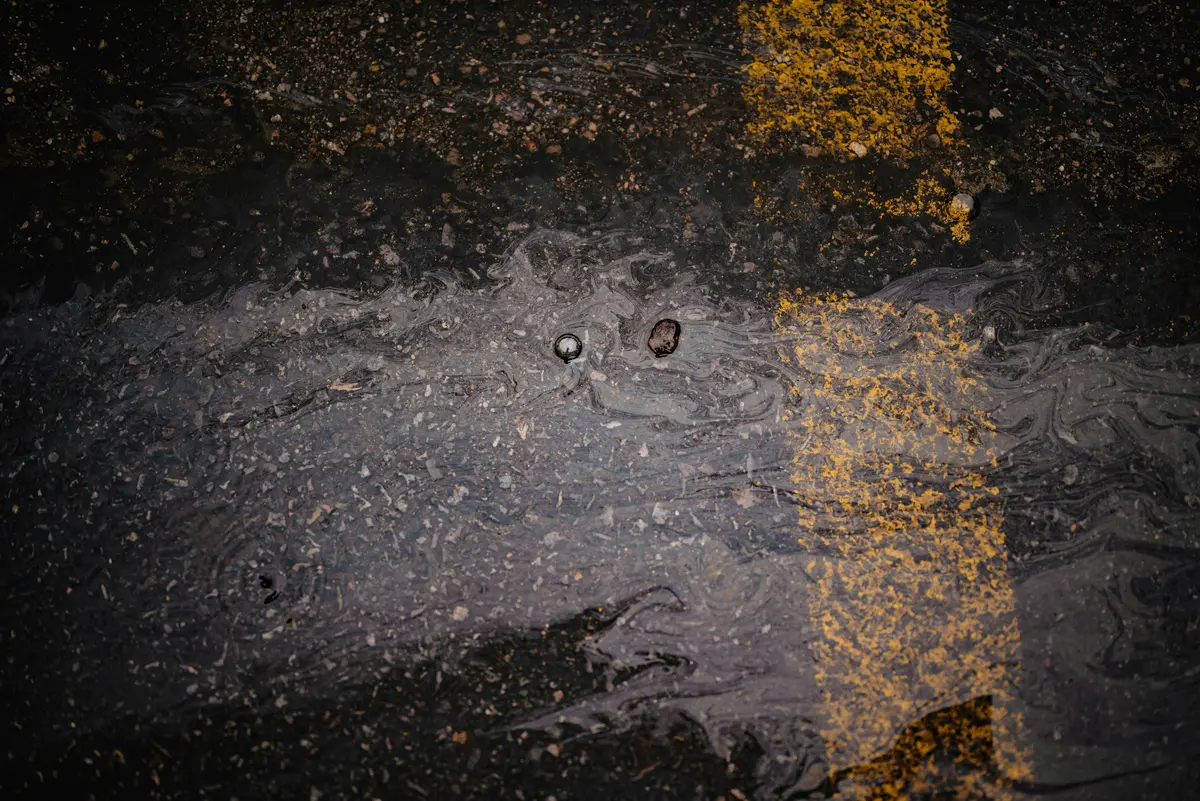
How do you get around Portugal in winter without major disruptions?
Winter is infrastructure maintenance season for Portuguese rail and roads. The most important thing to understand about train travel in Portugal is that the scenic routes — the ones in every travel photo — are also the most likely to involve bus replacements during winter. Knowing this before you book prevents the disappointment of discovering it on the platform.
Is the Linha do Douro scenic train running in winter?
The Linha do Douro — the riverside route connecting Porto to the wine country — periodically undergoes electrification and track improvement works during the off-season. When construction is active, CP (Comboios de Portugal) runs replacement buses between Caíde and Régua. That covers precisely the most photographed section of the line, where terraced vineyards descend to the water’s edge.
Check the CP website (cp.pt) before booking anything Douro-related. On weeks when the train is running, tickets from Porto São Bento to Pinhão cost €12.20 each way; to Pocinho, €14.80 each way. When replacement buses are in operation:
- Bicycles, scooters, and wheelchairs are not permitted on buses
- Journey times increase by 30–45 minutes due to winding mountain roads (N108, N101)
- You lose the river-level views that justify the trip in the first place
The practical workaround is renting a car in Portugal from Porto Campanhã and using a Douro Valley travel guide to hit the viewpoints the train passes in seconds.
Pro Tip: Even with a bus replacement in place, the section from Régua to Pocinho still runs by train — it is the less-photographed upper valley, but the landscape between Tua and Ferradosa is actually the most dramatic stretch of the whole route.
How does Portugal’s electronic toll system work for tourists?
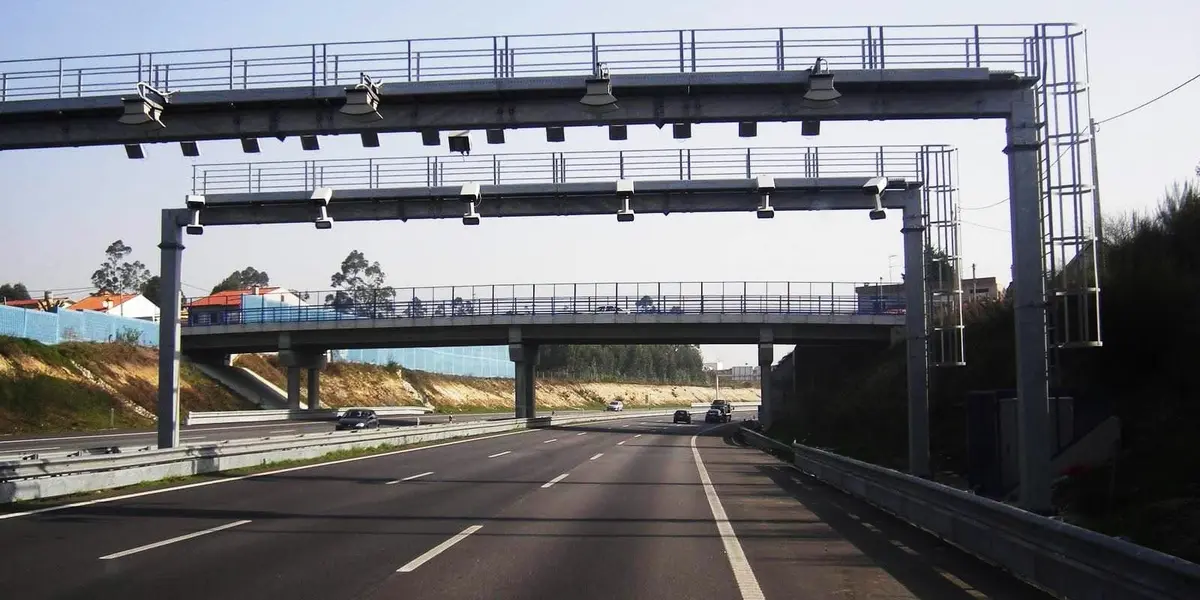
Portugal’s toll roads have caught more first-time visitors than almost any other logistical quirk — though the system changed significantly in favor of drivers. The A22 along the Algarve coast, long notorious for its camera-only gantries and no cash option, is now completely toll-free. Several other major routes — the A4, A13, A23, A24, A25, and sections of the A28 — also lost their tolls at the same time.
That said, the toll network is still extensive. The A2 connecting Lisbon to the Algarve still has tolls, as do many motorways in the north and centre of the country. The Via Verde system handles payment automatically, and all rental car companies are legally required to equip their vehicles with a transponder. Ask for confirmation at pickup. The daily fee runs approximately €1.85–€2.21 per day plus actual toll costs, billed to your rental agreement after drop-off. For most visitors, this is the correct choice — zero ambiguity, works everywhere.
If you are driving a foreign-plated vehicle (not a rental), your options are:
- EASYtoll at Welcome Points near border crossings on the A22, A24, A25, and A28 — you insert a credit card into a roadside machine that links it to your plate. Valid for 30 days, with an additional €0.60 service fee per transaction plus tolls.
- Via Verde Visitor Device — a physical transponder available at Welcome Points and some airports for €27.50 (includes €10 of toll credit). Valid for 90 days and reusable on future trips.
Keep whatever receipt or confirmation number the machine gives you. Fines for unpaid tolls arrive by post, sometimes months after you have returned home.
What do you need to know about winter driving conditions in Portugal?
Winter driving in Portugal divides cleanly by region. Snow chains become legally mandatory when signage indicates it on Serra da Estrela mountain routes — police conduct roadside checks and the fines are substantial, so if you are heading inland for snow, rent chains from the car hire agency or a local shop in Covilhã before you ascend.
For the rest of the country, the real winter driving challenge is rain volume, not temperature. Northern Portugal receives heavy downpours that reduce visibility significantly, and rural roads often lack adequate drainage. Puddles on the N108 through the Douro gorge can span a full lane.
- Coastal areas (Lisbon, Algarve, Porto city): standard all-season tires are fine
- Inland north and mountain regions: winter tires recommended; snow chains mandatory if signposted
- Rural roads in Minho and Trás-os-Montes: allow extra stopping distance and watch for mud runoff across the road surface
Where should you go in Portugal in winter?
The honest answer is that winter in Portugal sorts itself into three very different climates within a country slightly larger than Indiana. Where you go determines whether your trip feels like a moody European city break, a mild spring, or something in between.
Porto and the Minho region — where winter actually suits the place
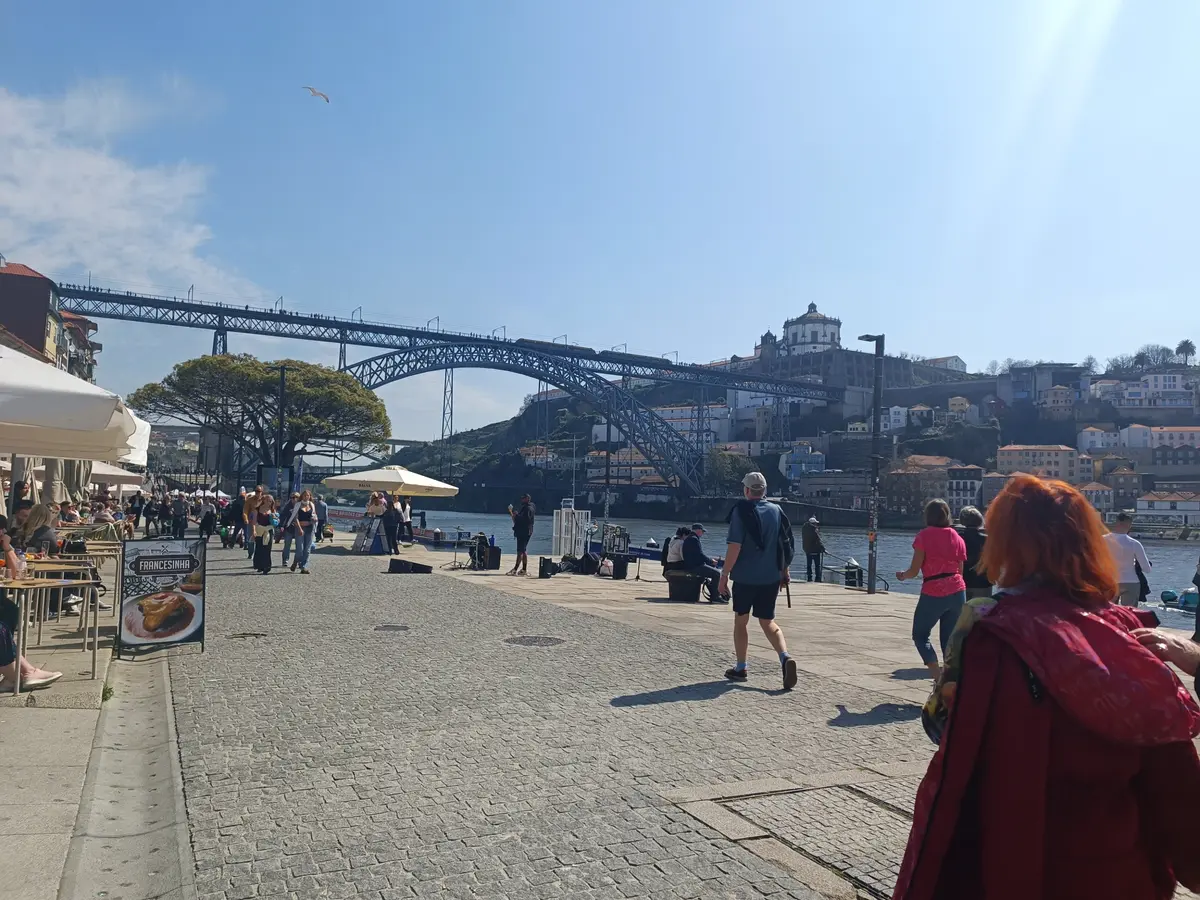
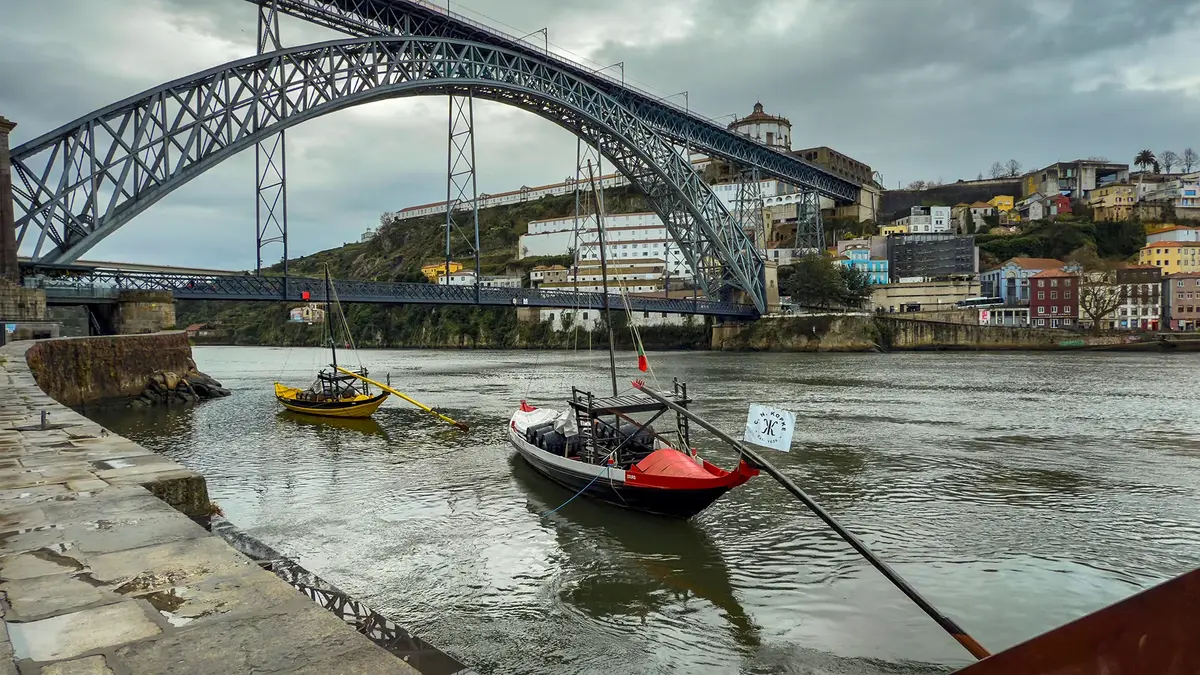
Porto and the Minho deliver winter in its most atmospheric form. The weather reality is significant: expect roughly 15 rainy days per month in January, with daytime highs around 56°F (13°C) and nighttime lows near 43°F (6°C). The Nortada — a persistent northerly wind sweeping down from Galicia — can push the effective temperature several degrees lower.
What saves the north in winter is that everything worth doing there is either indoors or improved by the weather. The port wine lodges in Vila Nova de Gaia are full of warmth and atmosphere on cold afternoons; a tawny tasting feels more earned when rain is coming down outside. Museums like Serralves in Porto and the Biscainhos Palace in Braga are uncrowded enough to actually look at things.
- Daytime high: around 56°F (13°C) in January
- Rainfall: approximately 15 days per month in January
- Best for: cultural travelers, wine enthusiasts with a visit to the port wine cellars in Porto on the itinerary, anyone who actively enjoys atmospheric weather
- Skip if: you need guaranteed sun or plan to be outdoors most of the day
Pro Tip: The covered Mercado do Bolhão in central Porto is one of the best cold-weather stops in the country — warm, busy with local traders, and a good place to eat a bifana sandwich while waiting out a rain shower. Arrive before noon.
Lisbon — reliable sunshine but more logistical friction than it looks
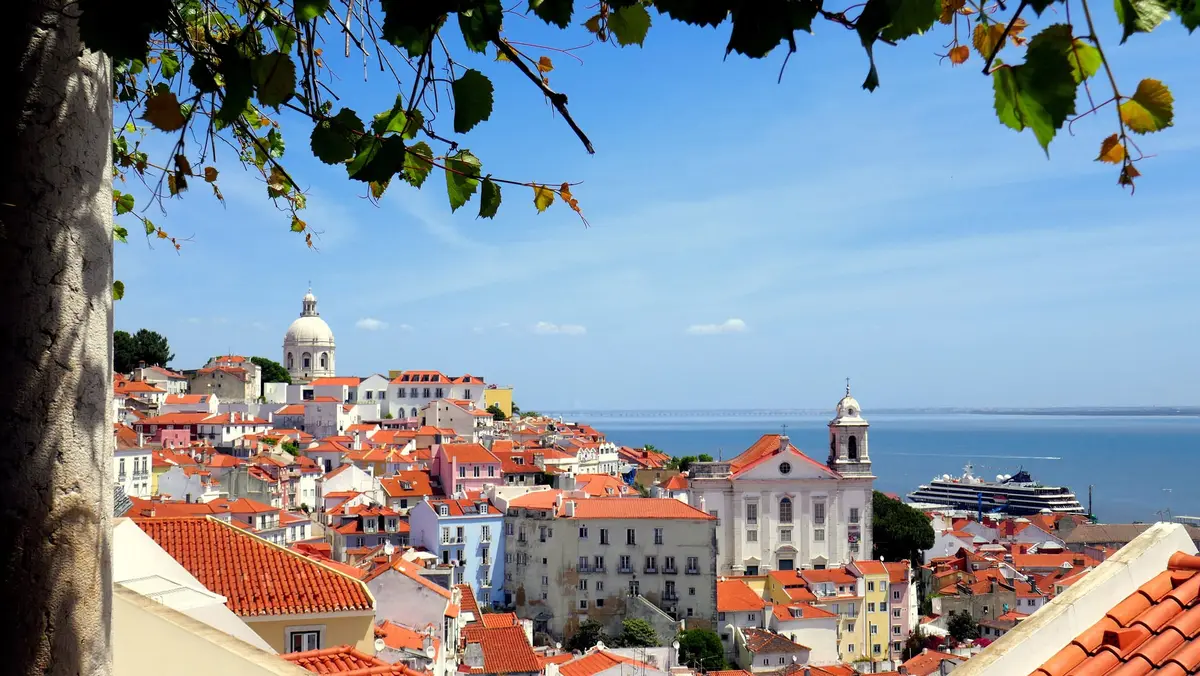
Lisbon in winter is a gamble that more often pays off than not — a rotation of brilliant sunshine and sudden showers, sometimes within the same morning. Daytime temperatures hover around 58°F (14°C), and when sun hits a sheltered plaza facing south, it can feel genuinely warm.
The complication is Lisbon’s wind. Built on seven hills on a river peninsula, the city creates channel effects near the Tagus waterfront. One moment you are warm in Alfama; three minutes later, walking toward the water, you are buttoning your coat against a sharp gust.
The winter advantage is real: Belém Tower and the Jerónimos Monastery — both usually requiring patience and a queue in summer — are straightforward to visit. Tram 28 still exists mainly for tourists, but at least you can get a seat. The calçada portuguesa hazard applies here too, particularly on the steep downhill runs of Alfama and Mouraria.
- Daytime high: around 58°F (14°C) in January
- Best for: museum visits, architecture, first-time Portugal visitors
- Time needed: minimum 3 nights to cover the main areas without rushing
- Watch out for: wind chill near the Tagus; the calçada on steep descents after rain
The Algarve — the genuinely warm option most Europeans don’t use in winter
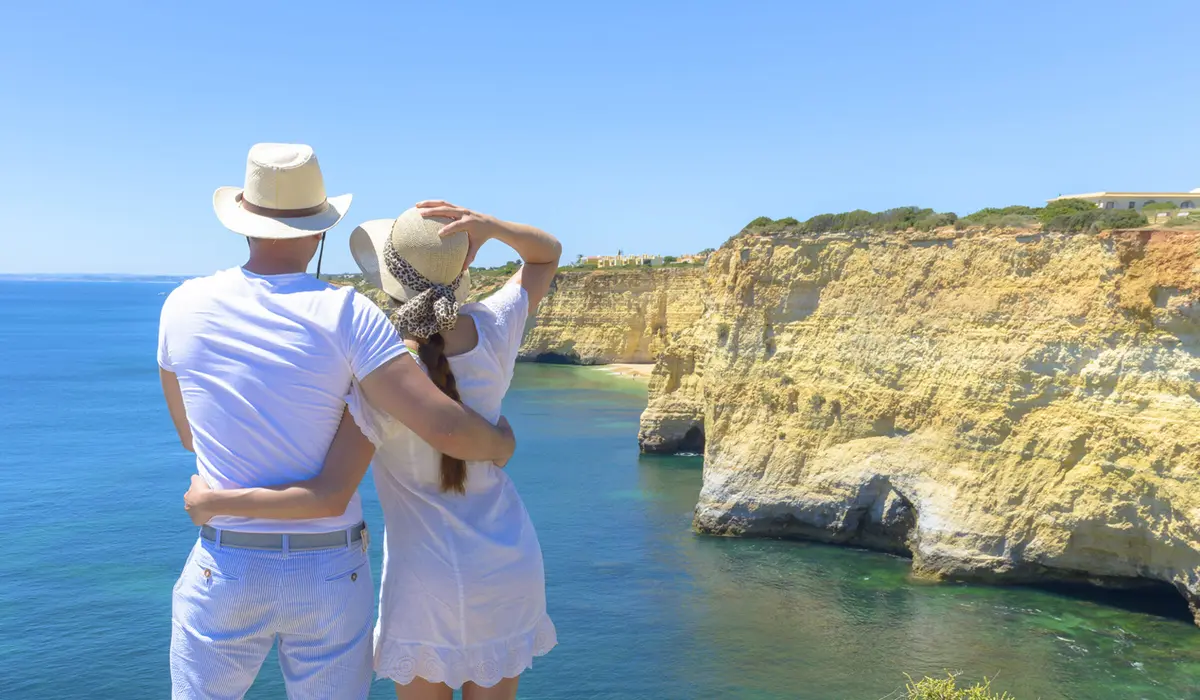
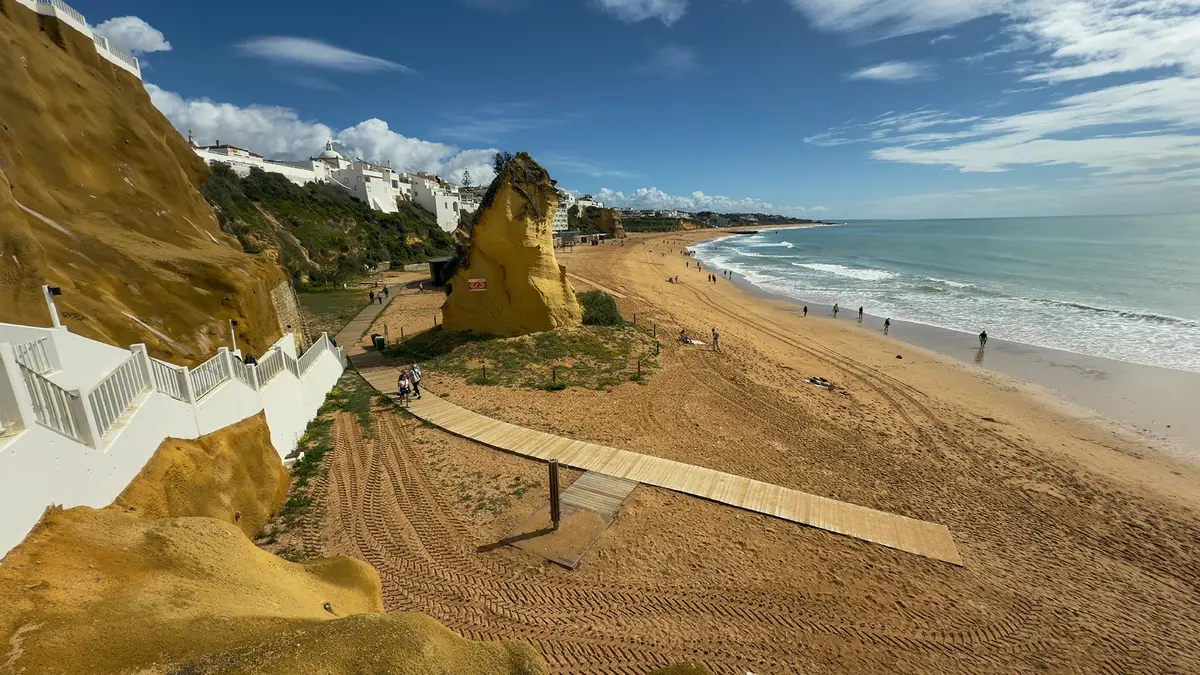
The Algarve is Portugal’s best-kept seasonal secret: over 300 days of annual sunshine concentrated along a south-facing coastline that is sheltered from north winds by the Serra de Monchique. Daytime highs reach 61–68°F (16–20°C) on good days in January and February. The catch is the temperature swing: nights drop to around 46°F (8°C), a shift of up to 20°F from afternoon, so pack layers even here.
The infrastructure challenge is real. Small beach resort towns — Carvoeiro, Salema, Burgau — essentially stop functioning in winter. Restaurants close, activity operators stop running, and you may be the only person in your accommodation block. The strategic move is to base yourself in a year-round town and day-trip to the coast.
- Best base towns: Lagos, Faro, or Tavira (year-round services, restaurants, transport)
- Cost: hotel rates run 40–60% below peak summer prices
- Best for: birdwatching (Ria Formosa wetlands: flamingos, spoonbills, avocets in winter), hiking the Rota Vicentina, couples wanting warmth without crowds
- Temperature swing: up to 20°F between afternoon and evening — always carry a layer
Pro Tip: Skip Albufeira as a winter base — it functions as a nightlife town and most of its restaurants are closed or operating on reduced winter hours. Tavira is the better call: beautiful historic center, year-round population, and only 40 minutes from Faro airport.
What are the best winter experiences in Portugal?
Winter is not Portugal’s shoulder season in disguise — it has specific events and natural phenomena that either do not exist or are significantly diminished in summer. Aligning your trip around these is the difference between a generic off-season visit and something you actually planned for.
How does the Nazaré big wave season work?
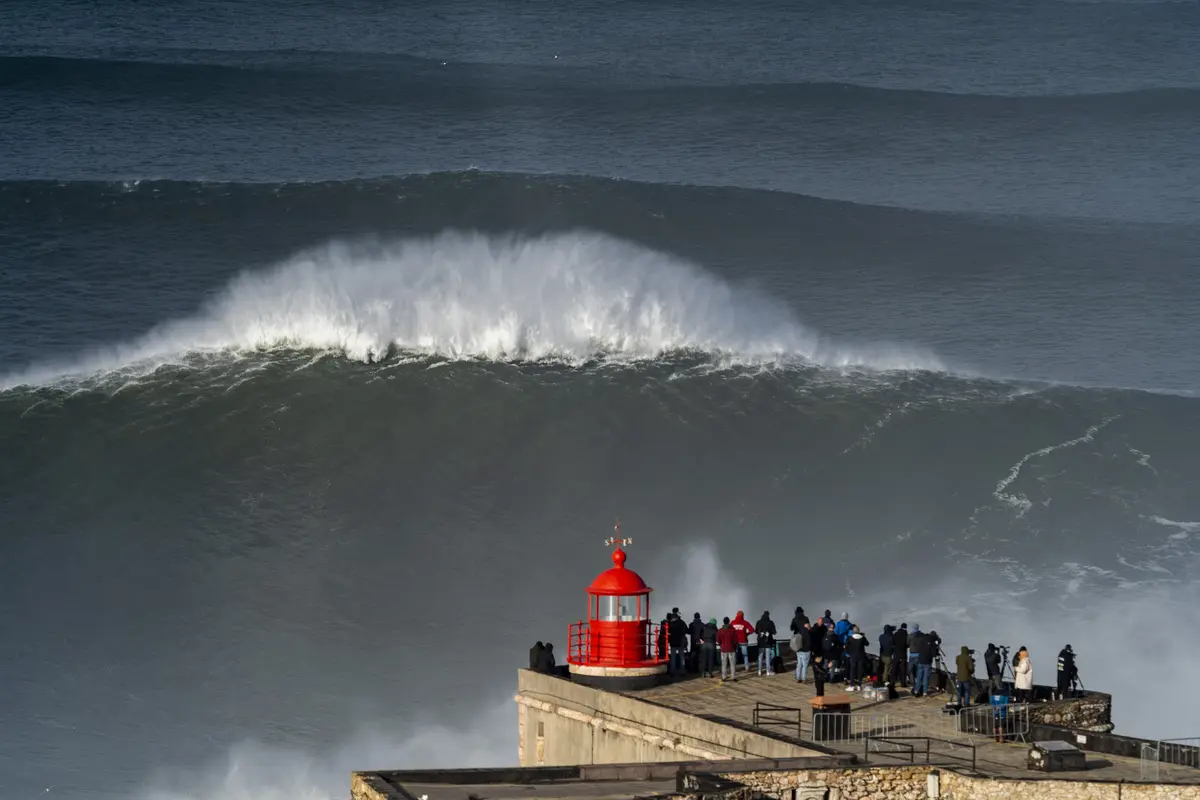
From October through March, Praia do Norte in Nazaré produces some of the largest rideable waves on earth. The mechanism is geological: the Nazaré Canyon — the largest submarine canyon in Europe at roughly 230 kilometers (143 miles) long and approximately 5,000 meters (16,400 feet) deep — ends abruptly just offshore from the beach. Swell energy funneled through the canyon’s depth collides with shelf waves approaching from the north, constructively amplifying wave height. The confirmed Guinness World Record stands at 86 feet (26.21 meters), set by German surfer Sebastian Steudtner — though subsequent sessions at Nazaré have produced measured rides that may exceed it, pending official confirmation.
You do not need to be a surfing fan to make this worthwhile. The spectacle from the lighthouse viewpoint at Sítio is remarkable regardless of your background. What you need to know to see it at its best:
- Look for swell height above 10 feet (3 meters) combined with a swell period exceeding 13 seconds — long-period swells carry the most energy and amplify most dramatically in the canyon
- Offshore winds (blowing from land toward sea) create clean wave faces; onshore winds make conditions choppy and reduce the visual spectacle
- Arrive at sunrise to secure parking and the best viewpoint position; tour buses do not reach Sítio until mid-morning
- The dirt path to the lighthouse viewpoint becomes a mudslide in rain — hiking shoes with grip, not sneakers
Pro Tip: The WSL Nazaré Big Wave Challenge runs within a competition window from November to March, triggered when conditions hit a threshold. For the full Portugal surfing calendar and competition tracking, WSL’s alert system is the most reliable source — the event is called on 24-hour notice, so plan around the window rather than a fixed date.
What is the almond blossom season and how long does it last?
Late January through February transforms Portugal’s interior Algarve and parts of the Douro Superior into a 2–3 week window of pink and white flowering that draws visitors who have no interest in beaches or wine. The bloom is genuinely brief; a warm spell can collapse the window to 10 days.
The prime viewing areas are the hills around Alta Mora in the Castro Marim municipality in the eastern Algarve interior, and the terraced slopes of the Douro Superior near the Spanish border. Alta Mora hosts the Festival das Amendoeiras em Flor — a 3-day event in February with hiking routes of 6, 9, 12, and 20 kilometers (4, 5.6, 7.5, and 12.4 miles), traditional music, and local food including a community-baked almond tart that grows by 1 meter each edition.
- Location: Alta Mora, Castro Marim municipality (Algarve interior, near the Spanish border)
- Admission: free for children under 10; €2.50 for ages 11–14; €4 for adults
- Best access: rent a car — Alta Mora is not served by public transport
- Bloom window: typically mid-January through late February; follows warm spells, so check local conditions the week before
What makes Carnival in Portugal different from Brazil?
Carnival in Portugal occupies a specific cultural space that is easy to underestimate if you assume it will resemble the Brazilian version. Loulé in the Algarve hosts Portugal’s oldest running Carnival, built around satirical floats mocking politicians — pointed, irreverent, very local humor.
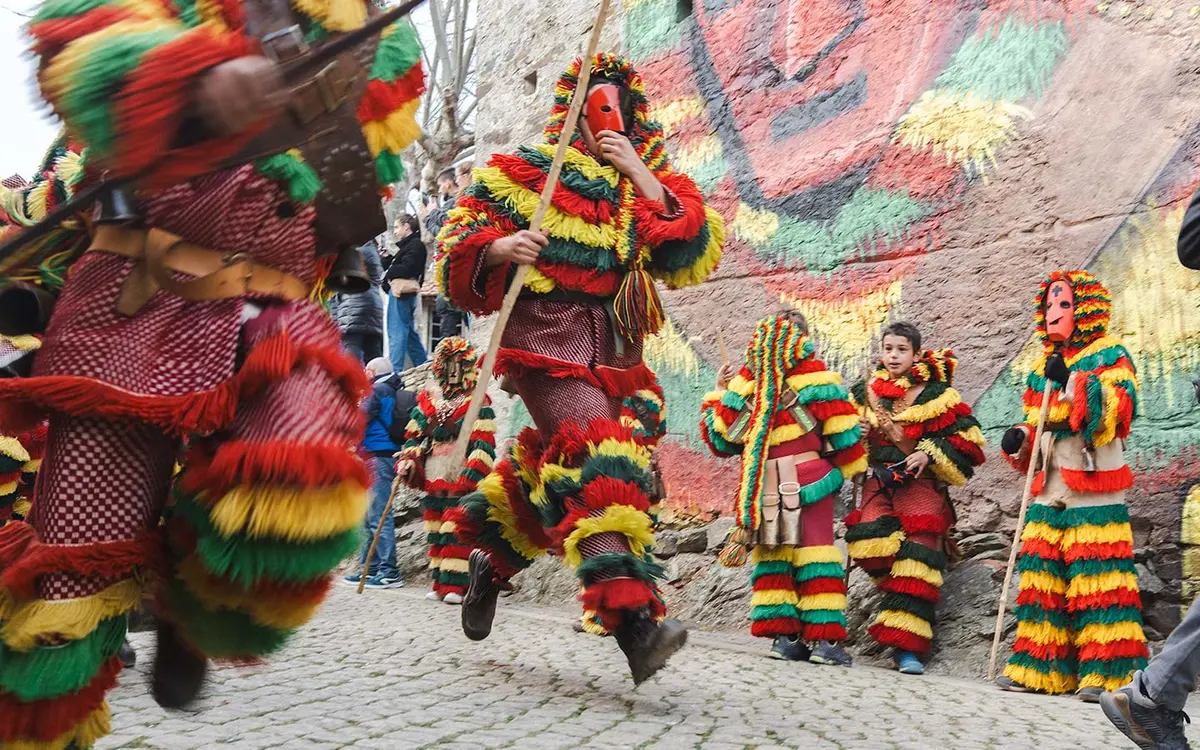
The more distinctive celebration is in Podence, a village in Trás-os-Montes. Here, UNESCO-recognized Caretos — masked figures wearing suits of colored wool fringe and carved wooden masks — take over the streets shaking cowbells and running at spectators. The ritual is pre-Christian in origin, tied to fertility and the turn of seasons. It looks nothing like anything else called Carnival in Europe. The drive from Porto is around 2.5 hours; staying in Macedo de Cavaleiros the night before is the practical option.
What should you eat in Portugal in winter?
The seasonal menu shifts significantly in winter — not because restaurants change their menus, but because specific ingredients and traditions only exist within a narrow window. Missing these means you sampled traditional Portuguese food but missed the dishes that are exclusive to the coldest months.
Lamprey season — Portugal’s most polarizing winter dish
From January through April, the rivers of northern Portugal fill with lamprey (lampreia), and traditional restaurants along the Minho and Lima rivers serve the dish that divides every table: Arroz de Lampreia, a dark rice dish where the lamprey is stewed with red wine and its own blood. The resulting sauce is metallic, earthy, and dense. The lamprey itself is prehistoric-looking — jawless, eel-like, and not resembling any fish you have seen before.
This is a cultural experience rather than casual dining. Look for it at specialist regional restaurants in Monção, Melgaço, and Ponte de Lima rather than tourist-facing spots in Porto. If you go in expecting adventurous eating, you will have a story. If you go in expecting something familiar, you will not.
What are the traditional pig slaughter dishes?
Winter in northern Portugal coincides with the matança do porco — the traditional pig slaughter season — and two dishes from that tradition appear in Minho and Douro restaurants through the coldest months.
Papas de Sarrabulho is the defining dish: a savory porridge made with pig’s blood, chicken, pork, corn flour, and cumin. It is served with Rojões — pork marinated in wine and garlic then fried until the edges are crispy. The porridge texture is unexpected the first time, and the blood gives it a depth that is hard to describe without trying it. On a rainy afternoon in Braga or Guimarães, this is exactly what the climate calls for.
What are the best winter street foods in Portugal?
Two street foods define winter in Portuguese cities and show up reliably from November through January.
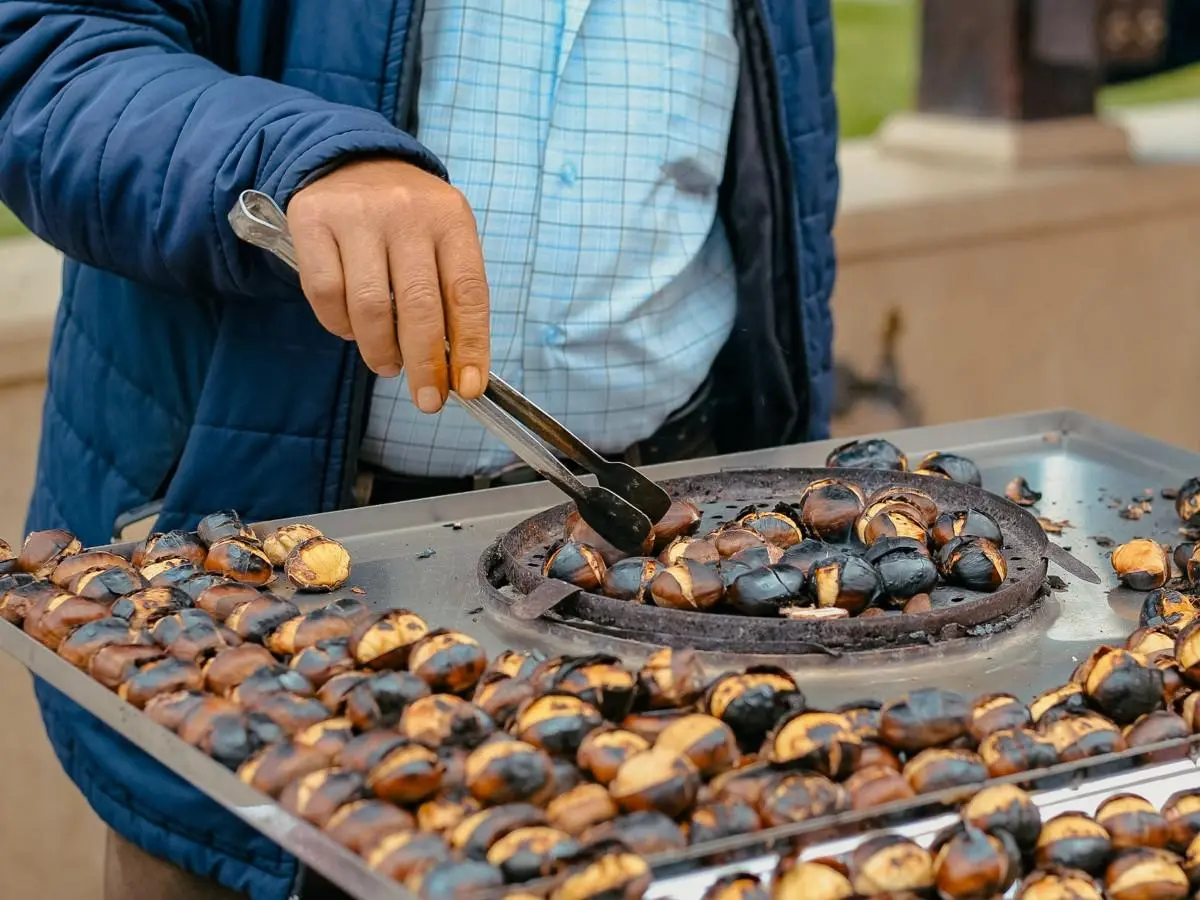
Castanhas assadas — roasted chestnuts — appear on corner carts throughout Lisbon and Porto. Vendors cook them over charcoal until the shells split and turn ash-white. They come in small paper bags, hot enough to warm your hands while you walk. The smell reaches you half a block before the cart.
Bolo Rei (“King Cake”) fills bakery windows from late November through January. It is a ring-shaped cake dense with candied fruit and whole nuts, meant to be eaten with coffee or port wine. The texture is dry enough that it does not work alone; with a strong bica (espresso), it makes sense. Most bakeries sell it by the slice for around €1.50–€2.00.
What most guides won’t tell you before you book
Winter in Portugal is not a compromise — it is a specific kind of trip that rewards preparation and punishes assumptions. Book accommodation with fixed wall heating confirmed in writing, check CP’s website before any Douro Valley plans, ask for Via Verde confirmation at the rental desk, and time your Algarve visit for February if you want blossom country, or January if you want wave season with smaller crowds.
The traveler who goes in with realistic expectations will pay 40–60% less than summer visitors — a Portugal travel cost advantage that holds across hotels, restaurants, and tours alike — move through major sites without friction, and eat food that exists only between November and April. That is the actual case for going.
TL;DR: Confirm wall-mounted heating before booking any rental. Check the CP website before booking anything Douro-related. Confirm Via Verde is active in your rental car. The Algarve in February is the most under-visited warm destination in Western Europe.
What is the one thing you are most worried about getting wrong on a winter trip to Portugal? Leave it in the comments — the questions tend to cluster, and the answers help everyone.