Train travel in Portugal rewards whoever books early and sits on the right side of the carriage. The Alfa Pendular runs Lisbon to Porto in under three hours for as little as $10 on a Promo fare. This guide covers every service, route, and seat-selection trick worth knowing before you board.
What is Comboios de Portugal and which train should you take?
Comboios de Portugal (CP) is the state-owned national carrier running a well-connected, affordable network that links virtually every major city and region in the country. The single most important decision before you board is which specific service to book — and they are not interchangeable.
The Alfa Pendular — Portugal’s flagship service
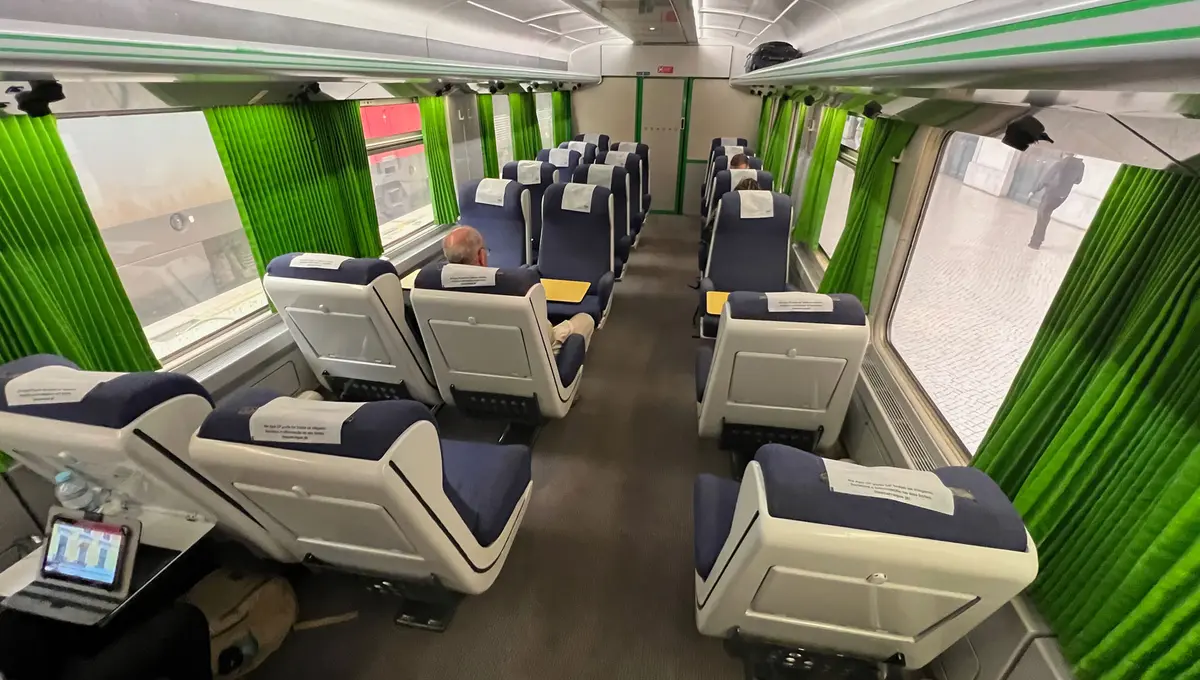
The Alfa Pendular is Portugal’s premier express service and your best option for the main Lisbon to Porto corridor. These trains feature free Wi-Fi, power outlets at every seat, air conditioning, and a fixed café-bar in Car 3 that serves snacks and drinks throughout the journey. First class occupies one end of the train.
On my last visit, the ride quality genuinely competed with Western Europe’s best intercity trains — quiet, smooth, and fast enough to make the 209-mile (337 km) Lisbon to Porto corridor feel like an easy morning.
Intercidades, Regional and Urbano — when to use each
The Intercidades runs slightly slower on the same intercity routes but remains comfortable and costs considerably less. One heads-up for American travelers used to automatic doors: older Intercidades rolling stock requires you to physically turn a heavy metal handle to open the exterior door yourself. There is also a step up from the platform, so plant your feet and pull that handle firmly.
Regional and Interregional trains are the slow-travel option for reaching smaller towns off the main transit corridors.
Urbano commuter trains serve Lisbon, Porto, and Coimbra. Unlike long-distance services, these require you to validate your ticket at the platform machine before boarding. Skip validation and you risk a fine from the conductor — they check.
How do you book CP tickets and unlock 65% discounts?
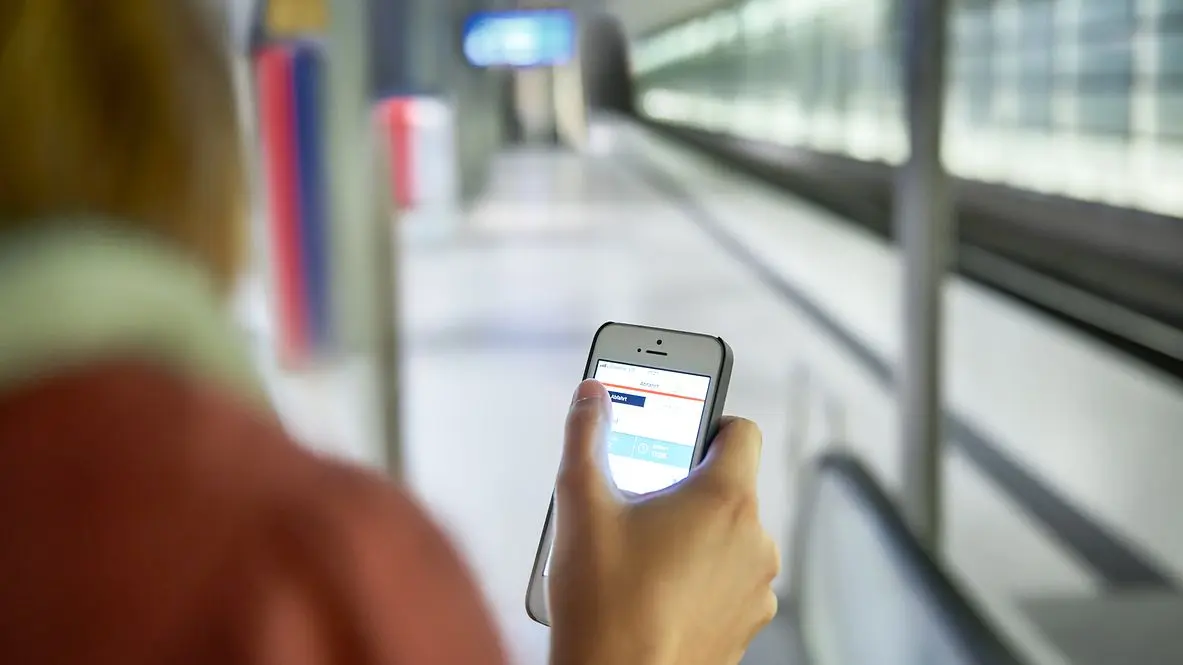
Book directly through cp.pt or the Comboios de Portugal mobile app to secure the lowest fares and cut out third-party markups. The official app stores tickets in your phone’s digital wallet — no printing needed.
CP releases schedules and ticket inventory exactly 60 days before departure. That is your signal to open the app and lock in your itinerary before Promo fares disappear.
The biggest savings lever is CP’s Promo Tickets dynamic pricing model. Book at least two to three weeks in advance and fares can drop up to 65% off the standard base price. A 2nd class Alfa Pendular seat between Lisbon and Porto normally runs about $38 (€35.70); hit a Promo fare and that drops to $10–20 depending on availability and lead time.
Seat selection matters more than most guides admit. During booking, actively choose the face-forward option on the seat map. A significant portion of Alfa Pendular carriages face backward, and at the speeds this train takes through Portugal’s curving terrain, sitting in reverse is a reliable recipe for motion sickness.
On your digital ticket, carruagem is your car number and lugar is your assigned seat. The conductor scans your phone screen alongside your passport, cross-referencing against a digital passenger manifest.
Rail passes vs. point-to-point tickets: which saves more money?
For most US travelers on a Portugal itinerary, point-to-point tickets beat rail passes every time. Portugal’s domestic fares are among the lowest in Western Europe, and Promo fares make them cheaper still.
A Eurail Pass requires a high upfront investment that rarely pays off on a Portugal-only trip. Worse, these passes do not cover the intercity bus networks you will need for reaching the deep Algarve or smaller inland towns that lack rail infrastructure.
Here is what pass sellers will not volunteer: Alfa Pendular and Intercidades travelers with a rail pass still need to buy a mandatory seat reservation separately. That fee runs around $5–6 (€5). Over two weeks, those charges stack up and erase any perceived savings quickly — particularly once you factor in your full Portugal travel budget.
How do you handle a CP train strike without losing your trip?
Secure a backup bus ticket the moment a strike is announced — do not wait until you are standing in a deserted station. Portuguese rail labor strikes are a recurring disruption, and Comboios de Portugal officially classifies them alongside extreme weather and civil demonstrations as grounds for non-refundable tickets. No refund is coming your way.
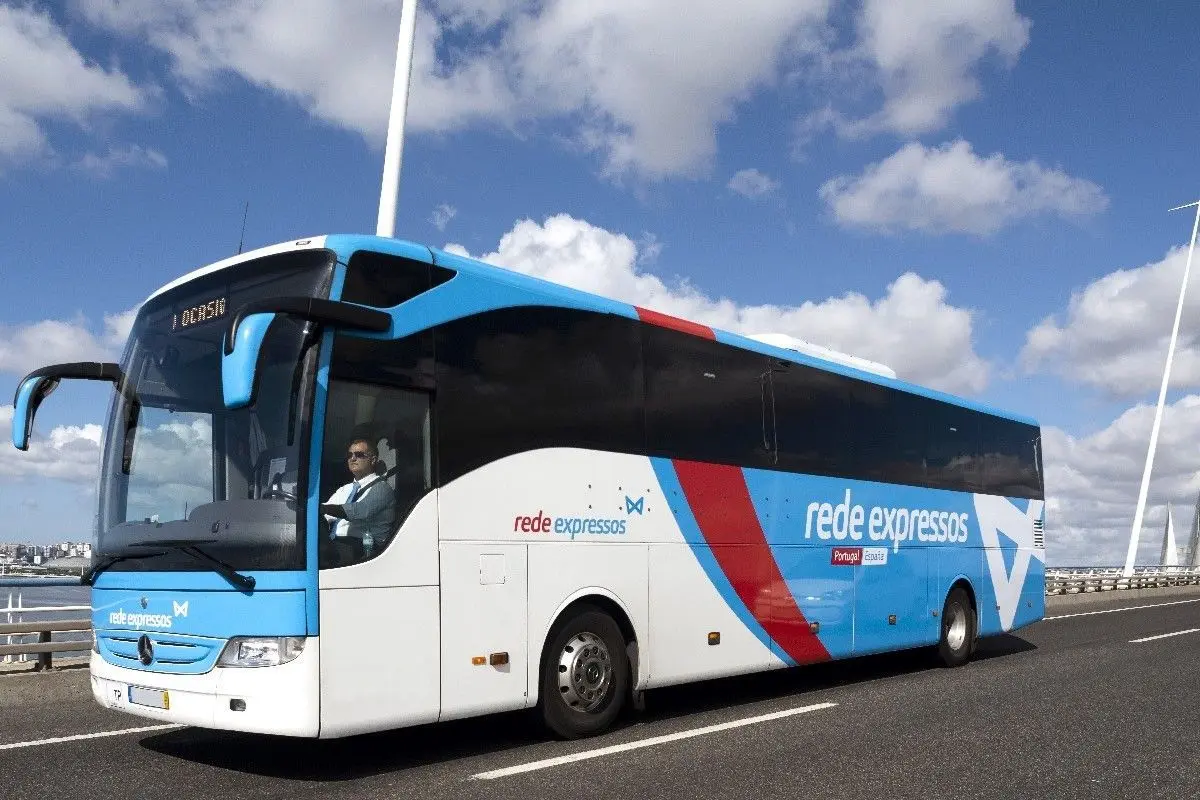
The smart play is a parallel ticket strategy. Keep your original rail booking and simultaneously grab a cheap intercity bus ticket through Rede Expressos or FlixBus. Think of it as very inexpensive travel insurance.
Rede Expressos is the more reliable backup option, operating from dedicated bus stations on a consistent schedule. FlixBus is technically cheaper but runs near capacity and its pricing climbs fast once a rail strike hits the news. Book the backup bus the moment a strike is confirmed, not three days later when everyone else panics and inventory collapses.
Pro Tip: Follow the official social media accounts for Comboios de Portugal and check the Autoridade Nacional de Proteção Civil website when a strike is announced. Minimum service levels — usually around 50% of scheduled trains — are legally required by the government on certain crucial routes.
Lisbon to Porto: how do the transit options actually compare?
The Alfa Pendular covers the 209-mile (337 km) Lisbon to Porto run in under three hours, making it the fastest surface option between Portugal’s two largest cities. For most travelers, it is the right call — fast, comfortable, and a Promo fare often undercuts the standard bus price. Here is how every option lines up.
| Transit option | Operator | Duration | Standard adult fare | Best booking strategy |
|---|---|---|---|---|
| Alfa Pendular | Comboios de Portugal | 2 hrs 58 min | ~$38 (€35.70) 2nd class | Promo fares drop to $10–20 with 60-day advance booking |
| Intercidades | Comboios de Portugal | 3 hrs 13 min | ~$30 (€28.05) 2nd class | Slower but solid comfort at a lower base price |
| Express coach | Rede Expressos | 3 hrs 15 min | from ~$18 (€16) | 20+ daily departures; excellent strike backup |
| Budget coach | FlixBus | 3 hrs 15 min | from ~$8 (€7) | Cheapest option; books up fast during disruptions |
Station logistics matter heavily on this route. In Lisbon, trains depart from either Oriente — connected directly to the international airport — or Santa Apolónia in the historic center. The two stations are about 9 minutes apart by train. In Porto, express trains arrive at Campanhã.
One detail most guides completely bury: your Alfa Pendular or Intercidades ticket entitles you to a free urban train transfer from Campanhã directly to São Bento station, right in Porto’s tourist center. That is a 4-minute ride that saves you an uphill walk with luggage. Use it.
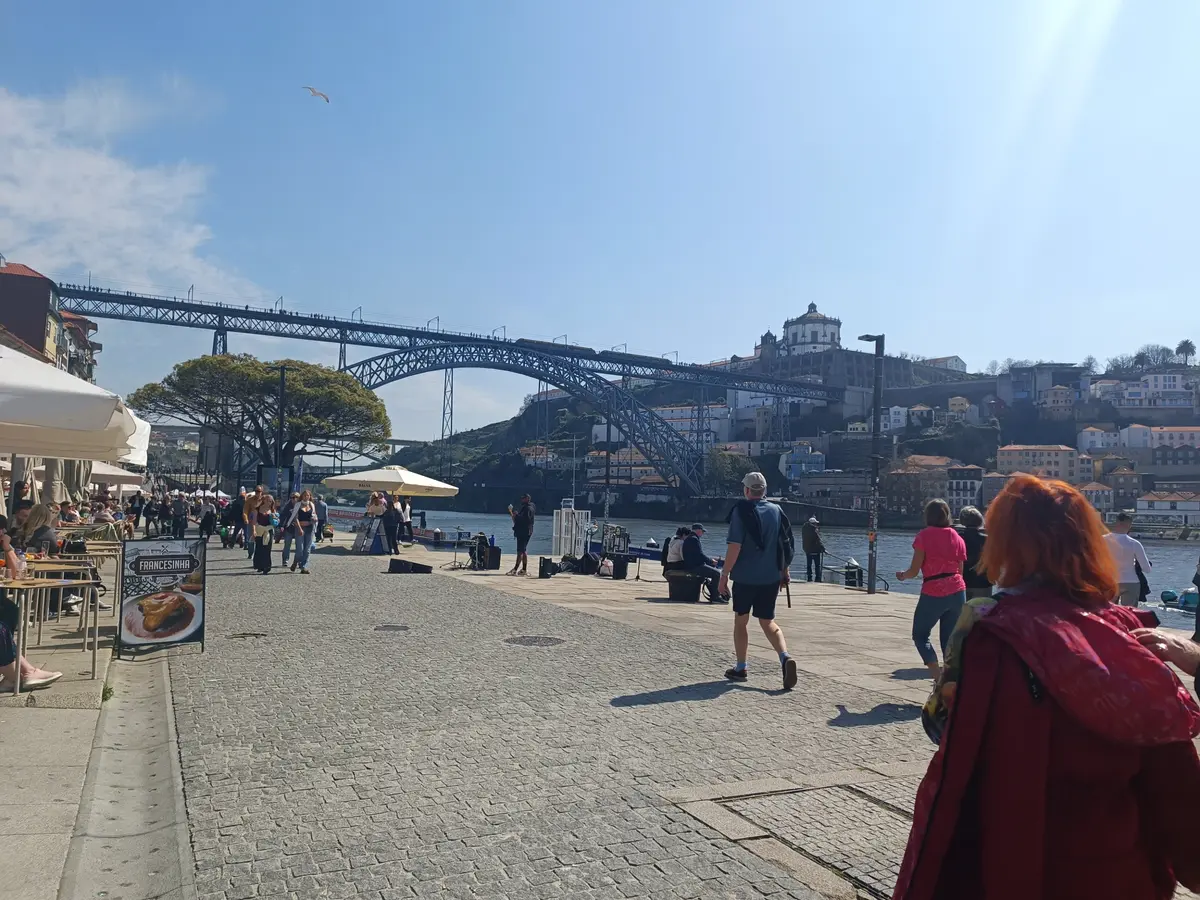
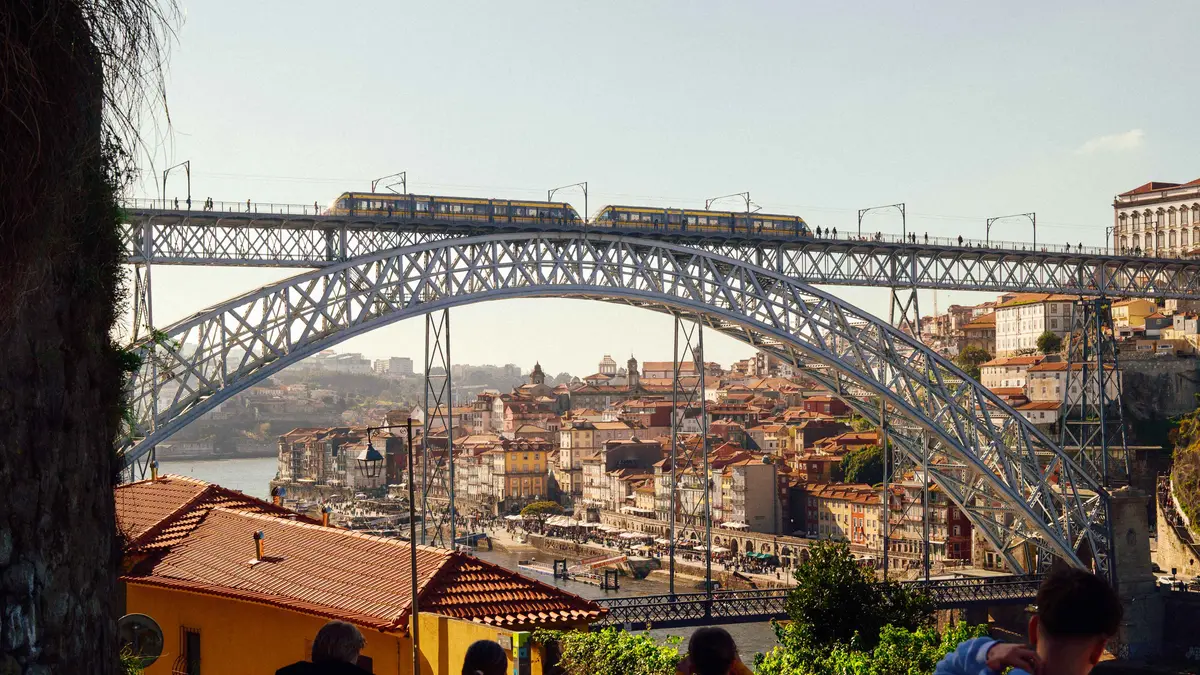
When booking your seat from Lisbon to Porto, grab a window seat on the left side of the carriage traveling northbound. This positions you perfectly for the first sweeping view of the Douro River and the Dom Luís I Bridge as the train makes its final approach into Porto.
Can you explore the Algarve by train without a rental car?
Most of the Algarve coast is reachable by train without a rental car, but knowing where the network ends is essential to avoid being stranded with bags on a highway with no shade. The key is understanding which junction stations serve your final destination.
Travelers coming from Lisbon or Porto must transfer at one of two junction stations depending on their final beach destination. For the western Algarve — Lagos and the surrounding surf towns — transfer at Tunes. For the eastern Algarve — Olhão, Tavira, and the barrier islands — pass through Faro, the regional capital hub.
The rail network terminates at Lagos in the west. Beyond that, toward the Costa Vicentina or the cliffs near Sagres, you need a local bus or a short car rental. The mountainous interior north of the N125 highway is also entirely off the train grid.
Pro Tip: If you are staying in Ferragudo, the train station sits 2.5 miles (4 km) outside of town along a highway with no pedestrian route. Budget for a local rideshare or arrange a pickup with your accommodation before you arrive.
The Linha do Douro: how do you get the best views on Portugal’s most scenic train?
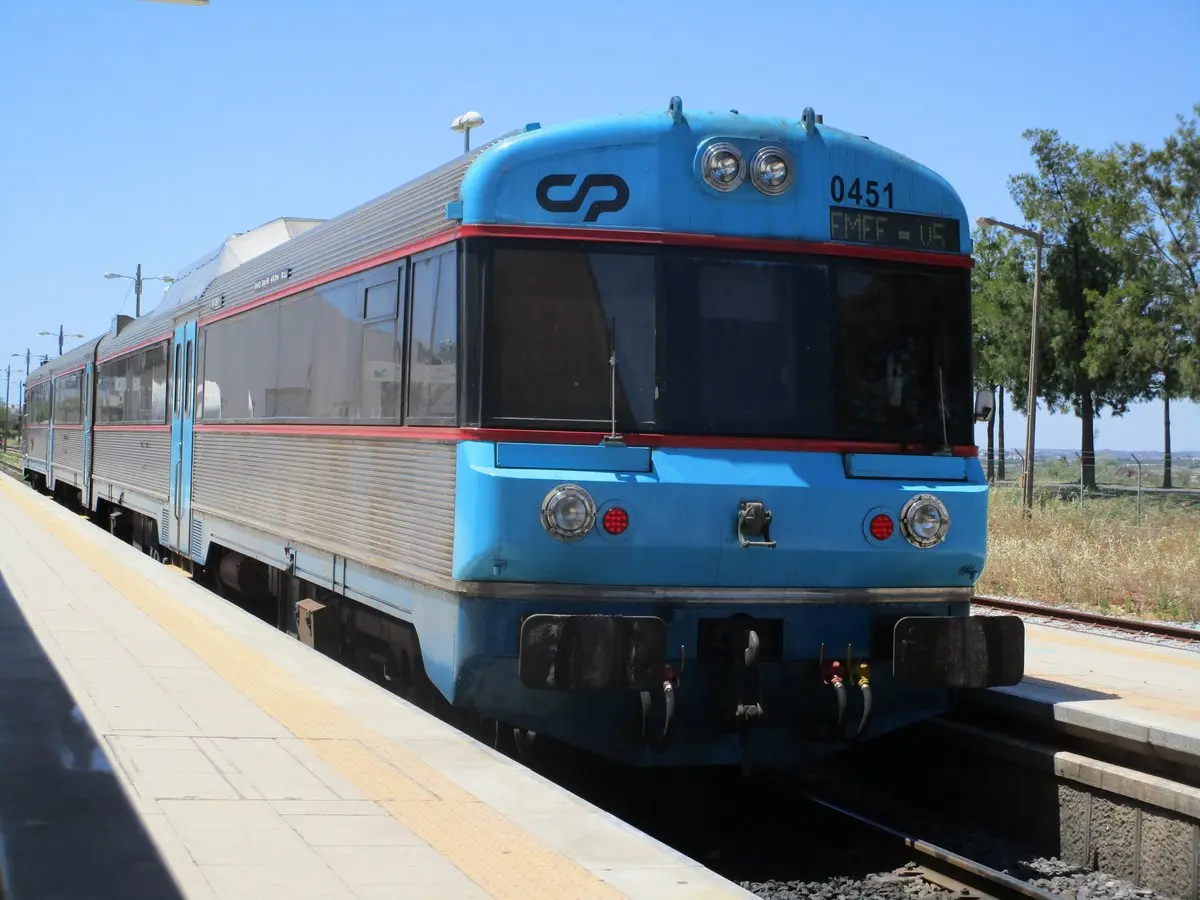
The Linha do Douro ranks among the great rail journeys of Europe — but only if you plan your seat position before you board. The line covers 99 miles (160 km) of track climbing from Porto deep into the terraced Douro Valley wine region, finishing at the rural station of Pocinho. The seating strategy is the difference between a trip you remember and one you spend looking at the corridor wall.
Expect the first hour out of Porto to be an unremarkable run through suburban sprawl. The scenery switches on dramatically after the Pala station, where the tracks meet the edge of the Douro River. From there, sheer vineyard terraces drop straight to the dark water below.
The seating strategy has two distinct phases. Traveling east from Porto, start on the right side of the carriage for unobstructed river views. Stay alert, because just before Ferradosa station the tracks cross over the river. At that point, move to the left side of the carriage and stay there through the final gorge into Pocinho.
Tickets operate on a fixed-price model:
- Porto to Pinhão: $13 (€12.20)
- Porto to Pocinho: $16 (€14.80)
No reservations are required, and these regional trains do not sell out. A 10% discount applies if you buy a round-trip ticket. There is no catering on board, so pack food and water before leaving Porto.
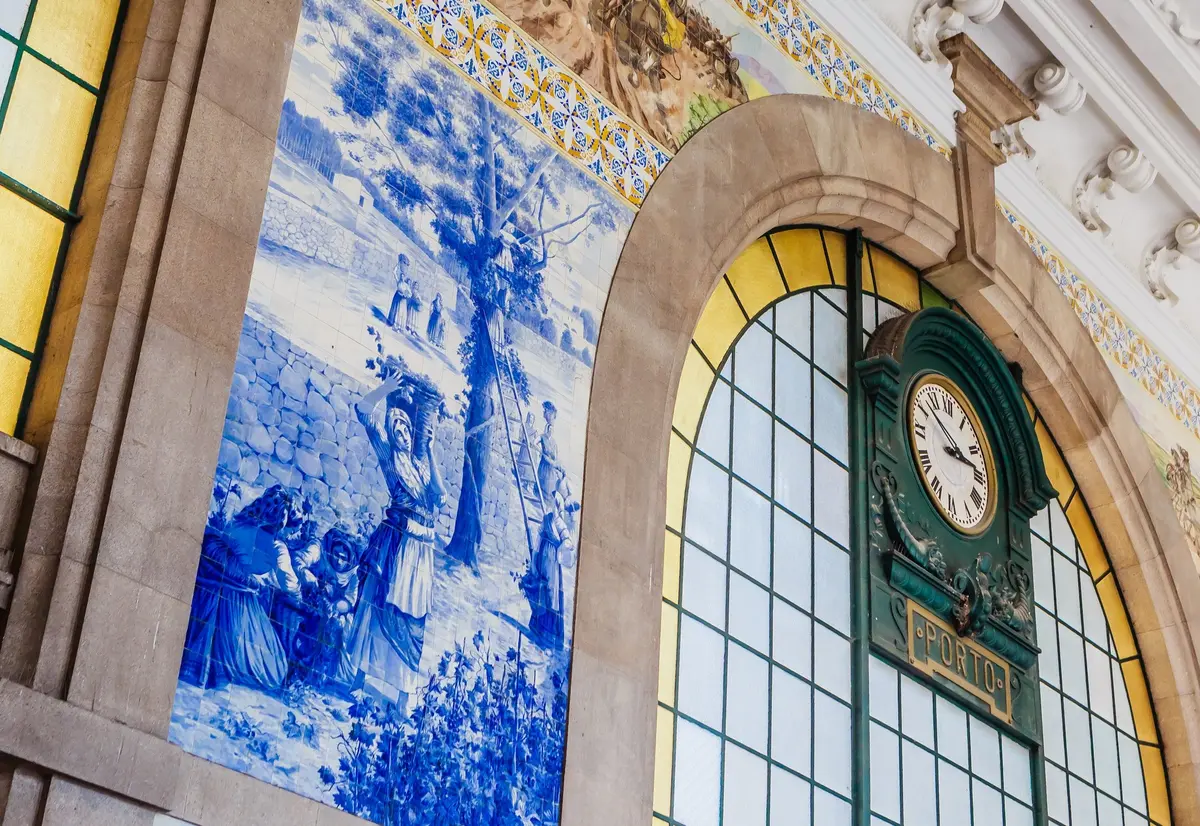
Pro Tip: Start your journey at São Bento station in Porto, not Campanhã. The vast vestibule is lined with over 20,000 blue-and-white azulejo tiles depicting scenes from Portuguese history and the evolution of the country’s rail transport. Arriving 20 minutes early to stand in that hall is not wasted time.
What heritage train experiences does CP offer?
CP runs two seasonal heritage routes that function as living museum experiences built around restored historic rolling stock. Both sell out, so early booking is not optional — it is the only way to secure a seat.
1. Douro Historical Train
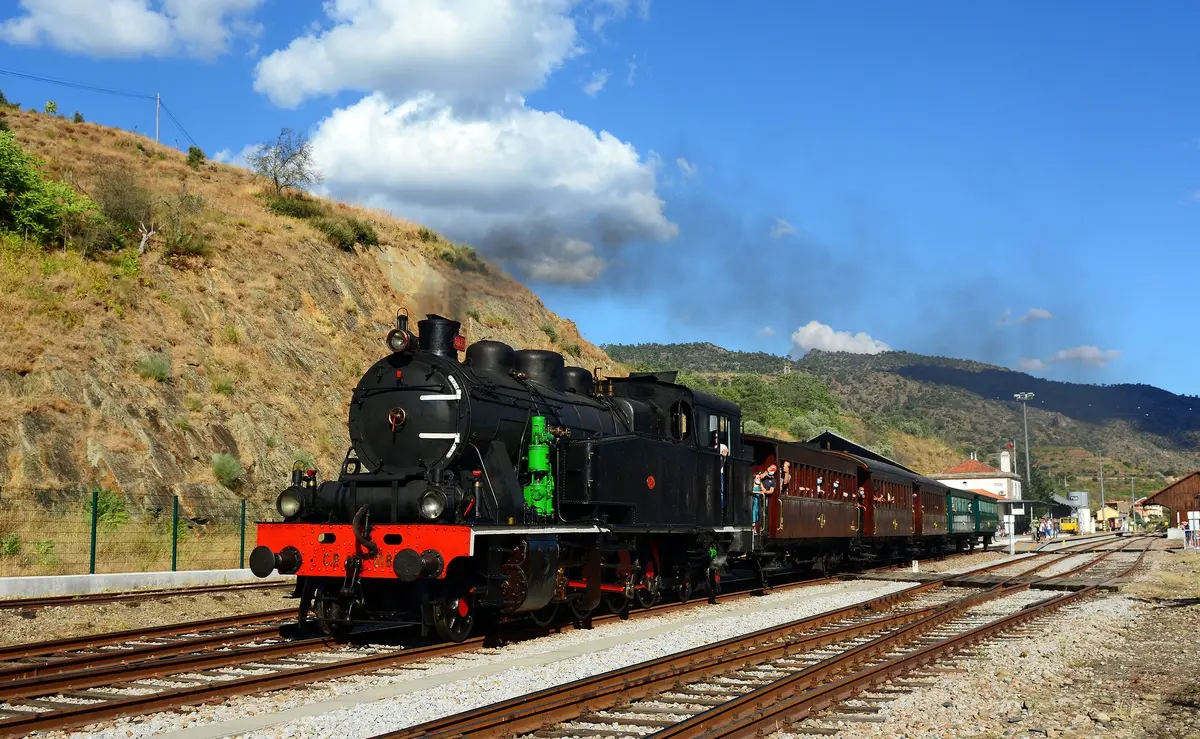
The Douro Historical Train runs on weekends from June through October, covering 22 miles (36 km) between Régua and Tua through the UNESCO-designated Alto Douro wine terraces. The service normally operates behind the CP 0186 — a 1925 Henschel & Son steam locomotive pulling five restored wooden carriages. In some seasons, CP has substituted a vintage 1960s diesel locomotive due to infrastructure weight restrictions during ongoing Douro Line modernization works. Check cp.pt before booking to confirm the rolling stock for your specific date.
The experience includes a glass of port wine and regional product tastings on board, plus folk music accompaniment at Tua station. Sitting inside an early 20th-century wooden carriage with vineyard slopes tumbling to the river just outside the window is something modern rail simply cannot replicate.
- Location: Peso da Régua to Tua, Alto Douro
- Cost: Check cp.pt for current seasonal pricing
- Best for: Railway enthusiasts, couples, cultural travelers
- Time needed: Half day (round trip with stop in Tua)
2. Historic Vouga Train (Vouguinha)
The Vouguinha runs on Saturdays during July and August, connecting Aveiro to Macinhata do Vouga on Portugal’s only surviving meter-gauge railway line. The round-trip fare covers admission to the Macinhata do Vouga Railway Museum and an extended stop in Águeda — a town known for its colorful overhead umbrella art installation. Departures from Aveiro are at 1:45 p.m., with the return arriving back in Aveiro by 8:07 p.m.
- Location: Aveiro to Macinhata do Vouga
- Cost: ~$44 (€41) per adult round-trip, museum admission included
- Best for: Day-trippers from Porto, history enthusiasts, families
- Time needed: Full day
| Heritage route | Operational season | Key feature |
|---|---|---|
| Douro Historical Train | June–October (weekends) | 1925 Henschel steam loco; 5 wooden carriages (diesel possible in some seasons) |
| Historic Vouga Train | July–August (Saturdays) | Portugal’s last meter-gauge track; museum included |
| Almond Tree Route (Alto Douro) | February–March | Scenic almond blossoms along the Douro valley |
| Cherry Route (Beira Baixa Line) | May–June | Fruit-picking stops and regional food tastings |
Can you travel with accessibility needs, pets, or a bicycle on CP trains?
CP accommodates wheelchair users, small pets, and bicycles across most of its services — but each category carries specific requirements that catch travelers off guard at the platform. The short answer: book any special accommodation in advance, not the morning of departure.
Accessibility for wheelchair users
All modern Alfa Pendular and Intercidades trains include dedicated wheelchair spaces and fully accessible restrooms. CP also operates a free Integrated Mobility Service, providing trained personnel to assist travelers with reduced mobility at boarding, during tight transfers, and at arrival stations. Book this service in advance through cp.pt.
Pets on CP trains
Small, non-dangerous pets travel free on domestic routes, provided they are inside a carrier no larger than 24 x 14 x 14 inches (60 x 35 x 35 cm). The carrier counts as your hand luggage, with a limit of one carrier per ticketed passenger.
International pet owners entering Portugal must meet EU entry requirements: a 15-digit ISO-compliant microchip, proof of rabies vaccination, and either an EU Pet Passport or EU Health Certificate. If the rabies vaccine is being given for the first time, a mandatory 21-day waiting period applies before the animal can legally enter EU territory.
Bicycles on CP trains
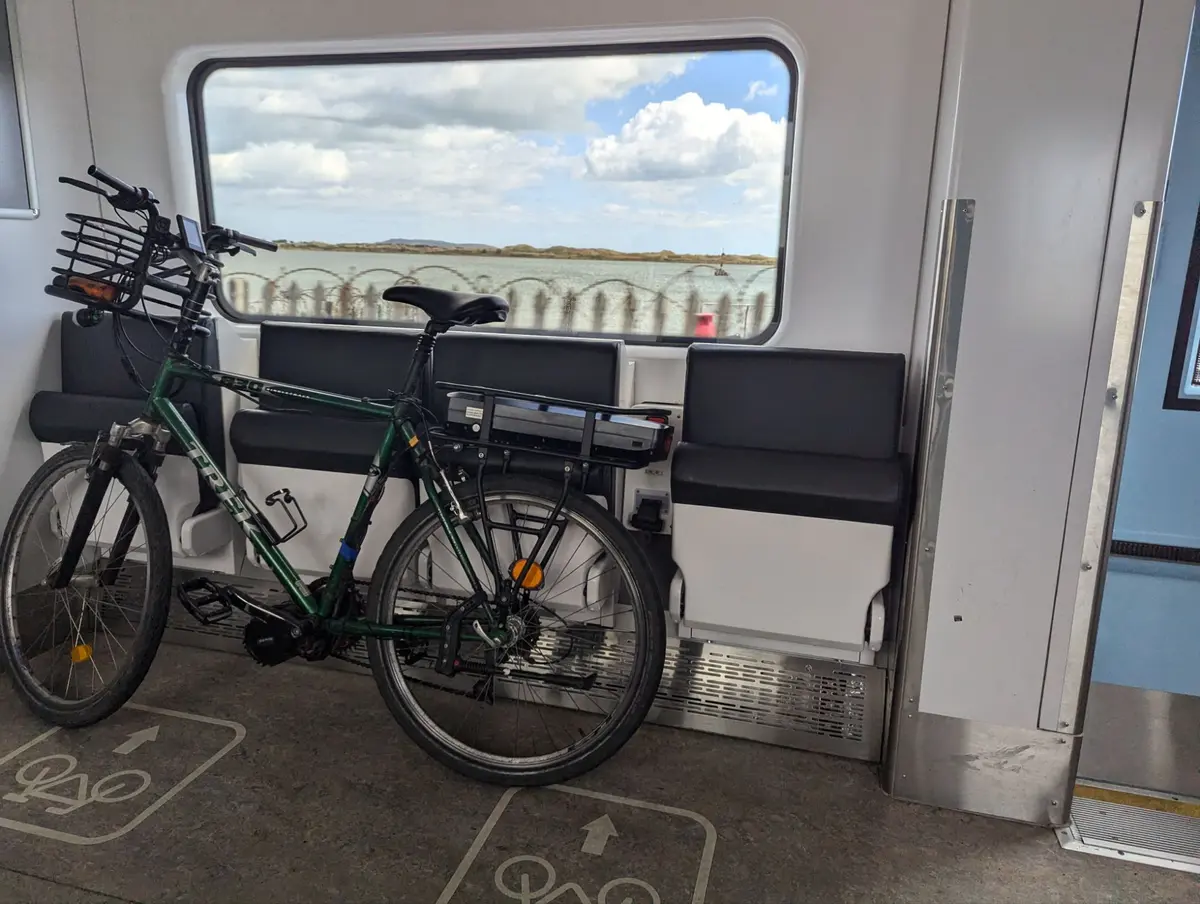
Bicycles are permitted on regional trains and select long-distance services, subject to capacity limits per carriage. A separate bicycle ticket is required, and bicycle spaces must be reserved in advance on both Alfa Pendular and Intercidades routes. Check the official app when booking — availability varies by train and date.
When will Portugal’s high-speed rail overhaul change everything?
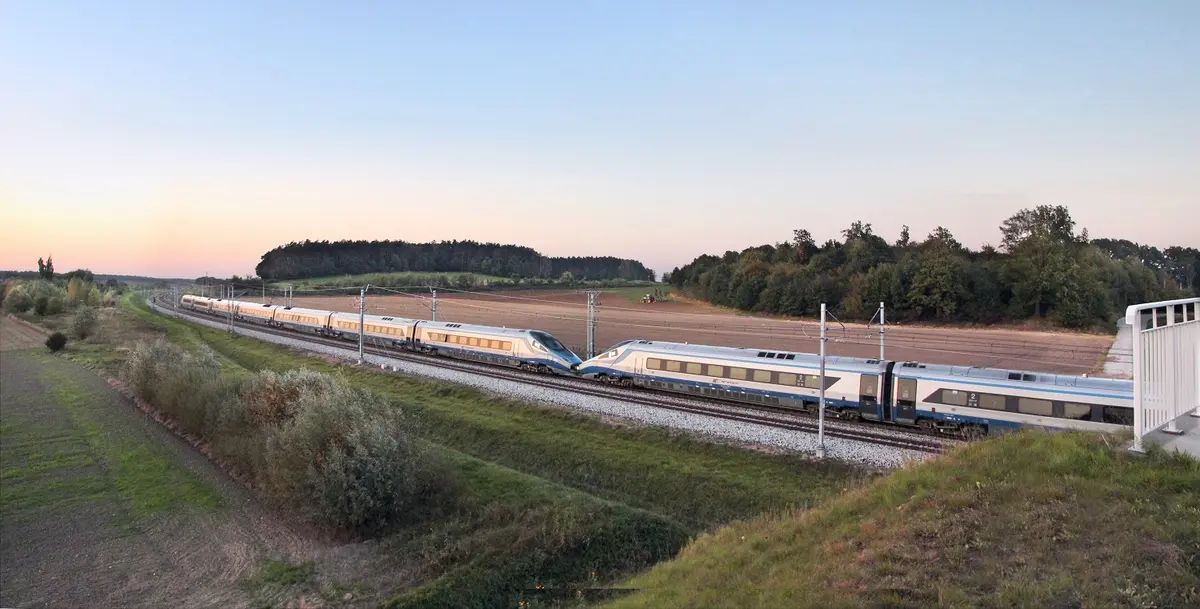
Portugal’s full high-speed line between Porto and Lisbon will not open on a single date — it is being built in three phases with completion stretching past 2030. For anyone traveling in the next few years, the Alfa Pendular remains the fastest option. But the infrastructure being built now will eventually cut that journey to 1 hour 15 minutes.
The LAV project is a 290 km (180-mile) dedicated high-speed line with a total estimated cost of around €4.9 billion. Phase 1, linking Porto Campanhã to Soure (143 km), is targeted for completion by 2028. The first section of Phase 1 — the 71 km stretch from Porto Campanhã to Oiã — is already under a signed 30-year concession with the LusoLAV consortium, backed by €875 million in European Investment Bank financing. Phase 2, connecting Soure to Carregado, is targeted for 2030. Phase 3, completing the run into Lisbon, follows after 2030.
Separately, CP has signed its largest-ever rolling stock deal: 153 new Alstom Adessia Stream electric multiple units from the Alstom-DST consortium, worth €1.03 billion total. These are commuter and regional trains — 98 for urban routes serving Lisbon, Porto, and Cascais, plus 55 for regional services across the country — with first deliveries scheduled for 2029. They replace rolling stock that in some cases is nearly 70 years old. This fleet renewal will expand capacity on busy commuter corridors well before the high-speed line is fully complete.
Once the full LAV is operational, the Porto to Lisbon journey drops from nearly three hours to 1 hour 15 minutes. For anyone planning a return visit, this infrastructure will fundamentally change how Portugal’s two largest cities connect.
The bottom line
Train travel in Portugal is one of the most underrated transit experiences in Western Europe. The network is affordable, well-connected, and capable of delivering some of the continent’s most memorable scenic journeys without breaking the bank. The key is knowing which service to board, booking early enough to hit Promo fares, and knowing exactly which side of the carriage to sit on.
TL;DR: Book on cp.pt up to 60 days out to unlock fares up to 65% off. Skip the rail pass on a Portugal-only trip. On the Alfa Pendular northbound from Lisbon, sit on the left for the Douro River approach into Porto. On the Linha do Douro, start right, then move left after the Ferradosa river crossing.
Now it is your turn: are you planning to stick to the Lisbon to Porto express, or are you tempted to ride the Douro Valley all the way to Pocinho?