The CP Cascais Line runs from Lisbon‘s Cais do Sodré to the coast in 40 minutes, and the fare costs less than a coffee in the Chiado. This guide covers every transport option, the exact beach to match your mood, the one restaurant worth booking in advance, and the bus that gets you to a sunset most visitors completely miss.
What is the fastest way to get from Lisbon to Cascais?
The CP Cascais Line train from Cais do Sodré is the fastest, cheapest, and most reliable way to make this trip. A single adult fare is €2.55 (~$2.80) loaded onto the Navegante card — the reusable transit card for all public transport in the Lisbon region, available at any metro station for €0.50 per card. The journey takes 40 minutes. For a direct shot to the coast, the single fare is all you need. Skip the 24-hour transit pass unless you are planning to hop between multiple coastal stops along the way.
Pro Tip: Load your Navegante card with Zapping credit at any Lisbon metro station before you arrive at Cais do Sodré. The ticket machines at Cais do Sodré queue up to 30 minutes on summer mornings. Loading the card anywhere else costs you nothing extra and saves a lot of standing around.
Sit on the left side of the train
This is the detail no timetable will ever tell you. Sit on the left (south-facing) side of the carriage when departing from the city. For the full 40 minutes, you watch the wide mouth of the Tagus dissolve slowly into the open Atlantic. The right side of the train gives you a concrete wall. The choice takes two seconds to make and pays off for the entire ride.

Accessibility and luggage on the Cascais Line
Boarding at Cais do Sodré requires navigating a steep, high step up from the platform into the carriage. Ramps exist but are not always deployed without prior arrangement, and platform staff can be scarce. If you are traveling with a stroller, mobility aid, or heavy luggage, contact CP in advance or book an Uber in Lisbon instead. A rideshare runs $28–$38 for the 30-to-40-minute ride and offers door-to-door service.
Hotel check-out times and day trips do not always align neatly. Do not spend the day dragging a suitcase through cobblestone streets. Radical Storage and Stasher both operate pickup points within walking distance of the station and the Time Out Market. Pricing runs around €5 (~$5.50) per bag per day. Station lockers fill up fast — book a slot online before you arrive at Cais do Sodré.
Bikes and dogs on the Cascais Line
The CP rules here are specific. Dogs travel free but must be on a short leash with a muzzle, or confined to a carrier. Large dogs without a carrier are not permitted. Bicycles are allowed, but not during peak hours, and are strictly limited to two per carriage. Violating either rule means denied boarding, not a stern look from the conductor.
Should you drive the N6 coastal road or take the A5?
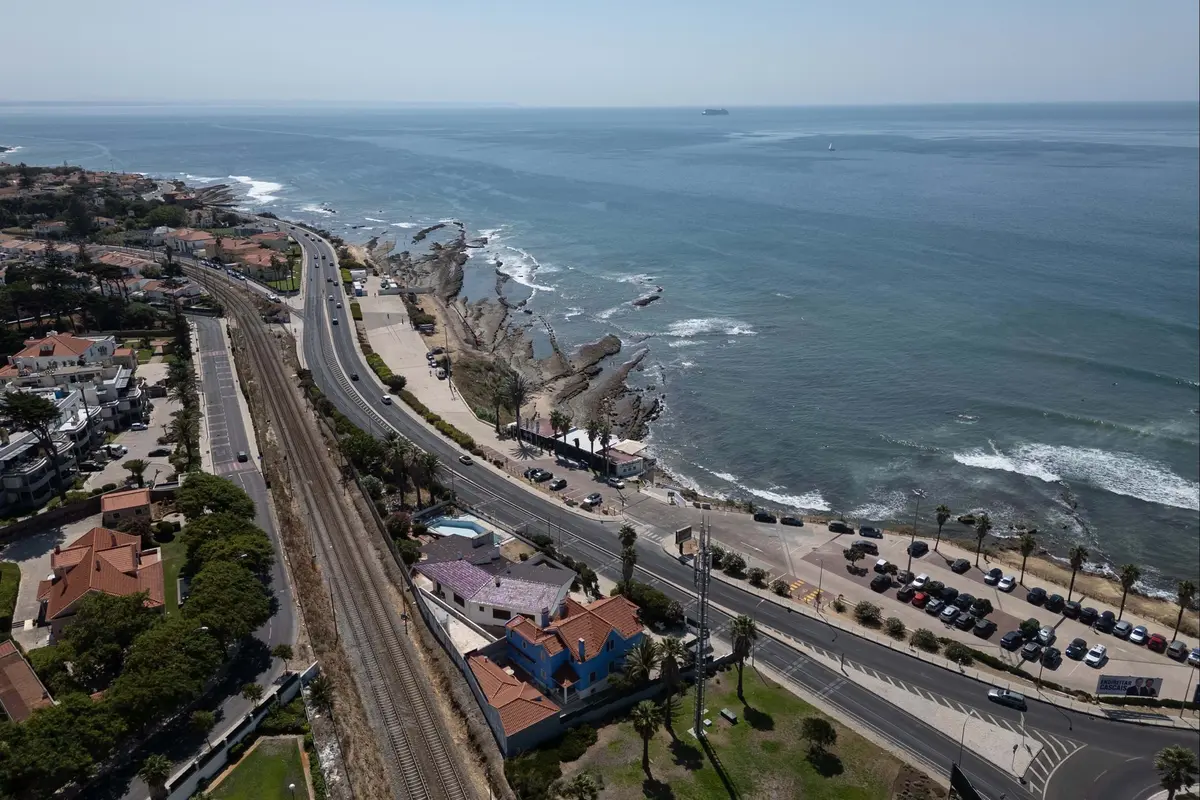
If you have already rented a car, skip the A5 motorway and take the N6 Avenida Marginal instead. The standard advice to avoid driving to the coast still holds because parking in the town center is extremely limited and the frustration is real. That said, the N6 traces the full coastline through Oeiras, Carcavelos, and Paço de Arcos, and the views justify the slower pace. Budget extra time, especially on weekends when the road slows to a crawl.
| Transport | Journey Time | Est. Cost (One Way) | Best For |
|---|---|---|---|
| CP Train | 40 min | €2.55 (~$2.80) | Most travelers |
| Uber/Bolt | 30–40 min | €25–€35 (~$28–$38) | Groups, mobility needs |
| Drive via A5 | 30 min | Variable | Maximum flexibility |
| Drive via N6 | 45+ min | Variable | Coastal views |
How should you structure a day in Cascais?
Do not combine Cascais and Sintra in one day. This is the single most common mistake first-time visitors make, often encouraged by generic travel roundups. Both destinations deserve their own full day. Trying to do both means rushing everything and enjoying nothing. Give this coastal town one unhurried day and it rewards you — give it half a day squeezed between Sintra and a Lisbon dinner and it gives you nothing back.
Morning — the historic center
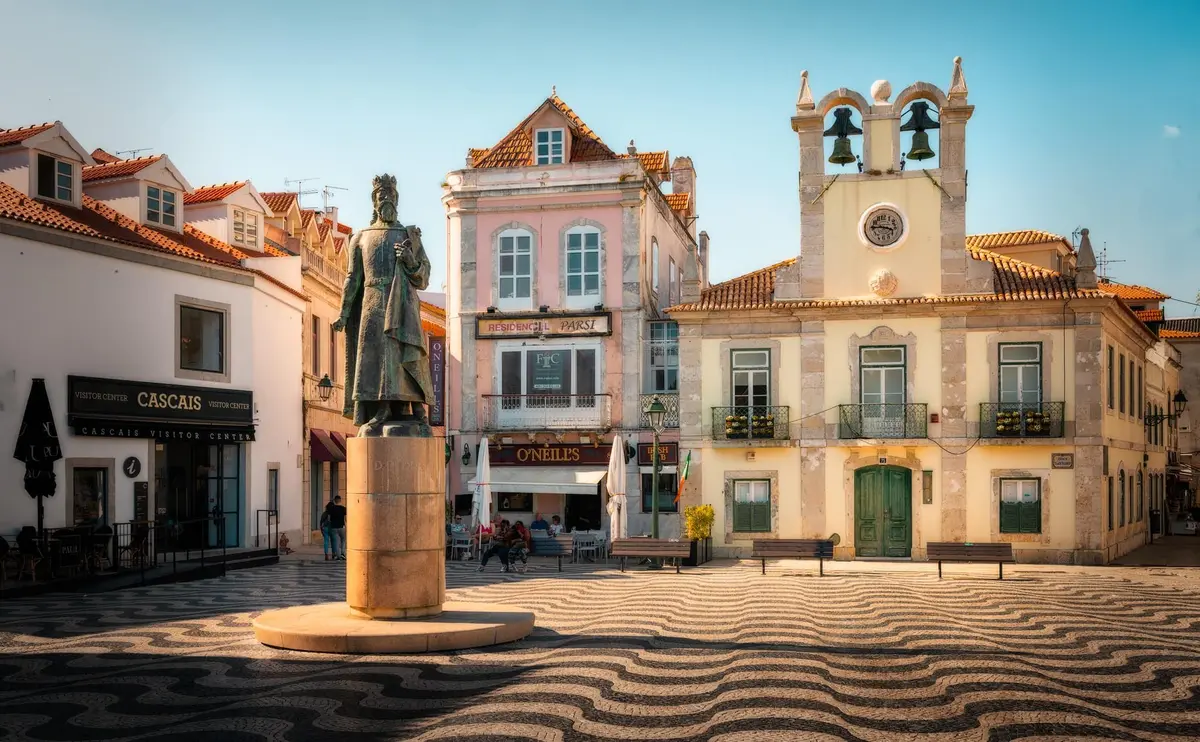
Walk straight from the train station up Rua Frederico Arouca into the Cidade Velha (Old Town). The mosaic-tiled streets fan out from Praça 5 de Outubro, anchored by the town hall and a statue of King Pedro I. This is the best time to be here: the streets are quieter, the morning light is sharp, and the pastry shops are still fresh from the oven.
Midday — the museum circuit
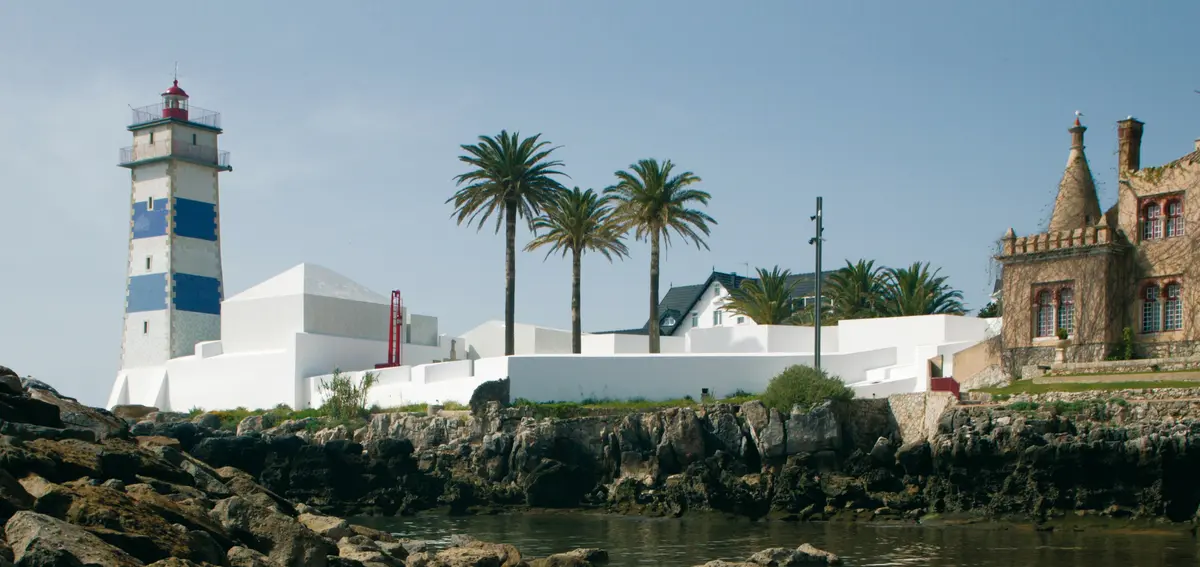
Group your cultural stops into a single efficient loop. Forte Nossa Senhora da Luz, the Centro Cultural de Cascais (admission varies by exhibition — check current pricing before you visit), and the blue-and-white Santa Marta Lighthouse are all within walking distance of each other. The lighthouse earns the detour: the geometric tile patterns — a defining example of Portuguese azulejos — covering its exterior are some of the most-photographed surfaces in the region, and the view from the top over the marina is clean and unobstructed on a clear morning.
Afternoon — the coastal walk to Boca do Inferno
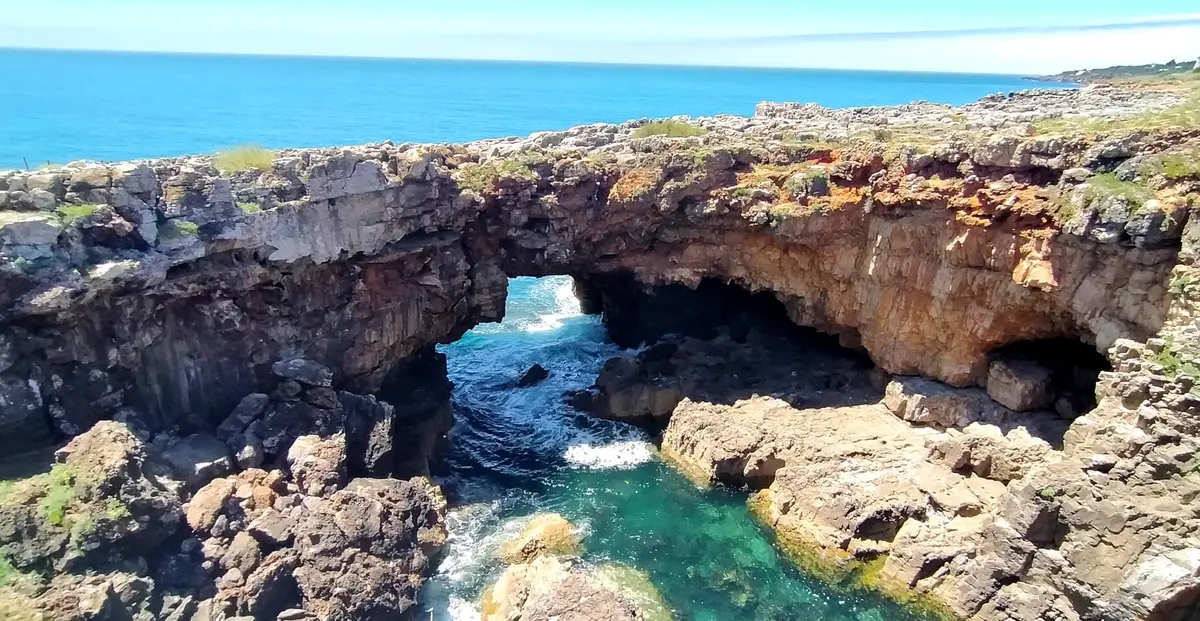
Follow Avenida Rei Humberto II de Italia west from the center. It is an 800-meter (0.5-mile) walk along the cliff edge to Boca do Inferno, which translates to the Mouth of Hell. There is zero shade on this path. In summer afternoons, the sun is relentless. Bring water, sunscreen, and shoes with solid grip — the rocky viewing platforms get wet and slippery from the ocean spray.
What makes Boca do Inferno worth the walk?
The cliffs here are made from carbonated limestone. Dissolved carbon dioxide in rainwater broke down the rock over millennia, creating a collapsed sea cave and natural arch. When Atlantic swells push through the opening, the sound is something between a cannon shot and a low roar as the ocean compresses and explodes inside the remaining rock chamber. In winter, the salt spray reaches well beyond the safety barriers. In summer, the effect is more photogenic and slightly less violent.
Either way, this is the kind of geological spectacle that stops you mid-sentence. Standing at the edge on a day with a decent swell, the ground actually vibrates under your feet when the water hits.
Which beach in Cascais is right for you?
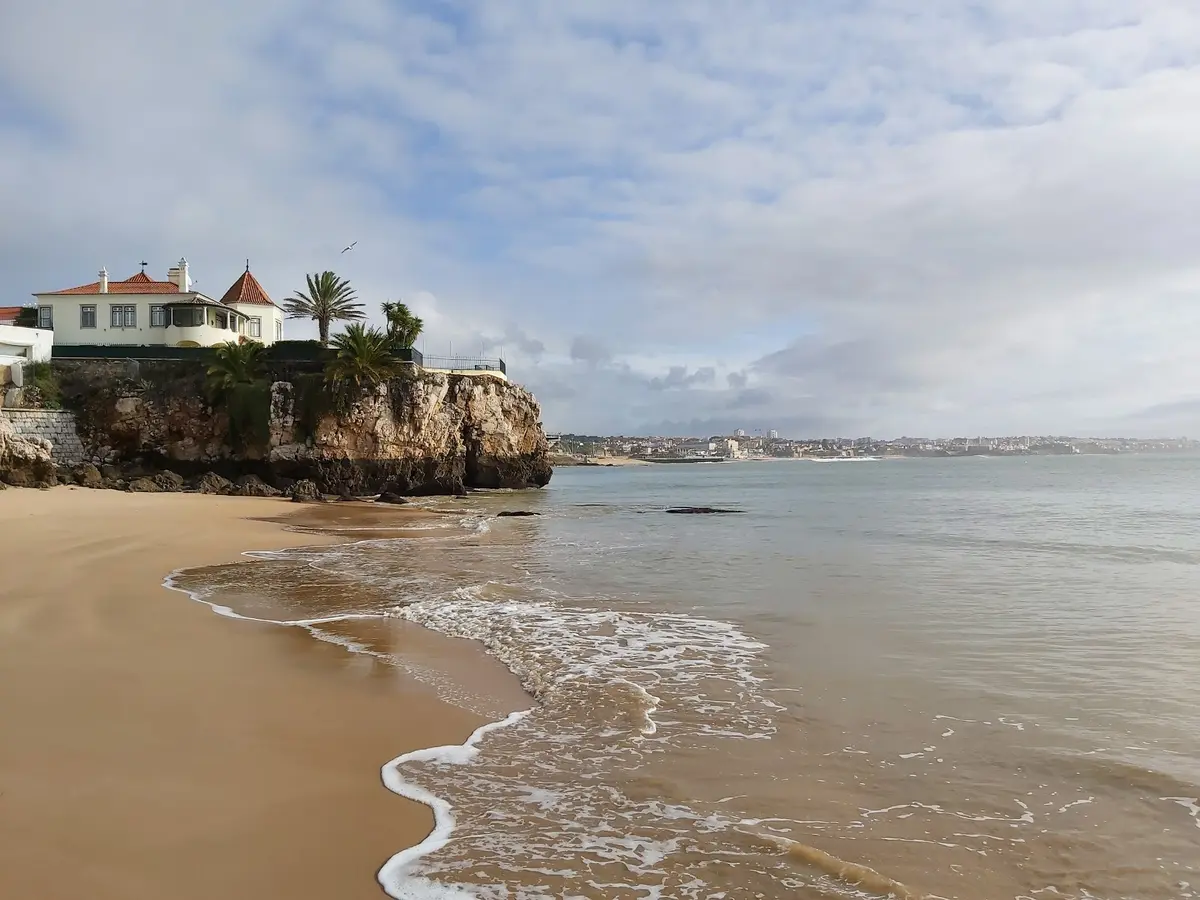
Cascais has three distinct beach options within easy walking distance of the train station, plus a free ocean pool that most day-trippers never find. Praia da Rainha suits a scenic stop rather than a swim. Praia da Conceição and Praia da Duquesa handle the serious sunbathers. The Piscina Oceânica Alberto Romano is the quietest option for families and for anyone who prefers calmer water over open Atlantic surf.
Praia da Rainha
This is the smallest and most historically charged option. It served as the private beach of Queen Amélia in 1889. Today it functions more as a scenic cove than a swimming beach, but the backdrop earns a photo stop.
- Best for: Photographers, a quick stop before moving on
- Swimming: Not recommended
Praia da Conceição and Praia da Duquesa
For actual swimming, these two are the workhorses of the town. They are wide, sandy, and well-serviced — typical of the Atlantic coastline‘s most popular summer beaches. They get genuinely crowded in summer — arrive before noon if you want a reasonable spot on the sand.
- Best for: Swimming, sunbathing
- Crowds: High in July and August; arrive before noon
Piscina Oceânica Alberto Romano
Located along the promenade, this is a free-entry, 50-meter (164-foot) ocean-fed pool with warmer, calmer water than the open Atlantic. Ideal for families or anyone unwilling to battle cold surf and breaking waves.
- Location: Avenida Rei Humberto II de Italia, along the seafront promenade
- Cost: Free
- Best for: Families, calmer water, avoiding beach crowds
Pro Tip: Locals drive out to the Alberto Romano pool on weekends specifically to avoid the beach crowds. If you see a packed beach and a quieter pool a short walk away, this is why. On my last visit, the pool was half-full on a Saturday afternoon when both main beaches were wall-to-wall towels.
What’s worth seeing beyond the sand?
Cascais keeps most of its best material off the seafront. The museum quarter, the promenade walk to Estoril, and three spots that most visitors walk straight past are all within a short walk of the station and require no pre-booking.
Condes de Castro Guimarães Museum
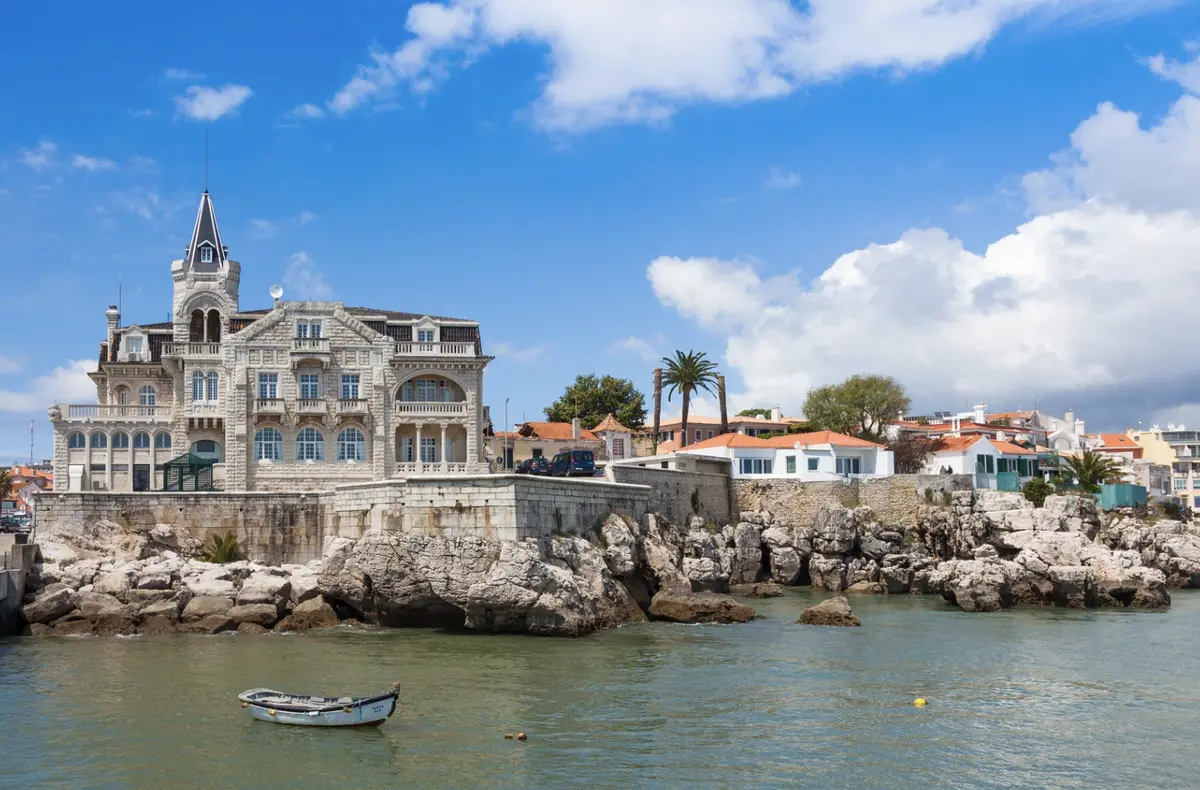
Built around 1900 by Jorge O’Neill — a Portuguese-Irish aristocrat whose wealth came from tobacco — this neo-gothic villa is the most opulent private residence in the area. Admission to the permanent collection is free; fees apply for temporary exhibitions only. The interior holds an illuminated manuscript from 1505 with one of the oldest surviving depictions of Lisbon, an artifact most day-trippers walk right past without knowing it exists.
- Location: Av. Rei Humberto II de Italia, Parque Marechal Carmona, Cascais
- Cost: Free (permanent collection); additional fees for temporary exhibitions
- Best for: History, architecture, anyone interested in how Portuguese aristocracy lived
- Time needed: 45 minutes to 1 hour
Walking to Estoril along the Paredão
The Paredão de Cascais is a 1.7-mile (2.7 km) seafront promenade connecting the town to neighboring Estoril. The walk passes the mock-gothic Palácio dos Duques de Palmela and ends at Tamariz beach and the Estoril Casino. Practically, this gives you an excellent alternative return point — board the train back to Lisbon from Estoril station instead of fighting the crowd at peak departure hours at Cascais.
Three spots most visitors walk straight past
The Alberto Romano oceanic pool is worth a second mention here. Locals treat it as a legitimate destination on weekends, not just a fallback from the beach. If the open beaches are at capacity, this is where the sensible people go.
The Capela de Nossa Senhora da Guia is a modest, centuries-old chapel set away from the main drag. The interior is quiet, cool, and detailed with tilework and devotional objects. On a hot afternoon, it is the best five minutes of stillness you will find on the coast.
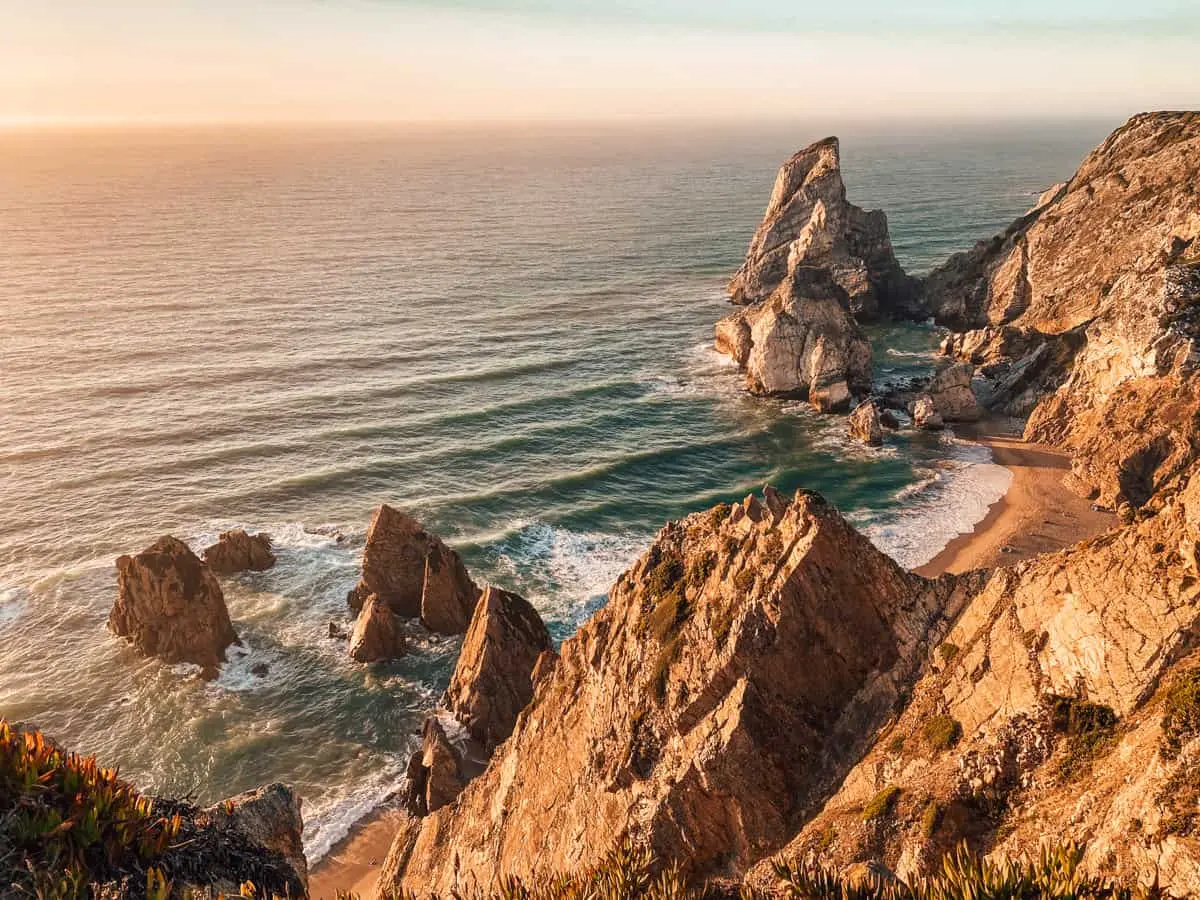
Praia da Ursa is strictly for the traveler willing to hike for the reward — think proper coastal hiking trails, not a beach stroll. Tucked behind the ridgeline near Sintra and accessible only on foot, it delivers raw, wild coastline that feels nothing like a standard day-trip destination. The trail demands proper footwear and solid physical condition. Not far in distance — but earn it you must.
Should you stay for the sunset at Praia do Guincho?
Most day-trippers take the 4:00 PM train back and miss the best hour of the entire trip. Stay. Buses 405 and 415, operated by Scotturb, run from the terminal below the Cascais Villa shopping center — directly across from the train station — out to the rugged surf beaches of Praia do Guincho and Praia da Cresmina, about 4 miles (6 km) west of town. Each line runs once per hour, but the two services depart at different times, so there is effectively a bus roughly every 30 minutes.
The evening light at Guincho hits the Atlantic at a near-horizontal angle, turning heavy surf golden. Local surfers — Guincho is one of the premier destinations for surfing in Portugal — work the breaks until the sun drops below the horizon. It is the kind of ending to a trip that resets your standard for what an afternoon at the coast should feel like.
Pro Tip: The last bus back from Guincho departs between 7 and 8 PM. Miss it and you are walking more than an hour back to town. Check the current Scotturb timetable before you go — not after you arrive at the beach.

Where should you eat in Cascais?
Mar do Inferno
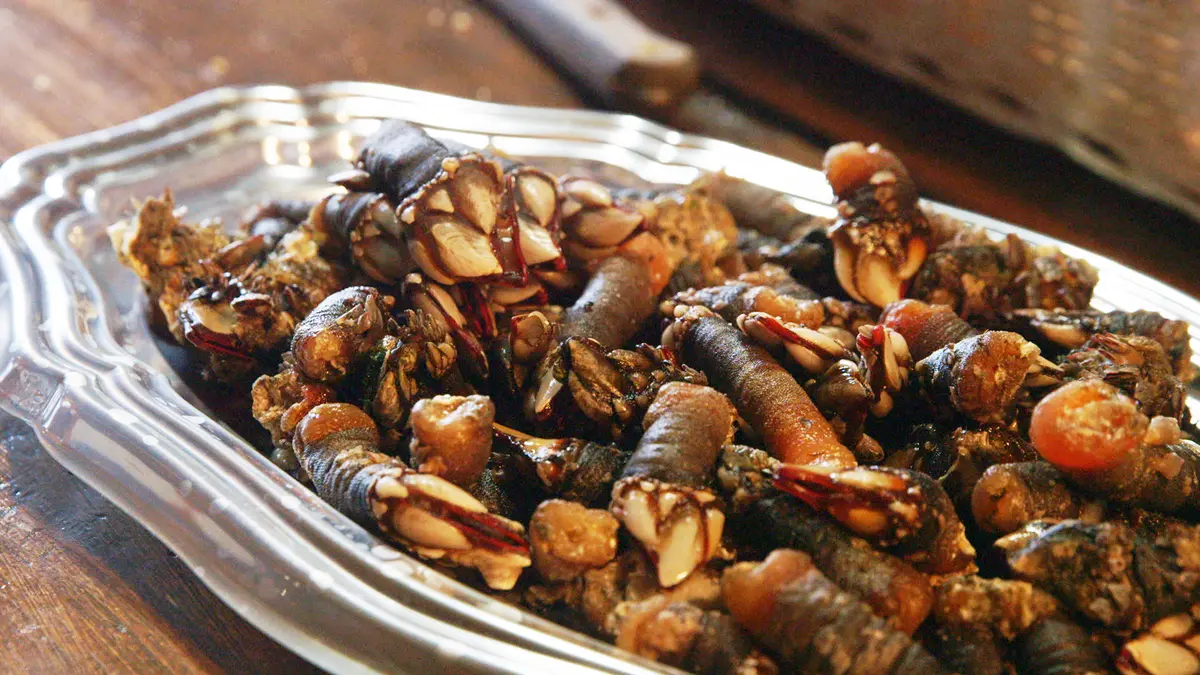
Mar do Inferno has been feeding serious seafood eaters for decades, guided by the Tirano family. Make a reservation in advance and ask specifically for a table on the covered patio facing the Boca do Inferno — you watch waves crash against the cliffs between courses. Order the percebes (goose barnacles) — among the most briny and prized expressions of traditional Portuguese food. They arrive steaming, prehistoric-looking, and rubbery on the outside. Grip the dark outer tube, twist, and pull to expose the tender, intensely briny flesh inside. Then order the curry-style lobster. The kitchen treats both with minimal interference, which is exactly the right call.
- Location: Estrada da Boca do Inferno, Cascais
- Cost: $60–$120+ per person with wine
- Best for: Serious seafood, special occasion meals
- Time needed: 2–3 hours; book ahead
Furnas do Guincho
A classic ocean-front restaurant near Guincho beach. More expensive than town-center options, but the setting earns it for a special lunch — the sound of the waves comes through from every table.
- Location: Near Praia do Guincho, west of Cascais
- Cost: $50–$90+ per person
- Best for: Celebrating something, fresh daily catch
Entráguas
A well-regarded traditional Portuguese restaurant on the road toward Casa da Guia, set slightly off the main tourist path. It has a quieter atmosphere, a strong wine list, and a menu that covers both seafood and meat with equal confidence.
- Location: Road to Casa da Guia, Cascais
- Cost: $35–$60 per person
- Best for: Traditional Portuguese food without the tourist markup
Santini
Attilio Santini, an Italian immigrant, started selling gelato on Tamariz beach in 1949. The original location now sits on Avenida Valbom, and the queues on weekends are a legitimate logistical variable to plan for. Order the hazelnut, chocolate, or any natural fruit flavor available that day. The quality has not drifted since the beginning.
- Location: Avenida Valbom, Cascais
- Cost: $3–$6 per serving
- Best for: Afternoon stop, everyone
| Restaurant | Focus | Signature Order |
|---|---|---|
| Mar do Inferno | Atlantic seafood | Percebes, curry lobster |
| Furnas do Guincho | Classic Portuguese seafood | Fresh daily catch |
| Entráguas | Traditional Portuguese | Seasonal fish and meat |
| Santini | Artisanal gelato | Hazelnut, chocolate |
The bottom line
TL;DR: Take the 40-minute CP train from Cais do Sodré (€2.55/~$2.80 on the Navegante card), walk the cliff path to Boca do Inferno, choose your beach or the free ocean pool, and catch the 405 or 415 bus to Guincho for the sunset. Give the town a full day — not a rushed half-day wedged between Sintra and a Lisbon dinner. Reserve a table at Mar do Inferno if the budget stretches, and eat percebes even if you are not sure what you are ordering.
The best things here take a little intention to find: a cliffside table, a quiet chapel, a free saltwater pool that locals treat as their own. What is the one thing you wish someone had told you before your first day trip from Lisbon?