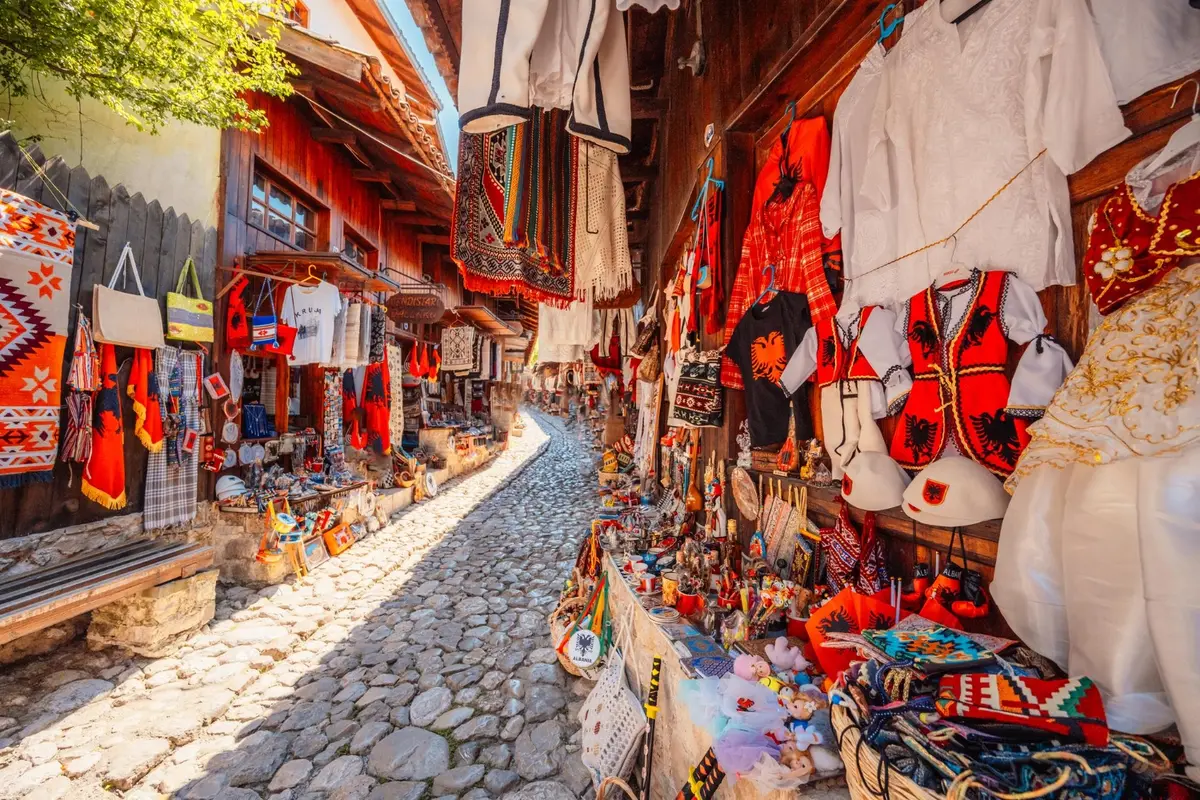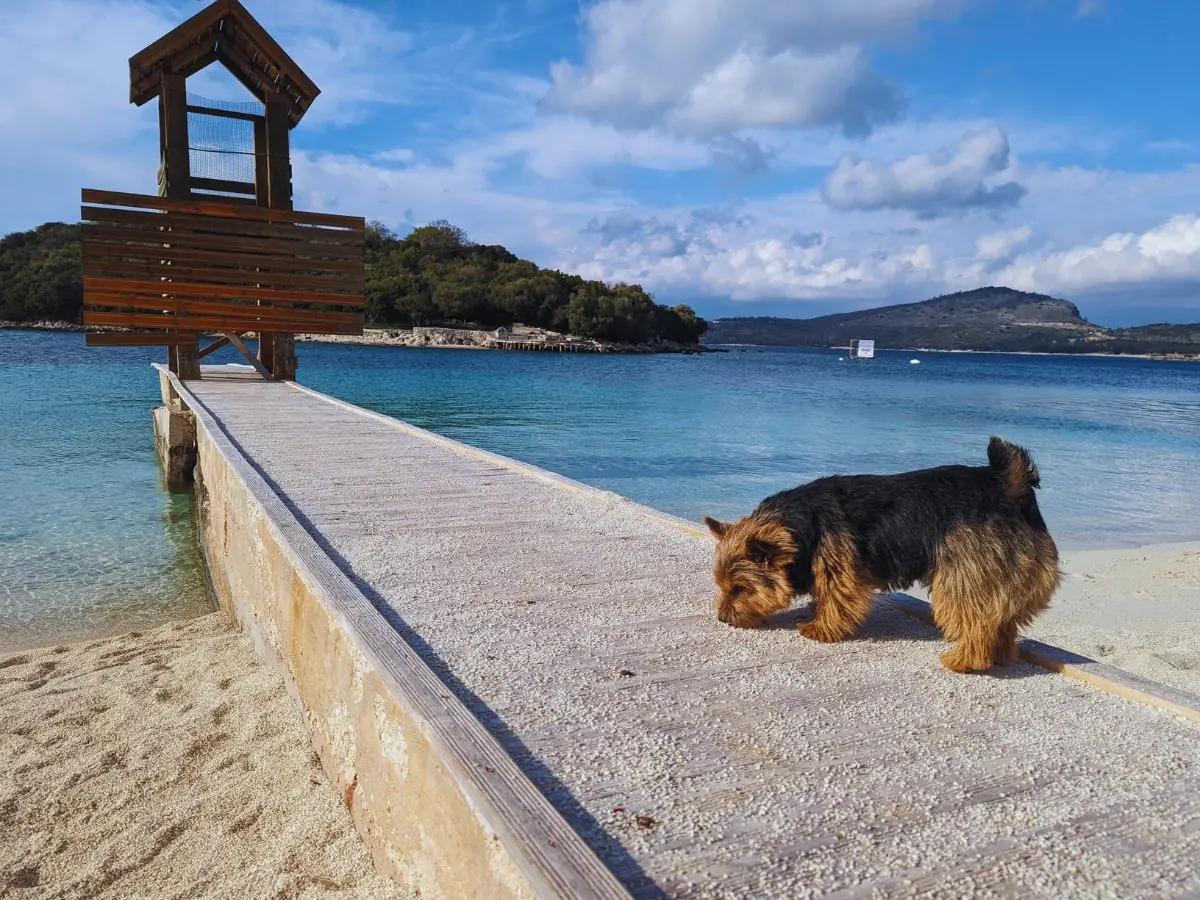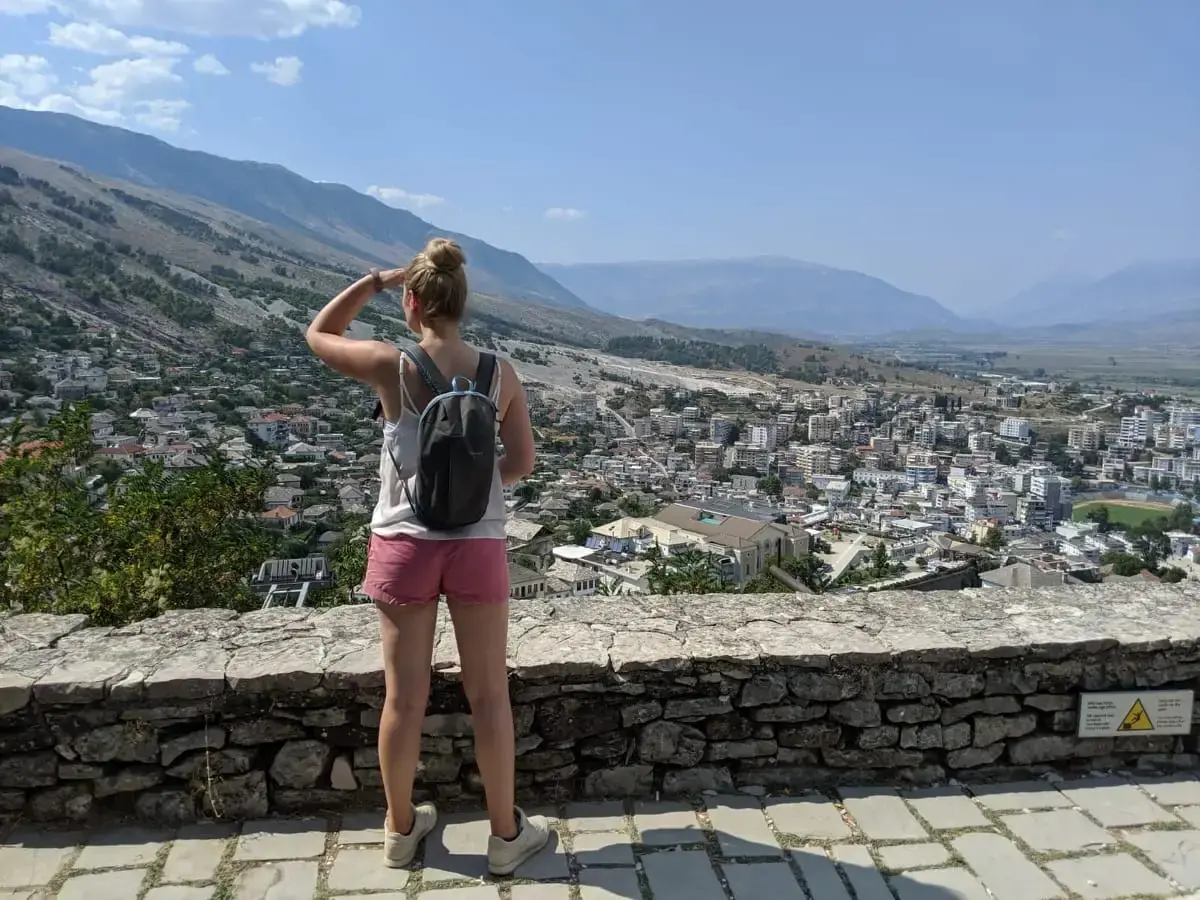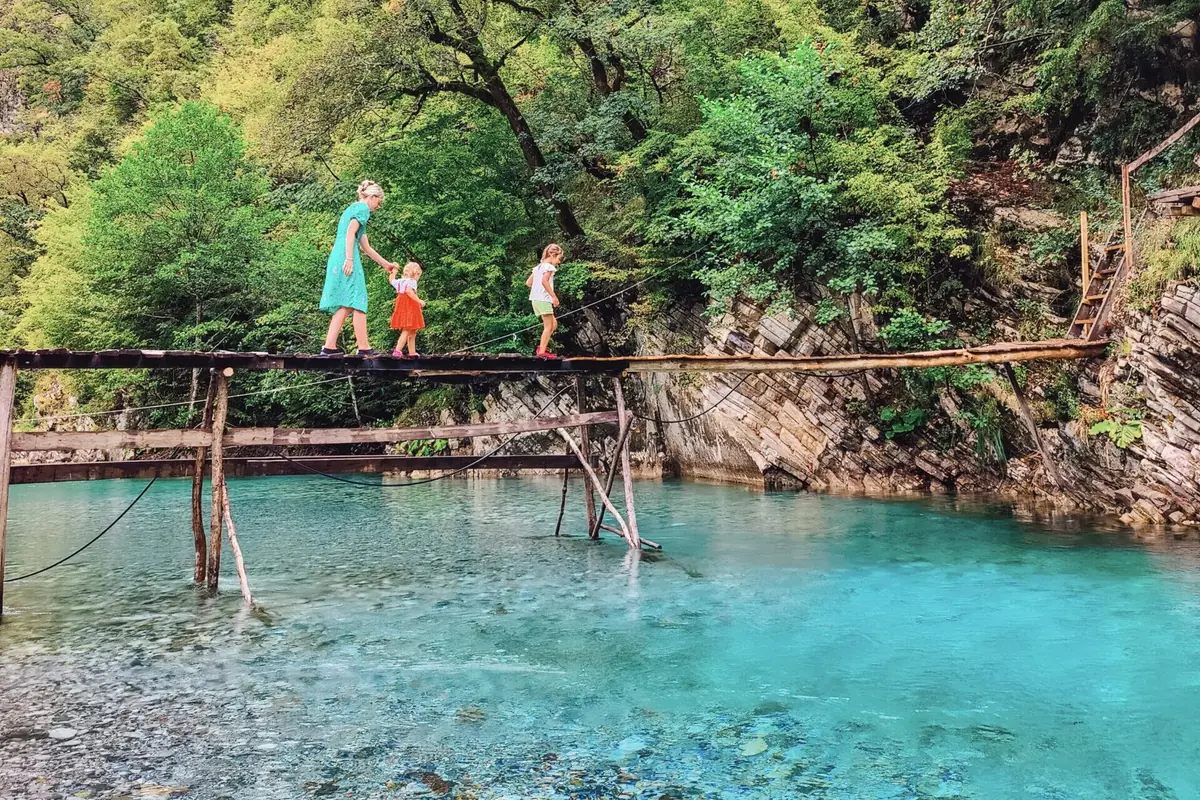
Renting a car in Albania is the only way to reach the turquoise coves of Ksamil or the switchbacks above Theth — public transport won’t get you there. This guide covers what a US driver actually needs for driving in Albania: real prices in USD, insurance traps, border rules, road conditions by route, and the companies worth booking.
Renting a car in Albania at a glance
Renting a car in Albania costs $15 to $65 per day depending on season and vehicle class. Book through DiscoverCars or Localrent, pick up at Tirana Airport (TIA), and buy full-coverage insurance — basic CDW leaves you liable for an €800 to €1,200 excess. You need your US license plus an International Driving Permit from AAA ($20). Albania drives on the right. Main roads are good and improving fast.
How much does a rental car cost in Albania?
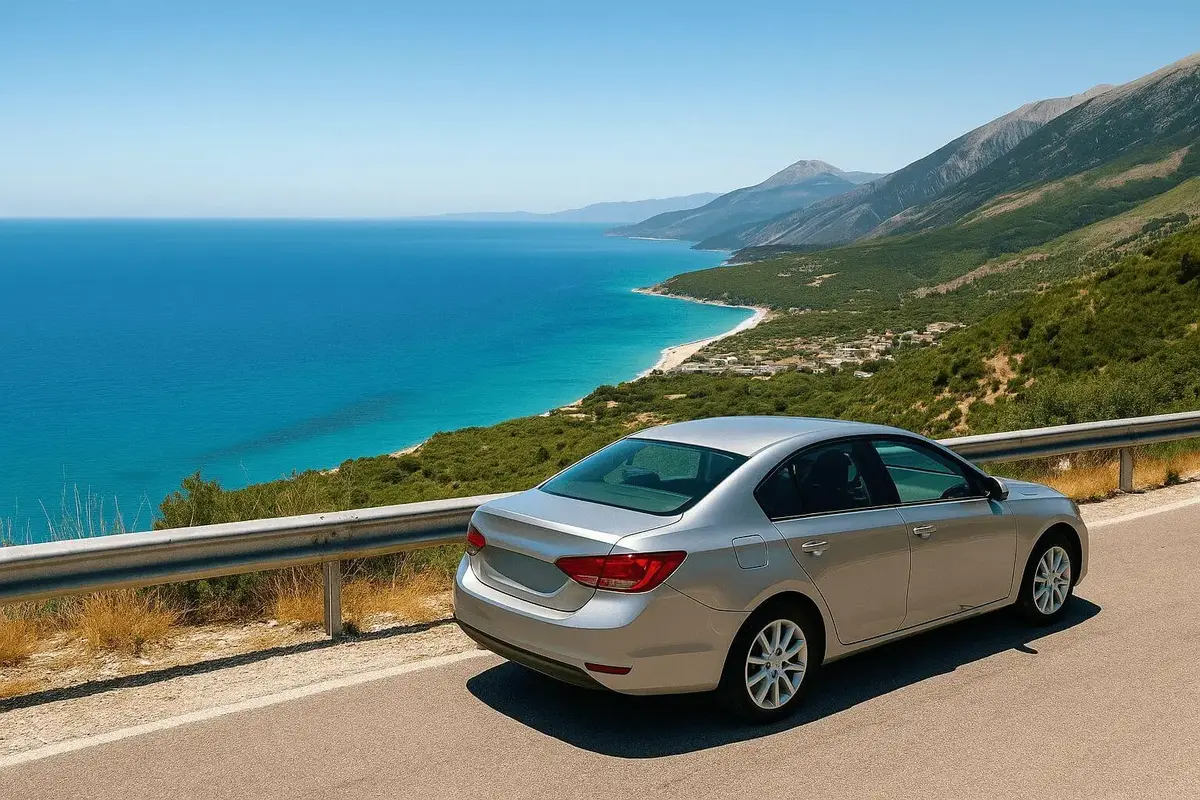
A basic economy car (VW Polo, Fiat Panda) costs $15 to $25 per day in low season and $45 to $65 per day in peak summer. SUVs like the Dacia Duster run $40 to $55 off-peak and $90 to $140 at the height of July and August. Local operators undercut international brands by 30 to 50 percent. Weekly rentals drop the per-day rate another 15 percent.
The gap between a local and an international desk is wider than most guides admit. On my last trip I paid $231 total for a 14-day rental in May — about $16.50 a day for a manual Fiat Punto with basic CDW through a local operator I booked via DiscoverCars. The same car quoted in mid-July came back at $52 a day with full insurance bolted on. The difference is a plane ticket.
Here is what an American driver should budget for the rental by vehicle class and season — one slice of your overall Albania travel costs:
- Economy manual (Polo, Panda, Sandero): $15 to $25 off-peak, $45 to $65 peak
- Economy automatic (Yaris, Clio AT): $22 to $32 off-peak, $55 to $85 peak
- Mid-size SUV (Duster, T-Cross): $40 to $55 off-peak, $90 to $140 peak
- 7-seater (Touran, Caddy): $60 to $80 off-peak, $130 to $180 peak
- Automatic transmission premium: 15 to 25 percent over manual
- Deposit range: €100 to €300 at local operators, €800 to €1,500 at international brands
- Young driver surcharge: roughly $3.50 per day for drivers under 25
- One-way drop-off: Enterprise waives fees within 40 km; beyond that expect €120
Pro Tip: Book at least 6 weeks out for any trip between mid-June and mid-September. The airport fleet genuinely runs out of automatics, and last-minute prices on what remains jump to double the off-peak rate.
Which rental companies actually operate in Albania?
Both international chains and local operators work out of Tirana Airport. Sixt, Europcar, Hertz, Avis, Enterprise, and Budget all have counters or meet-and-greet partners at TIA. Local operators like Karruka (rated 4.9 stars across more than 1,000 Google reviews), TiRental, and OTO Q often charge 30 to 50 percent less and offer flexible deposits — sometimes none at all.
The booking platform matters as much as the company. DiscoverCars and Localrent aggregate local Albanian operators and add a dispute layer if something goes wrong at return. Rentalcars.com and KAYAK lean toward international brands at higher rates.
The honest company breakdown most US travelers don’t get:
- Sixt, Europcar, Hertz, Avis: airport counters, €800 to €1,500 deposit, cross-border allowed for €35 to €110 per country, automatics available year-round
- Enterprise (via Albania Car Rentals licensee): strongest cross-border paperwork, €40 per country, requires authorization request 7 business days before pickup
- Karruka Rent a Car: top-rated local operator, often no credit card deposit, meets you at TIA arrivals with a sign, slightly older fleet
- OTO Q, TiRental, Optimo Rent, Alfa Rent: solid mid-tier local operators via DiscoverCars, newer fleets, €150 to €300 deposit
- Avoid: FinalRentals and Zezgo have a long trail of documented horror stories around hidden fees and damage disputes at return
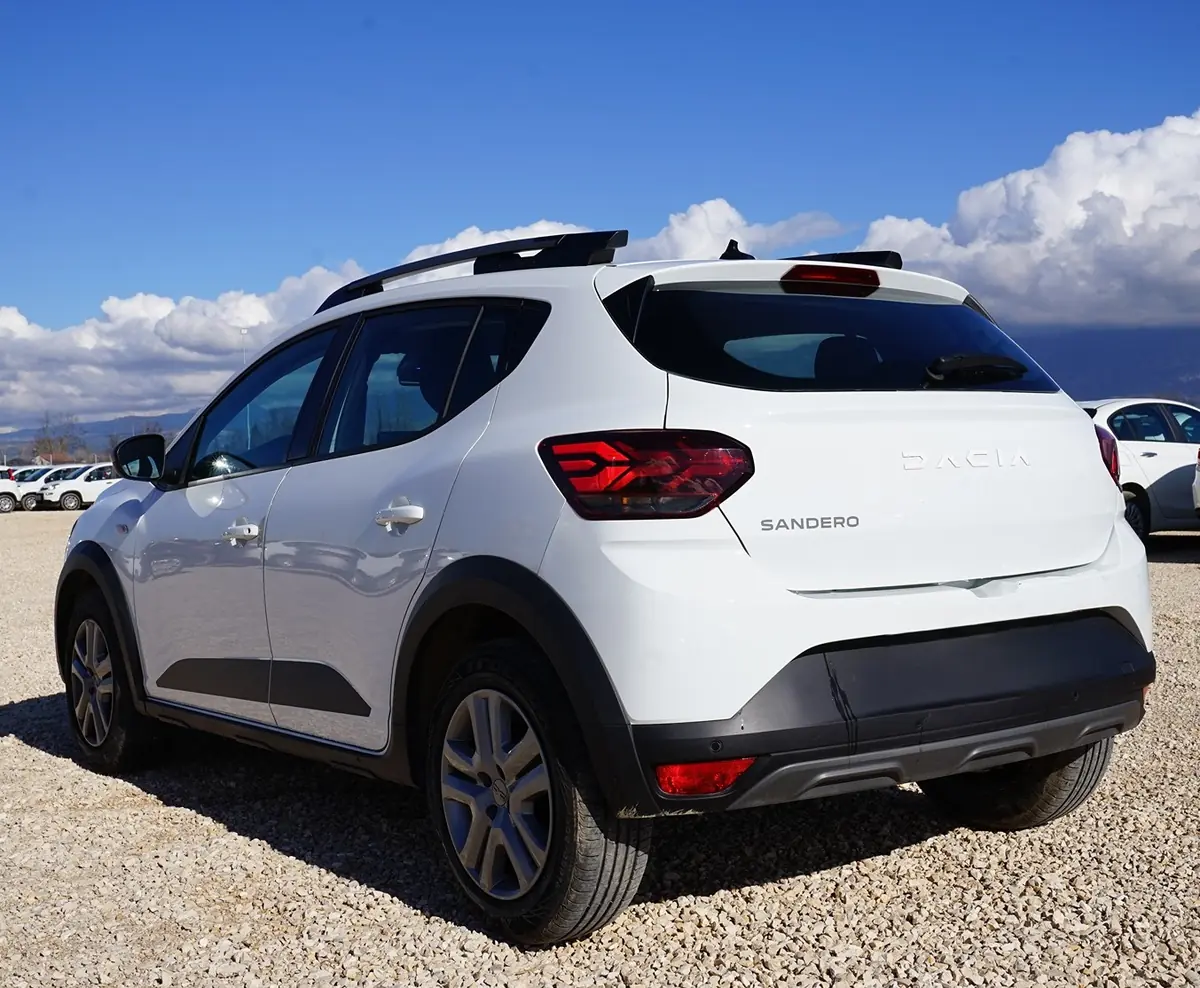
On the last booking I made through DiscoverCars, the system matched me with OTO Q. Their agent stood in TIA arrivals holding a printed sign with my name. Paperwork took 12 minutes, the car was a clean late-model Dacia Sandero, and the deposit hold was €150 on a Visa.
What insurance do you actually need?
Basic CDW is included in most Albanian rentals, but it leaves you liable for €800 to €1,200 of damage (the excess). Full coverage at the desk costs $22 to $30 per day — nearly doubling a budget rental. A third-party annual policy from insurance4carhire or RentalCover covers the excess on every rental you take for a year at a fraction of the desk price.
Here is how the layers stack up, in plain English:
- TPL (Third Party Liability): included by law, covers damage you cause to other cars and people
- CDW (Collision Damage Waiver): usually included with an €800 to €1,200 excess
- Super CDW / Full Coverage: sold at the desk for $22 to $30 per day, drops the excess to zero
- Third-party excess insurance (RentalCover, insurance4carhire): around $70 per year, refunds you if you’re charged the excess
- Green Card insurance for cross-border trips: €30 to €50 from the rental company, €15 if bought at the border
- Credit card rental insurance: Chase Sapphire Reserve and Capital One Venture X include primary CDW coverage in most European countries — call the benefits line and confirm Albania specifically before you rely on it
At the Europcar desk on my last trip, the agent pushed full coverage at €27 per day, which would have added $378 to a two-week rental. I declined because I’d bought an annual RentalCover policy for $89 that covered the full excess. The key is having the paperwork — a printed policy confirmation and claims phone number in the glove box.
Pro Tip: Standard CDW does not cover tires, glass, undercarriage, roof, or anything labeled “off-road use.” If you hit a pothole on SH8 and crack a rim, that’s coming out of your deposit even with “full” coverage. Photograph every wheel and the undercarriage at pickup.
Do Americans need an international driving permit?
Yes — get one before you fly. Albania’s road code requires an IDP for non-EU license holders. Some travelers report driving without one, but police at checkpoints can fine you 10,000 Lek (around $120) for missing documents, and several rental desks refuse pickup without it. An IDP from AAA costs $20 and takes about 10 minutes in person.
The US process is simple if you know the exact steps:
- Issuer: AAA is one of only two US-authorized issuers (the other is AATA) — the permit itself is federal, not state-specific
- What to bring: valid US driver’s license, two passport-style photos, $20 for the permit (branches add about $10 to $15 for photos)
- Timeline: same-day walk-in at most AAA branches; mail-in takes 10 to 15 business days
- Validity: 1 year from issue date
- Rule to remember: the IDP is only valid when carried alongside your US license — it’s a translation, not a replacement
I walked into an AAA office with my license, two photos from a CVS photo kiosk ($16.99), and $20. The agent printed the IDP in 8 minutes. At a checkpoint outside Gjirokastër, the officer asked for “patentë ndërkombëtare” — international license — and nodded when I handed him the permit.
Can you cross the border with an Albanian rental car?
Most Albanian rental companies allow cross-border driving to Kosovo (easiest, €20 to €40 fee) and Montenegro (common, €70 to €110 total with Green Card). North Macedonia is allowed by some companies with similar fees. Greece is effectively off-limits — most companies prohibit it, and those that allow it charge €150 or more.
The country-by-country reality:
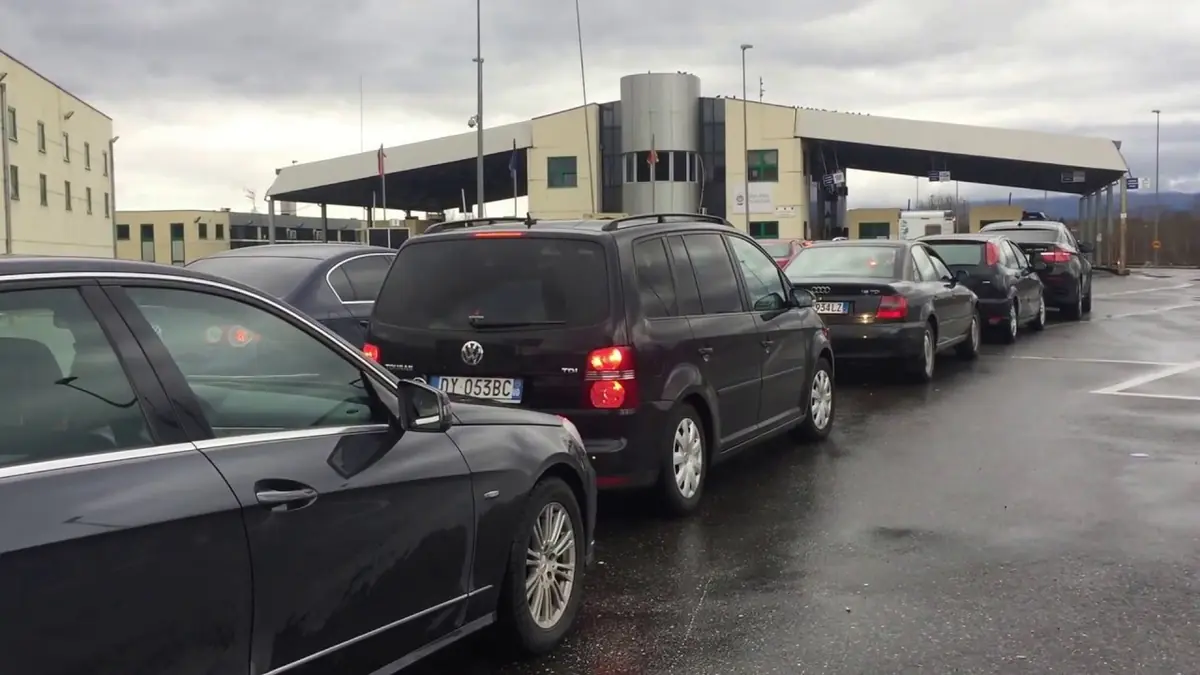
- Kosovo: no Green Card needed (Kosovo is excluded from the Green Card system over the Serbia dispute), MTPL proof or €15 border insurance required, main crossing Morinë operates 24/7, usually under 10 minutes at the gate
- Montenegro: Green Card mandatory, main crossings Hani i Hotit and Božaj for Podgorica, Muriqan–Sukobin for the coast and Ulcinj, 30 to 45 minute waits on peak summer weekends
- North Macedonia: Green Card mandatory, Qafë Thanë crossing near Lake Ohrid is smoothest, rarely busy
- Greece: most rental companies prohibit it outright; Kakavijë is the main crossing if your contract allows it
Documents every border guard will ask for:
- Passport
- License plus IDP
- Original vehicle registration (the rental company must provide this)
- Green Card
- Written authorization letter from the rental company
- Rental agreement
Electronic Green Cards are now accepted at every Albanian land border, but a printed backup saves arguments.
One important trap: if you plan to visit Serbia on the same trip, go to Serbia first. Serbia does not recognize Kosovo as a country and will not let you in with a Kosovo entry stamp. Cross from Albania into Kosovo, then exit Kosovo via Montenegro or North Macedonia if Serbia is on your list.
At Hani i Hotit on a Tuesday in September, the Albanian officer waved us through in 3 minutes. The Montenegrin side took 15 — they photographed the rental agreement, checked the Green Card, and asked where we were staying. Total wait: 18 minutes.
Is it safe to drive in Albania?
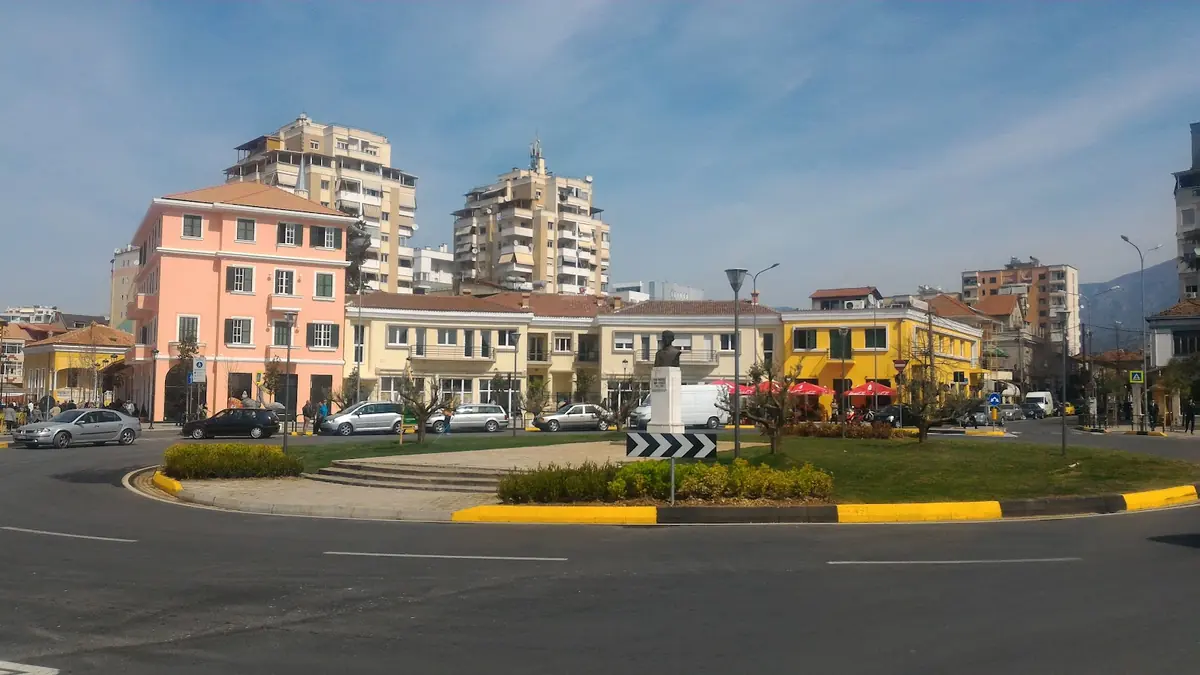
Yes, with caveats. Major highways between Tirana, Durrës, and Shkodër are modern and well-maintained, and Albania rates as a low-crime, broadly safe destination for tourists off the road as well as on it. Albania drives on the right, same as the US. The real challenges are aggressive local driving habits, unlit rural roads after dark, livestock wandering onto mountain roads, and Tirana’s roundabouts where vendors sell fruit from the central island while four lanes of traffic converge at 25 mph.
What feels familiar to a US driver:
- Right-hand traffic, left-hand-drive cars
- Speed limits comparable to US state highways
- Standard European signage with international pictograms
- Google Maps and Waze work everywhere with cell coverage
What catches Americans off guard:
- Roundabout priority is enforced by confidence, not signage — commit to your lane
- Daytime headlights are mandatory at all times, all year
- Blood alcohol limit is 0.01 percent — one beer and you’re over
- Fuel stations are full-service with attendants who pump for you
- Livestock on rural roads, especially on SH8 south of Vlorë and on mountain stretches
- Uber, Lyft, and Bolt don’t operate; local app-based taxis (Clust, Patoko, and Vrapon) cover the cities instead, with Clust the best bet for airport pickup
The first roundabout near Skanderbeg Square rattled me: five unmarked lanes of traffic, a fruit vendor on the concrete island, a Mercedes cutting across three lanes at 40 km/h. By day three the rhythm made sense — commit to your lane, tap the horn as a greeting not an insult, and never hesitate in a gap.
Pro Tip: Don’t drive mountain roads after dark. The SH99 between Gjirokastër and Saranda has zero street lighting once you leave city limits, and we caught three goats standing in our headlights near Jorgucat at dusk. Plan any mountain leg to finish before sunset.
What are the speed limits and driving rules?
Albanian speed limits are 25 mph (40 km/h) in cities, 50 mph (80 km/h) on open roads, and 68 mph (110 km/h) on motorways. Police use fixed speed cameras on the Tirana–Durrës corridor and mobile radar units elsewhere. Fines start at 5,000 Lek (around $60) and escalate fast for repeat violations.
The fine schedule every rental driver should know:
- Speeding over the limit: 5,000 to 20,000 Lek ($60 to $240) depending on excess
- Red light: 10,000 to 20,000 Lek ($120 to $240)
- Seatbelt violation: 5,000 Lek ($60) per person
- Phone use while driving: 5,000 to 10,000 Lek ($60 to $120)
- Missing documents at checkpoint: 10,000 Lek ($120)
- Alcohol over 0.01 percent BAC: from 20,000 Lek plus license suspension; a 22 percent surcharge applies between 10 p.m. and 7 a.m.
Required equipment in every rental (the company should provide these; check at pickup):
- Reflective safety vest
- Two warning triangles
- First-aid kit
- Spare bulb set
Fines can be paid on the spot, at any post office, or via the e-Albania app. Seatbelts are mandatory in every seat. Daytime headlights must be on at all times. Waze and Google Maps are legal and the two most reliable navigation options across the country.
How are the roads, and do you need a 4×4?
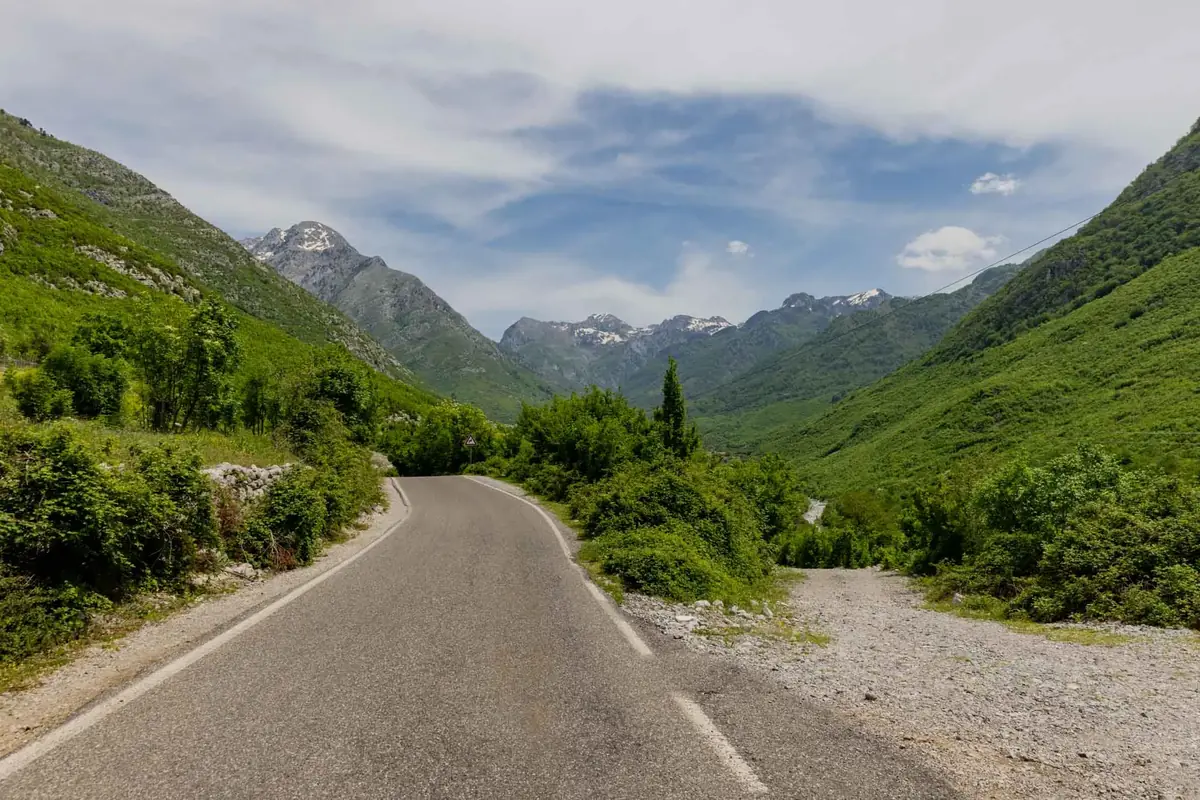
Albania’s road network has improved dramatically. Major routes are paved and in good condition. The Llogara Tunnel on the Albanian Riviera route cuts about 30 minutes off the old mountain pass — it now charges a 250 Lek toll for cars (about $2.70 one-way), while the scenic pass beside it stays free. The Theth road is fully paved from Shkodër all the way to the village. A standard economy car handles 90 percent of the country — a 4×4 is only worth the extra cost if Valbona or deep rural shortcuts are on your route.
Road conditions by route
- SH4 Tirana to Durrës: excellent dual carriageway, 25 minutes
- SH1 Tirana to Shkodër: good 2-lane paved highway, 1.5 to 2 hours
- A1 Rruga e Kombit (Durrës to Kosovo border): 71 mi (114 km) motorway, tolled, includes the Kalimash Tunnel (€5 for cars, about $5.40, roughly 700 Lek)
- A1 Thumanë–Kashar (near Tirana airport): newer tolled section, 250 Lek for cars (about $2.70)
- SH8 Vlorë to Saranda: fully paved, scenic, slow on coastal bends, 3 to 4 hours
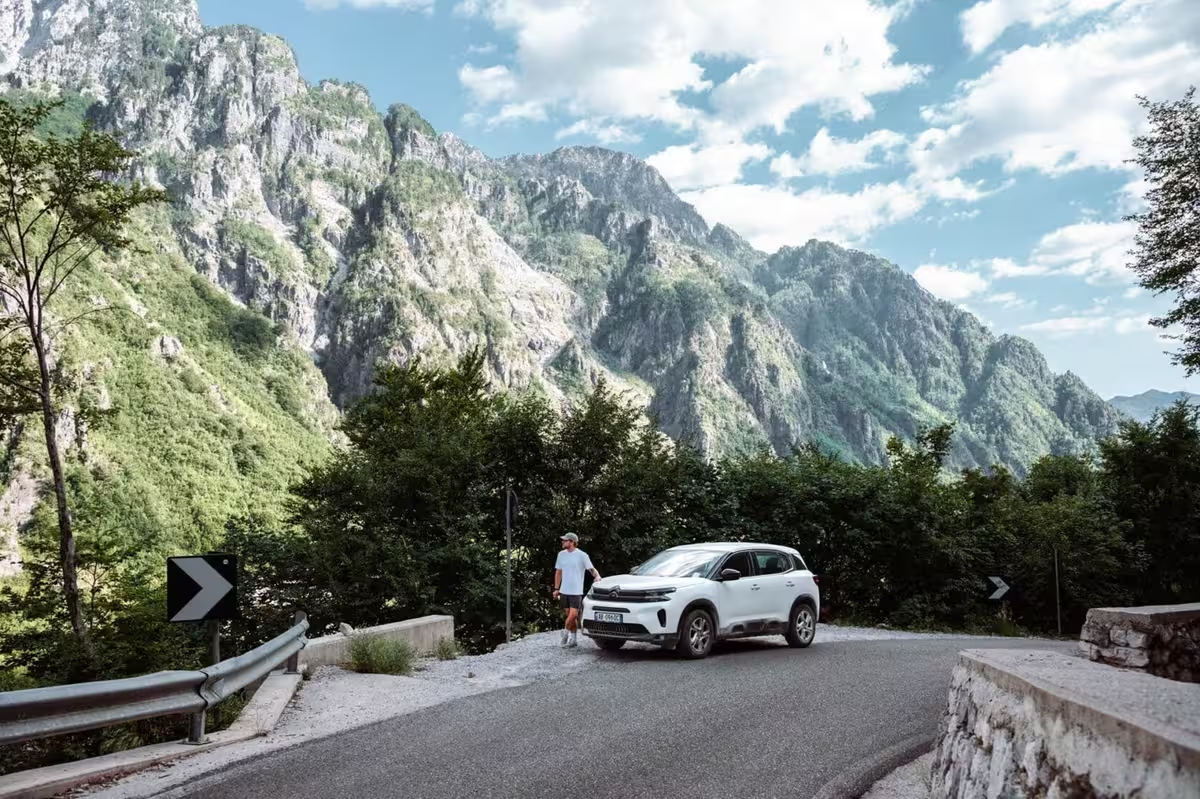
- SH21 Shkodër to Theth: paved, narrow at about 1.5 lanes, 27 hairpin turns, 15 to 18 percent gradient, snowbound and effectively closed December through May
- Valbona access roads: unpaved sections, 4×4 genuinely helpful
- Berat to Gjirokastër mountain shortcut: unpaved, skip it in a regular car
Drive times between major destinations
The drive-time cheat sheet no competitor publishes in US units:
- Tirana to Saranda: 174 mi (280 km), 4.5 to 6 hours
- Tirana to Shkodër: 62 mi (100 km), 1.5 to 2 hours
- Tirana to Berat: 75 mi (120 km), 2 to 2.5 hours
- Tirana to Gjirokastër: 130 mi (210 km), 3 to 3.5 hours
- Tirana to Vlorë: 93 mi (150 km), 2 to 2.5 hours
- Shkodër to Theth: 47 mi (76 km), 2 to 2.5 hours
- Saranda to Ksamil: 9 mi (14 km), 20 minutes
- Saranda to Butrint: 11 mi (18 km), 25 minutes
- TIA to Tirana center: 11 mi (17 km), 25 to 30 minutes
Google Maps underestimates Albanian drive times by 30 to 60 minutes on mountain and coastal routes. Build a buffer.
Every blog I read before my first trip said I’d need a 4×4 for Theth. We drove the SH21 in a Dacia Sandero with no trouble. The challenge on that road isn’t surface quality — it’s holding your nerve through switchbacks where the valley drops off a foot from the asphalt with no guardrail.
How much does fuel cost, and how do gas stations work?
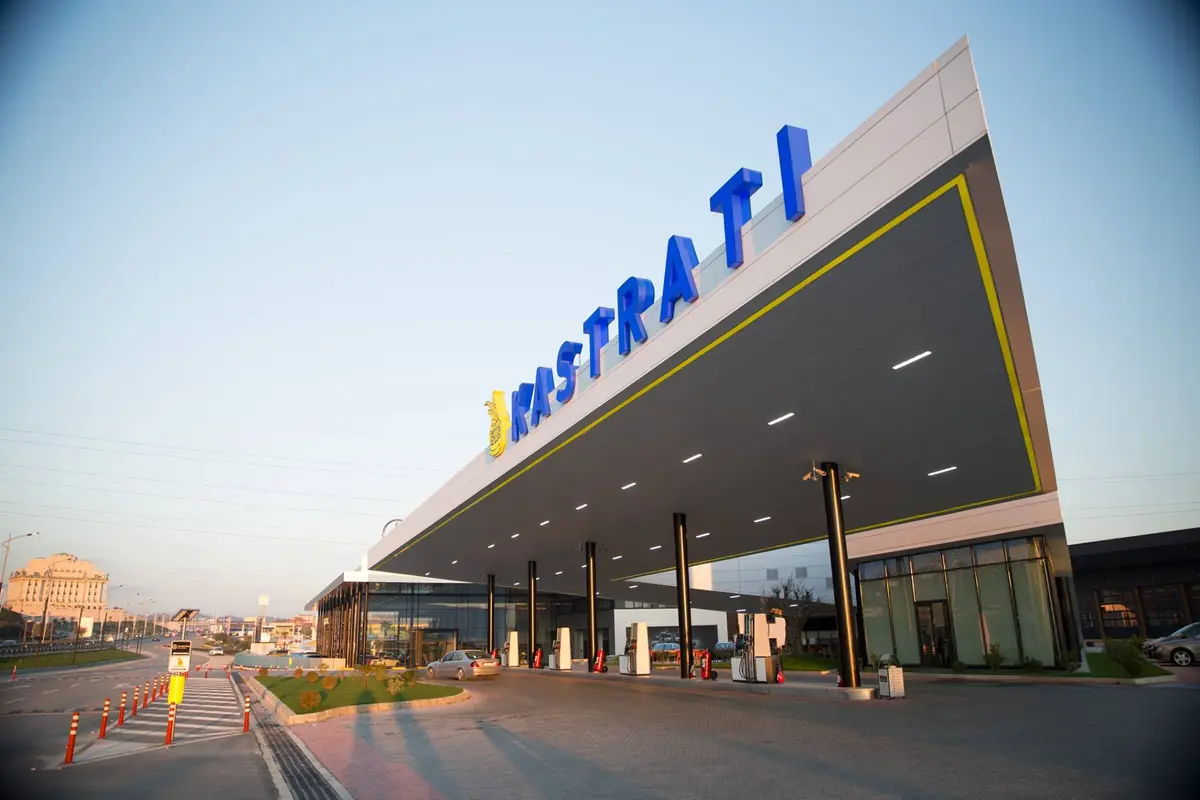
Gasoline costs roughly $2.10 per liter (about $7.95 per gallon) and diesel about $2.25 per liter ($8.50 per gallon) — pricier than the US, cheaper than Western Europe. Prices are government-regulated, so they’re nearly identical at every station and adjust every couple of weeks. Albanian stations are full-service: an attendant pumps your gas. Budget around $200 for fuel on a two-week Albania road trip loop.
Fuel logistics for a US driver:
- Albanian terms at the pump: naftë = diesel, benzinë = gasoline — misfueling a diesel rental costs €250 to drain and clean
- Major chains: Kastrati (most reliable, 150+ stations), Bolv Oil, ELDA, Kurum, Gega, ESP
- Credit card acceptance: consistent at Kastrati and Bolv Oil; spotty everywhere else
- Cash to carry: 2,000 to 3,000 Lek ($25 to $37) in case the card reader is down
- Tipping attendants: not expected; 50 to 100 Lek is appreciated on a full tank
- Hours: generally 8 a.m. to 8 p.m.; 24-hour stations exist on the A1 and SH4
- Euros: accepted at most stations but at a punishing exchange rate — use Lek
The first time I pulled into a Kastrati station I started to get out. The attendant waved me back into the seat, pointed at the fuel cap, and filled it up. My Visa worked with a tap. At a small unbranded station near Përmet the next day, the attendant shook his head at the card and pointed at a hand-written “CASH” sign taped to the pump.
Where should you pick up and return the car?
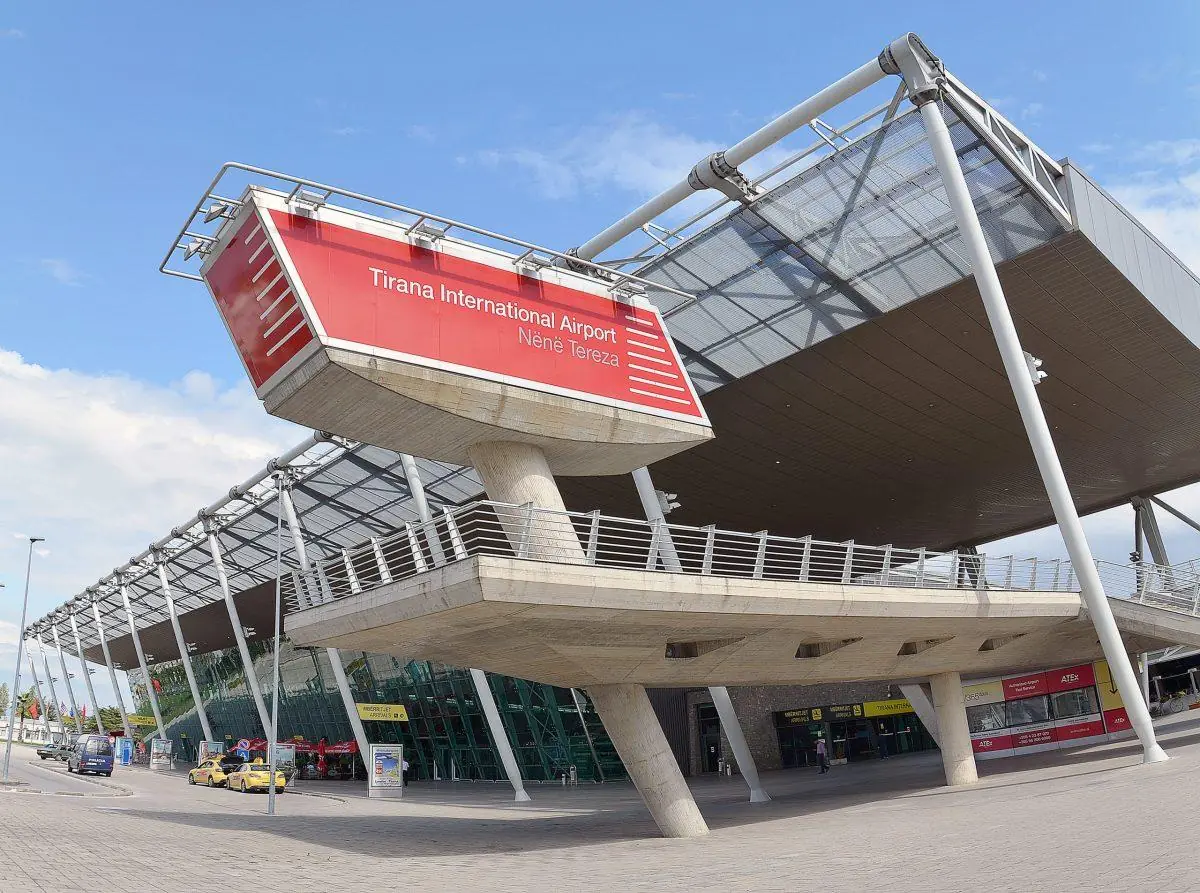
Tirana International Airport is the default and usually the best choice. Every major company has a counter or meet-and-greet there, and you skip Tirana’s chaotic city traffic on arrival day. If you’re coming from Corfu on the Corfu–Saranda ferry, rent in Saranda instead to save a 5-hour drive south. Tirana city pickups occasionally shave $5 to $10 per day but add significant stress.
Pickup options compared:
- TIA (Tirana Airport): all major brands, in-terminal counters plus meet-and-greet operators in arrivals, easiest exit via SH-60 highway
- Tirana city center: some local operators only, slightly cheaper, brutal first-day traffic for new arrivals
- Saranda: select local operators, ideal if arriving via the Corfu–Saranda ferry, saves the long southbound drive
- One-way drops: Enterprise waives fees within 40 km; beyond that a €120 fee is typical industry-wide
For Tirana-only stays without day trips, skip the car entirely. The cheapest Tirana airport transfer is the Rinas Express shuttle, which runs from TIA to Skanderbeg Square for 400 Lek (about $4), every hour on the hour, 24 hours a day — it leaves from bus bays 9 and 10 outside arrivals and drops you beside the National Theatre of Opera and Ballet. A taxi covers the same route for €20 to €25.
Where do you park in Albanian cities?
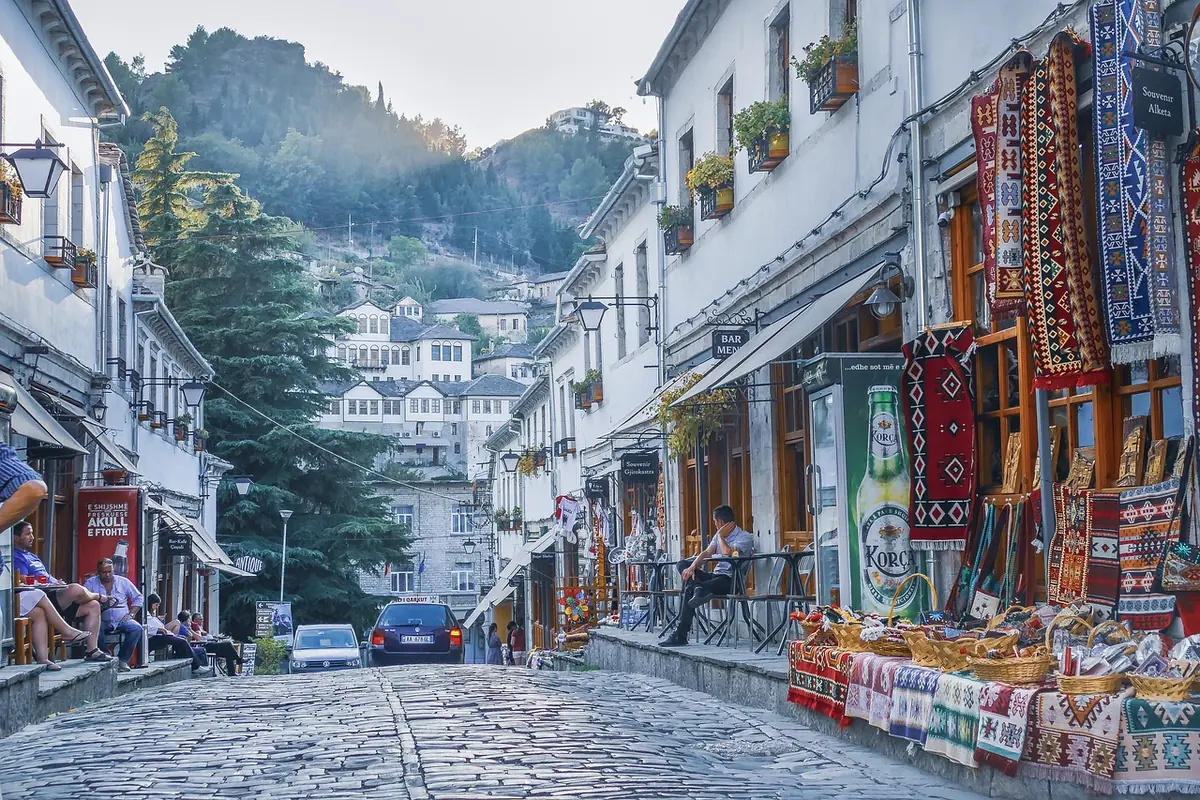
Parking in Albania ranges from free and chaotic to SMS-paid and zoned. Tirana has a paid parking system with two zones — 100 Lek per hour (about $1.20) in Zone A near the center and 40 to 50 Lek per hour in Zone B. Coastal towns charge €3 to €5 per day at informal beach lots in summer. Old towns like Berat and Gjirokastër have steep, narrow streets — park in the new town and walk up.
City-by-city parking notes:
- Tirana: Zone A 100 Lek/hr, Zone B 40 to 50 Lek/hr, paid via SMS to 50500 (requires Albanian SIM); free evenings and weekends; underground lots at Tirana International Hotel and Air Albania Stadium as backup
- Berat: park in the new town and walk the footbridge to the Mangalem quarter; limited street parking near guesthouses
- Gjirokastër: old town streets are 8 feet wide with 20 percent grades — don’t attempt it; public lot a 5-minute walk from the bazaar
- Saranda: summer chaos on the waterfront; informal beach lots €3 to €5 per day
- Ksamil: parking is the hardest problem in July and August — arrive before 9 a.m.
In Gjirokastër I tried to drive up to the old bazaar and immediately regretted it. The cobblestone street narrowed to about 8 feet with stone walls on both sides and a steep grade. I reversed 200 meters with the mirrors folded and parked at the public lot below. Do not repeat my mistake.
When is the best time to rent a car in Albania?
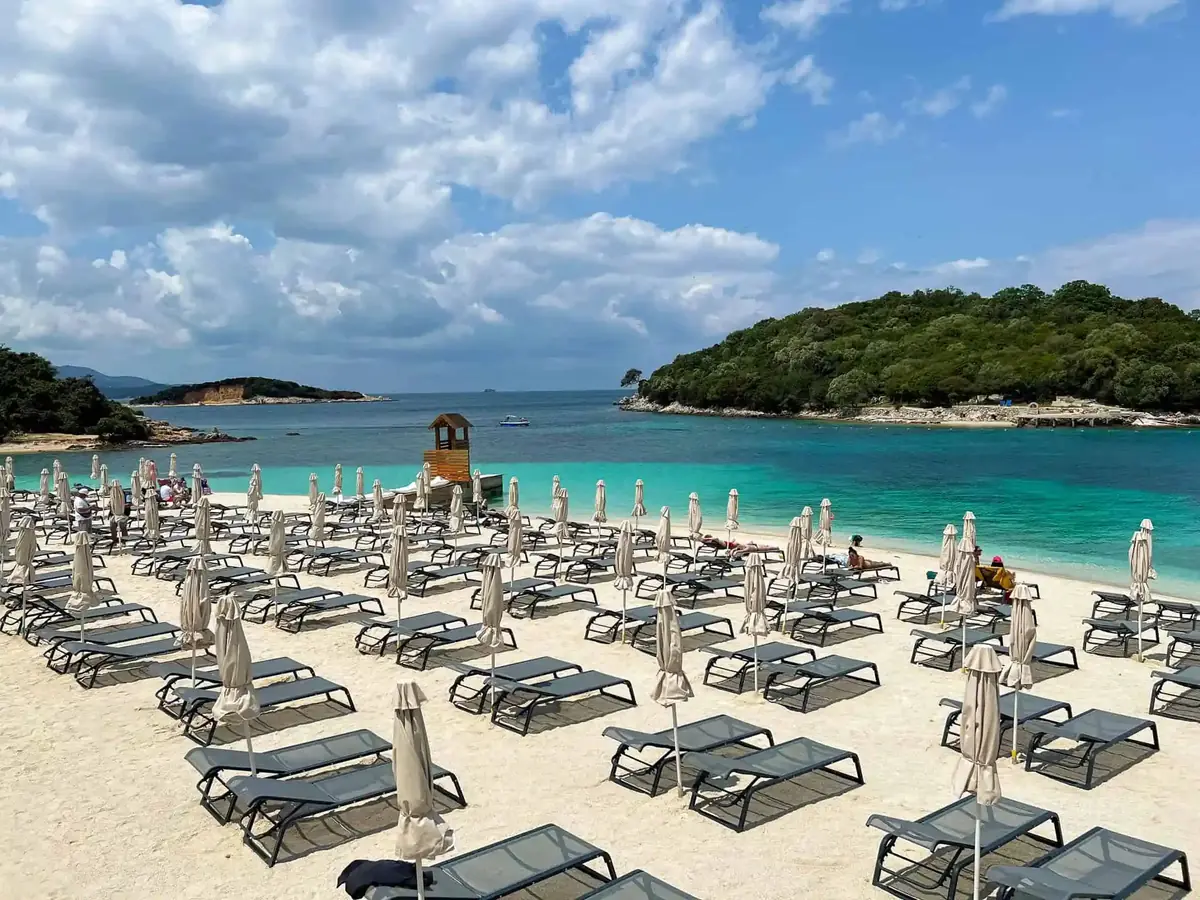
May through June and September through October hit the sweet spot, and they line up neatly with the best time to visit Albania overall. Rental prices drop 50 to 70 percent from summer peak, roads are clear of beach traffic, and temperatures sit at a comfortable 70 to 82°F (21 to 28°C) on the coast. July and August deliver peak beach weather but also peak prices, traffic jams on SH8, and parking chaos in Saranda and Ksamil.
A seasonal decision grid for US drivers:
- November to March: cheapest rentals at $8 to $15 per day, coastal temps 46 to 55°F (8 to 13°C), Theth road closed December through May, Llogara Tunnel open year-round, mountain routes may require winter tires or chains
- April and early May: low prices holding at $12 to $20 per day, roads drying out, Theth reopens mid-May
- Late May and June: sweet-spot pricing $15 to $25 per day, 70 to 78°F coast, green mountains, every road open
- July and August: peak prices $45 to $65 per day economy, 82 to 91°F coast, heavy traffic on SH8, parking impossible at popular beaches
- September and early October: sweet-spot again at $18 to $28 per day, sea still 75 to 78°F, thin crowds
- Late October: prices drop to $10 to $18 per day, higher rainfall risk, mountain access still open most years
My September rental cost $18 per day — one-third of July prices. The Riviera was still warm enough for swimming (78°F sea temperature), traffic on SH8 had thinned, and we found parking at Gjipe Beach without circling once.
Is it worth renting a car in Albania?
Absolutely — a rental car is the single best way to see Albania. Public transport — Albania’s furgons, or shared minibuses — is slow and indirect, and it skips most of the best beaches, the mountain villages, and the inland UNESCO sites. With fuel around $8 per gallon and rentals from $15 per day, a car costs less than daily taxis and delivers total schedule freedom. The only exceptions: a Tirana-only city break or a single resort stay.
Where the car earns its keep:
- Ksamil and Butrint: not served by direct public transport from Saranda in a way that lets you leave when you want
- Theth: one morning furgon leaves Shkodër and returns late afternoon — miss it and you’re stuck
- Blue Eye Spring: 30 minutes off the main road with no scheduled transport
- Llogara Pass viewpoints: nowhere to stop on a furgon route
- Coastal beaches between Himarë and Saranda: accessible only by car
Where public transport works fine:
- Tirana to Berat or Shkodër as a single round-trip
- A beach-holiday base in Saranda with local taxis (€5 to €10 per ride)
- A Tirana-only long weekend — the city is walkable and compact
We spent our first two days on furgons. The Tirana-to-Berat furgon took 3 hours 15 minutes with one transfer and no air conditioning in 90°F heat. When we rented a car on day three, the same trip took 1 hour 50 minutes with our own playlist and A/C blasting. Never again.
What documents do you need to rent a car in Albania?
You need five things: a valid US driver’s license, an International Driving Permit from AAA ($20), your passport, a credit card for the deposit (Visa or Mastercard — Amex is often rejected), and a printed copy of your booking confirmation. Some local operators accept debit cards; international brands require credit cards with enough limit to cover the €800 to €1,500 hold.
The complete rental pickup checklist:
- US driver’s license (physical card, not a photo)
- International Driving Permit from AAA, in English and Albanian-compatible script
- Passport (hand it over at the desk; they’ll photocopy it)
- Credit card in the primary driver’s name with €1,500 available limit
- Printed or email-ready booking confirmation
- Optional but smart: printed copy of any third-party insurance policy and claims phone number
Age rules are looser than most of Europe. Most companies rent to drivers 21 and over with at least one year of license experience. A few international brands require 23 or 25, and under-25 drivers pay a young-driver surcharge of around $3.50 per day.
How do Albanian police checkpoints work?
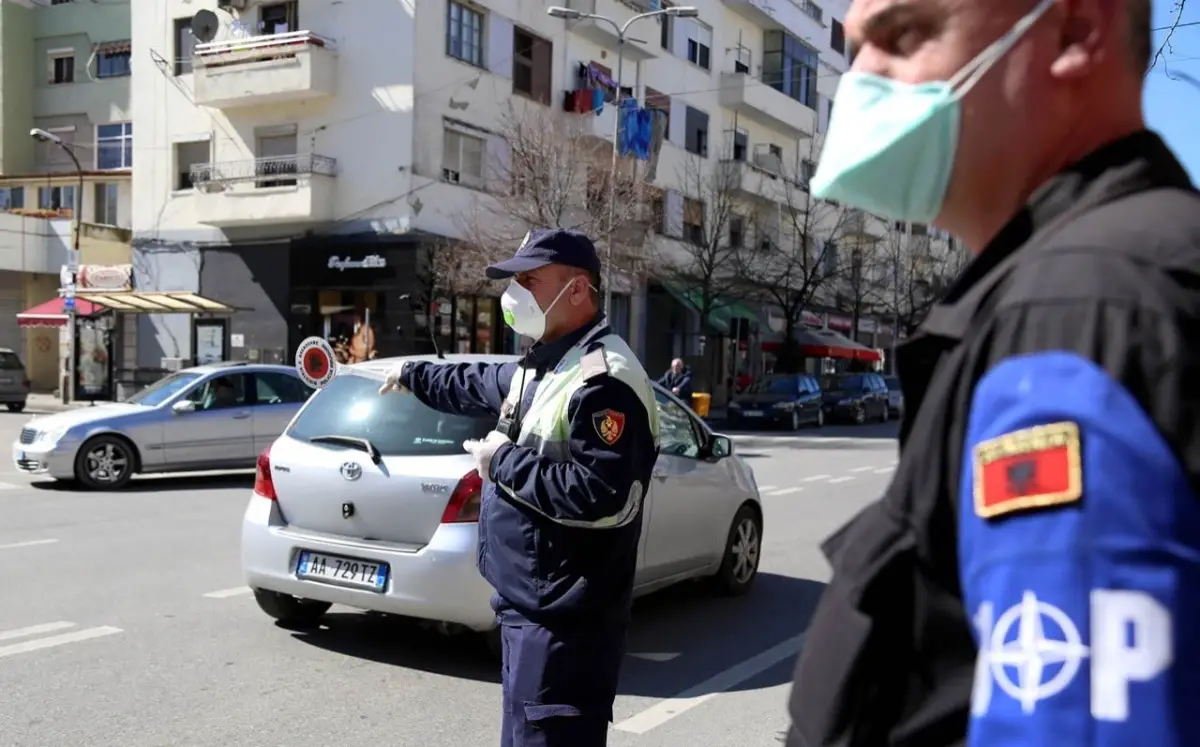
Albanian police run frequent roadside checkpoints on highways and near border areas. Officers flag you down with a red paddle or a simple hand wave and ask for documents — passport, license, IDP, rental agreement, and insurance. A routine stop takes 2 to 5 minutes. Stay calm, keep documents accessible, and cooperate. Fines are payable on the spot, at a post office, or through the e-Albania app.
What a US driver should know before the first stop:
- Triggers: foreign plates, visible rental stickers, random enforcement zones, speed-camera areas
- What they check: passport, license, IDP, rental contract, insurance card, Green Card near borders
- Protocol: pull fully onto the shoulder, keep hands visible, roll the window down, stay in the car unless asked to exit
- Language: basic English or gesture works; Google Translate offline is a good backup
- Outcomes: usually a document check and a wave-through; speeding or missing documents trigger a written fine
- Never offer a bribe: it’s illegal and will escalate the stop
- Always get a fine receipt: it’s your proof of payment if you’re stopped again that day
We were stopped twice in 14 days. The first was a routine checkpoint on SH1 south of Shkodër — an officer in a reflective vest waved us over, glanced at the passport and rental agreement, and waved us through in 90 seconds. The second, near the Montenegrin border, the officer photographed the Green Card document and asked where we were staying.
Before you book
TL;DR: Rent from a local operator via DiscoverCars or Localrent for the best prices ($15 to $65 per day depending on season). Pick up at Tirana Airport. Get an IDP from AAA ($20) and bring a Visa or Mastercard with a €1,500 limit. Buy full-coverage insurance or a third-party excess policy — basic CDW leaves you exposed to €800 to €1,200. Cross into Kosovo or Montenegro freely but skip Greece. Don’t drive mountain roads at night. Best months: May to June and September to October.
What does your Albania trip look like — a full Riviera loop, the Alps via Theth, or a lap of the three UNESCO cities? Drop it in the comments and I’ll flag any specific road conditions or company quirks on that itinerary.