Albania has no rail network, no metered taxis, and no ride-hailing apps. That leaves Albania bus travel — and its scrappy cousin, the furgon — as the cheapest and most authentic way to move around one of Europe’s most underrated countries. This guide covers every route, every price, and every tip a US traveler actually needs.
After three weeks of furgon-hopping from Shkodër to Sarandë, here is everything I wish I had known on day one.
How does Albania bus travel actually work?
Albania’s intercity transport runs on furgons (shared minivans) and larger coaches connecting every major city. There is no centralized schedule and no national timetable. Furgons depart when full and cost $2 to $21 depending on distance. You pay cash in Albanian lek on board. For advance booking, use Gjirafa Travel (travel.gjirafa.com). Most domestic routes leave from Tirana‘s South & North Terminal.
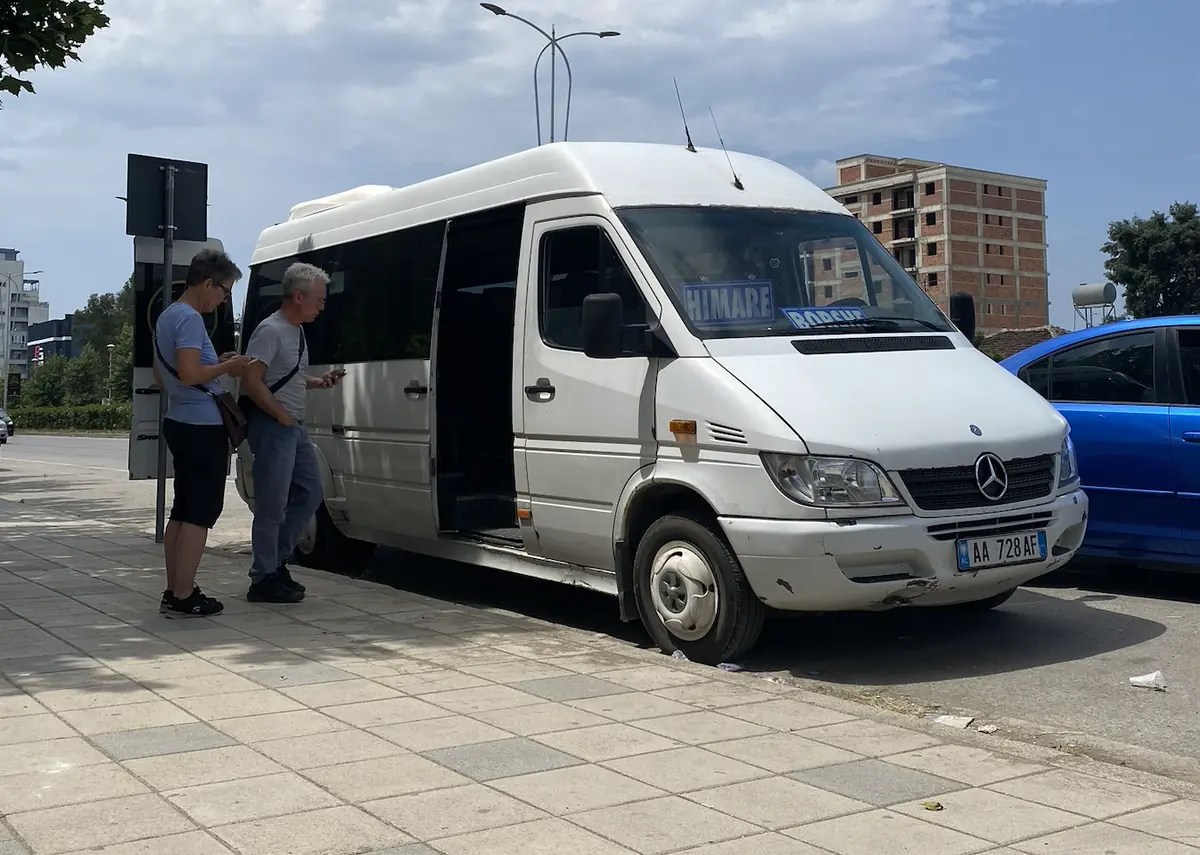
Albania retired its communist-era railways and never replaced them. Instead, a network of privately operated furgons — white minivans seating 8 to 12 passengers — fills the gap alongside larger coaches on major routes. No single company runs the system. The destination is a cardboard sign propped on the dashboard.
Only one rail line still operates, a slow weekend service between Durrës and Elbasan that no traveler should plan around. Everything else moves on rubber tires.
The cardboard sign read “BERAT” in black marker. The driver waved me aboard, pointed to the last open seat beside a woman carrying a sack of peppers, and returned to his cigarette.
A few traits to expect across the network:
- Furgons are mostly Mercedes Sprinter vans, privately owned by the driver
- Larger coaches dominate the long-haul routes — Tirana–Sarandë, Tirana–Shkodër, Tirana–Vlorë
- Drivers operate independently and sometimes coordinate transfers by phone
- The system inherited from post-communist privatization works better than it looks
Pro Tip: Albanians shake their head for “yes” and nod for “no” — the opposite of what most US travelers expect. Watch the driver’s head before you assume your bus is leaving without you.
Which Tirana bus terminal do you need?
Tirana has two active bus terminals, and figuring out which one your bus leaves from is the single biggest source of confusion for first-time visitors. The South & North Terminal near Garden Mall handles most domestic routes — Shkodër, Berat, Sarandë, Vlorë, Durrës. The East Terminal at TEG handles international routes plus Korçë, Elbasan, and Pogradec.
South & North Terminal — most domestic routes
This is the workhorse. Most domestic furgons and coaches leave from here.
- Location: about 4 miles (6 km) from Skanderbeg Square, near Casa Italia and Garden Mall
- City bus: Line L5B from behind the National History Museum, fare 40 ALL ($0.50)
- Taxi cost: $13 to $15 from central Tirana
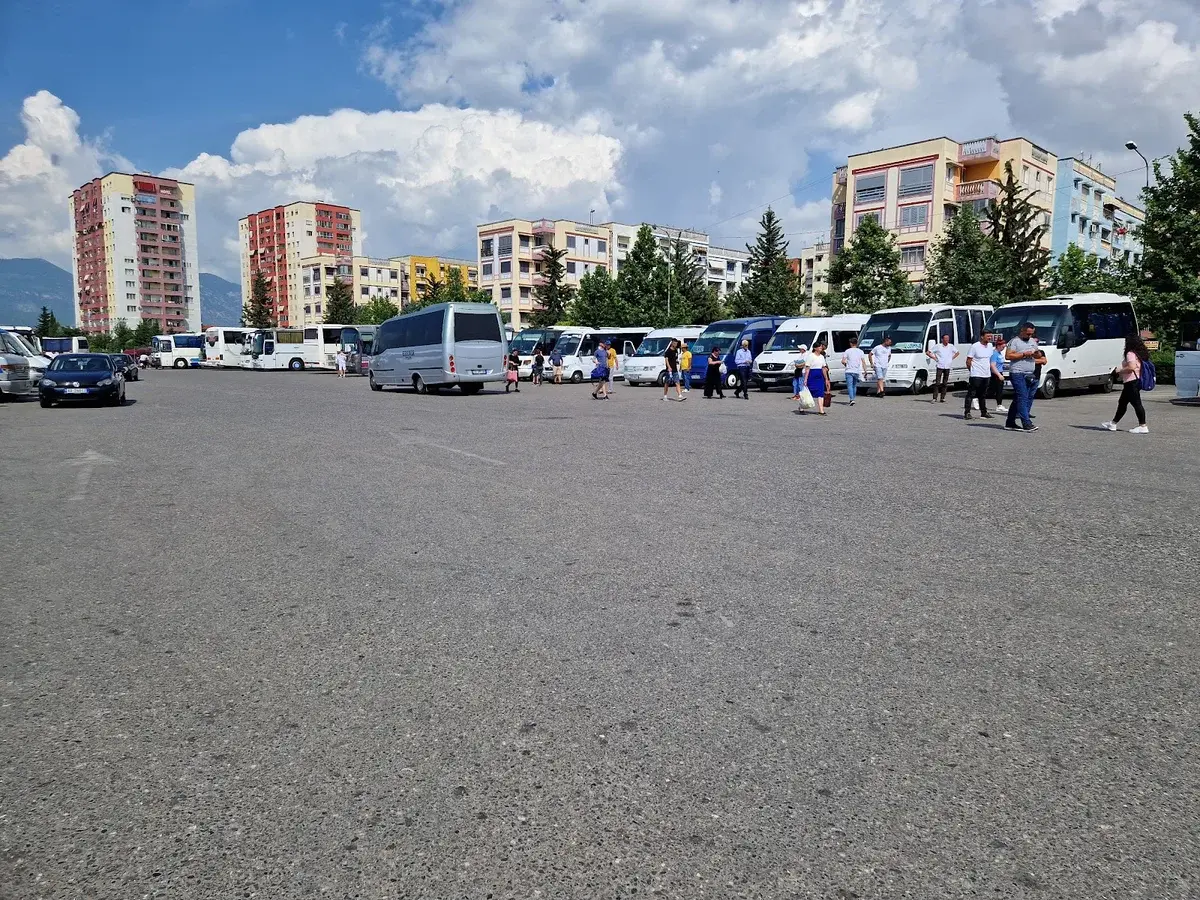
- Layout: gravel lot ringed by minivans, no digital boards, no central ticket office
- Departures: most routes leave between 6 AM and 2 PM
East Terminal at TEG — international routes
TEG (Tirana East Gate) is a shopping mall on the southeast edge of the city, and the international hub sits in its parking complex.
- Location: about 4.7 miles (7.5 km) from Skanderbeg Square
- City bus: lines 2 or 8 from central Tirana
- Taxi cost: $11 to $15
- Routes: FlixBus international plus domestic to Korçë, Elbasan, Pogradec
- Layout: dedicated bays, signage in English and Albanian, indoor waiting
I took the L5B for 40 lek — less than fifty cents — from behind the National History Museum, and 20 minutes later stood in a gravel lot ringed by idling minivans. This is Albania’s main bus terminal — and as that ride showed, it sits well outside the neighborhoods where most visitors stay.
Pro Tip: The old Asllan Rusi international terminal near the sports palace is mostly defunct. If a website or older blog tells you to go there for a Pristina or Podgorica bus, ignore it — those routes moved to TEG.
What does every major bus route cost?
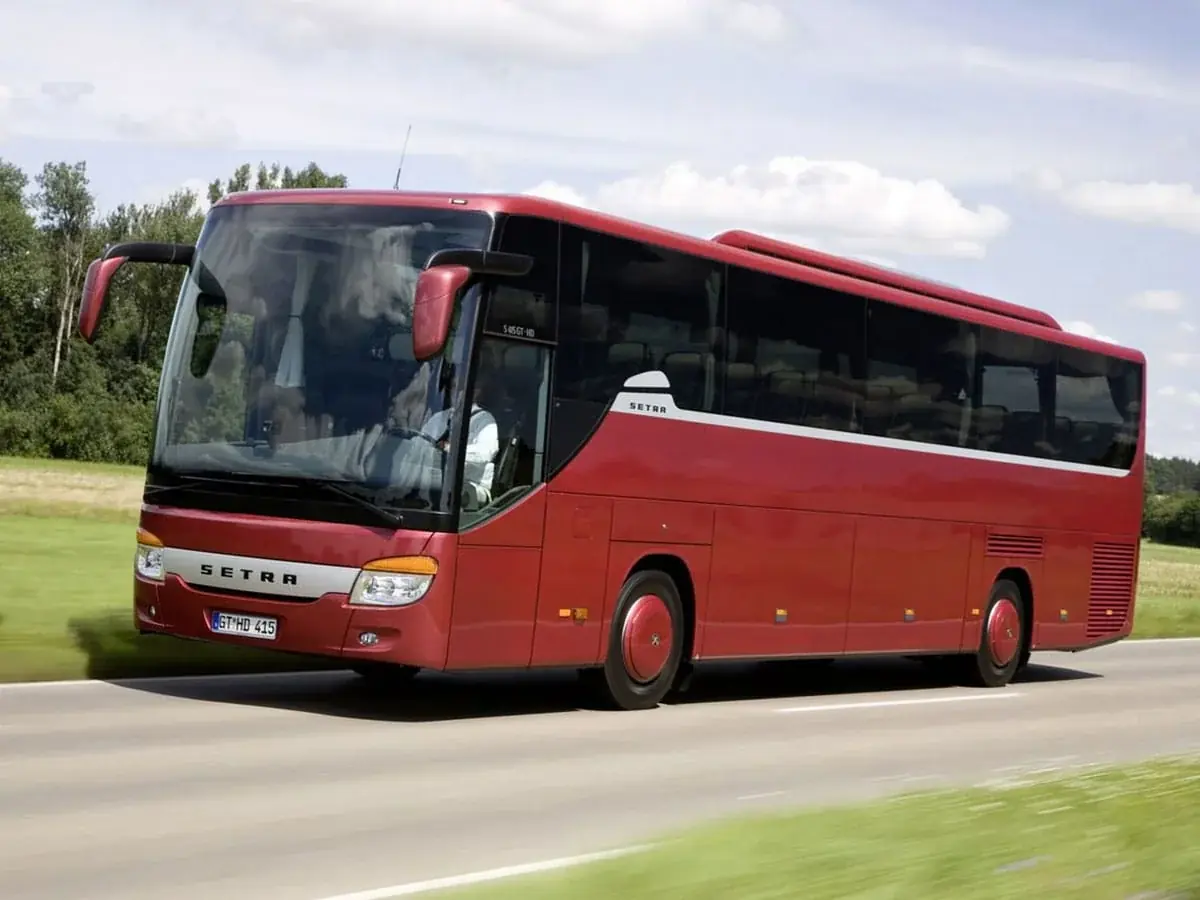
A bus from Tirana to Sarandë costs about $16 to $21 (1,300 to 1,700 ALL) and takes 4 to 5 hours. Tirana to Berat runs just $6 to $7 (500 to 600 ALL) in 2.5 hours. The cheapest ride in the country — Tirana to Durrës — costs $1.80 (150 ALL) for a 30-minute trip. Use the table below as your bookmark, then weigh these fares against your overall Albania travel costs.
| Route | Distance | Time | Price (USD) | Price (ALL) | Frequency |
|---|---|---|---|---|---|
| Tirana → Durrës | 24 mi (38 km) | 30-40 min | ~$1.80 | 150 | Every 20 min |
| Tirana → Shkodër | 62 mi (100 km) | 2 hrs | $4-6 | 300-500 | Every 30-45 min |
| Tirana → Berat | 75 mi (120 km) | 2-2.5 hrs | $6-7 | 500-600 | ~21/day |
| Tirana → Vlorë | 91 mi (147 km) | 3 hrs | $6-9 | 500-700 | Every 30 min |
| Tirana → Korçë | 112 mi (181 km) | 3 hrs | $10-12 | 800-1,000 | Every 45 min |
| Tirana → Gjirokastër | 143 mi (230 km) | 4 hrs | $12-15 | 1,000-1,200 | 12-13/day |
| Tirana → Himarë | 143 mi (230 km) | 5-5.5 hrs | $12 | 1,000 | 7/day |
| Tirana → Sarandë | 164 mi (264 km) | 4-5 hrs | $16-21 | 1,300-1,700 | 7-10/day |
| Tirana → Krujë | 20 mi (32 km) | 1 hr | $2.50 | 200 | Frequent |
| Sarandë → Ksamil | 11 mi (17 km) | 30 min | $1.20-1.80 | 100-150 | Every 30-60 min |
| Shkodër → Theth | 43 mi (70 km) | 2 hrs | $11 | 1,000 | Mornings, seasonal |
The 5:30 AM coach to Sarandë, run by Tisa Travel, was the fastest option I tried — four hours flat, with one coffee stop at a roadside café where the espresso cost 50 lek.
Pro Tip: Always ask for the “direct” bus on long routes. The slower buses stop at every village and add 60 to 90 minutes to your trip — for the same price.
How do you book Albanian buses online?
Gjirafa Travel (travel.gjirafa.com) is Albania’s best bus booking platform, covering major intercity and international routes with credit card payment and digital tickets. But most furgon operators remain off-platform and cash-only. The rule: book online for long-haul routes, and show up with lek for everything else.
When to book online
Book ahead through Gjirafa Travel for:
- Tirana–Sarandë and Tirana–Gjirokastër — long-haul services that sell out in summer
- Any international route (Pristina, Podgorica, Ohrid, Skopje, Athens)
- Overnight services where reserving a window seat actually matters
When to just show up
Skip the booking and arrive in person for:
- Anything under 100 miles (160 km) — Tirana to Durrës, Berat, Shkodër
- Furgon-only destinations like Theth and smaller mountain villages
- Short coastal hops like Sarandë–Ksamil and Vlorë–Himarë
Booking platforms compared
- Gjirafa Travel: 13,000+ routes, credit card / PayPal / Apple Pay, QR-code tickets to Apple Wallet, English interface
- AlbanianBus.com: modern Mercedes Sprinters, seasonal coastal routes, online booking
- FlixBus: international from TEG, Wi-Fi, power outlets, onboard toilet, two free luggage pieces
- eTransport.al: government platform in Albanian and English, route coverage still incomplete
- Cash on board: every furgon and most smaller operators — pay the conductor in lek (or euros at a rough rate)
I booked Tirana to Sarandë on Gjirafa the night before and got a QR code in my Apple Wallet. The driver scanned it without a word. Two days later in Berat, I handed 500 lek to a man in flip-flops. Both systems worked.
Pro Tip: Some affiliate-driven blogs push 12Go for Albania. It works, but it adds a 10 to 15 percent markup over Gjirafa for identical seats on identical buses. Book directly when you can.
What is riding a furgon actually like?
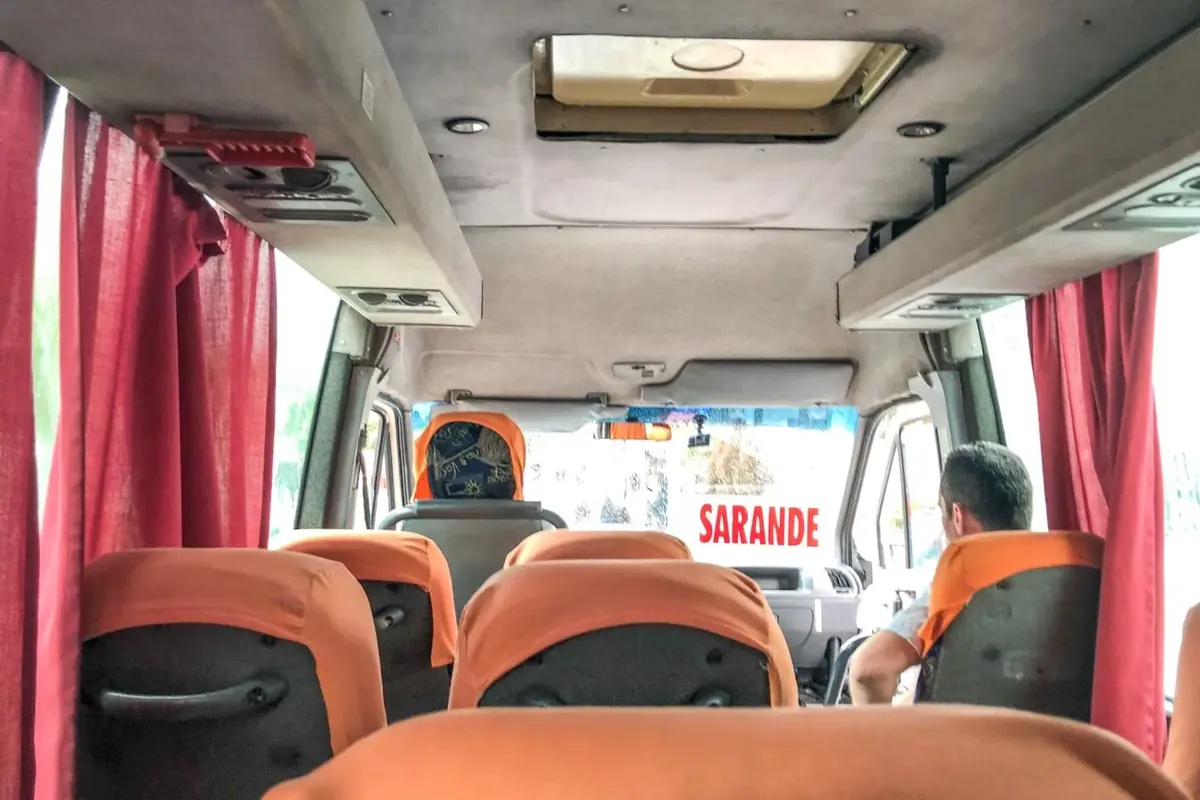
A furgon is a white Mercedes Sprinter van with a cardboard destination sign, cramped seats, no bathroom, and unreliable air conditioning. You pay the driver’s assistant in cash. The van leaves when every seat is taken — sometimes in five minutes, sometimes in forty. The ride is bumpy, loud, and strangely wonderful once you stop fighting it.
A typical furgon ride breaks down like this:
- Vehicle: Mercedes Sprinter, 8 to 12 seats, all forward-facing
- Sign: cardboard with destination in Albanian, propped in the windshield
- Departure: when full, not when scheduled
- Payment: cash to the driver’s assistant, mid-trip, in lek
- Music: Albanian pop or Turkish pop, played at conversation-killing volume
- AC: present, often broken, sometimes simply ignored
- Bathroom: none — long routes get one rest stop of 10 to 15 minutes
- Wi-Fi and charging: do not exist on furgons
- Luggage: under seats, in the back, or on your lap if the van is full
The driver’s assistant — a teenager in Adidas slides — collected 500 lek from each passenger, then wedged himself into the stairwell for the two-hour ride, one arm braced against the ceiling, scrolling TikTok with the other hand.
The temperature inside the bus to Gjirokastër hit at least 90°F (32°C) by noon. The AC was on but losing the battle. The driver solved it by opening the front door — while driving at 50 mph (80 km/h) on the highway.
Pro Tip: Claim your seat by leaving a small bag on it before you grab coffee or use the toilet at a rest stop. Locals leave purses and laptops without thought, and nobody touches them. It is a quiet honor system that works.
Which routes are worth taking by bus?
Tirana to Shkodër, Tirana to Berat, Tirana to Durrës, Sarandë to Ksamil, and the Komani Lake ferry route are all excellent by bus — frequent, affordable, and scenic. But Vlorë to Sarandë along the Albanian Riviera and Theth to Valbona demand a car or private transfer for the freedom to stop at beaches and viewpoints.
Routes worth taking by bus
These work better as bus trips than as rentals:
- Tirana–Shkodër: 2 hours, $4 to $6, departures every 30 minutes, flat highway with no parking hassle at the other end
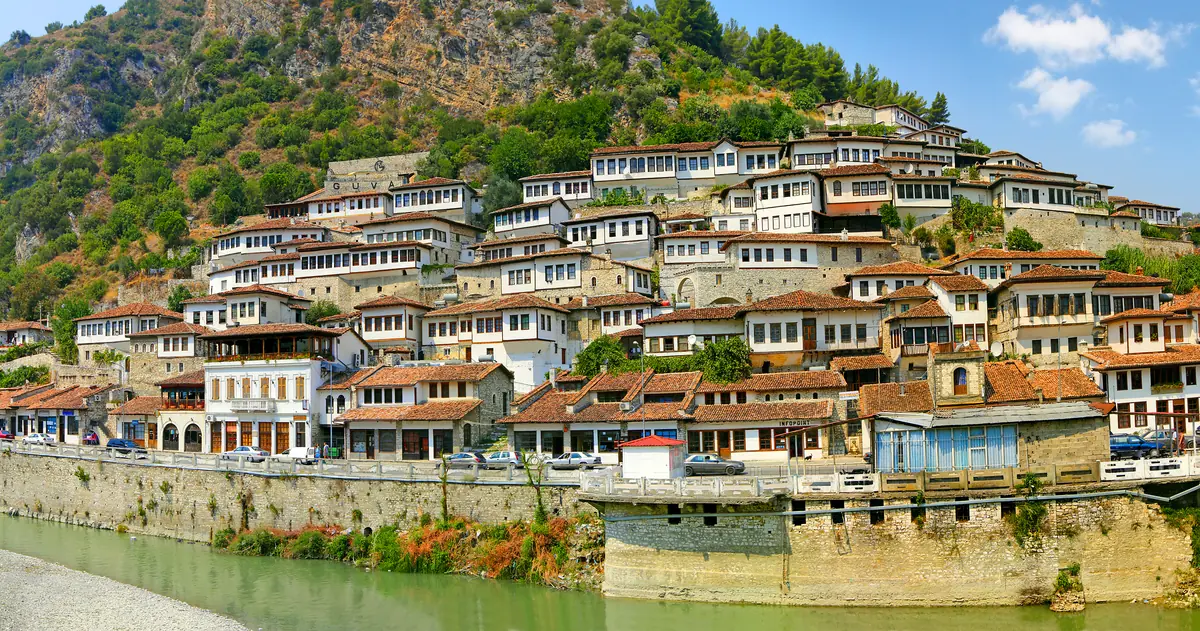
- Tirana–Berat: 2.5 hours, $6 to $7, 21 daily departures, drops you a 10-minute walk from the old town
- Tirana–Durrës: 30 minutes, $1.80, every 20 minutes, the most frequent route in the country
- Sarandë–Ksamil: 30 minutes, $1.20 to $1.80, easy beach shuttle that beats parking on packed summer days
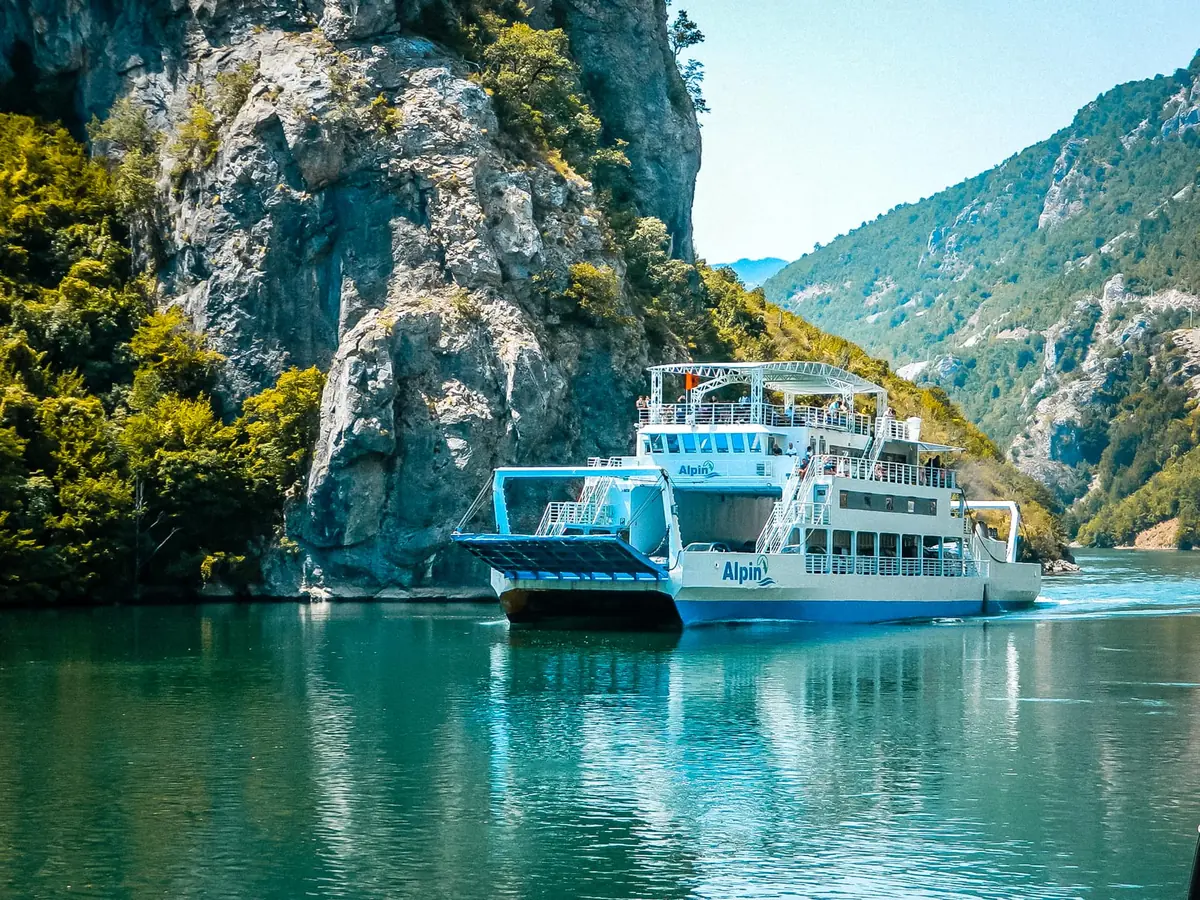
- Komani Lake ferry chain: Shkodër → Koman → ferry → Fierza → Valbona, around $21 for the full package, one of Europe’s most dramatic boat rides
Routes better by car
These two need a steering wheel:
- SH8 Vlorë–Sarandë coastal road: the views are real, but buses cannot stop at the viewpoints, hidden coves, or the Blue Eye Spring (Syri i Kaltër)
- Theth–Valbona: only connected by foot trail or a long mountain drive, and even the bus version requires multiple slow transfers
A note on the Llogara Pass: most through-buses now use the Llogara Tunnel (3.7 miles / 5.9 km) instead of the old switchback road, so riders miss the famous hairpin views entirely. Drivers still take the pass when they want to — but no scheduled bus does.
When the Komani Lake ferry rounded the first gorge — limestone cliffs dropping straight into jade-green water — every passenger on the deck stopped talking. Then someone passed around a bag of figs.
How do you cross borders by bus from Albania?
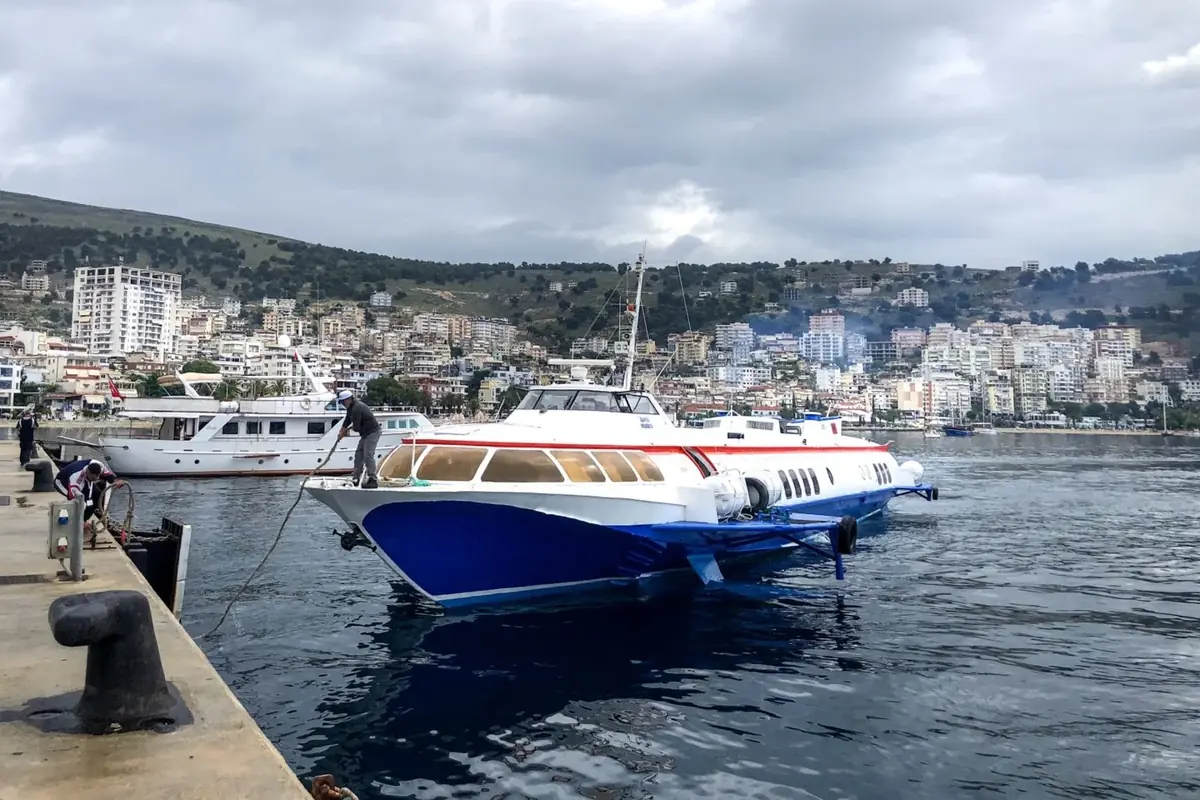
Albania shares land borders with four countries and a short ferry crossing to Greece’s Corfu, and you can reach all five by bus. FlixBus and local operators run daily services from Tirana’s East Terminal at TEG to Pristina, Podgorica, Ohrid, Skopje, Athens, and Thessaloniki.
| Destination | Distance from Tirana | Time | Price | Operators |
|---|---|---|---|---|
| Pristina, Kosovo | 161 mi (259 km) | 3.5-5 hrs | ~$17 (€15) | 20+ daily, Sharr Travel and others |
| Podgorica, Montenegro | 109 mi (175 km) | 3.5-4 hrs | ~$28 (€25) | Old Town Travel, Jadran Ekspres |
| Ohrid, North Macedonia | 78 mi (125 km) | 2.5-3.5 hrs | $17-20 (€15-18) | FlixBus + local operators |
| Skopje, North Macedonia | 180 mi (290 km) | 5-6 hrs | ~$26 (€23) | FlixBus + local operators |
| Athens, Greece | 435 mi (700 km) | 12-13.5 hrs | ~$52 (€46) | Skenderbeu, overnight options |
| Thessaloniki, Greece | 249 mi (400 km) | 9-10 hrs | ~$63 (€56) | FlixBus |
Shkodër is also a useful jump-off for the overland crossing into Montenegro: Podgorica from Shkodër costs $11 to $13 (€10 to €12) and takes 2 hours. All international routes from Tirana depart from the TEG East Terminal.
Do US travelers need a visa for Albania’s neighbors?
US passport holders need no visa for any of Albania’s neighbors:
- Albania: 365 days visa-free
- Kosovo: 90 days visa-free
- Montenegro: 90 days visa-free
- North Macedonia: 90 days visa-free
- Greece (Schengen zone): 90 days within any 180-day period
Bring your passport on every international bus. Border guards board the bus, stamp passports, and may ask brief questions.
Sarandë to Corfu by ferry
Not a bus, but the Corfu ferry crossing is the gateway most US travelers use to combine Albania with Greece:
- Distance: 2 nautical miles across the Corfu Strait
- Time: 25 minutes (fast catamaran) to 90 minutes (regular ferry)
- Price: $11 to $44 (€10 to €40) one way
- Operators: Finikas Lines, Ionian Seaways
- Frequency: 6 to 22 daily in summer, 1 to 4 in winter
- Time difference: Greece is one hour ahead of Albania
The FlixBus to Ohrid had Wi-Fi, air conditioning, and a working bathroom — three amenities I had forgotten existed after a week on furgons. Three hours later I was eating trout on Lake Ohrid.
How much does bus travel cost in Albania?
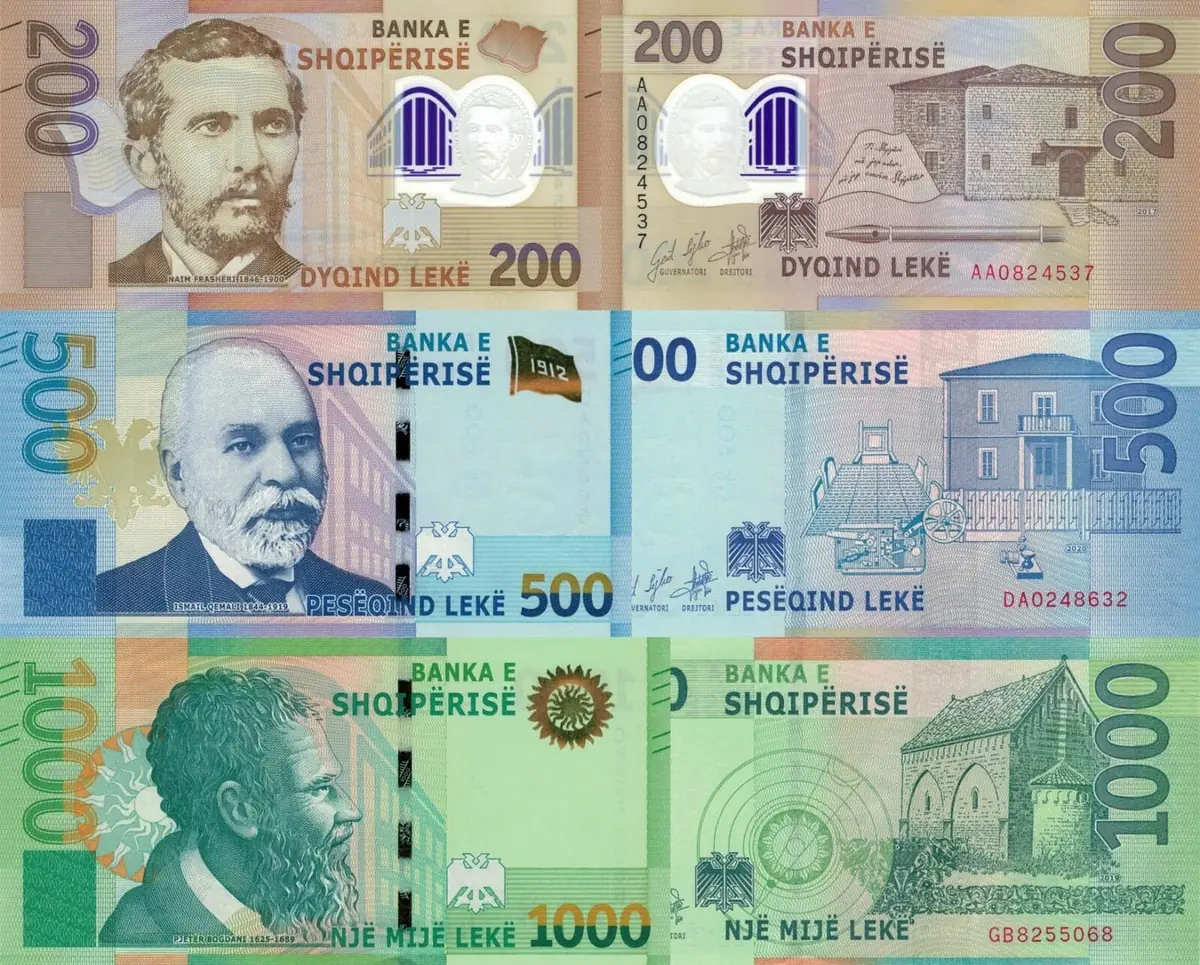
Intercity bus fares in Albania range from about $2 to $21, making it one of Europe’s cheapest countries for ground transport. The currency is the Albanian lek (ALL), trading at roughly 83 ALL to $1 USD (100 ALL is about $1.20). Most buses accept only cash, so knowing how Albania’s currency and ATMs work matters; ATMs dispense lek in every city and most towns.
Currency basics
- Exchange rate: about 83 ALL = $1 USD
- Best way to get lek: ATMs, available in every city and most large towns
- ATM fee: $4 to $5 per withdrawal at most banks
- Lower-fee banks: Alpha Bank and Credins Bank
- Card acceptance: Gjirafa Travel, FlixBus online, larger hotels, mid-range restaurants
- Cash only: every furgon and most smaller bus operators
Payment quirks worth knowing
- Euros are accepted on most buses, but the conversion rounds heavily against you
- Carry small bills (500 and 1,000 lek notes) — drivers rarely have change for 5,000
- Tipping is not expected on buses, but rounding up to the nearest 50 lek is appreciated
- Do not leave Albania with leftover lek — it is nearly impossible to exchange outside the country, even in neighboring Kosovo
What a week of bus travel actually costs
A week of daily buses — Tirana to Berat to Gjirokastër to Sarandë to Ksamil and back — cost me $62 in fares total. The coffee stops cost more than the transport.
Pro Tip: Withdraw a larger amount per ATM visit (around 30,000 lek / about $360) to minimize per-transaction fees. Spread it across two pockets — one for daily spending, one as backup.
When do Albanian buses run?
Albanian buses run most frequently from June through September — which overlaps neatly with the best time to visit Albania — when extra departures and evening services appear on popular routes. In winter, service thins dramatically — some routes vanish entirely. The universal rule: travel in the morning. By mid-afternoon, most furgons have made their last run.
Summer (June through September)
- More frequent departures across the country
- Late buses appear on key routes — a 10 PM Tirana–Sarandë coach is common
- Sarandë–Ksamil runs every 30 minutes
- The Komani Lake ferry runs daily
Winter (October through May)
- Fewer departures across most routes
- Some routes shut down entirely — the Shkodër–Theth road typically closes for snow from November through May
- Last furgons leave by 3 to 4 PM on many routes
- Coastal towns lose their evening bus options
Shoulder season sweet spots
The first two weeks of June and the last two weeks of September deliver near-summer service with smaller crowds and lower hotel rates. This is the best window for first-time visitors who want flexibility without peak-season chaos.
In July the Sarandë–Ksamil bus came every thirty minutes, packed with sunburnt tourists. When I returned in November, the same route ran twice a day — and I was the only passenger.
Pro Tip: Never plan a tight itinerary on the last bus of the day. If it does not show up — and sometimes they do not — you are stranded for the night in whatever town you happen to be in.
Is bus travel in Albania safe?
Albania is safe for tourists, and bus travel carries no unusual risks beyond aggressive driving on mountain roads. The U.S. State Department rates Albania at Level 2 (“exercise increased caution”), the same level as France, the United Kingdom, and most of Western Europe. Violent crime against visitors is rare.
A few things to know specifically about buses:
- Drivers overtake aggressively on mountain curves; serious tourist injuries are rare but possible
- Solo female travelers consistently report feeling safe on intercity buses
- Petty theft on buses is uncommon — still, keep valuables on your lap rather than overhead
- Taxi scams happen at terminals; drivers may claim “no buses today” to push you into a $100 ride. Ignore them and ask other passengers
- No Uber, no Lyft, no Bolt in Albania; use city-specific apps like Speed Taxi in Tirana
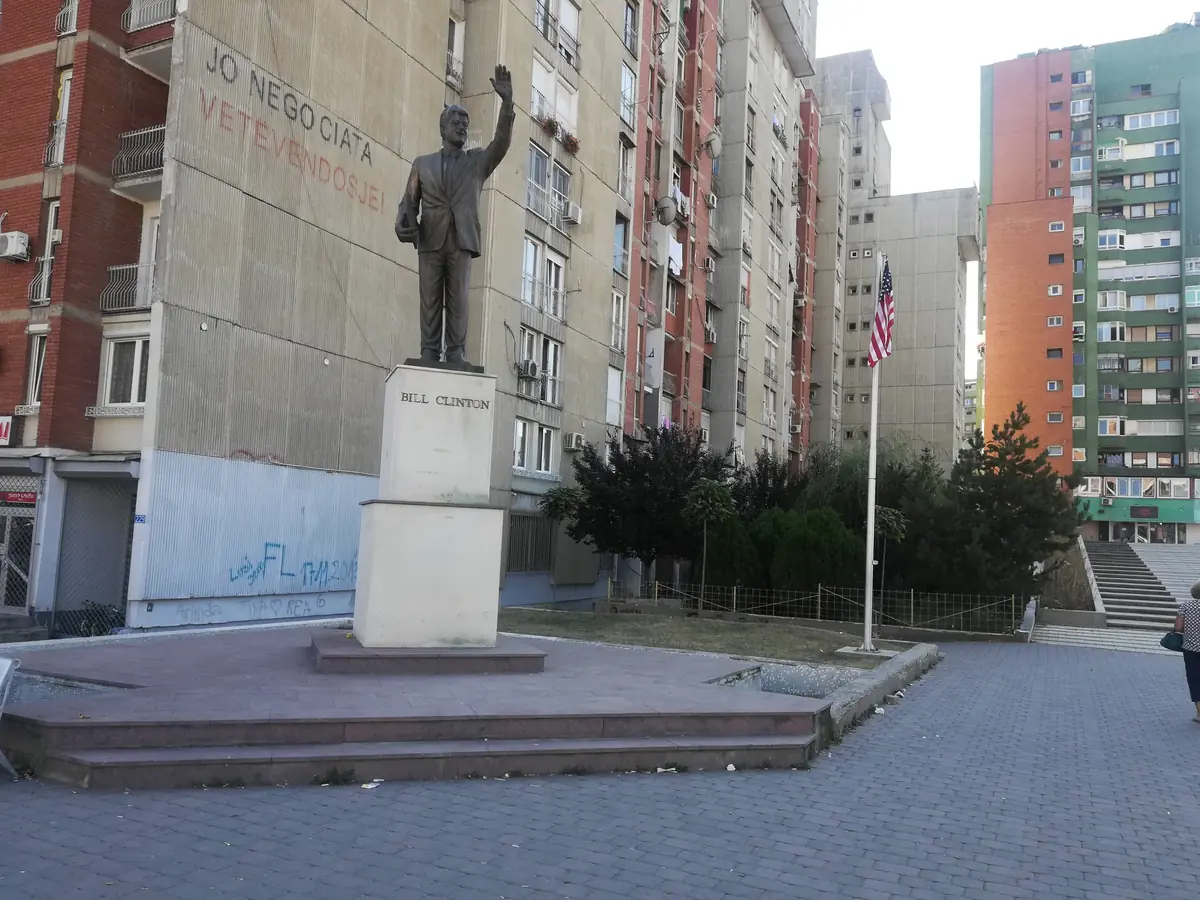
Albanians are openly pro-American — Bill Clinton Boulevard cuts through Tirana, and a George W. Bush statue stands in the town of Fushë-Krujë. Telling a driver you are American often gets you a free coffee.
In three weeks on Albanian buses, the scariest moment was watching our furgon driver overtake a truck on a blind mountain curve. The friendliest was a grandmother in Gjirokastër who insisted on sharing her homemade byrek because she heard I was American.
10 tips that make Albanian bus travel painless
Albanian bus travel rewards preparation and punishes rigidity. The system has no apps, no digital screens, and no customer service line. But a handful of specific habits — carrying small lek bills, arriving at terminals before 8 AM, downloading offline maps — turn confusion into a manageable adventure.
- Visit the terminal the day before to confirm your bus time and departure point. Ask two or three people independently — answers vary.
- Carry small lek bills (500 and 1,000 notes). Drivers rarely have change for larger denominations.
- Download Maps.me — it marks more bus stops and rural roads than Google Maps. Moovit handles Tirana city buses.
- Claim your seat by leaving a bag on it. Locals leave purses untouched and nobody breaks the rule.
- Tell the driver your final destination even if you are transferring. Drivers coordinate handoffs by phone.
- Pack motion sickness medication for the Komani Lake road and any mountain route. The switchbacks are relentless.
- Bring water and snacks. Some long rides have no break; others stop at gas stations with little to eat.
- Never plan on catching the last bus of the day. If it does not show, your trip ends in the wrong town.
- Ask your hotel or hostel to call ahead and confirm bus times. They do this routinely and free of charge.
- Download Google Translate’s Albanian pack offline. Given the local language barrier, it bridges the gap on every ride and helps with the cardboard signs you cannot read.
Tip number five saved me in Fier: I told my Tirana-bound driver I actually needed Berat, and he radioed ahead to a Berat furgon waiting at a highway junction. The transfer happened on the shoulder of the road in under two minutes.
What’s changing in Albanian transport?
Albania’s transport system is shifting fast. The Llogara Tunnel cut about 23 minutes off the drive to the Albanian Riviera. FlixBus now connects Tirana to more than 40 international destinations. And the government’s eTransport.al platform is the first attempt at a centralized digital schedule.
The shifts worth knowing about:
- Llogara Tunnel: 3.7 miles (5.9 km), bypasses the Llogara Pass, reduces that segment from about 30 minutes to 7. Cost roughly $155 million. Max speed 50 mph (80 km/h). A car toll of about $3 (250 ALL) now applies, though bus passengers never pay it directly. Most through-buses take the tunnel.
- TEG East Terminal: replaced the old Asllan Rusi terminal for international routes. Better signage, indoor waiting, dedicated FlixBus bays.
- FlixBus expansion: now serves Pristina, Podgorica, Ohrid, Skopje, Sofia, and Thessaloniki, with more than 40 destinations reachable from Tirana. Domestic FlixBus routes are anticipated.
- eTransport.al: the first government-run digital schedule platform, in Albanian and English. Coverage is still incomplete but improving.
- Theth road: now fully paved, making Theth far easier for buses and rental cars to reach.
- Vlorë International Airport: the runway and terminal are largely built, but commercial flights remain held up by certification and have slipped past their original target. Until the first scheduled flights land, the four-hour overland trip from Tirana is still the way into southern Albania — which is exactly why the bus and furgon routes in this guide matter.
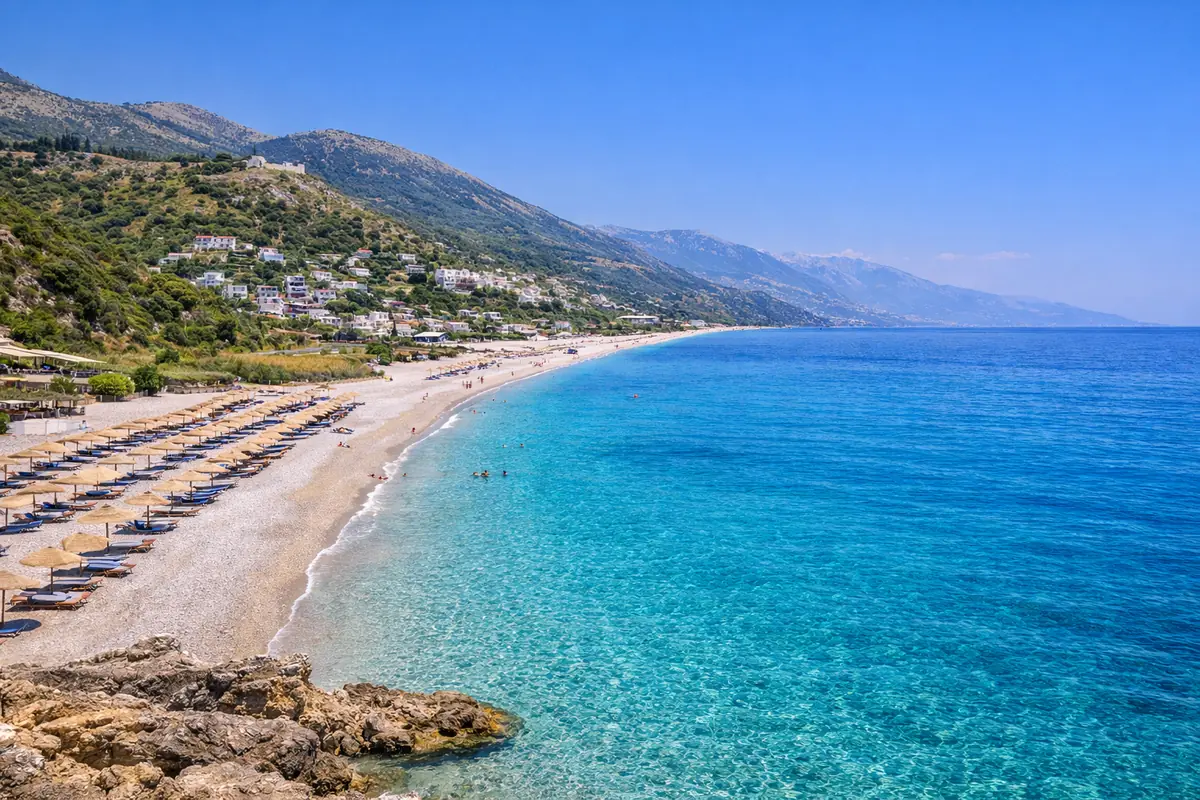
The bus plunged into the Llogara Tunnel — 3.7 miles of fluorescent-lit concrete — and emerged six minutes later on the Riviera side, the Ionian Sea glittering below. Two years before, this same stretch took half an hour of white-knuckle switchbacks.
Before you book
TL;DR: Albania bus travel is cheap ($2 to $21 per ride), frequent on major routes, and entirely navigable without speaking Albanian. Use Gjirafa Travel for long-haul and international tickets; show up with lek for everything else. Furgons leave when full, mostly run in the morning, and stop by mid-afternoon. The system looks chaotic but works better than it has any right to. Carry cash, travel early, and stay flexible.
What surprised you most about Albania bus travel — and what would you add to this guide for the next US traveler heading there?