Albania rewards focus, not speed. Our full Albania travel guide maps the whole country; this article zooms in on the best three days. The best 3 days in Albania itinerary covers one region well — the interior UNESCO towns, the Riviera, or the northern Alps — not all three. Try to see everything and you’ll spend the trip staring at a windshield. Here’s each route with real USD costs, honest timing, and the stops worth your hours.
Is 3 days enough to see Albania?
Three days is enough to explore one region of Albania at a comfortable pace — not the whole country. Pick the culture route (Tirana, Berat, Gjirokastër), the Riviera route (Saranda, Ksamil, Butrint), or the northern route (Krujë, Shkodër, Shala River). Trying to combine all three turns a trip into a transfer marathon.
Most travelers who fall for Albania come back for a full week or more — which is exactly where a 7-day Albania itinerary earns its place. But a focused 3-day trip works because the country is compact and the highlights cluster by region. The interior UNESCO towns sit within a few hours of each other. The Riviera beaches, ancient ruins, and natural springs all fall within a 35-minute drive of Saranda. The northern mountains and lakeside cities orbit Shkodër.
The mistake most first-timers make is plotting a route that zigzags across the map. Tirana to Saranda alone takes about four hours by car — a full morning gone. Pick the route that matches what you want from this trip, and give each stop room to breathe.
Pro Tip: If you only have 3 days on the ground, fly into Tirana for the culture or northern routes. For the Riviera route, fly into Corfu, Greece and take the 30-minute speed ferry to Saranda — it saves nearly five hours of driving.
Which route should you pick?
Each route targets a different traveler. Choose the culture route for Ottoman history and UNESCO towns, the Riviera route for beaches and ancient ruins around Saranda, or the northern route for mountains, lakes, and hiking out of Shkodër. Mid-range daily budgets run $65–120 depending on which one you pick.
| Culture Route | Riviera Route | Northern Route | |
|---|---|---|---|
| Focus | Ottoman history, UNESCO towns, wine | Beaches, ancient ruins, springs | Mountains, lakes, hiking |
| Base cities | Tirana → Berat → Gjirokastër | Saranda → Ksamil → Blue Eye | Tirana → Krujë → Shkodër |
| Best months | April–June, September–October | June–September | May–October |
| Pace | Moderate — lots of cobblestone walking | Relaxed — beach days with excursions | Active — some hiking |
| Daily budget (mid-range) | $70–100 | $80–120 | $65–95 |
| Car needed? | Strongly recommended | Helpful, not required | Recommended |
| Best for | History lovers, photographers, couples | Beach travelers, families, first-timers | Hikers, adventurers, off-the-beaten-path seekers |
Culture Route: Tirana, Berat and Gjirokastër
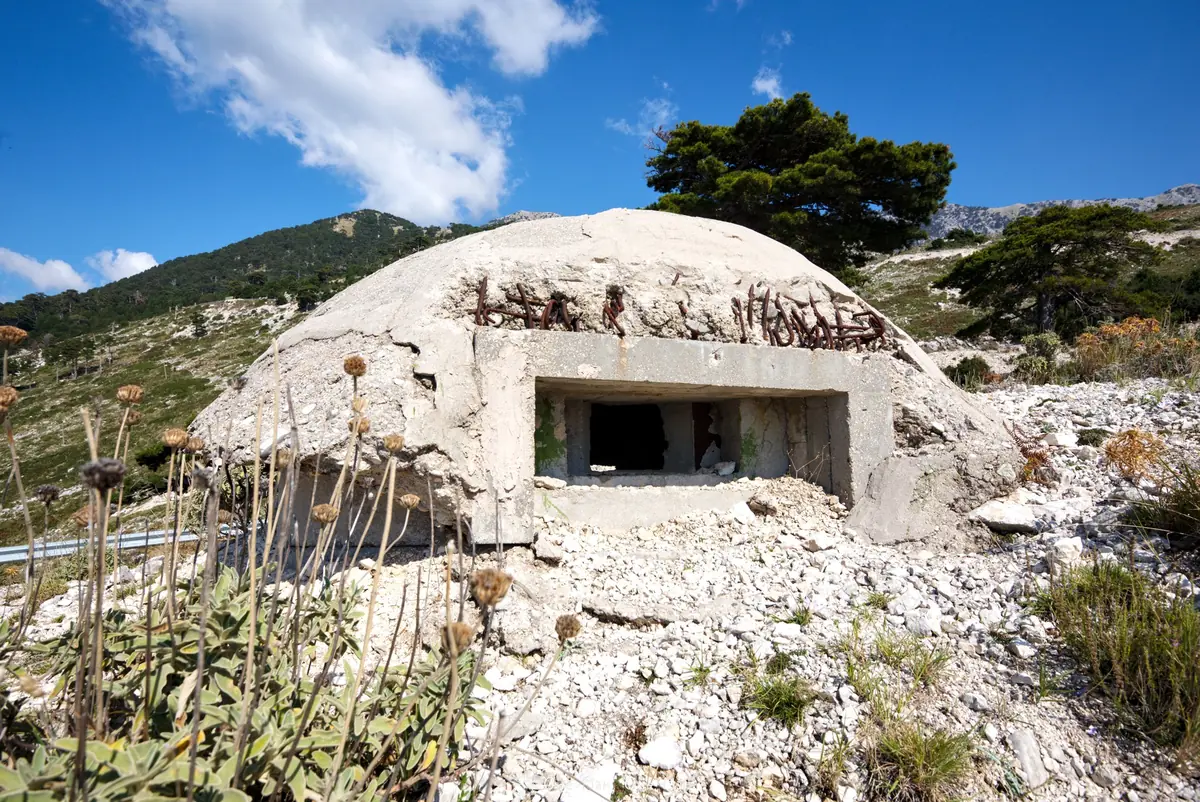
This is the route for travelers who want to understand Albania, not just photograph it. You’ll walk through two UNESCO World Heritage towns, explore Cold War bunkers, and eat some of the best food in the Balkans — for less than a weekend in most European capitals.
Day 1 — Tirana
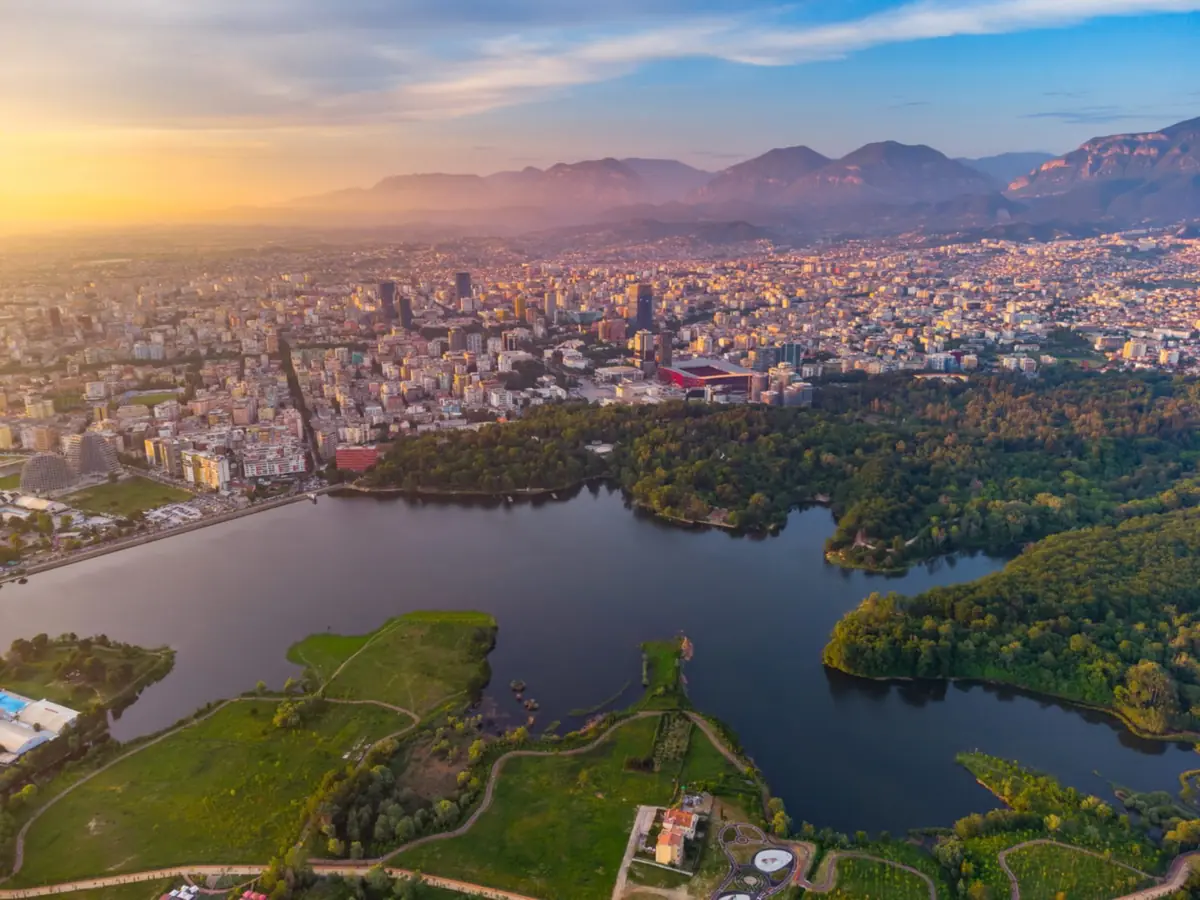
Start in the capital. Tirana is chaotic, colorful, and more interesting than most itineraries give it credit for. The communist-era buildings painted in geometric neon patterns, the Ottoman mosque next to a Soviet-style plaza, the converted bunker museums — it’s a city that wears its contradictions openly.
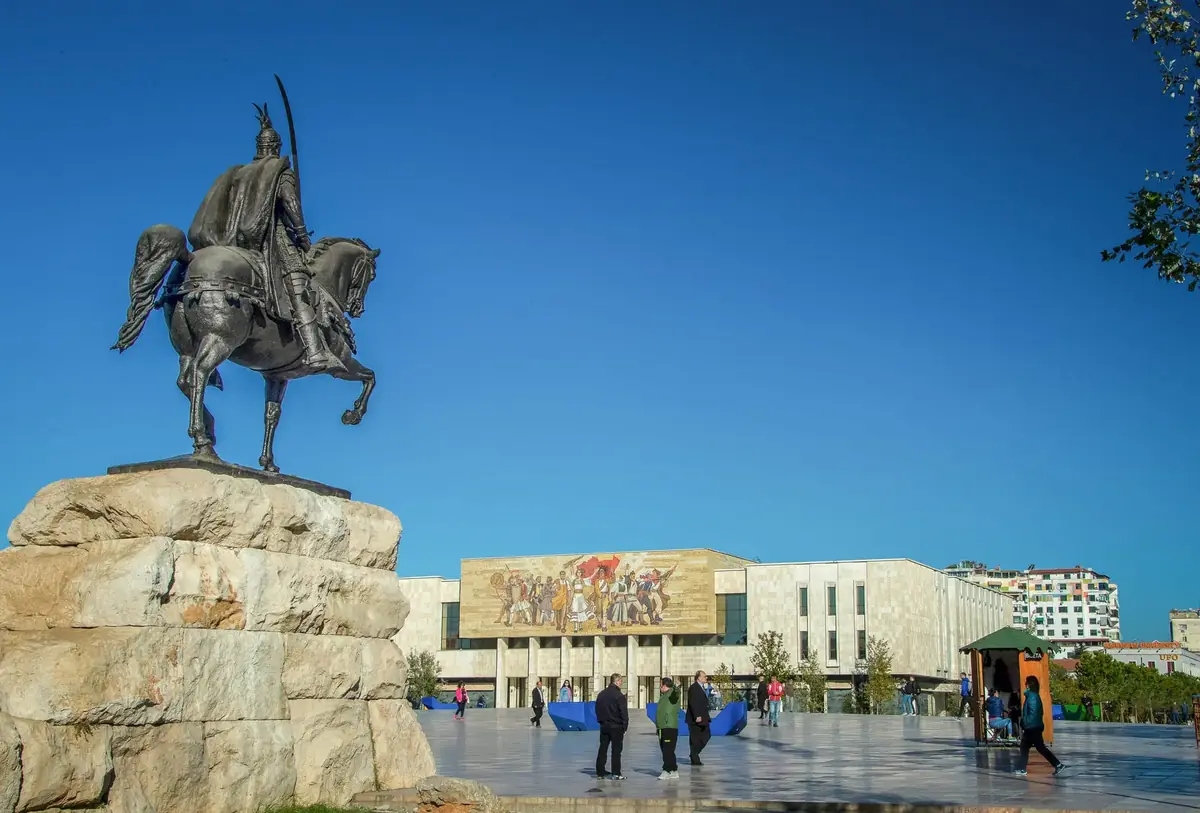
Begin at Skanderbeg Square, then walk to the Et’hem Bey Mosque (free entry, shoes off). Cross south to the Pyramid — a former Enver Hoxha memorial redeveloped into an open cultural center with rooftop access. The exterior staircase gives you a full panorama of the city.
After lunch, head to Bunk’Art 2 in the city center. This converted Cold War bunker documents the Sigurimi (secret police) era through photographs, surveillance equipment, and interrogation-room recreations. It takes about 90 minutes and hits harder than you expect.
Spend the evening in the Blloku neighborhood. This entire district was sealed off for Communist Party elites until 1991 — now it’s the city’s liveliest area for restaurants and bars. On my last visit, the terrace tables at Radio Bar filled up by 7 p.m. on a Thursday.
- Location: Blloku district, south-central Tirana
- Cost: Bunk’Art 2 entry $10, Pyramid free, mosque free
- Best for: History and architecture enthusiasts, solo travelers
- Time needed: Full day (8–10 hours for central Tirana)
Pro Tip: The Dajti Mountain cable car (2.7 miles / 4.3 km, about $16 round-trip) is worth the half-day detour if you arrive early. It’s closed Tuesdays.
Where to eat in Tirana
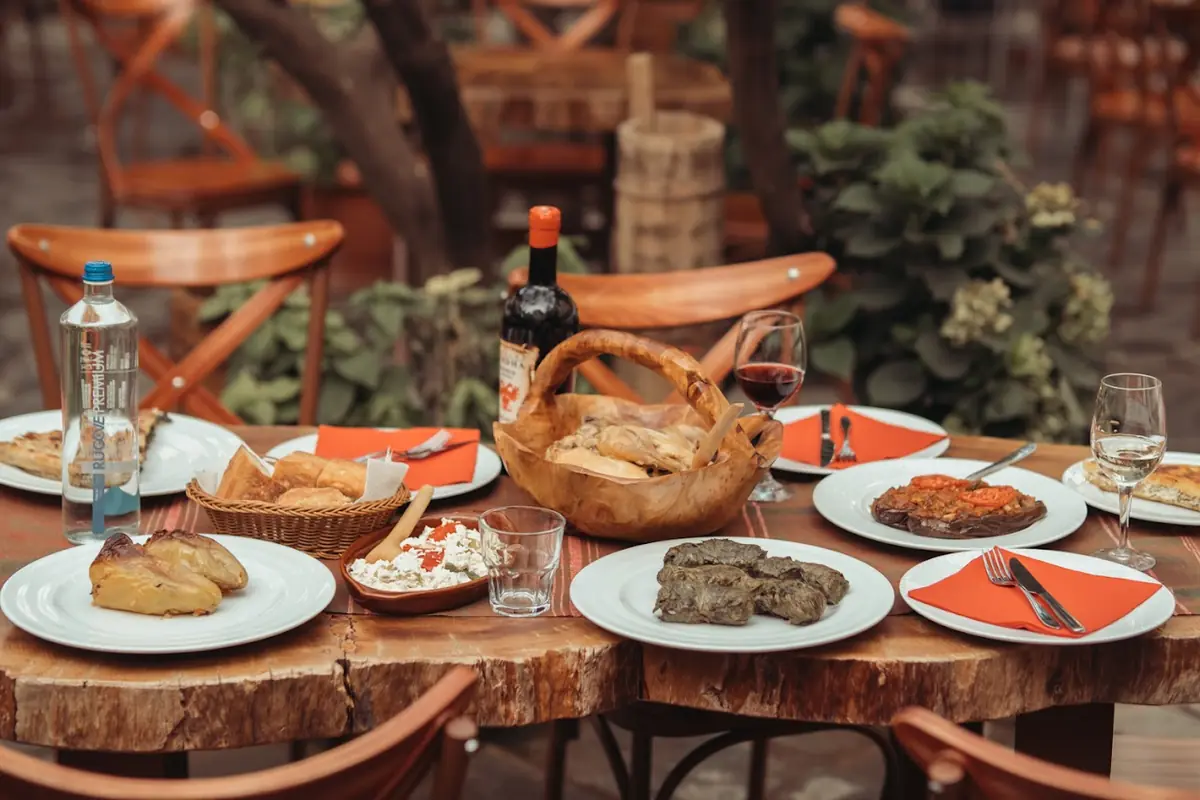
Oda Restaurant hides down an unmarked side street in a converted Ottoman house — the waiters bring dishes family-style and won’t let you leave hungry. Expect $8–15 per person. For something modern, Mullixhiu does farm-to-table Albanian cuisine built on foraged ingredients; budget $15–30 per person. For a quick lunch, Tek Zgara Tirones serves grilled meats in portions that could feed two — a full plate with salad and bread runs $5–8.
Where to stay in Tirana
- Budget: Topo Hostel ($15–25/night) — clean, social, central
- Mid-range: Mondial Hotel ($45–65/night) or Hilton Garden Inn ($50–70/night)
- Luxury: Rogner Hotel ($80–120/night) — the garden is the quietest spot in central Tirana
Day 2 — Berat
Drive or take the morning bus to Berat — 57 miles (92 km) southwest of Tirana, roughly 1 hour 45 minutes by car or 2 hours 15 minutes by bus ($5–6).
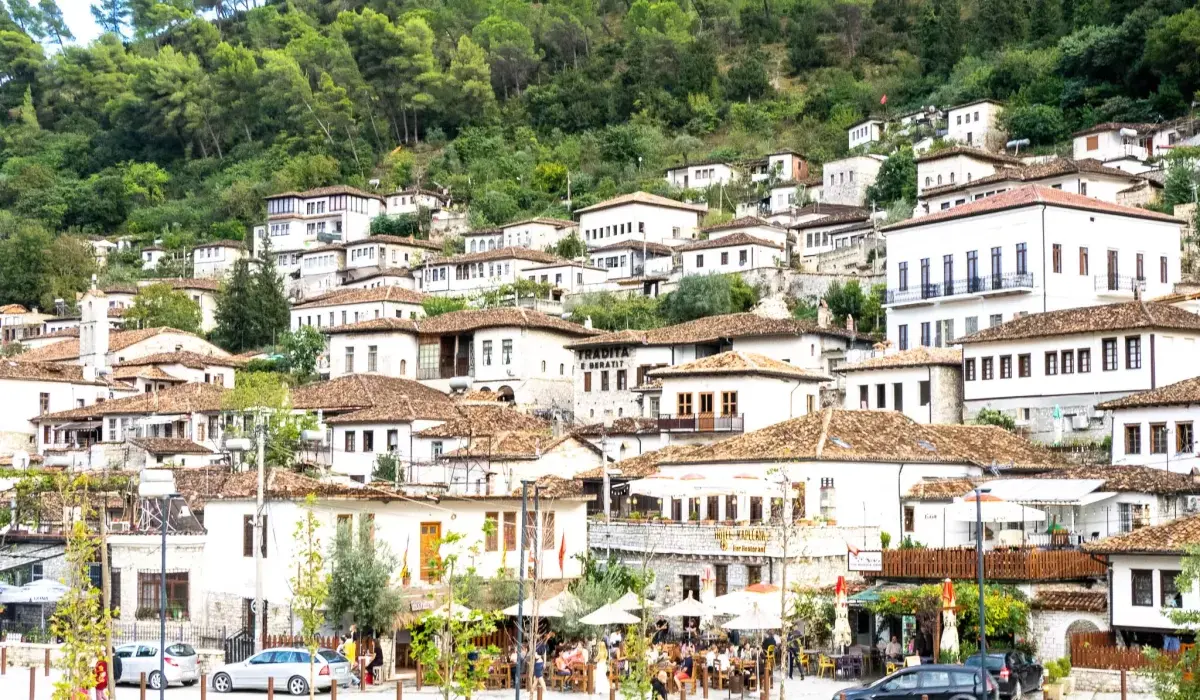
Berat is the town that sells Albania to skeptics. The Ottoman houses stacked on the hillside above the Osum River, the 2,400-year-old castle still functioning as a residential neighborhood, the light hitting the white facades in late afternoon — it photographs like a movie set but feels lived-in. Chickens scratch between the castle walls. Old men play dominoes outside corner shops.
Start with Berat Castle. The walk up from Mangalem Quarter takes about 20 minutes on uneven cobblestones — wear proper shoes, not sandals. The castle grounds charge about $2.70 (300 Lek) during staffed hours and are free to enter outside them. Inside the walls, visit the Onufri Iconography Museum ($3.50–4.50 with audio guide) to see the 16th-century painter’s work, famous for a shade of red that art historians still can’t fully explain.
Walk back down through Mangalem Quarter, cross the Ottoman-era Gorica Bridge, and explore Gorica Quarter on the opposite bank for a different angle on the window-stacked skyline.
- Location: 57 miles (92 km) southwest of Tirana
- Cost: Castle ~$2.70 (free off-hours), Onufri Museum $3.50–4.50
- Best for: Couples, photographers, architecture enthusiasts
- Time needed: Full day with an overnight stay
Pro Tip: If you have a car and arrive early, detour to Çobo Winery — 20 minutes outside Berat, tastings from around $25. Albanian wine is one of the country’s best-kept secrets.
Where to eat in Berat
Homemade Food Lili serves family-style Albanian dishes in a home dining room — the kind of place where the menu is whatever the family cooked that morning. Budget $6–10. Antigoni sits along the river with a mid-range menu and views worth the small premium.
Where to stay in Berat
- Budget: Berat Backpackers ($12–25/night) — inside a 300-year-old UNESCO-listed building
- Mid-range: Hotel Mangalemi ($50–80/night) — traditional house conversion with river views
Day 3 — Gjirokastër
The drive from Berat to Gjirokastër covers roughly 105 miles (170 km) and takes about 3 hours. Leave early.
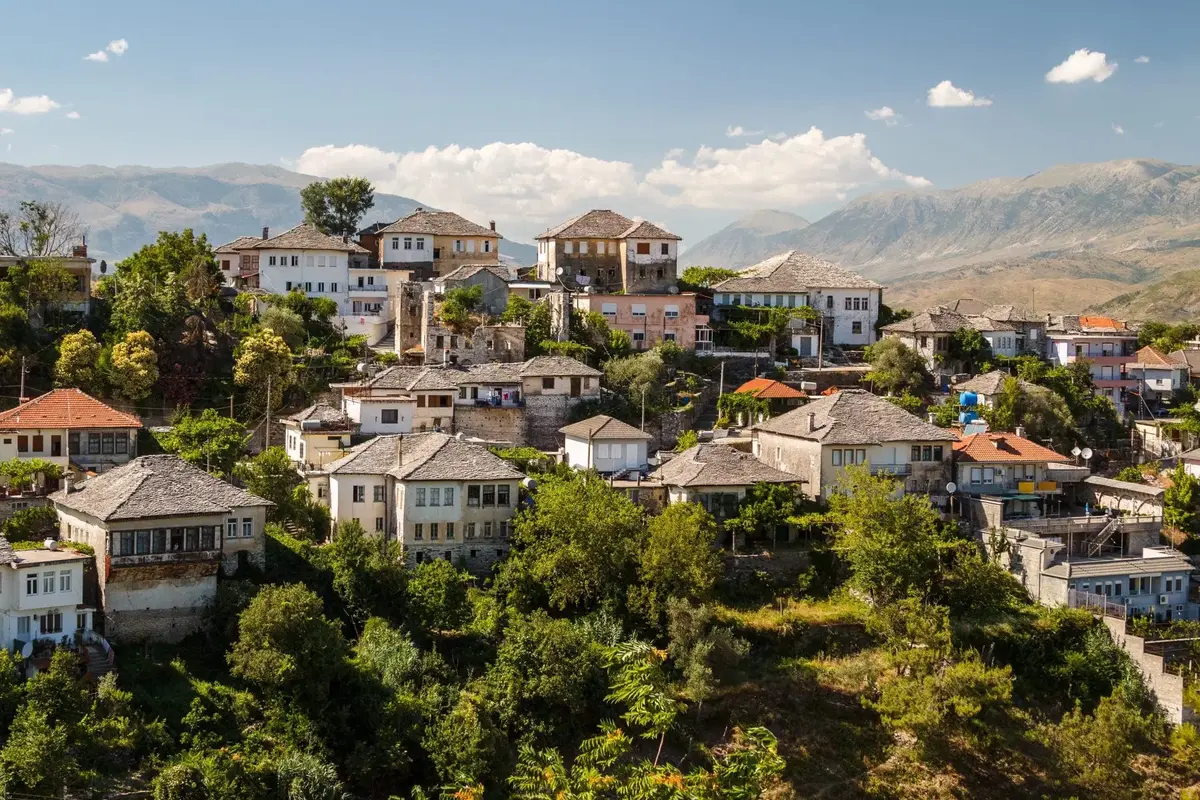
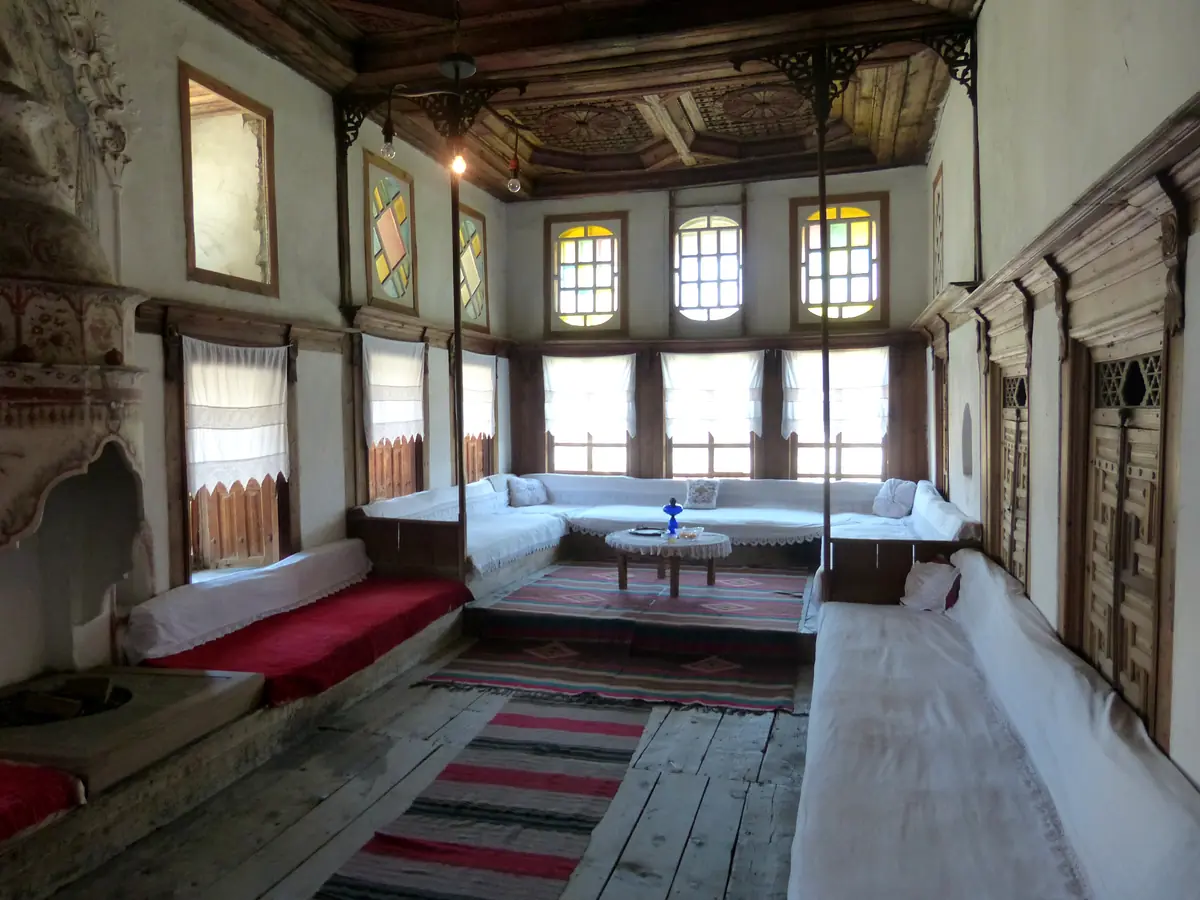
Gjirokastër feels older and heavier than Berat. Where Berat charms with light and color, Gjirokastër impresses with mass — thick stone walls, fortress towers, and slate-roofed houses that look like they grew out of the mountain. The cobblestone streets are steep and unforgiving on ankles.
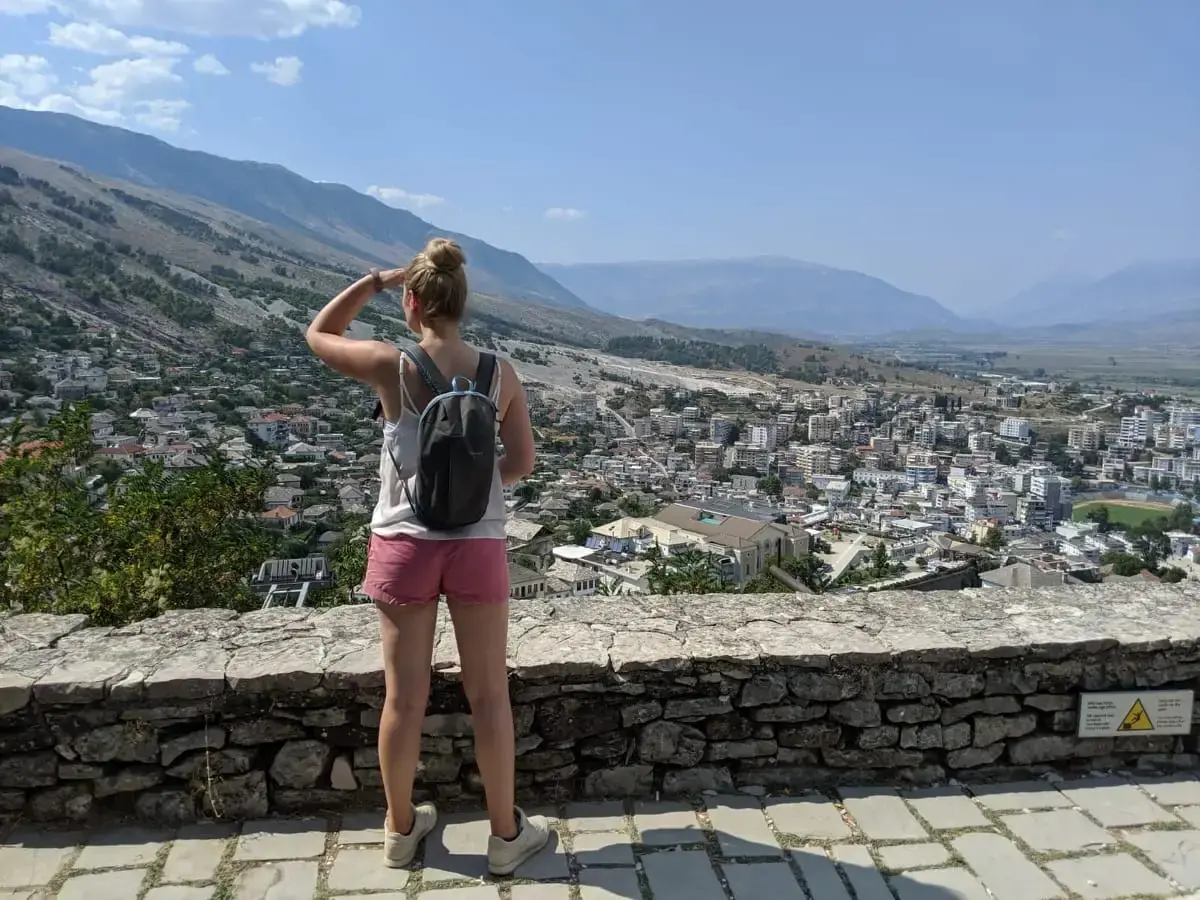
Start at Gjirokastër Castle ($4.50 entry, closed Mondays). The fortress complex holds a military museum, a captured US Air Force reconnaissance plane from the Cold War, and a stage used for the national folk festival. From the ramparts you can see the entire Drino Valley below.
Walk the Old Bazaar, then visit Zekate House (about $2–3, built 1811, tallest in the city) or Skenduli House (about $2–3, guided tour included). Budget roughly $12–18 total for the main paid sites in the city.
The Cold War Tunnel (about $2.50) runs 800 meters underground with 59 rooms — built to shelter the local government during a nuclear attack. The temperature inside drops noticeably, even in summer.
- Location: 130 miles (210 km) south of Tirana
- Cost: Castle $4.50, houses ~$2–3 each, Cold War Tunnel ~$2.50
- Best for: History enthusiasts, photographers, architecture lovers
- Time needed: 5–7 hours for the main sites
Where to eat in Gjirokastër
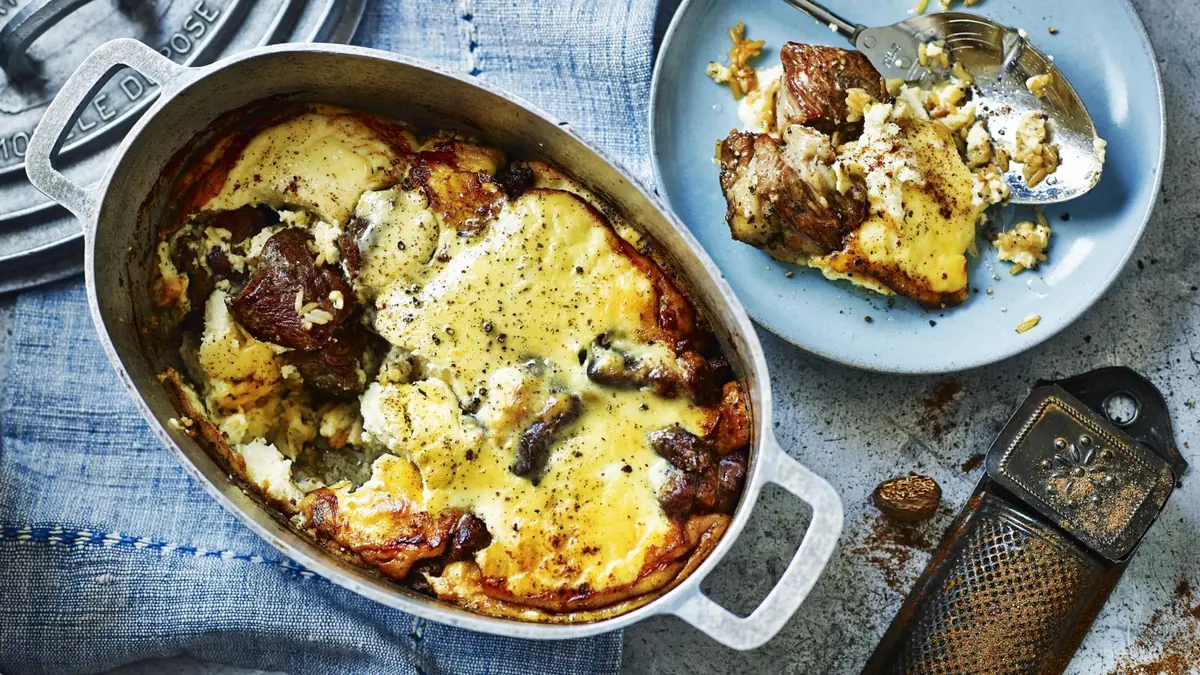
Odaja e Sylejmanit makes qifqi (fried rice balls, a Gjirokastër specialty found nowhere else in Albania) and byrek for $6–7. Pajtimi serves tavë kosi — lamb baked in yogurt, the national dish — for $8–9.
Riviera Route: Saranda, Ksamil and Butrint
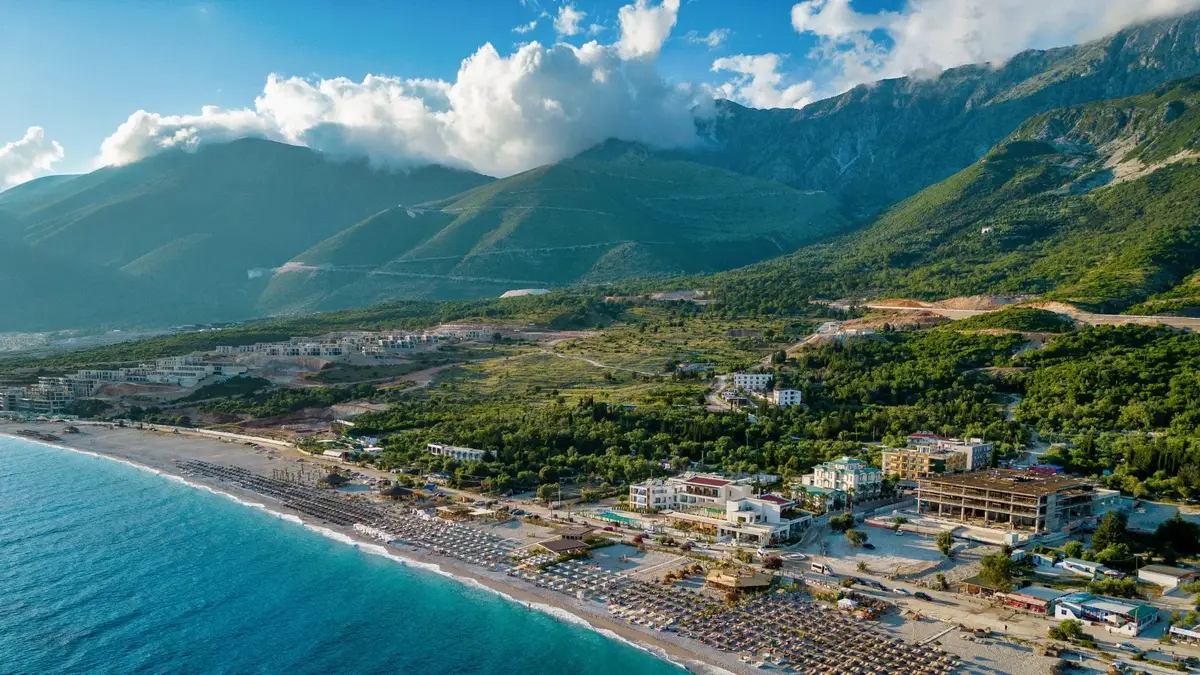
This route is for travelers who want beaches, ancient ruins, and clear water without the infrastructure headaches of more remote coastal spots. Everything clusters around Saranda, so you spend less time driving and more time in the water.
Day 1 — Arrive in Saranda
If you ferried from Corfu, you’re already here. If you flew into Tirana, the drive south takes about 4 hours — break it with a lunch stop in Gjirokastër on the way down. Buses also run from Tirana for $17–21 and take 4–5 hours.
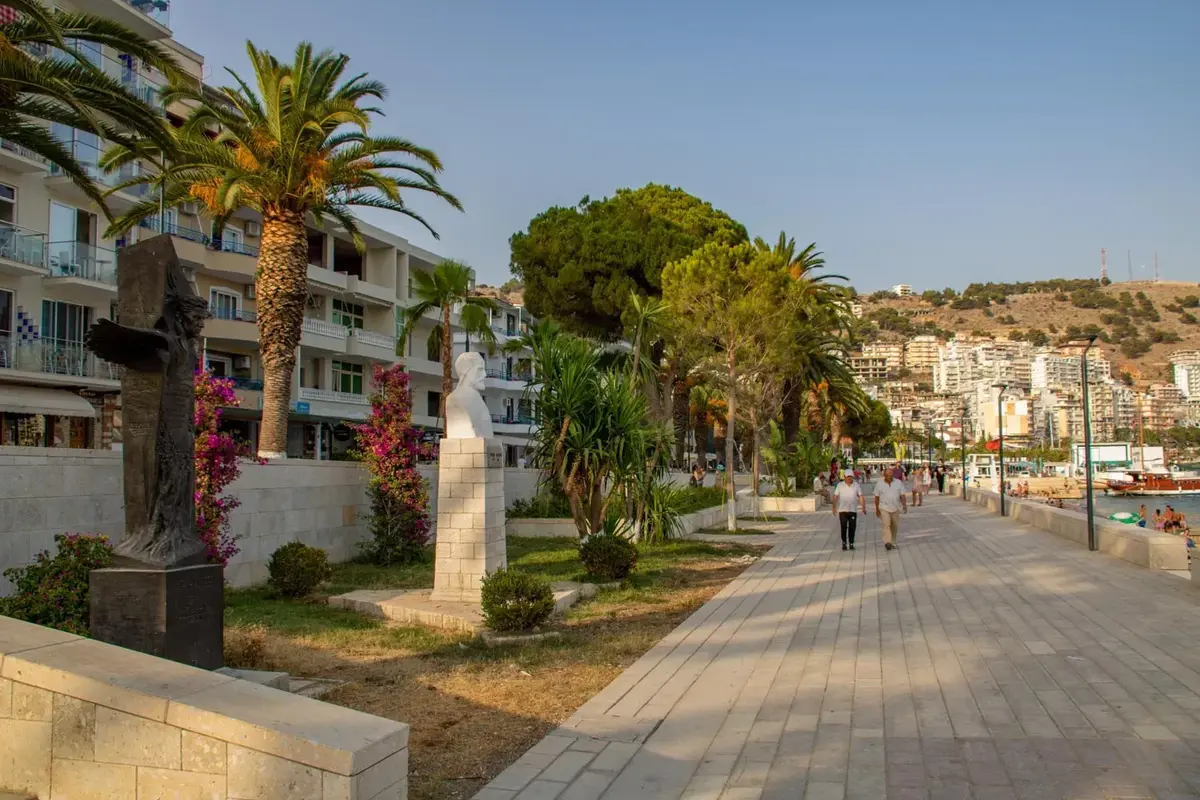
Saranda works as a base, but manage expectations. The town is commercialized and lacks the character of inland Albania. On my visit, the waterfront restaurants charged double what comparable food costs in Berat or Gjirokastër. The value here is proximity — Ksamil, Butrint, and Blue Eye are all within 22 miles (35 km).
Spend the first evening walking the promenade and eating one block back from the waterfront, where prices drop noticeably.
- Location: Southern Albanian coast, facing Corfu
- Cost: $80–120/night mid-range hotel; dinner $12–20/person on the waterfront
- Best for: Beach travelers, families, couples
- Time needed: Half-day for orientation, evening for the promenade
Day 2 — Butrint and Blue Eye
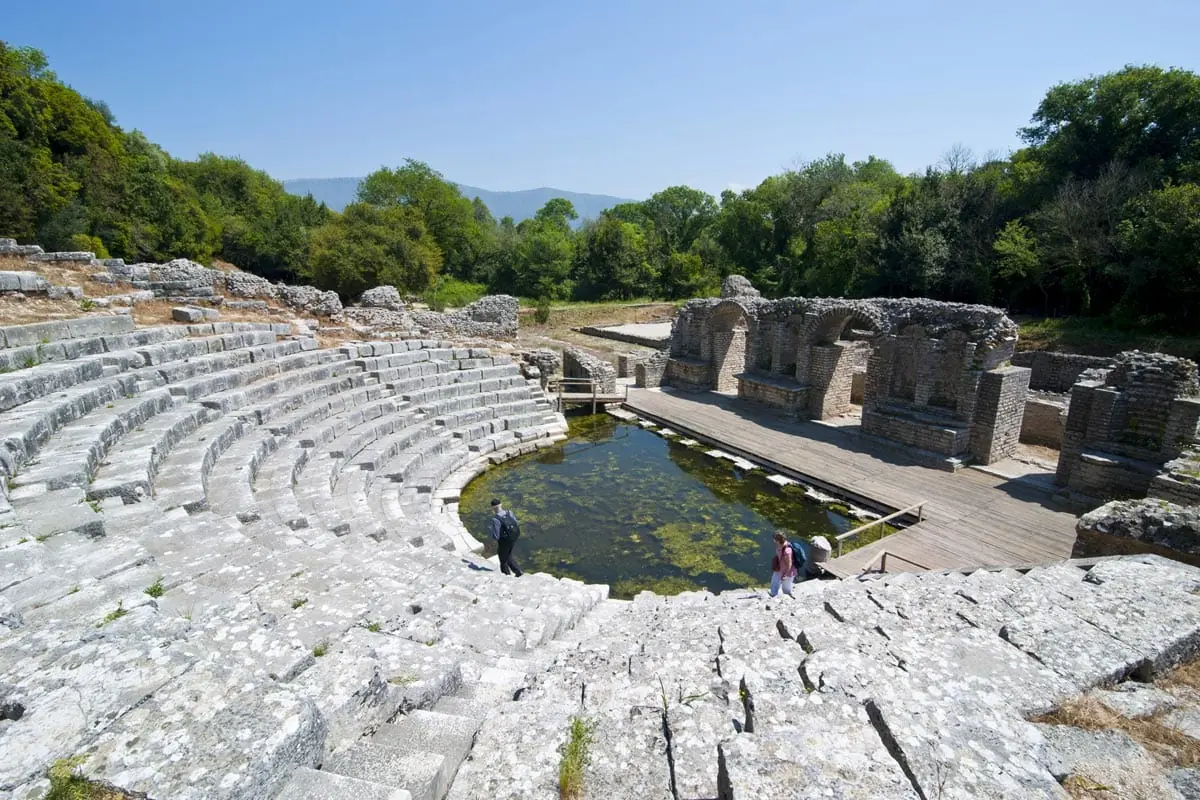
Start early at Butrint National Park, 12 miles (19 km) south of Saranda. This UNESCO site compresses 2,500 years of continuous civilization — Greek, Roman, Byzantine, Venetian — onto a single forested peninsula wrapped by a lagoon. The circular trail takes 1.5–2 hours. Entry is $11 (1,000 Lek), cash only.
The Roman theater is intact enough to picture in use. The baptistery floor mosaics are covered by sand to protect them, but the information panels show what’s underneath. The whole site feels understaffed and under-visited next to comparable ruins in Greece or Italy, which is part of its appeal.
After Butrint, drive north to Blue Eye Spring. A few honest words: Blue Eye has become a full-on tourist attraction. The parking lot fills on summer mornings, the 1.3-mile (2 km) walk from the lot is paved now, and swimming in the spring is officially banned — it’s a protected natural monument. The water is a deep blue at about 50°F (10°C) year-round, and it’s worth seeing, but don’t expect the secluded wonder that older blog posts describe.
- Location: Blue Eye is 14 miles (22 km) east of Saranda
- Cost: Blue Eye entry ~$0.55 + parking $1–2; Butrint $11
- Best for: History enthusiasts, nature lovers
- Time needed: 2 hours for Butrint, 1.5 hours for Blue Eye (including the walk)
Pro Tip: Visit Butrint when it opens — tour buses arrive by mid-morning and the narrow paths get congested. Blue Eye is better in the afternoon when the morning crowds thin.
Day 3 — Ksamil
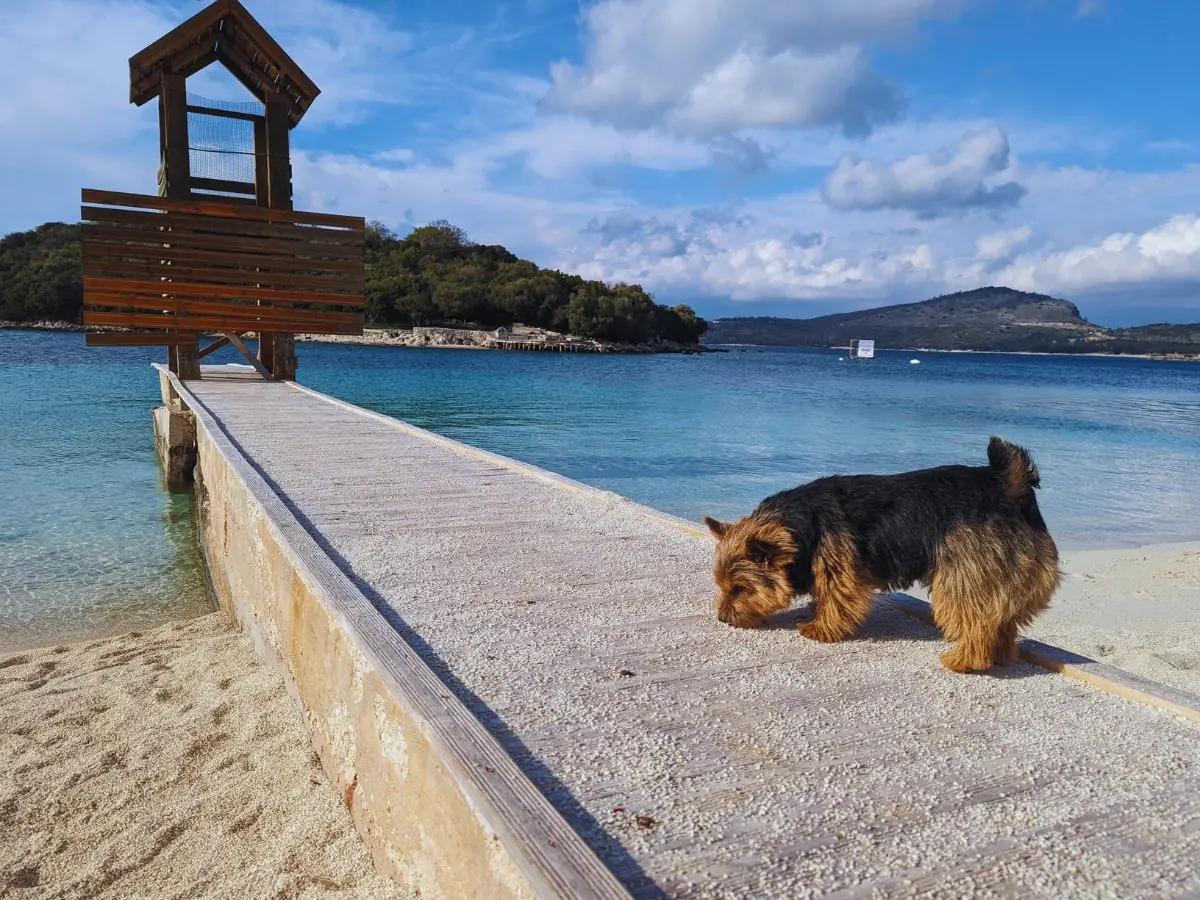
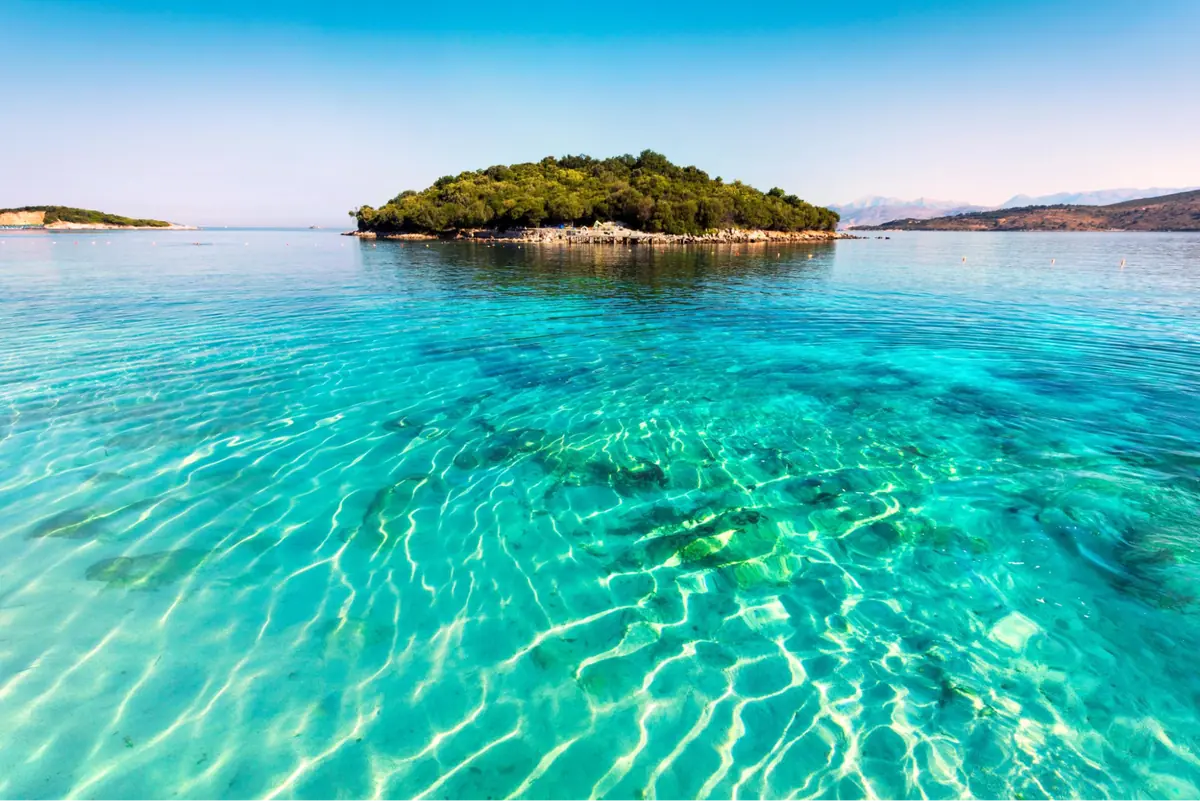
Ksamil sits 9 miles (15 km) south of Saranda and has the most photogenic beaches in Albania — small coves with turquoise water and three tiny islands just offshore. It also packs out in July and August. Sunbed-and-umbrella sets run about $22 for two.
If the main beaches feel overcrowded, walk south past the last restaurant to find quieter stretches. Water clarity stays consistent along the whole coastline.
- Location: 9 miles (15 km) south of Saranda
- Cost: Sunbed + umbrella ~$22 for two, boat to islands $5–8
- Best for: Beach lovers, families, snorkelers
- Time needed: Full relaxed day
Northern Route: Tirana, Krujë and Shkodër
This route suits travelers who prefer mountains, lakes, and fewer tourists over beaches and ancient ruins. Northern Albania has improved its infrastructure sharply, though it still feels rawer than the south.
Day 1 — Tirana
Follow the same Tirana itinerary described in the culture route. If you’re short on time, prioritize Bunk’Art 2 and the Blloku neighborhood.
Day 2 — Krujë and Shkodër
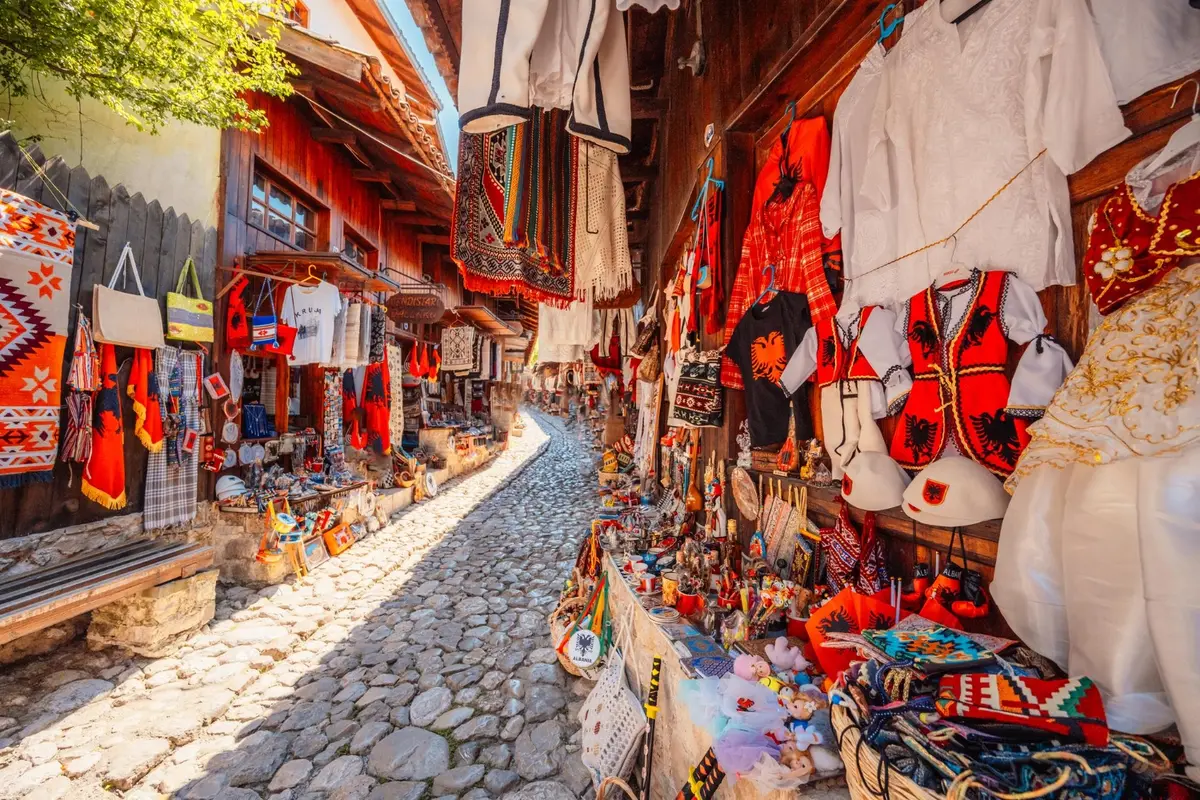
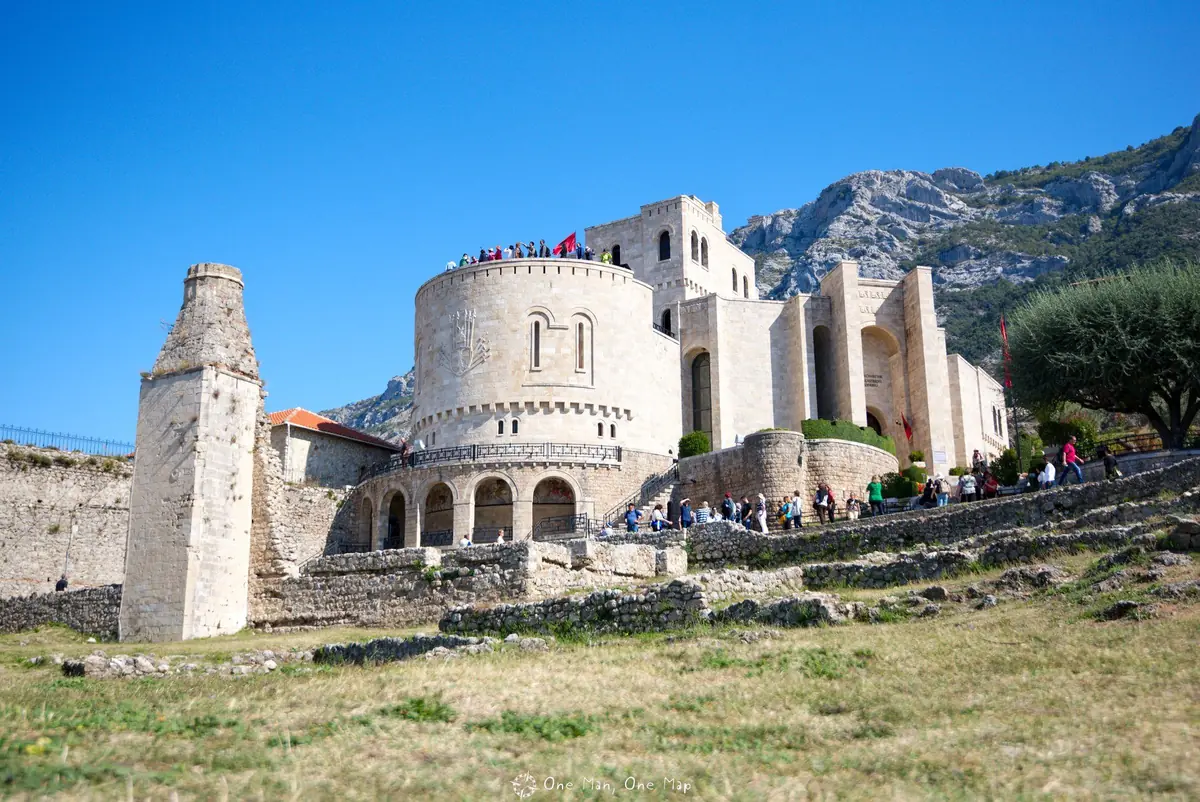
Drive 20 miles (32 km) north for a day trip to Krujë first — about 35 minutes. Visit the Skanderbeg Museum ($5.50) inside the castle, which tells the story of Albania’s national hero who resisted Ottoman conquest in the 15th century. The Ethnographic Museum ($4.50) next door recreates Ottoman-era domestic life. The Old Bazaar below the castle sells handmade crafts — touristy but less aggressive than similar markets elsewhere in the Balkans.
After lunch, continue north to Shkodër — about 62 miles (100 km), roughly 1 hour 30 minutes by car. Shkodër sits at the edge of Lake Shkodër (the largest lake in Southern Europe, shared with Montenegro) and serves as the gateway to the Albanian Alps.
Walk the Rruga Kolë Idromeno pedestrian street, visit Rozafa Castle (free, sunset views over the lake), and eat at one of the restaurants along the lake promenade.
- Location: Krujë is 20 miles (32 km) north of Tirana; Shkodër is 62 miles (100 km) north
- Cost: Skanderbeg Museum $5.50, Ethnographic Museum $4.50, Rozafa Castle free
- Best for: History buffs, photographers, hikers prepping for Day 3
- Time needed: Half-day Krujë, evening in Shkodër
Day 3 — Shala River or Theth
From Shkodër, you have two options depending on fitness and appetite for adventure.
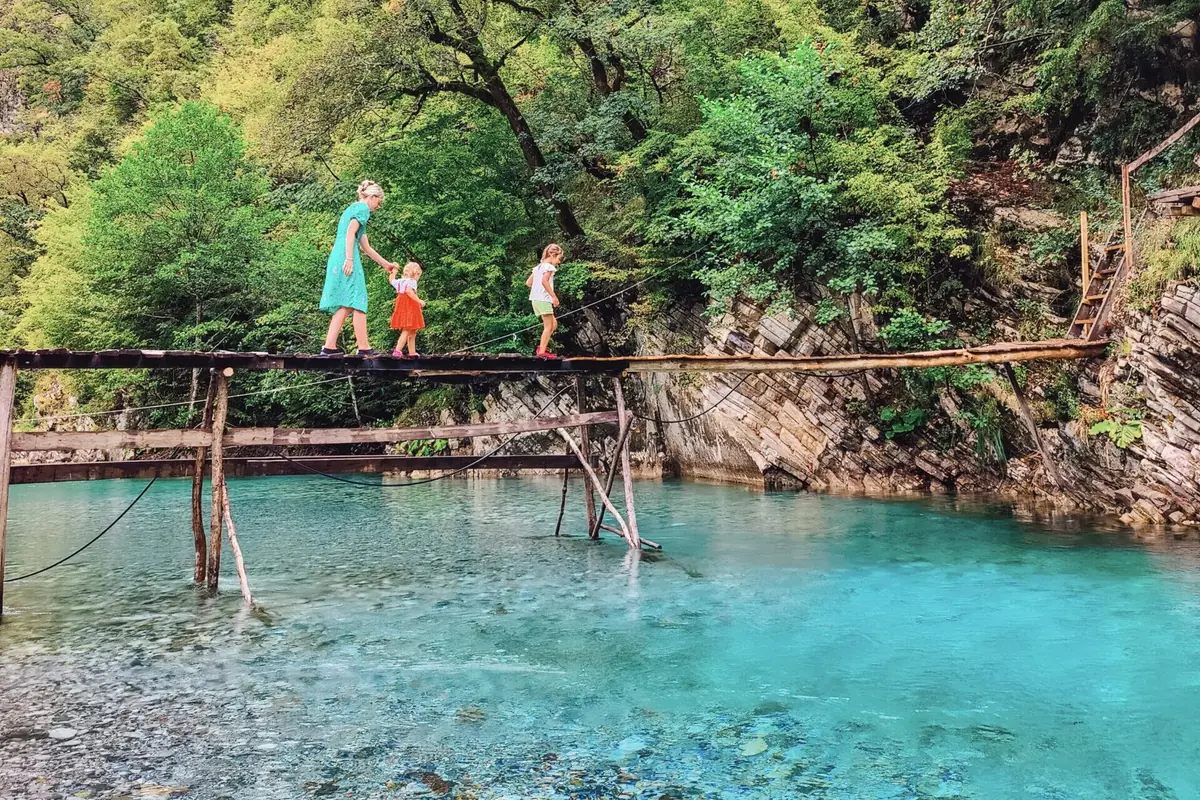
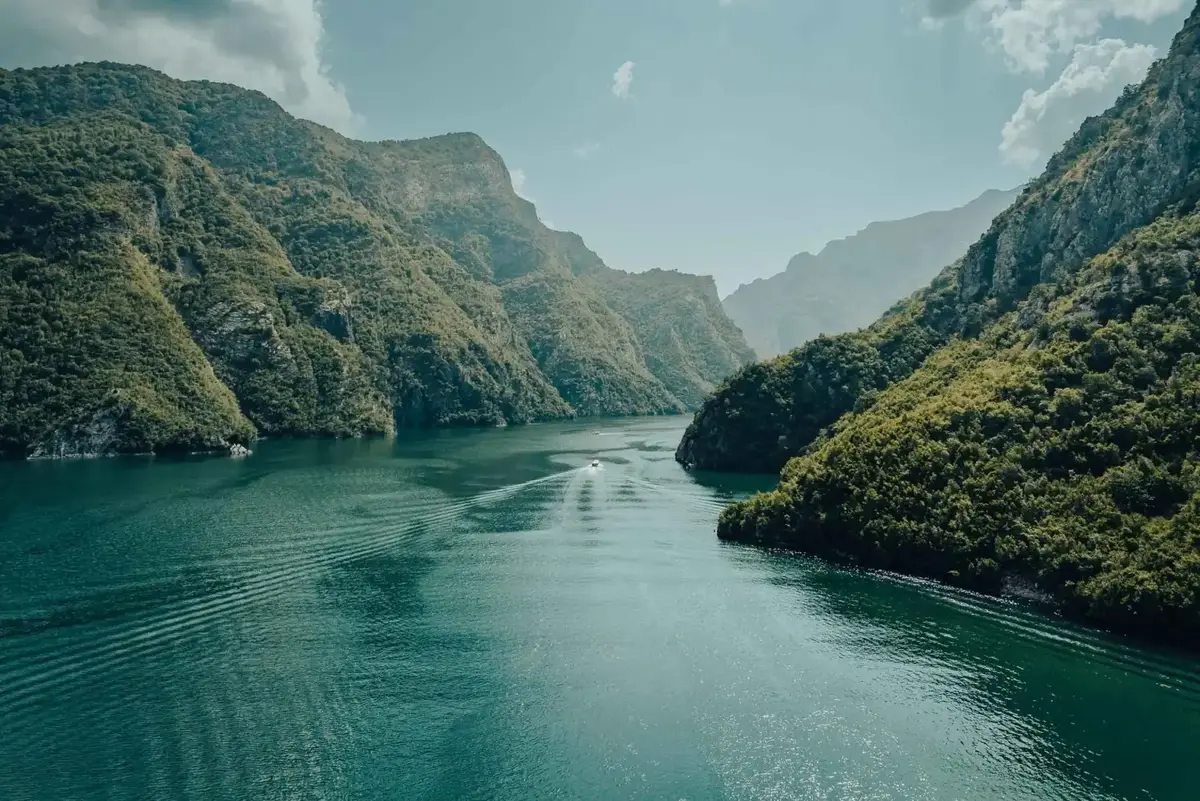
The Shala River trip runs by boat from Lake Koman or Shkodër — the river earned the nickname “Thailand of Albania” for its turquoise canyon water. Organized day trips run $30–50 per person and handle all logistics.
For hikers, Theth National Park works as a long day trip from Shkodër (about 2 hours each way on mountain roads). The valley floor has a waterfall, a 400-year-old lock-in tower, and trailheads for longer hikes. A full day is tight but doable if you leave Shkodër by 7 a.m.
- Location: Shala River and Theth are both accessed from Shkodër
- Cost: Shala River boat trip $30–50/person, Theth transport ~$20–30 round-trip
- Best for: Adventure travelers, hikers, photographers
- Time needed: Full day for either option
How much does a 3-day trip to Albania cost?
A 3-day trip to Albania (excluding international flights) runs $105–165 for budget travelers, $210–360 for mid-range, and $450–750+ for luxury. Flights from the US average $500–1,500 round-trip. Albania is still one of Europe’s most affordable destinations, but prices have climbed roughly a third in a tourism boom — don’t trust cost estimates from older blog posts.
| Category | Budget | Mid-range | Luxury |
|---|---|---|---|
| Hotel/night | $15–40 | $40–80 | $80–250+ |
| Meals/day | $10–20 | $20–40 | $40–70+ |
| Transport/day | $5–10 | $15–30 | $30–60 |
| Activities/day | $5–10 | $10–20 | $20–40 |
| 3-day total | $105–165 | $210–360 | $450–750+ |
Inland destinations (Berat, Gjirokastër, Shkodër) are noticeably cheaper than the coast. With Albania now drawing more than 12 million visitors a year, coastal prices in peak summer approach Greek-island rates for accommodation — the “Albania is dirt cheap” narrative needs updating.
Pro Tip: Open a Charles Schwab checking account before your trip. It reimburses all foreign ATM fees worldwide — a real advantage in a cash-heavy country where ATM withdrawals typically cost $6–10 each.
How do Americans get to Albania?
There are no direct flights to Albania from the US. The most common routing is through Istanbul on Turkish Airlines, which offers the most Tirana connections. Other options connect through Rome, Vienna, Frankfurt, or Athens. Budget 13–14 hours total travel time with one stop. Round-trip fares range from $500 in off-season to $1,500 in peak summer.
An alternative for Riviera-focused trips: fly into Corfu, Greece (sometimes cheaper from US cities via Athens), then take the 30-minute speed ferry to Saranda. That puts you directly on the southern coast without the 4-hour drive from Tirana.
At Tirana International Airport, the LU-NA (Rinas Express) shuttle runs 24/7 to Skanderbeg Square for about $4.40 (400 Lek), roughly 30 minutes. Official taxis charge $22–28 — confirm the fare before you get in.
Is Albania safe for American tourists?
Albania is safe for American tourists. The US State Department rates it Level 2 (Exercise Increased Caution) for crime — the same advisory level as France and the UK. Violent crime against tourists is rare, and Albania ranks higher on the Global Peace Index than the United States. Albanians are also notably pro-American.
That pro-American sentiment is rooted in US support during the Kosovo conflict, and it shows in how travelers are treated. The primary safety concern is driving. Albanian road habits include frequent passing on blind curves, inconsistent speed limits, and livestock on rural roads. If you rent a car, drive defensively and avoid mountain roads after dark.
Solo female travelers consistently rate Albania positively. The cultural concept of Besa — a code of honor around hospitality and the protection of guests — runs deep, especially in rural areas. As anywhere, keep standard awareness in crowded tourist venues.
- Emergency number: 112 (general)
- US Embassy in Tirana: +355 4 2247 285
- Petty theft risk: Low, but take standard precautions in crowded areas
What’s the best way to get around Albania in 3 days?
A rental car ($27–55/day) gives you the most flexibility for any multi-city itinerary and saves real time over public transport. Main highways between Tirana, Berat, and the coast have improved and are well-paved. An international driving permit is recommended. Without a car, shared minivans connect cities cheaply but on loose schedules.
Those minivans — furgons — leave when full, not on the clock. Last departures from most cities are around 6 p.m. There’s no Uber. For taxi apps, use MerrTaxi or Speed Taxi.
| Mode | Cost | Flexibility | Comfort | Best for |
|---|---|---|---|---|
| Rental car | $27–55/day | High | High | Multi-city trips, flexible schedule |
| Furgon (shared minivan) | $2–21 per route | Low — leaves when full | Low | Budget solo travelers |
| Private transfer | $50–150 per route | Medium | High | Couples splitting costs |
| Organized tour | $50–100/day | None | High | Travelers who prefer no logistics |
Pro Tip: Download offline Google Maps for all of Albania before you arrive. Cell coverage drops out on mountain roads and between towns — a paper-thin signal is not something you want to discover while hunting for a turn.
When should you visit Albania?
May–June and September–October deliver the best balance of weather, crowds, and pricing. September stands out as the single best month — the sea stays warm enough to swim, summer crowds thin, prices drop, and harvest festivals add a cultural layer.
July and August bring 95°F+ (35°C+) heat inland, peak coastal congestion, and prices that jump 20–50% above shoulder-season rates. Ksamil and Saranda in August feel closer to Cancún than the Balkans.
Winter (November–March) works for Tirana city exploration at rock-bottom prices, but coastal towns largely shut down and mountain roads can become impassable.
| Season | Temperature range | Crowd level | Relative cost |
|---|---|---|---|
| Spring (Apr–Jun) | 59–87°F (15–31°C) | Low to moderate | Moderate |
| Summer (Jul–Aug) | 82–95°F+ (28–35°C+) | High to extreme | Highest |
| Autumn (Sep–Oct) | 61–83°F (16–28°C) | Low to moderate | Moderate |
| Winter (Nov–Mar) | 32–52°F (0–11°C) | Minimal | Lowest |
What food should you try first in Albania?
Albanian cuisine borrows from Ottoman, Greek, and Italian traditions but has its own identity — heavier on meat, yogurt, and phyllo than you might expect, and cheaper than anywhere else on the Mediterranean. A sit-down dinner with drinks rarely tops $18 per person outside Saranda’s tourist waterfront.
Dishes to order first:
- Tavë kosi: Lamb baked in a yogurt-and-egg custard. The national dish. $6–10.
- Byrek: Savory phyllo stuffed with cheese, spinach, or meat. Street bakeries sell slices for $0.50–1.50.
- Qofte: Grilled lamb or beef meatballs, seasoned with mint and onion. $4–7.
- Fërgesë: Baked peppers, tomatoes, and cottage cheese — the vegetarian standout. $5–8.
- Trilece: Three-milk cake soaked in caramel. The dessert you’ll crave after you leave. $2–3.
- Raki: Grape brandy served after dinner, often homemade. Refuse at your own social risk.
What mistakes waste a 3-day Albania trip?
The biggest time-waster is not carrying enough cash. ATMs exist in cities, but attractions, small restaurants, buses, and taxis outside Tirana are often cash-only. Withdraw enough Lek at the airport or your first city to cover at least a full day, then sidestep the other common errors below.
Other frequent errors:
- Underestimating travel times: Google Maps shows optimistic drive times that ignore Albanian road conditions. Add 20–30% to any estimate.
- Trying to see everything: Three days means one region. Choosing between Berat and Ksamil is part of the planning, not a failure of it.
- Visiting only the coast: The Riviera is beautiful, but Berat and Gjirokastër are what make Albania feel like Albania. Beaches exist everywhere in the Mediterranean — UNESCO Ottoman towns perched on mountainsides do not.
- Ignoring the “old Lek” trap: Some locals, especially taxi drivers, still quote prices in the pre-1965 denomination — 10 times the actual price. If a coffee costs “300 Lek,” they mean 30 new Lek (about $0.35). If something sounds absurdly expensive, divide by 10.
- Skipping offline maps: Cell service drops between towns and on mountain roads. Download Google Maps offline for all of Albania before departure.
- Using old blog posts for budgeting: Prices have climbed roughly a third in a sustained tourism boom. A $20/night guesthouse from an older post may now charge $35–45.
What most guides won’t tell you
Albania is not budget Greece, and treating it that way leads to disappointment. The food is different, the infrastructure is rougher, the driving is wilder, and the history runs in directions most Americans haven’t studied. That’s exactly what makes it worth three days — or more.
TL;DR: Pick one region, carry cash, don’t trust old price guides, and leave at least one evening free to eat too much tavë kosi at a family restaurant that doesn’t have a website. Your 3 days in Albania itinerary rewards travelers who slow down, not the ones who try to see everything.
What route are you leaning toward — culture, coast, or mountains?