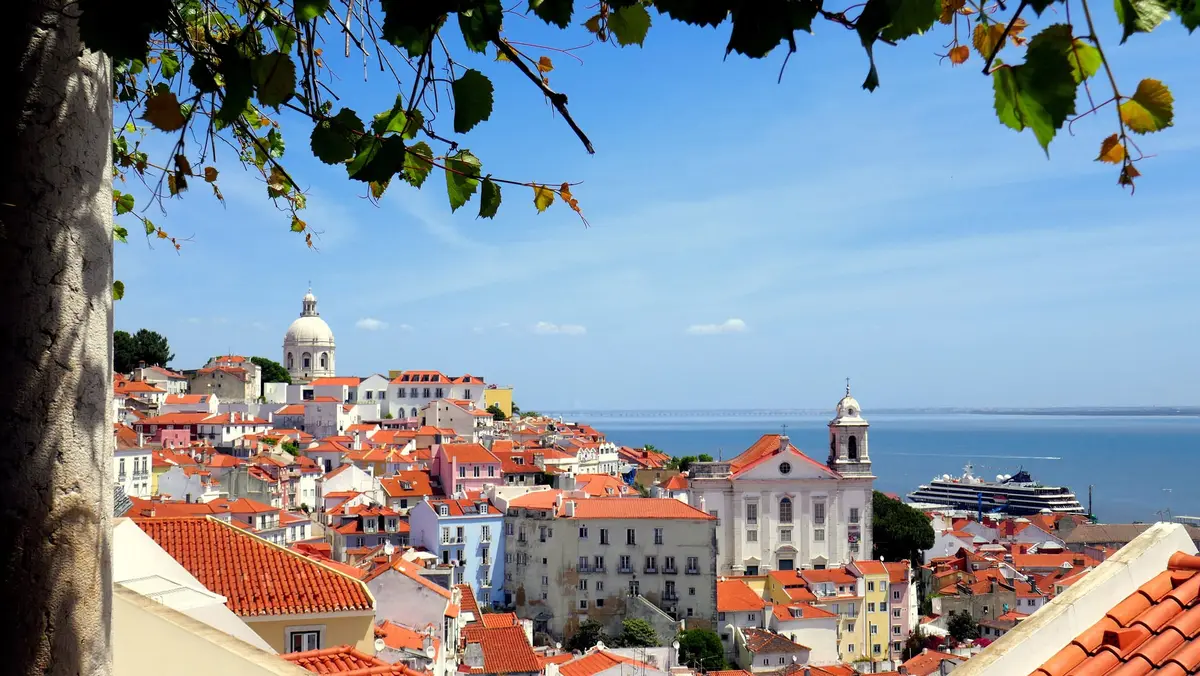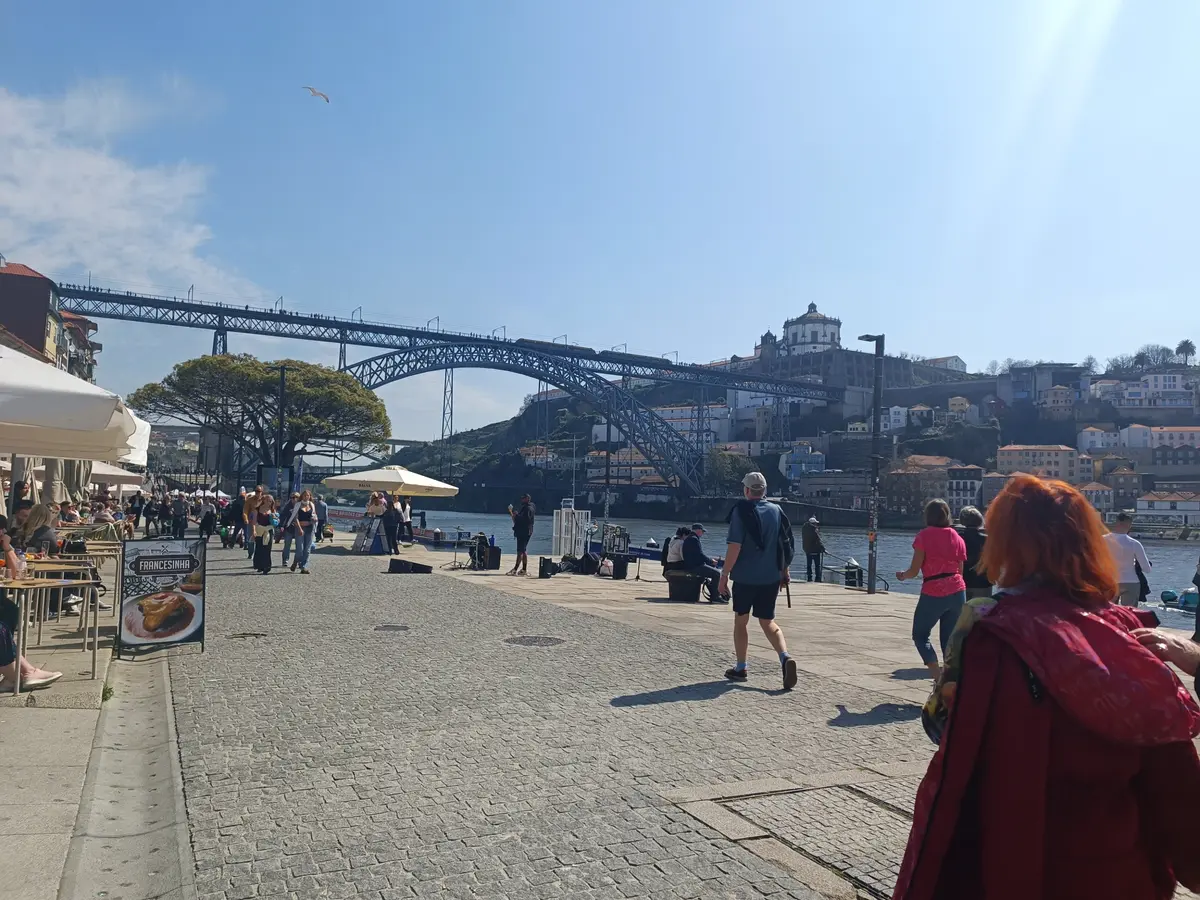
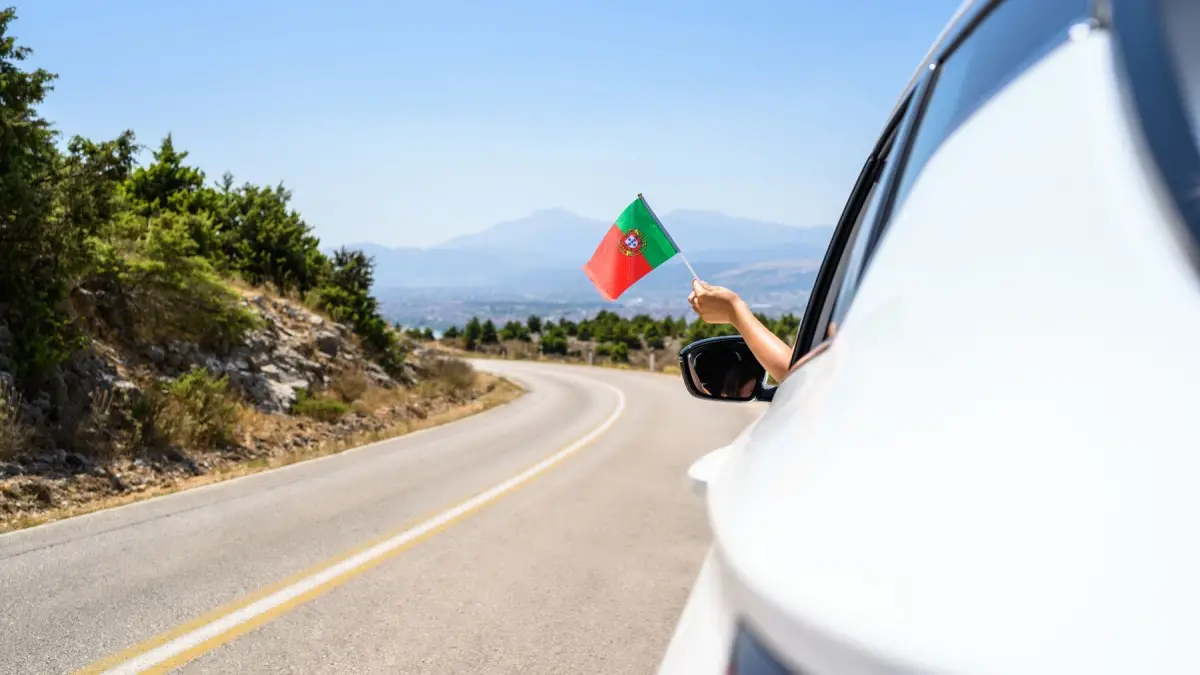
Driving in Portugal unlocks schist villages, Atlantic surf coasts, and Douro terraces that no train reaches — but the gap between a US highway and a Portuguese back road is wider than most first-timers expect. This guide covers the specific documentation, gear, toll traps, and local habits that separate a smooth road trip from an expensive lesson.
What documentation do you need to drive in Portugal?
Your valid US driver’s license covers you legally for up to 185 days as a tourist, which handles any vacation itinerary. An International Driving Permit is not required by Portuguese law — but it is a $20 booklet that translates your credentials into 10 languages and keeps a GNR rural officer from spending 45 minutes trying to decode your Georgia plastic. Get it before you leave.
Your US license and when the IDP actually matters
Portugal does not require an IDP for short tourist visits. The risk is a traffic stop 60 miles outside Évora, where the officer speaks only Portuguese and your license reads like a foreign document. The IDP resolves the standoff in about 30 seconds.
If your trip crosses into Spain — particularly if you’re following a Spain and Portugal itinerary — the IDP becomes non-optional. Spain strictly requires it for non-EU drivers.
How to get your IDP before departure
Only two US organizations are authorized to issue IDPs: AAA and the National Automobile Club. An in-person AAA application costs $20 — bring two passport photos and your license, and you walk out with the booklet the same day. Online applications run $30 with an added digital photo fee, plus shipping time.
You cannot get an IDP once you are overseas. There is no workaround, no exception, and no local equivalent.
Pro Tip: Apply in person at a AAA branch rather than online. Same-day turnaround, lower cost, and no waiting on a shipping delay to find out your IDP arrived after your departure date.
How do you choose the right rental car in Portugal?
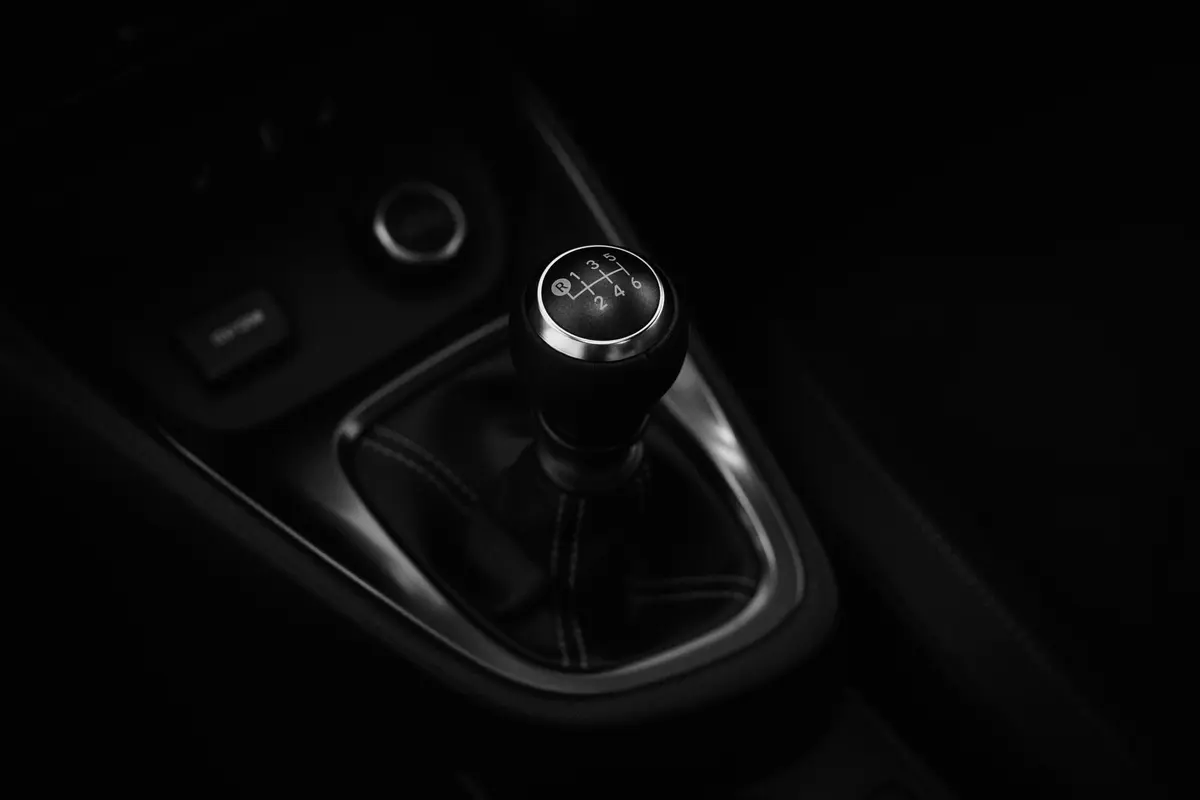
When you rent a car in Portugal, expect 70-80% of the fleet to be manual transmission, with automatics priced at a 50-100% premium and inventory that often disappears entirely by summer. On top of transmission, size matters more here than anywhere else you have driven — book the smallest class your group can physically fit into, and do not negotiate yourself into something larger.
Automatic vs. manual: is the premium worth it?
Portugal is not flat. Lisbon sits on seven hills, the Douro Valley is terraced almost vertically, and even sleepy Alentejo market towns have historic centers with steep, cobblestone approach streets that require confident hill starts. If you are not genuinely proficient with a manual transmission, pay the automatic premium without debate.
On my last visit, I watched a driver in a mid-size rental SUV spend 20 minutes executing a multi-point turn in a Sintra alleyway while a full line of locals waited behind him. A Clio would have driven through without slowing.
Pro Tip: Book your automatic car the moment your flights are confirmed, not one week before departure. By July, most budget agencies in Lisbon and Porto have nothing left in the automatic category.
Why smaller is always smarter in Portugal
Historic centers in Évora, Sintra, and Porto were laid out for oxcarts and foot traffic. Streets that appear navigable on Google Maps sometimes terminate in a passage that a compact hatchback fits through with four inches to spare on each side — and then only if you fold the mirrors in.
A Renault Clio or VW Polo class is the practical standard: small enough for medieval lanes, stable enough at 120 km/h (75 mph) on the autoestrada, and easy to park in a country where a parking space is a genuine prize — the right foundation for any Portugal road trip itinerary.
What mandatory safety equipment does the car need?
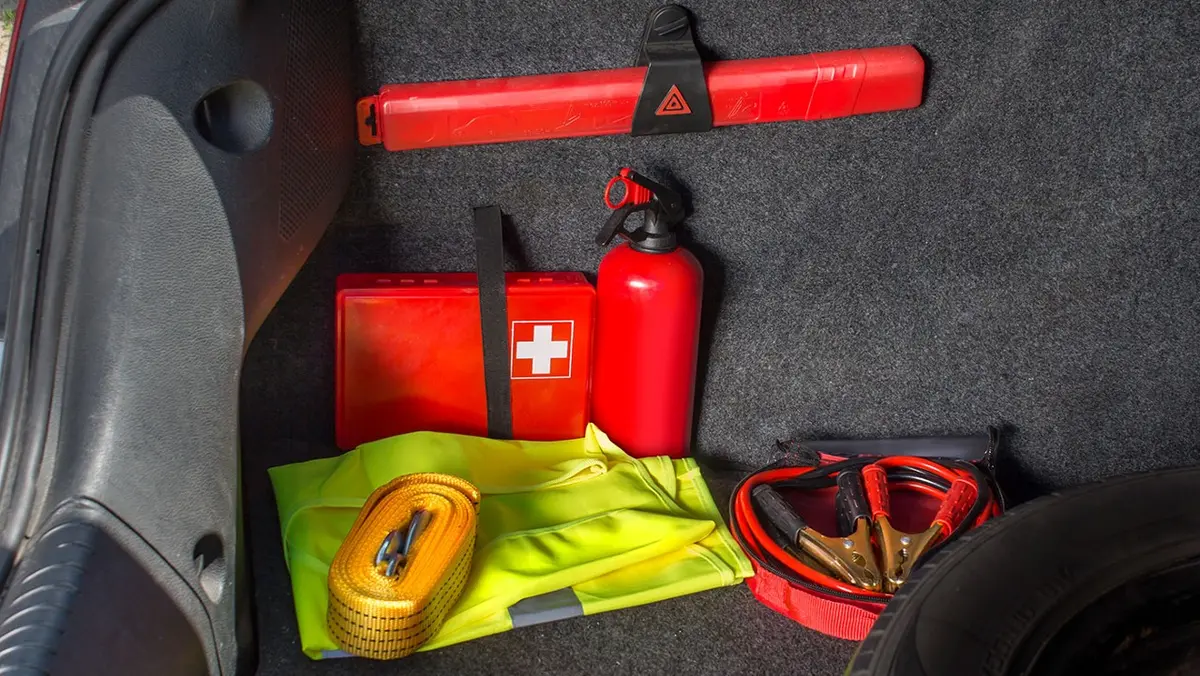
Every rental vehicle must carry a reflective safety vest stored inside the main cabin — not the trunk — and a warning triangle in the trunk. Police actively check for both during routine stops, and the fine for a missing vest is immediate and collected on the spot.
Before driving off the lot, open the trunk and verify these three items:
- Reflective safety vest (must be in the cabin, not the trunk)
- Warning triangle
- Functional spare wheel or emergency repair kit
In a highway breakdown, the vest goes on before you open the car door. The warning triangle goes 30 meters (about 98 feet) behind the vehicle. Child seats are legally required for anyone under 12 years old or under 4 feet 5 inches (135 cm). Rear seat belts are mandatory — police enforce this, not just front-seat compliance.
How do you navigate rental insurance and damage deposits?
Standard rentals include a Collision Damage Waiver with a deductible of €1,000 to €2,500. If you plan to rely on your premium credit card’s collision coverage and decline the agency’s full-cover policy, the agency will place a pre-authorization hold on your card for the full excess amount. Make sure your credit limit can absorb that hold and still cover a week of daily expenses.
Before leaving the lot, shoot a 360-degree phone video of every panel, wheel rim, and the underside of the front bumper. Get every existing mark officially noted on the checkout sheet. Budget agencies pursue minor scratches with attention to detail.
Always select a full-to-full fuel policy. The agency’s refueling rate per liter runs significantly higher than any roadside pump in the country.
How does Portugal’s toll system actually work for tourists?
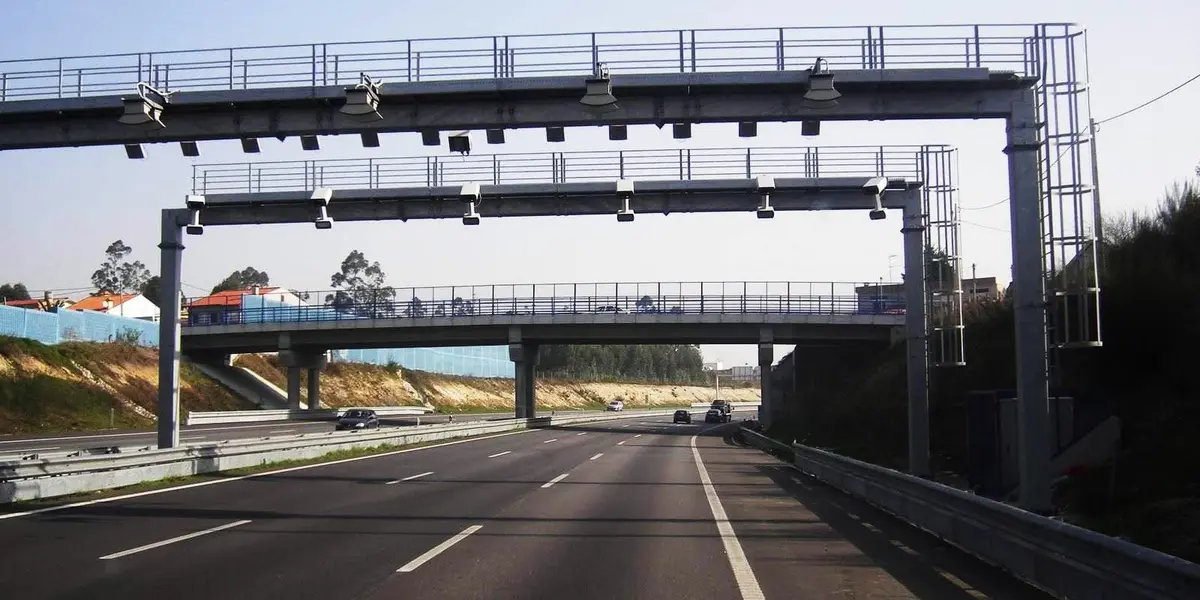
Portugal’s highway network splits between traditional toll booths and electronic-only roads where overhead gantries photograph your plate and bill you automatically — with no cash or card option at the roadside. The system catches most first-time visitors off guard, but the solution is simple: arrange your payment method before you enter the first motorway.
Via Verde and your tourist-friendly alternatives
Via Verde is the RFID transponder system that lets you pass through dedicated green lanes on every Portuguese toll road. Rental companies offer it as an add-on; all charges flow directly to your rental invoice. This is the cleanest option for anyone driving extensively.
If you prefer a pay-as-you-go approach, EasyToll is the better choice for tourists: register your rental car’s license plate and a credit card at a dedicated terminal at Lisbon, Porto, or Faro airports. After that, every electronic toll is automatically charged to your card for the next 30 days. No device to return, no deposit required.
A TollCard — a prepaid card loaded with €5, €10, €20, or €40 — covers all electronic toll roads and is available at CTT post office shops and most highway service areas.
What happens if you drive an electronic toll road without paying?
If you pass an electronic gantry with no registered payment method, your license plate is logged and the debt tracked. For rental cars with foreign plates, you must contact the specific toll operator directly — a trip to the post office alone will not clear the debt. The rental company will receive the notification and charge you the toll amount plus a processing fee that often exceeds the original toll by a large margin — one of the more avoidable Portugal travel costs if you register before your first motorway.
Registering an EasyToll account at the airport welcome desk takes about 10 minutes and eliminates this scenario entirely.
Pro Tip: The Via Verde lane speed limit is 40-60 km/h (25-37 mph). Watch the traffic light on the gantry above: green means a clean read of your device, yellow means proceed normally and resolve any discrepancy with the rental company afterward. Never brake hard or stop for a yellow light.
What driving habits do US visitors need to unlearn in Portugal?
Portuguese drivers are assertive and governed by a strict interpretation of lane discipline that directly contradicts standard American highway behavior. The left lane is for passing only — not for cruising — and the headlight flash system carries meanings that are the exact reverse of what most American drivers expect.
The left-lane rule and what those headlight flashes really mean
The keep-right rule is enforced by other drivers with conviction. If you are sitting in the left lane without actively overtaking, expect tight following distances and headlight flashes within seconds. This is the local signal for move right immediately. Comply as soon as it is safe to do so.
The headlight flash means something different here. A flash from the car behind you means get out of my way. A flash from oncoming traffic signals a speed camera or road hazard ahead. A flash from a driver at an intersection asserts their right of way — it does not invite you to proceed. Never assume a flash is a courteous yield.
Speed limits, alcohol, and phone laws
Speed limits are metric, camera-enforced, and rarely forgiven. The three numbers to remember:
- Urban areas: 50 km/h (31 mph)
- Rural roads: 90 km/h (56 mph)
- Major highways: 120 km/h (75 mph)
In small villages on main routes, velocity-controlled traffic lights turn red automatically if you approach above the limit. The camera captures you before you register the light.
The blood alcohol limit is 0.5 g/l — lower than most US states. A generous glass of wine with lunch is often enough to breach it. If you are driving that afternoon, treat the meal as non-alcoholic. Police carry portable card terminals for immediate fine collection; DUI penalties are serious and applied on the spot.
Physically holding a phone while driving — including for GPS — is illegal and carries immediate fines. Hands-free mounts are the only legal option, and the best apps for Portugal travel include several GPS tools that work without requiring you to touch the screen.
How do you master the Portuguese roundabout?
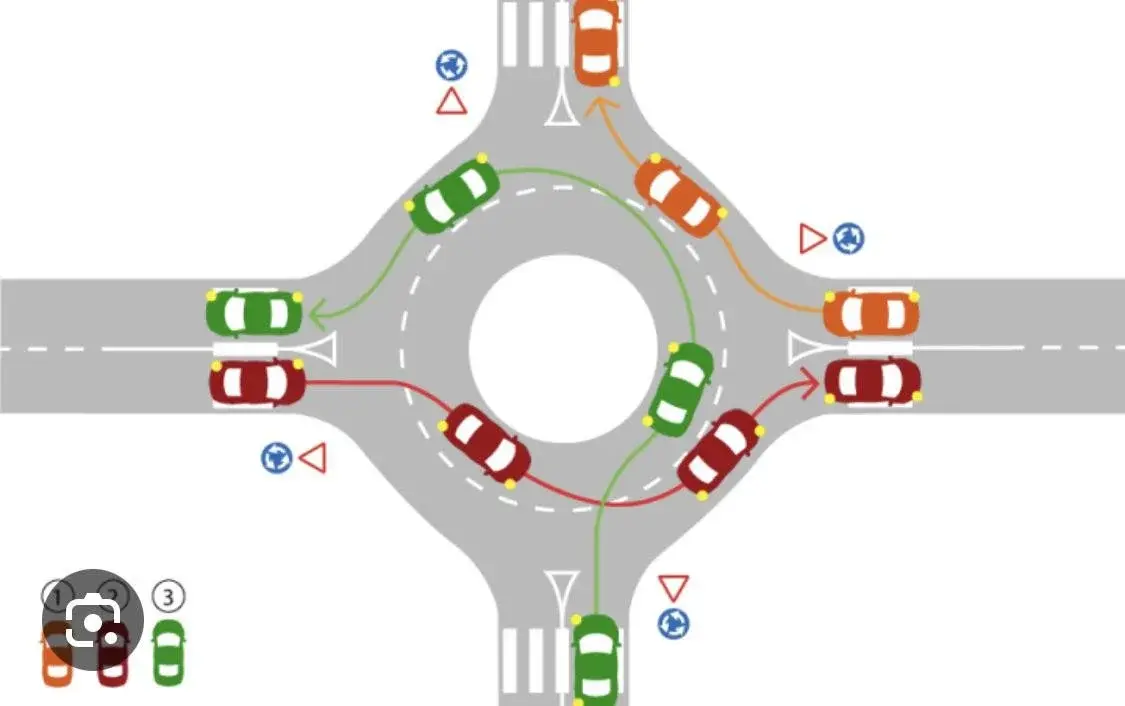
You master it by memorizing one rule before you arrive: use the inside lane for any exit except the immediate first one. Portuguese Highway Code Article 14-A dictates specific lane assignments that contradict American roundabout instinct, and traffic police actively target confused rental car drivers at multi-lane roundabouts near city centers.
Which lane to enter and when
Use the right (outside) lane only if you are taking the very first exit. For every other exit, enter on the inside lane, circle around, and merge right only after you have passed the exit immediately before your intended one.
Think of the roundabout as a clock face. Any exit falling between 12 and 6 o’clock position requires inside-lane entry. This is the specific maneuver that generates the most rental car fines in Portugal.
How to exit without getting hit
As you spiral toward your exit, watch your right-side blind spot carefully. Some drivers attempt to undertake on the right as you merge out — it is illegal but it happens, particularly in heavy urban traffic. Signal early, check the mirror deliberately, and exit at a controlled speed.
Pro Tip: When in doubt, take one extra loop around. It takes 20 seconds and feels embarrassing. Getting clipped in the blind spot costs €1,500 and a four-hour paperwork session on what was supposed to be a rest day.
Where and how should you park in Lisbon and Porto?
The honest contrarian take on driving in Portugal: Lisbon is one of the worst places in the country to use a car. Park at a large garage near a metro station on the city’s edge, take public transport into Alfama, Bairro Alto, and Belém, and save the car for day trips to Sintra or the Arrábida coast. Driving in the Alentejo and Douro is a genuine pleasure; competing for parking on Lisbon’s calçada is not.
Parking zones, apps, and the street helpers
EMEL manages Lisbon’s street parking through a color-coded zone system. Red zones allow short stays at around €1.60/hour with a 2-hour maximum. Yellow zones are €1.20/hour in mid-traffic areas. Green zones at the periphery run €0.80/hour with a 4-hour limit.
Download the EMEL ePark app before arriving. It uses geolocation to confirm your parking location and lets you extend time remotely — useful when you lose track of time in a museum. For Porto, Faro, Lagos, and most other cities, Telpark and EasyPark are the better-supported alternatives.
You will occasionally encounter arrumadores — unofficial street parking assistants who wave you into open spots. Tipping them a small coin is standard. It does not guarantee your car’s security, but declining can produce outcomes that require creative explanation to the rental company.
Why underground garages are worth the price difference
Street parking in historic neighborhoods involves real risks: narrow spaces, aggressive parallel parking by local drivers, and enforcement officers who work quickly. Empark and Saba operate large, clean underground garages throughout both cities at rates that, when you factor in the alternative, are reasonable.
Always check the entrance ramp for clearance height and angle before committing. Some older Lisbon garages have entrance ramps that will scrape a standard sedan’s front bumper at any speed faster than a walking pace.
Pro Tip: The underground garage at Praça de Espanha in Lisbon is large, well-signed, close to the blue metro line, and consistently has space even in peak summer. It is a better base than circling Alfama for 40 minutes looking for a street spot that probably does not exist.

What do you need to know about fuel and EV charging in Portugal?
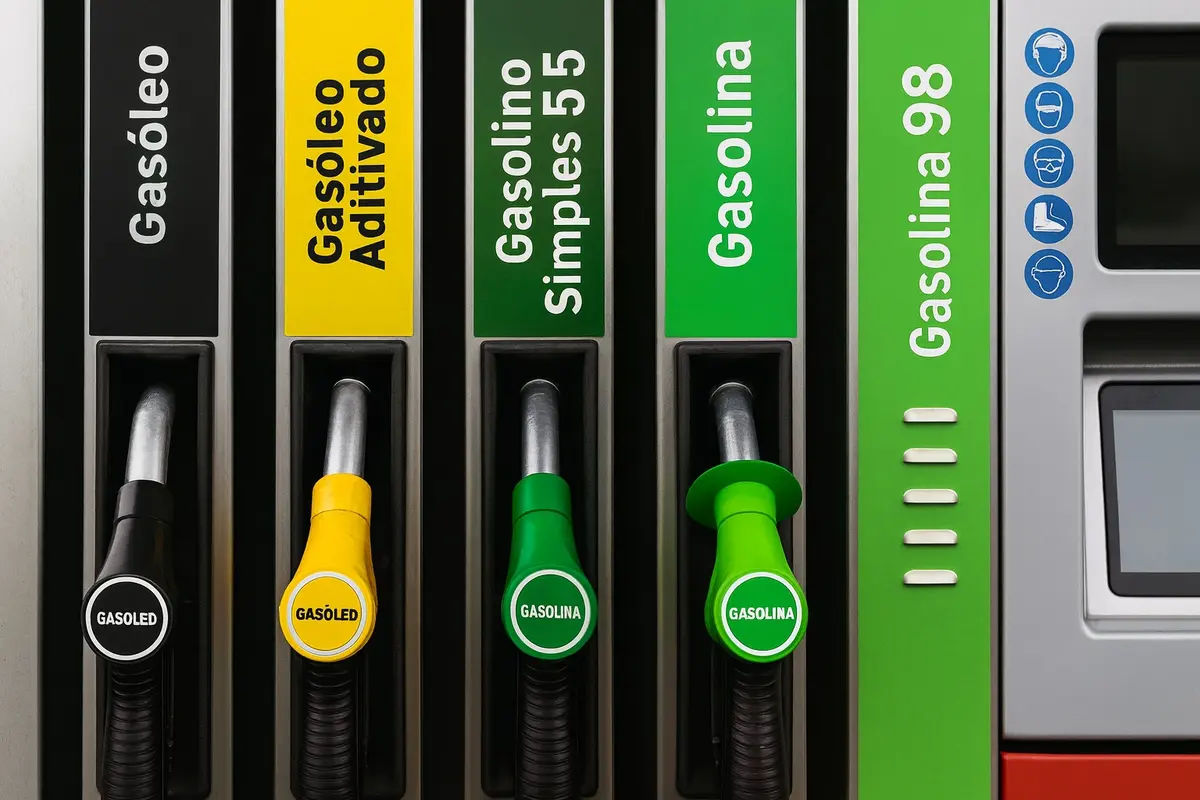
Fuel costs more per liter than you are used to at home, and the nozzle color system is different from the US. Confusing Gasóleo with Gasolina — even briefly — destroys the engine and voids your insurance with no negotiation possible.
Gasóleo vs. Gasolina: check every single time
Gasóleo is diesel. The pump handle is typically black or yellow. Gasolina is standard unleaded petrol, typically on a green handle. Before pumping anything, check the sticker inside the fuel door — it specifies the correct fuel type for that car. Check it every single time you refuel, even on the third day when it feels automatic.
Fill up in towns rather than on the autoestrada. Highway service station fuel prices run notably higher than the identical pump in any nearby town. On a long Alentejo or Douro itinerary, the difference across several fill-ups adds up.
EV charging across Portugal
Portugal has grown into one of Europe’s most developed EV markets, with over 13,000 public charging points across the mainland, Azores, and Madeira coordinated through the MOBI.E network. The infrastructure is real and expanding — this is not a country where an EV road trip is an experiment.
Most modern charging stations now support QR code scanning and app-based payment through provider apps like Go.Charge, eliminating the need for a physical RFID card. Download a CEME provider app before you depart; it gives you access to the entire interoperable MOBI.E network.
EV infrastructure thins noticeably in rural Northern Portugal and through the deep interior. Charge to full before leaving any major town on these routes, and plan stops around highway service areas. Tesla drivers have the most reliable experience: the Supercharger network covers the main corridors without requiring third-party apps or registration.
How do driving conditions change across Portugal’s regions?
Road character shifts dramatically between south, center, and north — something any Portugal road trip itinerary needs to account for from the start. The flat, tourist-oriented Algarve is a different driving environment from the vertical terraces of the Douro, and both are different from the volcanic gradients of Madeira or the Azores. A generic approach to all four fails you in at least two of them.
Algarve and Alentejo
The A22 (Via do Infante) runs east-west across the entire Algarve and has been completely toll-free since January 2025. The old advice of “pay the toll on the A22 to avoid the dangerous N125” is now obsolete — take the A22 every time, and enjoy it for free. The EN125 runs parallel through every town between Lagos and the Spanish border; it moves slower, carries more congestion, and has a substantially worse accident record.
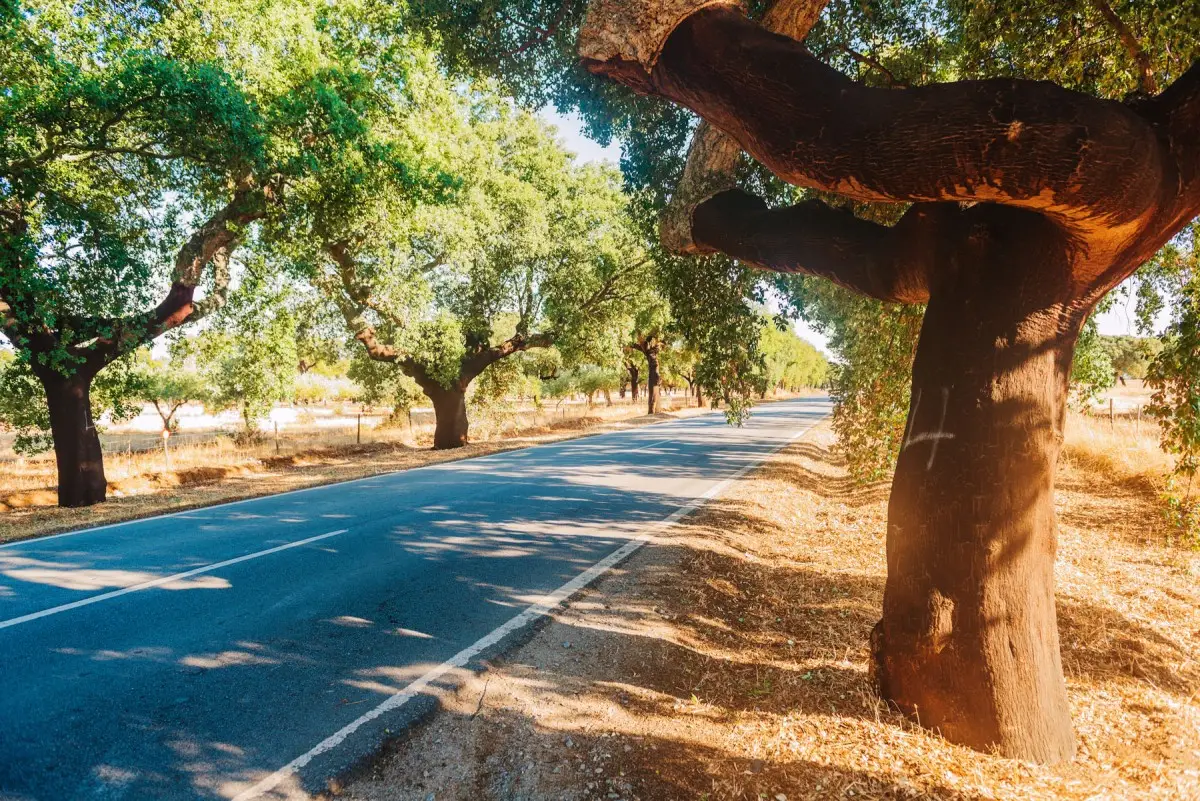
In the Alentejo’s empty plains, the risk is the opposite of the Algarve’s congestion: straight, featureless roads at posted speeds induce a gradual, unconscious acceleration that drivers call speed blindness. GNR radar units are positioned precisely because these roads invite it. Set the cruise control and resist the plains.
Douro Valley and the islands
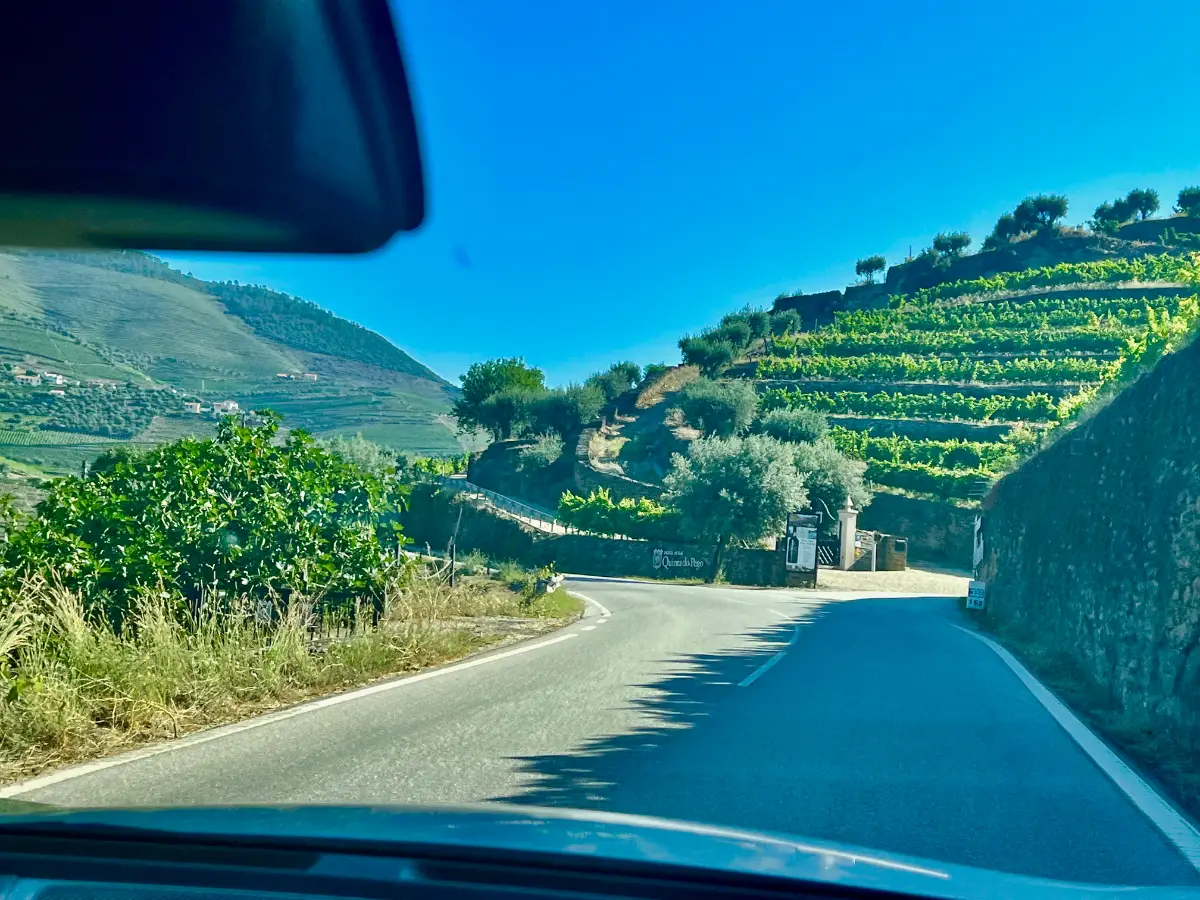
The Douro Valley delivers some of the most spectacular driving in Portugal and some of the most technically demanding. Narrow terrace roads drop sharply toward the river with no guardrail and minimal passing width. When you meet an oncoming vehicle on a single-track section, one driver must reverse to the nearest passing point. The driver who hesitated will almost certainly be you.
On Madeira and the Azores, volcanic terrain means sustained 15-20% gradients on roads that appear normal on apps. A 1.0L economy car will overheat on these inclines during a hot day with a full passenger load. Book an engine with actual torque, and book it as an automatic. On these islands, an automatic is not a comfort preference — it is a practical safety requirement on sustained downhill braking.
What should you do during a police stop or accident?
Pull over immediately when a GNR or PSP officer signals you, and have your rental agreement, US license, and IDP ready before the officer reaches the window. GNR covers rural roads and highways; PSP handles urban jurisdictions. Both units carry portable card terminals — fines are collected immediately, not mailed to a US address at some later date.
In a traffic accident, put on the reflective vest before exiting the vehicle, place the warning triangle 30 meters (98 feet) behind the car, and fill out the European Accident Statement form found in the glovebox. Both drivers sign it. Call 112 for police, medical, or fire assistance — this is the universal emergency number across Europe.
Pro Tip: After any accident, photograph the other driver’s license plate, insurance card, and license immediately, before any vehicle is moved. Portuguese law requires vehicles to stay in place until police arrive, but there is nothing stopping you from photographing everything from inside your car.
The bottom line
Driving in Portugal is one of the most rewarding ways to see the country — but it requires specific preparation that goes well beyond booking the car.
TL;DR: Get the IDP before you leave the US. Book the smallest automatic available, and book it early. Arrange Via Verde or EasyToll before your first motorway on-ramp. Learn the roundabout lane rules before you arrive. And know that the A22 across the Algarve is now free — one of the most practical changes on the Portuguese road network in years. For everything beyond the road itself, the complete Portugal travel guide covers the rest.
What is the one piece of driving advice you wish someone had told you before your first Portugal road trip? Leave it in the comments.