Traveling to Albania with a dog turns out to be the Adriatic’s open secret — empty beaches, $40 hotel rooms, alpine trails, and waiters who slip your dog a sausage before the wine list arrives. The catch is paperwork. This guide is every form, ferry, and shepherd dog you’ll meet on the way.
Yes — US travelers can bring a dog to Albania with three things: an ISO microchip, a rabies vaccine given at least 21 days before travel, and a USDA-endorsed bilingual health certificate issued within 10 days of departure. There is no quarantine on either end. Coming home requires a free CDC Dog Import Form receipt.
Is Albania actually good for traveling with a dog?
Albania is one of Europe’s most rewarding — and most uneven — countries to visit with a dog. Tirana cafés welcome them, Riviera beaches are off-leash by default, and most hotels skip the pet fee. The real friction is stray-dog populations, sandfly-borne disease on the coast, and summer heat that bites past 95°F (35°C).
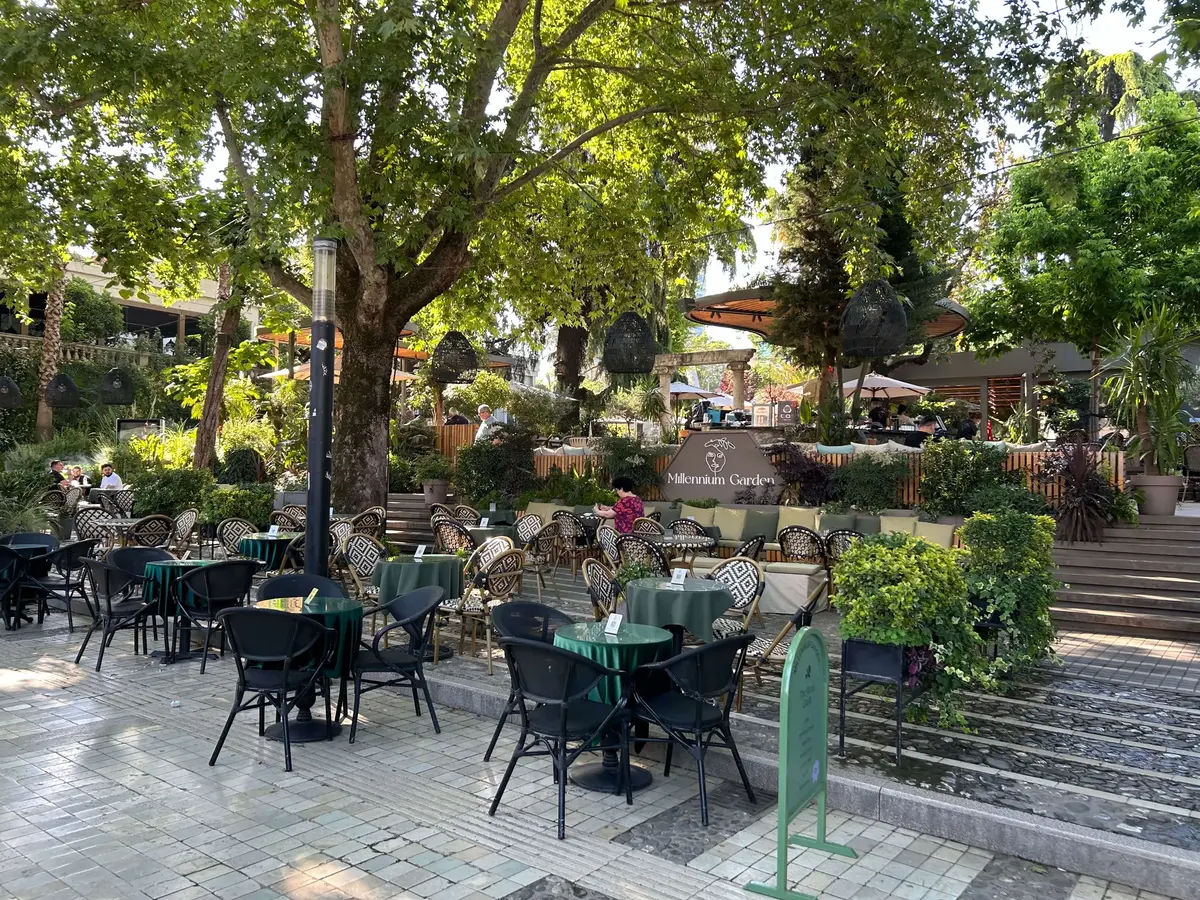
The short answer for most US owners: easier than Romania, harder than Italy — and if you’re still mapping the basics, our complete Albania travel guide covers everything this dog-focused article doesn’t. Albanian besa — the traditional code of hospitality — extends to your dog in ways that surprise people coming from stricter European countries. Waiters bring water bowls without asking. Hotel receptionists ask for a photo for Instagram, not a deposit. On a Saturday in Blloku, I counted more dogs in cafés than strollers in 20 minutes of walking.
Pro Tip: Albania sits outside Schengen, so a stop here resets your 90-day clock if you’ve been touring the EU. For digital nomads with a dog, that’s a strategic advantage almost nobody mentions.
The realistic version of the trip lives between two extremes. Tirana is dog-friendly enough that you’ll forget you’re traveling. And the Albanian Riviera in July is hard on any dog — pavement temperatures climb past 130°F (54°C), restaurant patios are crowded, and shade is at a premium. Plan around the best time to visit Albania — shoulder seasons like May–June and September–October — and the trip becomes a different country entirely.
What paperwork do you need to bring a dog to Albania?
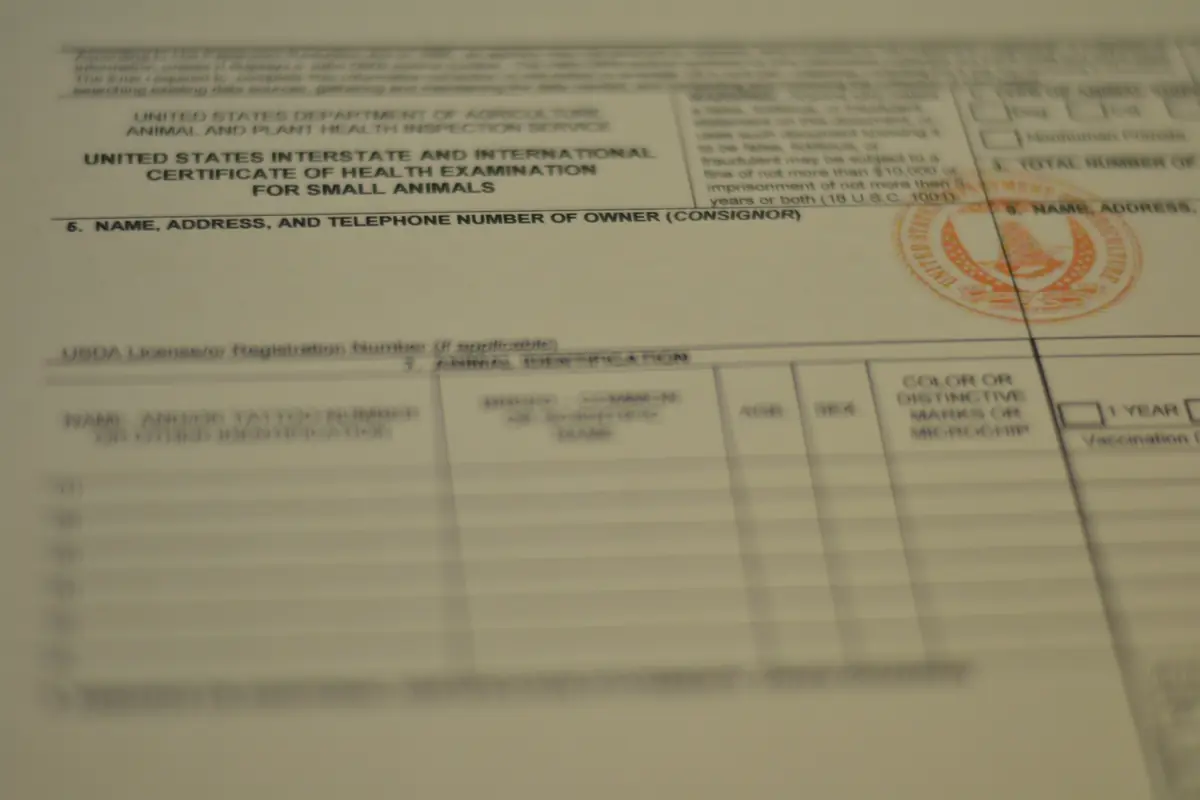
US travelers do not use an EU Pet Passport — that document is only available to EU residents. Albania requires four things from US owners: an ISO 11784/11785 microchip implanted before the rabies vaccine, a current rabies shot given at least 21 days before travel, the bilingual “Health Certificate for Dogs, Cats, and Ferrets” (filename albania-dogs-cats-ferrets-hc.pdf on aphis.usda.gov), and USDA APHIS endorsement of that certificate within 10 days of departure.
You’ll need a USDA-accredited veterinarian, not just any vet. They are the only ones who can issue and submit the form for endorsement. Most major-metro practices have at least one accredited DVM on staff — call ahead and ask specifically. APHIS endorsement costs $101 per certificate when no laboratory results need review, per the USDA APHIS Veterinary Services fee schedule. Digital endorsement through VEHCS is standard, and Albania accepts it.
There is no import permit required for personal pets, and no rabies titer required if you fly directly from the US or transit any EU/Annex II country. The most common hubs — Frankfurt, Munich, Vienna, Rome — are all Annex II.
Pro Tip: Email your vet the APHIS PDF the day you book the ticket. My USDA-accredited vet in Brooklyn had never filled out an Albania form before. Surprising her at the appointment would have cost me a day.
Why does microchip-then-rabies order matter?
The rabies vaccine must be administered after the microchip is implanted, and at least 21 days before your dog arrives in Albania. A vaccine given before the chip is invalid — your dog will need a fresh shot and another 21-day wait, even if the original is current. This is the single most common reason US owners get turned away at the airport.
If your dog was chipped as a puppy and rabies-vaccinated separately, you’re almost certainly fine. The order-of-operations problem usually catches owners who chipped an older rescue or replaced a failing chip after vaccinating.
Your vet should write the 15-digit microchip number into the margin of the rabies certificate and date it identically. Albanian officials at Tirana International Airport look for exactly that — matching dates and a chip number that scans to the certificate.
How do you fly a dog from the US to Tirana?
No airline operates a direct US-to-Tirana route, so flights to Albania from the US all route through a connecting hub that decides your dog’s experience. The four practical options for a small in-cabin dog are Lufthansa via Frankfurt or Munich, Turkish Airlines via Istanbul, Austrian Airlines via Vienna, and ITA Airways via Rome. Each has a different cabin size limit, fee, and pet-lounge situation.
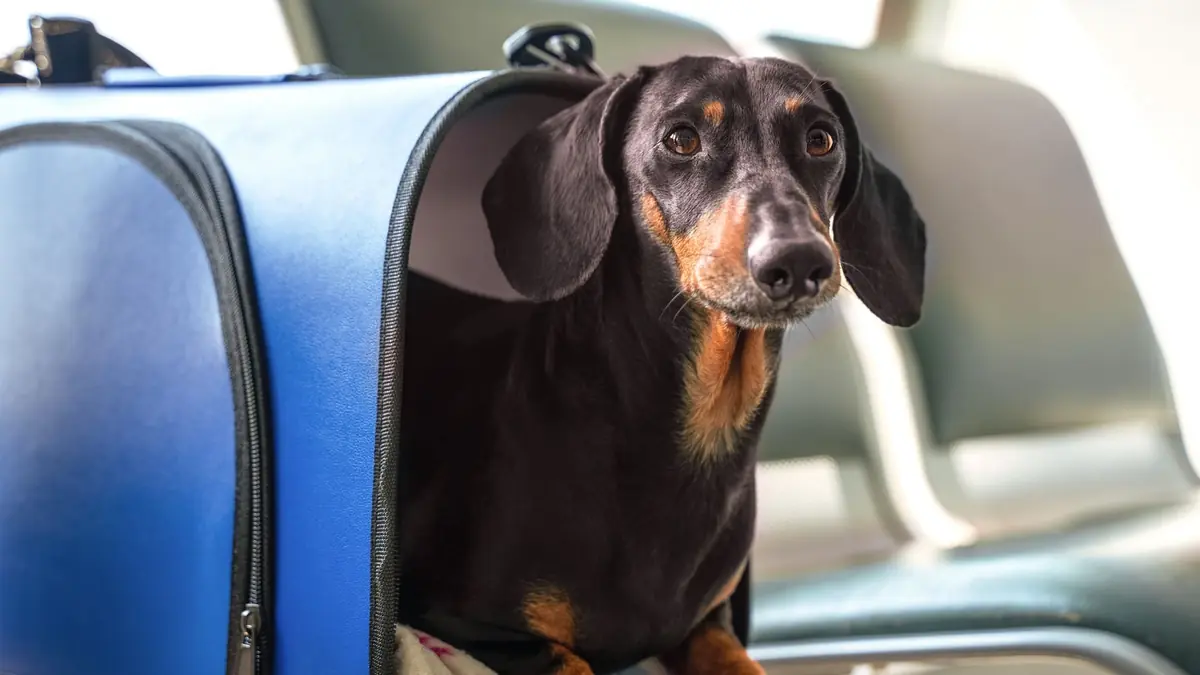
The math for cabin pets is straightforward: combined weight of dog plus carrier under 17 lb (8 kg) gets you on board. Above that, you’re looking at cargo, which most owners want to avoid. The carrier dimensions vary more than the weight rule does.
Pro Tip: Frankfurt’s Lufthansa Animal Lounge in Terminal 1 saves you from the worst part of a long layover. Staff will walk your dog on grass while you clear transit security — included in the booked pet fee, no separate booking required.
In-cabin pet fees on these airlines run $125–200 per direction. Book the pet seat at least 72 hours in advance — most airlines cap the number of in-cabin animals per flight at two, and they fill up.
Connecting airlines for US-to-Tirana with a pet:
| Airline | Hub | Cabin weight (pet + carrier) | Carrier (L × W × H) | Cabin fee | Notes |
|---|---|---|---|---|---|
| Lufthansa | FRA / MUC | 17 lb (8 kg) | 55 × 40 × 23 cm | from ~$135 | Animal Lounge at FRA; no cargo via MUC |
| Turkish Airlines | IST | 17 lb (8 kg) | 40 × 30 × 23 cm | from ~$70 intl. | Tighter carrier length; no pets on UK routes |
| Austrian Airlines | VIE | 17 lb (8 kg) | 55 × 40 × 23 cm | from ~$130 | Star Alliance; codeshares with Lufthansa |
| ITA Airways | FCO | 22 lb (10 kg) | 24 × 40 × 20 cm | from ~$190 | Highest cabin weight allowance |
| Air Serbia | BEG | 17 lb (8 kg) | 40 × 40 × 23 cm | from ~$80 | Cheaper hub, less polished service |
ITA Airways is the outlier with a 22 lb (10 kg) cabin allowance and codeshares with the Lufthansa Group on the Rome–Tirana leg, which gives flexibility on the return. Air Serbia via Belgrade is the cheapest hub but the least polished — fine for the dog, hit-or-miss on lost-luggage handling.
Should you take the ferry from Bari to Durrës?
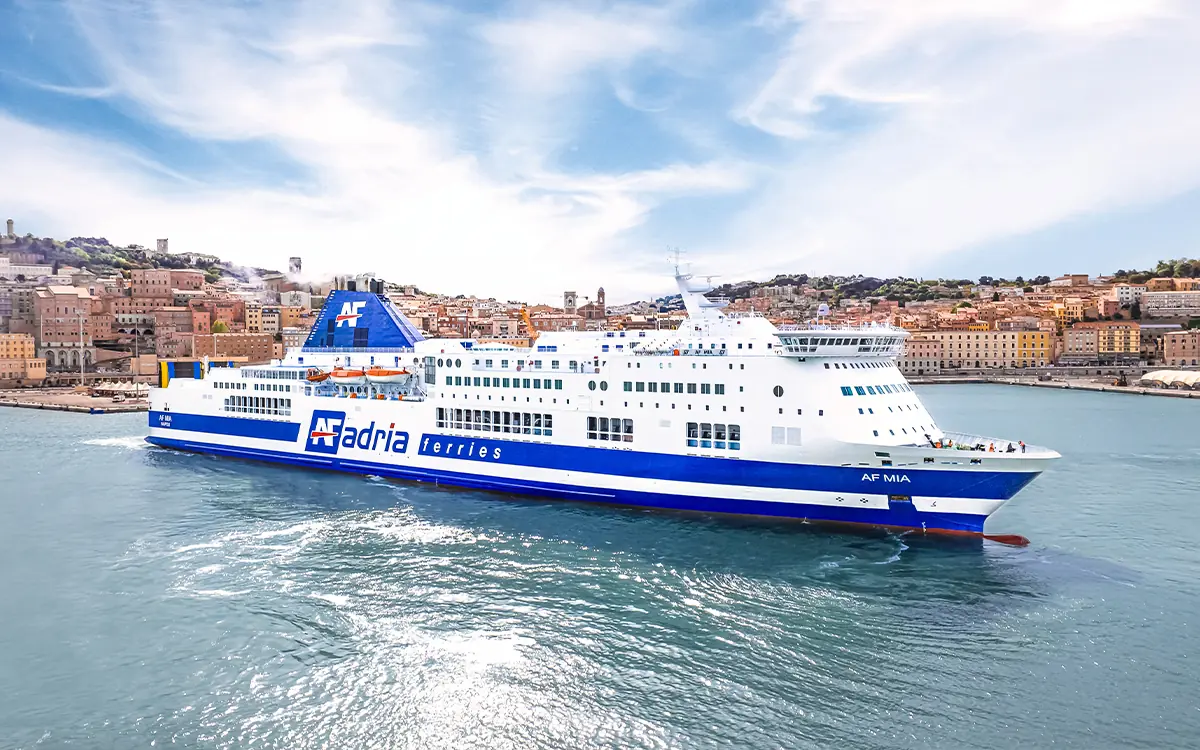
For medium and large dogs, yes — the Bari–Durrës overnight ferry is far more humane than airline cargo. Three operators run the route: Adria Ferries, Grandi Navi Veloci (GNV), and Ventouris Ferries. The crossing is about 180 mi (290 km / 156 nautical miles), 8–10 hours overnight on most sailings. Pets travel free in onboard kennels on Adria and Ventouris. GNV charges around €8 (about $9) per pet ticket per Ferryhopper.
What makes the ferry worth it is the pet-friendly cabin. Adria and GNV both offer cabins where your dog stays with you the entire crossing — vinyl floor, a water bowl filled by the steward, and ventilation that doesn’t smell of diesel. These cabins start around €120 ($130 USD) in season and book out a month ahead in summer.
Ferry routes and prices to know:
- Bari–Durrës (Adria Ferries): nightly, 8–10 hours, pet ticket free, pet cabin from ~€120 ($130)
- Bari–Durrës (GNV): nightly, pet ticket ~€8 ($9), pet cabin from ~€120 ($130)
- Bari–Durrës (Ventouris): pet ticket free, kennel reservation required
- Ancona–Durrës (Adria Ferries): 3×/week, 16 hours, pet cabin available
- Brindisi/Corfu–Sarandë (Finikas Lines, European Seaways): foot-passenger only, summer
Pro Tip: Get to the Bari port 90 minutes before departure, not 60. Pet-vehicle boarding closes earlier than foot-passenger boarding, and Italian dockside staff are dramatically friendlier if you don’t sprint up at the last moment with a confused dog.
How do land border crossings work with a dog?
Land borders with Greece, Montenegro, Kosovo, and North Macedonia all accept dogs with the standard paperwork. Greek officials are quick; Albanian officials may search the vehicle. Expect 30–90 minutes total at most crossings. Coming in from EU territory, you do not need a rabies titer. Bring printed copies of the certificate plus your EU pet passport if you have one — Albanian officials look at the paper, not the device.
Working crossings to know:
- Kakavia (Greece): the busiest southern crossing, near Ioannina; stacks up midday
- Kapshticë and Qafë-Botë (Greece): smaller, faster, near Korçë and Sarandë respectively
- Muriqan / Sukobin (Montenegro): the coastal crossing from Montenegro via Ulcinj; fastest northern option
- Hani i Hotit (Montenegro): inland near Shkodër; quick but rural roads on the Montenegrin side
- Morinë (Kosovo): main eastern crossing, near Kukës
- Qafë Thanë (North Macedonia): main eastern crossing into the Lake Ohrid region
Rental cars require written permission from the agency to cross any border. Confirm this at booking and carry the paper — the Albanian side is the one likely to ask for it.
Pro Tip: The Muriqan crossing from Ulcinj is the most relaxed of the lot. On my last northern entry, the Albanian guard scanned my dog’s chip from outside the car window without asking him to leave the vehicle — total stop time, four minutes.
How much does it cost to travel to Albania with a dog?
Budget around $450–650 in pre-trip US-side costs and $125–200 each way in airline fees. There is no quarantine cost on either end, and most in-country expenses — hotels, vet visits, taxis — run a fraction of US prices, and the full cost breakdown shows how far your money goes once you’re on the ground. The line items break down clearly below.
The line items, in USD:
- ISO microchip (if your dog doesn’t have one): $40–70
- Rabies booster: $25–60
- USDA-accredited vet exam plus paperwork: $150–300
- APHIS endorsement (per certificate): $101
- In-cabin pet ticket (Lufthansa / Turkish / Austrian / ITA): $125–200 each way
- Approved carrier: $60–150 one-time
- CDC Dog Import Form: free
Round-trip pet-only cost for most US owners lands between $500 and $950, depending on whether you already own a compliant carrier and microchip. If your dog is too big for cabin and you use a professional pet relocator for cargo, the number jumps to $1,800–3,500 — most of which is the relocator’s handling fee, not the airline’s.
Pro Tip: The carrier is not the place to save $40. Buy one that’s actually within Lufthansa’s 55 × 40 × 23 cm spec (or 40 × 30 × 23 cm if you’re flying Turkish), not the slightly-bigger Amazon listing. Gate agents in Frankfurt and Istanbul do measure.
In country, the costs drop sharply. Average pet-friendly hotel rates run about $37/night in Sarandë and $80/night in Tirana. A vet consultation is $20–40. A taxi with a dog usually costs no more than a taxi without one, plus a small clean-up fee if you ask first.
Where should you stay in Albania with a dog?
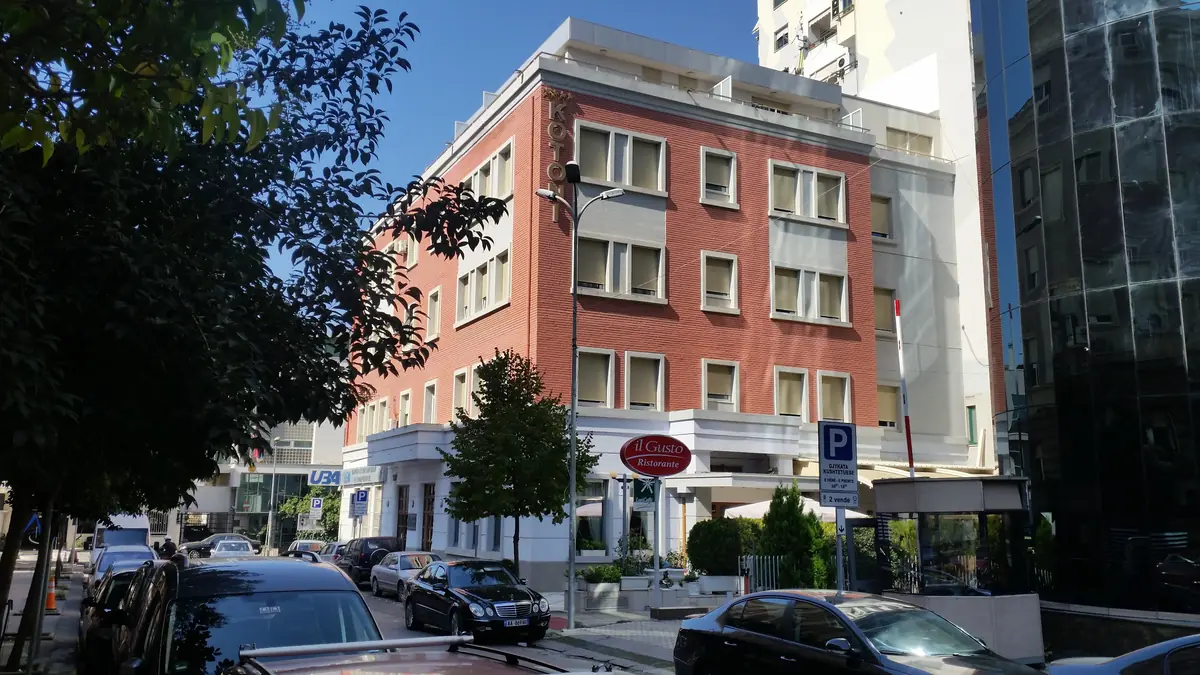
Most Albanian hotels accept dogs without a fee, but specifying “pet-friendly” at booking saves an awkward check-in. Tirana’s reliable picks are the Rogner, Hilton Garden Inn, mk hotel tirana, and Hotel Boutique Kotoni. On the coast, Hotel Lindi in Sarandë and EMAR Hotel Ksamil welcome dogs at standard rates, and mountain guesthouses in Theth and Valbona are dog-friendly by default.
For where to stay in Tirana, the reliable picks are Rogner Hotel Tirana, Hilton Garden Inn, mk hotel tirana (cheaper, modern, accepts any size), and Hotel Boutique Kotoni (small, family-run, walking distance to Blloku). On the coast, Hotel Lindi in Sarandë and EMAR Hotel Ksamil welcome dogs at standard rates. In the mountains, almost every Theth and Valbona guesthouse is dog-friendly by default.
Booking.com’s “pet-friendly” filter works reliably in Albania, and BringFido lists 30+ properties with no pet fee. The price-to-quality ratio on the coast outside July–August is, frankly, ridiculous — a sea-view room in Sarandë in late September runs about $50/night with breakfast, dog allowed, no questions asked.
Pro Tip: Tirana’s old-town guesthouses (Hotel Vila 15, Hotel Boutique Kotoni) put a folded blanket on the floor without being asked. The Rogner and Hilton don’t — bring your own dog bed if you want one in those rooms.
Where can your dog actually run off-leash in Albania?
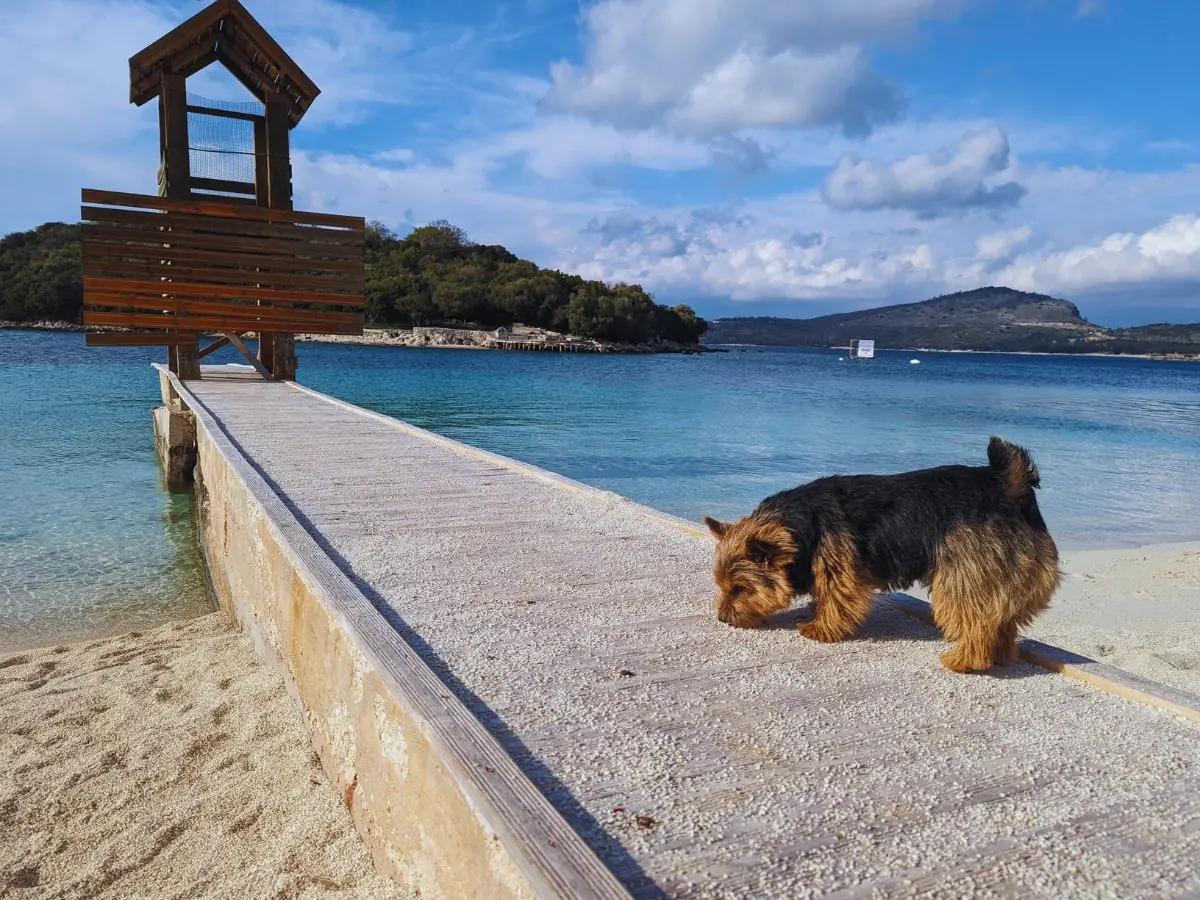
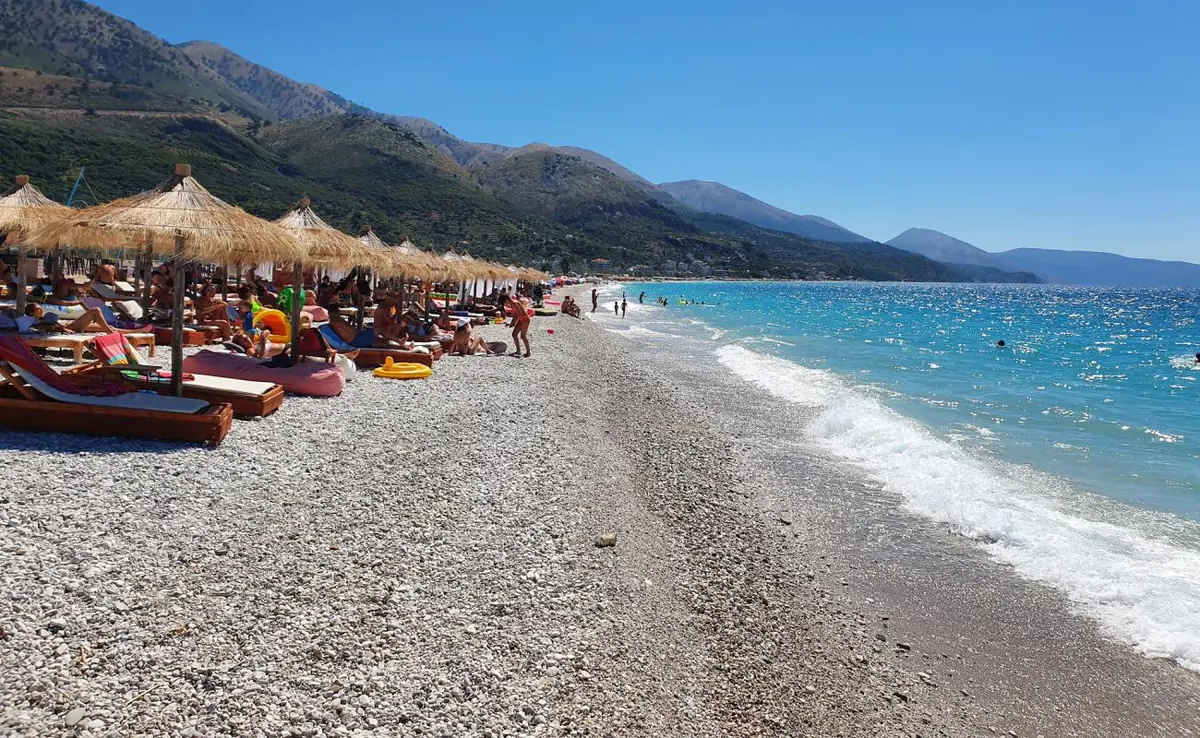
The Albanian Riviera — Ksamil, Dhërmi, Himarë, Borsh — has long stretches of unmonitored beach where dogs run off-leash, especially in shoulder season. Tirana’s Grand Park (Parku i Madh, about 570 acres / 230 hectares) is the city’s best urban dog walk, with morning regulars who all know each other. For hiking, Theth and Valbona national parks are stellar but put you in livestock-guardian-dog territory.
Specific spots worth the drive:
- Grand Park of Tirana: 570 acres (230 ha); lakeside loop; busiest at sunset
- Borsh beach: 4 miles (6.5 km) of empty pebbles south of Himarë; near-empty after September
- Llogara Pass: elevation 3,370 ft (1,027 m); cool summer hiking through Llogara National Park
- Theth–Valbona trail: 10.6 mi (17 km), 3,280 ft (1,000 m) ascent, 6–9 hours one way
- Lake Komani ferry: 2.5-hour fjord crossing between Koman and Fierzë; small dogs in carriers tolerated in practice
- Butrint National Park: UNESCO site, leashed dogs allowed, archaeological flat terrain
Pro Tip: The Lake Komani ferry (Berisha line, +355 696 800 748) has no published pet policy. Calling ahead and confirming gets you onboard with a carrier — showing up without warning sometimes does not.
Coastal water temperatures are dog-perfect from June through October — 72–77°F (22–25°C). On my last trip, Borsh beach in late September was a 4-mile strip of empty pebbles where my dog was the only swimmer and the only humans I saw were two old men playing dominoes outside the kiosk. In August, expect crowded patios and hot pavement; aim for early-morning or evening walks.
What health risks should US dog owners plan for?
Two threats matter more than the paperwork: canine leishmaniasis, transmitted by sandflies on the coast from May to October, and tick-borne disease (ehrlichiosis, babesiosis). Both are largely preventable with the right collar and spot-on. Heat is the third — Riviera summer highs of 90–95°F (32–35°C) hit dogs harder than people, and pavement runs hotter still.
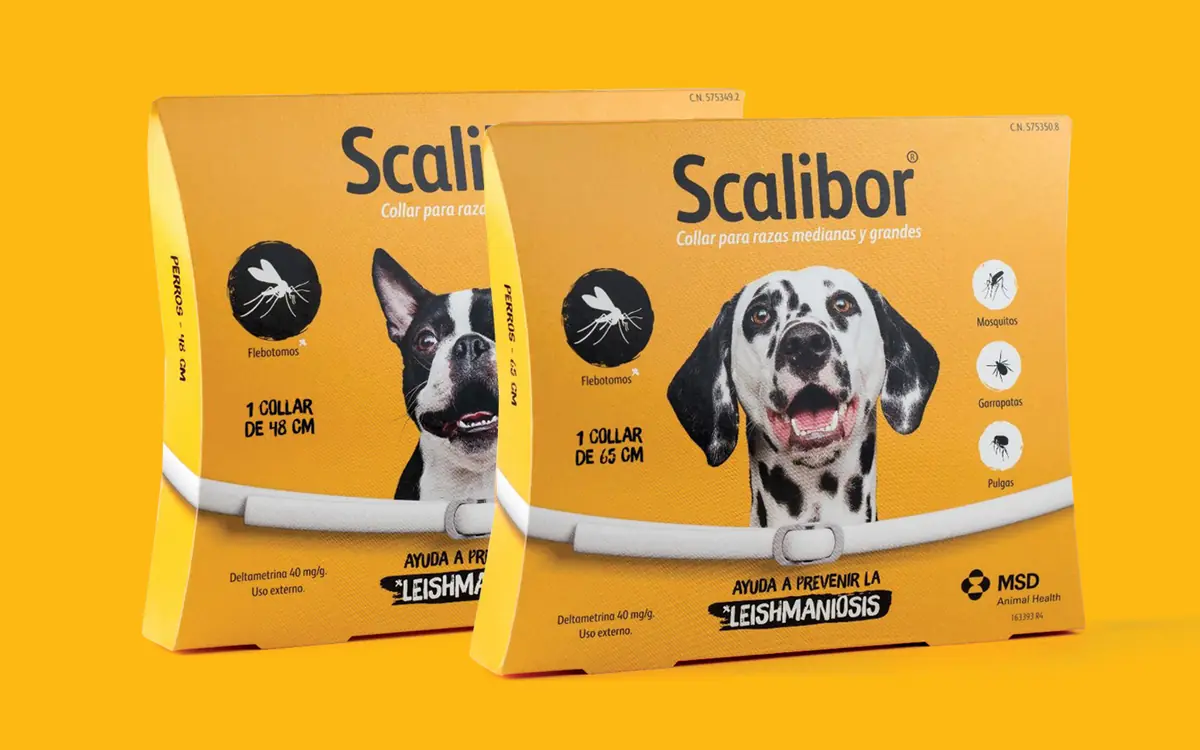
Leishmaniasis is the disease most US vets won’t think to mention. Albania has one of the higher prevalence rates in the Balkans, with canine cases documented for decades. Sandflies bite at dawn and dusk and breed in damp coastal terrain. The defense is layered:
- Scalibor or Seresto collar fitted two weeks before arrival (sandfly repellent)
- Advantix or comparable spot-on, monthly (tick + sandfly)
- LetiFend vaccine annually if you’ll spend extended time in the country — found to be 72% efficacious in high-pressure areas per Fernández Cotrina et al., Vaccine 36(15):1972–1982, PMID 29525281
Ticks are common in scrub and grassland, particularly inland. The Riviera is less tick-prone than the mountains. Carry a tick remover and check the dog after any off-trail hiking.
Pro Tip: Fit the Scalibor collar two weeks before departure, not the day you fly. Most dogs scratch at the new collar for two or three days, which is miserable on a long-haul flight.
For heat, plan around the dog. Walks at 6 a.m. and after 8 p.m. in summer. Shade and water at every stop. The marble streets of Berat and Gjirokastër store heat and radiate it back through the night, so even after dark the surface stays dog-unfriendly until 11 p.m.
How do you handle Albania’s shepherd dogs on the trail?
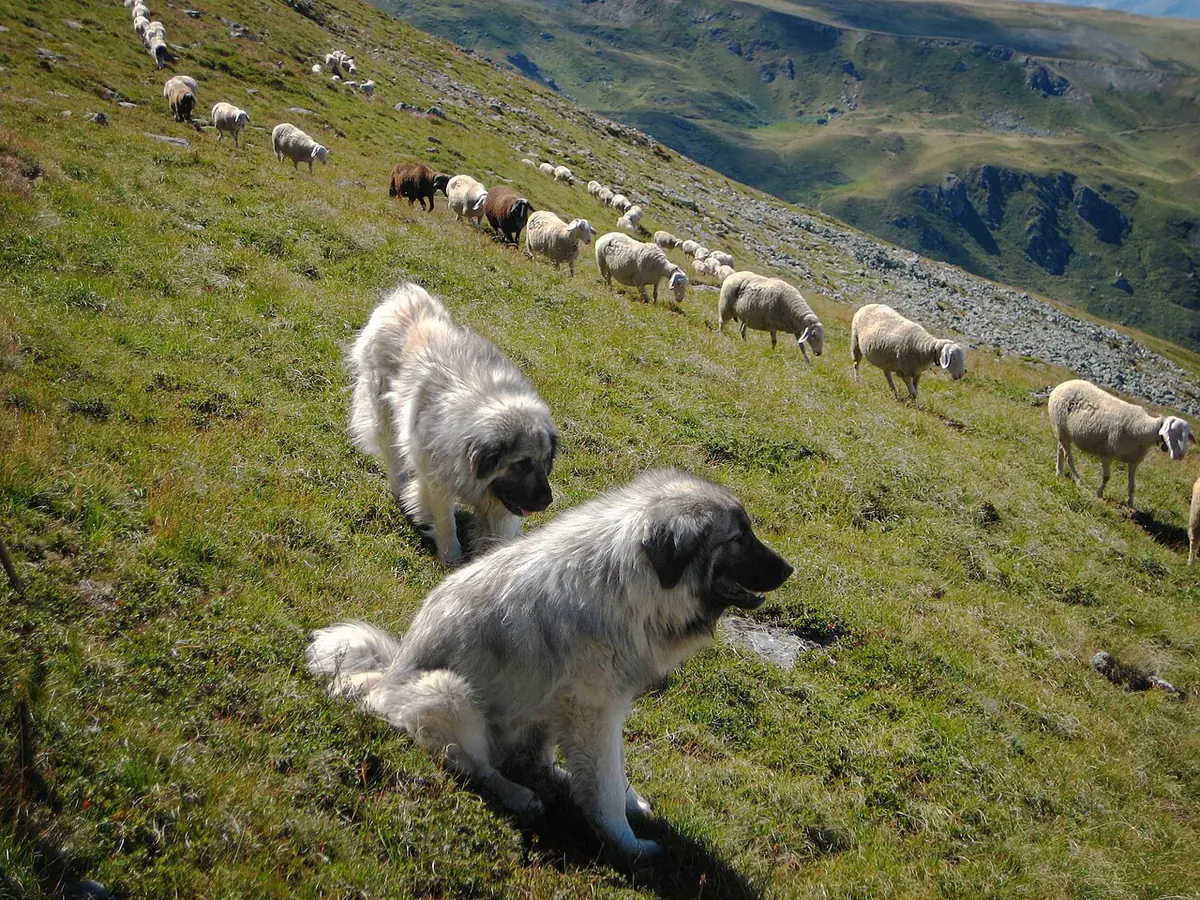
In the mountains, livestock guardian dogs — Sharr, Illyrian, and Karst shepherds — treat your leashed dog as a predator until proven otherwise. These breeds weigh 110+ lb (50+ kg) and don’t back down. The technique that works: stop, sit down with your dog between your legs, do not run, and whistle for the shepherd, who will call the dogs off.
Rural strays in packs are a separate concern, particularly at dawn around villages with garbage on the perimeter. Carry a walking stick for the rare aggressive encounter. Air horns and ultrasonic deterrents work for opportunistic packs.
Walking back from the Theth to Valbona hike at 7 a.m. last spring, I crossed paths with a flock and three Sharrs — I stopped, sat down with my dog between my legs, and the shepherd whistled them off within 20 seconds. The dogs never came within six feet of us.
Where do you go for vet care in Albania?
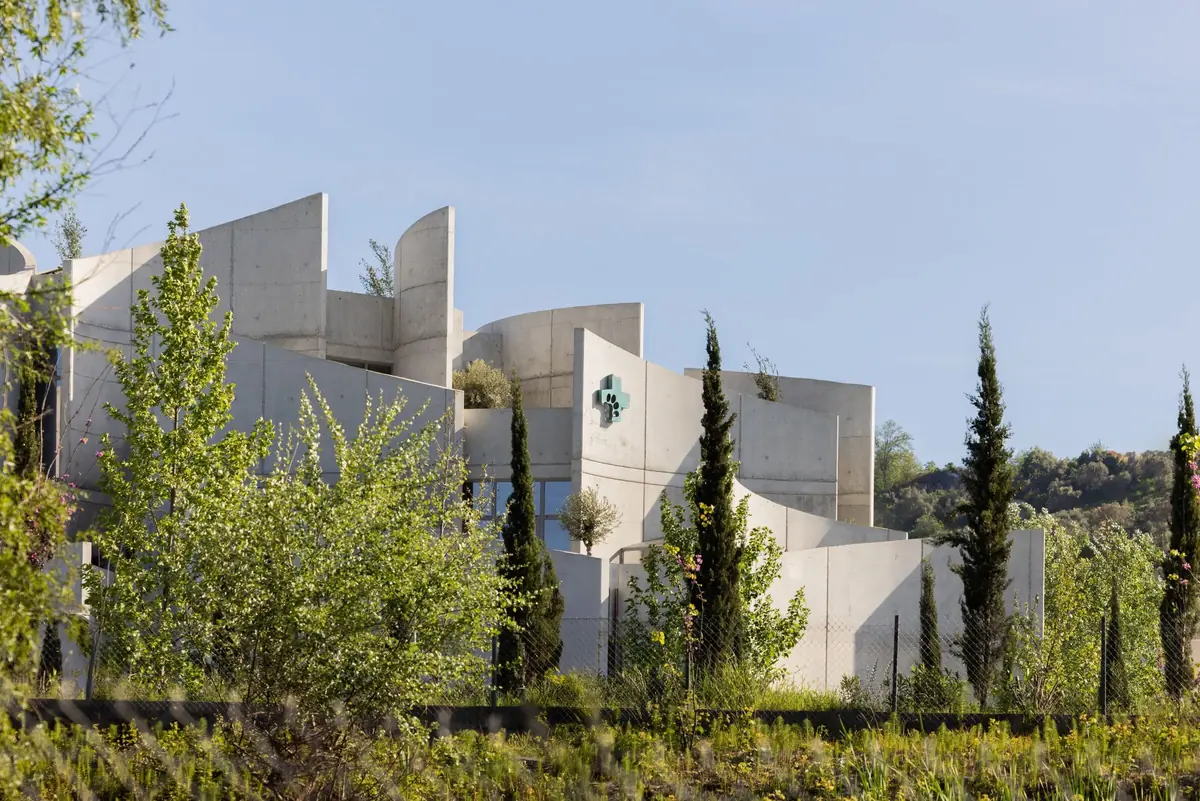
Routine vet care in Albania is competent and inexpensive: a consultation costs $20–40, vaccinations $15–25, and emergency surgery a fraction of US pricing. The country’s flagship is Vet Hospital Tirana — about 43,000 sq ft (4,000 m²) of clinic with 24/7 emergency, digital X-ray, intensive care, and a pet hotel. Backup clinics exist in Durrës, Vlorë, and Sarandë.
Vet Hospital Tirana was built by four veterinarians and inaugurated by the Albanian prime minister — the most modern animal hospital in the country and among the largest in the Balkans.
Practical contact info:
- Vet Hospital Tirana: Rruga Mustafa Xhabrahimi, near Liqeni i Thatë (Dry Lake), Tirana
- Phone: +355 67 239 1111
- Hours: 24/7 emergency, scheduled appointments daytime
- Languages: Albanian, English (younger vets), Italian
- Founders: Drs. Emre Aslan, Erko Prifti, Martin Llazani, Marvin Brahja
Backup options exist in Durrës, Vlorë, and Sarandë, though hours and English fluency drop quickly outside the capital. For non-emergency care during a road trip, ask your hotel — they almost certainly know a vet in town.
Pro Tip: An overnight observation, X-ray, and sedation at Vet Hospital Tirana costs about $140 total. When my dog ate a chicken bone in Berat, the drive to Tirana was worth it — a comparable Manhattan ER visit would have cleared $1,200.
How do you bring your dog back to the US?
Albania is not on the CDC’s high-risk-for-dog-rabies list, so a US-vaccinated dog returning from Albania needs only four things: a CDC Dog Import Form receipt (free, completed online), an ISO microchip readable by a universal scanner, a minimum age of 6 months, and a healthy appearance on arrival. There is no quarantine. There is no titer requirement.
The CDC Dog Import Form is the part most articles get wrong. It is mandatory for every dog entering the US, takes under five minutes at cdc.gov/dogtravel, and the receipt is good for six months and multiple entries from the same low-risk country. Save the receipt to your phone and email a backup copy to yourself. Customs officers at JFK, IAD, MIA, and ORD ask for it before they ask for anything else.
What to bring to the US port of entry:
- CDC Dog Import Form receipt (phone or printed)
- Your dog’s rabies certificate (the original US one is fine)
- The Albanian bilingual health certificate (rarely asked for but useful)
- Photo of your dog from the past month — a required upload on the form
- A dog that is visibly healthy and at least 6 months old
Dogs under 6 months will be refused entry regardless of country of origin. This rule applies even to US-born puppies returning home. Plan around it.
Pro Tip: At JFK Terminal 4, the CBP officer scans the chip with a handheld universal reader, glances at the CDC receipt on my phone, and waves us through. Total time on my last re-entry was about four minutes. Have everything in one tab and one pocket — fumbling slows the line.
What happens if Albania is added to the high-risk list?
The CDC reviews its high-risk country list periodically. If Albania is ever reclassified, the rules tighten: US-vaccinated dogs would need a USDA-issued “Certification of US-Issued Rabies Vaccination” form completed before leaving the US, plus entry through one of a handful of CDC-approved airports. Foreign-vaccinated dogs would face a rabies titer or a 28-day quarantine. None of this applies under the country’s current low-risk classification.
Pro Tip: Screenshot the CDC high-risk list at cdc.gov/importation/dogs/high-risk-countries.html the morning you fly home. That screenshot is the cheapest insurance you’ll ever buy — if the classification changes mid-trip, you have evidence of what the rules were when you booked.
Is Albania safe to visit with a dog?
Yes. On the broader question of whether Albania is safe to visit, the US State Department rates it at Level 2 (“Exercise increased caution due to crime”) — the same level as France, Germany, Italy, the UK, Spain, Denmark, and Belgium. Street crime in Tirana is low, the tourist neighborhoods stay busy late, and the dog-specific risks — traffic, trash, heat, open storm drains — are real but manageable.
Street crime in Tirana is low. The neighborhoods US travelers actually visit — Blloku, the Pyramid area, the Pazari i Ri market — are well-lit and busy until late. The Albanian emergency number is 112 (works on any cell). Vet Hospital Tirana’s 24/7 line is the closest thing to a one-stop emergency contact.
Pro Tip: Walking your dog through Pazari i Ri at 11 p.m. is uneventful. The only attention you’ll get is from the older women who insist on giving him bread.
The realistic things to watch:
- Traffic: Tirana drivers do not yield to pedestrians at unmarked crossings
- Trash on sidewalks: dogs find food, food finds dogs, plan for it
- Hot car: rental car interiors hit 130°F (54°C) in summer parking lots within 15 minutes
- Storm drains: open in some neighborhoods, particularly older parts of Sarandë
Can dogs ride Albanian buses, taxis, and trains?
Mixed. Privately operated furgon minibuses between cities will sometimes accept a carrier dog if you ask in advance — expect a second-seat charge. Taxis universally accept dogs for a small clean-up fee. The rail network is limited (Tirana–Durrës–Vlorë) and allows pets in carriers. For most US travelers, a rental car is the practical solution.
For most US travelers, the practical solution is a rental car. When renting a car in Albania, Europcar, Sixt, Rentzo, and City Rent all allow pets with written permission and a clean-up fee at return. Specify the pet at booking — the desk agents will not always handle it on the spot.
Furgon basics:
- Departure: Tirana’s North Terminal (north routes) and South Terminal (south routes)
- Cost: $1–3 per hour of route, plus a second-seat charge for the dog
- Pet rule: driver’s discretion, ask before boarding
- Comfort: standing-room standard, not for big dogs or long legs
Pro Tip: The furgon driver from Berat to Sarandë charged me 1,500 Lek (about $16) extra for the seat my dog occupied and threw in a bottle of water for the trip. Carry small bills — drivers rarely break a 5,000 Lek (about $53) note for a 1,500 Lek fare.
Are stray dogs a problem in Albania’s cities?
Less than YouTube videos suggest. Cities run TNR programs, so strays in Tirana and Sarandë are mostly neutered, vaccinated, and ear-tagged — docile and community-fed. Rural areas have thinner coverage. Aggression is rare but real, mainly with packs at night or food-guarding mothers with puppies. The urban locals almost never approach; the tourists’ off-leash dogs always do.
Urban strays in Tirana and Sarandë are mostly TNR’d, ear-tagged, and indifferent. Most are docile and community-fed.
How to read the situation:
- Ear clip or ear tag: TNR’d, vaccinated, generally indifferent
- No ear clip, urban: usually an owned dog roaming
- No ear clip, rural pack: keep your dog leashed and on the other side of the road
- Mother with puppies: do not approach, do not let your dog approach
Organizations like Animal Rescue Albania, Protect ME Albania, and OIPA run sterilization programs that are visibly working — Tirana’s neighborhood populations have stabilized noticeably as those programs expanded.
Pro Tip: By day three in Tirana you’ll start spotting the ear-clipped neighborhood regulars and the un-tagged passers-through. The local ones never approach. The tourists’ off-leash dogs always do.
Before you book
TL;DR: Traveling to Albania with a dog is one of the easiest dog-friendly trips in Europe once the paperwork is sorted. The order is what matters — microchip first, rabies vaccine 21+ days later, USDA-accredited vet exam, bilingual health certificate, APHIS endorsement within 10 days of travel. Coming home, a CDC Dog Import Form receipt and a 6-month-old dog with a working chip is all you need. No quarantine in either direction.
Spend $450–650 in US-side prep and $125–200 each way in airline fees. Pick your hub (Lufthansa via Frankfurt is the most pet-experienced; ITA via Rome has the highest cabin weight allowance), or take the Adria ferry from Bari if your dog is medium-sized. Once you arrive, the Albanian Riviera in shoulder season is a different kind of trip — cheaper, quieter, and more dog-tolerant than anything in Western Europe.
What are you most worried about — the paperwork, the flight, or the in-country logistics? Drop a comment and I’ll point you to the part of this guide that addresses it directly.