
Most Americans booking a Portugal trip pack the wrong gear — or nothing at all. This guide covers every electrical adapter for Portugal you need, what will fry your devices, and the specific products that actually fit Portuguese sockets.
What do you need for electrical adapters in Portugal?
You need a physical plug adapter to fit American flat-blade plugs into Portuguese round-pin sockets, and a voltage converter only for single-voltage heating tools. Most modern electronics — phones, laptops, tablets — are dual voltage and work safely with just an adapter. The real danger is high-wattage items like hair dryers and straighteners, which will destroy themselves instantly if plugged in without a converter.
What plug types does Portugal use?
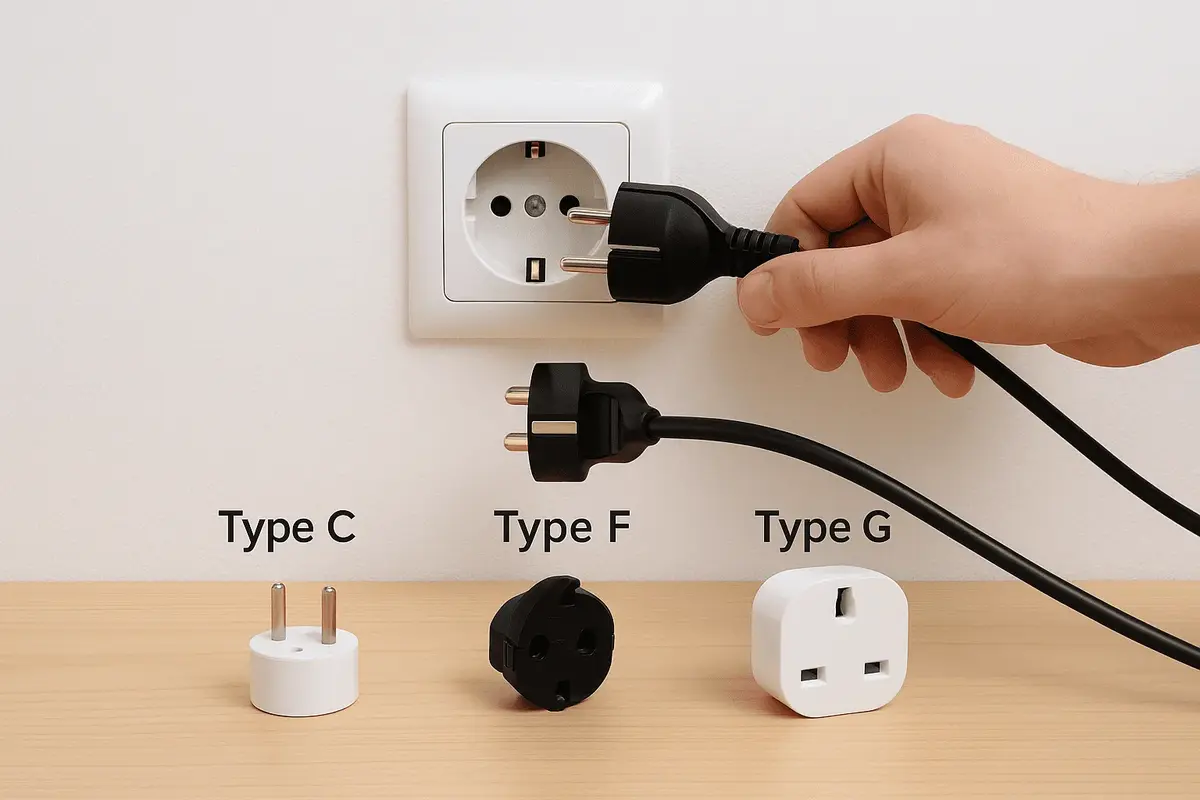
Portugal uses two socket types, both with round pins and a recessed design that matters more than most travelers realize. The physical depth of these sockets determines which adapters will fit securely — and which will sag out of the wall at 2 a.m. leaving your phone at 12%.
The Schuko socket (Type F)
This is what you find in most Portuguese homes and hotels. The Type F socket is recessed about 0.6 inches (15 mm) into the wall, creating a protective well around the outlet. Two round pins go into the socket, while grounding happens through metal clips on the sides of the recess.
The critical detail is that the recessed design means bulky, square adapters often will not fit properly. The adapter body hits the wall before the pins reach the electrical contacts. This is the number-one complaint among travelers researching where to stay in Lisbon — trying to force an oversized universal adapter into a deep wall socket and failing.
Pro Tip: In Portuguese apartments, test your adapter by plugging in something low-stakes first — a phone charger, not your laptop. If the adapter wobbles or sits at an angle, it is not making full contact and will lose power mid-charge.
The Europlug (Type C)
The Type C is the ungrounded version you encounter in older buildings throughout historic districts like Alfama and Mouraria. It accepts the same round pins but lacks the grounding clips found in Schuko outlets. These sockets work fine for phones and tablets, but you should not use them for laptops or any three-prong device that needs grounding for safety.
Will the voltage difference destroy your devices?
Portugal runs on 230V and 50Hz. The US runs on 120V and 60Hz. The voltage gap is not just a number on a specification sheet — it is the single biggest destroyer of American electronics in Europe, and it is completely avoidable if you spend 10 seconds reading a label.
How to check if your device is safe
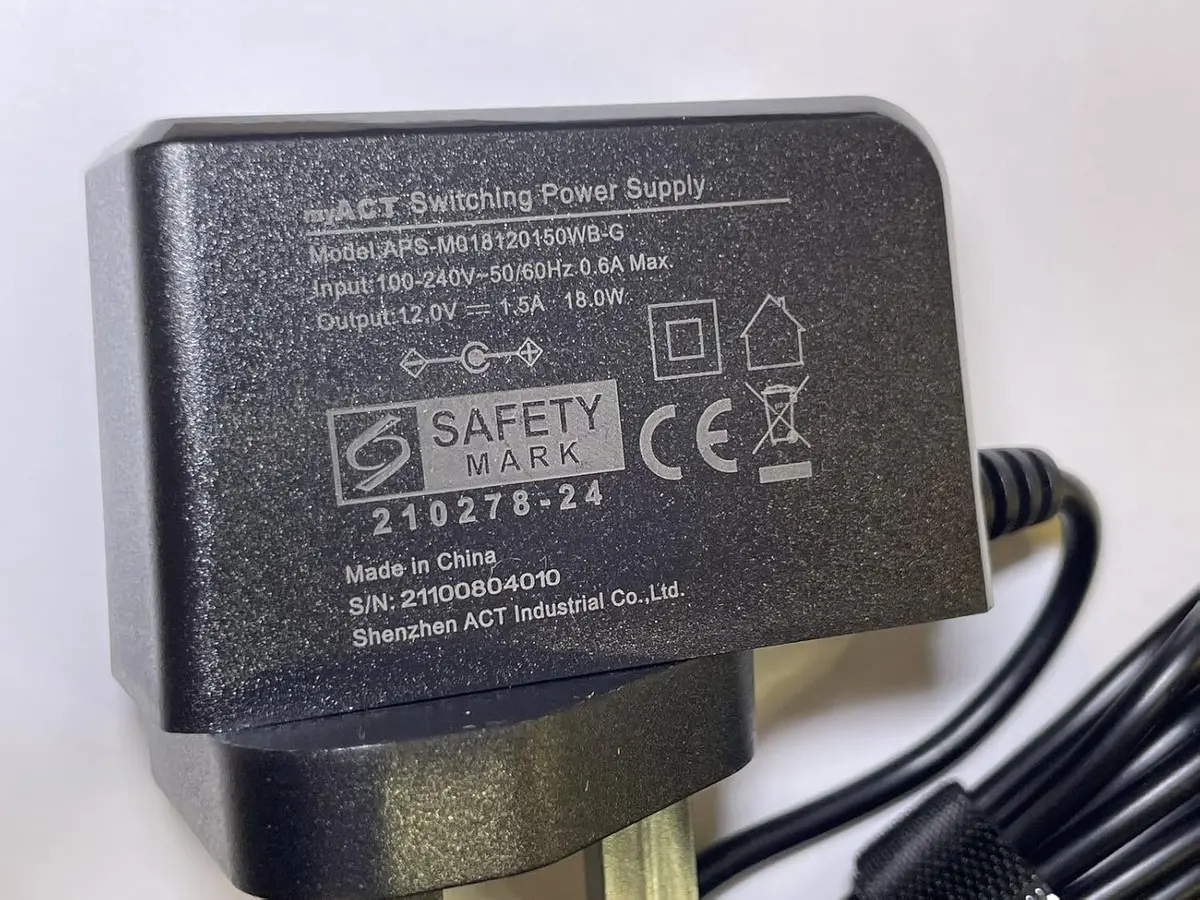
Look at the label on your device or its charging brick. Find the input specification line.
If it reads INPUT: 100-240V, you are safe with just a plug adapter. If it reads INPUT: 120V only, plugging it into a Portuguese outlet will destroy it instantly.
Safe with just an adapter:
- Smartphone chargers
- Laptop power bricks
- Tablet chargers
- Camera battery chargers
- PlayStation 5, Xbox Series X, Nintendo Switch
Dangerous without a voltage converter:
- Hair dryers (single-voltage)
- Hair straighteners and curling irons
- Older electric shavers
- Some travel alarm clocks with mechanical movements
Pro Tip: The Nintendo Switch power adapter reads 100-240V and is safe everywhere. However, always check older Nintendo or gaming accessories — the chargers for older handhelds are often single-voltage.
What actually happens when you plug 120V into 230V
The physics is brutal. When you double the voltage on a resistive heating device, you quadruple the power output. A 1,500-watt hair dryer attempts to pull 6,000 watts through wiring designed for much less. The heating element glows white-hot for about one second before the internal components vaporize.
I watched this happen to a Dyson Airwrap at a hotel in Lagos, Portugal. The smell of burning electronics filled the hallway, the outlet was scorched black, and the device was permanently destroyed. The flash and pop you hear is the thermal fuse or heating element melting. There is no recovery from this — the device is gone.
Does the frequency difference matter in Portugal?
Portugal’s 50Hz frequency (vs. the US 60Hz standard) creates a separate category of problems that voltage converters cannot fix. The device turns on — but behaves erratically or overheats within minutes.
Devices affected by frequency mismatch
Professional hair clippers like Wahl Masters use an electromagnetic oscillating arm driven directly by AC power. At 50Hz, the arm swings with longer, slower strokes, hits its physical stops, and creates a loud rattling noise. The motor overheats within minutes. The same clippers that run quietly at home sound like a chainsaw in a Portuguese bathroom.
Mechanical travel alarm clocks will run slow, losing roughly 10 minutes per hour. Kitchen appliances with AC motors run hotter and slower. This is exactly why manufacturers void warranties for international use.
The fix for clippers is simple: buy an inexpensive travel clipper with a dual-frequency motor, or get a trim at a local barbershop. A haircut in Lisbon runs about $15-20 and is worth avoiding the frustration.
Which adapters actually work in Portuguese sockets?
After testing various options and talking with digital nomads based in Lisbon, I have identified three categories that consistently perform well in local sockets. Portuguese outlets — especially in older apartments — are less forgiving than newer construction in Spain or Germany, which is why fit matters more than features.
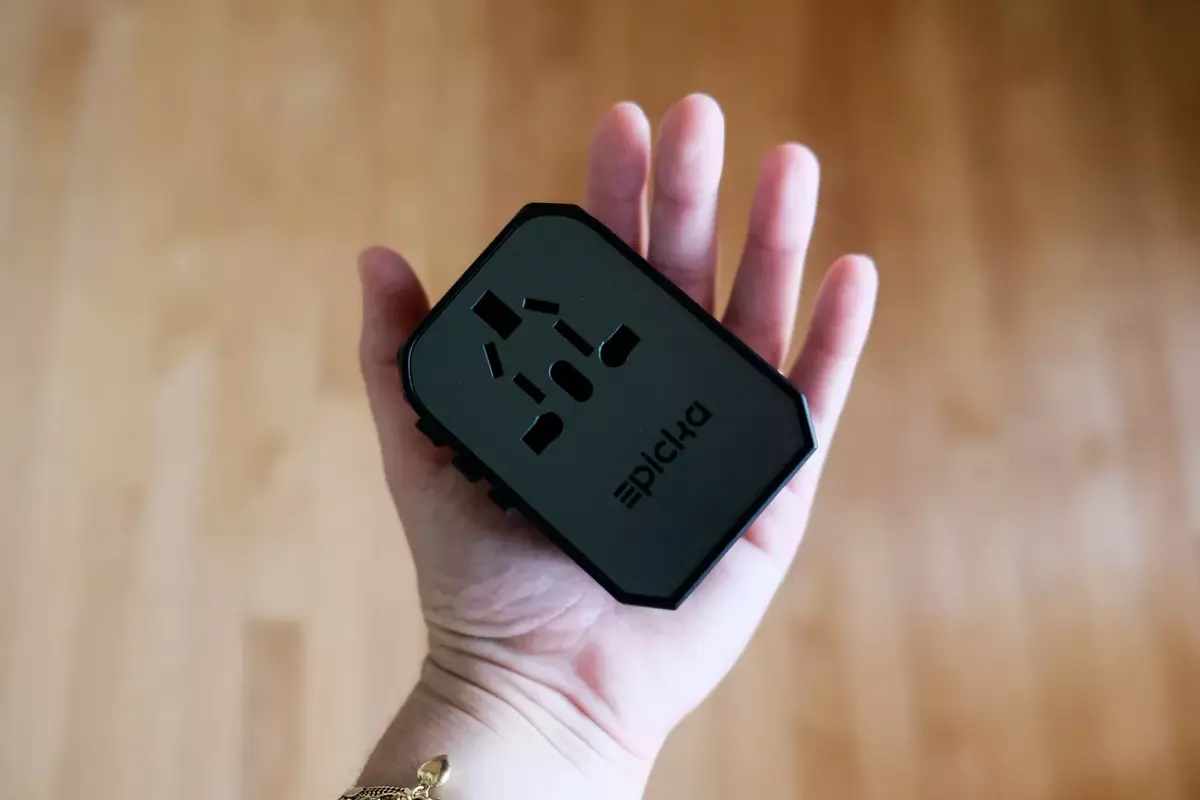
Best overall: Epicka TA-105 Max GaN
The Epicka TA-105 Max is the current favorite among tech-heavy travelers. Its 75W GaN technology means you can charge a MacBook directly through the USB-C port at full speed, eliminating the need to pack a separate laptop brick. It includes a built-in 10A fuse, CE and RoHS certifications, and covers EU, UK, Australian, and US socket types in a single unit.
The downside is weight. In older Portuguese apartments with worn sockets, the adapter can sag or fall out. If that happens, propping it up with a folded piece of cardboard is a common and effective workaround.
- Best for: Travelers charging 3+ devices including a laptop
- USB ports: 3 USB-C + 2 USB-A, up to 75W total
- AC outlet: Yes (one)
- Weight: 8 oz
- Certification: CE, RoHS, FCC
Best for secure fit: Ceptics World Travel Adapter Kit
The Ceptics system uses a US-socket base with interchangeable SWadAPt regional attachments that snap on and lock mechanically. The Type E/F attachment is specifically designed to fit into recessed European sockets and creates a solid lock that will not sag in loose, worn outlets — the kind you find depending on where to stay in Porto.
This is one of the few models that properly passes the ground connection through to the Schuko side clips, making it the safer choice for grounded devices and laptops.
- Best for: Travelers staying in older apartments or rental properties
- USB ports: 2 (USB-A + USB-C)
- AC outlet: 2 US-style outlets on the base
- Attachments: 6 regional plugs included (Type A, B, C, E/F, G, I)
- Note: Keep track of the separate attachments — they are easy to leave behind
Best budget option: Simple Type F adapters
Basic grounded Type F adapters from brands like Tessan or OREI do the job without extra features. Buy them in multipacks, scatter them across different bags, and have backups when one gets left in an outlet. They are lightweight, actually fit properly in Portuguese sockets, and cost very little each.
- Best for: Travelers who already own fast USB charging bricks
- USB ports: None
- Cost: A few dollars each in multipacks
- Note: You will need to bring your own US charging bricks for USB power
What should you know about Portuguese sockets before you plug in?
Real-world conditions in Portugal often differ from what you read in general guides. Historic buildings behave differently from modern hotels, and the local options for buying adapters are better — and worse — than you might expect.
The old Lisbon apartment warning
Historic neighborhoods like Alfama, Mouraria, and parts of Bairro Alto often have electrical systems from the mid-20th century. The outlets are worn, the internal springs are loose, and a heavy universal adapter combined with a laptop charger will lever itself out of the socket.
If you are staying in a centuries-old building on your Portugal itinerary 10 days, bring a lightweight dedicated Type C/F adapter to reduce strain on the wall socket. Picking up a short European extension cord — locally called a “tripla” — takes the weight off the wall outlet entirely and makes a real difference in apartments where the only outlet is at floor level.
Pro Tip: Ask your host or hotel front desk if there is a tripla available. In Lisbon apartments, there almost always is one hiding in a kitchen drawer, and hosts hand them over willingly when you explain the situation.
Buying adapters locally in Portugal
If you forget your gear, reliable adapters are available at Worten, FNAC, and Radio Popular — three major electronics retailers found in shopping centers like Colombo in Lisbon. Quality is good and prices are reasonable.
Chinese variety stores in local neighborhoods sell cheaper adapters, but they often lack fuses and have poor internal contacts. Use these only in an emergency and never for high-power devices. Airport adapters carry a significant markup for no quality benefit — avoid them.

The power strip rule
Never bring a US power strip or surge protector to Portugal. Most are rated for 125V maximum. Plugging them into 230V can blow the internal surge protection component, destroy the strip, and potentially damage connected devices.
Instead, buy a Portuguese power strip when you arrive. They are inexpensive at any hardware store or supermarket, rated for the correct voltage, and you can leave them behind when you go home. This is especially useful for digital nomads working in cafes where outlets are limited — make it a first-day purchase and add it to your Portugal packing list.
Which devices need special care in Portugal?
High-wattage items cause more destroyed electronics in Portugal than any other category. Modern digital devices are generally easy to manage — but hair tools and some gaming accessories are where things go wrong.
Hair styling tools
Hair dryers and straighteners cause the most casualties. The Dyson Airwrap is particularly vulnerable: its digital motor cannot handle the output of portable voltage converters either, so a converter does not save it. Do not bring it to Portugal.
Some travel dryers have a physical switch to toggle voltage between 120V and 240V. If you bring one, check the switch every single time — it is surprisingly easy to leave it in the wrong position. The better advice for figuring out what to buy in Portugal is to pick up an inexpensive local hair dryer from any pharmacy or supermarket for under $20.
Laptops and gaming consoles
Modern MacBooks and Dell XPS laptops have dual voltage power bricks as standard. Use a grounded adapter and you are done. The PS5 and Xbox Series X are both dual voltage. The Nintendo Switch adapter is universal at 100-240V. Older consoles and especially their accessories may have region-specific power bricks — always check the label on the brick itself, not the console.
How do you read adapter safety certifications?
Reputable adapters display specific regulatory marks confirming they have been tested for safety. Knowing these symbols helps you avoid counterfeits that look identical on the outside.
Understanding CE and RoHS
The CE mark indicates compliance with European health and safety standards. Be aware that a counterfeit “China Export” mark exists that looks nearly identical but has different letter spacing. Legitimate CE marks have the C and E overlapping with a specific proportional gap.
A quality adapter should also carry RoHS markings, confirming it does not contain dangerous levels of hazardous substances. If either mark is absent or looks suspicious, do not use the product — especially when visiting historic Pousadas of Portugal where the wiring may already be under strain.
The ground lift hazard
Many cheap universal adapters accept a US three-prong plug but output through a two-pin European plug only, lifting the ground connection and removing the safety path if your device develops a short circuit.
If your metal-body laptop develops a fault without a ground connection, you become the path to ground. Always use a grounded adapter for any three-pin device. The Ceptics kit is the easiest way to confirm you have a full ground pass-through without reading the fine print.
Is USB-C making travel adapters obsolete?
The shift toward USB-C is accelerating, and frequent travelers can take advantage of it now. Most modern smartphones, tablets, and an increasing number of laptops charge natively via USB-C. Rather than adapting your plugs, you can simply buy a high-quality European USB-C charger when you arrive for your Spain and Portugal itinerary.
One quality European USB-C GaN charger — available at Worten or FNAC for around $25-40 — powers your laptop, phone, and tablet with no adapter failure point. For devices with proprietary power bricks, you can often buy a European replacement power cord rather than the full brick, which eliminates the adapter entirely.
This is the direction most serious long-term travelers are moving, and it makes Portugal’s electrical system nearly irrelevant for anyone traveling with all-USB-C gear.
The bottom line
TL;DR: You need a Type F plug adapter for Portugal. Buy a grounded one. Check every device label for “100-240V” before plugging in. Leave the hair dryer at home or buy a cheap one locally. For apartments in historic Lisbon neighborhoods, bring a lightweight adapter and grab a tripla on arrival.
The right electrical adapters for Portugal take 10 minutes to research and five seconds to check before every plug-in. That is a much easier problem to solve than replacing a laptop or a $400 hair tool in a foreign city.
Have you run into electrical problems in Portugal, or found an adapter that works better than the ones listed here? Share your experience in the comments.