Where to stay in Madeira is the decision most travel guides underplay. Pick the right base and hiking trails, restaurants, and beaches fall within easy reach. Pick the wrong one and you burn half your days in a taxi. This guide breaks down every major area — with real trade-offs, not just the highlights.
Is Funchal the best place to stay in Madeira?
For first-timers without a rental car, yes — Funchal is the clear choice. It is the only part of the island where you can genuinely survive without a vehicle. Bus routes radiate from the center, tour operators cluster around the marina, and Michelin-starred restaurants sit a short walk from casual harbor cafes. Everything else on the island becomes an organized day trip from here.
Built like an amphitheater rising from the Atlantic, Funchal packs historic neighborhoods, resort infrastructure, and serious dining into a compact area that rewards walking — at least on the flat parts. Within Funchal, though, you are making a real choice between three distinct zones.
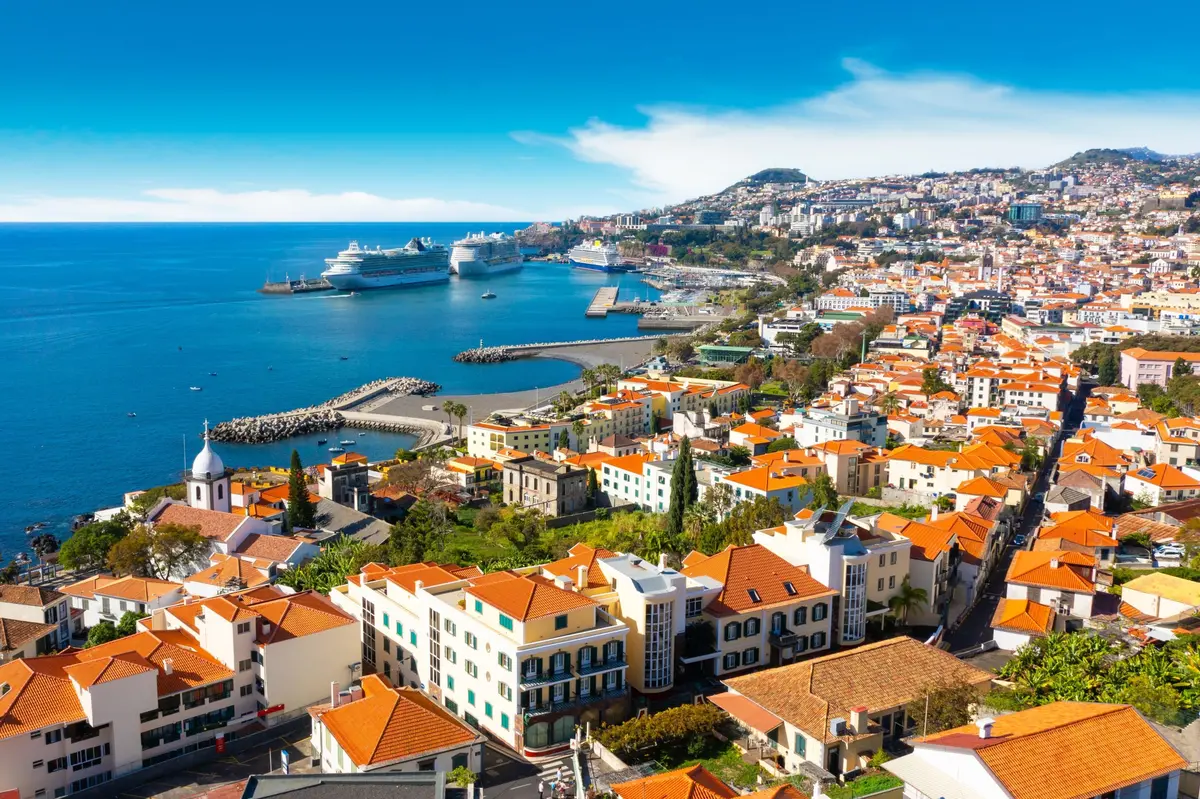
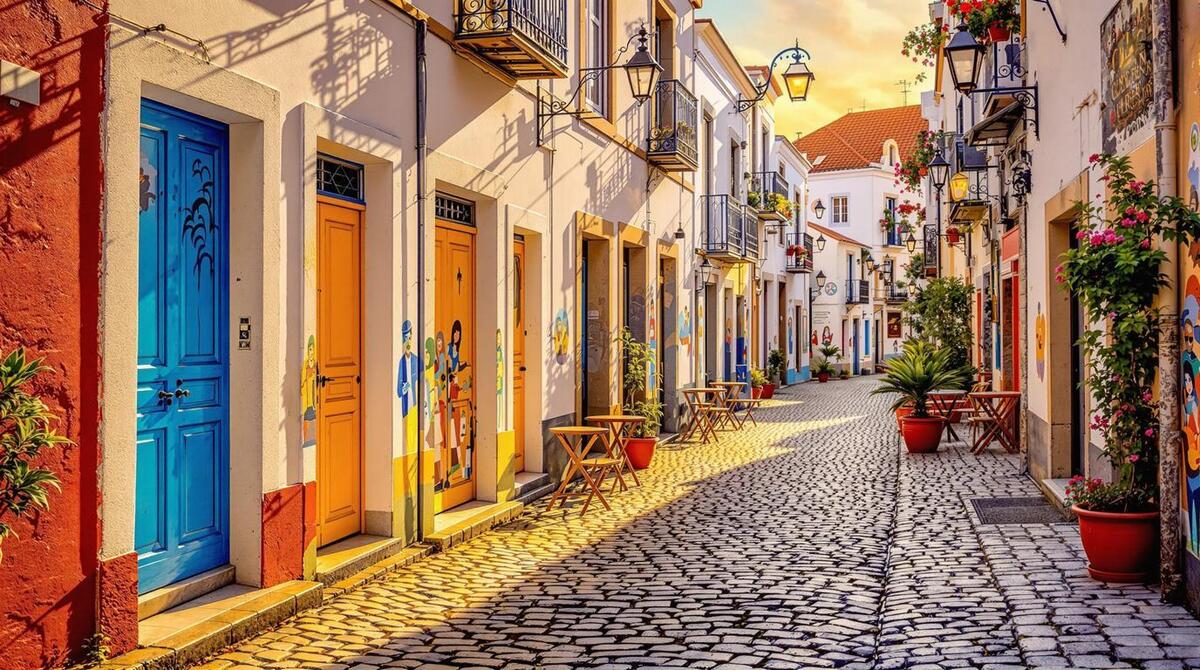
The Old Town (Zona Velha) — big atmosphere, real noise
The Old Town is where Madeira’s social life concentrates. The famous “Painted Doors” art project runs down cobblestone streets lined with restaurants competing for your attention — the smell of espetada grilling over a laurel wood fire drifts out from open kitchens — a quintessential moment of Portuguese food culture — from noon until midnight.
On weekend evenings, locals and tourists share the same narrow streets until well past midnight. The energy here is genuine and hard to replicate in the Lido District.
The problem is the noise. Multiple guest reviews consistently flag the Old Town as one of the louder sleep environments on the island, with late-night street music carrying easily through single-pane windows. Hotels near the fort end of the waterfront have it better than those a few blocks inland — but quiet is not an Old Town selling point under any circumstances.
The terrain adds another consideration. The seafront promenade is flat and walkable, but two blocks inland the cobblestones rise steeply and turn slick after rain. This is not stroller or wheelchair-friendly territory. Street parking is effectively nonexistent without a hotel garage.
- Location: Zona Velha, east end of Funchal waterfront
- Cost: $150–400/night depending on season and property
- Best for: Couples and solo travelers who prioritize nightlife and local atmosphere over sleep quality
- Walk to Lido District: 20 minutes along the flat promenade
- Parking: Hotel garage only — street parking is not realistic
Pro Tip: Staying in the Old Town on a Friday or Saturday? Ask for a room above the second floor on the sea-facing side. The noise drops noticeably with elevation and distance from street-level bars. No guarantees, but it helps.
Porto Santa Maria Hotel sits right against the Old Town fort with adult-only waterfront positioning — it bridges historic location with resort-level quiet. The Barceló Funchal Oldtown delivers full 5-star design inside six restored 17th-century buildings, though it gets the full Friday-night experience whether you want it or not.
Lido District (São Martinho) — resort comfort, flat terrain
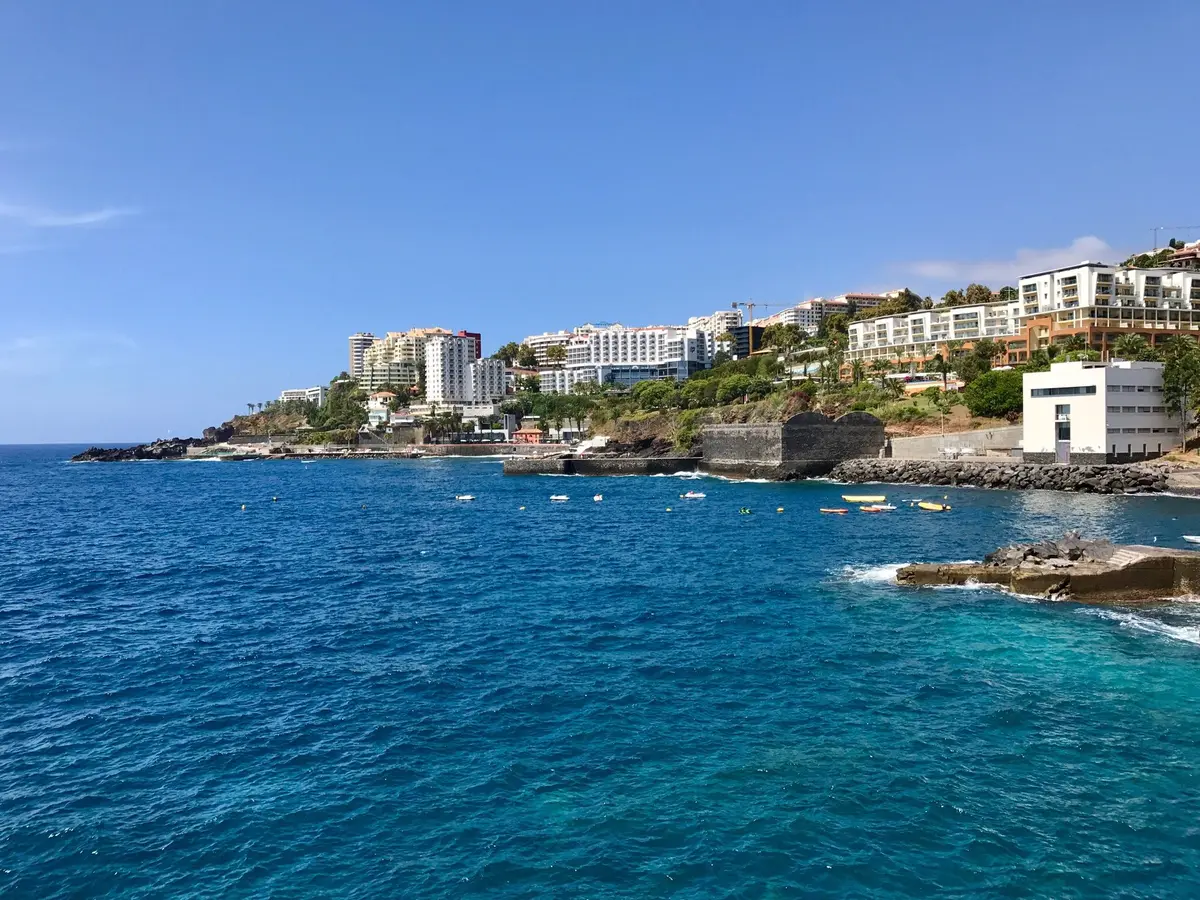
Twenty minutes west of the Old Town along the promenade, the Lido District is where Funchal drops the cobblestones and leans into straightforward resort infrastructure: wide avenues, on-site parking garages, and pools that are actually heated.
This is the baseline most American travelers picture when they book a European resort stay — and it delivers without friction. The Lido Promenade provides several miles of flat coastal walking, which matters more than it sounds on an island where almost every other surface tilts sharply.
The trade-off is atmosphere. The Lido District is comfortable in a generic way. You will need a bus, taxi, or 20-minute walk to reach Old Town restaurants and nightlife, and the immediate area is dominated by other tourists rather than local life.
- Location: São Martinho, 20 minutes west of Old Town by foot along the promenade
- Cost: $180–500/night; all-inclusive options from $200/night
- Best for: Travelers prioritizing reliable amenities, parking, and pool access over bohemian atmosphere
- Walk to Old Town: 20 minutes on the flat promenade
- Parking: Standard on-site garages at most hotels
Pro Tip: The Lido Promenade is flat the entire way to the Old Town — genuinely rare on this island. Build the morning walk into your routine before tour buses arrive and you will have the waterfront largely to yourself.
The Cliff Bay sets the benchmark here among top-rated resort hotels, home to the 2-Michelin-star Il Gallo d’Oro restaurant and three outdoor pools across a terrace with direct Atlantic views. Savoy Palace offers a larger, more urban feel with rooftop pools and ocean views in the center of Funchal. Enotel Lido and Magnólia Hotel run all-inclusive packages familiar to American travelers.
Hillside Quintas — quiet, elevated, historically excellent
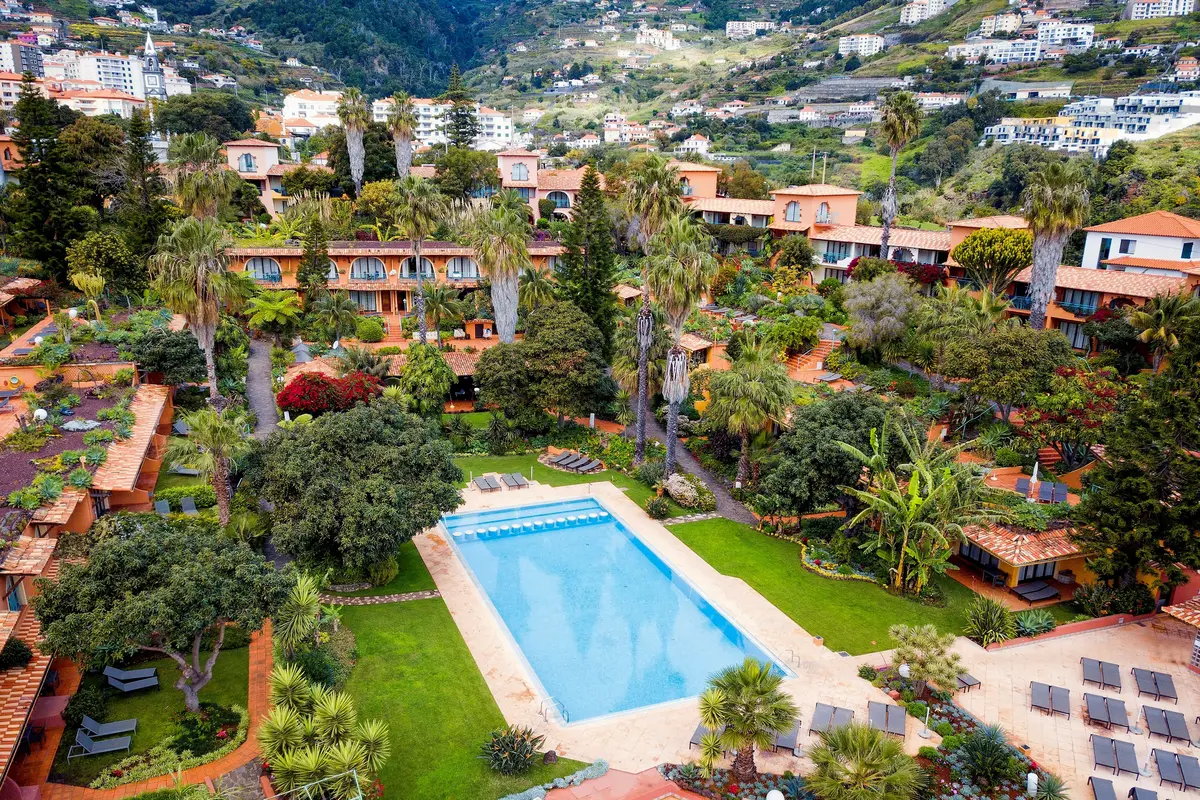
“Quinta” means estate or manor house, and Funchal’s hillsides hold several converted into boutique hotels. These properties sit above the noise of both the Old Town and the Lido District, surrounded by botanical gardens and thick walls built before noise was a problem — the Madeiran equivalent of Portugal’s historic pousadas for guests who want heritage atmosphere over resort infrastructure.
Rooms at Quinta Jardins do Lago feel genuinely different from glass-and-steel resort towers: high ceilings, hand-painted azulejo tiles, and garden walls centuries old. Afternoon tea on the terrace at Reid’s Palace is one of the better hour-long investments on the island — worth the formality even if you are not staying there.
The catch is logistics. You are uphill from everything. The walk down to sea level is easy; the walk back up is a different conversation entirely. Budget for hotel shuttles, taxis, or a rental car unless you are genuinely comfortable with steep daily climbs.
Some historic quintas also lack modern HVAC systems. In summer and shoulder seasons, humidity builds overnight in ways that catch visitors off guard.
- Location: Funchal hillsides, 5–15 minutes above the seafront by car or taxi
- Cost: $250–600+/night
- Best for: Couples seeking quieter, more traditional Portuguese hotel character
- Transport note: Hotel shuttle or rental car required for practical daily movement
Belmond Reid’s Palace is the grande dame — a formal property open since 1891 with 126 rooms and a heritage that includes a suite named for Churchill. Quinta Jardins do Lago consistently ranks near the top of Madeira review platforms for its botanical grounds and personal service.
Where do digital nomads stay in Madeira?
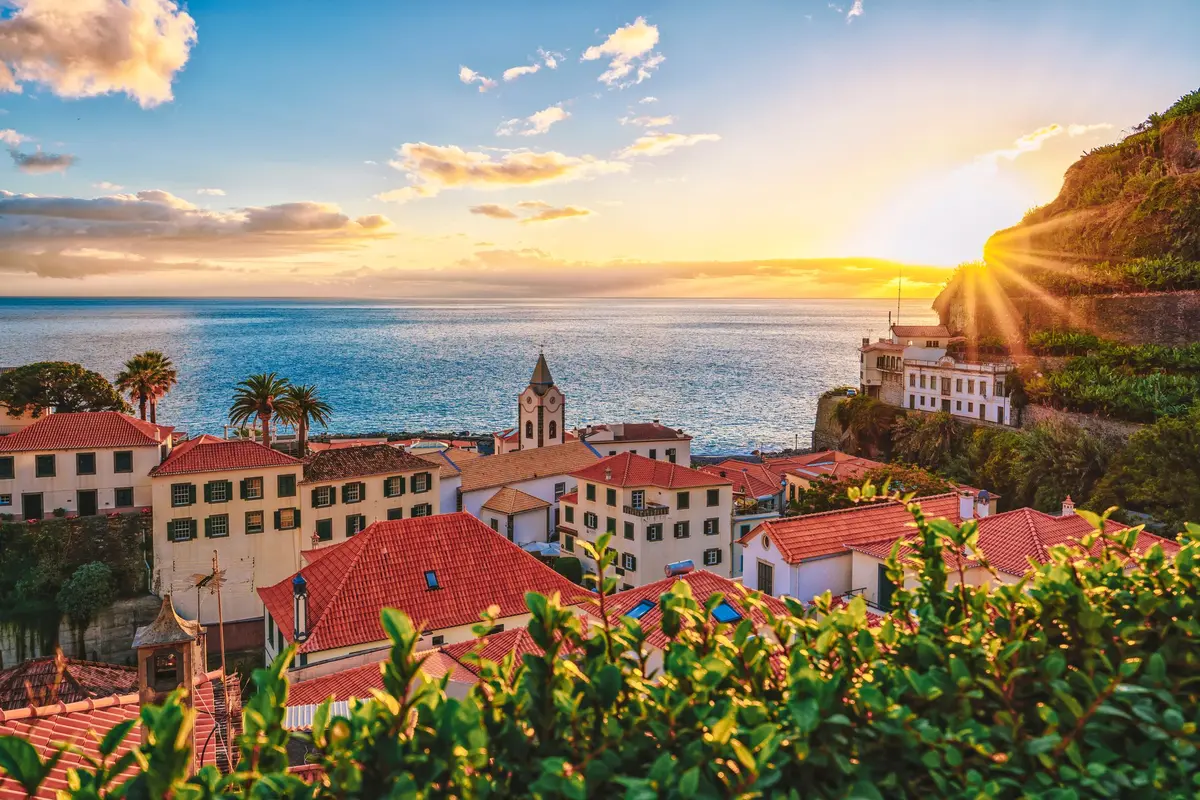
Digital nomads stay in Ponta do Sol, a village on Madeira’s southwest coast developed as the world’s first Digital Nomad Village. The program, backed by the Regional Government and Startup Madeira, offers a free coworking space at the John dos Passos Cultural Center and an organized community of remote workers from around the world. More than 10,000 nomads have come through since it launched.
The sunsets in Ponta do Sol are the real thing. The village sits at the base of a ravine where white-washed buildings step down to a rocky coastline, and the late-afternoon light hits the cliffs at an angle that makes any conference call feel like a reasonable trade-off for the view.
The community structure is organized rather than just marketing: events, yoga sessions, and informal gatherings happen regularly, and the Slack channel connects arrivals with people already on the ground. For solo travel in Portugal, this community structure is meaningful in a way most destinations cannot replicate — you can walk into the coworking space on day one and leave with dinner plans.
The constraints are equally real. Ponta do Sol is small. The coworking space at John dos Passos has received mixed reviews for ergonomics and can feel cramped during peak months. The beach is pebble, not sand, which catches some visitors off guard. And without a car, you are effectively marooned — there is no reliable public transport between Ponta do Sol and Funchal, and rideshare availability in the village is inconsistent at best.
The honest comparison: Funchal has more to do every day, but Ponta do Sol has more community structure for people working remotely. If you know no one and want to meet people quickly, Ponta do Sol wins.
- Location: Southwest coast, 30 minutes from Funchal by car
- Cost: $120–280/night for quality accommodation; local apartments from $60–100/night
- Best for: Remote workers staying 2+ weeks; solo travelers wanting built-in community
- Time needed: Minimum 4–5 days to get the full benefit of the community aspect
- Transport: Car strongly recommended — rideshare availability is genuinely unreliable
Pro Tip: September through November gives you the most active nomad community and the most consistent weather. January and February can turn cool and overcast in Ponta do Sol despite the area’s sunny reputation — the village sits low enough to catch winter cloud cover that Funchal misses entirely.
Estalagem da Ponta do Sol is the standout accommodation choice — a design hotel perched on the cliff above the village with an infinity pool and an elevator down to street level. It is the only property in the village that combines boutique quality with views that justify the price.
Where is the best beach resort area in Madeira?
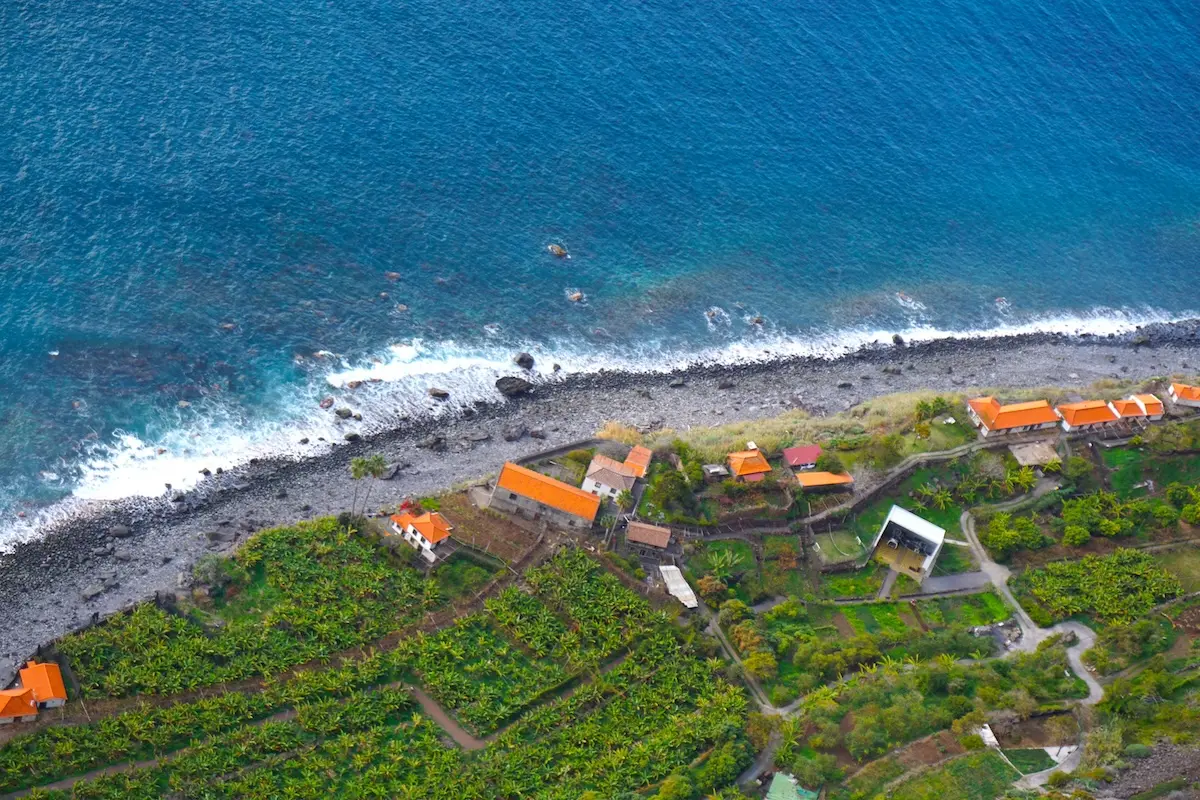
Calheta is the best place in Madeira for a traditional beach vacation. It has the island’s only imported golden sand beaches — two of them — protected by breakwaters that create calm, swimmable conditions. The rest of Madeira’s coastline is volcanic rock and open Atlantic, which is dramatic but not practical for family swimming.
Madeira is not a beach island. Its coastline is primarily black cliffs dropping into the Atlantic, which is why Calheta exists as a deliberate resort exception. Both sand beaches were engineered with imported sand and breakwater protection — slightly manufactured, but effective. On a summer afternoon, watching children actually swim safely in the water is something you cannot find anywhere else on the island, and for anyone traveling to Portugal with kids, that fact outweighs everything else.
The facilities around the marina are better developed than you might expect: whale-watching tours run reliably, full-size supermarkets are walkable, and the kids’ clubs are organized rather than an afterthought.
The trade-off is the same one all resort towns face. Calheta is comfortable and functional but not particularly Portuguese-feeling. The restaurants near the marina are competent; authentic village dining requires a drive inland.
- Location: Southwest coast, 45 minutes from Funchal by car
- Cost: $180–450/night; all-inclusive packages average $220–300/person
- Best for: Families with children; couples wanting a proper swimming beach
- Time needed: 3–5 days as a base for west coast exploration and hiking
For hikers, Calheta is also the best base on the island for the levada trails at Rabaçal — one of Madeira’s most rewarding trail systems.
Pro Tip: Book a morning at the Rabaçal area and you are back at the pool by early afternoon. The drive from Calheta to the trailhead is 25 minutes.
Saccharum Resort is the design statement in Calheta — built on the site of a former sugar cane mill, with three outdoor pools, a full spa, and a restaurant using ingredients grown in terraced gardens on the property. The industrial aesthetic is deliberate and polarizing: some guests love it, others find the ambiance cold. Calheta Beach Hotel runs all-inclusive packages directly on the sand with a dedicated kids’ club.
Should you stay on the north coast of Madeira?
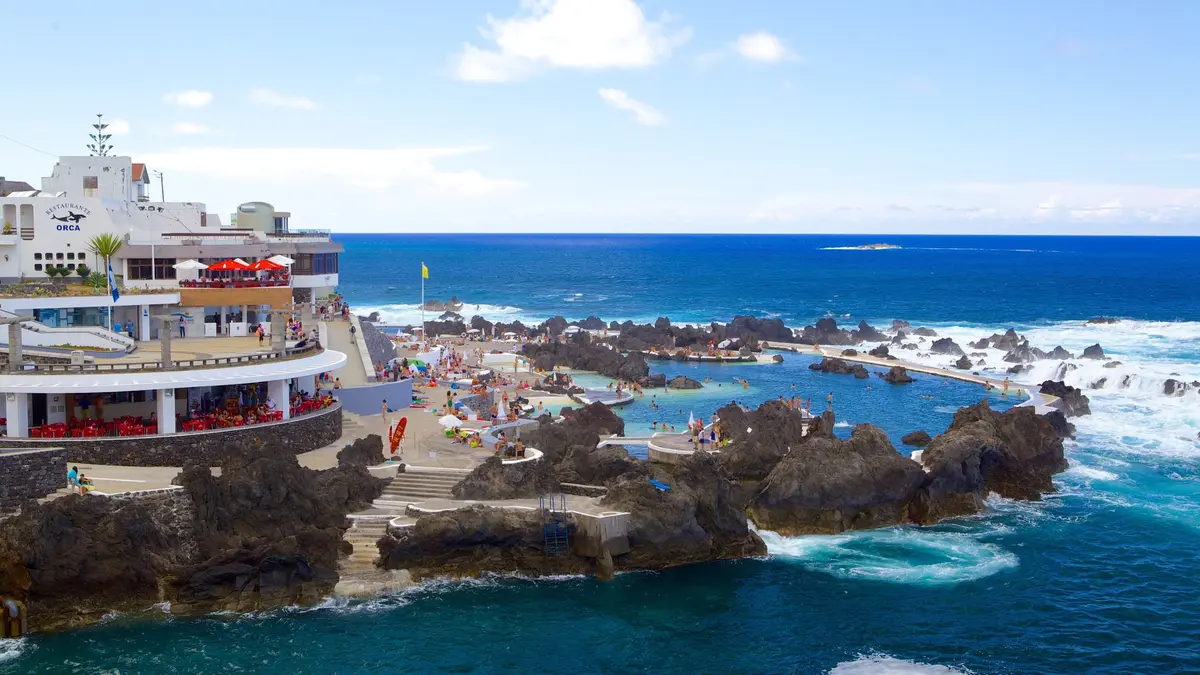
Stay on the north coast for 2–3 nights, not as your primary base. Porto Moniz, the main draw, gives you nearly private access to the island’s most famous natural lava pools in the early morning — before day-trippers arrive from Funchal around 11 a.m. — and sits 20 minutes from Fanal Forest for misty sunrise photography. The trade-off is real: the north coast receives roughly 60% more rainfall annually than Funchal.
The lava pools at Porto Moniz are the reason to go. They formed naturally in the volcanic rock at sea level, filled by Atlantic waves, and they look exactly like the photographs suggest. The problem is that most visitors see them shoulder-to-shoulder between 11 a.m. and 3 p.m., which reduces the experience to a crowd-management exercise.
Staying overnight solves this completely. By 7 a.m. the pools are nearly empty, the light is low and angled, and the only sound is waves. On my last visit, I had a full 90 minutes at the pools before the first tour bus pulled into the car park.
The weather trade-off is not minor. The north coast sits in the path of northeast trade winds and cloud cover that simply does not reach southern Funchal. You can leave Funchal in full sunshine and arrive in Porto Moniz under thick cloud — and this happens regularly. It is the island’s microclimate at work, not bad luck.
For most Portugal road trip itineraries, the right structure is 2 nights in Porto Moniz for the pools and Fanal, then back south.
- Location: Northwest corner of Madeira, 1.5 hours from Funchal via the VE2 expressway
- Cost: $100–220/night; limited high-end options
- Best for: Hikers, photographers, anyone doing the Fanal Forest trail (PR13)
- Weather note: Significantly wetter and cooler than the south coast — June to September most reliable
- Time needed: 2–3 nights; more than that and the weather limitations compound
Pro Tip: The Fanal Forest trail (PR13) produces its best photography in the morning when mist settles between the ancient laurel trees — some over 500 years old. Stay in Porto Moniz the night before, drive up at sunrise, and you will reach the trailhead in 20 minutes before the clouds burn off.
Aqua Natura Bay and Aqua Natura Madeira are the practical choices for north coast stays — modern rooms positioned directly above the sea stacks and volcanic pools, with wave noise providing the alarm clock.
Is staying near the Madeira airport worth it?
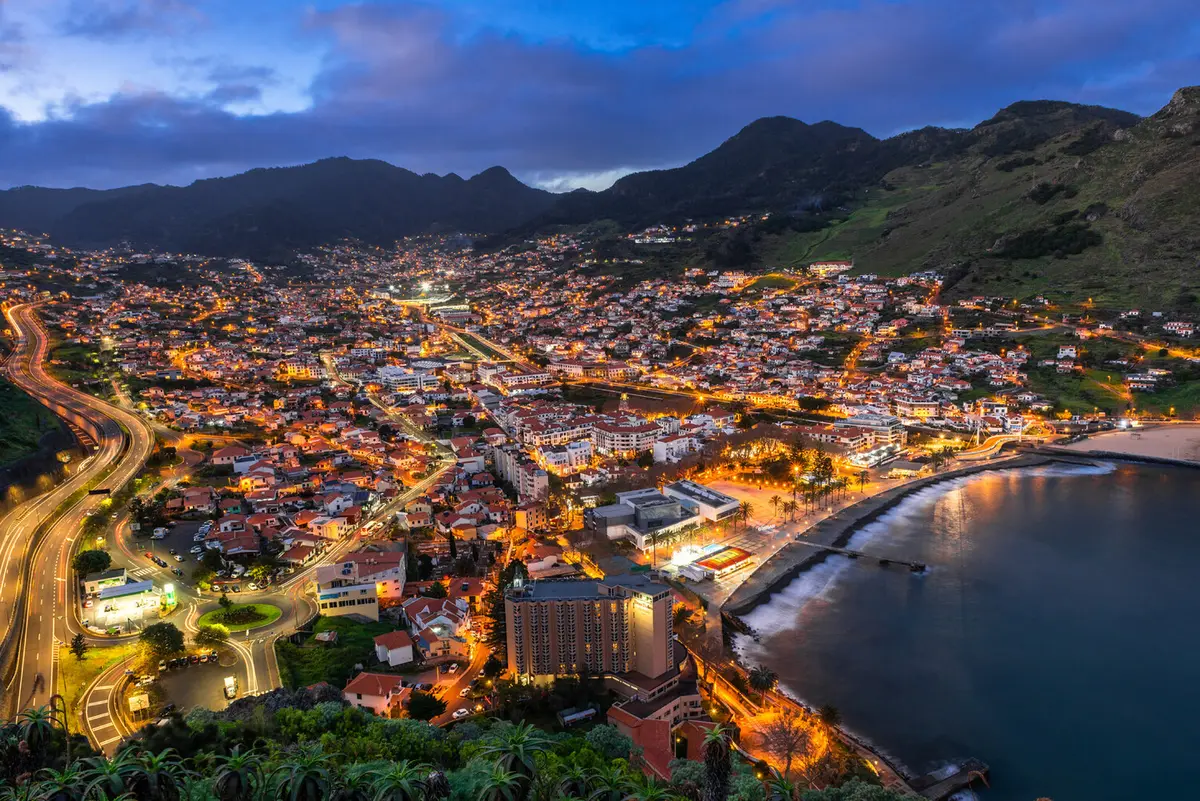
Staying in Machico — the town closest to Funchal Airport — is worth it for your first or last night on the island. It puts you 5–10 minutes from the terminal, has the flattest terrain of any major town on Madeira, and offers a yellow sand beach that the capital does not. For short trips or early-morning departures, it is the most logical base on the island.
Machico is Madeira’s second-largest city and functions as a place where people actually live rather than a resort zone assembled for tourists. The weekend market is local, the restaurants are priced for residents, and the town square has more grandmothers than tour groups.
Aircraft noise is present during daytime hours. Funchal Airport’s famously short runway means approach paths run directly over the town, and the sight of a Boeing 737 passing what feels like 200 feet overhead on descent is genuinely startling the first time. It tapers off in the evening.
The hotel infrastructure is solid without being glamorous. What exists is clean and priced honestly, and the town’s flatter terrain makes walking between the beach and restaurants effortless — the kind of easy walking that Funchal’s hillside streets charge you for in knee effort.
- Location: 5–10 minutes east of Funchal Airport (FNC) by car
- Cost: $80–160/night
- Best for: Travelers with early flights; anyone wanting authentic local atmosphere over resort polish
- Walk to beach: 5 minutes from most hotels in the town center
White Waters Hotel and Dom Pedro Madeira are the reliable mid-range choices with straightforward amenities and confirmed airport proximity.
How does altitude affect where to stay in Madeira?
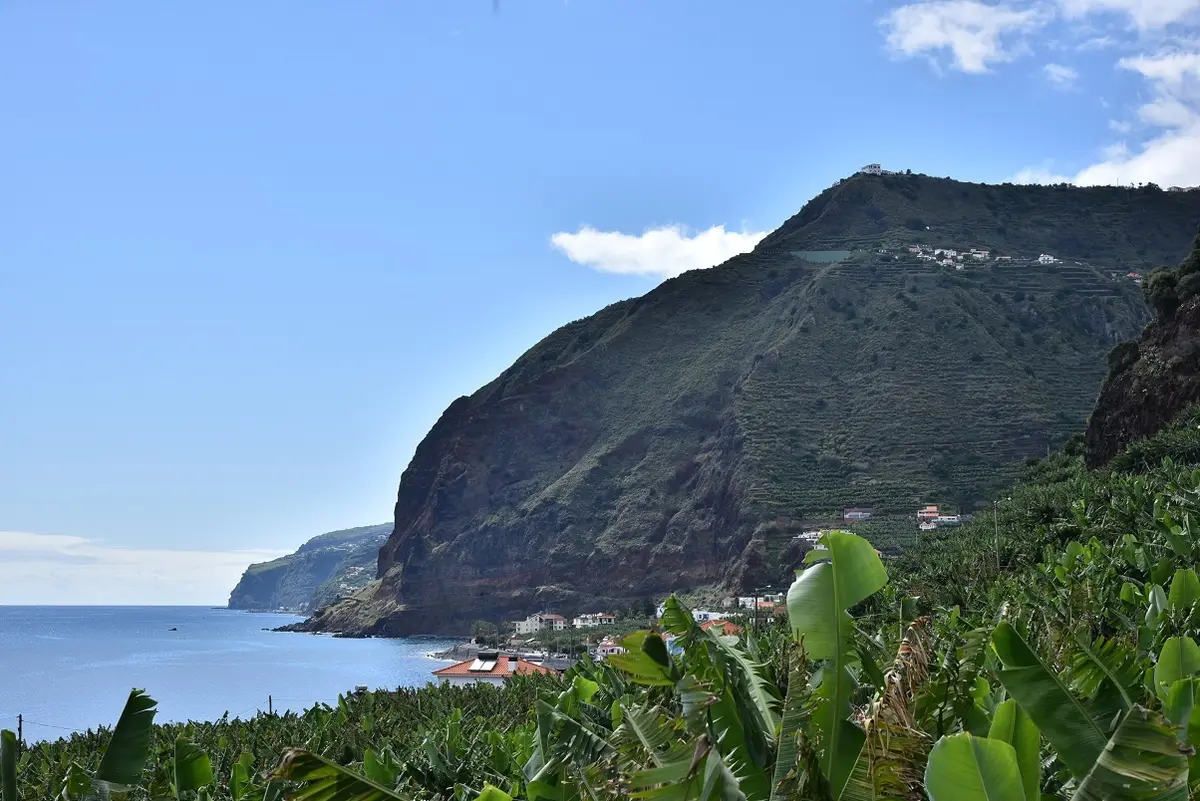
Every 150 meters (492 feet) of elevation gain drops the temperature by roughly 1°C (1.8°F), and properties above 200–400 meters (656–1,312 feet) often sit in cloud cover for days at a time. This is the “Banana Line” — the altitude threshold below which the climate stays warm and stable enough to grow bananas commercially. Stay below it and you get subtropical warmth year-round. Stay above it and pack layers, regardless of what the listing photographs suggest.
The south coast between Funchal and Calheta sits firmly below the Banana Line. It receives the island’s maximum sunshine because the central mountain ridge blocks moisture-laden trade winds from the northeast. By the time those clouds reach the south coast, they have already dropped their rain on the north.
A villa at 600 meters (1,968 feet) elevation can look extraordinary in photographs and function like a cold storage unit in January. The cloud views from high terraces are genuinely dramatic; running the electric space heater all day is less so.
Understanding the best time to visit Madeira helps, but the practical accommodation rule is simpler: book below 300 meters (984 feet) for November through April travel, unless you are specifically there to hike at altitude and know exactly what you are signing up for. The south coast from Funchal to Calheta is the safe band. The north coast is exposed to northeast trade winds bringing moisture, clouds, and significantly more rain than anywhere on the south coast — beautiful, but not a warm escape.
Pro Tip: Before booking any Airbnb or private villa, check the altitude on Google Maps by searching the exact address — elevation appears at the bottom of the map view. Properties marketed with “mountain views” or “above the clouds” are often positioned above the cloud base. Beautiful in the photographs, damp and cold in practice during winter months.
Is driving in Madeira as difficult as people say?
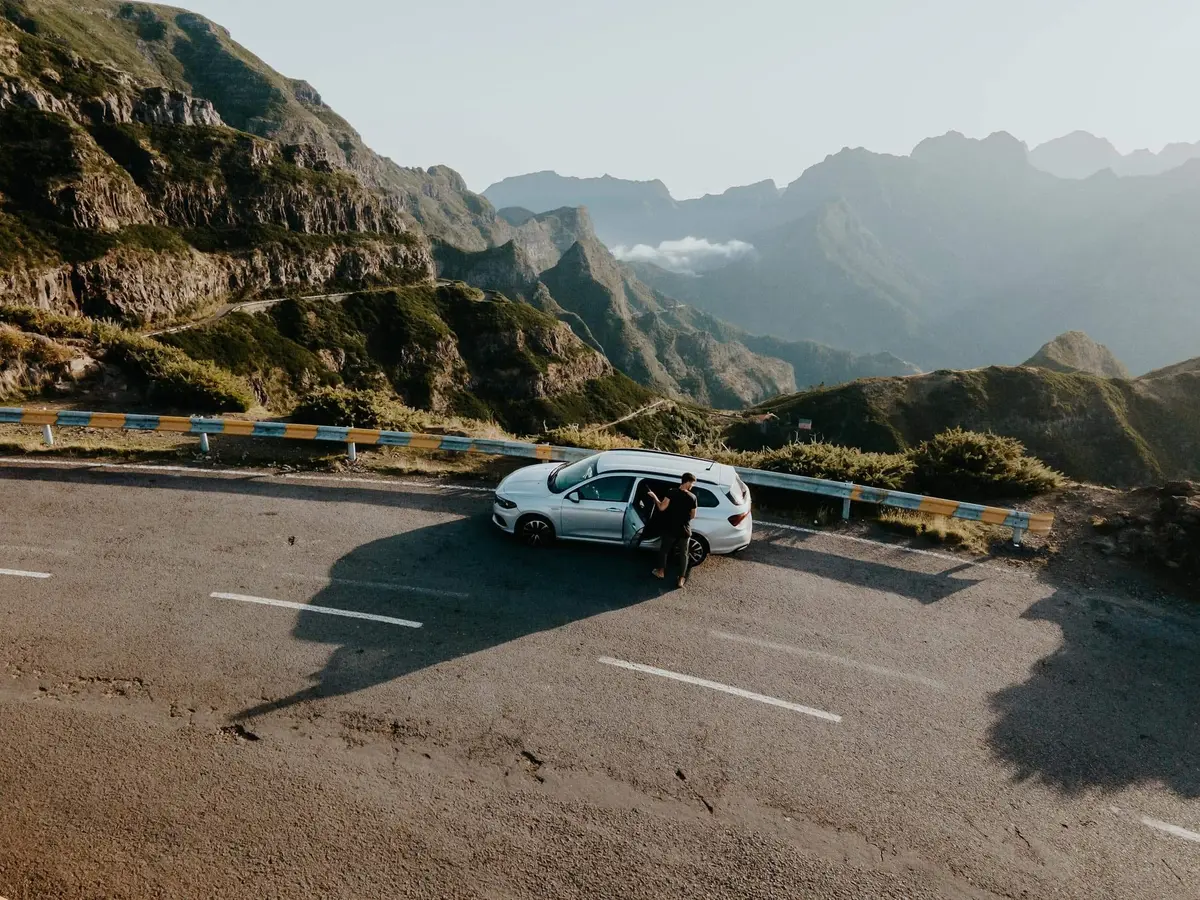
Driving in Madeira is manageable for experienced drivers but has two genuine difficulty spikes: hill starts on 25–30% gradients in residential areas, and a critical shortage of automatic transmission vehicles. If you are comfortable on mountain roads and can drive a manual, the island opens up completely. If you need an automatic, book it 3–4 months in advance — they sell out.
The automatic transmission problem
Most rental cars on Madeira are manual. Automatic vehicles exist but in genuinely limited supply, often at double the manual rate. Agencies that maintain larger automatic inventories include Madpoint and Automatic Rental Cars. Skip the smallest engine sizes regardless of transmission — these hills need torque.
When renting a car in Madeira, book automatic transmission 3–4 months before arrival. This is not a precaution; it is a requirement. Travelers who arrive and discover there are no automatics available face either learning manual hill starts on steep urban streets or spending the trip on guided bus tours.
Road navigation on the island
The VR1 expressway along the south coast is modern and fast but features very short on-ramps that require aggressive merging — a common surprise after calm European motorways.
GPS apps regularly route drivers up residential streets that are technically passable but practically alarming on a first attempt. Set your navigation to prioritize main roads rather than shortest route and the island becomes considerably less stressful.
The old coastal path that predates the tunnel system on the stretch between São Vicente and Seixal is closed to vehicles due to rockfall risk. Use the modern tunnels. The modern ER101 coastal road between São Vicente and Porto Moniz — different from the abandoned path — is actually one of the best drives in Portugal: wide lanes, dramatic cliffs dropping to the Atlantic, and three stops worth making along the way.
- Driving side: Right (same as the US)
- Transmission: Manual is the default — book automatic 3–4 months early through Madpoint or Automatic Rental Cars
- GPS tip: Set to “main roads” to avoid residential steep shortcuts
- South coast highway: VR1 is fast but has very short on-ramps — merge decisively
Pro Tip: The ER101 coastal road between São Vicente and Porto Moniz runs along the northwest cliff face with wide lanes and almost no curves — one of the easier scenic drives on the island. Stop at Véu da Noiva waterfall, the Ribeira da Janela rock formations, and the Seixal lava arch. Do it in both directions if you have time; the light changes the whole experience.
Do Madeira hotels have AC and heating?
Not all of them — and the gap between properties that do and do not have climate control matters more than most travelers expect. Modern resort hotels like Savoy Palace, The Cliff Bay, and Castanheiro Boutique Hotel run full HVAC systems year-round. Historic quintas and budget rentals frequently do not. For travel between December and March, a hotel with confirmed central climate control is meaningfully more comfortable than a private rental.
Madeira’s subtropical reputation creates a specific planning trap. Travelers planning a winter in Portugal trip arrive expecting warmth and find that budget accommodation without insulation or central heating runs 14–16°C (57–61°F) indoors on cold nights. Portuguese building standards historically assumed the outdoor climate would regulate indoor temperature — which it does at lower altitudes during warmer months. In winter the math changes.
For summer visits, the issue shifts to air conditioning. Humidity has increased noticeably in shoulder seasons, making AC increasingly useful for sleeping comfort even in lower-altitude properties. Verify before booking rather than assuming.
For December through March travel, book hotels with confirmed central climate control. When reviewing private rental listings, look for explicit mention of a “reversible HVAC system” or “heat pump” — electric space heaters are not an adequate substitute in an uninsulated stone building on a wet January night.
- Reliable HVAC: Savoy Palace, The Cliff Bay, Castanheiro Boutique Hotel
- Verify before booking: Historic quintas, budget apartments, private villa rentals
- Winter indoor temperature risk: 14–16°C (57–61°F) in unheated rentals — bring layers regardless of the forecast
The bottom line
TL;DR: First-timers without a rental car belong in Funchal’s Lido District — flat walking, reliable amenities, and easy access to island day tours. Families with children need to be in Calheta for the only true swimming beaches on the island. Hikers and photographers should plan 2 nights in Porto Moniz for the lava pools and Fanal Forest. Book automatic transmission 3–4 months early and stay below 300 meters (984 feet) elevation for November through April travel to avoid cold, damp accommodations.
Where did you end up staying in Madeira, and would you choose the same base if you went back?