
Most travelers blow through Coimbra Portugal on the Lisbon-Porto train. That is a mistake. This is the country’s intellectual capital — a vertical city of cobblestone staircases, 700-year-old lecture halls, and a fado tradition so distinct that clapping at a performance marks you as a tourist faster than anything else you could do.
Why does Coimbra stand apart from Lisbon and Porto?
Coimbra sits at the geographic heart of Central Portugal, roughly 150 miles (240 km) from Lisbon and 75 miles (120 km) from Porto by train. Unlike either city, it is built vertically on hills above the Mondego River, its identity anchored entirely by a university founded in 1290 — one of the oldest continuously operating in the world.
While beach seekers head to the Algarve and first-timers default to Lisbon, Coimbra offers something harder to find: intellectual depth, dark romance, and Portuguese daily life that has not been staged for an audience.
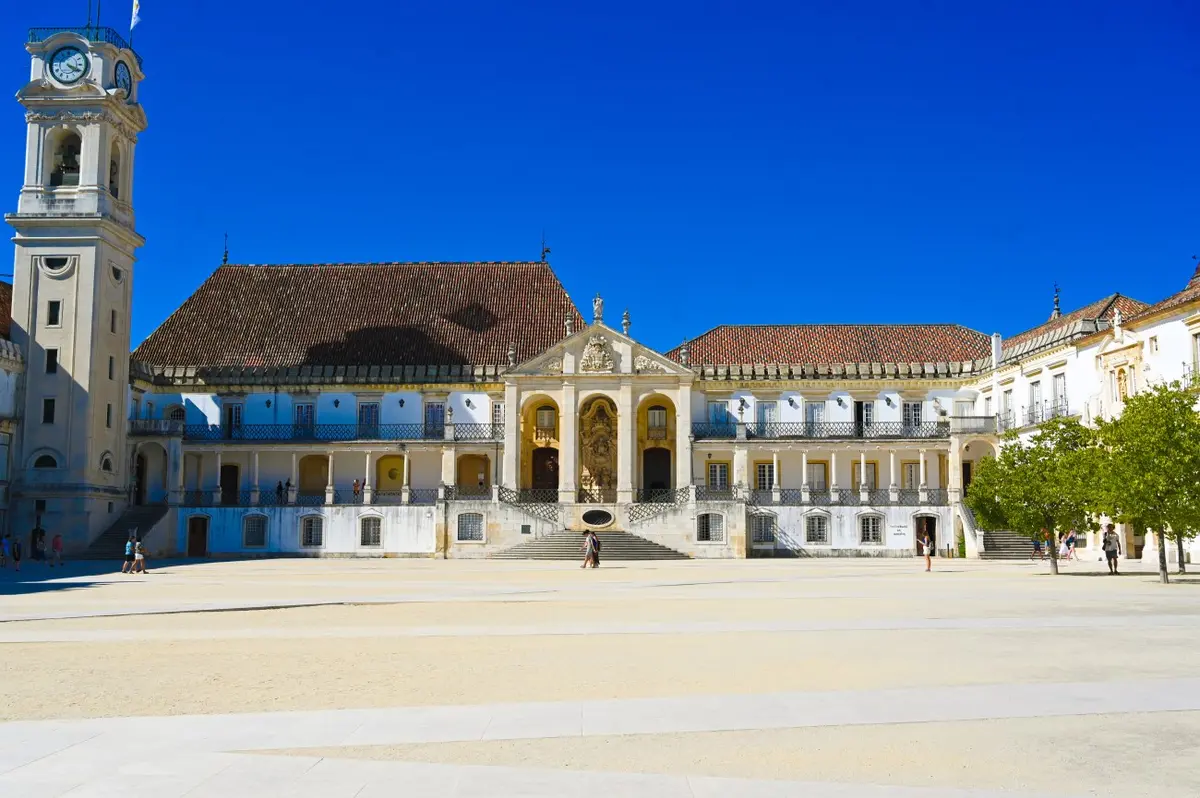
The University of Coimbra occupies the former Royal Palace, symbolically placing knowledge on the throne. Before Lisbon became the capital, Coimbra held that honor from 1131 to 1255. That history is not just on plaques — you feel it in the weight of the buildings and the way students still talk about the university as the defining fact of the city.
What the student capes actually mean
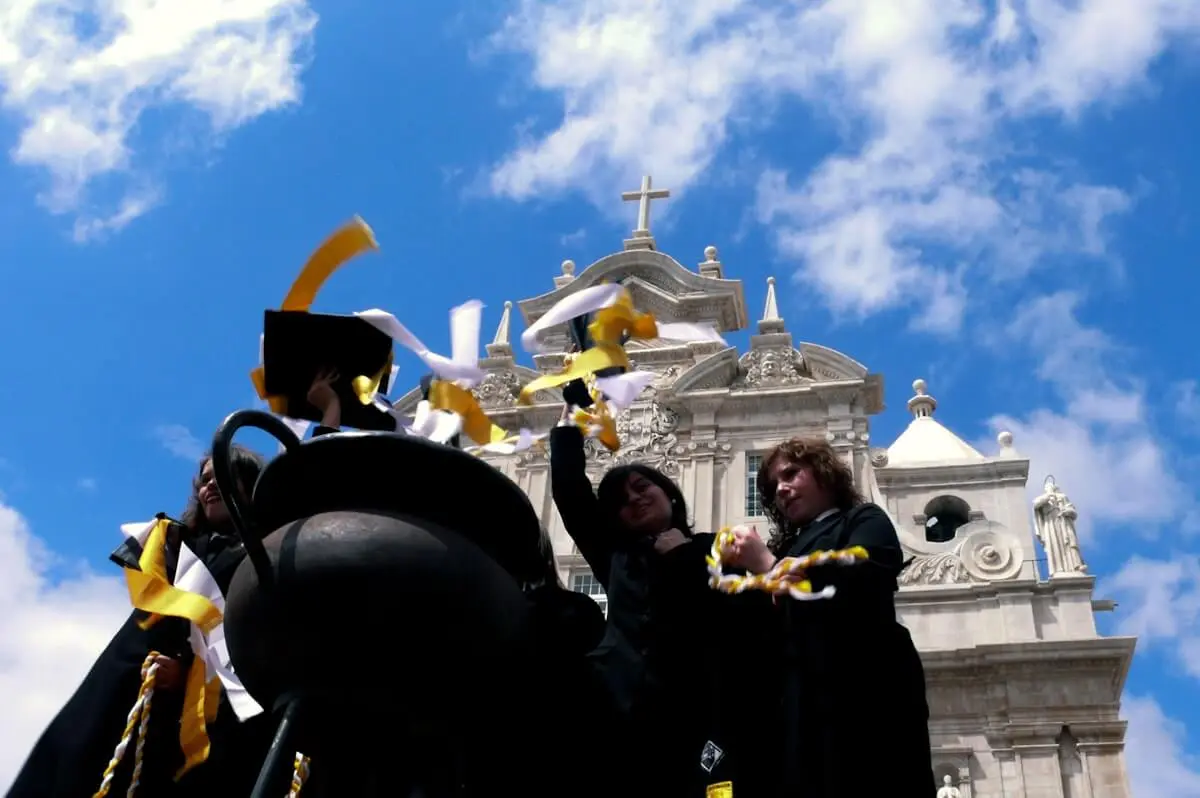
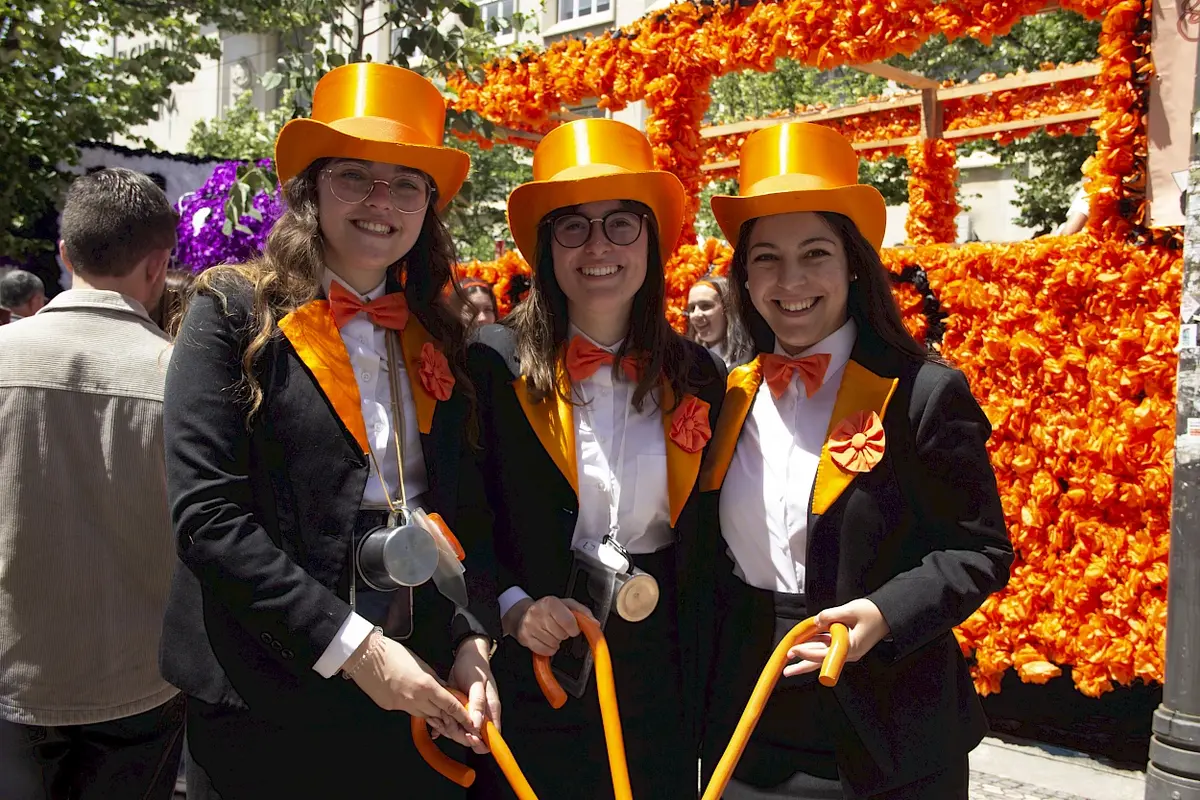
Students here wear black capes and suits — the Traje Académico — that carry a coded social language. The left side of the cape represents family, the right side friends, and the center romantic partners. A deliberately tattered hem does not signal poverty; it signals a full life, each tear representing a relationship or significant event.
On my last visit, a student stopped me near the Porta Férrea to explain this before I could ask. That kind of exchange — unsolicited, generous — is common here in a way that it is not in Lisbon.
The geography you need to understand before you arrive
The Rua do Quebra Costas, which translates directly as “Backbreaker,” is named without irony. The stone steps that connect the lower city to the university district above will test your calves whether or not you think of yourself as fit.
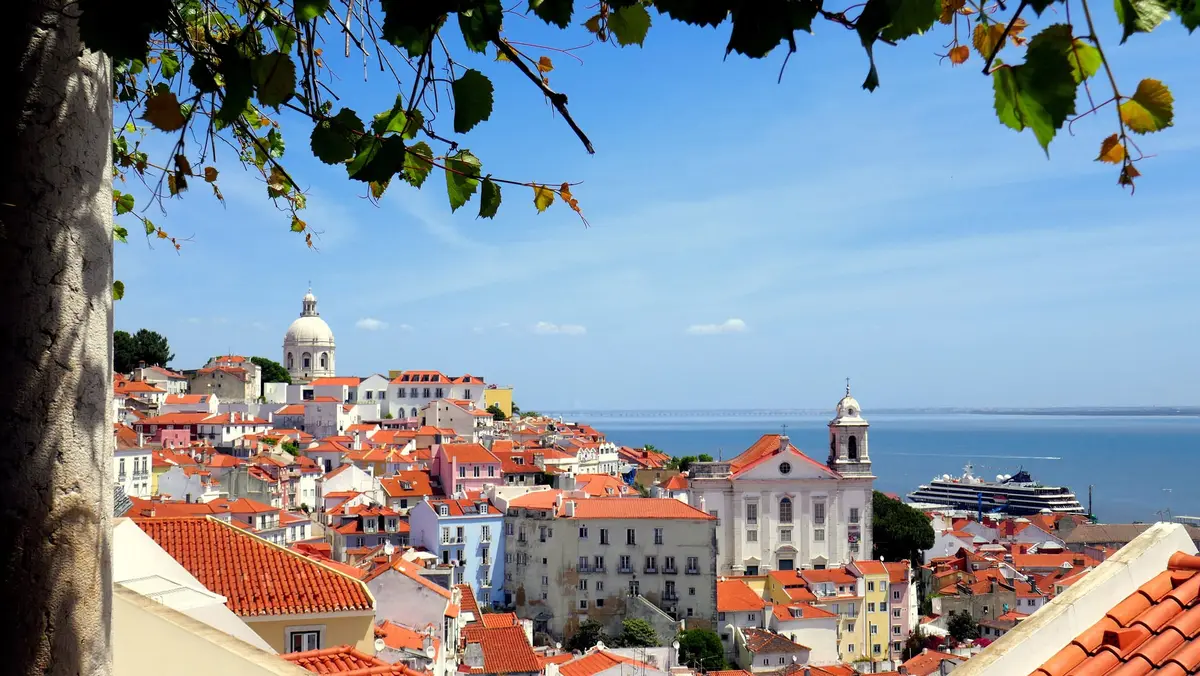
Standing at the University viewing terrace, looking out over terracotta rooftops falling down to the Mondego, you understand why students have been falling in love with this city for seven centuries. The view is earned. That matters.
What makes the Joanina Library worth the booking battle?
The Biblioteca Joanina is a three-room Baroque library inside the University of Coimbra complex, holding more than 70,000 volumes, some dating to the 15th century. Entry is timed to every 20 minutes, with roughly 50 people per slot and 10-15 minutes inside — strictly enforced. The combined University Circuit ticket, which includes the Royal Palace, Chapel of São Miguel, and Academic Prison, costs approximately €13-15 ($14-17) for adults.
Book online through the University of Coimbra’s official website. During high season, slots sell out weeks ahead.
Pro Tip: Book your slot the day you confirm your travel dates. The university releases slots two months in advance, and peak-season morning entries — especially anything before 11am — disappear within days of opening. The 9:40am entry tends to move fastest; you’ll be through the complex before the tour buses arrive at 10am.

How the bat colony works (and why it matters)
Here is the detail that makes first-time visitors stop mid-sentence: the library employs a colony of Common Pipistrelle bats as pest control. They are not unwanted guests. They are essential staff.
The bats live behind the bookshelves and emerge nightly to eat moths and beetles that would otherwise destroy 300-year-old paper. Every evening, staff cover the long oak reading tables with leather tarps. Every morning, they sweep up guano. This arrangement has protected the collection without chemical intervention for three centuries. No modern conservation facility has bettered it.
How to book your slot — and what to expect inside
When you pass through the heavy teak door — walls measuring nearly 7 feet (2.1 m) thick, maintaining an interior temperature of 64-68°F (18-20°C) year-round — the smell arrives before anything visual. Old paper, beeswax, and cool air. The three halls then open in front of you: green, red, and black, gilded floor to ceiling with Brazilian ebony, jacaranda, and painted ceilings by Lisbon artists.
Photography is strictly prohibited on the Noble Floor, and this rule is enforced. Do not attempt to negotiate it.
- Location: Paço das Escolas, University of Coimbra (enter via Porta Férrea)
- Hours: Mar 19-Oct 31 daily 8:30am-7:00pm; Nov 1-Mar 18 weekdays 9:00am-5:30pm, weekends 10:00am-4:00pm
- Cost: €13-15 ($14-17) for adults — University Circuit combined ticket
- Best for: Anyone with an interest in Baroque architecture, rare books, or genuinely unusual history
- Time needed: Allow 2 hours for the full university complex; 10-15 minutes specifically inside the library
What is the story of Pedro and Inês de Castro?
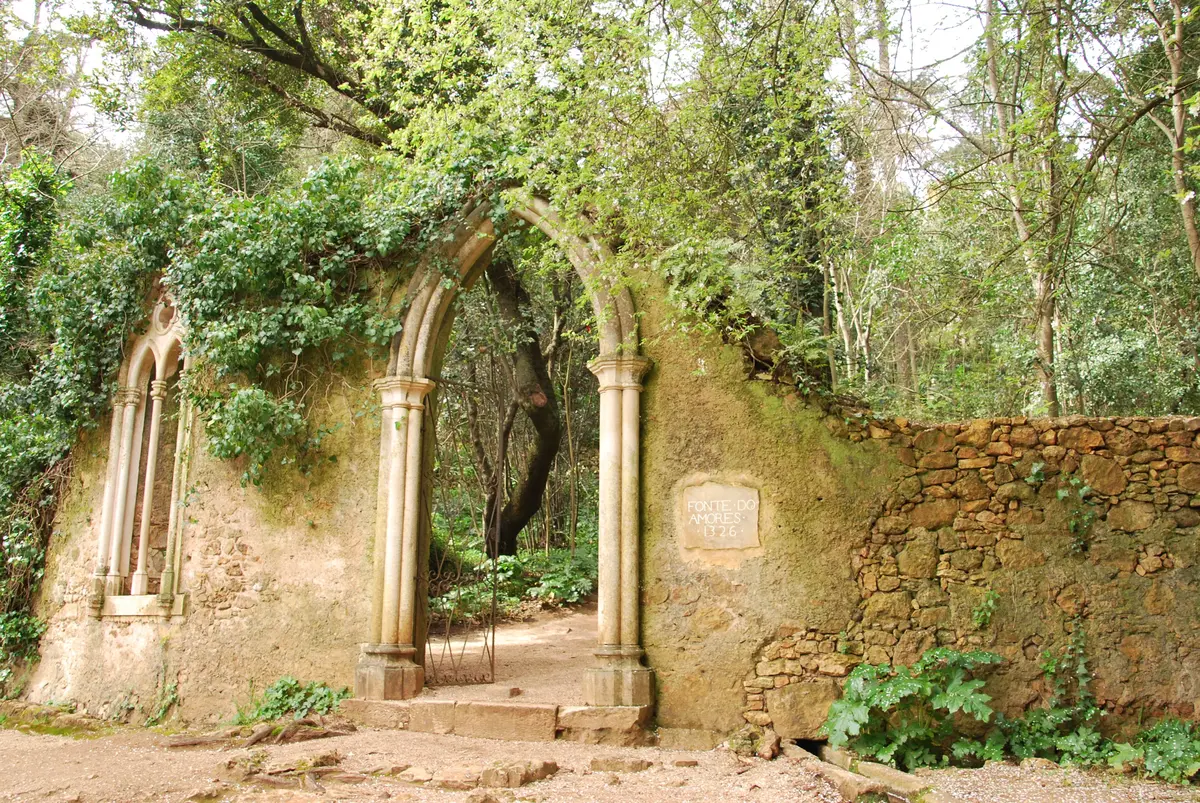
The Pedro and Inês story is one of the darkest chapters in Portuguese history — and it played out largely on the grounds you can still walk today. In the 14th century, Prince Pedro fell in love with Inês de Castro, his late wife’s lady-in-waiting. King Afonso IV, fearing Spanish political influence, ordered Inês murdered at the estate then known as Quinta das Lágrimas. When Pedro became King, he hunted down the assassins and, by some accounts, ripped their hearts from their chests.
He then exhumed the body of Inês, crowned her decomposing remains Queen of Portugal, and forced the entire court to kiss her hand in acknowledgment.
Today, the gardens of Quinta das Lágrimas are open to visitors. The Fonte das Lágrimas — Fountain of Tears — features red algae on the rocks that locals have mythologized as Inês’s blood. Whether you believe the legend or not, the physical space — a private garden with an estate behind it — makes the story feel real in a way that no museum exhibit manages.
This is the single most affecting site in Coimbra for travelers who engage with place through narrative rather than architecture. Do not skip it in favor of another cathedral.
Is Coimbra fado different from what you heard in Lisbon?
Lisbon fado and Coimbra fado are different art forms with opposite rules of audience etiquette — and the gap is wide enough that knowledge of one actively misleads you about the other. In Lisbon, fado is blues: emotional, populist, sung by women and men alike. In Coimbra, fado is closer to opera: sung exclusively by men (traditionally university students), focused on intellectual longing, delivered with formal solemnity.
Clapping interrupts the trance. Instead, a soft clearing of the throat signals to the performer that the music has landed. Nothing else is needed.
The Portuguese guitar used here differs from the Lisbon instrument. It features a teardrop scroll and tunes a full tone lower to accommodate deeper baritone voices — producing a sound that feels as if it belongs in a cathedral rather than a tavern.
Where to hear Coimbra fado tonight
Fado ao Centro is the right first stop, and not just because of its location on the Rua do Quebra Costas. The performers are selected under serious standards — you will not hear students learning the fado tradition here. The 6pm show runs about 45-60 minutes and includes an explanation of the tradition in English before the music begins, which makes the silence afterward mean something. The venue holds around 50 seats and fills completely, so book in advance.
Contrarian take: skip the first glass of the house port if you want to absorb the first song without distraction. The serving comes right at the start.
- Location: Rua do Quebra Costas, 7, Coimbra
- Cost: €15 ($17) per person — includes the show and one glass of port
- Shows: Daily at 6:00pm; doors open at 10:00am
- Best for: First-time visitors to Coimbra, travelers who cannot handle a 10pm showtime
- Time needed: 1-1.5 hours, including the pre-show English introduction
Pro Tip: After the Fado ao Centro show ends around 7pm, walk down to the lower city and sit outside one of the cafes below the university archways. On warm evenings, students sometimes sing informally in the alleys — unscheduled, unrehearsed, and not for you. That is worth more than any ticketed performance.

Where should you eat in Coimbra?
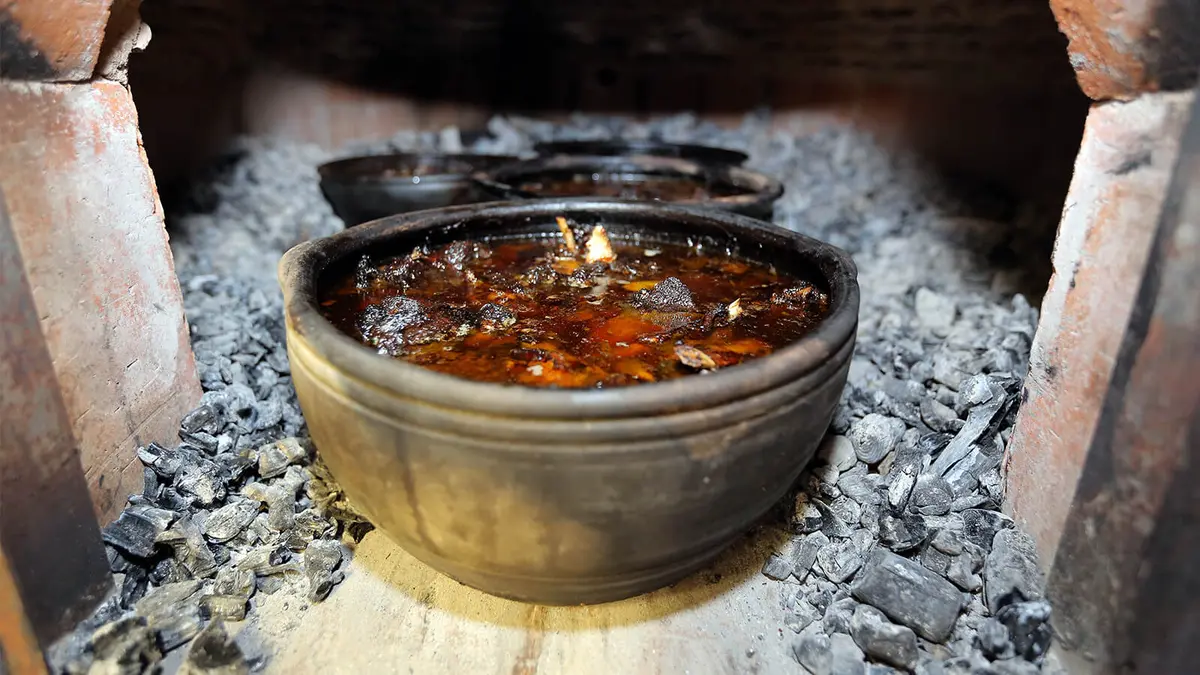
The food in Coimbra is heavy, caloric, and rooted in feeding hungry students through cold months. This is not the light cooking of the Algarve. It is traditional Portuguese food built for endurance — old goat in red wine, boiled pork bones, wild boar stew. The defining dish is chanfana: goat marinated in red wine and cooked in black clay pots in wood-fired ovens. If you visit during spring, order arroz de lampreia — lamprey rice from the Mondego — at any restaurant that serves it. It is the most seasonal, most local thing on any menu in the city.
Zé Manel dos Ossos — the tasca with seven tables
In the cramped alleyway called Beco do Forno, behind a door that could easily be a private house, is the most honestly local restaurant in Coimbra. The walls are covered floor to ceiling in messages, drawings, and scraps of paper left by customers over six decades. There are seven tables. No reservations. If you arrive at 7:30pm exactly when the dinner service opens, you will still wait.
Order the ossos cozidos — boiled pork bones — as the opening act, then the feijoada de javali (wild boar bean stew) or chanfana. Everything comes in generous portions. Zé Manel dos Ossos is a cash-only establishment (and MBWay, the Portuguese payment app). Bring euros.
- Location: Beco do Forno, 12, Coimbra
- Cost: €15-20 ($17-22) per person
- Hours: Monday-Saturday 12pm-3pm and 7:30pm-10pm; closed Sunday
- Best for: Solo travelers, couples comfortable eating elbow-to-elbow with strangers
- Time needed: 1.5 hours — 30 min queue, 1 hour at the table
Dux Taberna Urbana — modern petiscos, no grit
For travelers who want traditional Portuguese food without queuing in an alley, Dux Taberna Urbana bridges the gap. This modern gastro-tavern focuses on petiscos — small sharing plates — including duck rice and salt cod preparations that are executed with more care than the tourist zone warrants. The room is quieter than Zé Manel dos Ossos, and tables are available without a wait most evenings.
Do not leave Coimbra without trying Pastel de Tentúgal, the city’s defining pastry — a flaky egg cream pastry thinner than phyllo dough. Pastelaria Briosa has served it for decades and remains the standard reference.
Where should you stay in Coimbra?
Coimbra’s accommodation falls into three clear tiers: historic luxury on the far side of the Mondego, boutique literary hotels within the World Heritage zone, and value properties near the train station. The right choice depends entirely on whether you prioritize romance, proximity, or price. All three below are walking distance from the major sights, though “walking distance” in a vertical city means something different than it does on flat ground.
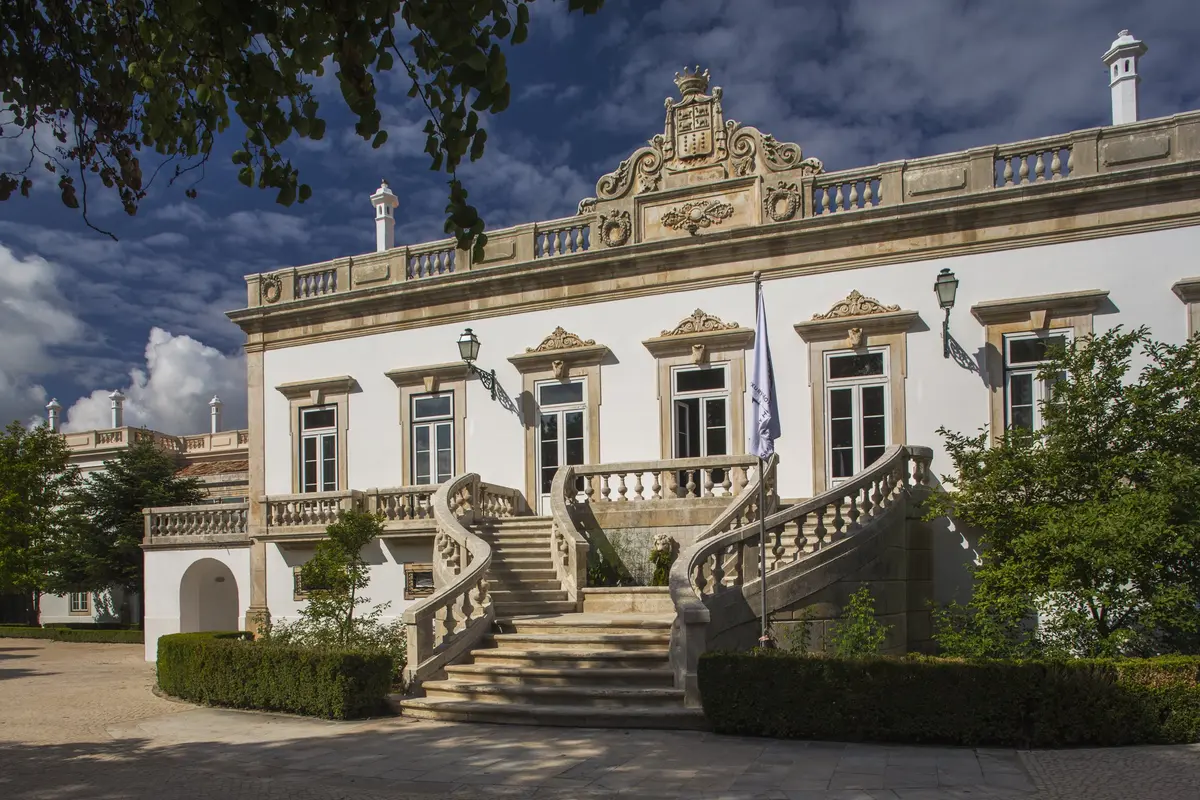
Quinta das Lágrimas — a palace wrapped in a murder story
This is where Pedro and Inês conducted their affair. The hotel occupies the estate where Inês was murdered in the 14th century, and the gardens — including the Fountain of Tears — are part of the grounds. Staying here is not just about the rooms; it is about falling asleep inside the most romantic and violent story in Portuguese history.
Three room types are available: Palace Rooms (in the original historic wing), Garden Rooms (overlooking the botanical garden and outdoor pool), and Spa Rooms (with views of the woodland or the city). The Bamboo Garden Spa is included in the stay.
The friction point: the hotel is a 20-minute walk from the university district. Rideshare is easy, but factor the distance into your daily planning.
- Location: Rua António Augusto Gonçalves, 5053, Coimbra (south side of the Mondego)
- Cost: from $169/night; average around $280/night in peak season
- Best for: Couples celebrating anniversaries, milestone trips, or a Portugal honeymoon
- Time needed: 2-night minimum to justify the Spa and justify the location
Sapientia Boutique Hotel — built for literary travelers
The only hotel actually inside the University of Coimbra World Heritage Site, Sapientia occupies three interconnected historic buildings on Rua José Falcão, roughly 1,300 feet (400 m) from the Biblioteca Joanina. Each of the 22 rooms is named after a writer or intellectual with a connection to Coimbra.
The rooftop terrace has a clear sight line over the historic center and the Mondego River — comparable to views at far pricier hotels. Access to the upper city means taxis and rideshare cannot always reach the front door; plan to walk the final stretch.
- Location: Rua José Falcão, 4, Coimbra (5-minute walk from the University)
- Cost: from $182/night
- Best for: Travelers who choose hotels based on design and neighborhood immersion
- Time needed: N/A — a 1-night stay works well given the central location
Hotel Oslo — best city views for the price
Hotel Oslo is a family-run property 330 feet (100 m) from Coimbra-A train station, with free parking and free breakfast included. The rooms are small and some street-facing units pick up traffic noise, but the rooftop bar delivers a 180-degree panoramic view of the old city and university that rivals anything at hotels charging three times the rate.
It is the right choice for travelers arriving by train, staying one night, and spending the day climbing hills.
- Location: Av. Fernão de Magalhães, 25, Coimbra (near Coimbra-A station)
- Cost: from $87/night; typical range $100-140
- Best for: Solo travelers, rail travelers, anyone staying one night in transit
- Time needed: N/A
Pro Tip: Ask for a room facing the university rather than the main avenue. The avenue rooms pick up traffic noise until midnight; the university-facing rooms are noticeably quieter.
How do you get to Coimbra — and what’s the station trap?
Coimbra has two train stations, and the difference matters. Coimbra-B is an interchange station outside the city center where most intercity trains from Lisbon and Porto stop. Coimbra-A (also called Coimbra Cidade) is downtown, within walking distance of most hotels. Your long-distance ticket automatically includes the urban connection between them.
The mistake independent travelers make: exiting at Coimbra-B assuming it is the main station, then trying to walk or hailing a taxi when a free connecting train departs every few minutes. Stay on the train. Or board the connecting urban service. Either way, your ticket covers the transfer — you do not need to purchase anything extra.
Pro Tip: When searching for train tickets, type “Coimbra” as your destination. The national ticketing system will route you to Coimbra-B and include the urban connection automatically. Trying to book specifically to Coimbra-A often causes confusion with no benefit.
Driving and parking in Coimbra
If you are renting a car, activate a Via Verde electronic toll transponder at the rental counter before leaving the agency. The Portuguese highway network uses electronic gantry tolls, and declining the transponder to save a few euros per day makes payment almost impossible for foreign-registered vehicles. Unresolved tolls generate administrative fines.
Do not drive into the historic upper city. It is a one-way maze with nowhere to park. Leave the car at Forum Coimbra across the river or at the Mercado Municipal garage and walk. Both are well-signed and affordable. Our complete guide on renting a car in Portugal covers every transponder option and toll highway you will encounter.
When is the best time to visit Coimbra?
Spring (April-June) and early fall (September-October) offer the best combination of weather and crowd density. Temperatures run 65-75°F (18-24°C), the university is in full session, and the fado venues operate at their highest standard. Summer is warmer and busier, with the Joanina Library selling out weeks in advance.
May brings Queima das Fitas, the student graduation festival, to Coimbra. Parades, concerts, and the burning of academic ribbons fill the streets for a full week. Hotels book out months in advance for this period — if you want to go, plan accordingly or expect to commute from a neighboring city.
October runs another citywide festival, Fitas ao Vento, with outdoor concerts and academic events. It is a good alternative to Queima das Fitas for travelers who want the energy without the planning pressure.
Why winter deserves more credit than it gets
Winter in Portugal is cold, wet, and frequently overlooked — and Coimbra is the best argument for it. The university runs its full academic calendar, the tascas serve the heaviest traditional dishes, and you will not share the Joanina Library booking window with a hundred other tourists. Rain enhances the Gothic atmosphere of the upper city in ways that bright summer light does not.
Accommodation prices drop significantly, and restaurant tables are available without planning. The tradeoff is layers and an umbrella.
How many days do you actually need in Coimbra?
Two days and one night is the honest minimum. Day one should cover the University complex (Joanina Library, Royal Palace, Chapel of São Miguel, Academic Prison), the Sé Velha (Old Cathedral), and dinner at Zé Manel dos Ossos. End the evening with the 6pm fado show at Fado ao Centro.
Day two allows time for the Mondego south bank: Quinta das Lágrimas gardens, the Fountain of Tears, and the miniature Portugal dos Pequenitos theme park, which sounds absurd until you see scale replicas of every major Portuguese monument compressed into one garden.
What a third day adds
A third day opens the Schist Villages route. Talasnal, roughly 25 miles (40 km) southeast on winding mountain roads, is a stone village where you can buy local mountain honey and walk trails above the Zêzere valley. The drive back via the N17 road showcases rural landscapes that almost no visitor to Coimbra ever sees.
If mountains are not your interest, use day three for the Machado de Castro National Museum — the city’s best museum, built over a Roman cryptoporticus that you walk through in near-darkness. It is one of the most unsettling and impressive things to do in central Portugal, and consistently underplayed in travel guides.
What should you know before you go?
Tipping in Portugal follows the same norms in Coimbra as anywhere in the country. Servers earn living wages, and leaving small change or rounding up the bill is appropriate. Do not feel obligated to tip 20%.
The CP — Comboios de Portugal app handles train schedules and ticket booking for getting to and within Portugal. Download it before you travel. For taxis, Uber and Bolt both operate in Coimbra. Use them to avoid unmetered tourist pricing.
Learn a few words before you arrive. Coimbra receives fewer English-speaking tourists than Lisbon or Porto, and even minimal effort — “Bom dia,” “Obrigado,” “Com licença” — earns a different quality of interaction than you’ll get in cities accustomed to visitors who don’t try.
The bottom line
TL;DR: Coimbra Portugal rewards the traveler willing to climb hills and read a menu before they order. Spend your first morning at the Joanina Library (booked before you leave home), your afternoon in the Pedro and Inês gardens, and your evening at Fado ao Centro. The second day belongs to the south bank and a tasca with no reservations.
This is the intellectual heart of Portugal, a city where medieval history and active student life share the same staircases. Everything here has to be earned — the views, the table at Zé Manel’s, the silence after a fado ends. That is exactly what makes Coimbra worth the extra day.
What surprised you most about Coimbra — and did you manage to get a Joanina Library slot?