Guimarães Portugal’s city walls say it plainly: “Aqui Nasceu Portugal” — Here Portugal Was Born. If your Iberian itinerary starts and ends with Lisbon and Porto, you are missing the origin story — a UNESCO World Heritage medieval center, a 10th-century castle that predates the nation itself, and an evening atmosphere that day-trippers never see.
Why Does Guimarães Portugal Matter Historically?
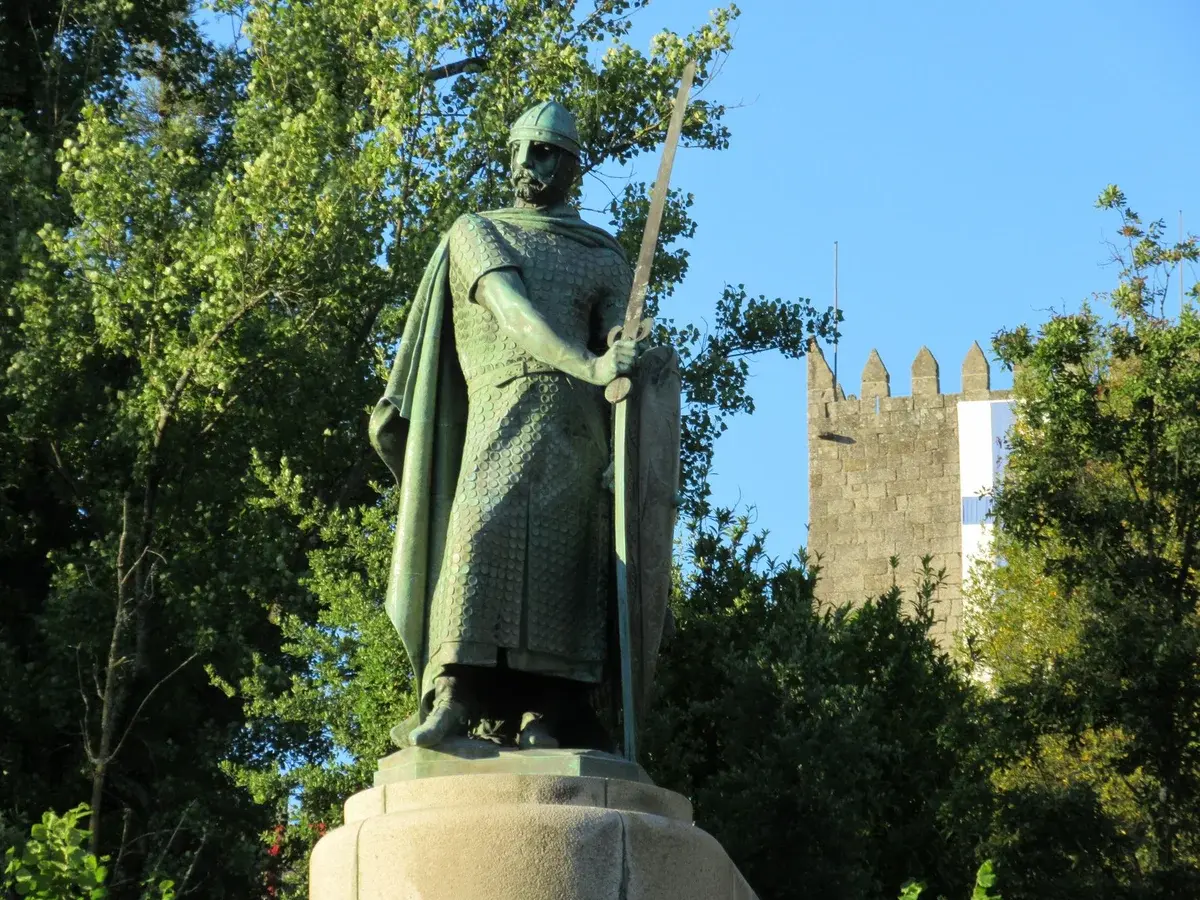
Guimarães Portugal is where Afonso Henriques, the first King of Portugal, was born around 1109. His victory at the Battle of São Mamede in 1128 established Portugal as an independent nation from the Kingdom of León. The specific, consequential weight of that history is what separates this city from other well-preserved medieval towns in the region.
The granite porches, iron balconies, and traditional wattle-and-daub construction across the historic center evolved across centuries without demolition and rebuilding — which is exactly what earned it UNESCO World Heritage status. That designation later expanded to include the Zona de Couros, a former leather-tanning district just outside the walls that most tourists miss entirely. The city’s story is not one story. It is royal history and industrial heritage, side by side.
Can You Do Guimarães Portugal as a Day Trip from Porto?
Yes — the major highlights fit into a day trip from Porto, and the compact layout means nothing requires a car. The train takes just over an hour and costs €3.60 each way. That said, staying overnight changes the experience significantly: the evening atmosphere in the old town, after the day-trip crowd clears, is genuinely worth the extra night.
Day-trippers consistently miss what happens after 6 p.m. Locals fill the outdoor tables at Largo da Oliveira, church bells carry across granite walls with nothing to compete against, and the city reveals its real character. If you can manage one night, the morning walk through empty cobblestone streets before the day-trips arrive is worth the hotel cost alone.
Pro Tip: Pack proper walking shoes — not casual sneakers. The climb from the old town to the castle is steep and sustained, and the entire historic center is paved with granite cobblestones that punish anything without grip after an hour.
What Will You Find at the Castle and Palace?
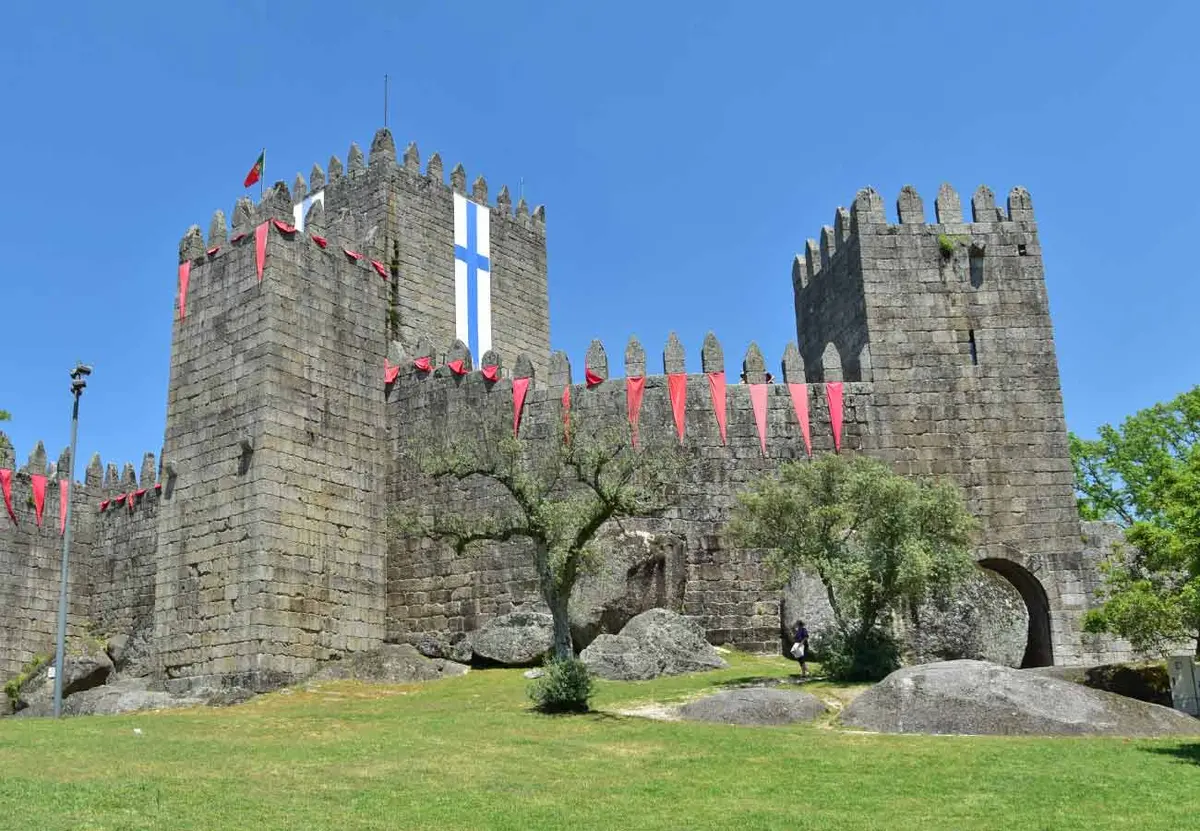
The two main monuments sit together on the Colina Sagrada (Sacred Hill): the Castle of Guimarães, a rugged 10th-century military fortification with minimal exhibits and maximum atmosphere, and the Ducal Palace, a 15th-century aristocratic residence with furniture, porcelain, and a significant woven collection. Both are open daily. Buy tickets at the Ducal Palace ticket office, which covers entry to both.
Note: both monuments are currently undergoing restoration works. The castle’s wall-walk and keep are temporarily closed to visitors; access to the interior courtyard (place-of-arms) remains open. The Ducal Palace elevator may be unavailable due to accessibility renovation. Check current access status at pacodosduques.gov.pt before your visit.
Castelo de Guimarães
This is not a polished heritage attraction with audio guides and glass cases. It is a real military fortification — rough stone, deliberately sparse, and atmospheric for exactly those reasons. Originally built in the 10th century by Countess Mumadona Dias to defend against Viking and Moorish raids, the castle carries more historical weight than almost any other castle in Portugal — not because of its scale but because of what was decided within its walls.
The wall-walk and central keep are temporarily closed during ongoing restoration under Portugal’s Recovery and Resilience Plan. The works include roof replacement on the towers, wall joint sealing, and installation of new stairways and walkways. Visitors can enter the place-of-arms — the large interior courtyard — where you can see the full scale of the fortification from ground level. The surrounding Sacred Hill area and approach through the hillside gardens remain open and genuinely worth the walk.
- Location: Colina Sagrada, directly above the Ducal Palace
- Cost: €2 adults; free for children under 12; combo ticket with Ducal Palace €8
- Hours: 10 a.m. – 6 p.m. daily; last entry 5:30 p.m.; closed January 1, Easter Sunday, May 1, June 24, December 25
- Best for: History-focused visitors comfortable with a steep uphill approach
- Time needed: 30-45 minutes
Paço dos Duques de Bragança
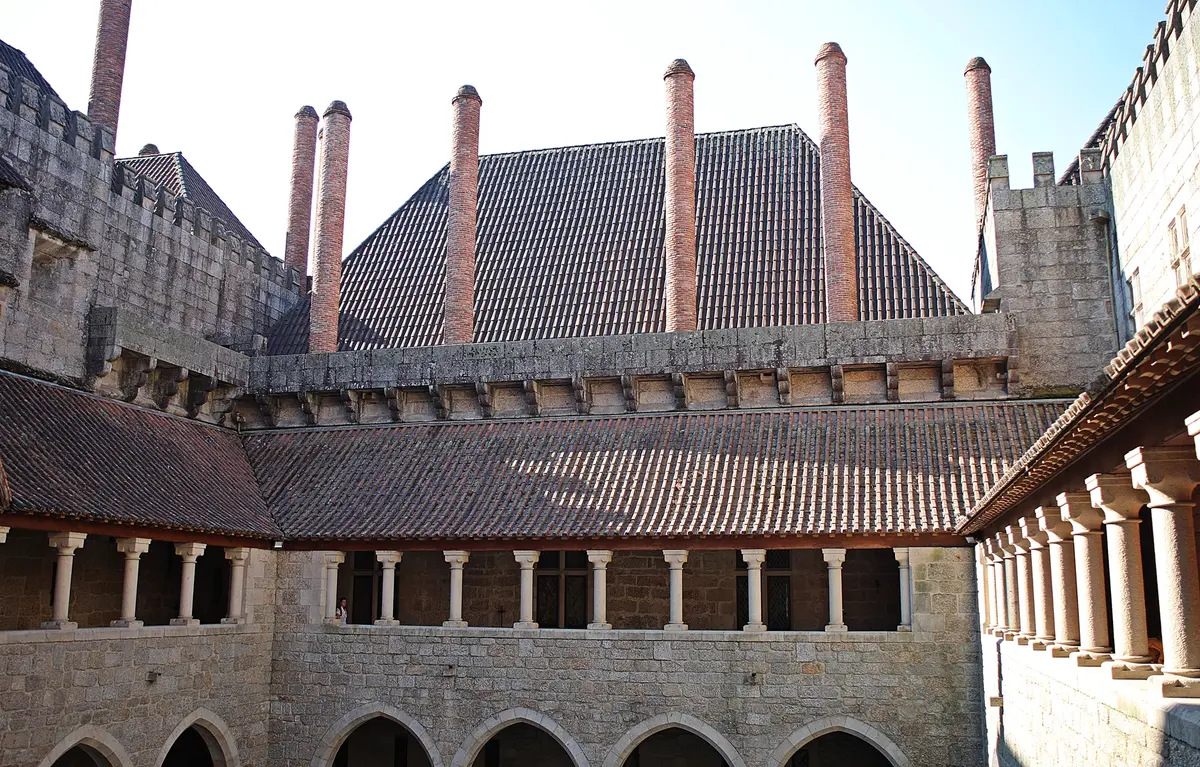
The Ducal Palace occupies the same hilltop as the castle but could not be more different in character. Built in the early 15th century by Afonso, the illegitimate son of King João I and later the first Duke of Bragança, it was designed for aristocratic domestic life rather than military defense. The cylindrical brick chimneys that puncture the roofline are recognizable from anywhere in the city below.
The building fell into ruin and served as barracks for centuries before a controversial restoration under the Estado Novo regime in the mid-20th century. The architects traveled to France and Belgium to study period architectural details — the result pleases some historians and troubles others. Today it functions as both a museum and an official presidential residence when the president visits northern Portugal.
Inside, the collections include 17th-century furniture, Chinese porcelain, and large-scale woven Flemish panels alongside reproductions from the Pastrana series — depicting episodes of Portuguese military campaigns in North Africa. This is the strongest historical interior you will find in Guimarães Portugal, and on a rainy day it is far more satisfying than the castle. The palace is currently partially closed for accessibility renovation; admission is reduced during the works.
- Location: Rua Conde Dom Henrique, beside the castle on the Sacred Hill
- Cost: €5 adults during current partial closure; combo with castle €8; children under 12 free
- Hours: 10 a.m. – 6 p.m. daily; last entry 5:30 p.m.; closed January 1, Easter Sunday, May 1, June 24, December 25
- Best for: History and design enthusiasts; families; strong choice on rainy days
- Time needed: 45-60 minutes
Pro Tip: The ticket office is inside the Ducal Palace building, not at the castle gate. Non-Portuguese speakers have been turned away at the castle entrance after struggling to complete online ticket purchase when the site defaulted to Portuguese. Go to the Ducal Palace first, or book online in advance from pacodosduques.gov.pt.
What Is the UNESCO Historic Center of Guimarães Like?
The historic center of Guimarães Portugal is not a roped-off museum district — it is a functioning neighborhood where residents live, run businesses, and gather each evening. Descend from the castle via Rua de Santa Maria, the medieval street connecting the Sacred Hill to the old town, and you are walking one of the most atmospheric routes in northern Portugal. Take it slowly.
Largo da Oliveira
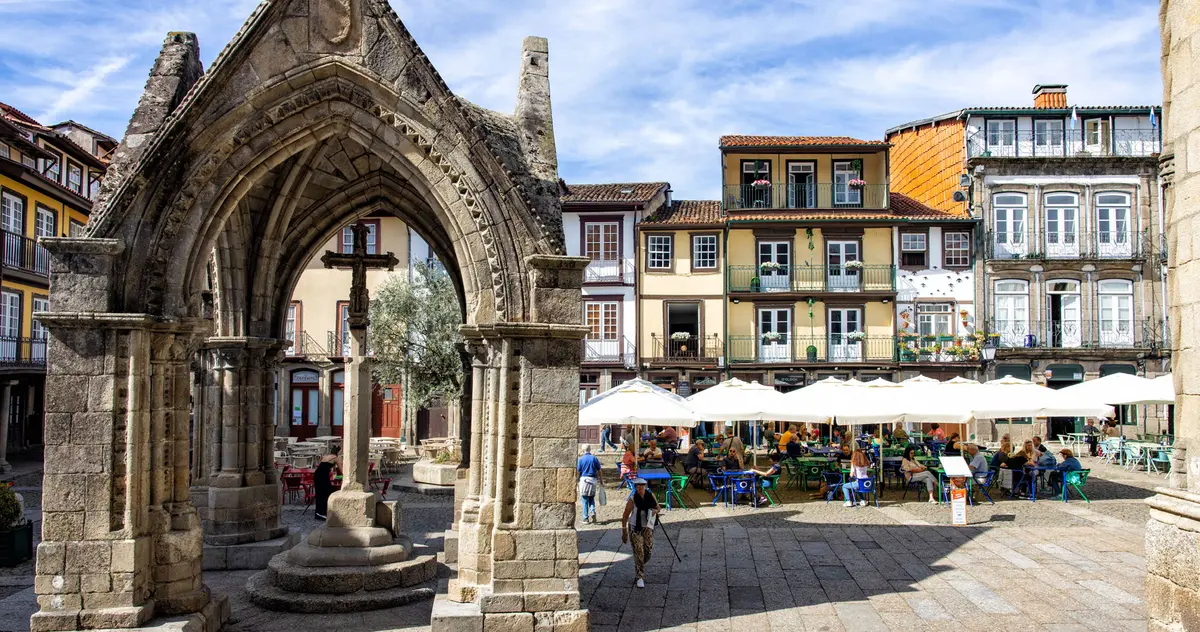
Named for an olive tree that supposedly sprouted leaves in 1342 after local merchant Pero Esteves placed a Norman cross nearby, this square is the social center of the old town. The Igreja de Nossa Senhora da Oliveira dominates the space alongside the Gothic Padrão do Salado shrine.
Cafés spill onto the pavement serving coffee and pastries at prices that have not been adjusted for tourist traffic. On my last visit, a coffee and one of the shell-shaped local pastries came to under €3. The evening is the best time to be here — after the day-trip crowd clears, locals fill every outdoor chair and the church bells carry across the granite walls with nothing to compete against.
Praça de São Tiago
A few steps from Largo da Oliveira, this smaller square carries its own legend: the Apostle James is said to have delivered an image of the Virgin Mary to this exact spot. Today it is lined with preserved medieval houses serving as both residences and informal gathering space.
The architecture here is the most instructive in the city for understanding how medieval urban fabric survives across centuries — not through wholesale demolition and reconstruction, but through layers of small adaptations that leave the original structure mostly intact.
What Makes the Zona de Couros Worth the Detour?
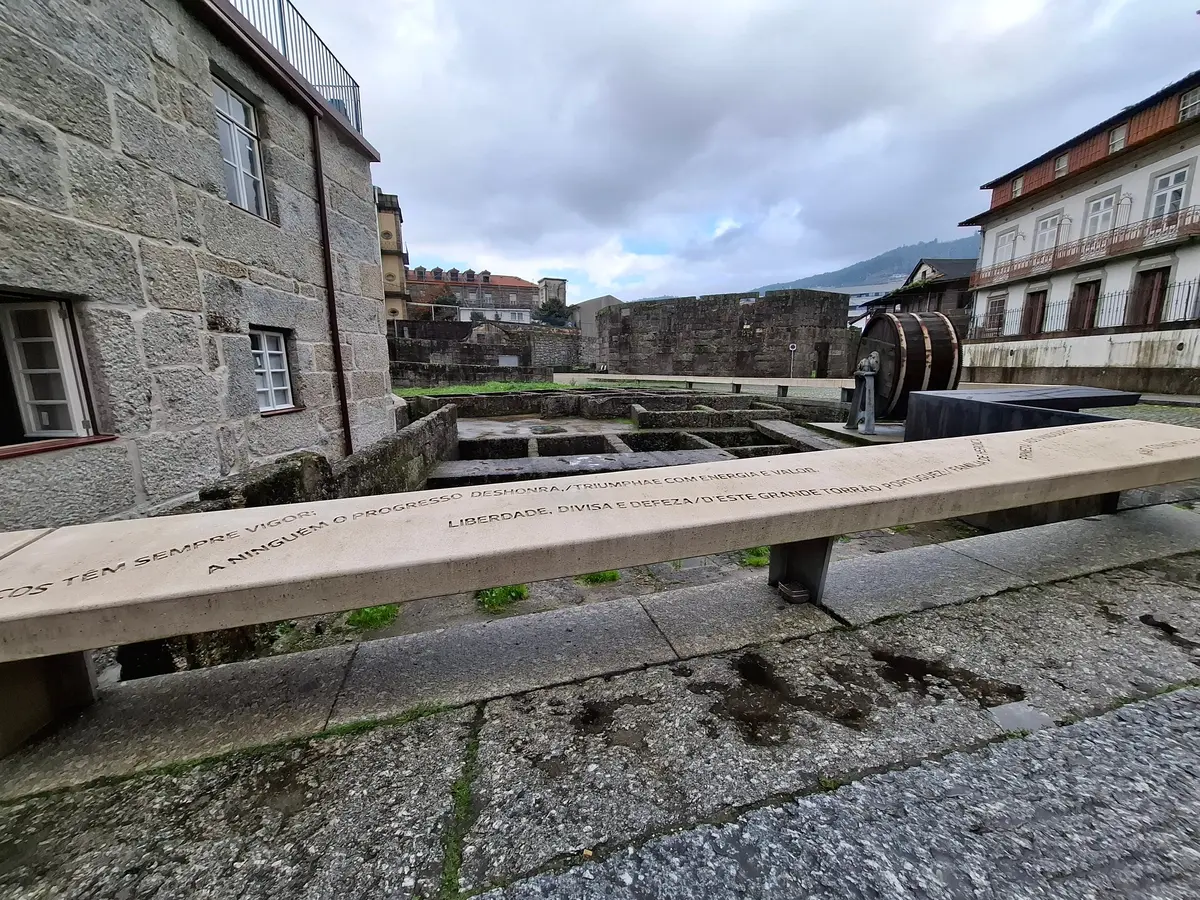
The Zona de Couros sits just outside the medieval walls where Guimarães Portugal’s tanning industry operated for centuries. Granite soaking tanks used to treat animal skins are still visible in the streets, workers’ housing has not been restored into visitor-friendly shapes, and the neighborhood has a rougher, more industrial character than the historic center. Most visitors skip it entirely, which is a genuine mistake.
The tanning district was placed deliberately outside the city walls because the process was polluting enough — and the smell intense enough — to keep beyond the urban limits. The large-scale rehabilitation anchored by Curtir Ciência Centro Ciência Viva de Guimarães is a strong example of adaptive reuse: a former tannery converted into an interactive science museum. It contrasts well with the passive sightseeing circuit of the castle and palace, and it is one of the best options in the city for families traveling with children who want something more hands-on.
Walking the surrounding streets, you can still spot open-air drying racks from the industrial era. The neighborhood tells a side of the city’s story that no amount of time in the historic center can.
- Location: Outside the medieval walls, west of the historic center; roughly 10 minutes on foot from Largo da Oliveira
- Cost: Museum admission varies; check Curtir Ciência for current pricing
- Hours: Tuesday through Sunday
- Best for: Families; industrial heritage; anyone who wants Guimarães beyond the UNESCO highlights
- Time needed: 45-60 minutes
What Should You Eat in Guimarães Portugal?
Guimarães Portugal has two convent pastries you will regret skipping, a Michelin-starred restaurant that does not feel intimidating, reliable tascas for petiscos and local wine, and a rare vegetarian option in a region that runs primarily on pork and salt cod. The city rewards curious eaters without requiring much advance planning beyond one restaurant reservation.
The Must-Try Pastries at Pastelaria Clarinha
Both of the city’s signature pastries trace back to the Convento de Santa Clara. Tortas de Guimarães are shell-shaped puff pastries filled with chila (a gourd preserve) and egg yolks — the contrast between the brittle exterior and the rich, sweet center is the point. Toucinho do Céu, “Bacon from Heaven,” contains no meat: it is a dense almond-and-egg-yolk cake, intensely sweet, deeply tied to the convent baking traditions of the Minho region.
The definitive source for both is Pastelaria Clarinha on Largo do Toural.
- Location: Largo do Toural, about 5 minutes from Largo da Oliveira
- Cost: Under €3 per pastry
- Best for: Everyone; do not skip this
- Time needed: 15 minutes

A Cozinha por António Loureiro
Chef António Loureiro’s restaurant on Largo do Serralho holds a Michelin star and has retained it consistently. The dining room has a glass wall between guests and the kitchen — you can watch the team work throughout your meal. The Equilíbrio (“Balance”) tasting menu runs 6 or 9 courses, built around seasonal ingredients from northern Minho. The kitchen also holds a Zero Waste Certification, which shows in how ingredients are used across courses with nothing wasted between them.
For Michelin-level cooking in Portugal outside Lisbon and the Algarve, this is a genuine bargain. The atmosphere is precise but not stiff — a sensible place to celebrate something or simply eat very well.
- Location: Largo do Serralho 4, in the historic center
- Cost: €€€; tasting menu format
- Best for: Special occasions; serious eaters; anyone who wants Michelin-level cooking without Michelin-level formality
- Time needed: 2-3 hours for the full tasting menu
Pro Tip: Reservations at A Cozinha fill weeks in advance during spring and summer. Book before you finalize your travel dates, not after.
Taberna Trovador and Cor de Tangerina
Taberna Trovador, near the city walls, is the go-to spot for petiscos and regional wine in a traditional setting — low cost, no pretension, exactly what a tasca should be.
Cor de Tangerina, near the Ducal Palace, is worth flagging specifically for non-meat eaters. Vegetarian options in Portugal are genuinely scarce in this region, where the cuisine defaults to pork in most of its forms. This is the practical option if you are not ordering from the standard menu.
Regional Dishes Worth Ordering
If you want to eat like the Minho region actually eats: Rojões à Minhota is fried pork chunks with cumin and tripe — assertive and authentic. Papas de Sarrabulho is a savory porridge made with pig’s blood, equally polarizing and equally legitimate. Neither is a mistake on the menu.
For reliable ground without the challenge: Vitela Assada (roasted veal) and Bacalhau com Broa (salt cod baked over cornbread) are widely available and consistently good across the region.
How Do You Get to Guimarães Portugal from Porto?
The urban train from Porto is the right call for most visitors. Trains run throughout the day from São Bento or Campanhã stations, cost €3.60 (~$4) one way per adult, and reach Guimarães in about 1 hour 15 minutes. Driving saves roughly 25 minutes but adds the complication of parking outside a pedestrianized center — and the stress is rarely worth it.
By Train
Urban trains operated by CP (Comboios de Portugal) depart from São Bento or Campanhã stations with roughly 10 departures daily, and additional services on weekdays. The fare is €3.60 (~$4) one way per adult, loaded onto a rechargeable Siga smart card that costs €0.50 to obtain at the ticket machine.
The last departures from Guimarães back to Porto run as late as 10:55 p.m. — check current schedules at cp.pt before your visit, since weekend and weekday timetables differ. These are commuter trains with no assigned seats, no food service, and unremarkable scenery through suburban Porto and small inland towns. That is also why they work: direct, affordable, reliably on schedule.
Pro Tip: Validate your Siga card against the yellow or red pedestal on the platform before boarding — not after. Failing to validate is treated as traveling without a ticket regardless of whether you have loaded credit. The fine is significant.
By Car
The drive from Porto takes 45-50 minutes on well-maintained motorway. The Via Verde toll system applies throughout, so factor that into a rental car budget. Do not try to drive into the historic center — the narrow streets are not designed for it and parking inside is essentially nonexistent.
The best options are the parking area at Centro Cultural Vila Flor or Campo de São Mamede, both within easy walking distance of the old town. Campo de São Mamede is free.
Getting Around on Foot
Guimarães Portugal is walkable from end to end, but the terrain is not flat. The walk from the train station into the city center runs mostly downhill. The walk from the center up to the castle is a sustained uphill climb that takes about 15 minutes at a steady pace — not the 8 minutes that map applications tend to estimate.
The entire historic center is paved with granite cobblestones. They are beautiful and terrible for rolling luggage. Pack accordingly.
Is Monte da Penha Worth Adding to Your Guimarães Itinerary?
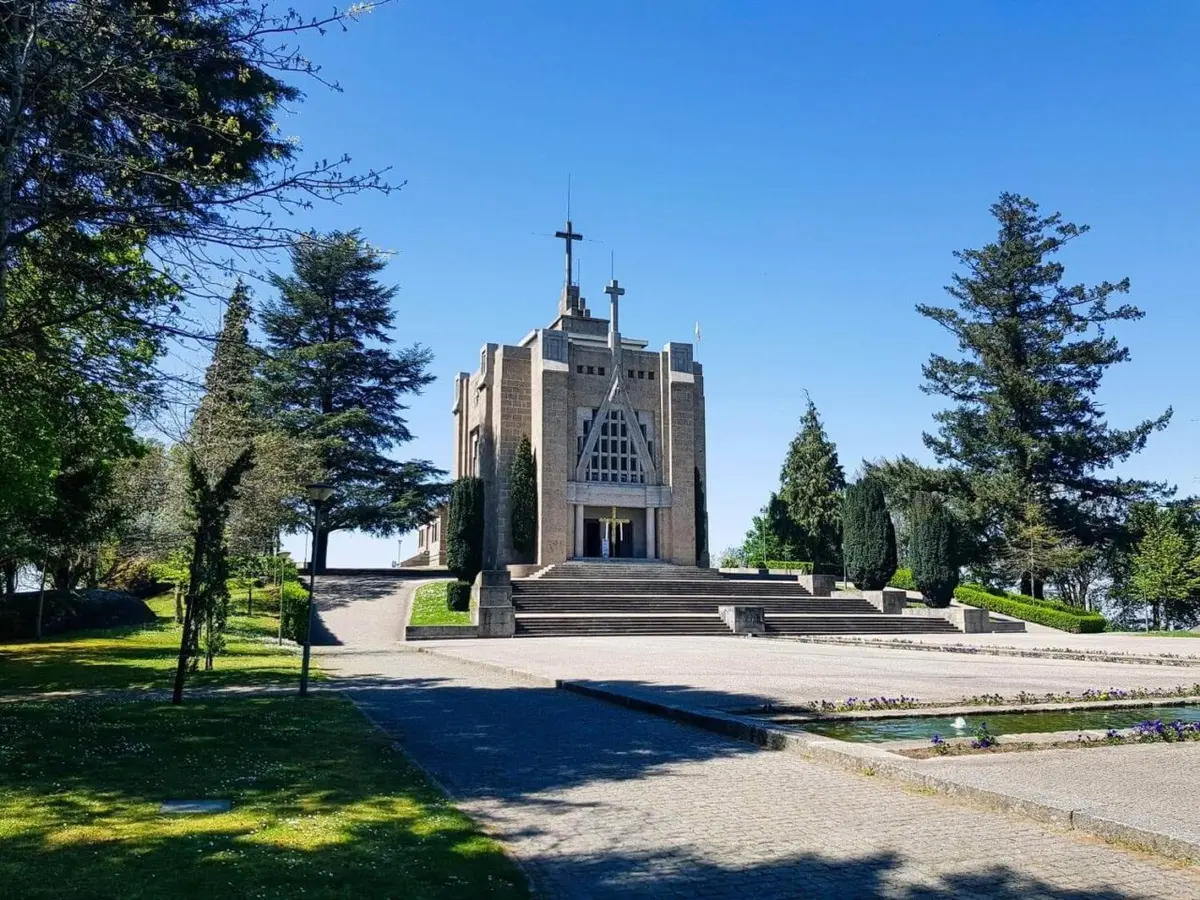
Monte da Penha is worth the cable car ride if you have a full day and the sky is clear. The 10-minute ascent rewards with a wide view over the city and the surrounding Minho countryside — from the summit on a clear day you can see far enough to understand the geography of the entire region. The summit — massive granite boulders, a 1930s sanctuary, walking trails, and grottoes — rewards slow exploration rather than a quick photo stop.
The Teleférico de Guimarães
Portugal’s first cable car — which opened in June 1995 — connects the city to the Monte da Penha summit along a route of 1,646 meters (5,400 feet), with a vertical climb of 366 meters (1,200 feet). The ride takes about 10 minutes. Round-trip adult tickets cost approximately €10.
One honest note: the cabins are old, with yellow-tinted plexiglass windows that make in-flight photography frustrating. Focus on the arrival views from the summit rather than shooting through the glass on the way up.
- Location: Lower station at Rua Cônsul Aristides Sousa Mendes, close to the train station
- Cost: ~€10 round trip for adults
- Hours: Approximately 10 a.m. – 6:30 p.m.; check turipenha.pt for current seasonal hours, as the cable car closes for maintenance and adverse weather
- Best for: Full-day visits in clear weather; families; anyone who wants a break from the cobblestones
- Time needed: 2 hours including the summit walk
What to See at the Summit
The Santuário da Penha — built between 1930 and 1947 — is striking religious architecture constructed directly into and around the massive granite boulders that define the hilltop. The work of Porto architect José Marques da Silva, the same figure behind São Bento Station, it is serious enough to be worth the visit independently of the view.
The surrounding park offers grottoes, walking trails, and viewpoints looking back over the city. On summer weekends the summit draws enough visitors to feel crowded. A weekday morning is a significantly quieter experience.
Where Should You Stay in Guimarães Portugal?
Staying overnight in Guimarães Portugal transforms the experience. The historic center empties of day-trippers by early evening and reveals a calmer, more local character — outdoor tables filling up, no tour groups, the pace dropping noticeably. Two hotels cover the range from converted monastery to old-square convenience.
Pousada Mosteiro de Guimarães — part of the historic Pousadas of Portugal network — occupies a 12th-century monastery on the edge of the city. The building itself is the attraction. Sleeping inside a piece of functioning medieval architecture is genuinely different from a standard hotel, and this is one of the most distinctive places to stay anywhere in northern Portugal.
Hotel da Oliveira sits directly on Largo da Oliveira, the main square of the old town. Medieval architecture is visible from the windows, and your morning coffee is five steps from the door. A practical, atmospheric option at a significantly lower price point than the pousada.
Guimarães Portugal vs. Braga: Can You Do Both in One Day?
Doing both in a single day is possible but genuinely rushed, and you risk shortchanging both cities. Guimarães Portugal delivers medieval intimacy and royal history in a compact, walkable format. Braga is grander and more baroque — sweeping religious architecture and a different energy entirely. If you have two days in the Minho region, give one to each rather than half a day to both.
If you only have one day and want to attempt both: start in Guimarães Portugal in the morning, then take the bus to Braga for the afternoon. The bus connection between the two cities takes about 40 minutes. You will see both and remember neither as well as a single-focus visit would allow — but it is a legitimate choice for a tight itinerary.
Pro Tip: Skip Guimarães Portugal if the only reason you are considering both cities is efficiency. The evening atmosphere here is the part worth protecting, and a half-day visit cuts it before the city shows its best side.
How Should You Structure Your Day in Guimarães Portugal?
The sequence matters more than the individual stops. Zona de Couros in the morning before the heat, the old town at midday, the castle and palace in the early afternoon, Monte da Penha if you have the energy and the weather holds.
The “Royal and Rustic” Full Day:
- 9:30 a.m. — Arrive at the station and walk through Zona de Couros
- 10:30 a.m. — Ascend to Largo do Toural and enter the old city walls
- 11:00 a.m. — Pastries at Pastelaria Clarinha
- 11:30 a.m. — Largo da Oliveira and Praça de São Tiago
- 1:00 p.m. — Lunch at Taberna Trovador
- 2:30 p.m. — Walk to the Sacred Hill
- 3:00 p.m. — Ducal Palace
- 4:00 p.m. — Castle grounds and courtyard
- 5:00 p.m. — Cable car to Monte da Penha
- 7:00 p.m. — Dinner in the old town or return train to Porto
The “Express History” Half Day:
- 9:00 a.m. — Walk or taxi directly to the castle
- 10:30 a.m. — Descend past the Ducal Palace
- 11:30 a.m. — Explore Largo da Oliveira
- 12:30 p.m. — Depart
What Do US Travelers Need to Know Before Visiting Guimarães Portugal?
Tipping in Portugal is not mandatory, but 5-10% is appreciated and genuinely considered generous rather than expected. Spring and autumn are the best seasons — comfortable temperatures for walking, smaller crowds, and an atmosphere that lets the city’s character come through without the heat and volume of peak summer. Winter is rainy and cool but dramatically quieter, and the Ducal Palace holds its own as a wet-day visit.
A few logistics that will save you frustration: most restaurants close between the end of lunch service and the start of dinner — roughly 3 p.m. to 7 p.m. Arriving at 4 p.m. expecting food will leave you standing outside locked doors. Plan your meal times accordingly. Festas Gualterianas, the city’s major annual festival, takes place every August and is worth planning around if local celebrations interest you.
The historic center is almost entirely pedestrianized and granite-paved. Rolling luggage is a struggle. If you are staying overnight, bring a bag you can carry rather than one you need to drag.
Before You Book Guimarães Portugal
TL;DR: Guimarães Portugal is worth a full day from any northern Portugal base. It is safe, compact, historically dense, and reachable from Porto for €3.60 by train. Stay overnight if you can; the evening atmosphere alone justifies it.
The most underrated stop is the Zona de Couros. Almost nobody goes, and it tells the side of the story the castle cannot — that Guimarães Portugal was not just a royal seat but an industrial city, and that the people who worked the leather outside the walls were as much a part of its identity as the kings on the hill.
One honest friction point worth knowing before you go: if you are arriving expecting to walk the castle ramparts and photograph the city from the walls, the current restoration has closed that access temporarily. The interior courtyard is still worth visiting for the scale and atmosphere — but manage your expectations before the uphill climb.
Are you planning Guimarães Portugal as a day trip or staying overnight — and is the castle or the evening atmosphere the bigger draw for you?