Lisbon to Sintra is 40 minutes by train and more expensive than most guides admit once the full journey is factored in. The ticket system at Rossio trips up first-timers, and one misunderstood rule at Pena Palace means a missed entry slot with no refund. Here’s the real cost breakdown and the timing that makes or breaks the day.
Is the train or a rideshare actually cheaper from Lisbon to Sintra?
Most guides recommend the train as the budget option, but the math shifts once you factor in the complete journey. A single Rossio-to-Sintra ticket is $2.50 (€2.30). Add Bus 434 to reach the palaces, and the round-trip per person lands between $15 and $20 (€13.70–€18.10). For a group of four taking a rideshare instead, the per-person cost drops to about $6 (€5.50) with no transfers and door-to-door delivery.
Train travel in Portugal operates on a zone-based fare system. A single ticket from Rossio Station to Sintra costs $2.50 (€2.30). If you use the “Zapping” pre-loaded credit method on your Navegante card, the per-journey fare drops — roughly $2.25 (€2.05) per the CP urban network rate, though the exact deduction for Sintra’s four fare zones may vary. That sounds cheap until you realize the train drops you at Sintra Station, at the bottom of the hill. From there, you’ll need the Scotturb 434 bus to reach the palaces — $5.00 (€4.55) for a single ride or $15.00 (€13.50) for the hop-on hop-off 24-hour pass. Your total round-trip cost per person lands between $15 and $20 (€13.70–€18.10), and the journey takes roughly 90 minutes one-way when you include waiting times and transfers.
Now consider the rideshare alternative. An UberX or Bolt — the main rideshare options in Lisbon — typically runs $22–27 (€20–25) total from central Lisbon to Sintra. For a solo traveler, that’s more expensive. For a couple, you’re each paying around $13 (€12). For a group of four, the per-person cost drops to roughly $6 (€5.50) — and a rideshare drops you directly at the Pena Palace entrance, cutting travel time to around 40 minutes and eliminating the bus cost entirely.
Solo travelers and couples: take the train
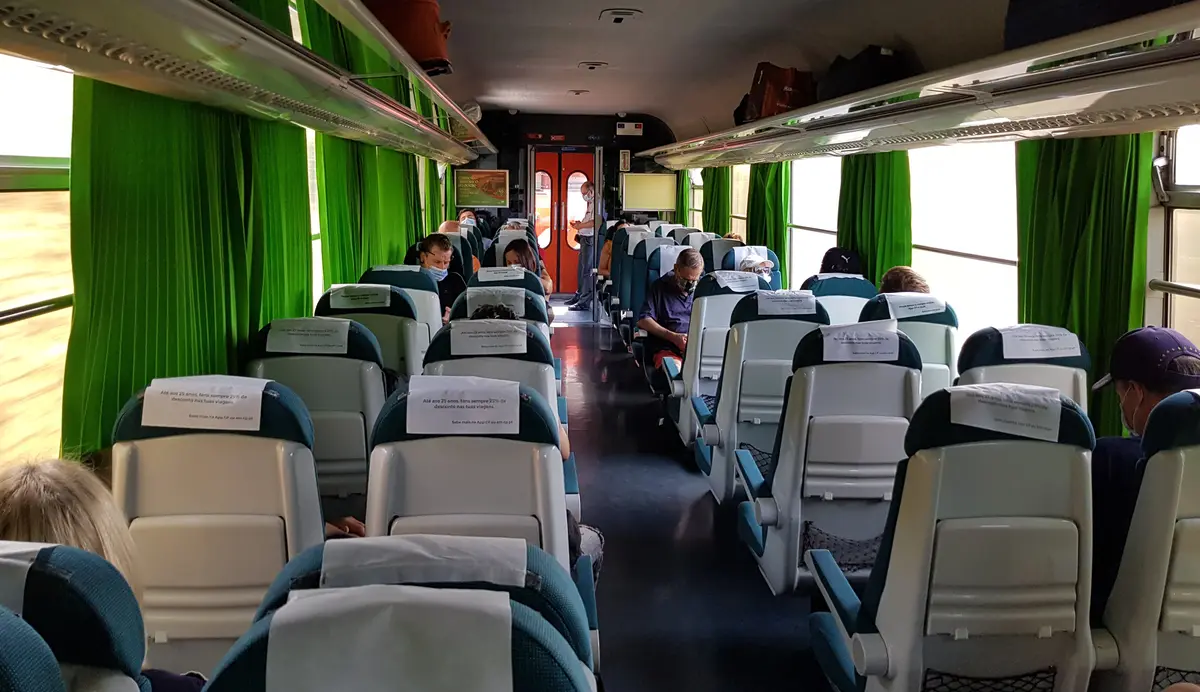
The $2.50 (€2.30) single fare, predictable departures every 20–30 minutes, and a scenic 40-minute ride through suburban Lisbon into forested hills make the train the right call on a budget. The downsides are real: the card system trips up first-timers, the bus adds cost and time at the far end, and there’s no reserved seating on a crowded commuter line. But the savings hold up.
Groups of three or more: do the rideshare math first
At three passengers, a rideshare and a train ticket cost roughly the same once the bus at the far end is factored in. At four, the rideshare wins by a meaningful margin per person, delivers you to the palace entrance in 40 minutes, and skips the card system entirely. The main risk: surge pricing between 9 and 10 AM on peak mornings can inflate the fare significantly, so book early or wait until after 10 AM when demand drops.
Pro Tip: Book a one-way rideshare only. Return Bolt fares from Sintra are often cheaper in the late afternoon when the crowds thin out, and you preserve flexibility to leave on your own schedule rather than matching a pre-booked return window.
How do you navigate Rossio Station without losing your slot?
Rossio is straightforward once you know its two non-obvious quirks: the platform numbering skips 4, and the Navegante card will reject a Sintra fare if any Metro credit remains on it. Both problems are solvable in under two minutes if you know to expect them.
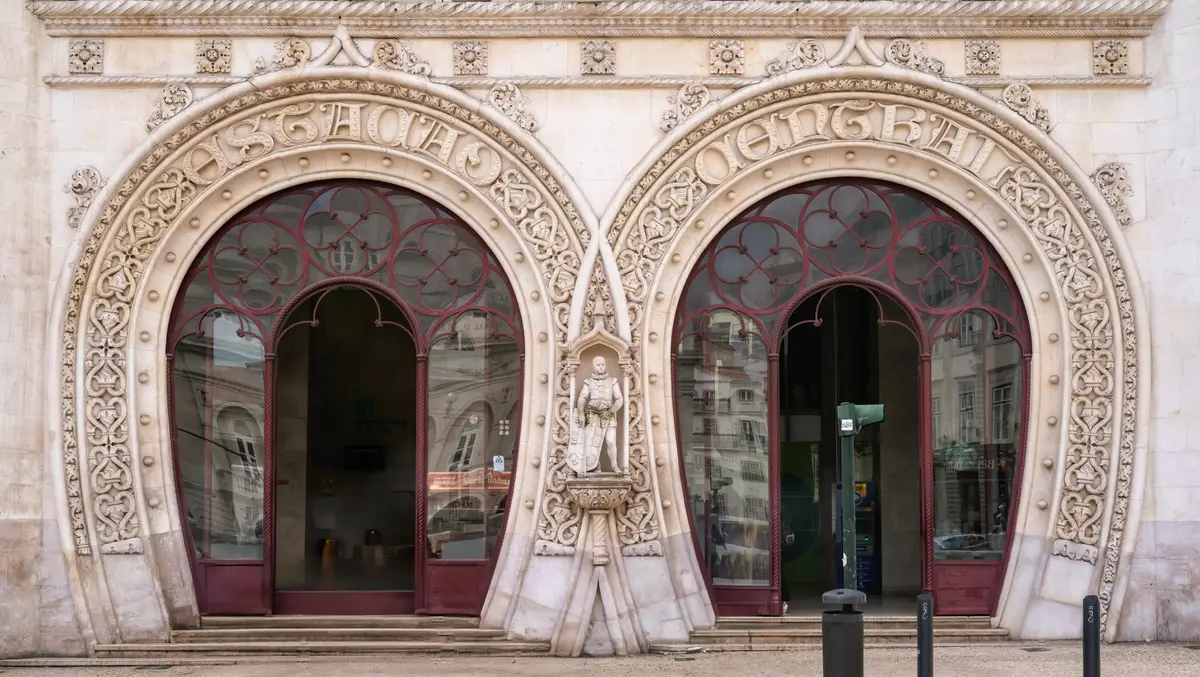
If you’ve chosen the train, Rossio Station is your starting point — and it’s more complicated than it looks. The neo-Manueline building sits between Rossio Square and Restauradores, and while its horseshoe arches make for a good photo, the layout is designed to confuse.
The missing platform problem
You’ll need to ascend two sets of escalators to reach the platforms. Here is the detail that trips up visitors daily: Rossio has platforms 1, 2, 3, and 5, but Platform 4 does not exist. More confusingly, platforms 1 and 2 are not located in the main trainshed. To reach them, you walk the entire length of Platform 3. If you’re directed to Platform 2 and don’t see it near the escalators, don’t panic — just keep walking.
The empty card rule at the ticket machines
The Navegante card introduces another friction point. A single card cannot hold tickets from different operators — Metro and CP Train — unless it’s loaded in Zapping mode. If you have an active Metro ticket remaining on your card, the CP machine will reject your attempt to load a Sintra fare. You’ll need to either buy a new card ($0.55 / €0.50 surcharge) or use up your remaining Metro rides before arriving at Rossio.
Once you understand the system, Zapping saves money on every trip and the card stays valid for a year. Travelers visiting multiple Lisbon attractions alongside Sintra should compare this against the Lisbon Card, which bundles unlimited transit with palace entry under a single fixed fee — the two systems are not compatible with each other. But the initial learning curve and the frustration of a rejected transaction when you’re watching a departure clock tick down are friction points you want to anticipate, not discover.
Trains run approximately every 20–30 minutes on weekdays, with a slightly reduced weekend schedule. On my last visit I arrived 15 minutes early and got a window seat without effort — worth doing, since there’s no reserved seating. The tunnel exit into the Sintra hills is the best part of the ride: a drop of several degrees, and the smell of damp pine and cedar the moment the train breaks into open air.
What’s the fastest way up the hill once you reach Sintra Station?
Sintra Station drops you at the foot of the hill. Bus 434 reaches the Moorish Castle in under 15 minutes and Pena Palace in under 20. Buy your ticket at the Scotturb kiosk directly opposite the station — not from the driver — and arrive by 8:30 AM on a weekday to catch the first buses before queues build.
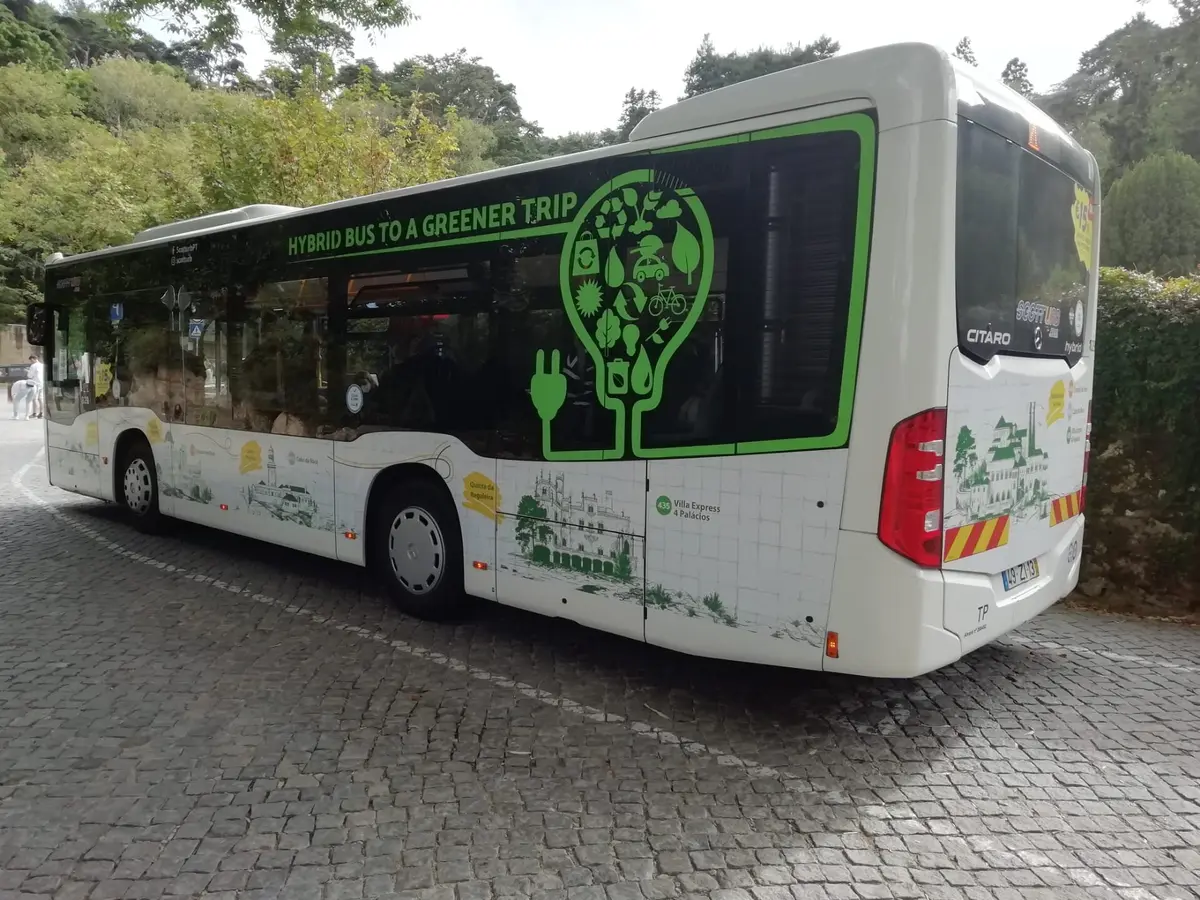
Arriving at Sintra Station leaves you at the foot of the hill, with Pena Palace and the Moorish Castle somewhere above you. The Scotturb 434 bus is the standard solution, but there are things the operators won’t tell you before you board.
Bus 434: the uphill shortcut with a catch
The 434 runs a unidirectional loop: Sintra Station → Historic Center → Moorish Castle → Pena Palace → Historic Center → Sintra Station. The company aggressively pushes the $15.00 (€13.50) hop-on hop-off 24-hour pass, but a single-ride ticket exists for approximately $5.00 (€4.55). Bus drivers frequently claim these are “sold out” or simply refuse to sell them to speed up boarding. Your strategy: purchase the single ticket at the Scotturb kiosk directly opposite the train station, or at the ticket vending machines — never onboard.
The bus is reliable and stops at all major attractions with minimal physical effort required. The downsides are the upselling pressure, long queues during peak season, and the risk of paying $10 more per person than necessary for a single loop you’ll only use once.
Pro Tip: In high season, the first 434 bus departs at 8:50 AM. Arrive at Sintra Station before 8:30 AM on a weekday and you’ll catch one of the earliest buses, reaching Pena Palace well before the tour coaches roll in around 10:30 AM. That 90-minute window at the top is quieter by a significant margin.
The Vila Sassetti trail: free, shaded, and strictly one direction
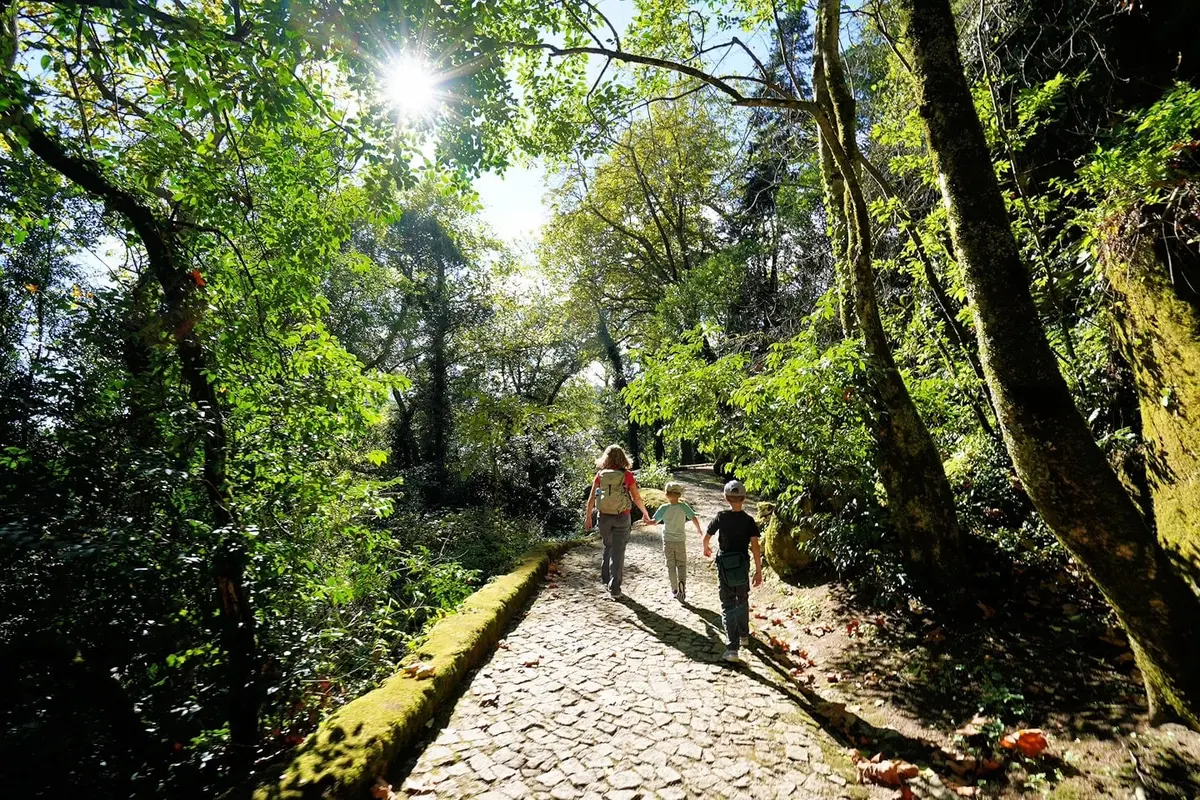
For active travelers who enjoy Portugal hiking, the Vila Sassetti trail offers a free alternative to the bus. This 1.1-mile (1.85 km) path winds through Mediterranean gardens past the Penedo da Amizade climbing cliffs, taking 45–60 minutes of moderate uphill effort to reach the Moorish Castle, with Pena Palace a short walk beyond. The path starts near the Historic Center and connects through the grounds of the Vila Sassetti estate — a Lombardy-style tower in terracotta tones that most visitors walk past without knowing it’s there.
It’s completely free, provides shade, and offers a view of the gardens that bus riders miss entirely. The hard constraint: it’s strictly uphill, making it impractical as a descent route, and it’s not viable if you’re on a tight timed-entry schedule. Always check the Parques de Sintra website for current trail status before planning to use it — storm damage or fire prevention protocols can trigger temporary closures.
Why does Pena Palace’s timed-entry system catch so many visitors off guard?
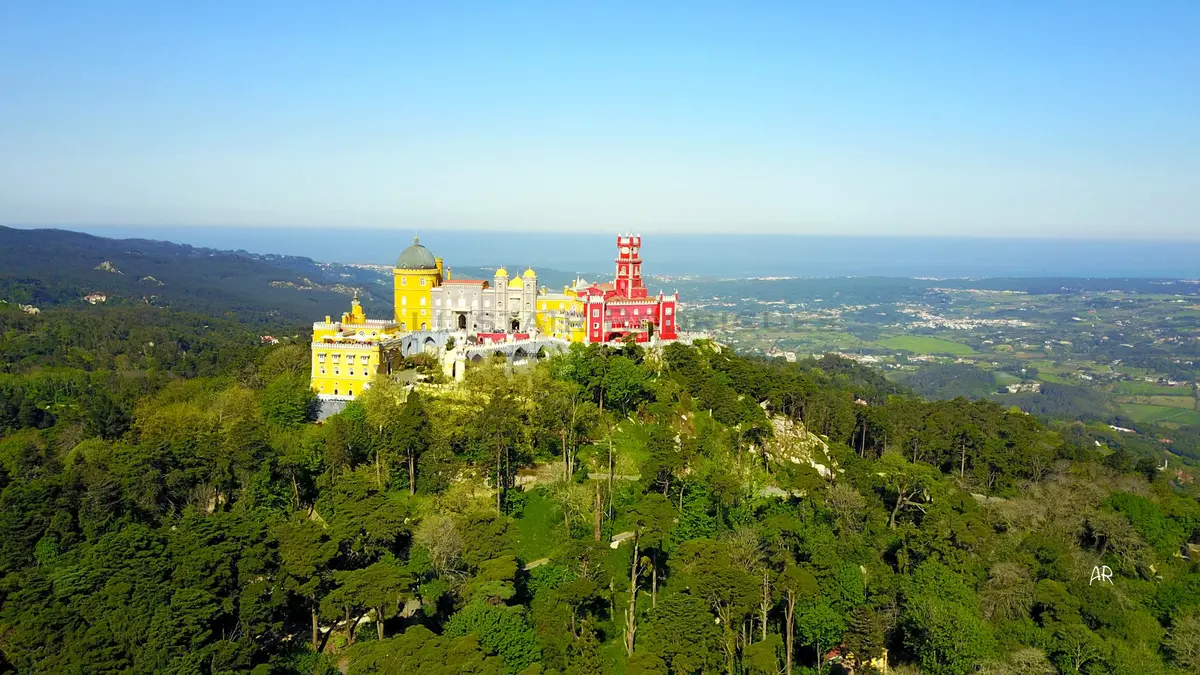
The time on your Pena Palace ticket is your entry slot for the palace interiors — not the park gate. From the main park gate where buses and rideshares drop you, it’s a steep 30-minute uphill walk to the palace entrance. Visitors who arrive at the park gate at their ticketed time will miss the entry window. Build in at least 45 minutes of buffer.
The National Palace of Pena uses a strict timed-entry system that creates daily problems for visitors who don’t read the fine print. The time on your ticket is your entry slot for the palace interiors — not the park gate. From the main gate where buses and rideshares drop you, it’s a steep 30-minute uphill walk to the actual palace entrance. A paid transfer shuttle ($5.00 / €4.50 return) cuts the physical effort and can be purchased at the gate, at ticket machines, or on board the shuttle using a bank card.
The guards enforce the time slots with no delay tolerance. Arriving one minute late for a 10:30 AM slot results in denied entry, with no refund and no exception. I have watched this happen repeatedly to visitors who assumed arriving at the park entrance “on time” was sufficient — it isn’t.
Your strategy: book your Pena Palace tickets for the earliest available slot, ideally 9:30 AM. This lets you arrive at the park gate as it opens, walk up through the gardens without stress, and enter the palace before the main tour crowds arrive. Build in at least 45 minutes between your park gate arrival and your ticketed interior entry time.
One practical safety valve: online tickets purchased through Parques de Sintra can be rescheduled up to 6 PM the day before your visit. This doesn’t help you on the day itself, but it protects against fog forecasts, wildfire alerts, or changed plans.
Pena Palace must be your first stop if it’s on the itinerary. Trying to fit it in after other attractions is a reliable way to miss the slot and lose the ticket value.
Pro Tip: If you arrive at the park gate early and your interior slot is still 45 minutes away, walk toward the Queen’s Terrace or down to the Valley of the Lakes. Both offer unobstructed exterior views of the palace that most visitors skip entirely because they head straight for the interior queue. On a clear day, you can see the Atlantic coastline from the terrace without entering the building at all.
Where should you eat in Sintra without paying tourist prices?
The better restaurants in Sintra are all within a 10-minute walk of the Historic Center, but most are in the wrong direction for visitors arriving by bus. Prices are consistently lower in São Pedro and near the train station than in the main tourist zone, and the food is usually better because turnover is higher.
Sintra’s food scene — anchored in traditional Portuguese food — divides neatly between the oversaturated Historic Center and the places locals actually use. The difference in quality and queue length is significant.
Casa Piriquita is the famous stop for Travesseiros — the almond cream puff pastry associated with Sintra. It draws long queues, and the pastries are often sitting out for hours. Head instead to Casa do Preto in the São Pedro district, roughly 0.6 miles (1 km) from the center. Locals make up most of the clientele, which means the Travesseiros come out warmer and fresher due to higher turnover. The walk takes you through residential streets most tourists never reach.
- Location: São Pedro de Sintra, 0.6 miles (1 km) from the Historic Center
- Cost: pastries under $3 (€2.50) each
- Best for: anyone wanting a fresh Travesseiro without the tourist-zone queue
- Time needed: 15–20 minutes
For the Queijada — the traditional cheese tart — skip the commercialized versions in the Historic Center and go to Queijadas da Sapa near the train station. As the oldest manufacturer in Sintra, their version has a thinner, crunchier shell that makes an audible crack when you bite into it, distinct from the softer varieties sold in the tourist zone.
- Location: Volta do Duche, near Sintra train station
- Cost: queijadas from $2 (€2) each
- Best for: a quick stop on the way back to the platform
- Time needed: 10–15 minutes
Romaria de Baco has terrace seating with a direct sightline up to the National Palace. Their Secretos de Porco Preto (black pork) is excellent, and you’re paying for quality rather than a view markup — rooted in a broader traditional Portuguese food sensibility that prizes pork preparations and regional produce above all else.
- Location: Historic Center, Sintra
- Cost: mains $16–24 (€15–22)
- Best for: couples, lunch after the palaces
- Time needed: 1–1.5 hours
Tascantiga sits on the Escadinhas da Fonte da Pipa staircase and serves tapas — confit pork cheeks, codfish cakes with olive puree. Outdoor seating fills quickly; arrive before noon or after 2:30 PM to get a spot without waiting.
- Location: Escadinhas da Fonte da Pipa staircase, historic center
- Cost: tapas $9–17 (€8–16)
- Best for: solo diners, small groups, late lunch
- Time needed: 45–60 minutes
Incomum by Luís Santos, near the train station, runs a menu that sits comfortably alongside Michelin-standard cooking but at bistro prices. The scallop risotto is worth the detour. You’ll eat better food for less money than you would at a mediocre restaurant in the upper village.
- Location: near Sintra train station
- Cost: mains $20–30 (€18–27)
- Best for: food-focused travelers, couples
- Time needed: 1.5 hours

What weather and fire risks can close Sintra without warning?
Sintra’s microclimate generates its own fog and temperature independent of Lisbon — it’s regularly 64°F (18°C) and overcast in Sintra when Lisbon is at 86°F (30°C) and clear. Wildfire alerts in summer can close the entire Serra de Sintra perimeter without notice, which means no refunds and no access to any palace on the hill.
Sintra’s microclimate creates two separate risks that can shut down your trip entirely, and neither one is predictable from a Lisbon weather forecast. The two towns are only 19 miles (30 km) apart, but the Serra de Sintra hills generate their own conditions.
During summer, the Portuguese government periodically declares wildfire risk alerts for the region. When this happens, the entire forest perimeter closes — Pena Palace, the Moorish Castle, and the Convent of the Capuchos all become inaccessible, with no exceptions and no ticket refunds. Understanding the best time to visit Portugal by season matters here: wildfire risk peaks in July and August, making late spring and early autumn the safer windows for Sintra specifically. Check the Parques de Sintra website for active alert banners before leaving Lisbon on any day from June through September.
The fog situation is equally disruptive but less financially catastrophic. It can be 86°F (30°C) and clear in Lisbon while Sintra sits at 64°F (18°C) under thick mist. Fog eliminates the panoramic Atlantic views from Pena’s terraces — the coastline shot that appears in every travel photo of the palace simply isn’t there. Pack a light jacket regardless of what Lisbon’s forecast says.
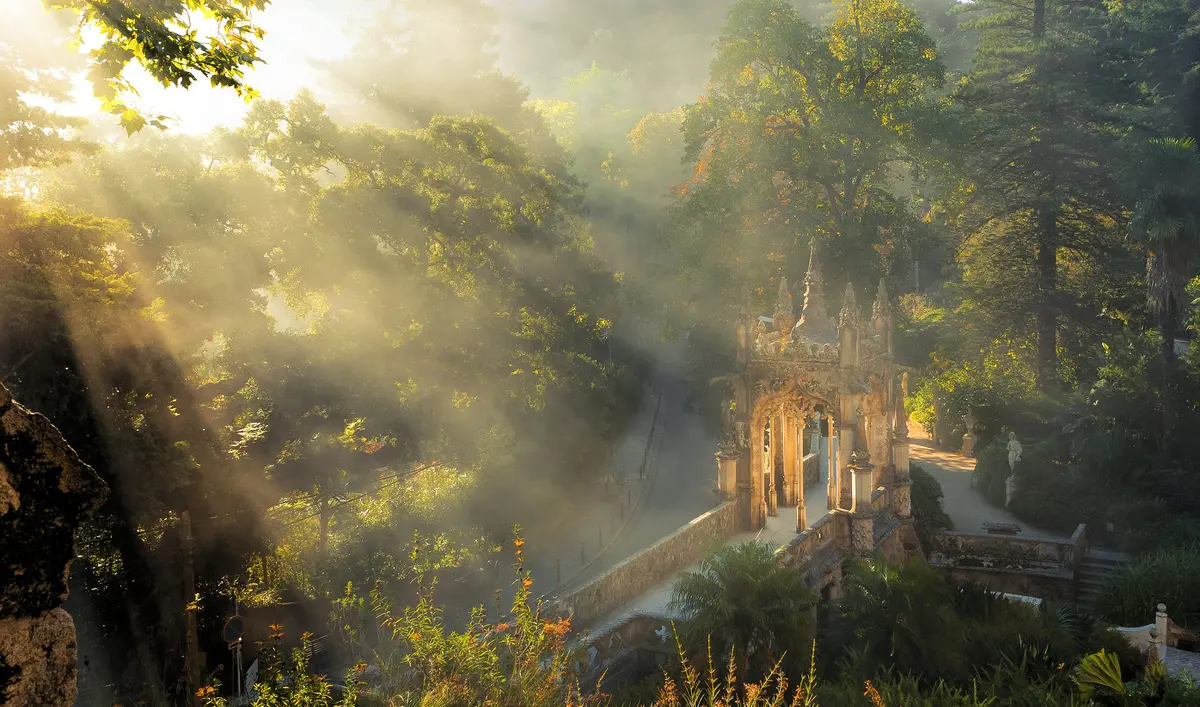
The strategic response: fog that ruins Pena Palace actually improves Quinta da Regaleira, where the enclosed gardens, stone grottos, and initiation wells feel more atmospheric under low cloud than under full sun. Use foggy days for Quinta da Regaleira or Monserrate Palace, and save Pena Palace and the Moorish Castle for clear mornings. On days when wildfire alerts shut the Serra de Sintra perimeter entirely, Cascais makes an excellent fog-free alternative — a 40-minute train ride from Cais do Sodré with a long Atlantic-facing promenade, a compact old town, and none of the timed-entry pressure that defines Sintra’s main attractions.
What most guides won’t tell you
The Lisbon to Sintra day trip is manageable once you understand the specific friction points and plan around them. Whether you take the train for affordability or a rideshare for convenience, the decisions that matter most are made before you leave Lisbon: know your group size, book palace tickets with realistic time slots that account for the uphill walk, and check the Parques de Sintra site the morning of your visit.
TL;DR: Solo travelers and couples take the train ($2.50 / €2.30 each way) plus Bus 434 ($5.00 / €4.55 single) and book the 9:30 AM Pena Palace slot, arriving at the park gate by 9 AM. Groups of three or more should run the rideshare math first — it often wins. If you’re building a longer Lisbon itinerary around this day trip, 3 Days in Lisbon is a useful companion guide for sequencing Sintra alongside the city’s main neighborhoods. Either way, pre-book palace tickets and budget 45 minutes of buffer between the park gate and your interior entry time.
Have you hit the timing trap at Pena Palace, or found a workaround on the Bus 434 ticket system that actually works? Leave a comment below.