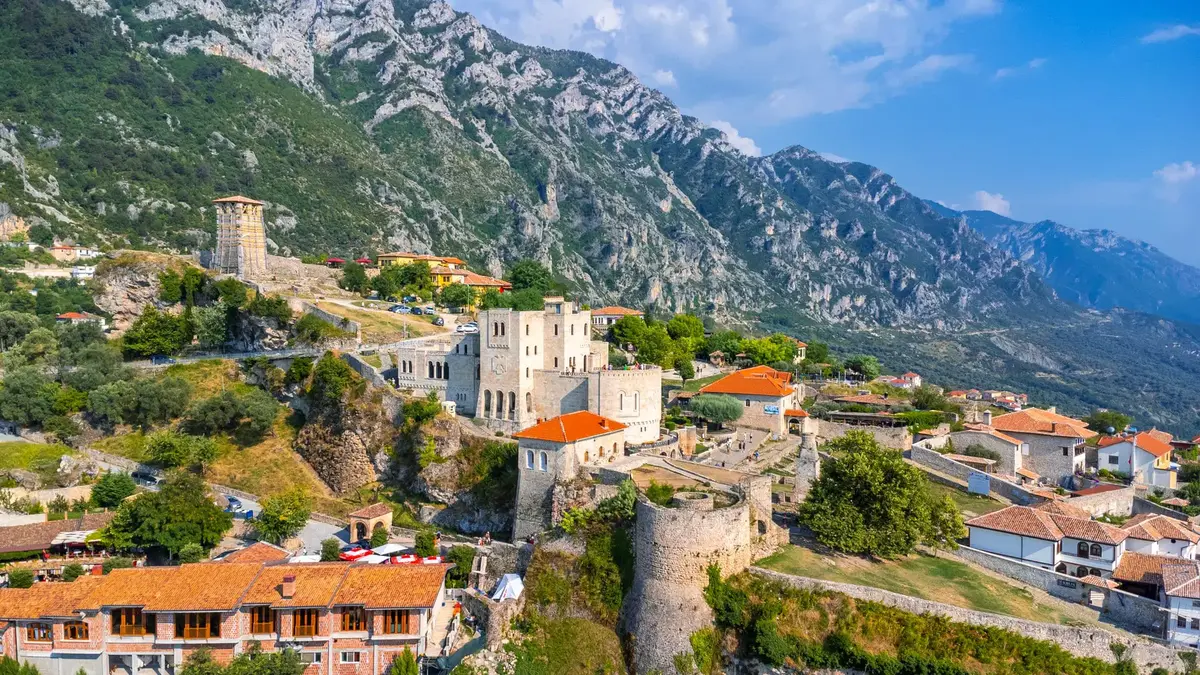
A Kruja day trip from Tirana takes about an hour each way and delivers a 15th-century castle, a restored Ottoman bazaar, and the best ethnographic museum in the country. Most guides still list outdated fees and miss the single biggest update — the Ethnographic Museum has reopened after renovation. Here’s what actually works.
Is Kruja worth a day trip from Tirana?
Yes. Kruja packs a castle, two solid museums, and a 660-foot restored bazaar into a 20-mile (32 km) trip from the capital. It’s the most accessible half-day from Tirana and the airport. If you have multiple days in Albania, Berat or Gjirokastër will feel richer — but neither is this close to Tirana.
The town sits at about 1,300 feet (400 m) on a limestone ridge, so it runs noticeably cooler than Tirana and catches every storm that rolls off the Adriatic. On my last visit in shoulder season, the castle walls were empty until 10 a.m. and the bazaar was already lit by copper-reflected morning light.
How do you get from Tirana to Kruja?
You have four realistic options: a furgon (shared minibus) for 200 lek (~$2.20) each way, a taxi for €20-30 (~$22-33) one-way, a rental car via the SH1 motorway, or an organized tour from €25 (~$27). Rideshare giants like Bolt and Uber do not operate in Albania — a detail most blogs still get wrong.
| Option | Cost (one-way) | Time | Best for |
|---|---|---|---|
| Furgon minibus | 200 lek (~$2.20) | 50-60 min | Solo and budget travelers |
| Taxi | €20-30 (~$22-33) | 40-45 min | Small groups, evening returns |
| Rental car | $15-22/day + fuel | 40-45 min | Day-trippers combining stops |
| Local taxi app (Clust/VrapOn) | ~2,500 lek metered (~$28) | 40-45 min | Anyone used to Uber/Bolt |
| Group tour | €25-60 (~$27-66) per person | All-in, 6-8 hrs | First-timers, short schedules |
Furgon from Tirana (the budget pick)
Like most bus travel in Albania, the northbound furgons leave from the North and South Regional Terminal (Terminali i Autobusave të Veriut dhe Jugut), about 3 miles (5 km) northwest of Skanderbeg Square. The terminal is a makeshift parking lot — don’t expect signs in English. To get there:
- City bus #4 or any Kamza/Instituti bus: 40 lek (~$0.45), paid on board
- Taxi from the center: 400-600 lek (~$4.50-6.70)
- Walking: 45 minutes, not recommended
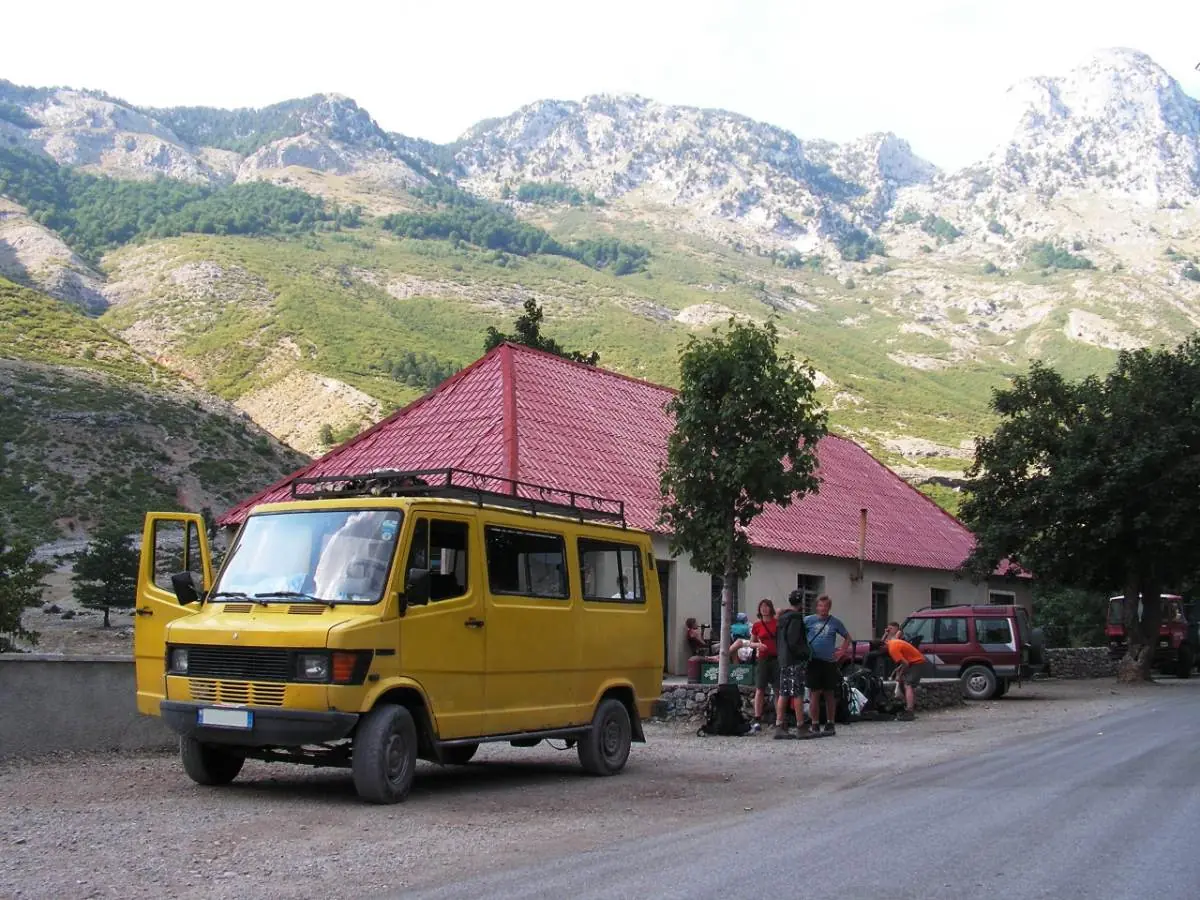
Minibuses to Kruja run roughly hourly from 7 a.m. to 6 p.m. and leave when full. The ride takes 50-60 minutes and costs 200 lek (~$2.20), paid to the driver at the end. Cash only — no card acceptance on any furgon in Albania.
The critical mistake is boarding a Fushë-Krujë minibus instead of a Krujë one. Fushë-Krujë is a different town about 4 miles (7 km) below the castle, and the two buses often park side by side. Check the windshield placard and ask the driver “Krujë?” before boarding. If you end up in Fushë-Krujë by accident, a second furgon to Kruja runs from near the George Bush Café for 100 lek (~$1.10).
Pro Tip: The last reliable minibus back to Tirana leaves Kruja around 4 p.m. Some drivers run later, but don’t count on it — save a taxi number (Taxi Landi on Facebook is reliable) as a backup.
Taxi and rideshare apps in Albania
Bolt and Uber do not operate in Albania — I’ve seen this wrong in three of the top five English-language guides. The working app-based alternatives:
- Clust — the easiest for foreigners: English-language interface, English-speaking drivers in tourist cities, card payment, solid airport pickup
- Patoko — usually the cheapest in major cities, running 15-20% below street-taxi rates
- VrapOn — the widest geographic coverage, handles inter-city runs
- Taxi.al (Merr Taxi) — metered, app-based in Tirana
- Speed Taxi and UPS Taxi — older hail-based dispatch operators
Metered Tirana-to-Kruja fares run €20-30 (~$22-33) one-way, €50-70 (~$55-77) round-trip with a wait. Always agree on the price before getting in if you’re using a street taxi rather than an app — one traveler reported being quoted 5,000 lek (~$55) for a ride that normally costs 1,000 lek (~$11).
Rental car and parking
Renting a car in Albania starts at $15-22/day for an economy model in central Tirana, more at the airport. Round-trip fuel runs €10-15 (~$11-17). The SH1 motorway is well-paved; the final half-mile into the old town is narrow, steep, and cobbled. Parking options near the castle:
- Near Castle 24H: 300 lek/day (~$3.30)
- Parking of Castle Krujë: 500 lek/day (~$5.50)
- Bazaar-adjacent lot: 200 lek/day (~$2.20)
- Hotel Panorama Kruje garage: free for guests
Organized tours from Tirana
Group day tours run €25-60 (~$27-66) per person and usually include transport, a guide, and museum entries — lunch rarely is. Combined Kruja and Durrës tours start around €40 (~$44) per person and run 7-8 hours. Private tours with a driver-guide cost €80-160 (~$88-176) for two people. For cruise passengers arriving at Durrës port, see the dedicated section below.
What should you see in Kruja?
The four essentials are Kruja Castle (free grounds, open 24/7), the Skanderbeg National Museum (500 lek / ~$5.50), the Ethnographic Museum (400-500 lek / ~$4.40-5.50), and the Old Bazaar (free to browse). With extra time, add the Dollma Tekke and the Sari Salltik pilgrimage site. Plan 4-5 hours minimum, 6-8 hours for a full day.
1. Kruja Castle (Kalaja e Krujës)
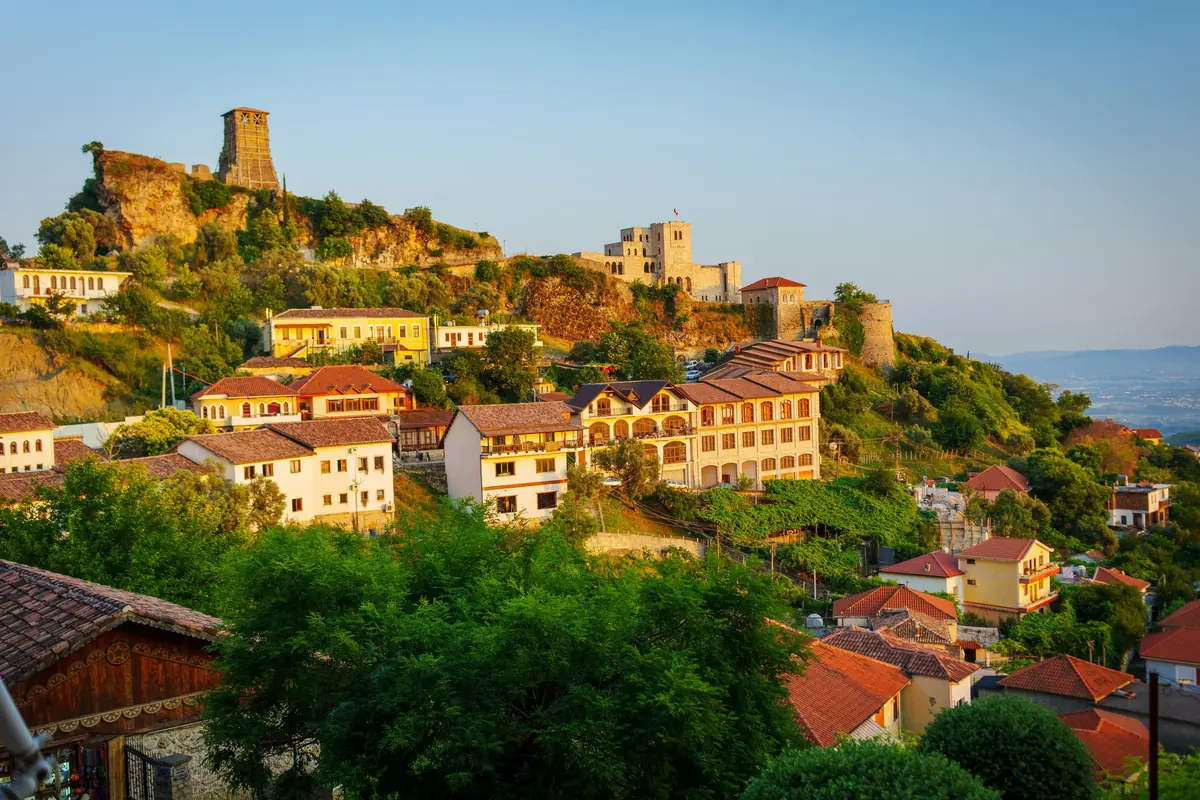
The castle itself is partially ruined — you pay nothing to enter the grounds, which stay open around the clock. The western wall drops nearly vertically to the valley floor; standing there, the reason Skanderbeg held off three Ottoman sieges between 1450 and 1467 becomes immediately obvious. The castle is printed on the 5,000-lek banknote.
Inside the walls: the Skanderbeg Museum, the Ethnographic Museum, a small Bektashi shrine (Dollma Tekke), the ruins of a Turkish hammam, a single minaret left from the Fatih Sultan Mehmed mosque, two guesthouses (Rooms Emiliano, Rooms Merlika), and a few cafés. An earthquake damaged the clock tower (now closed) and partially collapsed the tekke, which has since been repaired.
- Location: Rruga e Kalasë, Krujë
- Cost: free (castle grounds only)
- Best for: history readers, sunset photographers
- Time needed: 45-90 minutes for the grounds alone
2. Skanderbeg National Museum
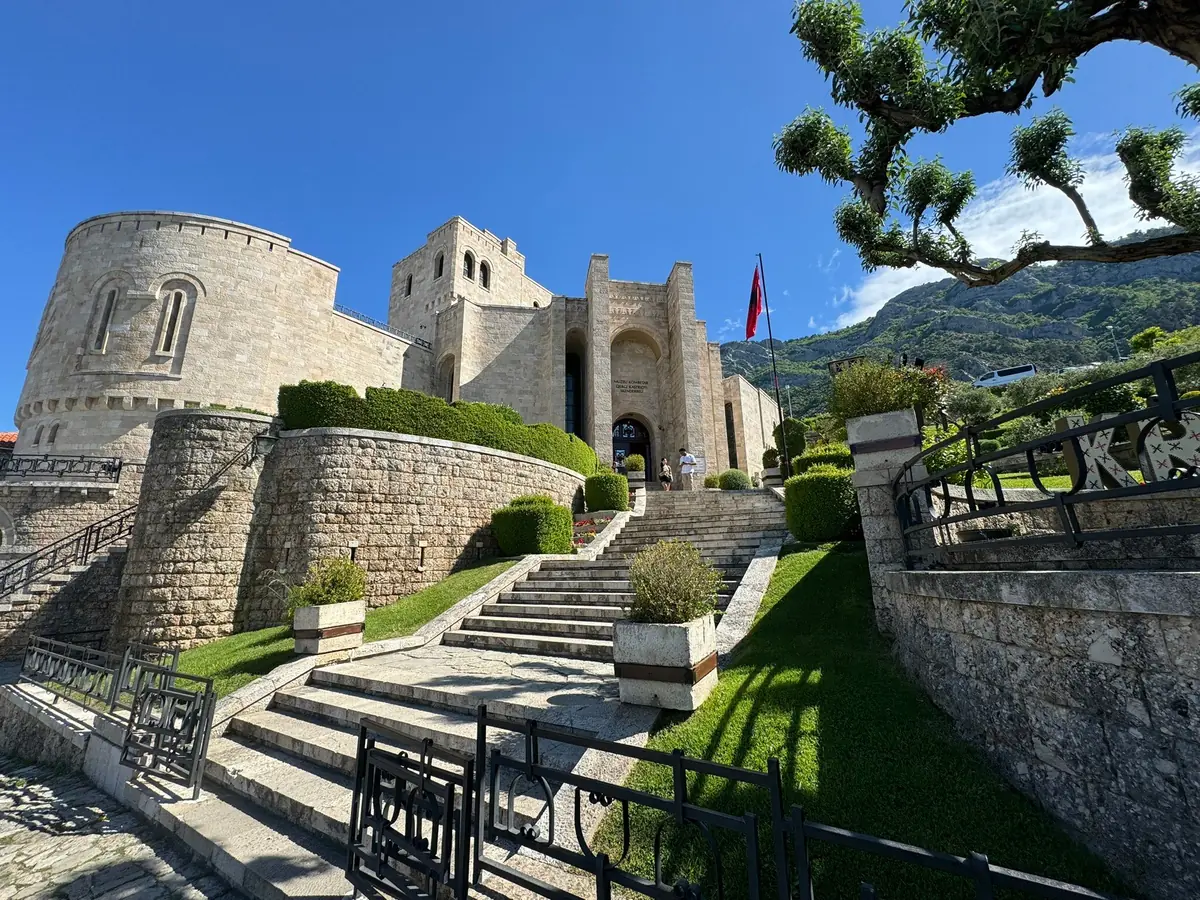
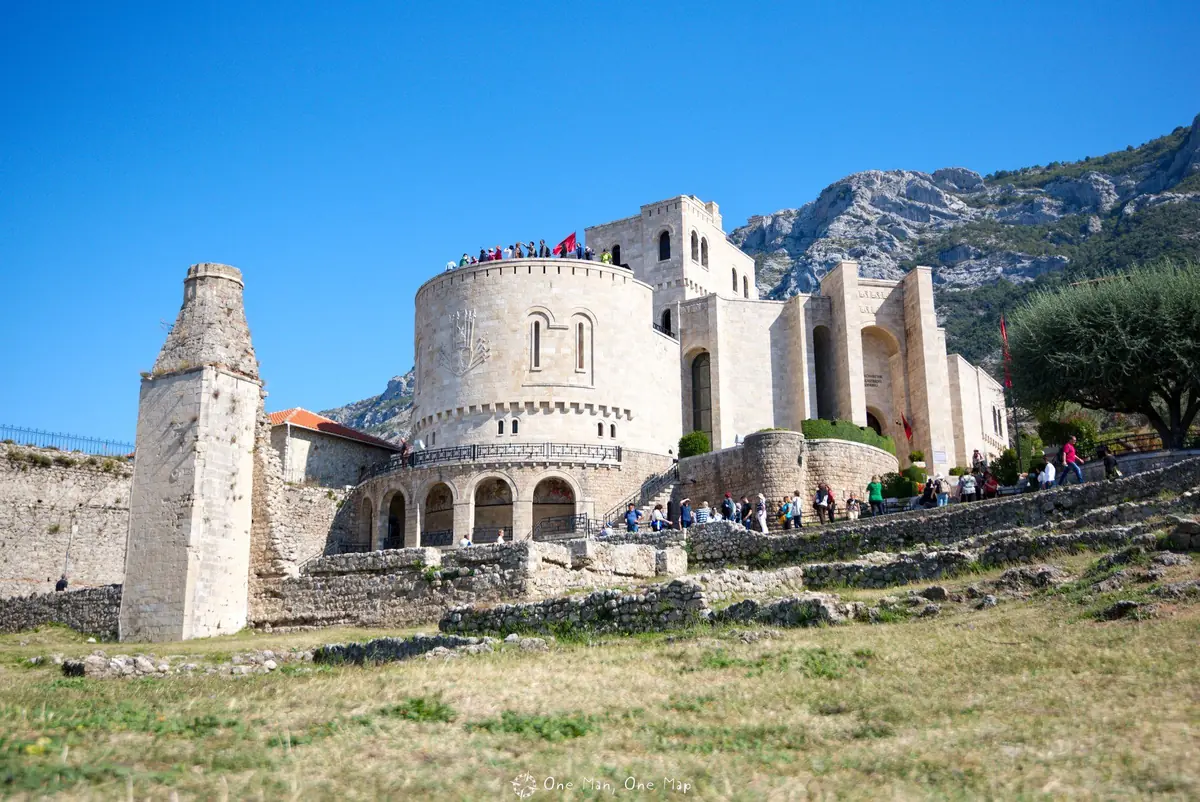
Designed by Pranvera Hoxha (daughter of the communist-era dictator) and Pirro Vaso, the museum climbs seven levels inspired by Albanian kulla stone towers. Exhibits focus on Gjergj Kastrioti Skanderbeg — his 25-year resistance against the Ottomans, the League of Lezhë, his goat-head helmet, his sword, and full-wall battle frescoes.
The reveal most guidebooks miss: the helmet and sword on display are replicas. The originals sit in Vienna’s Kunsthistorisches Museum. Signage is mostly in Albanian; a free interpretive pamphlet is usually available at the desk. The museum has internal ramps and an elevator, though the approach from the bazaar is not wheelchair-friendly.
Lonely Planet describes the museum as “something of a secular shrine” — and that’s accurate. It presents a clean, heroic version of the Skanderbeg story without dwelling on complications. For a more grounded view of Albanian life, pair it with the Ethnographic Museum next door.
- Location: inside Kruja Castle walls
- Cost: 500 lek (~$5.50) adult / €1.50 (~$1.65) student (12-18) / free under 12
- Hours: 9 a.m.-6 p.m., sometimes until 7 p.m. in summer, occasionally with a midday break; Monday closures inconsistent off-season — verify at the door
- Best for: Skanderbeg completists
- Time needed: 45-60 minutes
3. Ethnographic Museum — the reopened one
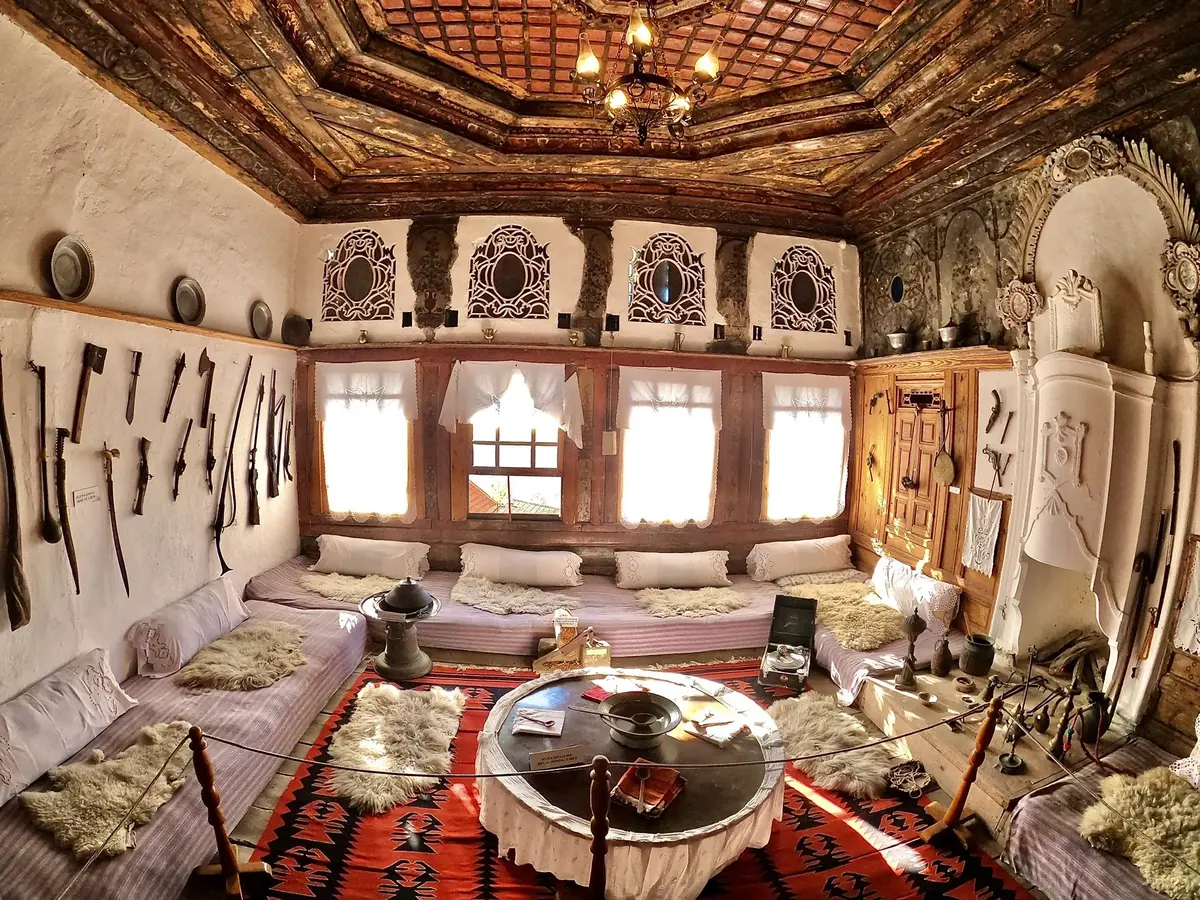
This is the biggest update to the Kruja day trip. The museum reopened after an €850,000 (~$935,000) EU-funded renovation run by UNOPS under the EU4Culture programme, with multilingual guides, audio guides, an interactive wall, and a VR/AR “virtual dressing room” that lets you take a selfie in digitally rendered 18th-century Albanian costume. Most blog posts still say it’s closed for restoration — they’re out of date.
The building itself is a balcony-type Ottoman house from 1764, commissioned by the Toptani family and classified as a Category I Cultural Monument. Around 1,000 artifacts fill fifteen rooms walking you through daily life: an olive press, a working loom, a flour mill, a hammam, men’s and women’s reception rooms (oda), and a bride’s dowry display. Lonely Planet calls it “one of the best ethnographic museums in the country,” and after walking both museums back-to-back, I agree — it’s the sleeper hit of the castle complex.
- Location: inside Kruja Castle walls
- Cost: 400-500 lek (~$4.40-5.50 — sources vary, confirm at the door)
- Hours: approximately 9 a.m.-4 p.m.
- Best for: anyone tired of military museums
- Time needed: 60-90 minutes
4. Old Bazaar (Pazari i Vjetër)
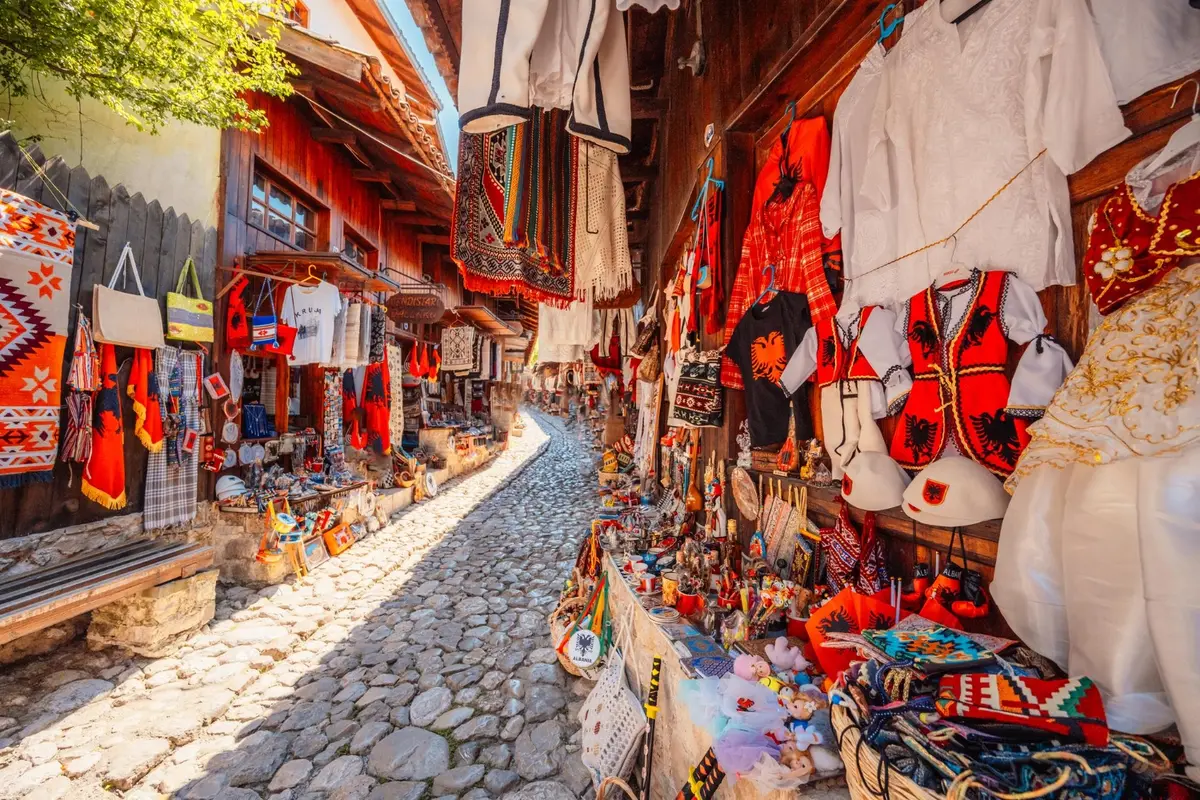
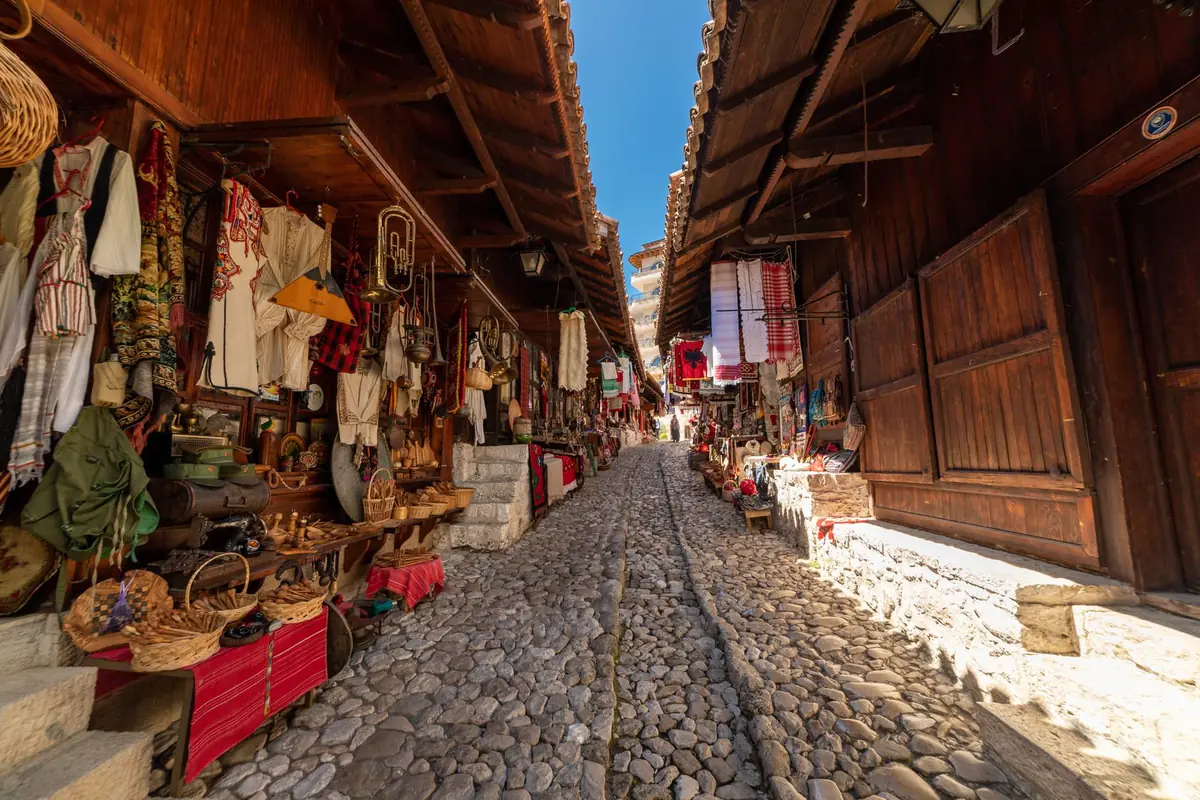
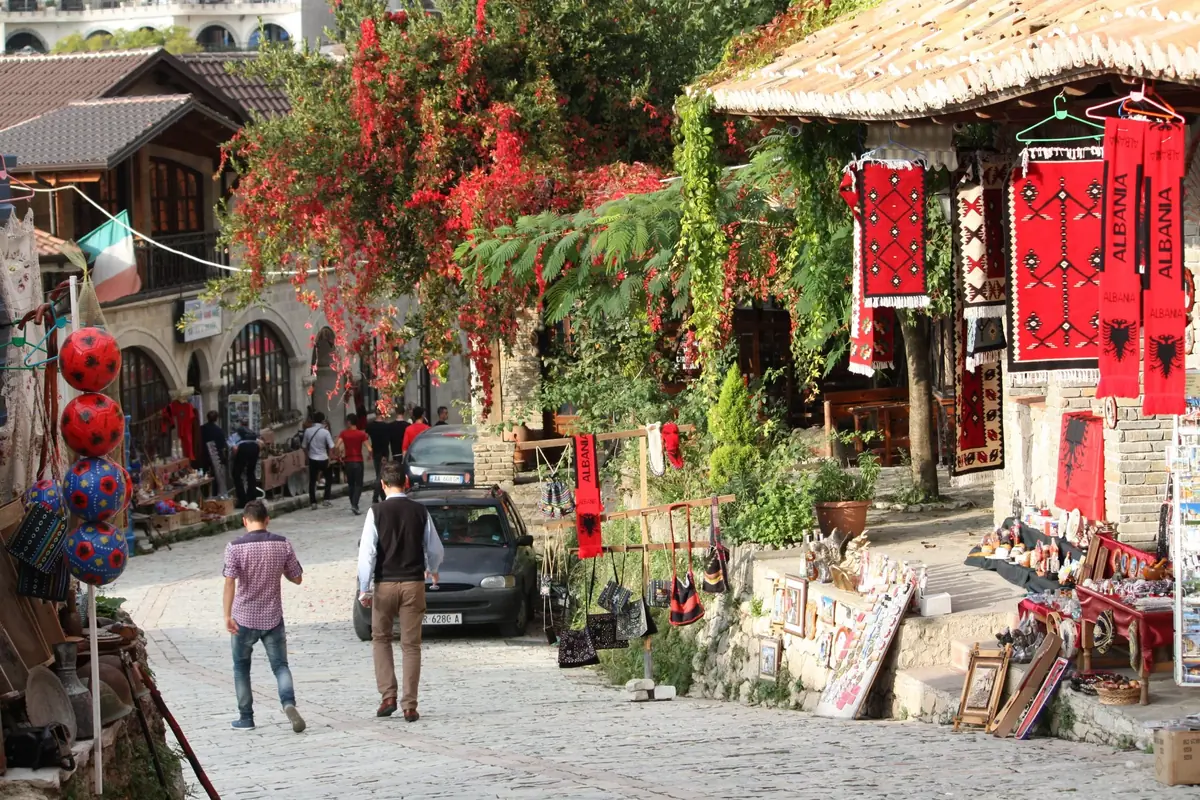
Roughly 660 feet (200 m) of cobbled street lined with about 60 wooden-shuttered shops. The bazaar has 15th-century origins but was heavily reconstructed — the current version was completed for Skanderbeg’s 500th-anniversary commemorations. Roughly 80% of what’s sold is mass-produced tourist goods; the remaining 20% comes from real artisans selling the real Albanian souvenirs, and those shops are worth hunting down.
Where to shop for the real thing:
- Qeleshe Punes Hyseni — handmade wool qeleshe (traditional white felt caps), 1,500-3,000 lek (~$17-33)
- Kruja’s Shop — olive wood carvings and filigree silver jewelry
- Apikultura Haxhiu — local honey and bee products
Price ranges to expect:
- Filigree silver earrings: €15-30 (~$17-33)
- Copper cezve (Turkish coffee pot): 1,000-2,500 lek (~$11-28)
- Hand-knitted wool socks: 500-1,000 lek (~$5.50-11)
- Rag rugs and small kilims: 3,000-10,000 lek (~$33-110)
- Large hand-woven carpets: €100-400+ (~$110-440+)
Bargaining is standard. Start at 50-70% of the first quote and stay friendly. Cash is preferred everywhere in the bazaar, and vendors here are noticeably less pushy than in Turkish or Moroccan souks — you can browse in peace.
Pro Tip: Save serious shopping for the walk back down from the castle. You’ll have better afternoon light for photos and a sharper sense of what’s actually worth buying after comparing five shops selling nearly identical copper pots.
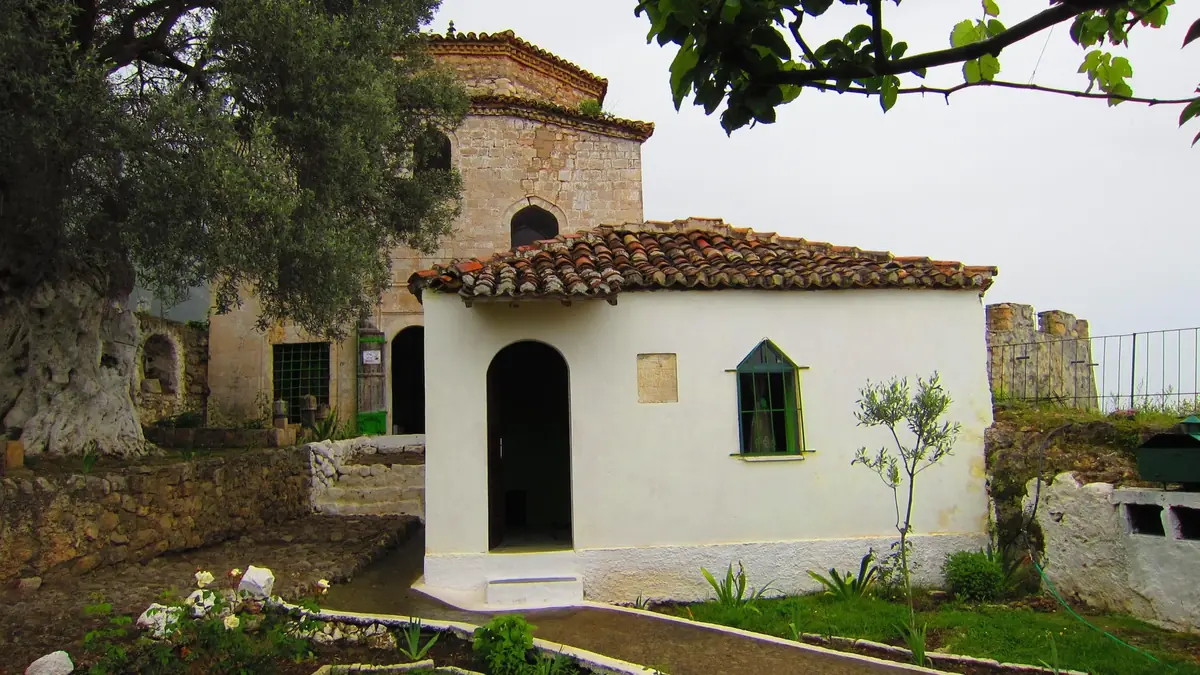
5. Dollma Tekke (Bektashi shrine)
A small Sufi shrine founded in the late 18th century by Adem Aga Toptani and continuously managed by the Dollma family. Three tombs sit under a modest 23-foot dome; out front grows the knotted olive tree that local legend says Skanderbeg himself planted. The tekke was closed under the communist regime and reopened after the fall of communism; it took damage in an earthquake and has been partially restored.
- Location: inside castle walls, near the Skanderbeg Museum
- Cost: free (donations welcome)
- Hours: roughly 9 a.m.-6 p.m. — if the door is locked, the caretaker usually unlocks it on request
- Best for: anyone curious about Bektashi Sufism
- Time needed: 15-20 minutes
Dress modestly (covered shoulders and knees) and remove your shoes before entering.
6. Sari Salltik pilgrimage hike
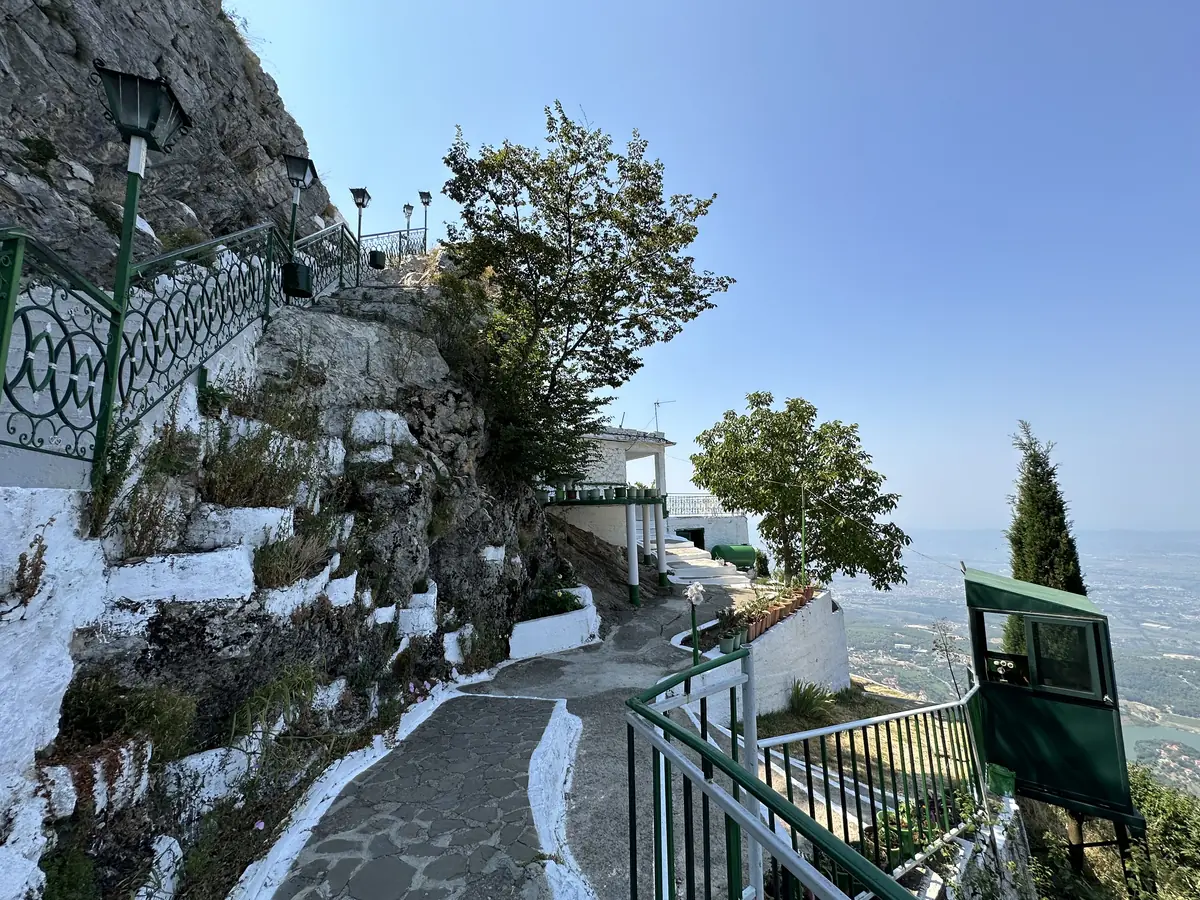
A cave shrine at 3,858 feet (1,176 m) on Mount Sarisalltik, dedicated to Sarı Saltuk — the 13th-century Turkish dervish credited with bringing Bektashi Sufism into the Balkans. On clear days the summit gives straight-line views of the Adriatic, Tirana, and Durrës simultaneously.
Two ways up:
- Hike: Trail starts near Hotel Panorama. About 1.9 miles (3 km) one-way, 2,625 feet (800 m) of elevation gain, rocky and stepped. Budget 2 hours up and 1-1.5 hours down.
- Drive: The paved Rruga e Malit runs about 4.3 miles (7 km) to a parking lot near the shrine, then a short walk to the cave.
Bring 3 liters of water per person, a hat, sunscreen, and proper hiking shoes. There’s almost no shade above the treeline, and the summer sun at elevation is unforgiving.
- Location: Mount Sarisalltik, above Kruja
- Cost: free
- Best for: active travelers with a full day or overnight
- Time needed: 3-4 hours round trip on foot
The Kruja cable car that doesn’t exist
You’ll see old blog posts and forum threads referencing a Kruja cable car. There isn’t one. The project was a political promise that was never funded. Travelers often confuse it with Dajti Ekspres, an unrelated cable car 16 miles (25 km) east of Tirana. If a tour operator advertises a “Kruja cable car,” push back — they’re either reselling the Dajti route or making it up.
Where should you eat in Kruja?
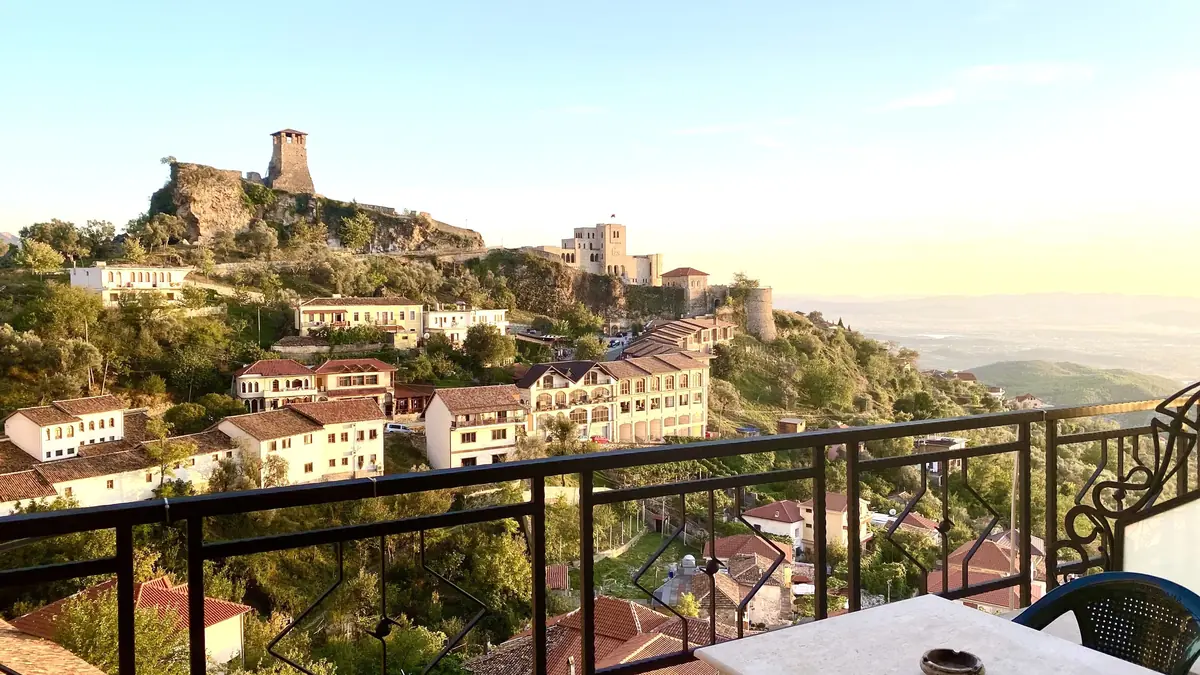
Most Kruja restaurants charge tourist prices for mediocre food. The standouts are Hotel Panorama Kruje (rooftop terrace, 1,000-1,800 lek/person / ~$11-20), Restorant Bardhi (cliff-edge seating, signature veal with potato purée), Bar Restorant Horizont (180° sunset views), and KROI (Mediterranean with homemade desserts). Avoid Bar Restorant Eli — it carries a 1.7 Google rating.
Albanian dishes worth ordering:
- Tavë kosi (the national dish): baked lamb with yogurt and egg, 600-1,500 lek (~$6.70-17)
- Fërgesë: clay-pot peppers, tomatoes, and djathë cheese, 400-700 lek (~$4.40-7.80)
- Qofte: grilled meatballs, 400-800 lek (~$4.40-8.90)
- Byrek: phyllo pie with spinach, cheese, or meat, 100-200 lek (~$1.10-2.20) per slice
- Kabuni: Kruja’s own sweet rice dessert with lamb broth and raisins, 300-500 lek (~$3.30-5.50)
- Raki: fruit brandy (~40% ABV), 100-200 lek (~$1.10-2.20) per shot
Pro Tip: For cheaper, more authentic food, head 4 miles (7 km) down the mountain to Fushë-Krujë. The restaurants there cater to locals, not tour buses, and the tavë kosi runs about 30% less than in the old town.
What does a sample Kruja day trip itinerary look like?
A standard Kruja day trip runs about nine hours door to door from Tirana: a one-hour furgon ride each way, plus five to six hours on site for the castle, both museums, the bazaar, and lunch. Leave the capital by 8 a.m. and you’ll catch the last reliable bus back by 4 p.m.
Here’s a realistic hour-by-hour plan using the furgon. If you’re driving, shift the start 90 minutes later and park near the castle.
| Time | Activity |
|---|---|
| 7:30 a.m. | Breakfast in Tirana, then city bus #4 (40 lek / ~$0.45) to the North and South Regional Terminal |
| 8:00 a.m. | Board the Krujë-marked furgon (200 lek / ~$2.20, ~1 hour) |
| 9:15 a.m. | Arrive in Kruja; walk uphill through the bazaar toward the castle |
| 9:30 a.m. | Quick first pass through the Old Bazaar (shopping saved for later) |
| 10:15 a.m. | Castle grounds and Skanderbeg Museum (500 lek / ~$5.50) |
| 11:30 a.m. | Ethnographic Museum (400-500 lek / ~$4.40-5.50) |
| 12:45 p.m. | Dollma Tekke (free) |
| 1:00 p.m. | Lunch at Hotel Panorama or Bar Restorant Horizont (~€12-15 / ~$13-17) |
| 2:15 p.m. | Viewpoint photos, second bazaar pass, Albanian coffee |
| 3:00 p.m. | Walk to the return bus stop |
| 3:30 p.m. | Catch the last reliable furgon back to Tirana (last departure ~4 p.m.) |
| 5:00 p.m. | Back in Tirana |
If you want to add the Sari Salltik hike, skip the Ethnographic Museum for a later trip or stay overnight. The castle-to-summit round trip takes at least 3 hours on foot.
Can you visit Kruja from Durrës port as a cruise passenger?
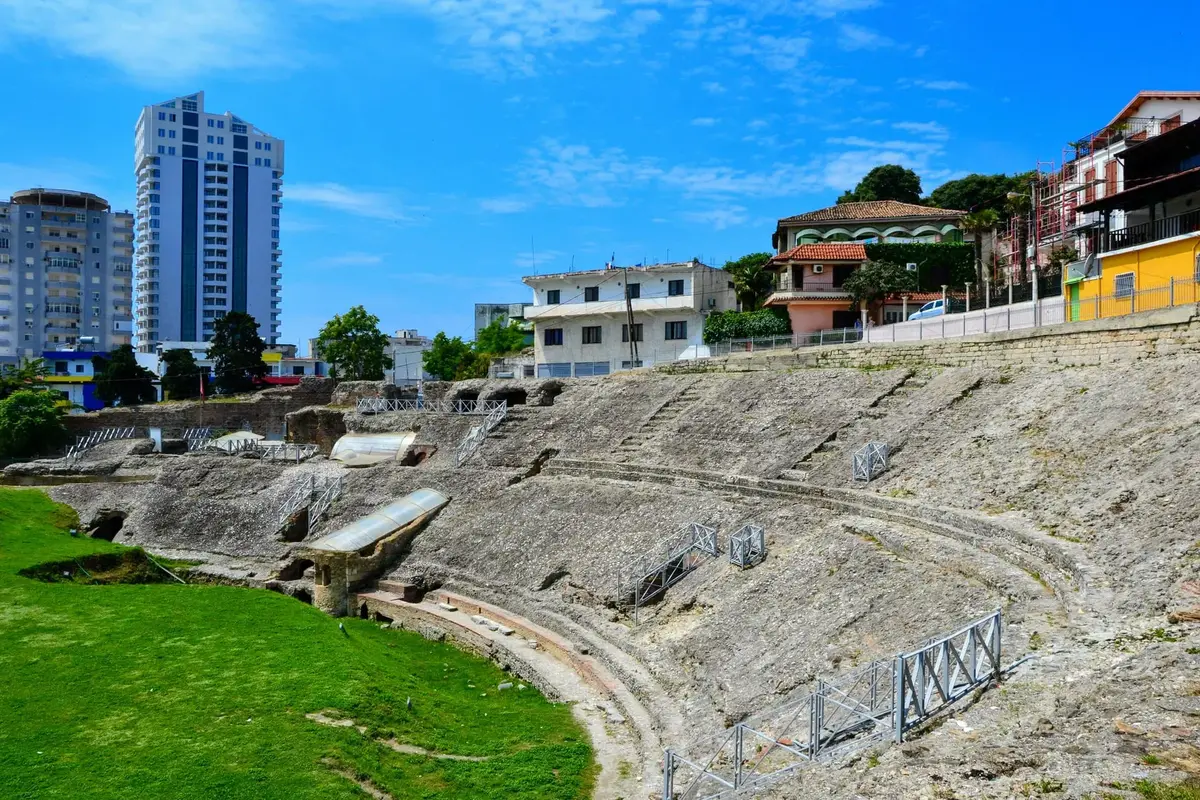
Yes — but book a private driver-guide. Public transport is too risky for a ship departure window. From Durrës port, Kruja is 22 miles (35 km) and takes 40-50 minutes by car. Allow 6-8 hours off-ship to cover castle, bazaar, lunch, and return with a safety buffer. Adding the Durrës Roman amphitheater on the return leg is doable.
Shore excursion operators that meet cruise passengers at the gangway with a name sign:
- Albania Holidays
- ToursByLocals
- ReadyClickAndGo
- Tripalbania
Expect €80-150 (~$88-165) per person for a Kruja-only half-day private tour, or €120-200 (~$132-220) per person for a full day combining Kruja and Durrës. Avoid the DIY route (Durrës → Tirana furgon, then Tirana → Kruja furgon): it runs 2.5-3 hours each way and the return schedules don’t reliably match ship-boarding deadlines.
Kruja vs. Berat vs. Gjirokastër — which should you pick?
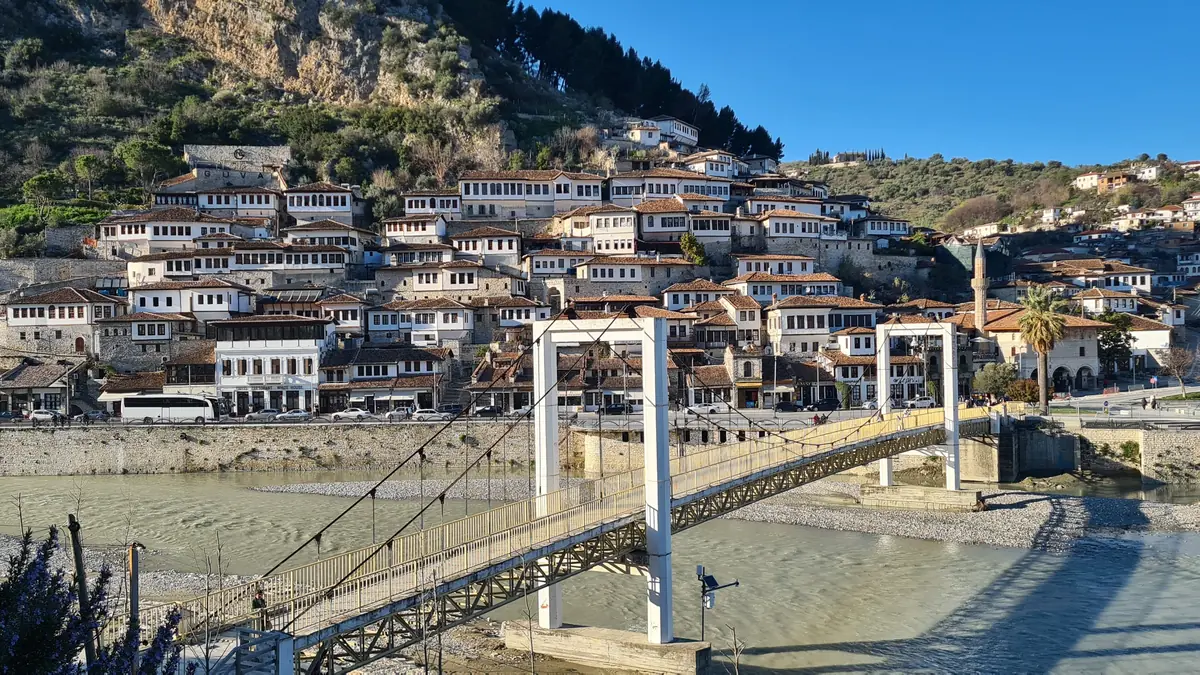
If you only have a day from Tirana, pick Kruja — it’s the closest and the Skanderbeg story is a clean hook. Berat and Gjirokastër are both UNESCO World Heritage Ottoman towns with far more preserved architecture, but each demands an overnight stay. Kruja is the appetizer; the UNESCO towns are the main course.
| Kruja | Berat | Gjirokastër | |
|---|---|---|---|
| Distance from Tirana | 20 mi (32 km) | 75 mi (120 km) | 143 mi (230 km) |
| Drive time | 45-60 min | 2 hrs | 3.5 hrs |
| UNESCO status | No | Yes | Yes |
| Best time frame | Half-day or overnight | Overnight | 1-2 nights |
| Key draw | Skanderbeg’s castle | “Town of a thousand windows” | Hilltop Ottoman quarter |
| Best for | Tirana day-trippers | Photographers, foodies | Slow travelers, Kadare readers |
How much does a Kruja day trip actually cost?
Costs in Albania are low across the board, and budget travelers can complete the full day for $20-25 — furgon both ways, both museums, byrek lunch, coffee. Mid-range with a taxi, sit-down lunch, and a small souvenir runs $60-85. A private tour with a driver-guide, a proper lunch, and a real souvenir purchase (a small carpet or antique piece) runs $180-280 per person.
Backpacker (~$22 total):
- City bus to terminal: $0.45
- Furgon round-trip: $4.50
- Skanderbeg Museum: $5.50
- Ethnographic Museum: $4.50
- Byrek lunch and coffee: $5
- Water and snacks: $2
Mid-range (~$75 total):
- Shared taxi or rental car share: $30
- Both museums: $10
- Sit-down lunch with drink: $15
- Coffee and raki: $5
- Small souvenir: $15
Splurge (~$230 total):
- Private driver-guide with entries: $150
- Lunch with wine: $30
- Carpet or antique piece: $50
Is Kruja safe for solo travelers?
Yes — Albania is one of Europe’s safest countries, and Kruja is particularly low-risk. Solo female travelers consistently report feeling welcomed under the “besa” hospitality tradition. Petty theft is rare even in the bazaar; violent crime is almost unheard of. The real risks are slippery cobbles and the occasional stray dog near trailheads.
Practical safety notes:
- Carry cash (lek) in multiple pockets; card acceptance is limited outside hotel restaurants
- ATMs in town charge 500-800 lek (~$5.50-8.90) per foreign withdrawal — withdraw in Tirana if you can
- Always decline the “convert to home currency” prompt at ATMs (dynamic currency conversion rates are terrible)
- After dark, the bazaar empties out; take a taxi back to your hotel or to the main road
- The last bus back to Tirana leaves around 4 p.m. — missing it means a €20-30 (~$22-33) taxi
Accessibility is a real challenge. The bazaar is a steep cobbled climb, the castle paths are uneven stone, and the Ethnographic Museum has narrow stairs. The Skanderbeg Museum is the only part of the complex with genuine wheelchair access — and even then, getting to its front door is the obstacle. Travelers with mobility limits should take a taxi directly to the castle-side parking lot.
When’s the best time to visit Kruja?
As with the best time to visit Albania more broadly, May, early June, and late September through early October are the sweet spots — daytime highs of 63-79°F (17-26°C), manageable crowds, and the bazaar still lit by long afternoon sun. Avoid July and August (86°F / 30°C peaks and tour-bus volume) and November through February (heavy rain, some museum closures, slippery cobbles).
| Month | High °F (°C) | Low °F (°C) | Rainfall in (mm) |
|---|---|---|---|
| Jan | 48 (9) | 32 (0) | 5.6 (142) |
| Mar | 55 (13) | 37 (3) | 4.5 (115) |
| May | 72 (22) | 50 (10) | 3.5 (90) |
| Jul | 86 (30) | 63 (17) | 1.7 (44) |
| Sep | 79 (26) | 55 (13) | 3.5 (90) |
| Nov | 59 (15) | 41 (5) | 6.9 (175) |
At 1,300 feet (400 m) of elevation, Kruja runs about 7-10°F (4-6°C) cooler than Tirana. Pack a light jacket even in summer — especially for sunset on the castle walls, when the wind comes straight off the ridge.
The bottom line
TL;DR: A Kruja day trip from Tirana takes a 200-lek (~$2.20) furgon each way plus about $10 in museum entries and delivers a free castle, the reopened Ethnographic Museum, and one of Albania’s most completely restored Ottoman bazaars. Slot it in as a half-day if Kruja is one stop on a week-long Albania itinerary; stretch it to an overnight if you have more time and want the sunset-to-sunrise bonus.
What most guides still miss: the Ethnographic Museum is no longer closed, the cable car doesn’t exist, Bolt won’t work here, and the Skanderbeg helmet is a replica. With those four corrections baked in, you’re already ahead of 90% of the tour-bus crowd arriving at 10 a.m.
Which are you deciding between — Kruja for a quick hit, or Berat for the full Ottoman experience? Drop your plan in the comments.