Most guides to backpacking Albania read like a cheaper Croatia pitch. That’s not the trip you’re getting. Here’s the honest version — the $35/day that actually works, the two-week route without wasted days, the beaches worth the bus ride, and the one Insta-famous town I’d trade for a cocktail on a balcony instead.
The short version
- Daily budget: $25-35 shoestring, $45-65 mid-range, $75-100+ flashpacker
- Trip length: 10-14 days is the sweet spot; 2 weeks hits everything worth seeing
- Best time: mid-May to late June, or September — skip July-August on the Riviera
- US citizens: visa-free for up to 365 days (not a typo — see the section below)
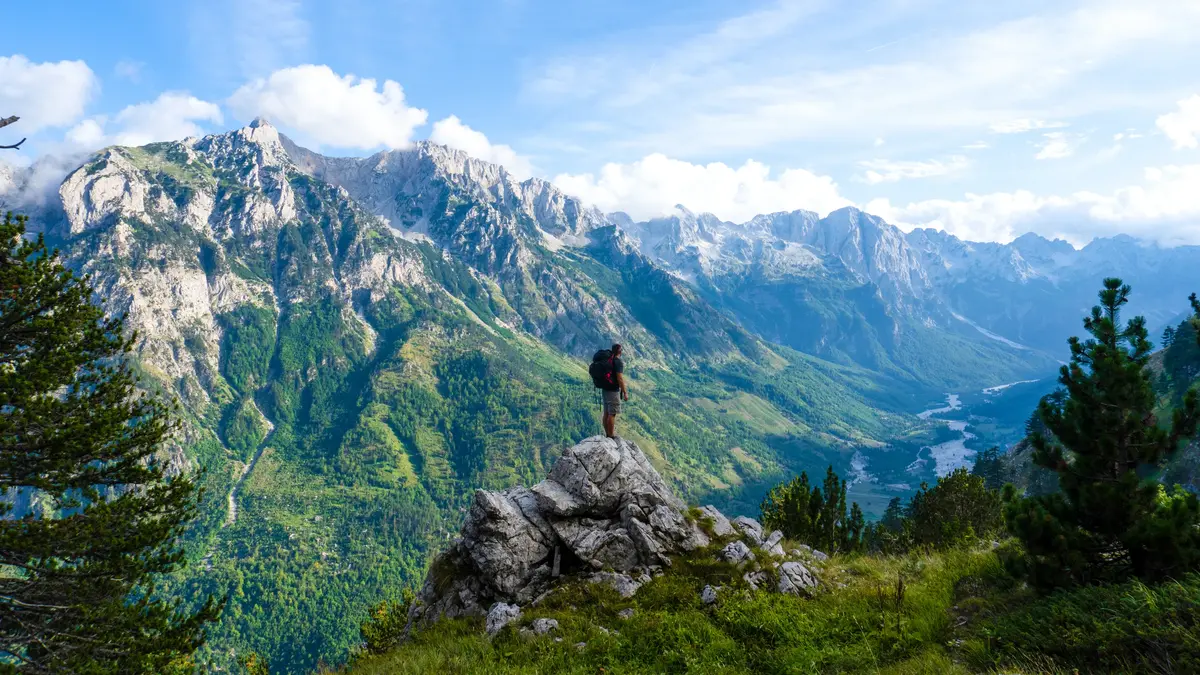
- The hero experience: Komani Lake ferry → Valbonë → hike over the pass to Theth
- The overrated stop: Ksamil in peak summer
Is Albania actually worth backpacking?
Yes — for a specific kind of traveler. Albania delivers Mediterranean coastline, high-alpine hiking, Ottoman stone towns, and sub-Croatian prices in a country you can cross by bus in a day, and our complete Albania travel guide breaks down each of those regions in depth. Infrastructure is rougher than neighboring Greece or Montenegro, English is hit-or-miss outside Tirana, and the driving is genuinely chaotic — if that tradeoff sounds fun, it’s the best-value trip in Europe.
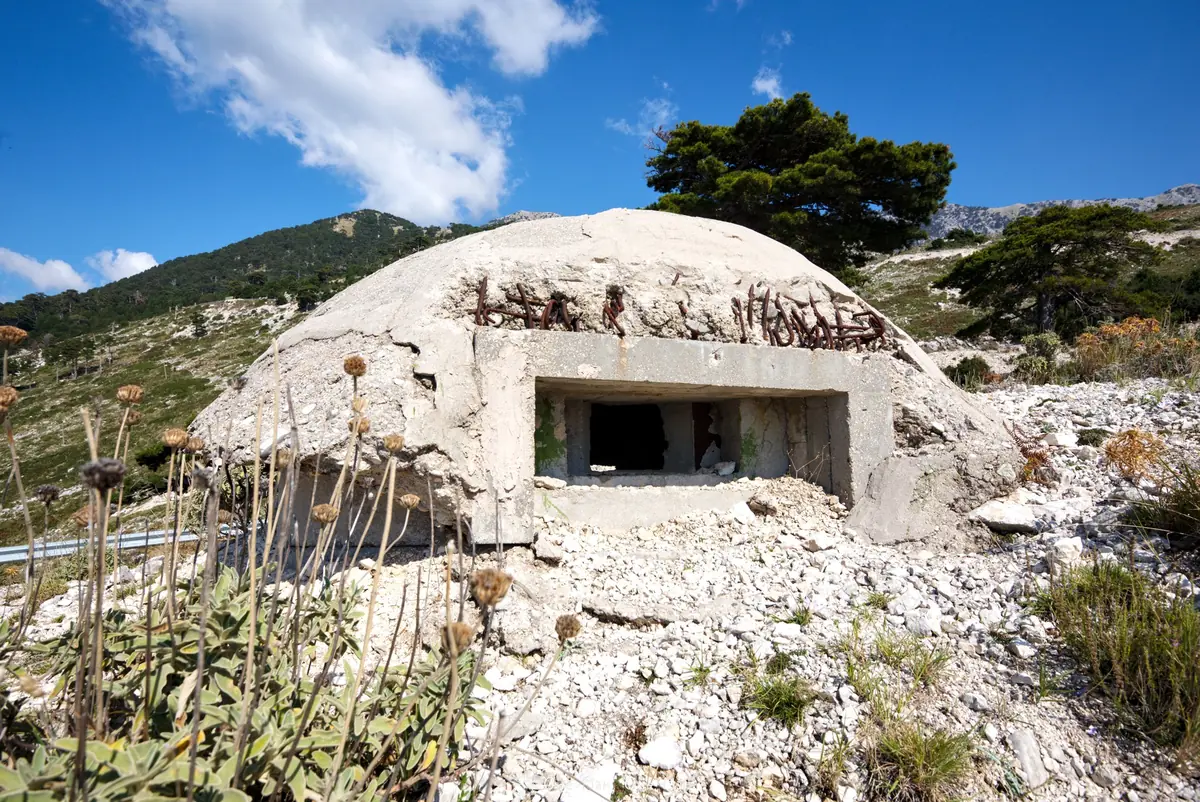
You get three distinct trips stacked inside one country. The north is the Accursed Mountains — limestone ridges, hand-stamped guesthouses, the Komani Lake ferry carving through a fjord nobody’s heard of. The middle is Ottoman Albania — Berat’s white tiered houses, Gjirokastër’s slate roofs, 170,000+ communist-era bunkers dotting the fields between them. The south is the Riviera — turquoise water that actually matches the photos, cliff-edge driving, beach clubs charging a fraction of what Mykonos wants.
The friction is real, too. Bus terminals get rebuilt without notice. Furgons (the shared minibuses) leave when they fill up — not at 9:15 sharp. Card readers on the coast go “down” suspiciously often when you’re paying in euros. Stray dogs outnumber traffic cops. None of this is dangerous. It just means you need to travel with a little patience and a lot of cash.
Pro Tip: If you’re deciding between Albania and Montenegro for a 10-day Balkans trip, Albania wins on depth (more regions, more varied terrain) and loses on ease (worse signage, worse driving). Montenegro is easier. Albania is better.
Why do US citizens get a full year in Albania visa-free?
Americans get up to 365 days visa-free in Albania — a bilateral arrangement that doesn’t exist anywhere else in Europe. No visa application, no reciprocity fee, no extension paperwork — though it’s still worth reading the full Albania visa requirements before you fly. You show up at Tirana International Airport, get waved through, and you’re legal for a full year. To reset the clock, leave Albania and stay out for at least 90 days before re-entry.
A few things worth knowing:
- Passport validity: the Albanian Ministry of Foreign Affairs officially requires 3 months beyond your stay. Older State Department guidance says 6 months. Bring 6 months to be safe.
- Entry stamps: often logged electronically only. Keep your boarding pass in case immigration can’t prove when you arrived.
- Not Schengen, not EU: Albania is not in the Schengen Area and not in the EU, though accession talks have entered their concluding phase — all negotiating clusters are open and the country is working toward membership around 2030. This means the Schengen 90/180 rule and ETIAS do not apply to Albania. Your time here does not count against Schengen.
Pro Tip: If you’re doing a broader Europe trip and running out of Schengen days, Albania is the smartest place to reset. It’s cheap, English-friendly in cities, and you can live here comfortably on $800-1,200 a month while you wait for your 90 Schengen days to recycle. This is also why Albania has become one of the fastest-growing digital nomad destinations in Europe.
On the security side, the US State Department rates Albania Level 2: Exercise Increased Caution. The advisory reflects general crime plus a specific alert about pro-Iran group threats at hotels, malls and restaurants in Tirana. No actual attacks have been reported. Enroll in STEP if you’re the belt-and-suspenders type, but don’t let the advisory scare you off — Albania’s homicide rate sits around 1.2 per 100,000, lower than most of Western Europe.
When’s the best time to visit Albania?
The sweet spot — and the best time to visit Albania for most backpackers — is mid-May through late June, or all of September. You get swimmable 72-75°F (22-24°C) water, open Theth-Valbonë trails, 30-40% lower accommodation rates than July-August, and a Riviera that doesn’t feel like a sunbed parking lot. July and August are the tourist peak — Ksamil books out, beach clubs charge $24 for two sunbeds, and the inland towns hit 95°F (35°C).
Here’s the month-by-month rundown:
| Month | High °F (°C) | Sea °F (°C) | Crowds | Theth-Valbonë hike |
|---|---|---|---|---|
| January | 48 (9) | 55 (13) | Empty | Closed — snow |
| February | 50 (10) | 54 (12) | Empty | Closed — snow |
| March | 57 (14) | 56 (13) | Low | Closed — snow |
| April | 66 (19) | 59 (15) | Low | Risky — late snow |
| May | 73 (23) | 64 (18) | Medium | Late May open |
| June | 82 (28) | 72 (22) | Medium-High | Open |
| July | 90 (32) | 77 (25) | Peak | Open (hot) |
| August | 91 (33) | 79 (26) | Peak | Open (hot) |
| September | 79 (26) | 75 (24) | Medium | Open |
| October | 68 (20) | 68 (20) | Low | Early October only |
| November | 57 (14) | 62 (17) | Empty | Closed |
| December | 50 (10) | 58 (14) | Empty | Closed |
Why September beats July-August
Most guides give you a vague “May-September” window and move on. Here’s what they don’t tell you: the Mediterranean holds heat. In September the water is actually warmer than in June (75°F versus 72°F), the air drops from a brutal 91°F to a pleasant 79°F, and Ksamil accommodation prices fall off a cliff after the Italian and Eastern European holiday crowds leave in the last week of August. On my last trip I paid $14 for a private room in Himarë in mid-September that had gone for $40 six weeks earlier.
The one catch: the Theth-Valbonë trail stays in good shape through September but gets sketchy by mid-October as the first snow hits the 5,770-foot (1,759 m) pass. If you want the hike and the swim, plan for mid-to-late September.
How much does backpacking Albania cost?
Expect $25-35 per day as a shoestring backpacker, $45-65 mid-range, $75-100+ as a flashpacker. Those numbers — broken down line by line in our guide to Albania travel costs — include a hostel bed, two meals out, local transport and one paid attraction per day. Flights from the US are separate — Boston, NYC and Miami to Tirana run roughly $500-$1,100 round trip depending on season and connection, with Boston usually the cheapest gateway. Albania’s lek has strengthened against the dollar, so older guide prices tend to underestimate current spending.
Current exchange rate: 1 USD ≈ 82 ALL. A $1 bill buys about 82 Albanian lek.
Daily budget by tier
| Tier | Per Day | What You Get |
|---|---|---|
| Shoestring | $25-35 | Hostel dorm, furgons, street food + one simple sit-down meal, 1-2 local beers |
| Mid-range | $45-65 | Private hostel room or guesthouse, occasional taxi, full restaurant meals, drinks, paid attractions |
| Flashpacker | $75-100+ | 3-star hotel or boutique guesthouse, rental car, full restaurant meals including Riviera seafood, beach clubs, activities |
A realistic two-week budget
| Category | Shoestring | Mid-range | Flashpacker |
|---|---|---|---|
| Accommodation (13 nights) | $130 | $325 | $650 |
| Food + drink (14 days) | $140 | $280 | $490 |
| Transport (buses, furgons, ferry) | $90 | $140 | $450 (with rental car) |
| Attractions + activities | $60 | $120 | $200 |
| Buffer (SIM, ATM fees, laundry) | $40 | $60 | $90 |
| Total (excluding flights) | $460 | $925 | $1,880 |
Where your money actually goes
- Hostel dorm: $8-14 almost everywhere; add $4-8 for popular Tirana/Sarandë dorms in July-August
- Private guesthouse room: $25-40, including breakfast in Theth/Valbonë (cash only, often half-board)
- Full traditional meal: $4-8
- Riviera seafood dinner with a glass of wine: $15-30
- Local beer at a bar: $1.80-3
- Raki shot: $1-2
- Espresso: $1-2
- Furgon between major cities: $5-18 depending on distance
- Komani Lake ferry: $10-11
- Bunk’Art entry: $10 plus $1 for the audio guide
- Butrint UNESCO site: $12
- Sunbed + umbrella pair at a Ksamil beach club: $12-24 per day
Pro Tip: The single biggest unexpected cost in Albania is ATM fees. Most bank ATMs charge $7-8 USD per withdrawal, and it hits every non-Albanian card. Take out the maximum (40,000 ALL / ~$485) in one pull instead of multiple small ones. And avoid Euronet ATMs entirely — their exchange rate is a straight rip-off.
What’s the best 2-week route through Albania?
Two weeks is the dominant query for a reason: it’s the shortest trip that hits the Alps, the UNESCO towns and the Riviera without feeling like a highlight-reel bus tour. The classic route is Tirana → Shkodër → Komani ferry → Valbonë → hike to Theth → back to Shkodër → Berat → Gjirokastër → Sarandë/Ksamil → Himarë → Dhërmi → Vlorë → Tirana. The catch is direction — more on that below.
Day-by-day breakdown
| Day | Base | Main activity | Sleep |
|---|---|---|---|
| 1 | Tirana | Fly in, Rinas Express bus to Skanderbeg Sq, Bunk’Art 2 + Blloku dinner | Tirana Backpacker |
| 2 | Tirana | Bunk’Art 1 + Mount Dajti cable car, House of Leaves | Tirana Backpacker |
| 3 | Shkodër | Furgon to Shkodër (2 hrs), Rozafa Castle, Lake Shkodër sunset | Wanderers Hostel |
| 4 | Valbonë | 6:30 AM minibus to Koman, 9 AM ferry, minibus to Valbonë | Valbonë guesthouse |
| 5 | Theth | Hike over Valbonë Pass — 6-9 hrs, ~15 km | Theth guesthouse |
| 6 | Theth | Blue Eye of Theth + waterfall + chill day | Theth guesthouse |
| 7 | Shkodër | Minibus back to Shkodër, laundry, reset | Wanderers Hostel |
| 8 | Berat | Furgon to Tirana + transfer to Berat (6 hrs total) | Mi Casa Es Tu Casa |
| 9 | Berat | Berat Castle, Osumi Canyon half-day, wine dinner | Mi Casa Es Tu Casa |
| 10 | Gjirokastër | Furgon to Gjirokastër (3 hrs), castle + old bazaar | Stone City Hostel |
| 11 | Sarandë | Furgon to Sarandë (2 hrs), Butrint afternoon, Blue Eye detour | Hairy Lemon |
| 12 | Ksamil | Day trip to Ksamil beaches (bus or hostel transport) | Hairy Lemon |
| 13 | Himarë | Furgon up the Riviera via Llogara Pass stop | Himarë guesthouse |
| 14 | Tirana | Furgon to Tirana (4 hrs), fly out | N/A |
If you have less time
- 7 days: Pick one of two — Tirana + Shkodër + Komani/Theth (north focus) OR Tirana + Berat + Gjirokastër + Sarandë/Ksamil (south focus). Cramming both in a week means you see mostly bus windows.
- 10 days: Do the 2-week route but cut one of Ksamil/Himarë and one rest day in Theth.
If you have more time
- 3 weeks: Add Korçë (inland town, best beer in the country), Pogradec (Lake Ohrid shoreline), Kruja (Skanderbeg’s castle — day trip from Tirana), and an extra Riviera day at Dhërmi or Gjipe.
- A month: Add the Peaks of the Balkans multi-day trek through Albania, Montenegro and Kosovo — the Theth-Valbonë day is part of that circuit.
How does the Komani Lake ferry work?
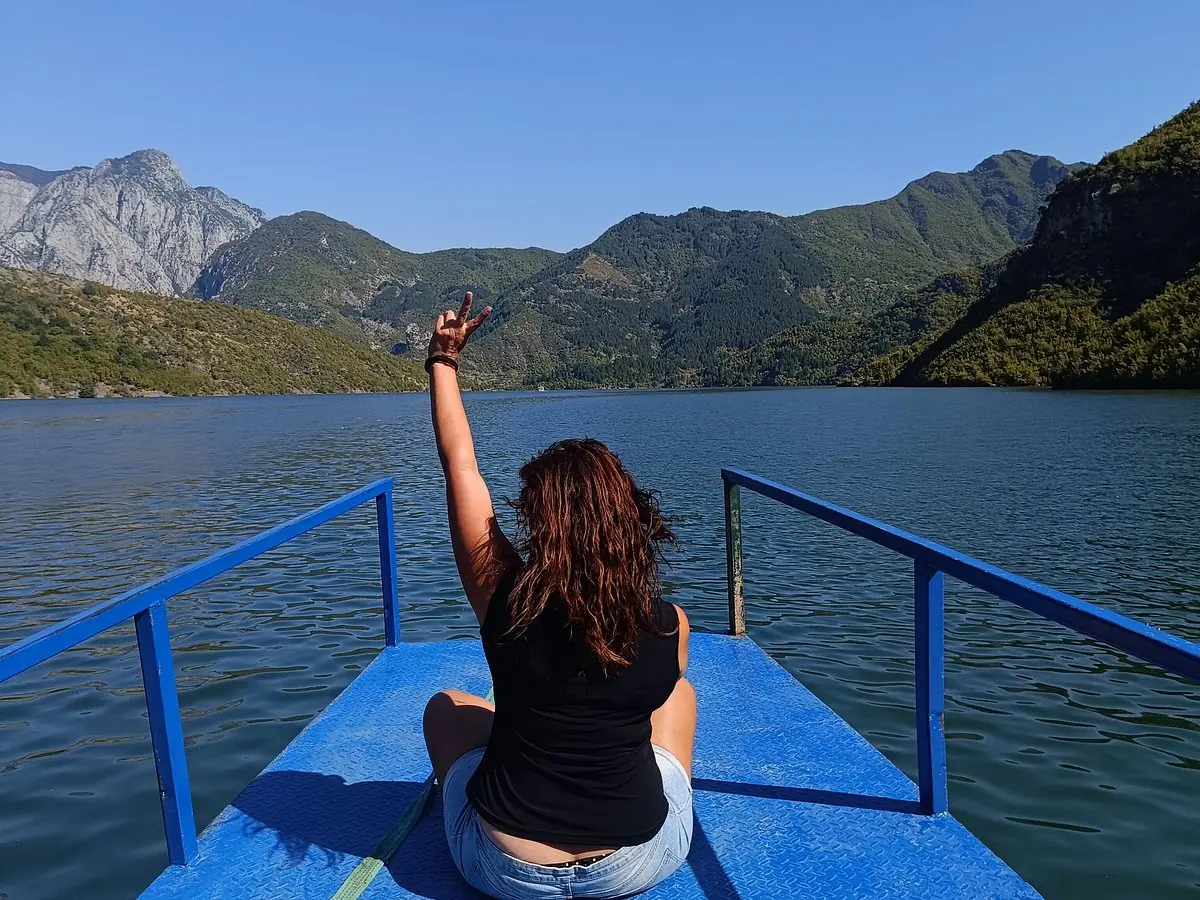
The Komani Lake ferry runs a 2.5-hour route between Koman and Fierzë, cutting through a narrow reservoir that looks more Norwegian fjord than Balkan backwater. Three operators run the route. The most useful for backpackers is Ferry Berisha — it’s the biggest, operates mid-April through early November, costs €10 ($11) at the dock or €8.80 ($10) booked online with a 15% discount, and leaves Koman at 9 AM sharp.
The three operators compared
| Operator | Season | Price | Departure | Notes |
|---|---|---|---|---|
| Ferry Berisha | mid-April to early November | €10 ($11) dock / €8.80 ($10) online | Koman 9 AM → Fierzë 11:30 AM | Largest; carries cars + passengers |
| Boat Dragobia | Year-round | ~€10 ($11) | Fierzë 6 AM → Koman 8:45 AM / Koman 9 AM → Fierzë noon | Passengers + bikes only, no cars |
| Rozafa Ferry | Seasonal | ~€10 ($11) | Similar window | Alternative — runs when the others are full |
Getting to Koman for the 9 AM ferry
You can’t sleep in Tirana and make the 9 AM ferry without a private transfer. The smart play is sleeping in Shkodër the night before and taking the 6:30 AM Berisha minibus (€8 / $9) directly to the dock — it’s organized by the hostels and drops you at the ferry ramp. From Tirana, the Berisha minibus leaves the Rozafa Hotel at 5:30 AM and costs €12 ($13). Taxis work too: Shkodër-Koman runs around €70 ($77), Tirana-Koman €150 ($166).
Pro Tip: Book the ferry online the night before to lock in the 15% discount and confirm the boat is running. Water levels drop in late autumn and the route can suspend operations for days at a time. The online booking is also your insurance against a sold-out July Saturday — in peak season the 9 AM ferry fills to standing-room-only.
What the ride is actually like
The boat is a converted school bus on a hull for the first half, then a bigger steel ferry — it depends on which Berisha vessel is in rotation. Sit on the left side of the boat coming from Koman for the best views of the canyon walls. There’s coffee and beer on board but no real food. The air gets cold as you wind through the canyon even in July — bring a layer. At Fierzë, a minibus is waiting to run you up to Valbonë (about 90 minutes) for €5-8 ($6-9).
Should you hike Valbonë to Theth, or the reverse?
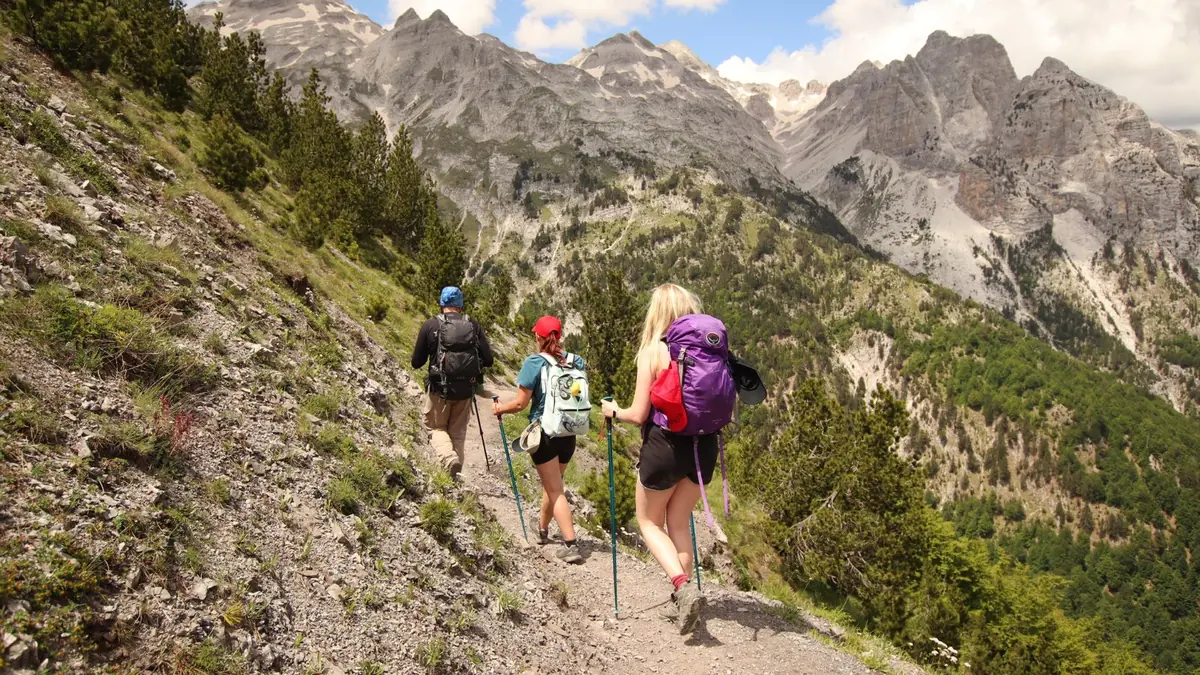
Go Valbonë to Theth, not Theth to Valbonë. Most guides default to the Theth-first direction because it’s historically how the route was described — but for the Theth–Valbonë hike, the reverse is objectively easier. You start with the Komani ferry (a wow moment, not a slog), gain 3,280 feet of elevation on better trail, descend the loose scree instead of climbing it, and exit by a single van back to Shkodër instead of three separate connections.
The hike by the numbers
- Distance: ~9-11 miles (15-17 km) depending on your guesthouse drop-off
- Elevation gain: ~3,280 feet (1,000 m) up, ~2,625 feet (800 m) down
- Duration: 6-9 hours for an average hiker, 5 hours fast, 10 hours slow
- Pass elevation: 5,770 feet (1,759 m)
- Season: mid-June through late September is the safe window
- Trail markings: white-red-white flags every 160 feet (50 m), heavily trafficked in summer
Do you need a guide?
Probably not — if you’re hiking in July, August or September, you have a decent smartphone with downloaded offline maps, and you’ve done a full-day hike with elevation before. The trail is one of the most-hiked in the Balkans, runs through open meadow and forest (no exposure to weather-vulnerable ridges), and has 2,200+ AllTrails reviews you can read. You’ll pass 30-40 other hikers on a summer day. That’s a $50-100 per day savings for a confident walker.
Hire a guide if: you’re a nervous hiker, you’re going in May or October when fresh snow is possible, you don’t carry a smartphone with offline GPS, or you want to detour to the 5,900-foot (1,800 m) peak beyond the pass (the only section with any real routefinding).
Sleeping at the ends
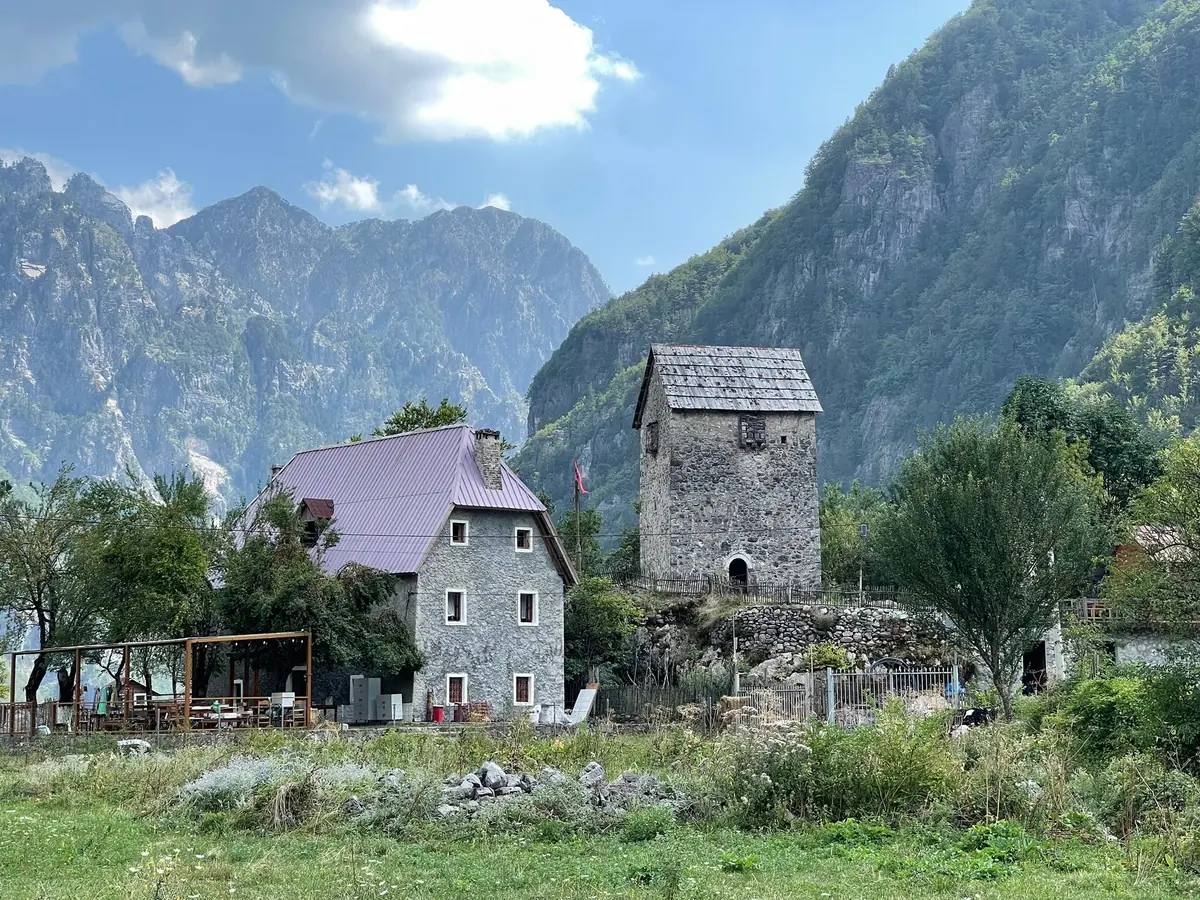
Valbonë and Theth are both one-road valleys with a dozen family guesthouses each. Rates run $25-40 a night with half-board — that’s breakfast, a packed lunch you can take on the hike, and a home-cooked dinner with raki. No ATMs in either village. Withdraw at least $150 in cash in Shkodër before you leave.
Pro Tip: Pay €25-40 ($28-44) for a donkey to move your backpack between villages. Yes, it feels soft. Your knees will thank you on the descent, and it’s basically standard operating procedure now — the donkeys make the same trip every day regardless.
Which Riviera beaches are worth the bus ride?
Honest answer: Gjipe, Dhërmi and Himarë beat Ksamil for a backpacker’s week on the Albanian Riviera. They’re less crowded, cheaper, and more photogenic — Dhërmi has cliffs behind it, Gjipe requires a 30-minute walk that filters out the beach-club crowd. Ksamil has sand (most of the Riviera is pebble) but it’s also the most commodified stretch, with paid-beach clubs wall-to-wall and taxi scams at the bus drop-off. The south gets more turquoise water; the middle gets more atmosphere.
Sand vs pebble — the Riviera beach matrix
| Beach | Surface | Vibe | Cost | Verdict |
|---|---|---|---|---|
| Ksamil (central) | Coarse sand | Paid-club resort | $12-24/day sunbed | Go once, don’t stay |
| Ksamil (Pasqyra / Lori) | Coarse sand | Calmer, still paid | $10-15/day | Better than central Ksamil |
| Borsh | Mix of sand/pebble | Low-key, long beach | Mostly free access | Underrated — longest beach in Albania |
| Himarë (Livadhi) | Pebble | Family + backpacker | Some free, some paid | Great base town |
| Dhërmi (main) | Pebble | Mid-range beach clubs | $17-33/day sunbeds | Best atmosphere on the Riviera |
| Drymades | Pebble | Slightly quieter than Dhërmi | $15-25/day | The cooler-older-sibling beach |
| Gjipe | Pebble | Secluded, 30-min walk in | Free | The single best Riviera beach |
| Jale | Pebble | Party-leaning beach club scene | $20-30/day | Summer nightlife hub |
| Durrës | Sand | Urban, polluted | Free | Skip |
The walk to Gjipe
From the main SH8 highway between Dhërmi and Himarë, a gravel road drops down to a parking area, then becomes a 20-30 minute footpath through a dry creek bed to the cove. No road access for cars — this is why Gjipe stays worth the trip. There’s one bar that makes decent frappe and grilled fish, cliffs on both sides, and a seasonal cave at the far end you can swim into. Bring water (there’s nothing for sale until you reach the beach) and water shoes (the pebbles get brutal by 11 AM).
Is Ksamil worth visiting? (Honest review)
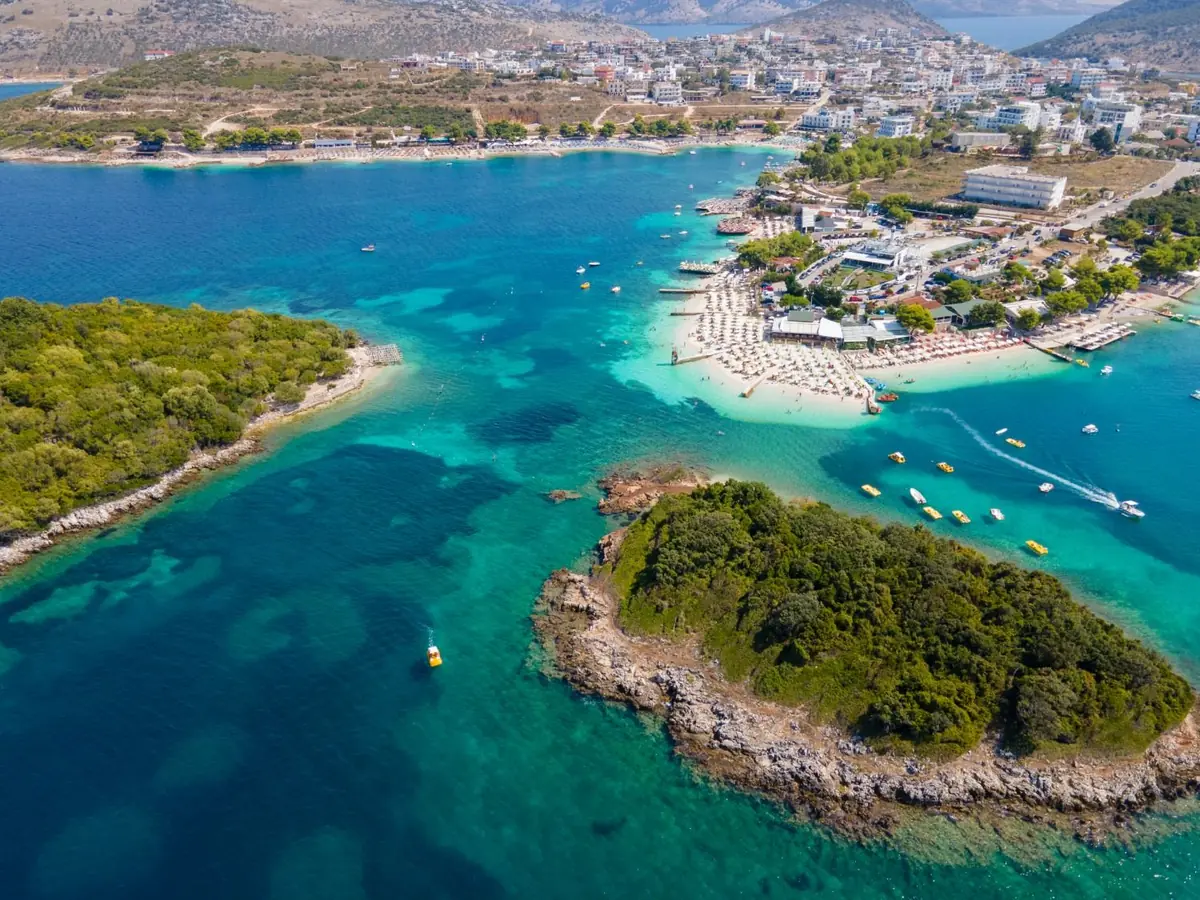
Ksamil gets called the “Maldives of Europe” in the marketing, and for a 45-minute Butrint day trip combo it delivers enough turquoise to justify a boat ride out to one of the islands. Beyond that, it’s overrated. The sand is mostly covered by paid sunbeds that you can’t really opt out of, the restaurants jack prices for tourists (an Aperol Spritz runs around $12 at the central beach clubs), the water is gorgeous but the experience isn’t — you’re pay-walled out of the actual sand on 80% of the central beach.
What’s actually good about Ksamil
- The water color is real. On a clear day, Ksamil is as turquoise as the photos.
- The four small islands a short swim or paddle offshore are genuinely fun.
- It’s a convenient combo with Butrint UNESCO site (10 minutes north) and the Blue Eye (30 minutes northeast).
What’s not
- Beach clubs dominate. Free public access exists in theory but is tiny and usually full by 10 AM in July-August.
- Sunbeds cost $12-24 per pair at central beaches, non-negotiable if you want to sit on sand.
- Taxi overcharging from Sarandë is routine. The fair rate is €10-15 ($11-17); tourists get quoted €50 ($55) all the time. Use the UpS Taxi or Speed Taxi apps.
- Nightlife leans rowdy — Italian stag parties and Albanian club tourists. Not the quiet Mediterranean vibe.
The play
Base in Sarandë (cheaper, better hostels, more going on) or Himarë (quieter, better beaches nearby). Day-trip to Ksamil for half a morning, eat a cheap sufllaqe from a street stand, swim out to one of the islands, then get back on the furgon. You don’t need to stay there.
Is Tirana worth two full days?
Yes — there are easily enough things to do in Tirana to fill two days, not a one-day stopover. It earned its reputation as an awkward post-communist capital when the Pyramid was still a crumbling ruin and Skanderbeg Square was a highway roundabout. Both have been redone. The city now has two communist-era bunker museums, a renovated pyramid you can walk up, a walkable central square, a cable car up Mount Dajti, and a post-Blloku bar scene that’s loud, cheap and honest. Plan two full days.
Day one — communism and coffee
Start at Bunk’Art 1 at the base of Mount Dajti. It’s a 106-room former nuclear bunker converted into a museum covering WWII to the end of communism. Entry runs about $10, plus $1 for the mandatory audio guide app. Give it 2 hours. Combine with a ride up Dajti Ekspres cable car ($9 round trip) — the views over the Tirana sprawl are worth the ride even if you don’t hike on top.
Afternoon: walk Blloku, the neighborhood where Enver Hoxha’s villa sat fenced off from regular Albanians until 1991. It’s now the bar and cafe district — third-wave coffee shops, vinyl bars, and the occasional Soviet mural preserved on a building side.
Day two — Skanderbeg Square and Bunk’Art 2
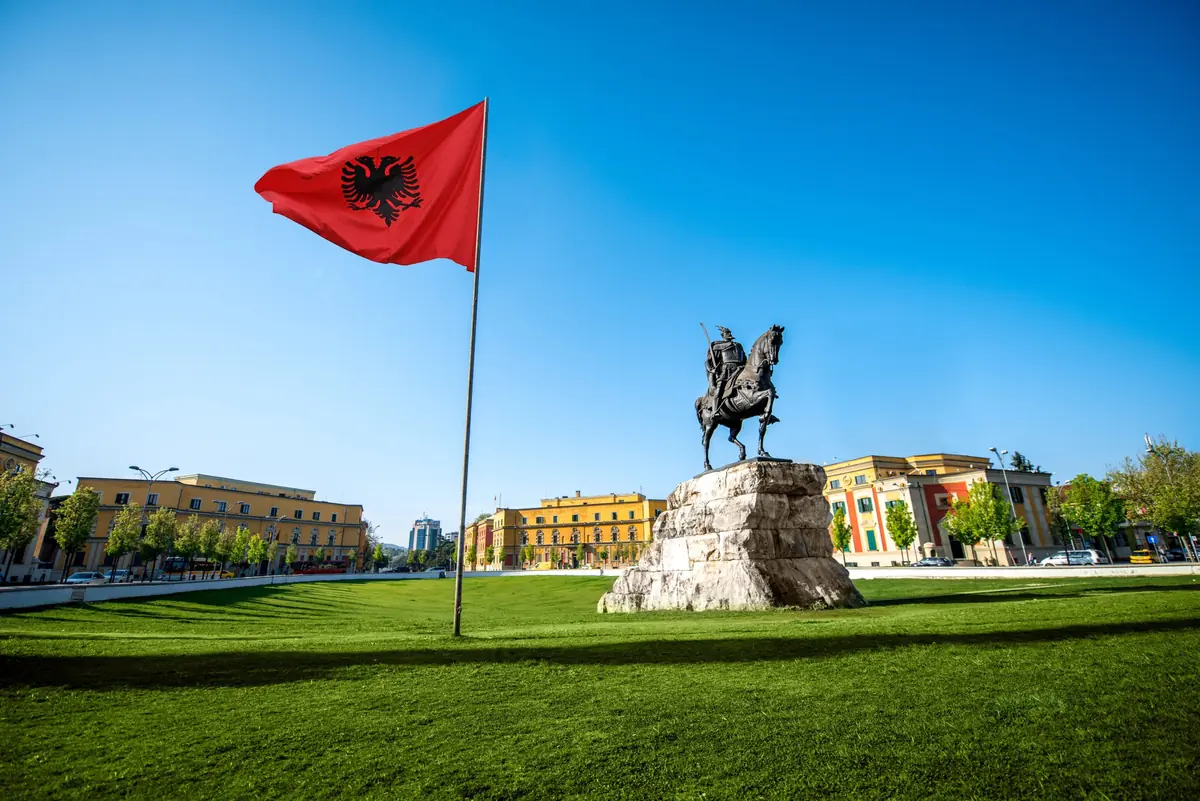
Skanderbeg Square is the central spine of Tirana, anchored by the equestrian statue of Gjergj Kastrioti — the 15th-century national hero who held off the Ottomans for 25 years. The renovated National History Museum frames the north side, with the Et’hem Bey Mosque on the east and the clock tower next to it. Give the square 30 minutes.
Bunk’Art 2 sits on the square itself. Entry runs a little less than Bunk’Art 1 — around $6 — with the same audio-guide add-on. This one focuses on the Sigurimi — Hoxha’s secret police — and runs shorter, 60-90 minutes. If you only see one, see Bunk’Art 1 (bigger, more dramatic). If you’ve got time, do both.
Finish at House of Leaves ($8.60) — the former surveillance-state HQ, converted into a museum about spying and informant networks during communism. Smaller, grimmer, essential if you’re doing a communism-focused visit.
Pro Tip: Tirana’s two bunker museums are run by the same organization and you can buy a combo ticket at either entrance. It saves a couple of euros and means you don’t have to queue twice. Both are cash-only at the door — bring lek.
Berat and Gjirokastër — the UNESCO towns worth slowing down for
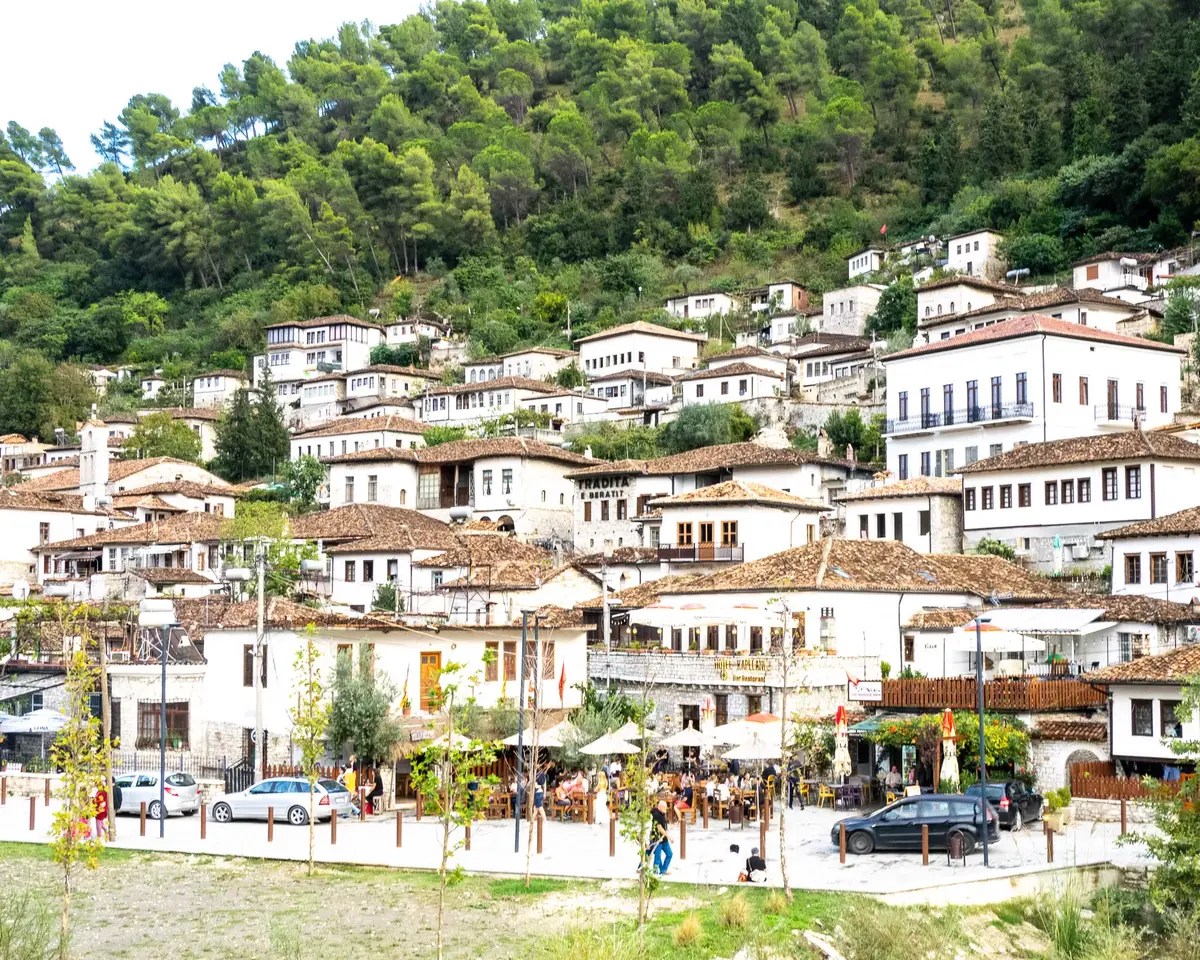
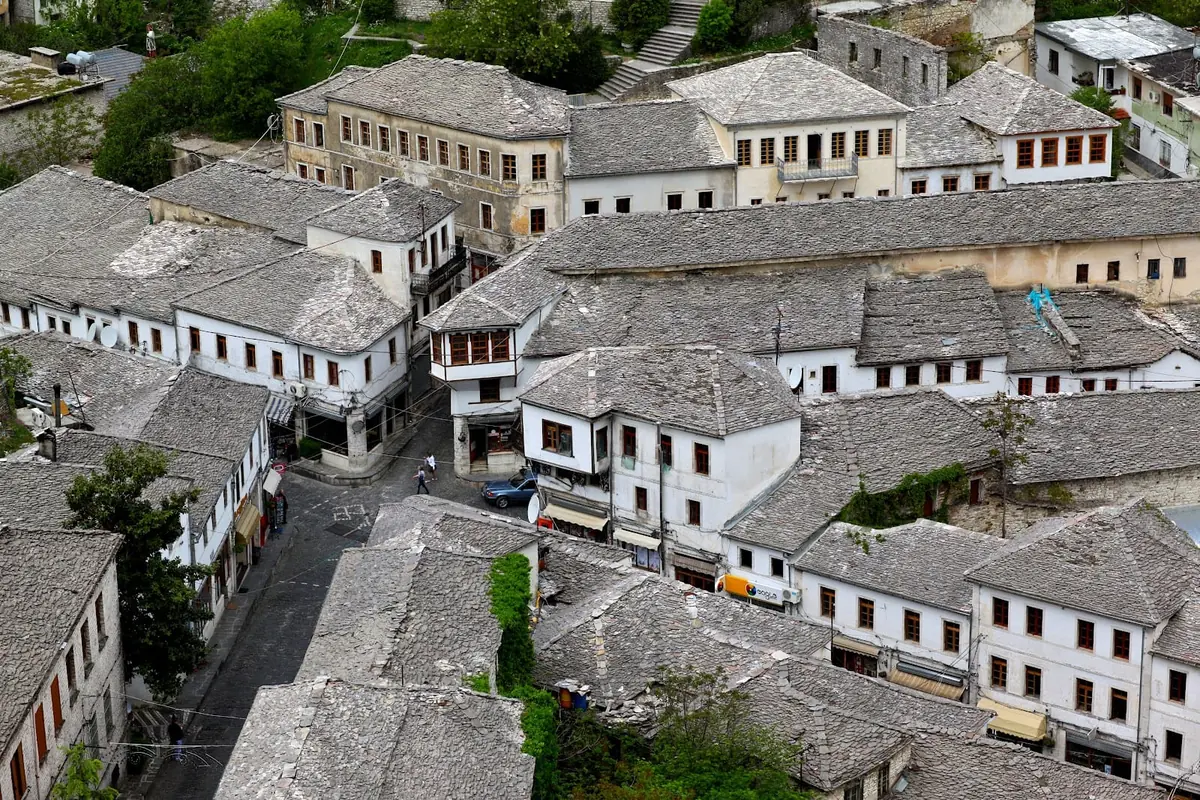
Both towns are Ottoman-era UNESCO World Heritage Sites and both deserve two nights, not one. Berat is known as the City of a Thousand Windows — tiered white houses climbing a hillside above the Osum River — while Gjirokastër is the Stone City, slate roofs stacked in a defensive amphitheater around a massive hilltop castle. They look similar in photos; the vibes are different. Berat is mellow and wine-focused. Gjirokastër is moodier, stonier, and pulls in serious Hoxha-era history pilgrims (he was born there).
Berat — what to actually do
- Berat Castle: still inhabited — Albanians live inside the walls. Entry ~$2.50. Give it half a day.
- Mangalem and Gorica quarters: the twin neighborhoods facing each other across the Osum. The best photo of the “thousand windows” is from the Gorica side looking across.
- Osumi Canyon: half-day trip from Berat — slot canyon, cold river, optional rafting in spring. Most hostels run a $20-30 shared shuttle.
- Wine dinner: Berat sits in Albania’s main wine region. Small family-run restaurants in Mangalem will pour you a carafe of Shesh i Bardhë for $4-6.
Gjirokastër — what to actually do
- Gjirokastër Castle: one of the biggest in the Balkans, with a Cold War-era US fighter jet on the ramparts. Entry ~$4.90. Give it 2 hours.
- Skenduli House and Zekate House: two preserved 18th-19th century Ottoman mansions — some of the best-preserved in the Balkans.
- Ethnographic Museum: housed in Enver Hoxha’s birthplace. Confronts the complicated legacy directly.
- Qifqi: the local specialty — herb-and-egg rice balls you’ll only find in Gjirokastër.
Pro Tip: Both towns are small enough to see in a day but uncomfortable to see in a day — cobblestone streets are steep, slippery, and genuinely rough on luggage wheels. Book two nights and walk without bags on day two. Your ankles will thank you.
Where should you stay? Best hostels for backpacking Albania
Albania’s hostel scene is small but strong — maybe 30 backpacker-focused properties across the whole country. The Wanderers Hostel in Shkodër has won “Best Hostel in Albania” at the Hoscars and is the most consistent recommendation I’d give to a first-timer. Stone City Hostel in Gjirokastër has won it four times. You don’t need to book more than three days in advance outside July-August, but the named hostels below fill fast on summer weekends.
Best hostels by city
| City | Hostel | Dorm (USD) | Why stay here |
|---|---|---|---|
| Tirana | Tirana Backpacker Hostel | ~$9 | The original — garden, social, walkable to Skanderbeg |
| Tirana | Trip’n’Hostel | $10-15 | Classic party hostel; showing its age |
| Shkodër | The Wanderers Hostel | ~$8.28 | Best Hostel in Albania winner; organizes Komani + Theth |
| Shkodër | Shkodra Hostel & Day Tours | ~$10.65 | Strong day-tour program |
| Shkodër | The Galley Party Hostel | ~$11.83 | Nightly events; skip if you want quiet |
| Berat | Mi Casa Es Tu Casa | $10-14 | The original location — rooftop, best view in town |
| Berat | Berat Backpackers | $10-14 | Lower-key alternative with a stone-walled garden |
| Gjirokastër | Stone City Hostel | $8-21 | 4× Best Hostel winner; breakfast included; castle views |
| Sarandë | Hairy Lemon Hostel | $11+ | 8th floor, Irish-managed, homemade Baileys pancakes — April to late October only |
| Valbonë / Theth | Family guesthouses | $25-40 with half-board | Cash only; booked through Shkodër hostels |
What you’re getting for $10
A bunk in a 6-to-12-bed mixed dorm, a locker (bring your own padlock — hostels occasionally run out), shared bathrooms, free Wi-Fi, sometimes breakfast (usually bread, jam, eggs, occasionally byrek). AC is standard in newer hostels on the coast but not guaranteed in older properties in the north. Ask before booking if it’s July.
Pro Tip: Albanian hostels aren’t on Hostelworld as uniformly as Croatian or Greek ones. The Wanderers and Stone City have direct booking sites — book direct to avoid the Hostelworld fee and sometimes get a better rate. Booking.com also covers most Albanian hostels with cancellation flexibility that Hostelworld doesn’t always match.
How do you actually get around Albania?
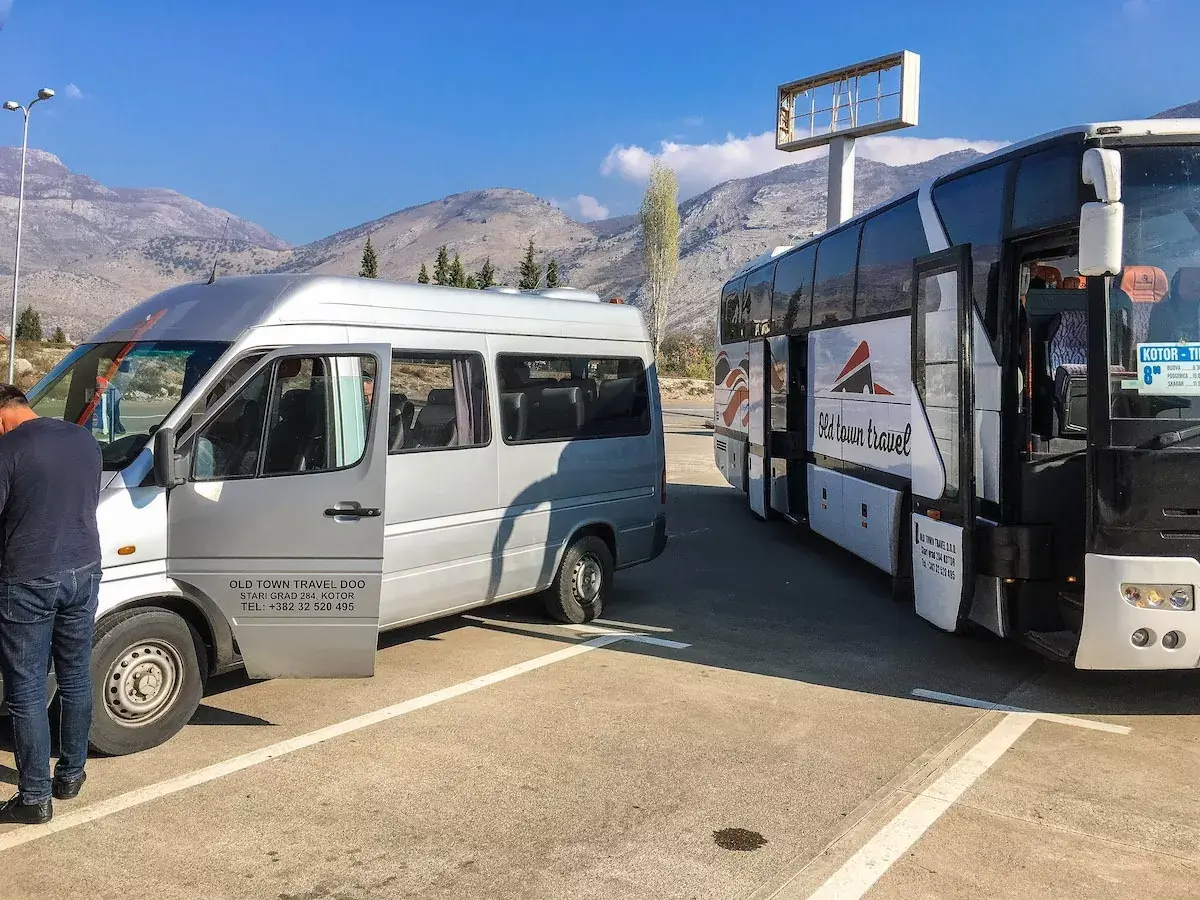
Furgons — shared minibuses that leave when they fill up — are the default. They don’t run on a published schedule. You flag one down at a terminal or along the road, confirm the destination card on the windshield, pay in cash (always lek), and shout “Ndal!” (Stop!) when you want to get off. Intercity buses from FlixBus, Luna Travel, GoOpti and BlaBlaCar run the major routes with fixed schedules and AC — use these when you can.
The furgon walkthrough (for first-timers)
- Find the terminal. Tirana has two main clusters — North/South Terminal (near Kashar) for northern routes, TEG/East Gate for southern routes. Both have been under rolling reconstruction, so confirm with your hostel the night before.
- Look for a minibus with a destination card on the windshield. Drivers or ticket touts will shout the destination. Don’t be shy — ask “Berat?” or “Sarandë?” and they’ll point you to the right van.
- Put your bag in the back or on your lap. There are no luggage holds.
- Pay the driver directly when he asks — halfway through the ride is common. Cash only, small lek notes.
- Vans leave when full, not at a scheduled time. Fullness varies: peak summer, every 30 minutes. Shoulder season, every 1-2 hours. Shoot for the morning — most furgons stop running by 4 PM on shorter routes.
- To exit before the end of the line, shout “Ndal!” (en-DAL) and the driver stops wherever you are. No dedicated stops.
Furgon prices (USD approximate)
- Tirana → Shkodër: $5-7, ~2 hours
- Tirana → Berat: $5-8, ~2.5 hours
- Tirana → Gjirokastër: $10-14, ~4.5 hours
- Tirana → Sarandë: $14-18, 6-7 hours
- Tirana → Vlorë: ~$5, 3 hours
- Vlorë → Sarandë (via Llogara Pass): ~$9, 3.5 hours
- Berat → Gjirokastër: ~$7, 3 hours
- Sarandë → Ksamil: $1-2, 20 minutes
- Sarandë → Himarë: $4-6, 1.5 hours
- Shkodër → Koman (for the ferry): ~$9
- Valbonë → Shkodër: $15-20
When to rent a car
Buses and furgons work fine for the main backbone — Tirana, Shkodër, Berat, Gjirokastër, Sarandë. They’re inadequate for the coast road between Sarandë and Vlorë, where the best beaches sit off the main highway with limited public transport. Rent a car for 3-5 days along the Riviera, then return it. Expect $28-40 per day plus fuel at roughly $6.50 per US gallon. Bring your US driver’s license plus an International Driving Permit.
Drive defensively. Albanian driving culture includes passing on blind curves, pedestrians on the shoulder of highways, livestock on roads, and genuinely bad potholes. There is no Uber or Bolt — in Tirana and Sarandë, use the UpS Taxi or Speed Taxi Tirana app.
Airport and overland entry
Tirana International Airport (Nënë Tereza / Rinas) is the main hub. The Rinas Express Bus runs 24/7, hourly, for 400 lek (~$4.90) and drops you at the Palace of Culture on Skanderbeg Square. Taxis run $22-28 to central Tirana.
Overland options:
- From Montenegro: bus from Ulcinj or Bar via Hani i Hotit or Muriqan to Shkodër, ~2 hours
- From Kosovo: Prizren to Kukës via Morinë, or direct Prishtina to Tirana bus
- From North Macedonia: Ohrid/Struga to Pogradec via Qafë Thanë, ~1 hour
- From Greece: Ioannina to Gjirokastër via Kakavijë (1.5 hours), or Corfu to Sarandë fast ferry (30 minutes)
Is Albania safe for backpackers?
Yes — Albania is one of the safer countries in Europe by the actual numbers, and a closer look at how safe Albania really is bears that out. The homicide rate is about 1.2 per 100,000 (lower than France or the US). Violent crime against tourists is rare, petty theft is uncommon outside Tirana crowds, and the hospitality culture — called besa, a code of honor — runs deep. The real danger isn’t crime. It’s the driving. Reckless overtaking on rural roads causes the majority of travel-related injuries and fatalities.
What to actually worry about
- Traffic. Walk defensively on highway shoulders. Don’t hitchhike on the SH8 Llogara Pass. If you rent a car, drive like every oncoming vehicle might be passing blind.
- Stray dogs. Common and mostly non-aggressive, but packs exist in rural areas. Don’t run. Carry rocks in the Alps (locals do). Consider a rabies booster if you’re trekking for weeks.
- Taxi scams, Sarandë to Ksamil. Fair fare is €10-15 ($11-17). Use the UpS app instead of street-hailing.
- Restaurant overcharging on the Riviera, especially Ksamil. Always check the menu price before ordering “daily special” fish by weight.
- Pickpockets in Tirana crowds. Same rules as any European capital — zipped pockets, bag in front on the furgon.
What the State Department advisory means
Albania sits at Level 2: Exercise Increased Caution. This reflects general crime plus a specific alert about possible pro-Iran group threats at hotels, malls, and restaurants in Tirana. No attacks have been reported. Albanian authorities and the US Embassy coordinate closely. If you enroll in STEP (free, sends you embassy updates), you’ll get notifications if the situation changes. Don’t cancel your trip over this — Level 2 also covers France, Italy and Germany.
Is Albania safe for solo female backpackers?
Yes — for solo female travel in Albania, it’s widely reported as one of the safer countries in Europe. The besa code of honor tends to make locals protective rather than predatory, and the backpacker circuit is well-trodden enough that you’ll run into other solo women at every major stop. Minor friction points exist (beach-club attention in Ksamil, occasional gym or street comments) but physical safety is high. I know women who’ve done the two-week route solo and would do it again tomorrow.
Practical tips
- Dress moderately in the rural north (the Albanian Alps, Shkodër) and at religious sites — shoulders covered in mosques. On the Riviera and in Tirana, dress however you want.
- Female-friendly dorms exist but aren’t the default — check hostel listings for a “female dorm” filter, or book a private room on a budget night.
- Night transport is fine in Tirana. Furgons and regional buses mostly stop running by 8 PM, so plan intercity travel before dark.
- Use UpS Taxi or Speed Taxi Tirana instead of street-hailing. Rates are lower and tracked.
- The Theth-Valbonë hike is popular with solo women in July-August — the trail is busy enough you’re never alone. In shoulder season it empties out.
- Ksamil nightlife leans rowdy. If you want coastal nightlife, pick Himarë or Dhërmi instead.
- Learn “Jo, faleminderit” (“No, thank you”) — firm and polite.
Pro Tip: Albania has a strong WhatsApp culture — guesthouse owners, hostel managers, and even furgon drivers will often give you their number and expect you to message them when you arrive. Treat this as hospitality, not weirdness. It’s how the country runs.
What should you eat in Albania?
Albanian food is Ottoman at the core, Italian on the coast, mountain-hearty in the north. Meals lean toward lamb, fresh cheese, yogurt, seasonal vegetables, and an almost aggressive amount of olive oil and bread. You’ll eat byrek for breakfast, tavë kosi or qofte for lunch, and grilled fish for dinner on the Riviera. Expect $4-8 for a solid sit-down main inland, $15-30 for Riviera seafood. Skip anything marked “English menu.”
The dishes to order
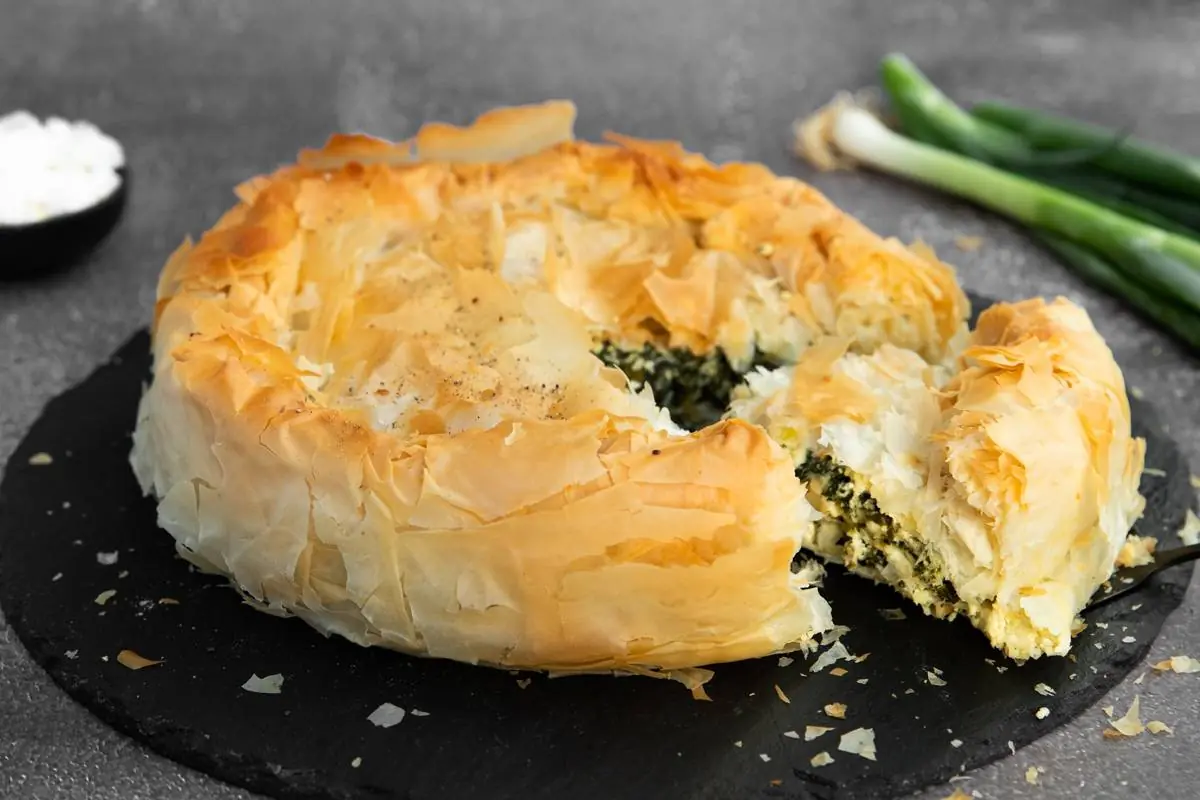
- Byrek — flaky filo-pastry pie, 100-200 lek ($1-2.50) per slice. Try me spinaq (spinach), me djathë (cheese), and me mish (meat).
- Tavë kosi — the national dish. Baked lamb and rice under a yogurt-egg topping. Originated in Elbasan.
- Fërgesë — peppers, tomatoes and cottage cheese baked together. Tirana specialty. Sometimes includes liver.
- Qofte — grilled meat patties, usually lamb, served with yogurt or a chopped salad.
- Speca me gjizë — roasted peppers stuffed with gjizë (local cottage cheese).
- Qifqi — rice balls with egg and herbs, Gjirokastër-only.
- Sufllaqe — Albanian street wrap, gyro-style. 200-300 lek ($2.50-4). Lunch fuel.
- Baklava — Ottoman walnut pastry. Every bakery has a version.
- Grilled fish — the Riviera move. Sea bass, bream, or sardines, usually $15-25 per person with a glass of wine.
The drinks
- Raki — grape brandy, 40-45% ABV. Get offered a shot everywhere. The mulberry version (raki mani) is sweeter and easier. Drink slowly — it’s not meant to be taken fast.
- Korça beer — the most respected local lager, brewed in Korçë since 1928.
- Kallmet and Shesh i Zi wines — native Albanian varietals worth ordering.
- Kafe turke — Turkish-style coffee, served unfiltered with grounds in the bottom of the cup. Don’t drink the last sip.
- Makiato — the Italian macchiato, the default afternoon coffee. 100-150 lek ($1.20-1.80).
How do you get online in Albania? (SIM + eSIM)
Two carriers cover Albania: Vodafone Albania and One Albania (which absorbed the former ALBtelecom and Telekom networks). A tourist SIM card for Albania with 40-100 GB of data costs about $24-35 for two to three weeks. eSIMs from Airalo, Holafly or Saily run $5-30 and work the moment you land. Albania is not in the EU, so your EU “roam like at home” plan will not work here.
Physical SIM options
- Vodafone Tourist Pack: 40 GB + 1,000 minutes for ~2,300 lek (~$28). Two-to-three-week validity.
- Vodafone / One 100 GB pack: 100 GB + unlimited calls for ~2,900 lek (~$35).
- One Tourist Pro: 40 GB + 1,000 minutes + 1,000 SMS for ~2,600 lek (~$32).
Buy at the TIA airport shop on arrival — they’re open 24/7 and do the registration (passport required) on the spot. A discount of roughly 20% exists if you buy through the carrier’s website before your trip and show the QR code at pickup. If you can wait until you reach town, the city shops in Tirana, Sarandë, Shkodër or Berat are cheaper than the airport kiosks.
eSIM options
- Airalo: a few GB from around $5; about $13 for 10 GB. Good for short trips.
- Holafly: unlimited data for ~$27 per week. Heaviest option.
- Saily: includes ad blocking. Mid-range pricing.
5G and coverage
5G is live but still limited — concentrated in central Tirana with parts of Durrës and Shkodër, and One is leading the expansion. LTE/4G covers the rest of populated Albania at 15-40 Mbps in cities and 5-15 Mbps in villages, which is plenty for maps, messaging and video calls. Dead zones: Llogara Pass, Gjipe cove, the Theth-Valbonë trail outside the villages, and stretches of the coast road between Himarë and Dhërmi.
Pro Tip: Download Maps.me or Organic Maps with the Albania map before you fly in. Google Maps is fine for general navigation in cities but misroutes you onto dirt tracks in the mountains. The offline apps route better on rural roads and work with zero signal on the Theth-Valbonë trail.
How do you handle money and cards in Albania?
Albania runs on cash. Cards work at Tirana hotels, mid-range restaurants in the cities, and larger supermarkets — but 60% of the transactions you’ll make (guesthouses, furgons, ferries, street food, family restaurants) are cash only. Use local bank ATMs (Raiffeisen, Credins, Alpha Bank, BKT, Intesa Sanpaolo, OTP), which charge a $7-8 withdrawal fee. Avoid Euronet ATMs entirely — their exchange rate is a rip-off even by airport-ATM standards.
What cash to carry
The Albanian lek (ALL) is a closed currency — you can’t get it outside Albania, and you can’t take it out. Plan to spend what you withdraw. Current rate: 1 USD ≈ 82 ALL.
- Withdraw in maximum chunks (usually 40,000 lek / ~$485) to minimize the per-withdrawal fee.
- Euros are informally accepted at many coastal businesses, ferries and hostels — usually at a worse rate than paying in lek. Pay in lek when you have it.
- Tipping: not obligatory. Round up taxi fares. Leave 5-10% at sit-down restaurants if the service was good.
- Sufficient cash reserve: bring $100-150 in crisp US dollars or euros as emergency backup. Most exchange offices in Tirana will change these.
ATM cheat sheet
- Raiffeisen, Credins, Alpha, BKT, Intesa, OTP — all charge $7-8 per withdrawal but offer fair mid-market rates.
- Euronet — don’t. Routinely 10-15% worse than bank ATMs.
- No ATMs in Theth, Valbonë, small Riviera villages. Withdraw in Shkodër, Sarandë or Tirana before you go.
What should Americans know about Albanian language and culture?
The language is Albanian (Shqip) — an Indo-European isolate with no close relatives. English is widely spoken by Albanians under 35 in cities and tourism zones; Italian works with older Albanians; Greek works in the south. Learning five phrases gets you a disproportionate amount of goodwill. The culture reads familiar in some ways (Mediterranean mealtimes, late-night coffee, loud family dinners) and foreign in others (the traditional head-shake for “yes,” 170,000+ communist-era bunkers still dotting the terrain).
Essential Albanian phrases
- Hello: Përshëndetje (per-shen-DET-yeh)
- Thank you: Faleminderit (fah-leh-min-DEH-rit)
- Please: Ju lutem (yoo LOO-tem)
- Yes / No: Po / Jo
- Cheers: Gëzuar (geh-ZOO-ar)
- Goodbye: Mirupafshim
- How much?: Sa kushton?
The head-nod thing — real, but overstated
You’ve read that Albanians shake their head side-to-side for “yes” and tilt it up with a “tsk” for “no.” The reversal is a real tradition shared with Greece, Bulgaria and Turkey — but in cities and among anyone under 35, most Albanians use Western gestures when speaking to foreigners. The reversal persists mainly in rural areas and among older people. When in doubt, say “po” or “jo” out loud. Nobody will penalize you for skipping the gesture.
The bunkers, briefly
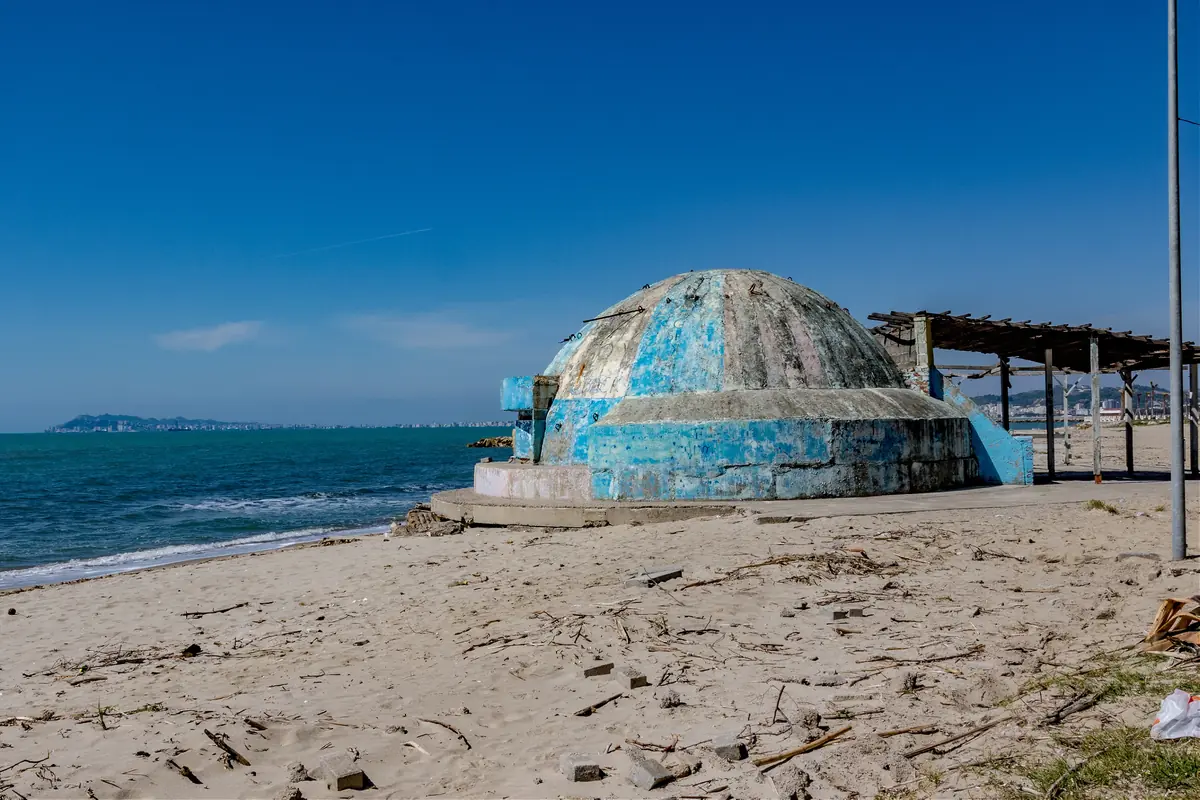
More than 170,000 concrete bunkers remain scattered across Albania — the legacy of Enver Hoxha’s 1960s-80s fever-dream that the country would be invaded by every neighbor simultaneously. The bunker-building consumed about 20% of GDP in the peak years. Today they’ve been converted into homes, cafes, mushroom farms, and beach changing rooms. You’ll see them on the roadside between every town. They’re part of the texture.
Hoxha and the Sigurimi
Enver Hoxha ran Albania as a hard-Stalinist state from 1944 to 1985 — isolating from Yugoslavia in 1948, the USSR in 1961, and China in 1978. He banned religion in 1967 (making Albania, formally, “the world’s first atheist state”), banned private cars, and ran the Sigurimi secret police, which killed roughly 6,000 political prisoners. Communism collapsed in 1991; a pyramid-scheme crisis and civil unrest followed in 1997. The House of Leaves museum and Bunk’Art 2 in Tirana handle this history honestly. Read up before visiting — the exhibits assume some background.
US-specific culture notes
- Tipping is lower-key than in the US. 5-10% is generous. 15-20% is unusual.
- Service timing is slower. Coffee takes 10 minutes. Dinner takes 2 hours. This is the feature, not the bug.
- Religion is lived-in rather than performative. Mosques, Catholic churches and Orthodox churches sit on the same block. Nobody asks.
- Electrical outlets are European Type C/F (Schuko), 230V, 50Hz. US devices need an adapter plus (if not dual-voltage) a converter.
- Tap water is safe in Tirana and most major cities. In mountain villages, stick to bottled or filtered.
What should you pack for the Alps and the coast?
Pack for three climates at once: Mediterranean summer for the Riviera, Alpine for the north, and Ottoman stone-town shoulder-season temperature swings — the Albania packing list below splits the gear out by region. The one item every traveler underpacks: a sturdy pair of hiking boots. Tirana and the Riviera can forgive sneakers; the Accursed Mountains absolutely cannot.
The pack list
- Waterproof hiking boots with ankle support — the single most important item if you’re doing Theth-Valbonë
- A dry bag or waterproof phone pouch — for the ferry, Blue Eye, and the Riviera beaches
- Quick-dry clothing — two pairs of pants, three to four shirts, a light fleece, a rain shell
- Swimsuit + water shoes — most Riviera beaches are pebble, not sand
- Sun hat, SPF 50, sunglasses — the summer sun in Ksamil and Sarandë is brutal
- Headlamp — guesthouses in Theth and Valbonë lose power occasionally
- Microfiber towel — not every hostel provides one for free
- Earplugs — Tirana hostels are loud, Himarë weddings are louder
- European power adapter (Type C/F) — buy before you fly, TIA airport markups are rough
- Money belt or hidden pouch — for the lek stack you’ll be carrying
- Refillable water bottle — tap water is safe in most cities
- Water purification tablets or Sawyer filter — for mountain spring water in the Alps
- Modest attire — a scarf for women entering mosques, knee-length shorts for men
Before you book
Albania is best-value when you treat it like three countries at once: the Alps in the north, the Ottoman towns in the middle, and the Riviera in the south. Give each region two or three days, move between them by furgon, and don’t over-plan — the best moments in Albania tend to be the ones you stumble into after the scheduled thing is done. Two weeks is enough for the hero route; a week means picking north or south, not both.
The single best decision you can make before you fly: book the Komani Lake ferry direction of your Theth-Valbonë hike. Go Komani → Valbonë → Theth, not the reverse. You’ll thank yourself at 4 PM on day two when you’re walking downhill on loose scree instead of up it.
TL;DR: Fly into Tirana, give it two days, head to Shkodër, take the 9 AM Komani ferry to Fierzë, minibus to Valbonë, hike to Theth, bus back to Shkodër. Then Berat, Gjirokastër, a Sarandë-Ksamil day trip, Himarë or Dhërmi on the Riviera, back to Tirana. Cash-heavy, furgon-based, $35-65 per day for most of what backpacking Albania actually costs. Go in September if you can.
What’s the one question you still have about backpacking Albania that nobody’s answered for you yet? Drop it in the comments — the ones we’ve heard most often end up in the next update of this guide.