Albania is one of Europe’s most undersold bases for digital nomads — fast internet, $2 beers, and a full year visa-free for US passports. I spent 90 days here working from Tirana and the Riviera. This guide is what I’d tell a friend: the costs, the traps, and the neighborhoods actually worth your rent money. Think of it as the nomad chapter of my broader guide to traveling in Albania.
Is Albania actually worth it for digital nomads?
Albania is worth it if you prioritize cost, internet speed, and visa freedom — and can tolerate a thin nomad community, aggressive drivers, and cash-heavy transactions. US passports get 365 visa-free days, Tirana fiber runs $15 a month, and a mid-range life in the capital costs $1,000 to $1,300 monthly.
Here’s the honest three-for-three.
Three reasons to come:
- The 365-day visa-free rule for Americans, the most generous in Europe
- Median fixed broadband around 93 Mbps down, fast enough for any video call
- Rent in Tirana that still lands below Porto or Athens
Three reasons to skip:
- No real nomad scene yet
- Road safety that would rank among Europe’s worst in any honest survey
- A tax residency rule that traps anyone staying past 183 days in a calendar year
Most people I met in Tirana came for four to eight weeks, not a full year. The pattern that works follows the best time to visit Albania almost exactly: Tirana in spring, the coast in June, pivot to Kosovo or Greece during the peak-tourist August crush, return to Tirana in October. That rhythm is the single best piece of advice I can give anyone considering a full year here.
Pro Tip: If you’re deciding between Albania and Georgia (the country), Albania wins on food, swimming, and EU proximity. Georgia wins on nomad community, mountain access, and a real one-year tax residency carrot. Pick by what you actually want.
Does Albania have a digital nomad visa?
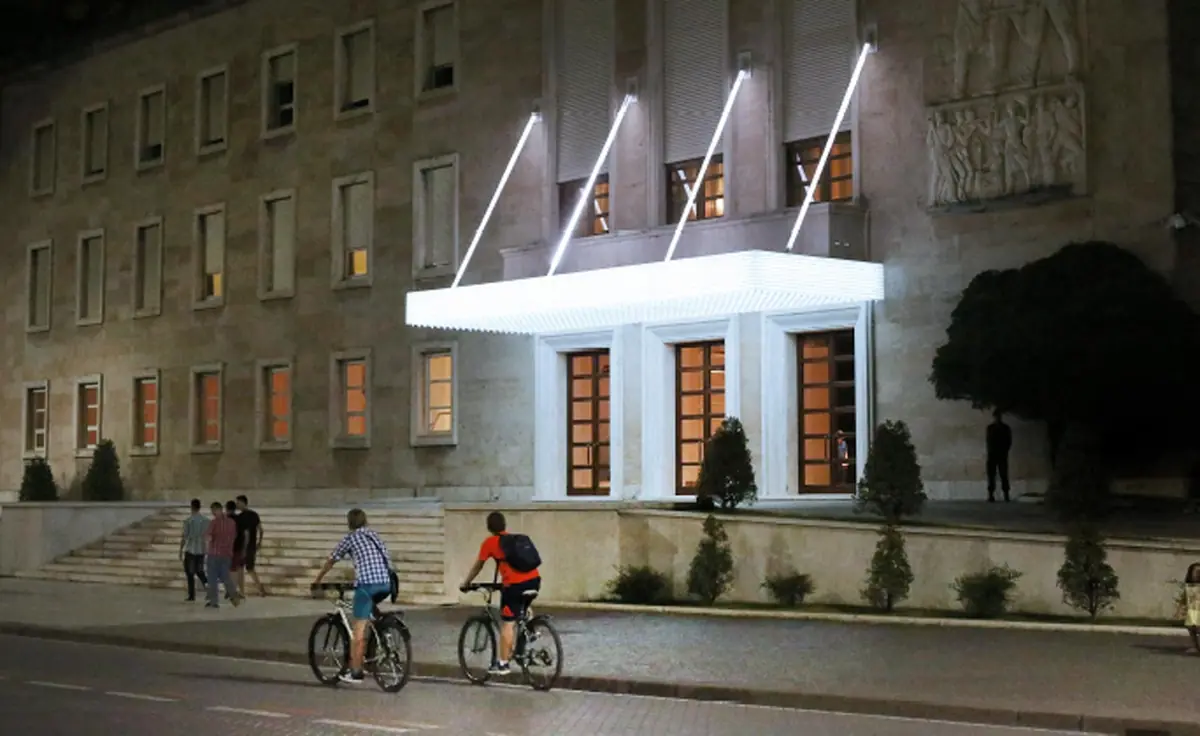
Albania does not technically have a digital nomad visa. Remote workers enter on a Type D long-stay visa and apply for the Unique Permit (Leje Unike), which includes a “Digital Mover” sub-category under Law 79/2021. US citizens skip the Type D step entirely thanks to a separate 365-day visa-free rule.
That distinction matters because almost every English-language guide conflates the two regimes — and it changes which of Albania’s visa requirements actually apply to you. Let me separate them.
The 365-day visa-free rule (US passports only)
This is the rule most US nomads actually use. You land in Tirana, get waved through immigration, and have one full year of legal residence without paperwork.
- Length: up to 365 consecutive days from entry
- Cost: free
- Required documents: valid US passport (border police enforce a three-month minimum; airlines often demand six, so travel with six to avoid a check-in problem)
- Reset rule: the only way to restart the clock is to leave Albania for at least 90 consecutive days. Short trips to Montenegro or Kosovo do not pause the counter.
The electronic entry system often skips the physical passport stamp. Save your boarding pass or take a photo of the digital immigration screen — you may need proof of entry date later for a landlord, bank, or tax filing.
The Unique Permit (Leje Unike) — Digital Mover category
Use this route if you want a multi-year base, a residency certificate, or you’re a non-US citizen without the 365-day perk.
- Legal basis: Law 79/2021 “On Foreigners” plus Council of Ministers Decision 858/2021
- Initial validity: 1 year, renewable up to 5 years total
- Path to permanent residence: after 5 years of continuous legal residence
- Naturalization: after 7 years
- Application: fully online through e-albania.al for most applicants
- Core fee: ALL 4,500 (about $54); realistic all-in cost with translations and apostilles runs $300 to $800
- Processing: 2 to 12 weeks
Required documents include passport, two photos, apostilled employment or freelance contract, a five-year criminal background check, health insurance with €30,000 minimum coverage (about $34,500), proof of Albanian accommodation, 12 months of bank statements, and a local Albanian bank account to receive deposits. Spouses and children under 21 (or 25 if studying) qualify for family reunification.
The income requirement is the one number that varies wildly between blogs. The statutory benchmark ties to the Albanian minimum wage — roughly ALL 32,000 to 40,000 per month ($390 to $485). Nomad sites cite an unofficial safer benchmark of about $9,800 per year. I’d treat $1,500 per month in documented remote income as the practical floor to avoid questions at renewal.
Do US digital nomads pay taxes in Albania?
Yes. Stay more than 183 days in a calendar year and you become an Albanian tax resident on worldwide income. Employment income is taxed at 13% up to ALL 2,040,000 ($24,700) and 23% above. The critical trap for Americans: there is no US–Albania tax treaty and no totalization agreement — no tie-breaker protection.
This is the single most under-covered fact in every article I read before moving. Let me walk through what it means in practice.
The 183-day trap
If you stay 184+ days in a calendar year (January 1 to December 31), you are legally an Albanian tax resident. That is true whether those days are consecutive or spread across multiple trips. A nomad who spends four months in spring and three months in fall crosses the line without realizing it.
Once you cross:
- You owe Albanian tax on worldwide income, not just Albania-source earnings
- There is no treaty to apportion taxing rights between the US and Albania
- You must file an Albanian return by April 30 of the following year
Most Americans rely on the Foreign Earned Income Exclusion (about $132,900, indexed to inflation each year) and the Foreign Tax Credit (Form 1116) to avoid double taxation. That mechanic works — but it’s your responsibility to manage, and the FEIE requires you to pass either the Physical Presence Test or the Bona Fide Residence Test. Neither is automatic.
The self-employment bright spot
Albanian self-employed income up to ALL 14 million per year (about $170,000) is taxed at 0% under a startup-supporting regime scheduled to run through the end of 2029. This is a genuine perk if you can legally establish an Albanian business entity — but it is not a nomad-specific carve-out, and the rules are technical.
Two catches worth knowing before you get excited:
- The 0% rate has anti-abuse rules. If 80% or more of your income comes from a single client, or 90% or more from fewer than three clients, the tax authority can reclassify it as employment income at 13% to 23%.
- There’s a carve-out to the carve-out: income earned solely from non-resident clients with no permanent establishment in Albania is treated as business income, which sidesteps the single-client rule. Setting this up correctly requires a local accountant, not a blog post.
Pro Tip: If you expect to stay past 183 days in a calendar year, book a call with a cross-border tax advisor before you land. Not after. The cost of fixing a filing mistake is ten times the cost of one hour of preventive advice.
How much does it cost to live in Albania?
A mid-range month in Tirana runs $955 to $1,300 for rent, utilities, food, and a coworking desk. Budget nomads outside the center can hit $590 to $900; a Blloku lifestyle with regular dining runs $1,200 to $1,800. Coastal cities are seasonal — Saranda and Ksamil summer rents can triple, so annual budgets depend more on your schedule than your zip code.
The $600-a-month Albania you may have read about is stale, the way the numbers in older guides to the cost of traveling Albania often are. Tirana rents roughly doubled over the last few years, and the cost-of-living figures on older nomad blogs have not kept up. Here is the honest current picture.
Tirana cost breakdown (USD)
| Item | Low | High |
|---|---|---|
| 1-bedroom, Blloku or Myslym Shyri | $575 | $850 |
| 1-bedroom, Kombinat or Don Bosko | $380 | $450 |
| Utilities, 915 sq ft (85 m²) | $70 | $200 |
| Home fiber, 500 Mbps unlimited | $14 | $17 |
| Mobile plan, 40 to 100 GB | $16 | $28 |
| Groceries, one person | $180 | $250 |
| Inexpensive restaurant meal | $5 | $10 |
| Cappuccino | $1.60 | $2.00 |
| Domestic draft beer (16 oz) | $2.50 | $3.00 |
| Monthly bus pass | $15 | $24 |
| Coworking hot desk, monthly | $125 | $195 |
Utilities spike in winter. Electric heat in older Tirana buildings can push a January power bill past $180 a month. Gas and central heating are rare — space heaters and inverter AC units do most of the work. Budget for that if you arrive in November.
The coastal premium
Saranda, Ksamil, and Himarë — the headline stops on the Albanian Riviera — operate on a different rhythm:
- Off-season (October to April): 1-bedroom Saranda from $400 to $600
- Peak summer (June to September): the same apartment from $1,100 to $2,300
- Vlorë: 20 to 30% below Saranda year-round
- Durrës: cheapest coastal name-recognition option, 1-bedroom from $355
- Shkodër: cheapest major city overall, 1-bedroom from $215 to $375
Multiple coastal landlords evict long-term winter tenants each June to flip the apartment to short-term summer tourists. If you want a June-to-September Saranda lease, sign it by February and put the summer rate in writing.
Which Albanian cities work best for remote work?
Tirana is the primary hub for remote work in Albania, with the only meaningful coworking scene, the best internet, and year-round livability. Vlorë is the best coastal shoulder-season base. Shkodër is the budget play with Alps access. Saranda and Ksamil are peak-summer only. Durrës is a Tirana satellite. Berat and Himarë are short stays, not bases.
Tirana
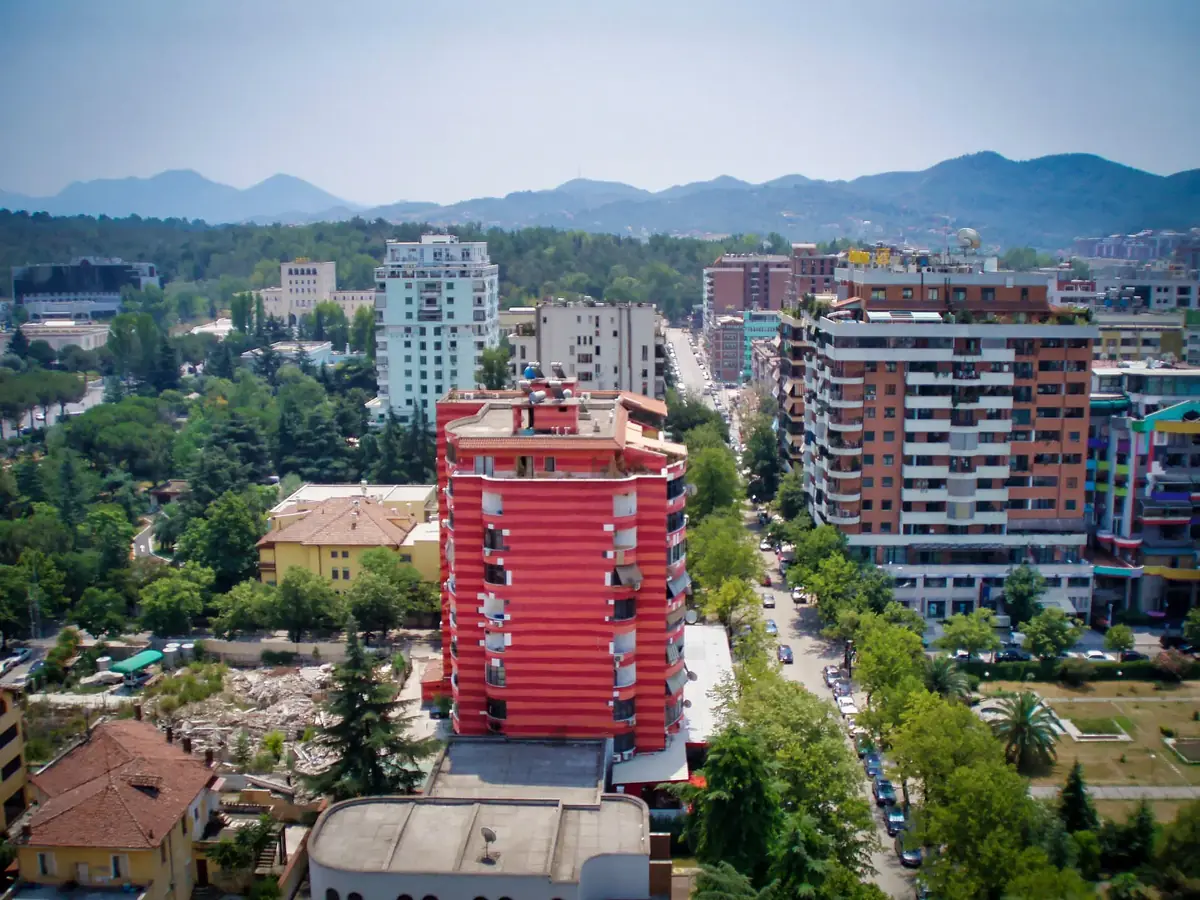
Tirana is the default. Blloku, Myslym Shyri, and Pazari i Ri cover 90% of what a nomad needs: cafes, coworking, restaurants open past 9 p.m., and fiber that actually hits its advertised speed.
- Location: Central Albania, 11 miles (18 km) from Rinas airport
- Cost: $955 to $1,800 per month all-in for a mid-range nomad
- Best for: First-time Albania nomads, anyone who wants year-round infrastructure
- Time needed: 1 to 3 months minimum for the city to click
Vlorë
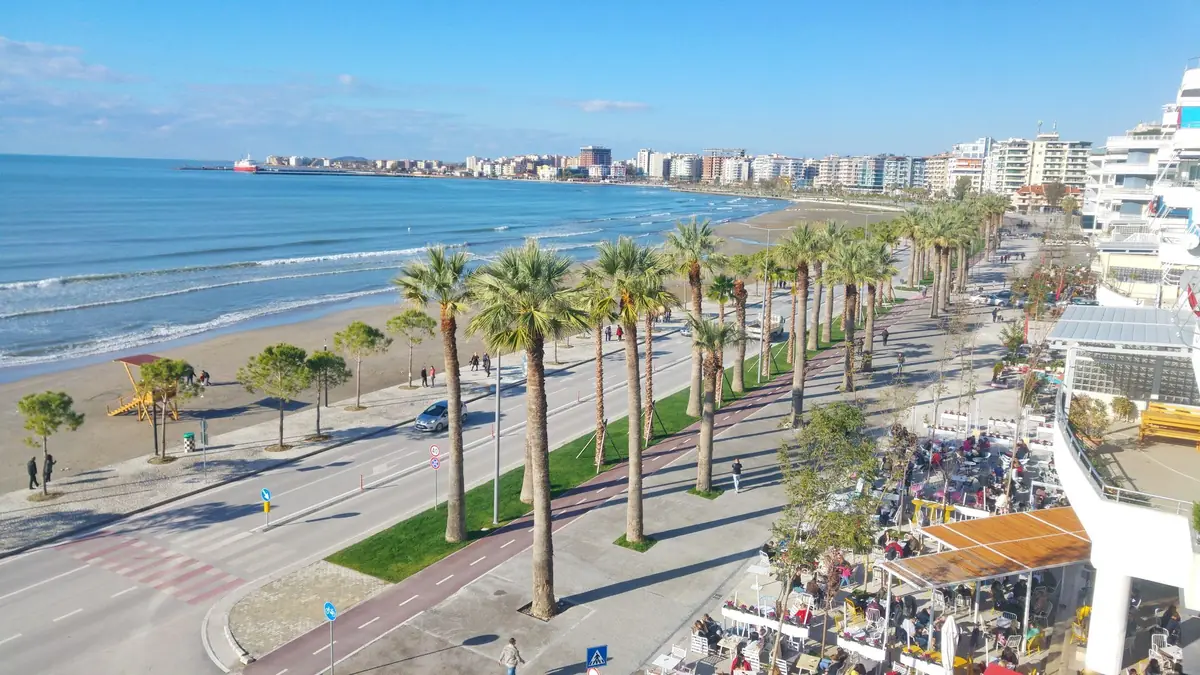
The smartest coastal base. Long promenade, solid cafes, one dedicated coworking space, and rents 20 to 30% below Saranda. Winter is quiet but functional.
- Location: Southwestern coast, 93 miles (150 km) from Tirana
- Cost: $750 to $1,200 mid-range nomad monthly
- Best for: Shoulder-season stays (April–May, September–October), swimmers who work remote
- Time needed: 2 weeks to 2 months
Shkodër
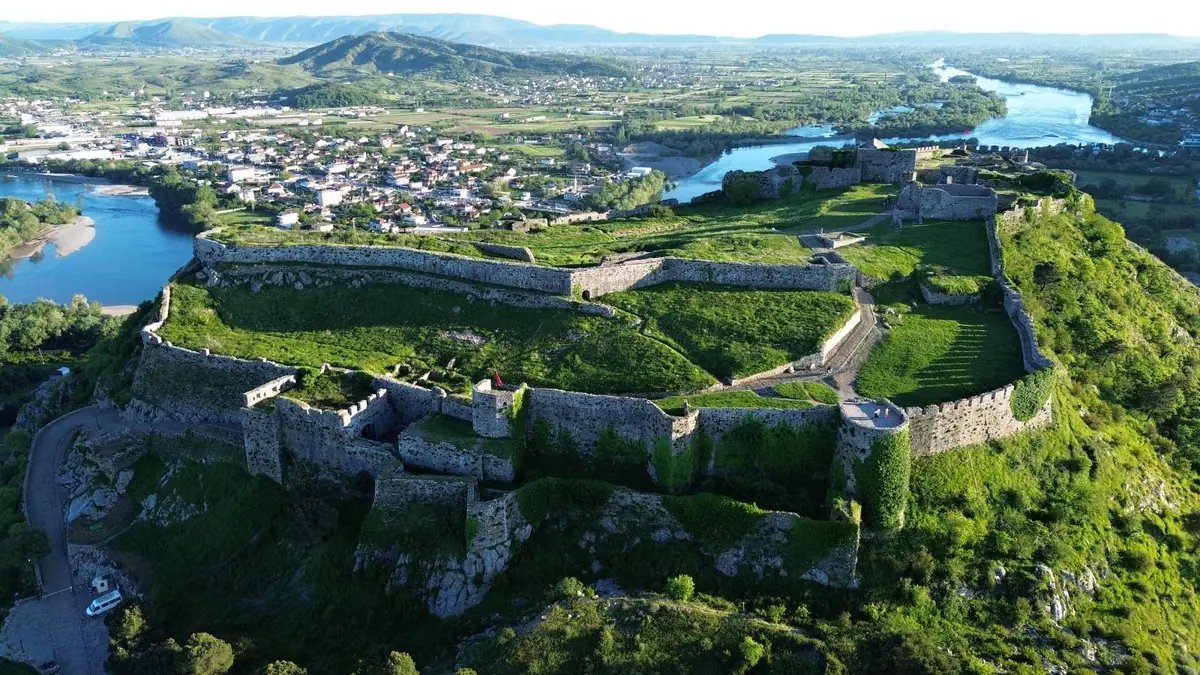
Shkodër is the budget and outdoor pick. Lake Shkodër is 10 minutes by bike; the Albanian Alps trailheads are a 2-hour furgon ride. Limited coworking, but cafes with fast WiFi are easy to find.
- Location: Northwestern Albania, 62 miles (100 km) from Tirana
- Cost: $600 to $900 monthly
- Best for: Budget nomads, mountain hikers, Lake Komani day trips
- Time needed: 2 to 4 weeks
Saranda and Ksamil
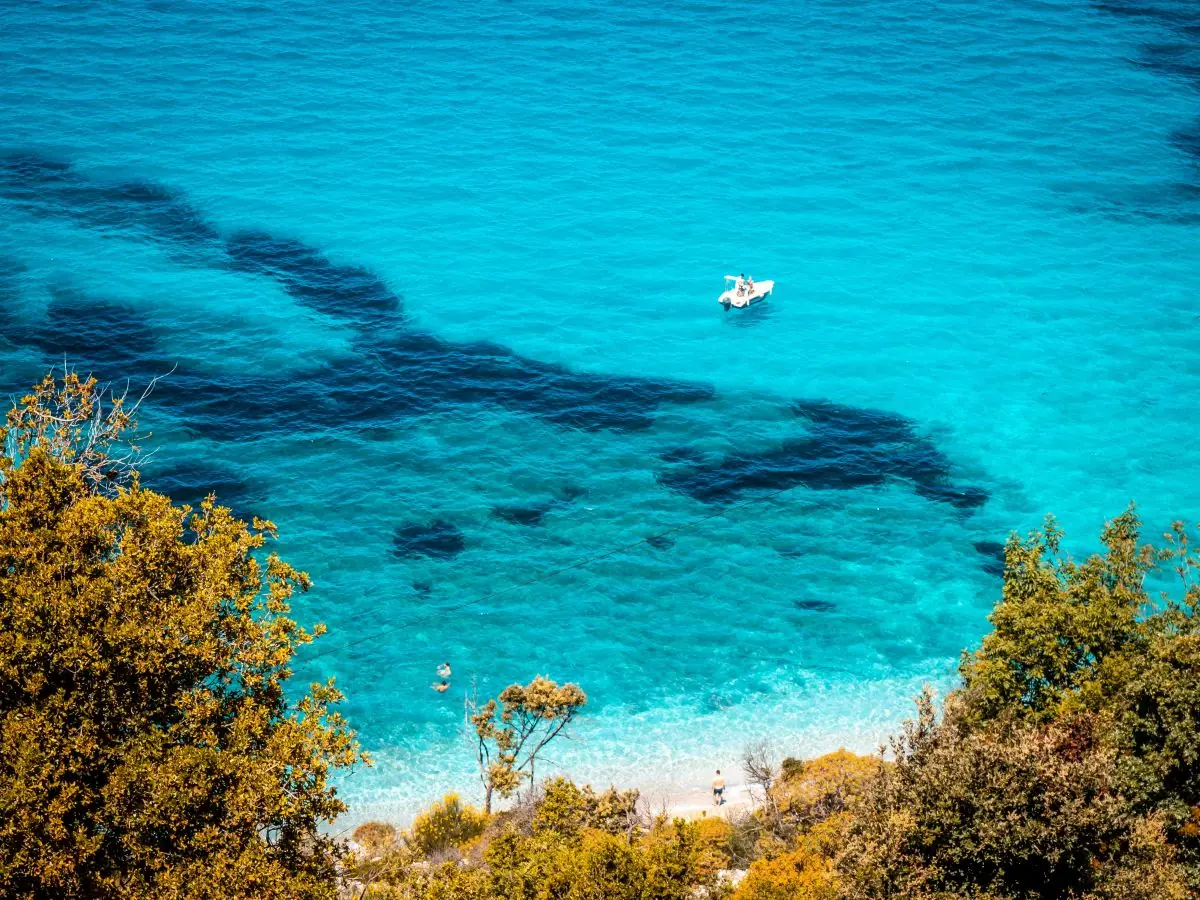
The Riviera postcard destinations. Swimmable clear water from May through September, closed from October through April. Ksamil drops to roughly 3,000 residents in winter.
- Location: Southernmost coast, ferry to Corfu runs daily in summer
- Cost: $1,500 to $2,800 in summer; $700 to $1,100 off-season
- Best for: June–September swimmers; avoid if you need routine or community
- Time needed: 2 to 6 weeks in peak season
Durrës
A 30- to 40-minute drive from Tirana, with a beach and much lower rents. Treat it as a Tirana satellite with sea access, not a standalone nomad base.
- Location: 22 miles (35 km) west of Tirana on the Adriatic
- Cost: $800 to $1,100 monthly
- Best for: Nomads who want Tirana’s coworking with weekend swims
- Time needed: 1 to 2 months
Where should you stay in Tirana?
When it comes to where to stay in Tirana, Blloku is the first-scroll recommendation for most digital nomads — the walkable cafe-and-restaurant zone, 10 minutes from Skanderbeg Square, home to four of the five major coworking spaces. Myslym Shyri is quieter. Komuna e Parisit is the newer-construction expat pocket near Grand Park. Kombinat is the budget play.
Blloku (Ish-Blloku)
The former communist elite zone, now the nightlife and cafe epicenter. Highest rents, densest restaurant scene, and the zero-thought choice for a first-month nomad. Expect bar noise Thursday through Saturday on the inner streets.
- Location: Central Tirana, south of Skanderbeg Square
- Cost: $575 to $850 for a 1-bedroom
- Best for: First-time nomads, social renters, anyone who wants everything walkable
- Time needed: Most nomads’ default month-one base
Myslym Shyri
A tree-lined commercial street with quieter residential blocks. Walk to Blloku in 8 minutes. Fewer bars, more families, better sleep.
- Location: West-central Tirana
- Cost: $500 to $700 for a 1-bedroom
- Best for: Month-two renters, light sleepers, anyone over 30
- Time needed: Strong for 2-month-plus stays
Pazari i Ri (The New Bazaar)
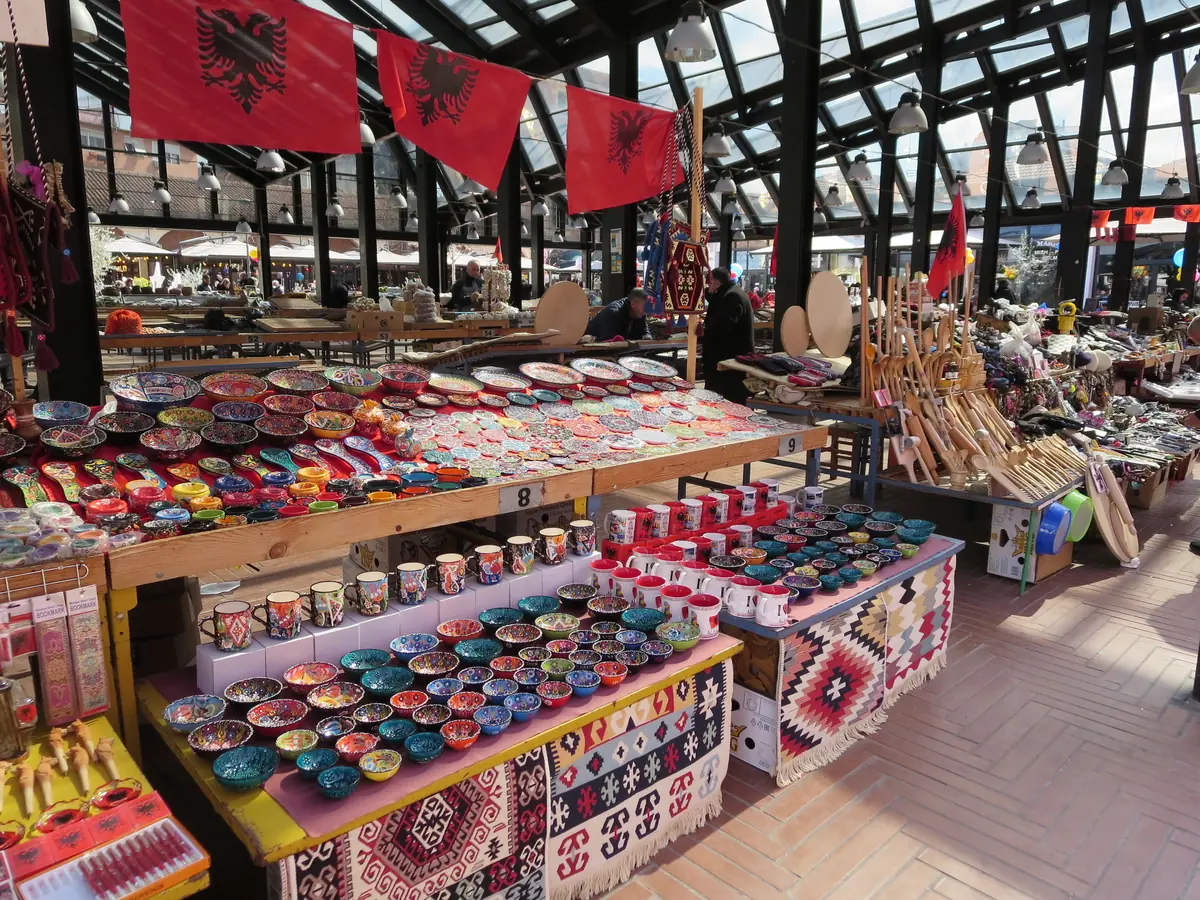
The renovated 1931 market square, busiest on weekends with the best fresh produce in the city. Light on coworking, strong on weekend food energy.
- Location: Northeast of Skanderbeg Square
- Cost: $450 to $650 for a 1-bedroom
- Best for: Cooks, food-first nomads, short stays
- Time needed: Good for 2 to 4 weeks
Komuna e Parisit
Newer post-1990 apartments, quieter streets, and the fastest-growing expat pocket. Five minutes to Grand Park. Requires a bus or rideshare to reach Blloku nightlife.
- Location: South-central Tirana, near Grand Park
- Cost: $480 to $700 for a 1-bedroom
- Best for: Runners, quieter lifestyles, longer stays
- Time needed: 2 months or more
Kombinat and Don Bosko
The budget options west of the Ring Road. Real local neighborhoods, not tourist-coded, with rents 30 to 40% below Blloku.
- Location: West Tirana, outside the tourist core
- Cost: $300 to $450 for a 1-bedroom
- Best for: Budget nomads, long stays, Albanian speakers or patient English-only renters
- Time needed: 2 months or more
Skip the intersection at 21 Dhjetori for apartment viewings — it’s the loudest junction in central Tirana, and noise monitoring clocks it over the 55-decibel EU daytime limit.
Is Albania’s internet fast enough for video calls?
Yes. Albania’s median fixed broadband runs around 93 Mbps down and 44 Mbps up, and mobile is comparable, with 5G live in Tirana, Durrës, Vlorë, Saranda, Ksamil, Shkodër, Berat, Korçë, and Dhërmi. Zoom, Google Meet, and Loom recordings run smoothly on home fiber and LTE anywhere in Tirana.
The best-performing fixed ISPs in Tirana for a 500 Mbps unlimited plan:
- Digicom: the fastest fixed download in recent provider benchmarks, around 150 Mbps
- Abissnet: the strongest uploads, around 75 Mbps — the one to pick if you push large files
- One Albania (formerly ALBtelecom): the widest national coverage, slightly slower in peak hours
Home fiber installation is cash-on-install, usually $30 setup plus the first month’s $15 to $17. Landlords in Blloku and Myslym Shyri often include fiber in the rent — confirm the upload speed in writing before signing, because listing platforms quote download speeds only.
On the mobile side, the choice of Albanian SIM cards and eSIMs comes down to two carriers after the ALBtelecom–Telekom merger: Vodafone Albania (best overall and rural coverage) and One Albania (largest 5G footprint, slightly cheaper). The tourist SIM benchmark I’d buy again: Vodafone’s 100 GB + unlimited calls pack for ALL 2,500 (about $30), 21 days.
Pro Tip: Power outages are rare in central Tirana but not unheard of during summer heat waves. If you run high-stakes client calls, keep a mobile hotspot as backup — 5G in Blloku consistently beats my home fiber during an outage.
Where can digital nomads work in Albania?
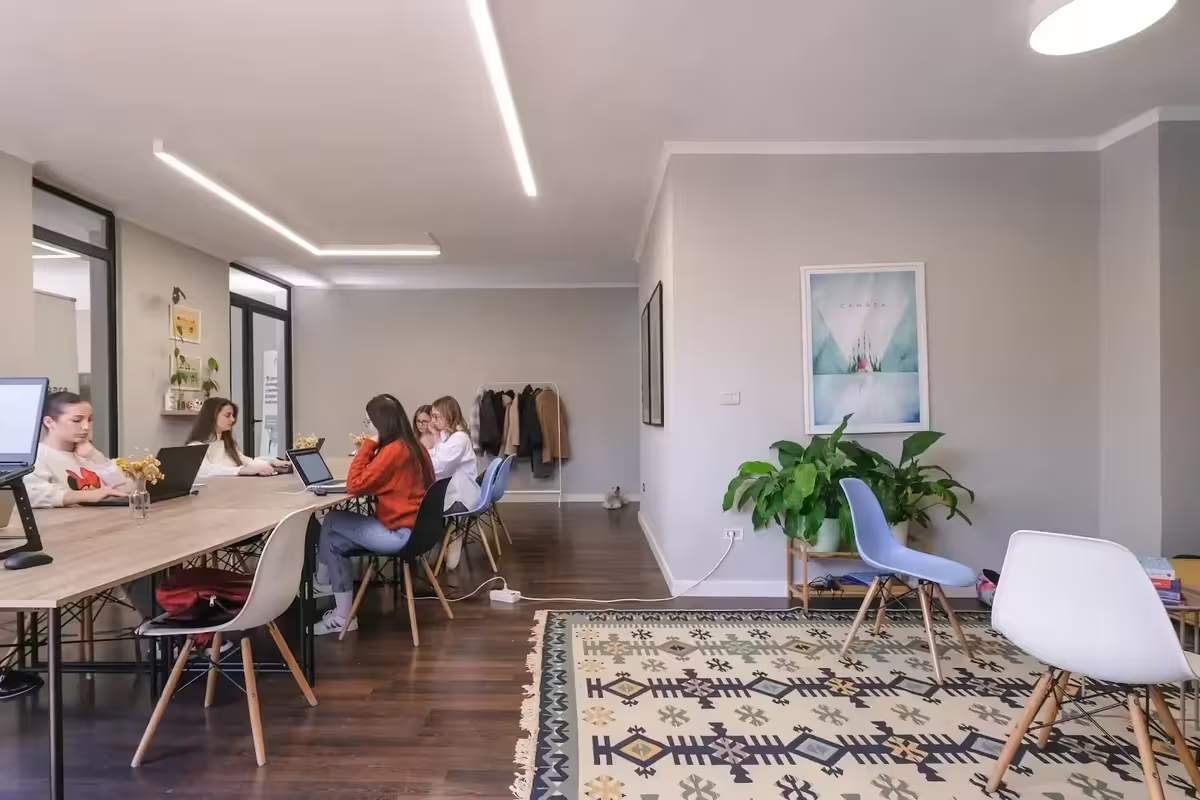
Tirana has five dedicated coworking spaces (Dutch Hub, Innospace, Destil Creative Hub, Coolab, and Social Hub), all concentrated in or around Blloku, with day passes around €10 ($11) and monthly desks from €108 to €170 ($125 to $195). Outside Tirana, Vlorë has Coworking Vlora — the only dedicated coastal option. Everywhere else, digital nomads work from cafes.
Tirana coworking spaces
Dutch Hub is the largest at 1,000 square meters (about 10,800 sq ft) and the one I’d pick for a multi-month stay with meeting-room needs.
- Dutch Hub (dutchhub.al): Rruga Brigada VIII, Pallati Teknoprojekt, Blloku. Day pass ~€10. Hot-desk monthly €150+. Private offices from €450. Largest coworking footprint in Albania.
- Innospace Tirana (innospacetirana.com): Rr. Pjetër Bogdani, Blloku. Day pass €10. Dedicated desk €150/month. Private office from €600. 24/7 access.
- Destil Creative Hub: Bulevardi Zogu I. Day pass ~€10. Monthly ~€150. Restored villa with on-site bistro; skews creative and architecture.
- Coolab Tirana: Rruga e Dibrës, 7-minute walk from Skanderbeg Square. From €108/month. Modern hot desks and ping pong.
- Social Hub: Blloku i Ambasadave, Rruga e Kavajës. Day pass €10. Dedicated desk €170/month.
Cafes with reliable WiFi
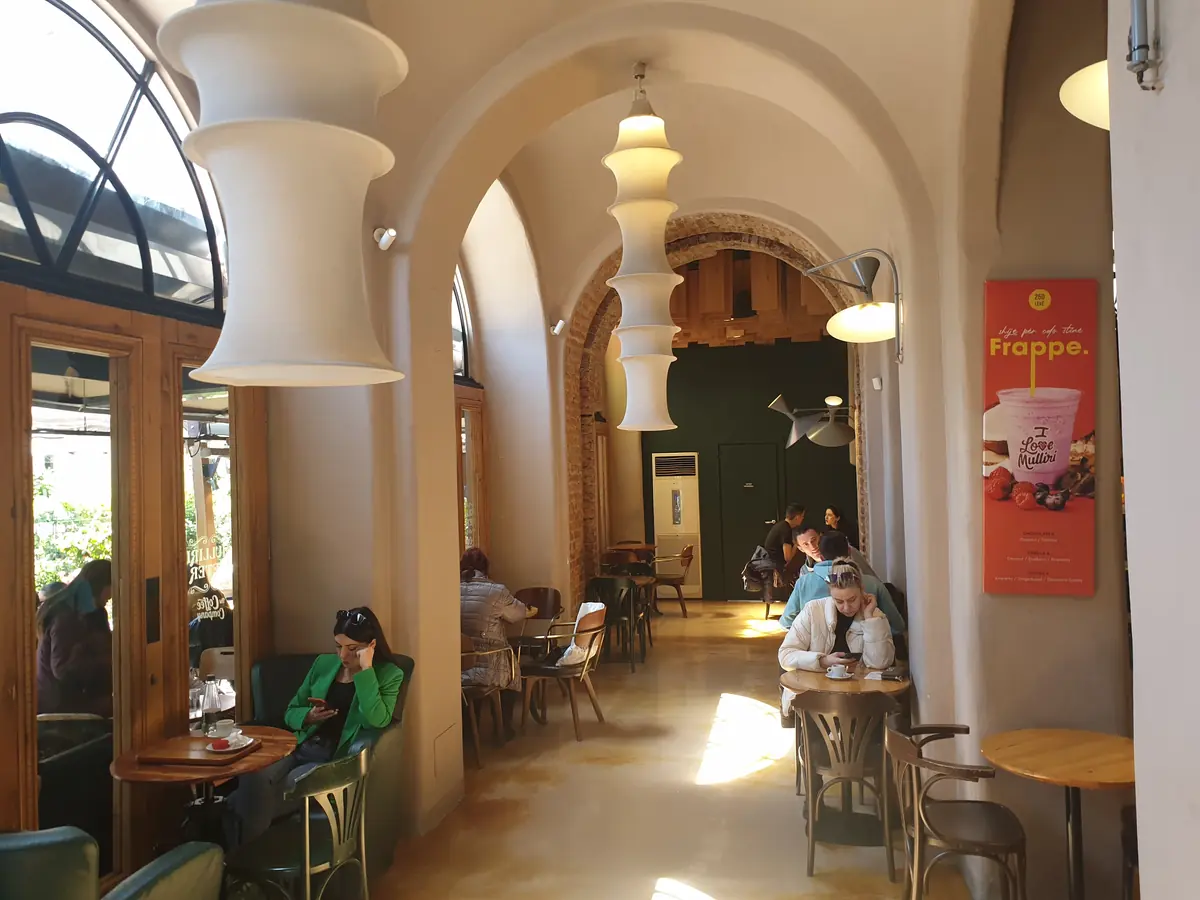
The Tirana cafe scene is dense, cheap, and table-tolerant — a single €1.50 cappuccino buys you three hours, and when you want a real meal instead of a laptop perch, Tirana’s restaurant scene is just as deep. The cafes I returned to most:
- Mulliri i Vjetër: multiple branches, the default nomad cafe
- Mon Chéri Coffee Shop: purpose-built for remote workers, multiple branches
- Sophie Caffe: clean, smoke-free, strong espresso
- Komiteti – Kafe Muzeum: communist-artifact cafe with plugs; busy evenings
- Antigua Specialty Coffee: best pour-over in the city
- Artigiano: mid-morning sweet spot, quieter than Mulliri
- Stockholm Lounge: meeting-friendly
- Tony’s American Restaurant & Coffee Shop: for the full breakfast and laptop crowd
One warning: indoor smoking is still legal and common in traditional Albanian cafes. The chain cafes above (Mulliri, Mon Cheri, Sophie) are the smoke-free safer bets. Komiteti and older neighborhood kafene can get smoky after 6 p.m.
Coastal cities
- Vlorë: Coworking Vlora (coworkingvlora.com) — the only dedicated space on the Albanian Riviera
- Shkodër: Traveler Hostel markets itself as a remote-work hub; no dedicated coworking
- Saranda, Durrës, Ksamil, Berat, Himarë: no formal coworking. Hotel rooftops and seaside cafes.
Is Albania safe, and what about healthcare?
On how safe Albania is, the short answer surprises people: it’s safer than most of Western Europe for petty crime. The US State Department sits it at Level 2, Exercise Increased Caution — the same level as France, Italy, and the UK. Road safety and earthquake risk are the more meaningful concerns for nomads. Private healthcare is strong, led by Spitali Amerikan (American Hospital of Albania), a JCI-accredited hospital with English-speaking staff.
Crime
Petty pickpocketing in crowded Tirana squares and on the Saranda–Ksamil summer buses is the main risk. Violent crime against foreigners is rare. Solo female travelers report catcalling, especially on the coast, but low rates of physical harassment. LGBTQ+ travelers have had legal protections since the mid-1990s; Tirana runs Pride annually. Same-sex marriage is not recognized, and rural areas remain socially conservative — keep public displays to Tirana and the main coastal towns.
One thing worth knowing: the US Embassy in Tirana periodically issues security alerts about possible threats to crowded venues like malls, hotels, and clubs. Standard situational awareness in busy tourist spots covers it, but it’s worth enrolling in the embassy’s alert program when you arrive.
Roads
Driving in Albania is among Europe’s most aggressive. Lane discipline is aspirational and right-of-way gets negotiated in real time. The one stretch that earned a deadly reputation — the hairpin switchbacks of the Llogara Pass on the road to the Riviera — is now bypassed by a tunnel:
- The Llogara Tunnel (3.7 miles / 6 km) cuts the crossing to about 7 minutes, down from roughly 40 on the old pass road
- Toll: about €2.50 ($2.90) one-way; cash in lek is fastest at the booth
- The old pass road stays open for the viewpoints and is far quieter now that through-traffic uses the tunnel
Everywhere else, drive defensively and avoid night driving on mountain roads.
Earthquakes
A major M6.4 earthquake struck Durrës and killed 51 people, causing about $1.2 billion in damage. Albania’s seismic building code has not been updated in decades. Two practical rules when renting:
- Prefer buildings constructed in the last 10 years or visibly retrofitted
- Avoid old unreinforced masonry and Communist-era reinforced concrete towers with added upper floors (a common illegal-construction pattern)
Water cuts
Older Communist-era Tirana buildings without rooftop or basement water tanks run on scheduled nightly water cuts — commonly 9 p.m. to 6 a.m. Ask the landlord directly before signing. It’s not a deal-breaker, but showering at 10 p.m. is a habit you should unlearn before you arrive.
Healthcare
The public system is underfunded; expats rely on private care. Spitali Amerikan (American Hospital of Albania) is JCI-accredited, with six facilities and English-, Italian-, and Turkish-speaking staff. Hygeia and Continental are secondary private options.
- Private GP visit: $32 to $65
- Dental implant: €400 to €700 ($460 to $805), versus €2,000+ ($2,300+) in Western Europe
- Serious cases: evacuation to Athens, Corfu, or Bari
On travel insurance for Albania, SafetyWing Nomad Insurance Essential starts around $56 per 4 weeks for ages 10 to 39. Genki runs comparable rates. Cigna Global is the premium option at $150 to $400+ per month.
Pro Tip: Tirana is a legitimate dental tourism destination. If you’re due for implants or major dental work, get a consultation at a JCI-accredited clinic during your first week — the savings over Western Europe often cover a month of Blloku rent.
How do you get to Albania and get around?
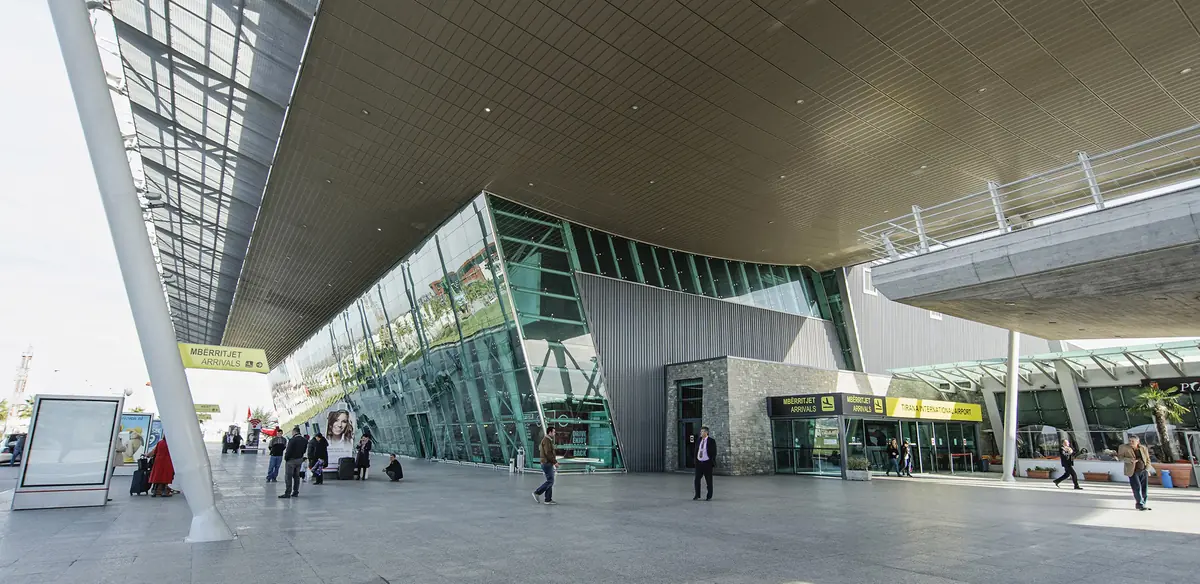
No direct flights from the US. Connect through Istanbul (Turkish Airlines, most frequent), Frankfurt, Vienna, Zurich, Rome, London, or Athens to reach Tirana International (TIA). NYC to Tirana runs 12 to 16 hours. Roundtrip fares range $450 winter to $1,500 peak summer. Ground transport inside Albania is cheap, but Uber and Bolt do not operate here.
Flights
From the US East Coast, the cheapest reliable way to handle flights to Albania from the US is JFK or EWR to Istanbul on Turkish Airlines, then a 90-minute connection to Tirana. Typical fare windows:
- January and February: $450 to $650 roundtrip
- Shoulder months (April–May, September–October): $700 to $900
- July and August: $1,000 to $1,500+
Airport to Tirana
Rinas Express bus is the cheapest option:
- Cost: ALL 400 (~$5)
- Frequency: hourly, 24/7
- Destination: Skanderbeg Square
- Duration: 25 to 35 minutes
Taxis run a fixed €22 to €25 rate (about $25 to $29). Local ride-hail apps come in around €15 ($17).
Ground transport
Uber and Bolt do not exist in Albania. Use local ride-hail apps instead:
- Clust: the most foreigner-friendly — English app, English-speaking drivers in tourist cities, card payment, and reliable Tirana airport pickup
- Patoko: cheapest in the major cities, usually 15 to 20% below a street taxi
- VrapOn: widest coverage for multi-city and intercity trips
- Taxi.al: another solid Tirana dispatch option
Tirana has no metro. Urban bus rides cost ALL 40 (~$0.50) and are cash-only, paid to a conductor. Intercity furgons (shared minibuses) are cheap and reliable:
- Tirana to Saranda: ~5 hours, ALL 1,700 ($21)
- Tirana to Shkodër: 2 hours, ALL 400 to 500 ($5 to $6)
- Tirana to Berat: 2 hours, ALL 400 ($5)
Furgons leave when full, not on a schedule. For Saranda and other long-haul routes, book a seat the day before through a hostel or hotel.
Money and banking
Currency: the Albanian Lek (ALL), trading at roughly 82 to 83 per US dollar. ATMs are widespread. Flat foreign-card fee runs ALL 500 to 800 per withdrawal (about $6 to $10).
- Always decline dynamic currency conversion and pay in ALL
- Revolut and Wise both work at POS and ATMs
- Wise does not hold an ALL balance but converts at mid-market
- Credit cards are reliable in urban Tirana, Durrës, and the tourist coast
- Markets, furgons, smaller towns, and the only real food-delivery app (Baboon) are cash-only
Carry at least ALL 5,000 ($60) in cash at all times. The gap between card acceptance in central Blloku and cash-only acceptance five blocks away is wider than any US nomad expects.
What do most Albania guides get wrong?
The loudest thing every digital nomad guide to Albania misses is precision. Here’s the list of honest corrections that separate a real on-the-ground guide from a regurgitated listicle.
- The visa-name problem: Eight of the top ten English-language guides call the framework a “digital nomad visa.” It is not. It is a Type D visa plus a Unique Permit with a Digital Mover sub-category. Using the correct Albanian legal terminology — Leje Unike, Punonjës Lëvizës Dixhital — matters for anyone actually applying.
- The no-treaty tax trap: The US has no double-taxation treaty and no totalization agreement with Albania. A US nomad who crosses 183 days becomes an Albanian tax resident on worldwide income with no tie-breaker article to fall back on. This is under-covered in roughly 90% of the articles that rank for this keyword.
- Saranda and Ksamil basically close in winter: They are effectively shut from October through April. Restaurants shutter, beach clubs empty out, and Ksamil drops to about 3,000 residents. Guides that list these towns as year-round nomad bases are wrong.
- The summer eviction pattern: Multiple coastal landlords evict long-term winter tenants each June to flip the apartment to short-term summer rentals. Budget nomads who assume a year-round Saranda lease are routinely surprised.
- Tirana noise and air pollution are real: The National Environment Agency rates Tirana as Europe’s loudest monitored city — 15% over the 55-decibel EU daytime limit. Monitoring shows PM₁₀ and NO₂ regularly breach standards at 21 Dhjetori, the New Bazaar, and Zogu i Zi intersections. Construction noise is the second-most-common Reddit complaint after traffic.
- The outdated earthquake code: Albania’s seismic building code has not been updated in decades. Old unreinforced masonry and Communist-era towers with illegal added floors are the most vulnerable. The advice nobody writes: prefer buildings constructed in the last 10 years.
- No Uber, no Bolt: Competitors routinely list Bolt as active. It is not. Name Clust, Patoko, and VrapOn instead.
- Indoor smoking is still common: Particularly in traditional cafes and on some intercity buses. Nomads sensitive to smoke should filter cafe recommendations to Mulliri, Sophie, and Mon Cheri.
- No real nomad community yet: Multiple Nomads.com reviewers flag “no digital nomad community” as the top complaint. Tirana is an infrastructure-first, community-second destination — unlike Lisbon, Bali, or Medellín. If you need a built-in social scene from day one, this is not the base for you.
Before you book
TL;DR: Albania is the highest-value nomad base in Southern Europe if you’re an American — 365 visa-free days, $15 fiber, and Blloku rents still below Porto. It’s not the right base if you need a ready-made nomad community or plan to stay past 183 days without a tax plan.
If I could go back and give my past self one piece of advice, it would be: don’t sign a 12-month lease on your first visit. Do a 4-week Blloku Airbnb, then decide whether you want Tirana, the coast, or a loop between both. The cost of being wrong on a long lease is far higher than the monthly premium on a short one.
What’s the one thing about Albania you wish someone had told you before you booked? Drop it in the comments — the best tips in this guide came from other nomads saving me from mistakes they’d already made.