The El Salvador entry requirements for US passport holders are simpler than most blogs make them sound. You need a passport, an onward ticket, and proof of funds. No visa, no tourist card fee — that was eliminated by the Legislative Assembly. El Salvador sits at the State Department’s safest travel advisory rating. Here is what to bring.
Quick answer — what US citizens need to enter El Salvador
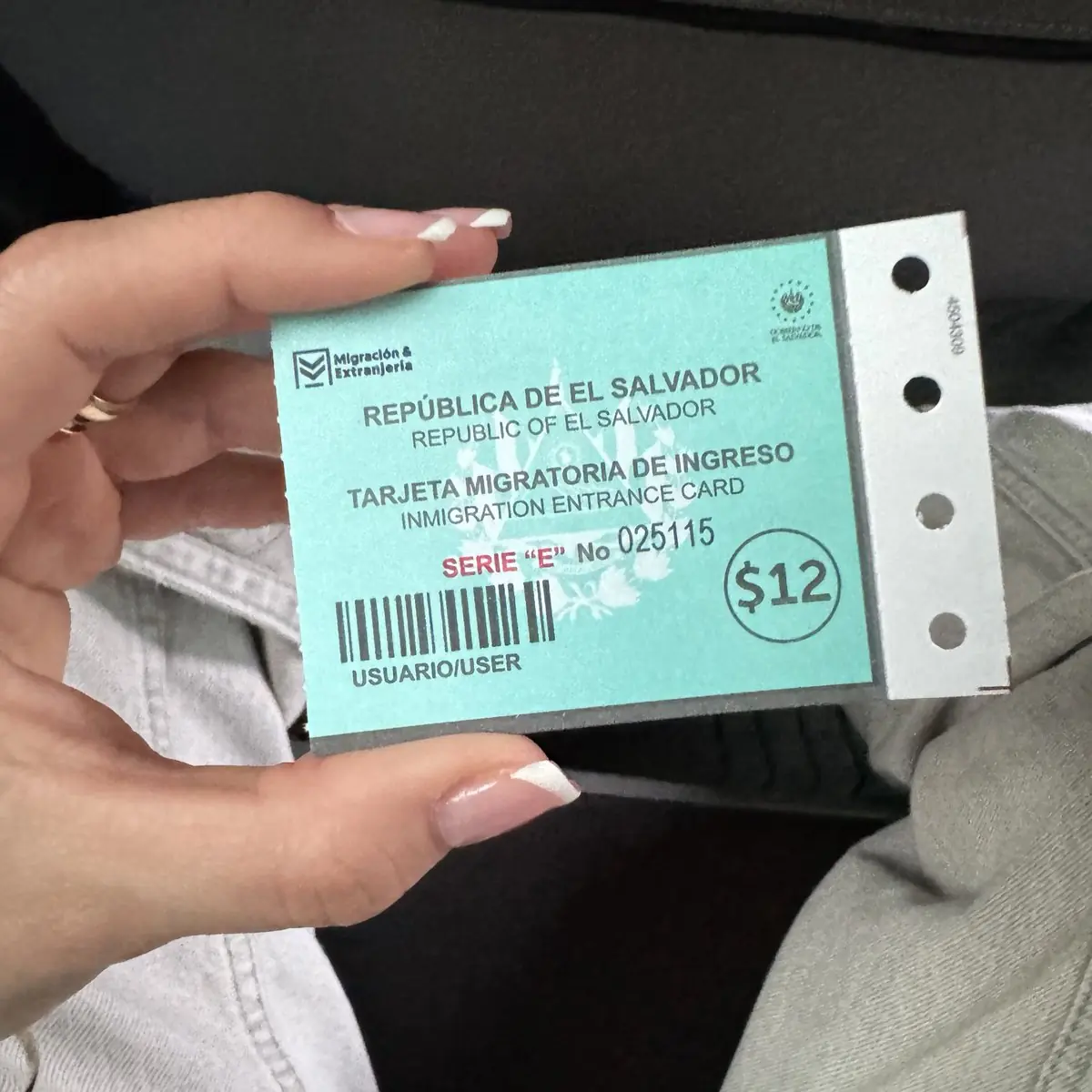
US passport holders need three things at the immigration counter: a valid US passport book, proof of onward travel, and proof of sufficient funds. No visa is required for tourism or business stays up to 90 days under the Central America-4 Border Control Agreement. The previously mandatory $12 tourist card fee has been eliminated.
The full pre-departure checklist:
- US passport book (the passport card does not work for international air travel)
- Return or onward flight ticket
- Roughly $50-100 per day in proof of funds (bank statement, cash, or credit card)
- Hotel reservation or written address of where you are staying
- Yellow fever certificate only if you are arriving from a risk country
- $12 in small US bills as a contingency, in case a front-line officer applies the old tourist card rule
Pro Tip: The customs hall at SAL is a cell-signal dead zone until you exit the terminal. Install your eSIM before you take off and print your hotel booking — phone screens are accepted at immigration but slow the line noticeably.
Do US citizens need a visa for El Salvador?
No. US passport holders fall under El Salvador’s Categoría A classification managed by the Ministerio de Relaciones Exteriores, granting entry for up to 90 days for tourism or business without a pre-issued visa. The same Categoría A covers citizens of the European Union, the United Kingdom, Canada, Australia, Japan, and most Latin American countries.
El Salvador uses a three-tier visa system that determines what you need before you fly:
- Categoría A: visa-exempt entry on a passport stamp (US, EU, UK, Canada, Australia, Japan, most of Latin America)
- Categoría B: consular visa required (apply at an El Salvador embassy or consulate before travel)
- Categoría C: consulted visa with security clearance required from the Dirección General de Migración y Extranjería
If your passport is not Categoría A, you cannot get a visa on arrival at SAL — you must obtain it in advance. Most US-based travelers will never deal with the B or C process, but it matters if you are inviting non-American family members to meet you in El Salvador.
Is the El Salvador tourist card still required?
No. The $12 Migratory Entry Card (Tarjeta de Ingreso Migratorio, often called the tourist card or TIM) has been eliminated. The Salvadoran Legislative Assembly reformed the Ley Especial de Migración y Extranjería to derogate Article 328 and remove the fee from Article 325 — part of a broader push to open the country to foreign visitors and investors.
This is the single biggest data point that almost every other guide gets wrong. iVisa, VisaHQ, and most travel blogs still tell US travelers to bring $12 cash for the tourist card. The fee is gone for visa-exempt nationalities entering El Salvador.
A few honest caveats from experience:
- US government webpages (including travel.state.gov and the US Embassy’s Travel Requirements page) had not yet updated their text the last time I checked
- A handful of front-line officers occasionally apply the old rule out of habit
- Carry $12 in small bills as insurance — it is cheap protection against a 20-minute argument at the booth
Pro Tip: US citizens whose passport lists El Salvador under place of birth are exempt from both the tourist card and the proof-of-funds question entirely. Show the passport, smile, get stamped, walk through. The carve-out is one of the country’s quietest perks for the Salvadoran-American diaspora.
What documents do you need at SAL immigration?
US travelers must present a valid US passport book at the primary inspection booth at Monsenor Oscar Arnulfo Romero International Airport. The US Embassy in San Salvador states there is no specific passport validity period and no specific number of blank pages required for US citizens, though officers may ask for onward travel and accommodation proof. A passport card cannot be used for international air travel.
What the officer typically asks:
- Length of stay (state in days, not dates)
- Purpose of visit (tourism, business, family visit)
- Where you are staying (hotel name or address is fine)
- Onward ticket (occasionally — they may glance at it or skip)
- Proof of funds (rare for US passport holders; more common for younger travelers)
What you do not need, despite what other guides claim:
- Six months of passport validity (this is a popular myth; valid at entry is enough for US citizens)
- Two blank passport pages (one is recommended; not enforced)
- A printed itinerary (the booking confirmation is enough)
- Advance arrival forms (no online pre-registration system for tourists)
Pro Tip: Officers move fastest if you have your passport open to the photo page when you reach the booth and your phone unlocked to your hotel confirmation. The whole interaction can finish in under 90 seconds.
How long can a US citizen stay in El Salvador?
US passport holders may stay up to 90 days in El Salvador under the Central America-4 Border Control Agreement. The 90 days are cumulative across El Salvador, Guatemala, Honduras, and Nicaragua — not 90 days per country. If you entered Guatemala first, your El Salvador clock does not restart when you cross at Las Chinamas or El Poy.
This is the rule overland travelers most often miscount:
- 90 days is the total allowed across all four CA-4 countries combined
- The clock starts when you enter the first CA-4 country
- Land border crossings between CA-4 countries do not reset the clock
- Leaving CA-4 and re-entering (for example, to Mexico or Belize and back) does restart the clock
- A one-time extension of up to 90 days is available at the Dirección General de Migración y Extranjería in San Salvador
To extend your stay, file Form F44 at the Dirección General de Migración y Extranjería office in San Salvador at least five business days before your original 90 days expire. Bring a printed bank statement, your passport, and patience. The extension grants up to 90 additional days for a total of 180 within a year.
I once miscalculated my CA-4 clock after starting in Guatemala and had to drive from San Salvador toward the Mexican border to reset the count. Plan it once, plan it carefully.
How does the CA-4 agreement work at land borders?
The Central America-4 agreement allows free movement between El Salvador, Guatemala, Honduras, and Nicaragua on a single 90-day stamp. Honduras charges a $3 entry processing fee at its land borders. Guatemala does not charge any entry or exit fee for CA-4 travelers. CA-4 immigration posts operate 24 hours a day, seven days a week, though staffing is thinner overnight.
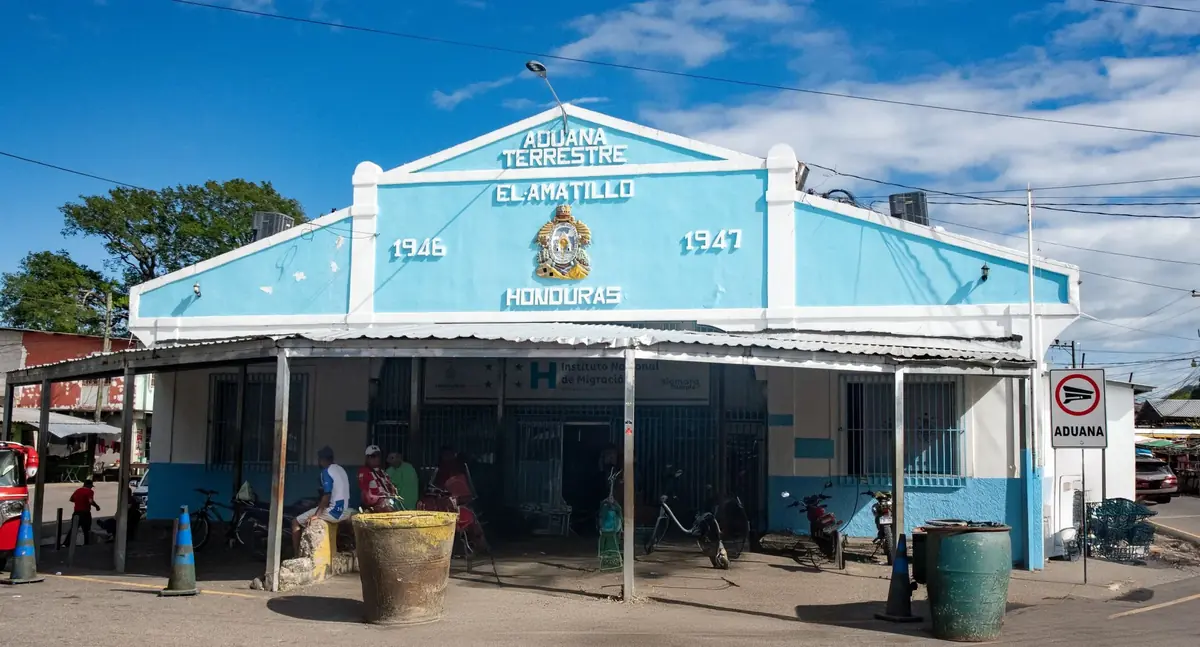
El Amatillo and El Poy (Honduras crossings)
El Amatillo is the main Pan-American Highway crossing into Honduras, with a short walking bridge over the Rio Goascoran. El Poy is the northern crossing on the route to the Copán Mayan ruins. Both are open 24 hours, both charge the $3 Honduras processing fee, both have automated license plate recognition on the Honduras side.
- El Amatillo: connects to the Pan-American Highway and onward to Choluteca and Tegucigalpa
- El Poy: connects to La Palma (El Salvador) and onward to Nueva Ocotepeque and Copán Ruinas (Honduras)
Las Chinamas, La Hachadura, and Anguiatú (Guatemala crossings)
Three crossings serve Guatemala. Las Chinamas is the busiest and the standard route to Antigua. La Hachadura is the coastal crossing, used heavily by surfers heading to Guatemala’s Pacific beaches. Anguiatú-La Ermita is an integrated border post operated jointly by the two countries, which means one inspection instead of two.
- Las Chinamas: standard route to Guatemala City and Antigua (~4 hours from the border)
- La Hachadura: Pacific coast route, popular with surfers
- Anguiatú-La Ermita: integrated border, faster processing, good for travelers heading to Esquipulas
Pro Tip: Money changers gather on both sides of the bridge at El Amatillo. Their rates are usually fair, but check against your phone before handing over US dollars — pretend you are still deciding and the offer will improve.
Do you need a yellow fever vaccination for El Salvador?
No yellow fever vaccination is required for travelers arriving directly from the United States. A yellow fever International Certificate of Vaccination or Prophylaxis is only required for travelers aged one year and older arriving from, or transiting more than 12 hours through an airport in, a country with risk of yellow fever transmission — primarily sub-Saharan Africa and parts of South America.
Quick health summary for US travelers:
- Yellow fever: not required from the US (the certificate is lifetime-valid once issued)
- Malaria: El Salvador is the first Central American country certified malaria-free by the World Health Organization
- Routine vaccines: recommended (MMR, Tdap, hepatitis A, typhoid for adventurous eaters)
- Dengue: present year-round; bring DEET-based repellent rather than relying on hotel-provided spray
If you have been in Bolivia, Peru, Brazil, or any African country on the WHO yellow fever risk list within six days before arrival in El Salvador, carry the original yellow card. Photocopies have been refused at primary inspection — I have seen it happen at the booth next to mine.
Cash declaration and customs allowances
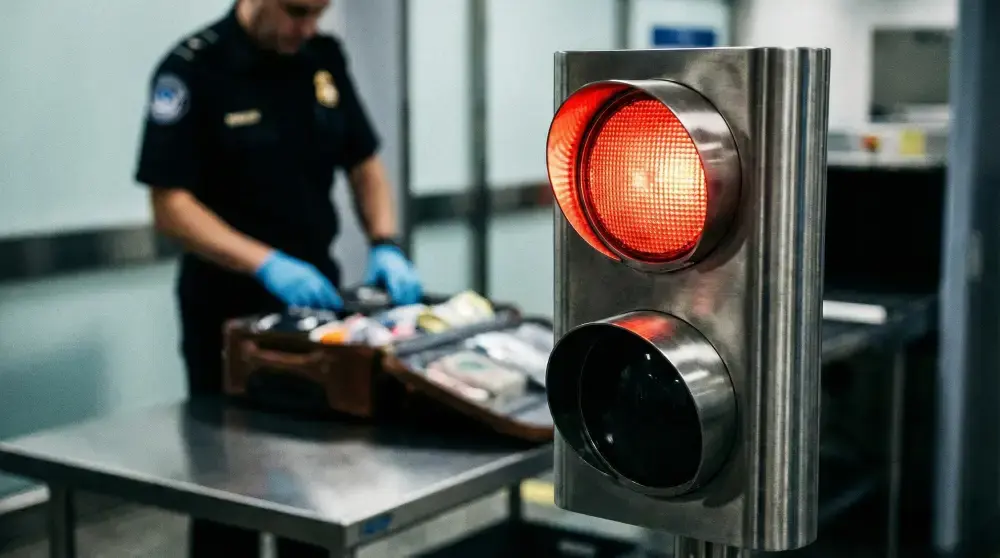
Travelers must declare any amount of cash or monetary instruments exceeding $10,000 on entry to or exit from El Salvador. Customs at SAL operates a Semáforo Fiscal (fiscal traffic light) system: a randomly assigned green light means no inspection; a red light triggers a full luggage search. Officers may still inspect green-light passengers at their discretion.
What you can bring in duty-free:
- About 1.3 gallons (5 liters) of alcoholic beverages per adult
- 400 cigarettes, 50 cigars, or 250 grams of tobacco per adult
- Personal-use electronics and clothing
- Up to $1,000 in new gifts or merchandise
What is flatly prohibited:
- Cash above $10,000 without declaration
- CBD and THC products (any form, any concentration)
- Fresh fruits, vegetables, meats, and unprocessed plants
- Firearms and ammunition without prior authorization from the Ministerio de la Defensa Nacional
- Counterfeit goods and pirated media
The Semáforo Fiscal lane is fast either way — green-light passengers walk straight through, and red-light inspections at SAL typically finish in under 10 minutes for tourists. Officers are looking for commercial quantities, not your travel snacks.
Special entry rules for minors, dual citizens, and diaspora
Traveling with US citizen minors
US citizen minors present in El Salvador for more than 180 days are treated as Salvadoran residents and require notarized parental consent from any non-traveling parent to depart. For short tourist visits under 180 days, no special consent letter is required, though a divorced or single parent should carry a court order or notarized consent letter as a precaution.
- Stays under 180 days: no special consent letter legally required, but recommended
- Stays over 180 days: notarized consent from any non-traveling parent required to exit
- Required notarization: by a Salvadoran notary or authenticated by the Ministerio de Relaciones Exteriores
Salvadoran-American diaspora and dual citizens
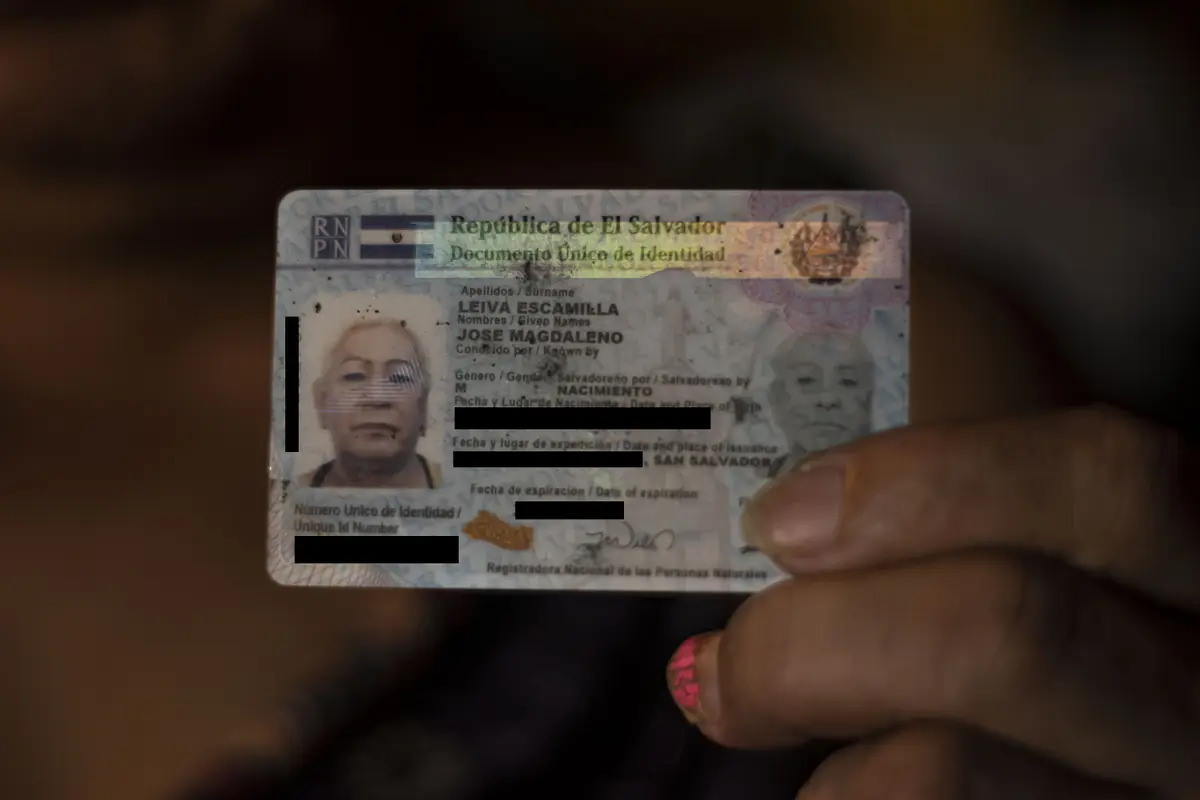
US passports listing El Salvador as the place of birth get a quiet preferential treatment at SAL: exempt from the (already-eliminated) tourist card and rarely asked about proof of funds. Dual citizens may also present a Documento Único de Identidad (DUI) — the Salvadoran national ID — at primary inspection in place of foreign-resident questioning.
- Place-of-birth carve-out: exempt from tourist card and proof of funds
- DUI holders: can present the DUI at SAL primary inspection
- Dual nationality: fully recognized; you can enter on either document
Digital nomads and Bitcoin tourists
Remote workers staying beyond 90 days can apply for the El Salvador Digital Nomad Visa, which requires proof of income of at least $1,460 per month (set at four times the Commerce and Services minimum wage of $365 by Article 145 of the Ley Especial de Migración y Extranjería). The visa allows stays of one year, renewable for another year. For shorter visits, the standard 90-day tourist stamp works fine — Bitcoin legal tender status does not change entry rules.
Pro Tip: If you plan to spend more than three months in El Salvador and you have a remote job, applying for the Digital Nomad Visa before you arrive is cleaner than extending a tourist stamp twice. Submit through the Salvadoran embassy or consulate in your home country.
The SAL airport arrival walkthrough
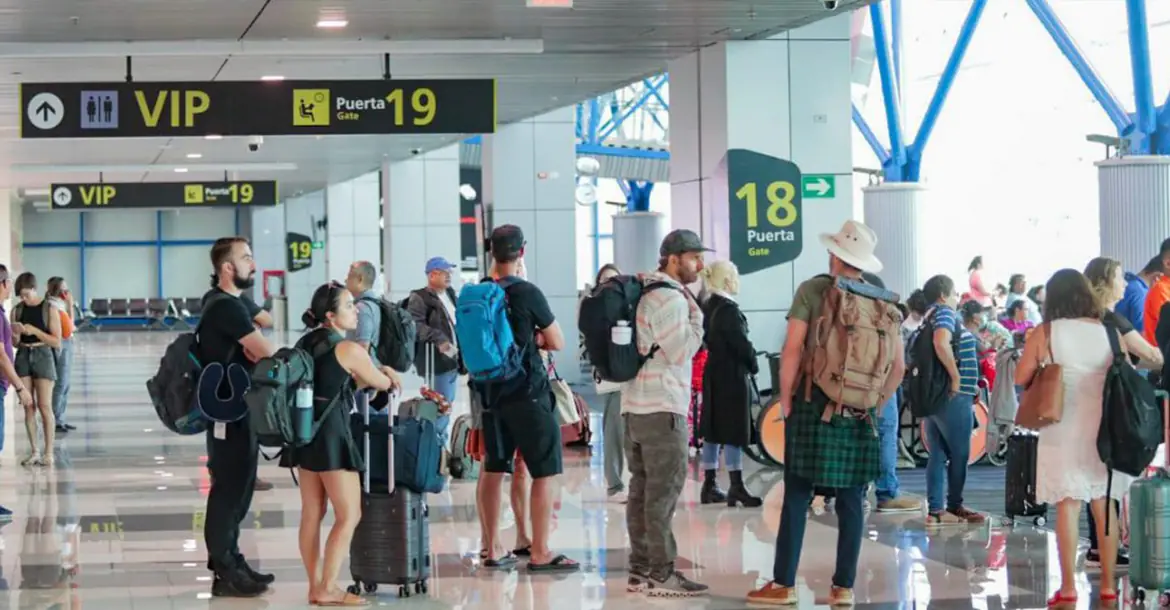
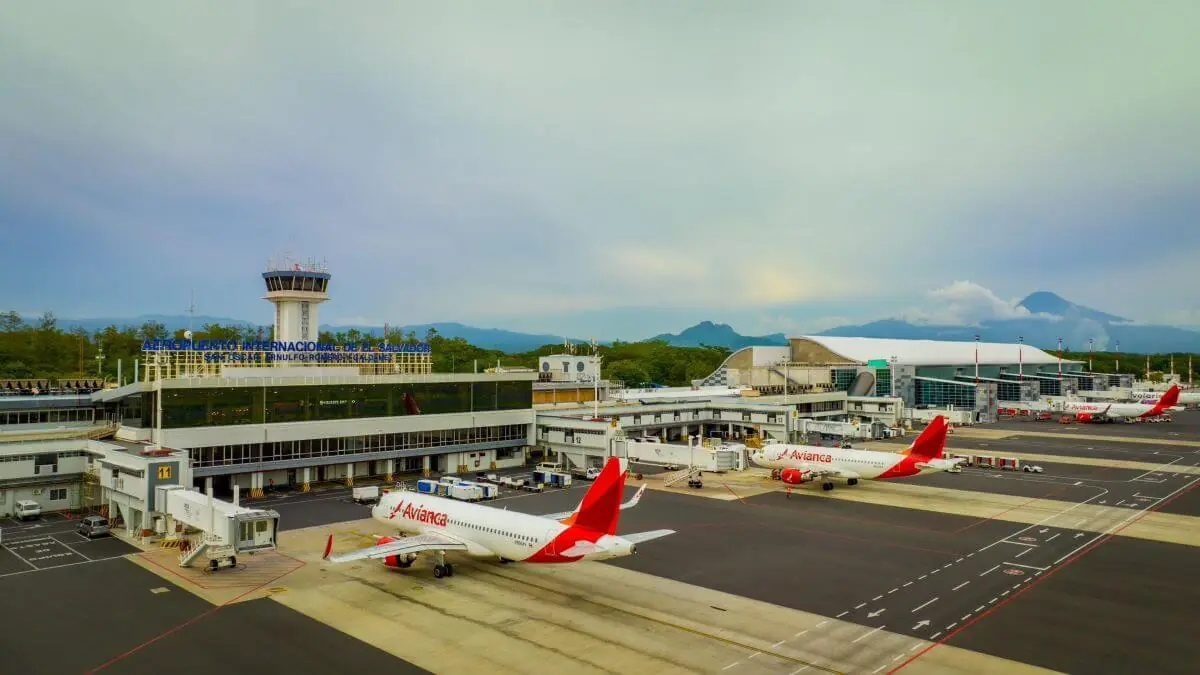
Monsenor Oscar Arnulfo Romero International Airport (code SAL) sits 28 miles (44 km) southeast of central San Salvador in San Luis Talpa. The arrival process is: disembark, walk to immigration, present your passport, collect bags, push the Semáforo Fiscal button, exit to arrivals. The standard pre-booked driver meeting point is the Pizza Hut kiosk on the right side of the arrivals hall.
Realistic times for each step:
- Disembark to immigration counter: 5-10 minutes (longer for back-of-cabin)
- Immigration line: 10-15 minutes for nonstop arrivals from US hubs; up to 30 minutes for late-evening waves
- Baggage claim: 10-20 minutes depending on aircraft size
- Semáforo Fiscal customs: under 5 minutes (green) or up to 10 (red)
- Arrivals to taxi or pre-booked transfer: 2 minutes (Pizza Hut kiosk meeting point)
Driving distances and times from SAL:
- Central San Salvador: 28 miles (44 km), 45-75 minutes via the CA-2 toll road
- El Tunco (Surf City): 25 miles (40 km), 34-48 minutes
- El Zonte (Bitcoin Beach): 33 miles (53 km), 50-65 minutes
- Suchitoto: 59 miles (95 km), about 1 hour 45 minutes
Avianca uses SAL as its Central American hub, so onward connections to Bogotá, Lima, San José, and Guatemala City are frequent. US-based airlines with nonstops to SAL include United (Houston), Delta (Atlanta), American (Miami and Dallas-Fort Worth), Spirit, and JetBlue on selected routes.

Exit taxes and how to extend your stay
Departure taxes are built into international airline ticket prices — you do not pay anything at the airport. Per the International Air Transport Association Travel Centre, El Salvador charges a $22.13 embarkation tax and a $10 immigration tax, both bundled into ticket fares. Transit passengers continuing within six hours on the same or a connecting aircraft are exempt from both fees, and infants under two are exempt from the embarkation tax.
To extend your 90-day tourist stay:
- File Form F44 at the Dirección General de Migración y Extranjería in San Salvador
- Submit at least 5 business days before your original 90 days expire
- Bring: passport, completed Form F44, printed bank statement, proof of address in El Salvador
- Pay the extension fee (set in Salvadoran administrative law; budget around $25-30)
- The extension grants up to 90 additional days (180 total within a year)
Only one extension per year is allowed. After 180 cumulative days you must leave El Salvador and the wider CA-4 zone, then re-enter to receive a new stamp.
How safe is El Salvador for US travelers?
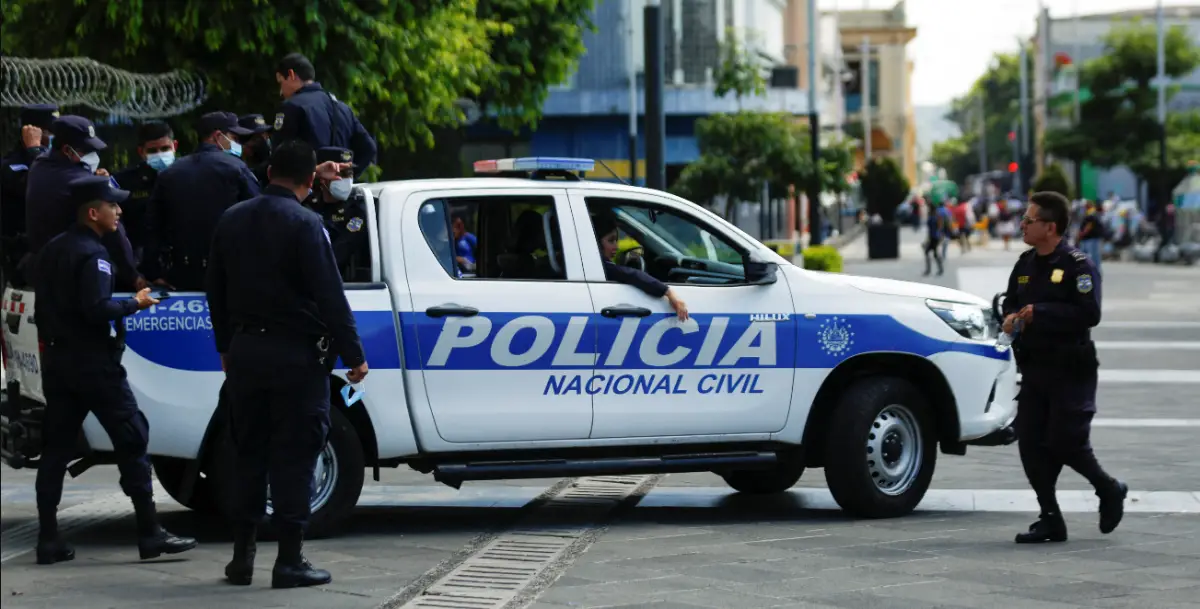
The US Department of State rates El Salvador at Travel Advisory Level 1 — Exercise Normal Precautions, its safest classification. El Salvador sits below the Level 2 advisories carried by many European destinations. Gang activity has dropped dramatically under the ongoing State of Exception, and the homicide rate has fallen to roughly 2 per 100,000 residents — comparable to Canada and far lower than most US states.
What this means at the entry point and on the ground:
- Police presence at SAL and major tourist areas is heavy and visible
- Plainclothes Policía de Turismo (POLITUR) officers patrol El Tunco, Suchitoto, and Ruta de las Flores
- Carry your passport (or a clear color photocopy) at all times — random ID checks are normal under the State of Exception
- A strict zero-tolerance drunk-driving law means any measurable blood alcohol level can result in arrest
The single hardest rule for US visitors to internalize is the drunk-driving standard. There is effectively no legal level. If you drink at El Tunco, take a tuk-tuk or rideshare back to your hotel — not a rental car.
Pro Tip: Police checkpoints at night between the airport and El Tunco are calm and quick if your passport is on the dashboard before you arrive and your seatbelt is fastened. Officers are looking for fugitives, not tourists.
Frequently asked questions
Do US citizens need a visa for El Salvador?
No. US passport holders may enter El Salvador without a visa for tourism or business stays of up to 90 days under the Central America-4 Border Control Agreement. A valid US passport book, proof of onward travel, and proof of sufficient funds are required at primary inspection.
How long can I stay in El Salvador as a tourist?
Up to 90 days, cumulative across El Salvador, Guatemala, Honduras, and Nicaragua under the CA-4 agreement. The clock starts when you enter the first CA-4 country and does not reset at land borders between them. A one-time 90-day extension can be requested at the Dirección General de Migración y Extranjería.
Is the El Salvador tourist card still required?
No. The $12 Migratory Entry Card fee was eliminated by act of the Salvadoran Legislative Assembly through reforms to the Ley Especial de Migración y Extranjería. Some US government webpages still describe the old fee, but visa-exempt nationalities now enter without paying it.
Do I need a yellow fever vaccination for El Salvador?
No, not for travelers arriving directly from the US. A yellow fever International Certificate of Vaccination or Prophylaxis is only required for travelers aged one year and older arriving from, or transiting more than 12 hours through an airport in, a country with yellow fever transmission risk — primarily sub-Saharan Africa and parts of South America.
Can I enter El Salvador with a US passport card or only the passport book?
A passport book is required. The US passport card is valid only for land and sea entry to Canada, Mexico, the Caribbean, and Bermuda — it cannot be used for international air travel. To board a flight to SAL, you must carry the passport book.
The bottom line
TL;DR: US citizens can fly to El Salvador with nothing more than a valid passport book and a return ticket. No visa, no tourist card fee, no yellow fever certificate from the US, no advance forms. The country sits at the State Department’s safest travel advisory level. Bring small bills, a printed onward ticket, and respect the strict drunk-driving and customs laws.
The El Salvador entry requirements for US travelers are among the simplest in Latin America. The country has peeled back paperwork, dropped its homicide rate to one of the lowest in the hemisphere, and built a tourism push around an easier-than-ever airport experience. The biggest mistake first-time visitors still make is showing up with $12 cash for a fee that no longer exists — and worrying about safety from advisory levels that have already been downgraded.
What is the one entry-point question you would still want answered before booking your trip to El Salvador? Drop it in the comments — odds are someone else is wondering the same thing.