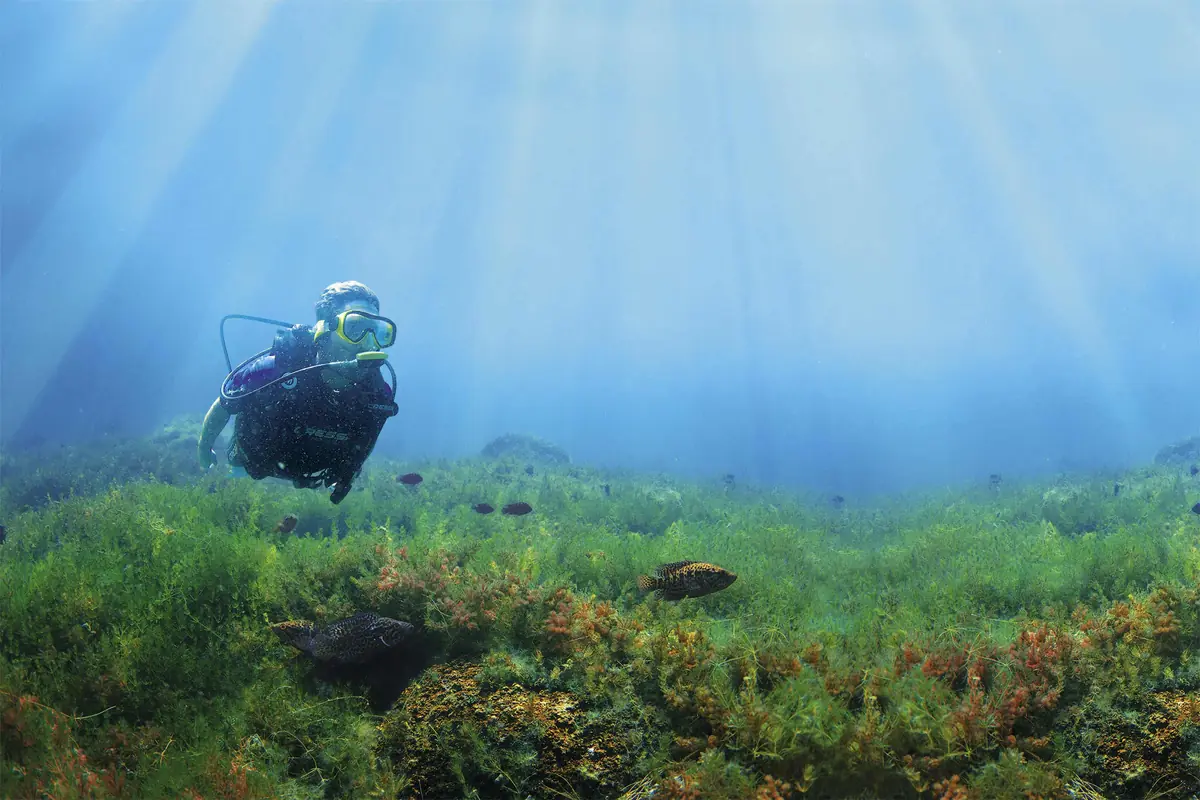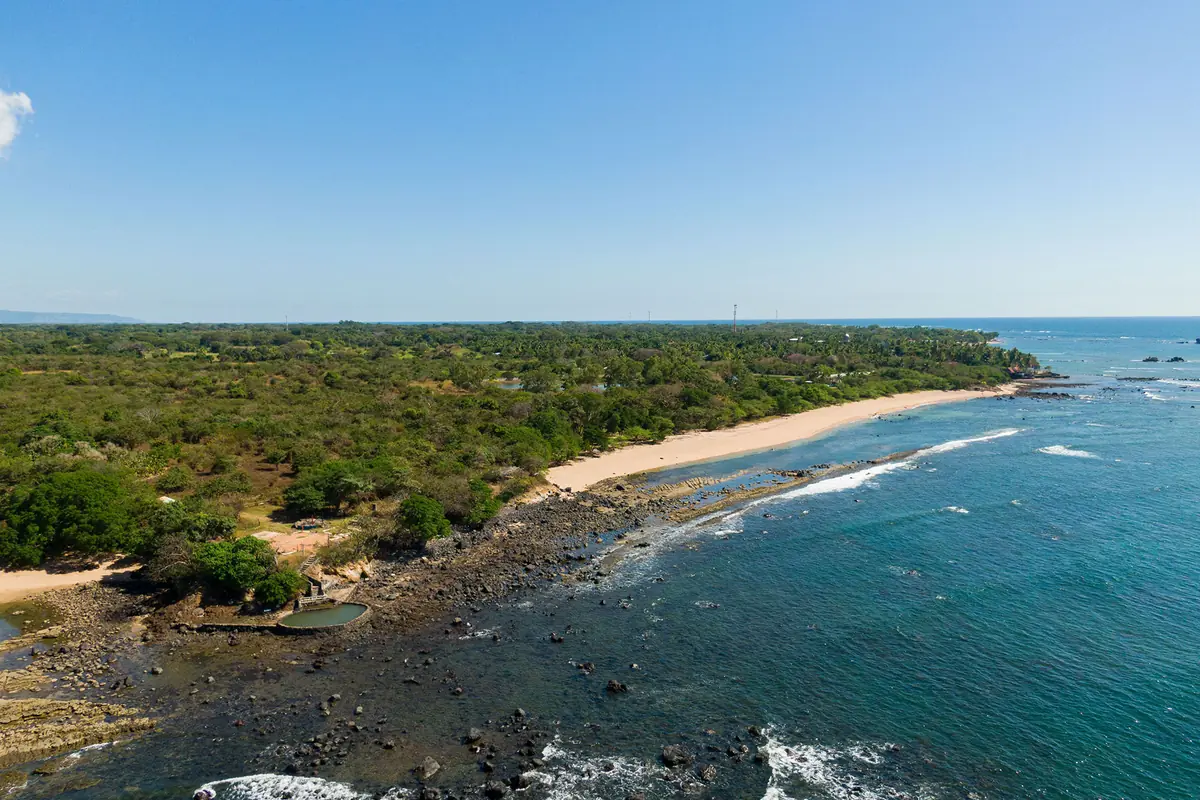
El Salvador eco lodges put you steps from Pacific point breaks, mangrove estuaries and volcano cloud forests, often for less than a chain hotel back home. The smallest country in Central America runs on the US dollar and has rebuilt its reputation. Its green stays range from $10 surf-town dorms to all-inclusive bungalows where you release baby turtles at dusk.
What are the best El Salvador eco lodges?
The standout El Salvador eco lodges are Palo Verde Sustainable Hotel and Puro Surf in El Zonte, Las Flores Resort near El Cuco, La Cocotera in Barra de Santiago, NAIA Miravalle near Los Cóbanos, and Árbol de Fuego in San Salvador. Prices run from roughly $10 dorms to $315 or more per night for luxury ocean-view suites.
Each one earns the “eco” label with something you can point to: solar-heated water, rainwater catchment, a turtle hatchery or a local hiring program. The rest of this guide breaks them down by what you actually want to do, then covers the money, the airport run, safety, Bitcoin and the entry rules you need before you book.
Why choose a green lodge in El Salvador?
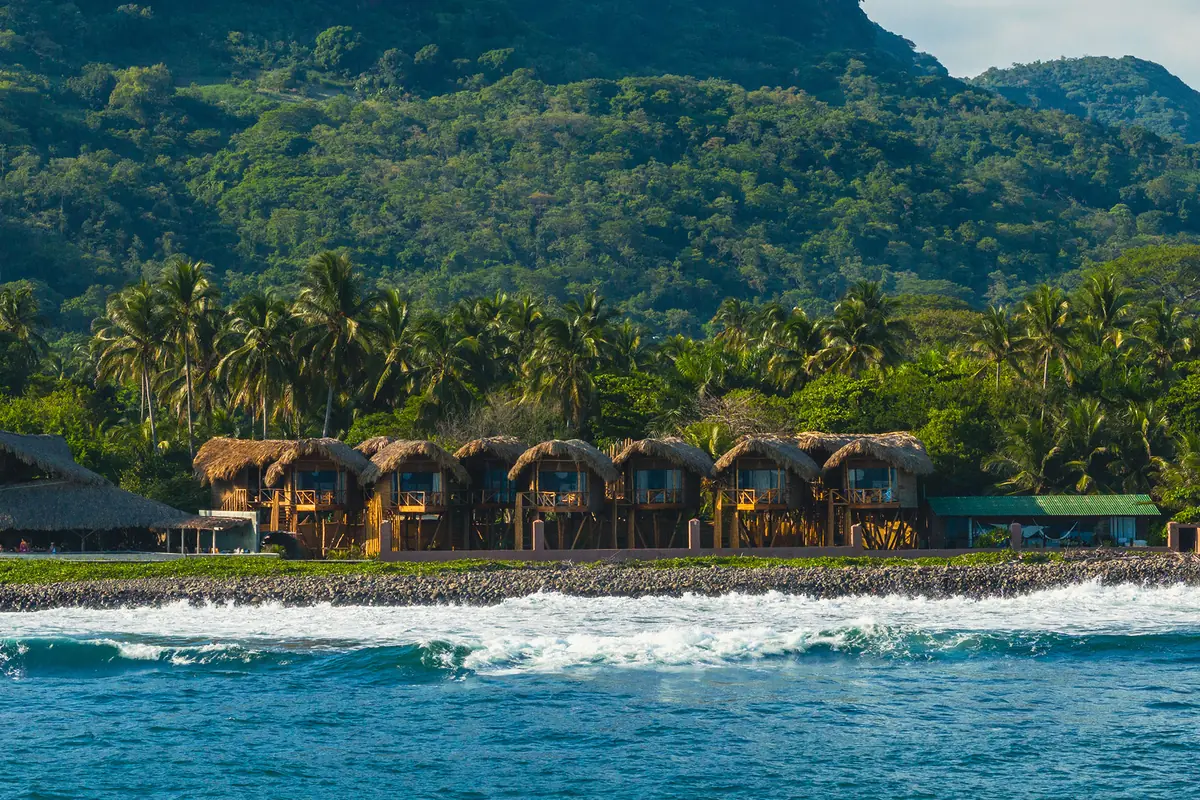
El Salvador packs cloud forests, mangroves, volcanoes and Pacific surf within a three-hour drive of the capital. Its small eco lodges send tourism money straight to local communities through turtle hatcheries and reforestation work, and they cost far less than comparable stays in Costa Rica or Belize.
The density is the selling point. The country has recorded over 500 bird species. El Imposible National Park protects roughly 4,000 to 5,436 hectares of forest, and the mangroves of Bahía de Jiquilisco cover about 101,607 hectares. Coffee fincas line the Ruta de las Flores in the highlands, while community cooperatives on the coast rent rooms for $20 to $50 a night and put the cash directly into local hands.
Pro Tip: If you only have a week, pick one coast and one highland base instead of trying to see everything. The Litoral highway is fast, but doubling back across the country eats half a day each way.
The best eco lodges by traveler type
Pick your base by what you want to do. The surf coast around El Zonte and El Sunzal and the nature-rich east and west are different worlds, and the wrong base means long daily drives. Here is the quick comparison before the detail.
| Lodge | Region | Best for | From (USD/night) | Standout green feature |
|---|---|---|---|---|
| Palo Verde | El Zonte | Design-led surf stay | $129 | Reclaimed wood, ask-for-hot-water policy |
| Puro Surf | El Zonte | Surf coaching | $200 | Palapa roof as rainwater catcher |
| Las Flores Resort | El Cuco | Advanced surfers | $230 pp | ISO 26000, 2,000 protected hectares |
| La Cocotera | Barra de Santiago | All-inclusive luxury | $111 pp | Turtle release, scarlet macaw program |
| La Tortuga Verde | El Cuco | Budget and volunteers | $10 dorm | Turtle-and-pelican sanctuary |
| Árbol de Fuego | San Salvador | Safe city night | $100 | Solar water, green roof |
| Puerto Barillas | Jiquilisco | Mangrove wildlife | mid-range | Inside a protected biosphere |
Best surf eco lodges in El Zonte, El Sunzal and El Cuco
For sustainable surf stays, book Palo Verde or Puro Surf in El Zonte, both steps from a right-hand point break, or Las Flores Resort near El Cuco for six top breaks. Palo Verde starts around $129, Puro Surf from about $200, and Las Flores runs roughly $230 to $333 per person with meals included.
Palo Verde has 10 rooms built from reclaimed wood, an infinity pool, and the Olor de Mar restaurant. The water discipline here is real, not signage: the hot water stays off until you ask reception to switch it on, and you get one beach towel and one bath towel per person. On my last stay the shower ran cold until I walked back to the desk, which tells you more about the operation than any brochure.
- Location: El Zonte, La Libertad (Surf City coast)
- Cost: about $129 to $335 per night
- Best for: surfers who want a small, design-led lodge on the point
- Time needed: 2 nights minimum to settle into the surf rhythm
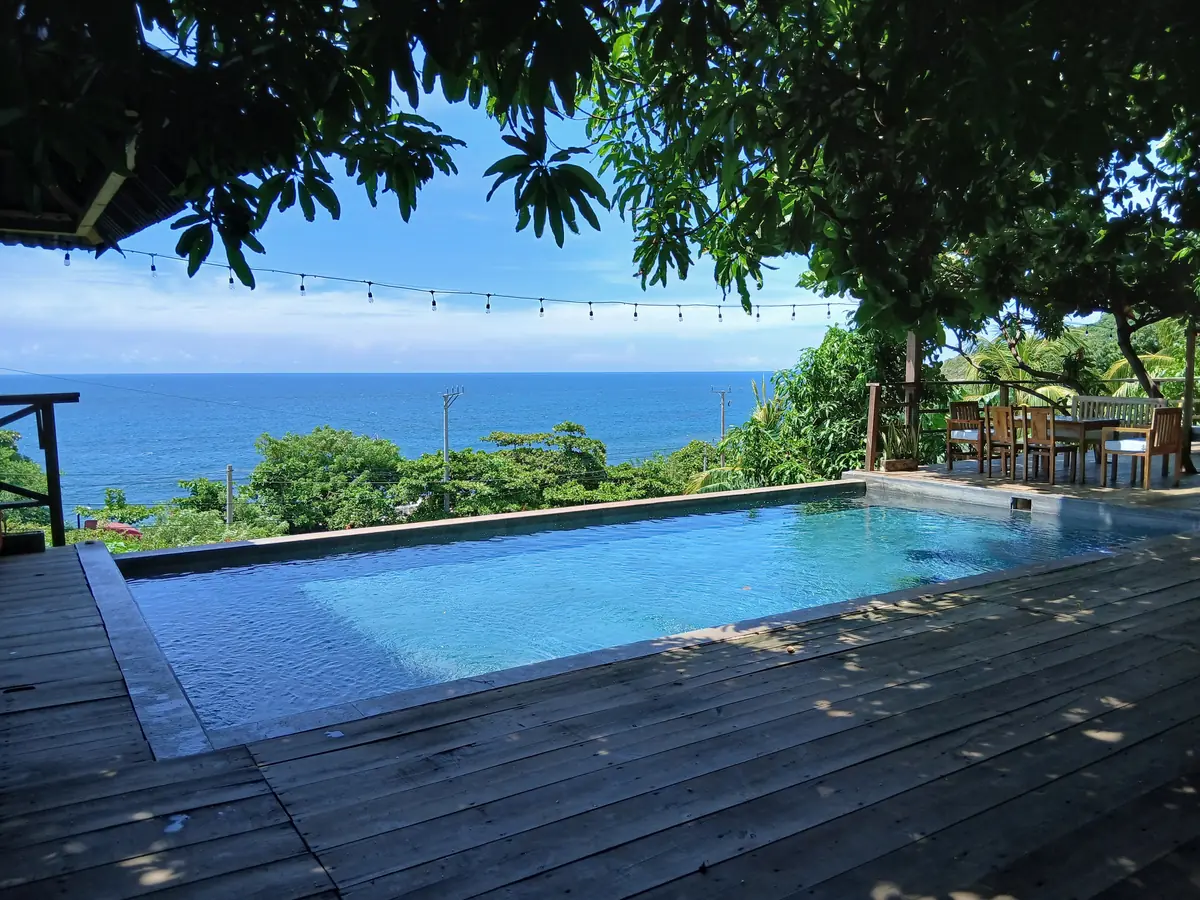
Puro Surf sits on the bluff above the point, with 14 rooms and the country’s first performance surf academy. The palapa roof over the restaurant funnels rain into the irrigation system, and the property partners with the NGO Glasswing International. From the infinity pool you can read the El Zonte lineup and time your paddle-out before breakfast.
- Location: El Zonte, above the point break
- Cost: from about $200 per night
- Best for: surfers who want coaching and a performance academy
- Time needed: 3 nights, or a week for a full course
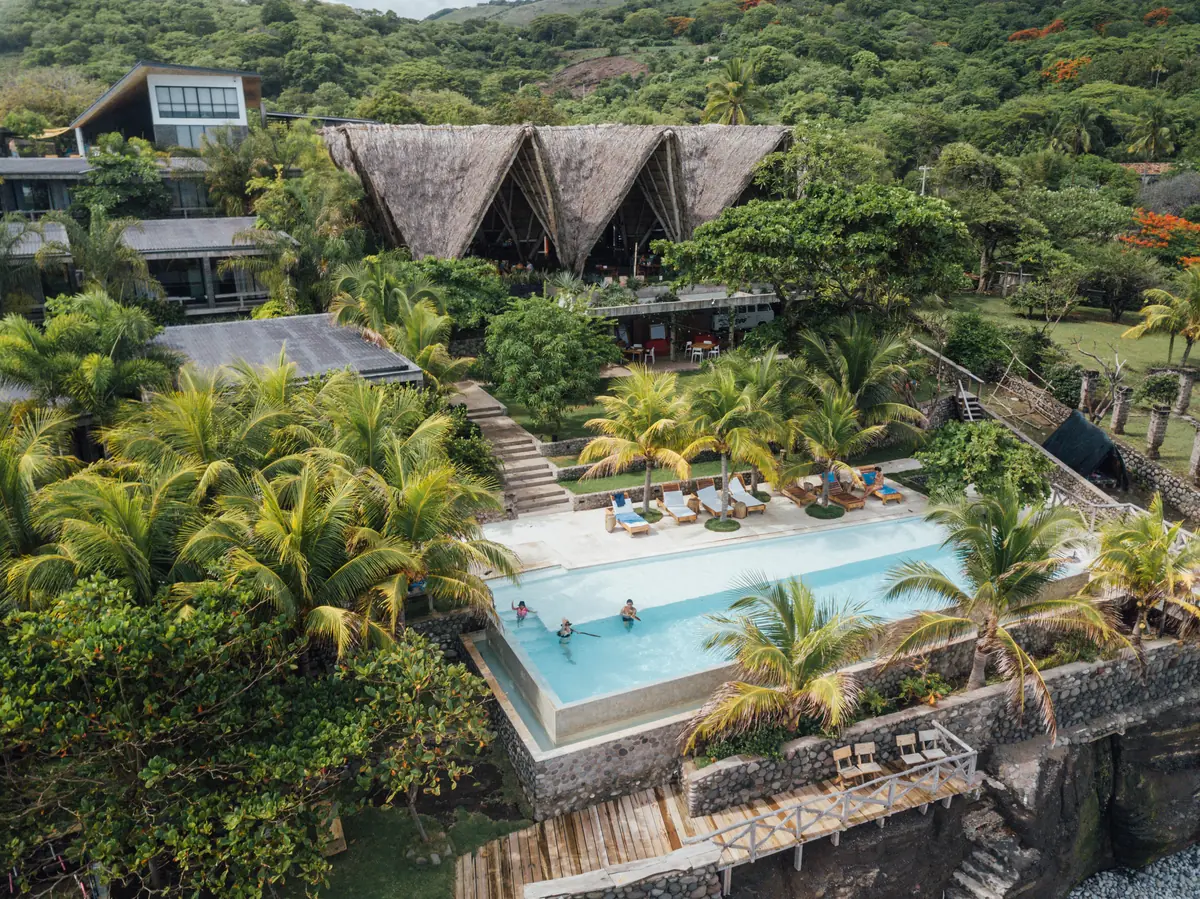
Las Flores Resort sits on the quieter eastern coast near El Cuco, with 15 ocean-view rooms and access to six breaks. It holds an ISO 26000 social-responsibility framework, belongs to the Regenerative Resorts network, and protects around 2,000 hectares of habitat. The resort caps guests at 43 and surf passes at 20, so the lineup never feels packed, which is a rare thing to promise in writing.
- Location: Las Flores Beach, near El Cuco (eastern coast)
- Cost: roughly $230 to $333 per person with meals
- Best for: intermediate-to-advanced surfers chasing six breaks
- Time needed: 3 to 5 nights (surf passes are capped)
Best all-inclusive eco lodge in Barra de Santiago
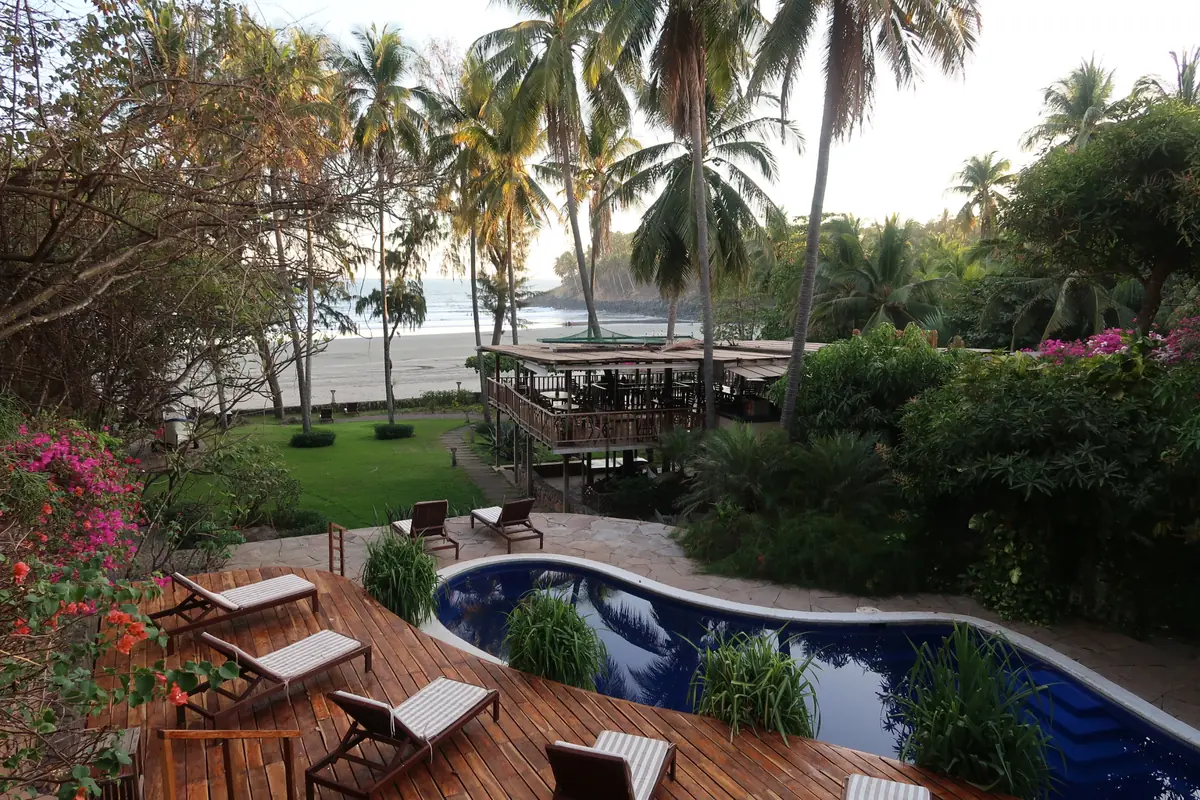
La Cocotera Resort and Ecolodge in Barra de Santiago is El Salvador’s premier all-inclusive eco lodge, with just six beachfront bungalows between the Pacific and a mangrove estuary. All-inclusive double rates run roughly $111 to $193 per person nightly, or about $752 to $1,128 per couple for a three-night package.
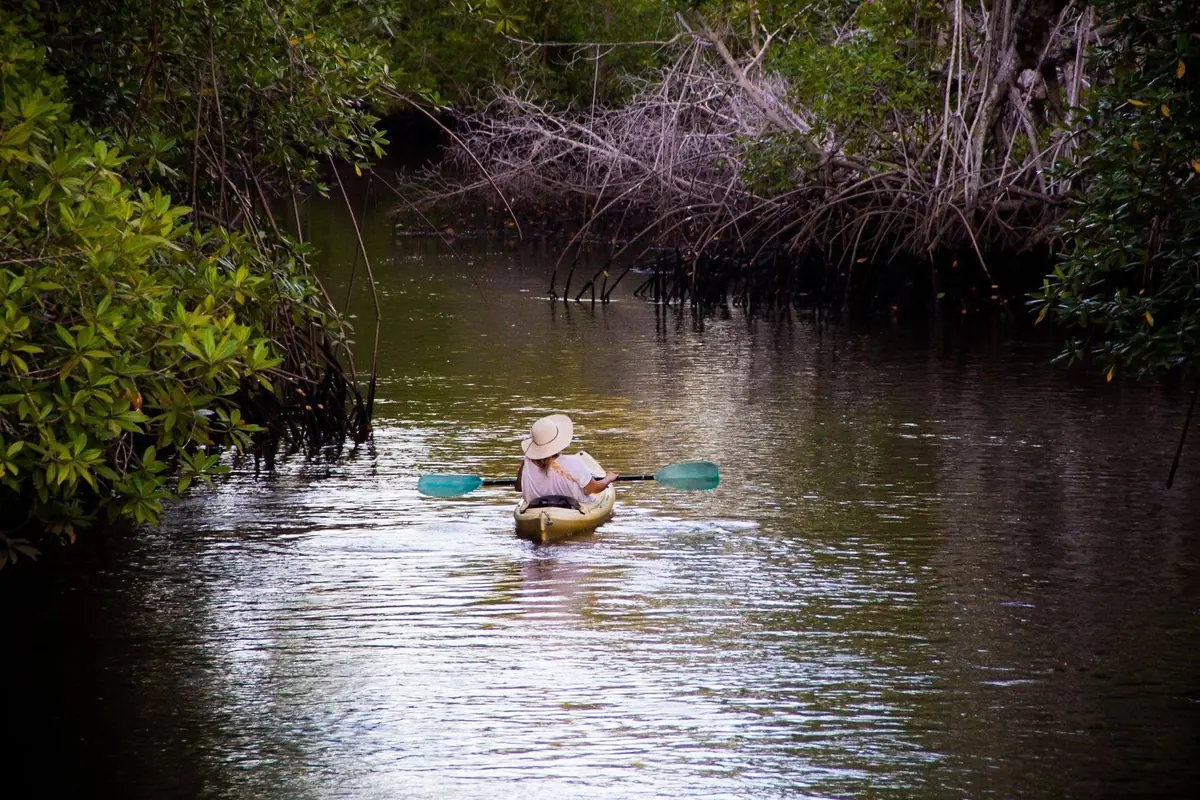
Salvadorans built it from sustainable teak, palm fronds and natural stone, and it carries the country’s Certification for Sustainable Tourism “green leaf.” The lodge runs olive ridley turtle releases, sponsors a scarlet macaw reintroduction, and sends guests out on mangrove kayak tours where you may pass a resting crocodile. The daily rhythm is a 3 km beach walk to the Bocana and a hatchling release at the waterline at sunset.
- Location: Barra de Santiago, western El Salvador
- Cost: about $111 to $193 per person, all-inclusive
- Best for: honeymooners and couples wanting privacy and turtles
- Time needed: 2 to 3 nights
Best budget eco stays in El Tunco and El Cuco
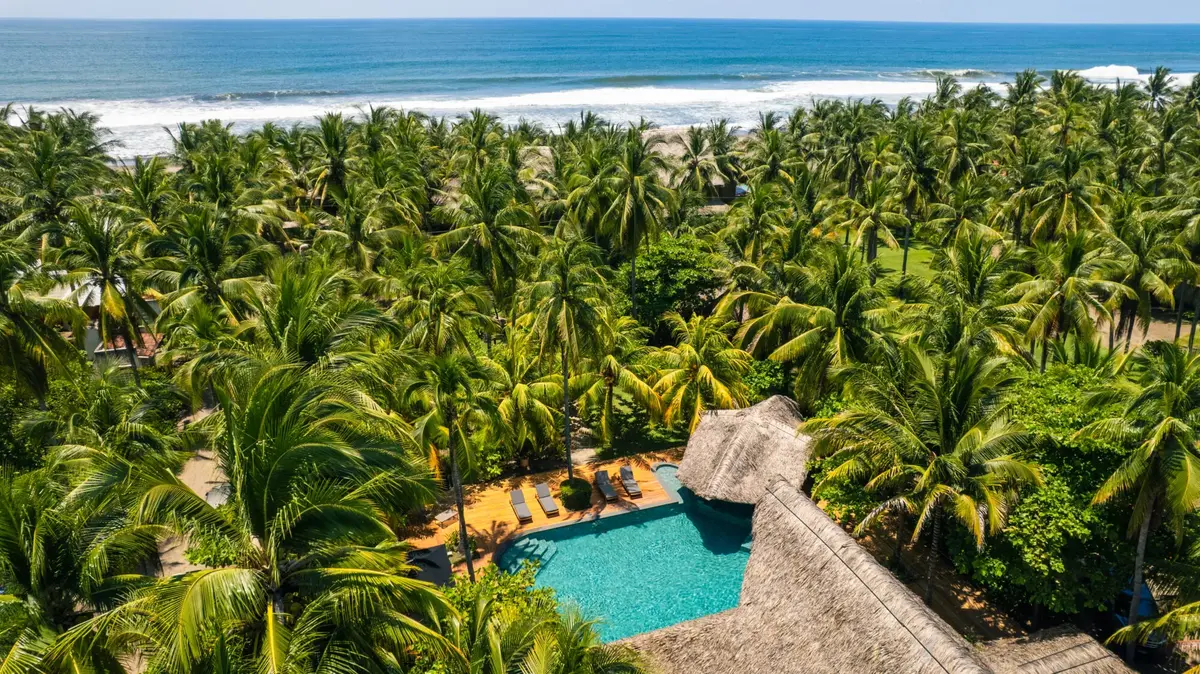
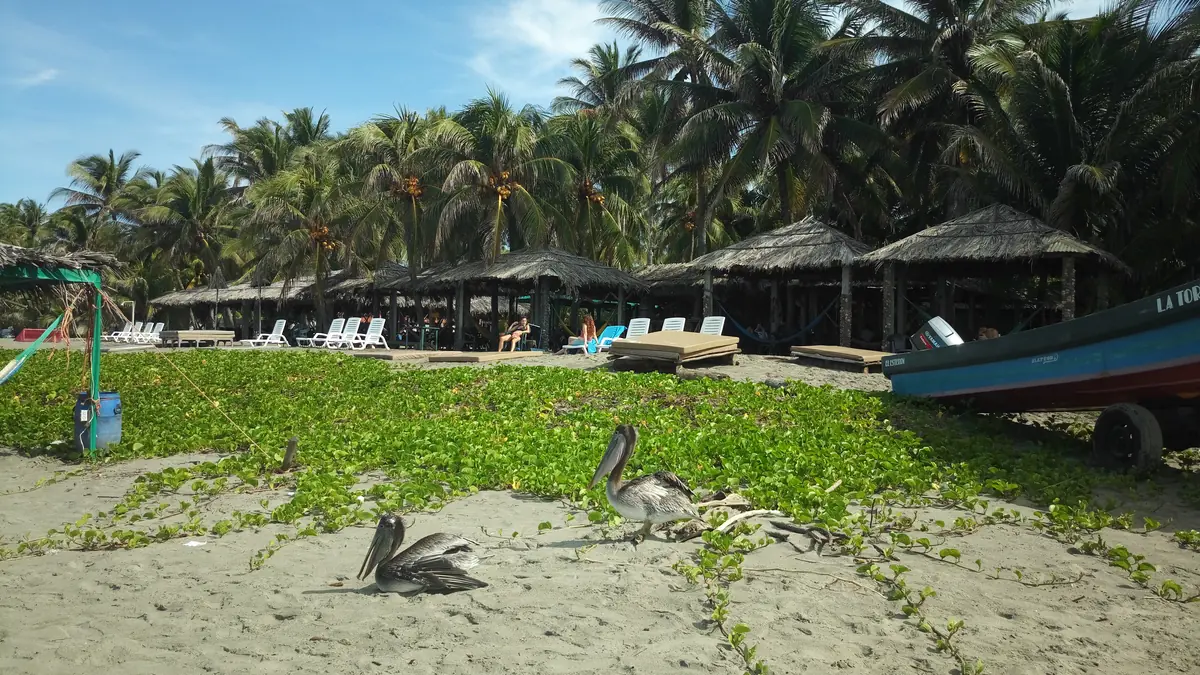
Budget travelers can sleep green for $10 to $70. La Tortuga Verde near El Cuco offers $10 dorms up to $225 private houses on a turtle-and-pelican sanctuary, while Eco del Mar puts you about 80 meters (260 feet) from El Tunco’s beach with a pool and walkable access to the La Bocana and Sunzal breaks.
La Tortuga Verde runs turtle releases, free 8 a.m. yoga and three on-site restaurants, with camping at around $5 per person and a roughly $5 cab ride from El Cuco town. Eco del Mar has five apartments with air conditioning and a pool, a short walk from the breaks. In either town, the daily meal plan is pupusas at about $1 each, eaten on the sand.
- Location: near El Cuco / Intipucá, eastern coast
- Cost: $10 dorm to $225 private house; camping about $5/person
- Best for: backpackers, solo travelers and turtle-release volunteers
- Time needed: 2 nights minimum, longer for the social scene
- Location: El Tunco, about 80 meters (260 feet) from the beach
- Cost: from about $18 to $70 per night
- Best for: budget surfers who want a pool and walkable breaks
- Time needed: 2 nights
Best city eco hotel in San Salvador
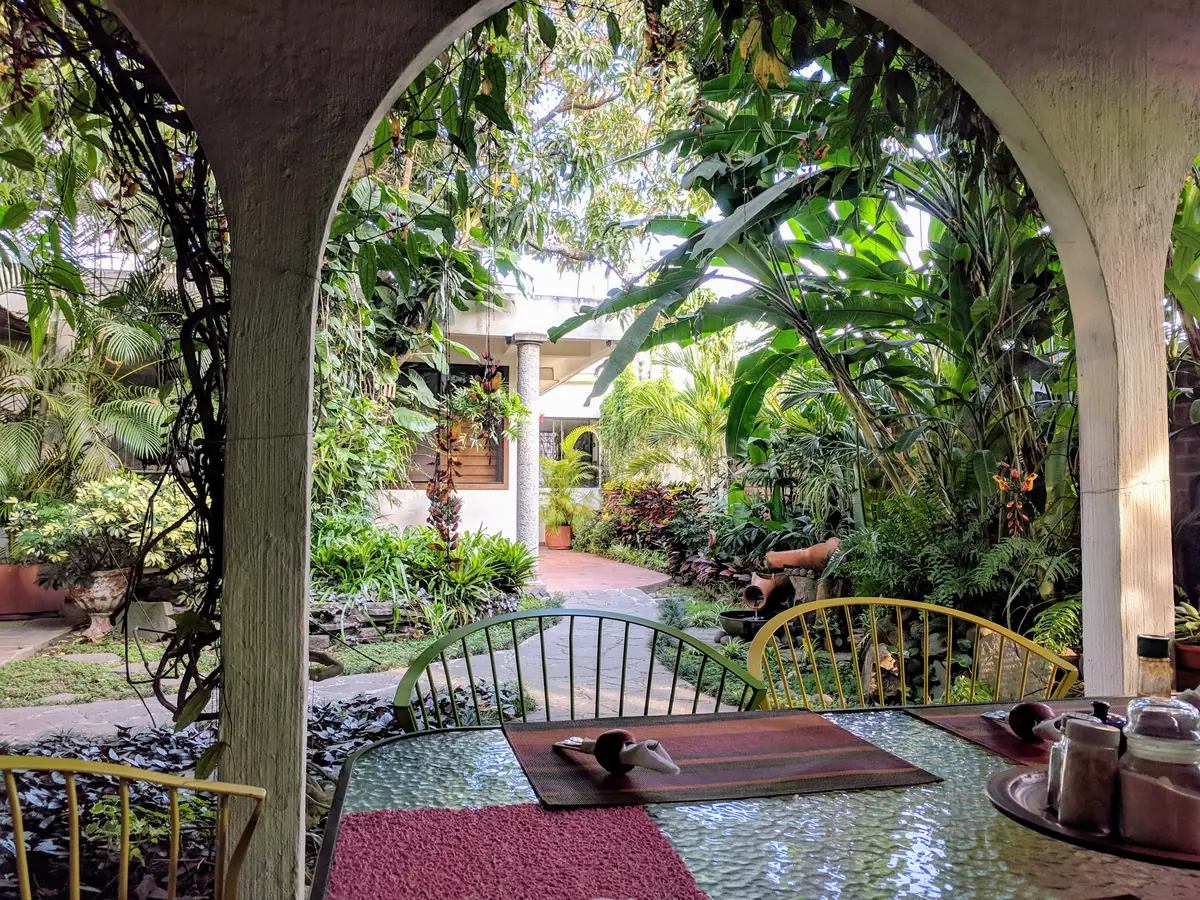
If you need a green base in the capital, Árbol de Fuego Eco-Hotel in Antiguo Cuscatlán uses solar-heated water, a green roof and renewable power, with rooms from about $100 including a garden breakfast. It sits in one of San Salvador’s safest walkable neighborhoods, about 26 miles (42 km) from the airport.
The family-run hotel has 19 rooms, a women-artisan craft shop, and a garden where breakfast comes with home-made mango marmalade. It works as a calm first or last night near the Museo de Arte and Bicentennial Park, away from the coast.
- Location: Antiguo Cuscatlán, San Salvador
- Cost: rooms from about $100, breakfast included
- Best for: a safe, walkable city night before or after the coast
- Time needed: 1 to 2 nights
Best nature and mangrove lodges for wildlife
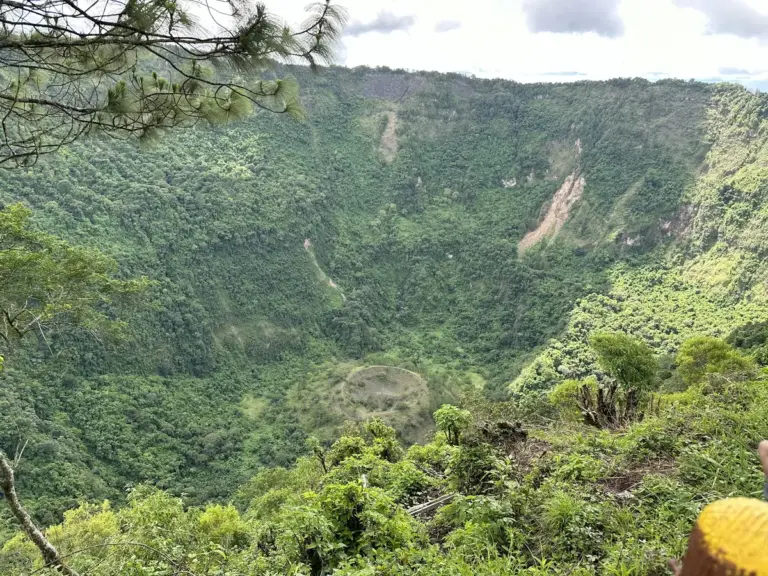
For wildlife, Puerto Barillas Marina and Lodge sits inside the Bahía de Jiquilisco mangrove biosphere with tree-house rooms and a spider-monkey sanctuary, El Imposible Eco Lodge anchors the country’s largest national park, and Cardedeu overlooks the crater lake of Lago de Coatepeque near the Santa Ana Volcano trailhead.
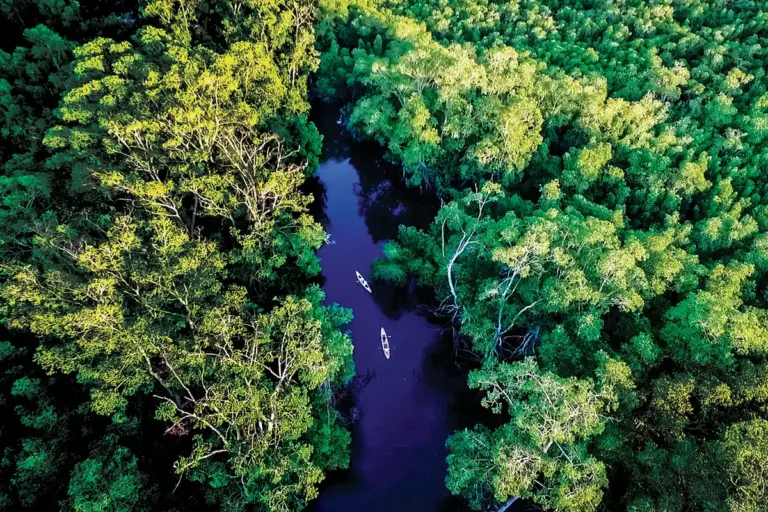
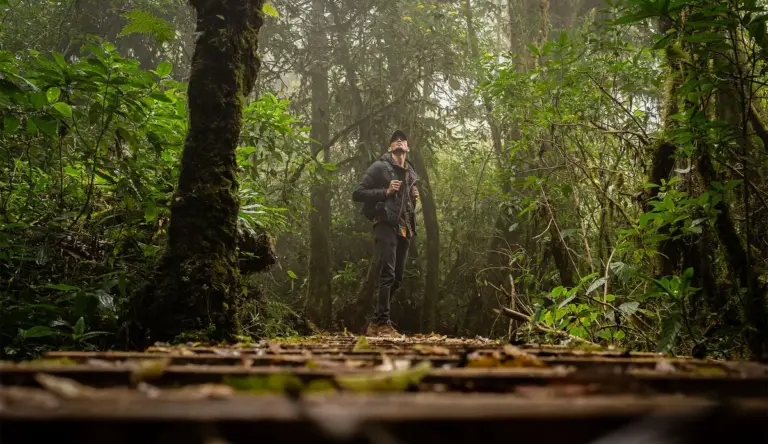
Jiquilisco covers around 101,607 hectares of mangrove channels and is a hawksbill turtle nesting site tied to the ICAPO conservation program. El Imposible protects roughly 4,000 to 5,436 hectares with about 285 recorded bird species, and park camping costs $1 per person. From a kayak in the mangroves, the only sound is the paddle and the occasional splash of something you don’t want to identify.
- Location: Bahía de Jiquilisco, Usulután (eastern mangroves)
- Cost: mid-range; boat and mangrove tours extra
- Best for: birders, kayakers and mangrove wildlife
- Time needed: 2 nights
- Location: edge of El Imposible National Park, western El Salvador
- Cost: budget to mid-range; park camping about $1/person
- Best for: hikers and birders (about 285 recorded species)
- Time needed: 1 to 2 nights
- Location: Lago de Coatepeque, near Santa Ana
- Cost: mid-range
- Best for: a crater-lake base for the Santa Ana Volcano hike
- Time needed: 1 to 2 nights
How much do El Salvador eco lodges cost?
El Salvador eco lodges cost from $10 a night for a hostel dorm to $315 or more for a luxury ocean-view suite. Mid-range boutique eco hotels run $100 to $200, all-inclusive bungalows $130 to $250 per person, and community cooperative lodges $20 to $50. Food stays cheap, with pupusas around $1 each.
Here is the full price ladder, from cheapest to splurge:
- Hostel dorm: from $10/night (La Tortuga Verde)
- Budget eco room: $18 to $70 (Eco del Mar)
- Community cooperative lodge: $20 to $50 (El Sunzal and Tacuba co-ops)
- City eco hotel: about $100 (Árbol de Fuego)
- Mid-range boutique: $100 to $200
- Surf lodge: $129 to $335 (Palo Verde)
- All-inclusive bungalow: $111 to $193 per person (La Cocotera)
- Luxury surf suite with meals: up to $513 per person (Las Flores)
- Pupusa, eaten anywhere: about $1
Pro Tip: Everything runs on US dollars, but change for a $50 bill is hard to find in surf towns. Bring a thick stack of $1, $5 and $10 notes for transfers, cabs, pupusas and tips.
How do you get there from San Salvador airport?
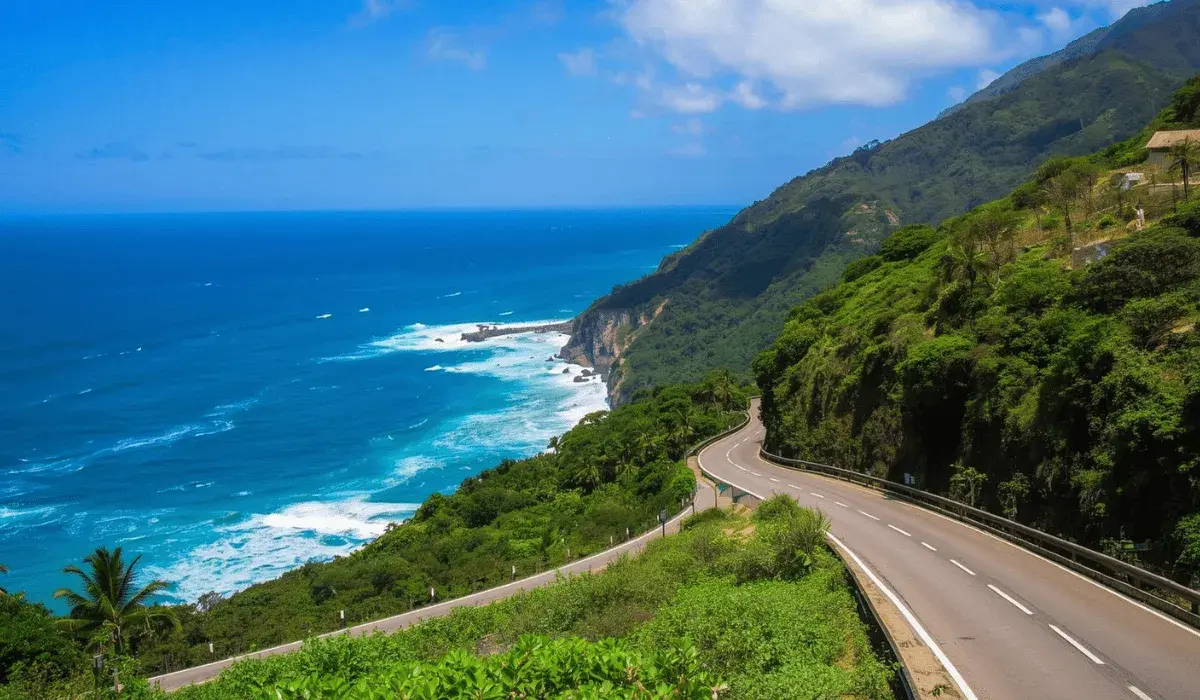
Monseñor Óscar Arnulfo Romero International Airport sits about 25 road miles (40 km) from El Tunco and El Zonte, a 35 to 45 minute drive. A private transfer runs $30 to $85 depending on vehicle and operator, a shared shuttle costs less, and public buses are a few dollars but take roughly 90 minutes. El Cuco is about 2.5 hours east.
The ride out follows the Litoral highway past sugar-cane fields, with cows and dogs on the shoulder and almost no traffic. Most coastal lodges will arrange a transfer with board racks if you ask when you book. Watch for after-hours surcharges, since some resorts add around $90 for late pickups.
- Private transfer: $30 to $85, 35 to 45 minutes
- Shared shuttle: cheaper, longer with stops
- Public bus: a few dollars, about 90 minutes
- To El Cuco / Las Flores: roughly 2.5 hours east
Is El Salvador safe for eco-lodge travelers?
Yes. El Salvador holds the US State Department’s Level 1 rating, “Exercise Normal Precautions,” its safest category, after a sharp multi-year drop in gang activity and homicides. Surf towns like El Tunco and El Zonte have visible tourist police, and the biggest real risks for visitors are rip currents and petty theft, not violent crime.
The tourist police force, POLITUR, patrols a list of designated tourist destinations across the country. The “El Salvador is too dangerous” advice you may still hear is out of date. The hazards that actually matter are in the water and on the sand: this coast has strong rips, and leaving valuables unattended on the beach invites trouble.
Pro Tip: Swim and surf near the schools and lifeguarded sections, not on empty stretches. Rip currents pull hardest at low tide on the black-sand beaches, and there are few warning flags.
Walking El Zonte’s lanes alone at dusk, the vibe is relaxed surf-town, not on-edge. In the capital, use a rideshare app at night rather than flagging cabs.
What is Bitcoin Beach, and can you pay in crypto?
El Zonte earned the nickname Bitcoin Beach after an anonymous donation seeded a local crypto economy, which later inspired a national Bitcoin law. Lawmakers since made acceptance voluntary as a condition of an IMF loan, so the US dollar stays the everyday currency. You never need crypto to pay for an eco lodge.
A few places, including Garten Zonte and Puro Surf, still take Bitcoin over the Lightning network if you want the novelty. But surveys show the vast majority of Salvadorans have never used it, and the dollar is the official money for everything from pupusas to tourist cards. The most surreal sight in town is a Bitcoin ATM standing next to a pupusa stand.
When is the best time to visit El Salvador?
The dry season, November to April, is best for El Salvador eco lodges: sunny days, coastal highs near 90°F (32°C) and little rain. Surf stays most consistent March to October on bigger south swells, turtles nest roughly July to January, and volcano hikes are clearest in the dry months. December and Semana Santa draw the biggest crowds and prices.
| Months | Weather | Surf | Wildlife | Crowds |
|---|---|---|---|---|
| Nov–Apr | Dry, ~90°F (32°C) | Good, cleaner | Turtles through Jan | High in Dec, Semana Santa |
| Mar–Jun | Warm, first rains | Most consistent swells | Turtle season starts | Moderate |
| Jul–Oct | Wettest, afternoon storms | Strong south swells | Peak turtle nesting | Low, cheaper |
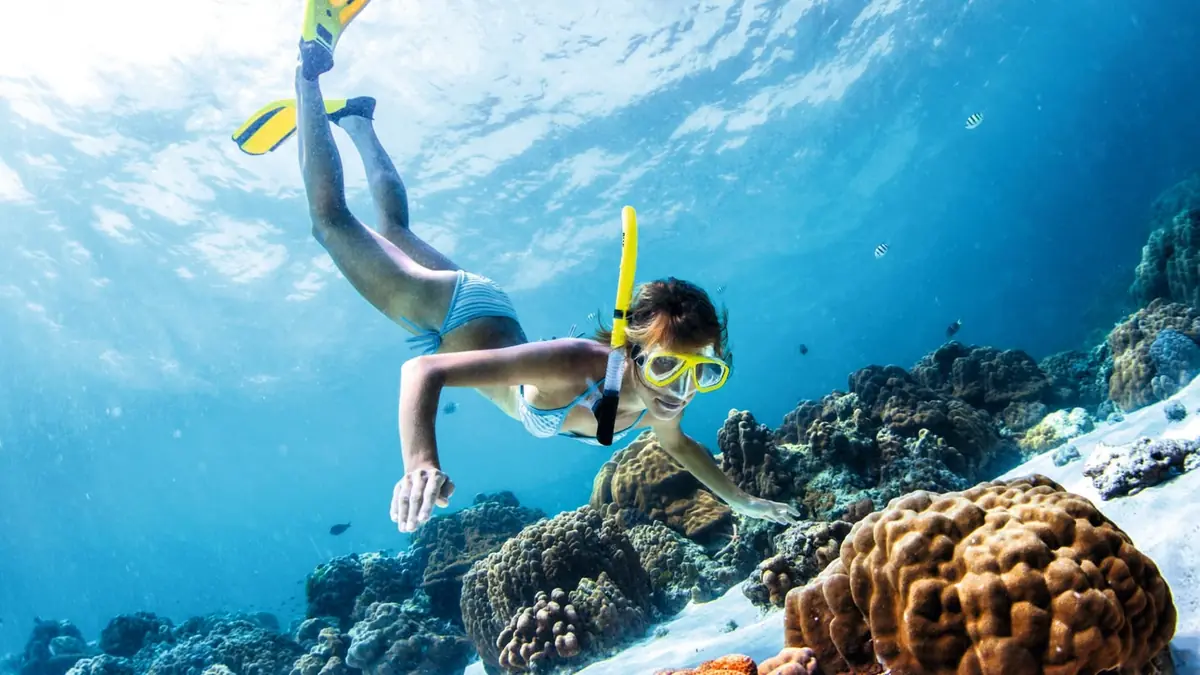
The ocean stays 82 to 86°F (28 to 30°C) year-round, so you never need a wetsuit. In the green season, the rain usually comes as a late-afternoon downpour that clears by sunset, which means mornings are still wide open for surfing or hiking. Skip mountain hikes in September and October, the wettest stretch, when trails turn to mud and clouds hide the volcano views.
Do US citizens need a visa before booking?
US citizens don’t need a visa for stays up to 90 days. You buy a one-entry tourist card on arrival at the airport for a $12 cash fee. Your passport must be valid at least six months with two blank pages, the currency is the US dollar, and tap water isn’t safe to drink, so plan on bottled.
A few more things worth knowing before you book:
- The 90 days are shared across the CA-4 region (Guatemala, Honduras, Nicaragua), not per country.
- Declare cash amounts over $10,000 at the border.
- Enrolling in the State Department’s STEP program is a sensible free step.
- Most coastal lodges arrange airport transfers if you ask in advance.
- The $12 tourist-card line moves fast and sits before baggage claim, so have small bills ready.
How do you spot a genuinely sustainable lodge?
Many properties paint “eco” on the sign with only cosmetic effort. A genuinely sustainable El Salvador lodge shows verifiable proof: solar power or solar-heated water, rainwater harvesting, local hiring, and a real conservation program like a turtle hatchery. Places like La Cocotera, Palo Verde and Puro Surf publish specifics, while vague green claims with no detail are a red flag.
Use this checklist when you compare listings:
- Look for the Certification for Sustainable Tourism “green leaf” or an ISO 26000 framework.
- Check for named NGO partners such as Glasswing International, ICAPO or the Mangrove Association.
- Ask directly about hot-water, towel and water-reuse policies.
- Favor lodges that hire locally and run a conservation activity guests can join.
Palo Verde’s reception-only hot water and one-towel-per-guest rules are exactly the kind of friction that signals real water discipline rather than marketing. A property that makes the green choice slightly inconvenient is usually telling the truth.
Pro Tip: Community cooperative lodges in places like El Sunzal, Tacuba and Isla Montecristo run $20 to $50 a night, beat most boutique prices, and put your money straight into local households. They rarely show up in the big listicles.
Book this, skip that
TL;DR: Base on the El Zonte and El Sunzal coast for the best mix of surf, sustainable lodges and a short airport transfer. Choose La Cocotera for an all-inclusive splurge or La Tortuga Verde for a $10 bunk. El Salvador now runs on the US dollar at a Level 1 safety rating, so it is easier and cheaper than its old reputation suggests.
Skip the idea that you need crypto, skip the outdated fear, and skip cramming both coasts into one short trip. Spend the saved time releasing a turtle hatchling at sunset instead. Which traveler are you, surf, wildlife, luxury or budget, and which lodge is topping your shortlist?