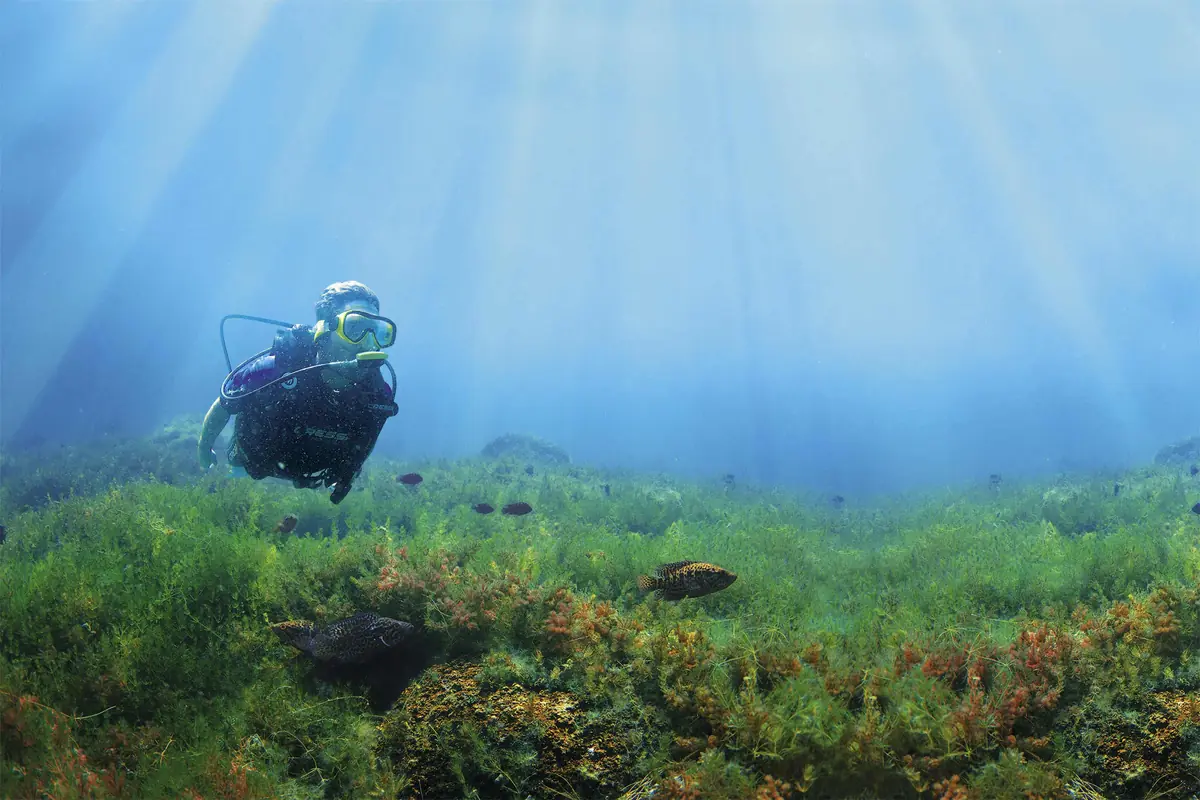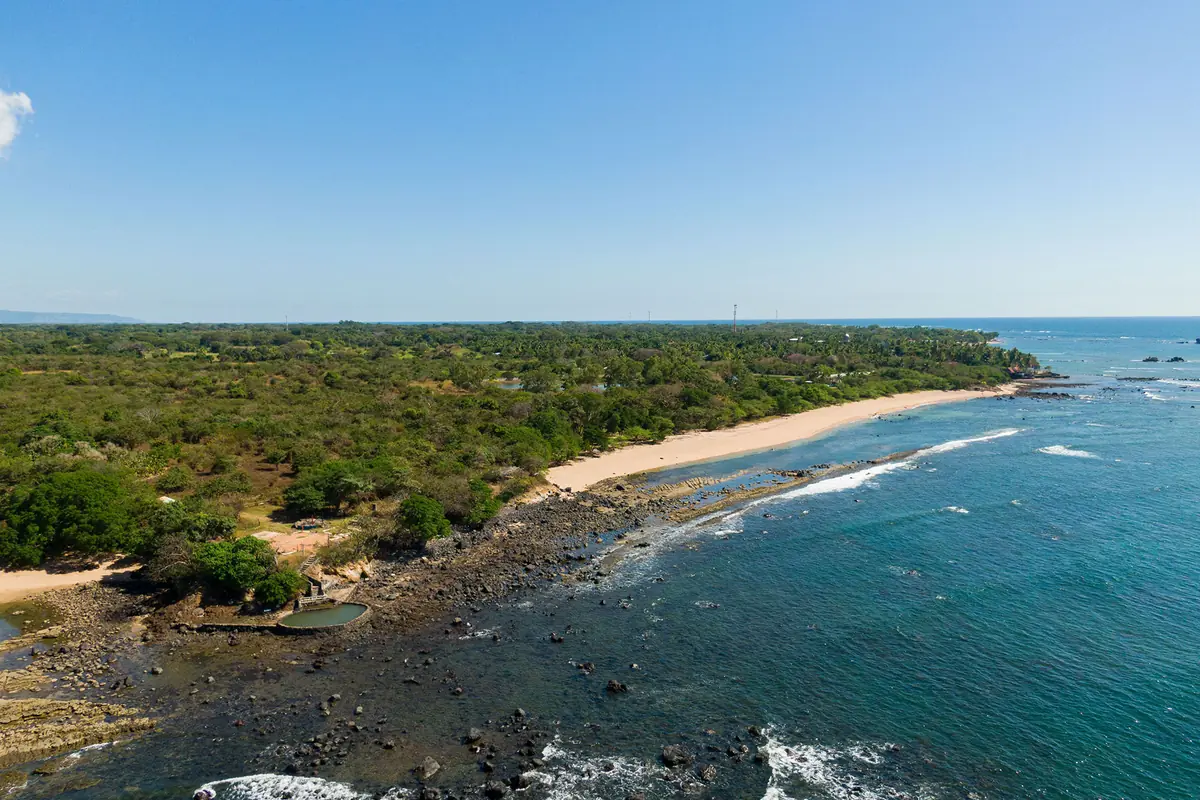
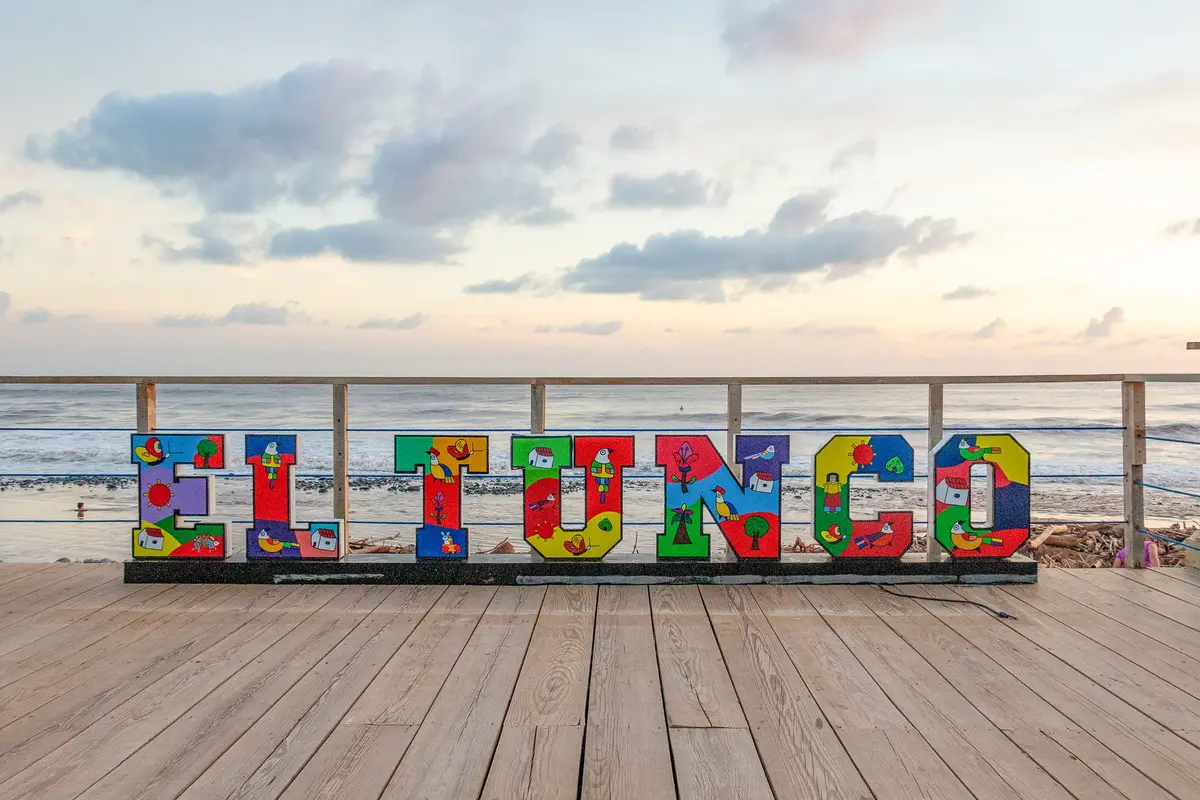
El Tunco is a half-mile of black volcanic sand, one famous rock shaped like a pig, and beginner-to-advanced surf breaks stacked side by side. This El Tunco travel guide covers what it actually costs, where to surf by skill level, how to get there from the airport, and why the old safety warnings no longer apply.
Is El Tunco safe to visit?
El Tunco is one of the safest beach towns to visit in El Salvador, which went from having the world’s highest homicide rate to one of the lowest in the Western Hemisphere — under 2 killings per 100,000 people. The US State Department lists the country at Level 1, Exercise Normal Precautions, the same tier as France or Japan. The town center is gated and patrolled.
If you read older guides, you’ll see “Level 3 — Reconsider Travel” and a lot of gang-violence framing. That picture is out of date. The advisory dropped from Level 3 to Level 2 and then to Level 1, and the official wording acknowledges that gang activity has decreased sharply over a multi-year span.
You’ll notice the change on the ground. The main strip in El Tunco is closed to through traffic and watched by guards, and you’ll see police and soldiers at highway checkpoints. That visible presence comes from the country’s State of Exception, an extended security crackdown that most travelers find reassuring rather than alarming.
Pro Tip: The single biggest safety risk in El Tunco is the ocean, not crime. The black sand hides strong rip currents and the bottom near La Bocana is rocky. Ask a local surf school which beach is safe to swim before you wade in.
One honest caveat worth knowing: rights groups have flagged mass detentions and deaths in custody under that same crackdown, so the policy is controversial even as it has made the coast safe for visitors. Petty theft is the realistic concern for tourists — keep your phone off the bar table and don’t leave valuables on the sand while you paddle out.
For solo female travelers, the reports are consistent: people feel comfortable walking the strip after dark on busy nights. Use normal beach-town judgment, stick to lit areas, and arrange a ride for longer distances.
How do you get to El Tunco from the airport?
El Tunco sits about 25 miles (40 km) from El Salvador International Airport (SAL) — a drive of roughly 45 minutes in light traffic, longer on weekends or during roadwork near La Libertad. There is no direct public bus, so most travelers take a private shuttle, an Uber, or rent a car at arrivals.
Here is how the main options compare from the airport:
| Option | Cost | Time | Notes |
|---|---|---|---|
| Private shuttle / transfer | $30–$40 | ~45 min | Door-to-door, prearranged, easiest with boards or luggage |
| Uber | $25–$35 | ~45 min | Reliable from the airport itself; one traveler paid $26 |
| Rental car | $40–$50/day | ~45 min | Worth it if you plan day trips to El Zonte or Tamanique |
| Public bus | under $2 | 2+ hours | Cheapest, but needs transfers via San Luis Talpa and La Libertad |
From San Salvador, the trip is about 25 miles (40 km) and one hour. Bus #102A runs the route for around $1.50, while an Uber from the capital costs $25–$35.
Pro Tip: Order your Uber at the airport, not in town. In-town ride availability in El Tunco is patchy — sometimes you wait 20 minutes, sometimes nothing shows. For the trip back to the airport, arrange a transfer with your hostel the night before.
Coming overland from Antigua, Guatemala or León, Nicaragua, book a tourist shuttle through your hostel. The CA-4 visa agreement lets most travelers cross between these countries without a new visa, but border days are long — plan for a full travel day each way.
Where should you stay in El Tunco?
Stay near the two parallel streets that make up the town if you want to walk to surf, food, and nightlife. El Tunco is the most expensive coastal stay in El Salvador, but it still runs the full range from $10 dorm beds to $250 oceanfront resorts. Rooms sell out in December and during Holy Week, so book those windows ahead.
Here is what each budget tier gets you per night:
| Tier | Price/night | What you get | Examples |
|---|---|---|---|
| Hostel dorm | $8–$19 | Social, basic, fan or AC | Papaya Lodge, Surfside Hostal, The Duck Dive |
| Private room (hostel/guesthouse) | $15–$50 | Privacy, often shared pool | Hostal Paulino, Tunco Beach Hostel, La Sombra |
| Mid-range surf lodge | $40–$80 | Pool, AC, ocean nearby | Hotel Roca Sunzal, Eco del Mar, Hotel El Tunco Lodge |
| Oceanfront resort | $150–$250+ | Front-row waves, full service | Boca Olas Resort Villas, Casa de Mar, Tekuani Kal |
Pro Tip: Read the address before you book, not just the name. Listings labeled “El Tunco” are sometimes physically in El Sunzal or El Zonte, which are different beaches. People show up expecting the main strip and land a 15-minute walk away. Cross-check the pin on a map.
Papaya Lodge — the social hostel
Papaya Lodge is the one travelers name when they want to meet people. Expect a busy common area, a small pool, music, and a rotating cast of surfers and backpackers swapping plans over breakfast. Light sleepers should ask for a room away from the bar — the strip stays loud until late on weekends.
- Location: Calle El Tunco, town center
- Cost: dorms from about $10–$15
- Best for: Solo travelers and backpackers who want a social base
- Time needed: 2–4 nights
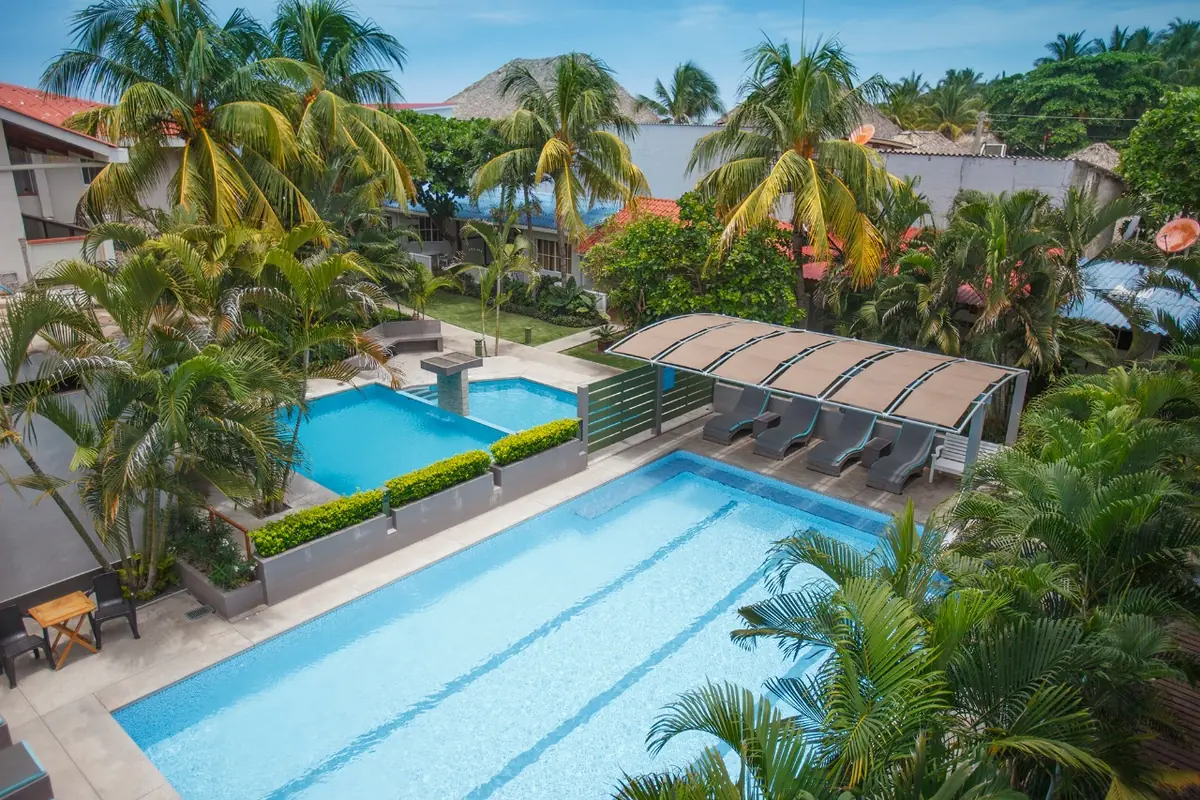
Hotel Roca Sunzal — mid-range on the point
Roca Sunzal puts you at the El Sunzal point, steps from the beginner-friendly right-hander. You’re paying for location and a pool rather than luxury, and the trade-off is worth it if surfing is your priority.
- Location: El Sunzal point, north end
- Cost: $40–$80/night
- Best for: Surfers who want to roll out of bed onto the wave
- Time needed: 3–5 nights
Which El Tunco surf break is right for your level?
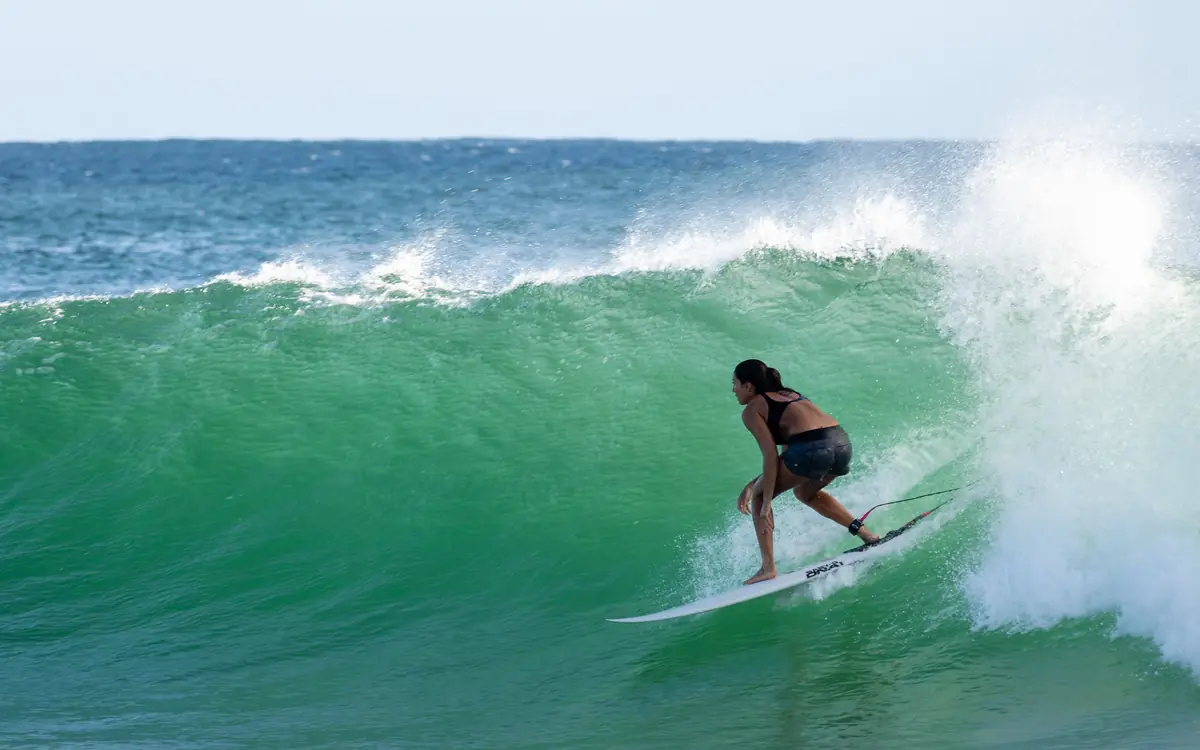
El Tunco’s draw is that several distinct waves sit within a 15-minute spread. Total beginners learn at the sandy Sunzalito break in front of town, longboarders and improvers ride the mellow El Sunzal point, and confident surfers take on the fast left at La Bocana. Two more breaks — El Zonte and Punta Roca — are a short drive away.
Here’s how the breaks sort by skill:
| Break | Level | Type | Distance from town |
|---|---|---|---|
| Sunzalito | Beginner | Sandy beach break, gentle | In town, right of the rock |
| El Sunzal | Beginner–Intermediate | Long right point, mellow | 5–15 min walk north |
| La Bocana | Intermediate–Advanced | River-mouth left, fast and hollow | In town |
| El Zonte | Intermediate | Right point over rock + beach break | 15–20 min west |
| Punta Roca (La Libertad) | Advanced | Long, fast right point | ~10 min east |
El Sunzal is the workhorse — a forgiving right that gets crowded fast. La Bocana is one of the country’s few quality lefts, punchy and best left to people who can handle a powerful, hollow wave; it doubles as the competition wave when contests come through. Punta Roca is the long right that draws pros, including for the WSL Championship Tour event El Salvador hosts there. During the contest the lineup fills with pros and the whole area gets busy.
Lessons and gear are cheap by Central American standards:
- Group lesson: about $15–$20 in El Tunco (around $30/hour in El Zonte)
- Private or semi-private 90-minute lesson: $20–$45
- Board rental: about $10/day, negotiable to $8 for multiple days
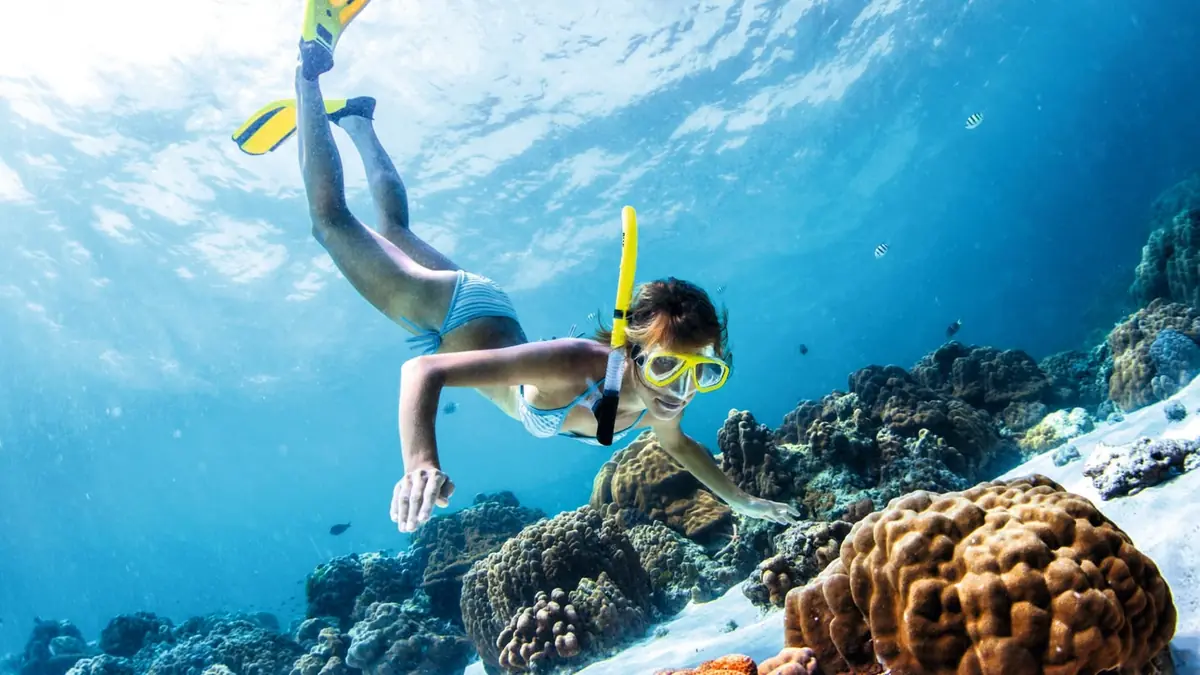
The water sits at 79–84°F (26–29°C) year-round, so you’ll never need a wetsuit — a rash guard does the job. Reef booties are smart for the rocky entries at La Bocana and Punta Roca.
Pro Tip: Paddle out at El Sunzal before 7 a.m. On my first morning I had the point nearly to myself; by 9 it was a parking lot of longboards. The crowd, not the wave, is what humbles most visitors here.
What is there to do in El Tunco besides surf?
If you don’t surf, El Tunco gives you about a day and a half of activities before you’ll want a day trip. The town itself is small: sunsets, a couple of yoga studios, beach bars, and the rocky shoreline. The real variety comes from short trips to the Tamanique waterfalls, the quieter beach at El Zonte, and the fish market at La Libertad.
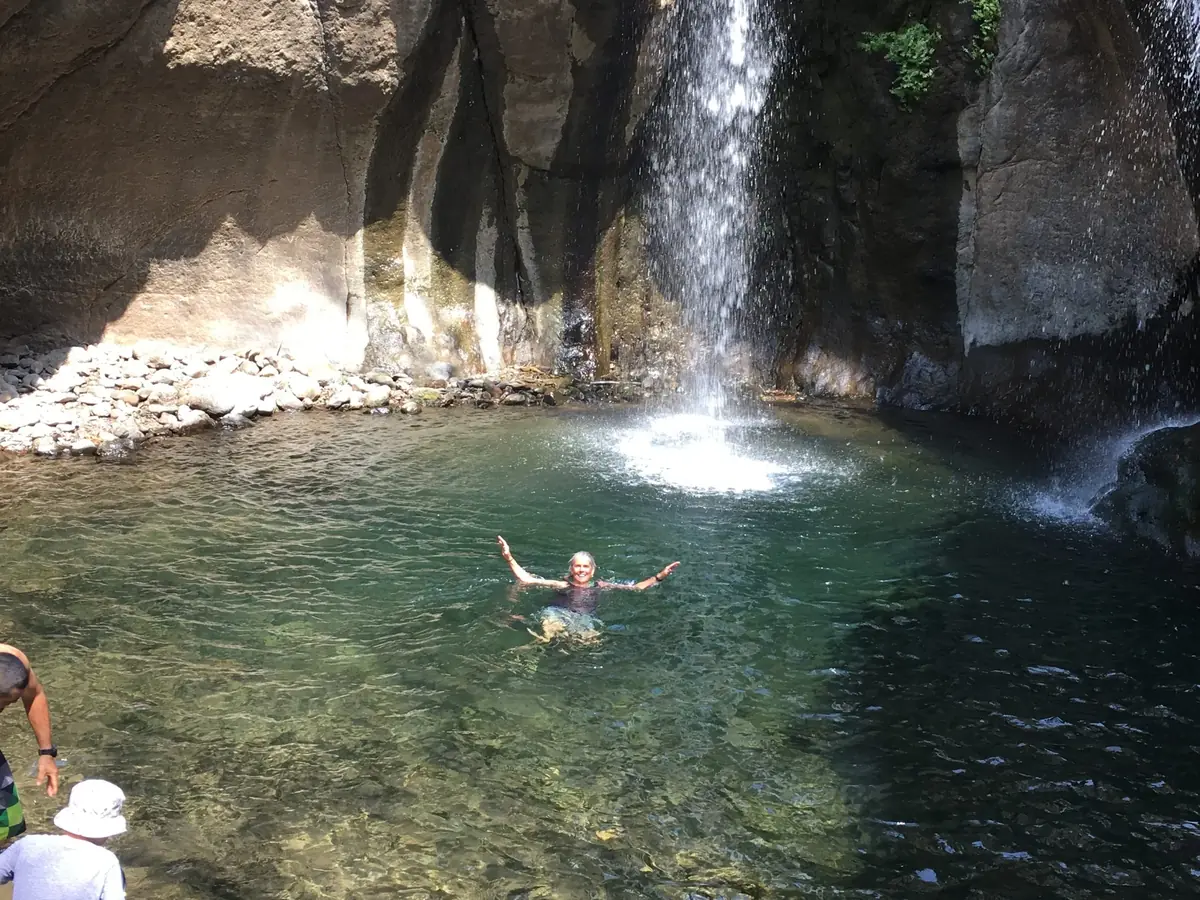
The standout half-day trip is the Cascadas de Tamanique, about 10 miles (16 km) and a 25–30 minute drive inland.
- Getting there: bus #187 for $0.50, an Uber for about $6, or a shared car for roughly $1
- Trailhead guide fee: about $7 per person (a local guide is genuinely useful here)
- Organized tours: from about $35 for an afternoon trip up to $85 for a full day from San Salvador with lunch
- The hike: moderately strenuous, with a 45–70 minute climb back up
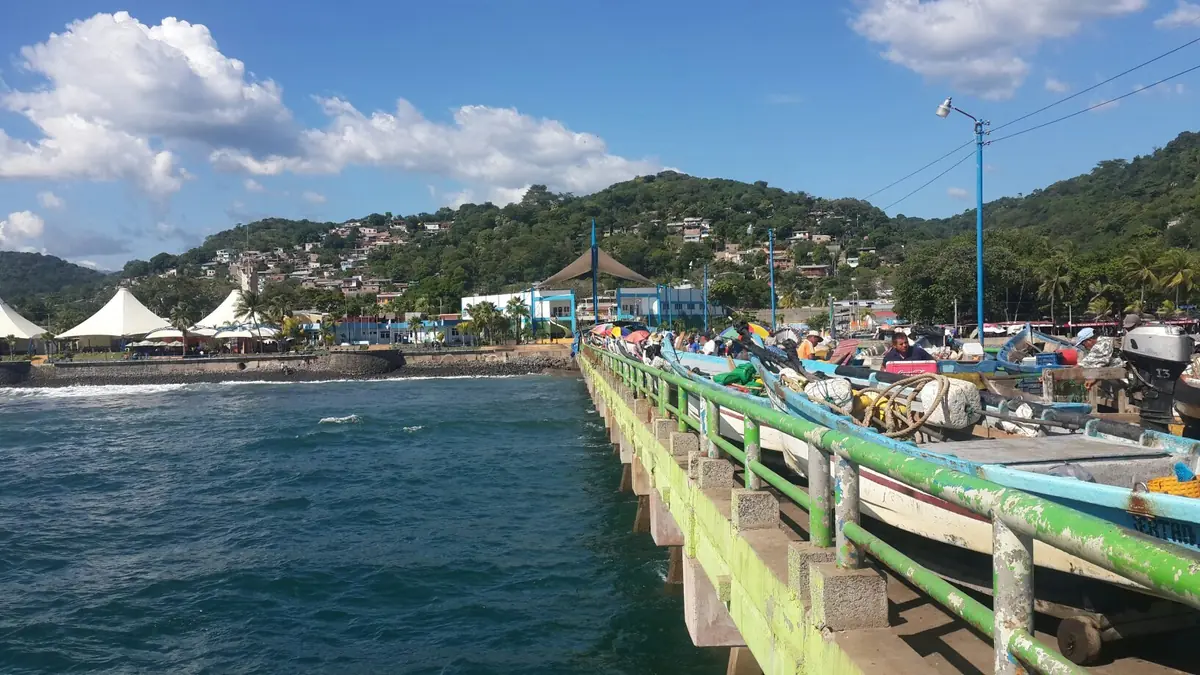
El Zonte, 15–20 minutes west, is the calmer counterpart to El Tunco and the place known as Bitcoin Beach. It’s a good day trip or an alternative base if El Tunco feels too loud. Closer in, the La Libertad pier has a working fish market where the morning catch comes off the boats — cheap ceviche and a look at the rebuilt boardwalk.
Other options within reach include the sea cave at El Encanto, the trails at Walter Thilo Deininger park, and longer trips to the Santa Ana volcano or the flower route, Ruta de las Flores, both a couple of hours away.
What should you eat and drink in El Tunco?
Eat pupusas. The thick, stuffed corn cakes are the national dish and cost $1–$1.35 each, so two to four make a full meal under $5. Beyond pupusas, El Tunco has fresh seafood, a row of international cafes for digital nomads, and a weekend bar scene with live reggae and DJs on the main strip.
Rough costs to budget for:
- Pupusas: $1–$1.35 each (try Pupusería La Guanaquita)
- Comedor lunch: $4–$6
- Sit-down restaurant mains: $7–$12
- Seafood and ceviche platters: $8–$18
- Local Pilsener beer: $1 at a tienda, up to $1.50–$3 at a bar
- Cappuccino: $2.50–$3.50; cocktails: $4–$8
- A full night out: under $20
Pro Tip: Check the bill. Many restaurants add a 10% service charge automatically, so the “tip” is often already on there. Pay attention before you tip again on top.
On weekends the strip turns into the town’s nightlife. Salvadorans drive in from San Salvador, the bars fill, and music runs late. Weekdays are mellow and foreigner-heavy. If you want quiet, come midweek; if you want a party, come Friday or Saturday.

When is the best time to visit El Tunco?
The dry season, November through April, brings the best weather and smaller, beginner-friendly waves — along with peak crowds and prices. The green season, May through October, delivers bigger swells for advanced surfers, lush hills, and lower prices, but also afternoon rain and a beach that can turn rocky and muddy. The transition months are the sweet spot.
| Season | Months | Surf | Crowds | Weather |
|---|---|---|---|---|
| Dry | Nov–Apr | Smaller, beginner-friendly | Peak | Hot and dry, reliable sun |
| Green / wet | May–Oct | Bigger south swells, advanced | Fewer | Lush, afternoon downpours |
| Sweet spot | Mar–Apr & Nov | Mixed, improving | Moderate | Warm, mostly dry |
The water stays warm all year at 79–84°F (26–29°C). Book well ahead for December and Holy Week, when the whole coast fills up. In the deep wet season the town quiets down and some businesses slow to a crawl.
How many days do you need in El Tunco?
Plan on 3 to 4 nights in El Tunco. That’s enough for a couple of surf sessions, a day trip to the Tamanique waterfalls, an afternoon in El Zonte, and at least two of the sunsets the town is built around. Two nights works if you’re rushed, while surfers chasing waves often settle in for five or more.
If El Tunco is one stop on a longer Central America route, 2 to 3 nights slots in cleanly between Guatemala and Nicaragua. If it’s your main destination and you came to surf, treat it as a base for a week and take day trips from there.
How does money work in El Tunco?
The US dollar is El Salvador’s official currency and what you’ll use for everything in El Tunco. Bitcoin is legal but voluntary — accepted at a handful of spots, ignored at most. Bring cash. ATMs run dry on weekends, small comedores and tiendas often don’t take cards, and a card-only traveler will get stuck.
A few practical money realities the brochures skip:
- Bitcoin is no longer mandatory: the law was amended so businesses can choose whether to accept it, and most surveys show very few Salvadorans use it day to day
- ATMs are unreliable on weekends and holidays — withdraw on a weekday in San Salvador or La Libertad if you can
- Carry small bills: vendors rarely break a $20 for a $1.35 pupusa
- Budget rough daily spend: backpackers run $15–$30/day on food alone; a mid-range traveler spends roughly $34–$55/person/day all in
Pro Tip: Two infrastructure quirks catch first-timers off guard — power and water cut out from time to time, and many hostels run on backup tanks. Keep a charged power bank and a refilled water bottle, and don’t panic when the lights flicker.
Is El Tunco right for you?
El Tunco is excellent for some travelers and a poor fit for others. Here’s the honest verdict by type:
- Surfers: The clear winner. Multiple skill-graded breaks within minutes, cheap lessons, warm water, no wetsuit. This is the main reason people come, and roughly nine in ten visitors are here for the waves.
- Backpackers and overlanders: Strong fit. Cheap dorms, an easy social scene, and clean shuttle links to Antigua and León make it a natural Central America stop.
- Digital nomads: Workable. Cafes with wifi, a longer-stay rental market, and low costs — though expect occasional power and internet drops.
- Solo female travelers: Comfortable. First-hand reports are consistently reassuring; use standard beach-town caution and you’ll be fine.
- Families and non-surfers: The weakest fit. The sand is black and rocky, swimming is limited, and entertainment beyond sunsets and day trips is thin. Consider quieter El Zonte or pairing El Tunco with the volcano region instead.
Quick answers about El Tunco
A few questions that come up again and again, answered straight.
Why is El Tunco called El Tunco?
El Tunco means “the pig.” The town is named for the rock formation at the south end of the beach, which locals say looks like a pig lying on its side. The full beach name is Playa El Tunco, and the wider area markets itself as Surf City.
Is El Tunco worth visiting?
Yes — if you surf or want a lively, affordable beach town with easy day trips. The waves, the cheap food, the sunsets, and the social scene carry it. It’s less worth a special trip for non-surfers chasing swimmable beaches, since the shoreline is rocky and the sand is black.
El Tunco or El Zonte — which should you pick?
Pick El Tunco for nightlife, lessons, and meeting people; pick El Zonte for quiet, a longer point wave over rock, and a slower pace. They’re 20 minutes apart, so the easy answer is to base in one and day-trip the other. First-timers and partiers lean El Tunco; couples, nomads, and calm-seekers lean El Zonte.
Before you book
El Tunco rewards travelers who come for what it actually is: a small, loud, surf-first beach town with great waves, $1 pupusas, and a safety reputation that finally caught up to reality. Come for the surf, stay near the strip, carry cash, and plan a day trip or two.
TL;DR: Budget 3–4 nights, expect to pay $10–$250/night depending on style, surf El Sunzal as a beginner and La Bocana once you’re confident, and ignore the outdated Level 3 warnings — El Salvador is now Level 1 and El Tunco’s town center is gated and safe.
What’s pulling you to El Tunco first — the waves, the prices, or just seeing how much El Salvador has changed? Tell me in the comments.