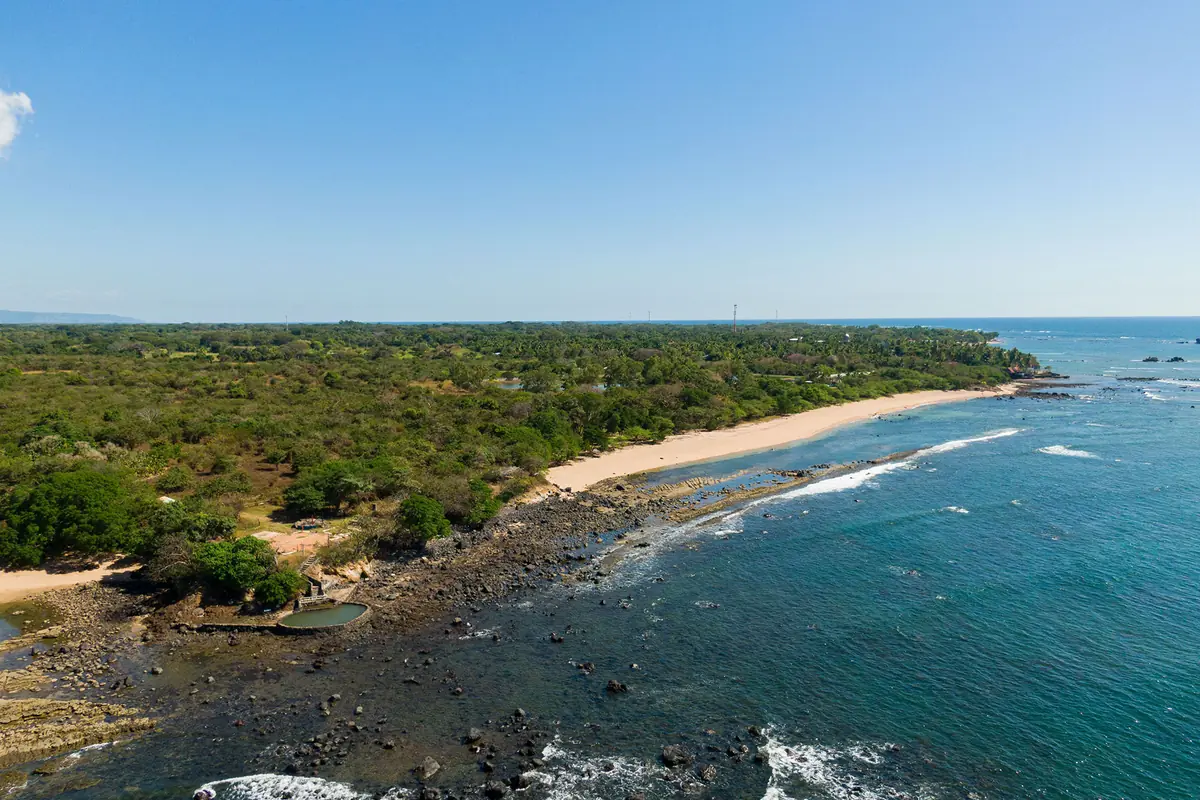
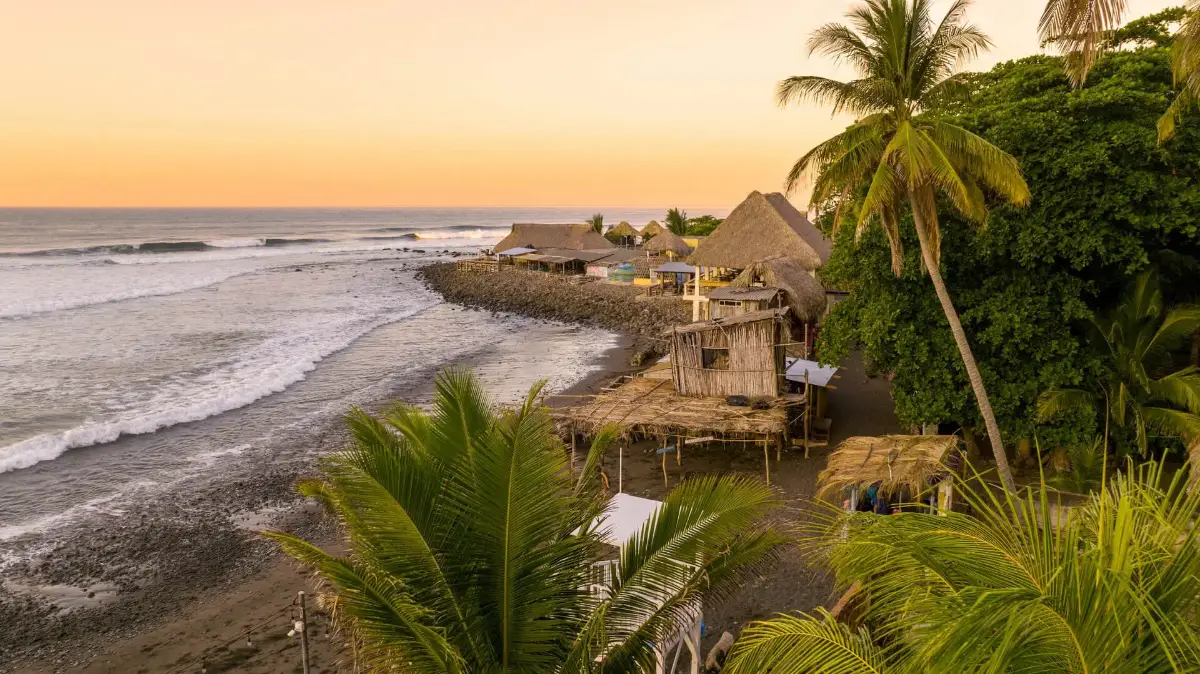
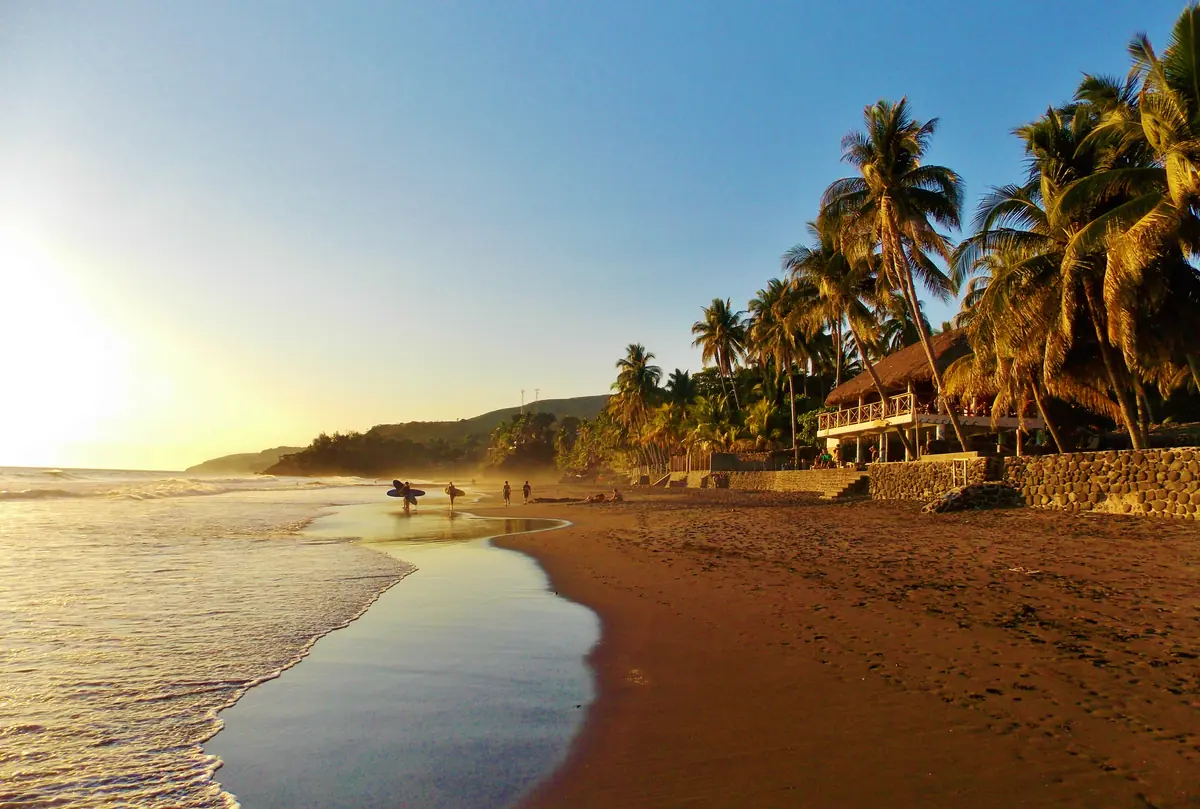
El Zonte packs a serious point break, a black-sand beach, and the original Bitcoin Beach into a fishing village you can walk end to end in ten minutes. This El Zonte travel guide covers getting there, where to stay, whether the surf suits beginners, and the two things most guides quietly get wrong.
Is El Zonte worth visiting, and how many days do you need?
El Zonte is worth visiting if you want surf, slow days, and the original Bitcoin Beach without El Tunco’s nightlife crowds. Two to three days covers the surf, the sea caves, and the sunsets. Stay a week if you want day trips and the unhurried pace to actually sink in.
This is a small place, and that is the point. There is no supermarket, the roads are dirt and cobblestone, and the strongest signal you get is the fruit-and-vegetable truck that circles town honking. People come for the wave and the quiet, not for a checklist of attractions.
If your trip is short, base yourself here and use it as a launch pad. El Tunco is 15 minutes east for nightlife, and the Tamanique Waterfalls are a half-day trip inland.
Pro Tip: Come midweek. El Zonte is calm Monday through Thursday, then fills with San Salvador weekenders Friday through Sunday, when the better hotels book out and the river beach gets loud.
Is El Zonte safe for tourists?
Yes. The US State Department rates El Salvador at Level 1: Exercise Normal Precautions, its lowest advisory tier and the same level as much of Western Europe. El Zonte itself is a long-established surf town with tourist police presence. Take normal precautions, don’t flash valuables, and you’ll be fine.
The shift here is real. By government figures, El Salvador’s homicide rate has fallen from roughly 38 per 100,000 to under 2 per 100,000, one of the steepest drops in the hemisphere. A national State of Exception remains in place, and human-rights groups have flagged due-process concerns under it, but as a traveler you are unlikely to notice anything beyond more police on the coastal road.
What actually requires caution in El Zonte is the ocean and the roads, not crime:
- Surf hazard: the point breaks over rock and cobblestone, not sand
- River crossing: you wade across the river mouth, which deepens on an incoming tide
- Roads: unlit, uneven, and easy to roll an ankle on after dark
- Power: outages happen, so keep a phone charged and a flashlight handy
Pro Tip: Solo and solo-female travelers report El Zonte as comfortable and walkable in daylight. After dark, the unlit dirt roads are the main reason to grab a $2 ride between the north and south sides rather than walk.
How do you get to El Zonte from San Salvador airport?
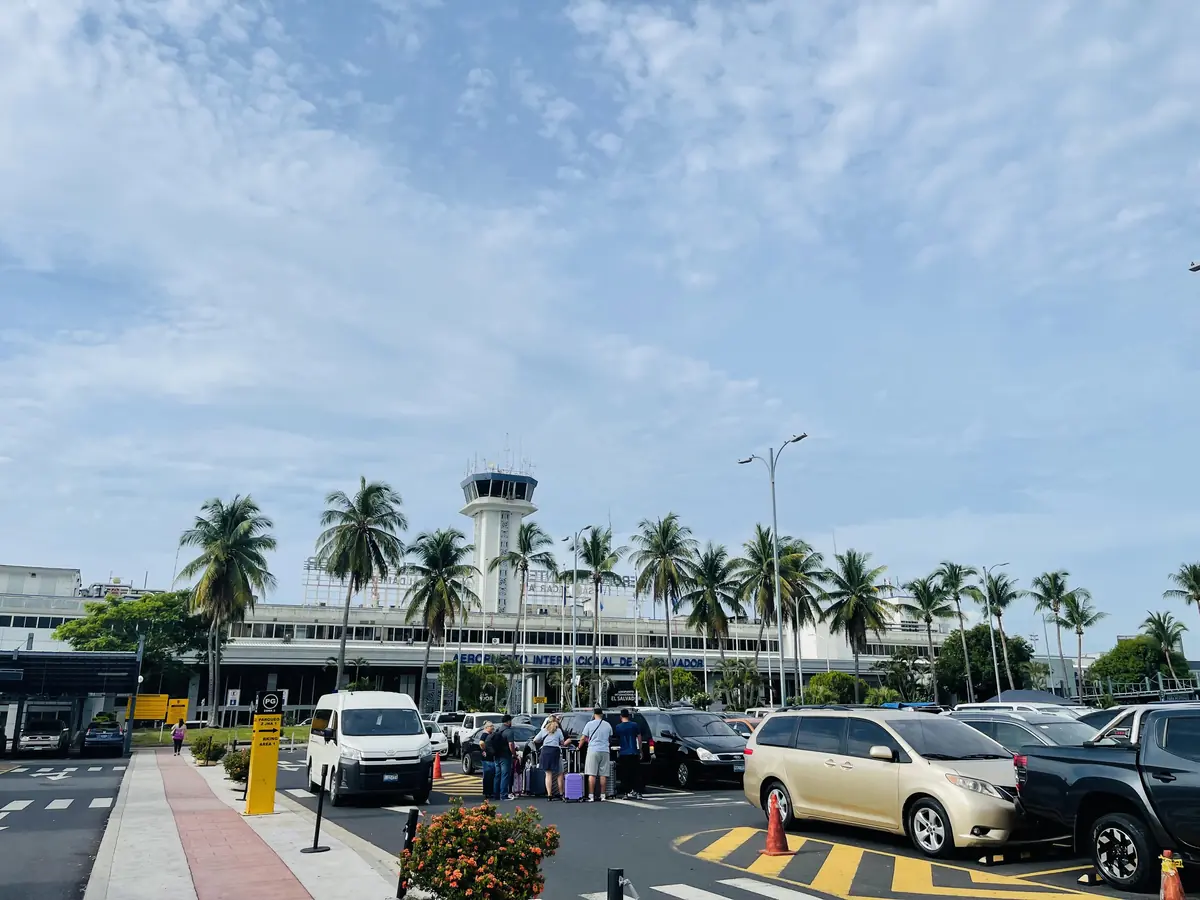
El Zonte sits about 31 road miles (50 km) from San Salvador’s airport (SAL), a 45 to 60 minute drive down the coastal highway. Your options are a private transfer ($50–60), Uber ($25–35), a shared shuttle ($10–20 per person), or public buses ($2 total). There is no direct airport-to-El-Zonte bus.
SAL (Monseñor Óscar Arnulfo Romero International) has nonstop US service from Houston, Miami, Los Angeles, Newark, Dallas, and Washington, with Avianca, United, American, Volaris, Spirit, and Frontier all flying the route. Houston to SAL runs about 3 hours over roughly 1,210 miles (1,950 km).
Here is how the ground options compare:
| Mode | Time | Cost | Notes |
|---|---|---|---|
| Private transfer | 45–60 min | $50–60 | Door to door, easiest with bags or a board |
| Uber | 45–60 min | $25–35 | Cheapest door-to-door; confirm the app covers your drop |
| Shared shuttle | ~60 min | $10–20 pp | Book ahead through your hotel or a local operator |
| Bus 102 then 192 | ~2 hr | ~$2 | Bus 102 toward La Libertad, transfer to 192 west |
On arrival you’ll pay a $12 tourist card, US passport in hand, good for a stay of up to 90 days. The exit tax (around $40) is almost always bundled into your airfare, so don’t let anyone charge you for it again at the airport.
Pro Tip: If you land late, take the private transfer. The coastal highway is dark and winding at night, and the savings from a bus transfer in La Libertad aren’t worth doing that route tired and jet-lagged.
Where should you stay in El Zonte?
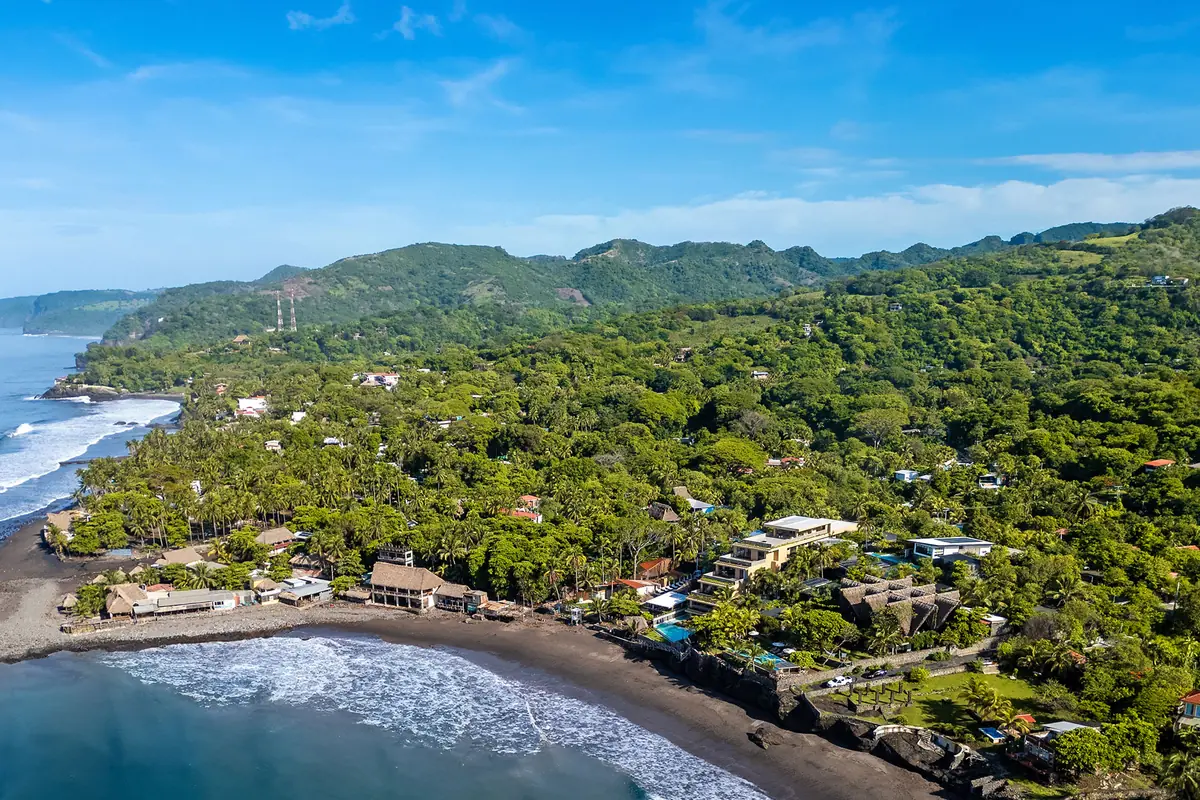
El Zonte runs from $8 hostel dorms to $200-plus beachfront boutiques, all within a ten-minute walk. The north side near the point is quieter and more upscale; the south side, across the river, is where most budget hostels and surf schools cluster. Most properties lack hot water, which nobody misses in the heat.
Below are three places that anchor the budget, mid-range, and splurge ends, each with the trade-offs spelled out.
Esencia Nativa — best for surfers on a budget
The south-side surf hostel run by Alex, an ISA-certified local instructor, sits a short walk from the point and doubles as one of the better surf schools in town. Mornings start with the slap of boards being waxed in the courtyard, and the crowd skews young, solo, and here to surf rather than party.
The rooms are basic and the showers are cold, but you’re paying for location and a built-in surf community, not thread count. Lessons run out the front door straight to the lineup.
- Location: South side of the river, near El Zonte Point
- Cost: dorms from $8–15, private rooms $20–40
- Best for: Solo travelers, budget surfers, first-time visitors
- Time needed: 2–4 nights
Olas Permanentes — best mid-range beachfront
Named after El Zonte’s beach-break wave, this mid-range spot puts you directly on the sand with the surf as your alarm clock. The on-site kitchen does respectable ceviche, and you can watch the left-hander peel off the rocks while you eat.
The catch is the same rocky stretch that makes the view: submerged rocks just left of the break scrape knees and feet, so this is a watch-from-the-deck spot more than a swim-out-front one.
- Location: Beachfront, north side near the point
- Cost: $75–80/night
- Best for: Couples, mid-budget surfers who want toes-in-sand access
- Time needed: 3–5 nights
Palo Verde Sustainable Hotel — best for a splurge
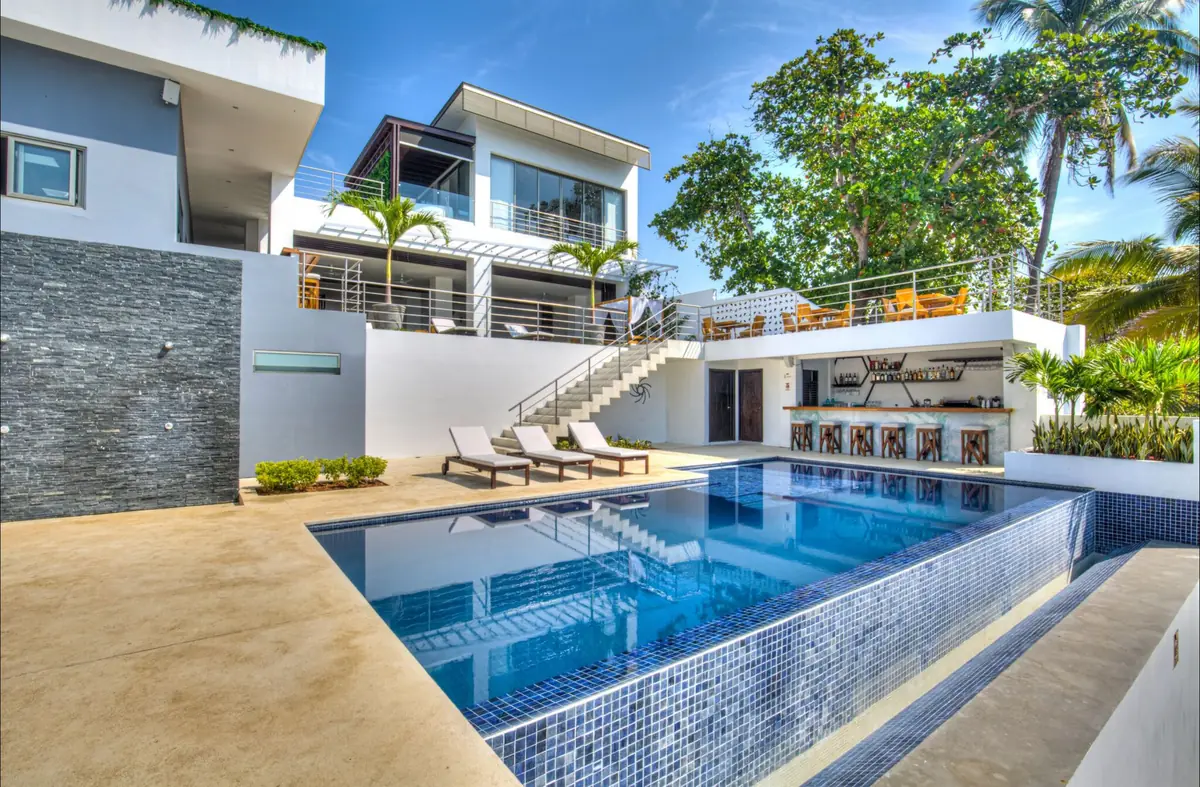
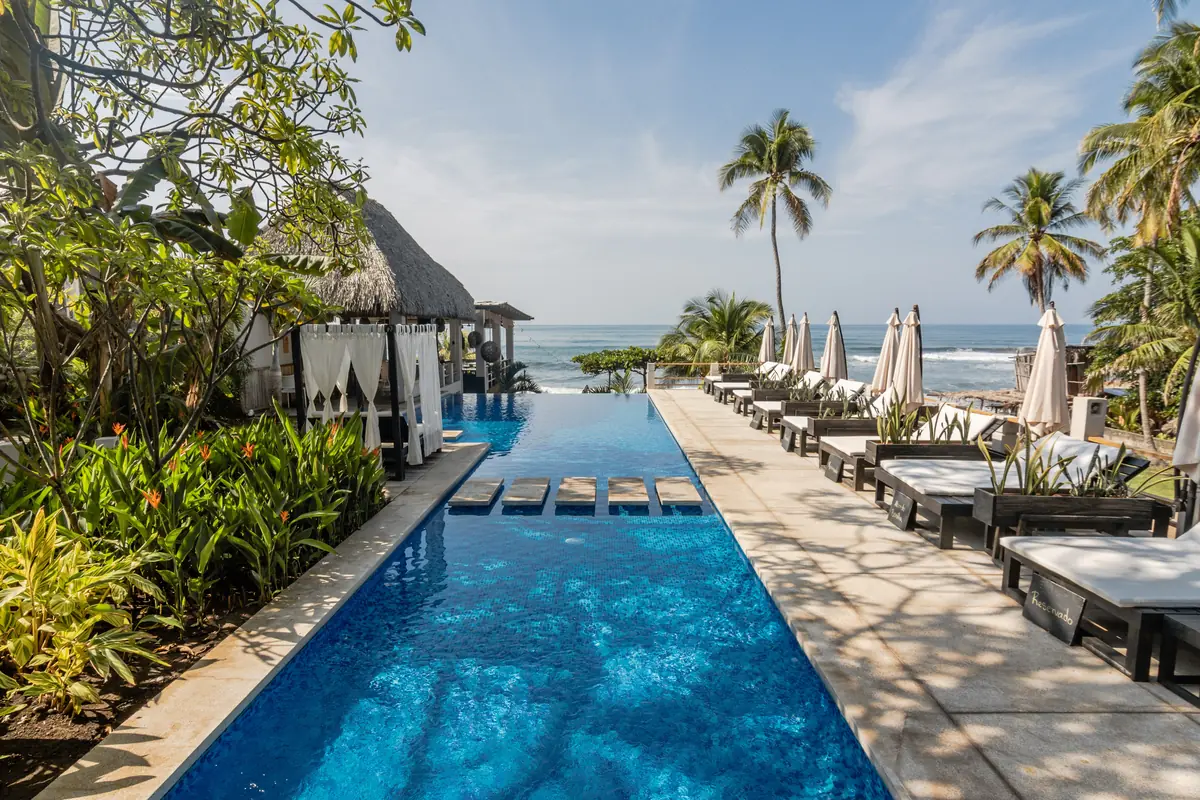
Palo Verde is the design-forward beachfront option, with an on-site restaurant, Nan Tal, doing French-Latin fusion at sunset. This is where you come to watch the sky go orange over the Pacific with a proper cocktail instead of a warm Pilsener.
At $200-plus a night it costs roughly ten times a dorm bed, and you’re paying for calm, polish, and reliable everything in a town where reliability is the luxury. For a honeymoon or a recharge, it earns the premium.
- Location: Beachfront, north side
- Cost: from $200+/night
- Best for: Couples, honeymooners, travelers wanting comfort over grit
- Time needed: 2–4 nights
Pro Tip: Families do best on the north side, where calmer pockets of beach and the tidal rock pools give kids somewhere to splash that isn’t the rocky point. Book a place with a pool, since the swimming here is about tide pools, not easy ocean swimming.
Is El Zonte good for beginner surfers?
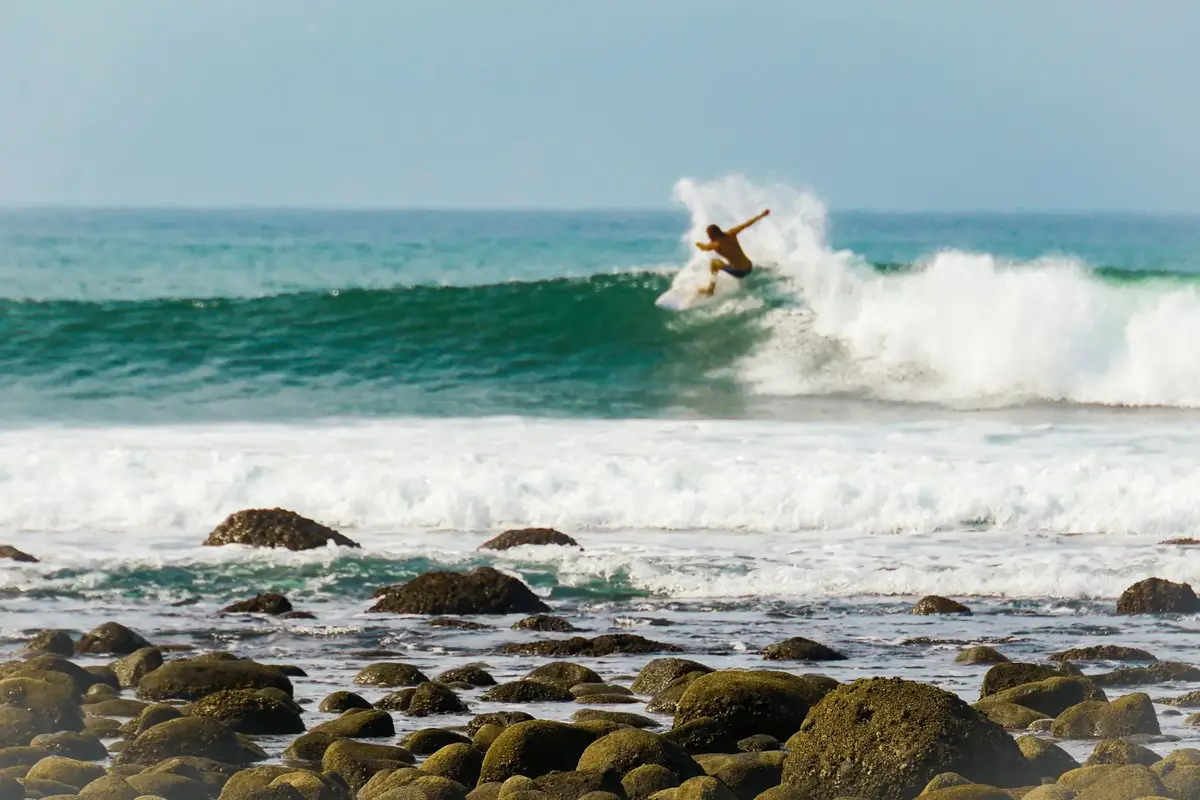
Not really, and this is where most guides mislead you. El Zonte’s main wave is a right-hand point break over a rocky, cobblestone bottom with real current, which makes it an intermediate-to-advanced spot. True beginners should learn on the sandy beach breaks at El Tunco’s Sunzalito or San Blas first, then graduate to the point.
The honest read on the wave: it’s a short paddle out, works best at mid-to-high tide on a south swell with light offshore wind, and gets hollow and fast as the swell builds. On a small 2 to 3 foot day, a confident beginner with an instructor can manage it. Over about 5 feet, it’s for experienced surfers, and the locals know it.
Here is what to expect by season:
| Period | Surf | Skill level | Weather | Crowds |
|---|---|---|---|---|
| Nov–Feb | Small, clean | Beginner–intermediate | Dry, sunny | Light midweek |
| Mar–Apr | Building | All levels | Dry, hot | Moderate |
| May–Aug | Biggest swell | Intermediate–advanced | Rainy afternoons | Light |
| Sep–Oct | Big, wettest | Intermediate–advanced | Wettest of the year | Lightest |
Costs are straightforward, though El Zonte runs pricier than El Tunco:
- Board rental: $10–15/day (negotiate toward $8 for multiple days)
- Lessons: $30–35/hour including a board
- Cheaper alternative: El Tunco lessons run roughly $15–25
On a big swell the locals abandon the point entirely and drive ten minutes to Sunzal or Punta Roca, which tells you everything about who El Zonte’s main wave is actually for. If you’re learning, do the same in reverse: learn at El Tunco, then come back and earn the point.
Can you still spend Bitcoin in El Zonte?
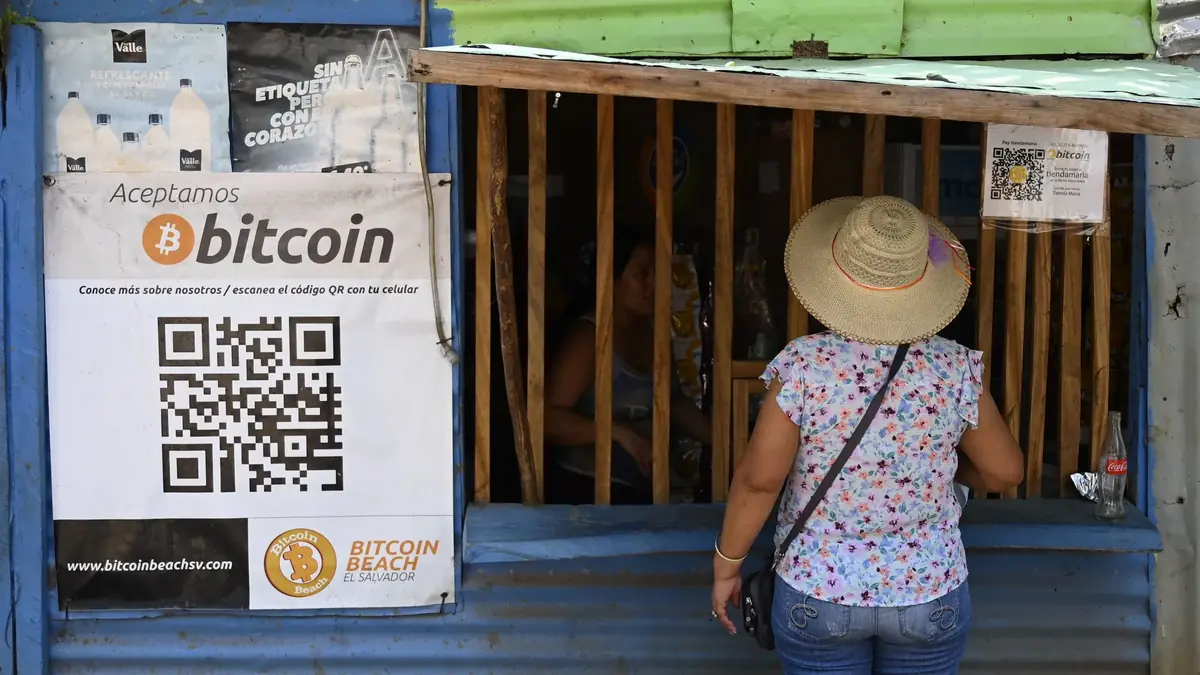
Yes, but it’s now optional rather than required. El Salvador made Bitcoin acceptance voluntary, dropping the rule that all businesses had to take it. In El Zonte, the original Bitcoin Beach, many tourist-facing spots still accept Bitcoin over the Lightning Network via QR codes. Treat it as a fun option and carry US dollars too.
The backstory is worth knowing. Bitcoin Beach started when an anonymous donor handed expat economist Mike Peterson a large Bitcoin gift on the condition that it be spent, not cashed out, so the actual use of Bitcoin would benefit local people. Together with local organizers Roman “Chimbera” Martínez and Jorge Valenzuela, the project onboarded around 120 businesses and 500 families and built a homegrown wallet before the country adopted Bitcoin nationally.
What’s true on the ground now:
- Acceptance is widespread among tourist businesses but voluntary
- Payments run on the Lightning Network through QR codes
- The US dollar is the everyday currency and has been the official one since 2001
- Surveys have found that more than nine in ten Salvadorans don’t use Bitcoin in daily life
So set expectations. The “Bitcoin Beach” experience is a genuine novelty you can actually use, not the cashless utopia some posts imply. Foreign crypto money has also pushed up local property prices sharply, which is part of the story too.
Pro Tip: The town has one ATM, near Rancho Lokoo, and it runs dry. The smartest packing move is a stack of $1, $5, and $10 bills, because nobody can break a $50 here and there’s no supermarket to make change.
What else is there to do in El Zonte beyond surfing?
Plenty for a few slow days: explore the tide-dependent sea caves, watch a turtle release, hit the skatepark, do beach yoga, and time day trips to the Tamanique Waterfalls and nearby beach towns. Most of it costs little, and the rhythm is set by the tide far more than by any opening hours.
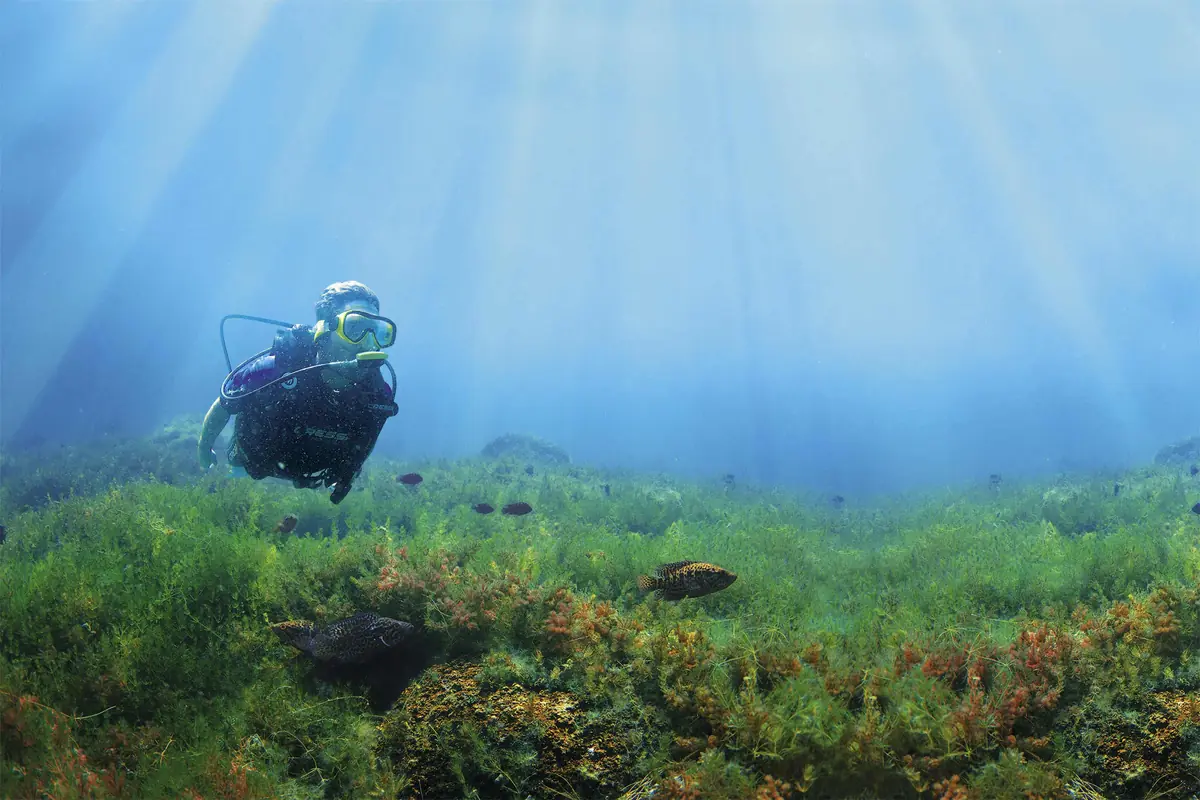
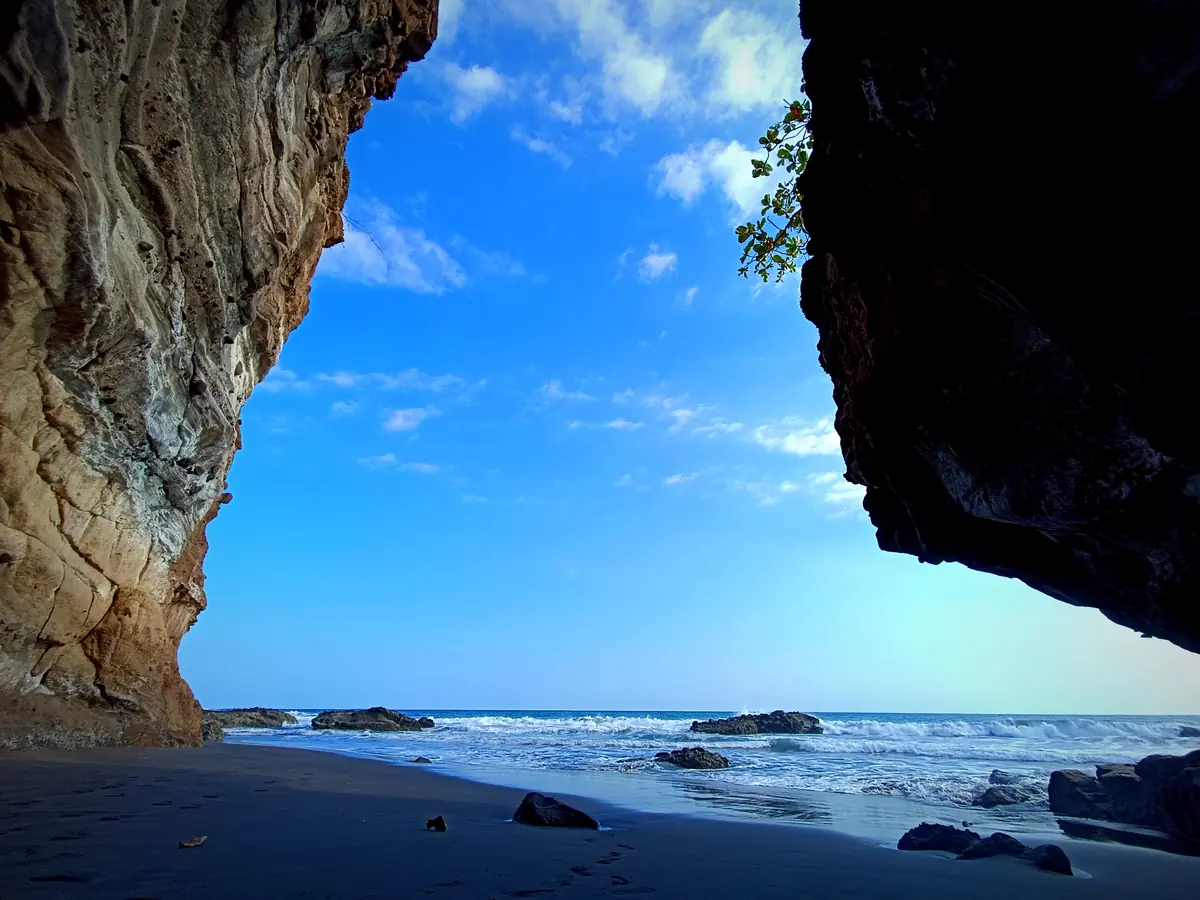
The sea caves, Cueva El Zonte, are the standout. There’s a large set to the west and a hidden set east past the point, both reachable only at low or outgoing tide. Even at the lowest tide you wade through water to reach them, so go early in the outgoing tide and don’t linger, or you risk getting cut off.
For day trips, distances are short:
- El Tunco: 15 minutes east for nightlife, more restaurants, and cheaper surf lessons
- Sunzal and Punta Roca: about 10 minutes for bigger, better-known waves
- La Libertad: 30 minutes, with the fish market and the closest real supermarket
- Tamanique Waterfalls: 30–40 minutes inland (guide $7–10 per person, bus 187 around $0.50, or Uber roughly $13)
- Mizata: 30–40 minutes west for an emptier surf option
Pro Tip: Plan the sea caves and your surf around the tide chart, not the clock. Caves want a low, outgoing tide; the point wants mid-to-high. Check the day’s tides over breakfast and build everything around them.
What does a day in El Zonte actually cost?
It depends entirely on how you travel. A backpacker can run $25–40 a day, a mid-range traveler $70–120, and a luxury stay $250-plus, all excluding flights. Food is cheap across the board: pupusas run $0.50–1.50 each, two to four make a meal, and a Pilsener beer is around $1.50 or less.
Here is the rough daily math by traveler type:
| Traveler type | Daily USD (excludes flights) | What it covers |
|---|---|---|
| Backpacker | $25–40 | Dorm bed, pupusas, local bus, a board rental |
| Mid-range | $70–120 | Beachfront room, restaurant meals, a surf lesson |
| Luxury | $250+ | Boutique hotel, fine dining, private transfers |
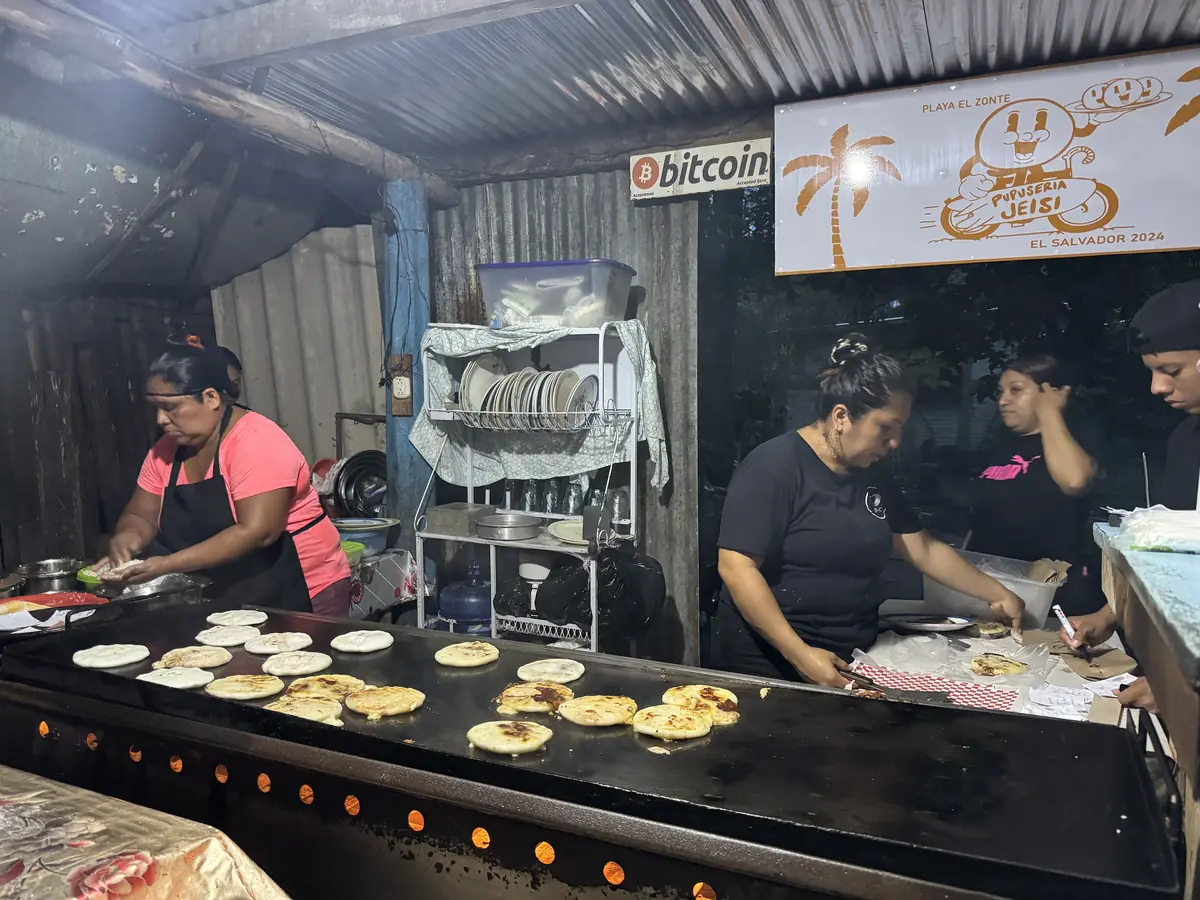
The food scene rewards eating local. Pupuseria Geisy does the best pupusas in town, El Vikingo is a Danish-expat-run favorite, and Olas Permanentes plates beachfront ceviche. A full cheap meal lands around $5–8, while a sunset dinner at Nan Tal runs well above that.
Pupuseria Geisy doesn’t run on a schedule. It opens at five or six in the evening, whenever the family feels like it, and locals will tell you a Pilsener with your pupusas is basically house rules. There’s no supermarket in El Zonte at all, so stock any groceries or snacks in La Libertad on the way in.
Pro Tip: The budget hack most guides miss is to skip the $50 private transfer entirely. Stock up in La Libertad, base in El Zonte, and hop the $1 bus 192 over to El Tunco for nightlife and cheaper surf lessons whenever you want them.
When should you visit El Zonte?
The dry season, November through April, brings the best weather and beginner-friendly surf, with sunny days and minimal rain. Surfers chasing big swell prefer May through October, the rainy season, when the waves are largest. Temperatures stay warm year-round at 84–90°F (29–32°C), with lows near 75°F (24°C) and warm ocean any month.
The seasons split cleanly by what you’re after. The dry months run cleaner and calmer, with January the driest at barely any rain. The rainy season delivers the biggest swell but also the heaviest downpours, with September the wettest, and the rain usually arrives in the afternoon or evening rather than all day.
How to choose:
- Best all-around weather and learning conditions: November–April
- Biggest, most powerful surf: May–August
- Emptiest town with rain you can plan around: September–October
- Quietest experience any season: arrive on a weekday
Before you book
El Zonte rewards travelers who match their plan to its reality: a real surfer’s point break, a still-usable Bitcoin novelty, and a slow village with no supermarket and one temperamental ATM.
TL;DR: Get there in about 45 minutes from SAL ($25–35 by Uber), stay anywhere from an $8 dorm to a $200 beachfront boutique, learn to surf at El Tunco before taking on El Zonte’s rocky point, and bring small US dollar bills even though Bitcoin still works at many spots. Two to three days covers it; a week lets you slow down.
What’s the one thing you most want sorted before you go to El Zonte, the surf, the Bitcoin angle, or the logistics? Drop it in the comments and I’ll point you in the right direction.