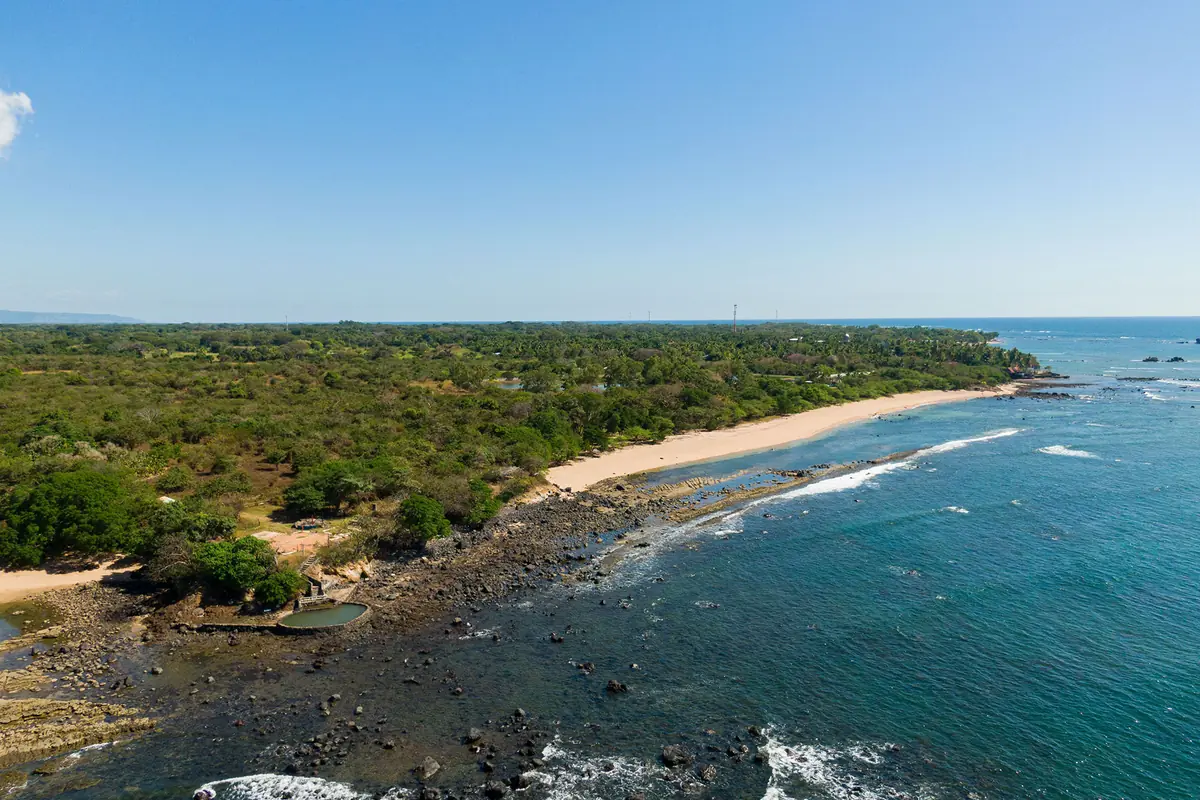
El Sunzal is El Salvador’s most forgiving big-name wave — a long right-hand point break a 45-minute drive from the capital’s airport, edged by black volcanic sand and rocky shallows. This El Sunzal travel guide covers the surf, the rocky-beach reality, where to sleep, transfers, costs, and safety for US travelers.
El Sunzal is a beach village in La Libertad, El Salvador, known for a long right-hand point break that suits longboarders, intermediates, and beginners on small swells. The beach is dark volcanic sand with rocky entry. It sits beside El Tunco, about 25 miles (40 km) from SAL airport, and uses the US dollar.
Is El Sunzal worth visiting? The honest verdict
Yes — if you surf, or want long tropical sunsets and a calmer alternative to party-heavy El Tunco. El Sunzal delivers one of Central America’s most consistent point breaks and dramatic Pacific sunsets, but its rocky, dark-sand shoreline and currents make it better for surfing and lounging than for swimming.
Waves break here nearly every day of the year, which is the whole reason the town exists. The Salvadoran government poured money into this stretch under its Surf City coastal program, and the region now hosts WSL and ISA contests. What that means on the ground: smooth roads, more hotels, and a coastline that takes surfing seriously.
The trade-off is that this is not a swim-up-to-the-bar beach. The shore is dark volcanic sand studded with cobblestone, and the water pulls. If you came to float in calm turquoise water, you’ll be happier elsewhere. If you came to ride a wave that forgives mistakes or to watch the sky turn orange over a clean right-hander, El Sunzal is hard to beat.
The air at the point smells of grilled fish, sunscreen, and salt. Stand on the rocks at the right tide and you’ll see a wave peel for what feels like a city block.
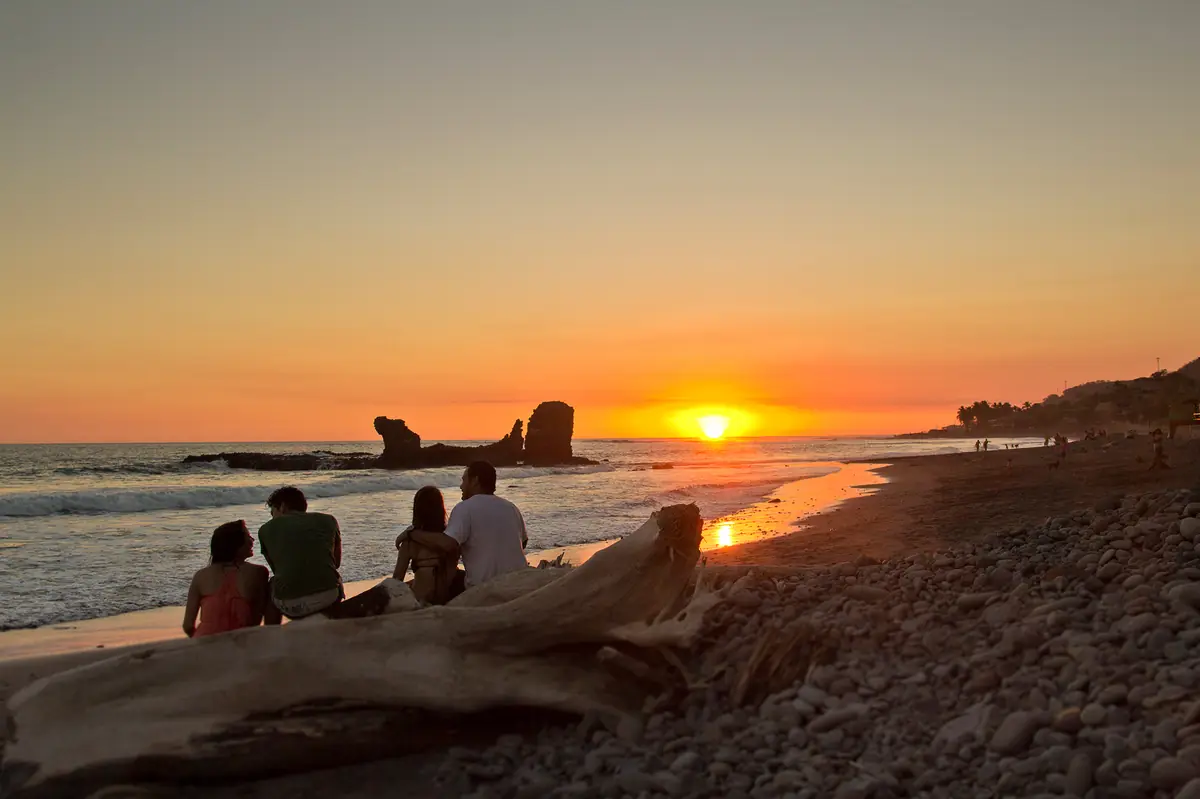
Pro Tip: For your first evening, skip the restaurant reservation and just walk to the point with a cold drink around 5 p.m. The light show off the water is the thing people remember, and it costs nothing.
What is the surf like at El Sunzal? Point break, paddle-out and who it suits
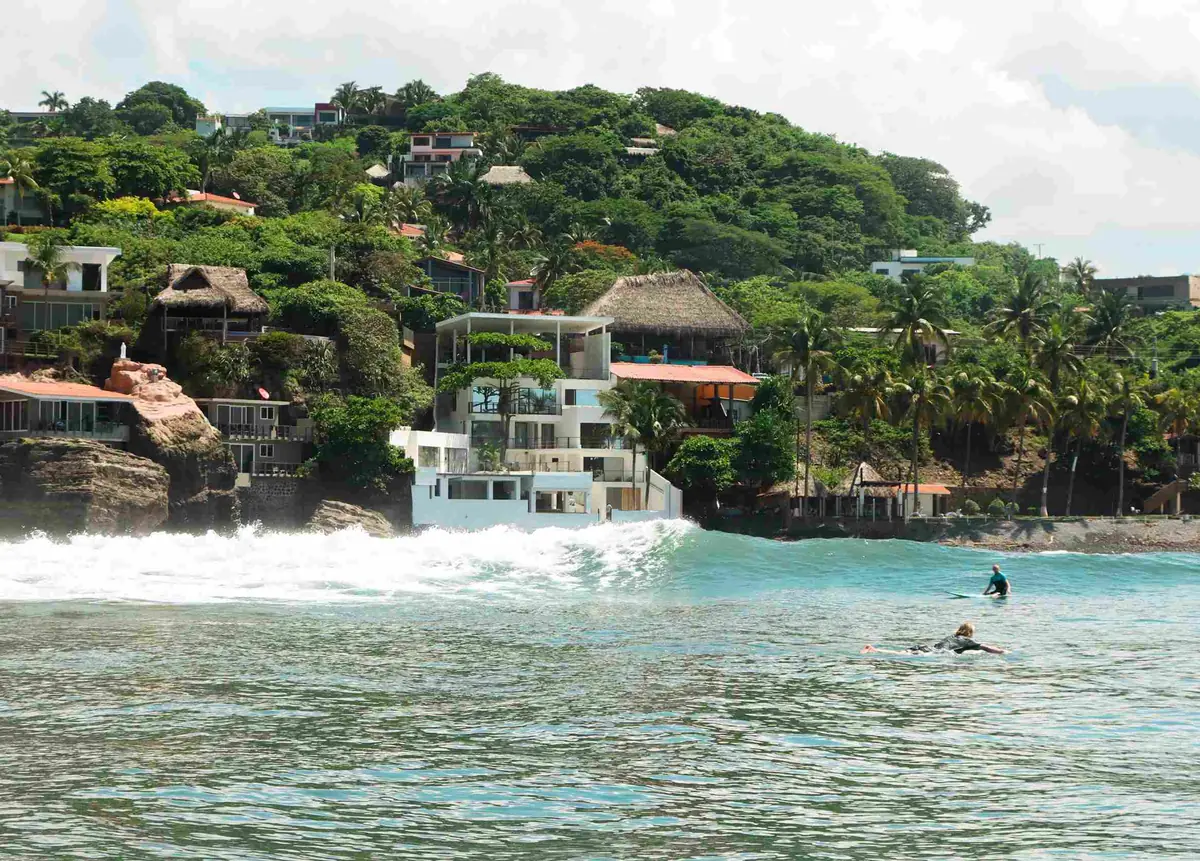
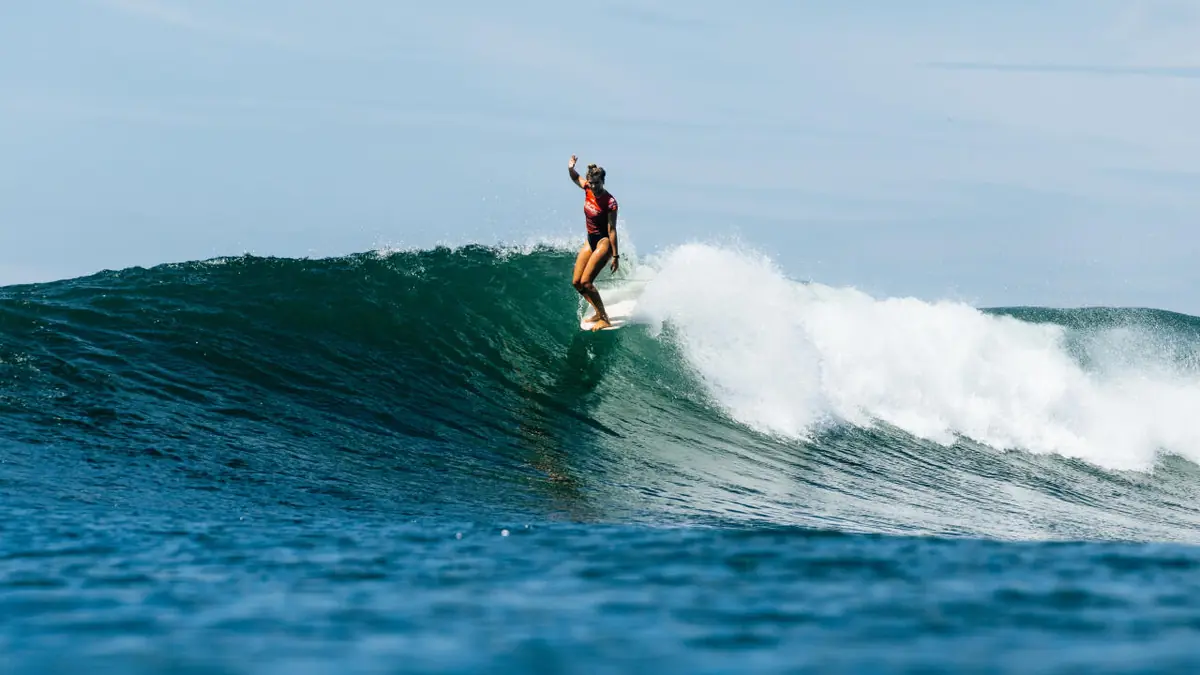
El Sunzal is a deep-water right-hand point break that peels for up to about 1,000 feet (300 m) over a cobblestone bottom. It’s a longboarder’s dream and forgiving for intermediates, with a gentle inside section for beginners on small days. Expect roughly a 1,000-foot (300 m) channel paddle-out and side currents on big swells.
The official tourism board describes a takeoff that can run up to 300 meters with around 40 seconds of riding, and an outside section that peels uninterrupted for nearly 660 feet (200 m). On its biggest days the point can handle waves up to 25 feet (8.5 m). From March to October, faces of 8 to 15 feet (2.5 to 5 m) are common.
Because the bottom is deep, the wave rarely closes out and rarely throws you onto rock — most of the hazard is the walk-out, not the ride. The cobblestone entry at the point is slick and ankle-rolling, which is why locals treat reef booties as standard kit rather than an afterthought.
The wave works best on a half tide. The deep-water shoulder gives intermediates room to find their feet, while longboarders cruise the long outside line. On bigger swells, a real side current runs through the channel, so paddle position matters.
- Wave type: right-hand point break over cobblestone
- Ride length: up to about 1,000 feet (300 m)
- Size it handles: up to 25 feet (8.5 m); 8–15 feet (2.5–5 m) common March–October
- Best tide: half tide
- Skill fit: longboarders and intermediates; beginners on small days
- Gear note: reef booties for the cobblestone walk-out
Pro Tip: The 1,000-foot channel paddle looks mellow from the sand. On a head-high day it pulls sideways, so line up off a fixed point on shore and recheck your position every few strokes.
Is El Sunzal good for beginners?
Yes, on small swells. El Sunzal’s slow, rolling face and deep bottom make it forgiving, and it’s a classic learner’s longboard wave. But on bigger days the long paddle and currents suit intermediates more. Most first-timers take lessons on the adjacent sandy Sunzalito / El Tunco beach break for safer falls.
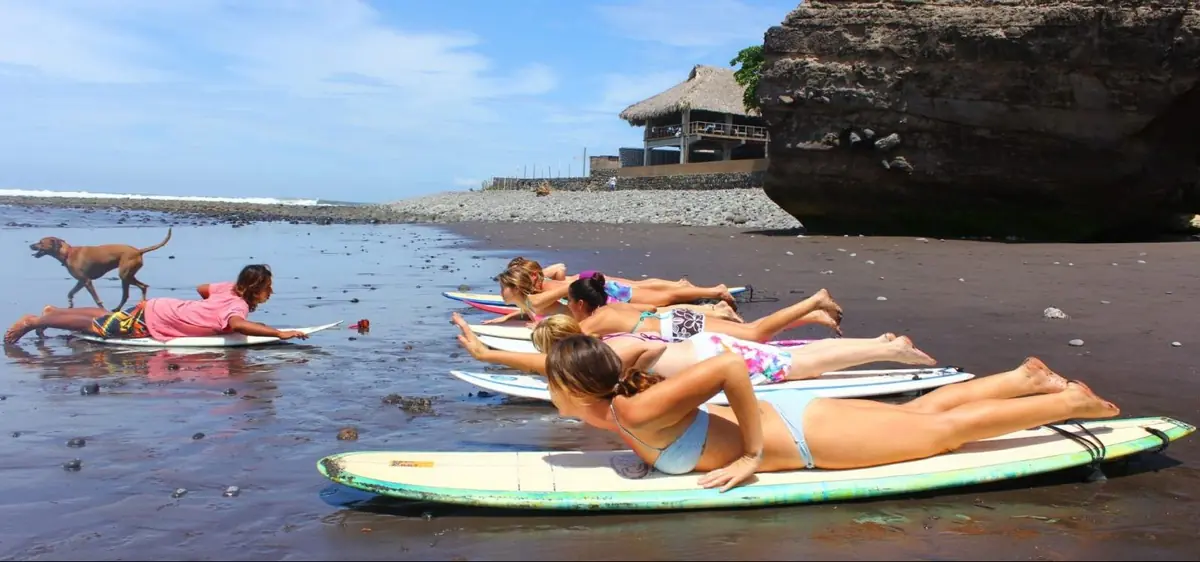
This is the detail most guides skip. When a surf school says “we teach at Sunzal,” the actual lesson usually happens on the sand-bottomed inside section or over at the El Tunco beach break — not on the rocky main point. That’s by design. Falling onto sand while you learn to pop up is a very different experience than falling near cobblestone.
A one-hour private lesson runs about $25, including the board and coaching, at outfits like Dos Palmas in El Tunco. Many instructors hold ISA certification. The dry season, with its smaller and cleaner waves, is the easiest window to start.
- Lesson cost: about $25/hour, board included (Dos Palmas, El Tunco)
- Board rental: about $10/day, often discounted to ~$8 for multiple days
- Where lessons happen: sandy Sunzalito / El Tunco beach break, not the rocky point
- Best season to learn: dry season (November–April)
When is the best time to surf and visit El Sunzal?
El Sunzal surfs year-round, but roughly March/April–October brings the biggest South Pacific groundswells and overhead sets for experienced surfers, while the November–April dry season offers smaller, cleaner, beginner-friendly waves and sunny skies. For the best balance of swell and weather, target the shoulder months of March or November.
The dry season is the easy choice for first-timers and sunseekers: mostly clear skies, only a handful of rainy days per month, and offshore-groomed mornings before the wind turns. The wet season trades that for power — bigger groundswells and overhead days — at the cost of afternoon downpours.
Coastal air highs sit around 90–93°F (32–34°C) most of the year. The water stays a warm 82–86°F (28–30°C), so nobody wears a wetsuit. Board shorts or a rash guard against sun is all you need.
| Window | Swell | Weather | Best for |
|---|---|---|---|
| Nov–Apr (dry) | Smaller, cleaner | Sunny, few rainy days, offshore mornings | Beginners, sunseekers |
| May–Oct (wet) | Biggest groundswells, overhead+ | Hot with afternoon downpours | Experienced surfers |
| March & November (shoulder) | Solid but manageable | Best overall balance | All-rounders |
Pro Tip: Dawn is the prize in any season. The offshore wind grooms the face before mid-morning, then the onshore breeze shows up and chops it. Surf early, eat pupusas, nap, repeat.
How do you get to El Sunzal from San Salvador airport?
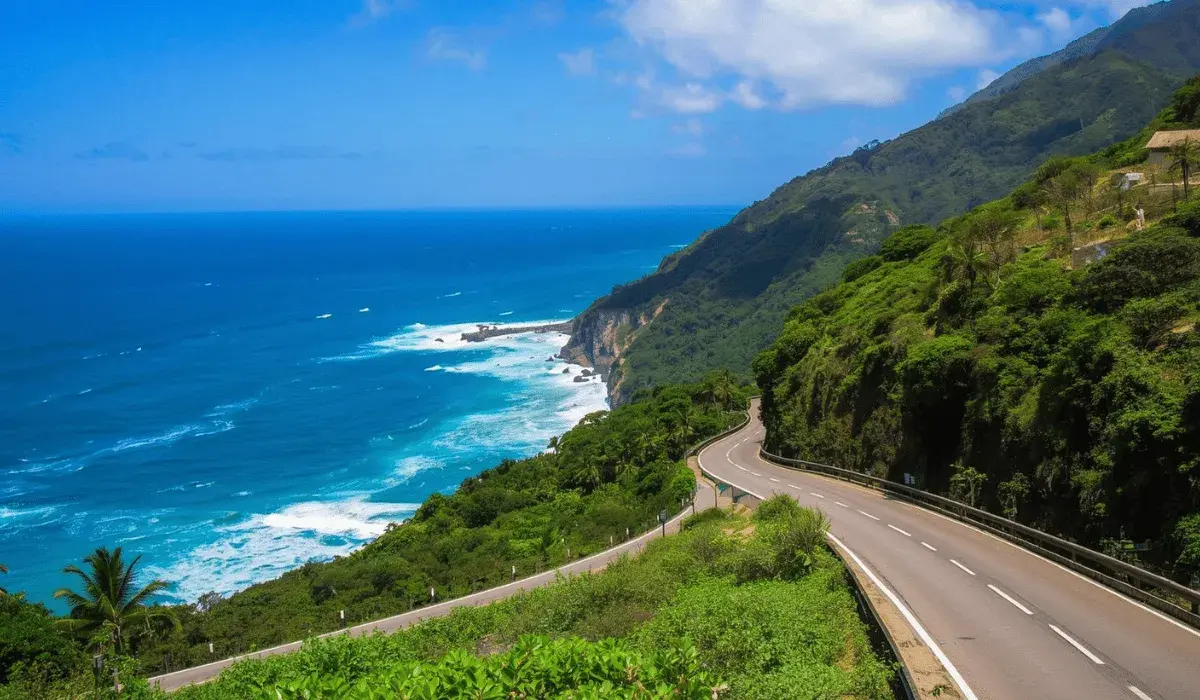
El Sunzal is about 25 miles (40 km) from El Salvador International Airport (SAL), roughly a 45-minute drive west on the Litoral Highway to Km 43½. Options include a private transfer (about $55, ~45 min), a shared shuttle (from about $19–$35), an Uber (about $24–$31), or the #102A minibus through El Tunco. There is no nonstop public bus from the airport.
The airport, officially named for Monseñor Óscar Arnulfo Romero y Galdámez and sometimes called Comalapa, sits southeast of the capital, which actually puts it closer to the coast than to downtown San Salvador. The drive west rolls past sugarcane fields and roadside pupusa stands before the first ocean view opens up near the coast.
Book a private transfer roughly 48 hours ahead in high season; operators like Tunco Life and Sunzal Surf Company handle the airport run. A rental car works too, but most visitors skip driving at night, when the unlit highway and stray livestock raise the risk.
| Option | Cost | Time | Notes |
|---|---|---|---|
| Private transfer | ~$55 | ~45 min | Book ~48 hours ahead |
| Shared shuttle | from ~$19–$35 | ~60–90 min | Door-to-door, multiple drop-offs |
| Uber | ~$24–$31 | ~45 min | Reliable from SAL arrivals |
| #102A minibus | a few coins per leg | 2+ hours | Cheapest; no airport nonstop |
| Rental car | varies | ~45 min | Avoid driving at night |
The local chicken bus that runs between coastal towns costs about $0.25 a ride — useful once you’re based on the coast, less so for hauling luggage from the airport.
El Tunco vs El Sunzal: where should you stay?
Stay in El Sunzal for tranquility, prime surf views, and beachfront hotels right on the point; stay in El Tunco (a 5-minute walk away) for nightlife, restaurants, budget hostels, and the sandy learner beach. Many visitors sleep in El Tunco and surf El Sunzal, since the two share one coastline.
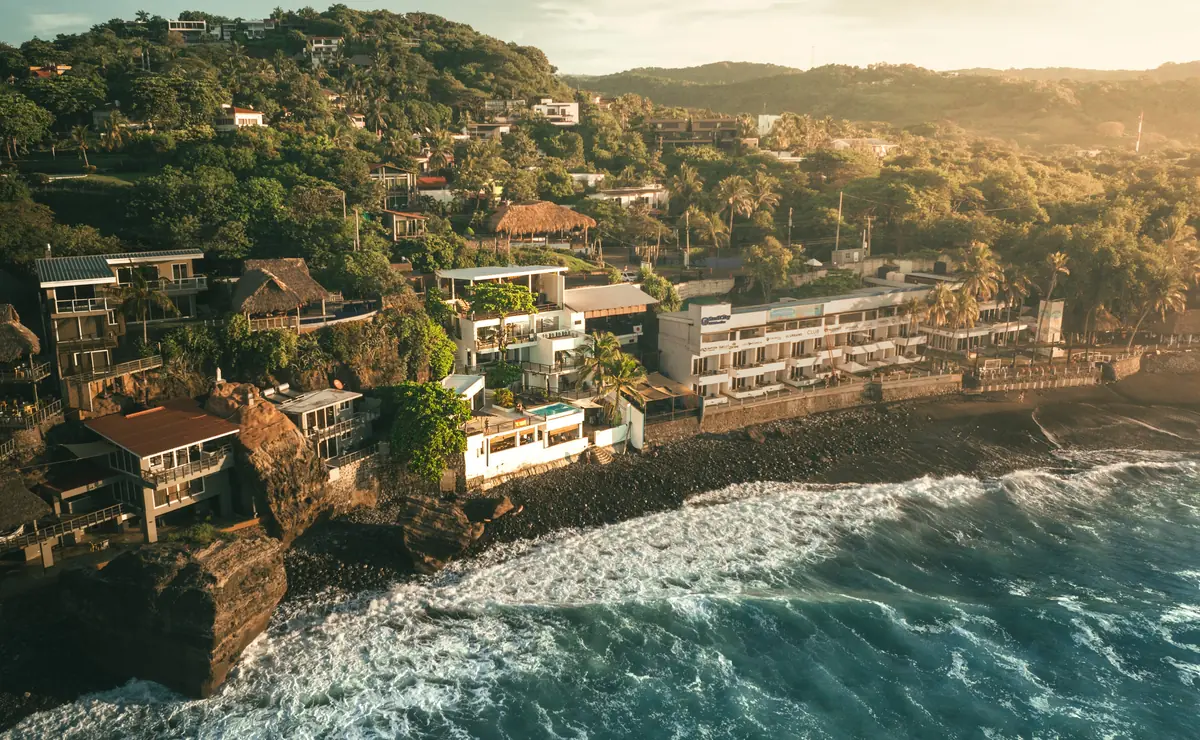
El Tunco is the social hub — bars, taco joints, hostels, and a steady stream of travelers. If you want to meet people, eat at midnight, or stumble home from a beachfront bar, that’s the move. El Sunzal is the quiet neighbor: a short string of hotels on the point where the soundtrack is the wave, not a speaker.
One practical wrinkle decides a lot of trips: the beach walk between the two is only fully passable at low tide. At higher tides you take the road, which is roughly three times the distance. If you stay in Tunco and surf Sunzal, plan your sessions around the tide or expect a longer detour.
| Town | Vibe | Wave & level | Beach | Nightly stay | Best for |
|---|---|---|---|---|---|
| El Sunzal | Quiet, surf-focused | Right-hand point; longboard / intermediate | Dark sand, rocky cobblestone | ~$40–$293 | Surfers, couples, sunset seekers |
| El Tunco | Lively, nightlife | Beach break + La Bocana; beginner-friendly | Dark sand, more rock | ~$15–$150 | Backpackers, learners, social travelers |
| El Zonte | Mellow, low-key | Point + beach break; intermediate | Dark sand, rocky | ~$20–$200 | Digital nomads, quiet stays |
Where to stay in El Sunzal: hotels for every budget
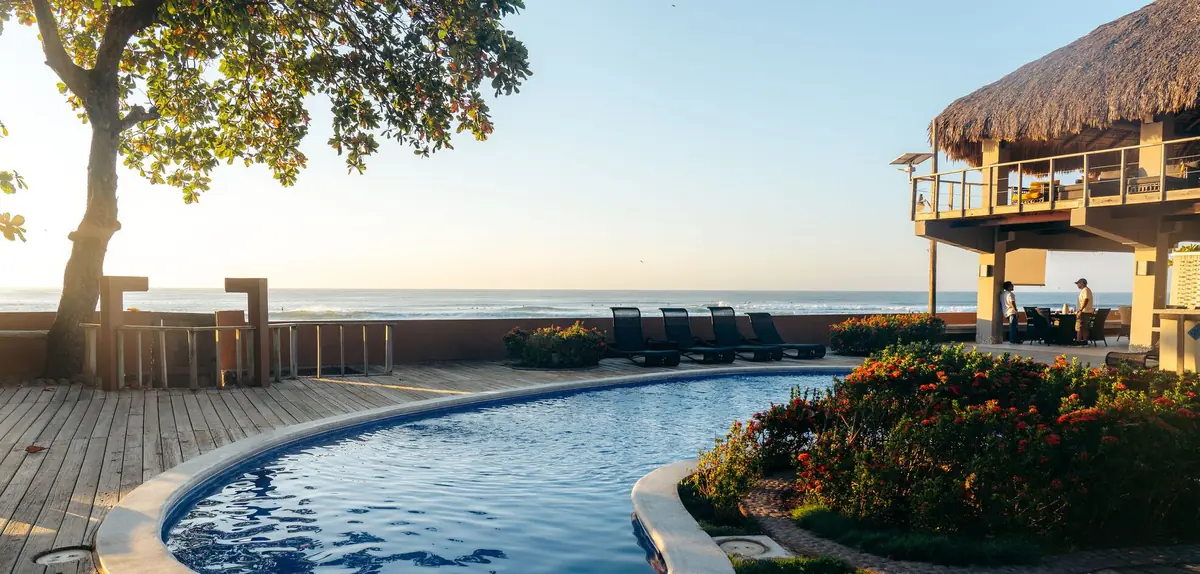
El Sunzal’s lodging clusters right on the point break. Casa de Mar Hotel & Villas (from about $190) is the area’s top oceanfront pick; Hotel Roca Sunzal (from about $140) and Casa Sunzal Boutique (from about $114) offer mid-range comfort; budget rooms start near $40–$60; and LAOLA Surf Camp packages lodging, lessons, and meals together.
From a Casa de Mar balcony you can read the surf with morning coffee before deciding whether to paddle out — that line of sight to the lineup is what you pay the premium for. Hotel Roca Sunzal puts you steps from the water at a friendlier rate, and Casa Sunzal Boutique threads the middle.
Surf camps like LAOLA and Lapoint bundle the whole trip — bed, board, lessons, and meals — which removes a lot of daily decision-making. Note that the high-end Puro Surf is in El Zonte, not El Sunzal, so don’t book it expecting a Sunzal address.
- Casa de Mar Hotel & Villas: from about $190/night, oceanfront, top pick
- Hotel Roca Sunzal: from about $140/night, on the water, mid-range
- Casa Sunzal Boutique Hotel: from about $114/night, mid-range
- Budget rooms: from about $40–$60/night
- Surf camps (LAOLA, Lapoint): all-inclusive lodging, lessons, and meals
Pro Tip: When the WSL or ISA contests roll into the Surf City region, point-front hotels sell out and prices jump. If your dates are flexible, book around the event windows rather than into them.
Is the beach at El Sunzal sandy or rocky?
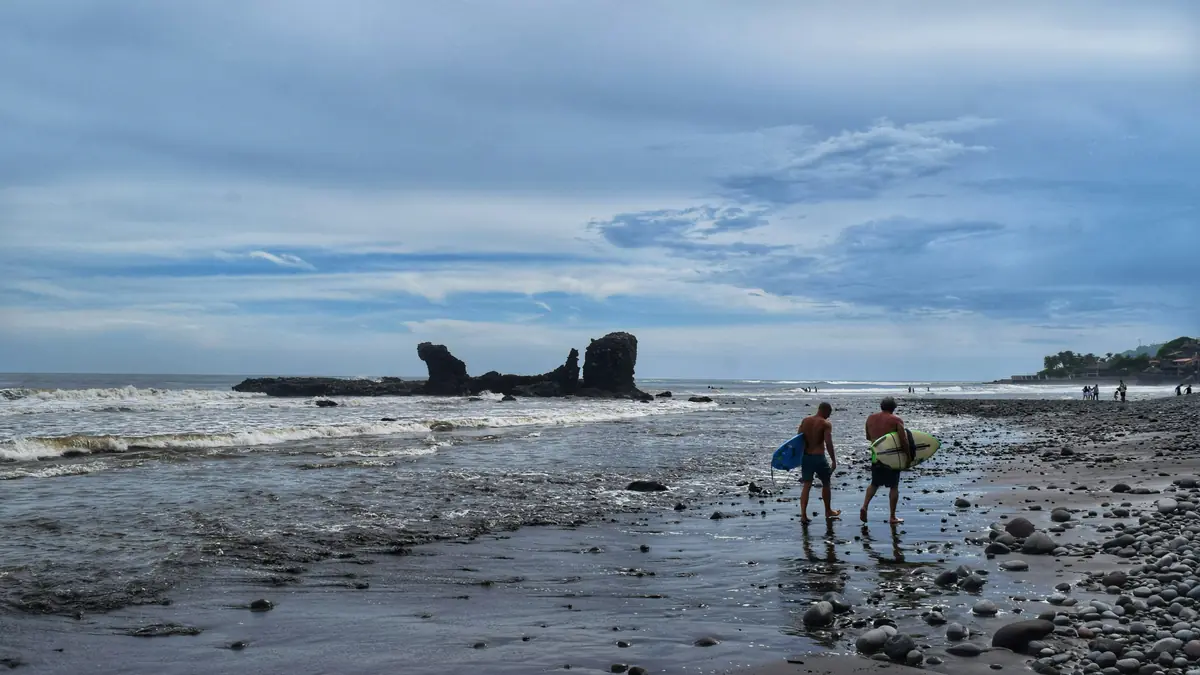
El Sunzal is primarily dark volcanic (black) sand with significant rocky, cobblestone sections — especially at the point and at higher tides. The town beach is smoother, with fewer rocks than El Tunco’s, but it’s not a soft white-sand swimming beach. Reef booties help, and many visitors buy a restaurant day pass for easier access and freshwater showers.
The black color is volcanic in origin, not dirty — it’s just what the coast is made of. The rocks are worst at midday and high tide, when the cobblestone heats up and the water covers the easier entry points. At low tide, tide pools open up and the walking gets easier.
Beach access often runs through the restaurants and hotels fronting the point. For a couple of dollars or a day pass, places like Kayu give you a table, food and drinks, and a freshwater shower to rinse the salt and sand. It’s a fair trade for a base of operations on a rocky shore.
- Beach surface: dark volcanic sand with cobblestone, rockiest at the point
- Worst rock conditions: midday and high tide
- Swimming: limited — currents and rocks make it a surf-and-lounge beach, not a swim beach
- Access tip: buy a restaurant day pass (around a couple of dollars) for showers and a table
- Low tide bonus: tide pools and easier footing
Pro Tip: The midday rocks get hot enough to burn the soles of your feet. Keep sandals on all the way to the waterline and only ditch them once you’re standing in wet sand.
Beyond surfing: things to do around El Sunzal
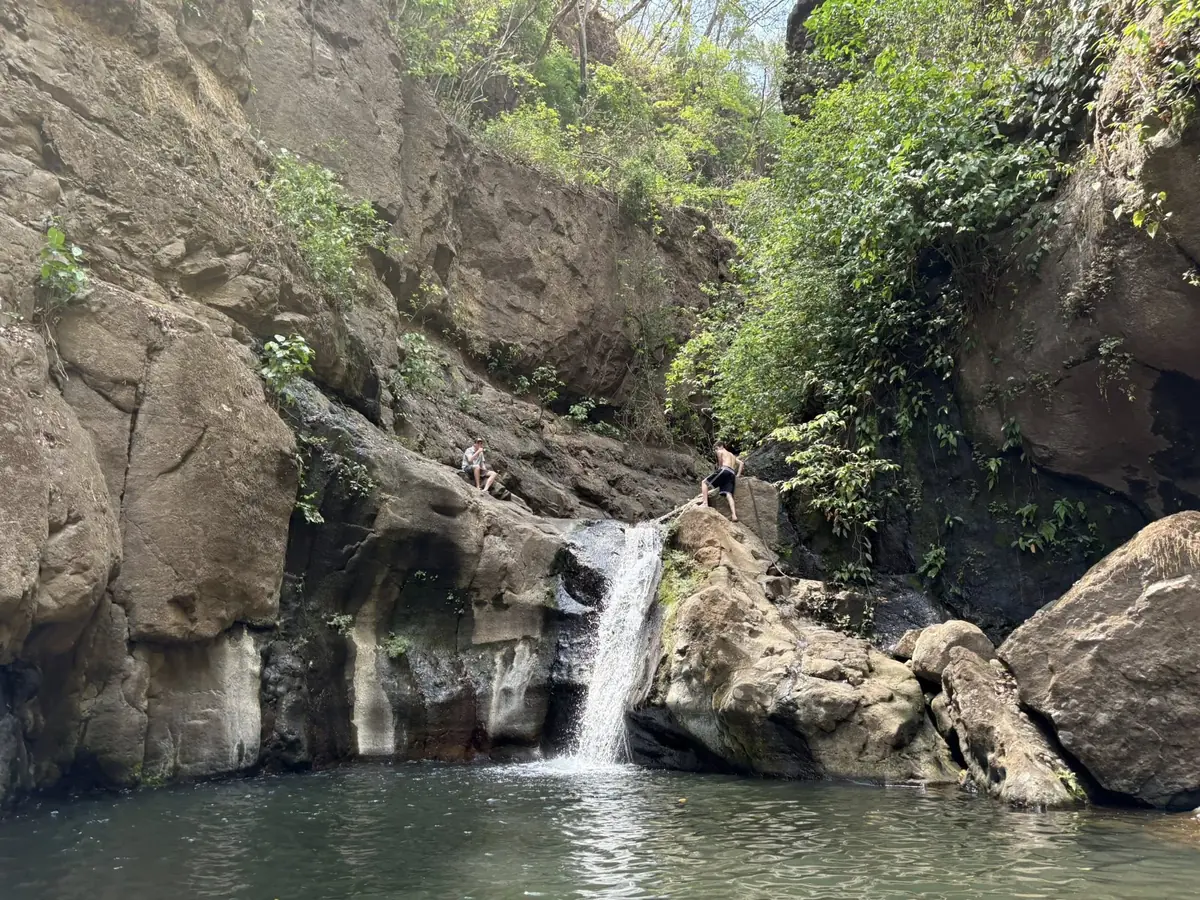
Beyond the lineup, El Sunzal rewards slow days: chase the famous Pacific sunset, hike the three-tiered Tamanique Waterfalls (about a 20-minute drive), eat fresh ceviche and pupusas beachside, walk five minutes to El Tunco for nightlife, or drive west to quieter El Zonte (“Bitcoin Beach”). La Libertad’s fish market is about 13 miles (21 km) east.
The Tamanique Waterfalls are the standout non-surf day. A guided hike drops through a series of pools you can jump into — cool, fresh water after days of salt and sun. El Sunzal technically falls under the Tamanique municipality, which is why you’ll see that name on addresses even though the beach identity is all El Sunzal.
El Zonte, about 7 miles (11 km) west, picked up the “Bitcoin Beach” nickname after an anonymous crypto donation seeded a local Bitcoin economy that later helped inspire El Salvador’s national Bitcoin Law — a policy the country has since functionally rolled back. East of you, La Libertad’s malecón and fish market are worth a morning for the boats and the catch coming in. The area’s surf pedigree runs deep enough to have featured in classic surf film lore.
- Tamanique Waterfalls: three-tiered, guided hike, about a 20-minute drive
- El Zonte (“Bitcoin Beach”): about 7 miles (11 km) west
- La Libertad fish market and malecón: about 13 miles (21 km) east
- Sunset spots: the El Sunzal point and El Tunco’s “Pig” rock
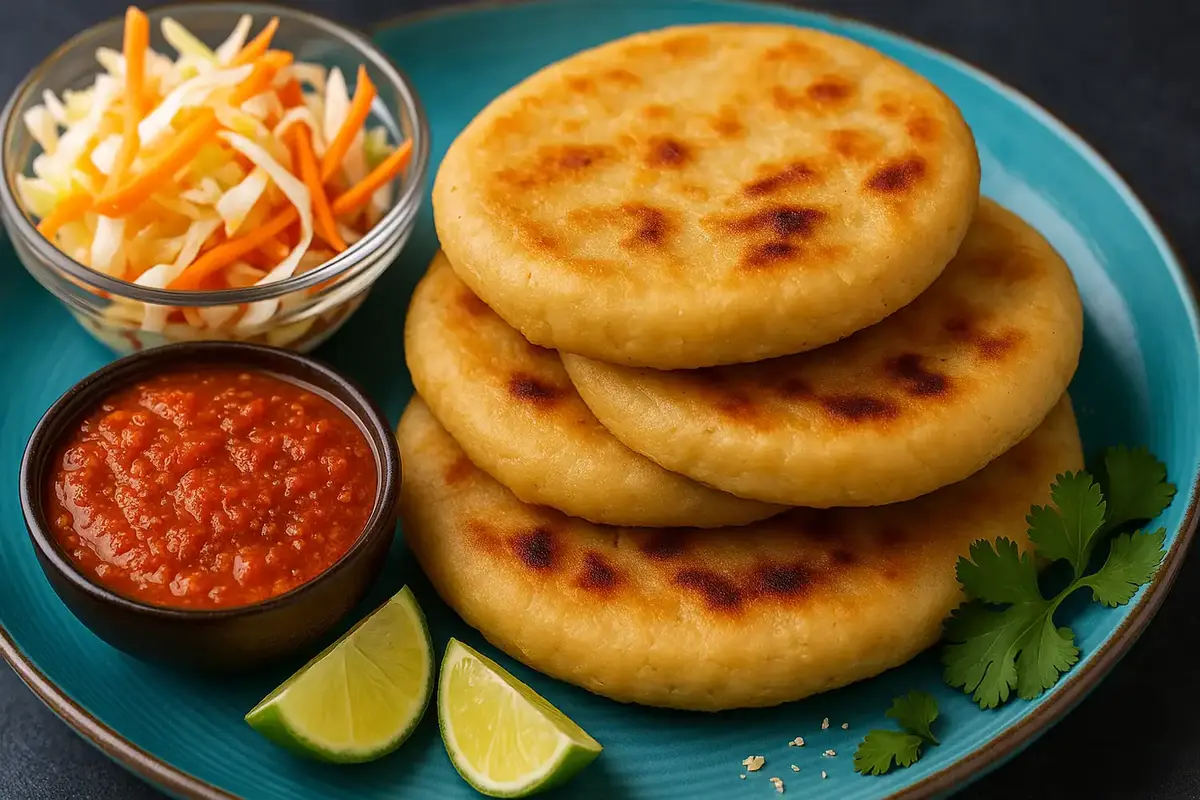
- Food to seek: ceviche, coctel de conchas, pupusas with curtido
Is El Sunzal safe, and what do US travelers need to know?
El Sunzal and the La Libertad surf coast are considered safe for tourists, and the US State Department rates El Salvador Level 1 — “Exercise Normal Precautions,” its lowest level. US citizens need a passport and a $12 tourist card on arrival; no tourist visa is required for stays under 90 days. The currency is the US dollar.
El Salvador’s safety reputation has shifted hard. The State Department’s summary notes that gang activity has fallen sharply, with a corresponding drop in violent crime and murders. A State of Exception remains in effect, which on a practical level means you should carry a copy of your passport ID, expect zero tolerance for drugs, and be aware that gang-style tattoos draw scrutiny.
For most visitors the real hazard is the ocean, not crime. Rip currents along this coast are strong, and the rocks are slick. Respect the water, ask locals or your hotel about conditions, and don’t paddle out alone on a big day if you’re unsure.
- Advisory: US State Department Level 1, “Exercise Normal Precautions”
- Entry: passport valid at entry plus a $12 tourist card on arrival
- Visa: none required for stays under 90 days
- Currency: US dollar; bring small bills, as change for large notes can be scarce
- Bitcoin: accepted in some places but optional, never required
- Language: Spanish is official; English is common in the surf towns
- Main risk: ocean rip currents and slick rocks, not crime
The tourist card is paid at the airport or seaport on arrival and is valid for 90 or 180 days depending on your passport validity. You’ll also notice tourist police and soldiers on the beach road — jarring on day one, routine and reassuring by day three.
Pro Tip: Pull a stack of small US bills before you arrive. A lot of pupusa stands, day-pass collectors, and minibus rides run on ones and fives, and breaking a twenty at a beach shack is its own small adventure.
What does a trip to El Sunzal cost? Budget by traveler type
El Sunzal fits most budgets. A pupusa runs about $0.50–$1.50, a beachfront meal $5–$20+, board rental about $10/day, a surf lesson about $25/hour, and rooms from about $40 (budget) to $190+ (oceanfront). Backpackers can manage on roughly $50/day for food and extras; mid-range surf travelers should budget more.
Food is where El Sunzal stays cheap no matter your tier. A plate of pupusas with curtido and a cold Pilsener runs under ten dollars at sunset, and you can eat well all week without trying. The bigger swings come from where you sleep and how you get around.
| Daily item | Backpacker | Mid-range | Luxury |
|---|---|---|---|
| Bed | $15–$40 hostel or budget room | $90–$140 hotel | $190+ oceanfront |
| Food | $10–$15 (pupusas, sodas, market) | $25–$40 | $50+ |
| Surf | $10 board rental | $25 lesson | private coaching |
| Getting around | local minibus, a few coins | Uber $5–$10 | private driver |
| Daily total | ~$50 | ~$120 | $300+ |
For reference, the one-time costs that hit every traveler are the $12 tourist card on arrival and your airport transfer, which runs from about $19 on a shared shuttle to about $55 for a private car.
Bottom line: should El Sunzal be on your El Salvador itinerary?
If you surf — or want a calmer, scenic base beside Surf City’s nightlife — El Sunzal earns its spot. Come for the long right-hand point and Pacific sunsets, sleep in El Sunzal for quiet or El Tunco for energy, pack reef booties, respect the currents, and budget for a few standout meals. It’s one of Central America’s most accessible big-name waves.
TL;DR: El Sunzal is a forgiving right-hand point break 45 minutes from SAL airport, best for surfing and sunsets rather than swimming, with dark volcanic sand and rocky entry. Stay in El Sunzal for quiet or El Tunco for nightlife, bring reef booties and small US bills, and reach the coast by private transfer for about $55. This El Sunzal travel guide gives you the surf, the rocky-beach truth, the costs, and the logistics to arrive knowing exactly what to expect.
So — are you coming for the longboard sessions, the sunsets, or both? Tell me your dates and skill level and I’ll tell you where to sleep.