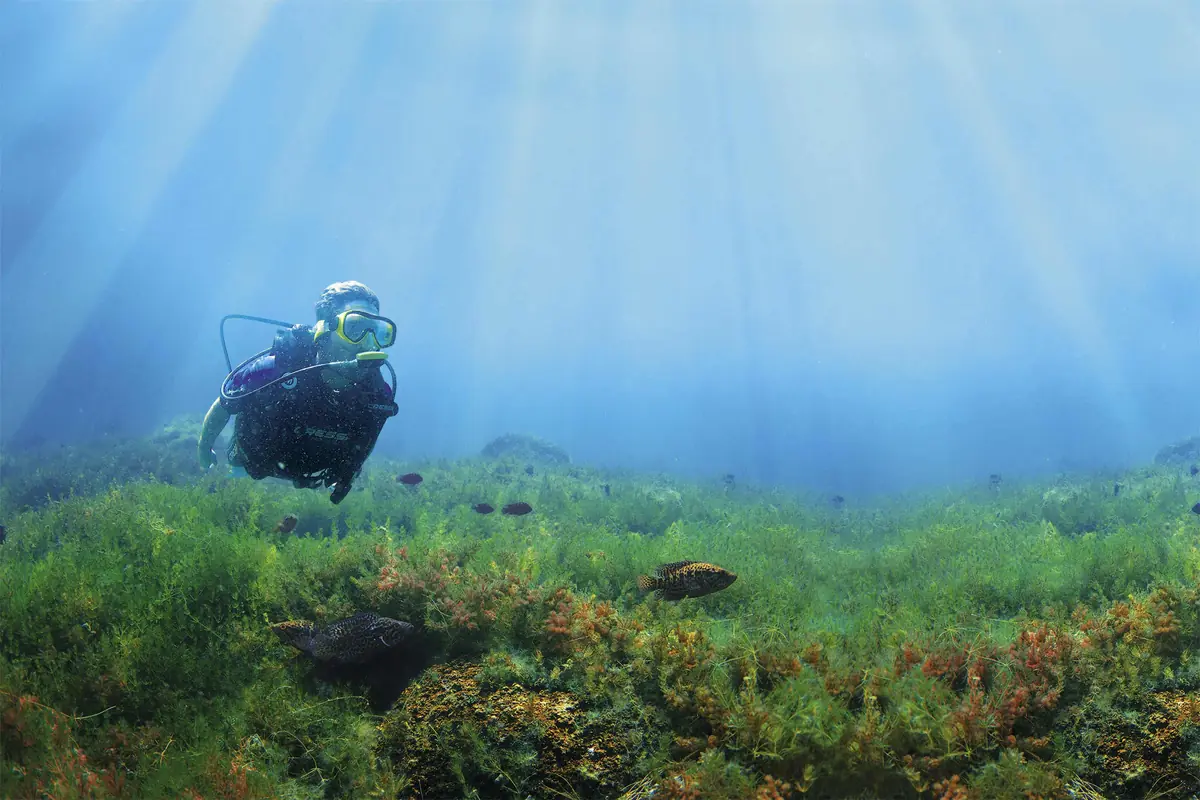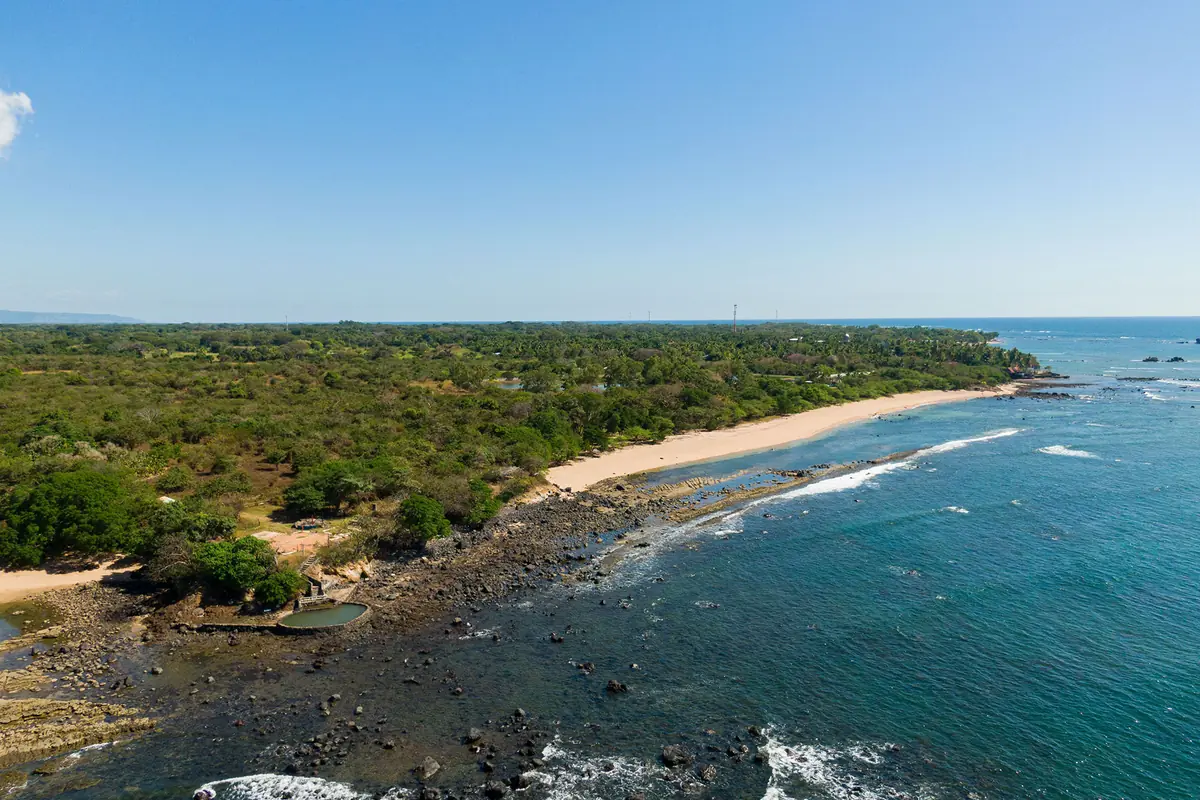
Mizata is the black-sand surf beach where El Salvador’s Litoral highway runs out of crowds. While El Tunco parties and Punta Roca packs out, Mizata still has waves — often with no one out. This Mizata travel guide covers how to get there, where to stay, what it costs, and whether it’s right for you.
Quick answer — what is Mizata and is it worth visiting?
Mizata is a secluded black-sand surf beach in Teotepeque, La Libertad, on El Salvador’s Pacific coast — about a 1.5-hour drive west of San Salvador’s international airport. It’s known for four consistent breaks and almost no crowds. It suits surfers and quiet-seekers, not party travelers, and it’s worth the trip if you value waves and calm over nightlife.
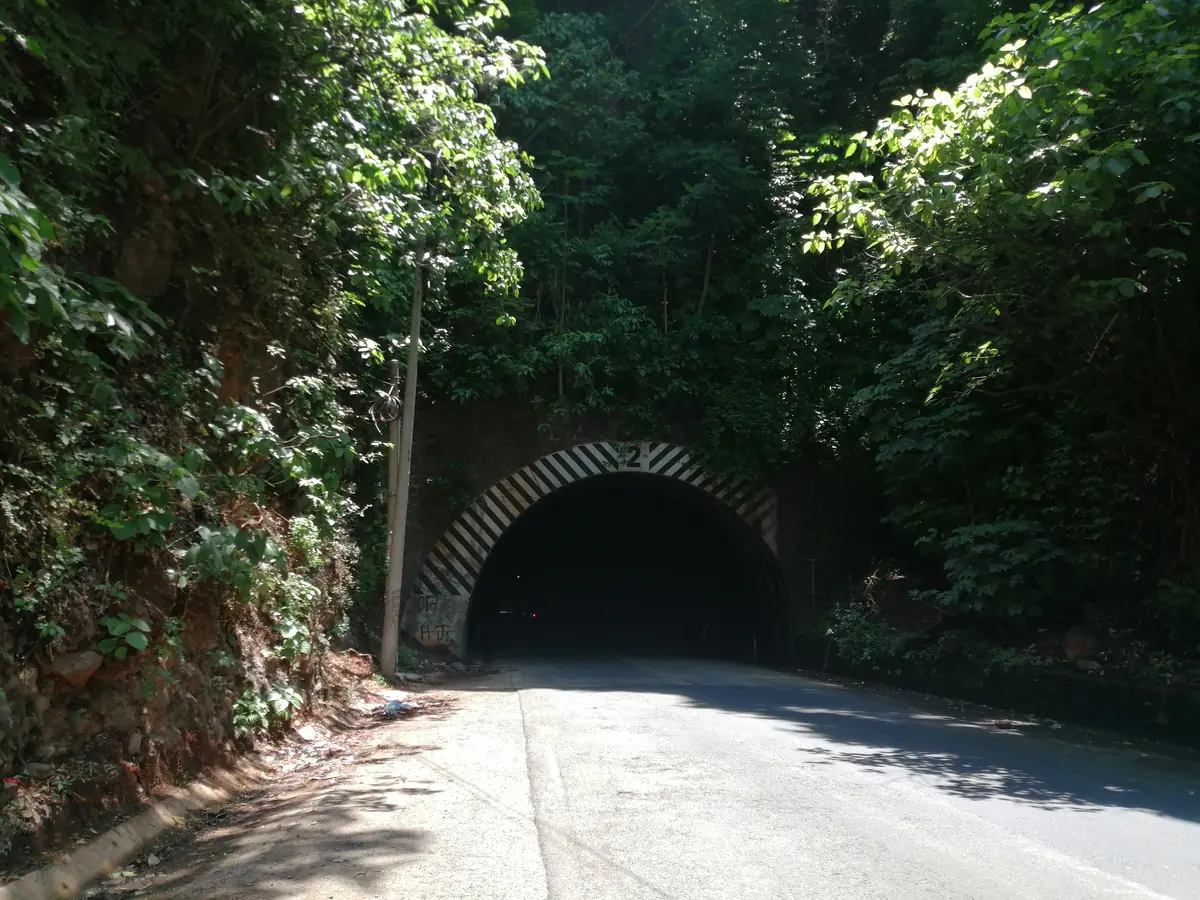
The full name you’ll see on maps is Santa María Mizata, and the beach straddles the line between La Libertad and Sonsonate departments. The two-lane Litoral highway narrows after the fourth tunnel heading west — that’s your cue you’re nearly there.
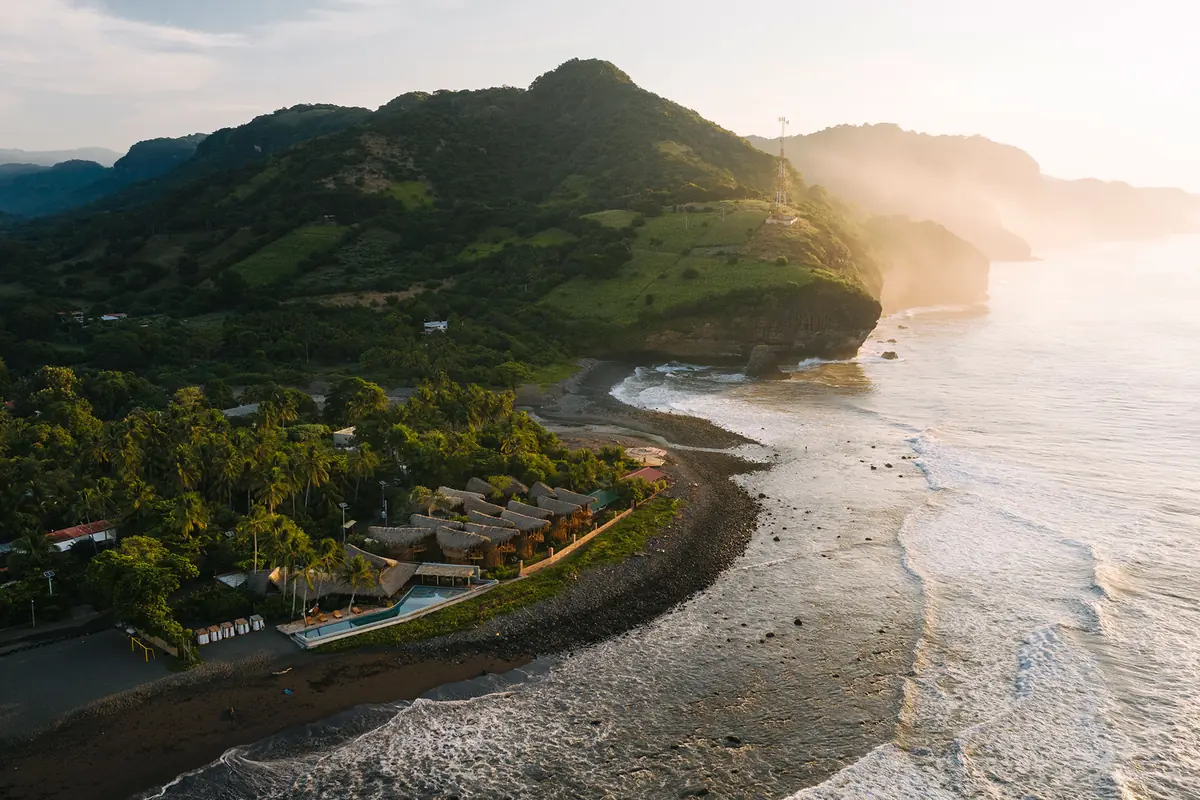
How far is Mizata from the airport and San Salvador?
Mizata sits about 52 miles (84 km) west of El Salvador International Airport (SAL), a drive of roughly 1.5 hours along the Litoral highway (CA-2). From San Salvador city, plan on 1.5 to 2 hours. From El Tunco it’s about 27 miles (44 km), or a 40-minute drive west along the coast.
Drive times you’ll actually use:
- SAL airport to Mizata: about 52 miles (84 km), roughly 1.5 hours
- El Tunco to Mizata: about 27 miles (44 km), roughly 40 minutes
- San Salvador city to Mizata: roughly 1.5 to 2 hours
- El Zonte to Mizata: slightly closer than El Tunco, about 35 minutes
You’ll see conflicting numbers online — the resort lists 90 minutes from the airport, some booking platforms say 109 minutes, and mapping apps say 1 hour 13 minutes with no traffic. Call it 1.5 hours and you won’t be wrong.
Pro Tip: Leave El Tunco by 7 a.m. and you’ll be paddling out at Mizata before the wind comes up around 9. Glassy mornings are the whole point of coming this far west.
How to get to Mizata by car, shuttle, or bus
Three ways reach Mizata: a rental car, a private shuttle, or local buses. A rental car from SAL averages $30 to $60 a day. A private airport shuttle to Mizata runs roughly $85 to $160 one way. Budget travelers ride coastal buses for a few dollars, changing through El Tunco or La Libertad.
Here’s how the options compare:
- Rental car: from about $11/day for an economy car, $30 to $60/day typical. Most freedom; you can chase swell up and down the coast.
- Private shuttle from SAL: Tunco Life lists a sedan at $85 for one or two people and vans up to $160 for eight to ten. The Mizata Point Resort shuttle runs around $92 per person one way.
- Shared tour transfers: operators like Alfarito Tours and Pure Travel list seats from roughly $54 to $55 per adult, scaling with group size.
- Local bus: route 287 toward Sonsonate passes Mizata; the El Tunco–Mizata leg costs under $5. Cheap, slow, and an experience in itself.
Skip the public-bus odyssey on arrival day. Plenty of budget guides romanticize the chicken-bus route, but the three-hours-plus, multiple-transfer slog from the airport is not how you want to start a surf trip. Split a private shuttle with other travelers or rent a car — the few dollars saved aren’t worth the hassle when you’re jet-lagged with a board bag.
Pro Tip: Most local buses stop running near sunset, and the schedule is famously unreliable. If you’re busing, ask a local “¿a qué hora pasa el último?” — when does the last one come through — before you commit to a late afternoon.
Mizata’s surf breaks, explained for every level
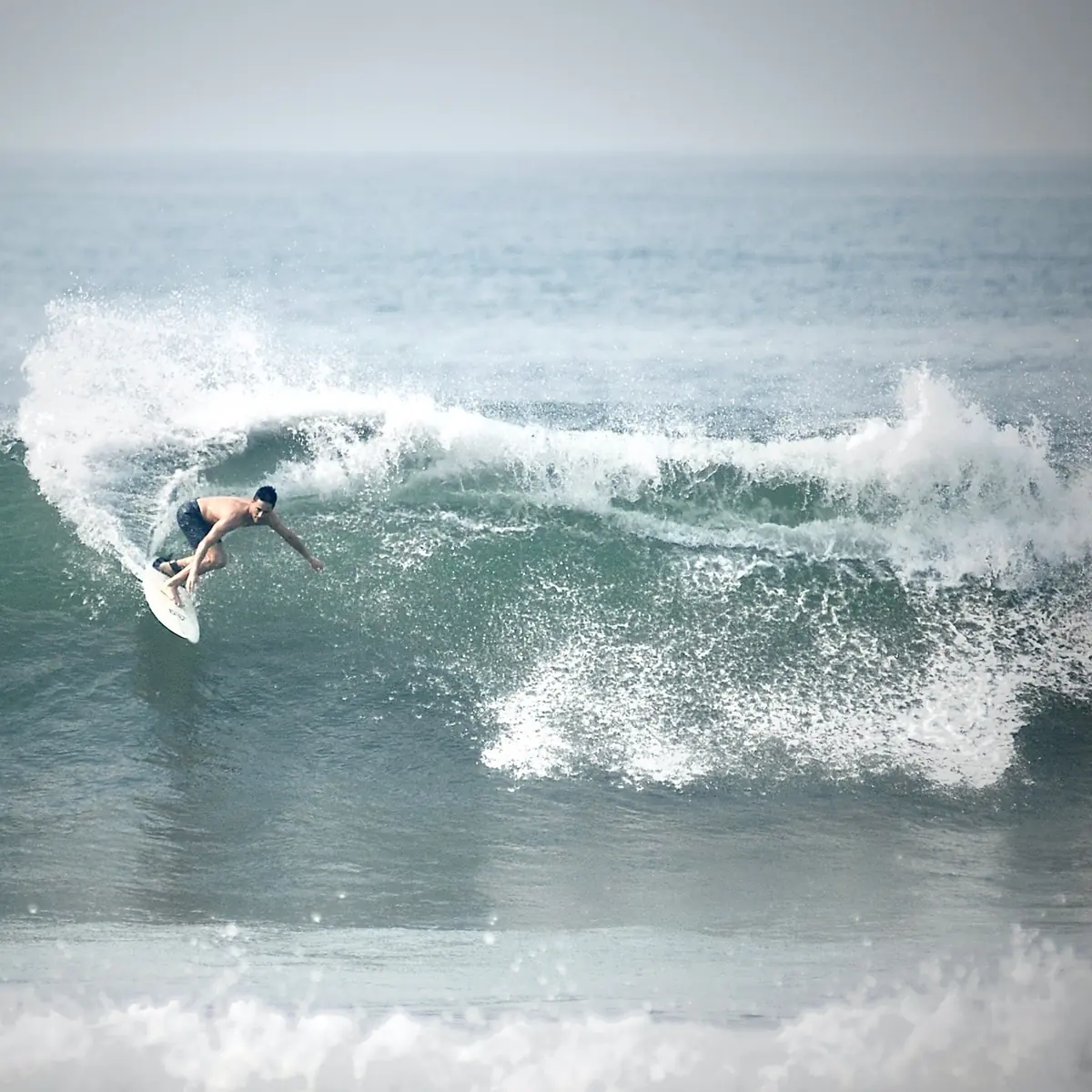
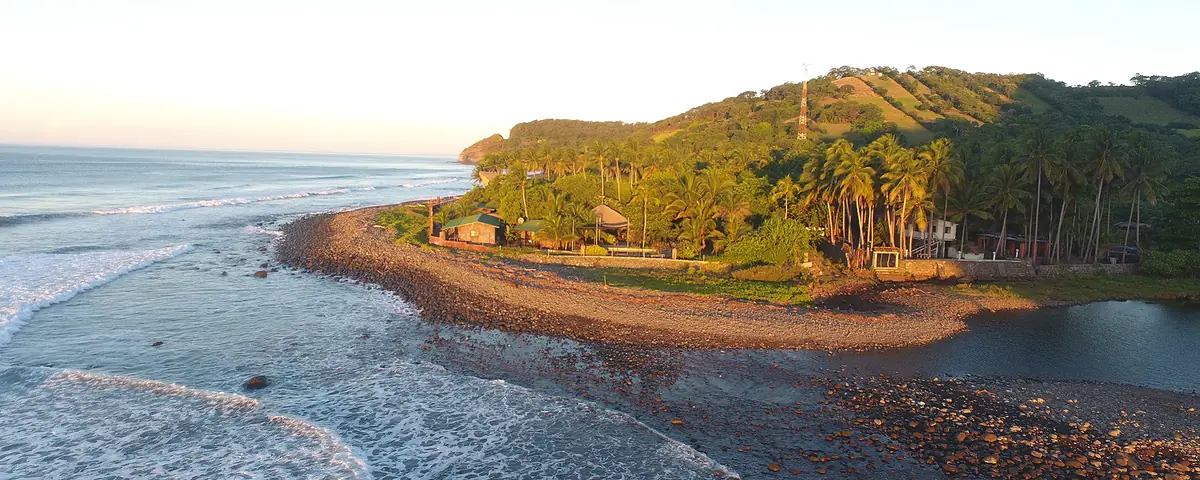
Mizata spreads four breaks across about half a mile of black sand. The Point is a fast right-hand river-mouth wave for intermediate-to-advanced surfers. Tweeners is a rock-bottom A-frame. The Beachbreak has a sandy bottom that’s friendlier for improvers. The Slab is an expert-only reef. A mellow beginner break sits five minutes down the beach.
Here’s how the four breaks sort by skill and conditions:
- The Point: right-hand river-mouth break, open face up to about 200 meters, best at low to medium tide. Intermediate and up.
- Tweeners: a rock-bottom A-frame breaking left and right, best at medium to high tide.
- The Beachbreak: sandy bottom, works on a higher tide, the most forgiving of the named breaks.
- The Slab: a reef wave that needs 6 feet or more to fire. Experts only.
All four come alive on a south, south-southwest, or southwest swell with a north offshore wind. Be honest with yourself about the cliff at the end of the bay — on The Point you take off almost on top of the cobblestones, and you want to kick out early before that headland gets uncomfortably close.
One thing the surf-forecast sites won’t tell you: Mizata gets billed as a top-tier wave more often than it deserves. Local guides will tell you Punta Roca, El Sunzal, and K59 are higher-quality waves. Mizata’s real draw is consistency and emptiness, not the best barrel of your life. Come for the solitude.
Is Mizata good for beginners?
Yes, with caveats. Mizata’s sandy beach break and a dedicated beginner break about five minutes down the sand are gentle enough for first-timers, especially in the calmer dry season from November to April. The Point and The Slab, though, are fast and rocky — strictly for confident surfers. Book a lesson with a local school rather than going alone.
The whitewater on the inside beach break is forgiving — I watched a first-timer stand up on her third attempt. A lesson with a vetted local instructor runs about $10 to $50 an hour, and a board rental is roughly $10 to $15 a day.
When is the best time to surf Mizata?
Mizata has rideable waves year-round, but the biggest, most consistent swell arrives in the wet season from March to October, when south swells light up the points — best for experienced surfers. The dry season, November to April, brings smaller, cleaner waves and sunnier skies, ideal for beginners. The water stays warm all year, so you won’t need a wetsuit.
What that means by traveler:
- Experienced surfers: wet season (March to October), when waves can reach 6 to 12 feet.
- Beginners and improvers: dry season (November to April), smaller and cleaner.
- Everyone: water sits at 78 to 82°F (26 to 28°C) all year; mornings are offshore, with onshore wind building by about 9 a.m.
Pro Tip: Even deep in the rainy season, mornings were glassy and dry on my visit. The storms rolled in around 3 p.m. — right when you want to be in a hammock anyway, not in the water.
Where to stay in Mizata, from luxury to budget
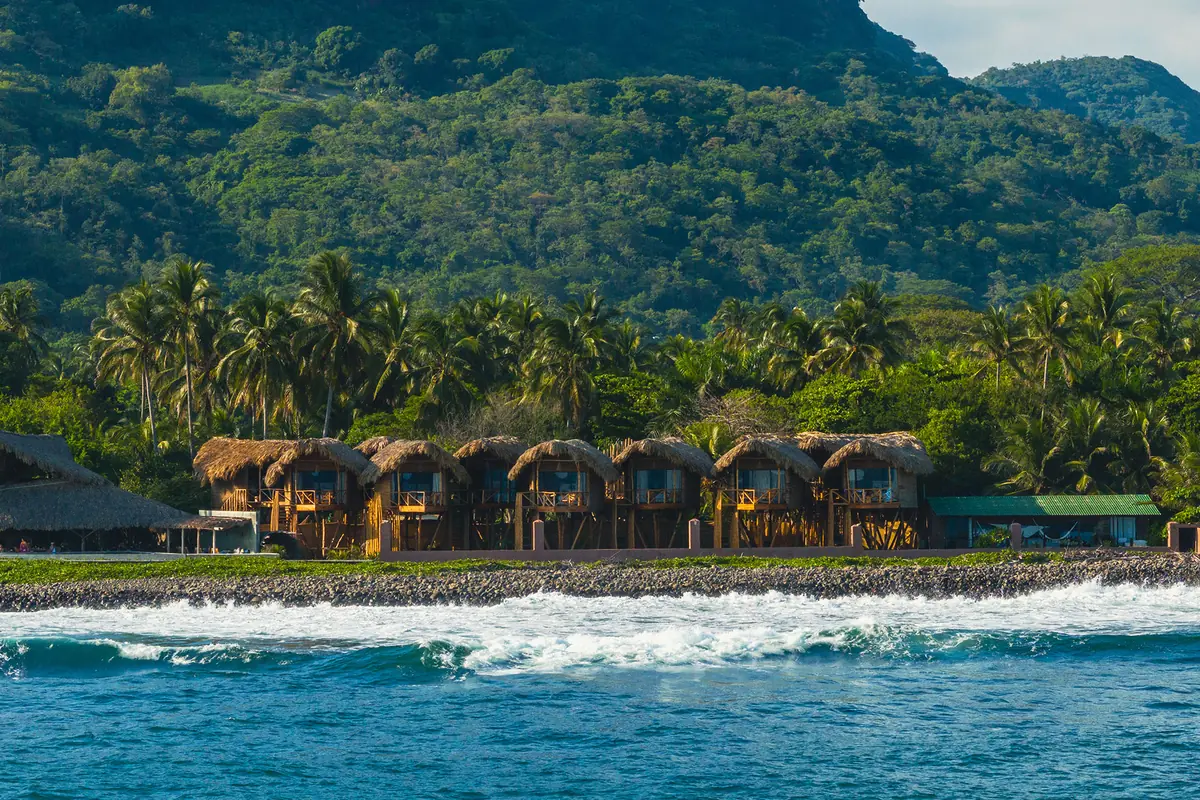
Mizata has only a handful of places to stay. Mizata by Antiresort is the upscale, wellness-focused option, with infinity pools, yoga, and a temazcal. Mizata Point Resort offers beachfront bungalows and a bunkhouse aimed at surfers and digital nomads. A few simpler guesthouses round out the budget end. Book ahead — there aren’t many beds here.
Mizata by Antiresort — the wellness splurge
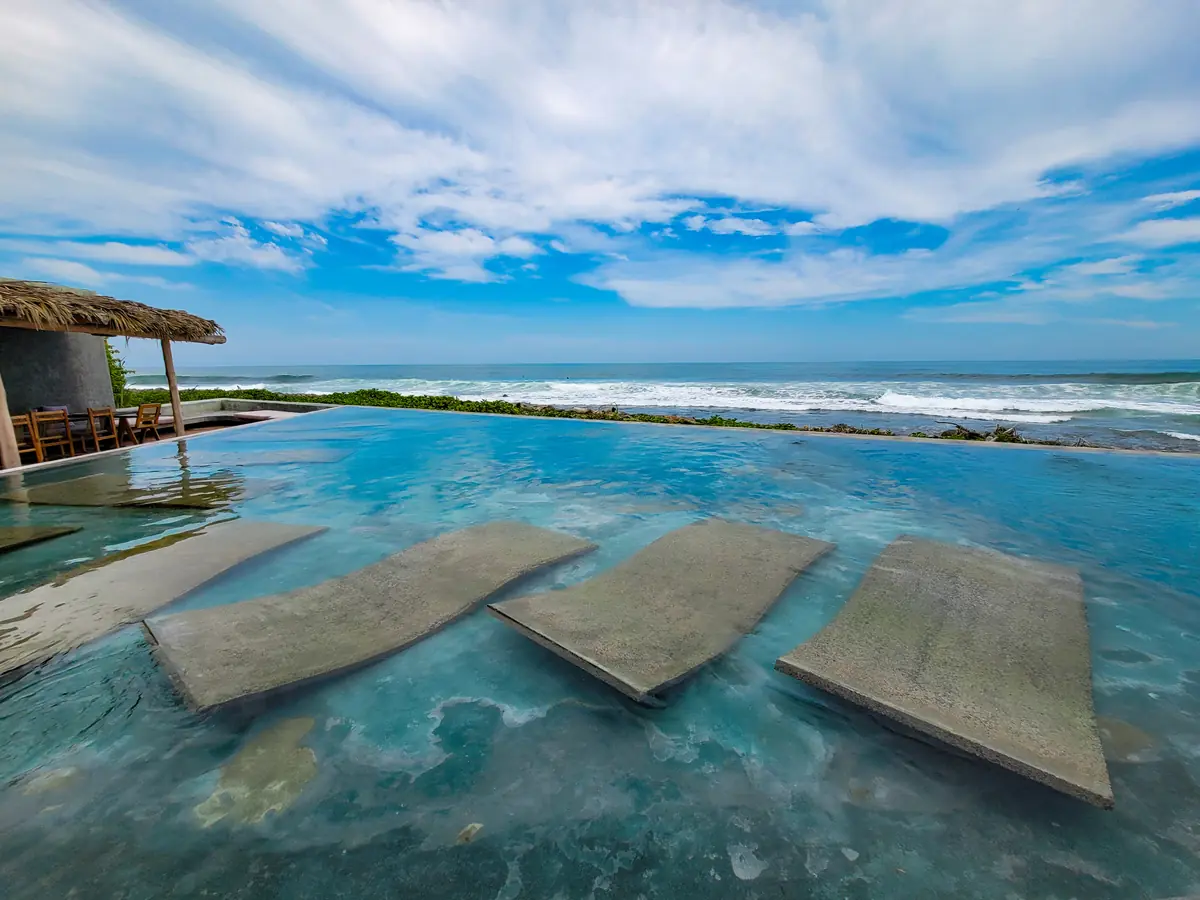
Peacocks wander the gardens at breakfast, and the property leans hard into the quiet: two pools, a spa, a sauna, a temazcal ceremony space, and the on-site Nawi Beach House for meals. Rooms range from tree houses to bungalows to lodge rooms, and the crowd skews adults seeking calm rather than surfers chasing dawn patrol.
- Location: Km 86 Carretera Litoral, Teotepeque, La Libertad
- Cost: from about $137/night, with peak rates running $248 to $262
- Best for: couples and wellness travelers who want quiet over surf
- Time needed: 2 to 4 nights to make the drive worth it
Mizata Point Resort — the surfer’s base
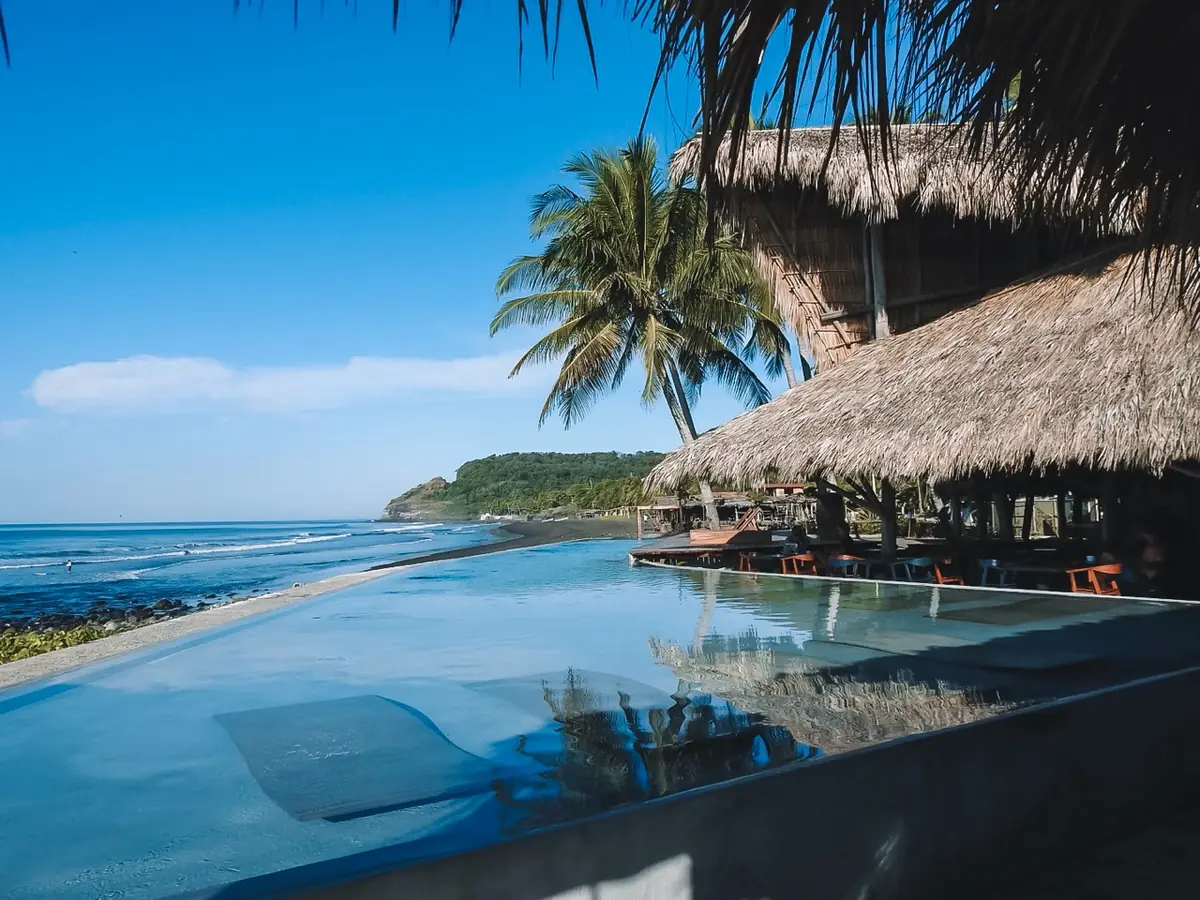
This is the House of Surf operation: beachfront bungalows, a bunkhouse with pods for solo travelers and digital nomads, and a quiver of 30-plus rental boards. The break is a literal sit-down view from the bungalow porch, which is exactly what you’re paying for.
- Location: beachfront at Playa Mizata, Teotepeque, La Libertad
- Cost: bungalows $55 to $150/night; bunkhouse pods cheaper
- Best for: surfers, solo travelers, and digital nomads
- Time needed: 3 to 5 nights to settle into the surf rhythm
What does a Mizata trip actually cost?
Mizata can be cheap or plush. Budget travelers can sleep from around $31 to $55 a night, eat pupusas for under $2 each, and bus in for a few dollars. Mid-range surfers spend $55 to $150 on a bungalow plus a private shuttle. Luxury and wellness guests at Mizata by Antiresort pay $137 to $260-plus a night, before spa and excursions.
The per-item math, in USD:
- Pupusas: $0.50 to $2 each (two to four make a meal)
- Beachfront meal: $5 to $15
- Surf lesson: about $10 to $50/hour
- Board rental: about $10 to $15/day
- Rental car: about $30 to $60/day
- Private shuttle from SAL: $85 to $160 one way
- Rooms: $31 budget to $260-plus at the Antiresort
Two pupusas and a cold Pilsener at a simple beach comedor cost me less than $4. The splurge on this trip is the shuttle, not the food.
Is Mizata safe to visit?
Yes. El Salvador holds the US State Department’s Level 1 rating (“Exercise Normal Precautions”) — its safest tier, and the only Level 1 country in Central America, ahead of neighbors like Costa Rica, Panama, and Belize. Coastal surf areas like Mizata are calm and welcoming, with a visible police presence. The main risks are ocean rip currents and opportunistic petty theft, so don’t leave gear unattended on the sand.
The country’s homicide rate has dropped to roughly 1.4 per 100,000 — among the lowest in the hemisphere and a fraction of what it was a decade ago. A State of Exception granting police expanded arrest powers remains in force, which is why you’ll see soldiers at coastal checkpoints. Soldiers with rifles looked alarming at first; locals waved them through like old neighbors. It reads as calm, not tense.
A few practical safety notes:
- Rip currents are the real physical danger; remote beaches have few or no lifeguards.
- POLITUR, the tourist police, can escort visitors around Mizata free of charge with about a week’s notice.
- Keep boards and bags in sight or with your accommodation.
Is Mizata safe for solo female travelers?
Generally yes. Solo female travelers describe Mizata as safe and relaxed, with friendly locals and a low-key surf-camp atmosphere. Standard precautions apply: avoid walking the unlit highway alone after dark, keep valuables secured, and pick a reputable stay like Mizata by Antiresort or Mizata Point Resort that can arrange transport and lessons for you.
The lineup skews local and respectful, with none of the aggro vibe you’ll find at busier breaks. Choosing a stay that handles your airport transfer and surf lessons removes the two situations where a solo traveler is most exposed.
Money and entry — dollars, Bitcoin, and your tourist card
El Salvador uses the US dollar, so Americans need no currency exchange — just bring small bills, since change for $50s and $100s is scarce. US citizens enter with a valid passport and a $12 tourist card bought on arrival, good for 90 days. Despite old headlines, Bitcoin is no longer legal tender; acceptance is voluntary and rare in Mizata.
What to have ready:
- A valid US passport with at least one blank page (six months’ validity recommended)
- $12 in cash for the tourist card, valid 90 days
- Small bills ($1s, $5s, $10s) — the village has no ATM, and small shops can’t break large notes
- A card for the resorts, which take them; cash everywhere else
I tried to pay with a Lightning wallet out of curiosity and got blank looks. Cash first, card at the resorts — that’s the order of the day here.
Mizata vs El Tunco vs El Zonte — which should you choose?
Choose Mizata for the quietest waves and a wellness or surf-focused retreat. Choose El Tunco for nightlife, surf schools, and the liveliest scene. Choose El Zonte — “Bitcoin Beach” — for a laid-back community feel between the two. Mizata is the most remote and least developed of the three, which is its strength and, for some travelers, its drawback.
| Mizata | El Tunco | El Zonte | |
|---|---|---|---|
| Vibe | Remote, tranquil | Lively, party | Chill, community |
| Crowds | Very low | High | Moderate |
| Surf level | Beginner to expert | All levels, lots of schools | All levels |
| Nightlife | None | Bars until dawn | Low-key |
| Drive from SAL | ~1.5 hours | ~1 hour | ~1 hour |
| Best for | Surfers, calm-seekers | Social travelers | Families, longer stays |
El Tunco’s bars thump until dawn on weekends. At Mizata, the loudest thing after 9 p.m. was the surf. That single difference decides this for most people.
What else is there to do around Mizata?
Beyond surfing, Mizata offers horseback riding on the black sand, yoga and temazcal ceremonies at the resorts, and seasonal sea-turtle hatchling releases. Day trips are easy: the Tamanique waterfalls and the colonial Ruta de las Flores towns — Juayúa, Ataco, and Apaneca — sit under an hour or two away, and Santa Ana Volcano makes a longer excursion.
Options for non-surf days and longer stays:
- Horseback riding along the beach at low tide
- Yoga and temazcal (a traditional sweat-lodge ceremony) at the resorts
- Sea-turtle hatchling releases during the nesting months, roughly July to December
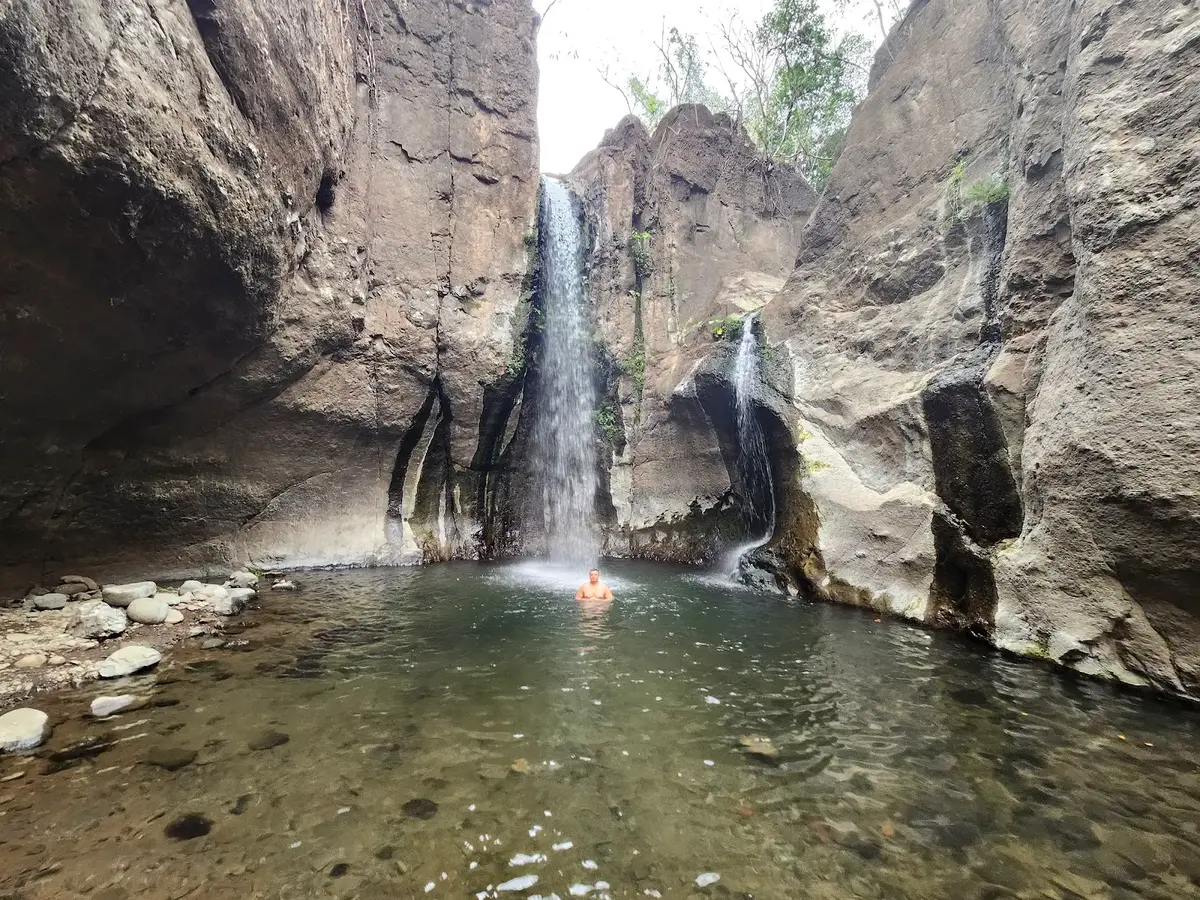
- Tamanique waterfalls, a short inland drive
- Ruta de las Flores towns for coffee, food markets, and colonial streets
- Santa Ana Volcano for a full-day hike
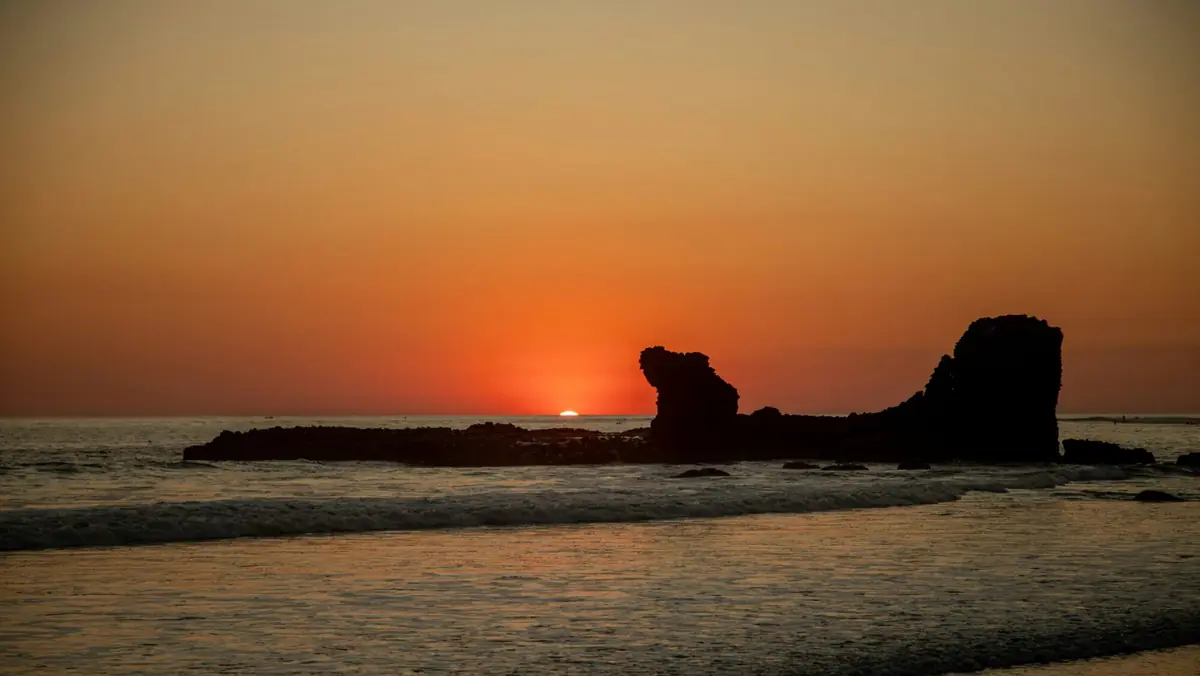
At low tide the beach opens into tide pools you can walk for nearly a kilometer toward the cliff — easy beachcombing when the wind kills the waves.
Bottom line — should you go to Mizata?
TL;DR: Go to Mizata if you want consistent, uncrowded surf and a genuinely quiet stretch of El Salvador’s coast, and you don’t mind that it’s remote, with limited dining and no nightlife. Skip it if you want a social scene or white-sand swimming — El Tunco or El Zonte will suit you better. For surfers and calm-seekers, it’s one of the best-value escapes in Central America.
The pieces that make or break the trip are the shuttle (book it ahead), small bills (the village has no ATM), and your timing (wet season for size, dry season for ease). Get those right and Mizata delivers exactly what its busier neighbors can’t: waves you don’t have to share.
What would tip the scales for you — the empty lineup, or the missing nightlife? Tell me in the comments.