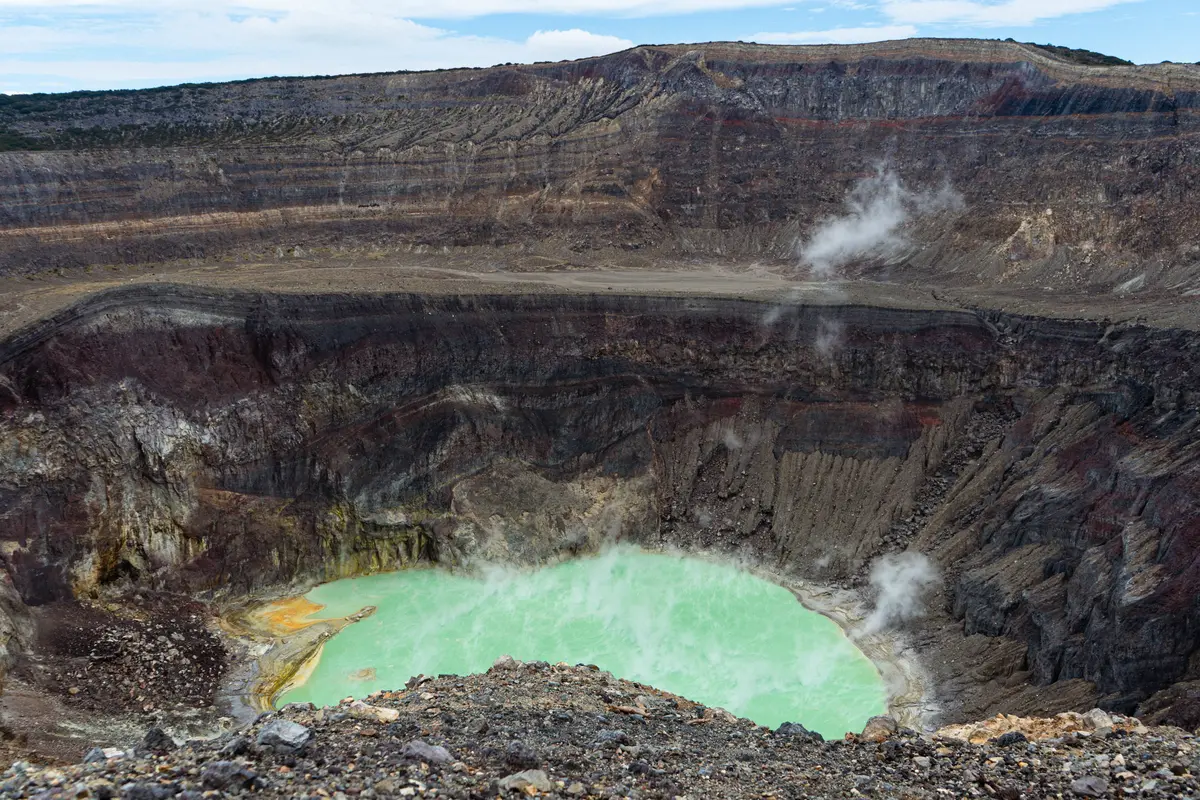
The Santa Ana Volcano hike delivers the best view-to-effort payoff in El Salvador: a turquoise, steaming crater lake at 7,812 feet, reached in about two hours of climbing. The problem has never been the trail. It’s the logistics — outdated fees, a confusing departure system, and a guide you’re required to take. This guide fixes that with current numbers and honest trade-offs.
Santa Ana Volcano Hike at a Glance
Santa Ana Volcano, known locally as Ilamatepec, is the highest point in El Salvador and one of its most active volcanoes. The hike is moderate, takes 3 to 4 hours round trip, and ends at an acid crater lake that glows turquoise on clear days. A guide is mandatory, and total fees for a foreigner arriving on foot run about $7.50.
| Detail | Number |
|---|---|
| Summit elevation | 7,812 ft (2,381 m) |
| Trail distance | 4.6 mi (7.4 km) out-and-back |
| Elevation gain | about 1,528 ft (465 m) |
| Difficulty | Moderate |
| Round-trip time | 3–4 hours |
| Park fee (foreigner) | around $3 |
| Guide fee | around $4 per person (group) |
| Total fees on foot | about $7.50 |
| Guide required | Yes — no exceptions |
| Best season | Dry season, November–April |
If You’ve Read an Older Guide, Update These Numbers
If your information came from a blog post written a year or two ago, two key facts are likely wrong: the entrance fee and the departure time. The foreigner park fee dropped from $6 to $3, and the rigid “everyone leaves at 11 a.m.” rule is gone. Groups now start earlier and more flexibly, with a firm cutoff instead.
Here’s what changed, in plain terms:
- Park fee: now around $3 for foreigners, not $6. Locals also pay $3.
- Guide fee: about $4 per person in a group, or roughly $40 for a private guide. This is a real fee now, not the old “$1 tip.”
- Departures: the main group leaves around 9:30–10 a.m., with extra groups at 8 or 9 a.m. on busy days. Self-drivers can often start as early as 7 a.m.
- The hard rule: no one starts the climb after 11 a.m., and the summit closes around 1 p.m.
- Total on foot: about $7.50, not the “$9” figure still floating around.
Pro Tip: Bring small USD bills in exact change. The fees are cash only, there’s no card machine at the gate, and guides rarely have change for a $20.
Is the Santa Ana Volcano Hike Worth It?
Yes — it has the best views-to-effort ratio of any hike in El Salvador. Two hours of moderate climbing buys you a panorama of three volcanoes, two crater lakes, and the Pacific on a clear day, plus a steaming acid lake most people have never seen up close. The catch is wind: on bad days, guides turn groups back below the summit.
That catch is real, so plan for it. On windy days the group stops at a viewpoint roughly 25 minutes below the rim, and you pay the same $7.50 whether or not you reach the lake. One traveler I read tracked it across two straight days of being turned back. Go early, go on a calm-looking morning, and treat the summit as a bonus rather than a guarantee.
How Hard Is It, and How Long Does It Take?
The Santa Ana Volcano hike is rated moderate. It covers 4.6 miles (7.4 km) out-and-back with about 1,528 feet (465 m) of gain. AllTrails lists an average time of 2 hours 56 minutes, but with a group, a safety briefing, and crater time, budget 3 to 4 hours. The hard part is the loose volcanic gravel near the top.
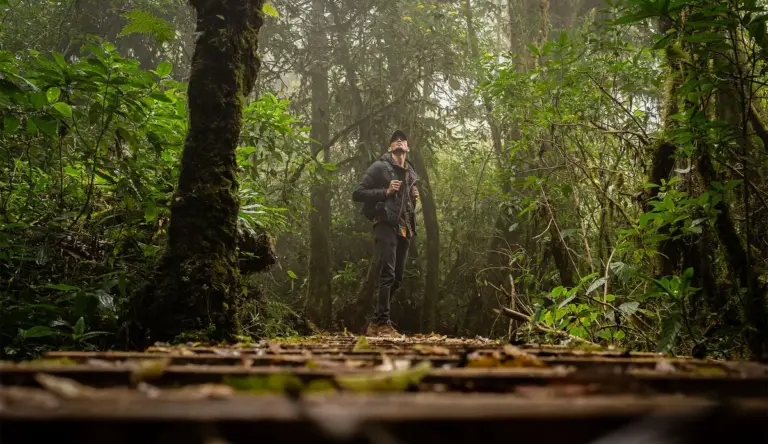
The climb moves through three distinct zones. You start in shaded cloud forest, pass into low scrub, then hit exposed scree on the final push — the steepest stretch and an almost hands-on scramble in places. That gravel is the real test: it’s loose underfoot going up and genuinely slippery coming down, and minor slips and scraped palms are common on the descent.
Pro Tip: Rent a walking stick at the trailhead for about $1. It’s not for the uphill — it’s for keeping your footing on the scree on the way back down.
How Do You Get to the Trailhead?
Four ways reach the trailhead near El Tibet on the Cerro Verde road: an organized tour, a self-drive rental, public bus #248, or a taxi. A tour is easiest and the only realistic same-day option from El Tunco or San Salvador. The public bus is cheapest but ties you to Santa Ana city and tight timing. Here’s how they compare.
| Method | Cost (each way) | Time from base | Best for | Watch out for |
|---|---|---|---|---|
| Organized tour | All-in, varies by operator | Door-to-door pickup | El Tunco / San Salvador day-trippers | Early pickups, 5:15–6:30 a.m. |
| Self-drive rental | Gas + $3 parking | ~1.5 hrs from San Salvador | Flexibility and an early start | Arriving alone means a $40 private guide or a wait |
| Public bus #248 | around $0.70–0.90 | 1.5–2 hrs from Santa Ana | Budget travelers based in Santa Ana | Must catch the 7:30 a.m. bus; tight return |
| Taxi / Uber | about $15–30 | ~1 hr from Santa Ana | Small groups splitting cost | Unreliable for the return trip |
Tour From San Salvador or El Tunco
This is the most popular option and, for most visitors, the smartest. Tours include transport, fees, and the guide, with pickups around 5:15–6:30 a.m., and most bundle in a Lake Coatepeque lunch afterward. The big reason to book one: same-day public transport from El Tunco or San Salvador to the trailhead is not feasible, so a tour is the only way to do it without overnighting nearby.
Self-Drive
A rental car is about 1.5 hours from San Salvador and 1 hour 45 from La Libertad. You get the most flexible start time and pay just $3 to park. The risk is timing — if you arrive before a group forms, you either pay $40 for a private guide or wait around, since guides reportedly want about 15 people for the group rate.
Public Bus #248
Bus #248 leaves Santa Ana’s La Vencedora terminal around 7:30–7:40 a.m., costs roughly $0.70–0.90, and takes 1.5 to 2 hours to the El Tibet stop near the trailhead. Coming from Lake Coatepeque, take bus #242 to El Congo and transfer to the #248 around 8:30 a.m.
Pro Tip: The return bus passes around 1:00–1:30 p.m. Miss it and the next one isn’t until roughly 4 p.m. — so don’t dawdle over summit photos if you came by bus.
How Much Does the Hike Cost?
A foreigner arriving on foot pays about $7.50 total: roughly $3 for park entry, $4 for the group guide, and $0.50 to walk through the private property near the trailhead. Drivers pay more for parking; private guides cost more. Everything at the gate is cash only, in US dollars, so bring small bills.
| Arrival method | Park fee | Guide | Access / parking | Approx. total |
|---|---|---|---|---|
| On foot / by bus | ~$3 | ~$4 (group) | $0.50 pedestrian | about $7.50 |
| Motorbike | ~$3 | ~$4 (group) | $1.50 | about $8.50 |
| Self-drive car | ~$3 | ~$4 (group) | $3 vehicle | about $10 |
| Private guide | ~$3 | ~$40 private | $0.50–$3 | about $43–46 |
During holiday crowds, the guide fee occasionally bumps to about $5 group or $50 private. The trailhead has restrooms, snack and water stalls, and walking-stick rental for around $1, and there are popsicle vendors waiting at the summit.
Do You Need a Guide? And Why the Police Walk With You
Yes — a guide is mandatory, and you can’t hike independently even though the trail is easy to follow. The rule is part safety, part security: armed tourist police (and sometimes the military) escort each group, and your bag gets checked for weapons before you start. Groups walk with one guide in front and one in back.
The independent-hiker debate is real. The path is obvious, and plenty of experienced hikers feel the guide adds little on a clear day. But the rule is enforced at the gate, the group fee is only about $4, and that money supports local guides — so the practical move is to treat it as the cost of entry rather than a fight to pick.
Pro Tip: The safety briefing is in Spanish only. If your Spanish is shaky, the key points are simple — stay between the two guides, don’t approach the crater’s edge, and turn back when they tell you to.
How the Departure Times and Cutoffs Work
The park opens around 7 a.m. The main bus-aligned group typically departs around 9:30–10 a.m., with extra groups at 8 or 9 a.m. when it’s busy. Self-drivers can usually start from about 7 a.m. once a group forms. The two firm rules: no one starts the climb after 11 a.m., and the summit closes around 1 p.m.
A realistic day if you’re coming by bus looks like this:
- 7:30 a.m.: Bus #248 leaves La Vencedora terminal in Santa Ana.
- 9:15–9:30 a.m.: Arrive at the El Tibet stop, pay fees, join the forming group.
- 9:45–10 a.m.: Group departs with police escort.
- 11:30 a.m.–12 p.m.: Reach the summit; 20–45 minutes at the crater.
- 1:00–1:30 p.m.: Catch the return bus back to Santa Ana.
What the Hike Is Actually Like
Plan for a few surprises the photos don’t show. The standard Cerro Verde route opens with a long staircase down — around 600 steps — that you have to re-climb at the very end, when your legs are already done. After that it’s forest, then scrub, then the loose-gravel summit push, with the wind picking up the higher you get.
The wind is the wildcard. On gusty days guides stop everyone at a viewpoint about 25 minutes shy of the rim because the crater edge is too exposed to be safe. You pay the same fee and may never see the lake, and several hikers report being turned back at roughly three-quarters of the way up. There’s no refund for weather.
Pro Tip: You can skip the 600-step descent and re-climb by starting at Casa de Cristal (El Tibet) instead of the Cerro Verde parking lot. It shaves roughly an hour off the round trip.
The 600-Step Descent
Most guides start groups at Cerro Verde, which means a 600-plus step staircase down before you climb anything. It’s a quiet gut-check on the way back, when you’ve already summited and have to grind those steps uphill. Knowing it’s coming makes it manageable; being blindsided by it does not.
The Scree Near the Top
The final stretch is exposed volcanic gravel — the steepest, slowest, and most slip-prone section. Going up, it’s two steps forward, one sliding back. Coming down, it’s where the walking stick earns its dollar and where most minor spills happen.
What You’ll See at the Crater Lake and Summit
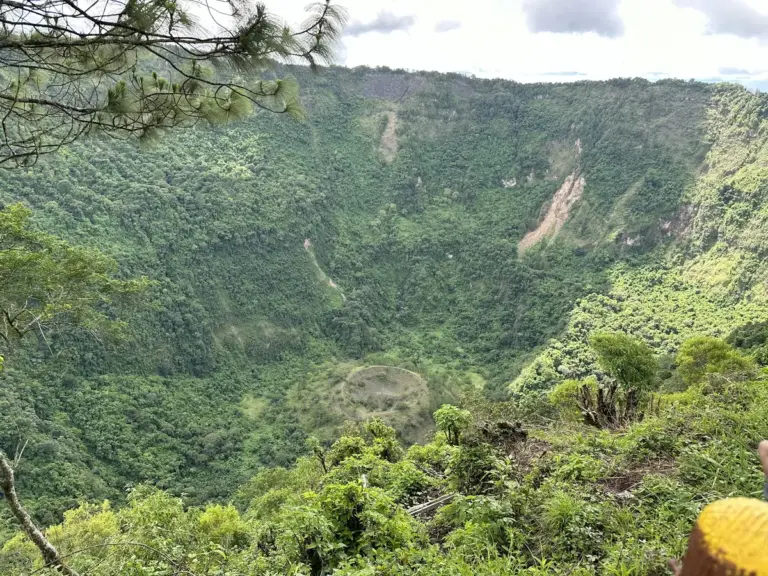
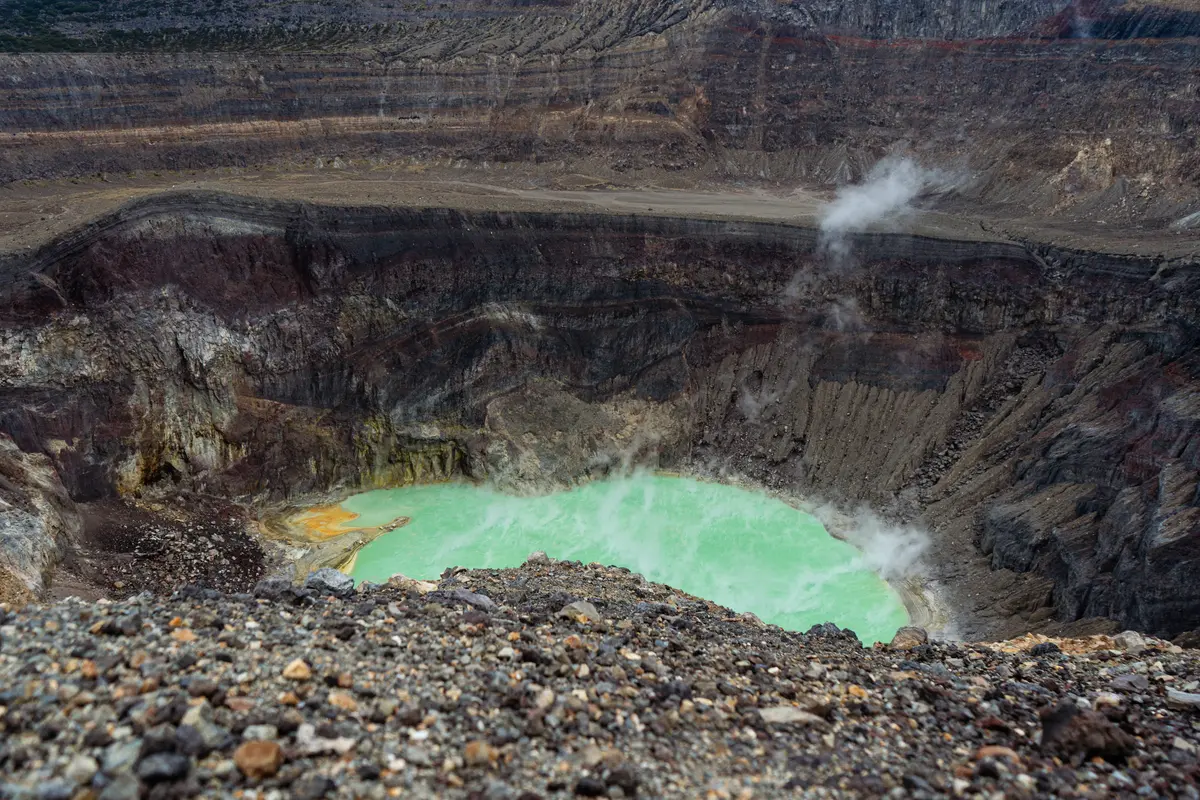
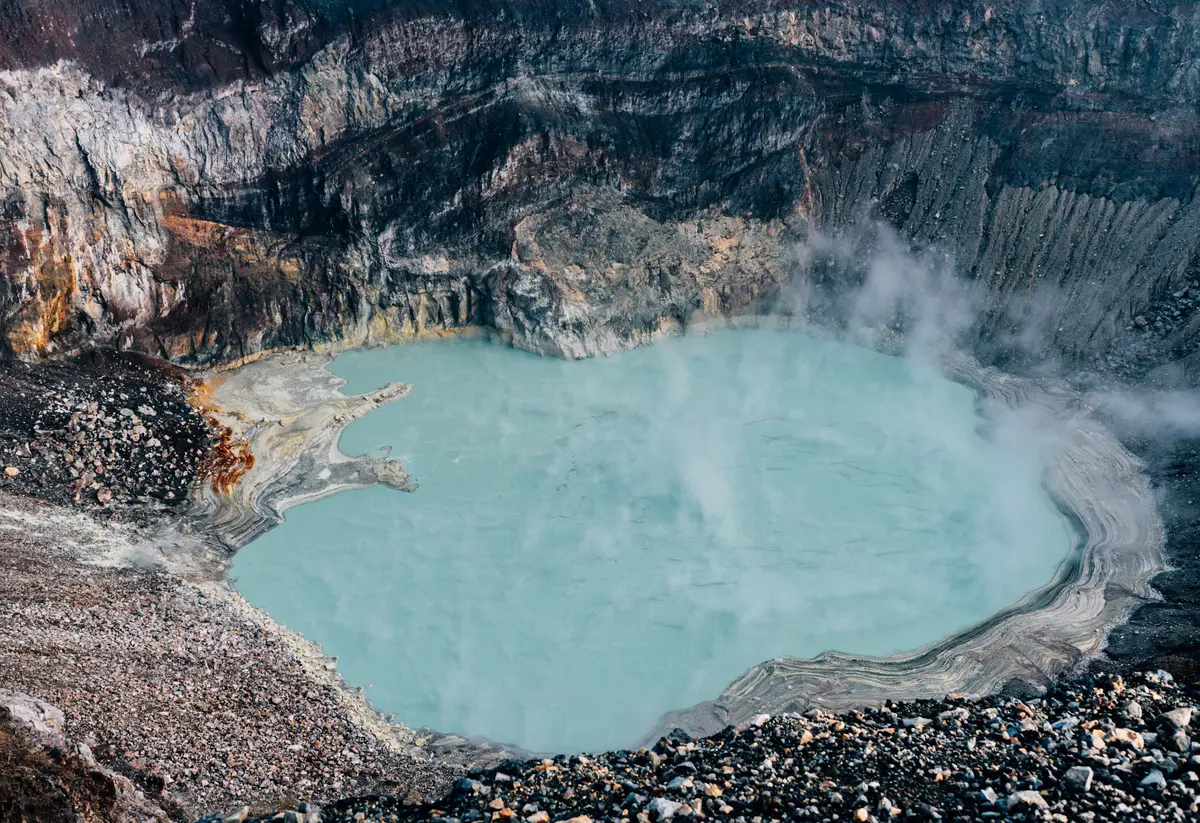
The summit holds an acid crater lake about 650 feet (200 m) across, sitting inside the innermost of four nested craters. The water is hyper-acidic — historically a pH of roughly 0.4 to 2, stronger than stomach acid — and shifts between turquoise, gray, and yellow with the minerals and light. It steams, bubbles, and smells of sulfur. Do not climb down toward it.
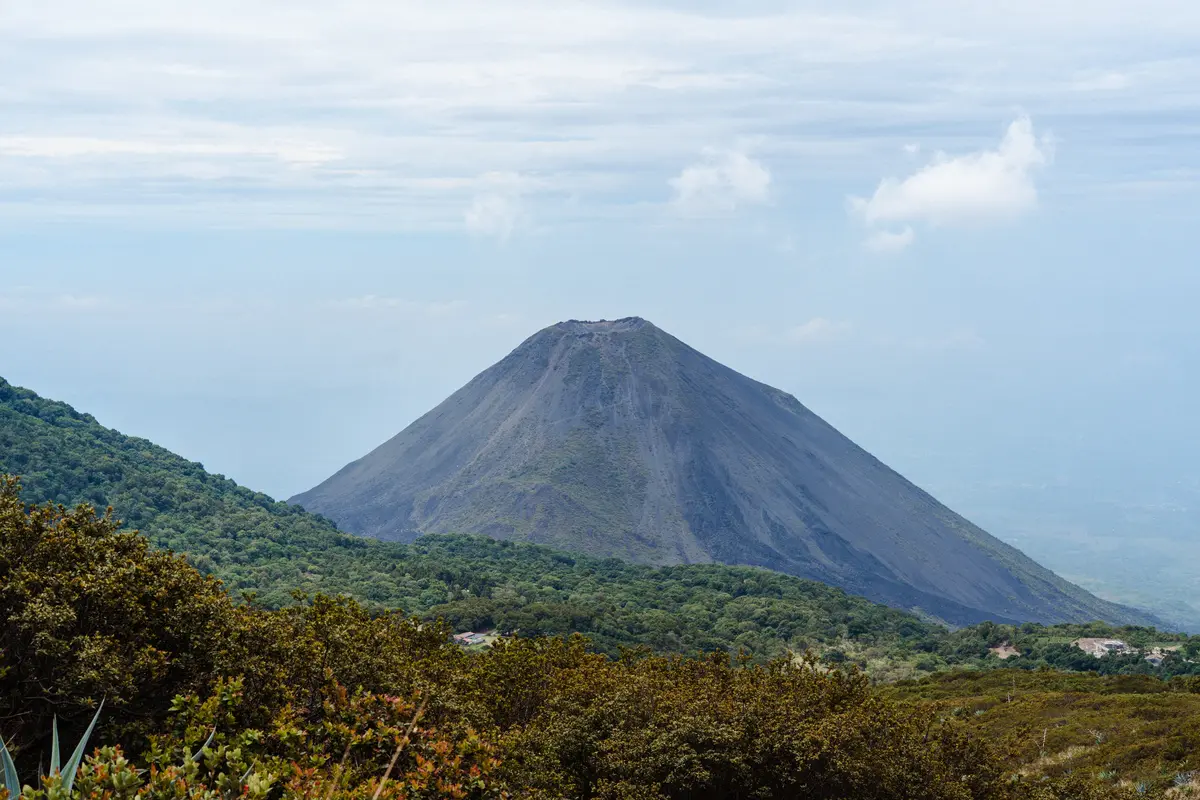
On a clear day the panorama is the real reward: the black cone of Izalco, the forested hump of Cerro Verde, the wide blue of Lake Coatepeque, the Zapotitán valley, the San Salvador volcano, and the Pacific on the horizon. Mist often hides the crater, especially in the wet season, so an early, dry-season start gives you the best odds.
Pro Tip: The sulfur smell hits hardest right at the rim. If it makes you queasy, step back a few feet — the air clears quickly once you’re off the edge.
When Is the Best Time to Hike Santa Ana Volcano?
The best time is the dry season, November through April, on a weekday, starting as early as you can. Dry-season mornings give the clearest crater views and the lowest wind-closure risk. Weekends and holidays bring crowds — some report a holiday “free-for-all” at the gate — so a weekday is calmer and faster through the briefing.
| Season | Months | Conditions | Crater odds |
|---|---|---|---|
| Dry season | Nov–Apr | Clearer skies, less mist | Best |
| Wet season | May–Oct | Afternoon rain, frequent mist | Lower; start early |
| Any weekend / holiday | Year-round | Big crowds, slower start | Same weather, more wait |
Dress for two climates. The base can sit in the mid-80s°F (around 29°C) in the rainy season, while the summit drops to roughly 46–60°F (8–16°C) with a hard wind chill. People underestimate this constantly and arrive at the top shivering in a t-shirt.
What to Pack for the Santa Ana Volcano Hike
This is a half-day hike, not an expedition, but a few items make or break the day. The summit cold and the cash-only gate catch the most people off guard.
- Cash: small USD bills, about $10 to cover fees and a popsicle.
- Water: 1.5–2 liters; it’s exposed and there’s no water above the trailhead.
- Layers: a windbreaker or light jacket for the summit, even on a hot day.
- Footwear: sturdy closed shoes with grip for the scree. Avoid sandals.
- Sun protection: hat, sunglasses, sunscreen — most of the climb is exposed.
- Optional: a rented or packed walking stick for the descent.
Is It Safe to Hike Santa Ana Volcano?
Yes, it’s safe. The hike runs under armed tourist police escort, bags are checked for weapons at the start, and groups stay together front-to-back. The main physical risks are the slippery scree and the crater edge, not crime. The volcano is active but monitored, and the park operates normally with the guide rule in force.
The crater itself is the one place to take seriously. The lake is dangerously acidic, the rim is loose, and guides will whistle sharply at anyone drifting toward the edge — listen to them. On windy days, the call to turn back early is a safety decision, not a shortcut, so don’t argue your way past it.
Planning Tips by Traveler Type
The hike works for most fitness levels, but the right approach changes depending on who you are. Here’s how it shakes out for the travelers most guides skip over.
Solo Female Travelers
You’re never alone on the trail — you hike in a guided group with a police escort, which many solo women find reassuring. Basing in Santa Ana city, where the backpacker hostels cluster, makes the early bus and the social side easier. The group format means built-in company without having to arrange anything.
Families With Kids
Active kids who can handle a moderate two-hour climb will manage, but the loose scree near the top is the sticking point for small children. The 600-step descent-and-return is also a lot of stairs for short legs. Start at Casa de Cristal to skip the steps, and be honest about whether your kids can scramble loose gravel.
Budget Backpackers
This is one of the cheapest big hikes in Central America — about $7.50 in fees plus a $1-ish bus ride if you sleep in Santa Ana. The catch is the overnight: you need to be in Santa Ana to catch the 7:30 a.m. bus, so factor a hostel night into the math.
Time-Pressed Day-Trippers
If you’re based in El Tunco or San Salvador and short on time, book a tour and accept the early pickup. Same-day public transport from those towns to the trailhead doesn’t work, and trying to improvise it usually ends with a missed connection and a wasted morning.
What to Pair With Your Hike
The volcano sits inside a cluster of sights that make a fuller day or a two-stop loop. Lake Coatepeque is the obvious add-on, and the surrounding Los Volcanes park holds two more volcanoes worth a look.
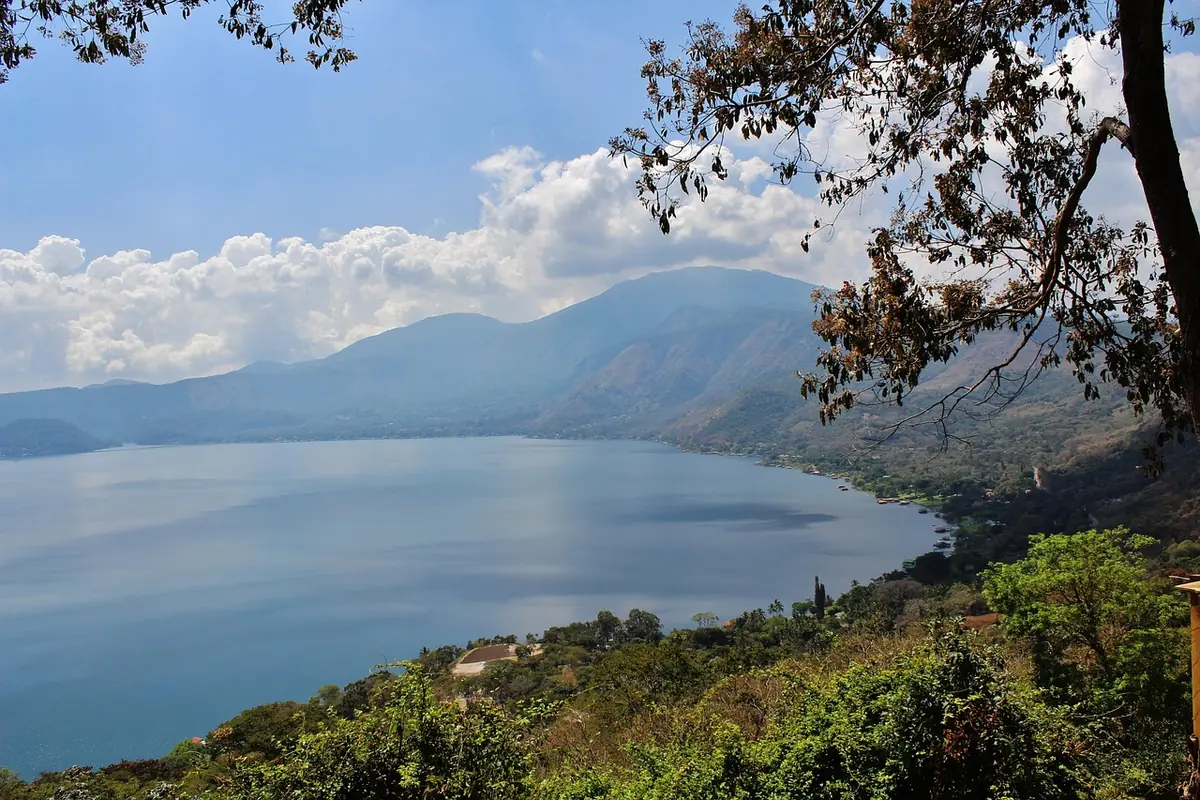
- Lake Coatepeque: a caldera lake about 10 square miles (26 km²) and up to 377 feet (115 m) deep, roughly 72,000 years old. It turns turquoise on occasion and makes the classic post-hike lunch and swim stop. The gateway town is El Congo.
- Izalco Volcano: the near-perfect black cone you see from the trail, nicknamed the “Lighthouse of the Pacific.” It’s a much steeper, harder climb for another day.
- Cerro Verde Volcano: extinct and forested, with easy trails and an orchid garden — a gentle option if Santa Ana’s scree isn’t for you.
- Santa Ana city: the country’s second-largest city and the practical base for the hike, with hostels like Casa Verde and Las Puertas about an hour from the trailhead.
The 2005 Eruption and a Quick Volcano History
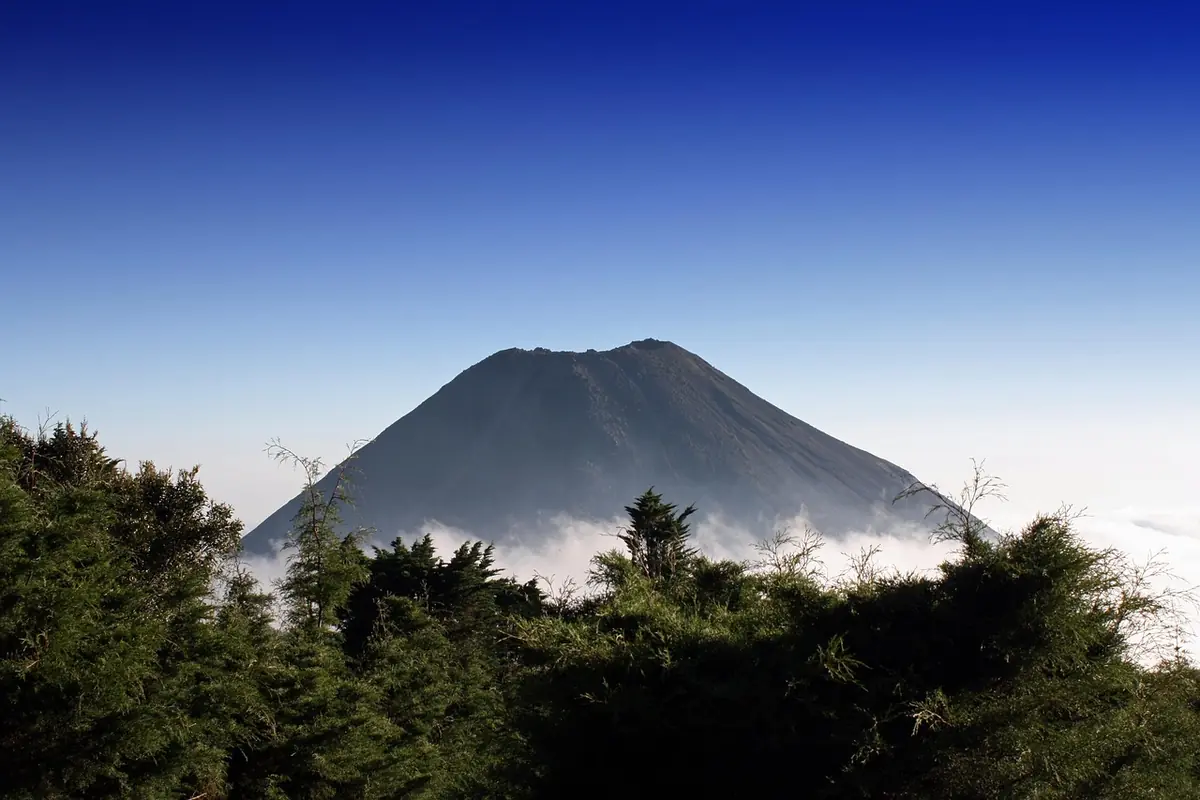
Santa Ana — Ilamatepec, “mountain of the old woman” in Nahuat — is a large stratovolcano about 40 miles (65 km) west of San Salvador, and one of El Salvador’s most active, with a dozen or so eruptions recorded since the 16th century. Its summit holds four nested craters. It also helped inspire a volcano in Antoine de Saint-Exupéry’s “The Little Prince.”
The last eruption struck on the morning of October 1, 2005. It was a VEI 3 phreatomagmatic blast that sent an ash-and-gas plume around 6 miles (10 km) above the volcano. Landslides and lahars at Palo Campana killed two people, about 2,000 were evacuated, and roughly 1,400 hectares of crops were damaged by ashfall. Boiling-mud flows ran toward Lake Coatepeque, worsened by storms days later.
The mountain is monitored today by El Salvador’s MARN, and the trail reopens and operates normally between events. That history is part of why the crater rim is treated with such caution — the acid lake at the top is the volcano’s still-active heart.
Santa Ana Volcano Hike FAQ
How Difficult Is the Santa Ana Volcano Hike?
Moderate. It’s 4.6 miles (7.4 km) round trip with about 1,528 feet (465 m) of gain, and the only tough part is the loose scree on the final climb. Most reasonably fit people manage it in 3 to 4 hours.
How Long Does the Hike Take?
About 1.5 to 2 hours up and 45 minutes to 1.5 hours down, plus 20 to 45 minutes at the crater — roughly 3 to 4 hours total with the group.
How Much Does It Cost?
Around $7.50 for a foreigner on foot: about $3 park entry, $4 group guide, and $0.50 pedestrian access. Cash only, in US dollars.
Do You Need a Guide?
Yes. A guide is mandatory and the hike runs under police escort. You cannot hike it independently, even though the trail is easy to follow.
How Do You Get There From San Salvador or El Tunco?
By tour or self-drive (about 1.5 hours). Same-day public transport from El Tunco or San Salvador to the trailhead is not feasible, so a tour is the realistic option from those towns.
Is It Safe?
Yes. Groups hike with armed tourist police, bags are checked at the start, and the main hazards are the scree and the crater edge rather than crime.
Before You Lace Up
TL;DR: The Santa Ana Volcano hike costs about $7.50, takes 3 to 4 hours, and requires a mandatory guided group that leaves between roughly 8 and 11 a.m. Come early in dry season for the clearest crater views, and accept that strong winds can turn you back below the summit.
Ignore the old guides quoting $6 fees and a rigid 11 a.m. departure — those numbers have changed, and getting them right is the difference between a smooth morning and a missed bus. Get there early, bring small bills, dress for a summit that’s 30 degrees colder than the base, and the turquoise crater lake is yours.
Which way are you planning to go up — the cheap bus from Santa Ana, your own rental, or a tour with the Coatepeque lunch? Tell me your base town and I’ll tell you the smartest route.