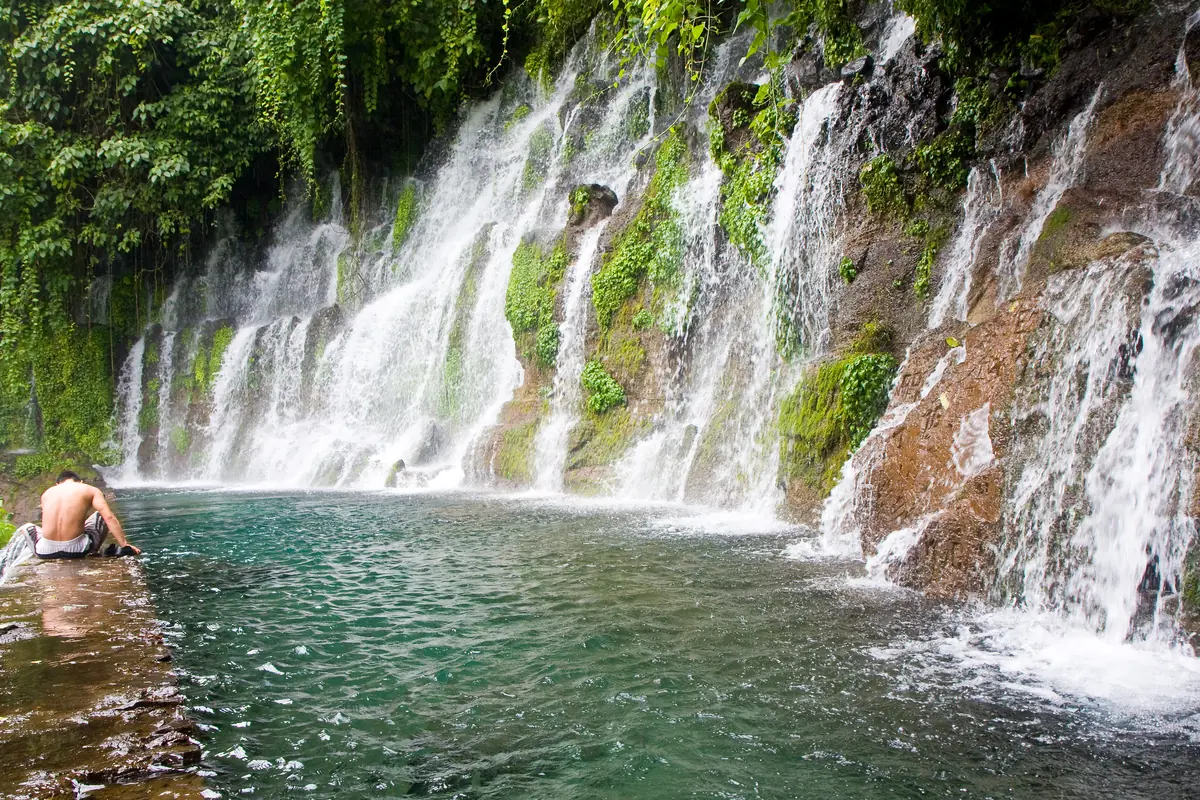
The Seven Waterfalls Juayúa hike is the most thrilling thing on El Salvador’s Ruta de las Flores — a soaking-wet scramble up jungle cascades that ends with a swim at Los Chorros de la Calera. You’ll wade to the waist, climb a 130-foot waterfall (40 m) on a rope, and need a guide. Here’s exactly how to do it.
The Seven Waterfalls Juayúa hike (Las Siete Cascadas) is a moderate 4-to-6-hour guided adventure just outside Juayúa in western El Salvador. A local guide costs about $15-25 per person and is strongly recommended — for safety and for the rope climb up a 130-foot waterfall (40 m). It runs year-round and finishes with a swim at Los Chorros de la Calera.
What Are the Seven Waterfalls (Las Siete Cascadas)?
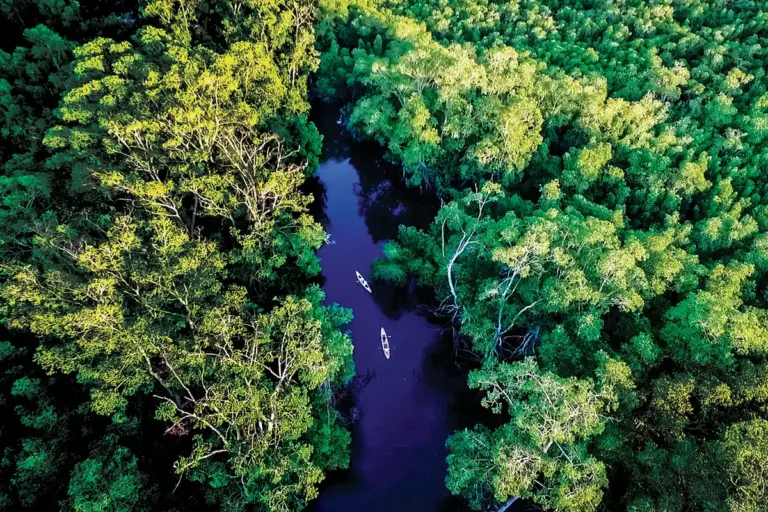
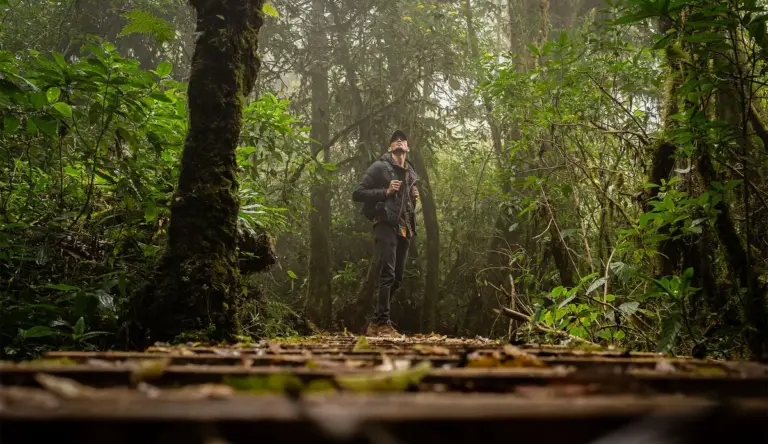
Las Siete Cascadas — the Seven Waterfalls — is a guided river-and-jungle hike outside Juayúa on El Salvador’s Ruta de las Flores. You wade rivers, cross coffee farms, and climb waterfalls before finishing at Los Chorros de la Calera. This is not a viewpoint stroll: plan to get fully soaked over 4 to 6 hours.
The single biggest confusion to clear up first: “Seven Waterfalls” and “Los Chorros de la Calera” are not the same thing. The Seven Waterfalls is the full guided scramble through the river canyon. Los Chorros de la Calera is the easy, drive-up waterfall and pool complex that the long hike happens to end at — and that most people can reach on their own in 20 to 30 minutes.
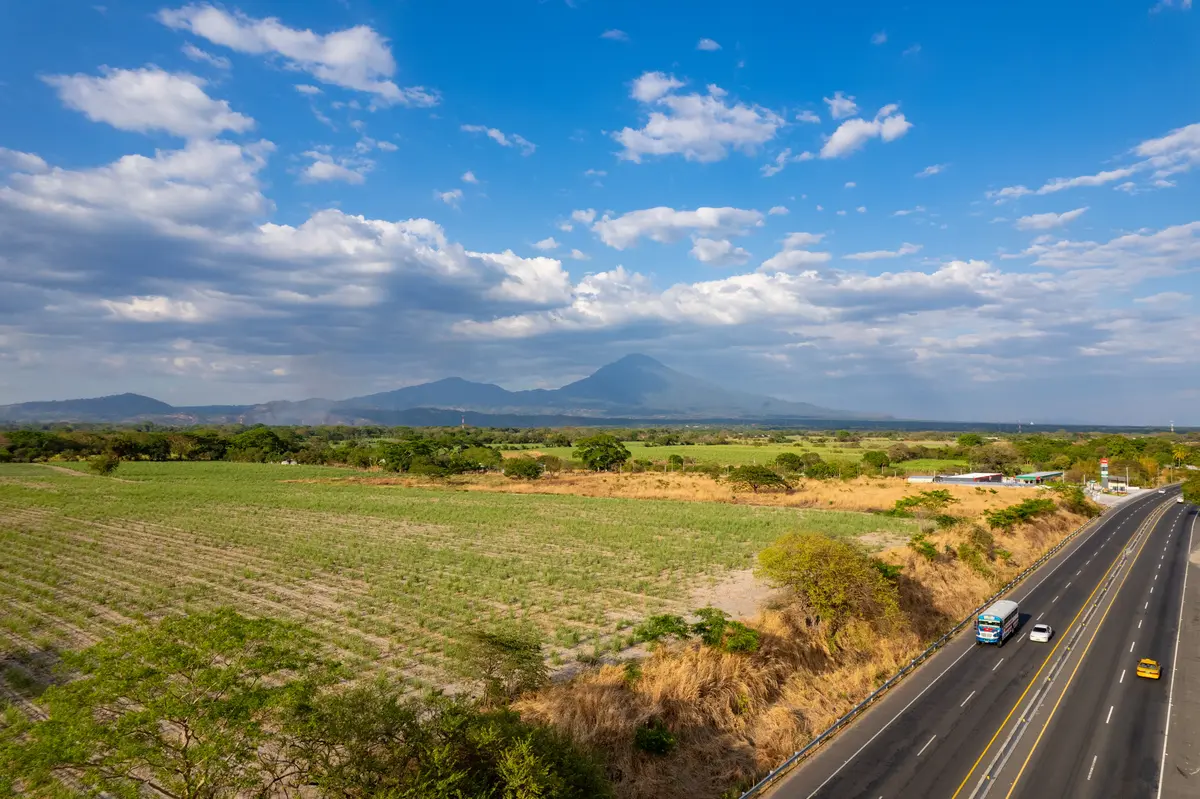
The trail sits in Cantón La Unión, in the district of Juayúa, Sonsonate department, off the CA-8 highway that forms the Ruta de las Flores. The route actually passes more than seven cascades; it’s named for the seven most notable. Along the way you cross working coffee fincas in the Apaneca-Ilamatepec mountain belt, which is where a lot of El Salvador’s best coffee comes from.
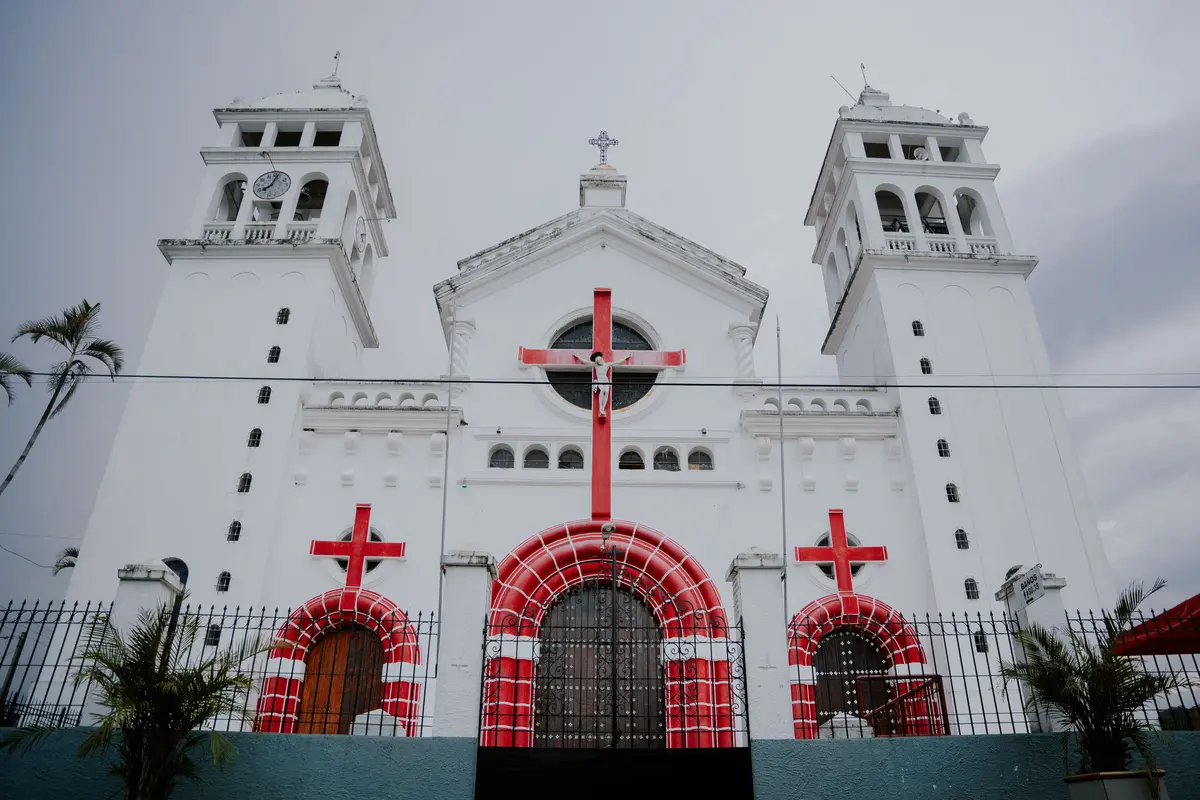
A bit of context that explains the name: Juayúa is a Nawat (Náhuat) word from the Pipil people, usually translated as “river of purple orchids.” You’re hiking through their homeland, and the town’s white Santa Lucía church holds a revered Cristo Negro (Black Christ) statue, a sister to the famous one in Esquipulas, Guatemala.
Here’s the hike at a glance:
- Location: Cantón La Unión, just outside Juayúa, Sonsonate department
- Trail: 4.3-mile (6.9 km) loop, 882 ft (269 m) of elevation gain
- Time needed: 4-6 hours including swimming and lunch
- Guide: about $15-25 per person (required in practice)
- Difficulty: moderate — river crossings and a rope climb, not endurance
- Best for: reasonably fit travelers, roughly ages 10 and up
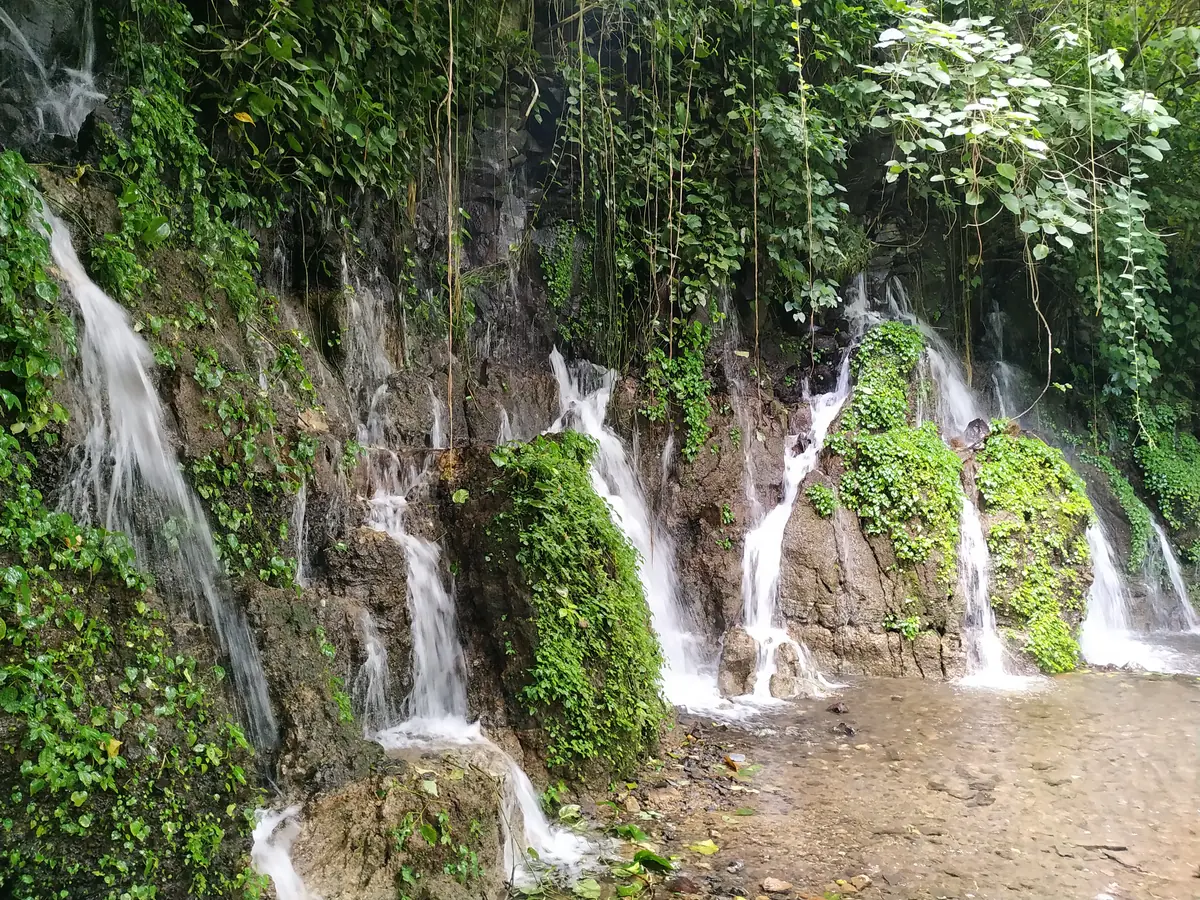
Pro Tip: One detail no map tells you — the waterfalls are spring-fed. The water emerges straight out from between the rocks rather than pouring over a lip, which is why the falls keep running even at the dry end of the year.
Do You Need a Guide, and How Much Does It Cost?
A guide isn’t legally required, but it’s strongly recommended. The trail is unmarked, parts cross private property, you need ropes and helmets, and there have been robberies of hikers going alone. Expect to pay about $15-25 per person, usually booked through your Juayúa hostel or hotel a day or two ahead.
The price spread is small and predictable once you know it:
- El Salvador Tours Trotamundos: around $15, plus about $5 to rent water shoes
- Hostal Casa Mazeta: around $17 per person
- Gaviotita Tours Adventura: around $20 for the full Siete Cascadas route
- Some hotels (e.g., Hotel Anáhuac, Hotel Juayúa): up to about $25
- Los Chorros de la Calera only: around $2
For that money you get a guide who knows the unmarked route, ropes and helmets for the climb, and — usefully — someone who carries your bag and shoots your photos across the wet sections, since you need both hands free. Reserve one to two days ahead; weekend slots fill first.
| Factor | Local Guide (Recommended) | Self-Guided |
|---|---|---|
| Cost | $15-25 per person | “Free,” but not advised |
| Safety | Robbery deterrent; rope and helmet provided | Real robbery risk; people get lost |
| Navigation | Unmarked trail handled for you | Trail unmarked, crosses private land |
| The rope climb | Ropes and helmets supplied | No gear at all |
| Verdict | Worth it | Not recommended |
Pro Tip: Book the guide directly instead of through a third-party platform. Gaviotita Tours Adventura is run by local guide Elizabeth Hernández, who takes bookings on WhatsApp at +503 6113 7277. It’s the same roughly $20 hike, but far more of the money stays with a local family.
How Hard Is the Hike and How Long Does It Take?
It’s a moderate hike that most reasonably fit people finish in 4 to 6 hours, including swimming and lunch. AllTrails logs the full loop at 4.3 miles (6.9 km) with 882 feet (269 m) of elevation gain. The challenge isn’t distance — it’s slippery rocks, river crossings, and a rope climb.
If you’ve been comparing guides online, you’ve seen wildly different numbers, and here’s why they don’t match. The 4.3-mile figure is the full loop. The much shorter 0.8-mile track you’ll sometimes see is a partial route to one entry point, not the whole thing. And the “2 to 2.5 hours” some sources quote is moving time only — real-world, door-to-door, with river crossings and a swim, it runs 4 to 6 hours.
One thing the stat blocks leave out: before the “real” hike starts, there’s a flat 20-to-30-minute walk out of town through cobblestone streets and coffee fincas. Budget for it — plenty of people assume the clock starts at the trailhead and end up surprised.
Who it suits, and who should sit it out:
- Good for: reasonably fit adults and confident kids roughly age 10-12 with a guide
- Needs: good balance and no real fear of heights for the rope section
- Skip it if: you have limited mobility, or you’re bringing children under about 10
Pro Tip: Decide your footwear before you leave the hostel, not at the river. You’ll be in and out of water for hours, so closed shoes with grip that you don’t mind soaking beat anything you’re trying to keep dry.
Where You Climb and Rappel the Waterfalls
The signature moment comes at the rope fall, where you climb (or down-climb) a roughly 130-foot cascade (40 m) gripping a rope tied to a tree — helmet on, no harness. The tallest fall on the route, La Toma, drops about 230 feet (70 m). Some groups climb it without a rope at all.
Let’s be honest about what this is and isn’t. It’s a roped scramble, not a true technical rappel — helmets are provided, but there’s no harness, and depending on water levels and your group, the guide may not even rig a rope. On my last time through, our group cleared the rope fall in under 20 minutes once everyone calmed down about it. If you’ve ever climbed a wet ladder, you can do this.
The seven named falls trip up every English-language guide, because each has both a local Spanish name and a loose English nickname. Here’s the reconciled list:
- El Bebedero / La Toma: the tallest, about 230 ft (70 m)
- El Bejuco / Cascada Seca: the “dry” fall
- El Arcoíris: the Rainbow fall
- El Guiinellal / Cascada Escarlata: the rope/scramble fall, about 130 ft (40 m)
- El 98 / Beneficio El 98: named for an old coffee mill
- El Borbollón: the “bubbling” fall
- La Cascadita: the little one
Pro Tip: At Los Chorros, look for the dark man-made water tunnel connecting two of the pools — it was built to feed a small hydro station. Local kids swim through it whooping; the brave (and the unclaustrophobic) can follow them.
How to Get to Juayúa From San Salvador and Santa Ana
Juayúa sits about 48 miles (77 km) from San Salvador — roughly a 1.5-hour drive. By chicken bus, take #205 from Terminal de Occidente to Sonsonate, then #249 up the Ruta de las Flores to Juayúa. From Santa Ana, bus #238 runs direct in about 1.5 hours for $0.80.
| Mode | From San Salvador | Cost | Time | Comfort |
|---|---|---|---|---|
| Chicken bus (#205 + #249) | Yes | ~$2 | ~3 hrs | Low, authentic |
| Private shuttle / tour | Yes | $120-190 | ~2-2.5 hrs | High, door-to-door |
| Rental car | Yes | ~$28-45/day | ~1.5 hrs | High, flexible |
By Chicken Bus (Cheapest, Most Authentic)
- From San Salvador: #205 from Terminal de Occidente to Sonsonate — about 2 hours, $1.50
- Then: transfer to #249 (the Ruta de las Flores line) up to Juayúa — about $0.50-0.60
- From Santa Ana: #238 direct — about $0.80, 1.5 hours, leaving roughly every 2 hours
- From the coast (La Libertad): #287 to Sonsonate (departs around 6 a.m. and 1:30 p.m.), then #249
- Within town: tuk-tuks run about $1

By Private Shuttle or Guided Tour
- From the airport (SAL): private shuttle about $190; the airport is around 71 miles (114 km) away
- Full-day tours from San Salvador: roughly $120-190 with transport and guide
- Trade-off: door-to-door comfort and hotel pickup, in about 2 to 2.5 hours
By Rental Car (Most Flexible)
- San Salvador to Juayúa: about 48 miles (77 km), 1.5 hours
- Santa Ana to Juayúa: about 21 miles (34 km), 40 minutes
- Rental: roughly $28-45 per day
- Note: park in town; a higher-clearance vehicle helps on the rough trailhead access road
Pro Tip: Catch the early coast bus around 6 a.m. and you’ll get a genuine Salvadoran wake-up call — 90s techno at full volume before sunrise. It’s also the move that gets you to the trailhead before the mid-morning crowds.
Is the Seven Waterfalls Hike Safe?
The hike itself is safe with a guide, but the trail and the path to Los Chorros have seen armed robberies of unaccompanied tourists — some at knife- or machete-point. The fix is simple: never go alone, hike with a local guide, and on weekdays ask your hostel to arrange the free police escort.
This is the part most guides reduce to a single clause, so here’s the straight version. There are first-hand reports — including a widely-read Tripadvisor account — of travelers being robbed at knifepoint on the path and losing everything they carried. It’s not common, but it’s real, and it almost always happens to people walking the route alone.
The good news is the mitigation is concrete and mostly free:
- Hire a guide: book a licensed local guide through a hostel — the single biggest deterrent
- Free police escort: on weekdays, the local POLITUR tourist police will walk hikers in and out at no charge, and hostels can arrange it
- Go on weekends: if you’d rather have numbers, patrols and crowds both increase
- Carry little: leave your passport and spare cash at the hostel
El Salvador has become markedly safer than its reputation suggests, and the tourist-police presence on this route reflects that. On the trail, you’ll sometimes pass groups walking with two uniformed officers who come in from the far side and meet hikers right after the rope section.
Pro Tip: Don’t believe the old line that “Los Chorros is just a 20-minute walk, so go on your own.” That short, easy path is exactly where the documented robberies happened. Take the guide or the free weekday escort even for the quick version.
When to Go: Dry Season vs. Wet Season
Go at the start of the dry season — roughly late in the year through the early months — for full waterfalls, green hills, and firmer footing. The wet season makes the falls roar but turns the trail to dangerous mud and can thin some cascades near the end of the dry months. The hike runs year-round.
| Season | Waterfall Flow | Trail Condition | Crowds | Pack |
|---|---|---|---|---|
| Early dry season | Full, lush | Firm, best footing | Moderate, plus wildflowers | Light layers |
| Late dry season | Some falls thin | Dry, easy | Lower | Sun protection |
| Wet season | Roaring | Muddy, slippery, mudslide delays | Lowest | Rain gear, extra caution |
A few specifics worth planning around. The dry season runs from the late-year window through about April, and the short wildflower bloom that gives the Ruta de las Flores its name lands early in that stretch. Juayúa is highland, so daytime temperatures sit around 59-82°F (15-28°C) and drop to about 57-66°F (14-19°C) at night — pack a light layer even in the tropics. In the rainy months, afternoon mudslides on the access roads can add 20 to 30 minutes to your approach.
Pro Tip: Aim for a weekend morning in the early dry season. You get the fullest falls and firmest footing, and you finish in time to walk straight into the town food festival that afternoon.
The Juayúa Weekend Food Festival
Juayúa’s Feria Gastronómica runs every Saturday and Sunday, roughly late morning until 5 p.m., in the streets around Parque Central. Vendors grill plato-típico plates of meat, seafood, rabbit, and sausage for about $3-7. Time the Seven Waterfalls hike for a weekend morning and you can eat your way through the fair that afternoon.
The fair sets up around the white Santa Lucía church and Parque Central, and it runs all 52 weekends of the year. Plates of grilled chorizo, chicharrón, and prawns (about $7 for four) sit alongside local specialties like chachaguillos and the wild tenquique mushroom. Bring cash — vendors don’t take cards.
Pro Tip: Here’s the thing the food-fair photos won’t tell you — there are almost no pupusa stalls at the fair itself. For El Salvador’s signature dish, walk a block to Pupusería Sugey, where a loaded “pupusa loca” runs about $4.
What to Wear and Bring
Wear quick-dry clothes and closed shoes with grip you don’t mind soaking — water shoes or trail runners, never flip-flops. Bring a dry bag for your phone, a swimsuit, a small towel, drinking water, and bug spray. Leave valuables at your hostel and carry small US-dollar bills for the guide and food fair.
The full kit for a wet, scrambling day:
- Clothes: quick-dry layers and a swimsuit — you’ll be soaked either way
- Footwear: water shoes or trail runners with grip you don’t mind soaking (rental about $5 in town), never flip-flops
- Electronics: a dry bag or waterproof case for your phone; a GoPro beats a phone for the wet sections
- Towel: a small, packable one
- Bug spray and sunscreen: there are tiny biting insects along the river
- Water: the spring water on the route is clean enough to drink, and guides will cup it for you straight from the source
- Cash: small US-dollar bills for the guide, tuk-tuks, and food
- Pack light: you need both hands free for the rope
On money: the US dollar is the everyday currency, full stop. Bitcoin is legal but acceptance is optional, and cash is what everyone actually uses — carry small bills, because change for a $20 can be hard to come by at a food stall.
The Bottom Line: Is the Seven Waterfalls Hike Worth It?
TL;DR: Yes — the Seven Waterfalls Juayúa hike is one of the best things to do in El Salvador and worth every soaked sock. Book a local guide for $15-25, go on a weekend morning so you can hit the food festival after, and choose the full route over a rushed half-day tour. Just never attempt it — or even the short walk to Los Chorros — without a guide.
If there’s one upgrade worth making, it’s time. The standard half-day tour rushes you past falls you’ll wish you’d swum in, so book the full-day version or a private guide and set your own pace. And keep your expectations honest about the pools at Los Chorros: they stay genuinely cold no matter how hot and humid the climb was, which is exactly why nobody lasts more than a few minutes in them before climbing back out to dry off in the sun.
Have you done the rope climb — or talked yourself out of it at the bottom of the fall? Tell me how your group handled the 130-foot scramble in the comments.