No. US citizens do not need a visa to visit El Salvador. A valid US passport is all you need for tourism or business stays of up to 90 days, and the $12 tourist card that used to be collected on arrival was eliminated by law in 2025.
That is the whole answer for the vast majority of American travelers. You book a flight, you land at Monseñor Óscar Arnulfo Romero International Airport, you hand over your passport, and you walk out into the parking lot. There is no online application, no pre-registration portal, no embassy appointment, and nothing to pay at the immigration counter.
The one wrinkle worth understanding before you go is how long you are actually allowed to stay. El Salvador belongs to a four-country border pact called the CA-4, and US government sources currently contradict each other on whether that gives you 90 days or 180. That conflict is covered in detail below, because it is the most common reason Americans accidentally overstay in Central America.
What Changed Recently
Most of the visa-service pages ranking for this topic are working from information that is at least a year out of date. Here is what has actually shifted.
The tourist card fee is gone. In late April 2025, El Salvador’s Legislative Assembly approved reforms to the country’s migration law that eliminated the $12 Tarjeta Migratoria de Ingreso, the entry card Americans and several other nationalities had been buying on arrival for years. The reform suppressed the articles that authorized the charge, was published in the Diario Oficial on May 5, 2025, and took effect on May 13, 2025. The country’s migration director described the fee as incompatible with El Salvador’s push for openness and investment. This is the single most misreported fact about entering the country, and you will still find major visa sites, and even some official pages, quoting the old price.
The travel advisory improved. The US State Department now rates El Salvador at Level 1, Exercise Normal Precautions, its safest classification. That is an upgrade from the Level 2 rating the country carried previously, and it puts El Salvador in the same advisory tier as Japan, Portugal, and Costa Rica.
A digital nomad visa exists now. El Salvador launched a dedicated remote-worker visa in April 2025 for people earning foreign-source income who want to stay longer than a tourist stamp allows.
An eVisa system came online for visa-required nationalities. This does not affect Americans. If you hold a US passport, you are in the visa-exempt category and the eVisa portal is irrelevant to your trip.
All pandemic-era entry rules have been rescinded. No vaccination proof, no negative test, no health declaration form.
One honest caveat from experience: institutional paperwork moves slower than the law. On a recent arrival I still saw signage referencing the old entry card, and official web pages have been slow to catch up. Nobody asked me for money, but it costs nothing to be prepared for a front-line officer who has not been briefed.
El Salvador Entry Requirements for US Citizens at a Glance
| Requirement | What applies to US citizens |
|---|---|
| Advance visa | Not required. Americans enter under El Salvador’s Categoría A |
| Tourist card | No longer sold. The $12 fee was eliminated in 2025 |
| Passport validity | US Embassy states no specific minimum; airlines commonly enforce six months |
| Blank pages | None officially required; carry at least one for stamps |
| Maximum stay | 90 days, counted cumulatively across the CA-4 countries |
| Onward or return ticket | Yes, be ready to show it |
| Proof of funds | May be requested at the officer’s discretion |
| Vaccinations | None required when arriving from the US |
| Travel advisory | Level 1, Exercise Normal Precautions |
| Currency | US dollar, no exchange needed |
Passport Requirements
Passport Validity: Six Months or Not?
This is where the sources split, and it is worth understanding rather than guessing.
The US Embassy in San Salvador states plainly that El Salvador imposes no requirement for a US passport to be valid for any particular length of time. Read literally, that means a passport expiring next month is legally sufficient for entry.
IATA airline guidance and virtually every commercial visa service say six months. Those two positions are not actually in conflict once you understand who enforces what. El Salvador’s immigration authority sets the entry rule. Your airline sets the boarding rule, and airlines default to the strictest interpretation available because they eat the cost of flying an inadmissible passenger home.
The practical guidance: travel with at least six months of validity remaining beyond your return date. Not because El Salvador demands it, but because a gate agent in Houston or Miami is the person who will stop you, and that agent is reading an IATA screen, not a State Department memo.
Blank Pages
The Embassy says no specific number of blank pages is required. Bring at least one clean page anyway. Entry and exit stamps take space, and if you are doing a multi-country Central America trip, those stamps add up quickly.
Passport Card vs. Passport Book
You need the book. The US passport card is valid only for land and sea entry from Canada, Mexico, the Caribbean, and Bermuda. It cannot be used for international air travel, so it will not get you to El Salvador on a flight.
The Tourist Card: Do You Still Pay $12?
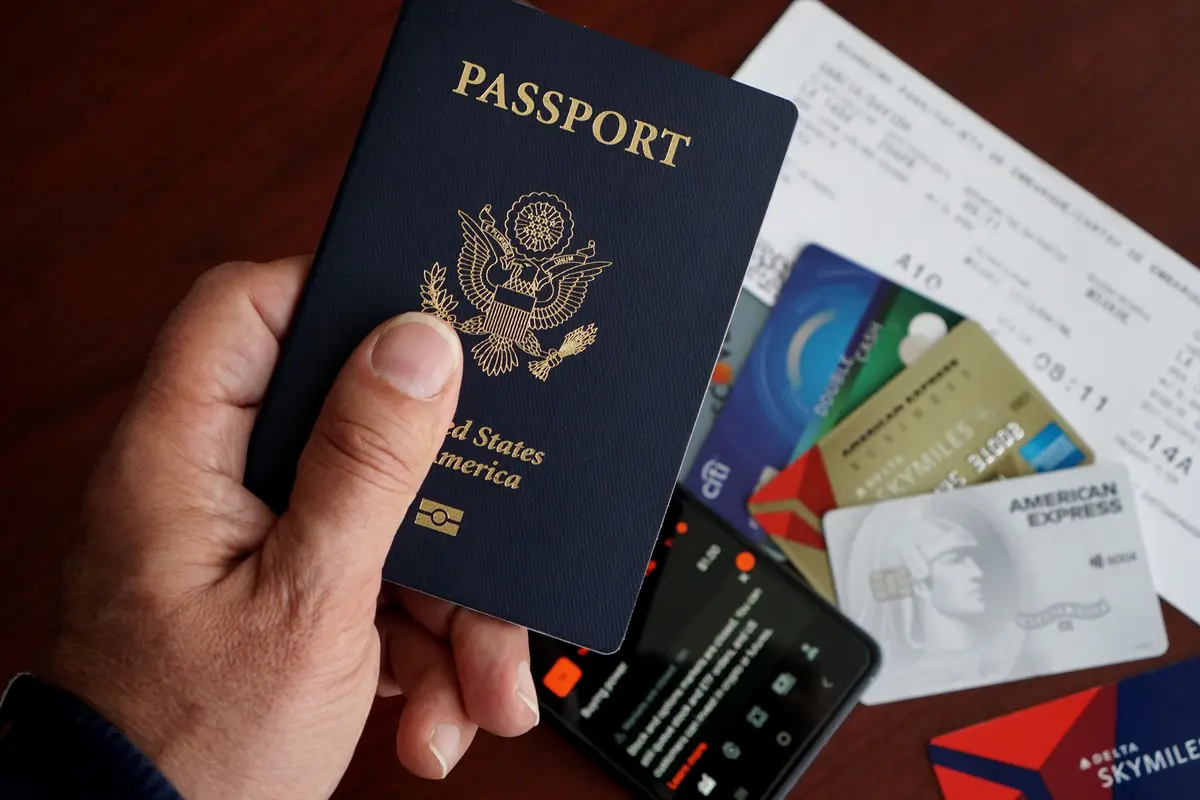
No. The Tarjeta Migratoria de Ingreso fee was eliminated in 2025 and is no longer collected from arriving US citizens.
For context on why this question keeps coming up: the card was never a visa. It was a paper entry permit sold at the airport for $12, cash only, to travelers from a specific list of countries that included the United States, Canada, and Mexico. It was bought before or at the immigration counter, and it was the single most common source of confusion for first-time visitors, who assumed it meant El Salvador required some kind of visa. It did not, and now the charge is gone entirely.
Two things are still worth knowing.
First, some official and semi-official pages have not been updated. If you land on a government page or an aggregator quoting $12, you are reading stale content, not a rule that quietly came back.
Second, there is a long-standing carve-out that predates all of this: US passports listing El Salvador as the holder’s place of birth were always exempt from the tourist card, and from the proof-of-funds question that sometimes accompanied it.
A small piece of practical advice from someone who has done this recently. I still had two $10 bills folded into my passport out of pure habit when I reached the counter, and I did not need them. Keep a few small US bills accessible anyway, because they cost you nothing to carry and they solve an entire category of problem if an officer at a remote land crossing has not received the memo.

How Long Can Americans Stay? The CA-4 Agreement Explained
The 90-Day Rule and the 90-vs-180-Day Confusion
The standard answer is 90 days. The complication is that US government materials do not fully agree with each other.
State Department country information caps the tourist stay at 90 days. The US Embassy’s own tourist card page, meanwhile, describes the entry permit as valid for “90 days or 180 days depending on passport validity” and purpose of travel. Both are official US sources. Both are current. They say different things.
| Source | Stated maximum stay | Notes |
|---|---|---|
| State Department country information | 90 days | Counted cumulatively across all CA-4 countries |
| US Embassy San Salvador | 90 or 180 days | Says the number depends on passport validity and travel purpose |
| Airline and commercial visa pages | 90 days | Near-universal consensus |
| Your actual entry stamp | Whatever the officer writes | This is the only number that governs your stay |
Treat 90 days as your operating limit. Then, before you leave the immigration counter, look at what the officer wrote on your stamp and photograph it. That handwritten or printed number is what an exit officer will check against, and it is the only figure that carries legal weight for your specific trip. If it says something other than what you expected, ask about it at the counter, not three months later at departures.
What CA-4 Is and How the Clock Works
CA-4 is short for the Central America-4 Border Control Agreement between El Salvador, Guatemala, Honduras, and Nicaragua. The four countries operate something loosely comparable to a mini-Schengen zone: your 90 days are shared across all of them rather than granted separately by each.
This surprises people constantly. Traveling overland from Guatemala to El Salvador to Honduras does not give you a fresh 90 days at each border. It is one clock, and it starts running the moment you enter the first CA-4 country.
| Movement | Does the 90-day clock reset? |
|---|---|
| Flying into El Salvador from the US | Yes, the clock starts here |
| El Salvador to Guatemala, Honduras, or Nicaragua | No, the clock keeps running |
| Exiting to Mexico, Belize, or Costa Rica, then returning | Yes, the clock resets |
| A day trip across a CA-4 border and back | No, nothing resets |
The border-run trick that works elsewhere in Latin America does not work inside CA-4. To reset, you have to leave the zone entirely. Costa Rica and Belize are the usual choices for travelers heading south, Mexico for those heading north.
Worth noting for planning: CA-4 free movement applies to land crossings. Flying between the member countries is a normal international flight with normal formalities, even though your day count still carries over.
Extending Your Stay
If you want more time, you apply for an extension before your permitted days expire, not after. Extensions are handled by the Dirección General de Migración y Extranjería, commonly abbreviated DGME. A one-time extension of up to 30 days is the standard grant, bringing a typical maximum to roughly 120 days.
The DGME operates an online extension service, and the US Embassy directs extension questions to the migration ministry’s dedicated email address. Start the process at least a week or two before your stamp runs out. Walking in on day 89 is how a routine request becomes a problem.
Overstaying: Fines and Penalties
Overstaying in the CA-4 zone is handled less predictably than in the US or Europe, and the consequences are real.
State Department materials report that gaps in how CA-4 rules are implemented have left travelers facing fines exceeding US$100, and in some cases detention for 72 hours or longer. Fine amounts should be treated as reported and approximate rather than as a fixed published schedule, because enforcement varies by border post and by officer.
The more serious consequence is regional. A traveler formally expelled from any one CA-4 country is barred from all four. That turns a paperwork mistake in Honduras into a closed door in El Salvador, Guatemala, and Nicaragua simultaneously.
The takeaway is simple: know your date, photograph your stamp, and file for an extension early if your plans stretch.
Proof of Onward Travel and Funds
You are expected to have an onward or return ticket when you arrive, and immigration can ask you to demonstrate sufficient funds for your stay. Entry can technically be refused if you cannot produce either.
In practice, the airline is far more likely to check your onward ticket than El Salvador’s immigration officers are. Gate agents in the US routinely verify it before boarding. At the counter in San Salvador, the officer glanced at my return flight on my phone screen and moved on without asking about money at all.
A screenshot on your phone has been accepted every time I have used one, but the customs and immigration area is not a reliable place to load a webpage, so save your itinerary offline before you land rather than counting on a signal. If you genuinely have an open-ended trip, a cheap refundable onward ticket or a bus reservation out of the CA-4 zone is the standard workaround.
What Arrival Actually Looks Like at SAL Airport
Monseñor Óscar Arnulfo Romero International Airport, coded SAL, sits about 27 miles southeast of San Salvador near the town of San Luis Talpa. It is small, modern enough, and far easier to navigate than its full name suggests.
The Immigration Line and the Questions You Will Get
Follow the signs marked Extranjeros, meaning foreigners. Do not join the Salvadoreños line unless you hold Salvadoran documents.
Recent traveler reports on major forums describe clearing immigration in under 30 minutes, which matches my experience on a mid-afternoon arrival. The hall is not large, and if two wide-body flights land together it backs up, but this is not a two-hour ordeal airport.
The officer will typically ask three things: the purpose of your visit, how long you plan to stay, and where you are staying. Answer in specifics. “Tourism, ten days, a hotel in Santa Tecla” ends the conversation faster than “vacation, a couple weeks, not sure yet.” Have the name of your first night’s accommodation ready, and have it written down somewhere you can read without internet access.
The Stamp and What Is Written on It
You will get an ink entry stamp in your passport. The number of days you have been granted is recorded on or beside it, sometimes handwritten. This is the number that matters more than anything you have read online, including this article.
Photograph the stamp before you leave the arrivals area. If the days granted look different from what you expected, that is the moment to ask, while the officer who wrote it is still standing in front of you.
Customs and Getting into the City
After immigration you collect your bags and pass through customs, which uses the standard green channel and red channel system. Green if you have nothing to declare, which covers almost every tourist. Bags occasionally go through a scanner.
Two practical notes. The customs and baggage area is effectively a cell-signal dead zone, so install and activate an eSIM before you land rather than assuming you will connect on arrival. And use only official taxis from the marked stand or a transfer you arranged in advance. The drive into San Salvador takes roughly 45 minutes on a good highway, and prices from the airport are broadly standardized, but this is not the place to negotiate with someone who approaches you in the terminal.
Entering by Land Border or Cruise Ship
Land Crossings from Guatemala and Honduras
The main overland entry points are El Poy and El Amatillo from Honduras, and Las Chinamas from Guatemala. Passport rules are identical to arriving by air, and there is still no visa and no entry fee.
What differs is the day counting. Land borders inside the CA-4 zone are where the shared-clock rule creates the most friction, because record-keeping between the four countries is inconsistent. Officers sometimes issue a fresh-looking stamp that does not reflect the days you already burned in a neighboring country, which feels like a win at the time and becomes a problem at your final exit. Keep every stamp legible and know your own cumulative count, because you may be the only party tracking it accurately.
Carry small US bills at land crossings. There are legitimate municipal charges at some posts, and occasionally informal ones, and neither is a situation you want to resolve with a $50 note or a credit card.
Cruise Passengers at Acajutla
Cruise ships call at the port of Acajutla on the Pacific coast. The passport requirement is the same, immigration is handled portside, and day visitors on organized shore excursions typically clear quickly. If you are leaving the ship independently, bring your passport rather than only a ship ID card, and confirm your all-aboard time against local traffic conditions, since the drive to Santa Ana or the Ruta de las Flores eats more of the day than the mileage suggests.
Special Situations
Minors Traveling Alone or with One Parent
For US-citizen minors visiting as tourists, a notarized consent letter from any non-accompanying parent is strongly recommended. It is cheap insurance, and airlines ask for it more often than immigration does.
There is an important nuance that trips people up. El Salvador’s formal exit-permit and parental-consent requirements apply chiefly to Salvadoran citizens and dual nationals rather than to short-term US visitors. However, per State Department guidance, a US-citizen minor who has been in El Salvador for more than 180 days is treated as a resident for these purposes and does require written travel consent from a non-accompanying parent to depart. Families relocating or doing extended stays should plan for this rather than discovering it at the airport.
Dual US-Salvadoran Nationals
Dual nationals may enter using either document. Presenting the Documento Único de Identidad, the Salvadoran national ID commonly called the DUI, at primary inspection is normal and accepted.
Dual nationals and US passport holders whose passports list El Salvador as place of birth also fall under the long-standing exemption from the tourist card and the proof-of-funds question. Note that Salvadoran law may treat you as a Salvadoran citizen while you are in the country regardless of which passport you present, which can affect consular assistance in the rare event you need it.
Travelers with Criminal Records or Prior Overstays
A prior immigration violation anywhere in the CA-4 zone can follow you across all four borders and result in denial of entry. Serious criminal convictions can also affect admissibility. There is no publicly published waiver process for tourists, so travelers in this situation should contact the Salvadoran embassy or consulate directly rather than testing it at the counter.
Layovers and Transit
If you are connecting through SAL and staying airside, you need no visa and no entry stamp. If you leave the airport during a long layover, that is a normal entry: you clear immigration, you get stamped, and your CA-4 clock starts. For a six-hour connection it is usually not worth it. For an overnight, it is straightforward.
Health and Vaccination Requirements
No vaccinations are required to enter El Salvador from the United States. All pandemic-era entry requirements, including testing and health declaration forms, have been rescinded.
The single exception is yellow fever. A yellow fever vaccination certificate is required only if you are arriving from, or have recently transited, a country designated as a yellow fever risk area. That affects travelers routing through parts of South America and sub-Saharan Africa, not travelers flying directly from Houston, Miami, Los Angeles, or Dallas.
Routine travel vaccinations such as hepatitis A and typhoid are commonly recommended for Central America but are not entry conditions. Check current CDC Travelers’ Health guidance for El Salvador before your trip, and talk to a travel clinic four to six weeks out if you plan to spend time in rural areas.
Staying Longer: Digital Nomad Visa, Residency, and the Freedom Visa
If 90 days is not enough, El Salvador has built out several longer-stay routes, including one of the more unusual immigration programs in the hemisphere.
| Option | Headline cost | Initial duration | Core requirement |
|---|---|---|---|
| Digital Nomad Visa | Standard government processing fees | 1 year, in some cases 2, renewable to roughly 4 | About $1,460 per month in foreign-source income |
| Freedom Visa | $1 million in BTC or USDT, plus a $999 nonrefundable application fee | Residency track toward citizenship | Capped at 1,000 applicants per year |
| Standard residency | Varies widely, far lower | Temporary, then permanent | Qualifying investment, pension, or passive income |
The Digital Nomad Visa
Launched in April 2025, this visa is aimed at remote workers whose income comes from outside El Salvador. It is issued initially for one year, in some cases two, and is renewable up to roughly four years total.
The minimum income requirement is approximately $1,460 per month, set at four times the country’s $365 monthly minimum wage for the trade and services sector under the migration law. Because the threshold is pegged to the minimum wage, it can move, and applicants with dependents face higher requirements. Verify the current figure on the DGME portal before you commit to anything.
El Salvador does not tax foreign-earned income for holders of this visa. That is a genuine benefit, but American readers should be clear-eyed about what it does and does not mean: the United States taxes citizens on worldwide income regardless of where they live. A Salvadoran tax exemption does not eliminate your US filing obligation. Talk to a cross-border accountant before restructuring your life around it.
The Freedom Visa
Announced in December 2023, El Salvador’s citizenship-by-investment program requires a $1 million contribution in Bitcoin or USDT, is capped at 1,000 approvals per year, and carries a $999 nonrefundable fee to begin the application plus $999 for each additional family member.
It has drawn criticism primarily on price. Cointelegraph pointed out that the program costs roughly ten times comparable options, noting that Caribbean citizenship-by-investment programs start near the $100,000 mark. Whether the tradeoff makes sense depends entirely on how much you value a Bitcoin-denominated route and a Central American passport specifically. For nearly every American reader, it is a curiosity rather than a plan.
Standard Residency Routes
The conventional pathways remain open and cost dramatically less. Investor residency, pensionado residency for retirees with qualifying pension income, and rentista residency for those with documented passive income all exist, and all lead to temporary residency that can convert to permanent status over time. These are the routes most Americans who fall in love with El Salvador actually end up using.

Is El Salvador Safe for US Tourists?
El Salvador holds a Level 1 travel advisory from the US State Department, meaning Exercise Normal Precautions. That is the same rating assigned to countries like Japan and Portugal, and it represents an upgrade from the Level 2 rating the country carried previously. The Secretary of State framed the change around the observation that gang activity, violent crime, and homicides in the country “have decreased significantly.”
The numbers behind that are striking. El Salvador closed 2025 with 82 homicides nationwide, a rate of roughly 1.3 per 100,000 residents, down from 53.1 per 100,000 in 2018 according to national police data. Congressional Research Service reporting describes a decline of more than 98% in the homicide rate between 2015 and 2024.
Fair context matters here. Those gains have come under an extended state of exception that suspends certain constitutional protections, a policy that remains politically contested and has drawn sustained criticism from human rights organizations. Other governments have also been slower to relax their guidance than the United States has; Canadian and Australian advisories remain more cautious. And ordinary tourist-facing problems have not disappeared: ATM skimming, inflated unofficial taxi fares, and petty theft on beaches are the practical risks most visitors will encounter.
Normal precautions in El Salvador look like normal precautions anywhere: do not flash expensive electronics, do not walk unfamiliar areas after dark, use official transport, and keep your phone out of your back pocket in crowded markets.
Money and Connectivity Notes for Americans
The US dollar is El Salvador’s official currency. There is no exchange rate to calculate, no local cash to acquire, and no conversion fee. It is one of the genuinely frictionless things about traveling here as an American.
Bring small bills. Fifties and hundreds are difficult to break outside hotels and large supermarkets, and a taxi driver or pupusería will not have change for a $50. Arrive with a stack of ones, fives, and tens and you will avoid a recurring daily annoyance. ATMs are widely available in San Salvador, Santa Ana, and coastal towns, and typically charge $2 to $4 per international withdrawal on top of whatever your home bank adds.
Bitcoin is legal tender in El Salvador, which generates far more headlines than actual transactions. In practice, acceptance is limited and inconsistent outside of El Zonte and a handful of tourist-facing businesses. Treat the ability to pay in Bitcoin as a novelty, not a payment strategy, and carry dollars.
For connectivity, an eSIM purchased before departure is the simplest option and activates the moment you have signal after landing. Local SIM cards from Claro or Tigo are cheap if you prefer, but require a shop visit and your passport.
Before You Fly: A Quick Checklist
- Passport with at least six months of validity remaining beyond your return date
- At least one blank passport page
- Onward or return flight confirmation saved offline on your phone
- Name and address of your first night’s accommodation, written down
- eSIM installed and ready to activate
- Small US bills for taxis, tips, and any land-border charges
- Notarized parental consent letter if a minor is traveling without both parents
- Travel insurance documentation, which is not required but is worth having
At immigration, keep it simple: join the Extranjeros line, be ready with purpose, duration, and address, and photograph your stamp before you leave the hall.
Where This Information Comes From
Entry rules change, and this topic in particular has been misreported widely since the 2025 tourist card reform. Everything above is drawn from primary sources rather than aggregator pages, and each of the following is worth checking directly before you travel:
- US State Department country information page for El Salvador, for advisory level and stay limits
- US Embassy in San Salvador, Travel Requirements section, for passport and entry-card guidance
- Dirección General de Migración y Extranjería at migracion.gob.sv, for extensions and long-stay visas
- Ministerio de Relaciones Exteriores at rree.gob.sv, for consular and visa category information
- CDC Travelers’ Health, for vaccination guidance
- IATA Travel Centre, for the documentation rules your airline will actually enforce
Where official sources contradict each other, as they currently do on stay length and passport validity, this article says so rather than picking the convenient answer. Immigration rules can change without notice, and no article is a substitute for confirming your specific situation with El Salvador’s immigration authority or the nearest Salvadoran consulate before you book.