Roughly 14 US cities offer nonstop service to San Salvador’s Monseñor Óscar Arnulfo Romero International Airport (airport code SAL, still called Comalapa by locals). Flight times run from about 2 hours 40 minutes out of Miami to about 5 hours 20 minutes from San Francisco. Avianca dominates the route network with roughly 256 flights per week according to KAYAK route data, followed by United at about 91. Fares bottom out in the September–October low season, US citizens do not need a visa for stays of 90 days or less, and the US State Department currently rates El Salvador Level 1: Exercise Normal Precautions, its safest possible designation.
I fly this route two or three times a year, usually the early Avianca departure out of Houston, and the single most useful thing I can tell you up front is that the flight itself is the easy part. What trips people up is everything on either side of it: which gateway to book from, what the tourist card situation actually is right now, and how to get from the terminal to the beach without overpaying by triple.
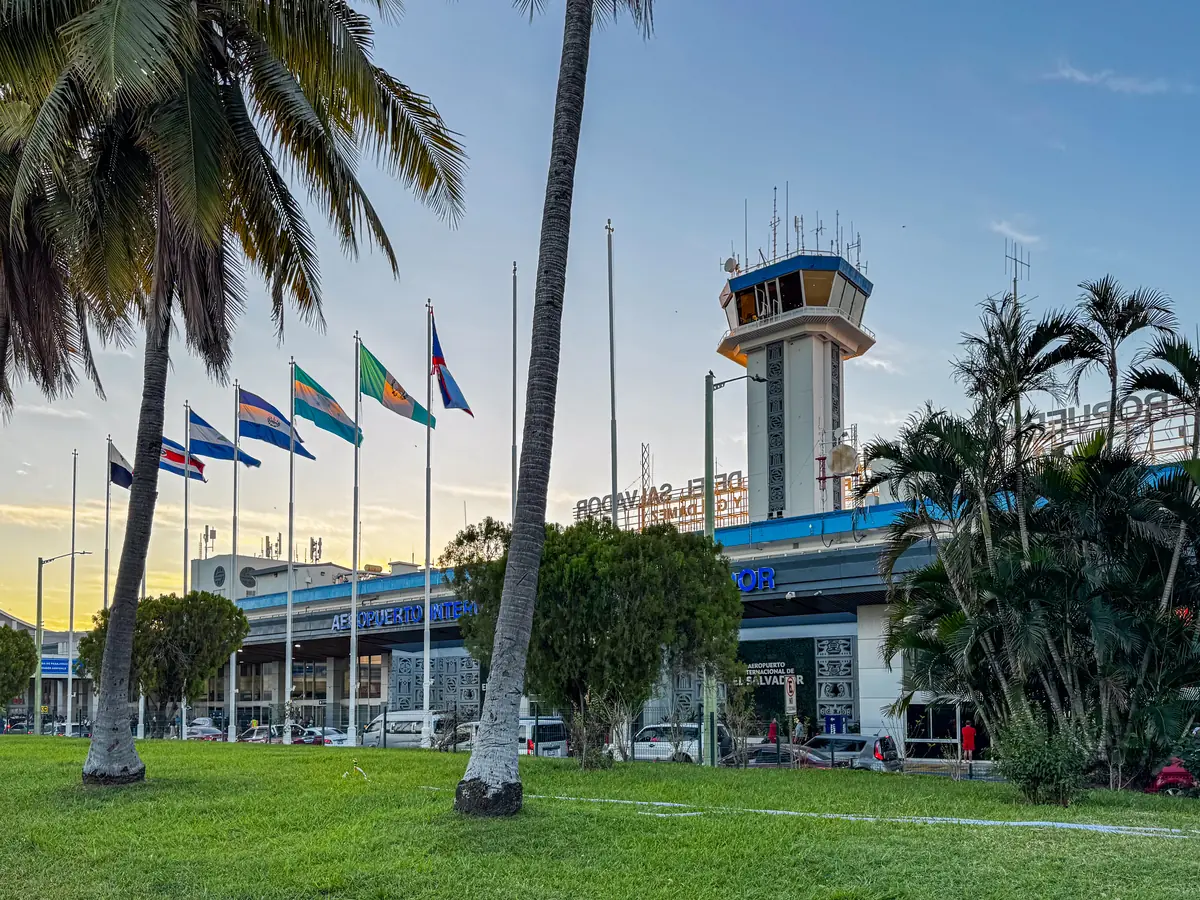
Which US Cities Have Nonstop Flights to San Salvador (SAL)?
SAL is one of the best-connected airports in Central America relative to its size, largely because Avianca runs it as a hub. That means you can usually find a nonstop from a major US metro without connecting through Panama City or Mexico City.
| US city | Airport | Typical operating airlines | Nonstop time | Frequency |
|---|---|---|---|---|
| Miami | MIA | Avianca, American | ~2h 40m | Multiple daily; highest frequency on the network |
| Orlando | MCO | Avianca, Spirit | ~3h 15m | Several times weekly |
| Houston | IAH | United, Avianca | ~3h 00m | Up to 2–3 daily |
| Dallas–Fort Worth | DFW | American, Avianca | ~3h 30m | 1–2 daily |
| Atlanta | ATL | Delta, Avianca | ~3h 30m | 1–2 daily |
| Washington, DC | IAD | United, Avianca | ~4h 25m | Up to 2 daily |
| Chicago | ORD | United, Avianca | ~4h 45m | Several times weekly |
| New York | JFK | Avianca | ~5h 00m | Roughly daily |
| Los Angeles | LAX | Avianca, Volaris El Salvador, Spirit | ~5h 00m | 1–2 daily |
| San Francisco | SFO | Avianca | ~5h 20m | Several times weekly |
Fort Lauderdale, Newark, and a handful of secondary cities pick up seasonal or low-cost service as well, so it is worth running a flexible search from your home airport before you assume you have to connect. Route maps on this network change more often than they do on major transatlantic routes, so confirm the operating carrier at the time you book.
The two busiest routes and why they matter
Washington Dulles and Houston carry the heaviest traffic between the US and San Salvador, and both are United hubs where Avianca also operates. That double coverage does two useful things for you. Schedules are deeper, so a delayed morning flight does not automatically cost you the whole day. And award space is more consistent, because two Star Alliance carriers are releasing seats into the same market.
If you live in a city without a nonstop, connecting through Houston is usually the smoothest option. The international concourse is compact, the SAL departures cluster in the same area, and you are far less likely to spend an unplanned night somewhere than you are routing through Miami during summer thunderstorm season.
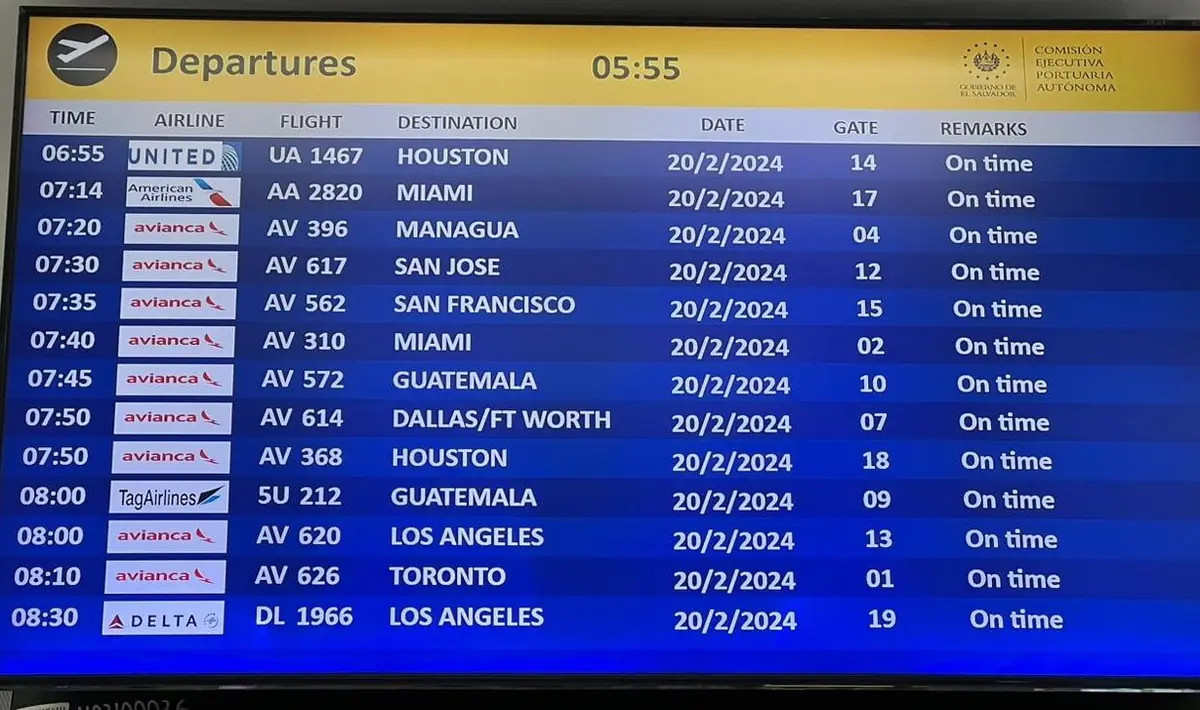
Which Airlines Fly from the USA to El Salvador?
Avianca is the anchor. It operates SAL as its Central American hub, it is a Star Alliance affiliate, and per KAYAK’s route data it runs roughly 256 flights per week on this network, far ahead of United at about 91. In practice that means Avianca sets the price floor and the schedule shape for the whole market.
The rest of the field:
United connects through Houston, Washington Dulles, and Chicago, and it is the most useful carrier if you hold MileagePlus status or credit card benefits you want to actually use.
American serves Miami and Dallas–Fort Worth, with reliable schedules and the widest same-day rebooking options if something goes wrong.
Delta flies from Atlanta, which is the practical choice for most of the Southeast.
Spirit and Frontier run ultra-low-cost service from a few gateways. The headline fares are genuinely cheap. The total cost is a different number.
Volaris El Salvador is a low-cost carrier based in San Salvador with West Coast service. It competes hard on price out of Los Angeles.
Copa Airlines offers a one-stop routing through Panama City. It is rarely faster, but it can be cheaper, and its schedule pattern opens up cities that have no nonstop at all.
Full-service versus ultra-low-cost: an honest comparison
I have flown this route on both, and the math is more lopsided than the search results suggest. A $118 one-way on an ultra-low-cost carrier typically excludes a carry-on bag, a checked bag, and a seat assignment. Add a checked bag each way, a carry-on, and a seat you can actually sit in without your knees in the tray table, and you are frequently at or above what Avianca or United charge for a fare that includes those things and puts you on a schedule with a backup flight the same day.
There is one case where the ultra-low-cost carriers clearly win: you are traveling light, you are flexible on dates, and you are booking a short trip where an overnight delay is annoying rather than expensive. For a diaspora traveler carrying gifts home or a surfer with a board bag, the full-service carriers are almost always the better total-cost decision. Board fees in particular vary wildly between airlines, and Avianca’s published sporting-equipment policy has historically been friendlier than the ultra-low-cost alternatives.
Hubs, alliances, and codeshares
Avianca and United both belong to Star Alliance, which is why their schedules complement rather than duplicate each other on the Houston and Dulles routes. It also means status benefits, lounge access, and mileage earning generally carry across. If you hold United status, you keep priority boarding and free checked bags on many Avianca-operated flights, though the exact benefits depend on the fare you buy. Check the fare rules before you assume, because Avianca’s cheapest fare families strip benefits aggressively.
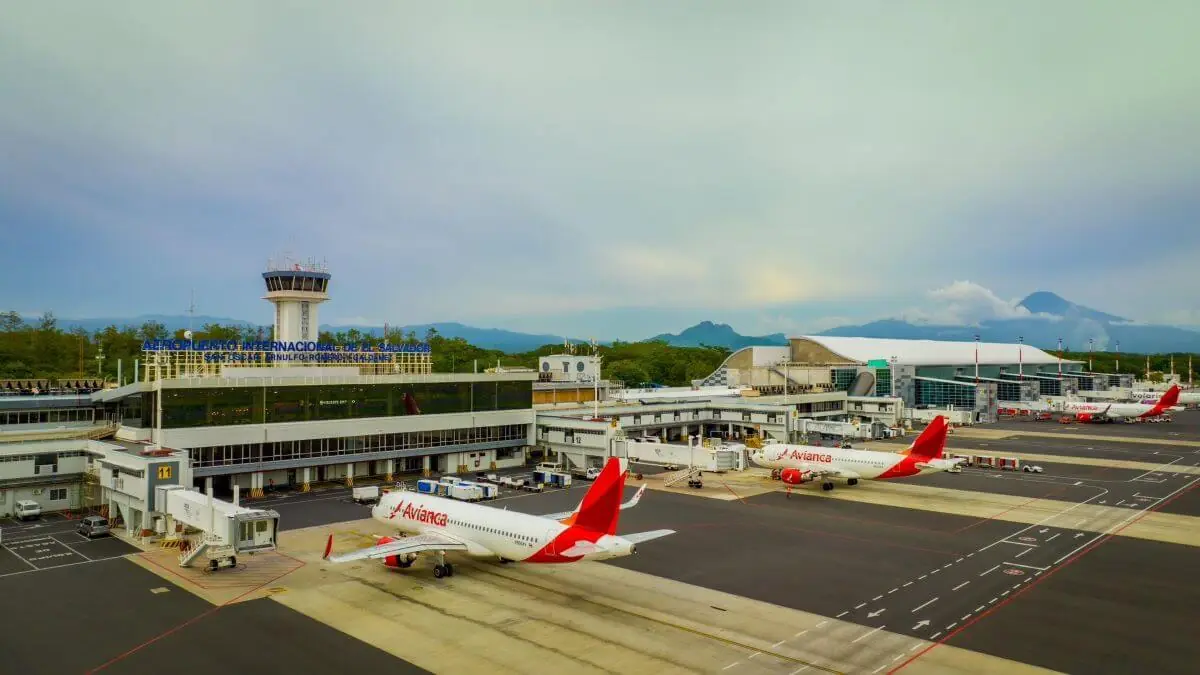
How Long Is the Flight to El Salvador?
Nonstop block times from the main US gateways:
| Departure city | Nonstop flight time |
|---|---|
| Miami (MIA) | ~2h 40m |
| Houston (IAH) | ~3h 00m |
| Orlando (MCO) | ~3h 15m |
| Dallas–Fort Worth (DFW) | ~3h 30m |
| Atlanta (ATL) | ~3h 30m |
| Washington Dulles (IAD) | ~4h 25m |
| Chicago (ORD) | ~4h 45m |
| New York (JFK) | ~5h 00m |
| Los Angeles (LAX) | ~5h 00m |
| San Francisco (SFO) | ~5h 20m |
One caution about the numbers you will see elsewhere. Several booking sites publish an “average flight time” that blends nonstop and connecting itineraries into a single figure, which is how you end up seeing Miami to San Salvador listed at four and a half hours. That is not a nonstop time. If a duration looks inflated compared to the table above, check whether the itinerary actually has a stop in it.
El Salvador sits in Central Standard Time and does not observe daylight saving, so from March through early November it is one hour behind Chicago and two hours behind New York. That small detail matters more than you would expect when you are judging whether a 6:00 a.m. departure is survivable.
Cheapest Months, Typical Fares, and When to Book
Booking sites disagree on the single cheapest month. KAYAK, Skyscanner, and Going point to September; Momondo and Expedia point to October. The honest answer is that both are right in the sense that matters: the September through October stretch, which is the tail of the rainy season, is consistently the cheapest window of the year. December and June are the peaks.
Be skeptical of the headline fares in search results. The sub-$120 one-way numbers you see are deal-floor prices found in a narrow window, usually on ultra-low-cost carriers, usually from Miami or Los Angeles, and usually on dates nobody wants. A realistic planning number for a round trip is roughly $450 to $650 depending on your origin city and season, with East Coast and Texas gateways at the low end and West Coast at the high end. I paid $412 round trip out of Houston for a mid-September trip booked about five weeks out, which is a fairly typical low-season result rather than a lucky one.
| Month | Relative fare level | Crowds | Weather |
|---|---|---|---|
| January | Moderate to high | Busy | Dry, sunny, comfortable |
| February | Moderate | Busy | Dry; whale watching season |
| March | High around Semana Santa | Very busy late in month | Dry and hot |
| April | High in the first half | Very busy for Semana Santa | Hot, first rains late month |
| May | Moderate | Quiet | Rainy season begins; surf improves |
| June | High | Moderate | Rainy; strong Pacific swells |
| July | Moderate | Moderate | Brief midsummer dry spell |
| August | Moderate | Busy in early August | Rainy; Fiestas Agostinas |
| September | Lowest | Quietest | Wettest month; best surf consistency |
| October | Lowest to low | Quiet | Rainy, tapering late month |
| November | Moderate | Moderate | Dry season starts; excellent conditions |
| December | Highest | Very busy | Dry, clear, peak holiday demand |
On booking timing, about four weeks ahead is the sweet spot for ordinary travel dates on this route. For Semana Santa, Christmas, and New Year, that advice does not apply. Diaspora demand on those dates is enormous, fares climb steadily rather than dipping, and you want to book two to three months out. If you are chasing a specific holiday week, buy when you see a fare you can live with.
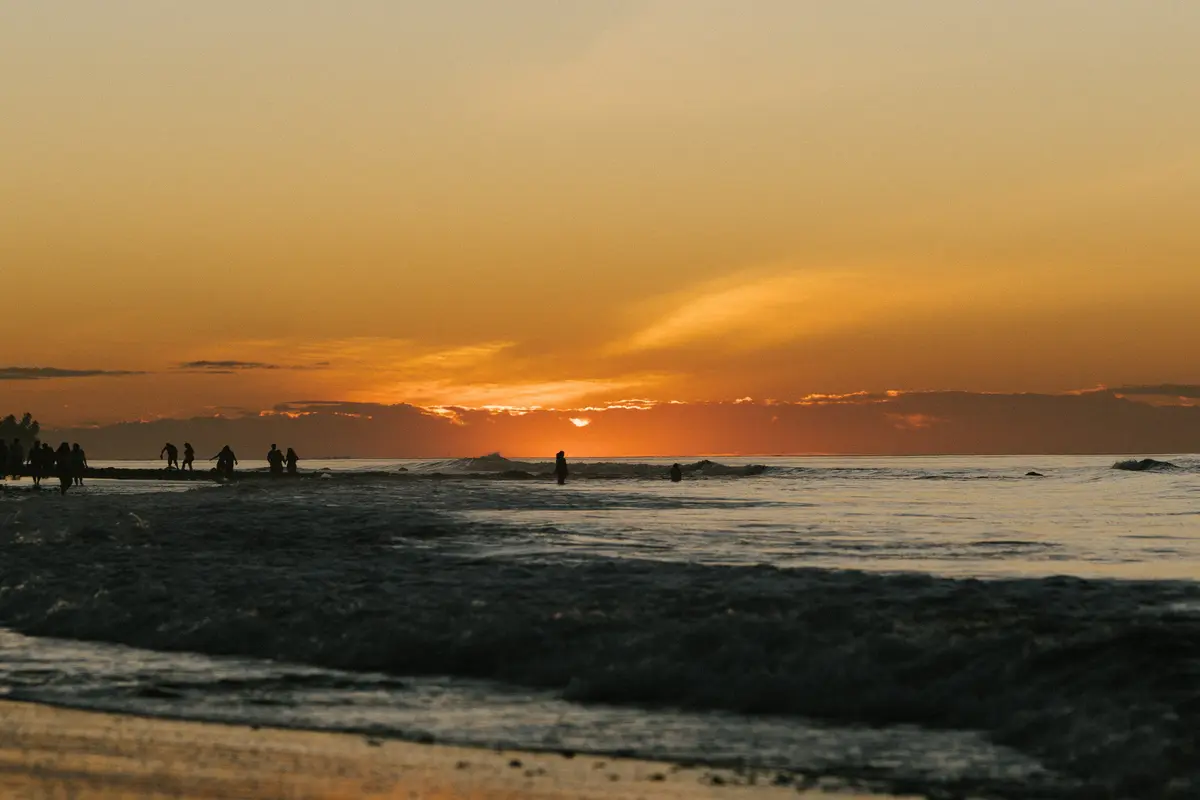
Peak Versus Low Season: Weather and Events That Move Prices
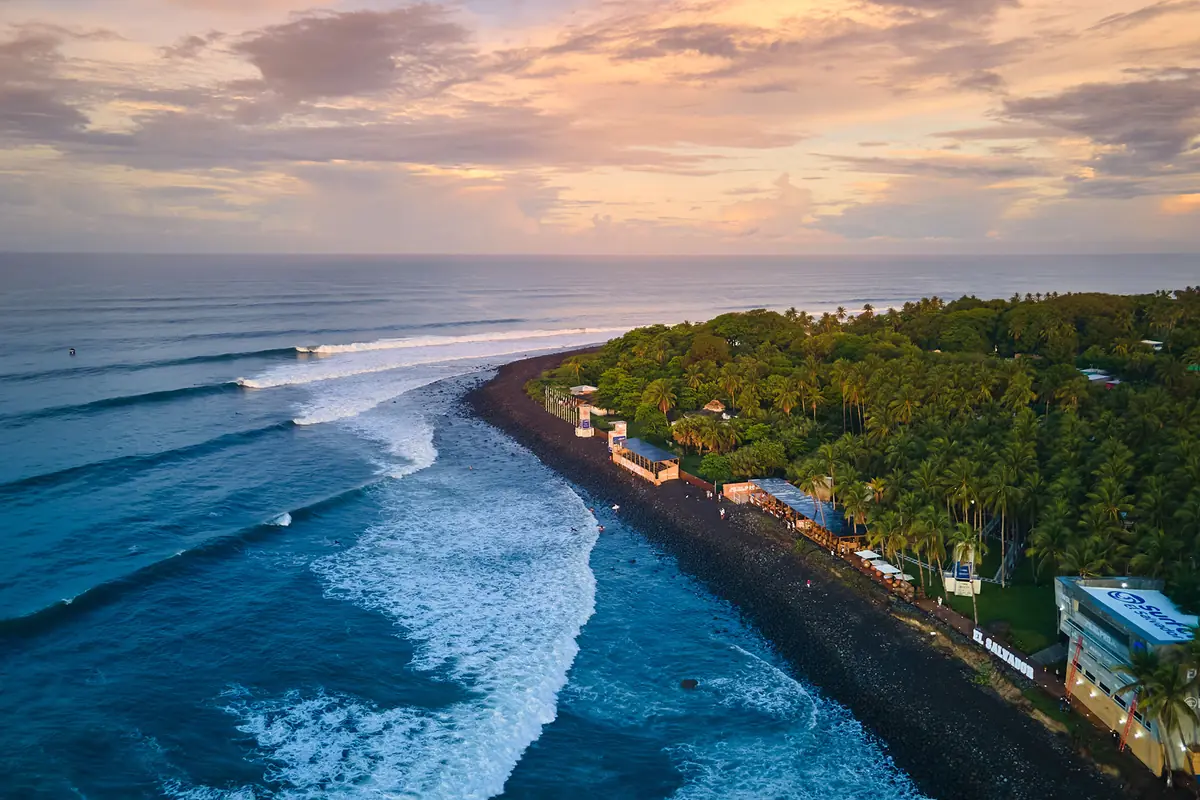
The dry season runs November through April. It is the classic high season, with sunny days, minimal rain, and the highest prices of the year. The rainy season runs May through October, and it is worth reframing what “rainy” means here. Most days deliver a heavy afternoon downpour lasting an hour or two, not all-day gray. Mornings are frequently clear. The countryside is green instead of brown, and the Pacific groundswells that make El Salvador a world-class surf destination are at their most consistent.
Events that will move your fare:
Semana Santa, the week before Easter in late March or April, is the biggest domestic travel event of the year. Beach towns book out two to three months ahead and coastal prices spike.
Fiestas Agostinas, August 1 through 6, is San Salvador’s patron saint festival. The capital slows to a crawl, many businesses close, and Salvadorans head for the coast. Great for atmosphere, difficult for last-minute logistics.
Christmas and New Year bring the heaviest diaspora traffic of the year on flights from the US. Book early or accept the price.
Whale watching runs roughly February through March off the Pacific coast, and sea turtle nesting spans May through September, both of which pull a smaller but real wave of visitors.
Entry Requirements for US Citizens
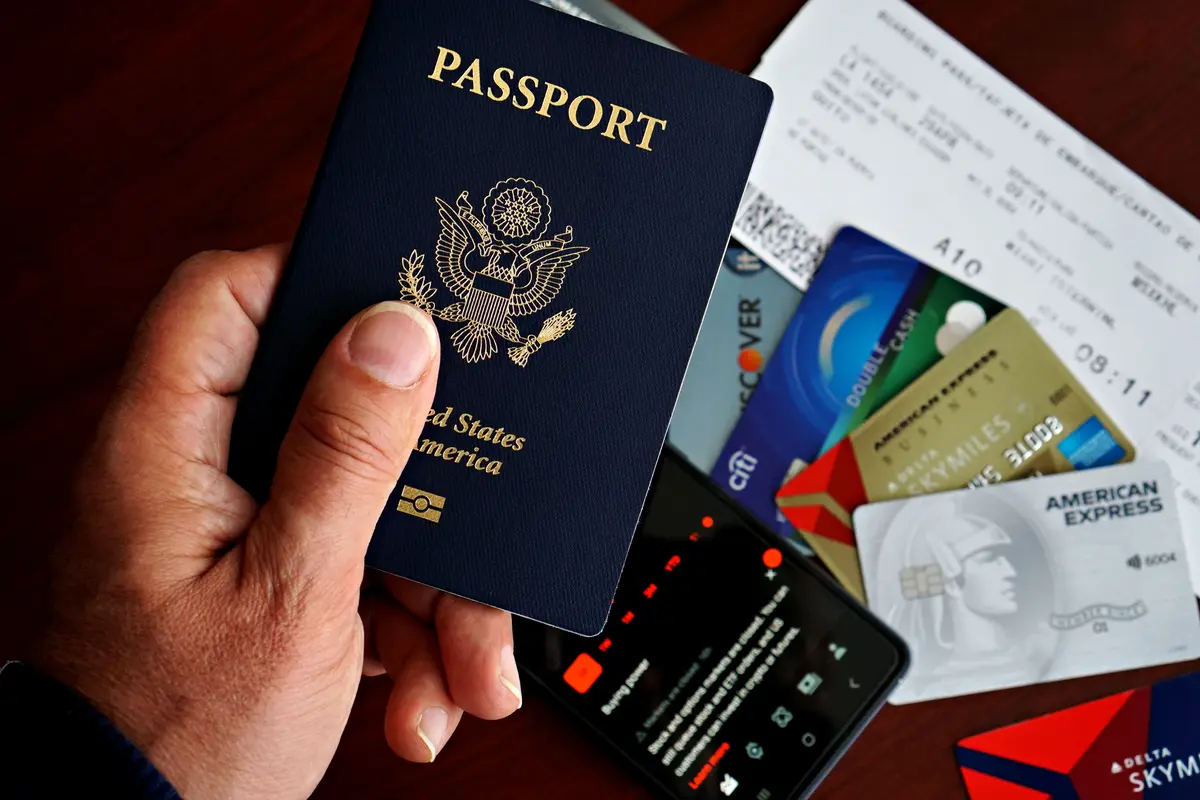
US citizens do not need a visa. The State Department is explicit: no visa is required for stays of 90 days or less, for tourism or business.
The tourist card is where current information conflicts, and you should know both sides. El Salvador’s Legislative Assembly reformed the country’s migration law to eliminate the $12 Migratory Entry Card fee, which is why many recent travelers report walking straight through with no payment. However, the US Embassy in San Salvador’s travel requirements page still describes a one-entry tourist card obtained on arrival for a $12 fee. My practical advice is simple: carry $12 in small US bills as a contingency in case a front-line officer applies the old rule, and check the Embassy page shortly before you fly. The card was historically waived anyway for travelers whose US passport shows they were born in El Salvador.
A few other rules worth knowing:
El Salvador belongs to the CA-4 Border Control Agreement alongside Guatemala, Honduras, and Nicaragua. Your 90 days is cumulative across all four countries, not 90 days in each. If you are doing a Central America circuit, count carefully.
Immigration may ask for proof of onward or return travel, plus your accommodation address. Have both ready on your phone, or better, printed.
Your passport must be valid at the time of entry. El Salvador does not impose the six-month validity rule some other countries do, though many airlines apply their own standards.
The US dollar is the official currency, so there is no exchange to deal with. Bring small bills. Many taxi drivers and small vendors cannot break a $50, and ATMs are sometimes out of service.
On Bitcoin: El Salvador removed Bitcoin’s legal tender status in early 2025 under its agreement with the IMF. Acceptance today is voluntary and rare outside a few tourist-facing businesses in El Zonte. Plan on cash and cards.
Arriving at SAL Airport: What to Expect
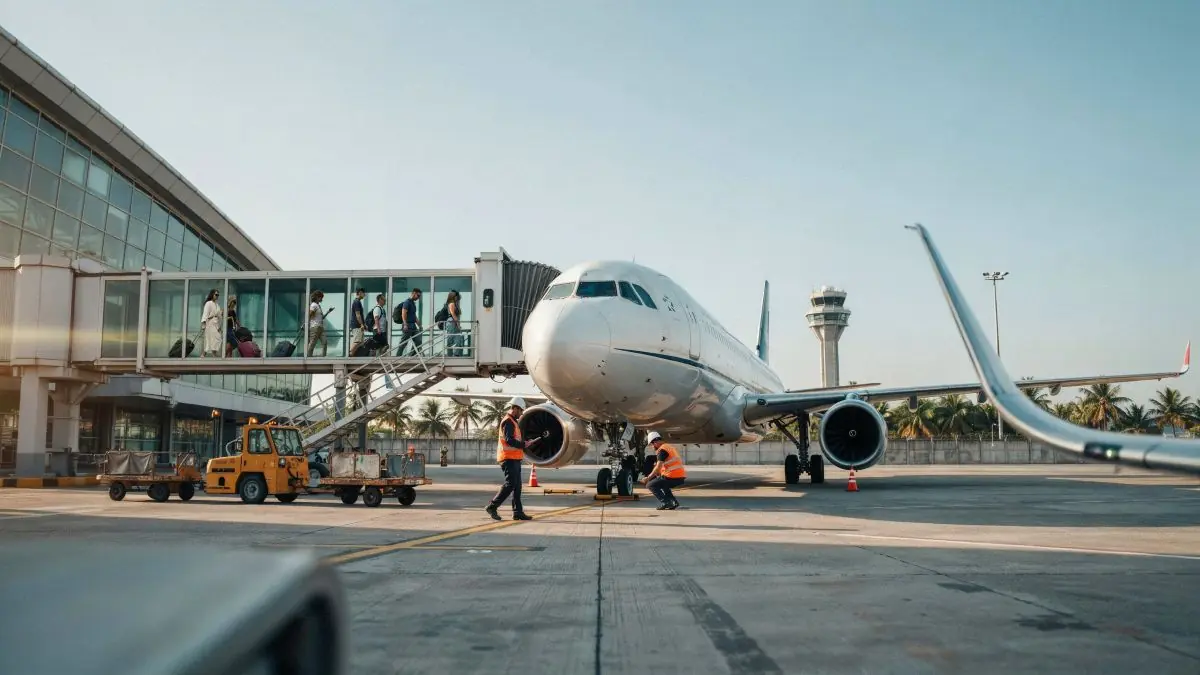
SAL is small, modern, and refreshingly quick compared to most Latin American gateways. Here is how the arrival actually flows.
You deplane, walk down a single main corridor, and reach immigration within five minutes. There are separate lines for Salvadoran nationals and foreigners; look for the Extranjeros signage. An officer takes a photo and fingerprints, asks where you are staying and how long you are staying, and stamps you in. If the tourist card is being charged when you arrive, this is where you pay it, in cash.
Timing depends entirely on the arrival bank. Land alongside three or four other flights in the mid-morning wave and you can wait 40 minutes. Land on an off-peak evening and I have cleared immigration and baggage claim in under 20 minutes. Baggage claim is immediately beyond immigration, customs is usually a bag scan, and then you are in the arrivals hall.
Practical notes from the arrivals hall:
Free airport wifi exists but is slow and often requires a workaround to register. Install an eSIM before you take off. Cell signal inside the immigration hall is poor to nonexistent, so anything you need at the counter should be downloaded, not streamed.
ATMs are available in the arrivals area and dispense US dollars. Withdraw a modest amount for taxis and small purchases, and prefer bank-branded machines.
Lounges include an Avianca lounge near the main gate cluster and Priority Pass options in the terminal. They are functional rather than luxurious. If you have a long connection, the food is decent and the wifi is better than the public network.
Departing, arrive two and a half to three hours before an international flight. Security is straightforward but the checkpoint bottlenecks badly when several long-haul departures bunch up.
Connecting through SAL as Avianca’s hub
Because SAL is Avianca’s Central American hub, it is a common connecting point for onward flights to Guatemala City, San Pedro Sula, Managua, San José, and South America. On a single Avianca ticket, bags transfer through and you stay airside, which makes a 90-minute connection perfectly workable in the compact terminal.
Self-connecting is a different story. If you book two separate tickets, you must clear immigration, collect your bags, re-check them, and pass security again. Budget three hours minimum, and understand that you have no protection if the first flight is late. I would not attempt a self-connection here on the last flight of the day.
Getting from SAL Airport to San Salvador, El Tunco, and Surf City
Here is the geographic fact most people get backwards: SAL is closer to the beaches than it is to the capital. If you are headed to the coast, you do not need to touch San Salvador at all.
| Destination | Distance from SAL | Drive time | Private taxi | Pre-booked transfer | Public bus |
|---|---|---|---|---|---|
| San Salvador (Zona Rosa, Escalón) | ~30 mi | ~45 min | $25–$40 | $15–$25 | Route 138, about $1 |
| La Libertad | ~22 mi | ~30–35 min | $25–$35 | $15–$25 | Limited connections |
| El Tunco / El Zonte (Surf City) | ~25–30 mi | ~40–50 min | $25–$40 | From about $19 shared | Requires a transfer, not recommended with luggage |
| Santa Ana / Ruta de las Flores | ~65 mi | ~1h 45m | $90–$130 | $80–$120 | Multiple transfers |
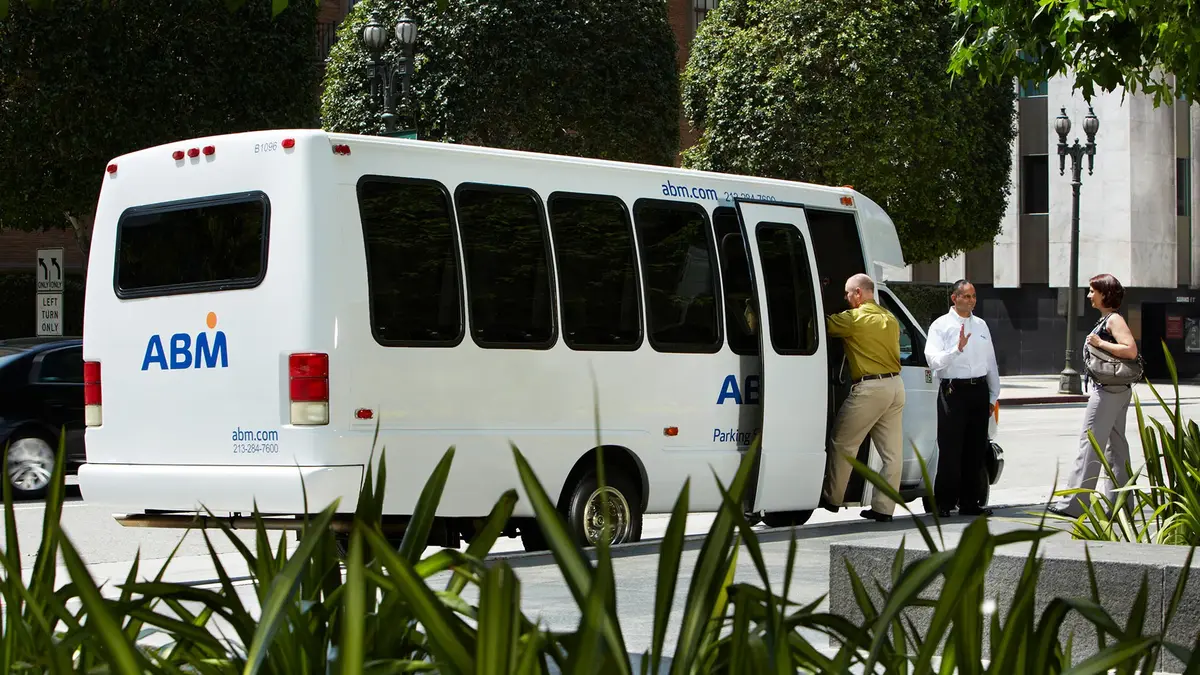
Airport taxis are regulated, sit in an official queue outside arrivals, and quote fixed rates by zone. Confirm the price before you get in. Rideshare apps do operate in El Salvador, and drivers do serve the airport, though pickup logistics vary and the price advantage is smaller than you would expect on the airport run specifically.
Two pieces of advice I give everyone. First, if you land after dark, pre-book. The State Department advises against intercity travel at night and against public buses, and the airport highway is one of the few routes where US government personnel are permitted to travel at all hours precisely because it is the safe corridor. A confirmed driver waiting with your name on a sign removes the entire decision. Second, if you are two or more people heading to the same beach town, a private transfer often costs the same as two shared shuttle seats and gets you there an hour sooner.
Layovers, Connections, and the “Fly Into a Neighbor” Question
If your city has no nonstop, the practical one-stop routings are through Houston or Miami on United and American, or through Panama City on Copa. Panama connections add time but frequently unlock the lowest fares from smaller US cities, and Tocumen is an easy airport to connect in.
You will also see advice to fly into Guatemala City and take a bus across the border. The economics are real: cross-border coach services run roughly $26 to $30 and take about five to six hours, and Guatemala City sometimes prices $150 below San Salvador from the same US origin. Whether it is worth it depends on your trip. For a two-week Central America circuit where the bus ride is part of the plan anyway, it is a smart move. For a five-day beach trip, you are spending most of a travel day each way plus a border crossing to save money you will partly spend on the extra night and transfers. I have done it once and would only do it again with time to spare.
Is El Salvador Safe to Visit? A Current, Responsible Look
Start with the official position. The US State Department rates El Salvador Level 1: Exercise Normal Precautions, the safest of its four categories, and its advisory states that gang activity has decreased dramatically since 2022, causing a drop in violent crime and murders. That places El Salvador in the same category as Japan and above several Western European countries currently rated Level 2.
That rating is real, and it reflects a genuine transformation. It is not the whole picture, and a guide worth trusting should say so.
The State of Exception declared in March 2022 remains in effect. It allows authorities to arrest anyone they believe is involved in gang activity and suspends several constitutional protections, including the right to a speedy trial and access to counsel. Tens of thousands of people are imprisoned under it awaiting trial, and the State Department notes that several US citizens have been detained under it, sometimes without clear grounds. This is unlikely to affect a tourist, but you should understand the legal environment you are entering.
Practical precautions the advisory itself recommends, and that I follow:
Avoid traveling between cities at night. This is as much about road conditions, unlit highways, and landslide risk in the rainy season as it is about crime. The airport corridor and the San Salvador to La Libertad route are the exceptions.
Skip public buses. Use radio-dispatched taxis, hotel-arranged transport, or a rideshare app with a verified plate and driver.
Do not display valuables, and stay alert at ATMs.
Treat the ocean seriously. Pacific currents and undertows are strong, lifeguard coverage is inconsistent, and drowning is a far more realistic risk to a visitor here than crime.
POLITUR, the tourist police, patrol the main tourist zones including Surf City and the Ruta de las Flores, and they are visible and helpful.
Also note that advisories are not unanimous. Some other governments still list higher caution levels than the US does, and Canada’s advisory includes specific guidance for LGBTQ travelers. Read more than one source, and check the advisory again shortly before you fly, because this is exactly the kind of information that changes.
Points and Miles: Flying to SAL on Award Tickets
This is the biggest blind spot in most flight guides for El Salvador, and it is where the real savings live.
Avianca LifeMiles is the most direct path. LifeMiles prices Avianca-operated flights dynamically, which cuts both ways, but the floors on US to SAL routes are genuinely low. Houston to San Salvador has been available for around 8,050 miles one way in economy, and Washington Dulles has priced around 18,500 in economy and roughly 31,700 in business. LifeMiles is a transfer partner of American Express, Citi, Capital One, Bilt, and Marriott, and it runs frequent buy-miles promotions. NerdWallet values LifeMiles at about 1.6 cents apiece, so an 8,050-mile redemption against a $350 fare is a strong outcome.
United MileagePlus works on both United-operated and Avianca-operated flights as a Star Alliance partner. Award pricing is dynamic and generally higher than LifeMiles for Avianca metal, but MileagePlus is easier to accumulate and the booking process is more forgiving.
AAdvantage covers the Miami and Dallas routes with the usual American saver-level availability.
Two cautions. Phantom award space is common on this network, particularly when searching Avianca inventory through partner sites. If a seat shows on one platform and not another, verify before transferring points, since transfers are irreversible. And check the fare family you are actually redeeming into, because the cheapest LifeMiles awards can land you in a fare bucket with no checked bag included.
I booked Houston to San Salvador for 8,050 LifeMiles plus about $30 in taxes on a date where cash was running $370. That is the single best value I have found on this route, and it is available far more often than the competition’s silence on the subject would suggest.
Practical Flying Tips
Baggage
Avianca sells tiered fares, and the cheapest tier includes a personal item only. Carry-on allowance and checked bags step up with each fare family, and buying the bag at booking is meaningfully cheaper than at the airport. For a trip where you are carrying gifts, a family-size suitcase, or a board bag, price the fare with bags included rather than comparing base fares.
Volaris and Frontier are stricter and more expensive on bags than their headline fares suggest, and their personal-item size limits are enforced at the gate. American and United basic economy fares also restrict carry-ons and seat selection on international routes, so read what you are buying.
Red-eye versus daytime departures
Morning departures generally price lowest on this route, and they get you to the coast with the afternoon still in front of you. West Coast travelers have the additional option of a late-night departure that lands early, which maximizes your first day but costs you a night of sleep. Given that check-in for the return also tends to be early, I prefer the morning outbound and treat the arrival day as a real day.
The best seat for the view
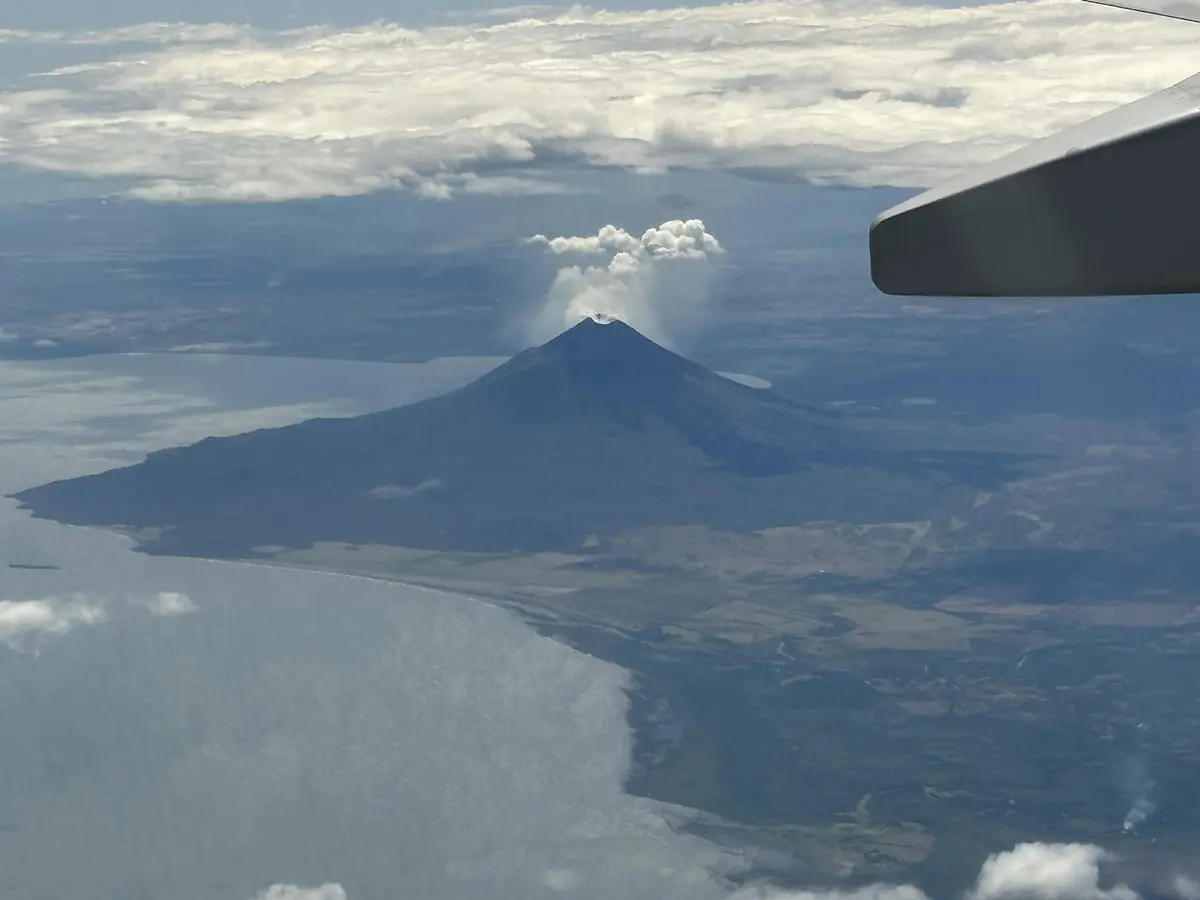
On approach to SAL from the north, the right side of the aircraft usually gives you the volcano country around San Salvador and San Vicente, while the left side looks out toward the Pacific and the coastline near La Libertad. Departures reverse this. If you want the volcano shot, take a right-side window arriving and a left-side window departing, and skip the wing rows.
Best Booking Tools and Strategies for This Route
Google Flights is the best starting point. Use the date grid and the price graph to see the shape of the month rather than a single fare, then set a price alert on your specific route and let it run for a few weeks before you commit.
Skyscanner’s whole-month and everywhere searches are useful if you have a flexible origin, especially for finding the low-cost carrier fares that do not always surface elsewhere.
KAYAK’s price forecast and its route data are helpful for sanity-checking whether the fare you are looking at is normal for that season.
Deal alert services like Going surface genuine sub-$300 round trips on this route a few times a year, mostly for low-season dates.
One habit worth adopting: price the same itinerary directly on Avianca and United after you find it on a search engine. On this route, the airline’s own site sometimes shows a fare family with a checked bag included for only slightly more than the stripped-down fare the aggregator surfaces, and that is often the better buy.
Finally, treat mistake fares with realism. They do get published on Central America routes, and they are frequently honored, but they are also cancelled. Do not book nonrefundable hotels until the ticket has been issued and has settled for a day or two.
Putting It Together
For most US travelers, the decision comes down to three questions. Which nonstop gateway can you reach most easily, since the flight from Miami, Houston, or Dallas is short enough to be a non-event? Can you shift your dates into the September and October window, where fares drop and the surf is at its best? And are you carrying enough miles, particularly transferable points that move to LifeMiles, to turn a $400 ticket into a $30 one?
Answer those, book roughly a month out for ordinary dates, pre-arrange your ride from the terminal, and El Salvador becomes one of the easiest international trips available from the United States. Three hours from Houston, no currency to exchange, no visa to apply for, and a Pacific coastline you can be standing on 45 minutes after you clear immigration.