Chicken buses are retired American school buses, repainted and rebuilt, that carry most Salvadorans from town to town for somewhere between a quarter and about a dollar fifty. They run numbered routes, take US dollars in cash, and stop pretty much anywhere someone waves. They are also the cheapest and most sociable way to get around a country roughly the size of Massachusetts. This guide covers the routes travelers actually use, what each one costs, where to catch it, and an honest read on safety since the country’s security crackdown.
What Is a Chicken Bus, and Why the Name?
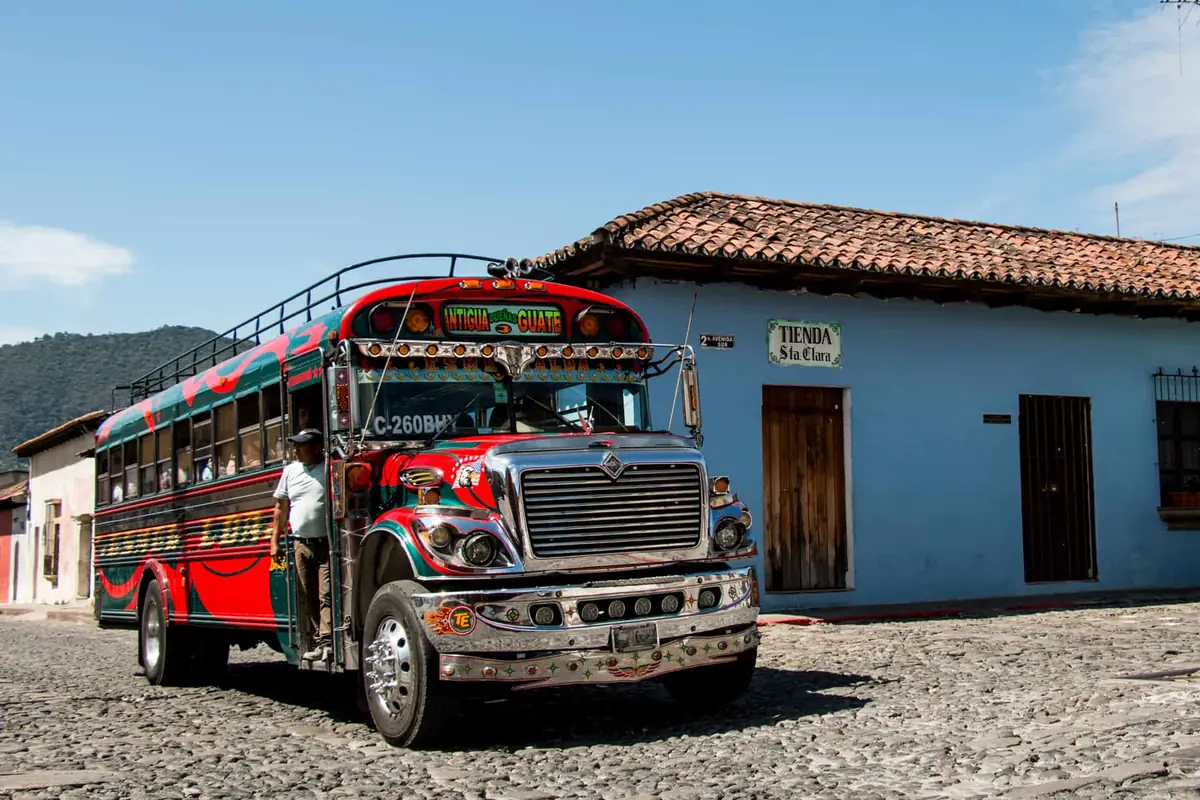
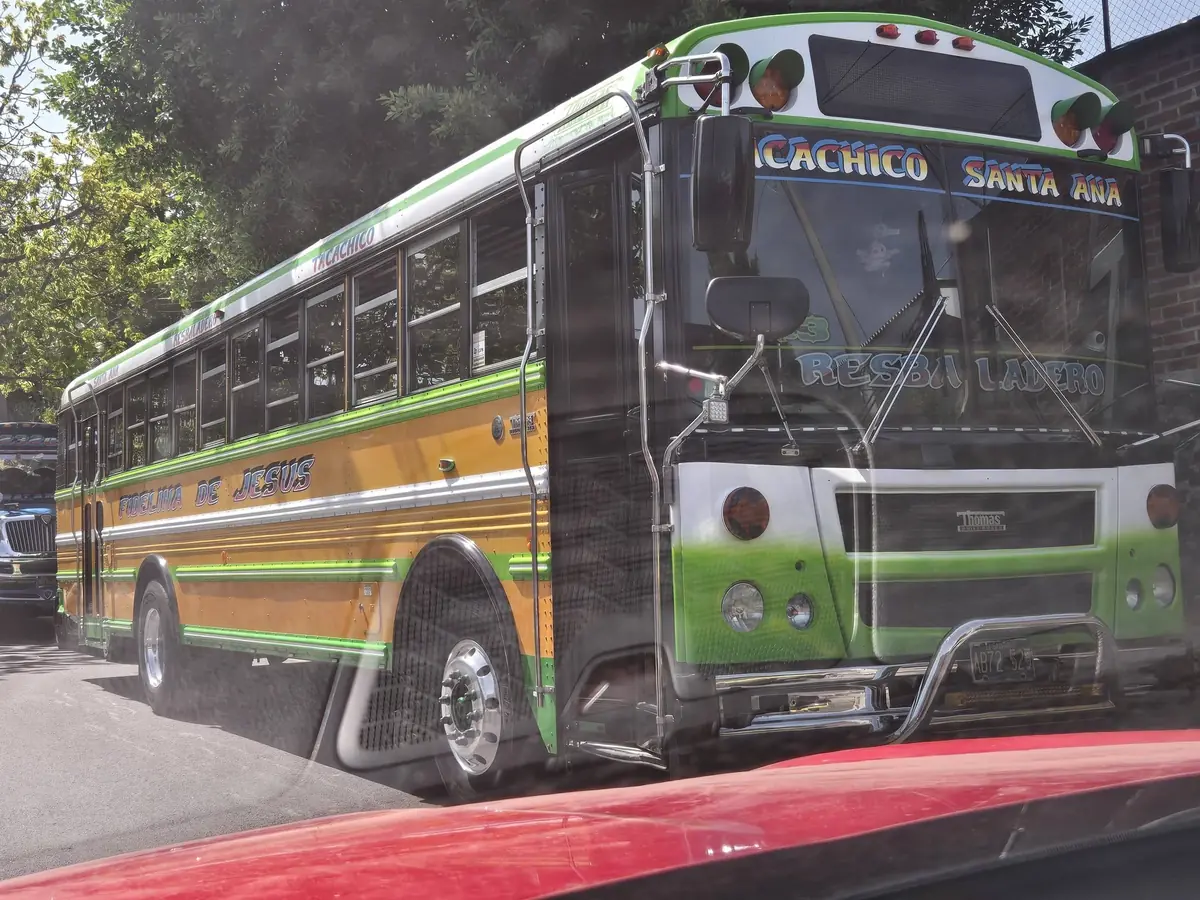
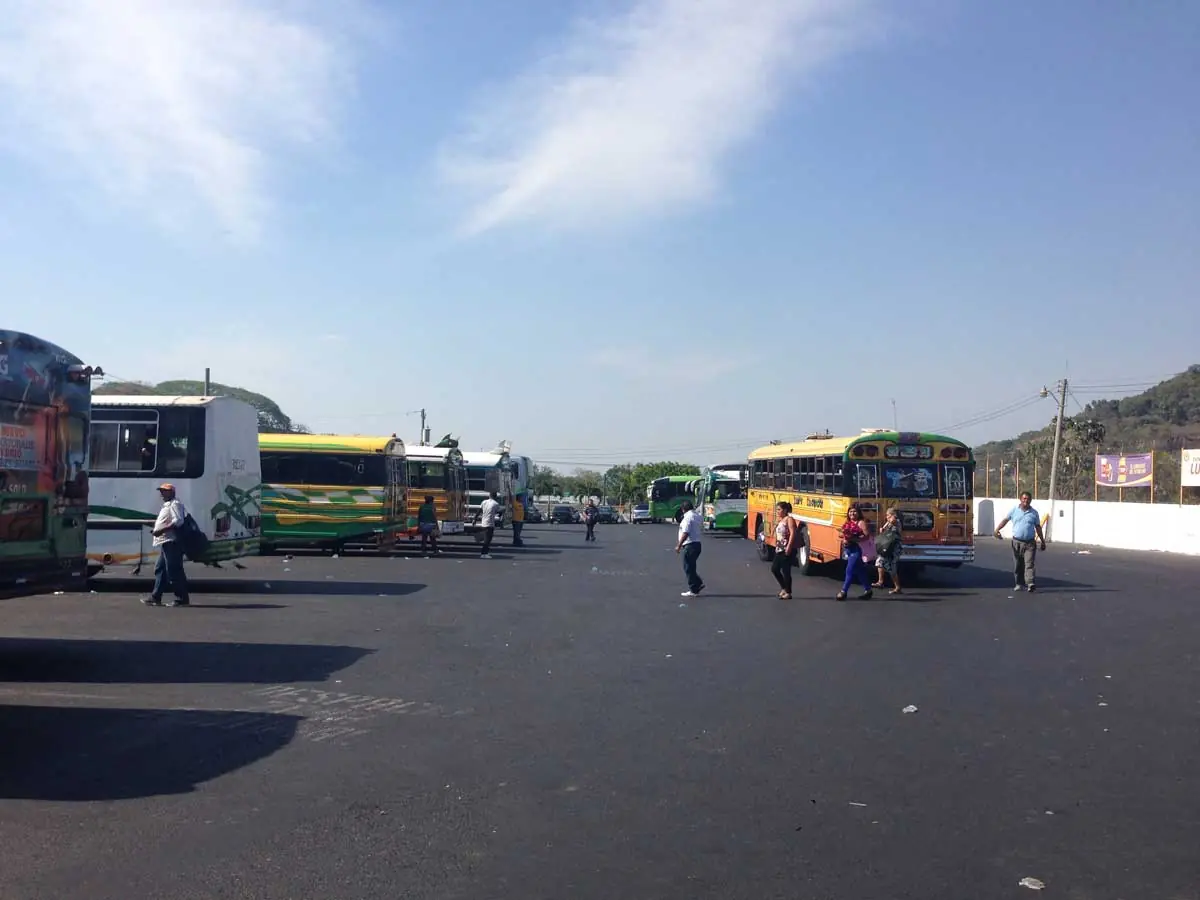
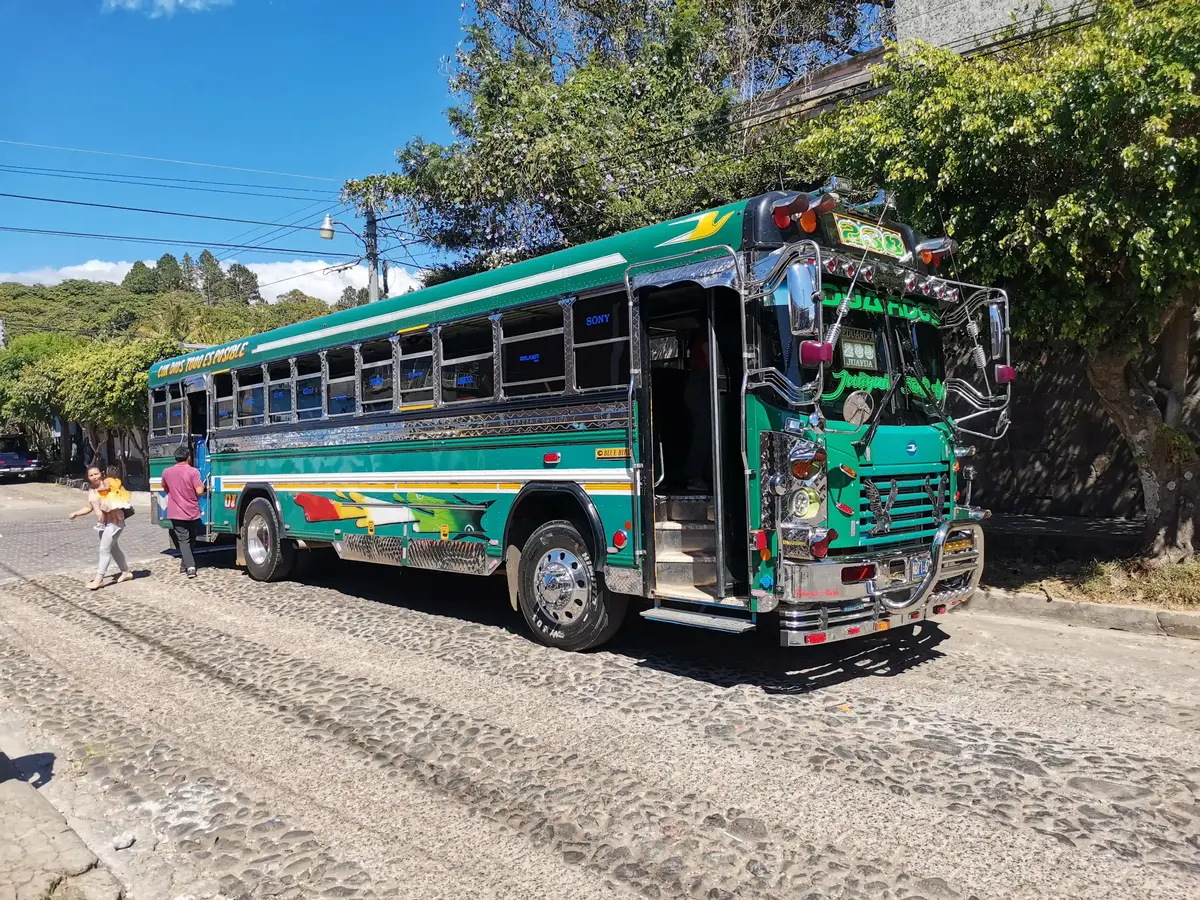
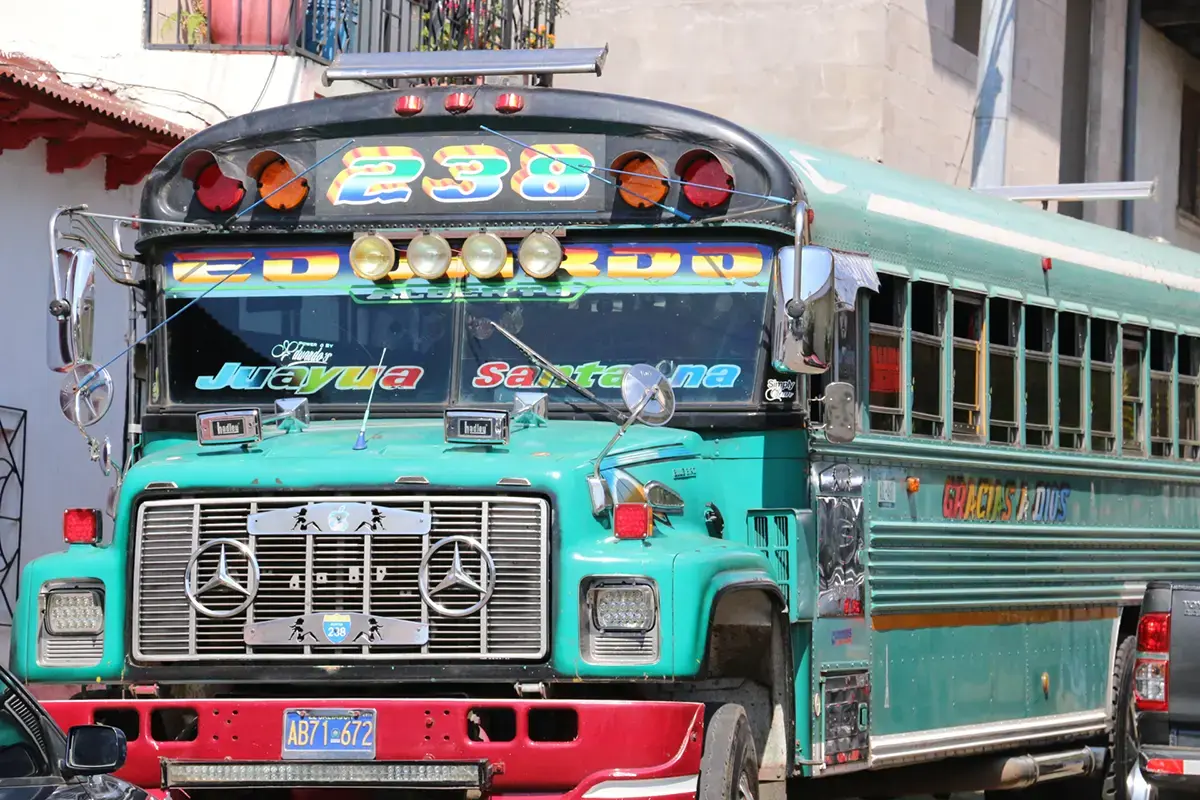
A chicken bus is a decommissioned US school bus, usually a Blue Bird or Thomas, that has been auctioned off at home and driven south to a second life in Central America. American districts typically retire these buses after about ten years or somewhere in the 150,000 to 225,000 mile range. In El Salvador they get new engines, new suspensions, chrome trim, and a paint job that would embarrass a hot rod.
The name has two origin stories, and both are true enough. Rural passengers really did bring live chickens to market on board, sometimes in crates and sometimes under an arm. Riders also joke that at rush hour you are packed in like poultry. Locals rarely say “chicken bus” at all. Ask about the camioneta, or just el bus, and you will be understood immediately.
Decoration is a point of pride for owners. Expect airbrushed flames, cartoon characters, soccer crests, religious slogans, tinted portholes, and an air horn that arrives before the bus does. Some rigs are named. Many carry a sound system that treats reggaeton as a structural component.
The practical detail that matters most to you: in El Salvador, the route number is painted large across the top center of the windshield, with the destinations listed underneath. Dozens of buses can share the same number on a busy corridor, so the number tells you the route, not the vehicle. Letters matter too. Route 102 and route 102A do not end up in the same place.
Are Chicken Buses Safe in El Salvador?
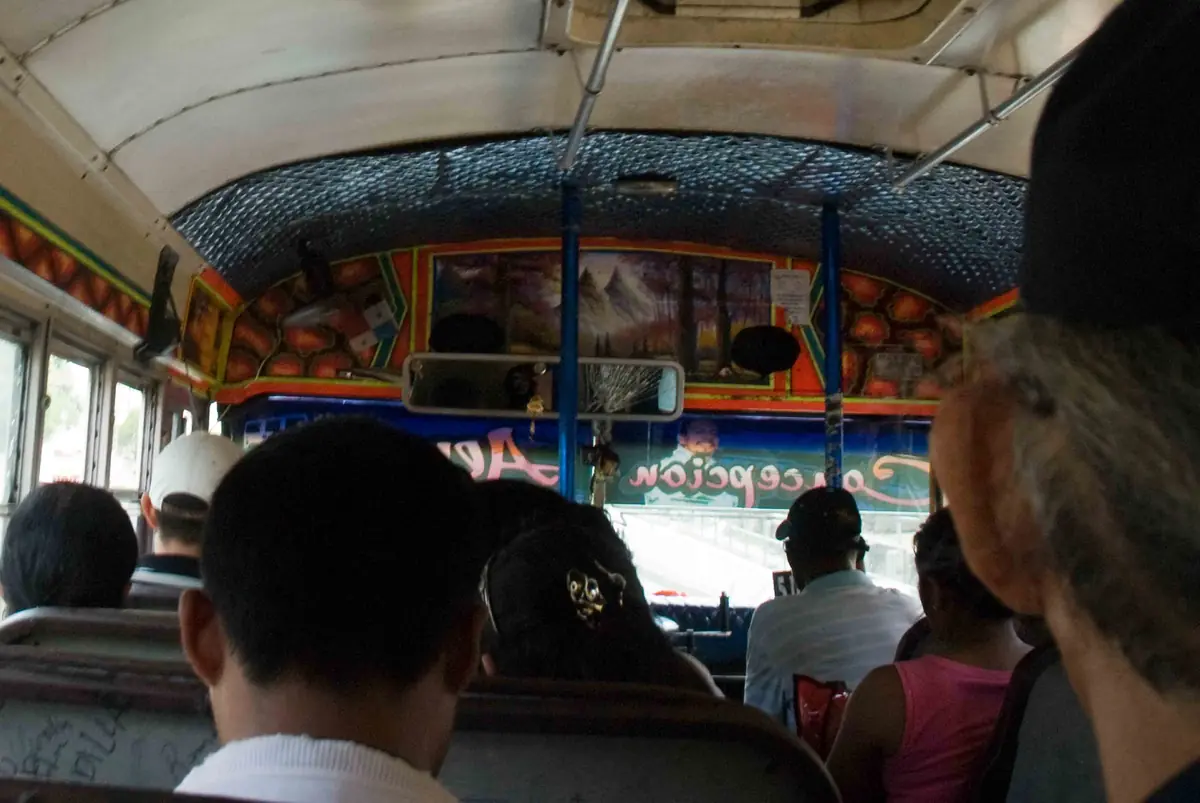
Yes, on main daytime routes, chicken buses are far safer than El Salvador’s old reputation suggests. The risk profile has shifted away from gang violence and toward two ordinary hazards: aggressive driving and pickpocketing on crowded city routes. That said, the US State Department still prohibits its own employees from riding public buses, and that caveat deserves to sit right next to the good news.
Here is the context behind the change. In March 2022 the government declared a State of Exception, suspending certain constitutional protections and launching mass arrests of suspected gang members. According to the Congressional Research Service, roughly 84,000 people were detained between March 2022 and late January 2025. The homicide rate, drawing on National Civil Police figures, fell from 53.1 per 100,000 in 2018 to 1.9 per 100,000 in 2024. The CECOT mega-prison, built for 40,000 inmates, opened in early 2023.
For buses specifically, this mattered a great deal. MS-13 and Barrio 18 had run extortion rackets on transport routes for years, charging drivers and owners a weekly renta and killing those who refused. Bus travel between neighborhoods could mean crossing a territorial line. That system has largely collapsed, which is why so many recent travelers describe dozens of uneventful rides.
The counterweight is worth stating plainly. The State Department has El Salvador at Level 1, exercise normal precautions, its lowest advisory tier, and notes that gang activity has decreased dramatically since 2022. The same advisory bars US government employees from using public buses. Human rights organizations continue to raise concerns about due process under the State of Exception, which remains in force. You can hold both facts at once: the everyday risk to a tourist on a daytime bus is low, and the official guidance is more conservative than what travelers report.
What actually goes wrong on a chicken bus, in rough order of likelihood:
- Drivers race each other for passengers on shared corridors, brake hard, and pass on blind curves. Traffic accidents are the real statistical risk.
- Phones and wallets disappear on packed urban routes. Front pocket, hand on the bag, no phone out at the window.
- A few San Salvador neighborhoods and the streets around the eastern terminal are worth avoiding after dark, whether or not you are on a bus.
Solo Female Travelers
Women who ride these buses routinely report feeling safe, and it is common to be helped rather than hassled: someone will tell you where to get off, or move a bag so you can sit. Expect catcalls, called piropos, on the street more than on board. Practical habits that help: a cross-body bag worn in front, daylight travel only, a seat near the front where the driver and cobrador can see you, and a hostel or hotel booked before you arrive rather than a walk around an unfamiliar terminal with luggage.
Riding After Dark
Do not plan on it. Most routes wind down between roughly 6 and 7 p.m., and rural routes finish earlier. The last bus on a secondary route can leave in the late afternoon, which strands more travelers than any other mistake on this list. If you are moving at night, use Uber in the cities or a prearranged driver. Reduced lighting, potholes, and livestock on rural roads make night driving worse than the crime picture does.
What Chicken Buses Cost and How to Pay
Most single rides cost between $0.25 and $1.50. A reliable rule of thumb is $1 to $2 per hour of travel, and El Salvador uses the US dollar, so there is no exchange rate to work out and no ATM math at the terminal.
Payment is cash only, handed to the cobrador, sometimes called the ayudante. He is the one hanging out the door shouting destinations, and he will come down the aisle once the bus is rolling, though on some El Salvador routes he collects as you board. Many buses have the fare posted on a card at the front, which is a small gift to tourists: you pay the same as everyone else, and there is nothing to negotiate.
Bring small bills. A $20 will stall the whole transaction, and street vendors cannot break it either. Ones, fives, and quarters are what you want, and the $1 coin circulates widely here.
Bitcoin is legal tender in El Salvador, but acceptance is voluntary, the government wallet program has been wound down, and no bus driver on earth wants to scan a QR code while merging into traffic. Ignore it for transport. Be wary of anyone at a terminal offering to help you with a crypto wallet.
Large luggage sometimes costs extra, typically about $1, or the price of a seat if your pack occupies one. Air-conditioned microbuses are stricter about this than old school buses.
How to Ride a Chicken Bus, Step by Step
Find the bus. Either go to the relevant terminal, where buses queue by number, or stand on the highway shoulder in the direction you want to travel and put your arm out. Buses stop for anyone. Hostel staff and hotel front desks are the best source for which number to look for and where it leaves from, because route assignments shift.
Confirm before you board. Ask the cobrador, “Va a Santa Ana?” and wait for the nod. Route numbers get reused and lettered variants split off partway, so the two seconds of confirmation are worth it.
Board at a terminal if you want a seat. Mid-route, you may stand in the aisle for an hour with someone’s grocery haul against your shins. From the terminal, buses fill from empty, and you can pick a window on the shaded side.
Pay when asked, not before. Have the change ready.
Get off cleanly. Tell the cobrador your stop when you pay, or move toward the front door and call out “baja” as you approach. Buses barely stop, so gather your bag a minute early.
Apps help but do not replace asking. Moovit has real El Salvador coverage, including bus lines, nearby stops, and first and last departure times, which is the single most useful data point on the platform. Google Maps transit directions are patchy outside the capital. Download an offline map before you go, since cell coverage thins out on the coast road and in the eastern departments.
Key Routes, Bus Numbers, and Terminals
These are the routes travelers use most. Fares and departure times shift, and schedules on rural routes are more of an intention than a promise, so treat the numbers as a planning baseline and confirm the last departure locally before you commit to a day.
| Route | Journey | Fare | Time | Departs from |
|---|---|---|---|---|
| 102A | San Salvador to El Tunco | ~$1.50 | ~1 hr | Terminal de Occidente / Ruta 102 microbus stop |
| 201 | San Salvador to Santa Ana | ~$1.00 regular, ~$1.35 especial | 1 to 1.5 hrs | Terminal de Occidente |
| 129 | San Salvador to Suchitoto | ~$0.60 to $1.00 | ~1.5 hrs | Terminal de Oriente (Plaza Amanecer) |
| 238 | Santa Ana to Juayúa | ~$0.80 to $0.90 | ~1.5 hrs | Terminal Francisco Lara Pineda |
| 249 | Sonsonate to Ahuachapán (Ruta de las Flores) | ~$0.45 to $0.90 per hop | 15 min between towns | Roadside, every ~15 min |
| 205 | San Salvador to Sonsonate | ~$1.00 | ~1.5 hrs | Terminal de Occidente |
| 80 | La Libertad to Sunzal | ~$0.25 | ~20 min | Roadside, every 15 to 20 min |
| 192 / 192A / 192B | La Libertad west past El Tunco and El Zonte | ~$0.25 | 15 to 20 min | Roadside |
| 287 | Coast to Sonsonate | ~$1.50 | 2 to 2.5 hrs | Twice daily, morning and afternoon |
| 301 | San Salvador to San Miguel | ~$3 to $5 | ~2.5 hrs | Terminal de Oriente |
San Salvador to El Tunco
Take route 102A, an air-conditioned microbus, for around $1.50. It runs roughly every 20 minutes from early morning until about 7 p.m. and takes an hour to the surf town. The trap here is the letter: plain route 102 stops at La Libertad, not El Tunco. If you end up in La Libertad, walk to the highway and grab an 80 or a 192 heading west for a quarter.
Coming from the airport, there is no direct chicken bus worth the hassle with luggage. Most travelers take a shuttle or an Uber for the first leg and start riding buses once they are settled.
San Salvador to Santa Ana
Route 201 is the workhorse of the western corridor, run by companies including TUDO and SEISABUS from Terminal de Occidente. The regular service runs around a dollar, the especial closer to $1.35, with recent travelers reporting fares creeping toward $1.60. Budget an hour to ninety minutes. Two variants exist: one takes the Pan-American Highway through Santa Tecla, the other the older road past Lago de Coatepeque. If the lake is your destination, ask specifically.
San Salvador to Suchitoto
Route 129 is a full-size bus, often with air conditioning, running about a dollar, though travelers have paid as little as $0.60 with the fare posted at the front. Microbus 140 covers similar ground for around $0.90, but it has stopped running the full route for some passengers, so ask before you count on it. Both now leave from the rebuilt Terminal de Oriente at Plaza Amanecer in Soyapango. Keep your valuables out of sight in the streets immediately around that terminal, and do not linger there after dark.
The Ruta de las Flores
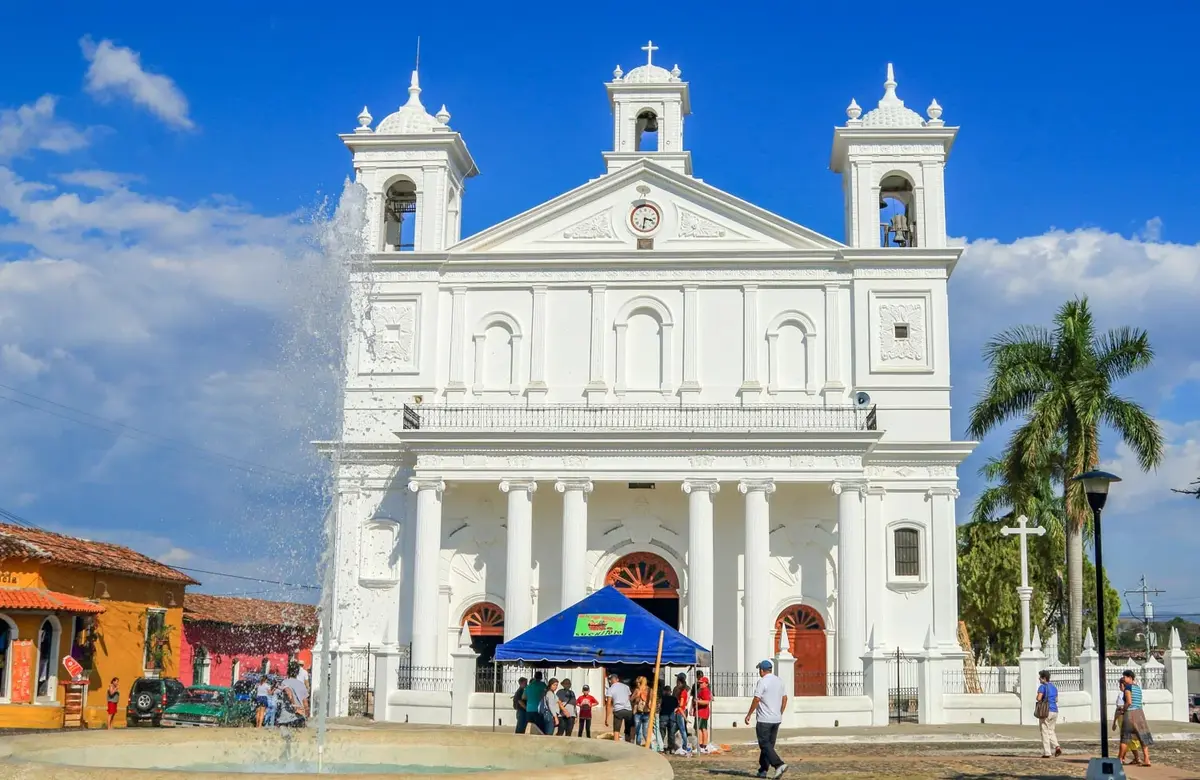
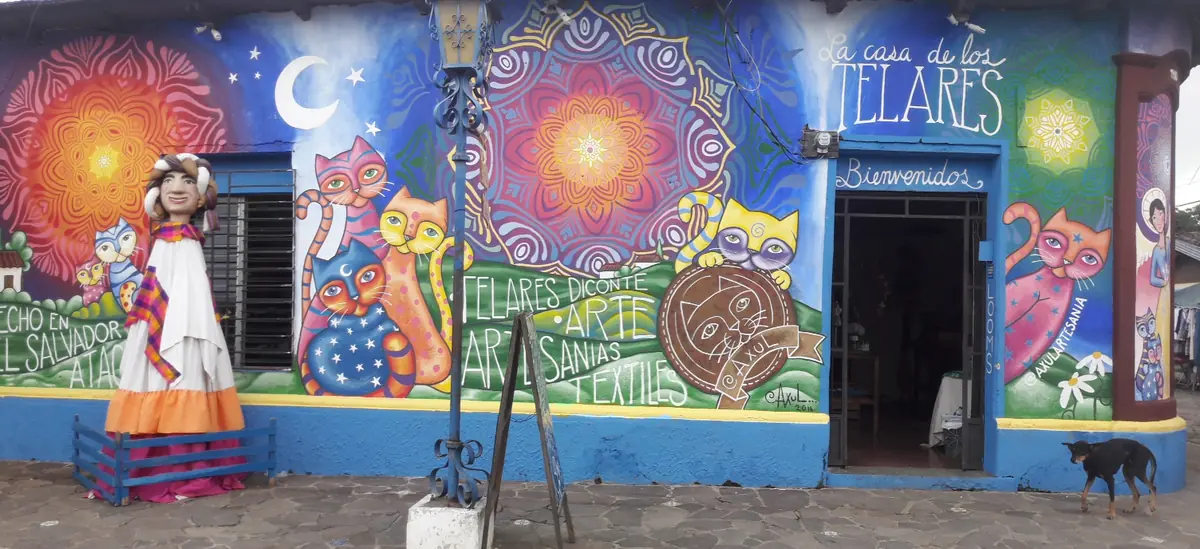
Route 238 runs direct from Santa Ana’s Terminal Francisco Lara Pineda to Juayúa for under a dollar in about ninety minutes, with posted departures spread through the day from mid-morning to early evening. Once you are on the flower route, route 249 does all the work: it runs the full length between Sonsonate and Ahuachapán, calling at Nahuizalco, Salcoatitán, Juayúa, Apaneca, and Ataco, every fifteen minutes or so. Each hop between towns costs pocket change, which makes town-hopping by bus genuinely better than driving. You can eat your way down the route and never think about parking.
Coastal Hopping
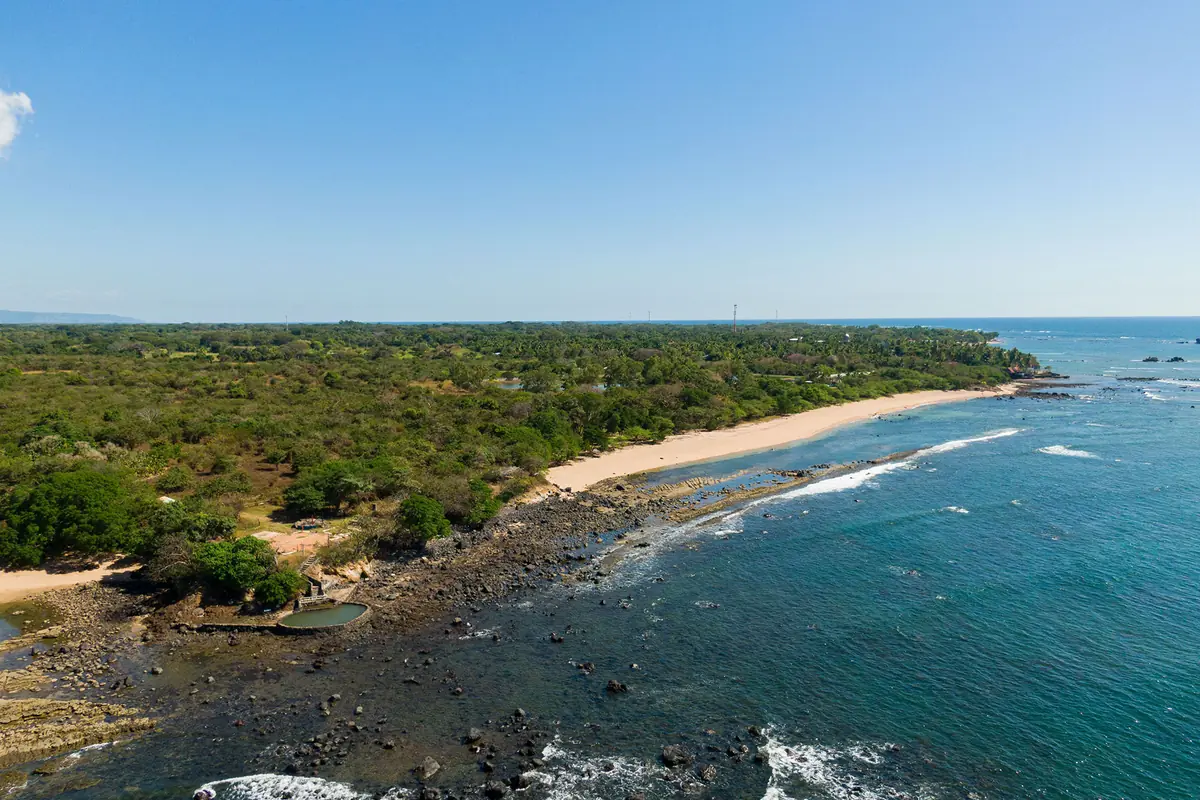
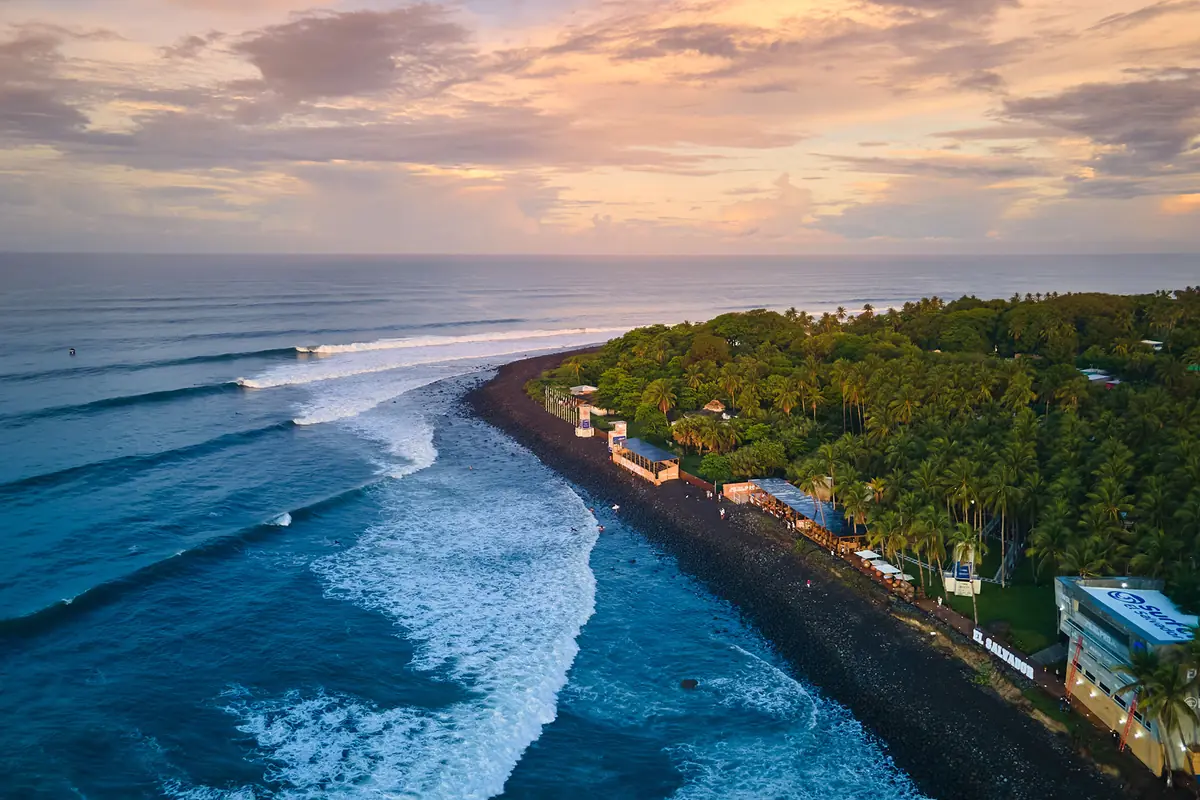
The coast is where chicken buses shine. Route 80 shuttles between La Libertad and Sunzal for a quarter, every 15 to 20 minutes, from before dawn until late afternoon. The 192 family runs west from La Libertad past El Tunco and El Zonte for the same fare. Riding these is close to free, and they are the reason you do not need a rental car to surf a different break each day. Route 287 links the coast inland to Sonsonate, but it only runs twice a day and takes well over two hours.
Farther Afield
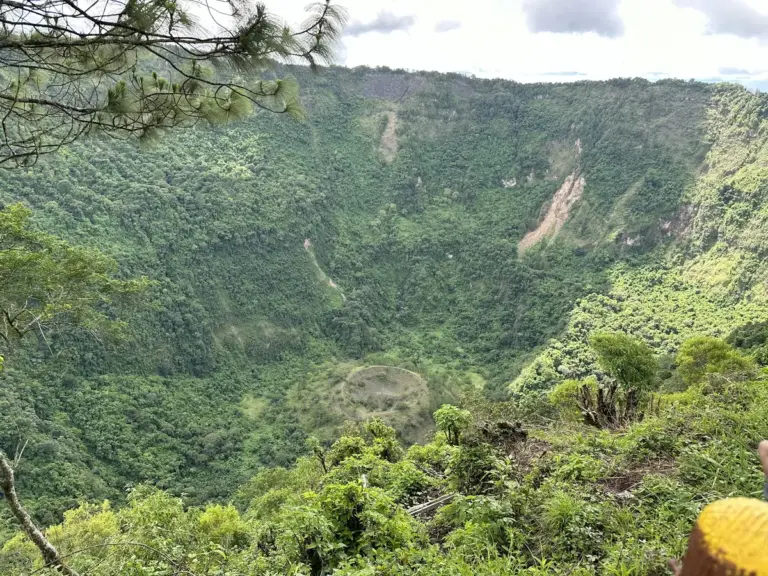
For El Boquerón and the crater rim on the San Salvador volcano, take a 101-B or 103 toward Santa Tecla, then a local bus up to the park. For Perquín and the mountain towns of Morazán, ride the 301 to San Miguel, then connect north through Osicala. Plan a full day; the trip runs seven hours or more from the capital, and the last connection leaves in the afternoon.
The Three Terminals in San Salvador
Terminal de Occidente, on Boulevard Arturo Castellanos, sends buses west: Santa Ana on the 201, Sonsonate on the 205, the coast, and the Guatemalan border.
Terminal de Oriente, rebuilt as Plaza Amanecer in Soyapango, sends buses east and north: San Miguel, La Unión, and Suchitoto. It is the least comfortable of the three for a first-time visitor with a large pack.
Terminal del Sur handles the southern coast, including Costa del Sol and Usulután.
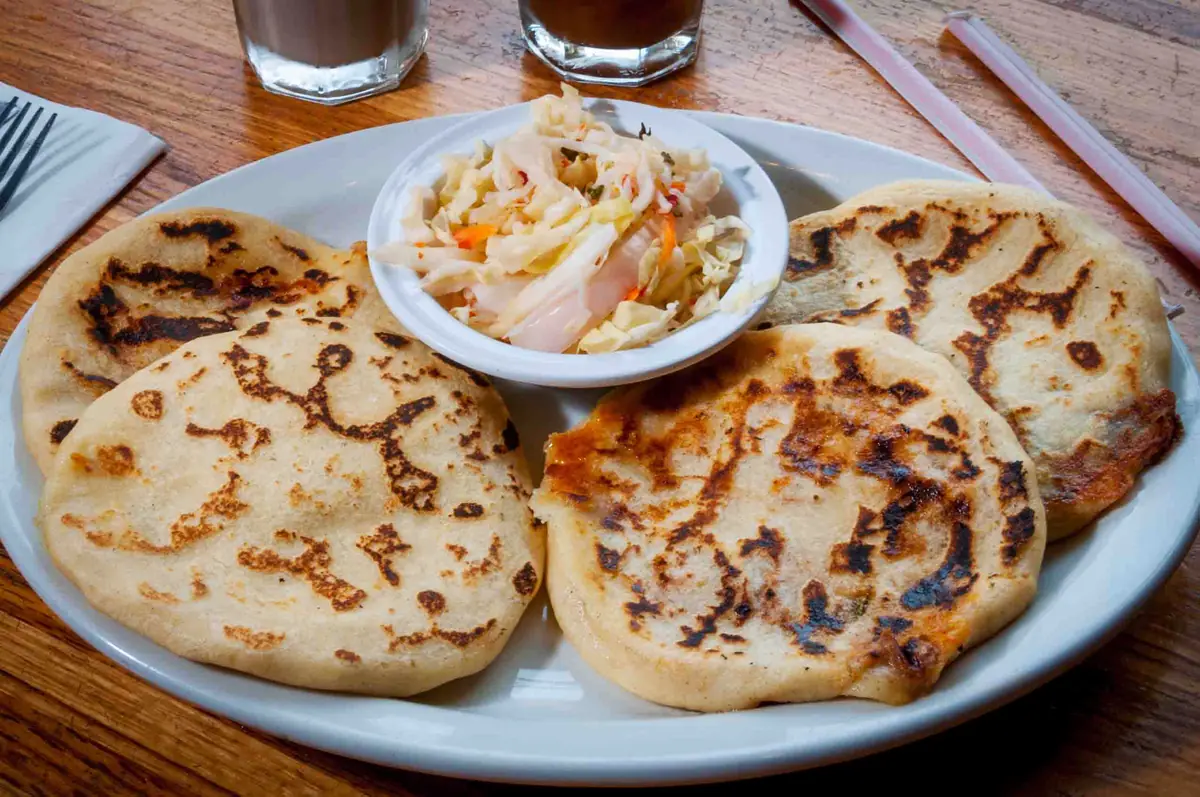
Terminals are loud, crowded, and full of vendors selling pupusas, sliced mango with chile, and phone chargers. They are not dangerous in daylight, but they are exactly the environment where a phone left on a bench walks away.
Crossing into Guatemala and Honduras by Bus
You can cross both borders on public buses, and it costs a fraction of a shuttle. It also takes most of a day and several transfers.
For Guatemala, the crossing most travelers use is Las Chinamas, also called Valle Nuevo, reachable by bus from the park in central Ahuachapán and convenient if you are already on the Ruta de las Flores. It is open roughly 6 a.m. to 10 p.m. La Hachadura is the coastal alternative, open around the clock, and it is the route tourist shuttles take between El Tunco and Antigua. San Cristóbal sits on the Pan-American Highway, and Anguiatú in the north is mostly commercial traffic.
The process is undramatic: you exit the bus, walk through immigration, cross a short stretch of no-man’s-land on foot, and pick up an onward bus on the far side. A tourist card fee of around $12 may apply depending on nationality and direction, and your passport should have at least six months of validity. From Las Chinamas, onward buses reach Guatemala City in roughly four hours, paying each leg on board. Travelers who chain it together report spending in the neighborhood of $13 total between Santa Ana and Antigua.
Honduras crossings run east out of Terminal de Oriente, and the classic backpacker chain to Copán Ruinas involves several transfers and two frontiers in a single day.
If that sounds like more logistics than adventure, direct tourist shuttles between El Tunco and Antigua run around $40 to $45 and take care of everything. Plenty of budget travelers pay it and consider it money well spent.
Surfboards, Backpacks, and Everything Else
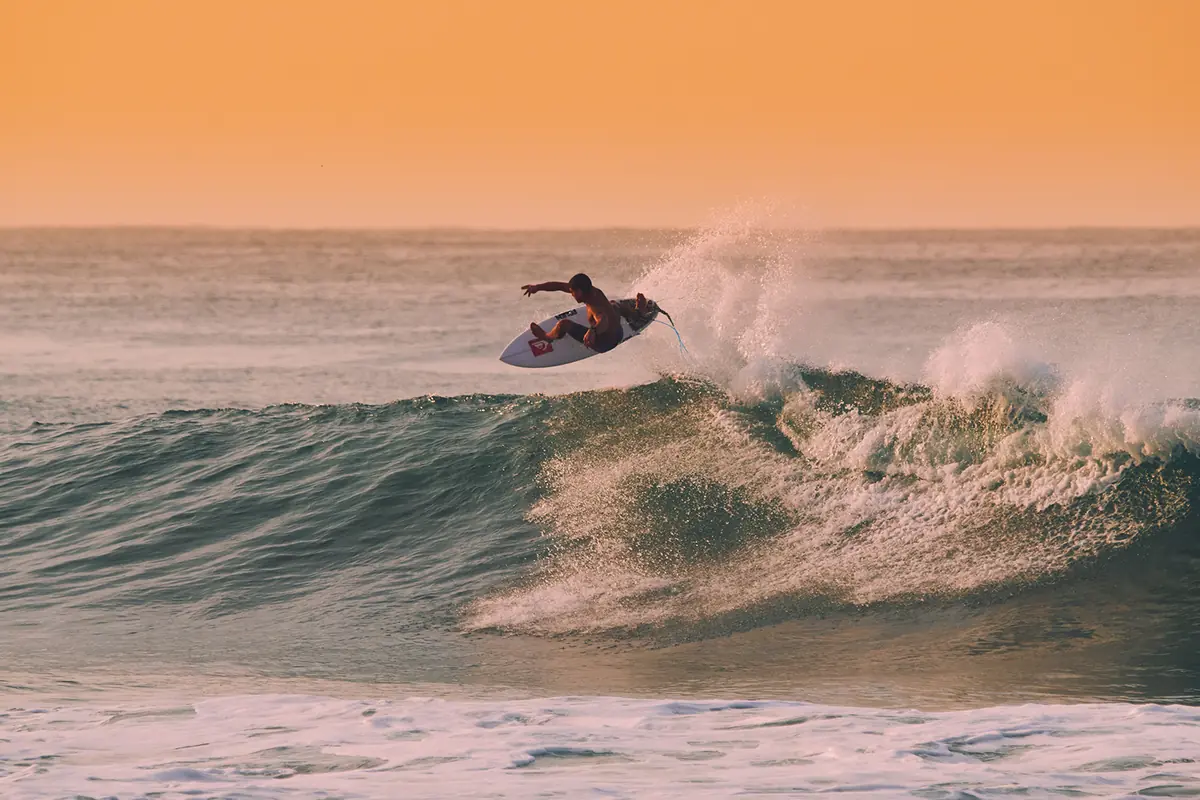
Coastal buses in El Salvador see surfboards every single day, and nobody blinks. Boards go in the aisle, along the back, or occasionally on the roof. A short hop with a board can still cost only a quarter. Air-conditioned microbuses are the exception and may add a charge of about $1.50 for the board on top of the fare.
Big backpacks are the same story: they ride on the roof, at the back, or on your lap. Practical notes from people who have done it wrong:
- Keep your passport, cards, and phone on your body, not in the pack that just went on the roof.
- Use a rain cover or a cheap duffel over your pack to keep road dust and diesel grime off it.
- If your bag takes up a seat during a busy stretch, expect to pay for that seat, which is fair.
- Board at the terminal if you have luggage. Wrestling a 60-liter pack up the steps of a moving bus mid-highway is a skill you do not have yet.
Chicken Bus vs. Shuttle vs. Uber vs. Rental Car
| Option | Typical cost | Best for | Trade-offs |
|---|---|---|---|
| Chicken bus | $0.25 to $2 per leg | Budget travel, short hops, local color | Slow, daylight only, no luggage security |
| Tourist shuttle | $25 to $50 per route | Airport transfers, border runs, groups | Fixed departures, tourist bubble, priciest per mile |
| Uber | $25 to $35 airport to El Tunco | Cities, night travel, door to door | Thin coverage on the far coast and rural areas |
| Rental car | Roughly $40 to $50 per day | Multi-stop itineraries, families, the volcano roads | Night driving is genuinely worse than day driving |
The honest answer for most trips is a mix. Use Uber or a shuttle for the airport and for anything after dark, and use chicken buses for daytime hops between towns, where they cost a rounding error and put you next to the people who live there. Uber works well in San Salvador, Santa Ana, and along the developed stretch of the coast. Main roads are paved and in decent shape thanks to the Surf City tourism investment, but rural night driving brings potholes, unlit curves, and livestock.
What Is Changing on Salvadoran Buses
The classic chicken bus is not going away, but the metro fleet is being modernized. The Vice Ministry of Transport is bringing in 1,500 Chinese-made Yutong buses, financed by a loan of about $179.5 million approved by the Legislative Assembly. The order splits into roughly 1,100 full-size units around 40 feet long and 400 shorter units near 28 feet, all GPS-equipped, as part of a broader plan for around 3,000 buses across the San Salvador metropolitan area. Delivery timelines have slipped more than once, so check what is actually running when you arrive.
There was also an earlier attempt at a modern system. SITRAMSS, a bus rapid transit project with dedicated lanes and prepaid fare cards developed with Inter-American Development Bank financing, launched with high expectations, underperformed, and was formally wound down. Do not plan around it.
The takeaway for a visitor: expect newer, plainer buses on capital routes over time, and expect repainted school buses to keep dominating rural and intercity travel for years yet.
Spanish Phrases That Actually Help
You can ride these buses with almost no Spanish, but six phrases cover nearly every interaction.
- Este bus va a ___? Does this bus go to ___?
- Cuánto cuesta? How much is it?
- Me bajo aquí, or just Baja. I’m getting off here.
- Dónde está la terminal? Where is the terminal?
- A qué hora sale el último bus? What time does the last bus leave? This is the most valuable sentence in the list.
- Con permiso. Excuse me, said while squeezing past someone toward the door.
Should You Ride One?
If you are moving between towns in daylight with a normal amount of luggage, yes. The chicken bus is cheap enough to be irrelevant to your budget, frequent enough that missing one costs you fifteen minutes, and it delivers the part of travel you cannot book in advance: a vendor selling mango with lime and chile at a red light, a grandmother handing you her bag so you can both fit, merengue at a volume that shakes the windows.
If you are arriving at midnight, moving with a family and four suitcases, or trying to cover the country in four days, pay for the shuttle or the rental car and do not feel bad about it. The buses are not going anywhere, and one ride on the 249 between flower-route towns is enough to understand what everyone is talking about.