Most travelers cross from El Salvador into Guatemala one of two ways: a tourist shuttle from El Tunco or the Ruta de las Flores straight through to Antigua (roughly $40 to $45, five to eight hours), or a first-class cross-border bus from San Salvador to Guatemala City (roughly $34 to $58, about five and a half hours). US citizens need only a valid passport. There is no visa, no entry fee, and no exit fee. The border stop itself usually takes 30 minutes to two hours, depending on which crossing you pick and how long the truck line is. Under the CA-4 agreement, your 90 days in Central America keep ticking whether you cross or not.
That is the short version. The rest of this guide covers the five official crossings, what each transport option actually costs, the free Guatemalan immigration form that scam sites charge up to $74 for, and the handful of border tricks worth knowing before you are standing in no-man’s-land with your bag.
El Salvador to Guatemala at a Glance
| What you need to know | The answer |
|---|---|
| Documents for US citizens | Valid passport (six months’ validity recommended). No visa. |
| Cost to cross | Free. El Salvador’s $12 tourist card was abolished on April 30, 2025. Guatemala charges no land entry or exit fee. |
| Length of stay | Up to 90 days under the CA-4 agreement, shared across four countries |
| Guatemalan paperwork | The DJRV digital declaration, free on the official SAT portal |
| Typical border time | 30 minutes to 2 hours |
| Cheapest route | Public buses, about $14 total from western El Salvador to Antigua |
| Easiest route | Door-to-door tourist shuttle, $40 to $45 |
| Fastest capital to capital | First-class bus, about 5.5 hours |
| Currency change | US dollars in El Salvador, quetzales in Guatemala (roughly Q7.5 to Q7.7 per dollar) |
If you are short on time and just want a decision: coming from the beach towns, take a shuttle through La Hachadura. Coming from San Salvador, take King Quality or Pullmantur. Coming from Santa Ana or the Ruta de las Flores, take a shuttle through Las Chinamas.
The Five Official Border Crossings
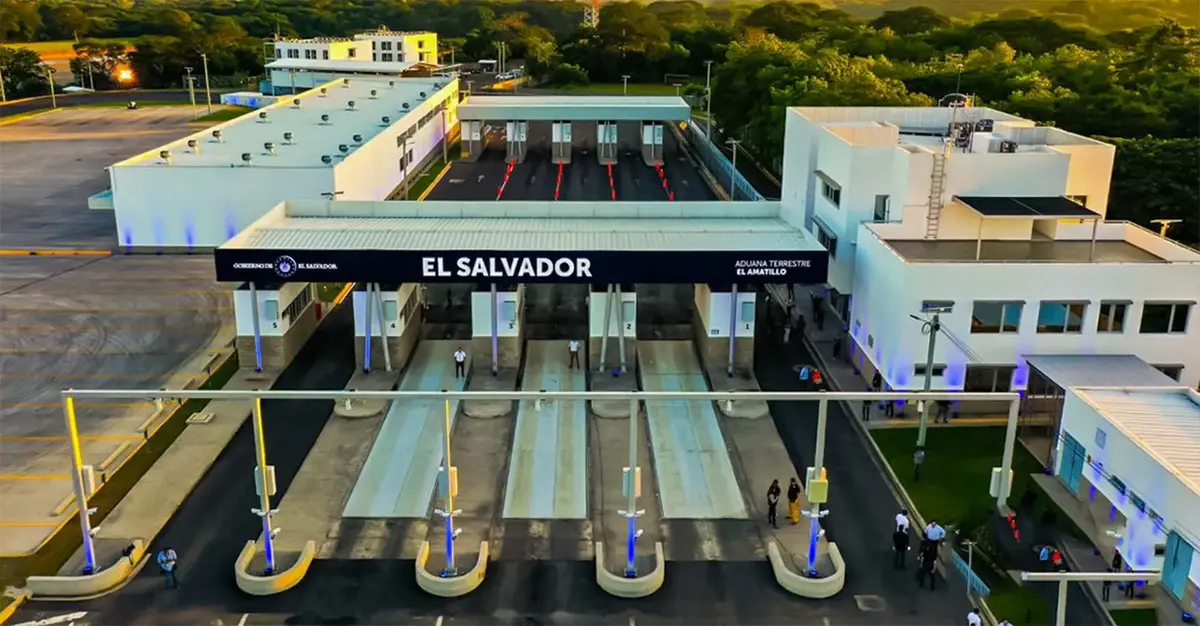
El Salvador and Guatemala share roughly 125 miles of border with five official land crossings between them. Salvadoran immigration authorities list the main Guatemala-facing posts as operating around the clock, though the newest one has more limited hours in practice. Two of the five handle nearly all tourist traffic.
| Crossing (El Salvador side) | Guatemalan side | Department | Best for | Notes |
|---|---|---|---|---|
| Las Chinamas | Valle Nuevo | Ahuachapán | Ruta de las Flores, Santa Ana | Closest to Guatemala City; pre-check point |
| La Hachadura | Ciudad Pedro de Alvarado | Ahuachapán | El Tunco, El Zonte, La Libertad | Heavy cargo traffic; skips Guatemala City |
| San Cristóbal | San Cristóbal Frontera | Santa Ana | Pan-American Highway drivers | Busy commercial route |
| Anguiatú | Anguiatú (La Ermita) | Santa Ana | Metapán, onward to Honduras | Near the tri-border; pre-check point |
| El Coco | Jerez | Santa Ana | Local traffic only | Newest and smallest; limited hours reported |
Las Chinamas and Valle Nuevo
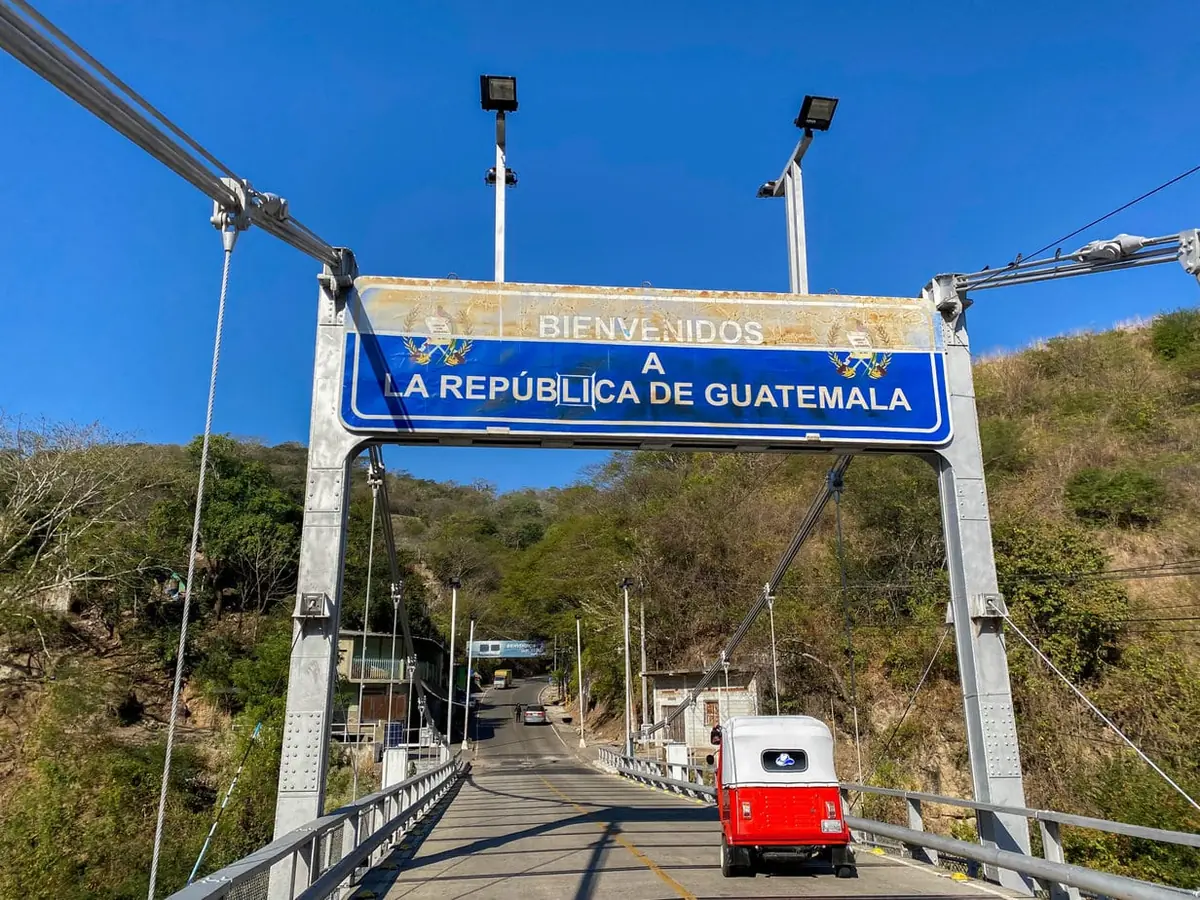
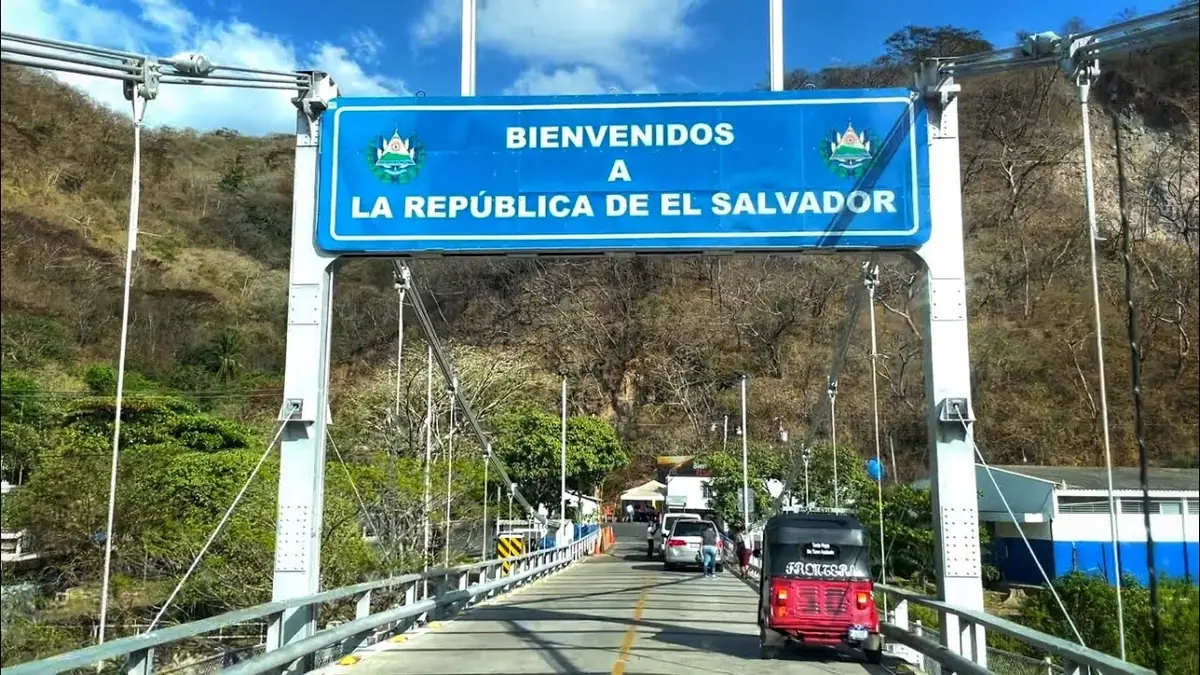
This is the inland crossing in Ahuachapán department and the closest of the five to Guatemala City, roughly 78 miles away. It is the natural choice if you are coming down from Concepción de Ataco, Juayúa, or anywhere else on the Ruta de las Flores, and it is well served by tourist shuttles.
The catch: the highway from Valle Nuevo funnels you into Guatemala City. If Antigua is your destination, you will transit the capital, and traffic there can add an hour or more. There is a pre-check point at the Bypass gas station on the Salvadoran approach, which lets you start immigration formalities before you reach the border itself. Use it if your driver offers.
La Hachadura and Ciudad Pedro de Alvarado
The Pacific coast crossing, and the one most backpackers use. If you are leaving El Tunco, El Zonte, or La Libertad, this is your border. Its biggest advantage is geographic: from Ciudad Pedro de Alvarado you follow the coastal highway toward Escuintla and turn north for Antigua without ever entering Guatemala City.
Its biggest drawback is trucks. La Hachadura is a primary cargo corridor, and the line of freight can stretch for a mile at peak hours. Passenger vehicles and shuttles generally use a separate lane and bypass the queue, so the truck backup looks worse than it is if you are in a van. Walking across on your own, you may still be waiting behind commercial traffic at the customs windows.
San Cristóbal and San Cristóbal Frontera
The Pan-American Highway crossing, in Santa Ana department. It is heavily used by commercial traffic and by Salvadorans driving to Guatemala, less so by tourists, mostly because travelers coming from Santa Ana find Las Chinamas more convenient for onward connections.
One thing to watch: Salvadoran immigration lists this post as open 24 hours, while several travel sites still publish hours of 6 a.m. to 10 p.m. The official source is the one to trust, but if you are planning an unusual arrival time, confirm before you commit to the route.
Anguiatú and La Ermita
The easternmost practical crossing, near Metapán and close to the point where El Salvador, Guatemala, and Honduras meet. Most travelers who use it are heading for Esquipulas or continuing toward Copán in Honduras, which sits just over the Guatemalan border and is a common add-on to a Central America circuit. Like Las Chinamas, it has a pre-check point on the Salvadoran side, on the Pan-American Highway toward Metapán.
El Coco and Jerez
The newest and smallest of the five, connecting the El Coco area of Chalchuapa in Santa Ana department with the municipality of Jerez in Guatemala’s Jutiapa department. It was formalized from a long-standing informal crossing, and it exists mainly to serve local traffic and to relieve pressure on the bigger posts during holiday periods.
Reporting on its hours has been inconsistent: Salvadoran authorities have described it as operating from 6 a.m. to 6 p.m., while holiday-season notices list all five Guatemala-facing borders as open around the clock. No tourist shuttle or long-distance bus uses it. Treat it as useful context rather than a route to plan around, and verify hours directly if you have a specific reason to use it.
The CA-4 Agreement and Your 90-Day Clock
This is the single most misunderstood piece of Central America travel, and getting it wrong is expensive.
El Salvador, Guatemala, Honduras, and Nicaragua signed the CA-4 Border Control Agreement in 2006. It works something like a small Schengen zone: as a non-CA-4 national, you receive one 90-day allowance that covers all four countries combined. Crossing from El Salvador into Guatemala does not give you a fresh 90 days. It does not reset anything. The clock that started when you first entered any CA-4 country keeps running.
The only way to reset it is to leave the CA-4 zone entirely, which in practice means Mexico, Belize, or Costa Rica, and then re-enter. A weekend in Belize resets your clock. A month bouncing between Antigua and San Salvador does not.
If you need more time, you can apply for one 90-day extension inside the region, for a maximum of 180 days. If you overstay, Guatemala charges a fine per day of overstay, payable in cash at departure. It is not a crippling amount, but it is a cash-only conversation with an immigration officer at the exact moment you are trying to catch a flight, which is a bad time to be short on quetzales.
Entry Requirements for US Citizens
Leaving El Salvador
Nothing is required beyond your passport. Salvadoran officers check your document, log your exit, and wave you through.
Two things surprise first-timers. First, El Salvador’s $12 Migratory Entry Card fee was abolished on April 30, 2025, when the Legislative Assembly repealed the relevant article of the country’s migration law. Anyone telling you to pay $12 at a Salvadoran land border is either working from old information or working you.
Second, many travelers report receiving no El Salvador entry or exit stamp at land borders at all. This is normal within the CA-4 zone and is not a sign that something went wrong. If it makes you uneasy, ask politely for a stamp; officers will usually oblige, but do not expect it by default.
Entering Guatemala
Guatemala requires an electronic immigration and customs declaration, the Declaración Jurada Regional de Viajero, usually shortened to DJRV. Guatemala’s tax authority, the SAT, describes it as mandatory both to enter and to leave the country. It is completed online, it takes a few minutes, and it is completely free.
Enforcement at land borders is uneven. Plenty of overland travelers report crossing with nothing more than a passport check, because the system was rolled out for air arrivals first and land posts last. Fill it out anyway. It costs you nothing but five minutes, and it removes any argument at the window.
Complete it only on the official SAT portal. A cluster of third-party sites has built a business around this form, charging as much as $74 per applicant for a service fee while burying an admission in their own fine print that applicants can apply directly through the government website at no cost. Guatemalan authorities have filed criminal complaints over these operators. If a site is asking for your credit card to submit a Guatemalan immigration form, close the tab.

Verify Before You Go
Border rules in this region change without much fanfare, and this guide is a starting point rather than a substitute for an official source. Within a week of your travel date, check the current US State Department advisories for both countries at travel.state.gov, the Salvadoran border post list and hours at migracion.gob.sv, and the DJRV portal run by Guatemala’s SAT. If those three agree with what you read here, you are in good shape. If they do not, they win.
How to Cross: Every Transport Option Compared
| Option | Typical cost | Time | Best for |
|---|---|---|---|
| Tourist shuttle | $40 to $45 | 5 to 8 hours | Backpackers, first-timers, anyone going to Antigua |
| First-class bus | $34 to $58 | About 5.5 hours | San Salvador to Guatemala City, comfort travelers |
| Public buses | About $14 total | 8 to 10 hours | Budget travelers with time and some Spanish |
| Private transfer | $200 and up | 5 to 7 hours | Families, groups, tight flight connections |
| Own or rental car | Permit fees plus fuel | Variable | Overlanders and road-trippers |
Tourist Shuttles
For most travelers this is the right answer. A minivan picks you up at your hostel or hotel, the driver handles the border paperwork logistics, and you are dropped at your address in Antigua. Nobody has to figure out which window to visit in what order.
Gekko Trails Explorer runs the best-known route from El Tunco and Ataco to Antigua for roughly $40 to $45, with departures typically in the early afternoon and a very early morning option from Ataco. Marvelus Travel covers similar ground at around $45. Adrenalina Tours runs from Santa Ana and El Tunco to Antigua and generally asks that you book at least 48 hours ahead.
Manage your expectations on the experience. These are unmarked vans, not coaches. Booking and support often happen over WhatsApp. Departure times are approximate. You will likely stop at least once for a police anti-narcotics check on the Guatemalan side, where an officer may glance through the vehicle. It is routine and takes a few minutes. And the advertised five hours can become eight if the border is busy, so do not book a same-day onward connection.
First-Class Cross-Border Buses
If you are going capital to capital, this is the most comfortable option and often the cheapest per mile.
Pullmantur runs San Salvador to Guatemala City in about five and a half hours, from roughly $34 one-way in tourist class up to around $58 for first class, with Wi-Fi and meal service on the premium tiers. King Quality is the perennial traveler favorite, around $35, arriving at a terminal in Guatemala City’s Zona 10, with breakfast included. Platinum Centroamérica and Tica Bus also serve the route, with Tica generally slower because it operates as part of a longer regional network.
You can book through Busbud or GetYourGuide, but station kiosks are worth a look. Advertised round-trip discounts frequently work out to no better than two one-way tickets bought at the counter, and one-way tickets leave your schedule open.
The crossing itself is easier on these buses: the operator collects passports, an officer processes the group, and you often stay on board for part of the process.
Public Buses and Chicken Buses
The budget route, and a genuinely fun one if you have the day and a little Spanish. From Santa Ana you take a local bus to the San Cristóbal border; from the Ruta de las Flores you connect through Ahuachapán to Las Chinamas. You walk across, clear both sets of formalities on foot, then pick up Guatemalan buses on the other side. From Guatemala City’s El Trébol junction, buses to Antigua run constantly for about Q20.
Total cost from western El Salvador to Antigua runs around $14, versus $45 for a shuttle. The trade-off is time, transfers, and luggage handling.
Two safety notes worth taking seriously. Robberies on Guatemalan public buses are reported often enough that they should shape your plan: travel in daylight, keep your bag with you rather than on the roof, and carry as little as you can afford to lose. The US State Department also prohibits its own employees in El Salvador from using public buses, which tells you something about how the risk is assessed institutionally, even in a country now rated Level 1.
Private Drivers and Transfers
Worth the money in three situations: you are traveling as a family with kids and luggage, you have a flight out of Guatemala City with no slack in the schedule, or you have a group of four or more and the per-person math suddenly looks reasonable. Hotels and agencies in Antigua, El Tunco, and San Salvador all arrange these. Confirm in writing that the driver’s paperwork covers cross-border travel; not every local driver is authorized to leave the country.
Driving Your Own Car or a Rental
This is where the CA-4 agreement stops helping you. The agreement covers people, not vehicles. Your car needs its own Temporary Import Permit for each country, obtained at the border and canceled when you exit. Cancel it. An uncanceled permit creates a record that the vehicle never left, and untangling that later is genuinely difficult.
Most major rental companies flatly prohibit taking their cars across a border, and doing it anyway voids your insurance. There are exceptions: Hertz in Guatemala City issues a cross-border permit for El Salvador and Honduras for around $35, and travelers report Enterprise at the Guatemala City airport arranging permits with advance notice. Several local agencies on both sides will authorize it with written permission. Ask before you book, not at the counter.
Practical border etiquette for drivers: bring photocopies of your passport, license, registration, and permit, because you will be asked for them repeatedly. Expect a VIN inspection. And you will be approached by tramitadores offering to speed things up. Some are simply freelance form-fillers; others will offer to pay someone to move you up the truck line. Decline the second kind. The paperwork is not complicated enough to be worth the exposure.
The Routes Travelers Actually Take
El Tunco or El Zonte to Antigua
The classic. Shuttle out around 2 p.m. or on the early morning departure, cross at La Hachadura, follow the Guatemalan coast to Escuintla, then climb to Antigua. Budget five to eight hours door to door. The early departure is the better choice in high season, when the afternoon run risks arriving after dark.
San Salvador to Guatemala City
Take the bus. Pullmantur or King Quality from their San Salvador terminals, about five and a half hours, arriving in Zona 10 or Zona 1 depending on the operator. From the Guatemala City terminal, a shuttle or taxi to Antigua adds another hour. Note that the State Department lists Villa Nueva and Zone 18 of Guatemala City as areas to avoid entirely; arrange your onward transfer in advance rather than sorting it out on the street at the terminal.
Santa Ana to Antigua or Lake Atitlán
Adrenalina Tours runs shuttles from Santa Ana, and Las Chinamas is your border. Travelers heading to Lake Atitlán usually connect through Antigua rather than trying to reach Panajachel directly in one day, which is a long haul from the Salvadoran border.
Ruta de las Flores to Antigua
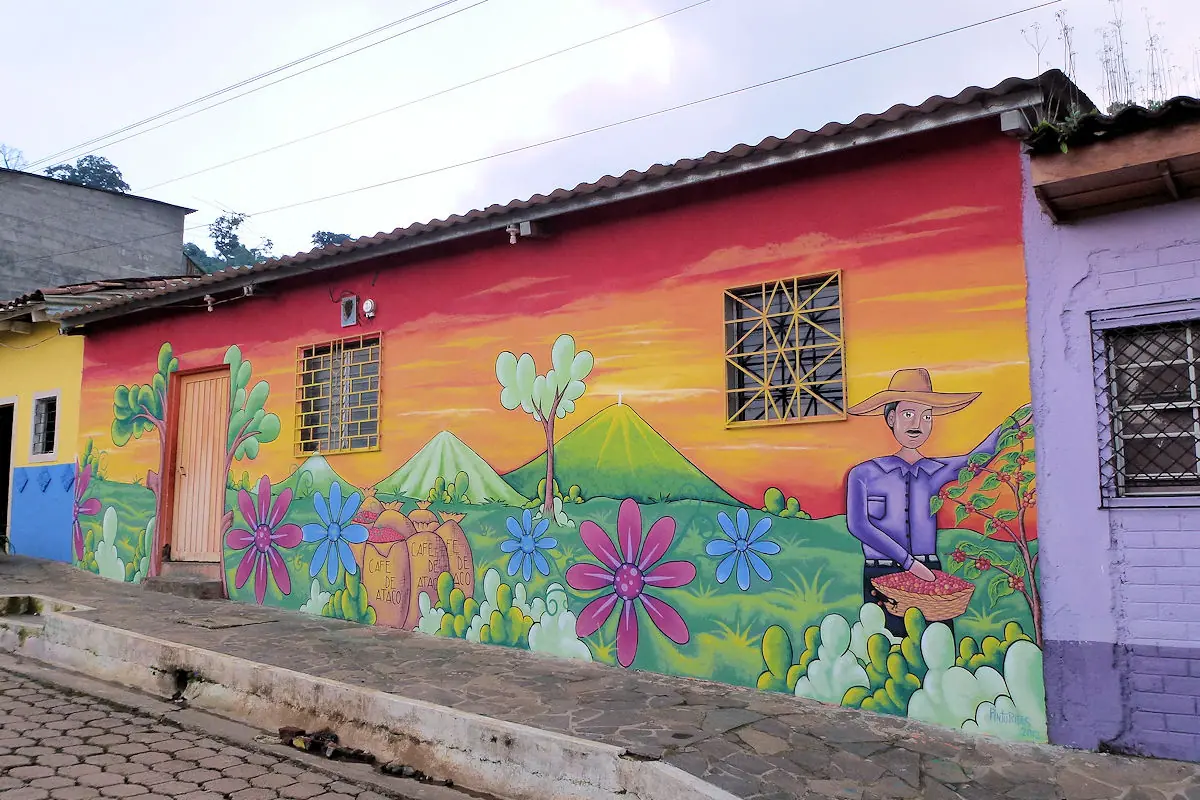
If you are already in Ataco or Juayúa, you are perfectly positioned. Stay the night in Concepción de Ataco, take the pre-dawn shuttle, cross at Las Chinamas, and you can be in Antigua by early afternoon. This is the most pleasant version of this journey and the one worth building your itinerary around.
Eastern El Salvador toward Copán
Not technically this border, but the same logic applies. From Metapán or Santa Ana, cross at Anguiatú and continue through Guatemalan territory toward Esquipulas and on to Copán Ruinas in Honduras. Because all three countries sit inside the CA-4 zone, your 90-day clock keeps running the whole time, and your rental vehicle, if you have one, needs a fresh permit at each border.
Money: Dollars, Quetzales, ATMs, and Changers
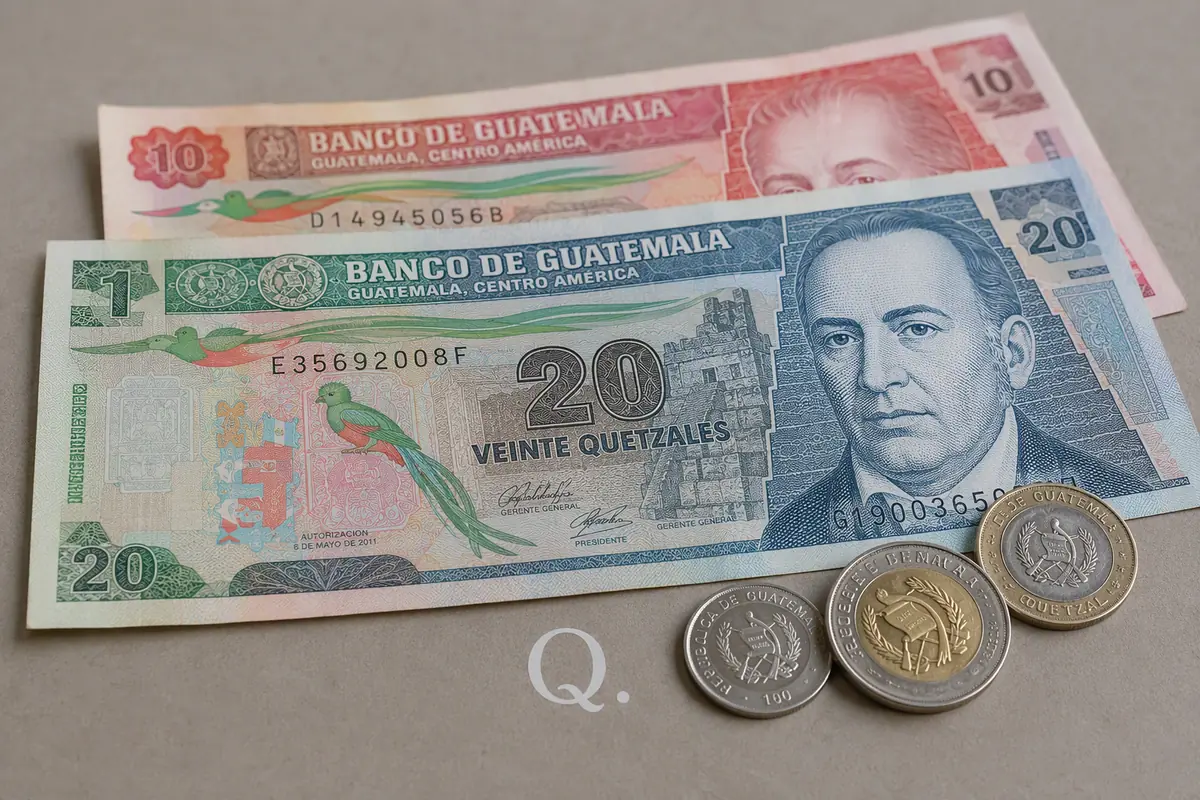
El Salvador uses the US dollar, which makes it the easiest country in Central America for American travelers. Guatemala uses the quetzal, trading in a fairly stable band of roughly Q7.5 to Q7.7 per dollar in recent years.
Carry enough small US bills to get you to the border and a little past it. Border money changers are a normal part of the crossing and often beat what a bank will give you, but change only what you need for the first day: a few hundred quetzales to cover a bus fare, food, and a taxi. Count the money in front of the changer before you walk away, do the arithmetic on your own phone rather than accepting theirs, and hold notes up to the light. Short-changing and counterfeit bills are the two problems that actually happen.
Once you are past the border, use ATMs. Guatemalan machines typically charge $4 to $8 per withdrawal, so take out larger amounts less often. When the screen offers to charge you in dollars instead of quetzales, always choose quetzales. The dollar option applies a markup that is consistently worse than your bank’s rate.
Is This Border Safe?
The two countries are rated very differently, and it is worth understanding both the ratings and their limits.
El Salvador currently sits at Level 1, Exercise Normal Precautions, the lowest advisory tier and the only Level 1 rating in Central America. That reflects a dramatic decline in homicides and gang activity. It coexists with an ongoing State of Exception that has suspended certain civil liberties, which is context worth knowing even if it rarely touches a tourist.
Guatemala is rated Level 3, Reconsider Travel, due to crime and terrorism, with specific Do Not Travel zones: San Marcos department, Huehuetenango department, and Zone 18 of Guatemala City along with the city of Villa Nueva. None of those sit on the standard tourist routes from El Salvador. San Marcos and Huehuetenango are up on the Mexican border, far from any of the five crossings covered here. Antigua, Lake Atitlán, and the coastal highway from Ciudad Pedro de Alvarado are all outside the flagged areas.
The practical read: the border itself is not the dangerous part. The risks that show up in traveler reports cluster around public buses, after-dark arrivals in Guatemala City, and petty theft in crowded terminals. Cross in the morning, arrive at your destination in daylight, use a reputable shuttle or bus, and keep your valuables in one bag you can see. Guatemala also runs a tourist assistance service, ASISTUR, reachable at 1500 within the country, which is worth saving in your phone alongside your embassy number.
Common Scams and How to Beat Them
The invented fee. Someone in a vest, or occasionally in a uniform, informs you of an exit fee, an entry fee, a processing fee, or a stamp fee. There is no legitimate land entry or exit fee in either direction. Pay only at an official window, and always ask for a receipt. The request for a receipt makes most of these fees disappear on the spot.
The paid immigration form. Third-party sites charging $40 to $74 to submit Guatemala’s free DJRV form. Use the official SAT portal only.
The tramitador. Freelance helpers who latch onto you at the crossing offering to handle your paperwork, or to move your vehicle up the truck line for a fee. The paperwork is a passport and a form. You do not need help, and the vehicle version puts you in the middle of a bribe you did not plan on.
The changer’s math. Money changers work fast and quote in a jumble of dollars and quetzales. Agree on the rate and the total before any cash moves, count what you receive, and do not accept a stack of small bills you have not counted.
The fake official. Anyone requesting your passport away from an immigration window, or asking you to step aside to a private area, should be met with a request to see identification and a walk toward the official building. Real officers work at windows.
The Best and Worst Times to Cross
Cross early. A 6 a.m. departure beats the cargo backlog, gets you through immigration when the officers are fresh, and puts you at your destination in daylight. This one habit solves more border problems than anything else in this guide.
Avoid the regional holiday peaks. Semana Santa, the week before Easter, is the busiest travel week in both countries by a wide margin, with border waits to match and every shuttle seat spoken for weeks in advance. Christmas and New Year’s are close behind. El Salvador’s vacaciones agostinas, the national holiday week in early August, produces its own surge of cross-border traffic that catches foreign visitors off guard. Authorities sometimes extend customs hours during these periods, but extended hours do not shorten a line.
Rainy season runs roughly May through October, peaking in September and October. The border posts stay open, but landslides and washouts close mountain roads on the Guatemalan side with little notice, particularly on the routes up to Antigua and Lake Atitlán. If you are traveling in those months, build a spare day into your itinerary and check road conditions the night before.
A Short Pre-Departure Checklist
Passport with at least six months of validity. DJRV form completed on the official SAT portal. Screenshots of your booking confirmation and the operator’s WhatsApp number. A few small US bills for the Salvadoran side and enough for a first-day cash change in Guatemala. Photocopies of your documents if you are driving. Your shuttle or bus booked at least 48 hours ahead in high season. A morning departure. And a rough idea of how many of your 90 CA-4 days you have already spent, because nobody at the window is going to remind you.