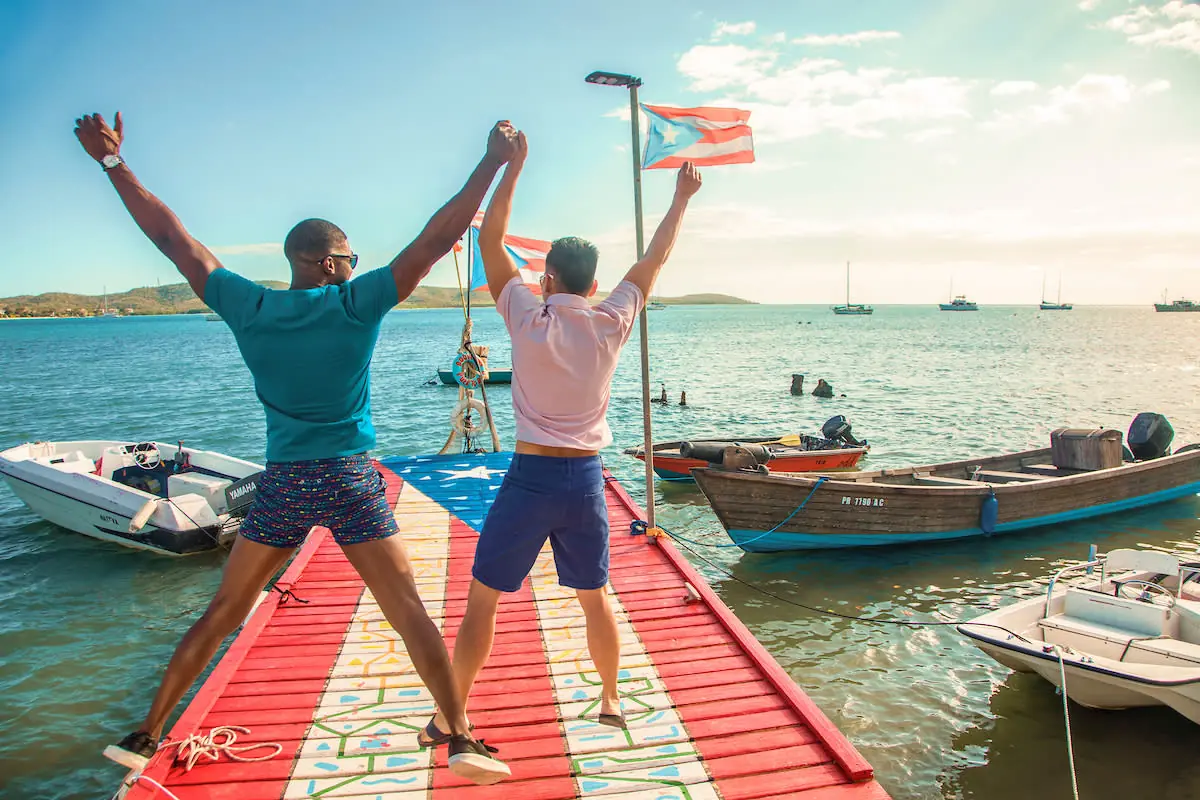
Walk through Old San Juan after 9 p.m. and your ears do the navigating: a barril drum thumping from a courtyard on Calle San Sebastián, a live salsa band spilling out of La Factoría, a car rolling past with reggaetón shaking the cobblestones. Puerto Rico dance isn’t a tourist show here — it’s how the island talks to itself. This guide covers the five core styles, where to actually experience each one, and which nights give you the highest odds of walking into something real.
What makes Puerto Rico dance unique?
Puerto Rico dance is a living fusion of three cultures: Taíno indigenous traditions, Spanish colonial music, and West African drumming carried by enslaved people over four centuries. That mix produced five distinct styles — Bomba, Plena, Danza, Salsa, and Reggaetón — each tied to a specific region, era, and social class on the island.
Most guides flatten this into “Puerto Ricans love to dance.” The real story is more specific, and it sits at the heart of Puerto Rican culture. Bomba was survival music on 17th-century sugar plantations. Plena was the working-class newspaper of Ponce. Danza was the ballroom language of the 19th-century Spanish elite. Salsa came home from New York in the 1960s. Reggaetón exploded out of San Juan housing projects in the 1990s. Knowing which is which is the difference between watching and participating.
Pro Tip: If you only have one night, spend it at La Placita de Santurce on a Friday. You’ll hear live salsa, bomba and plena within three blocks — no cover, no reservation, no dress code beyond “shoes you can move in.”
The five styles of Puerto Rico dance at a glance
Before we go deep, here’s your compass:
- Bomba (17th century, African origins): The most ancestral tradition. Built on improvisation and a real-time dialogue between the dancer and the lead drummer. Best experienced in Loíza and Santurce.
- Plena (late 1800s, Afro-Caribbean): “The sung newspaper” — a communal street rhythm that chronicled daily life in working-class Ponce. Easiest to catch at street festivals in Ponce or San Juan.
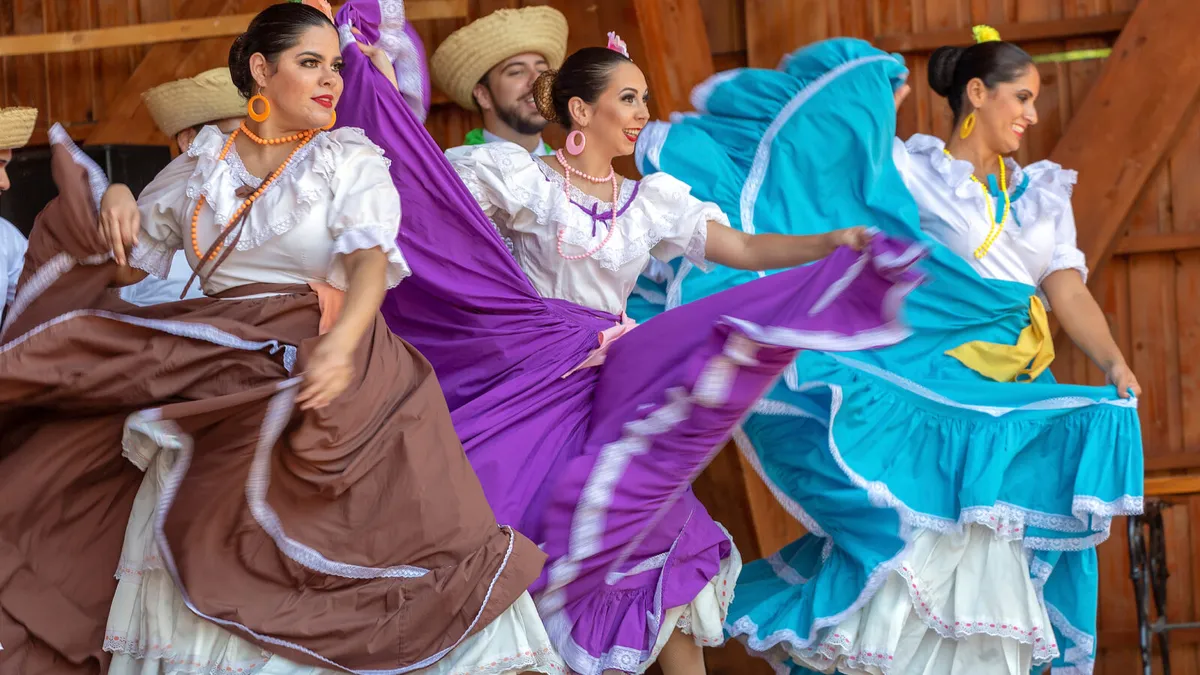
- Danza (19th century, European-criollo): An elegant ballroom form that became the island’s classical Puerto Rican music. The annual Fiesta Nacional de la Danza in Ponce is the only reliable way to see it live.
- Salsa (1960s, New York diaspora): The partnered dance that put Puerto Rico on the global nightlife map. San Juan has live salsa somewhere every night of the week.
- Reggaetón (1990s, urban Puerto Rico): The island’s biggest modern export. Dembow beat, perreo dance, and the soundtrack of every club from Condado to Ponce.
Folkloric Puerto Rico dance: traditions that endure
The heart of the island’s dance culture lives in its folkloric forms, preserved in the communities where they were born. Experiencing Bomba, Plena and Danza means traveling across the island’s social geography — from historically Black coastal towns like Loíza to the colonial salons of Ponce.
What is Bomba and where can I experience it?
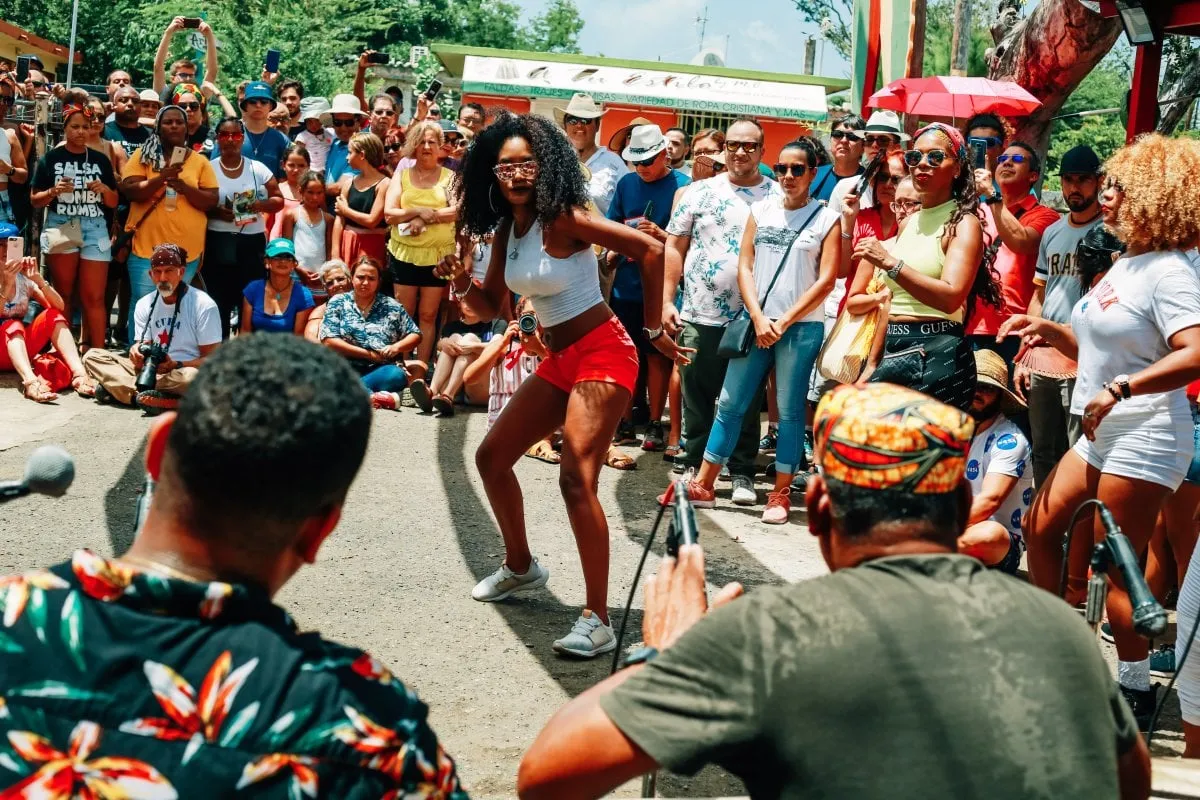
Bomba is a 400-year-old Afro-Puerto Rican dance built around a real-time dialogue between a solo dancer and a lead drummer. Born on 17th-century sugar plantations as a survival tool for enslaved West Africans, it’s the oldest continuous dance tradition on the island. You can experience it authentically in Loíza, at Santurce cultural centers, or at beginner workshops on San Juan beaches.
What makes Bomba different from every other dance you’ll see on the island: the music follows the dancer, not the other way around. In a circle called the batey, a solo dancer steps in and begins a conversation with the lead drummer playing the subidor. The dancer throws out improvised movements called piquetes — a shoulder shake, a foot stomp, a sharp swing of the skirt — and the drummer has to match every single move in real time. The steady pulse of the buleador drum and call-and-response singing hold the whole thing together.
There are three rhythms worth knowing:
- Sicá: Slower, more sensual, the most common entry point for beginners.
- Yubá: Aggressive, heavy, the rhythm tied most directly to resistance.
- Holandés: Fast and joyful — this is the celebration rhythm.
For travelers, a workshop is the best first step. The Bomba Folklore Class on Ocean Park Beach in San Juan runs at sunset and hands women long flowing faldas (skirts) to use as an expressive tool — you’ll feel ridiculous for about 90 seconds, then you won’t. Educator Lío Villahermosa puts it well: anyone with a body and something to say can find their path in Bomba. It’s not gatekept.
Pro Tip: Skip the hotel-lobby “Bomba shows.” They’re staged for cruise-ship audiences and cut out the improvisation entirely, which is the whole point. Go to Loíza on a weekend or find a real bombazo (community jam) in Santurce instead.
Where to experience authentic Bomba:
- Workshops: Bomba Folklore Class (San Juan), Across Caribe Percussion with Beto Torrens, Taller Comunidad La Goyco (Santurce)
- Cultural institutions: El Batey de los Hermanos Ayala (Loíza), Escuela de Bomba y Plena Rafael Cepeda Atiles (Santurce)
- Live performances: La Terraza de Bonanza (Mondays, Santurce), El Boricua (Río Piedras)
What is Plena and where can I hear it?
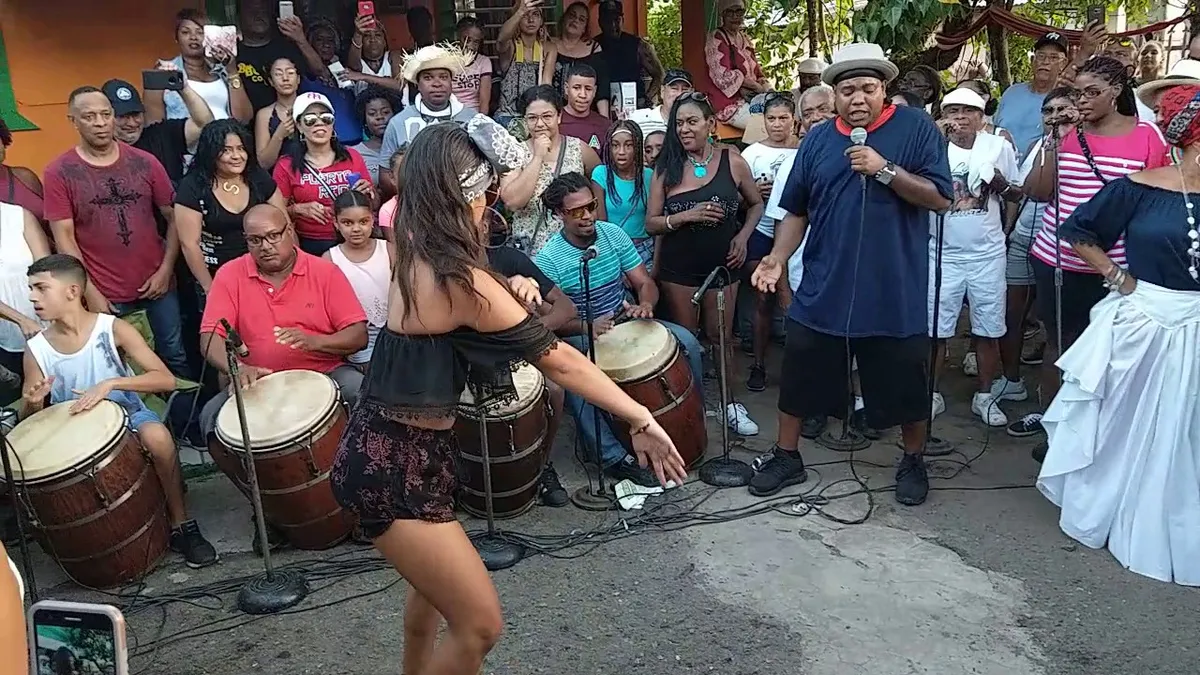
Plena is a sung, percussion-driven Afro-Puerto Rican folk form that emerged from the working-class barrios of Ponce in the late 19th century. Known as el periódico cantado (“the sung newspaper”), its lyrics narrate storms, scandals, politics and neighborhood gossip, usually with a sharp sense of humor. You can catch it at Casa de la Plena Tito Matos in San Juan, street festivals in Ponce, and Thursday nights at Esquina El Watusi in Santurce.
Musically, Plena centers on the pandereta — three handheld frame drums in different sizes — plus the Taíno-rooted güiro. Unlike Bomba, it has no drummer-dancer dialogue. Plena is collective: pleneros set up on a street corner, a crowd forms, and by the third song strangers are singing the chorus together. The easiest place to stumble into it is during the Fiestas de la Calle San Sebastián in Old San Juan, when pleneros fill the streets for four straight days.
Where to find Plena:
- Cultural center: Casa de la Plena Tito Matos (San Juan)
- Live venues: Café Borikén (Río Piedras), Esquina El Watusi (Thursdays, Santurce), Lunes de Plena (Old San Juan)
- In Ponce: Walk through the San Antón neighborhood — it’s mentioned by name in half the classic Plena songs still in rotation.
What is Danza and where can I see it performed?
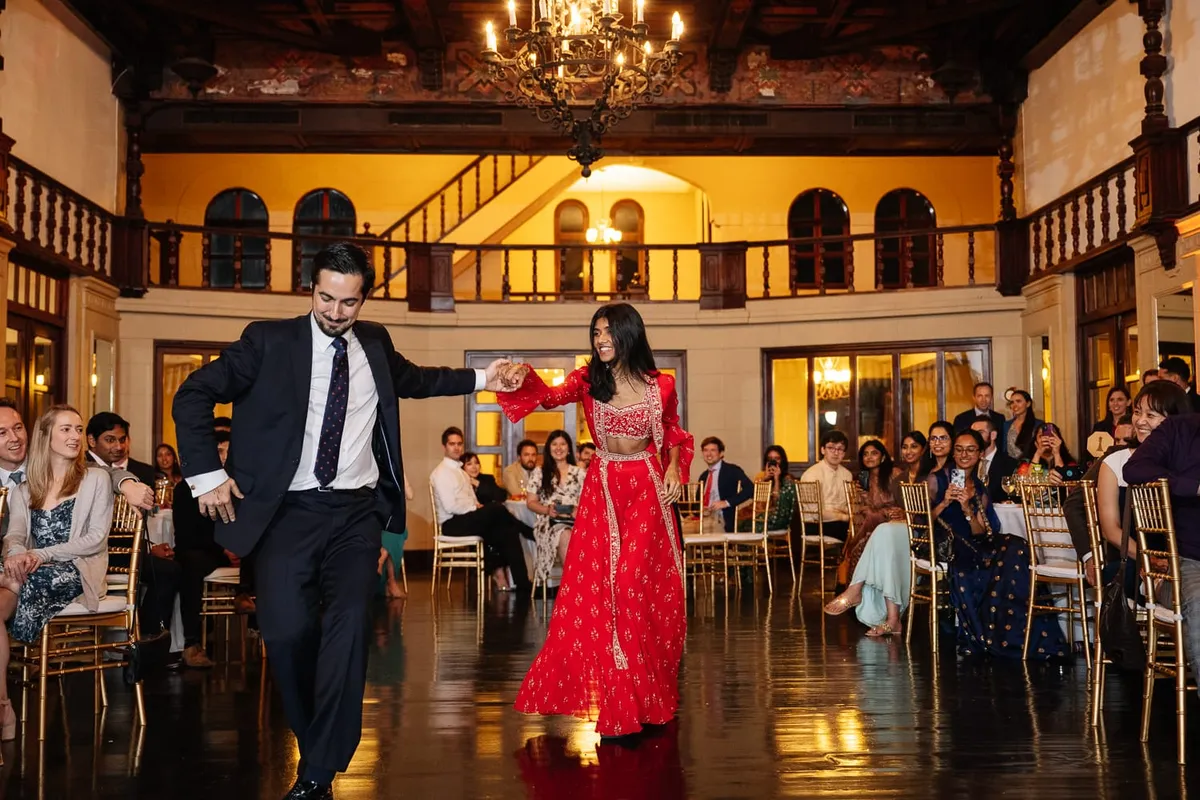
Danza is a formal 19th-century Puerto Rican ballroom dance that fuses European waltz traditions with a subtle Afro-Caribbean syncopation. It was the cultural signature of the criollo (island-born Spanish) elite, and its most famous composition — “La Borinqueña” — is the Puerto Rican national anthem. The only reliable way to see it performed today is at the Fiesta Nacional de la Danza in Ponce every mid-May.
Danza is dignified, slow and performed by couples in evening dress. Traditionally it begins with the paseo, a ceremonial walk around the ballroom, and women used hand fans as a coded flirtation language — a fan held a certain way meant “yes,” another way meant “follow me outside.” Juan Morel Campos, the Ponce composer who elevated Danza to art music, died mid-performance at the Teatro La Perla in 1896, and that theater is still the festival’s main stage.
- When: Mid-May, one week long
- Where: Teatro La Perla, Plaza Las Delicias, and Concha Acústica in Ponce
- What to expect: Chamber orchestras under the plaza lights, formal dance competitions, a parade, and older couples in period dress demonstrating steps they learned as children
- Cost: Most events are free; theater performances are ticketed and inexpensive
Outside of this week, seeing Danza performed live requires specific planning — usually through the Instituto de Cultura Puertorriqueña or the Instituto de Música Juan Morel Campos in Ponce.
Modern Puerto Rico dance: salsa and reggaetón
Folkloric dances tell the island’s past. Salsa and reggaetón tell its present — and for most travelers, these are the rhythms you’ll actually end up dancing to.
Where is the best place to dance salsa in San Juan?
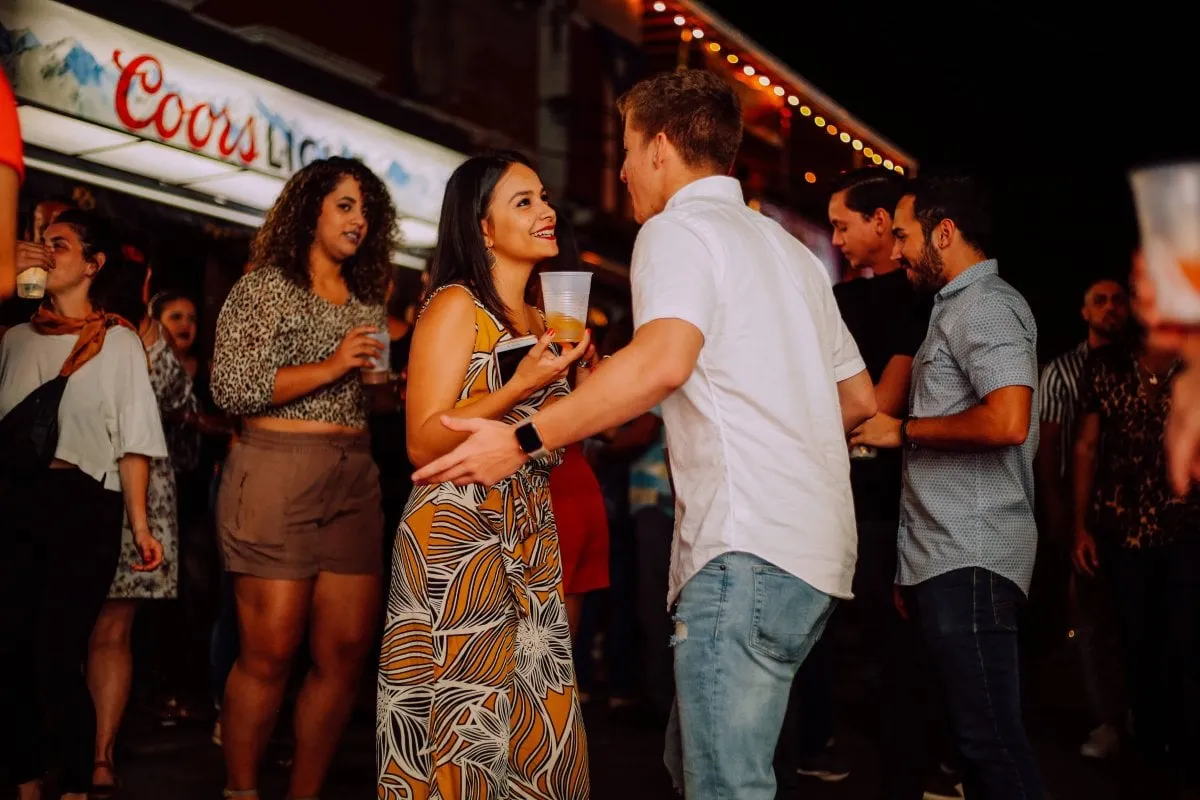
The best places to dance salsa in San Juan are La Factoría in Old San Juan (live band Sunday and Monday nights), Taberna Los Vázquez in La Placita de Santurce (Friday through Sunday), and El Boricua in Río Piedras. Beginners should start with an outdoor sunset class at Ventana al Mar in Condado before hitting a club — the social floors expect you to know the basic step.
Salsa came back home to Puerto Rico in the 1960s after it was forged in New York’s Puerto Rican and Cuban neighborhoods. The name (“sauce”) fits — it’s Cuban son, Puerto Rican Bomba and Plena percussion, and American jazz all thrown in the same pot. Technically, it’s a partnered dance built on a three-step pattern over four beats of music, with the break on beat 1 (On1, the LA style) or beat 2 (On2, the NY style). In practice, the basic step matters far less than reading your partner and finding the clave.
Here are the spots worth your time:
- La Factoría (Old San Juan): Address: 148 Calle San Sebastián. The unmarked wooden door hides six interconnected bars; the salsa room (El Shingaling) is at the back and features the house band La 51 every Sunday and Monday from around 10 p.m. It gets packed by midnight — honest warning, on weekend nights you can barely move, let alone dance a full basic. Go on a Sunday instead of Monday for slightly more floor.
- Taberna Los Vázquez (La Placita de Santurce): Address: 1425 Av. Manuel Fernández Juncos. A no-frills neighborhood bar where the dance floor spills into the street Friday through Sunday. This is where locals actually go. The crowd is mixed ages, the beer is cold, and nobody cares how good you are.
- Piso Viejo (Calle Loíza): Thursday is salsa night, complete with a live orchestra and free lessons before the band starts. Younger crowd than La Placita.
- El Boricua (Río Piedras): Open since 1979, a block from the University of Puerto Rico. Live salsa, bomba and plena depending on the night. Student energy, cheap drinks.
Pro Tip: At La Placita on a Friday, the real action starts around 11 p.m. and doesn’t peak until 1 a.m. Show up at 9 and you’ll be staring at an empty street corner wondering if you got the day wrong. You didn’t — Puerto Rico just runs late.
What is reggaetón and where do you dance it in Puerto Rico?
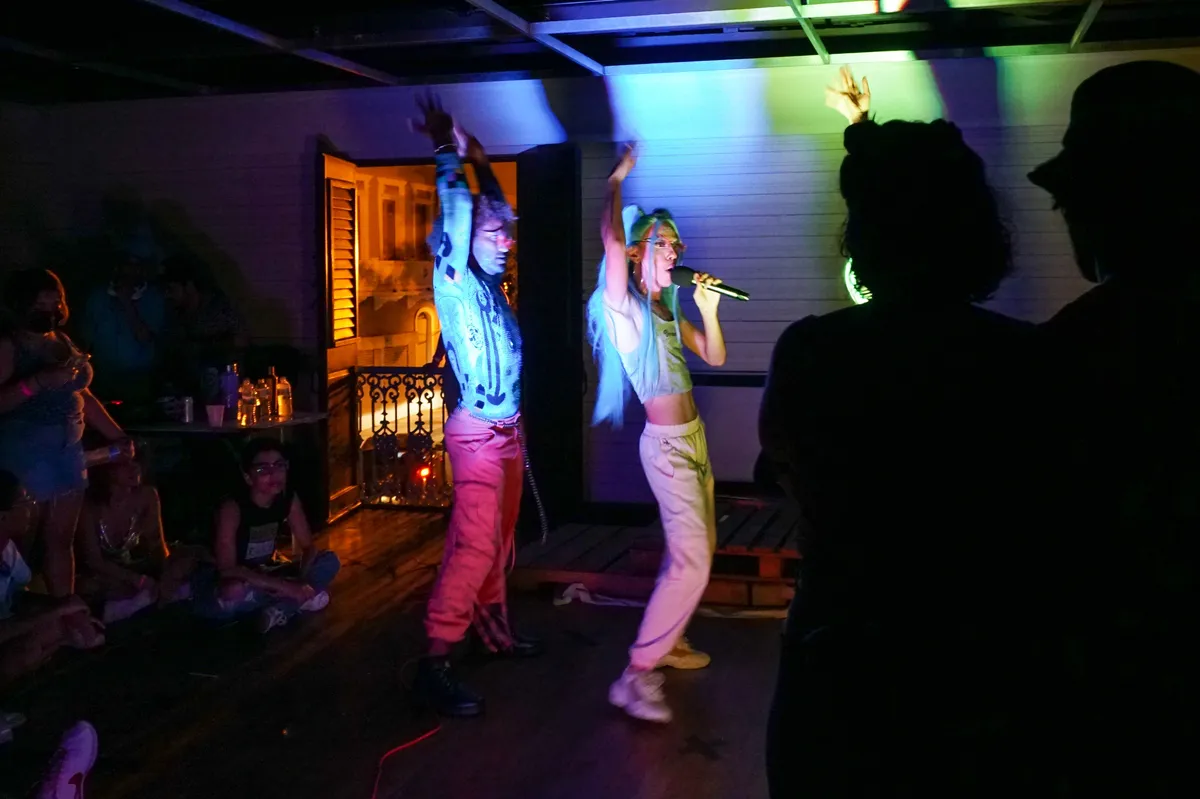
Reggaetón is a Puerto Rican urban music genre built on the dembow beat, a fusion of Jamaican dancehall, Panamanian reggae en español and American hip-hop that emerged from San Juan housing projects in the late 1980s. Its associated dance, perreo, is a close, hip-driven partner style. You can hear it everywhere on the island, but the best clubs are in San Juan (Club Brava, La Respuesta) and Ponce (Venus Club).
Reggaetón started as underground cassette music in the barrios, condemned for years by Puerto Rican authorities before artists like Daddy Yankee, Ivy Queen and later Bad Bunny carried it to the top of the global charts. If Bomba is the island’s oldest voice, reggaetón is its loudest.
Where to experience reggaetón:
San Juan (the epicenter):
- Club Brava & Fifty Eight: Upscale clubs inside El San Juan Hotel in Isla Verde. Top DJs, dress code enforced, prices steep.
- La Respuesta (Santurce): Alternative, artsy venue that hosts dedicated reggaetón and perreo nights. Cheaper, younger, better music curation.
Ponce:
- Venus Club: Ponce’s main reggaetón-forward nightclub.
- Taboo Night Club PR: Mixes salsa, reggaetón and merengue on the same night.
How do you plan a Puerto Rico dance trip?
The short answer: pick one folkloric style to take a workshop in (Bomba is the easiest to access), base yourself in Santurce or Old San Juan for nightlife, and time your trip around one of the annual festivals below if you can. For broader logistics, our Puerto Rico travel guide covers transport, neighborhoods and timing in detail. You don’t need a car in San Juan — rideshare between neighborhoods runs $5–$12.
Where can you take dance classes in Puerto Rico?
San Juan and Ponce have the highest concentration of schools and drop-in classes. A single beginner class runs $15–$40 depending on format; private lessons are $50–$100/hour.
San Juan — social group classes:
- Cambio en Clave: Large, social group classes held at the Museum of Art of Puerto Rico in Santurce.
- Santurce Salsa Club: Beginner-friendly drop-ins, small groups.
San Juan — formal instruction:
- Arthur Murray Dance Studio: Structured Latin ballroom curriculum.
- Your Style Academy: Offers both Salsa On1 (LA style) and On2 (NY style).
San Juan — folkloric:
- DanzaActiva: Bomba, Salsa and Spanish Flamenco under one roof.
Ponce:
- Club Salsa PR: Drop-in classes at Plaza del Caribe mall.
- Ponce Cuna de la Salsa Tour: Guided walking tour of the city’s historic salsa sites.
Island-wide: Airbnb Experiences and GetYourGuide both list dozens of independent instructors running classes on beaches, rooftops and in private studios. Read recent reviews carefully — quality varies.
What are the best annual dance festivals in Puerto Rico?
Timing a trip around one of the island’s biggest cultural festivals is the highest-value way to experience Puerto Rico dance. Five festivals worth building a trip around:
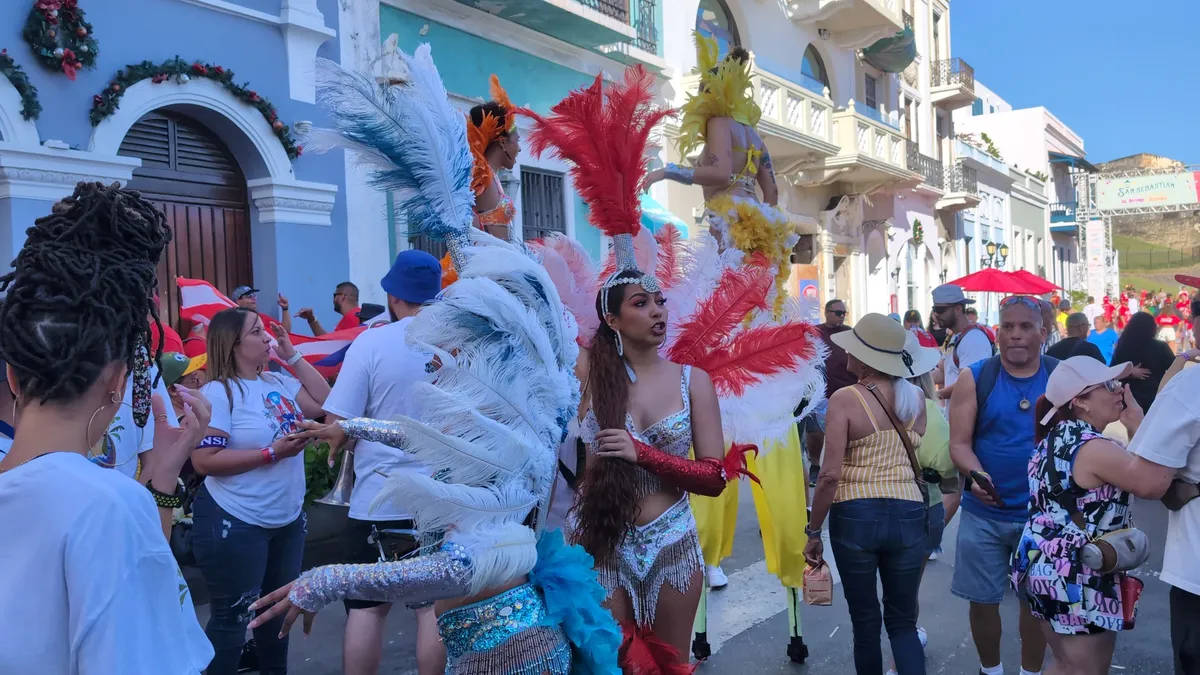
- Fiestas de la Calle San Sebastián: January, Old San Juan. Four-day street party with nonstop Plena, Bomba and Salsa. Free.
- Carnaval de Ponce: February, Ponce. Traditional carnival with parades, Plena and Bomba. Free.
- Fiesta Nacional de la Danza: Mid-May, Ponce. The only reliable week to see Danza performed live. Most events free.
- Día Nacional de la Zalsa: October, Plaza de la Independencia in San Juan. The biggest salsa event on the island, running since 1984. Ticketed.
- Festival de Bomba y Plena: Varies, Ponce and San Juan. Check the Instituto de Cultura Puertorriqueña calendar close to travel dates.
What should you wear to dance in Puerto Rico?
- Bomba or Plena workshop: Women should wear a long, full, flowing skirt (the falda is used as a prop in the dance — the instructor usually provides one if you don’t have it). Men wear comfortable pants or shorts.
- Salsa club: Smart casual. Something you can move in but still look put-together. Shoes with smoother soles beat sneakers — sneakers grip the floor and kill your turns. A low block heel or a leather-soled flat works.
- Danza performance at Fiesta Nacional: Dress as you would for the theater. No shorts, no flip-flops.
- Outdoor or beach class: Athletic or yoga wear. You’ll probably be barefoot.
- Reggaetón clubs: The upscale spots (Club Brava, Fifty Eight) enforce a dress code — closed shoes for men, no athletic wear. La Respuesta and neighborhood spots don’t care.
Before you book
TL;DR: Puerto Rico dance is five distinct traditions, not one. Take a Bomba workshop in Santurce or on Ocean Park Beach to feel the roots, spend a Sunday night at La Factoría or a Friday at La Placita de Santurce for live salsa, and if your dates line up, plan around the Fiesta Nacional de la Danza in Ponce in May or Día Nacional de la Zalsa in October.
The thing most guides miss: you don’t have to be good. Nobody on a Friday night in La Placita is judging your timing. They’re going to pull you onto the floor, spin you once, laugh when you mess up the cross-body lead, and keep going. That’s the point — dance is how the island welcomes strangers. Show up curious and the rest takes care of itself.
What’s the first style you want to try — the ancestral pull of Bomba, or the social energy of salsa? Drop a comment and tell me where you’re planning to start.