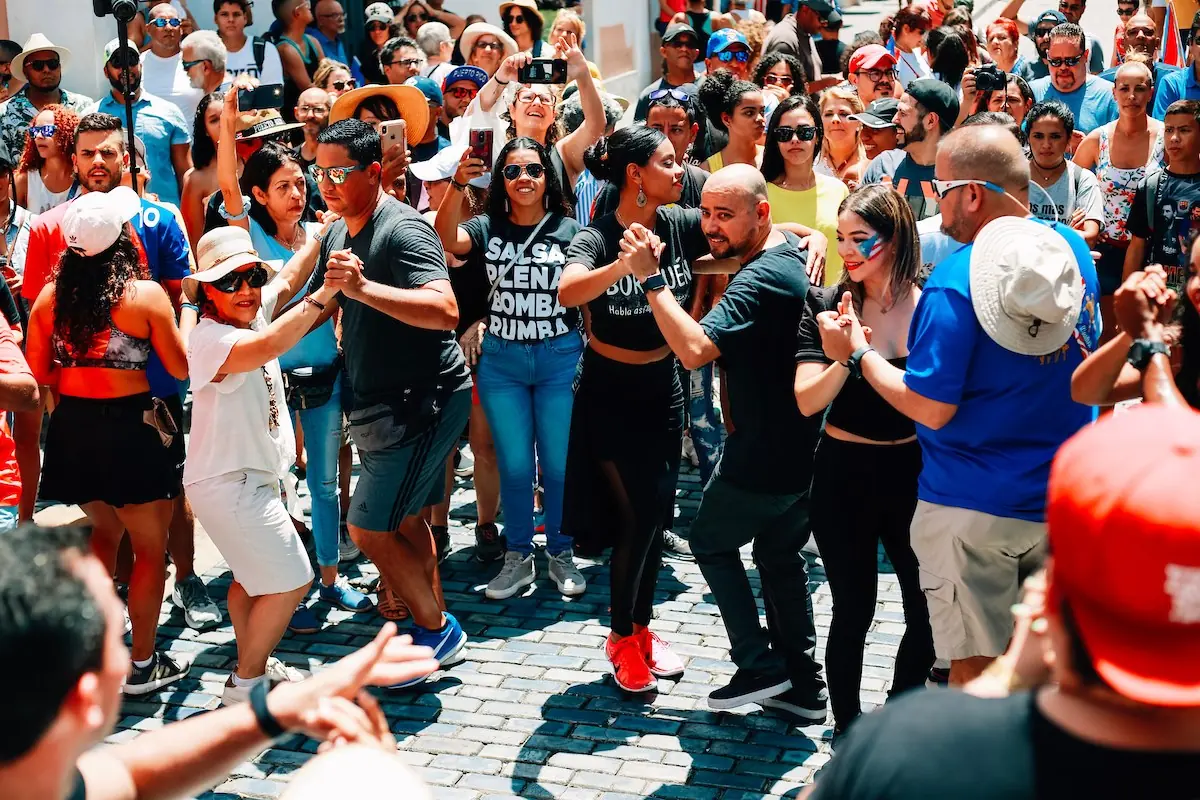
Christmas in Puerto Rico is not a day — it is a 45-day endurance test of roasted pork, late-night music, and the kind of family density that would overwhelm a smaller island. This guide gives you the cultural mechanics, exact prices, and transit hacks for getting around Puerto Rico you need to navigate Las Navidades without landing on the wrong side of a closed restaurant.
How long is the Christmas season in Puerto Rico?
Christmas in Puerto Rico runs approximately 45 days, beginning after Thanksgiving and concluding in mid-January with the Fiestas de la Calle San Sebastián. The timeline moves through distinct phases: Nochebuena on December 24, Christmas Day, New Year’s Eve (Despedida de Año), Three Kings Day on January 6, the eight-day Octavitas, and finally SanSe.
Each phase carries its own social weight. Nochebuena is the primary family gathering — the night the whole island sits down together before attending Misa de Gallo, the traditional midnight Mass. Christmas Day is quiet and deeply personal. New Year’s Eve shifts toward outdoor concerts and neighborhood block parties.
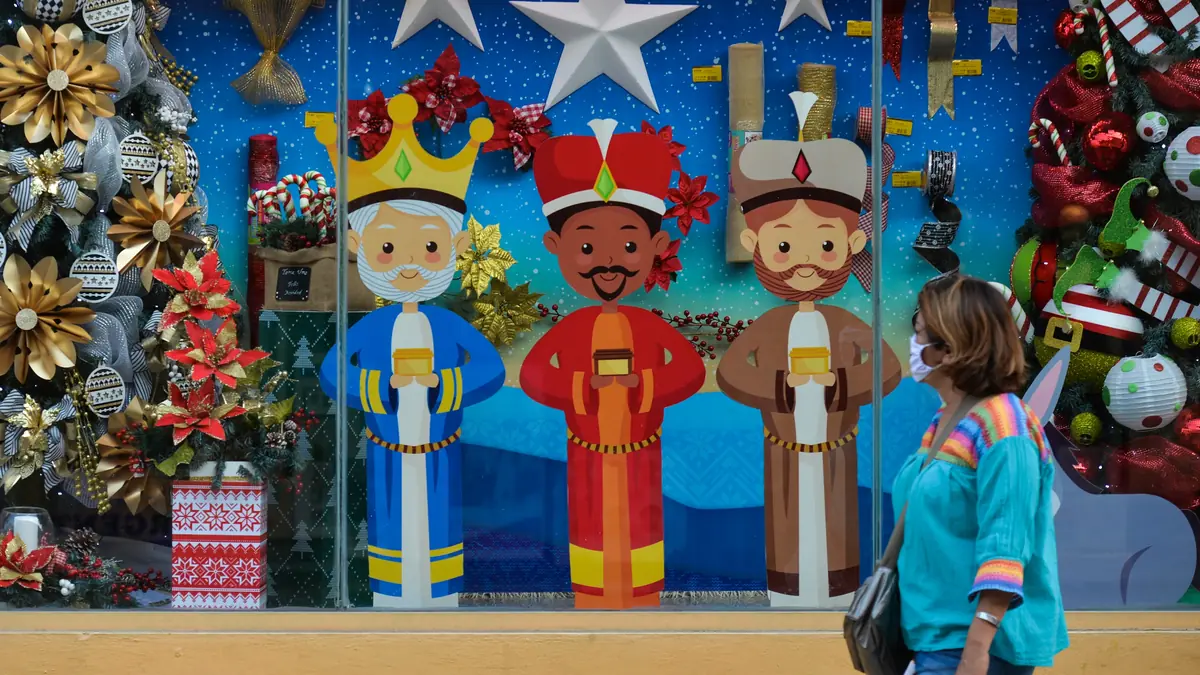
Three Kings Day on January 6 rivals Christmas in cultural significance. Children leave grass or hay under their beds the night before — feed for the camels carrying Melchor, Gaspar and Balthazar. The Reyes Magos arrival parades take place in towns across the island, with municipalities competing to stage the most elaborate processions, a tradition rooted deep in Puerto Rican culture.
Octavitas follows immediately after Three Kings Day: eight more days of religious music, family visits and enough leftover pasteles to last through the month. Then SanSe closes the season entirely, pulling hundreds of thousands of people into Old San Juan for a four-day street festival.
One detail most guides skip: locals begin decorating in late September and October. Christmas music starts before Halloween on the mainland, and nobody on the island makes excuses for it.
What are the traditional holiday events and festivals?
Traditional holiday events and Puerto Rico festivals blend religious observance with large street parties. Celebrations run across every municipality — not just San Juan — anchored by live music, community lighting competitions and neighborhood energy that spills out of town plazas and into every side street. The scale is decentralized by design.
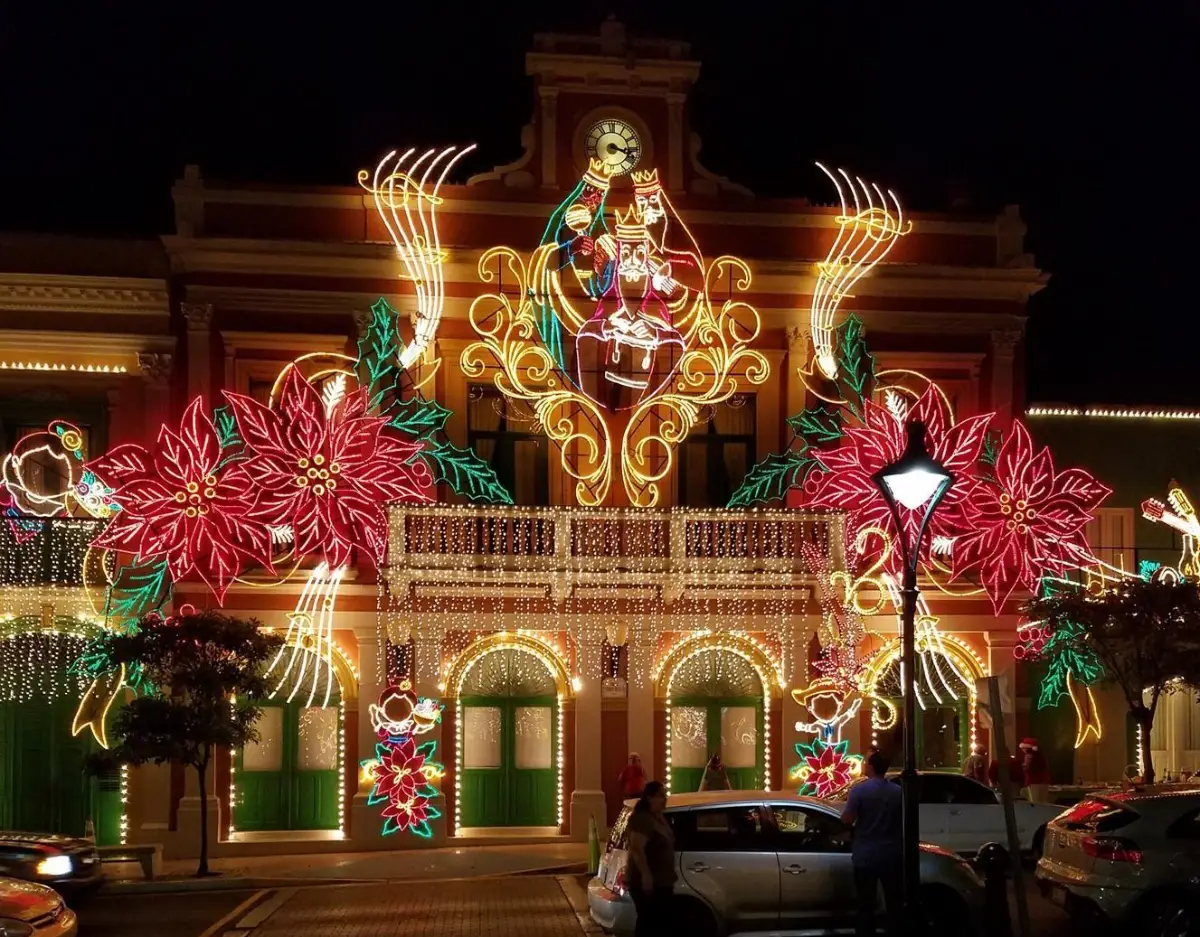
The season opens with municipal lighting ceremonies across the island. Towns like Jayuya, Culebra and Fajardo flip their plaza lights in early December to an audience of families and vendors selling fried food from kiosks (kioskos). Standing in a town square with chicharrones in hand, watching children chase each other past nativity scenes, is as Puerto Rican as Las Navidades gets.
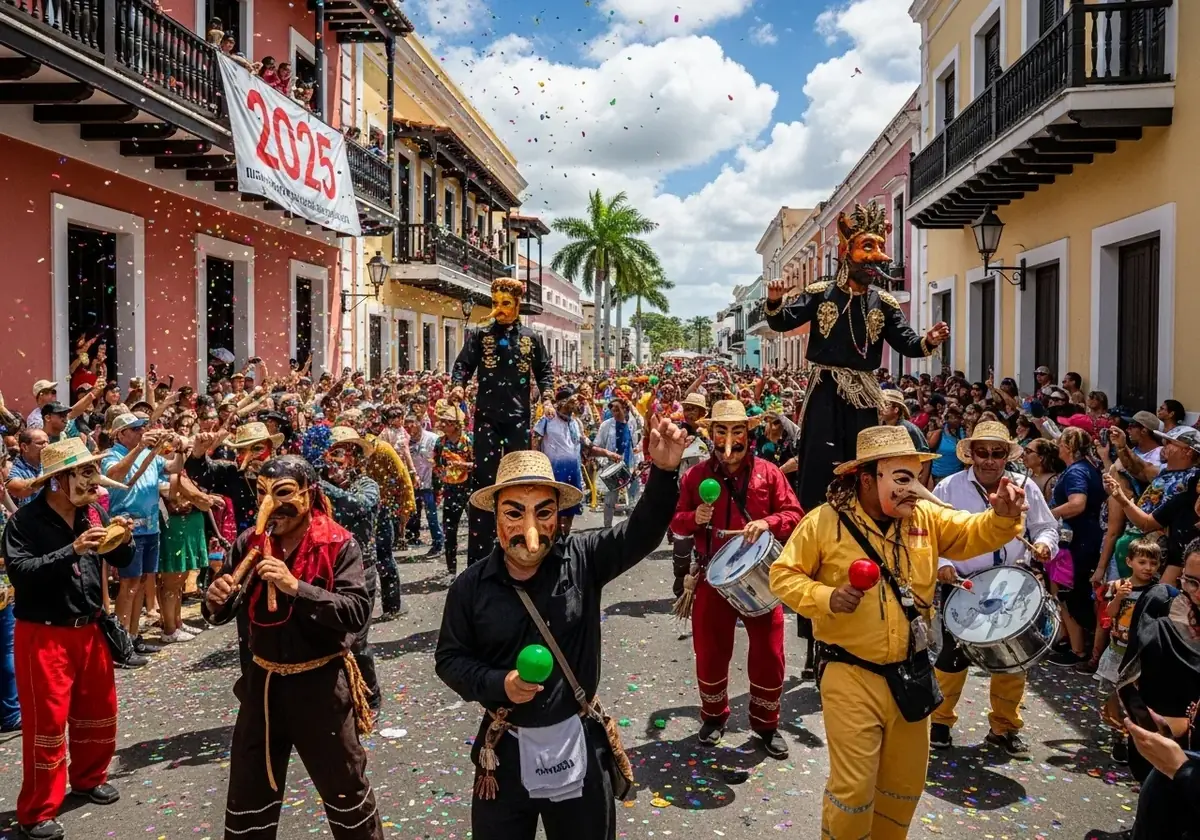
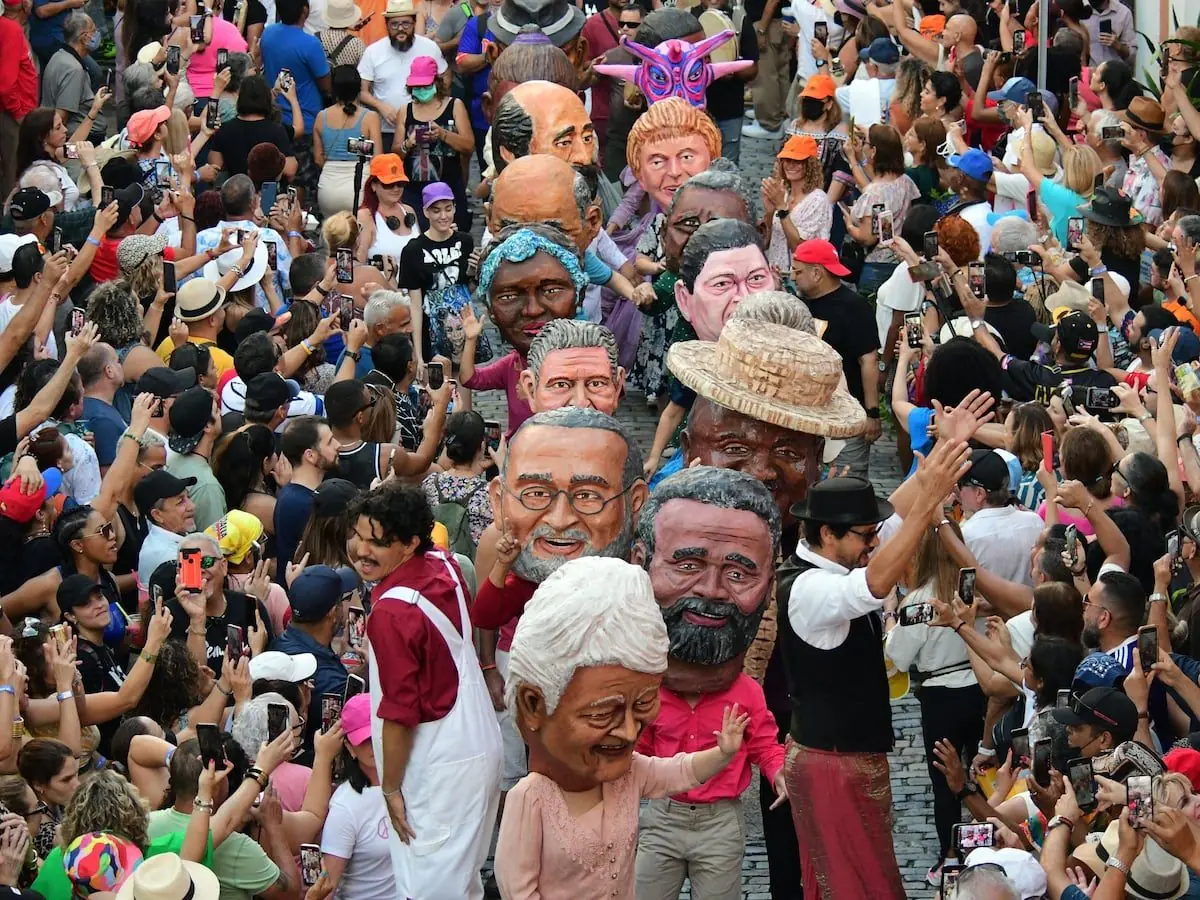
The Festival de Máscaras de Hatillo on December 28 is one of the more unusual events on the island’s calendar. The festival dramatizes the biblical Massacre of the Innocents through elaborate masks and costumes — vejigantes parading through the streets in layered color. It runs about 45 minutes from San Juan, skews family-friendly and draws a crowd that does not make it into most mainstream travel guides.
Pro Tip: The kioskos that appear around town plaza lighting ceremonies operate on island time. Showing up at the posted opening hour is optimistic — give yourself a 45-minute buffer and use it to walk the pesebre (nativity scene) display in front of the church.
Experiencing an authentic Puerto Rican parranda
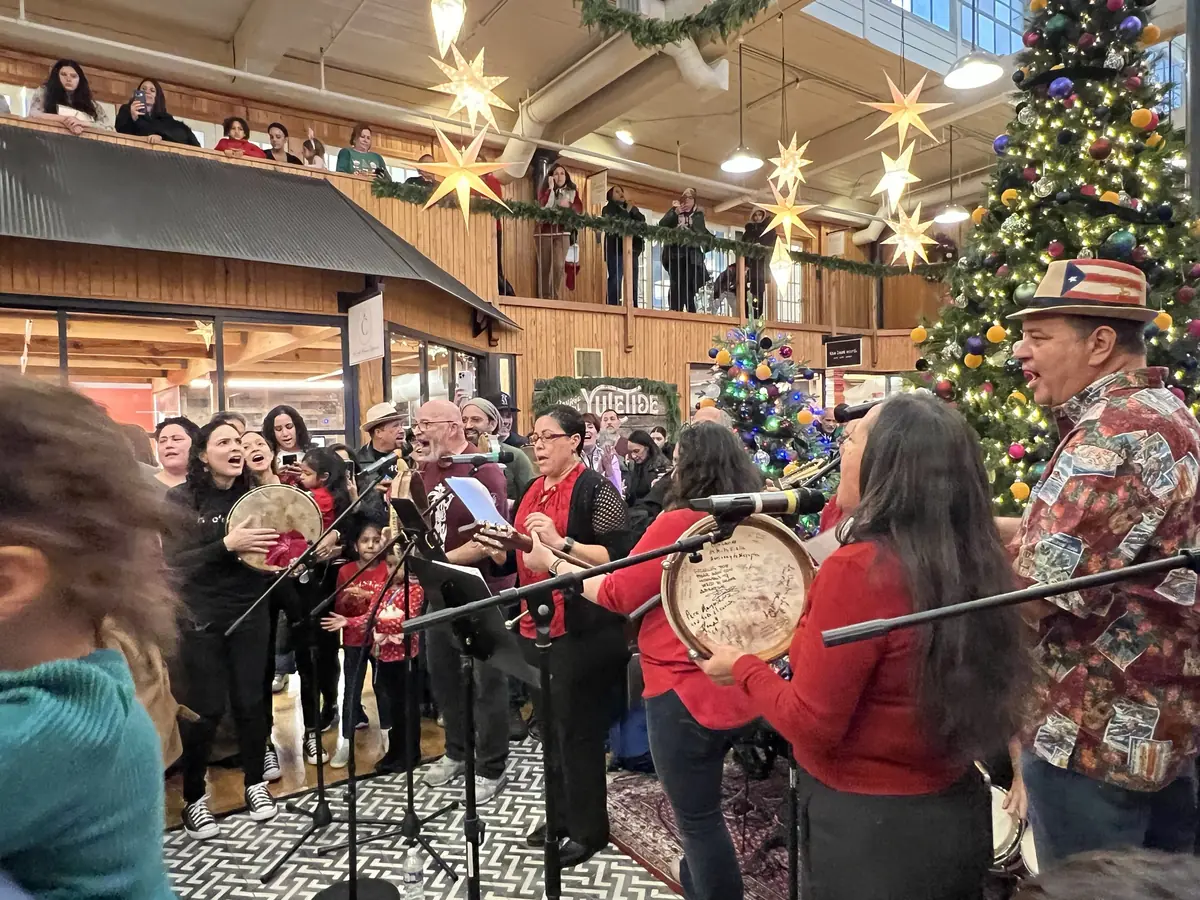
A parranda is the Puerto Rican equivalent of Christmas caroling, executed at midnight with full instrumentation and no warning. Groups secretly gather outside a home late at night, armed with a cuatro guitar, güiro, maracas, panderetas and tamboriles. They erupt into song to wake the household, who then invites them inside for food and drink before the whole party moves to the next house.
The event is formally called an asalto navideño — a holiday assault — which describes the energy accurately. The music alternates between aguinaldos (gift songs celebrating the season) and villancicos (traditional religious carols), and the instrumentation pulls directly from the broader catalog of traditional Puerto Rican music. Nobody stays home. The party accumulates people and volume across multiple addresses, sometimes lasting until sunrise.
If you are staying in a residential neighborhood, expect this. The sound of a güiro scraping in the humid night air — a rapid, dry rasp that cuts through ambient noise — followed immediately by voices and cuatro strings is unmistakable. You have roughly five seconds before the full ensemble opens at full volume.
To participate rather than just survive a parranda, find a local host. Showing up with food is not optional — it functions as the price of admission at every door. Airbnb hosts in residential neighborhoods occasionally extend invitations during the early weeks of December.
Pro Tip: Parrandas rarely happen in tourist-heavy zones like Condado or the Isla Verde hotel strip. If experiencing one is a priority, book a room in a residential neighborhood in Santurce or Río Piedras and plan your first two weeks of December accordingly.
Navigating the San Sebastián Street Festival
The Fiestas de la Calle San Sebastián, or SanSe, is a four-day festival in Old San Juan marking the end of Christmas in Puerto Rico. It draws between 750,000 and 1,000,000 attendees over four days. Navigating the crowds requires public transit — driving into Old San Juan during SanSe is not difficult, it is functionally impossible.
SanSe operates on two completely different frequencies depending on the hour. Before 3:00 PM, it is a relaxed artisan fair. Booths line the streets with hand-thrown pottery, vejigante masks, local prints and handmade jewelry. Families with strollers move from booth to booth without incident. Pleneros play in the plazas and the energy is high but manageable.
By 9:00 PM, the side streets become shoulder-to-shoulder corridors vibrating with reggaeton and live plena. Moving from one block to the next requires patience, a crossbody bag pressed flat against your body and a willingness to say “permiso” roughly forty times per city block.
The move most guides will not suggest: do not stay inside Old San Juan during SanSe if you have children or need consistent sleep. Book in Condado or Isla Verde and arrive by transit each day. The logistics of luggage, street closures and midnight noise inside the historic district make it miserable for anyone not specifically there for the all-night experience.
- Recommended transit: Tren Urbano to Sagrado Corazón station, then municipal shuttle
- Ferry alternative: $0.50 Cataño ferry, 12-minute crossing to Pier 2 in Old San Juan
- Best hours for families: 11:00 AM to 3:00 PM
- Adult atmosphere begins: 7:00 PM onward
Pro Tip: Bring $20–$40 in small bills specifically for the artisan booths. Card readers in dense festival zones lose connectivity during peak hours, and the best handmade pieces go to whoever has cash in hand.
What is the traditional Christmas food in Puerto Rico?
Traditional Christmas food in Puerto Rico centers on rich, layered flavors that require hours of preparation. The anchor of every holiday table is lechón asado (slow-roasted pork), served alongside pasteles (savory root vegetable dough stuffed with meat and boiled in banana leaves) and arroz con gandules (rice cooked with pigeon peas and sofrito). Dessert means tembleque or arroz con dulce.
These three dishes are not optional. Showing up to a Nochebuena without them would be the Puerto Rican equivalent of skipping turkey at Thanksgiving. The entire social architecture of the season is organized around preparing and consuming this food together.
Morcillas (blood sausage) and pitorro — homemade moonshine rum, technically outside the law but universally present at family gatherings — make regular appearances. Tembleque is a coconut milk pudding with a silky, gelatinous texture that splits opinions cleanly: locals love it, first-timers are uncertain. Arroz con dulce is sweet rice pudding spiced with cinnamon, cloves and ginger, served cold.
Sourcing authentic lechón asado on the Pork Highway
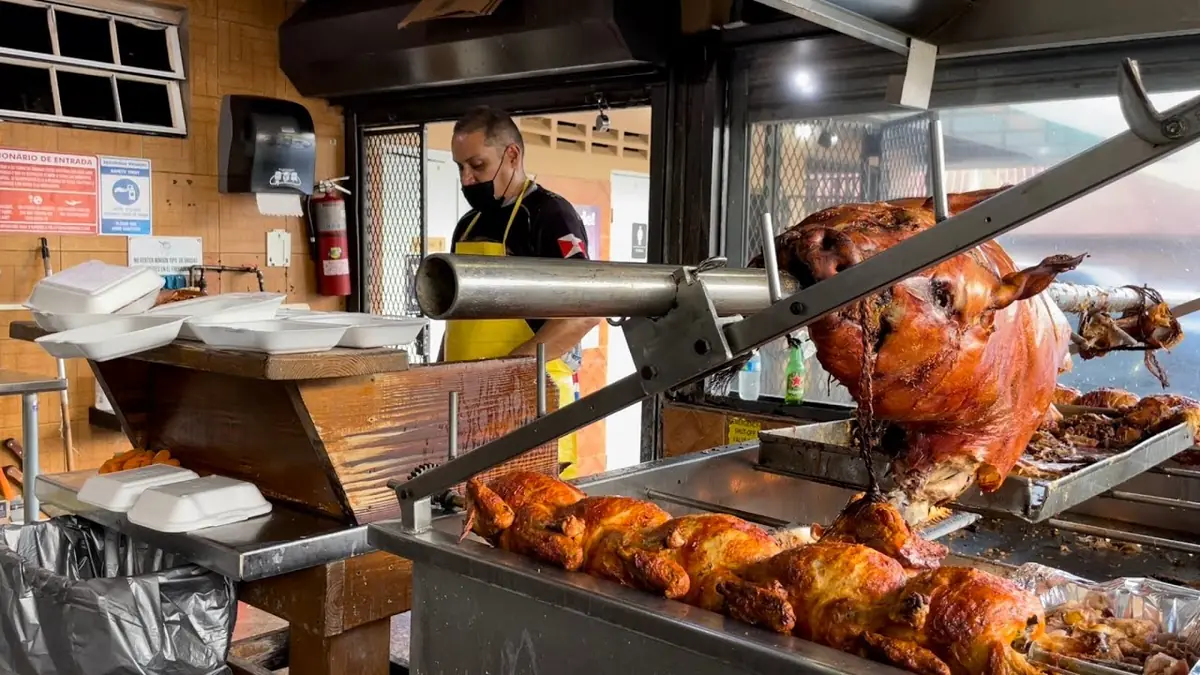
Lechón asado, whole spit-roasted pig, is the centerpiece of the Puerto Rican holiday table. The best place to experience it is Guavate, a stretch of mountain road in the central municipalities known locally as the Pork Highway. Lechoneras line both sides of the route along the Guavate Pork Highway (La Ruta del Lechón), and a pound of freshly roasted lechón here costs between $12 and $15.
Lechonera Los Pinos is the most consistently referenced stop along Route 184 — open-air, loud, family-operated, with a pit that never goes cold during the holiday season. The pig slow-roasts over smoldering hardwood for hours, developing a smokiness that no urban restaurant replicates.
The most coveted part of the animal is the cuerito — the crispy, blistered outer skin. Locals do not politely wait for a piece; they negotiate with the carver at the counter. The best cuerito cracks audibly when you bite through it, gives way to a thin layer of rendered fat, and is gone before you have fully registered what just happened. Arrive before noon if securing cuerito is the priority — it disappears fast.
- Location: Route 184, Guavate, Cayey (central mountains, ~30 miles / 45 minutes from San Juan)
- Cost: $12–$15 per pound of lechón asado
- Best time to arrive: Before noon on weekends during the holiday season
- Time needed: 1.5–2 hours for the full experience
- Best for: Anyone willing to make the drive for the definitive version
The cultural significance and cost of handmade pasteles
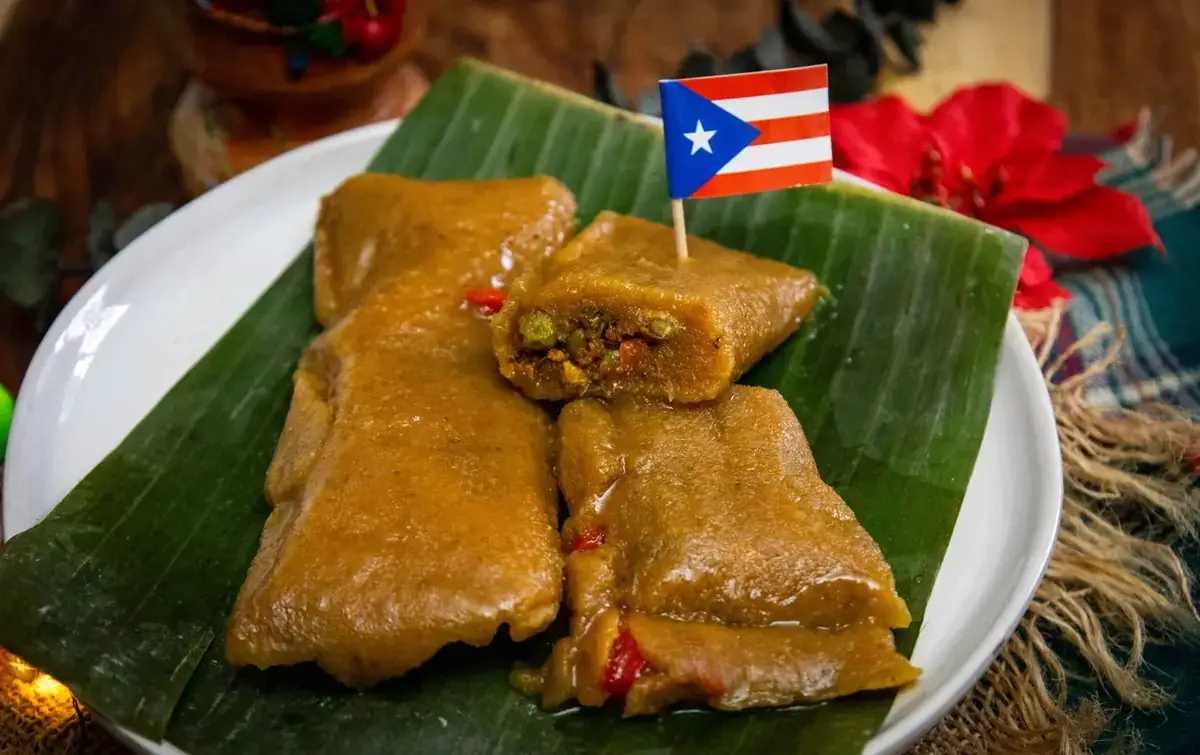
Pasteles are made from a masa of green bananas, yautía and plantains, stuffed with seasoned pork or chicken, wrapped in banana leaves and boiled. The preparation is labor-intensive enough that making pasteles is treated as its own event — a family assembly line that occupies most of a day and produces enough to last two weeks. Authentic, handmade pasteles from local vendors cost between $35 and $120 per dozen.
The price range reflects both the labor and the filling. Standard pork or chicken pasteles occupy the lower end. Oxtail, bacalao (salted cod), or vegan-stuffed versions made with jackfruit climb toward $100 to $120 per dozen. The banana leaves impart a subtle, vegetal steam note to the masa that frozen or canned versions cannot reproduce.
If a local family hands you a hot, freshly made pastel, eat it immediately and express genuine gratitude. That single pastel represents approximately fifteen minutes of someone’s physical labor in a recipe that has traveled through generations. Treating it like a snack is a social miscalculation.
- Cost: $35–$120 per dozen (varies by filling and vendor)
- Best source: Local market vendors or paradores rather than supermarkets
- Time to eat one: 20–30 minutes, if you’re being honest
The secret to mixing authentic Puerto Rican coquito
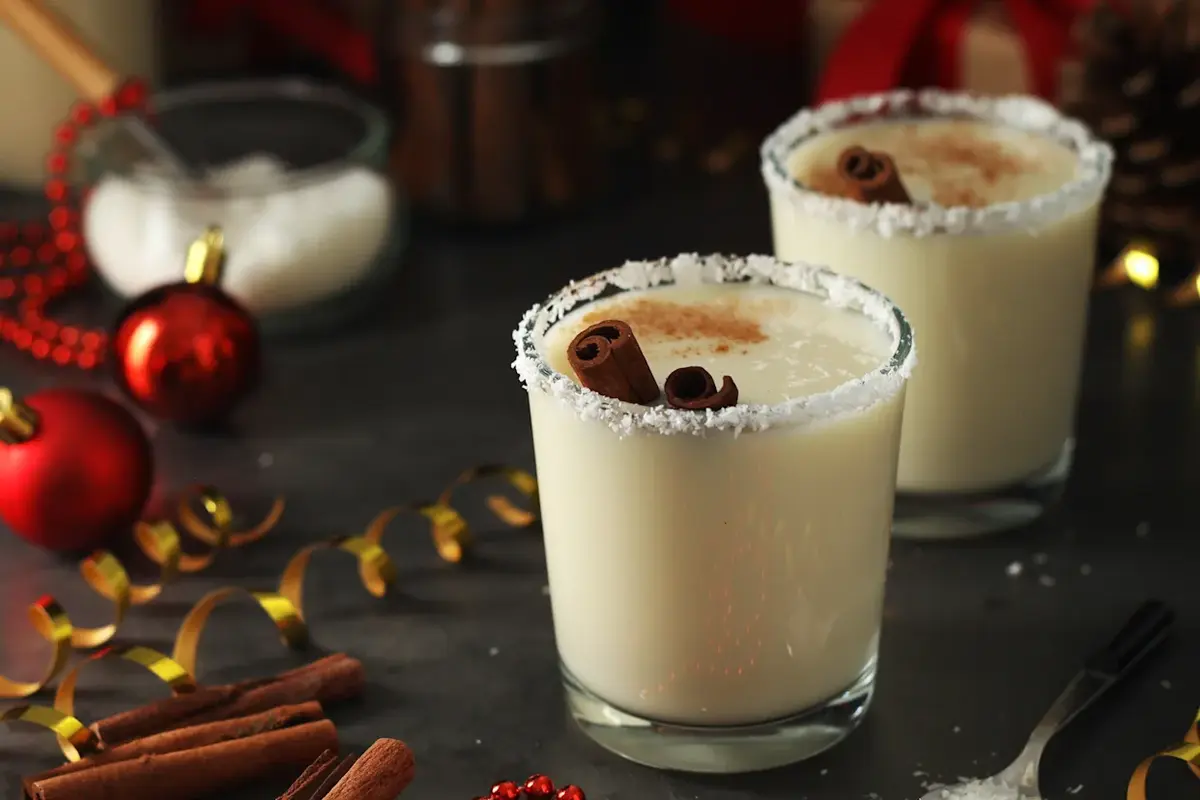
Coquito is Puerto Rico’s signature holiday drink — creamy, coconut-forward, often compared to eggnog but made without eggs in the modern tradition. The recipe blends evaporated milk, sweetened condensed milk, coconut cream, vanilla extract, cinnamon and rum. For real depth of flavor, use an aged local spirit — specifically Ron del Barrilito 3 Star — rather than a clear, mass-market rum, a distinction any Puerto Rico rum tour will hammer home within the first tasting.
Ron del Barrilito 3 Star runs approximately $34.99 per bottle and brings oaky, molasses-forward notes that transform coquito from a sweet novelty into something that tastes like it has been sitting in someone’s family recipe for seventy years. The clear rum most tourists default to makes coquito taste like a coconut milkshake with a kick. That is not the same drink.
Coquito is served chilled in small cups, never warm, with freshly grated nutmeg on top. The viscosity is thicker than you expect the first time — it coats the cup when you tilt it. That is the coconut cream doing its job. Drink it slowly.
- Key ingredients: Evaporated milk, condensed milk, coconut cream, cinnamon sticks, vanilla extract, rum
- Recommended rum: Ron del Barrilito 3 Star (~$34.99 per bottle)
- Serving temperature: Chilled, never warm
- Best for: Bringing to a parranda as your contribution to the household
Which underrated towns host the best holiday celebrations outside San Juan?
Travelers looking to avoid metropolitan crowds during Christmas in Puerto Rico should head to the western coast. Towns like Rincón, Mayagüez and Cabo Rojo feature elaborate town square lighting displays and a relaxed coastal pace that makes the season feel personal rather than overwhelming. These areas also offer some of the strongest winter surfing conditions in the Caribbean.
The western municipalities take plaza decorations seriously. Rincón, Mayagüez and Añasco compete informally for the most detailed lighting display, and the tradition of the pesebre — a large nativity scene positioned in front of the church — runs deep in every town square. The baby Jesus figure stays absent from the manger until December 25. The empty crib sits in full view for weeks before it, and children track it closely.
Rincón earns a specific mention. Standing at the plaza on a December evening with a lechón sandwich in hand, watching a town Christmas tree decorated with seashells, small Puerto Rican flags and fishing net fragments while 8-to-10-foot (2.5–3 m) winter surf breaks push through on the point breaks just beyond the town limits — the contrast between deep tradition and raw Atlantic conditions produces a specific kind of travel moment that no itinerary fully prepares you for.
These western towns are the right answer during SanSe weekend. While San Juan handles close to a million visitors, Rincón’s beach bars are uncrowded, the lechoneras have no lines, and a parranda moving through a residential street at midnight is audible without competing noise from two blocks away.
- Rincón: Best for surfers, sunset views and low-crowd Nochebuena
- Mayagüez: Best for town plaza atmosphere and proximity to Cabo Rojo
- Cabo Rojo: Best for families wanting beaches without the capital’s density
- Añasco: Quietest option with traditional village character
Pro Tip: Book accommodations on the west side at least two months out. The local rental inventory is smaller than San Juan’s, and the well-located properties disappear early.
Is everything closed in Puerto Rico on Christmas Day?
Puerto Rico is deeply family-oriented, meaning the majority of local businesses, supermarkets and attractions close entirely on Christmas Eve evening and Christmas Day. Major cultural sites like El Morro and El Yunque National Forest pause operations. Travelers must plan meals and excursions well in advance to avoid spending Christmas morning staring at a locked door.
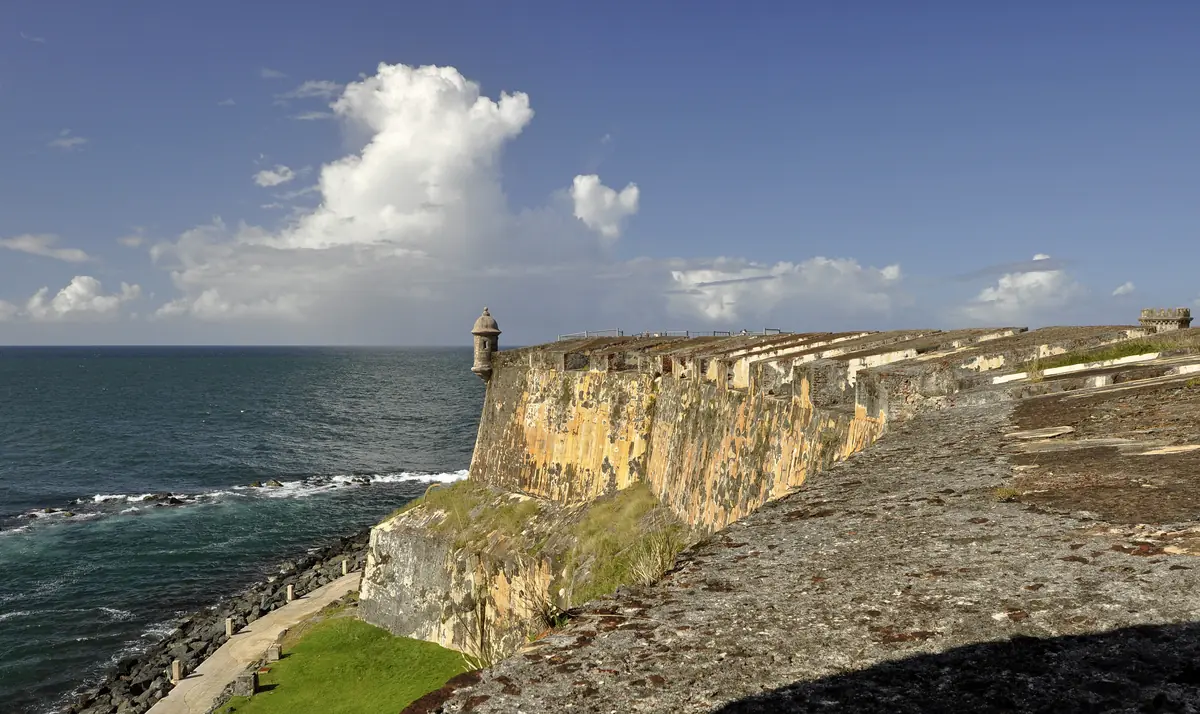
Castillo San Felipe del Morro, Castillo San Cristóbal and El Yunque National Forest are officially closed on December 25. Beaches remain accessible — the island does not close the ocean — but rental stands and facilities will not be staffed.
The streets of Old San Juan on Christmas morning are worth mentioning even if you cannot plan around them. The typically traffic-dense, tour-group-heavy district goes almost entirely quiet. The cobblestones reflect early morning light without a single bus on them. If you happen to be awake at 7:00 AM on December 25 and walking, you will have Old San Juan to yourself in a way that is not possible on any other day of the year.
Securing Nochebuena dinner reservations
Because local restaurants close so employees can celebrate Nochebuena with family, tourists must secure dining reservations months in advance. The most reliable options are upscale hotel restaurants and established fine dining spots in San Juan — Cocina Abierta and 1919 Restaurant have historically remained open with special holiday menus. Standard independent restaurants will be dark.
Properties like the Condado Vanderbilt and Fairmont El San Juan Hotel maintain Nochebuena dinner service when independent spots go closed. Their holiday buffets typically include a lechón carving station, pasteles with elevated fillings, and arroz con gandules built from scratch. It is a higher price point, but it delivers authentic flavors in one of the few settings guaranteed to be open. For other holiday-week openings, scan the broader list of Puerto Rico hotels before locking in dates.
If reservations fall through entirely, buy groceries at least two days before December 24. Supermarkets across the island close or run heavily reduced hours as Nochebuena approaches, and selection thins out fast.
- Restaurants open Nochebuena: Cocina Abierta, 1919 Restaurant (San Juan), major hotel dining rooms
- Backup option: Self-catering from groceries purchased December 21–22
- Booking window: Reserve holiday dinners at least 2–3 months in advance
- Cost: Hotel buffet Nochebuena dinners typically run $95–$150 per person
How do you navigate holiday transportation and parking?
Navigating San Juan during Christmas in Puerto Rico requires planning to avoid severe traffic. A rental car in Puerto Rico is useful for the broader island, but visitors should rely on the Tren Urbano, the Cataño ferry and designated parking garages when accessing the historic district during major festivals. Driving into Old San Juan during peak events is a decision you will regret within 400 feet.
The metropolitan transit infrastructure is built around the Tren Urbano light rail and the Cataño ferry crossing. Both become essential tools during the holiday season, when road congestion between Santurce, Condado and Old San Juan can turn a 15-minute drive into 75 minutes of sitting still.
Utilizing the Tren Urbano and Cataño ferry
The Tren Urbano offers free, monitored parking at suburban stations like Martínez Nadal and Bayamón, allowing travelers to bypass city traffic entirely. The Cataño ferry provides a 12-minute scenic crossing directly into Old San Juan for a general fare of $0.50 per person, one way.
The ferry is not just cheap transport. From the deck, you get a water-level view of the El Morro fortress walls that is impossible to replicate from any land-based position. The walls rise from the bay at a scale that the streets of the historic district do not fully convey. Standing on the deck in the morning with the Atlantic behind you and the full fortress profile ahead costs fifty cents and takes twelve minutes.
Ferry fare breakdown:
- General adult: $0.50 one way
- Seniors ages 60–70: $0.25
- Infants and seniors 71 and older: Free
Tren Urbano strategy:
- Park at Martínez Nadal or Bayamón station (free, monitored lots)
- Ride to Sagrado Corazón terminal
- Board the municipal shuttle to festival zones
Finding parking in Old San Juan during the light displays
Viewing the Christmas lights in Old San Juan requires advance parking strategy. The most reliable option is Estacionamiento Doña Fela, a secure 24-hour parking garage on Calle Recinto Sur with 812 spaces, placing visitors within walking distance of Paseo de la Princesa, Plaza de Armas and the Catedral de San Juan.
Two operational realities before you arrive: the ramps inside Doña Fela are narrow, steep and built for cars of a previous era. Maneuvering a full-size rental SUV through the tight, circular turns under low concrete ceilings is a specific kind of stress. If you plan to spend significant time in the historic district, rent a compact car. The price difference between vehicle classes is minor; the difference in composure while parking is not.
Yellow curbs in Old San Juan are enforced consistently during high-traffic evenings. Parking on a yellow curb to walk to the light displays for “just twenty minutes” produces a ticket efficiently and without negotiation.
- Location: Estacionamiento Doña Fela, Calle Recinto Sur, Old San Juan
- Capacity: 812 spaces, 24-hour access
- Walking distance to: Paseo de la Princesa, Plaza de Armas, Catedral de San Juan
- Vehicle recommendation: Compact car strongly preferred over SUV
Pro Tip: Arrive at Doña Fela before 6:00 PM on December weekends. The garage fills completely by 7:30 PM during major light display evenings, and the street overflow options are unreliable at best.
What is the weather like in Puerto Rico in December?
Puerto Rico in December and January delivers average temperatures from 72 to 83°F (22 to 28°C). Humidity drops considerably compared to the summer months, making evenings at outdoor festivals comfortable rather than something to endure. This is the best weather window of the year for visiting the island.
Daytime temperatures in the low 80s°F (around 27°C) with lower humidity mean walking the plazas, driving Guavate’s lechonera row, or waiting at the Cataño ferry terminal without the shirt-soaking discomfort of July. Evenings cool to the low 70s°F (around 22°C) — comfortable in a T-shirt for anyone from the mainland, legitimately cold by local standards.
Locals in December are frequently wearing light sweaters at 75°F (24°C). Anything below 78°F (26°C) registers as cold on an island where summer averages hover around 90°F (32°C). Do not take it as a cue to pack a coat — but do consult a proper Puerto Rico packing list and bring one layer for air-conditioned restaurants and indoor venues, which run aggressively cold year-round.
What to pack:
- Light clothing (linen, cotton or moisture-wicking fabric as your primary layer)
- One light sweater or packable layer for air-conditioned spaces and evening events
- Rain shell or compact umbrella (brief December showers are common, not prolonged)
- Comfortable, low-profile walking shoes (Old San Juan’s cobblestones are uneven and wet after rain)
What common tourist mistakes should you avoid during Las Navidades?
The most common mistake visitors make during Christmas in Puerto Rico is failing to adjust to island time. Small family-owned businesses open late or skip posted hours without updating digital listings. Travelers compound the error by expecting mainland-speed restaurant service, driving into active festival zones, or assuming Christmas Day operates like any other holiday weekend in a tourist destination.
Checking Google Maps for the opening hour of a lechonera or kiosko during the holidays is optimistic. A listed opening of 12:00 PM may mean the owner arrives at noon to begin prepping and opens the serving window by 12:45 PM. This is not negligence — it reflects a different relationship with time, one that rewards patience and punishes a tight schedule.
Specific traps to sidestep:
- Driving into Old San Juan on festival evenings: Street parking does not exist in any meaningful quantity. Use the ferry or Tren Urbano.
- Carrying only a card at food kiosks: Card readers in dense crowd zones fail. Bring $20–$40 in small bills for artisan purchases and street vendors.
- Assuming cultural site hours during Christmastime: Major attractions close or run limited operations from December 24 through January 6. Verify directly with the site before anchoring your day around it.
- Booking inside Old San Juan during SanSe: Street closures, noise until 2:00 AM, and luggage logistics make the historic district counterproductive for families or light sleepers.
- Expecting Nochebuena to be a normal dining night: Book months ahead or plan to cook at your rental.
On my last visit to Old San Juan during the holiday week, a spontaneous neighborhood parade — drummers, pleneros, a float carrying Reyes Magos — stopped traffic on a street I was navigating for a solid twenty-five minutes. Rolling down the window, listening to the panderetas, and accepting that the parade was now the plan was the only rational response. That specific adjustment is the difference between a frustrating trip and a memorable one.
The bottom line on Christmas in Puerto Rico
Experiencing Christmas in Puerto Rico rewards travelers who plan early and release their expectations around efficiency. Secure Nochebuena dinner reservations months in advance, build your transit strategy around the $0.50 Cataño ferry and the Tren Urbano, and use the western coast towns of Rincón and Mayagüez as your pressure valve when San Juan hits capacity during SanSe. For broader trip planning beyond the holiday window, our full Puerto Rico travel guide covers the rest.
TL;DR: Las Navidades runs 45 days from late November to mid-January. The food — lechón asado from Guavate at $12–$15 per pound, handmade pasteles at $35–$120 per dozen, coquito made with Ron del Barrilito 3 Star — is the cultural core. The biggest logistical traps are Nochebuena restaurant closures, SanSe traffic into Old San Juan, and assuming that business hours posted online bear any relationship to actual operations on the island during the holidays. Plan for flexibility, not precision, and the 45-day season will deliver more than any single guide can prepare you for.
What part of Las Navidades are you planning around — the food, the parrandas, or the festivals? Drop it in the comments and share what worked for you.