Most US travelers skip Peneda-Gerês National Park for Lisbon’s tiles and the Algarve’s beaches — which is exactly why you should go. Portugal’s only national park delivers granite canyons, Roman roads, medieval granaries, and wild horses in one place. Here’s what’s worth your time and what the Instagram posts leave out.
1. How should you plan a visit to Peneda-Gerês National Park?
Peneda-Gerês National Park sits in Portugal’s far northwest, about 90 miles (145 km) north of Porto — roughly 1.5 hours by car. No reliable public transit reaches most of the park’s highlights. Infrastructure is minimal compared to US national parks, and cell signal disappears in the valleys. Come prepared: offline maps, a car you’re comfortable driving on narrow mountain roads, and no expectation of a visitor center at every trailhead.
What rental car do you actually need?
Before you rent a car in Portugal for this trip, note that the vast majority of the rental fleet is manual transmission. Mountain roads here feature grades exceeding 15% with hairpin turns. Unless you’ve recently driven a clutch on steep inclines, book an automatic — this is non-negotiable.
For navigating villages like Soajo, you want a compact SUV. A Renault Captur-class vehicle handles the alleys; anything larger will struggle with clearance.
- Transmission: Automatic only for most US drivers
- Car class: Compact SUV (Renault Captur or equivalent)
- Booking window: 6–8 weeks minimum before peak season (June–August)
- Cost premium: Expect to pay 30–50% more than a comparable manual
Pro Tip: Book directly with major international companies (Hertz, Europcar) rather than local operators — automatic inventory is limited and the larger companies hold the best allocation.
What are the driving conditions really like?
Anyone planning driving in Portugal for the first time should understand what the northern roads add beyond the general advice. The N308 and N304 through the park are engineering achievements: narrow, winding, and frequently hugging cliff edges with stone walls on one side and open drops on the other. Local drivers know every curve and move at speeds that will feel alarming. Pull over where safe. Never feel pressured to accelerate on unfamiliar roads.
How reliable is cell coverage in the park?
Signal is decent in main towns like Vila do Gerês. In the valleys and on most trails, there is nothing. Download Google Maps offline before leaving Porto. The emergency number is 112, but without signal, a personal locator beacon is your only safety net for solo hikers.
When is the best time to visit?
Understanding the best time to visit Portugal in general helps calibrate these seasonal windows for Gerês specifically, where fire season and reservoir levels add variables that don’t apply elsewhere.
- Spring (March–May): The best overall window. Mild temperatures, wildflowers on the granite slopes, moderate crowds. Too cold for swimming but ideal for hiking.
- Summer (June–August): Hot, crowded, and peak fire season. Authorities close sensitive areas when fire risk is extreme. Expect weekend traffic jams at popular waterfalls.
- Fall (September–October): Excellent photography light. The submerged village of Vilarinho da Furna sometimes reappears as reservoir levels drop. Fewer crowds.
- Winter (November–February): Often wet and cold. Several restaurants and guesthouses run reduced hours or close entirely.
2. Soajo: the village with 24 granaries
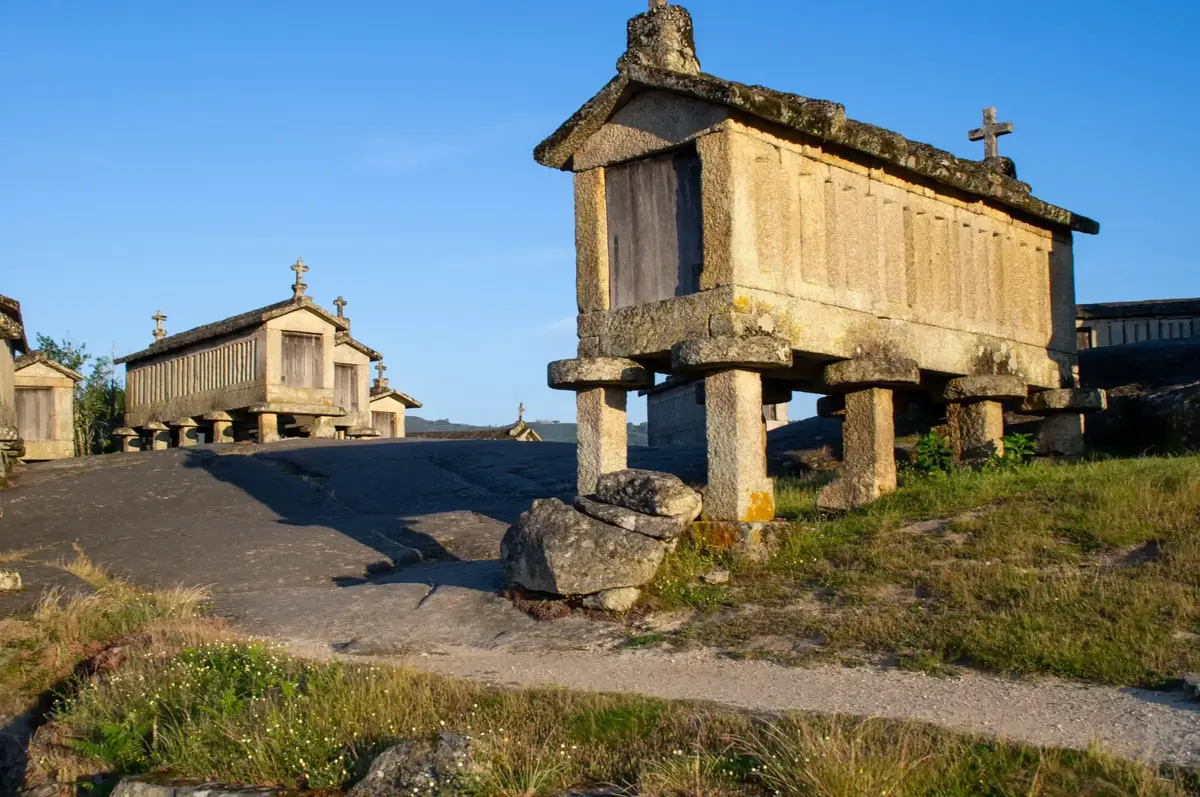
Round a switchback above the Lima River valley and Soajo announces itself before you’ve parked. The communal threshing floor is dominated by 24 espigueiros — stone granaries perched on mushroom-shaped pillars, designed to prevent rats from climbing up to the stored maize. The stone smells faintly of wood smoke from the kitchens uphill.
These structures are not museum pieces. They’re functional agricultural tools still in use today. The slats in the stone allow wind to dry the corn; the raised platform handles pest control without chemistry.
What makes Soajo stand out is that it feels inhabited. Laundry dries on lines next to 300-year-old stone crosses. The village square has an oddly anthropomorphic pillory — a stone column with a carved face, symbolizing the village’s historical autonomy. The local bakery sells pão-de-ló (sponge cake) worth stopping for.
The honest version: Soajo has embraced tourism and it shows. Peak season brings real crowds, and parking in the village lanes is a genuine problem — expect to park outside and walk in. Budget 60–90 minutes here, not a half-day.
- Location: Rua das Eiras, 4970-745 Soajo, Arcos de Valdevez
- Cost: Free
- Best for: Architecture enthusiasts, photographers, families
- Time needed: 1–1.5 hours
Pro Tip: Arrive before 10 AM on weekdays. Tour buses from Porto typically pull in mid-morning, and the threshing floor goes from meditative to crowded in about 15 minutes.
3. Lindoso Fortress and Granaries
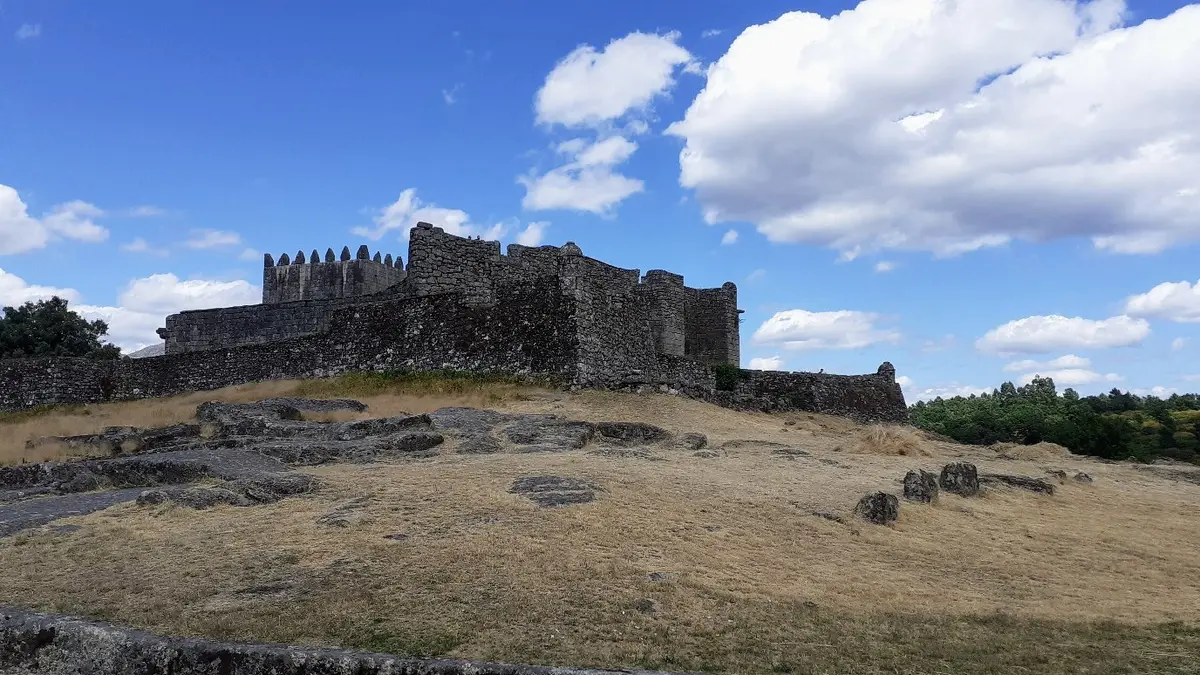
Lindoso is quieter than Soajo and, for my money, the more rewarding stop. One of the least visited among all Portugal castles, the 13th-century fortress sits free to enter on a promontory a few kilometers from the Spanish border, and from the battlements you have a straight-line view over the Lima River reservoir toward Spain.
The real draw is the granary cluster below the castle walls. More than 50 espigueiros crowd together at the base, and the visual density is something you have to stand in front of to appreciate. Fewer visitors than Soajo means you can sit with it quietly.
The surrounding area has excellent trails toward the reservoir viewpoints — this was built to hold a line against Spain, and the fortress’s placement on the promontory makes that strategy immediately legible.
- Location: Castelo de Lindoso, 4980-320 Lindoso, Ponte da Barca
- Cost: Free (castle and granary area)
- Best for: History travelers, photographers, couples
- Time needed: 1.5–2 hours
4. Castro Laboreiro: the isolated plateau
Castro Laboreiro sits on a high plateau in the park’s far north, about 40 miles (65 km) from Braga. Up here, the granite feels like the defining material of the universe — grey, immense, and constant. This is also the home territory of the Castro Laboreiro Dog, a livestock guardian breed developed specifically to stand between herds and wolves.
The village historically practiced transhumance, moving between winter settlements in the valley floors (inverneiras) and summer settlements on the plateau (brandas). Many of those seasonal villages are now uninhabited, and the hiking trails pass through the ghost settlements — stone houses with no roofs, terraces reclaimed by heather.
The castle ruins perch on a granite crag above the village. The hike up is short but steep, probably 20 minutes at a moderate pace, and the view at the top is uninterrupted in every direction.
- Location: 4960 Castro Laboreiro, Melgaço municipality
- Cost: Free
- Best for: Solitude seekers, hikers who want minimal crowds, dog enthusiasts
- Time needed: 2–3 hours including the castle hike
Pro Tip: The plateau sits at roughly 2,950 feet (900 m). Check weather forecasts before driving up — it can be foggy and cold even in July, and the access road is not a place to be caught in unexpected cloud.
5. Fafião and the wolf trap
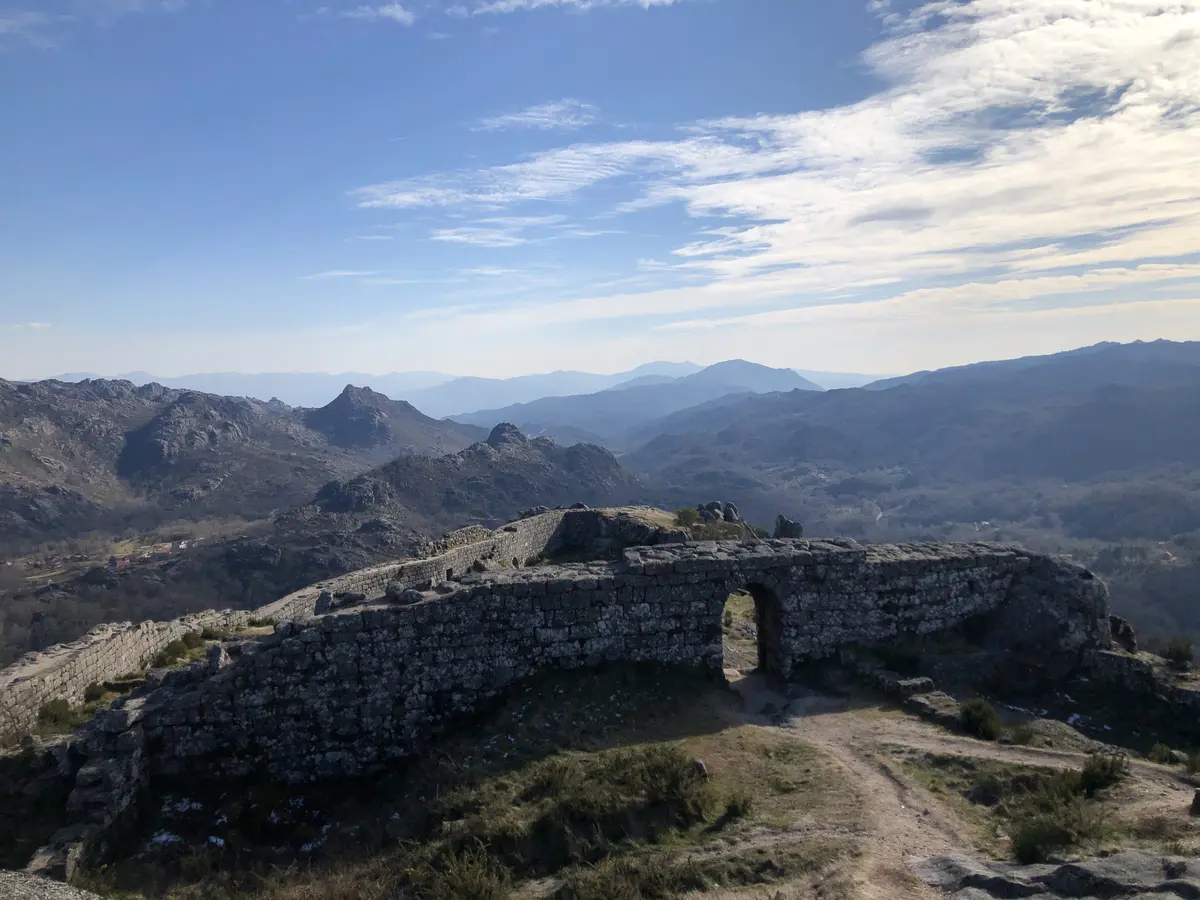
Fafião made a decision most villages don’t: instead of continuing to kill wolves, it started celebrating them. The village contains a remarkably well-preserved fojo do lobo — a massive stone funnel structure where communities once drove wolf packs into a dead end. The walls are still largely intact, set without mortar and fitted tightly enough to have stood for centuries.
You can walk the funnel path and stand in the trap itself. The walls rise above you and it’s immediately clear how it worked, and how many people and dogs would have been needed to drive an animal here. It’s a strange, quietly powerful experience.
The village now hosts the Wolf Village festival, drawing visitors who come specifically for the conservation story. Fafião is honest about the pivot: the economic incentive switched from killing wolves to protecting them, and the village is better for it.
- Location: 5470 Fafião, Montalegre municipality
- Cost: Free
- Best for: History travelers, wildlife conservation enthusiasts
- Time needed: 1–1.5 hours
6. Vilarinho da Furna: the submerged village
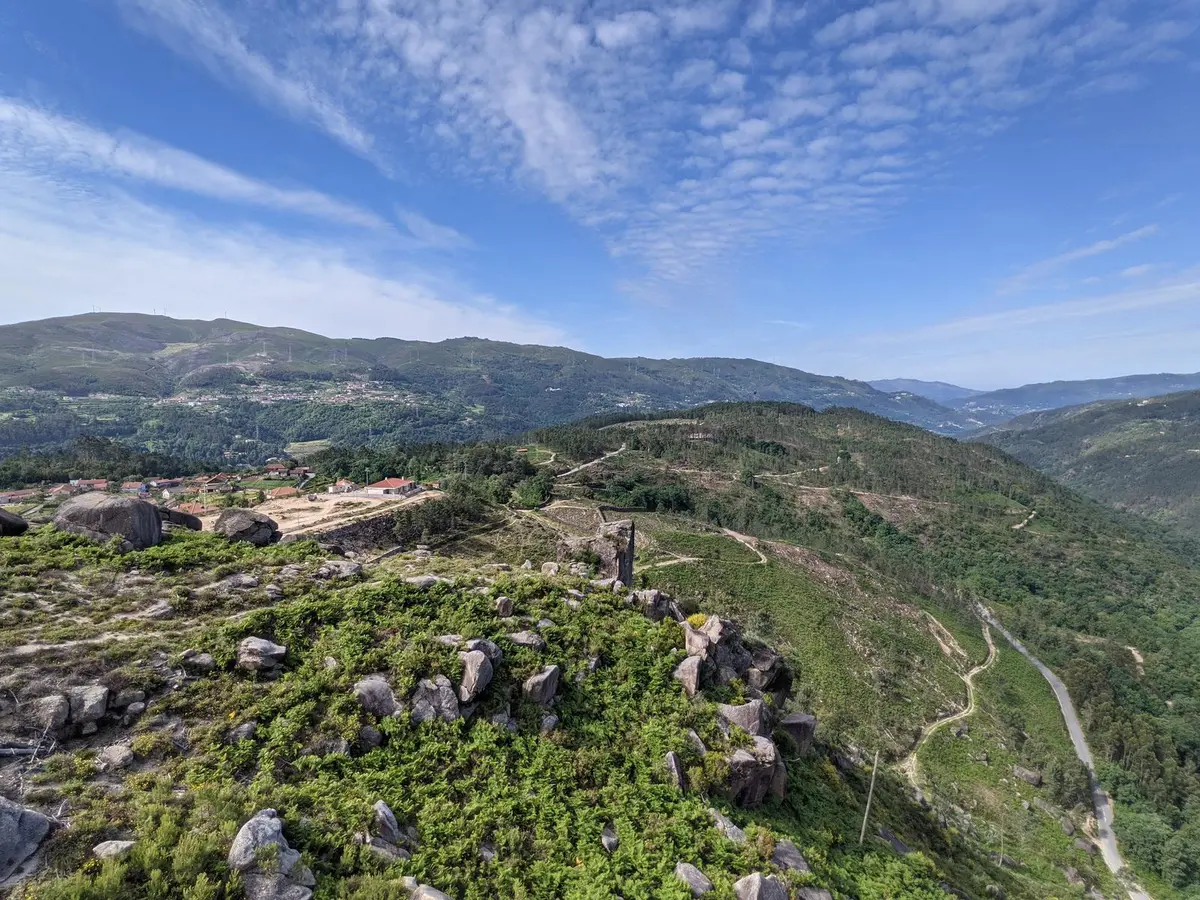
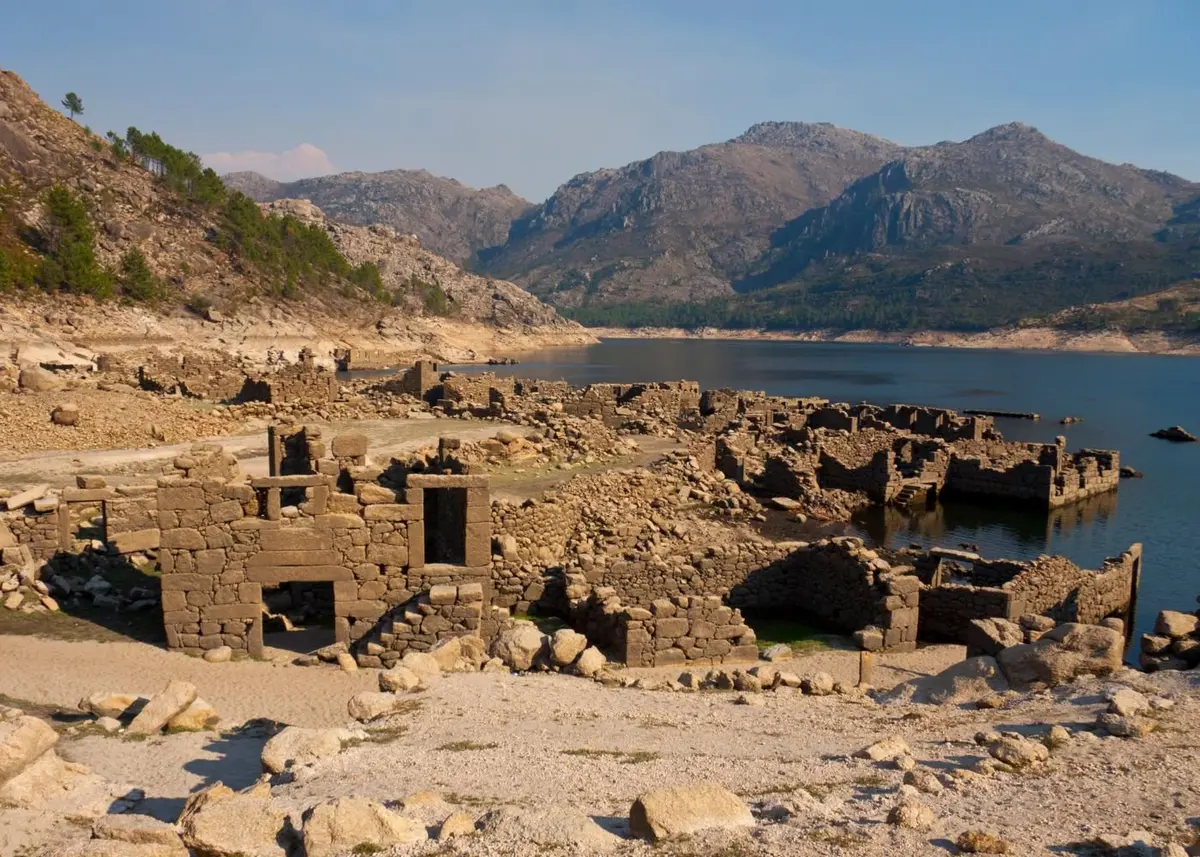
This is the most affecting site in the park. A dam built in 1972 submerged the village of Vilarinho da Furna, forcing residents to leave homes their families had occupied for generations. During dry years, reservoir levels drop enough to reveal the village skeleton — stone walls rising from the mud, rooflines intact on some buildings, a main square you can walk through in rubber boots.
The mud is ankle-deep in places and the walls are slicked with algae, but the basic geometry of a village — lanes, doorways, thresholds — is still readable. It photographs in a way that makes it look like a Portuguese Atlantis, which is not inaccurate.
Even when water levels are high and the village is fully submerged, the Ethnographic Museum at Barragem de Vilarinho das Furnas places this episode within a broader thread of Portugal history — essential context for understanding what existed here before the dam and the park.
- Location: Barragem de Vilarinho das Furnas, near Vila do Gerês, Campo do Gerês
- Cost: Free (ruins); Ethnographic Museum has a small admission fee (verify on site)
- Best for: History travelers, photographers, anyone interested in the park’s human history
- Time needed: 1–2 hours; 2+ hours if museum included
Pro Tip: Fall visits give you the best odds of seeing exposed ruins. After a dry summer, the waterline can drop 20–30 feet (6–9 m) below capacity, revealing considerably more structure than spring visits will show.
7. Tahiti Waterfalls: worth it, but go early
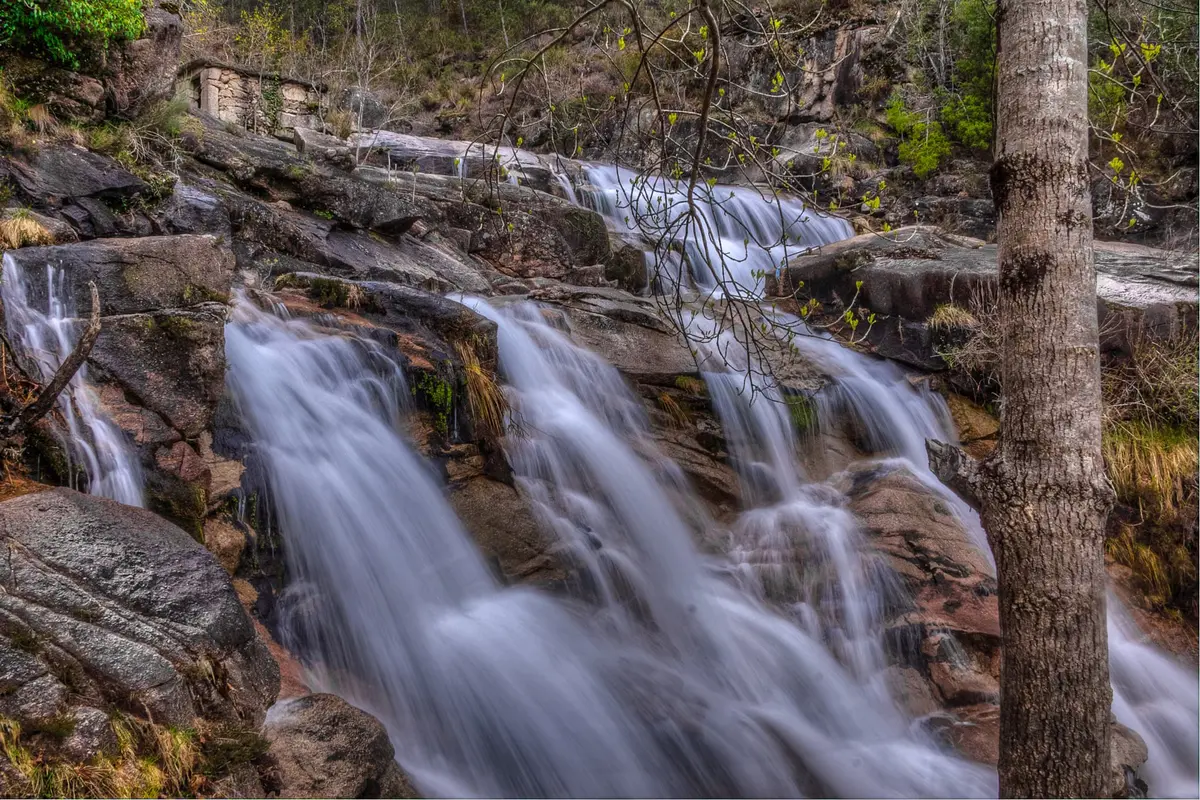
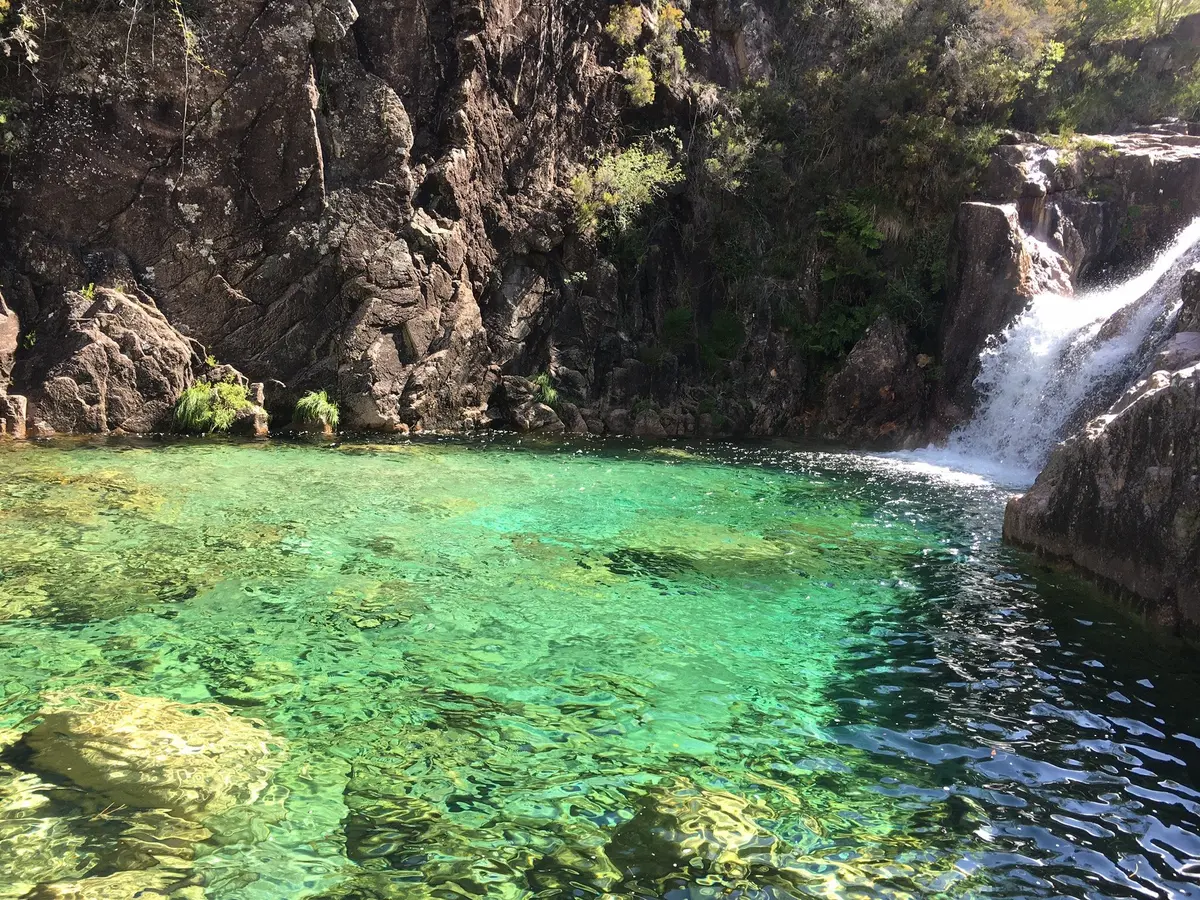
The Tahiti Waterfalls (Cascata do Tahiti) are the most photographed spot in the park — emerald-green pools cascading down tiered granite steps, accessible by a short walk from roadside parking. The photographs do not exaggerate the water color.
What travel content routinely skips: these falls are genuinely dangerous in ways that aren’t obvious from photos. The granite is polished smooth by centuries of water flow and becomes ice-like when wet. There are no guardrails. A slip can result in a serious fall, and US visitors accustomed to safety infrastructure will find the absence disorienting.
On my last visit before noon on a weekday in summer, I counted over 60 people on a stretch of rock with comfortable space for maybe 20. Arrive before 10 AM or accept that you’ll be sharing the pool with a crowd.
- Location: Cascata do Tahiti, near the N308 road, Gerês (roadside access)
- Cost: Free
- Best for: Swimmers and photographers; not recommended for young children without close supervision
- Time needed: 1–1.5 hours
8. Sete Lagoas: seven natural pools at altitude
The Seven Lagoons are a chain of natural pools carved into granite at elevation, connected by short stretches of trail. The water reaches roughly 13 feet (4 m) deep in the main pools and has the kind of clarity where you can read the texture of the bottom. They are, without exaggeration, the most beautiful swimming spots in the park.
Getting there is the catch. Standard vehicles can’t reach the lagoons — the track requires a 4×4 or a 2–3 hour round-trip hike from the nearest accessible point. Several local operators run 4×4 tours from Campo do Gerês, which is the better option if swimming is the goal — arriving by foot means you’ve already spent considerable energy before you get in the water.
The water temperature tops out around 65°F (18°C) in July. Come with a light wetsuit if you plan to stay in longer than 20 minutes.
- Location: Serra do Gerês — 4×4 track from Campo do Gerês, or hiking from Ermida village
- Cost: Free; 4×4 tours approx. $40–60/person
- Best for: Adventurous swimmers, hikers with good fitness
- Time needed: Half day minimum; full day recommended
Pro Tip: 4×4 tours typically run morning departures only. Book the evening before in summer — operators in Campo do Gerês fill quickly on weekends.
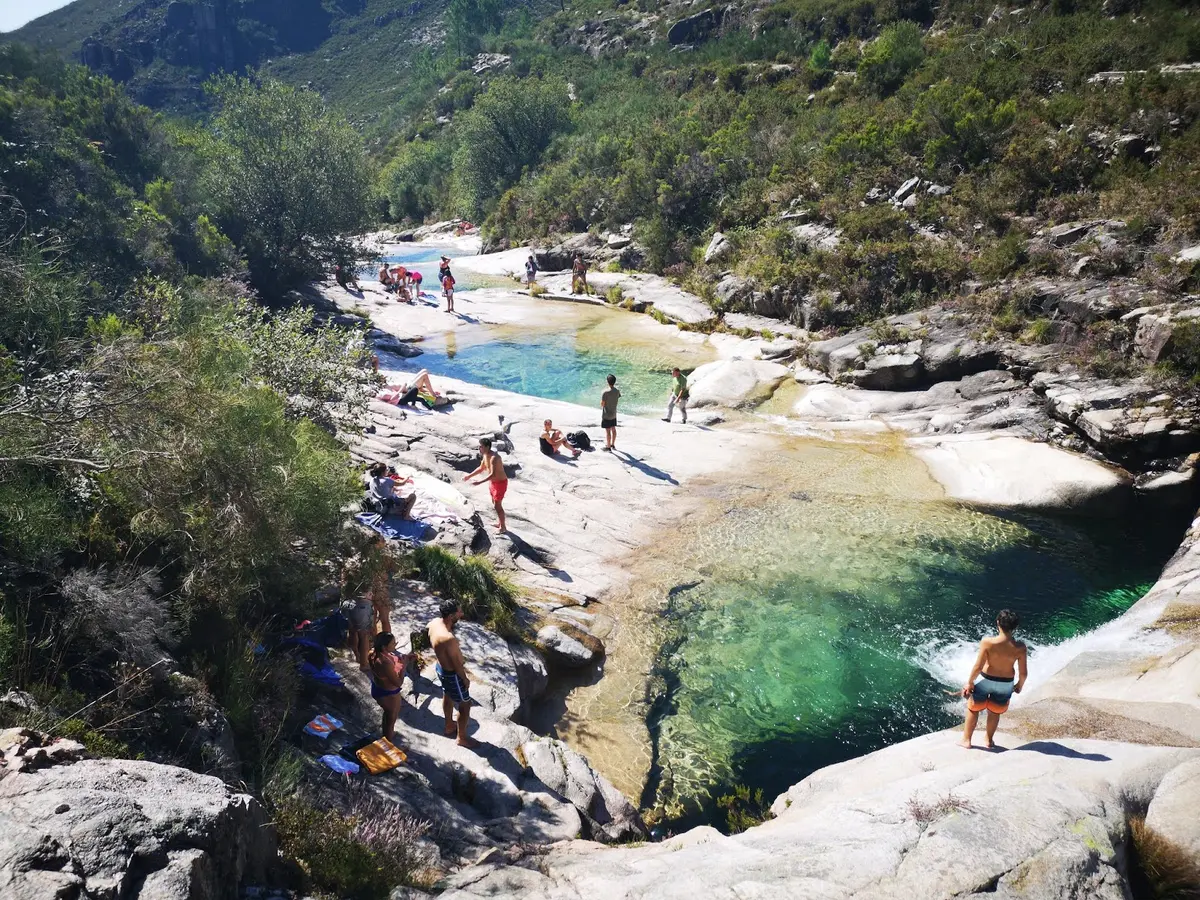
9. Poço Azul: for prepared hikers only
Poço Azul earns its name — the water is a deep turquoise-blue, fed by a cascade that drops into a bowl-shaped pool. It’s also the kind of place where the experience is proportional to how prepared you are to reach it.
The trail starts near the Cascata do Arado lookout and is unmarked. You need a loaded GPX file and a phone with offline maps — there’s no mobile coverage on this route. The hike involves undulating terrain and at least two river crossings depending on water levels, which can be thigh-deep in spring.
This rewards people who’ve done moderate trail work before. Don’t attempt it in footwear you wouldn’t wear on a rough trail, and don’t go alone without navigation experience.
- Location: Near Cascata do Arado, off EM561 near Ermida, Serra do Gerês
- Cost: Free
- Best for: Experienced hikers, solo explorers with navigation skills
- Time needed: 3–4 hours round trip
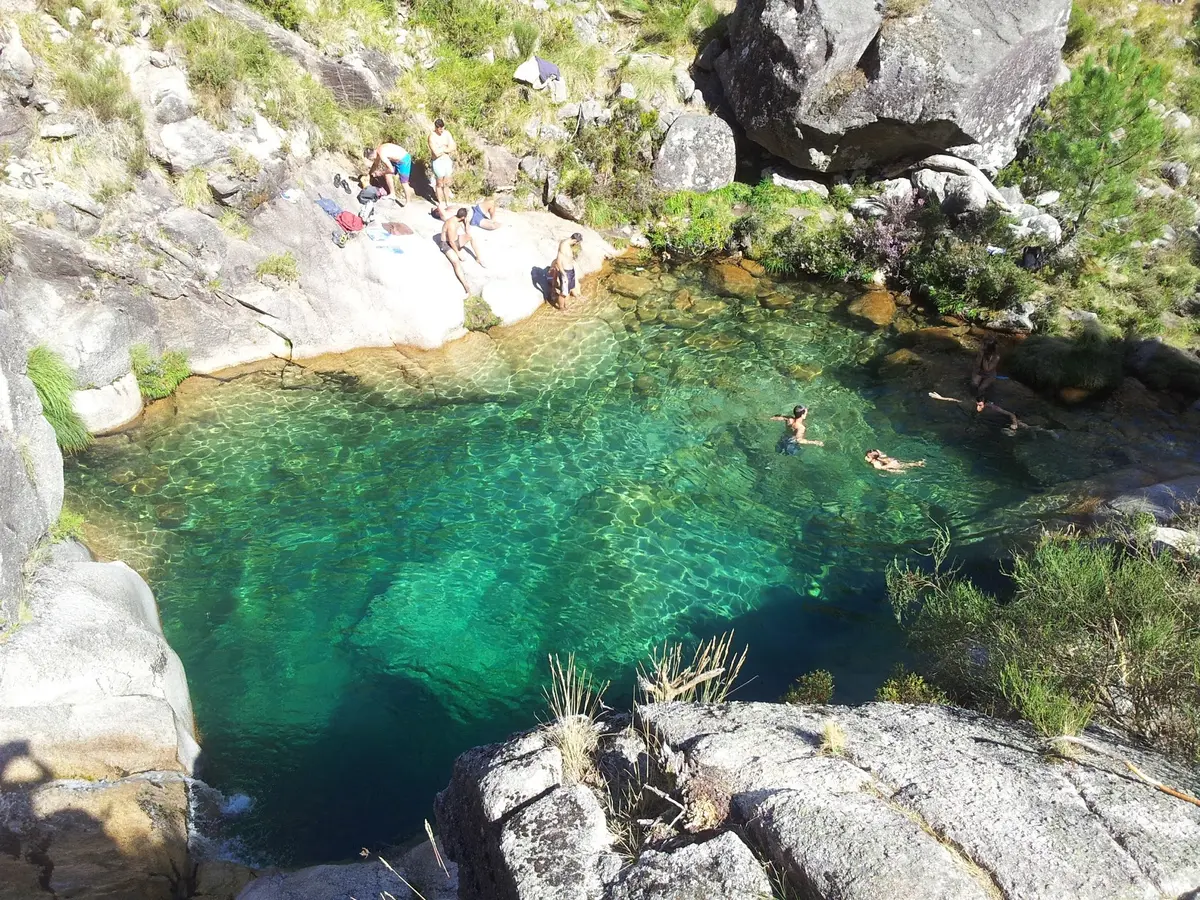
10. Portela do Homem border pools
This is the most low-effort natural swimming access in the park. The natural pools at Portela do Homem sit right on the Spanish border, surrounded by dense oak and pine forest that the park’s protected status has kept intact for decades. The water is cold and clear, and the setting is one of the better arguments for visiting in shoulder season when you’ll have it largely to yourself.
The pools are particularly well suited to families — anyone traveling Portugal with kids will find Portela do Homem one of the more manageable natural swimming options in the park, with shallow entry points and no technical trail required to reach the water.
The parking situation is the only serious hassle. The immediate roadside is a strict no-parking zone for a long stretch, and police patrol it regularly. The designated lot is at the actual border crossing — park there and walk back into Portugal.
- Location: Portela do Homem, Portuguese-Spanish border — park at the border crossing and walk east
- Cost: Free
- Best for: Families, casual swimmers, day-trippers from Braga
- Time needed: 1–2 hours
11. Where should you stay near Peneda-Gerês National Park?
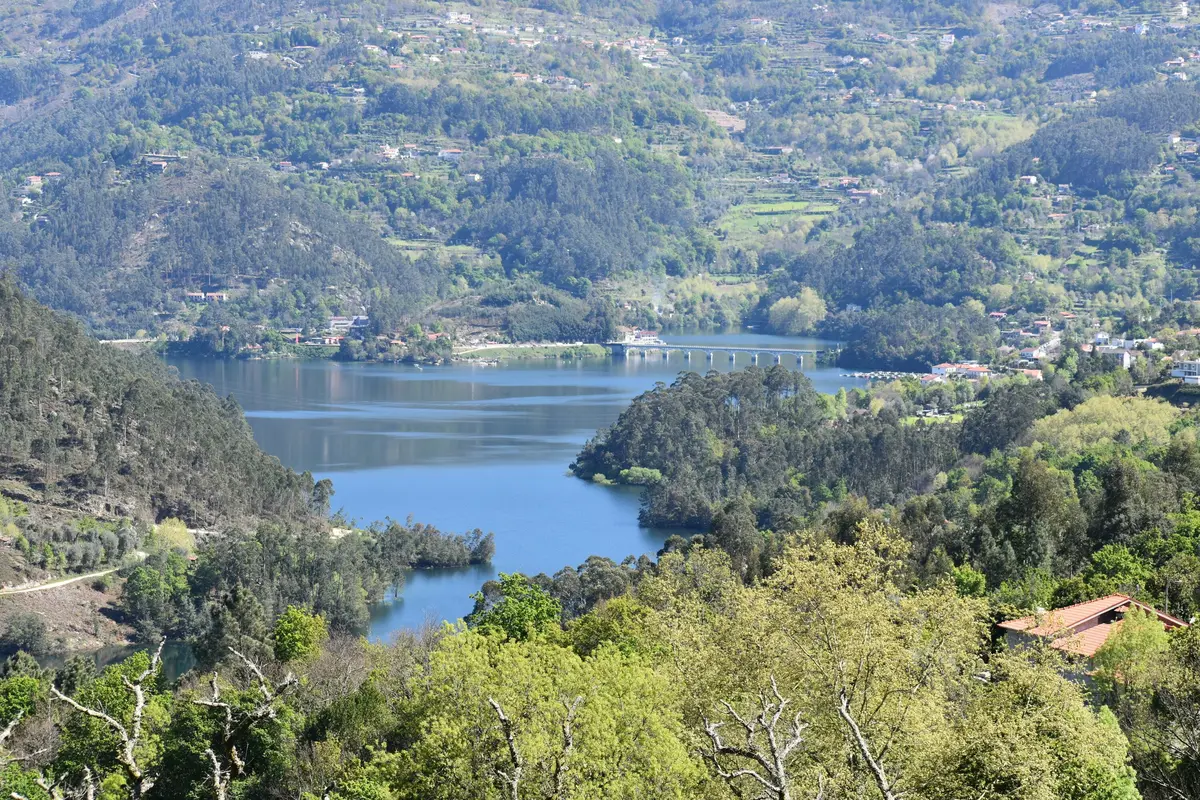
The two best options split between staying inside the park and staying just outside it. Budget one or two nights depending on how many of the sites above you’re attempting — the park covers 695 square miles (1,800 sq km including buffer zones) and driving between its northern and southern sections takes 45–60 minutes on the best roads.
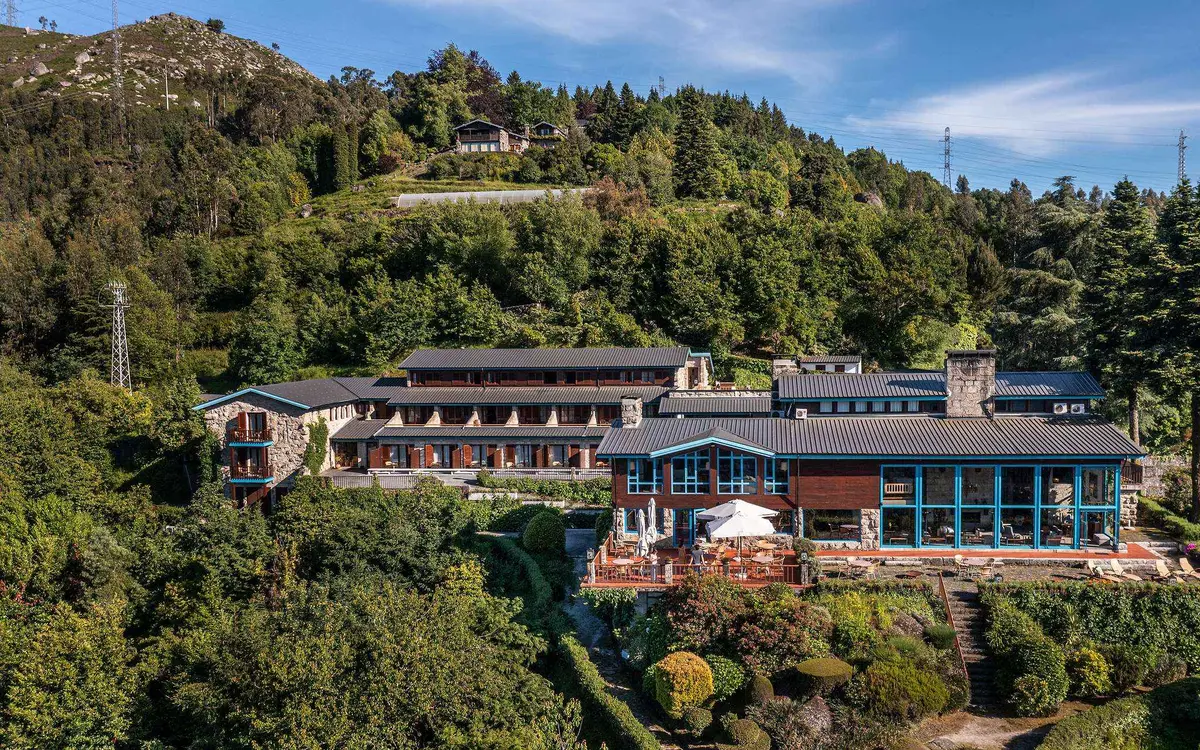
For the most reliable option inside the park, Pousada Caniçada-Gerês belongs to the historic Pousadas of Portugal network — converted heritage properties known for a consistent standard of quality. This one occupies a former hunting lodge above the Caniçada reservoir. All rooms are air-conditioned, most have valley-facing balconies, and the terrace bar at sunset is one of the better places in northern Portugal to sit with a glass of wine. Rooms start around $149/night.
For something architecturally memorable, Pousada Mosteiro de Amares is a converted 12th-century Cistercian monastery about 17 minutes from the park boundary, designed by Pritzker Prize-winning architect Eduardo Souto de Moura. The stone walls are original; the interiors are minimalist and quietly impressive. Rooms from around $96/night in low season.
For full immersion, restored granite houses in villages like Soajo and Campo do Gerês put you in actual village life. Most lack air conditioning, which matters in July and August but is a fair trade in every other season.
- Pousada Caniçada-Gerês: Av. da Canicada 1518, Caniçada — from ~$149/night; inside the park
- Pousada Mosteiro de Amares: Largo do Terreiro, Santa Maria do Bouro, Amares — from ~$96/night; 17 min from the park
- Rural granite houses: Villages throughout the park — from ~$60–80/night; Booking.com and Airbnb have good inventory
Pro Tip: At Pousada Caniçada-Gerês, request a room facing the reservoir. Rooms facing the access road are perfectly comfortable, but the valley-view rooms are why you’re paying the premium.
12. What should you eat in Peneda-Gerês?
Northern Portuguese mountain food is built for people who walk uphill for a living. For travelers who’ve done background reading on traditional Portuguese food, this region’s version will feel like the genre at its most uncompromising: portions are large, the food is caloric, and the flavors are built on fat, char, and acidity rather than subtlety. For US visitors accustomed to lighter menus, this will either delight or overwhelm you, sometimes within the same meal.
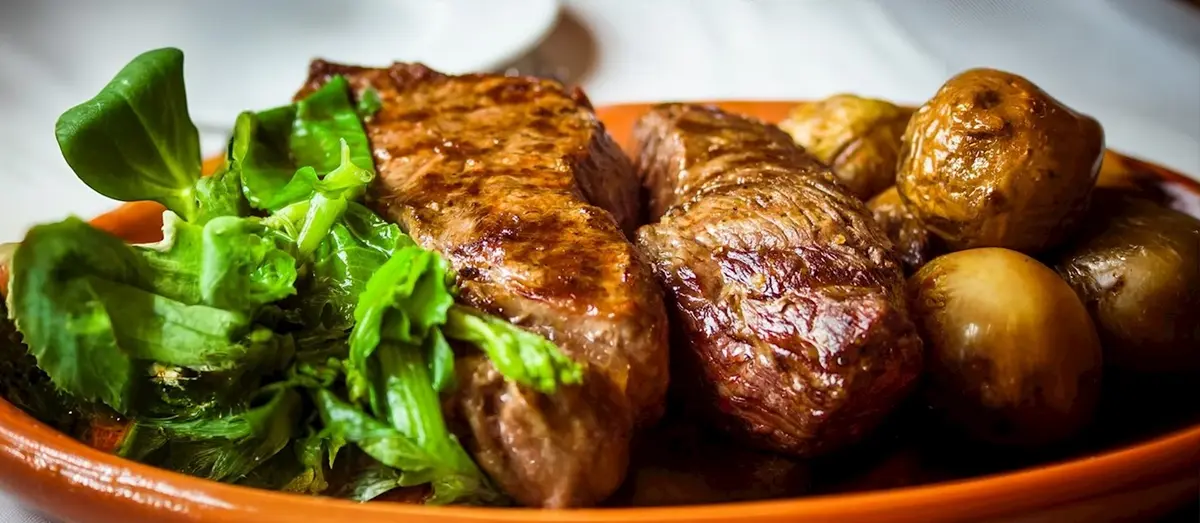
The signature protein is Carne Barrosã — beef from cattle that free-range on mountain herbs at altitude. It’s served as a thick steak, typically charcoal-grilled with a char-to-rare ratio that local restaurants have down precisely. Order it rare (mal passado) and don’t second-guess yourself.
The main restaurant worth driving to is O Abocanhado in the village of Brufe, about 7.5 miles (12 km) from Terras de Bouro and set at 2,625 feet (800 m) elevation. The building slots into a hillside terrace with floor-to-ceiling windows facing the Rio Homem valley — the architecture has won international awards, and the view from your table backs it up. The venison shoulder (pá de veado) is the dish most locals recommend. Book at least a week in advance; outside of summer the restaurant closes on Mondays, and during peak season (June 1–September 15) it runs every day.
One detail US travelers almost always miss: in Gerês, locals drink a regional Portugal wine you won’t encounter anywhere else in the country. Red Vinho Verde is lighter than most reds you know, faintly effervescent, and often served in ceramic bowls in the traditional style. It’s an acquired taste worth acquiring.
- O Abocanhado: Brufe, Terras de Bouro — lunch 12:30–15:30, dinner 19:15–22:00 (summer) / 19:15–21:30 (winter); closed Mondays outside summer; open daily June 1–September 15
- Typical mains: €30–35 ($33–38) per person before wine
- Don’t miss: Carne Barrosã steak, pá de veado, pudim Abade de Priscos (egg-and-almond pudding)
13. What are the best hikes in Peneda-Gerês National Park?
The park uses PR (Pequena Rota, short routes) and GR (Grande Rota, long-distance routes) trail designations. If Portugal hiking is a central goal of your trip, start with PR trails — they’re generally well-signed and loop back to their starting point without requiring a car shuttle. The park’s trail network covers terrain from river gorges to granite ridges above 3,000 feet (915 m), with something suitable for every level.
The PR7 trail starts at the Santuário de Nossa Senhora da Peneda and is the best introduction hike: moderate grade, manageable distance of about 5 miles (8 km), and the sanctuary itself is worth an hour of your time. The Trilho da Preguiça covers steep climbing above the Gerês valley and delivers an unobstructed ridge view at roughly 3,280 feet (1,000 m) — excellent value for a morning.
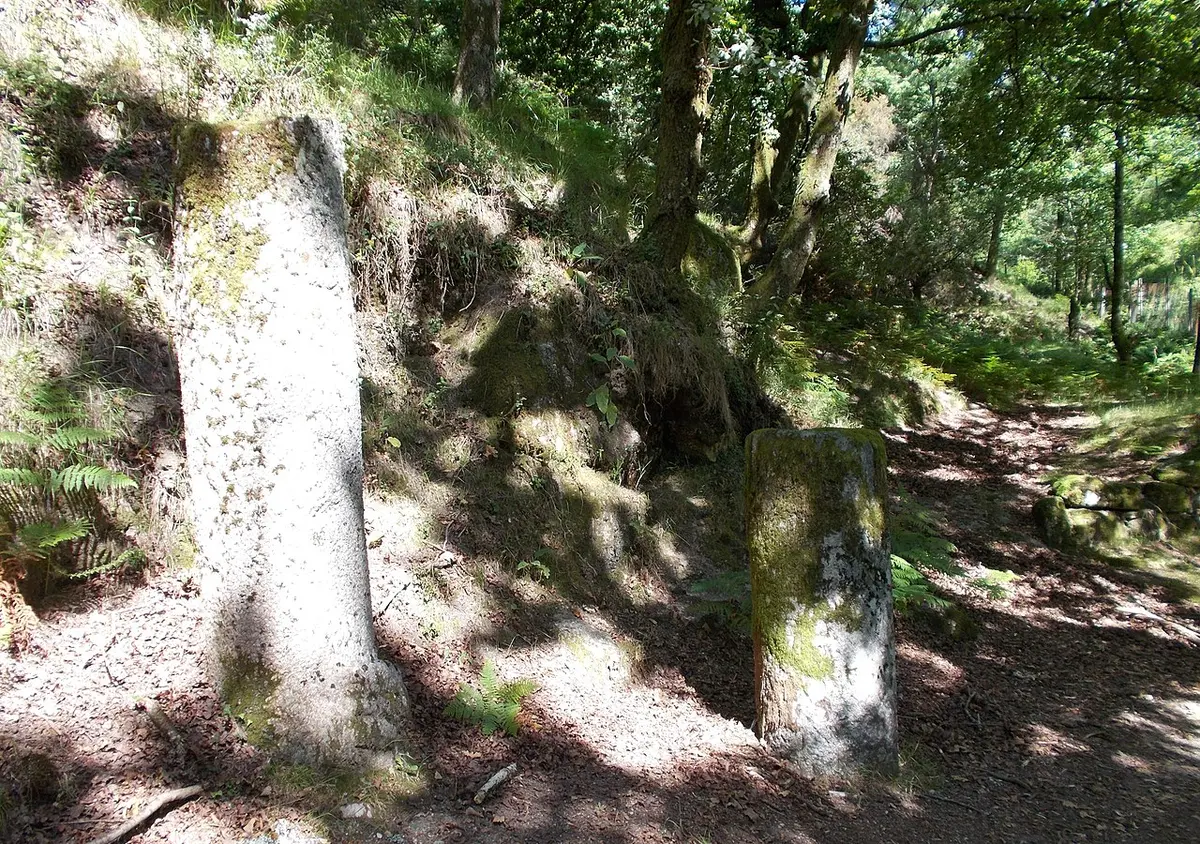
The Roman Geira (Via XVIII) is the highlight for history-minded hikers. You walk on original Roman flagstones along sections of the ancient road that connected Braga to Astorga in Spain. Several trail segments pass through the Albergaria Forest, where a €1.50 ($1.65) entry fee applies in summer — and where vehicles are prohibited on summer weekends entirely. The Geira is a UNESCO World Heritage candidate, which means foot traffic is increasing. The stone surface is exactly as old as it looks; treat it accordingly.
Trail signage is generally reliable, but weather changes fast above 2,600 feet (800 m). Always carry a printed map as backup; markers can be obscured by fog within minutes.
- PR7 (Nossa Senhora da Peneda): Moderate, ~5 miles (8 km); best for first-timers
- Trilho da Preguiça: Strenuous, ~4.3 miles (7 km); best for fit hikers
- Roman Geira / Via XVIII: Easy to moderate by segment; best for history enthusiasts
- Albergaria Forest entry: €1.50 ($1.65) in summer; closed to vehicles on summer weekends
Pro Tip: Free trail maps from the park visitor center in Vila do Gerês are more accurate than anything you’ll find online. Pick one up before driving into the park interior.
What most guides won’t tell you
TL;DR: Peneda-Gerês National Park requires more logistics than a standard European destination — automatic rental car, offline maps, fire-season awareness — but pays back the effort with a kind of wilderness that has nearly disappeared from Western Europe. Start with Soajo and Lindoso on day one, save the swimming spots for day two when you know the roads, and make a reservation at O Abocanhado before you fly.
The park works best for travelers who want to move slowly rather than tick boxes. You can cover all 13 stops in a frantic three-day push, but one of those days should be spent doing almost nothing — sitting at the Caniçada reservoir with a coffee, watching the mist on the water. That’s the part that doesn’t photograph well but stays with you longest.
If Peneda-Gerês is part of a wider northern loop, a Portugal road trip itinerary that includes the Douro Valley and the Minho region will give you a logical route in and out of the park.
Have you been to Peneda-Gerês? I’d like to know which stop surprised you most — and whether the wild horses actually blocked your road.