Tap water in Portugal is safe to drink — and in the north, it rivals premium bottled water for taste. But the experience changes dramatically as you travel south, and a few cultural quirks around restaurants and old buildings will catch American travelers off guard. Here’s what you actually need to know, region by region — the granular detail most Portugal travel guides don’t have space for.
Is tap water in Portugal safe to drink?
Yes. Portugal’s water regulator ERSAR reports a nationwide “Safe Water” score of 98.86% — the tenth consecutive year the country has held this rating. More than 600,000 laboratory analyses back up that result, and 225 of 278 municipalities achieved an “exceptional” rating above 99% compliance. The water is bacteriologically clean, fully aligned with EU drinking water directives, and monitored daily.
That near-perfect score covers the mains — the water leaving the treatment plant and traveling through public pipes. The one caveat is private building plumbing, which ERSAR does not regulate. In older properties, what happens between the street main and your tap is the landlord’s responsibility.
Portugal’s treatment network was rebuilt almost from scratch over the past three decades. In 1993, the Safe Water indicator sat at 50%. The transformation is one of the fastest infrastructure turnarounds in Southern Europe, and the data backs it up.
Pro Tip: Check your municipality’s real-time compliance data on the ERSAR portal before you arrive. It shows which parameters are tested and whether your area has any active advisories — most tourists never bother, and it takes 90 seconds.
What makes Portugal’s water system different from the US?
The main operational difference you will notice is the disinfectant. Portuguese municipalities use free chlorine rather than chloramines, which are more common in the US. Free chlorine is more effective but more aromatic — it evaporates quickly from standing water, which means that pool smell at the tap disappears after a few minutes in an open glass. If you smell nothing, that is actually the warning sign in a hot climate.
Where does Portugal tap water taste the best?
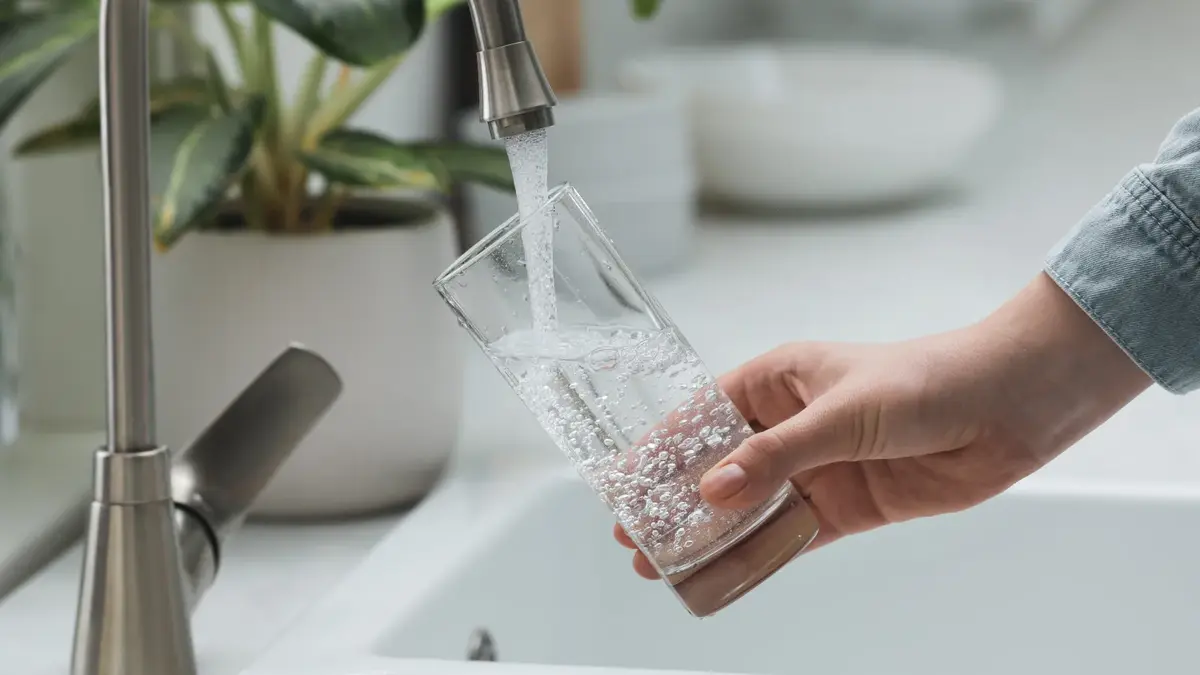
The north is the clear winner. Porto, Braga, and the Minho region sit on ancient granite bedrock that barely dissolves into the water supply, producing soft water with hardness below 50 mg/L CaCO3. The Algarve sits at the opposite end — limestone bedrock pushes hardness above 250 mg/L in some municipalities, giving the water a thick, chalky finish.
The north — Porto and Braga
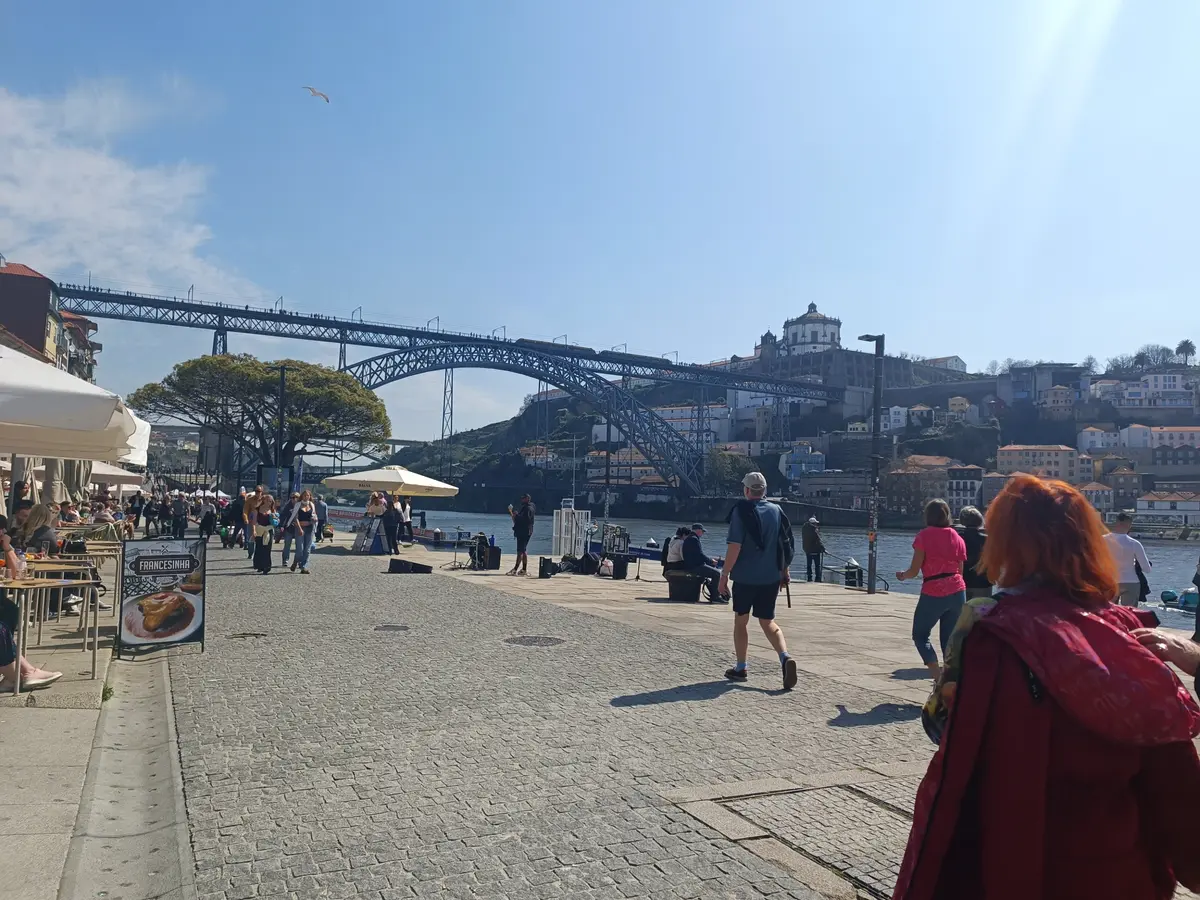
Porto and Braga pull water from pristine river systems like the Cávado. The result is neutral, clean, and light — the kind of water you forget you are drinking. Hardness rarely exceeds 50 mg/L CaCO3, and key municipalities here hold a 100% safe water indicator.
Online traveler reports from northern Portugal are overwhelmingly positive, with residents and visitors alike describing it as better than most bottled alternatives. Bring a reusable bottle and fill it freely.
Lisbon — the milky water explained
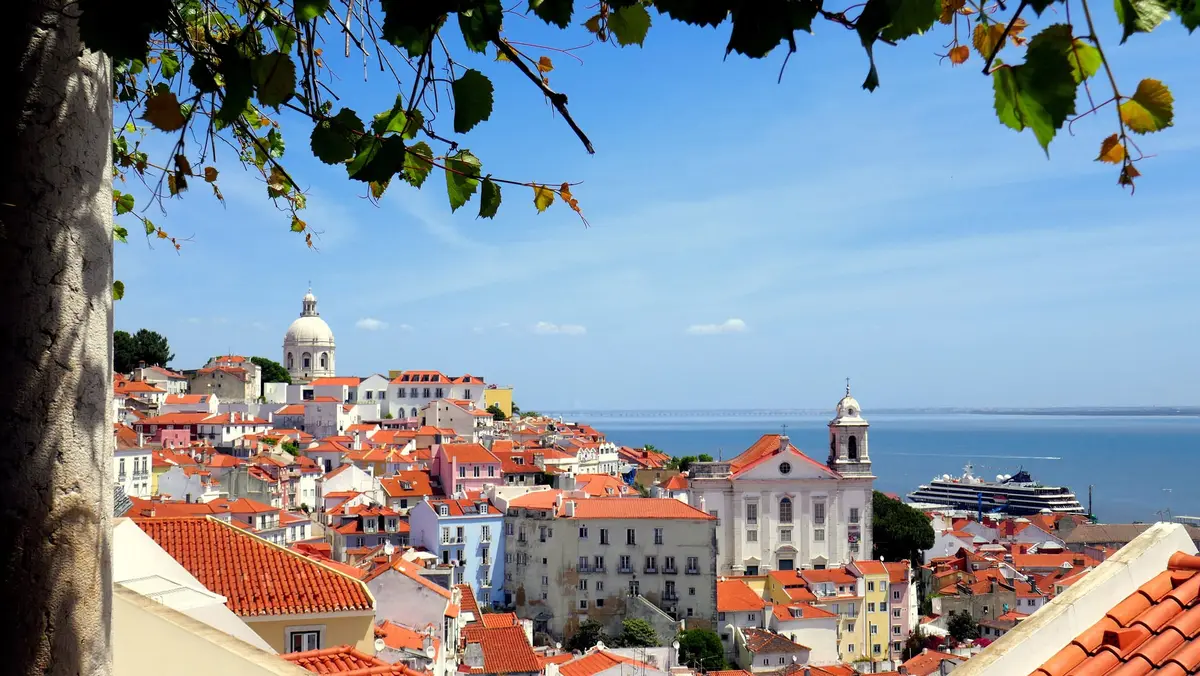
Lisbon operates in a transitional geological zone with moderately soft to medium-hard water, averaging around 80 mg/L CaCO3 according to EPAL, the city’s water utility. The source is a blend of surface water from the Castelo do Bode Dam on the Zêzere River and groundwater from the Alenquer and Ota aquifers.
The quirk you will notice in upper-floor apartments is water that comes out milky white when you first run the tap. Do not panic. That is trapped air forced through the pipes by the pressure needed to reach Lisbon’s famously steep hills. Let the glass sit for 60 seconds and watch it clear from the bottom up. If it clears, it is air. If sediment settles at the bottom, that is a building pipe issue — extremely rare in central Lisbon.
Pro Tip: If you are staying in Lisbon, download EPAL’s free H2O Quality app. It uses your GPS to show real-time water quality data and parameters for your exact location within the Lisbon network, and maps the nearest drinking fountains so you can refill rather than buy.
The south — Algarve and Alentejo
This is where you have to manage expectations. The Algarve and Alentejo sit on limestone bedrock, meaning groundwater picks up high concentrations of calcium and magnesium as it moves through. Hardness levels exceed 250 mg/L CaCO3 in municipalities like Faro, Loulé, and Albufeira. Combined with the higher chlorination levels used to prevent bacterial regrowth in a hot climate, the water tastes thick and mineral-heavy to palates used to soft water.
Here is the honest take: the water is bacteriologically safe — seven local entities in the Algarve, including Loulé, Albufeira, and Lagos, hold ERSAR’s exemplary quality seal. But “safe” and “enjoyable to drink” are two different things in the south. Long-term expats typically keep a filter pitcher in their accommodation and use it for drinking, which is a reasonable approach.
The old warning about hard water causing kidney stones is not supported by evidence. Dietary calcium from water actually binds with oxalates in the digestive tract, which reduces — not raises — the risk of kidney stones.
The Azores and Madeira
The Azores are in a different category entirely. Water sourced from volcanic aquifers and natural springs passes through porous volcanic rock that acts as a slow-release mineral filter. The result is clean, soft water rich in silica and low in the calcium hardness that plagues the mainland south. Local operators actively encourage tourists to drink from the tap.
Madeira’s main island pulls from the historic levada system — ancient irrigation channels that capture rainfall from cloud forests. The water is generally high quality, though it can vary slightly between municipalities. Porto Santo, the smaller neighboring island, runs almost entirely on reverse osmosis desalination, which produces water that tastes flat because it lacks natural mineral complexity. It is safe, just stripped of character.
Why does Portugal tap water smell like bleach?
The chlorine smell comes from the free chlorine used to prevent bacterial regrowth as water travels through long pipelines — and in summer, those pipes sit in temperatures regularly above 86°F (30°C). The answer is simple: the smell is proof the water is disinfected. No smell in a hot-climate pipe system is the actual danger sign.
The fix takes 30 minutes and zero effort. Fill a carafe or wide-mouth bottle and leave it uncovered on the counter. Chlorine is a gas dissolved in liquid — it escapes on its own. The smell and any associated taste disappear completely. This is standard practice for expats living in southern Portugal, and it works every time.
Can you get free tap water at restaurants in Portugal?
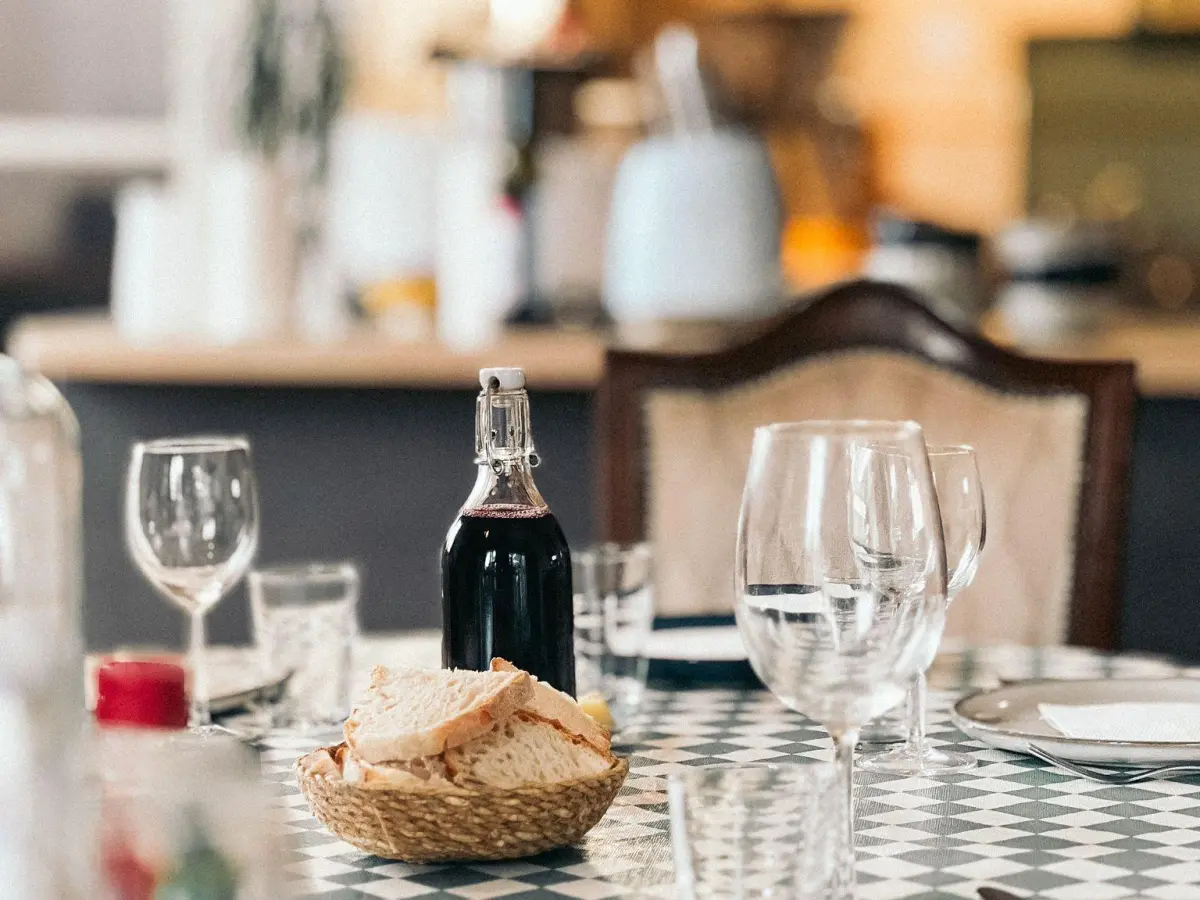
Yes, but it is not automatic and the rules have nuance. Under Law 52/2021, all hotel, restaurant, and café establishments are required to keep tap water and sanitized cups available for customers consuming on-site. The water must be provided free or at a price lower than the establishment’s packaged water — not a flat service fee. If they charge you for tap water, that amount must appear on the price board and must be less than what they charge for a bottle.
In practice, the experience varies. Busy tourist restaurants sometimes tell customers they do not serve tap water, or bring a bottle of mineral water without asking. This is an economic tactic — margins on a bottle of water are substantial while food margins are tight. A working knowledge of basic Portuguese phrases helps in these moments — ask specifically: “Podia trazer um copo de água da torneira, por favor?” (Could you bring a glass of tap water, please?)
Upscale restaurants have adopted in-house filtration systems and serve filtered water in branded glass bottles for a fee. This is legal and, honestly, more consistent than chasing down a waiter for tap water that may arrive warm.
Skip the confrontation at any place that refuses firmly. It is not worth the friction, and the next restaurant will almost certainly comply without hesitation.
Does old plumbing affect water quality in Portugal?
It can, temporarily, in historic buildings — but the risk is low and manageable. ERSAR guarantees water quality in the public street mains. What happens inside the building after the meter is the property owner’s responsibility.
In Lisbon’s Alfama or Porto’s Ribeira, buildings from the mid-20th century sometimes have galvanized steel pipes that have corroded internally. If your water runs brown or orange when you first turn on the tap after the pipes have been sitting unused, run it for two to three minutes until it clears. Iron oxide discolors water and tastes metallic but is not toxic in small amounts.
Lead pipes are theoretically possible in un-renovated heritage properties but extremely rare. If you are traveling with infants and your accommodation clearly has not been updated in decades, use bottled water for baby formula as a precaution — not because Portugal poses meaningful risks (its safety record for travelers is consistently rated among the best in Europe), but because the stakes with infants are high.
One specific situation to watch for: apartments rented through short-term platforms often sit empty between guests for days or weeks. Stagnant water in the pipes loses its chlorine protection over time. When you first arrive, open every faucet and flush the toilet. Let everything run for two to five minutes to flush the building’s standing water and bring in fresh, chlorinated water from the municipal main. On my last visit to a Lisbon apartment that had been vacant for ten days, the water ran slightly yellow for the first two minutes before clearing to crystal — exactly as expected.
How do you travel sustainably with Portugal’s tap water?
Portugal produces around 120 liters of bottled water per person per year — one of the highest per-capita rates in Europe — despite having some of the continent’s cleanest tap water. The economics of switching are compelling.
- Tap water cost: approximately €0.0017 (~$0.002) per liter through the public network
- Supermarket bottled water: €0.50 to €1.00 (~$0.55–$1.10) per liter
- Airport / café bottled water: €1.50 to €3.00 (~$1.65–$3.30) per liter
A family of four spending two weeks drinking exclusively bottled water at café prices can easily add $150 or more to the trip — real money in any Portugal travel budget, for water that is not objectively safer than what comes out of the tap in Porto.
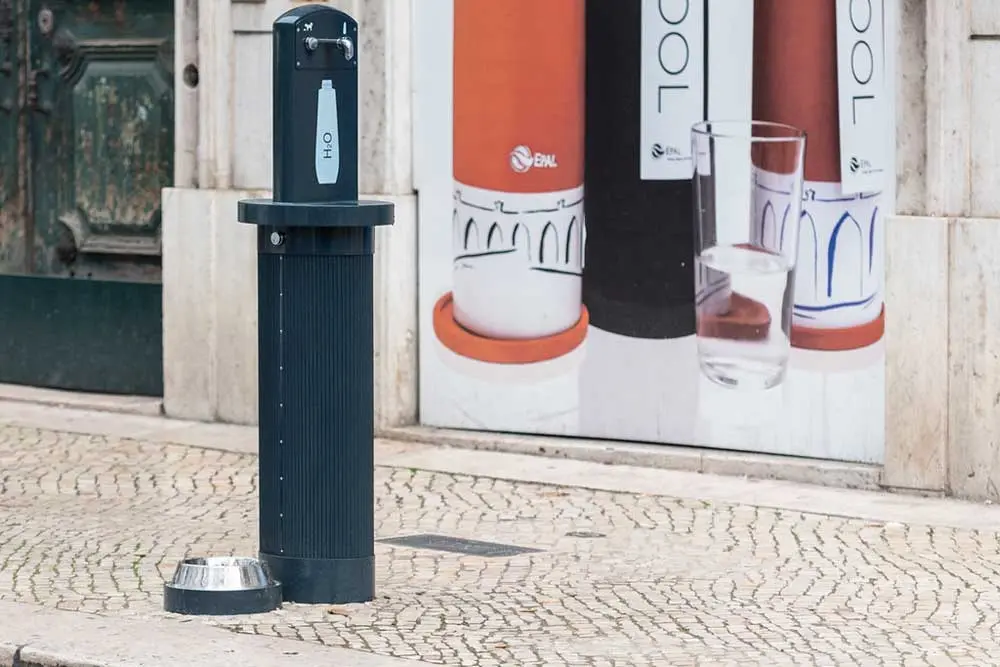
EPAL’s Fill Forever campaign sells refillable bottles specifically designed to pair with Lisbon’s public drinking fountain network. The H2O Quality app maps those fountains in real time for Lisbon. The global Refill app has growing coverage across Portugal and identifies cafes and shops that allow free bottle refills.
For Lisbon Airport: the main Terminal 1 water fountain is near the restrooms by gate N41, in the northern pier. There is also a fountain near the restrooms by gate S11 in the Schengen area. Both go in and out of service — if one is down, check the other. Terminal 2 currently has no fountain after security, so fill your bottle before you leave the city or be prepared to pay for water airside.
The bottom line
Portugal’s tap water is safe across the country, full stop. The regional differences are about taste and aesthetics, not safety. Drink freely in Porto and Braga — it genuinely rivals premium bottled water. In Lisbon, let milky-white water degas for a minute and you will be fine. In the Algarve and Alentejo, the water is safe but hard; a filter pitcher in your accommodation — worth adding to your Portugal packing list if you’re spending time in the south — is a reasonable comfort upgrade. On the Azores, drink from the tap without a second thought.
TL;DR: Bring a reusable bottle. Fill it from the tap in northern cities. Use a filter pitcher in the south if taste bothers you. Ask specifically for “água da torneira” at restaurants and expect it to be provided. Skip the bottled water habit — your wallet and Portugal’s plastic recycling system will both thank you.
What surprised you most about water quality during your time in Portugal — and did the regional differences match what you expected?