Cerro Verde National Park packs three volcanoes — Santa Ana, Izalco, and the cloud-forested Cerro Verde — into one corner of western El Salvador. Most people come for the green crater lake at Santa Ana’s summit and immediately hit a wall of confusing rules: mandatory guides, a police escort, fee collectors at every turn. Here’s how it actually works.
The essentials, up front:
- Park entry: $3 for foreigners, $1.50 for nationals
- Santa Ana hike: adds a roughly $6 volcano gate fee plus a ~$3 guide — cash only
- Guide and police escort: mandatory, with no independent summits
- Getting there: Bus #248 from Santa Ana, or drive/tour
- Weekday cutoff: you must start the Santa Ana hike before 11 a.m.
- No ATMs at the park: bring small bills
What Is Cerro Verde National Park, and Where Is It?
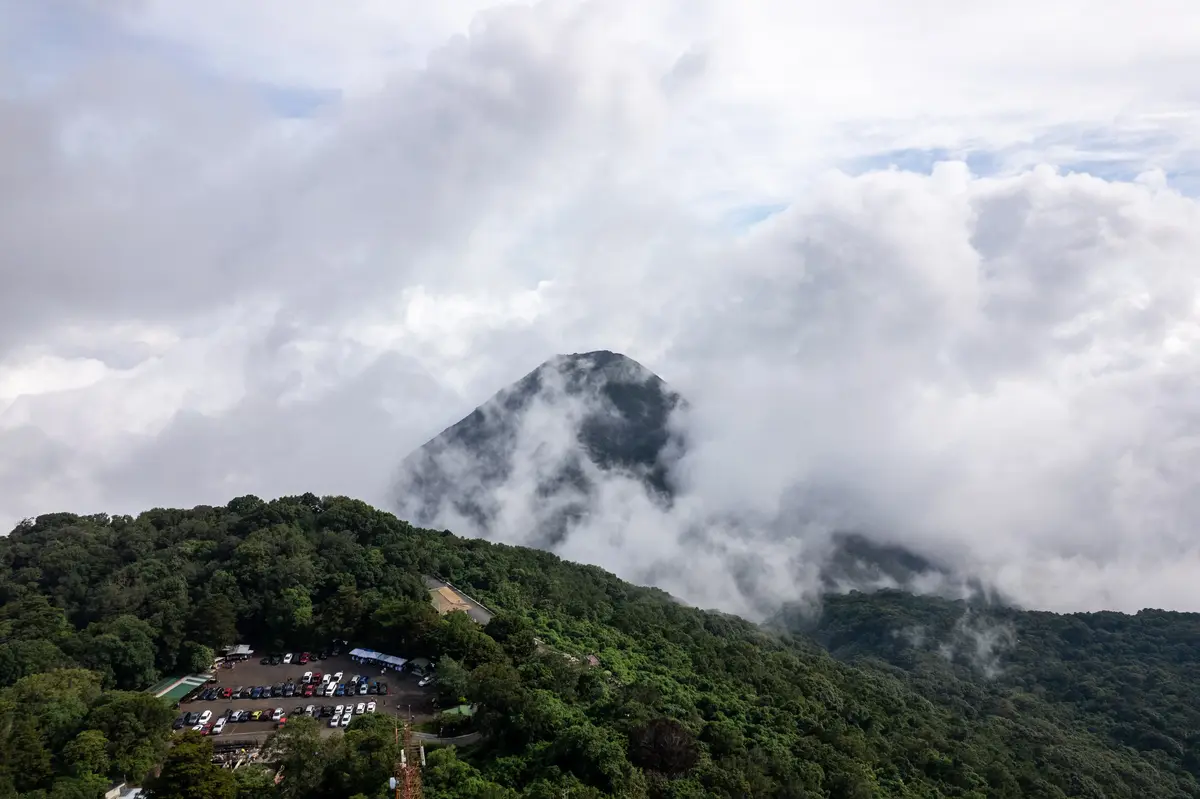
Cerro Verde National Park (Parque Nacional Los Volcanes) is a protected cloud-forest reserve in western El Salvador’s Apaneca-Ilamatepec range, about 48 mi (77 km) from San Salvador and 25 mi (40 km) from Santa Ana city. It centers on three volcanoes — Santa Ana, Izalco, and Cerro Verde — above Lake Coatepeque, and is managed by the Salvadoran Institute of Tourism.
The single biggest mistake travelers make is treating “Cerro Verde National Park” and “the Santa Ana hike” as the same thing. They’re not. Santa Ana is one peak inside a three-volcano complex, and the park itself sits on the extinct Cerro Verde volcano at 6,660 ft (2,030 m), wrapped in cloud forest.
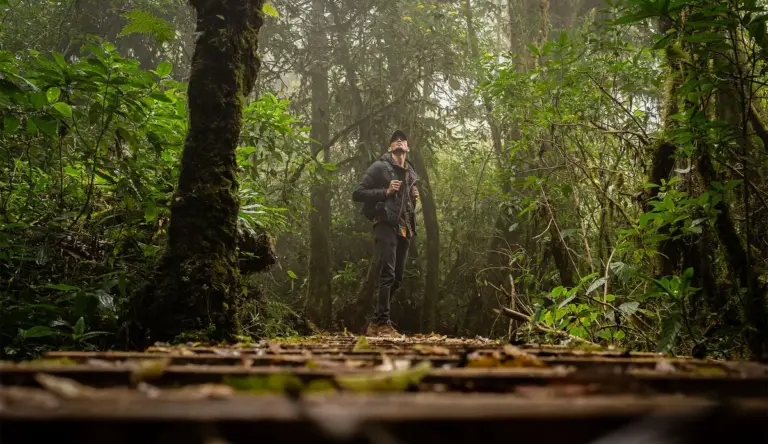
That forest is the part most guides skip. The reserve protects more than 127 recorded bird species, including the Torogoz — the turquoise-browed motmot that’s El Salvador’s national bird — plus an orchid garden and a short nature loop with viewpoints that reach the Pacific on a clear day.
There’s a literary footnote worth knowing too. Antoine de Saint-Exupéry, who married a Salvadoran, is widely said to have based one of the little volcanoes in The Little Prince on Santa Ana. You can decide on the slope whether the resemblance holds.
What stays with you is the contrast. The Cerro Verde forest is damp, mossy, and cool; an hour later the Santa Ana climb is open, dry, and sun-blasted. Two volcanoes in the same park that feel like two different countries.
How Much Does It Cost to Visit Cerro Verde and Hike Santa Ana?
Foreigners pay $3 to enter Cerro Verde National Park ($1.50 for Salvadoran nationals; kids under 6 free). Hiking Santa Ana adds a separate volcano gate fee of about $6 ($3 for nationals) plus a guide fee of roughly $3 — all cash only. Budget around $12 in fees as a foreign hiker, and bring small bills, since there are no ATMs.
Here’s how the line items break down:
| Fee | Foreigner | National |
|---|---|---|
| Cerro Verde park entry | $3.00 | $1.50 |
| Santa Ana volcano gate | ~$6.00 | ~$3.00 |
| Guide fee / tip | ~$1–$4 | ~$1–$4 |
| Private-landowner crossing | ~$0.50 | ~$0.50 |
| Parking (vehicle) | ~$1–$3 | ~$1–$3 |
| Bus #248 each way | $0.70–$0.90 | $0.70–$0.90 |
One honest flag: sources don’t fully agree on the volcano gate fee. Some report $3 for foreigners, others $6, and the environment ministry has posted different figures at different times. Carry enough for the higher number and you won’t get caught short.
Cash is non-negotiable. The US dollar is the official currency (Bitcoin is legal tender too, but you won’t need it), there are no ATMs at the park, and the fees get split among three or four different collectors — so a fistful of $1 bills matters more than a card.
What it adds up to, by travel style:
- Budget bus hiker: about $12 all-in (park, volcano gate, guide, and the bus both ways)
- Driver or Uber pair: roughly $25–$40 once you add fuel or fares to the fees
- Shared group tour: about $17–$40 per person
- Private guided tour: $82–$98 for the vehicle, guide, and entries
Pro Tip: Break a $20 into ones before you leave town. Fees get collected by three or four people on the way up, and nobody makes change.
On my last climb I paid four separate people between the parking lot and the rim. Have eight $1 bills loose in a pocket or you’ll hold up the line while you dig.
How Do You Get to Cerro Verde From San Salvador and Santa Ana?
From San Salvador, the park is about 48 mi (77 km), or 1 hour 40 minutes, on the Pan-American Highway (CA-1); from Santa Ana city it’s roughly 25 mi (40 km). Budget travelers ride Bus #248 (about $0.90), which leaves Santa Ana near 7:30 a.m. and reaches the El Tibet trailhead in 1.5–2 hours. Driving or a tour is faster but costs more.
Your three real options:
- Bus #248: departs Santa Ana from the Sala de Espera y Abordaje on 11 Calle Pte at about 7:30–7:40 a.m. This is the only departure that connects in time to hike and return the same day.
- Uber or driving: roughly $15–$30 one-way from Santa Ana, faster but unreliable for the return trip from a quiet trailhead.
- Day tour: about $17–$40 per person when shared, up to $82–$98 private, with hotel pickup.
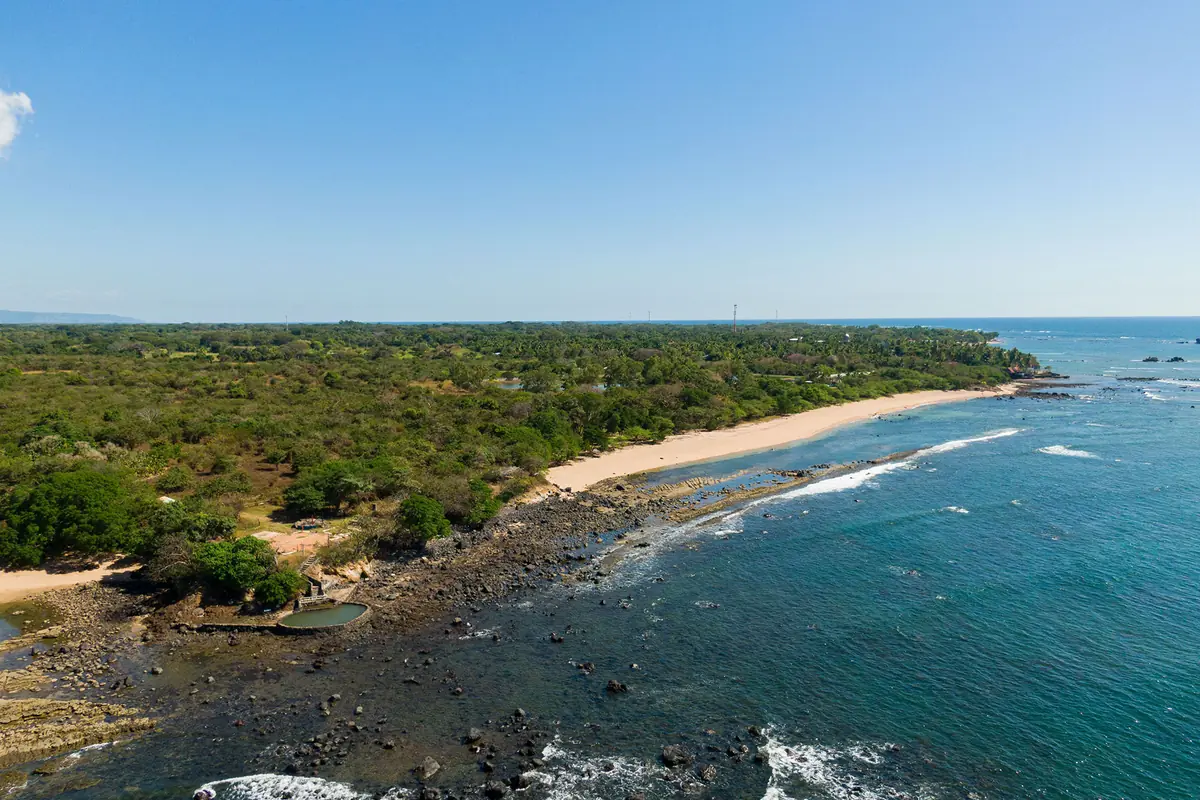
Coming from Lake Coatepeque instead, you can connect through El Congo on Bus #242. Either way the road skirts the lake, with mirador pullouts worth a five-minute stop for the crater-lake view from above.
The return is where day-trippers get burned. The bus back from El Tibet leaves around 1:00–1:30 p.m., and the next one isn’t until roughly 4:00.
Pro Tip: The return bus from El Tibet leaves around 1:00 to 1:30 p.m. Miss it and you’re waiting until about 4:00 — plan your descent to make the early one.
We jogged the last forest stretch and stepped onto the 1:15 bus as it was already rolling. Don’t count on a second chance.
Hiking Santa Ana Volcano (Ilamatepec): The Main Event
Santa Ana (Ilamatepec) is El Salvador’s highest volcano at 7,812 ft (2,381 m). The hike runs about 4.3 mi (6.9 km) round trip with roughly 1,525 ft (465 m) of gain, taking 2–2.5 hours up and around 4 hours total. A guide is mandatory, and groups set off mid-morning with a tourist-police escort.
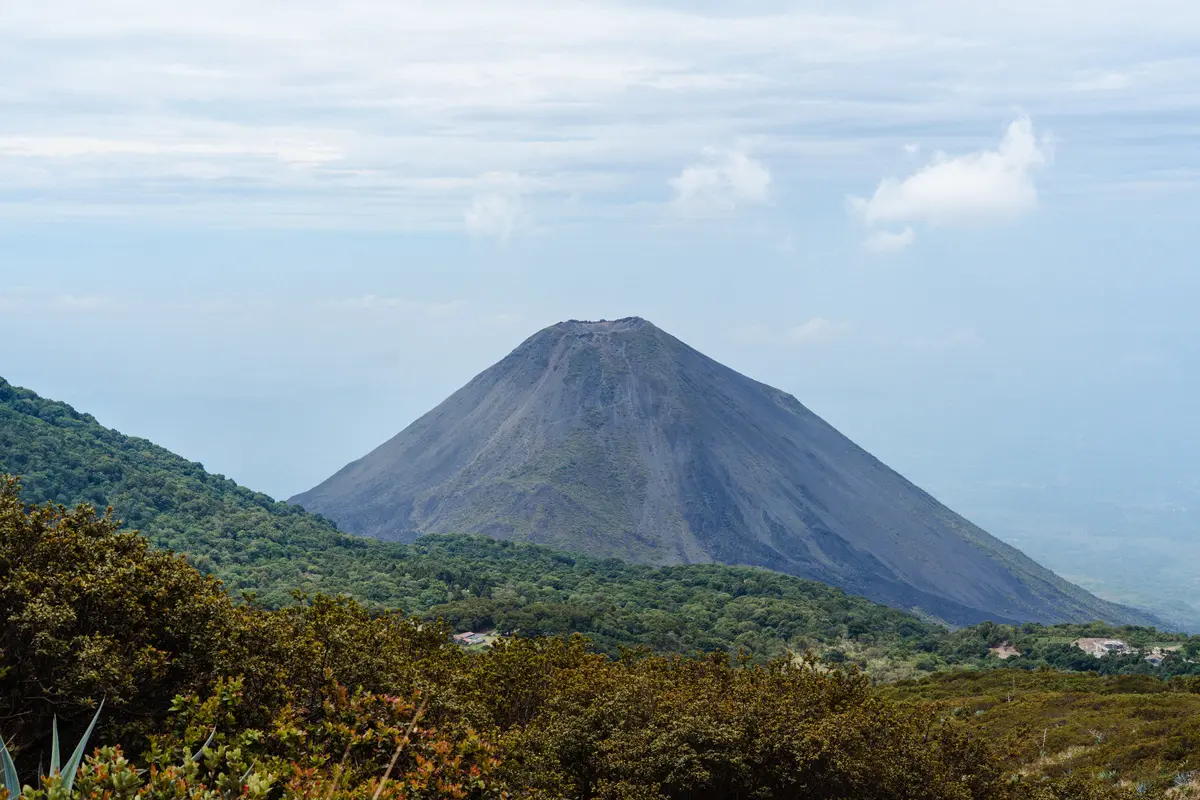
The trail crosses three worlds in two hours: cloud forest, then dry scrub, then bare volcanic rock near the top. About 15 minutes in, a three-story lookout tower gives you the first real view back over the forest.
Higher up, the smell changes. The rotten-egg bite of sulphur hits as you break above the tree line and approach the rim — the first sign you’re walking up something still alive.
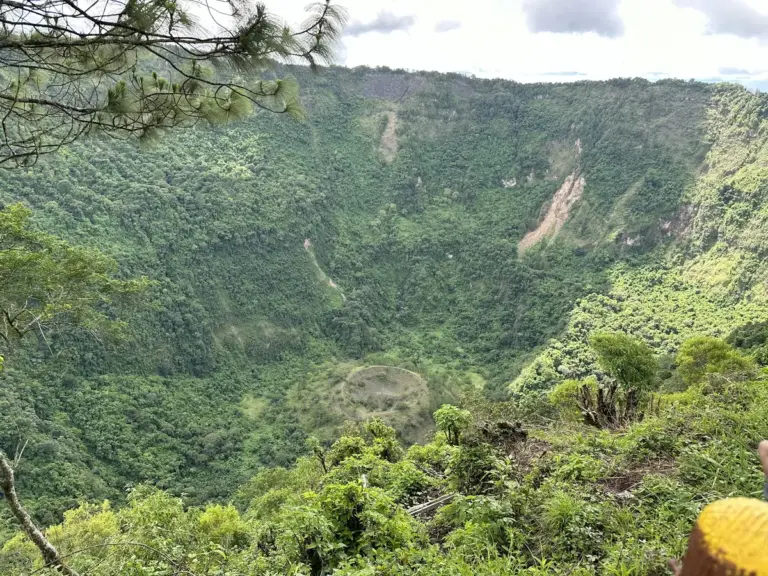
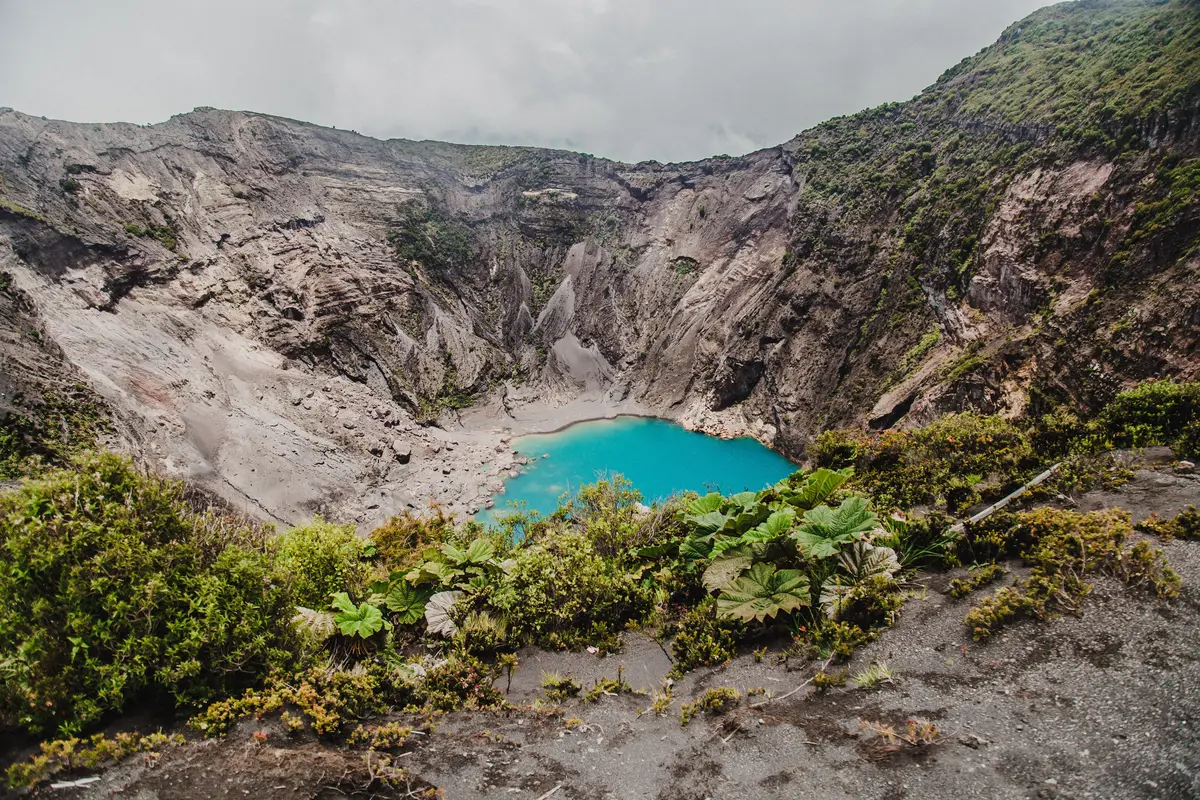
Then the payoff: nested craters dropping to a green-turquoise acidic lake. The color looks almost radioactive, and on a clear morning you’ll see it the moment you crest the edge.
Timing is stricter than most older guides admit. On weekdays you have to start the hike before 11 a.m. — that’s the cutoff to enter, not the “departure time” some articles still quote. Weekend groups can begin in the pre-dawn hours, but they pay for it in crowds: hundreds of hikers and 30-person columns clogging a single-file trail.
There’s a detail you won’t read in many places: an ice-cream vendor sells passionfruit paletas for about $2 near the top. Only in Latin America do you summit an active volcano to a popsicle cart.
Pro Tip: Start as early as the rules allow. By late morning the trail fills with 30-person groups, and the bare upper slope has no shade to escape the heat.
Back at the bottom, the standard reward is pupusas with curtido in El Congo or Santa Ana — the national dish, a dollar or two each, and exactly what your legs are asking for.

How Hard Is the Santa Ana Hike, and Is It Safe?
The Santa Ana hike is moderate — a steady uphill that most reasonably fit people, including older kids, finish in 1.5–2 hours up. The volcano is active but sits at a Green alert, with no major eruption since 2005. The real hazard isn’t lava; it’s wind, which can shorten or cancel the climb.
The 2005 event is why the rules exist. Per the Smithsonian Global Volcanism Program, the October 1, 2005 eruption threw ash to about 46,000 ft (14 km) and forced roughly 2,000 evacuations. Two people died. Monitoring by MARN, the environment ministry, has kept the volcano at its lowest alert level since, with current activity limited to fumaroles and the hot acidic crater lake.
Day-to-day, the dangers are smaller but real:
- The crater edge is unfenced. Officers blow whistles at anyone leaning over for a photo.
- The upper slope is loose rock. Slips are common on the way down; traction matters.
- Wind, not altitude, is the limiter. At 7,812 ft (2,381 m) you won’t get altitude sickness, but rangers can cap your time at the rim or cancel outright on gusty days.
Even in dry-season March, I watched cold mist swallow the crater for ten minutes, then peel back to reveal the glowing lake. Bring patience and a jacket — the view rewards both.
Can You Climb Izalco and Walk Cerro Verde Too?
Yes. Beyond Santa Ana, you can climb Izalco — the steeper, harder “Lighthouse of the Pacific,” with 1,200-plus forest steps and loose lava scree — or take the easy 45-minute Cerro Verde nature loop through cloud forest. Izalco and Santa Ana can’t be done in the same day, so allow two days for both summits.
Here’s how the three peaks compare at a glance:
| Volcano | Height | Difficulty | Round-trip time | Highlight |
|---|---|---|---|---|
| Santa Ana (Ilamatepec) | 7,812 ft (2,381 m) | Moderate | ~4 hrs | Turquoise crater lake |
| Izalco | 6,496 ft (1,980 m) | Hard (scree, 1,200+ steps) | ~3.5–4 hrs | Active fumaroles, lunar terrain |
| Cerro Verde | 6,660 ft (2,030 m) | Easy | ~45 min loop | Cloud forest, orchids, viewpoints |
Izalco — The Steep One With the Lava Scree
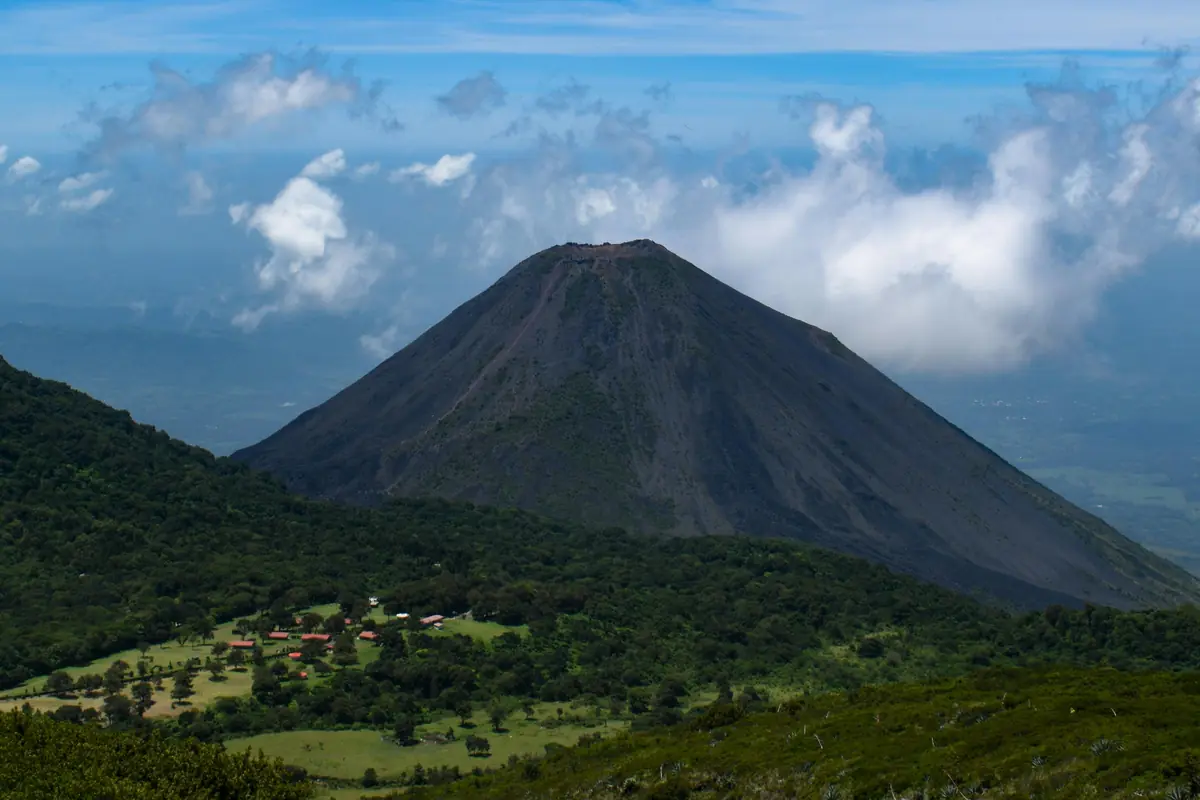
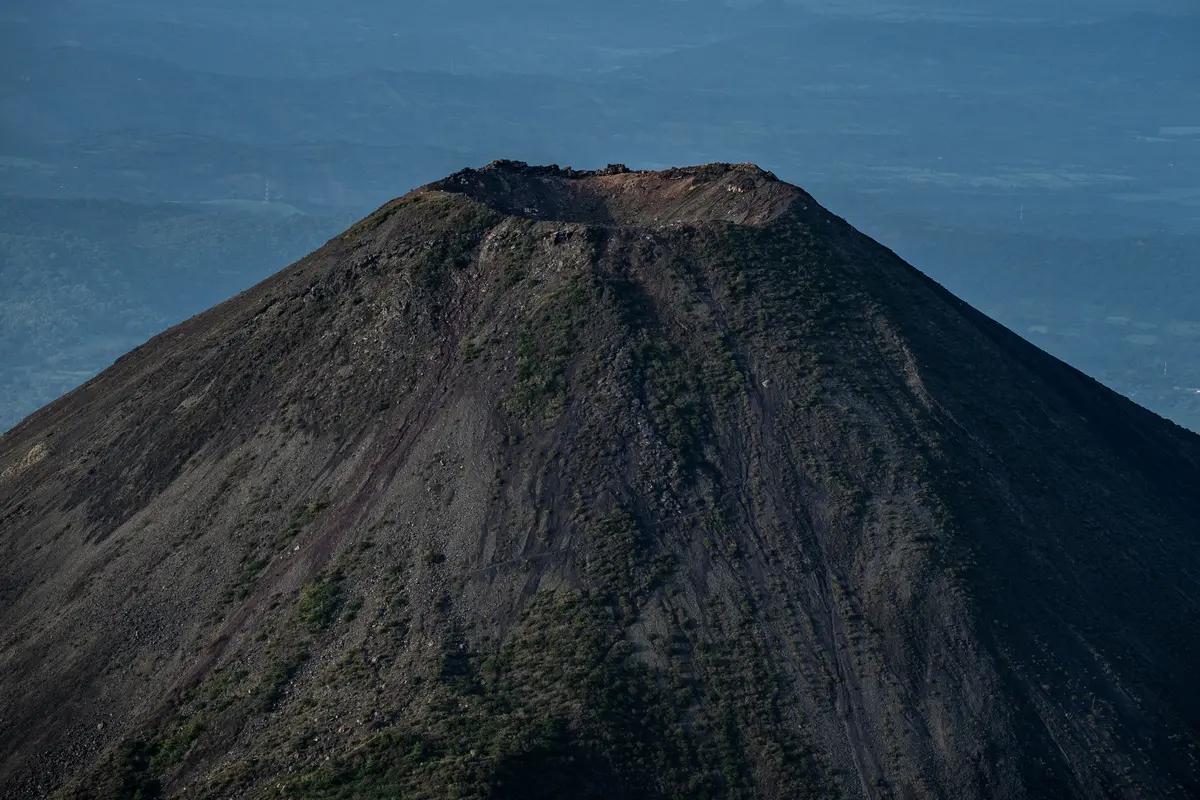
Izalco is the contrarian pick, and a good one for strong hikers. It emerged in 1770 and erupted so regularly until 1966 that sailors used its glow to navigate. The cone you see today formed in under 200 years — geologically, the blink of an eye.
The climb is brutal in a specific way. You descend roughly 1,200–1,500 steps from Cerro Verde first, then face a loose scree wall to the rim, where active fumaroles vent at a crater that looks lifted off another planet. A guide is mandatory here too.
My honest take: adventurous hikers should weigh Izalco over Santa Ana. It’s less crowded, more physically rewarding, and you stand at a live fumarole crater instead of shuffling in a conga line. The catch nobody warns you about — the 1,200 steps back up to Cerro Verde at the end, not the summit itself, are what wreck your legs.
The Cerro Verde Nature Loop — Easy, Damp, and Quick
If a strenuous summit isn’t the goal, the Cerro Verde nature loop is the easiest win in the park. It’s a roughly 45-minute walk through cool cloud forest, past the orchid garden, to viewpoints that frame Izalco’s cone and Lake Coatepeque below.
This is the right call for families with young kids, anyone short on time, or travelers who want the scenery without the police escort and the early start. No guide is required for the loop.
When Is the Best Time to Visit Cerro Verde?
Visit in the dry season, November to April, for the clearest views of the crater lake and Lake Coatepeque. The park sits above 6,000 ft (1,830 m), so it’s noticeably cooler and windier than the coast, even when the lowlands bake. The rainy season, May to October, brings afternoon downpours and cloud that often hides the views entirely.
Use this as a rough planner:
| Season | Months | What to expect |
|---|---|---|
| Dry (peak) | December–February | Clearest views; biggest crowds, especially holidays |
| Dry (early/late) | November, March–April | Reliable skies, slightly thinner crowds |
| Shoulder | May, October | Green and cheaper hotels; afternoon rain risk |
| Wet | June–September | Frequent cloud cover; views often blocked |
A few numbers that shape the trip: January is the driest month at about 0.1 in (3 mm) of rain, while September is the wettest near 10.5 in (266 mm). Summit temperatures run about 68–77°F (20–25°C) by day and drop to 50–59°F (10–15°C) at night. Weekdays are far quieter than weekends and holidays.
Pro Tip: Even in the dry season, carry a real jacket. Overnight lows near the summit have dropped to the mid-40s°F, and wind on the rim cuts straight through a thin windbreaker.
Where Should You Stay Near the Park and Lake Coatepeque?
Three bases work, depending on budget. Splurge inside the park at Casa 1800 Cerro Verde for volcano-view rooms; pick a Lake Coatepeque hotel like Hotel Equinoccio (or the budget Captain Morgan Hostel) for scenery and an easy early start; or stay in Santa Ana city hostels such as Casa Verde for the cheapest, most bus-friendly base.
Casa 1800 Cerro Verde — Inside the Park
This is the only stay actually on the mountain, a state-owned boutique hotel with rooms angled at the volcanoes. From the deck you can watch Izalco’s cone catch the last light if the sky cooperates.
The trade-off is rules and price. It’s the most expensive option, and a hotel-only alcohol policy means you can’t bring your own. But waking up already inside the park, ahead of the bus crowds, is worth it for the right traveler.
- Location: Inside Cerro Verde National Park, on the Cerro Verde summit road
- Cost: roughly $150/night in the weekend range
- Best for: Splurgers and photographers who want sunrise on the cones
- Time needed: 1–2 nights, ideal if you’re doing both summits
Lake Coatepeque — Best for Scenery and Early Starts
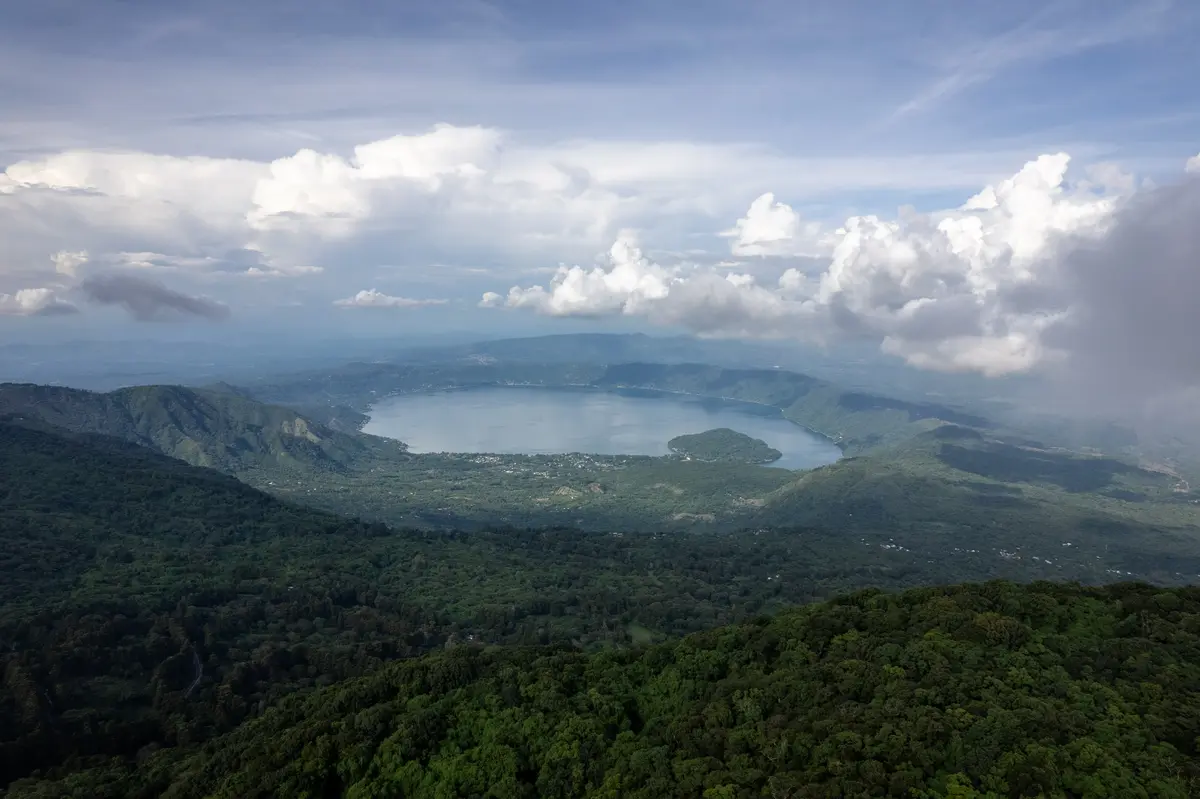
Lake Coatepeque sits about 6 mi from the park in a collapsed caldera, ringed by hotels and fish restaurants. Staying lakeside lets you launch toward the trailhead early and come back to a swim and a cold drink.
Options span the budget. Hotel Equinoccio and similar mid-range spots deliver the view; Captain Morgan Hostel covers backpackers. Boat rides on the lake run about $5.
- Location: Lake Coatepeque shoreline, ~6 mi from the park
- Cost: budget hostel beds up to mid-range lake-view rooms
- Best for: Travelers who want scenery plus a swim after the hike
- Time needed: 1–2 nights
Santa Ana City — Cheapest and Best for Buses
Santa Ana, El Salvador’s second city, is the practical base. It’s where Bus #248 starts, so it’s the cheapest and most reliable launch point for a no-car day trip.
It’s not the scenic choice, but the hostels are well-priced and central. Hostal Casa Verde and Hostal Las Puertas are reliable; Remfort Hotel and Tolteka Plaza cover mid-range.
- Location: Santa Ana city center
- Cost: budget hostels to mid-range hotels
- Best for: Bus travelers and anyone prioritizing cost and convenience
- Time needed: 1 night before an early bus
Is El Salvador Safe for Park Visitors?
Yes — El Salvador is now one of the safest countries in the Americas. The national homicide rate has fallen from around 53 per 100,000 to under 2 per 100,000, roughly a 98% drop, according to the Congressional Research Service. On Santa Ana, an armed tourist-police escort walks with every hiking group, front and back.
This is a genuine turnaround, not a brochure line. Trail robberies were a real problem years ago; the mandatory escort and bag checks at the trailhead ended that. Petty theft is now the main residual risk, the same as in any busy tourist spot.
For context, the security gains trace to a sweeping state-of-exception gang crackdown. It’s widely credited with the drop in violence, though some human-rights groups have raised due-process concerns — worth knowing as background rather than a reason to stay away. In one national survey, 88% of Salvadorans said they felt safe walking alone at night.
On the ground it reads as reassurance, not menace. Bags get checked for weapons at the trailhead, officers walk at the front and back of the group, and it feels less like danger and more like a chaperoned school trip.
Do You Really Need a Guide for Santa Ana Volcano?
Yes. A licensed guide is mandatory on the Santa Ana summit hike, paired with a tourist-police escort, and you’ll be checked at the gate — independent ascents aren’t allowed. The trail is easy to follow on its own, but the rule supports local jobs and safety, and the guide fee is only a few dollars.
How Long Do You Need at Cerro Verde National Park?
A half-day covers the easy Cerro Verde nature loop and the viewpoints. Santa Ana is its own half-day, about 4 hours of hiking plus transport. To climb both Santa Ana and Izalco, plan two full days, ideally staying nearby at Lake Coatepeque or inside the park.
What Should You Pack for the Santa Ana Hike?
There are no facilities on the trail beyond a few drink stands near the gate, so carry what you need:
- Footwear: sturdy shoes or boots with traction for loose rock
- Layers: a windproof jacket — the summit is chilly and gusty
- Water: at least 2 liters; the upper slope is exposed
- Sun protection: hat and sunscreen for the shadeless climb
- Cash: small $1 bills for the string of fee collectors
- Extras: snacks, optional trekking poles, and a light rain layer in the wet season
The Bottom Line
TL;DR: Come for the three volcanoes, not just one. Budget about $12 in cash fees, take the 7:30 a.m. bus or book an early private guide, go in the dry season on a weekday, and allow two days if you want Izalco too. It’s active but safe, fully escorted, and far more than a single crater-lake photo.
Cerro Verde National Park rewards travelers who plan the logistics first and let the scenery surprise them second. Get the cash, timing, and guide rules sorted, and the rest — the green lake, Izalco’s cone, the cool forest — takes care of itself.
What would push you to base at Lake Coatepeque over Santa Ana city, or skip the Santa Ana crowds for Izalco? Tell me in the comments.