The best East Coast beaches run more than 2,000 miles (3,200 km), from Maine’s cold granite coves to Miami’s bath-warm Atlantic. This guide sorts them by what you actually want — warm water, family value, surf, or quiet — plus when to go and what each one costs.
The Best East Coast Beaches at a Glance
The best East Coast beaches include Cape Cod, Massachusetts for New England charm; the Outer Banks, North Carolina for wild dunes and surf; Myrtle Beach, South Carolina for family value; Cape May, New Jersey for Victorian boardwalk nostalgia; Tybee Island, Georgia for Lowcountry calm; and Miami Beach, Florida for warm water in all 12 months.
The shortlist, north to south:
- Cape Cod, Massachusetts: New England charm and a real summer swim
- Outer Banks, North Carolina: wild dunes, aviation history, the region’s best waves
- Myrtle Beach, South Carolina: the family-value workhorse
- Cape May, New Jersey: Victorian streets behind a gentle beach
- Tybee Island, Georgia: laid-back Lowcountry, 18 miles from Savannah
- Miami Beach, Florida: swimmable water in all 12 months
The water warms steadily the farther south you drive, so a Maine-to-Florida road trip is also a cold-to-warm gradient. Drive it in pieces and the pattern is obvious — Acadia’s low-50s°F water versus Miami’s mid-80s°F is the whole story of this coast.
Heading north to south, the coast splits into four beach regions: New England’s rugged, cool-water shore; the Mid-Atlantic’s boardwalk towns; the Southeast’s warm Lowcountry and Grand Strand; and Florida’s near-tropical Atlantic. Water warms and the swimming season stretches longer the farther south you go.
New England — Granite Coves and Cold-Water Swims
New England’s beaches trade warm water for scenery. Even at the August peak, the Atlantic here rarely clears the upper 60s°F (around 19°C), and Maine’s water stays a bracing low 50s°F (around 11°C). You come for pink granite, Gilded Age mansions and real summer charm — and you pick your swim days carefully.
Acadia and Bar Harbor, Maine — Scenery, Not Swimming
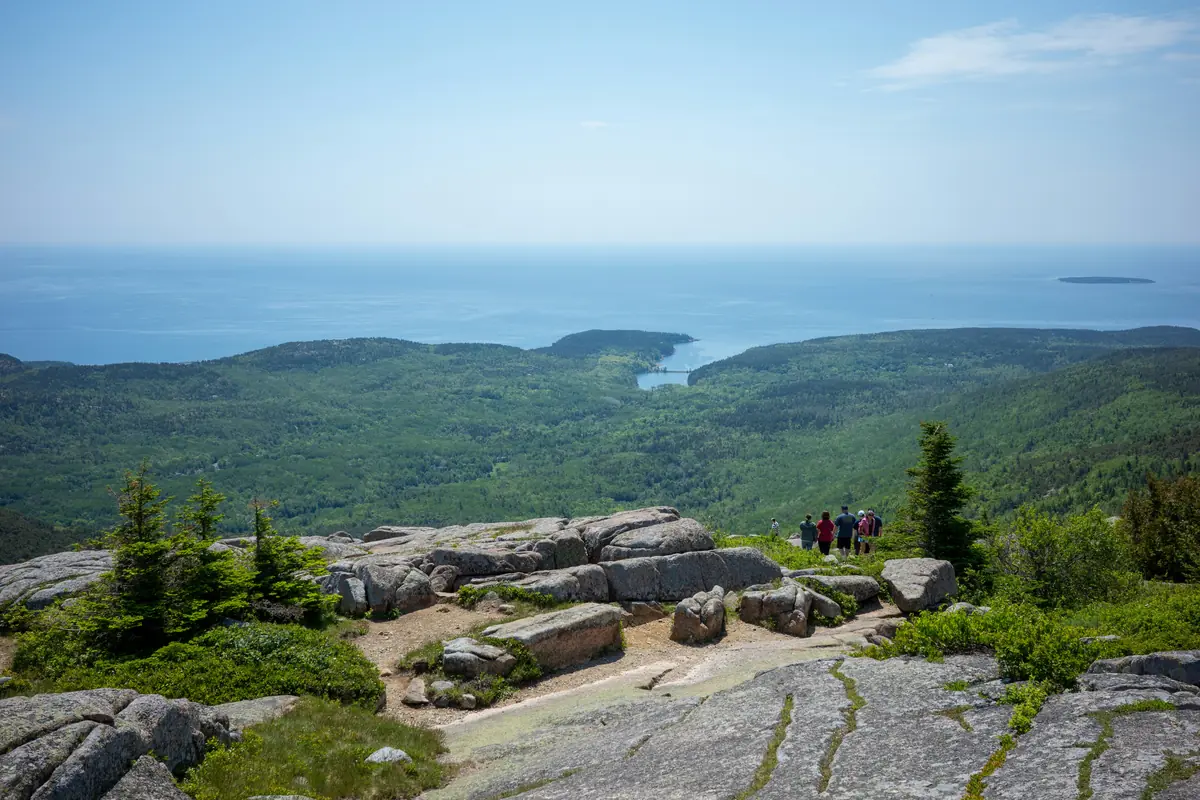
Sand Beach sits inside Acadia National Park, 12 miles (19 km) south of Bar Harbor — a small crescent of pink-tinged sand wedged between granite cliffs and pine. The water hovers in the low 50s°F (around 11°C) even in August, so wading past your knees takes real commitment.
You come for the scenery and the Beehive Trail climbing right behind the beach, not for swimming. Families who want actual swim time should keep driving south.
One logistics trap worth knowing: if you plan to pair the beach with sunrise or a drive up Cadillac Mountain, the Cadillac Summit Road now needs its own $6 vehicle reservation on Recreation.gov, separate from your park pass, from late spring through late October.
- Location: Sand Beach, Acadia National Park; nearest airport Bangor (BGR), ~50 miles (80 km)
- Cost: park pass $35/vehicle (7 days); Bar Harbor hotels roughly $150-250/night in summer
- Best for: Scenery seekers, hikers, cold-water-tolerant New Englanders
- Time needed: A full day paired with Acadia
- Peak water temp: low 50s°F (~11°C) — the coldest swim on this list
Cape Cod, Massachusetts — New England Charm With a Real Swim
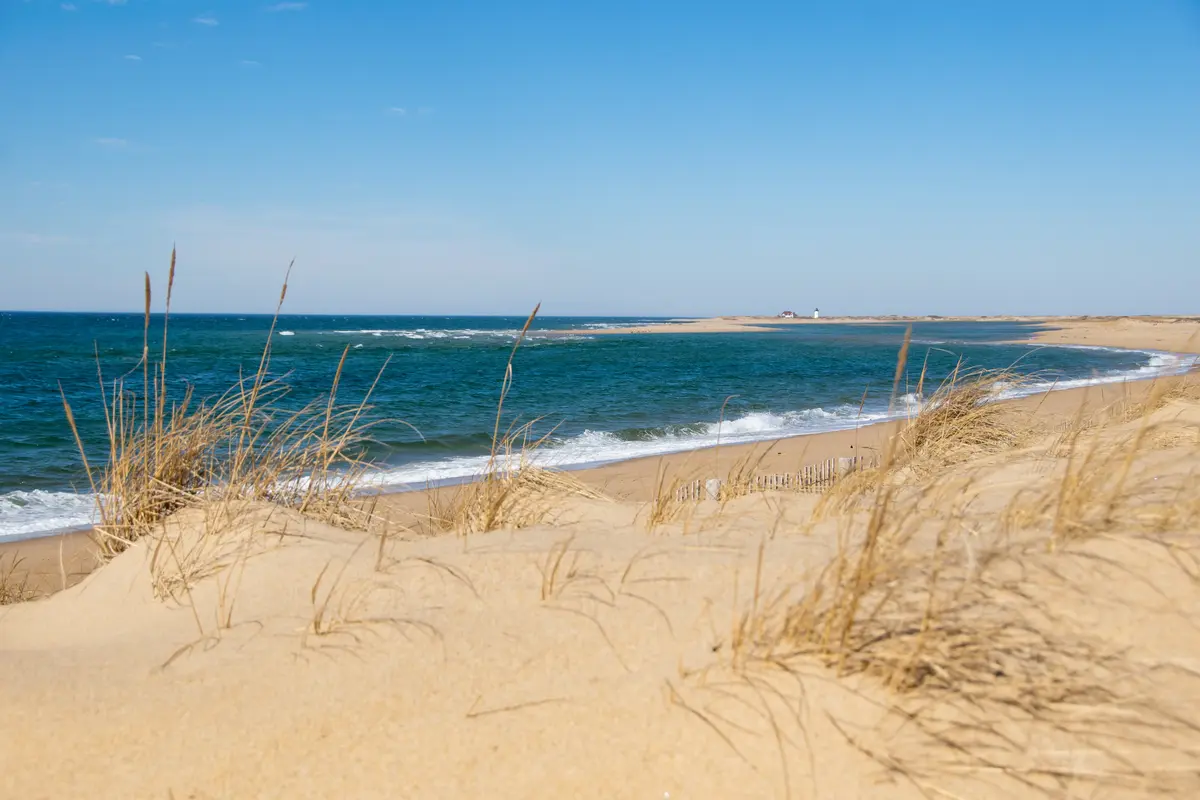
Coast Guard Beach and Marconi Beach anchor 40 miles (64 km) of Cape Cod National Seashore — wide, Atlantic-facing sand backed by tall dune cliffs. The water climbs to the upper 60s°F (around 19°C) by late summer, warm enough for a genuine swim if you ease in.
The friction here is traffic and parking, not the beach itself. My honest take: skip crowded Cape Cod proper at peak season and aim for the Outer Cape beaches near Eastham and Wellfleet, which give you the same Atlantic with a fraction of the cars.
One thing that catches first-timers: the National Seashore and the individual towns run separate parking systems. A $25 Seashore day pass gets you into all six federal beaches, but it won’t work at a town-managed beach, where you’ll need that town’s own sticker.
Pro Tip: The Coast Guard Beach lot fills by mid-morning on summer weekends. Park at the Salt Pond Visitor Center in Eastham and take the shuttle instead of circling for an hour.
- Location: Cape Cod National Seashore, Eastham to Provincetown; nearest airport Boston (BOS), ~90 miles (145 km)
- Cost: hotels roughly $180-350/night in summer; Seashore parking $25/day, or a $60 season pass covering all six beaches
- Best for: New England charm, walkable beach towns, summer crowds you’ll tolerate
- Time needed: 3-4 days
Newport, Rhode Island — Mansions First, Sand Second
Easton’s Beach — locals call it First Beach — sits at the foot of the 3.5-mile (5.6 km) Cliff Walk, the trail running past Gilded Age mansions on one side and the open Atlantic on the other. The sand is coarse and the water cool well into July.
Newport is a couples-and-history town more than a beach town. The beach is the warm-up; the mansions, the seafood at The Mooring, and the Cliff Walk are the main event.
- Location: Easton’s Beach, Newport; nearest airport Providence (PVD), ~35 miles (56 km)
- Cost: hotels roughly $200-400/night in summer
- Best for: Couples, history buffs, walkers
- Time needed: 2 days
Mid-Atlantic — Boardwalk Towns and Family Sand
The Mid-Atlantic is where the water first turns properly swimmable — mid-70s°F (around 24°C) by high summer — and where the boardwalk-and-amusement formula peaks. This is family-vacation country: wide sand, rides, fries, and rentals with kitchens, from Long Island down to the Virginia line.
The Hamptons and Montauk, New York — Money and Surf
Cooper’s Beach in Southampton is wide, soft, and screened by dunes and hedge-walled estates. Montauk, out at the island’s tip, trades the polish for a scruffier surf-town feel and a working lighthouse.
It’s a luxury stretch with prices to match, and the summer traffic out the LIE is its own ordeal.
Pro Tip: Skip the car. Locals take the Hampton Jitney bus from Manhattan, and you can reach Rockaway Beach from Wall Street on the NYC Ferry in about an hour for a few dollars.
- Location: Cooper’s Beach, Southampton, and Montauk; ~3-hour drive or LIRR/Hampton Jitney from NYC
- Cost: hotels roughly $300-600+/night in summer
- Best for: Luxury travelers, scene-seekers, NYC weekenders
- Time needed: A long weekend
Cape May, New Jersey — Victorian Streets, Gentle Surf
The country’s oldest seashore resort keeps more than 600 preserved Victorian buildings behind a gentle, swimmable beach about 50 miles (80 km) south of Atlantic City. Mornings here mean hunting Cape May “diamonds” on the sand and porch-sitting in town.
Gentle surf plus a walkable historic core make this a rare pick that works for both couples and families. Parking and beach tags add up, so build them into the budget.
- Location: Cape May, southern tip of NJ; nearest airport Philadelphia (PHL), ~90 miles (145 km)
- Cost: hotels roughly $180-350/night in summer; beach tags around $10-15/day
- Best for: Couples, families, architecture fans
- Time needed: 2-3 days
Rehoboth Beach, Delaware — Boardwalk Value Done Right
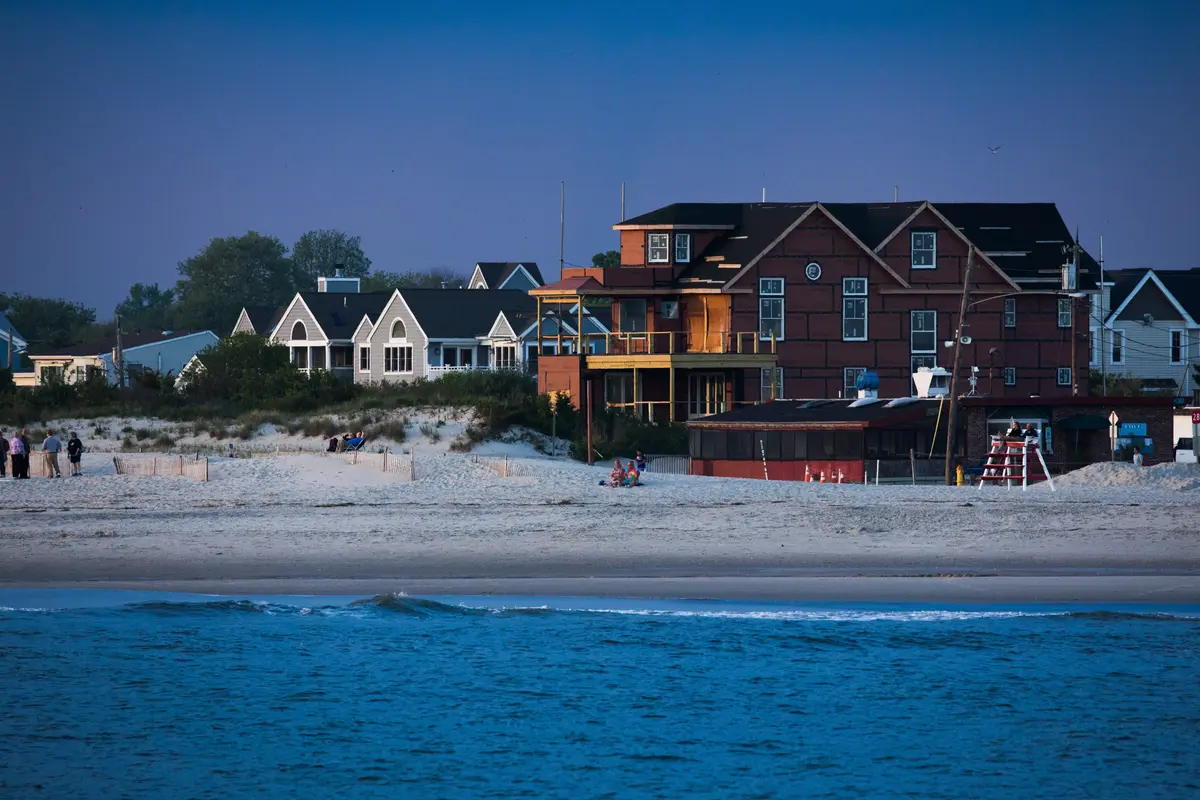
A mile-long (1.6 km) boardwalk, Funland’s old-school rides, and Thrasher’s fries in a bucket with vinegar — Rehoboth is the Mid-Atlantic boardwalk at its most wholesome, about 130 miles (210 km) east of Washington, D.C.
This is family value done right, with tax-free outlet shopping minutes inland. It packs out on summer weekends, so weekdays feel noticeably calmer.
- Location: Rehoboth Beach, DE; nearest airports Baltimore (BWI) or Philadelphia (PHL), ~110-130 miles (177-209 km)
- Cost: hotels roughly $150-300/night in summer
- Best for: Families, day-trippers from D.C. and Baltimore
- Time needed: 2-3 days
Ocean City, Maryland — A Beach-Vacation Machine
Ten miles (16 km) of sand, a classic boardwalk thick with amusement rides, and Maryland crab cakes within arm’s reach. It’s loud, busy, and unapologetically a beach-vacation machine.
The honest move for budget travelers is to skip the oceanfront markup. Assateague Island’s wild horses sit a short drive south and are worth a half-day.
Pro Tip: Beat Ocean City prices by basing yourself in Ocean Pines and driving 22 minutes in — you trade a beachfront walk for a meaningfully cheaper room.
- Location: Ocean City, MD; nearest airport Salisbury (SBY), ~30 miles (48 km)
- Cost: hotels average around $150/night, higher on summer weekends
- Best for: Families, boardwalk lovers, big groups
- Time needed: 3-4 days
Virginia Beach, Virginia — Lifeguards and Easy Entry
A 3-mile (4.8 km) boardwalk, lifeguards posted along the main resort strip, and quieter Sandbridge to the south for people who want sand without neon. The water turns properly swimmable by midsummer.
The resort strip runs busy and a touch dated, but the lifeguard coverage and flat, gradual entry make it easy with kids. First Landing State Park adds shaded trails when everyone needs a break from sand.
- Location: Virginia Beach, ~20 miles (32 km) east of Norfolk (ORF)
- Cost: hotels roughly $130-250/night in summer
- Best for: Families, budget travelers
- Time needed: 2-3 days
The Southeast — Warm Water From the OBX to Georgia
South of Cape Hatteras the Gulf Stream takes over and the ocean climbs into the low 80s°F (around 28°C), with a swim season that runs April through October. This is where the coast delivers its best mix of warm water, wide sand and value — from wild barrier islands to the mini-golf sprawl of the Grand Strand.
Outer Banks, North Carolina — Wild Dunes and the Best Waves
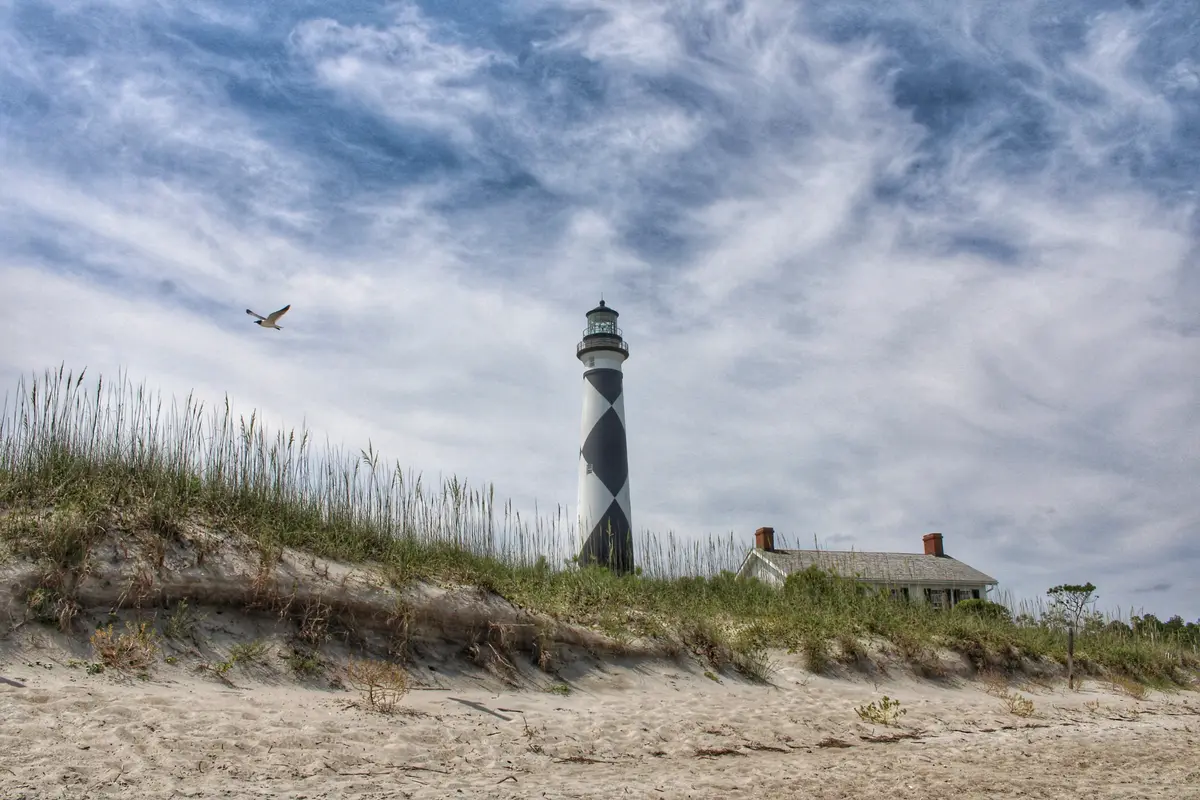
More than 100 miles (161 km) of barrier islands — Nags Head, Duck, Kitty Hawk, and the wild dunes of Cape Hatteras. This is where the Wright Brothers flew and where the Gulf Stream pushes water into the upper 70s and low 80s°F (around 25-28°C) by late summer.
The OBX rewards a car and a plan, since the islands string out over hours of driving. Cape Hatteras National Seashore is free and undeveloped, and Jockey’s Ridge is the tallest active sand dune on the East Coast, cresting near 100 feet (30 m).
- Location: Outer Banks, NC; nearest airport Norfolk (ORF), ~80 miles (129 km) to the northern beaches
- Cost: weekly rentals dominate; hotels roughly $150-300/night in summer
- Best for: Surfers, nature travelers, history buffs, families wanting space
- Time needed: 4-7 days
Myrtle Beach, South Carolina — The Family-Value Champion
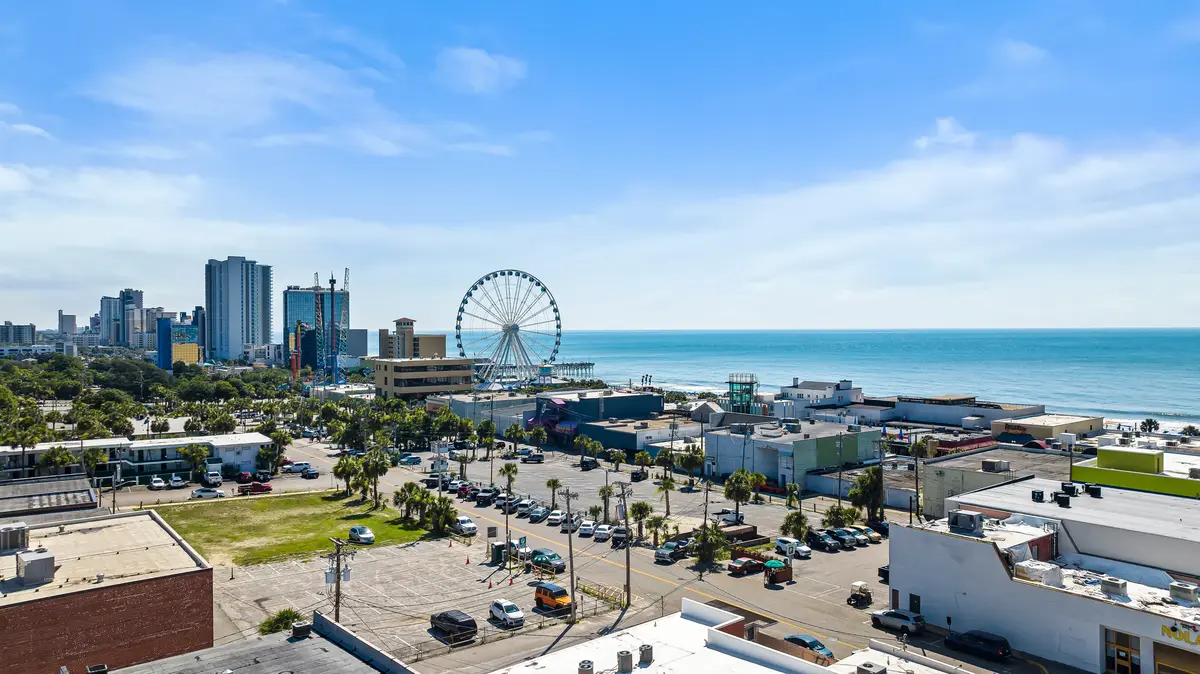
The 60-mile (97 km) Grand Strand stacks up oceanfront high-rises, Broadway at the Beach, the SkyWheel, and more mini-golf per mile than anywhere in the country. The sand is wide and the water warm from late spring through fall.
This is the budget-value champion of the East Coast — off-season oceanfront hotels run from around $59-129/night. It isn’t subtle or quiet, but for a family watching the math it works better here than anywhere to the north.
- Location: Myrtle Beach, SC; Myrtle Beach airport (MYR) is minutes from the sand
- Cost: oceanfront hotels from around $59-129/night off-season, higher in summer
- Best for: Families, budget travelers, golfers
- Time needed: 3-5 days
Folly Beach and Charleston, South Carolina — Surf Town Meets City
A scruffy surf town about a 20-minute drive from downtown Charleston, with a fishing pier, taco spots like Taco Boy, and a low-key Lowcountry feel. The waves stay modest but consistent enough for learning.
Folly is the antidote to high-rise beach towns — small, walkable, and minutes from Charleston’s restaurants. Parking is the constant headache, so arrive early or rideshare in.
- Location: Folly Beach, ~12 miles (19 km) from downtown Charleston; airport (CHS) ~20 miles (32 km)
- Cost: hotels and rentals roughly $150-300/night
- Best for: Beginner surfers, couples pairing beach with a city
- Time needed: 2-3 days
Tybee Island, Georgia — Savannah’s Laid-Back Beach
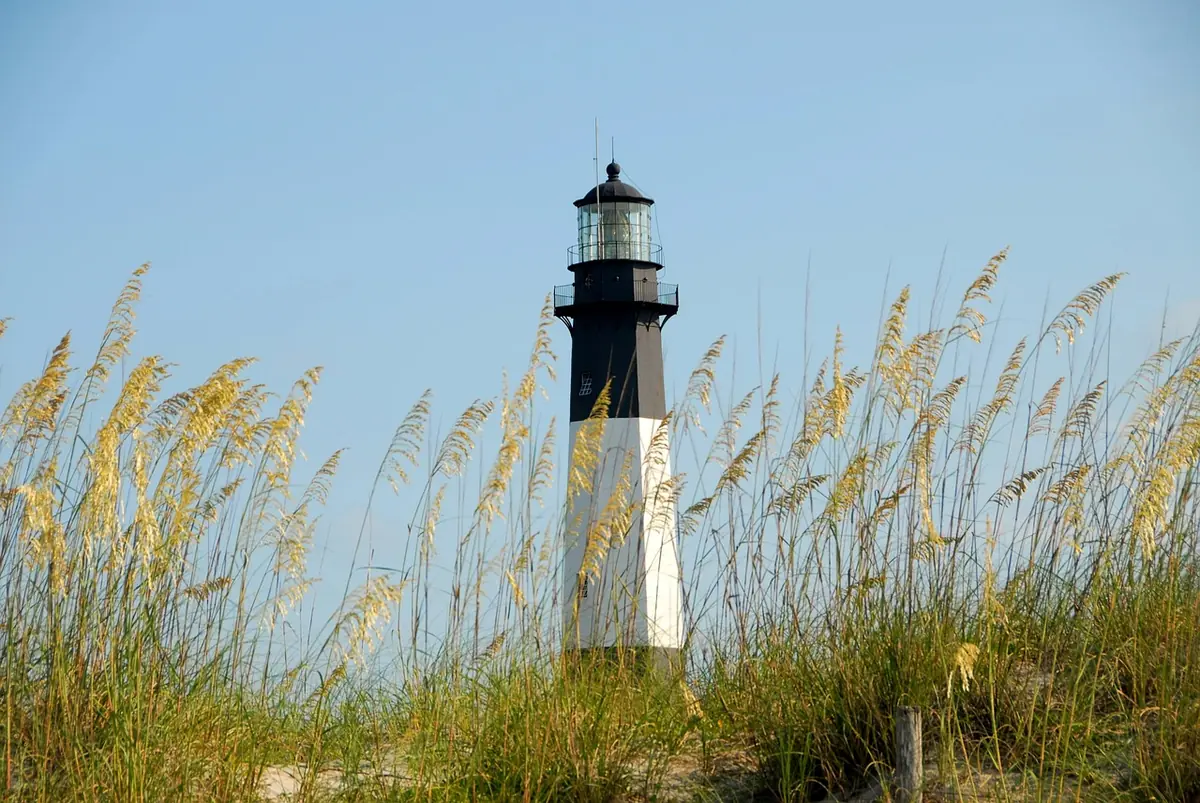
Crossing the Tybee Island bridge 18 miles (29 km) east of Savannah, the salt marsh suddenly opens into ocean — roll the windows down for the pluff-mud-and-brine smell before you even see sand. Wide, warm beaches, a working lighthouse, and dolphin tours leaving from the pier.
Tybee is Savannah’s beach: laid-back, walkable, and easy to pair with a couple of days in the historic city. It’s small, so peak-summer parking fills fast.
- Location: Tybee Island, 18 miles (29 km) east of Savannah (SAV)
- Cost: hotels and rentals roughly $150-300/night in summer
- Best for: Couples, Savannah day-trippers, easygoing families
- Time needed: 2-3 days
Jekyll Island, Georgia — Driftwood, Turtles and Bike Trails
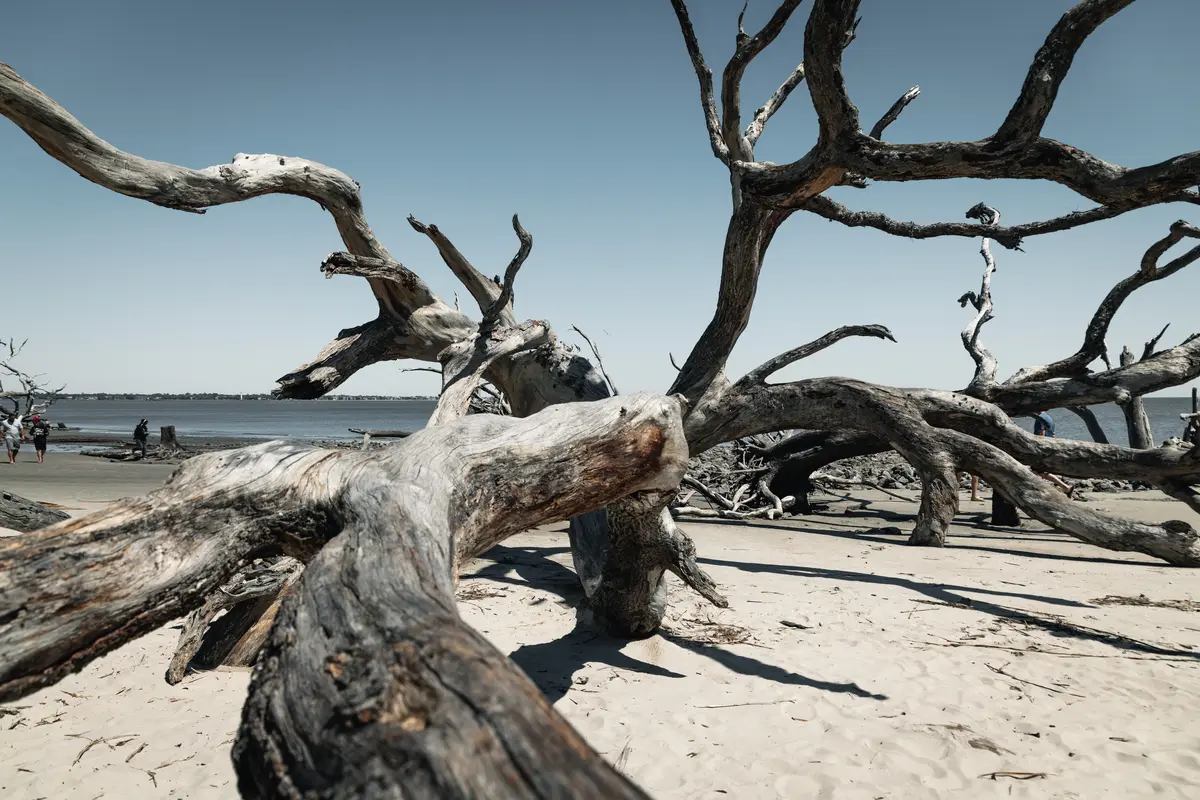
Driftwood Beach looks less like a beach than a graveyard of silvered, sun-bleached tree skeletons — beautiful for photos, but bring water shoes and skip swimming on this stretch. The island also holds Gilded Age cottages and the Georgia Sea Turtle Center.
Jekyll is built for slow days: 20+ miles (32+ km) of bike trails, turtle rehab, and one of the strangest, most photogenic beaches on the coast. Swimmers should head to the island’s southern end instead.
- Location: Jekyll Island, GA; nearest airports Brunswick (BQK) ~15 miles (24 km) or Jacksonville (JAX) ~75 miles (121 km)
- Cost: hotels roughly $180-350/night
- Best for: Nature travelers, cyclists, photographers
- Time needed: 2-3 days
Florida — Swimmable Water in Every Month
Florida is the only stretch of the East Coast where you can swim comfortably in January. The Atlantic here runs from a low 70s°F (around 22°C) winter to a bath-warm mid-80s°F (around 30°C) summer, which is why the state anchors the warm end of every list in this guide.
Cocoa Beach and New Smyrna Beach, Florida — Surf Country
Florida’s surf country, about an hour from Orlando — home of the original Ron Jon Surf Shop and the wave that produced Kelly Slater. New Smyrna, just north, has some of the most consistent beginner-friendly surf in the state.
Warm water year-round and rocket-launch views from the sand set this stretch apart. The honest caveat: New Smyrna logs one of the highest shark-bite counts anywhere. Volusia County typically records fewer than ten a year, almost all minor scrapes, and local beach safety officials say no shark bite has ever been fatal here — keep your feet shuffling and stay out of the murky inlet.
- Location: Cocoa Beach and New Smyrna Beach; ~1 hour from Orlando (MCO)
- Cost: hotels roughly $130-280/night
- Best for: Surfers, beginners, space-launch watchers
- Time needed: 2-4 days
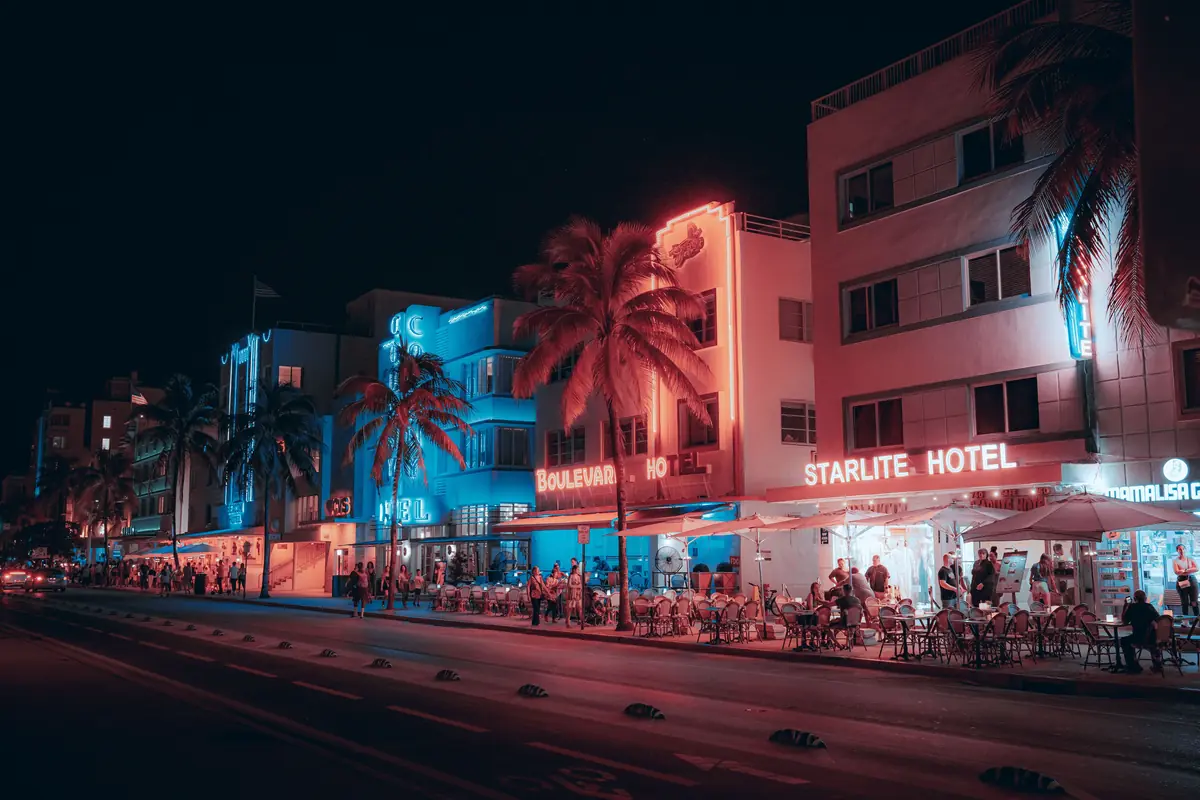
Miami Beach and South Beach, Florida — Warm Water Year-Round
The Art Deco district along Ocean Drive, pastel hotels, and water that stays swimmable in every month of the year. Even in January the ocean here holds around 71°F (22°C), while the rest of the East Coast is zipped into wetsuits, and by late summer it runs a bath-warm mid-80s°F (around 30°C).
South Beach is as much scene as beach — late nights, upscale dining at Joe’s Stone Crab, and prices to match.
Pro Tip: For quieter sand with the same warm water, drive south to Bill Baggs Cape Florida State Park on Key Biscayne — calmer, greener, and a fraction of the South Beach crowd.
- Location: South Beach, Miami; airport (MIA) ~10 miles (16 km), Fort Lauderdale (FLL) ~30 miles (48 km)
- Cost: hotels roughly $200-450/night, lower off-season
- Best for: Warm-water swimmers, nightlife, year-round travelers
- Time needed: 3-4 days
What Is the Warmest Beach on the East Coast?
Miami Beach, Florida is the warmest East Coast beach, with swimmable water year-round — coolest in January around 71°F (22°C) and warmest from early July to mid-August, averaging about 86°F (30°C). Heading north, the water cools fast: Cape Cod tops out only in the upper 60s°F (around 19°C) at midsummer.
The dividing line is Cape Hatteras, North Carolina, where the warm Gulf Stream and the cool Labrador current meet. South of there, summer water runs from the upper 70s°F into the low-to-mid 80s°F (around 25-29°C). North of it, even peak August stays cooler — the Jersey Shore tops out in the mid-70s°F (around 24°C), and New England rarely clears the upper 60s°F.
If warm water is your only goal, latitude decides it. Florida’s Atlantic coast is the safe bet from spring through fall; everything north of the Carolinas is a midsummer-only swim.
When Is the Best Time to Visit East Coast Beaches?
For warm water and full amenities, visit East Coast beaches from late June through August — but expect peak crowds and peak prices. Shoulder season (late May to early June, and September) brings swimmable water, thinner crowds, and lower rates. In Florida, spring and fall pair warm water with fewer storms than humid midsummer.
Match the month to what you care about most:
- Warmest water everywhere: late July through August, when even New England peaks
- Best value plus swimmable water: September in the Carolinas and Mid-Atlantic — the ocean is still warm, the crowds gone
- Florida sweet spot: spring and fall, dodging both summer storms and winter chill
- Cheapest rates: off-season (roughly November through March), warm enough to swim only in South Florida
The contrast is sharp. A late-September walk on the Grand Strand can feel half-empty — the same sand that was shoulder-to-shoulder over the July Fourth weekend, with hotel rates to match.
Which East Coast Beaches Are Best for Families?
The best East Coast beaches for families pair calm, gradual-entry water with lifeguards and off-beach fun: Rehoboth Beach (Delaware), Virginia Beach (Virginia), Ocean City (Maryland), and Myrtle Beach (South Carolina) all deliver wide sand, boardwalks, and rentals with kitchens. Cape May (New Jersey) adds gentle surf and a walkable Victorian town.
What makes each one work with kids:
- Rehoboth Beach, DE: Funland’s low-cost rides and a short, walkable boardwalk keep small kids busy off the sand
- Virginia Beach, VA: consistent lifeguard coverage and a flat, gradual entry along the resort strip
- Ocean City, MD: 10 miles (16 km) of sand plus boardwalk amusements, with Assateague’s wild horses nearby
- Myrtle Beach, SC: the lowest family lodging costs on the coast, plus resort lazy rivers right on the sand
- Cape May, NJ: gentle surf and a town kids can walk, with no car needed once you arrive
- Jekyll Island, GA: the Georgia Sea Turtle Center and miles of flat bike trails for older kids
The shared thread is gradual entry and something to do when everyone’s done swimming. That combination, more than the prettiest sand, is what keeps a beach day from falling apart by 2 p.m.
What Are the Cheapest East Coast Beaches?
The cheapest East Coast beaches combine free sand with low lodging costs. Myrtle Beach offers 60 miles (97 km) of free shoreline with off-season oceanfront hotels from around $59-129 a night; Ocean City, Maryland hotels average about $150; and Virginia Beach pairs an affordable boardwalk with budget chains and free beach access.
Where the budget math actually works:
- Myrtle Beach, SC: the clear winner — free beach, cheap oceanfront rooms, and free or low-cost attractions
- Outer Banks, NC: Cape Hatteras National Seashore is free, and the Wright Brothers National Memorial runs about $10 to enter
- Virginia Beach, VA: free access and budget chains a block off the boardwalk
- Ocean City, MD: stay inland in Ocean Pines and drive 22 minutes in to dodge the oceanfront markup
A few places quietly punish your wallet at the parking meter rather than the hotel desk. Ogunquit, Maine, for instance, can run $45-50 a day just to park near the beach in summer, which changes the math on a “cheap” New England day trip. Splitting a weekly rental among two families is usually the single biggest saving on any of these coasts.
Where Are the Best East Coast Beaches for Surfing?
For surfing, the Outer Banks (Cape Hatteras) delivers the East Coast’s most powerful, consistent waves, while Cocoa Beach and New Smyrna Beach, Florida offer warm, beginner-friendly breaks year-round. Fall — September through November — is prime surf season, when hurricane swells fire and the summer crowds thin out.
Match the break to your skill level:
- Advanced: Cape Hatteras, NC — the most powerful, hollow waves on the coast, best on fall hurricane swells
- Beginner: Cocoa Beach and New Smyrna Beach, FL — warm, forgiving, consistent year-round
- Learning near a city: Folly Beach, SC and Wrightsville Beach, NC — mellow waves with surf schools on hand
Wetsuit needs swing hard by latitude. By October you’ll want a 4/3mm wetsuit to surf comfortably in New England, while Florida stays boardshorts-warm into late fall.
Pro Tip: New Smyrna has some of the most consistent surf in Florida and one of the highest shark-bite tallies in the world — but bites here run small, and no one has ever been killed by a shark at the beach. Keep your feet shuffling and avoid the inlet at first and last light.

East Coast vs. Gulf Coast: Which Should You Pick?
Choose East Coast (Atlantic) beaches for bigger waves, sunrise views, surfing, and hard-packed sand good for jogging. Choose Gulf Coast beaches for calmer, clearer, warmer water, soft white quartz sand, and better shelling. In Florida, the Atlantic side suits surfers and early risers; the Gulf suits families wanting glassy, gentle water.
The quickest way to feel the difference is a Florida cross-state drive. Surf the Atlantic chop at Cocoa Beach at sunrise, then cross to Clearwater by afternoon and watch the same ocean go mirror-glass calm for sunset — two completely different beach days a few hours apart.
If you have kids who panic in shore break, the Gulf wins. If you want to surf, jog hard sand, or catch the sun coming up over the water, the Atlantic is your coast.
How Do the Top East Coast Beaches Compare?
This table compares marquee East Coast beaches by peak-summer water temperature (°F/°C), typical summer hotel cost, nearest major airport, best months, and ideal traveler — so you can match a destination to your trip fast. Water warms steadily from New England’s 60s°F (around 18°C) to Florida’s mid-80s°F (around 29°C).
| Beach | Region | Peak Water Temp | Summer Hotel/Night | Nearest Airport | Best Months | Best For |
|---|---|---|---|---|---|---|
| Bar Harbor / Acadia, ME | New England | low 50s°F (~11°C) | $150-250 | Bangor (BGR) | Jul-Aug | Scenery, hikers |
| Cape Cod, MA | New England | upper 60s°F (~19°C) | $180-350 | Boston (BOS) | Jul-Aug | New England charm |
| Newport, RI | New England | upper 60s°F (~20°C) | $200-400 | Providence (PVD) | Jul-Sep | Couples, history |
| Cape May, NJ | Mid-Atlantic | mid-70s°F (~24°C) | $180-350 | Philadelphia (PHL) | Jun-Sep | Couples, families |
| Rehoboth Beach, DE | Mid-Atlantic | mid-70s°F (~24°C) | $150-300 | Baltimore (BWI) | Jun-Sep | Families |
| Ocean City, MD | Mid-Atlantic | mid-70s°F (~24°C) | ~$150 | Salisbury (SBY) | Jun-Sep | Families, groups |
| Virginia Beach, VA | Mid-Atlantic | upper 70s°F (~25°C) | $130-250 | Norfolk (ORF) | Jun-Sep | Families, budget |
| Outer Banks, NC | Southeast | low 80s°F (~28°C) | $150-300 | Norfolk (ORF) | May-Oct | Surf, nature |
| Myrtle Beach, SC | Southeast | low 80s°F (~28°C) | $59-129 off-season | Myrtle Beach (MYR) | Apr-Oct | Family value |
| Tybee Island, GA | Southeast | low 80s°F (~28°C) | $150-300 | Savannah (SAV) | Apr-Oct | Couples, easy days |
| Cocoa Beach, FL | Florida | low 80s°F (~28°C) | $130-280 | Orlando (MCO) | Year-round | Surfers |
| Miami Beach, FL | Florida | mid-80s°F (~30°C) | $200-450 | Miami (MIA) | Year-round | Warm-water swimmers |
How to Choose Your Stretch of Sand
Latitude sets the rules on this coast. Water warms and the season lengthens the farther south you drive, and Cape Hatteras is the line where it flips from cool to genuinely warm. For year-round swimming, point yourself at South Florida; for family value, Myrtle Beach or Rehoboth; for wild nature and surf, the Outer Banks; for New England charm, Cape Cod or Newport. Travel in shoulder season and you get the best mix of warm water, low prices, and room to breathe.
If I had a single weekend and wanted to swim, I’d fly to South Florida. If I had a week and wanted space, I’d point the car at the Outer Banks and not look back.
So which trade-off are you weighing — warm water in Florida, a budget family week in Myrtle, or a slow New England road trip? That one answer usually points straight to the right stretch of sand.