An East Coast food tour is the rare trip where the drive between meals counts as part of the meal. From a $36 Maine lobster roll to a Charleston shrimp-and-grits counter, the I-95 corridor packs more separate food cultures into 1,500 miles than anywhere else in the country. Here’s how to plan it — or book it.
An East Coast food tour follows I-95 from Maine to Florida — roughly 1,500 miles (2,414 km) of distinct food regions. Most travelers either self-drive a 7-to-21-day route, eating city by city, or book guided single-city food walking tours (about $65 to $150 per person) in cities like Boston, New York, Charleston, and Savannah.
Which Kind of East Coast Food Tour Suits You?
There are two ways to do this trip. The first is a self-driven multi-city road trip, where you build your own eating itinerary along I-95 and stop where you want. The second is guided food tours — either a multi-day operator that handles every city, or single-city walking tours you book in each stop.
Most people combine both, and that’s the right instinct.
The self-drive path gives you flexibility and control over the pace, but you eat the cost of the car, gas, parking, tolls, and the planning time. The guided path removes all the logistics and hands you a local who already knows which counter to skip. You pay a per-person fee and show up hungry.
If you want one company to own the whole trip, the TourHQ 7-Day East Coast Cities Food Explorer links Boston, New York, and Philadelphia into a single booked package. For everyone else, the smart move is a hybrid: drive the route yourself, then book one walking tour per city.
Pro Tip: Even on a self-drive trip, booking a single walking tour in each city is the fastest way to crack a neighborhood you’ve never eaten in. Two hours with a local saves you a day of guessing.
What’s the Best I-95 Route for a Food Road Trip?
The classic route runs north to south: Portland to Boston to New York to Philadelphia to Baltimore to Washington DC to Richmond to Charleston to Savannah to St. Augustine to Miami — about 1,500 miles (2,414 km) total. You cross three distinct food regions without ever leaving one highway. That corridor is the whole appeal.
The Drive Legs That Eat Your Day
- Boston to New York: 215 miles (346 km), about 4 hours
- New York to Philadelphia: 95 miles (153 km), about 1.5 to 2 hours
- Boston to Washington DC: 440 miles (708 km), about 7 hours driving
- Washington DC to Charleston: 520 miles (837 km), a full day behind the wheel
- Full Maine-to-Florida run: well over 1,500 miles (2,414 km)
The Toll That Catches Drivers in Manhattan
Driving into Manhattan at or below 60th Street now triggers the MTA’s Congestion Relief Zone toll. For a passenger car with E-ZPass it runs $9 during peak hours — 5 a.m. to 9 p.m. weekdays, 9 a.m. to 9 p.m. weekends — and $2.25 overnight, charged once per day no matter how many times you cross the line. Without E-ZPass, the rate is 50 percent higher. Entering through the Lincoln, Holland, Queens-Midtown, or Hugh L. Carey tunnels during peak hours earns a $3 crossing credit. Current rates and exemptions are on the MTA’s Congestion Relief Zone page.
Stack that on top of a garage — Manhattan parking routinely runs $40 to $60 a day — and the New York leg becomes the most expensive stretch of the entire drive, before you’ve eaten anything.
Pro Tip: The New York stretch is where you abandon the car. Park it above 60th Street, or in Jersey City or Brooklyn, and take the subway. You skip the $9 toll entirely, and the train beats driving between food stops anyway.
The Shorter New England Loop
If the full run feels like too much ground, there’s a tighter version. Some guides run a compact New England-to-Virginia loop closer to 1,000 miles (1,609 km) and about 18 hours of driving, which trims the Deep South and keeps you in chowder-and-crab country.
You lose Charleston and Savannah, which is a real loss for the food. You gain a week.
How Many Days Do You Need on the Road?
Plan on 7 to 10 days to hit the highlights between the major cities, eating well in each without rushing. For the full Maine-to-Florida route with room to let the trip breathe — a slow lobster lunch here, an unplanned barbecue detour there — give it 2 to 3 weeks. Anything shorter than a week and you’re driving more than eating.
Which East Coast Cities Have the Best Food, Ranked?
For pure food, the heavy hitters are New York, Philadelphia, Charleston, Boston, and Portland, Maine. Philadelphia delivers the best value of the group and earned a spot on Travel + Leisure’s list of best places to travel specifically for its food scene, while Charleston rivals it dish for dish, with James Beard winners and semifinalists running its kitchens.
Here’s the honest ranking, each with one signature spot and a price to anchor it.
1. Portland, Maine — Small City, Serious Kitchens
Portland runs roughly 300 restaurants for a city of about 68,000 people. You’ll see the line “most restaurants per capita in America” everywhere — it’s shakier than it sounds. The city clerk’s count of 536 licensed food-service establishments includes every school cafeteria and nursing-home kitchen in town, and the National Restaurant Association’s own density math doesn’t put Portland in the top 30. The scene is genuinely excellent. The stat is marketing.
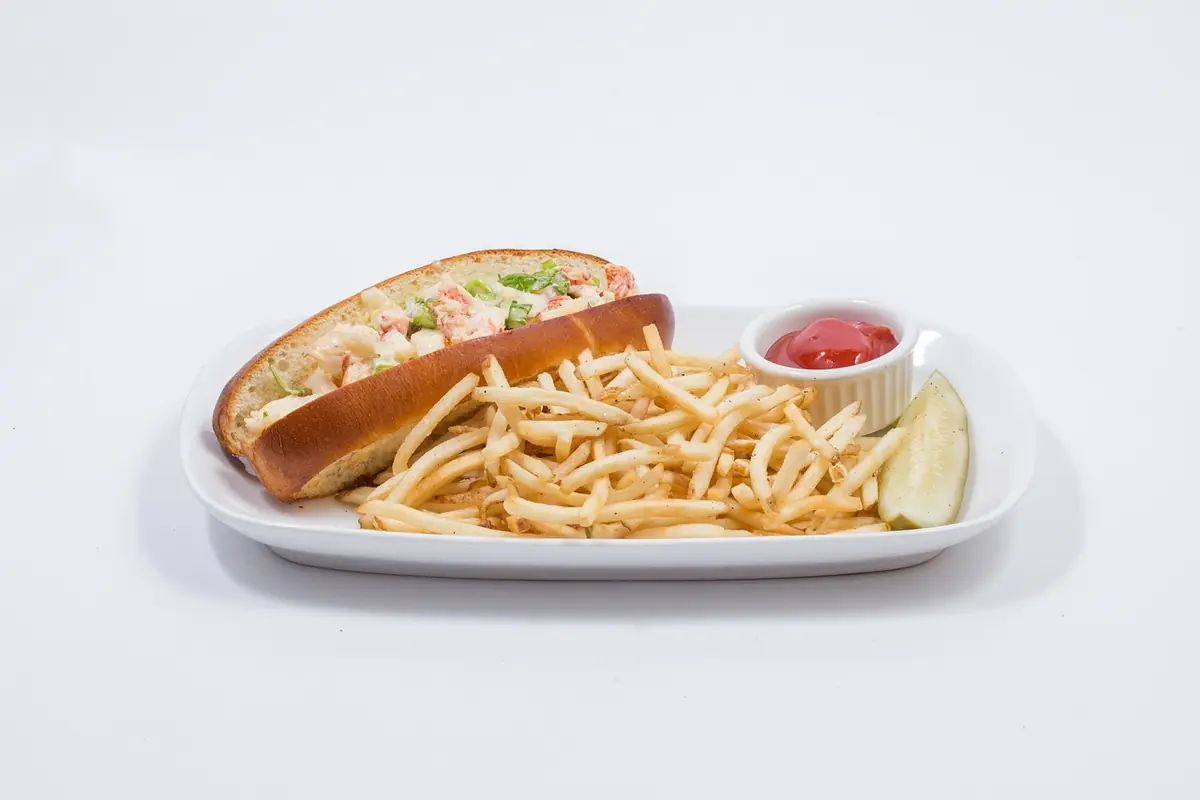
Duckfat is the gateway — confit fries and panini in a tiny Munjoy Hill storefront. Bon Appétit once named Portland its Restaurant City of the Year, and the city has been collecting James Beard bakery hardware since.
- Location: Munjoy Hill and the Old Port, Portland, ME
- Cost: lobster roll around $36; small plates $12 to $20
- Best for: Seafood-first travelers who want quality over scale
- Time needed: 2 full days
2. Boston — North End Pastry and Cash-Only Cannoli
Boston’s North End is the densest Italian-American eating in the country, and the cannoli rivalry between Mike’s Pastry and Modern Pastry is its own minor sport. The Freedom Trail runs straight through it, so you can walk off one course before the next.
One thing nobody warns you about: Mike’s, Modern, and Bova’s are all cash only. Travelers keep getting to the front of a 45-minute line with nothing but a card.
- Location: North End, Boston, MA
- Cost: cannoli $5 to $8 (cash only); sit-down dinner $35 to $60 per person
- Best for: First-timers who want history and dinner in the same afternoon
- Time needed: 2 days
3. New York City — Depth No Other City Matches
Nowhere else gives you Joe’s Pizza, Katz’s Delicatessen, and Ess-a-Bagel in a single morning. A plain slice runs $4 to $6. Katz’s pastrami sandwich is $28.95, the Reuben $29.95, and the kitchen moves something like 15,000 pounds of pastrami a week.
That’s the point of the city: the range from a $2 dumpling to a $300 tasting menu, all inside one subway fare.
- Location: West Village, Lower East Side, and Brooklyn, NY
- Cost: pizza slice $4 to $6; Katz’s pastrami sandwich $28.95
- Best for: Travelers who want every cuisine within one subway ride
- Time needed: 3 days minimum
4. Philadelphia — Best Value on the Coast
Philadelphia is the value play, though the famous sandwich isn’t the reason anymore. A cheese steak at Pat’s is $19; the equivalent at Geno’s lands at $18 (posted as $16.67 plus a $1.33 fee, so the number at the window is a round eighteen). Pat’s is effectively cash-first, with a surcharge on cards.
Reading Terminal Market has been feeding the city since 1893, hotels run well under New York rates, and the historic sites are free. That leaves more in the budget for food — which is where the real Philadelphia bargain hides, two blocks from the tourist corner.
- Location: South Philly, East Passyunk, and Reading Terminal Market
- Cost: cheesesteak $18 to $19; market lunch $10 to $18
- Best for: Budget-minded eaters who still want a serious food city
- Time needed: 2 days
5. Charleston — James Beard Country, No Reservations
Charleston eats like a city twice its size. Husk, FIG, Rodney Scott’s Whole Hog BBQ, and Chubby Fish anchor a Lowcountry scene with serious chef credentials. The catch is access: the best tables here don’t take walk-ins lightly, and the very best one doesn’t take reservations at all.
- Location: Downtown peninsula and Coming Street, Charleston, SC
- Cost: dinner $40 to $80 per person; barbecue plate $15 to $22
- Best for: Travelers chasing chef-driven Southern food
- Time needed: 2 to 3 days
Below Charleston, Baltimore (Thames Street Oyster House, Fells Point), Washington DC (The Wharf), and Savannah (The Grey, The Olde Pink House) all earn a stop. But the five above are the ones worth planning the route around.
Pro Tip: Chubby Fish (252 Coming St.) has 40 seats, takes no reservations, and opens at 5 p.m. sharp with three seatings — 5:00, 6:30, and 8:30. Chef James London has said the kitchen needs to turn its tables about four and a half times a night, which is exactly why a reservation book would never work. The line starts forming around 3:30 or 4 p.m., and some people show up at 2:30.
Which Single City Has the Best Food?
If you’re forcing one answer, it comes down to value versus depth. Philadelphia wins on value — national food recognition, hotels well under New York rates, free historic sites, and a $12.50 roast pork sandwich that’s a genuine regional icon in a way the $19 cheesesteak no longer is. New York wins on depth and range, full stop.
Pick Philadelphia if your budget is finite. Pick New York if it isn’t.
What Food Is the East Coast Known For, Region by Region?
The coast splits into three food regions. New England covers lobster rolls, clam chowder, fried clams, and Boston cream pie. The Mid-Atlantic owns New York pizza and bagels, Philly cheesesteaks, Maryland blue crab, and New Haven apizza. The South brings shrimp and grits, she-crab soup, Lowcountry boil, and whole-hog barbecue.
Here’s where each region’s signatures actually live, with the origin detail most lists skip:
- New England: the Maine lobster roll comes two ways — Connecticut-style hot with butter, or Maine-style cold with mayo. Rhode Island adds clam cakes and coffee milk.
- Mid-Atlantic: New Haven apizza (Pepe’s has run since the 1920s), Maryland blue crab dusted in Old Bay, and the Philly cheesesteak with its “wit / witout” ordering shorthand.
- The South: Charleston she-crab soup, Lowcountry boil, whole-hog barbecue, and St. Augustine’s datil pepper heat in Florida.
The lobster roll is the rare case where the price is mostly labor, not markup. It takes a full 1¼-pound hard-shell lobster to fill one quarter-pound roll, which is why a sandwich of bread and shellfish lands north of $30.
How Much Does an East Coast Food Tour Cost?
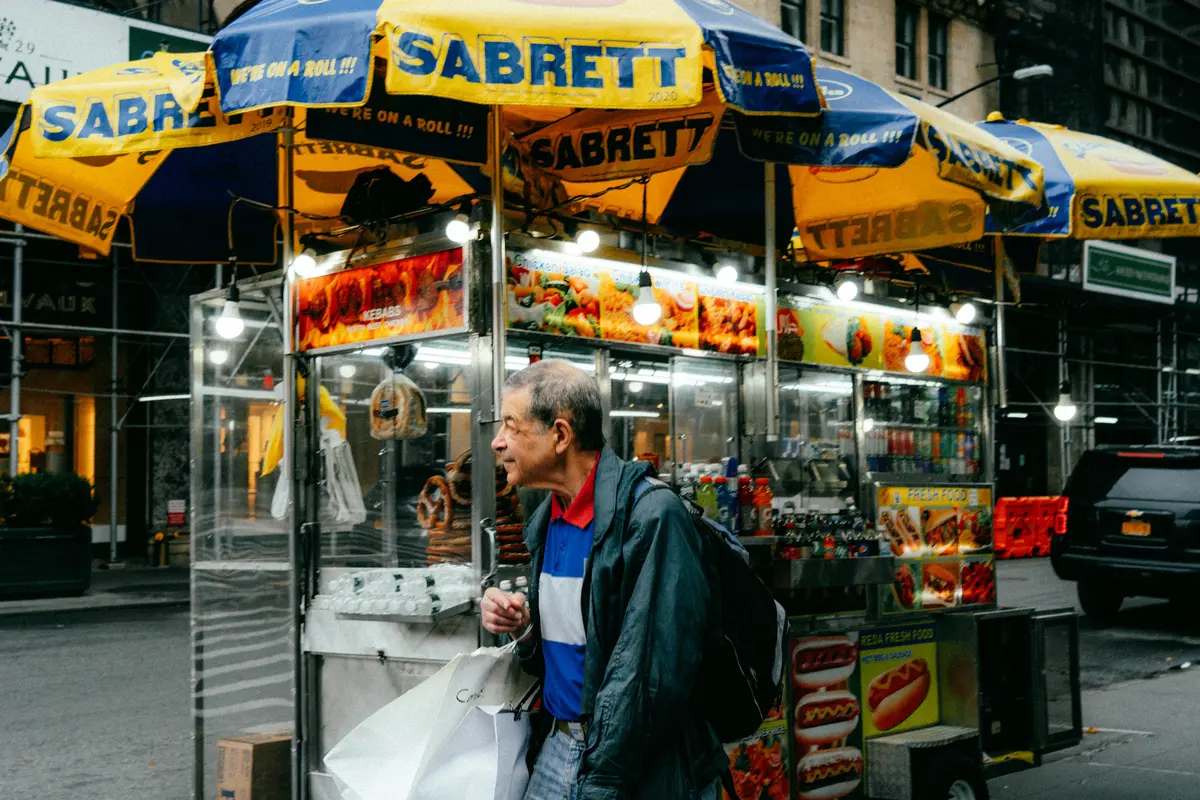
Guided single-city food walking tours run about $65 to $150 per person. Charleston Culinary Tours starts at $95 for a 2.5-hour walk, Savannah Taste Experience runs $86.95 to $89.95, A Slice of Brooklyn’s pizza bus is $105, and Boston’s North End tours span roughly $65 to $150 depending on length. Self-drivers should budget about $100 to $150 a day on the low end, or $200 to $300 mid-range, plus food.
The food itself is where the trip adds up:
- Maine lobster roll: about $36 on average, per the Bangor Daily News lobster roll index
- Philly cheesesteak: $18 at Geno’s, $19 at Pat’s
- Philly roast pork at DiNic’s: $12.50
- New York pizza slice: $4 to $6
- Katz’s pastrami sandwich: $28.95
- Boston dinner: $35 to $60 per person
- Full-day culinary tours: $120 to $200 per person
- Food-tour guide tip: 15 to 20 percent on top of the ticket price
That lobster roll average hides the single most useful number on the whole coast. The Bangor Daily News surveys shacks from Brunswick to Lubec, and the spread is enormous: $46.99 for a six-ounce roll at Fishermen’s Net in Brunswick, $44 at the Thirsty Whale in Bar Harbor, $38 at Red’s Eats in Wiscasset — and $21.95 at McLaughlin Seafood in Bangor, an hour inland.
Same sandwich. Same state. A $25 swing, driven almost entirely by how close the door is to a tourist parking lot.
Pro Tip: If you want the lobster roll without the coastal markup, eat it inland. Bangor’s price is less than half of Brunswick’s large roll, and the lobster came off the same boats.
Should You Book a Guided East Coast Food Tour?
For a hands-off trip, the TourHQ 7-Day East Coast Cities Food Explorer covers Boston, New York, and Philadelphia, with North End, Lower East Side, DUMBO, and 9th Street Italian Market food tours included. Otherwise, book single-city walking tours and keep the flexibility.
The TourHQ package includes a welcome seafood dinner, a New Haven pizza lunch, an Amish Country lunch, and a classic cheesesteak. It leaves out gratuity, and the base per-person price is gated behind the booking flow, so confirm the total when you reserve — and note that add-ons like a Washington DC extension run around $300 extra.
If you’d rather build your own lineup, the single-city tours are where the value sits:
- A Slice of Brooklyn Pizza Tour: $105 adults, $95 for children under 12; about 4.5 hours, departing Union Square in Manhattan
- Charleston Culinary Tours: from $95 for a 2.5-hour walk; Charleston food tours generally land between $90 and $110, with chef-led half-days reaching $200
- Savannah Taste Experience: $86.95 to $89.95, capped at 14 guests, first tour at 11 a.m.
- Boston North End: from about $65 for a two-hour bakery-and-café walk, up to roughly $150 for longer tours with drinks included
The Brooklyn tour stops at Grimaldi’s and L&B Spumoni Gardens before finishing at Coney Island. Note that it departs from Manhattan and runs five days a week, not daily — a detail that has wrecked more than one loose itinerary.
Pro Tip: On the Brooklyn tour, the two pizza stops are Neapolitan (Grimaldi’s) and Sicilian (L&B Spumoni Gardens). Tasting them back to back is the fastest way to understand why “New York pizza” isn’t one thing.
When Is the Best Time to Drive the Coast?
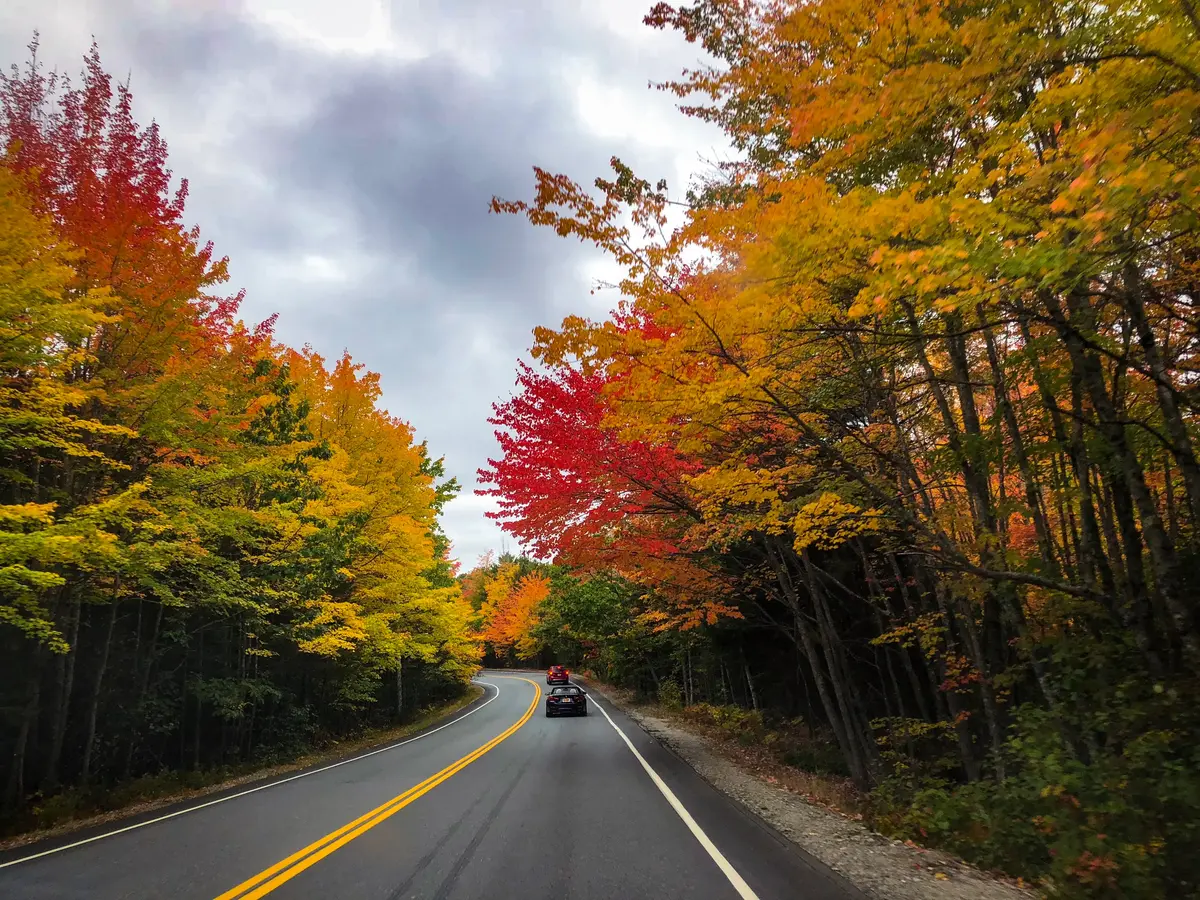
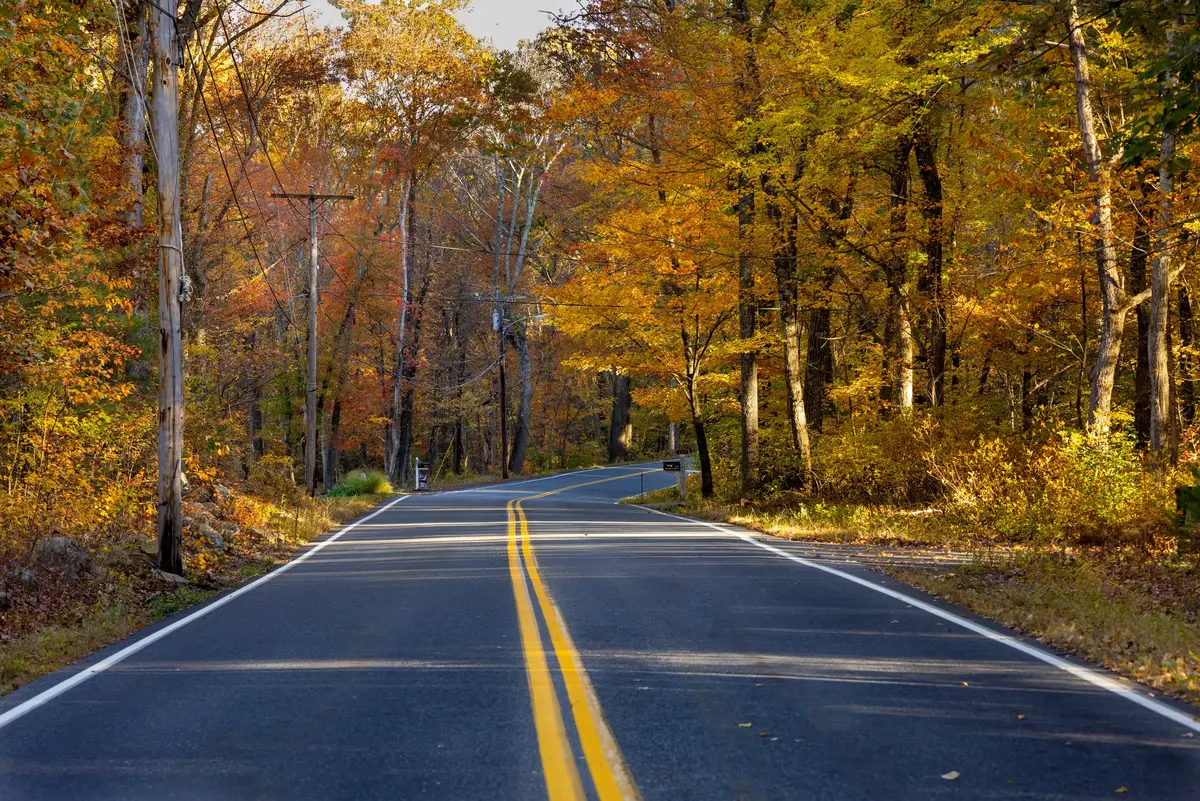
Fall — late September through October — is the best window. You get mild weather, peak New England foliage, harvest menus, and fewer crowds than summer. Summer is peak season for lobster shacks and Cape Cod but brings the highest prices and the worst I-95 traffic. Spring suits Charleston and Washington DC before the heat sets in.
A few seasonal facts worth planning around:
- New England foliage peaks late September through late October
- Maine’s lobster season unofficially opens Memorial Day weekend, and lobster roll prices are set at opening and hold steady most of the summer
- Summer means premium prices and a booked-out Cape Cod
- Reading Terminal Market is open year-round; Philadelphia’s 9th Street Italian Market runs seasonally
Pro Tip: Maine in June can sit at a foggy 60°F (16°C) at midday. Pack a layer even when the calendar says summer — the coast doesn’t care what month it is.
Where Do Locals Actually Eat (and What to Skip)?
Skip the most-hyped line for the better local pick fifty feet away. In Boston’s North End, choose Modern Pastry over Mike’s. Pick Boston Public Market over the Quincy Market colonnade. And in Philadelphia, locals will steer you past Pat’s and Geno’s toward Reading Terminal’s roast pork.
The Mike’s-versus-Modern debate has a real answer rooted in technique. Modern fills its cannoli to order, so the shell still crunches when it reaches you. Mike’s pre-fills, which means the shell softens while you stand in the line that wraps down Hanover Street. Same neighborhood, fresher dessert, shorter wait. Mike’s does win on variety — roughly 19 cannoli flavors — so if novelty is the point, that’s the trade.
The Philadelphia case is arithmetic. DiNic’s roast pork at Reading Terminal is $12.50, took the Travel Channel’s best-sandwich-in-America title, and is what Philadelphians eat. The cheesesteak across town at Pat’s is $19. You are paying a six-dollar premium for a neon sign.
Two catches on DiNic’s: the counter closes at 5 p.m., and it’s shut on Sundays. Plan lunch, not dinner.
In Boston, the Quincy Market colonnade has 25-plus eateries and a new Tree House Brewing patio, and it’s fine. But Boston Public Market, two blocks north at Haymarket, requires its 30-plus vendors to source from New England — so the seafood and the cheese actually came from here. That’s the difference the guidebooks flatten into “both are food halls.”
Pro Tip: Bring cash to the North End. Mike’s, Modern, and Bova’s are all cash only, and the ATM line at 9 p.m. is its own kind of tourist tax.
The Charleston version of this lesson is stranger. The line at Chubby Fish got long enough that College of Charleston students turned it into a business — charging $60 on weekdays and $80 on weekends to stand in it for you and lock down a seating. When a restaurant’s queue has its own labor market, that tells you more about demand than any rating ever will.
What to Decide Before You Turn the Key
The trip rewards travelers who treat the highway as part of the menu, not the gap between cities. Drive I-95 over 7 to 21 days, prioritize New York, Philadelphia, Charleston, Boston, and Portland, and budget $100 to $300 a day plus meals. Expect a $36 lobster roll, an $18 cheesesteak, and $65 to $150 for a walking tour in each city.
Decide one thing early — self-drive, guided, or hybrid — because that single choice sets your budget, your pace, and how much planning lands on you.
And if you only remember one number from this guide, make it this: the same Maine lobster roll costs $46.99 on the coast and $21.95 an hour inland. The East Coast will happily charge you for the view. It’s up to you whether you pay.