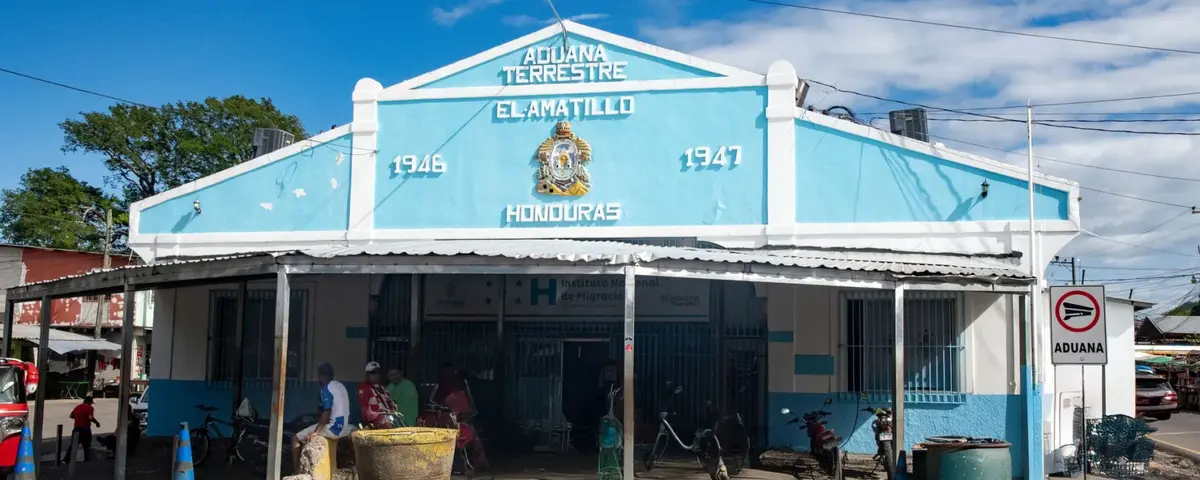
Two official land crossings connect El Salvador and Honduras: El Amatillo in the hot southeastern lowlands, and El Poy up in the northern highlands. Both are open around the clock, both are considered among the easiest border posts in Central America, and neither one requires a visa if you hold a U.S. passport.
What trips people up is not the paperwork. It is the small stuff nobody warns you about: a roughly $3 entry fee that appears on no official website, a 90-day regional clock that does not reset when you cross, and a rental car policy that will strand you at the gate if you did not plan ahead.
This guide covers all of it, for foot passengers, bus riders, and drivers alike.
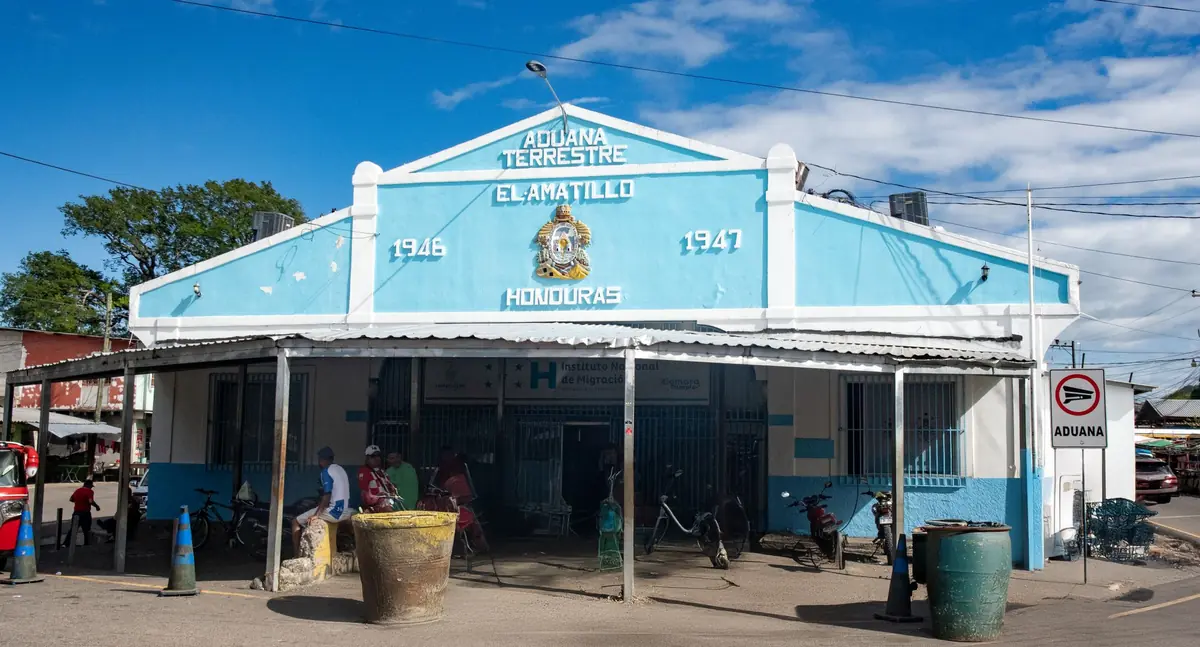
Quick Answers: The El Salvador to Honduras Border at a Glance
- Crossings: El Amatillo (La Unión, El Salvador to Goascorán, Valle, Honduras) and El Poy (Chalatenango to Ocotepeque).
- Visa: Not required for U.S., Canadian, U.K., or EU citizens. You get up to 90 days under the CA-4 agreement.
- Honduras entry fee: About $3 per person, payable in dollars or lempiras. Always take the receipt. This amount is traveler-reported, not published on an official Honduran government page.
- El Salvador exit fee: None.
- Coming back into El Salvador: A $12 tourist card for U.S. and U.K. citizens. EU nationals are exempt.
- Hours: CA-4 posts run 24 hours a day, though processing slows overnight and around the midday staff lunch.
- Passport validity: Sources disagree, listing either three or six months. Travel with at least six months and one blank page.
- Currency: El Salvador uses the U.S. dollar. Honduras uses the lempira.
- Pre-check form: No longer required for U.S. tourists. Honduras eliminated the mandatory immigration prechequeo in December 2023.
- Travel advisories: El Salvador sits at Level 1, Exercise Normal Precautions. Honduras sits at Level 3, Reconsider Travel, with a Level 4 Do Not Travel designation for the Gracias a Dios department.
- Typical crossing time: Under an hour on foot. One and a half to two hours if you are importing a vehicle.
Advisory levels and fees change. Check travel.state.gov and the U.S. Embassy in Honduras before you leave.
The Two Official Crossings, Plus the Alternatives
The El Salvador–Honduras border runs roughly 213 to 250 miles depending on the source you consult, a discrepancy that stems from a long-disputed boundary that the International Court of Justice only finished settling in the 1990s. Along that entire stretch, exactly two posts matter to most travelers.
| El Amatillo | El Poy | |
|---|---|---|
| Location | La Unión to Goascorán, Valle | Chalatenango to Ocotepeque |
| Best for | Tegucigalpa, Nicaragua, the southern coast | Copán Ruinas, Gracias, Santa Rosa de Copán |
| Traffic | Heavy, especially freight | Light |
| Money changers | Many | Few |
| Climate | Hot lowlands | Cool highlands |
| Hours | 24 hours | 24 hours |
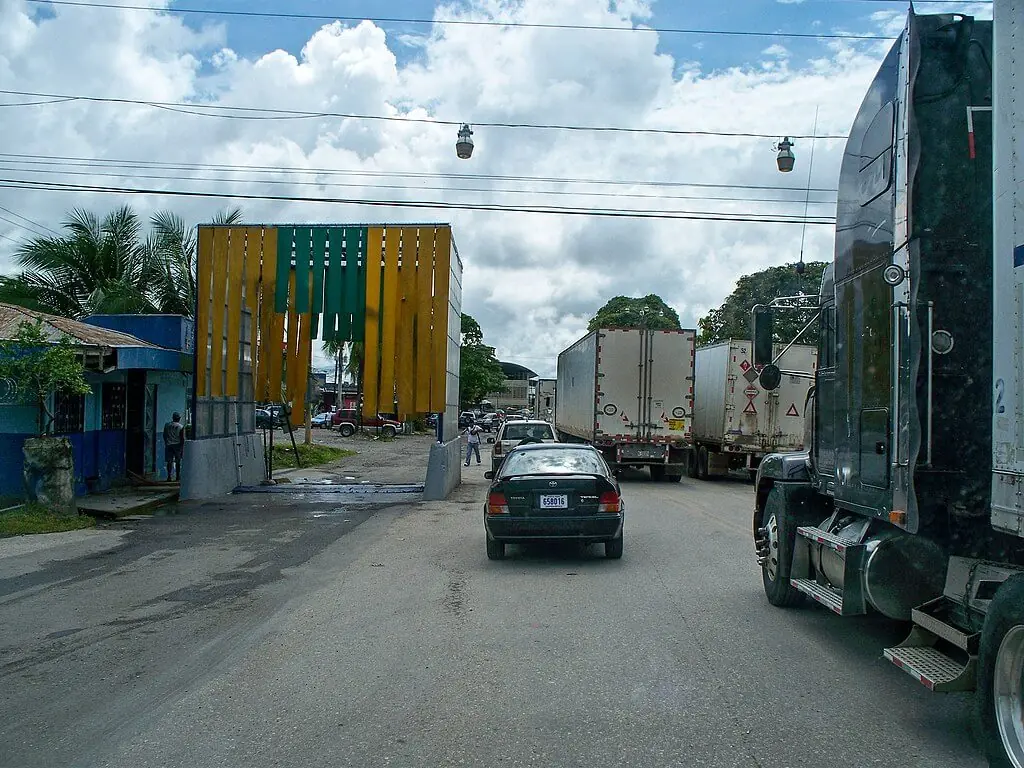
El Amatillo: The Busy Southern Route
El Amatillo sits on the Pan-American Highway and is the crossing you want if you are headed for Tegucigalpa, Choluteca, or onward to Nicaragua. The Salvadoran immigration building sits at approximately 13.5976, -87.7673, just before the bridge over the Río Goascorán that separates the two countries.
Expect volume here. Freight traffic dominates, lines of trucks stretch back from the customs yard, and the pedestrian area is dense with vendors, money changers, and freelance helpers. The physical crossing involves walking or driving over the bridge, and drivers should watch for a tight, narrow turn on the approach that is easy to miss with a trailer.
Honduras and El Salvador launched integrated processing at this post in December 2023, intended to let travelers clear both countries at a single stop. Reports on how consistently that system operates vary, so build in time either way.
Photocopy shops cluster on both sides. One frequently cited option sits at roughly 13.5853, -87.7987, a short distance west of the Salvadoran post, which matters a great deal if you are driving and need duplicates of your title and registration.
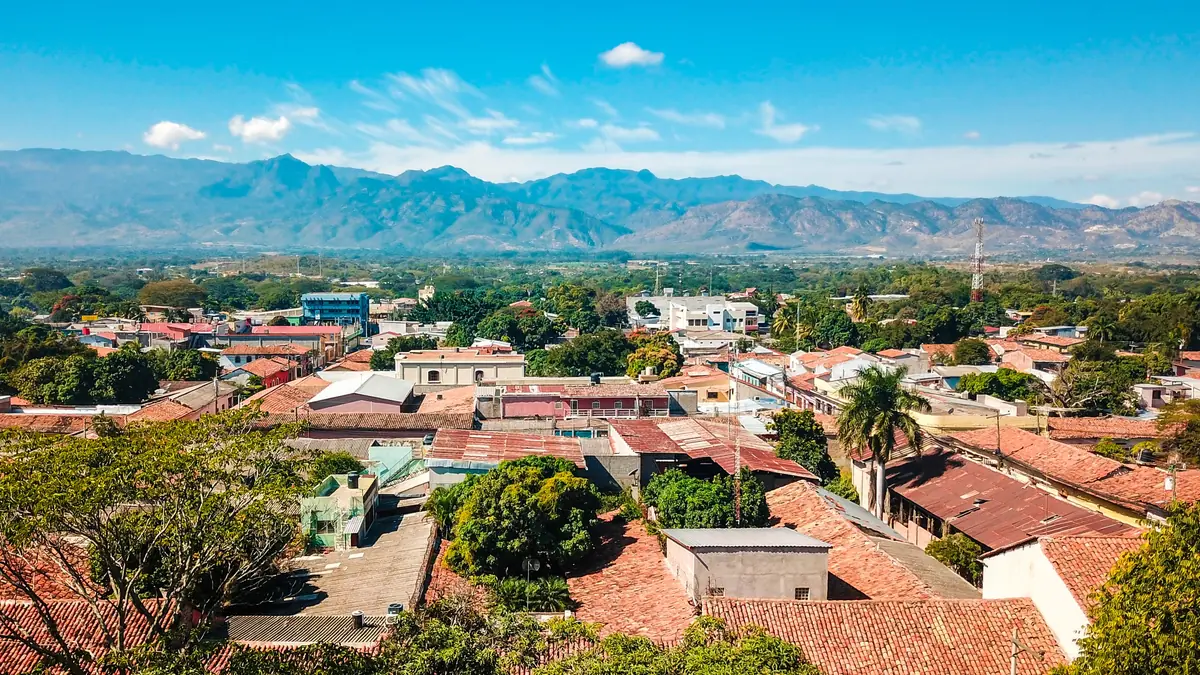
El Poy: The Quiet Highland Route
El Poy is the crossing for Copán Ruinas, Gracias, and Celaque National Park. It sits at altitude, so the air is noticeably cooler, and the pace is slower in every sense. Travelers regularly describe it as a backwater post where you might be the only foreigner in line.
If you arrive by public bus, expect to be dropped a few hundred yards short of the immigration windows and to walk the rest. There are fewer money changers here than at El Amatillo, so if you need lempiras, change enough on arrival rather than assuming you will find a better rate down the road. Travelers also consistently report a slowdown around midday when staff rotate for lunch, which can turn a fifteen-minute stop into an hour.
Sabanetas and Perquín: The Minor Mountain Post
Northeast of San Francisco Gotera, in Morazán, a small crossing near Perquín connects to Honduras through the mountains of the former civil war zone. It is worth knowing about mostly because travelers visiting the Museo de la Revolución sometimes wonder whether they can continue north from there. Traffic is minimal, facilities are basic, and current operating status should be confirmed locally before you commit to the route.
Anguiatú Is a Guatemala Crossing, Not a Honduran One
This confuses a surprising number of travelers. Anguiatú, near Metapán, connects El Salvador with Guatemala, not Honduras. El Salvador and Guatemala launched integrated customs processing there in June 2025.
The reason it belongs in a Honduras guide is counterintuitive but genuinely useful: the fastest route from San Salvador to Copán Ruinas often runs through Guatemala. You exit El Salvador at Anguiatú, cut across the eastern tip of Guatemala, and enter Honduras at El Florido, about seven miles from Copán. Two border crossings, but better roads and less distance than the highland route through El Poy.
The Gulf of Fonseca Ferry: A Flagged Alternative
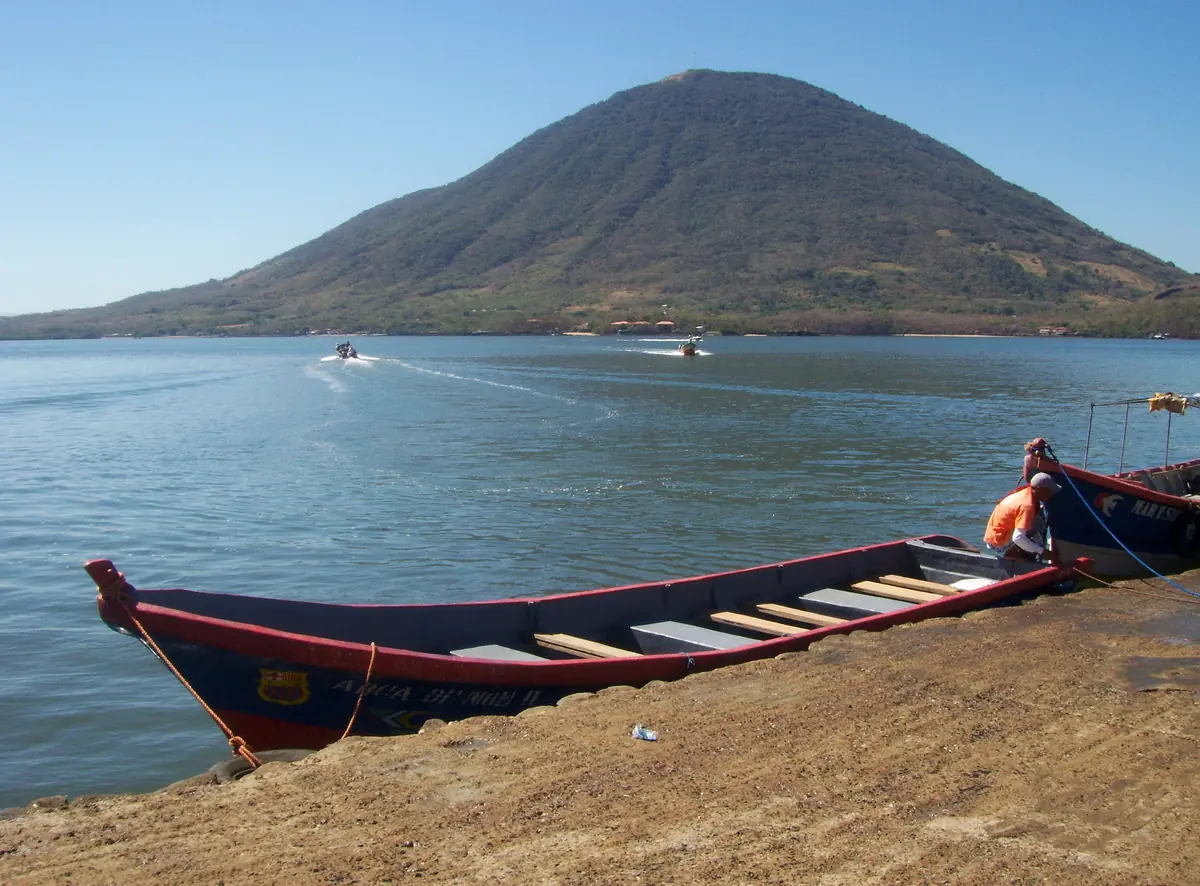
Look at a map and the water route from La Unión across the Gulf of Fonseca to Amapala on Isla del Tigre seems obvious. In practice, scheduled international passenger service has been intermittent for years, launched and suspended more than once, and should not be built into an itinerary you cannot change.
Private lanchas do run the short domestic hop between Coyolito and Amapala for roughly $20 to $40 per boat, but that is inside Honduras, after you have already crossed by land. There is no arrangement that lets you take a rental vehicle across the gulf. Treat the ferry as a bonus if it happens to be running, and plan on the overland route through Choluteca as your dependable option.
Entry Requirements for U.S. Citizens
U.S., Canadian, U.K., Australian, and EU passport holders do not need a visa for tourist stays in Honduras. Entry is granted at the border for up to 90 days.
The CA-4 Rule That Almost Everyone Gets Wrong
El Salvador, Guatemala, Honduras, and Nicaragua form the Central America-4 Border Control Agreement, which functions somewhat like a mini-Schengen zone. Here is the part that catches people out: your 90 days is a single cumulative allowance across all four countries combined. Crossing from El Salvador into Honduras does not restart the clock. Neither does hopping to Guatemala and back.
If you entered Guatemala 70 days ago and then cross into Honduras, you have 20 days left, not 90. The only way to reset the allowance is to leave the CA-4 zone entirely, to Belize, Mexico, Costa Rica, or anywhere outside the four. Extensions can sometimes be requested from immigration authorities before your time expires, but the process is inconsistent and best not relied upon. Overstaying means fines and a headache at the airport.
Passport Validity and Blank Pages
Official sources conflict on this point. The State Department’s Honduras country information advises six months of remaining validity. The U.S. Embassy in Honduras has published a three-month requirement. The practical answer is to travel with at least six months, because airlines apply the stricter interpretation and can deny boarding on your inbound flight regardless of what the land border would have accepted. Carry at least one blank page for stamps.
The Fees You Will Actually Pay
| Fee | Amount | Where | Notes |
|---|---|---|---|
| El Salvador exit | None | Land border | No charge to leave |
| Honduras entry | About $3 per person | Honduras immigration | Dollars or lempiras accepted, receipt issued |
| El Salvador tourist card | $12 | On re-entry to El Salvador | U.S. and U.K. citizens, EU exempt |
| Vehicle import permit | Varies, historically around $35 | Honduras customs | Per vehicle, confirm current amount |
| Photocopies | $1 to $3 | Copy shops at both posts | Drivers only |
That $3 Honduras entry fee deserves a note. It is legitimate and consistently reported by travelers using both crossings, a receipt is issued, and payment is accepted in either currency. But it does not appear on any Honduran government website, which is why some visitors assume it is a shakedown and refuse to pay. It is not. What matters is that you get the printed receipt and keep it, because officials sometimes ask to see proof of payment again on the way out.
Forms, Onward Travel, and Vaccinations
Honduras eliminated its mandatory online immigration pre-check for all nationalities except, historically, Nicaraguans, effective December 12, 2023. U.S. tourists do not need to fill out any form in advance. Several widely read guides still instruct readers to complete the prechequeo, which wastes time and occasionally causes confusion at the window.
Proof of onward travel is technically part of Honduran entry requirements. At land borders it is rarely requested. If you are arriving by air with plans to leave overland, a bus ticket or an itinerary printout is cheap insurance.
Yellow fever vaccination is required if you are arriving from a country in South America or from Panama where transmission risk exists. Coming directly from the United States or from El Salvador, it does not apply. There are no COVID-19 or measles documentation requirements for U.S. travelers entering either country. Routine vaccinations, hepatitis A, and typhoid are the standard CDC recommendations for the region, and dengue prevention matters more than most visitors expect during rainy season.
Is It Safe? Advisories and On-the-Ground Reality
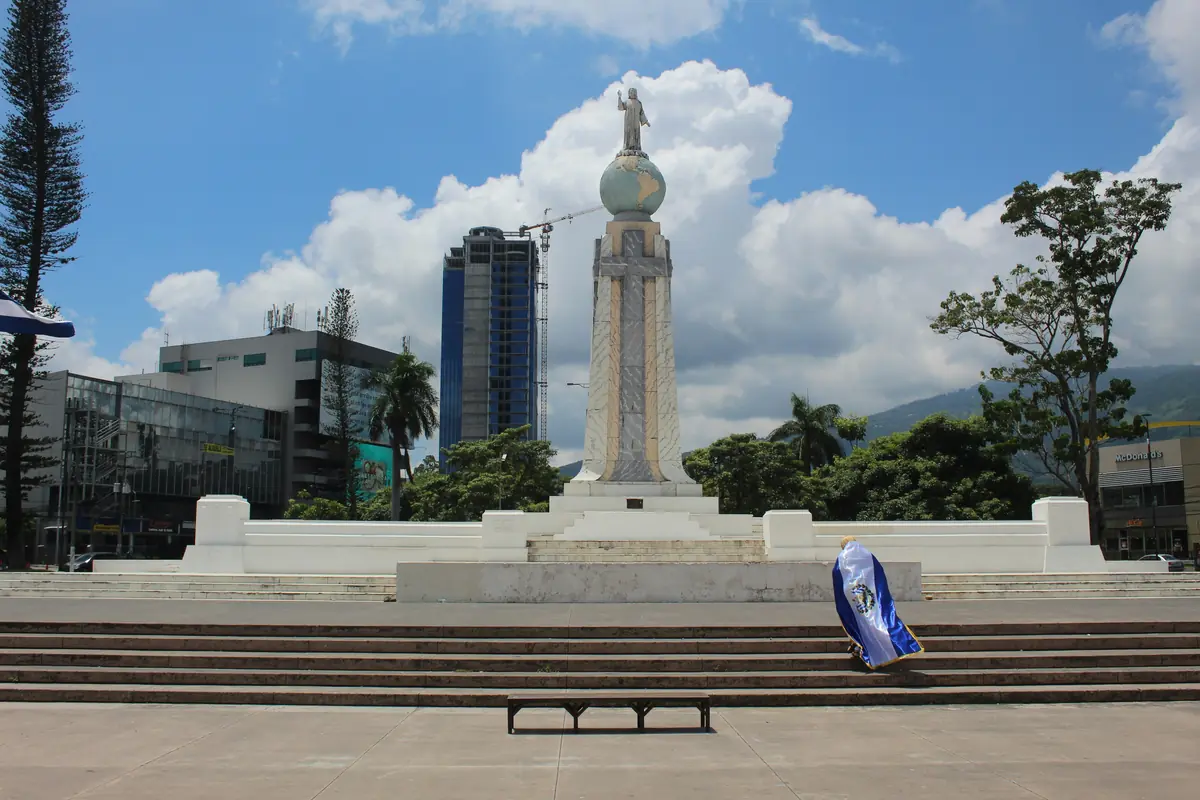
The two countries sit at opposite ends of the advisory scale right now, and understanding why helps you calibrate.
El Salvador holds a Level 1 rating, Exercise Normal Precautions, the lowest tier the State Department issues. That is a historic shift. The homicide rate peaked at 104 per 100,000 residents in 2015, one of the highest in the world outside a war zone, and fell to 1.9 per 100,000 in 2024 according to InSight Crime’s annual homicide analysis. The transformation came under a State of Exception, in place since March 2022, which suspends certain constitutional protections and has resulted in tens of thousands of arrests. Human rights organizations have documented serious concerns about that process. Whatever your view of the policy, the practical effect for travelers is a country that feels markedly calmer than its reputation suggests. U.S. government employees are still barred from intercity travel after dark and from using public buses, which is a useful signal about where residual risk lies.
Honduras remains at Level 3, Reconsider Travel, due to crime, with the eastern department of Gracias a Dios flagged Level 4, Do Not Travel. Violent crime and extortion are widespread, and a State of Exception has been in effect since December 2022 across most municipalities. Tourist corridors are treated differently: the Bay Islands of Roatán, Utila, and Guanaja have concentrated policing, and Copán Ruinas is a well-established visitor town with a corresponding security presence.
The crossing itself has a reputation that runs counter to the country-level numbers. Both El Poy and El Amatillo are routinely described by overlanders and backpackers as among the smoothest and least stressful posts in Central America. Sensible precautions apply anyway. Cross in daylight, keep your passport on your body rather than in a bag, do not count cash in the open, and arrange onward transport before you arrive rather than negotiating it while standing in a parking lot with luggage.
Border Scams, Gestores, and What Is Actually Real
Most reported problems at these crossings fall into a handful of predictable categories.
Gestores, sometimes called tramitadores or simply helpers, are freelance facilitators who hover around the buildings offering to walk your paperwork through. They are not government employees, but they are not inherently a scam either. For a driver processing a vehicle import permit, a competent gestor who knows which window comes next and where the copy shop is can genuinely save an hour. Agree on a price before anything happens, expect to pay a few dollars rather than a few tens of dollars, and never hand your passport to anyone who is not seated behind an official window.
The scams that do occur are mostly low-grade:
A second demand for the $3 entry fee, sometimes framed as an exit fee or a processing charge. Produce your receipt and it evaporates. This is exactly why keeping the receipt matters.
Fake documents. Travelers have reported being handed official-looking forms, sometimes on colored paper, and told a payment is required to process them. Legitimate paperwork is issued from inside the immigration and customs buildings, not by someone approaching you in the lot.
Rejected dollars. Worn, torn, or older-series U.S. bills get refused as counterfeit, occasionally as a genuine policy and occasionally as a lever to push you toward a bad exchange rate. Bring crisp small denominations.
Inflated exchange rates. Money changers at the border are informal, and their rates are negotiable. Check the day’s rate on your phone before you get out of the vehicle.
The simple rules that prevent nearly all of this: pay only at official windows, insist on a receipt for every payment, know the going exchange rate before you arrive, and keep your documents in your own hands.
Money: Dollars, Lempiras, Changers, and ATMs
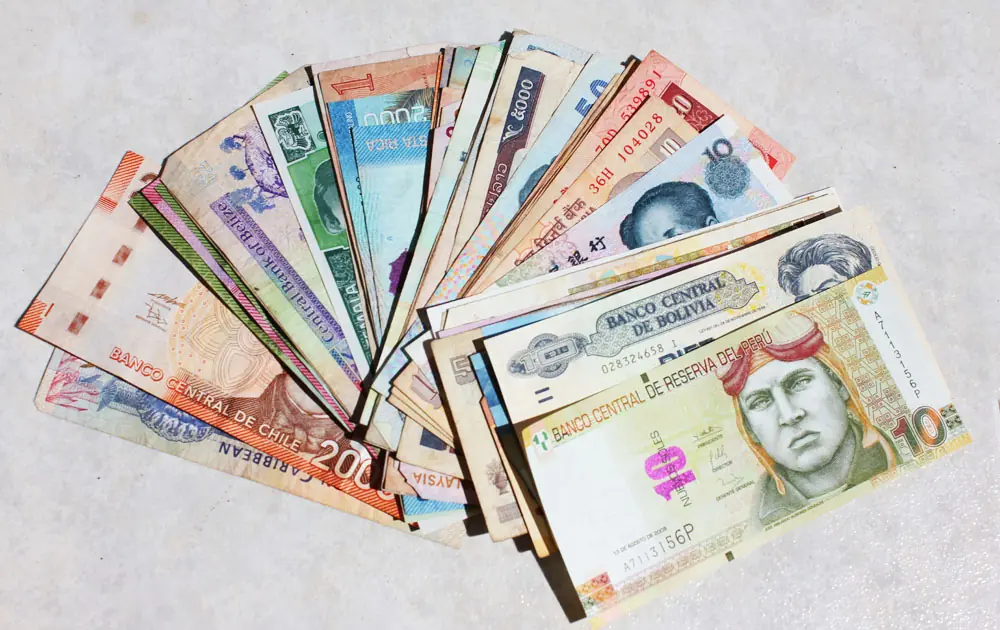
El Salvador uses the U.S. dollar as its currency, which makes it unusually easy for American travelers. Bitcoin has legal tender status there but is essentially never necessary in practice.
Honduras uses the lempira. You will need some almost immediately, for a taxi, a bus fare, or a meal, and there is no ATM at either border post you can count on. Border money changers are the practical solution. Rates are broadly comparable to what you would get in town, and travelers report reasonable results, one frequently cited example being $30 exchanged for roughly 700 lempiras. Negotiate, count the money before you walk away, and change only what you need for the first day.
Reliable ATMs are in Ocotepeque if you are coming through El Poy, and in Nacaome or Choluteca after El Amatillo. Santa Rosa de Copán and Copán Ruinas both have bank machines that accept U.S. cards. Bring dollars in small bills as a backup, since they are widely accepted near the border and in tourist towns.
Crossing by Bus, Shuttle, or Private Transfer
Chicken Buses: The Cheapest Way Across
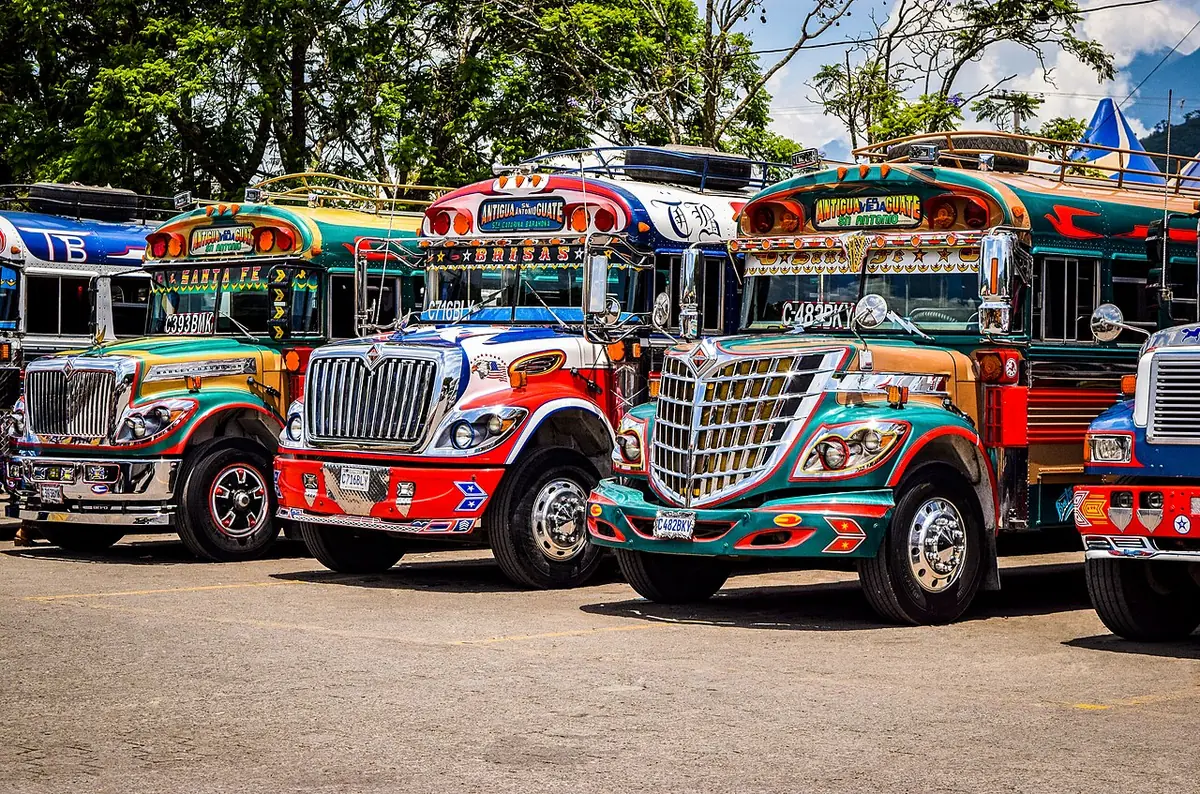
Central America’s repurposed American school buses will get you to either border for a few dollars. From San Salvador, bus 119 runs to El Poy from Terminal de Oriente for roughly $2, taking three to four hours depending on stops. Some travelers report using route 112 from the same terminal, located at approximately 13.7023, -89.1731, at around $2.50 and under three hours.
On the Honduran side, shared taxis and collectivos run the short distance between the border and Ocotepeque for about a dollar. From Ocotepeque you connect onward to Santa Rosa de Copán, and from there to Copán Ruinas or Gracias.
Chicken buses are an experience: vendors board at every stop selling fruit, fried chicken, and cold drinks, the driver overtakes on blind curves with total confidence, and your bag may end up on the roof. Keep valuables on your person, not in luggage you cannot see, and travel in daylight.
Cross-Border Coaches: The Comfortable Option
International coach lines handle the border formalities for you, which is the real value. The bus stops, a company representative collects passports, and you clear immigration as a group. Nearly all of them use El Amatillo.
| Operator | Typical routes | Duration | Notes |
|---|---|---|---|
| Tica Bus | San Salvador to Tegucigalpa, San Pedro Sula, Managua, Guatemala City | About 6 hours to Tegucigalpa | Two San Salvador terminals, San Benito and San Carlos |
| King Quality / Platinum | San Salvador to Tegucigalpa and San Pedro Sula | About 6 to 7 hours | Departs from Boulevard del Hipódromo |
| Pullmantur | Regional capitals | Varies | Premium service |
| Hedman Alas | San Pedro Sula to Copán Ruinas | About 3 hours | Connects to onward Honduran network |
| Casasola Express | Copán area regional | Varies | Budget option |
Book directly through operator websites for current schedules and fares, which shift seasonally. Arrive at the terminal early; these buses leave on time, which is not otherwise a regional norm.
Shuttles and Private Transfers
Tourist shuttle networks in this part of Central America are concentrated on the El Salvador to Guatemala corridor, where competition keeps prices reasonable. Direct shuttles between El Salvador and Honduras are thinner on the ground, often run only a few days a week, sometimes overnight, and cost around $60 per person. That is a significant premium over roughly $11 in public bus fares for a comparable journey, so the calculation comes down to how much you value door-to-door service and a guaranteed seat.
Private transfers can be arranged through hotels in San Salvador, Copán Ruinas, and Santa Rosa de Copán. Confirm that the driver is authorized to cross the border, because many are not, and you may need to change vehicles at the line.
Driving Across: Your Own Vehicle or a Rental
Rental Cars: The Reality Most Guides Skip
If you rented a car in El Salvador and plan to drive it into Honduras, stop and check your contract right now. Standard rental agreements in El Salvador prohibit taking the vehicle across international borders, and enforcement at the border is absolute. Without the correct paperwork, you will be turned around.
Cross-border permits do exist, but only certain companies issue them. The requirements typically include advance notice of 72 hours or more, a minimum rental period that can run a week, and additional charges. Reported costs vary widely, commonly around a $50 permit plus a surcharge in the range of $100, with some agencies quoting minimums well above $150. Larger international brands with a regional presence are more likely to accommodate the request than local operators.
Three rules if you go this route: ask specifically for a cross-border authorization when you book rather than at pickup, get written confirmation naming Honduras, and confirm that the insurance coverage extends across the border. Do not rely on a verbal yes at the counter.
Your Own Vehicle: The Temporary Vehicle Import Permit
The CA-4 agreement covers people, not cars. Each country issues its own temporary vehicle import permit, so entering Honduras means a fresh permit at the Honduran customs office regardless of what you were issued in El Salvador or Guatemala.
Bring your passport, the vehicle title, current registration, and your driver’s license, plus multiple photocopies of each. Copy shops operate at both posts, but having your own set saves a walk and a wait. An official will inspect the VIN, the permit is issued, and a sticker goes on the windshield. Historically the fee has been reported around $35, though this has changed over the years and should be confirmed on arrival.
Two details that catch people out. First, the permit is tied to the registered owner, and the same person must be present to cancel it on exit. Failing to cancel the permit creates problems on any future entry. Second, right-hand-drive vehicles are prohibited from import into Honduras, which occasionally strands travelers who shipped an unusual vehicle from overseas.
Vehicle fumigation is common at the crossing, a quick spray-through with a small fee. Travelers who have documented their timings at El Amatillo describe roughly an hour and a half from arriving at Salvadoran customs to clearing fumigation on the Honduran side, assuming no lines and complete paperwork.
Insurance and Documentation
Some countries in the region require the purchase of local liability insurance at the border. Nicaragua does this consistently. Requirements in Honduras have varied, so confirm the current rule at the customs window and carry proof of any coverage you already hold. If you are driving your own vehicle through multiple countries, a regional policy purchased in advance is generally cheaper and less stressful than buying at each line.
Expect police checkpoints on Honduran highways after the border. They are routine. Have your license, permit, and passport accessible, be polite, and keep moving.
Step by Step: What Actually Happens at the Border
Crossing from El Salvador into Honduras follows the same sequence at both posts.
- Arrive and park or get dropped off. If you are on a chicken bus, expect a short walk to the buildings.
- Clear El Salvador immigration. Present your passport, receive an exit stamp. No fee.
- If you are driving, cancel your Salvadoran vehicle permit at customs before proceeding.
- Cross the no-man’s-land. At El Amatillo this means the bridge over the Río Goascorán. At El Poy it is a short walk.
- Clear Honduras immigration. Complete the entry card if one is provided, pay the roughly $3 fee, submit to a fingerprint scan and photo, and receive your entry stamp. Take the receipt.
- Drivers proceed to the aduana for the vehicle import permit, VIN inspection, and windshield sticker. Fumigation typically follows.
- Continue to onward transport. Collectivos, taxis, and buses wait on the Honduran side.
Returning the other way reverses the sequence, with one addition: you purchase the $12 tourist card when entering El Salvador.
On foot with organized paperwork, the whole process commonly takes under an hour. With a vehicle, plan for one and a half to two hours, longer if you arrive during a truck backlog at El Amatillo.
Travel Times and Distances
| Route | Method | Time | Approximate cost |
|---|---|---|---|
| San Salvador to Tegucigalpa | International coach via El Amatillo | About 6 hours, roughly 200 miles | Varies by operator |
| San Salvador to Copán Ruinas | Driving via Anguiatú and El Florido | About 3.5 hours, roughly 109 miles | Fuel plus two border stops |
| San Salvador to Copán Ruinas | Public buses via El Poy | 8 to 12 hours with connections | Around $11 |
| San Salvador to Copán Ruinas | Tourist shuttle | About 5 hours | Around $60 |
| San Salvador to El Poy | Chicken bus 119 | 3 to 4 hours | About $2 |
| San Pedro Sula to Copán Ruinas | Hedman Alas coach | About 3 hours | $15 to $30 |
| El Tunco to Utila | Multiple buses plus ferry | Plan two days | Varies |
For the Bay Islands or the north coast, most travelers with limited time fly rather than grinding out the overland route.
Staying Connected: eSIMs, SIM Cards, and Coverage
In El Salvador, Tigo generally has the strongest network, with Claro as the main alternative. Both sell prepaid SIM cards cheaply, and eSIM options operate on Claro’s network for travelers who prefer to arrange service before arrival.
In Honduras, Claro and Tigo again dominate. Tourist-oriented eSIM packages typically run between $7 and $27 for one to five gigabytes over one to two weeks, which covers most short trips.
If you are visiting multiple countries in the region, a Central America regional eSIM is the practical choice, since it saves you from repeating the setup at every border. Coverage is solid in cities and along main highways and thins out considerably in mountainous and rural areas. Download offline maps before you cross, because signal at the border posts themselves is inconsistent.
Crossing With Pets and Other Special Cases
Bringing a dog or cat into Honduras requires a veterinary health certificate issued shortly before travel and proof of current rabies vaccination. Requirements are enforced unevenly at land crossings, but arriving without documentation is a risk not worth taking. Contact a Honduran consulate before your trip to confirm the current certificate window and whether any endorsement is needed, since this is one of the least consistently documented areas of the process.
Travelers with minors should carry a birth certificate and, where only one parent is present, a notarized letter of consent from the other. Central American authorities apply these rules more strictly than many visitors expect.
Before You Go
The El Salvador to Honduras border is genuinely one of the more straightforward crossings in the region. If you are on foot, you need a passport, about $3, and an hour. If you are driving, you need photocopies, patience, and either your own vehicle or a rental with an explicit written cross-border permit.
The details that change most often are the ones worth re-checking right before you travel: the Honduras entry fee, the El Salvador tourist card price, the vehicle import permit cost, both countries’ travel advisory levels, bus schedules and fares, and whether any Gulf of Fonseca ferry service is operating. Official sources to check are travel.state.gov for advisories, the U.S. Embassy in Honduras for entry requirements, Honduras’s Instituto Nacional de Migración, and El Salvador’s Dirección General de Migración y Extranjería.
Everything else, the money changers on the bridge, the vendors on the bus, the stamp in your passport, has been working the same way for a very long time.