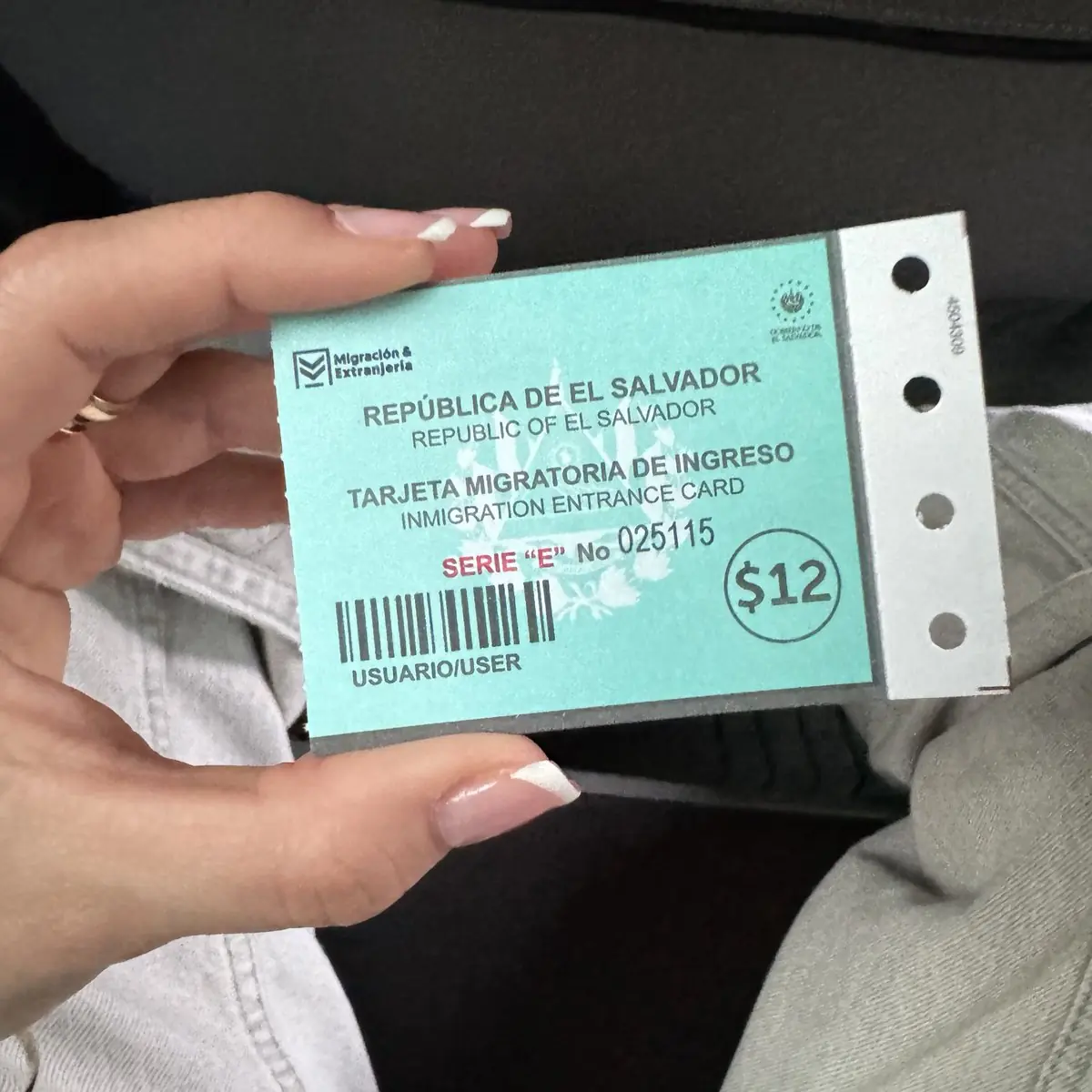
If you searched the El Salvador Tourist Card and landed on travel.state.gov, the $12 fee quoted there is no longer the law. Salvadoran legislators abolished it, and the change took effect on May 13, 2025. This guide covers what US travelers actually pay and what to expect at SAL airport and the land borders.
Do US citizens still need the El Salvador Tourist Card?
US citizens no longer pay for or receive a separate paper tourist card to enter El Salvador. Since May 13, 2025, immigration officers simply stamp your US passport on arrival at SAL airport or any land border, with no fee collected. You still need a valid US passport, an onward or return ticket, and to state your purpose of travel.
The card itself, officially called the Tarjeta Migratoria de Ingreso (TMI), was eliminated along with its $12 charge under Decreto Legislativo No. 286. The Dirección General de Migración y Extranjería (DGME) now records your entry digitally, and on most arrivals you won’t even fill out a paper form.
Pro Tip: Carry $20-40 in small US bills anyway. Implementation can lag at smaller land crossings, and you’ll want change for the $5-10 taxi from immigration to the bus stop, or for the $3 Honduran entry fee if you’re transiting.
What changed: how El Salvador killed the $12 tourist card fee
El Salvador’s Asamblea Legislativa voted 56-1 on April 30, 2025 to abolish the Tarjeta Migratoria de Ingreso fee. The decree was published in the Diario Oficial on May 5, 2025 and entered into force eight days later on May 13, 2025.
The reform stripped Article 328 from the Ley Especial de Migración y de Extranjería entirely and removed all TMI references from Articles 13, 217, and 325. Diputada Ana Figueroa of Nuevas Ideas, who chairs the migration committee, said on the plenary floor that the goal was to remove barriers and boost tourism. DGME Director Ricardo Cucalón told committee members the fee was incongruent with the country’s openness goals, noting that Salvadorans don’t pay to enter the United States or Mexico, so reciprocal treatment was overdue.
The lone “no” vote came from Diputada Claudia Ortiz of the Vamos party; ARENA abstained.
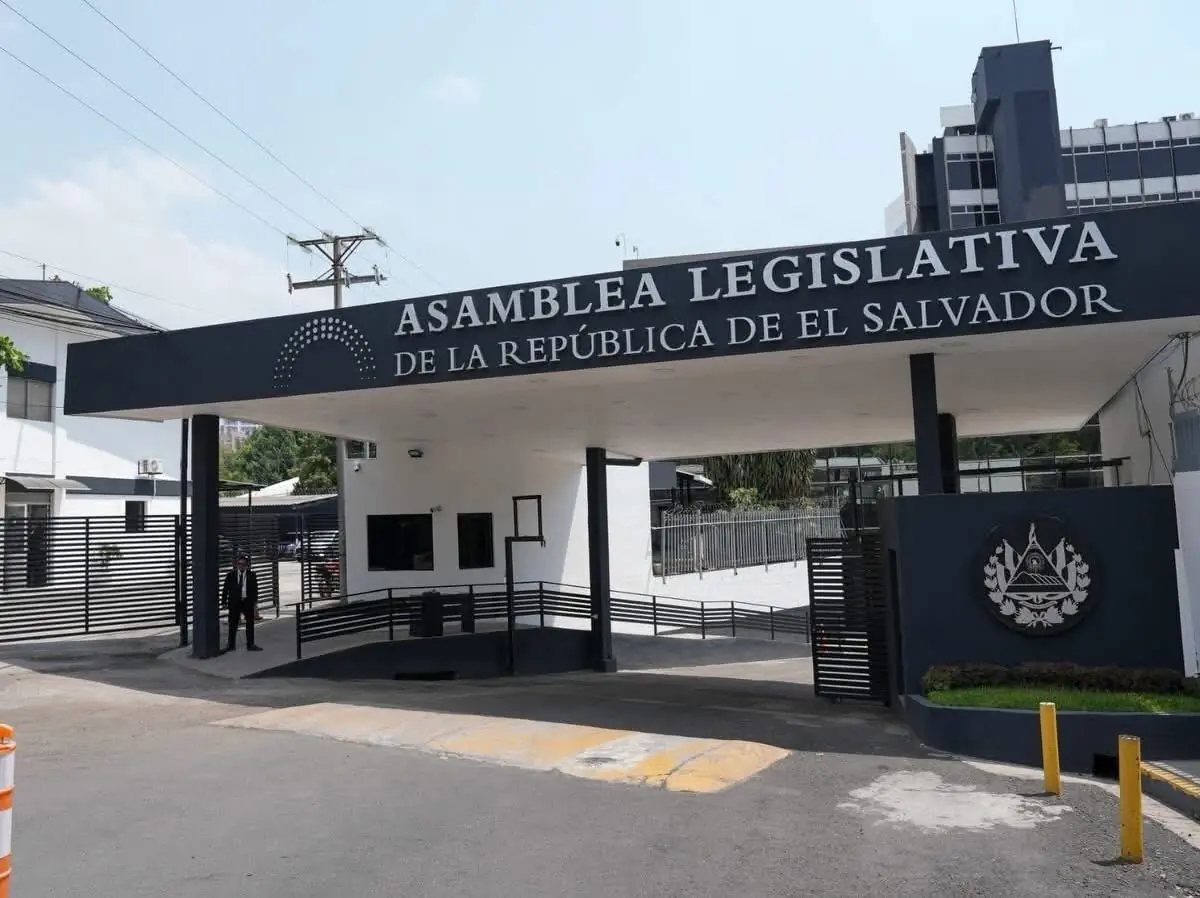
Why the US State Department still says $12
Both travel.state.gov and the US Embassy in San Salvador’s website continue to instruct US travelers to bring $12 cash for the tourist card, well after the decree took effect. The official Salvadoran tourism portal at elsalvador.travel has not been updated either, and commercial visa-service sites like iVisa, VisaHQ, and RushMyTravelVisa carry the same outdated guidance.
The law itself is unambiguous: no fee is owed. If a Salvadoran immigration officer asks for $12, request a written receipt. There shouldn’t be one, because the legal basis for the charge was repealed when Article 328 was struck down.
What US travelers actually pay at SAL airport now
The process at Monseñor Óscar Arnulfo Romero y Galdámez International Airport takes most US arrivals 20-35 minutes from gate to curb, depending on how many flights land in the same window. On my last walk through SAL immigration, the line was 8 deep and moved in about 12 minutes.
Here’s what to expect:
- Step 1: Deplane and walk to immigration. The corridor is long; budget 8-10 minutes from a remote gate.
- Step 2: Hand your passport to the officer. State “tourism” and the number of days you’ll stay. No fee is collected.
- Step 3: Receive your entry stamp. You may be asked your accommodation address — have a hotel name ready.
- Step 4: Claim baggage. The carousels move slowly; allow 15-20 minutes.
- Step 5: Press the random customs button (green = pass, red = bag scan). Step through and you’re out.
Pro Tip: The official Taxi Amarillo desk after customs charges $25-35 to San Salvador and gives a printed receipt. Avoid the unmarked drivers who approach in the parking lot — they quote $50+ and don’t run meters.
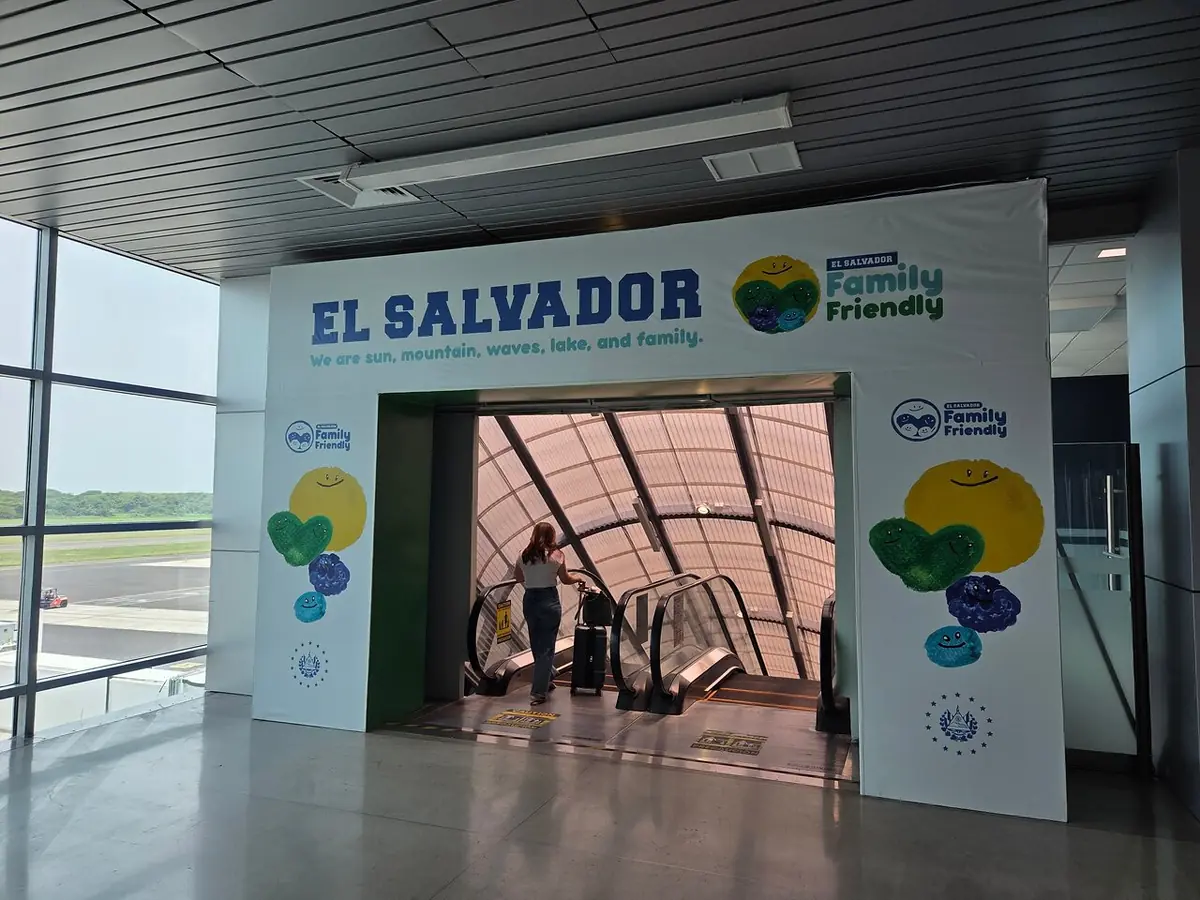
What about land borders and cruise ports?
Land borders and sea ports follow the same rule as the airport: no $12 fee, just an entry stamp. El Salvador has six main land crossings, all open 24/7 under the CA-4 Border Control Agreement.
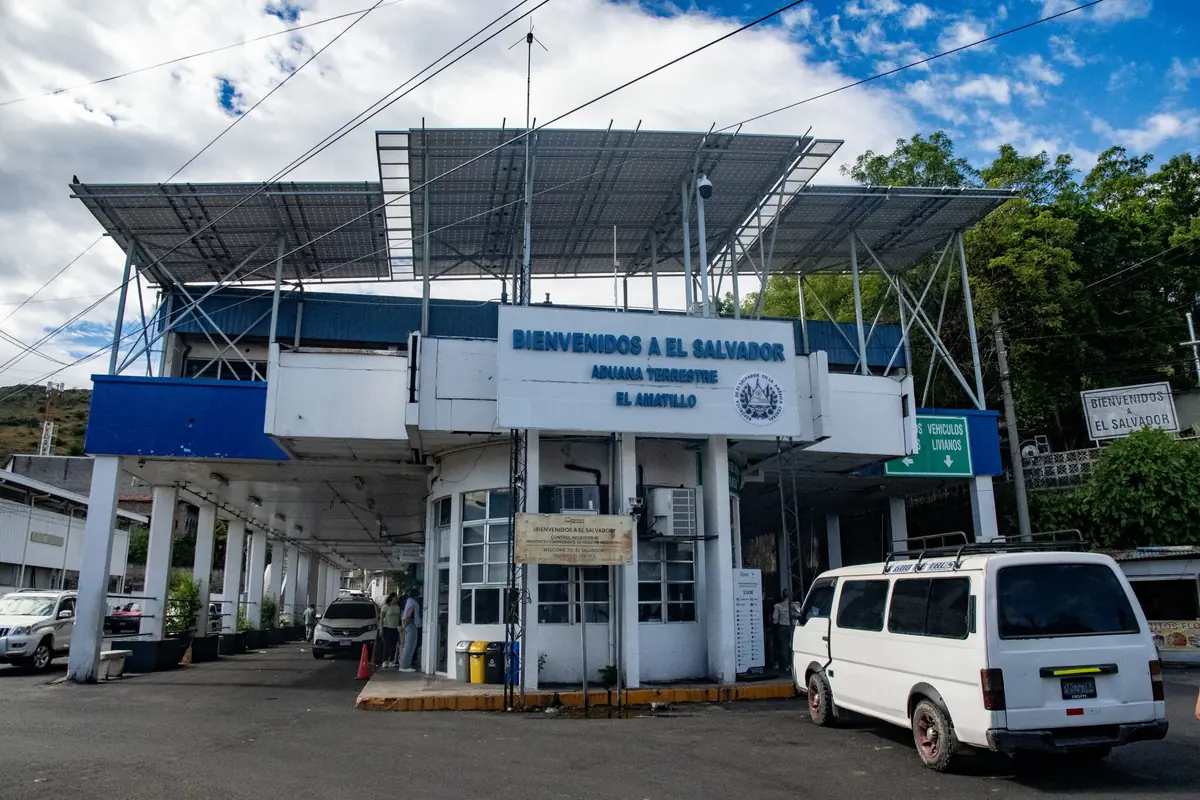
El Poy and El Amatillo — the Honduras crossings
- El Poy: Northern border, used by travelers coming from Copán Ruinas or Tegucigalpa.
- El Amatillo: Eastern border on the Pan-American Highway, the route to Nicaragua.
- Cost on the Salvadoran side: $0
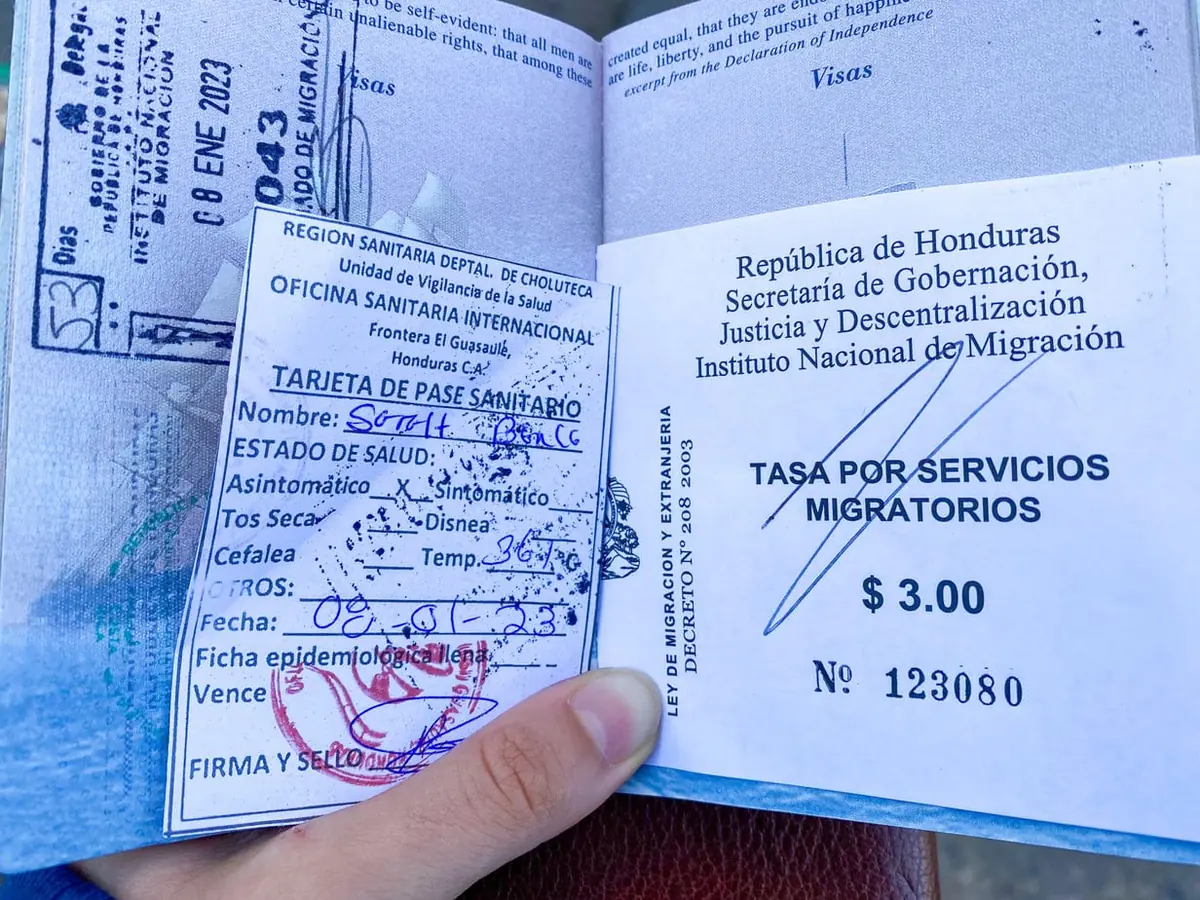
- Honduran side: $3 entry fee in USD cash, plus a $3 exit fee when leaving Honduras
- Time to clear both sides: 30-90 minutes depending on bus traffic
Crossing at El Amatillo with a backpack, I cleared the Salvadoran side in about 20 minutes and the Honduran side in another 35.
Pro Tip: At El Amatillo, the immigration buildings on the two sides sit roughly 300 yards apart with a small river in between. Money-changers hover; their rates are 5-8% worse than ATMs in San Miguel or Choluteca. Change just enough lempiras for your first taxi.
Las Chinamas, La Hachadura, Anguiatú, San Cristóbal — Guatemala crossings
- La Hachadura: Pacific coast route, used by overlanders heading from El Tunco to Antigua or Monterrico.
- Las Chinamas / Valle Nuevo: Central crossing near Ahuachapán, the Ruta de las Flores side.
- San Cristóbal: Northern crossing, closest to Esquipulas and Copán Ruinas.
- Anguiatú: Eastern crossing into Guatemala’s Chiquimula department.
All four charge nothing on the Salvadoran side. Guatemala does not charge an entry fee for visa-exempt nationals either, so the Guatemala-El Salvador crossings are now genuinely fee-free for US passport holders.
Acajutla and La Unión — cruise port arrivals
Cruise passengers disembarking at Puerto de Acajutla or Puerto de La Unión clear immigration at the terminal. The $12 onboard fee that some cruise lines used to add as a “Salvadoran tourist tax” line item should no longer appear; if it does on your folio, contest it at the purser’s desk before you disembark.
How long can US citizens stay in El Salvador?
US passport holders can stay in El Salvador for up to 180 days visa-free under the broader 2025 migration reform, though officers commonly stamp 90 days at first entry. Length of stay is granted at officer discretion based on passport validity, stated purpose, and proof of onward travel.
In practice, most leisure travelers receive a 90-day stamp. To get longer, state a specific reason (“two-month surf trip” or “visiting family”) and present a return ticket past the 90-day mark. The 180-day allowance is real, but it’s not automatic.

How does the CA-4 agreement affect your stay?
The CA-4 Border Control Agreement combines El Salvador, Guatemala, Honduras, and Nicaragua into a single immigration zone. Your 90-day allowance is shared across all four countries — crossing from El Salvador into Honduras does not reset the clock.
If you spend 60 days in Guatemala and then cross into El Salvador, you have 30 days left in the CA-4 zone, not a fresh 90. To reset, you must exit the zone entirely (to Mexico, Belize, Costa Rica, or via international flight) and re-enter.
- Countries in CA-4: El Salvador, Guatemala, Honduras, Nicaragua
- Shared maximum: 90 days per visit, extendable in country
- Reset trigger: full exit from the CA-4 zone for any length of time
- Overstay fine: roughly $100+ USD, plus possible 72-hour detention for CA-4 violations
Are Salvadoran-born US passport holders exempt?
Yes. US citizens whose passport lists El Salvador as place of birth are exempt from the tourist card and proof-of-funds requirement, and this exemption remains under the new framework. You enter on your US passport and won’t be asked for accommodation or onward-ticket documentation.
There’s a separate consideration on the way out: Salvadoran-born US citizens are dual nationals under Salvadoran law and may enter on a Salvadoran passport if they hold one. US-bound flights still require boarding with the US passport.
How do you extend your stay past 90 days?
To extend, visit the Dirección General de Migración y Extranjería in San Salvador before your 90-day period expires. One extension per calendar year is allowed for tourists, and the office sits inside the Centro de Gobierno complex downtown.
- Address: Centro de Gobierno, San Salvador
- Email: [email protected]
- Cost: roughly $25-50 USD (not officially confirmed since the Decreto 286 reform)
- Processing time: 5-10 business days
- Documents: passport, entry stamp, proof of funds, address in El Salvador, completed application form
Pro Tip: Don’t try to extend on day 89. Officers ask you to apply at least a week before expiration, and the documentation gathering (notarized proof of funds, hotel letters) takes longer than expected. Aim for day 75-80.
What about digital nomads and longer stays?
For remote workers planning longer than the 180-day visa-free window, El Salvador now offers a Digital Nomad Visa allowing 2-year stays. The minimum income threshold is $1,460 USD per month in foreign-sourced earnings, equal to 4× the country’s $365 monthly minimum wage for the Commerce and Services sector under Article 108(5) of the Ley Especial de Migración y de Extranjería.
A separate eVisa system launched in October 2025 for nationalities that still require a visa to enter El Salvador. This does not apply to US, Canadian, UK, EU, Australian, Japanese, or most Latin American passport holders — they walk up to immigration and get a stamp.
What documents do US travelers actually need?
Beyond the passport stamp itself, US travelers need to satisfy airline check-in and Salvadoran immigration with a small set of documents.
- US passport: valid for the duration of stay (6 months beyond is the de facto airline rule, though Salvadoran law doesn’t formally require this)
- Onward or return ticket: required by airlines for check-in and frequently checked at SAL
- Accommodation address: have a hotel name and area written down; “I’ll find something” gets follow-up questions
- Proof of funds: rarely asked of US passport holders, but $200-300 per planned week is the unofficial threshold
- Yellow fever certificate: required only if arriving from a country with endemic transmission (most of sub-Saharan Africa, parts of South America including Brazil, and Panama in transit). Must be administered at least 10 days before travel.
Is El Salvador safe for US tourists?
El Salvador sits at Level 1 on the US State Department travel advisory scale, the lowest risk tier (“Exercise Normal Precautions”). The Level 1 designation was issued on April 8, 2025, replacing the previous Level 2 rating. This is the lowest advisory the country has received in recorded US tracking.
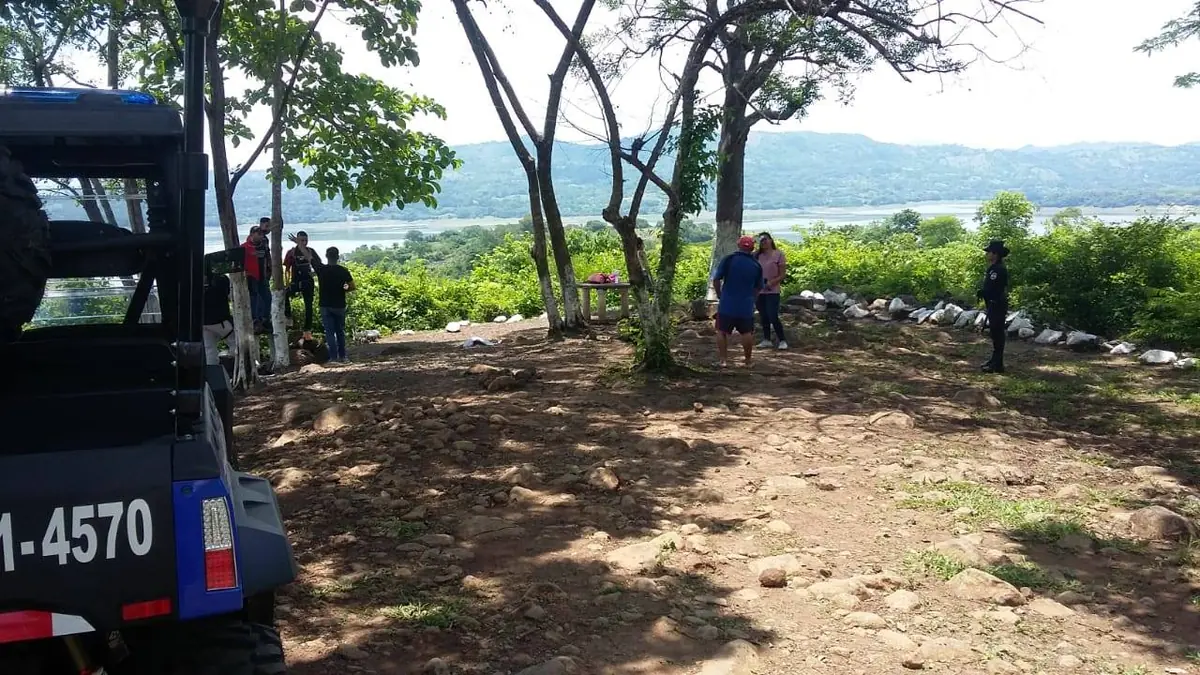
The State of Exception that began in March 2022 remains in force. In practical terms for tourists, this means expanded police powers to stop and question anyone without a warrant. Carry a copy of your passport at all times, and the original in a secure spot. POLITUR, the dedicated tourist police force, patrols 19 designated tourist zones including El Tunco, Suchitoto, Santa Ana volcano, and the colonial center of San Salvador.
Pro Tip: The drive from SAL airport to El Tunco runs along the coastal highway and is safe in daylight. After dark, the same route is fine in a registered taxi or Uber but unwise on foot. Beach towns themselves are quiet by 10 p.m. on weekdays.
Common mistakes US travelers make at the border
Even with the fee gone, US travelers still trip over the same handful of issues at immigration.
- Bringing $12 cash and assuming it will be collected. Officers won’t take it. If anyone asks for cash, request a written receipt and ask for a supervisor.
- Showing up with a passport expiring in under 6 months. Airlines deny boarding regardless of what Salvadoran law allows.
- Booking a one-way ticket. Airlines force you to buy onward travel at check-in if you can’t show proof.
- Confusing the 90-day El Salvador stamp with a fresh 90 days after a Honduras side-trip. The CA-4 clock keeps running across all four countries.
- Forgetting that El Salvador is fully dollarized. There is no separate Salvadoran currency to exchange — USD is the only legal tender, no colones since 2001.
- Assuming Bitcoin acceptance is widespread. After the January 2025 IMF agreement reform, Bitcoin is no longer mandatory legal tender. UCA’s 2024 poll of 1,266 Salvadorans found 91.8% had not used it that year, and 76.2% said they had never used it. Carry small USD bills.
What about the exit tax and departure fees?
The $32-40 USD departure tax that older guides warn about is bundled into your airline ticket. You won’t pay it at the airport, won’t see a kiosk, won’t need cash for it. Airlines collect it as part of ticket issuance and remit it to the Salvadoran government.
If a website tells you to “set aside exit-tax cash for the airport,” that guide is at least three years out of date. Same goes for the old advice to keep your tourist card slip to surrender on departure — the slip no longer exists, and there’s nothing to hand back at the gate.
Before you book
The single most important fact about the El Salvador Tourist Card is that you don’t pay for one anymore. The legal change took effect on May 13, 2025, but the US State Department, the US Embassy in San Salvador, and the official Salvadoran tourism portal have all been slow to update their pages, so the top of the Google results for this query is still filled with outdated $12 guidance. Bring $20-40 in small bills as contingency for taxis and incidentals, but expect to walk through immigration with only a stamp.
TL;DR: US citizens don’t need to buy or pay for an El Salvador Tourist Card. The $12 fee was abolished by Decreto Legislativo No. 286, in force May 13, 2025. Bring a valid US passport, an onward ticket, and small USD bills for ground transport — that’s the full document list.
Have you flown into SAL or crossed at El Amatillo since the fee abolition? Did any officer still ask for cash at the desk? Share what you saw at the border in the comments.